Archive for the ‘Trump and Israel’ category

US-Russian steps vs Iran await new NSC chief

February 14, 2017

US-Russian steps vs Iran await new NSC chief, DEBKAfile, February 14, 2016

flynnout_eng_480

Michael Flynn’s abrupt resignation as National Security Adviser Monday night, Feb. 13, was a crippling blow to Donald Trump’s foreign policy strategy, less than a month after he entered the White House. Flynn was the architect and prime mover of the president’s plans for close cooperation with Russian President Vladimir Putin. He was brought down by misinforming Vice President Mike Pence – and very likely the president too – on the content of the conversation he held with the Russian ambassador before Trump’s inauguration.

Although retired Lt. Gen. Keith Kellogg takes over as acting NSA, the White House is urgently considering a permanent replacement to fill Flynn’s large shoes. Former CIA Director David Petraeus’ name has come up, but his indiscretions over state secrets still count against him. Vice Admiral Robert Harward, a former Navy SEAL, is a strong contender, although more may emerge.

Even before picking his next national security adviser, Trump will need to determine how to proceed with his détente with Putin, the highly sensitive details of which were managed personally and confidentially by Mike Flynn as the centerpiece of the new administration’s foreign policy.

His contacts with Moscow were under heavy fire from the president’s friends and foes alike, both before and after the November election. It was defended stalwartly by Trump himself, Pence and Flynn. However, neither the president nor the vice president can tell exactly what Flynn promised the Russians and to what deals he committed them. Therefore, his successor will be required to start building Washington’s ties with Moscow from scratch.

While Flynn’s departure has caused havoc in the Trump administration, it is a catastrophe for the Middle East, because a core objective of the US-Russian partnership, which he shaped as a model for other regions, was to have been to clip Iran’s wings and cut down its standing down as premier Middle East power conferred by Barack Obama.

(How the Flynn mechanism was to work plus detailed analysis of the fallout from his departure will be covered exclusively in the coming issue of DEBKA Weekly out next Friday).

Flynn alone was privy to arrangements concluded with Saudi King Salman in Riyadh, Jordan’s King Abdullah in Amman, President Putin in Moscow, Tayyip Erdogan in Ankara, Abdel-Fatteh El-Sisis in Cairo and Prime Minister Binyamin Netanyahu in Jerusalem.

Some of his output began taking shape on the day he stepped down, when Syrian rebel groups led by Jordanian special operations officers attacked Syrian army positions in the southern town of Daraa. This was the start of an operation to drive Syrian government forces and their Iranian and Hizballah allies from the lands bordering on Jordan and Israel.

In Cairo, too, President Michel Aoun of Lebanon and his host, El-Sisi were hashing out a plan for the Egyptian army and Gulf forces to go into action against Hizballah in Syria and Lebanon.

Wednesday, Feb. 15, Prime Minister Binyamin Netanyahu is to visit the White House for his first meeting with Trump as president. They too were scheduled to discuss US operations against Hizballah and the role Israel would play.

In the coming hours, Trump will have to decide whether to go ahead with these initiatives in the absence of Flynn and his detailed knowledge of how they should go forward, or simply put them on hold until his successor is in place and has time for a full study of their complicated ins and outs. At the same time, a different national security adviser in the White house might have different plans to those laid out by his predecessor.

Israeli PM Netanyahu Becomes D.C. Darling as Democrats Clamor for Meetings

February 13, 2017

Israeli PM Netanyahu Becomes D.C. Darling as Democrats Clamor for Meetings, Washington Free Beacon, , February 13, 2017

(“Now that our Dear Leader is gone, we sure do love Israel.” — DM)

Israeli Prime Minister Benjamin Netanyahu chairs the weekly cabinet meeting in Jerusalem on February 12, 2017. / AFP PHOTO / GALI TIBBON

Israeli Prime Minister Benjamin Netanyahu chairs the weekly cabinet meeting in Jerusalem on February 12, 2017. / AFP PHOTO / GALI TIBBON

After years of tense relations with the United States under former President Barack Obama, Israeli Prime Minister Benjamin Netanyahu is emerging as one of the most prominent international personalities, according to multiple sources who told the Washington Free Beacon that Democrats, Republicans, and high-level White House officials are clamoring for a sit down with the Israeli leader when he arrives in town on Tuesday.

Senior officials across party lines hope to let Netanyahu know that America has Israel’s back and that years of tension during the Obama administration is just water under the bridge, according to both congressional sources and those close to the Trump administration.

Netanyahu’s schedule is already packed with powwows between President Trump, senior administration officials, and a cast of leading lawmakers on Capitol Hill from both sides of the aisle.

Meetings will center on U.S. lawmakers’ desire to reset relations with the Jewish state. Multiple sources told the Free Beacon that sit downs with White House officials will focus on holding Iran accountable for violations of the nuclear deal, moving the U.S. embassy in Israel to Jerusalem, and combatting efforts at the United Nations to delegitimize Israel.

Netanyahu already has confirmed a 6:30 p.m. dinner Tuesday evening with newly installed Secretary of State Rex Tillerson. The meeting will take place inside the State Department.

Netanyahu is expected to meet with Trump and other senior officials Wednesday before heading to Capitol Hill, where he will meet with leading Democrats and Republicans.

Netanyahu is expected to take separate meetings with Senate Majority Leader Mitch McConnell (R., Ky.) and Senate Minority Leader Chuck Schumer (D., N.Y.), sources told the Free Beacon.

Further meetings could take place with members of the Senate Foreign Relations Committee before Netanyahu travels to the House side of the Capitol for an evening meeting with House Speaker Paul Ryan (R., Wis.).

There is a strong desire among all parties to show Netanyahu that after nearly a decade of chilly relations during the former administration, the United States is prepared to restore the historic relationship with the Jewish state.

“Netanyahu’s schedule is so full that he literally can’t find time for all the high level meetings people want to have with him,” said one veteran foreign policy adviser who is closely in touch with the White House on Middle East issues. “The truth of this is, it’s nature taking its course.”

Recent polling shows that support for Israel is at an all-time high among Democrats and Republicans. Democratic lawmakers in particular are no longer being pressured by the former administration to distance themselves from Netanyahu and Israel.

“Without Obama trying to force Democratic lawmakers to choose between Israel and the United States nature is taking its course and everyone wants to see how they can help bolster the U.S.-Israel relationship,” the source said. “Voters want to see this.”

One source characterized Netanyahu as the “cool kid in town.”

On Capitol Hill, senior sources focused on the Middle East expect that lawmakers will emphasize a reset in relations with Israel. They also will seek to reassure Netanyahu that key foreign aid packages to Israel will remain robust and fully funded.

“There’s broad recognition that it’s time to turn a page on years of hostility towards Israel from the Obama administration. President Trump and the Republican Congress are focused on strengthening Israel’s security and the U.S.-Israel relationship—not condemning housing projects in disputed territories and pushing anti-Semitic U.N. resolutions,” said one senior congressional aide familiar with the Israeli leader’s travel itinerary.

“This provides a major opportunity for both the United States and Israel to stand up to Iran and all those who seek to defame and destroy the Jewish state,” the source said. “Given the warm relationship between Bibi and Trump, everyone seems upbeat and optimistic about the future of the alliance moving forward.”

Dennis Ross, a veteran Middle East hand who worked for former presidents Bill Clinton, George W. Bush, and Obama, told reporters on Monday that there is a strong desire to cast sour relations between the United States and Israel as a byproduct of the Obama administration.

That, Ross said during a conference call hosted by the Israel Project, is the “overriding message that emerges from this week,”

“Democrats will be anxious to show they’re close to Israel as well,” Ross said, adding that Netanyahu will convey the message that Israel’s relationship is with America as a whole, not any one administration.

Ahead of Netanyahu-Trump talks, Abbas woos Iran

February 13, 2017

Ahead of Netanyahu-Trump talks, Abbas woos Iran, DEBKAfile, February 13, 2017

He is warning Trump that the US embassy’s relocation to Jerusalem and the strengthening of US-Israeli ties would be countered by a parallel enhancement of Palestinian relations with Tehran. The message to Vladmir Putin is that, even though he is fully engaged in Syria, he can’t afford to abandon the Palestinians; Abdel-Fatteh El- Sisi, the Gulf rulers and Jordan’s monarch are put on notice that if they have a problem with rising Iranian influence in Baghdad, they had better be prepared to find Tehran’s imprint in Ramallah too.

**********************************

EXCLUSIVE: Palestinian leader Mahmoud Abbas (Abu Mazen) has pivoted towards Iran in a move to pre-empt a possibly impending US embassy move from Tel Aviv to Jerusalem, and the friendly talks scheduled to take place in Washington Wednesday, Feb. 15, between President Donald Trump and Prime Minister Binyamin Netanyahu.

This is revealed by DEBKAfile’s exclusive intelligence sources.

Our sources report that the Abbas has opened a direct channel of communications between Ramallah and Tehran as a permanent fixture. Fatah Central Committee member Jibril Rajoub is in charge of the Palestinian end of the relationship and will lead the first official Palestinian delegation to Tehran.

For some months now, he has served as Abbas’s senior spokesman and the Palestinian Authority’s “foreign minister.” In the third week of January, Rajoub declared: “In our opinion moving the embassy to Jerusalem is a declaration of war on the Muslims.”

Two weeks ago, Palestinian and Iranian delegations met secretly for the first time in a European country. Two more encounters followed and dealt with such urgent matters as the fate of Palestinians stranded on Syria’s battlefronts and in former refugee camps. They also discussed the Palestinian refugees living in Lebanon and their problematic relations with Iran’s Shiite surrogate, Hizballah.

At their third meeting, the Iranian delegates asked where the Palestinian Authority in Ramallah stood vis-a-vis a political resolution of the Syrian conflict. They decided to talk about this some more at the next Iranian-Palestinian meeting on a date this month and a location yet to be arranged.

As part of his pivot towards Tehran, Abbas made sure to send the Palestinian Authority’s warm congratulations to Iran’s rulers on the anniversary of their Islamic revolution: He asked God “to bring more stability and prosperity to Iran and its brotherly people as they celebrate this occasion, and more progress and advancement the brotherly relations between our peoples.”

Abu Mazen’s pro-Iranian shift is intended as a signal to five parties, DEBKAfile’s intelligence sources report: President Trump, the Presidents of Russian and Egypt, the rulers of the Gulf Emirates and King Abdullah of Jordan.

He is warning Trump that the US embassy’s relocation to Jerusalem and the strengthening of US-Israeli ties would be countered by a parallel enhancement of Palestinian relations with Tehran. The message to Vladmir Putin is that, even though he is fully engaged in Syria, he can’t afford to abandon the Palestinians; Abdel-Fatteh El- Sisi, the Gulf rulers and Jordan’s monarch are put on notice that if they have a problem with rising Iranian influence in Baghdad, they had better be prepared to find Tehran’s imprint in Ramallah too.

White House Puts Palestinians, United Nations in Crosshairs

February 13, 2017

White House Puts Palestinians, United Nations in Crosshairs, Washington Free Beacon, February 13, 2017

U.S. President Donald Trump holds a joint press conference with Japanese Prime Minister Shinzo Abe following their talks at the White House in Washington on Feb. 10, 2017. (Kyodo) ==Kyodo

U.S. President Donald Trump holds a joint press conference with Japanese Prime Minister Shinzo Abe following their talks at the White House in Washington on Feb. 10, 2017. (Kyodo)

White House officials, as well as senior sources in Congress, told the Free Beacon that the move is part of a larger effort to solidify U.S. support for Israel and counter a range of last-minute moves by the former Obama administration aimed at severing U.S.-Israel ties.

****************************

The White House is sending a strong signal that it will no longer tolerate Palestinian intransigence at the United Nations or the international body’s long record of anti-Israel action, according to White House officials and sources in Congress who told the Washington Free Beacon that the Trump administration will “unabashedly support Israel” in the months and years ahead.

The Trump administration sent shockwaves through the U.N. late last week when it took a stance against the appointment of a senior Palestinian official to serve in a top post overseeing Libya.

Senior officials at Turtle Bay expressed outrage over the Trump administration’s move to block the appointment of former Palestinian Prime Minister Salam Fayyad as a special U.N. representative for Libya. The move was widely supported by U.N. members, and, for a time, the Trump administration.

Sources inside the White House told the Free Beacon that the move was meant to send a signal to the Palestinians that they can no longer manipulate the U.N. system in order to bolster their international clout. This type of action, the sources said, undermines Israel and the ongoing peace process.

White House officials, as well as senior sources in Congress, told the Free Beacon that the move is part of a larger effort to solidify U.S. support for Israel and counter a range of last-minute moves by the former Obama administration aimed at severing U.S.-Israel ties.

The Free Beacon first reported earlier this year that the Trump administration and Congress had already been working on a range of measures meant to boost U.S. support for Israel at the U.N.

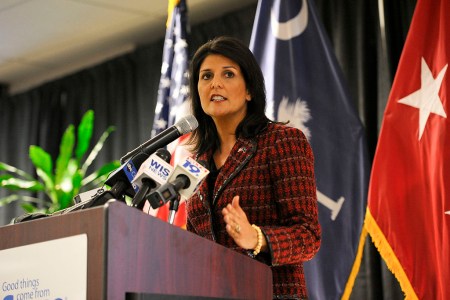
“The United States was disappointed to see a letter indicating the intention to appoint the former Palestinian Authority Prime Minister to lead the U.N. Mission in Libya,” Nikki Haley, the U.S. ambassador to the U.N., said in a statement opposing the selection of Fayyad. “For too long the U.N. has been unfairly biased in favor of the Palestinian Authority to the detriment of our allies in Israel.”

“The United States does not currently recognize a Palestinian state or support the signal this appointment would send within the United Nations, however, we encourage the two sides to come together directly on a solution,” Haley said in a vast departure from Obama administration rhetoric. “Going forward the United States will act, not just talk, in support of our allies.”

A senior White House official familiar with the move told the Free Beacon that the Palestinians will no longer get a free pass to push their anti-Israel agenda and win statehood outside the parameters of the peace process.

“It is so refreshing to have an American ambassador to the United Nations who will unabashedly support our ally Israel,” one senior member of the White House’s National Security Council told the Free Beacon. “The appointment of Salam Fayyad as the official U.N. envoy to Libya would be an incremental step towards unilateral recognition of Palestinian statehood by the U.N. absent an agreement with Israel.”

“Ambassador Haley took the only appropriate action and we are looking to supporting her actions any way we can,” the source said.

One senior congressional aide who works on Middle East issues told the Free Beacon that Trump’s approach to the U.N. is centered on backing Israel from any action that could harm its interests.

“The U.N. is not a friend of Israel. After the Obama administration’s eleventh-hour attack on the Jewish state, President Trump is attempting to turn the page,”  the source said. “Our new administration is already pushing back against the U.N.’s rampant bias and reasserting America’s strong support for Israel. This is a good step in the right direction.”

Fayyad, who is widely viewed as a reformer in Palestinian society, appears to have been caught up in a larger battle between the White House and U.N. over the international body’s efforts to delegitimize Israel.

While Fayyad was seen as an acceptable pick for the Libya post, his ties to the Palestinian Authority and its rogue efforts to achieve statehood via the U.N. provoked ire in the White House, sources said.

The White House is determined to keep what it views as the U.N.’s anti-Israel bias in check, particularly after the Obama administration’s last-minute efforts to secure a resolution condemning Israel.

One senior official at a national pro-Israel organization said the Trump administration’s moves would help preserve international agreements barring the Palestinians from seeking statehood outside of the peace process.

“Pro-Palestinian officials at the U.N. thought they had found a clever way to mainstream the Palestinians as legitimate state actors, which is contrary to American policy and violates two decades of signed agreements between the Palestinians and Israel,” said the source, who was not authorized to speak on record. “They figured that the Trump White House would be too worried about optics to take a stand on behalf of our Israeli allies. The White House refused to be intimidated.”

Regional experts tracking the issue think Fayyad could become a lighting rod in a larger matter surrounding U.S. opposition to any U.N. action meant to elevate the Palestinians on the international stage.

Jonathan Schanzer, vice president of research at the Foundation for Defense of Democracies, told the Free Beacon that the controversy surrounding Fayyad actually benefits Palestinian leaders such as Mahmoud Abbas, who fought against Fayyad’s efforts to eradicate corruption.

“The thing people are not asking is why Fayyad was even considering working the Libya file instead of trying to reform the Palestinian Authority at home,” Schanzer said. “The answer is, Fayyad was pushed out by Mahmoud Abbas in 2013. He and Abbas were in an epic battle over corruption and clean governance and reform. Fayyad lost that battle, as Abbas went full dictator.”

The Obama administration is responsible for allowing Fayyad to be pushed out of the Palestinian Authority, Schanzer said.

“The U.S. refused to come to Fayyad’s defense. I lay this at the feet of the Obama administration,” he said. “Fayyad’s reform and clean governance program was gutted, and when Fayyad created an NGO it was raided by Abbas’ forces—and still the Obama admin refused to lift a finger to help him.”

Netanyahu’s big chance

February 12, 2017

Netanyahu’s big chance, Israel National News, Jack Engelhard, February 12, 2017

(President Trump’s “disapproval” of settlement building consists of suggesting that it is not conducive to furthering the “peace process” and that announcements of more settlement building should be more muted. The “peace process” and “two state solution” are dead, at the hands of the Palestinian Authority and Hamas. More settlement building certainly won’t revive the corpses, but won’t make either more dead either. It seems likely that President Trump knows that. — DM)

For eight years now we’ve been waiting for Israel to get a sympathetic hearing in the White House. That never happened with Obama.

Finally, with President Donald Trump, this is Israel’s big chance and Prime Minister Benjamin Netanyahu’s big moment when the two meet this week.

Let’s not get this wrong and my guess is that there will be smiles and handshakes all around – but will anything be resolved?

Netanyahu’s job is to close the deal with Trump who is certain to be attentive but Netanyahu must remember the motto of salesmanship – “always be closing.”

Do not assume anything and do not take it for granted that Trump is fully aware of Israel’s position regarding Jerusalem and “the territories.”

Trump, with other things on his mind and other allies to consider, must be reminded that, one, he promised to move the United States Embassy to Jerusalem, and two – the Jewish communities of Judea and Samaria are the heart of the Jewish State. Trump may know this already but Netanyahu’s task is to “keep closing.”

If both leaders stick to the mantra of a “two-state solution” then we’re back to square one.

Planting a hostile “Palestinian state” into the Jewish heartland is no answer and it has been no answer ever since the 1967 “three Nos at Khartoum,” and it gets downright genocidal when we go back to 1941 and find the Grand Mufti of Jerusalem, Amin al-Husseini, sitting on Hitler’s lap in order to learn how it’s done.

If Trump knew this but forgot, Netanyahu would do well to remind him.

Also what happened when Israel gave up Gaza and the torrent of Hamas rockets that followed.

Forget for a moment Israel’s loss of land and sovereignty under such a “solution.” But imagine a situation whereby the IDF would need Mahmoud Abbas’ permission to fly over “Palestinian territory?” This needs to be explained to this American President in terms of his own love of sovereignty.

Who says the Palestinian Arabs want peace? People who knife, shoot and bulldoze innocent civilians are in no shape to share anyone’s country.

Trump should be made aware of this.

Let alone the fact that the Palestinian Arabs, who were invented in 1964, have no historical claims to the Holy Land.

That, too.

So that should be off the table and it’s too bad that Netanyahu keeps bringing it up when instead he should be talking about the problem both countries face – Radical Islam. That is language Trump understands. The United States and Israel – we are both in the same boat on this and it’s up to Neyanyahu to bring that up as Item Number One that needs a solution.

Trump knows Radical Islam and that’s why he insists on “extreme vetting” against possible terrorists entering the United States.

At the same time, however, Trump has expressed some disapproval of ‘settlement building’. He has expressed himself politely on this issue because he intends to be a true friend of Israel and friends should be allowed to disagree. But there should be no disagreement if Netanyahu gets it right.

This would be Netanyahu’s reminder to Trump, on Wednesday, that the same type of people who are wrong for America are wrong for Israel — and to replace Jewish settlements with Palestinian Arab settlements is like extending a formal invitation to ISIS.

That too is language Trump would understand.

In one sitting Benjamin Netanyahu can undo the damage of the past eight years and herald the start of a beautiful friendship.

If he’s as good a salesman as he is a politician.

Bravo to Ambassador Haley, for Blocking UN Ploy on ‘Palestine’

February 12, 2017

Bravo to Ambassador Haley, for Blocking UN Ploy on ‘Palestine’, PJ Media,  Claudia Rosett, February 11, 2017

(Please see also, US blocks former Palestinian prime minister from senior UN role in Libya ‘out of support for Israel’.  Thought experiment: what would the reactions, noted in the article linked in the preceding sentence, have been if a “right-wing” former Israeli cabinet minister had been named to the post?– DM)

nikkiUnited Nations, New York, USA, 27 January, 2017 – Nikki R. Haley, new United States Permanent Representative to the UN Presents Credentials to Secretary-General Antonio Guterres today at the United Nations Headquarters in New York. (Photo by Luiz Rampelotto/EuropaNewswire) (Sipa via AP Images)

Haley’s statement is important not only for its broad message — that President Trump’s administration will steer by his pledges of support to Israel — but also for calling out Guterres on his not-so-subtle attempt to abet the UN’s long push to confer by increments on the Palestinian Authority a legitimacy it has not earned.

****************************

On Thursday United Nations Secretary-General Antonio Guterres sent the Security Council a letter nominating as the new head of the UN’s mission to Libya a former prime minister of the Palestinian Authority, Salam Fayyad —  who was described in the letter as “Salam Fayyad (Palestine).”

America’s new ambassador, Nikki Haley, said no. Having thus blocked Fayyad’s appointment, Haley then put out a statement explaining why:

For too long the UN has been unfairly biased in favor of the Palestinian Authority to the detriment of our allies in Israel. The United States does not currently recognize a Palestinian state or support the signal this appointment would send within the United Nations, however, we encourage the two sides to come together directly on a solution. Going forward the United States will act, not just talk, in support of our allies.

Haley’s statement is important not only for its broad message — that President Trump’s administration will steer by his pledges of support to Israel — but also for calling out Guterres on his not-so-subtle attempt to abet the UN’s long push to confer by increments on the Palestinian Authority a legitimacy it has not earned.

The UN spokesman’s office responded by Haley’s objection by sending out a statement that:

The proposal for Salam Fayyad to serve as the Secretary-General’s Special Representative in Libya was solely based on Mr. Fayyad’s recognized personal qualities and his competence for that position.

United Nations staff serve strictly in their personal capacity. They do not represent any government or country.

This UN claim is disingenuous in the extreme, as the UN spokesman’s office itself then underscored, in the rest of the same statement quoted just above, by saying:

The Secretary-General reiterates his pledge to recruit qualified individuals, respecting regional diversity, and notes that, among others no Israeli and no Palestinian have served in a post of high responsibility at the United Nations. This is a situation that the Secretary-General feels should be corrected, always based on personal merit and competencies of potential candidates for specific posts.

In other words, Secretary-General Guterres, while disavowing any interest in the origins or potential loyalties of any candidate for a UN post, is simultaneously claiming a special interest in appointing — specifically — Israelis and Palestinians. And — lo and behold — Guterres just happens to have kicked off this erstwhile neutral campaign by nominating to a high-level post not an Israeli, but a Palestinian.

On a related note, to which Haley and her colleagues in the Trump administration might want to pay serious attention, there’s some news broken by Inner-City Press and further reported by veteran UN reporter Benny Avni, writing in the New York Sun (sources that often provide a lot more insight into the UN than you’re likely to find in, say, the New York Times; with further disclosure that the New York Sun has published many of my own articles on the UN). According to both Inner-City Press and the Sun, it appears that an influential voice behind Guterres’s nomination of Fayyad was that of the UN’s undersecretary general for political affairs, Jeffrey Feltman.

Feltman is an American, a former U.S. diplomat, who was appointed to his UN post in mid-2012, during President Obama’s first term in office. The UN fiction, as in the case of Fayyad’s nomination, is that such appointments have nothing to do with where a person comes from. That’s malarkey. Behind the scenes, a U.S. administration has plenty of say in such appointments.

In Feltman’s case, the longer he remains at the UN, the more opportunity he will have to try to inveigle more ground for Obama’s pro-Palestinian/anti-Israel policies, while undermining Trump’s agenda for decent treatment of Israel. According to Inner-City Press, Feltman has plenty of incentive to stay on at the UN “until July 4 so that his UN pension vests.” I have no direct confirmation of this situation, and Inner-City attributes its information to unnamed sources. But at the very least, Haley and her team should be in a position to find out what’s going on with Feltman’s continued presence as the UN’s senior official for political affairs, and do something about it. The UN’s chronic efforts to undermine Israel and confer undeserved legitimacy on the Palestinians are quite bad enough, without being driven by qualifying dates for UN pension packages.

For the U.S. to pressure the UN to replace Feltman immediately would be an excellent move. If Guterres — with his paradoxical prerequisites for UN staff —  still wants to place not only Palestinians but Israelis in high-level UN posts, surely to replace Feltman he could find an Israeli nominee who would be entirely acceptable to the U.S., not least on grounds of his or her personal qualities and competence.

Beautiful Friendship

February 10, 2017

Beautiful Friendship, Front Page MagazineCaroline Glick, February 10, 2017

flags-1

Originally published by the Jerusalem Post

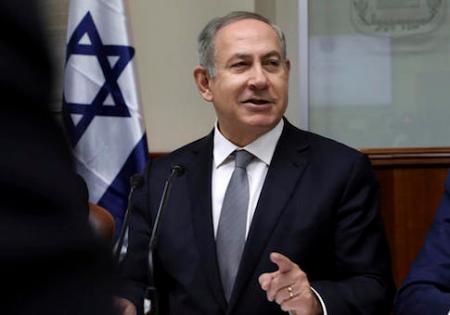
On Sunday, Trump restated his desire to develop ties with Russian President Vladimir Putin. Netanyahu must present Trump with a viable plan to reconstitute US-Russian ties in exchange for Russian abandonment of its alliance with Tehran and its cooperation with Iran and Hezbollah in Syria.

Next week can be the beginning of a new era in Israel’s relations with the US. But to make the most of this unprecedented opportunity, Israel needs to recognize its role as America’s ally. It must take the necessary steps to perform that role, and it must free the administration from the shackles of the PLO while securing its long-term interests in Judea and Samaria unilaterally, and quietly.

********************

Less than a week after he was inaugurated into office, President Donald Trump announced that he had repaired the US’s fractured ties with Israel. “It got repaired as soon as I took the oath of office,” he said.

Not only does Israel now enjoy warm relations with the White House. When Prime Minister Benjamin Netanyahu arrives in the US capital next week, he will be greeted by the most supportive political climate Israel has ever seen in Washington.

It is true that dangers to Israel’s ties with America lurk in the background. The radical Left is taking control of the Democratic Party.

But the forces now hijacking the party on a whole host of issues have yet to transform their hatred of Israel into the position of most Democratic lawmakers in Congress.

Democrats in both houses of Congress joined with their Republican counterparts in condemning UN Security Council Resolution 2334 that criminalized Israel. A significant number of Democratic lawmakers support Trump’s decision to slap new sanctions on Iran.

Similarly, radical Jewish groups have been unsuccessful in rallying the more moderate leftist Jewish leadership to their cause. Case in point is the widespread support Trump’s appointment of David Friedman to serve as his ambassador to Israel is receiving from the community.

Whereas J Street and T’ruah are circulating a petition calling for people to oppose his Senate confirmation, sources close to the issue in Washington say that AIPAC supports it.

Given this political climate, Netanyahu must use his meeting with Trump to develop a working alliance to secure Israel’s long-term strategic interests both on issues of joint concern and on issues that concern Israel alone.

The first issue on the agenda must be Iran.

Since taking office, Trump has signaled that unlike his predecessors, he is willing to lead a campaign against Iran. Trump has placed Iran on notice that its continued aggression will not go unanswered and he has harshly criticized Obama’s nuclear deal with the mullahs.

In the lead-up to his meeting with Trump, Netanyahu has said that he will present the new president with five options for scaling back Tehran’s nuclear program. No time can be wasted in addressing this problem.

Iran continues spinning its advanced centrifuges.

The mullahs are still on schedule to field the means to deploy nuclear warheads at will within a decade. Netanyahu’s task is to work with Trump to significantly set back Iran’s nuclear program as quickly as possible.

Then there is Syria. And Russia.

On Sunday, Trump restated his desire to develop ties with Russian President Vladimir Putin. Netanyahu must present Trump with a viable plan to reconstitute US-Russian ties in exchange for Russian abandonment of its alliance with Tehran and its cooperation with Iran and Hezbollah in Syria.

Here, too, time is of the essence.

According to news reports this week, President Bashar Assad is redeploying his forces to the Syrian border with Israel. Almost since the outset of the war in Syria six years ago, Assad’s forces have been under Iranian and Hezbollah control. If Syrian forces deploy to the border, then Iran and Hezbollah will control the border.

Israel cannot permit such a development. It’s not just that such a deployment greatly expands the risk of war. As long as Russia is acting in strategic alliance with Iran and Hezbollah in Syria, the deployment of Iranian-controlled forces to the border raises the real possibility that Israel will find itself at war with Russia in Syria.

Then there are the Sunnis. For the past six years, Netanyahu successfully withstood Obama’s pressure by developing an informal alliance with Sunni regimes that share its opposition to Iran and to the Muslim Brotherhood.

According to sources aware of the Trump administration’s strategic plans, the administration wishes to integrate Israel more strongly into Washington’s alliance structure with Sunni regimes. Israel, of course, has good reason to support this plan, particularly if it involves extending the US military’s Central Command to include Israel.

There are, however, significant limitations on the potential of Israel’s ties to Sunni regimes. First, there is the fact that all of these regimes are threatened by Islamist forces operating in their territory and on their borders.

As Israel Air Force commander Maj.-Gen. Amir Eshel warned this week, Israel is concerned that in the event any of these regimes is overthrown, the advanced US weapons it fields will fall under the control of Islamist forces.

Then there is the fact that in exchange for taking their relations with Israel out of the proverbial closet, the Arabs will demand that Israel make concessions to the PLO.

This then brings us to the only subject the media is discussing in relation to Netanyahu’s upcoming meeting with Trump: Will Trump push Israel to make concessions to the PLO or won’t he? The short answer is that it doesn’t appear that Trump has the slightest intention of doing so.

Over the past week, the administration has made three statements about the Palestinians.

First, of course, was the White House’s statement about the so-called Israeli settlements that came out last Thursday.

Although nearly all media reports on the statement claimed it aligned Trump with his predecessors in opposition to Israel’s civilian presence in Judea and Samaria, the fact is that the statement was the most supportive statement any US administration has ever made about those communities.

Obama, of course rejected Israel’s right to any civilian presence beyond the 1949 armistice lines, including in Jerusalem. In his final weeks in office, Obama joined the international mob in falsely castigating Israeli communities in these areas as illegal.

George W. Bush for his part, made a distinction between the so-called settlement blocs and the more isolated Israeli villages in Judea and Samaria. He gave grudging and limited support for Israel’s right to respect the property rights of Jews in the former. He rejected Jewish property rights in the latter.

Trump repudiated both of these positions.

In its statement on Thursday, the administration made no distinction between Jewish property rights in any of the areas. Moreover, the statement did not even reject the construction of new Israeli communities.

According to the text of the statement, “the construction of new settlements or the expansion of existing settlements beyond their current borders may not be helpful in achieving” the goal of peace.

But, then again, they may be helpful. And then again, they may have no impact whatsoever on the chance of achieving peace.

Not only did the administration’s statement not reject Israel’s right to build new communities, it rejected completely the position of Trump’s predecessors that Israeli communities are an obstacle to peace.

In the administration’s words, “We don’t believe the existence of settlements is an impediment to peace.”

After renouncing the positions of its predecessors on Israeli communities in Judea and Samaria, the administration then refused to say whether its vision for peace includes a Palestinian state.

In line with the Republican Party’s platform that makes no mention of support for Palestinian statehood, the Trump administration continues to question the rationale for supporting a policy that has failed for the past 95 years.

Finally, the administration said it had no comment on the regulations law this week regarding Jewish construction rights in Judea and Samaria.

All White House spokesman Sean Spicer would say was that it would be discussed in Trump’s meeting with Netanyahu.

This brings us back to that meeting, and how Netanyahu should broach the Palestinian issue.

Both from statements by administration sources since the election and from the administration’s refusal to speak with Palestinian Authority officials since Trump’s electoral victory, Trump and his top advisers have made clear that they see no upside to US support for the PLO.

They do not want to support the PLO and they do not want to be dragged into fruitless discussions between Israel and the PLO. For the past 24 years, US mediation of those discussions has weakened America’s position in the region, has weakened Israel and has empowered the PLO and anti-American forces worldwide.

According to sources with knowledge of the administration’s position, Trump views the Israeli- Palestinian conflict as an internal Israeli issue.

He expects Israel to deal with it and do so in a way that stabilizes the region and keeps the Palestinians out of the headlines, to the extent possible.

In this vein, sources with knowledge of administration considerations claim that last Thursday’s White House statement on Israeli communities in Judea and Samaria was in part the result of exasperation with Israel’s inability to keep quiet on the issue. Had Netanyahu and Defense Minister Avigdor Liberman not announced that they were issuing permits for thousands of building starts in Judea and Samaria, the White House wouldn’t have felt compelled to issue a statement on the matter.

The administration’s desire to disengage from the PLO is well aligned with Israel’s strategic interests. No good has ever come to Israel from US support for the PLO. Moreover, Israel has achieved its greatest strategic successes in relation to determining its borders when it has kept its moves as low key as possible.

For instance, in 1981, when then-prime minister Menachem Begin applied Israeli law to the Golan Heights, he did so with no fanfare. Rather than loudly announcing Israel’s right to sovereignty over the area, Begin insisted that the move was done to satisfy administrative imperatives and that Israel would be willing to consider border corrections in the event that Syria became serious about peace at some later date.

Begin’s example should inform Netanyahu’s preparations for his meeting with Trump.

Unfortunately, Netanyahu does not seem to realize the implications of Trump’s lack of interest in following in his predecessors’ footsteps in relation to the PLO.

Over the past few weeks, Netanyahu has insisted that he wishes to coordinate his positions on the Palestinians with the administration. While he should take any concerns Trump voices to him on the issue into consideration, he should also make clear that the administration’s belief that no good has come to the US from its support for the PLO is well-founded. He should also explain Israel’s need to control Area C in perpetuity, and the problem with maintaining military administration of the area. Finally, he should assure Trump that Israel intends to secure its interests in Judea and Samaria in a way than does not impinge on US priorities.

Next week can be the beginning of a new era in Israel’s relations with the US. But to make the most of this unprecedented opportunity, Israel needs to recognize its role as America’s ally. It must take the necessary steps to perform that role, and it must free the administration from the shackles of the PLO while securing its long-term interests in Judea and Samaria unilaterally, and quietly.
Will Trump back Israel in the next war?

February 10, 2017

Will Trump back Israel in the next war? Israel Hay0m, Ruthie Blum, February 10, 2017

Analysts on both sides of the Atlantic Ocean — and of the political spectrum — have been scrutinizing every syllable uttered by members of the new administration in Washington to determine whether U.S. President Donald Trump is as good a friend to the Jewish state as Israeli Prime Minister Benjamin Netanyahu hopes.

So far, four issues have been discussed and debated ad nauseam: U.S. Ambassador to the U.N. Nikki Haley’s pronouncement that her government would not abandon Israel at the world body, as the Obama administration did when it enabled the passage of Security Council Resolution 2234, which deemed all Jewish presence beyond the 1949 Armistice Lines illegal; the nomination of David Friedman — a settlements sympathizer who supports relocating the American Embassy from Tel Aviv to Jerusalem — as U.S. ambassador to Israel; a recent Trump administration warning that Israeli settlement construction could be potentially harmful to peace negotiations toward Palestinian statehood (the “two-state solution”); and the omission of any mention of Jews in the statement issued by the administration on International Holocaust Remembrance Day.

Where the bigger picture is concerned, Israel is observing Team Trump’s behavior toward Iran, telling Tehran that its saber-rattling and ballistic missile tests will incur serious consequences; imposing new sanctions on the mullah-led regime; and openly weighing the designation of the Islamic Revolutionary Guard Corps as a terrorist organization.

But the one question that has not been raised is how the Trump administration will respond when Israel is forced to go to war, yet again, with Hamas in Gaza and/or with Hezbollah in Lebanon.

Middle East experts have been predicting, albeit cautiously, that neither scenario is likely in the near future, due to the internal difficulties each terrorist group is currently experiencing. Hezbollah is deeply entrenched in the Syrian civil war, and has already lost many of its men in the fighting. Hamas is suffering from a loss of income, as a number of European countries begin to reconsider the process of transferring cash earmarked for the rehabilitation of Gaza, which ends up paying for the rebuilding and enhancement of tunnel and rocket infrastructure.

Recent developments indicate, however, that more serious military action — in addition to retaliatory IDF moves following errant or aimed fire on Israel from just beyond its southern and northern borders — may be unavoidable.

This week, a Haifa court ordered the temporary closure of the city’s 12,000-ton ammonia tank, pending further discussion on Sunday. This was after the municipality requested that it be shut down completely, following a report indicating that in any explosion, tens of thousands of people in the area would be killed. And since Hezbollah Secretary General Hassan Nasrallah threatened in February to attack it, residents of the region have been living in fear.

Meanwhile, over the past few days, Hezbollah has been engaging in a crowd-funding campaign on social media hashtagged “Money for jihad is a must,” with a video appeal featuring fighters and clerics asking people to donate to the “resistance.”

Though this is clearly a result of the organization’s dwindling resources, caused by its extended stint in Syria, Nasrallah’s deputy, Naim Qassem, said in an interview with the Lebanese newspaper Al-Binaa that the group’s message to Israel remains the same: “We are willing to pay the price of the conflict. Are you?”

Hamas, too, has been busy threatening Israel online. In a new music video — titled “Zionist, You Will Die in Gaza” — the terrorist organization that reigns supreme in the enclave lodged between Israel and Egypt warns, “A rocket will come to you, Zionist, wherever you live. You will die sleeping, awake or on the mountain. I will make you drink from the glass of death; what a bitter taste.”

It would appear, then, that war is on the horizon.

During Operation Protective Edge, Israel’s battle against Hamas in Gaza in the summer of 2014, then-President Barack Obama said that though the Jewish state had a right to defend itself, it should exercise “restraint.”

In a meeting at his New York office with Jewish journalists during the U.S. presidential primaries, Trump was asked whether he agreed with the statement — made by Democratic hopeful Bernie Sanders to the editorial board of the Daily News — that Israel had used “disproportionate force” in Gaza.

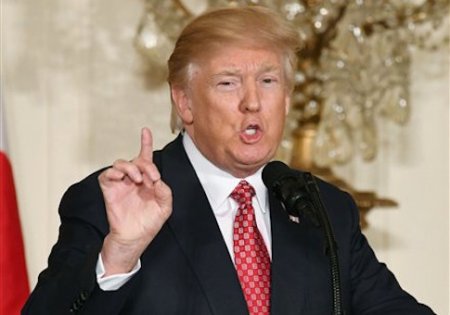
“When missiles are being shot into your country, I don’t know what ‘disproportionate force’ is supposed to mean,” he replied.

It is a matter of when — not if — this attitude in relation to Israel and its enemies is put to the test. So far, Netanyahu, who will be convening with Trump on Wednesday in the White House, has good reason to believe that Obama’s successor will pass it with flying colors.

Do Not Reward Bad Behaviour

February 8, 2017

Do Not Reward Bad Behaviour, Gatestone InstituteJagdish N. Singh, February 8, 2017

The Trump Administration needs to see to it that UN Security Council Resolution 2334 is rendered null and void.

UNSC Resolution 2334 also implies that Jerusalem’s Jewish Quarter, Western Wall and Temple Mount are all occupied territory, when in fact, it was Israel that liberated them from the illegal Jordanian conquest of them in the war of 1948.

Given the history of violence which the Palestinians indulge in against the Jews, it would seem a counter-productive precedent to reward decades of terrorism and uncivilised behaviour with a state. It would also leave the Palestinians, who deserve a responsible and accountable leadership, under the domination of two corrupt and brutal governments, the Palestinian Authority and Hamas.

A study of the various proposals Israel has made to Palestine from time to time shows the key obstacle to peace is not the Palestinians’ demand for any piece of land but their refusal to recognize the existence of the Jewish state, or presumably any state but an Islamic one.

The U.S. could also move its embassy to Jerusalem. This would send the Palestinian leadership and others in the region a strong message that Washington will support both historical facts and countries that comport themselves with civilised behaviour.

In the long-continuing conflict between Israelis and Palestinians, conventional wisdom has it that peace can be achieved through realistic negotiations between the parties to the conflict.

The previous Obama administration displayed a clear tilt towards one party to the conflict, the Palestinians, at the cost of the other, Israel.

Last month, Washington’s abstention from voting on United Nations Security Council (UNSC) Resolution 2334 led to its passage. This resolution condemns Israeli settlements in “Palestinian Occupied Territories.” Resolution 2334 also implies that Jerusalem’s Jewish Quarter, Western Wall and Temple Mount are all occupied territory, when in fact, it was Israel that liberated them from the illegal Jordanian conquest of them in the war of 1948. The resolution effectively states that any Jewish presence beyond the 1949 armistice lines, or Israeli construction in Judea, Samaria or Jerusalem, is illegal.

Objectively speaking, this resolution amounts to anti-Semitism: it is simply counterfactual to the Jews’ history in the region. Both the Bible and archeology reveal that Jews have had a historical connection with this land for more than 3000 years.

Given the history of violence that the Palestinians indulge in against the Jews, it would seem a counter-productive precedent to reward decades of terrorism and uncivilised behaviour with a state. It would also leave the Palestinians, who deserve a responsible and accountable leadership, under the domination of two corrupt and brutal governments, the Palestinian Authority and Hamas.

One hopes President Donald J. Trump, as the leader of the democratic world, would waste no time to bury this counter-factual, anti-Semitic resolution. Nikki Haley, Trump’s appointment to the United Nations, has already condemned the controversial resolution as an “outrageous bias” against Israel, and criticized the Administration of former President Barack H. Obama for the abstention that let the resolution pass.

2287Nikki Haley (pictured above from 2014), President Trump’s appointment to the United Nations, has already condemned UN Security Council Resolution 2334 as an “outrageous bias” against Israel. (Image source: defenseimagery.mil)

The Trump Administration needs to see to it that UNSC Resolution 2334 is rendered null and void. Significantly, it has the moral and political support of the American Congress. The U.S. House of Representatives overwhelmingly condemned the resolution. The Senate has introduced a similar bipartisan bill to cut funding from the United Nations.

Ironically, it is Washington’s “no” to this resolution that will help the peace process, not this resolution, as the Obama Administration disingenuously tried to claim.

A study of the various proposals Israel has made to the Palestinians from time to time shows the key obstacle to peace is not the Palestinian demand for any piece of land but its refusal to recognize the very existence of the Jewish state, or, presumably any state but an Islamic one, preferably its own. That there is any dispositive linkage of land for peace is a myth.

Sometimes, the Palestinians do recognize the state of Israel. At a news conference, then Palestine Liberation Organization chairman Yasser Arafat once said, “We accept two states, the Palestine state and the Jewish state of Israel.”

The Palestinian leadership said they did so in the Oslo Accords, too, but they never practised it. In all the proposals for peace Israel has set forth, the Palestinians have never even made a counter-offer, and seem especially averse to signing an “end of conflict” document.

The current Palestinian leadership is divided into two factions — the West Bank-based Fatah party of the Palestinian Authority (PA), and the Gaza Strip-based Hamas. Both openly incite violence against the Jews, and aspire to the eventual creation of an Islamic state replacing all of Israel.

According to a recent House of Representatives resolution, there have been more than 300 terrorist attacks targeting Israelis since September 2015. PA President Mahmoud Abbas, too, incites violence against Jews.

Washington’s “no” to the resolution would give the right message to the Palestinian Authority to join the Israeli leadership in direct negotiations, recognize the Jewish state and appreciate its security concerns.

The United States could also move its embassy to Jerusalem. This would send the Palestinian leadership and others in the region a strong message that Washington will support both historical facts and countries that comport themselves with civilised behaviour.

Israel’s inaction in Syria may open Golan to Iran

February 7, 2017

Israel’s inaction in Syria may open Golan to Iran, DEBKAfile, February 6, 2017

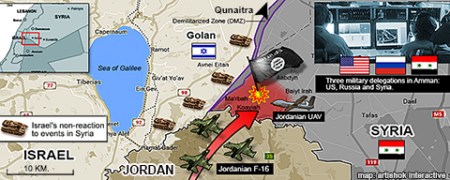
jordanisraelsyria480en

Prime Minister Binyamin Netanyahu has given “diplomatic priority” to stressing the perils posed by Iranian-sponsored terrorism and its nuclear-capable ballistic weapons, and placed them at the top of his talks with British premier Theresa May in London Monday, Feb. 6, and with President Donald Trump in Washington on Feb. 15.

But it stands to reason that their national security and intelligence experts have advised the US president and the British premier that Netanyahu has been firmly advised up to the present day to stay clear of military involvement in the Syrian conflict by the IDF high command and his past and present defense ministers, Avigdor Lieberman and Moshe Ya’alon.

Israel therefore stands to be excluded from the practical deliberations ongoing for Syria’s future. Jordan in contrast has stepped forward as the key Middle East player in the pacts and military understandings shaping up between the US, Russia and Turkey for throwing Iran out of Syria.

Jordan’s King Abdullah swallowed his pride and took the initiative of flying to Washington last Thursday, Feb. 2, to buttonhole President Trump. From their brief conversation, he became the first Middle East ruler to win a green light from the US for an air strike against the ISIS ally, the Khalid Ibn al-Walid Army, which occupies the triangle formed by the Syrian, Jordanian and Israeli borders. Israel has never attacked this force in the five years since it moved into that part of southern Syria.

DEBKAfile”s military and intelligence sources disclose that Abdullah informed Trump that the air strike would take place under the supervision of the US, Russian and Syrian commands, making it the first instance of US-Russian support for a Middle East army’s action against ISIS in Syria.

And so, on Saturday, Feb. 4, six Royal Jordanian Air Force F-15 fighters and five drones bombed seven Khalid Ibn al-Walid positions. This air strike most probably heralded more bombardments to come. Jordanian commando units are also likely to mount raids, in concert with the Syrian rebel militias they have trained, to seize the ground occupied by ISIS’ offshoot.

And on the diplomatic front, the US President authorized Jordan’s attendance at the Syrian peace talks that are ongoing under Russian sponsorship at the Kazakh capital of Astana. The Jordanian delegation was deputized to act on America’s behalf to monitor the process for determining the future of Syria.

This move came a week after the British prime minister was urged by Trump to fly straight to Ankara after their talks in Washington in search of a military collaboration deal for Syria between the UK and Turkey.

The onset of Jordan’s military action in Syria has pumped up to seven the number of foreign armies involved in that country’s conflict: Russia, Iranian Revolutionary Guards, pro-Iranian Shiite militias from Iraq, Afghanistan and Pakistan, the Lebanese Hizballah, US forces, the Turkish Army and now Jordan.

Synchronously with the Jordanian air strike in southern Syria, President Bashar Assad announced that its launch makes it possible for Syrian civilians who fled from the Islamists to start returning to their homes, starting with the Quneitra region of the Syrian Golan. He was talking about 30,000 refugees.

It is obvious to anyone familiar with the Syrian scene that this population shift is an open invitation for thousands of Iranian Revolutionary Guards Corps members and Hizballah terrorists to take the opportunity of stealing into the Golan, in the guise of returning refugees.

Israel, aside from providing an intelligence service on Syria to coalition forces, finds itself left out of any say in the currently evolving peace process. While ISIS may be rooted out of this border area at some point, the Netanyahu government’s military inaction risks exposing the Golan to another attempted incursion by Iranian and Hizballah forces by covert means.

The diplomatic prioritization of the Iranian threat, coupled with talks with US president Trump and deals with Russian President Putin, amount to a policy that has gone bankrupt for Netanyahu and his security chiefs. The powers who will determine what happens next in Syria are bound by military cooperation and action. Because Netanyahu’s rhetoric about the perils posed by Iran is not backed by military action, Israel has no influence on coming events, and faces the very real risk of being faced with an Iranian presence on its northern doorstep.