Archive for the ‘Trump and Iran scam’ category

In Media, Iranian Foreign Minister, Majlis Member Clash Over Iran-U.S. Relationship

March 10, 2017

In Media, Iranian Foreign Minister, Majlis Member Clash Over Iran-U.S. Relationship, MEMRI, March 9, 2017

(If we send Kerry, will they keep him?

–DM)

Recently, Iranian Majlis member and National Security and Foreign Policy Committee member Javad Karimi Ghodosi, from the ideological camp that is critical of the JCPOA and of Iranian ties to the U.S. made accusations against Iranian Foreign Minister Mohammad Javad Zarif. In a February 28, 2017 interview, Ghodosi told the YJC website, which belongs to Iran’s Islamic Revolutionary Guards Corps (IRGC), that Zarif had sent a letter to his U.S. counterpart Secretary of State Rex Tillerson requesting, inter alia, that former secretary of state John Kerry be appointed special JCPOA representative. Ghodosi also noted: “[I]t is unclear whether the letter was sent in coordination with regime officials in Iran.”

The Iranian Foreign Ministry immediately denied Ghodosi’s allegations, attributing ulterior motives to him and saying that he was attempting to defame Iran’s diplomatic officials.

These statements must be viewed in the context of the Iranian leadership’s apprehensions about what the Trump administration will do next, after President Trump tweeted, on February 2, that “Iran has been formally PUT ON NOTICE for firing a ballistic missile” and added that the JCPOA was a “terrible deal.” They must also be viewed against the backdrop of the disagreement within the Iranian leadership over what its strategic response to the U.S. should be – whether to work with it, in line with the pragmatic camp’s approach, or to strengthen strategic ties with Russia, in line with the IRGC’s position.

Ghodosi, Zarif. Source: YJC, February 28, 2017

Following is the translation of the YJC interview with Ghodosi and of the Foreign Ministry’s rebuttal:

Majlis Member Ghodosi: Foreign Minister Zarif Asked Secretary Of State Tillerson To Appoint John Kerry As JCPOA Representative Because Of His Ties With The Iranians

“The Foreign Minister [Zarif] has sent a letter to [U.S. Secretary of State] Rex Tillerson with four requests. I hope the foreign minister will not deny this, because everything I say is true.

“One of the requests that Zarif presented to the American secretary of state is that America not take steps to cancel the JCPOA, and that if it did, Iran would submit a complaint to the [UN] Security Council regarding American violations of the JCPOA.

“Zarif’s most important request to the American secretary of state is that the U.S. State Department appoint a special JCPOA representative. The letter stated that John Kerry should be selected for this position, because he has a good and transparent relationship with the [Iranian] negotiating team.

“In this letter, Zarif [also] proposed to the new American secretary of state that he conduct a secret bilateral meeting in Istanbul, Turkey.

“Additionally, Zarif also requested that a direct emergency line be set up for special cases between the two countries’ foreign ministries.

“Thus far, no response from the new American secretary of state to the Iranian foreign minister’s letter has been received, and it is unclear whether the letter was sent in coordination with regime officials in Iran. However, since Iran does not approve of such ties [with the U.S.], we must question [whether it was coordinated with regime officials].

“Additionally, the Iranian foreign minister sent three letters to [EU Representative for Foreign Affairs Federica] Mogherini presenting [Iranian allegations of U.S.] JCPOA violations. This is an excellent revolutionary letter.

“Regime officials stressed to the Iranian foreign minister that the public must be kept up to date regarding such letters and JCPOA violations. In any case, even Zarif’s fourth letter, [which was] to [Iran’s] National Security Committee, mentioned no such JCPOA violations.

“In light of the increasing severity of the sanctions, which keeps rising, the government, and especially [President] Rohani and [Foreign Minister] Zarif, must be more transparent with public opinion on nuclear matters.”

Foreign Ministry Vehemently Denies Ghodosi’s Claims

The Iranian Foreign Ministry announcement stated that “this new, untrue, and unfounded claim by Karimi Ghodosi on the matter of letters by Zarif to the American secretary of state is strongly denied.

“The Foreign Ministry is shocked and saddened by the improper and bizarre thought process of Karimi Ghodosi, who insists on continuing to make false and unfounded allegations about the senior echelon of the Iranian diplomatic corps. The aim of this appears to be disruption of public opinion and self-aggrandizement. As in the past, these claims will not benefit his specific goals.

“The wise and diligent Majlis members are well informed about all of Iran’s foreign policy, and will not be influenced by these false statements.

“Such deviant issues will [also] not influence the continuation of the principled path of the Foreign Ministry, or its general operating frameworks. Measures that disrupt public opinion are against national security and can be dealt with by legal means.”[1]

___________________________

[1] YJC (Iran), February 28, 2017.

Iran honestly abiding by nuclear deal or terrified of changing times?

March 7, 2017

Iran honestly abiding by nuclear deal or terrified of changing times? Al Arabiya, Heshmat Alavi, March 7, 2017

(Al Arabiya is “a Saudi-owned pan-Arab[4] television news channel.” — DM)

International Atomic Energy Agency (IAEA) Director General Yukiya Amano addresses a news conference after a board of governors meeting at the IAEA headquarters in Vienna, Austria March 6, 2017. REUTERS/Heinz-Peter Bader

During the Obama years Iran understood very well his administration would take no serious actions against their aggressive nature, as seen in the West’s relative silence in the face of more than a dozen missile test launches.

To this end, Iran’s recent compliance by JCPOA articles should only be perceived as a result of its deep fear in the new US administration’s possible policies.

************************************

Yukiya Amano, Director General of the International Atomic Energy Agency, recently issued his latest report to the agency’s Board of Governors. At a first glance the text leaves you thinking Iran is honoring the nuclear deal, known as the Joint Comprehensive Plan of Action, JCPOA.

However, considering the rapid pace of international developments, and US President Donald Trump’s harsh remarks against the nuclear deal, we are seeing Iran going the limits to maintain the JCPOA intact. This is a staunchly different approach from the Obama era.

The latest IAEA report contains very important technical aspects, showing how weak Iran has become. Despite all the threats of abandoning the JCPOA ship altogether, Iran’s recent measures proves it needs the JCPOA more than any other party.

By the statistics

On November 8th, 2016 the IAEA verified Iran’s heavy water reserves reached 130.1 metric tons. Iran also informed the IAEA about sending 11 metric tons of heavy water outside of its borders on November 6th and 19th, also verified by the IAEA.

After this transfer Iran has not dared to exceed the 130 metric ton limit, and on February 14th the IAEA verified Iran’s reserves have decreased to 124.2 metric tons, meaning even 6 metric tons less than the JCPOA specified amount.

During the Obama administration Iran had twice exceeded the 130 metric ton limit, and yet rushed to send the excess amount to Oman prior to Donald Trump taking the helm at the White House.

Natanz

Under the JCPOA Iran is permitted to maintain more than 5,060 IR-1 centrifuges in 30 cascades in the Natanz enrichment site. Again, terrified of the incoming Trump administration, reports indicate Iran has significantly lowered the number of such centrifuges.

Iran is continuing to enrich UF6 uranium at Natanz, yet not daring to enrich any uranium above the 3.67 percent standard set for nuclear fuel production. Iran has also not exceeded the 300-kilogram amount of 3.67 percent uranium 235, equal to 202.8 kilograms of uranium.

By February 18th Iran had stored 101.7 kilograms of 3.67 percent uranium, showing the regime has not only abided, but even halved their stocks. This is another sign of Iran’s concerns of the change in guards in Washington.

Ferdow

The controversial Ferdow uranium enrichment, with a capacity of 3,000 centrifuges, currently has 1,044 IR-1 centrifuges, where 1,042 are placed in six cascades, and two such centrifuges are set aside for research purposes.

During the past three months (especially following the November 8th US elections) Iran has suspended all of Ferdow’s uranium enrichment and R & D activities.

Surveillance

All stocked centrifuges, along with their components, are under constant IAEA surveillance. The IAEA enjoys orderly access to related facilities in Natanz, including daily inspections based on IAEA inspectors’ requests.

Iran continues to allow the IAEA use electronic surveillance devices and online seals on its uranium enrichment facilities to provide continuous monitoring. Iran has also agreed to provide for the presence of a larger number IAEA monitors.

Iran has agreed to abide by the Additional Protocol, once considered a red line for the regime, allowing the IAEA monitor a large number of sites and other facilities affiliated to Iran’s nuclear program.

Iran’s enriched uranium in Oman

Another sign of Iran giving in to major setbacks is the regime’s agreement to stock their enriched uranium in Oman, and seek its sale to foreign buyers from there. This also includes stocks of excessive heavy water. And yet, Iran is also concerned about the fate of its money in Oman banks, as expressed by a number of parliament members.

The irony

In the meantime, one cannot say for certain that the mullahs have actually relented their nuclear weapons drive. It is in the mullahs’ nature to continue their pursuit for terrorism, nuclear weapons and domestic crackdown. These are the Iranian regime’s three main pillars.

It is common knowledge that the mullahs enjoy no social base, and this is seen in remarks made by Ali Akbar Salehi, Iran’s Atomic Energy Agency chief saying in most of his interviews how Tehran intends to relaunch the nuclear program once the JCPOA time limit ends.

Despite all this, the mullahs very well understand the language of force. Iran only succumbed to the nuclear talks once international sanctions began crippling their economy.

During the Obama years Iran understood very well his administration would take no serious actions against their aggressive nature, as seen in the West’s relative silence in the face of more than a dozen missile test launches.

To this end, Iran’s recent compliance by JCPOA articles should only be perceived as a result of its deep fear in the new US administration’s possible policies.

Investments

After Obama left office foreign investment in Iran has also witnessed a nosedive, adding to the mullahs’ growing concerns. Tehran curbed a portion of its nuclear program, yet receiving nothing in return and continuously being described as the main state supporter of terrorism, instability and insecurity.

Iran’s unfrozen money has been transferred to Oman, and yet the government says it cannot release the assets to Tehran. Iran has at least $18 billion blocked in China, with no means to gain access to.

British Petroleum also had double thoughts following Trump’s entrance into the White House. This major international oil company has currently taken a major step back from participating in Iran’s oil projects.

Total in France, seeking to develop the major gas fields south of Iran, has also taken similar measures, suspending its activities until the summer of this year to allow Trump to clarify his JCPOA policy.

Foreign banks and companies

Why are French companies unable to invest in Iran? This country’s largest banks are holding back on any cooperation with Tehran, blocking any major investment by large French companies in this country. In addition to Total, Renault, AirBus and others are unable to invest in Iran without the support of major French banks such as Societe Generale.

These banks, however, are very concerned of unilateral punishing measures by the US against foreign entities investing in Iran. For example, the BNP Paribas was slapped with an $8.9 billion fine by Washington for bypassing US sanctions against Iran.

Airline restrictions

Japan’s Mitsubishi ended its negotiations to sell planes to Iran, citing concerns of the new US administration’s possible future sanctions and policies.

Despite Tehran seeking to expand its airlines and reach abroad following the nuclear deal, New Delhi delivered yet another blow by suspending its flights to Iran.

“Air India Express, the low-cost unit of the South Asian nation’s flag carrier, has put on hold a plan to fly to Tehran amid renewed tensions between the US and Iran after President Donald Trump imposed fresh sanctions on the Persian Gulf country,” according to a Bloomberg report.

Money laundry warnings

The Financial Action Task Force, the international body assigned to fight back against money laundering, issued a stark warning to Tehran to live up to its obligations or else face serious actions.

The FATF recently issued a strong reminder saying “in June 2016, the FATF suspended counter-measures for twelve months in order to monitor Iran’s progress in implementing the Action Plan. If the FATF determines that Iran has not demonstrated sufficient progress in implementing the Action Plan at the end of that period, FATF’s call for counter-measures will be re-imposed.”

Conclusion

More than a year after the JCPOA implementation, and with Washington adopting a completely new mentality and overhauling any pro-appeasement policies vis-à-vis Iran, the mullahs in Tehran have realized the global balance of power has shifted completely against their interests.

To this end, their recent measures to curtail their nuclear stocks should not be considered a coming to mind by Tehran. Not at all. The mullahs understand the language of force, just as President Ronald Reagan came to office in 1981 the fledgling mullahs’ regime rushed to release all American hostages after a 444 ordeal.

Now, Tehran is once again comprehending a significant shift in international politics, and it is taking measures accordingly to limit all possible damages. And rest assured they will jump to the occasion if they sense any weakness or hesitation.

As a result, Iran must be held at the ropes and the next necessary step in this regard is the long overdue designation of its Revolutionary Guards as a foreign terrorist organization. This will begin to limit its ability to wreak havoc across the Middle East and limit its human rights atrocities.

This is in the interest of all nations.
_________________________
Heshmat Alavi is a political and rights activist. His writing focuses on Iran, ranging from human rights violations, social crackdown, the regime’s support for terrorism and meddling in foreign countries, and the controversial nuclear program. He tweets at @HeshmatAlavi & blogs at IranCommentary.

Forging a new approach to Iran

March 6, 2017

Forging a new approach to Iran, Washington Times, Shahram Ahmadi Nasab Emran, March 5, 2017

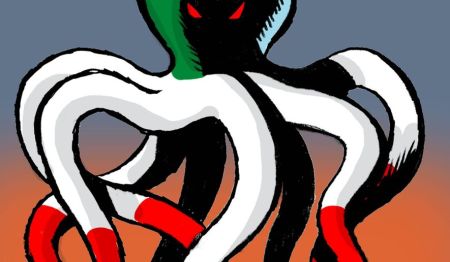
iranianoctopusIllustration on the continuing threat of Iran by Alexander Hunter/The Washington Times

By identifying the gross overreach by the Iranian regime and promising a swift, punitive response, the White House’s stance marked the end of a longstanding American policy of naive appeasement. In so doing, the Trump administration has rightly recognized the true source of instability and existential threat the region faces. Now, instead of issuing broad statements, it must act on a smart strategy for dismantling the key pillars of Iran’s international terror network and stunting the regime’s emboldened overreach.

***********************

Even as the Trump administration seeks to designate the Revolutionary Guard as a Foreign Terrorist Organization, Iran continues its blatant defiance of international norms. Promising “roaring missiles” if threatened, Tehran has test fired several ballistic weapons capable of delivering nuclear material in just the past month. A fundamentally weak regime with dated military capabilities, Iran is attempting to call the United States’ bluff, perhaps to gain leverage in any subsequent re-evaluations of the nuclear deal Tehran struck with the Obama administration. Several blistering statements from the White House backed by a round of sanctions presage the administration’s muscular new approach. But if it hopes to secure the region, it must systematically target the core destabilizing activities of the regime.

In a steady stream of denunciations, the White House pledged tougher U.S. action if the mullahs continue to violate international norms through illicit missile tests, making clear that the Obama era of appeasement is over. “Instead of being thankful to the United States for these agreements, Iran is now feeling emboldened,” an official White House statement read. “We are officially putting Iran on notice.” While many Iranian officials dismissed President Trump’s tough talk on the nuclear deal as empty campaign rhetoric, the president’s appointment of fellow anti-regime hardliner Gen. James Mattis demonstrates his intention to deliver.

Perhaps more importantly, the White House has also challenged the regime’s extended proxy offensives against U.S. allies and friends in the neighborhood. Such actions “underscore what should have been clear to the international community all along about Iran’s destabilizing behavior across the Middle East,” the White House statement continued. Contrary to President Obama’s Middle East policy of abandoning friends and allies and trying to make friends with the adversaries, the Trump administration will fully support its friends. Specifically, this stance challenges Iran’s practice of hiding behind Hezbollah and Houthis militants as it funds and trains them.

Holding a vastly dated arsenal of weapons, Iran is no match for U.S. firepower, leaving only backchannel mercenaries to promote regional dominance. The White House acknowledged this dynamic, specifically characterizing the affront against Saudi forces as being “conducted by Iran-supported Houthi militants.” This link was never recognized by the Obama administration. Such oversight left Iran free to grow and strengthen its hand in these groups, which terrorize the region and undermine our partners. If the Trump administration will craft a strategy for stunting Iran’s proxy network, particularly by cutting funding and armament flows, the region would be far safer and more stable.

Noting Mr. Trump’s concerns about the nuclear deal being “weak and ineffective”, the Trump administration addressed a third key issue in the U.S.-Iranian relationship. Rapidly losing money and influence, the nuclear deal allowed the regime to avoid military confrontation over its development program for which it was grossly unprepared. And despite the intention of weakening the regime and strengthening the Iranian people, rushed U.S. concessions granted the regime an eleventh-hour trickle of lifeblood, both financially and symbolically. By rolling sanctions back, destabilizing behavior was ostensibly met with an influx of funds. As such, the deal signaled that military action against Iran was highly improbable, thus essentially greenlighting the illicit activity that effected warnings and sanctions from the White House over the past month. And despite official remarks by Iranian officials denouncing these statements as naive and weak, the regime would be in dire straits if America turns off the faucet opened by the nuclear deal.

Finally, the administration’s condemnation for Iran’s broader support for terrorism demonstrated clear perspective on the direct threat it poses to international security. In addition to supporting Hezbollah, Iran is currently involved in a life-and-death battle in Syria that includes continuous weapon and militant transfer from Iran to Syria. President Bashar Assad’s downfall in Syria would destroy the linchpin of Iran’s terror apparatus.

Further, any sustainable resolution calls for the withdrawal of all foreign forces from Syria, culling both activity in the country and a pipeline to Hezbollah via the porous borders between Syria and Libya. As Iran finds itself backed into a corner by its regional export of terror, Mr. Trump and his team have many cards to play.

By identifying the gross overreach by the Iranian regime and promising a swift, punitive response, the White House’s stance marked the end of a longstanding American policy of naive appeasement. In so doing, the Trump administration has rightly recognized the true source of instability and existential threat the region faces. Now, instead of issuing broad statements, it must act on a smart strategy for dismantling the key pillars of Iran’s international terror network and stunting the regime’s emboldened overreach.

Iranian Dissidents Demand Investigation Into Islamic Regime’s Secret U.S. Lobbying Network

February 20, 2017

Iranian Dissidents Demand Investigation Into Islamic Regime’s Secret U.S. Lobbying Network, Washington Free Beacon, , February 20, 2017

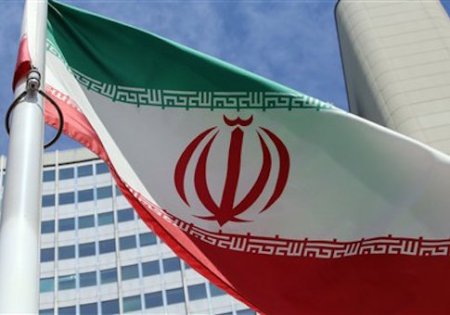
An Iranian flag flies in front of the building where closed-door nuclear talks take place in Vienna, Austria, Wednesday, July 2, 2014. (AP Photo/Ronald Zak)

An Iranian flag flies in front of the building where closed-door nuclear talks take place in Vienna, Austria, Wednesday, July 2, 2014. (AP Photo/Ronald Zak)

A group of nearly 100 prominent Iranian dissidents is demanding that Congress launch investigations into clandestine efforts by the Islamic Republic to influence U.S. policy using a network of lobbyists and propaganda pieces placed in Voice of America’s Persian service, according to a letter sent to leading lawmakers and obtained by the Washington Free Beacon.

The group of dissidents, composed of prominent Iranian voices that oppose the hardline regime in Tehran, says that Congress is not doing enough to expose the Iranian regime’s lobbying efforts in D.C. and propaganda network, which is said to include some at VOA Persia.

Iranian-American groups claiming to represent American interests are said to be carrying water for the Islamic regime inside the White House and on Capitol Hill, according to these dissident voices.

The letter cites VOA’s Persian service as a source of pro-Iran corruption. The Free Beacon has reported multiple times on claims that VOA has been infiltrated by Iran regime loyalists who seek to spin coverage in a favorable way for Tehran. In one instance, an Iranian dissident was barred from appearing on VOA Persia for voicing critical opinions about the regime.

The letter comes at a time when the Trump administration is seeking a tougher approach on Iran for its repeated violations of international accords governing the nuclear deal. The dissidents maintain that U.S. officials have been too soft on the regime and ignored its surreptitious efforts to make American diplomacy more generous to Tehran.

“We write to request a congressional hearing on the efforts of Tehran’s theocratic regime to influence U.S. policy and public diplomacy toward Iran,” the dissidents write to Sen. Bob Corker (R., Tenn.) and Rep. Ed Royce (R., Calif.), the heads of Congress’ foreign affair committees, according to copies of the letter obtained by the Free Beacon.

“We ask that you launch an investigation into any and all lobbying activities of Iranian-American groups, which ostensibly promote the interests of our community but whose real goal is to undermine long-term U.S. national security interests in Iran and its neighborhood,” the dissidents write.

Organizations such as the National Iranian American Council, or NIAC, which played a key role in championing the Iran nuclear agreement and worked closely with the Obama administration, have long operated under a cloud of suspicion. Dissident voices maintain that NIAC in particular serves as a mouthpiece for Iran’s regime in the United States.

The group of dissidents—which includes foreign policy experts, university professors, interfaith leaders, prominent real estate developers, and human rights activists, among others—also requested that Congress shine a light on VOA Persia’s activities.

“We also ask that you launch an inquiry into the Voice of America’s Persian service, whose bloated budget is the largest of all language services under the VOA,” they write.

“There have been numerous instances of editorials by the VOA’s Persian service that have been lenient or favorable to Iran’s clerical despots. We consider this to be totally unacceptable and demoralizing for pro-democracy Iranians who watch these broadcasts.”

Such hearings would compliment past efforts by Congress to investigate corruption at VOA, including what many describe as its pro-Tehran bent.

Peter Kohanloo, a chief architect of the letter and president of the Iranian American Majority, told the Free Beacon that the missive represents an unprecedented effort by Iranian dissidents to expose the Iranian regime’s “influence-peddling agenda.”

“Never before have so many Iranian dissidents of different political persuasions and backgrounds come together to speak with one unified voice,” Kohanloo told the Free Beacon. “This historic letter is a clear and unmistakable message to Tehran that we will no longer tolerate their influence-peddling agenda, which divides our community and demoralizes pro-democracy activists in Iran.”

The group of dissidents informed lawmakers that they are all willing to testify publicly at congressional hearings on both of these matters.

Top Trump Aide: Despite Resignation of National Security Adviser, Administration Committed to Flynn’s Staunch Stance on Iran

February 17, 2017

Top Trump Aide: Despite Resignation of National Security Adviser, Administration Committed to Flynn’s Staunch Stance on Iran, AlgemeinerRuthie Blum, February 16, 2017

trumpandgorkaSebastian Gorka with US President Donald Trump. Photo: Facebook.

A top aide to US President Donald Trump told The Algemeiner on Thursday that despite the resignation this week of General Michael Flynn as national security adviser, Washington remains committed to his staunch positions on Iran.

“Flynn’s statements on the Islamic Republic reflect the new administration’s stance, as the president has been very clear,” said Deputy Assistant to the President Sebastian Gorka. The author, most recently of Defeating Jihad: The Winnable War, was referring, in part, to the former national security adviser’s “officially putting Iran on notice” earlier this month, after it test-launched a ballistic missile, and its proxy terrorist group in Yemen — the Houthis — attacked a Saudi warship.

Speaking to The Algemeiner in the wake of Wednesday’s meeting between Trump and Israeli Prime Minister Benjamin Netanyahu — who has spent years warning against the dangers of a nuclearized Iran — Gorka said, “We are reassessing US policy to the regime in Iran and are committed to not facilitating the mullahs in their destabilization of the whole region as the Obama White House did, especially through the disastrous JCPOA (Joint Comprehensive Plan of Action),” otherwise known as the nuclear deal.

The ayatollahs, he noted, “are not only behaving in ways that are antithetical to the American values of freedom and human rights, but through their proxies, they are harassing our partners in the Middle East, and have become a particularly negative force in the region since being emboldened by the nuclear deal and by the Obama administration, which rewarded bad behavior with billions of dollars and undisclosed annexes to the JCPOA.”

Asked whether Netanyahu’s input had an effect on Trump’s statement about not allowing Iran to achieve “nuclear capability” — rather than merely preventing it from building a nuclear weapon — Gorka said, “The key is that this administration has been adamant that it will treat friends as friends. And you listen to your friends’ concerns.”

The Jewish state, he said, is in this category, “as was expressed in yesterday’s meeting, and through Trump’s insistence that America’s bond with Israel is ‘unbreakable.’ The warmth shown to Netanyahu was palpably different from the cold shoulder he received from the previous president.”

Gorka went on to explain that the opposite messages being conveyed to Israel and Iran from the White House are in keeping with a Marine Corps motto — which, he said, has been informally adopted by the Trump administration — “No better friend, no worse enemy.”

“It means that America is back on the scene,” he said. “No more oxymoronic ‘leading from behind.’ We have restored our relationship with the Israeli government to the place where it should be.”

Gorka, a naturalized American whose parents escaped Communist Hungary and was raised in the UK, came under the critical scrutiny this week of several media outlets for wearing the medal of a Hungarian order of merit re-established in 1920 by Miklós Horthy. Horthy, the wartime Hungarian regent accused of not doing enough to prevent the Nazi deportation of Jews — and whose own son was kidnapped by Nazi commandos — was eventually replaced by the fascist Arrow-Cross Regime, allied to Hitler.

The honor, today, however, is recognized by the International Commission on Orders of Chivalry, and was awarded to Gorka’s father as a recognition of his suffering and resistance to the Communist dictatorship that followed the fascists.

“Smearing individuals is what the Left does when it can’t win an argument on substance,” Gorka said, explaining that his father had been granted the merit more than 30 years after WWII.

Gorka recounted:

He was nine years old when the war broke out and 15 when it ended and the puppet Nazi regime fell. He was imprisoned at the age of 20 for his anti-Communist activities, and was later given the medal in exile. I wear his medal during official occasions in homage to my father and my Hungarian roots.

It is especially appalling that I was smeared, when the writer, Eli Clifton, who first made the allegation was allegedly fired from his previous position for making antisemitic and anti-Israel statements. To quote one authority: “The Simon Wiesenthal Center, the Anti-Defamation League and the American Jewish Committee have all termed the anti-Israeli rhetoric of … Eli Clifton …. to be infected with Jew-hatred and discriminatory policy positions toward Israel.”

It is therefore “galling,” he said, “that I should be slandered in this way, when my family lived through and opposed all dictatorships.” Still, he added, “When your political opponents resort to this kind of defamation, it’s a sign that your side is winning.”

Iran Warns Trump Against Disclosing Secret Iran Deal Documents

February 16, 2017

Iran Warns Trump Against Disclosing Secret Iran Deal Documents, Washington Free Beacon, February 15, 2017

(Does General Flynn know about secret deals beyond those on file at the U.S. Congress? — DM)

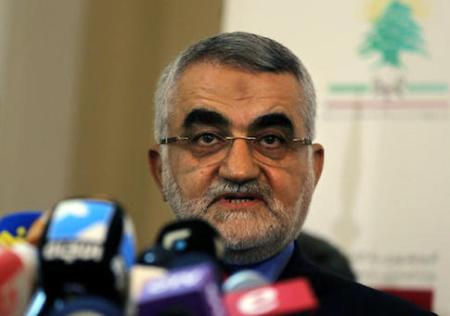
Iranian Alaeddin Boroujerdi, Chairman of the Committee for Foreign Policy and National Security at the Iranian Shura Council, speaks to journalists after meeting with Lebanese Foreign Minister Gibran Bassil, at the Lebanese foreign ministry in Beirut, Lebanon, Monday, Aug. 1, 2016. Boroujerdi arrived in Beirut for two days visit to meet with Lebanese officials. (AP Photo/Bilal Hussein)

Iranian Alaeddin Boroujerdi, Chairman of the Committee for Foreign Policy and National Security at the Iranian Shura Council. . . . (AP Photo/Bilal Hussein)

Senior Iranian officials are warning the Trump administration about disclosing secret deals related to the nuclear deal that have long been hidden from the public by the Obama administration, according to recent comments that prompted pushback from senior sources on Capitol Hill.

Iran’s warning comes on the heels of a Washington Free Beacon report disclosing that former national security adviser Michael Flynn had been pushed out of office partly due to his intention to release these sensitive documents to the American public.

Leading lawmakers in Congress launched multiple investigations last year into the Obama administration’s efforts to keep these documents secret and out of public view. Sources who spoke to the Free Beacon about the matter said that the Trump White House is working on ways to publicize this information despite warnings from Iran.

Secret side deals related to the nuclear agreement remain unclassified but have been stashed in a secure location on Capitol Hill, making it difficult for staffers and lawmakers to view them. Individuals seeking to view these documents must have security clearance and are barred from taking notes or speaking about what they see.

Multiple senior congressional sources familiar with the nature of the documents told the Free Beacon that lawmakers and the Trump administration would not be intimidated by Iranian threats.

Alaeddin Boroujerdi, a senior Iranian lawmaker and head of country’s foreign policy committee, warned the Trump administration against making these documents public in recent remarks.

“If Trump wants to publish confidential documents exchanged between Iran and the International Atomic Energy Agency, it will in fact constitute a violation of the agency’s obligations, because the agency has been committed not to make Iran’s confidential nuclear information and documents available to any country, including the U.S.,” Boroujerdi was quoted as saying in Iran’s state-run media.

Some of these documents surround side deals struck between Iran and the IAEA regarding the Islamic Republic’s ability to enrich uranium. They also include deals about how much information Iran must disclose to international inspectors about the country’s contested nuclear program.

As part of the nuclear deal, U.S. inspectors are not permitted to take part in the review of any Iranian sites.

Rep. Peter Roskam (R., Ill.), a vocal opponent of the Iran deal who has long been fighting for the full disclosure of the Iran deal documents, told the Free Beacon that the Obama administration hid these documents in order to mislead Americans about the true nature of the agreement.

“The administration is under no obligation to conceal information about secret side deals, nor should they feel obligated to protect the anonymity of individuals or institutions who misbehaved at the behest of the Obama administration,” Roskam said.

Included in these documents are details of multiple, secret payments to Iran that totaled close to $2 billion. The money is believed to have been part of an incentive package aimed at securing the release last year of several American hostages in Iran.

None of this information is technically classified, yet it remains hidden from the American public and a large portion of Congress.

“The deal has only survived this long because the Obama administration gave Iran secret exemptions to cheat,” said one veteran congressional adviser familiar with the documents. “The Iranians know that if people found out about those exemptions, it would be obvious that the deal was always a bad, unsustainable deal, and they couldn’t blame Trump. That’s why they’re making up reasons why parts of the deal should be kept secret.”

Iran is expressing opposition to the disclosure of the information in order to force the Trump administration into a corner, the source maintained.

A senior congressional aide familiar with the situation further told the Free Beacon that U.S. lawmakers would not be instructed by Iran about what can and cannot be made public.

“Our declassification procedures are not subject to the whims of Iranian officials,” the source said. “Unclassified documents should be released so the American public can see just how bad of a deal the previous administration negotiated on its behalf.”

A second congressional source explained that federal law mandates these documents be released to lawmakers. This includes side deals and other materials related to the future of Iran’s nuclear program.

“The American public has a right to know what’s really going on behind the scenes with the nuclear agreement. At the very least, Congress is entitled to all relevant documents—including side arrangements or any other related materials—as mandated by federal law under Corker-Cardin,” the source said. “We won’t be intimidated by these empty threats from Iran or any international body. It’s time to make these secret documents public so everyone can for themselves what this deal is really all about.”

Former Obama Officials, Loyalists Waged Secret Campaign to Oust Flynn

February 15, 2017

Former Obama Officials, Loyalists Waged Secret Campaign to Oust Flynn, Washington Free Beacon, February 14, 2017

File photo : Retired Lieutenant General Michael Flynn, U.S. national security advisor, arrives to a swearing in ceremony of White House senior staff in the East Room of the White House in Washington, D.C., U.S., on Sunday, Jan. 22, 2017. Trump today mocked protesters who gathered for large demonstrations across the U.S. and the world on Saturday to signal discontent with his leadership, but later offered a more conciliatory tone, saying he recognized such marches as a "hallmark of our democracy." Photographer: Andrew Harrer/Bloomberg(Sipa via AP Images)

File photo : Retired Lieutenant General Michael Flynn, U.S. national security advisor, arrives to a swearing in ceremony of White House senior staff in the East Room of the White House in Washington, D.C., U.S., on Sunday, Jan. 22, 2017. Photographer: Andrew Harrer/Bloomberg(Sipa via AP Images)

“The Obama administration knew that Flynn was going to release the secret documents around the Iran deal, which would blow up their myth that it was a good deal that rolled back Iran,” the source said. “So in December the Obama NSC started going to work with their favorite reporters, selectively leaking damaging and incomplete information about Flynn.”

“After Trump was inaugurated some of those people stayed in and some began working from the outside, and they cooperated to keep undermining Trump,” the source said, detailing a series of leaks from within the White House in the past weeks targeting Flynn. “Last night’s resignation was their first major win, but unless the Trump people get serious about cleaning house, it won’t be the last.”

******************************

The abrupt resignation Monday evening of White House national security adviser Michael Flynn is the culmination of a secret, months-long campaign by former Obama administration confidantes to handicap President Donald Trump’s national security apparatus and preserve the nuclear deal with Iran, according to multiple sources in and out of the White House who described to the Washington Free Beacon a behind-the-scenes effort by these officials to plant a series of damaging stories about Flynn in the national media.

The effort, said to include former Obama administration adviser Ben Rhodes—the architect of a separate White House effort to create what he described as a pro-Iran echo chamber—included a small task force of Obama loyalists who deluged media outlets with stories aimed at eroding Flynn’s credibility, multiple sources revealed.

The operation primarily focused on discrediting Flynn, an opponent of the Iran nuclear deal, in order to handicap the Trump administration’s efforts to disclose secret details of the nuclear deal with Iran that had been long hidden by the Obama administration.

Insiders familiar with the anti-Flynn campaign told the Free Beacon that these Obama loyalists plotted in the months before Trump’s inauguration to establish a set of roadblocks before Trump’s national security team, which includes several prominent opponents of diplomacy with Iran. The Free Beaconfirst reported on this effort in January.

Sources who spoke to the Free Beacon requested anonymity in order to speak freely about the situation and avoid interfering with the White House’s official narrative about Flynn, which centers on his failure to adequately inform the president about a series of phone calls with Russian officials.

Flynn took credit for his missteps regarding these phone calls in a brief statement released late Monday evening. Trump administration officials subsequently stated that Flynn’s efforts to mislead the president and vice president about his contacts with Russia could not be tolerated.

However, multiple sources closely involved in the situation pointed to a larger, more secretive campaign aimed at discrediting Flynn and undermining the Trump White House.

“It’s undeniable that the campaign to discredit Flynn was well underway before Inauguration Day, with a very troublesome and politicized series of leaks designed to undermine him,” said one veteran national security adviser with close ties to the White House team. “This pattern reminds me of the lead up to the Iran deal, and probably features the same cast of characters.”

The Free Beacon first reported in January that, until its final days in office, the Obama administration hosted several pro-Iran voices who were critical in helping to mislead the American public about the terms of the nuclear agreement. This included a former Iranian government official and the head of the National Iranian American Council, or NIAC, which has been accused of serving as Iran’s mouthpiece in Washington, D.C.

Since then, top members of the Obama administration’s national security team have launched a communications infrastructure after they left the White House, and have told reporters they are using that infrastructure to undermine Trump’s foreign policy.

“It’s actually Ben Rhodes, NIAC, and the Iranian mullahs who are celebrating today,” said one veteran foreign policy insider who is close to Flynn and the White House. “They know that the number one target is Iran … [and] they all knew their little sacred agreement with Iran was going to go off the books. So they got rid of Flynn before any of the [secret] agreements even surfaced.”

Flynn had been preparing to publicize many of the details about the nuclear deal that had been intentionally hidden by the Obama administration as part of its effort to garner support for the deal, these sources said.

Flynn is now “gone before anybody can see what happened” with these secret agreements, said the second insider close to Flynn and the White House.

Sources in and out of the White House are concerned that the campaign against Flynn will be extended to other prominent figures in the Trump administration.

One senior White House official told the Free Beacon that leaks targeting the former official were “not the result of a series of random events.”

“The drumbeat of leaks of sensitive material related to General Flynn has been building since he was named to his position,” said the official, who is a member of the White House’s National Security Council. “Last night was not the result of a series of random events. The president has lost a valuable adviser and we need to make sure this sort of thing does not happen again.”

Other sources expressed concern that public trust in the intelligence community would be eroded by the actions of employees with anti-Trump agendas.

“The larger issue that should trouble the American people is the far-reaching power of unknown, unelected apparatchiks in the Intelligence Community deciding for themselves both who serves in government and what is an acceptable policy they will allow the elected representatives of the people to pursue,” said the national security adviser quoted above.

“Put aside the issue of Flynn himself; that nameless, faceless bureaucrats were able to take out a president’s national security adviser based on a campaign of innuendo without evidence should worry every American,” the source explained.

Eli Lake, a Bloomberg View columnist and veteran national security reporter well sourced in the White House, told the Free Beacon that Flynn earned a reputation in the Obama administration as one of its top detractors.

“Michael Flynn was one of the Obama administration’s fiercest critics after he was forced out of the Defense Intelligence Agency,” said Lake, who described “the political assassination of Michael Flynn” in his column published early Tuesday.

“[Flynn] was a withering critic of Obama’s biggest foreign policy initiative, the Iran deal,” Lake said. “He also publicly accused the administration of keeping classified documents found in the Osama bin Laden raid that showed Iran’s close relationship with al Qaeda. He was a thorn in their side.”

Lake noted in his column that he does not buy fully the White House’s official spin on Flynn’s resignation.

“For a White House that has such a casual and opportunistic relationship with the truth, it’s strange that Flynn’s ‘lie’ to Pence would get him fired,” Lake wrote. “It doesn’t add up.”

White House Press Secretary Sean Spicer stated in his daily briefing that “the evolving and eroding level of trust as a result of this situation and a series of other questionable incidents is what led the president to ask General Flynn for his resignation.”

A third source who serves as a congressional adviser and was involved in the 2015 fight over the Iran deal told the Free Beacon that the Obama administration feared that Flynn would expose the secret agreements with Iran.

“The Obama administration knew that Flynn was going to release the secret documents around the Iran deal, which would blow up their myth that it was a good deal that rolled back Iran,” the source said. “So in December the Obama NSC started going to work with their favorite reporters, selectively leaking damaging and incomplete information about Flynn.”

“After Trump was inaugurated some of those people stayed in and some began working from the outside, and they cooperated to keep undermining Trump,” the source said, detailing a series of leaks from within the White House in the past weeks targeting Flynn. “Last night’s resignation was their first major win, but unless the Trump people get serious about cleaning house, it won’t be the last.”

The art of the ‘no deal’ with the PA

February 14, 2017

The art of the ‘no deal’ with the PA, Israel Hayom, Ruthie Blum, February 14, 2017

Meanwhile, even Fatah and Hamas can’t bury the hatchet, other than literally, in the backs of one another’s operatives. But the one thing the two terrorist groups do share is a mutual antipathy to Israel and the aim to eradicate the Jewish state. The author of “The Art of the Deal” and his secretary of state will learn this soon enough, if they don’t know it already. In any case, the appointment of world-renowned expert in Islamic terrorism Sebastian Gorka as deputy assistant to the president is a sign that they want to be told the truth. Let us hope that Netanyahu feels welcome and comfortable enough during his visit in Washington to do the same.

****************************

There is much speculation about Israeli Prime Minister Benjamin Netanyahu’s upcoming meeting at the White House with U.S. President Donald Trump. Typically, rather than waiting to hear the outcome of Wednesday’s deliberation, Israelis have been analyzing a conversation that has yet to take place, and weighing in on the extent to which the Jewish state can count on the new administration in Washington to embrace the policies of the Israeli government, and on the level of personal chemistry that emerges between the two leaders.

The assumption is that the Joint Comprehensive Plan of Action — the nuclear deal reached between Iran and world powers in July 2015 — will be on the agenda, and that the issue of achieving a two-state solution between Israel and the Palestinian Authority will be raised. The second topic includes several directly related issues, such as the possibility of the relocation of the U.S. Embassy in Israel from Tel Aviv to Jerusalem, and the newly passed Judea and Samaria Settlement Regulation Law, which retroactively grants permits to a number of outposts on privately owned Palestinian land.

Whatever the upshot of the meeting, however, one thing is certain: The Trump administration will not be able to broker an agreement that resolves the Palestinian-Israeli conflict, no matter how talented, smart or well-intentioned Jared Kushner — the president’s son-in-law who is purportedly being charged with this task — may be.

The charade in which Netanyahu has participated since he announced his conditional support for Palestinian statehood in a televised address to the nation in June 2009, is that there is a “solution” to the ongoing war waged by the Arabs in Judea and Samaria, Gaza and east Jerusalem against the very existence of the Jewish state. Netanyahu knows better than anybody else that this is as much an exercise in rhetoric as it is in futility. He is fully aware that the only way for peace to be possible is for the Palestinians to oust their corrupt and evil leaders in Fatah and Hamas and — in striving for the freedom and prosperity they have been denied by the honchos in Ramallah and Gaza City — emulate Israeli society.

If such a day ever comes, no more than five minutes will be required for the sides to agree on the technicalities — maybe 10, if the negotiators get stuck in traffic on the way to the table.

The same holds true for Iran, which is why the JCPOA was not flawed due to the wording of its clauses, but rather to the fact that the mullah-led regime in Tehran had no intention of reaching any genuine agreement with the “infidels” it wishes to annihilate. Its goal was not to have international sanctions lifted in order to get on with the business of improving the economic lot of the Iranian people. It simply wanted a more unfettered path to obtaining nuclear weapons with which to impose its hegemony on the Middle East and force the rest of the world to capitulate to its Islamist will.

Meanwhile, even Fatah and Hamas can’t bury the hatchet, other than literally, in the backs of one another’s operatives. But the one thing the two terrorist groups do share is a mutual antipathy to Israel and the aim to eradicate the Jewish state. The author of “The Art of the Deal” and his secretary of state will learn this soon enough, if they don’t know it already. In any case, the appointment of world-renowned expert in Islamic terrorism Sebastian Gorka as deputy assistant to the president is a sign that they want to be told the truth. Let us hope that Netanyahu feels welcome and comfortable enough during his visit in Washington to do the same.

Iran’s Bluster Is Just Fear of Trump — and Revolution

February 10, 2017

Iran’s Bluster Is Just Fear of Trump — and Revolution, PJ MediaMichael Ledeen, February 10, 2017

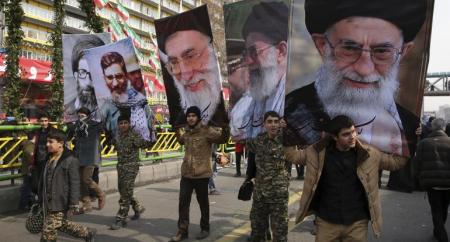
he-not-heavy-he-my-brotherIranians march while carrying various portraits of Supreme Leader Ayatollah Ali Khamenei in an annual rally commemorating the anniversary of the 1979 Islamic revolution, which toppled the late pro-U.S. Shah, Mohammad Reza Pahlavi, in Tehran, Iran, Friday, Feb. 10, 2017. (AP Photo/Vahid Salemi)

They’re chanting “Death to America” in Tehran again, on the anniversary of the Iranian revolution of 1979. And they are stomping on big posters of The Donald.

Iranian leaders are warning the United States that tough talk and threats are pointless; that Iran is so powerful they will pursue their revolutionary mission no matter what we do or say, that their efforts are blessed by Allah.

But it’s all bluster — and the Iranian people know it.

The rent-a-crowds, which have a high proportion of military men, are not really prepared to directly challenge the United States. The marches, chants, and posters are not so much for our consumption as for that of their own citizens, most of whom are disgusted with the failed regime and yearn for a return to the Western world. The regime fears that, sooner or later, the tens of millions who detest Khamenei, Rouhani, et al., will flood the streets as they recently did on the occasion of the funeral of Hashemi Rafsanjani, chanting anti-regime and anti-Russian slogans.

Today’s “festivities” are designed to keep the Iranian people in their oppressed places — and mass hangings and torture underline their real targets.

The regime is intensely worried that the Trump team is preparing serious action. The mullahs know that if America moves, most Iranians will try to bring down the regime.

As luck would have it, another Persian anniversary arrives next month: Nowruz, the Persian new year, whose origins lie in the country’s Zoroastrian past. The radical Muslims who rule the Islamic Republic have always disliked these celebrations — the most famous of which features jumping through bonfires — and it is likely that there is a vast Zoroastrian underground in the country.

This would be a great occasion for Trump, Tillerson, Pence, Mattis, Flynn, and Pompeo to call for a free Iran. Something like this:

We Americans embrace those brave Iranians who are fighting to be free. We are common victims of the tyrants around Khamenei.

The Tehran regime constantly preaches “Death to America,” and they have made good on this slogan, killing hundreds of American soldiers, taking scores of American hostages, harassing our naval forces in the Persian Gulf, and supporting terrorism worldwide.

We support the Iranian people in their legitimate efforts to freely design a modern constitution, remove the theocratic tyrants, and rejoin the Western world.

Revolutionary Donald? If he can do it here, he can do it there, too.

In trouble, Iran tries to discredit the MEK – dissidents

February 7, 2017

In trouble, Iran tries to discredit the MEK – dissidents, Iran Focus, February 6, 2017
mek-rally-750

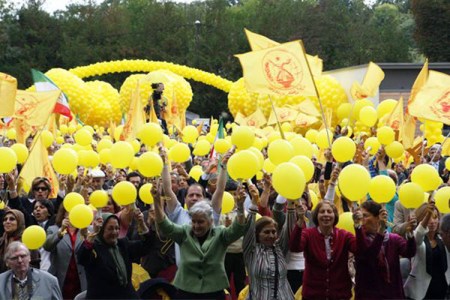
London, 7 Feb – As President Donald Trump’s new US administration steps up pressure on Iran over its belligerent activities, Iranian opponents are arguing that Tehran is now targeting its main organised opposition movement, the People’s Mojahedin Organisation of Iran (PMOI or MEK), with disinformation in order to discredit its role as a potential alternative to the theocratic regime.

The MEK, established over 51 years ago, as an opposition movement to the Shah’s regime, soon fell out with the clerical government that took over with the 1979 revolution. Since 1981, the MEK has been considered as the ruling theocracy’s main nemesis. The MEK is also the leading force in the main opposition coalition National Council of Resistance of Iran (NCRI).

Following the publication of articles by the Iranian ‘lobby’ targeting the MEK with ‘misinformation’, Farzin Hashemi, a Member of the NCRI Foreign Affairs Committee, wrote on Monday:

“Over the past week, once again policy on Iran was widely discussed in the media. Simultaneously, in recent weeks there has been more growing call for a new approach toward Iranian opposition, the MEK. The announcement by the US National Security Advisor that ‘Iran is officially on notice’ drew much attention. This position was followed by more Tweets from President Trump and a new round of sanctions, raising the prospect of a change of policy in the US approach towards Iran”.

Hashemi pointed out that both the NCRI and the MEK support sanctions against Iranian officials over their role in ballistic missile proliferation, a violation of United Nations Security Council Resolution 2231:

“As far as the Iranian Resistance, and its components including the People’s Mojahedin Organization of Iran (MEK/PMOI), is concerned imposing sanctions against a number of individuals and companies affiliated to the clerical regime for their role in missile proliferation is a positive step in confronting the illegitimate and terrorist dictatorship whose record includes 120,000 political executions”.

Last week the Trump administration sanctioned 25 Iranian officials and entities for a recent ballistic missile test launch by Tehran. Hashemi argued, however, that in order to deal with the threats emanating from Tehran – which it described as the Godfather of state-sponsored terrorism – the world community ought to impose comprehensive sanctions on Iran’s Revolutionary Guards (IRGC), the Ministry of Intelligence, and “other entities involved in suppression of the Iranian people and export of terrorism”.

“The IRGC and its affiliated militias and their commanders must be expelled from the countries of the region, in particular from Iraq, Syria, and Yemen. Otherwise, the region would not witness peace and tranquillity”.

“The prospect of a shift of US policy, has already shaken not only the Iranian regime and its lobbies but also apologists and advocates of the old and failed policy of appeasement. In order to maintain the ‘golden era,’ a term used by the mullahs’ officials internally and sometimes publicly to describe the last few years of US policy on Iran, they have resorted to a two-pronged strategy”, Hashemi argued.

Through their “propaganda in the media”, under various covers, they are trying to create an “echo chamber” with which any suggestion of the need for a firm policy on Iran and its rogue behaviour, both at home and abroad, is described as “war mongering”, he said. “They are desperately trying to intimidate those calling for a change of policy to side with the people of Iran, through such false labels”.

“Simultaneously, they are engaged in a massive disinformation campaign to discredit the democratic opposition, the MEK and the coalition National Council of Resistance of Iran (NCRI), led by its President-elect Maryam Rajavi. By spreading fake news about the MEK/PMOI, originated from the Ministry of Intelligence of the mullahs’ regime and the intelligence section of the IRGC, their objective is to convey this false message that there is no viable opposition and the world must accept and deal with the religious dictatorship ruling Iran. Thus, the core of the issue is not their debunked allegations but their hidden agenda to maintain the policy of appeasement”.

“So, the choice is simply to opt between supporting the central banker of international terrorism with the record of having executed 120,000 dissidents for political reasons –ironically, the majority of them members and sympathizers of the PMOI/MEK – or to side with the Iranian people in their quest for a free and democratic Iran in which there would be no more executions, no more gender discrimination, no more supporting terrorist groups and destabilizing the entire region and no more nuclear weapons program”.

Iranian dissidents have also taken to social media, such as Twitter and Facebook, to denounce Tehran’s ‘media propaganda ploy’ against the MEK.

On 9 January this year, 23 US prominent dignitaries, many of them with years of public service, urged the Trump administration “to adopt and pursue an Iran policy that recognizes the interests and inalienable rights of the Iranian people, and not just the clerical regime ruling over them.”

Highlighting the failure of the past policy that the nuclear deal might lead to a change of behavior from Tehran, the signatories stressed that the regime’s aggressive policy is part of their efforts on “preserving the vulnerable system of dictatorship”.

They also called for the voice of the Iranian people to be listened to through the NCRI and the MEK.

The former US officials also spoke out against Iran’s misinformation campaign against the MEK.

Pointing out that some “media and policy community continue to recycle defamatory allegations from decades past,” they wrote “We now know that these designations of the resistance as a terrorist group by Western governments were not made in response to confirmed terrorism; all were diplomatic gestures taken at the request of Tehran. Iran’s Ministry of Intelligence and Security has for many years impaired the exiled opposition by covertly spreading false and distorted claims through third parties in the West. Other governments like Germany and the Netherlands closely monitor Iran’s influence operations on their soil; a thorough counter‐intelligence investigation by the US is clearly needed and long overdue”.

They concluded by recommending to Trump: “With a more enlightened grasp of the Iranian regime’s priorities and vulnerabilities, your Administration will be equipped to exert leverage enabling the US to oppose Tehran’s repression and adventurism while standing for the fundamental values both our peoples share”.

Hashemi added: “While, Tehran’s lobby and advocates of appeasement will desperately continue to allocate all their resource to discredit the resistance, and in particular the MEK (PMOI) and to preserve the failed old policy, their time is over”.


More about the People’s Mojahdin Organization of Iran (PMOI/ MEK) —– Source

The People’s Mojahedin Organization of Iran (Also known as MEK, or Mujahedin-e-Khalq / Mujahedeen-e-Khalq), was founded on September 6, 1965, by Mohammad Hanifnejad, Saeed Mohsen, and Ali-Asghar Badizadgan. All engineers, they had earlier been members of the Freedom Movement (also known as the Liberation Movement), created by Medhi Bazargan in May 1961.1

The MEK’s quest culminated in a true interpretation of Islam, which is inherently tolerant and democratic, and fully compatible with the values of modern-day civilization. It took six years for the MEK to formulate its view of Islam and develop a strategy to replace Iran’s dictatorial monarchy with a democratic government.

MEK’s interpretation of Islam

The theocratic mullah regime in Iran believe interpreting Islam is their exclusive domain. The MEK reject this view and the cleric’s reactionary vision of Islam. The MEK’s comprehensive interpretation of Islam proved to be more persuasive and appealing to the Iranian youth.
MEK’s founders and new members studied the various schools of thought, the Iranian history and those of other countries, enabling them to analyze other philosophies and ideologies with considerable knowledge and to present their own ideology, based on Islam, as the answer to Iran’s problems.

MEK’s leadership’s arrest during the 70s.

The Shah’s notorious secret police, SAVAK, arrested all MEK leaders and most of its member’s in1971. On May 1972, the founders of the MEK, Mohammad Hanifnejad , Saeed Mohsen and Ali Asghar Badizadegan, along with two members of the MEK leadership, Mahmoud Askarizadeh and Rasoul Meshkinfam, were put before death squads and were executed after long months of imprisonment and torture. They were the true vanguards, who stood against the dictatorial regime of Shah. However, they are also recognized for their opposition to what is today known as Islamic fundamentalism.

The death sentence of Massoud Rajavi, a member of MEK’s central committee, was commuted to life imprisonment as a result of an international campaign by his Geneva based brother, Dr. Kazem Rajavi (assassinated in April 1990 in Geneva by mullahs’ agents) and the personal intervention of the French President Georges Pompidou and Francois Mitterrand. He was the only survivor of the MEK original leadership.
Massoud Rajavi’s critical role in characterizing religious extremism

From 1975 to 1979, while incarcerated in different prisons, Massoud Rajavi led the MEK’s struggle while constantly under torture for his leading position.

Massoud Rajavi stressed the need to continue the struggle against the shah’s dictatorship. At the same time, he characterized religious fanaticism as the primary internal threat to the popular opposition, and warned against the emergence and growth of religious fanaticism and autocracy. He also played a crucial role when some splinter used the vacuum in the MEK leadership who were all executed or imprisoned at the time, to claim a change of ideology and policy. Massoud Rajavi as the MEK leader condemn these individual’s misuse of MEK’s name while continuing to stress the struggle against dictatorship. His efforts while still in prison forced these individuals to no longer operating under the name of MEK and adopting a different name for their group. These positions remained the MEK’s manifesto until the overthrow of the shah’s regime.

Release of Political Prisoners on the last days of the Shah

A month before the 1979 revolution in Iran, the Shah was forced to flee Iran, never to return. All democratic opposition leaders had by then either been executed by the Shah’s SAVAK or imprisoned, and could exert little influence on the trend of events. Khomeini and his network of mullahs across the country, who had by and large been spared the wrath of SAVAK, were the only force that remained unharmed and could take advantage of the political vacuum. In France, Khomeini received maximum exposure to the world media. With the aid of his clerical followers, he hijacked a revolution that began with calls for democracy and freedom and diverted it towards his fundamentalist goals. Through an exceptional combination of historical events, Shiite clerics assumed power in Iran.

Khomeini’s gradual crackdown on MEK in fear of their popular support

In internal discourses, Rajavi the remaining leader of the MEK, argued that Khomeini represented the reactionary sector of society and preached religious fascism. Later, in the early days after the 1979 revolution, the mullahs, specifically Rafsanjani, pointed to these statements in inciting the hezbollahi club-wielders to attack the MEK.

Following the revolution, the MEK became Iran’s largest organized political party. It had hundreds of thousands of members who operated from MEK offices all over the country. MEK publication, ‘Mojahed’ was circulated in 500,000 copies.

Khomeini set up an Assembly of Experts comprised of sixty of his closest mullahs and loyalists to ratify the principle of velayat-e faqih (absolute supremacy of clerical rule) as a pillar of the Constitution. The MEK launched a nationwide campaign in opposition to this move, which enjoyed enormous popular support. Subsequently, the MEK refused to approve the new constitution based on the concept of velayat-e faqih, while stressing its observance of the law of the country to deny the mullahs any excuse for further suppression of MEK supporters who were regularly targeted by the regime’s official and unofficial thugs.

Khomeini sanctioned the occupation of the United States embassy in 1979 in order to create an anti-American frenzy, which facilitated the holding of a referendum to approve his Constitution, which the MEK rejected.

MEK’s endeavors to participate in the political process avoiding an unwanted conflict with government repressive forces
The MEK actively participated in the political process, fielding candidates for the parliamentary and presidential elections. The MEK also entered avidly into the national debate on the structure of the new Islamic regime, though was unsuccessful in seeking an elected constituent assembly to draft a constitution.

The MEK similarly made an attempt at political participation when [then] Massoud Rajavi ran for the presidency in January 1980. MEK’s leader was forced to withdraw when Khomeini ruled that only candidates who had supported the constitution in the December referendum – which the MEK had boycotted- were eligible. Rajavi’s withdrawal statement emphasized the MEK’s efforts to conform to election regulations and reiterated the MEK’s intention to advance its political aims within the new legal system”. (Unclassified report on the People’s Mojahedin Organization of Iran(PMOI/ MEK) by the Department of State to the United States House of Representatives, December 1984.)

However, the MEK soon found itself in a direct struggle against the forces of the regime’s Supreme leader. The MEK’s differences with Khomeini dated back to the 1970s, and stem from its opposition to what is known today as Islamic extremism. Angry at the position taken by the MEK against his regime and worried about the MEK’s growing popularity, Khomeini ordered a brutal crackdown against the MEK and its supporters. Between 1979 and 1981, some 70 MEK members and sympathizers were killed and several thousand more were imprisoned by the Iranian regime.

June 20, 1981- Khomeini’s order to open fire on peaceful demonstration of half-a-million supporters of MEK

The turning point came on 20th June 1981, when the MEK called a demonstration to protest at the regime’s crackdown, and to call for political freedom which half-a-million supporters participated at. Khomeini ordered the Revolutionary Guards to open fire on the swelling crowd, fearing that without absolute repression the democratic opposition (MEK) would force him to engage in serious reforms – an anathema as far as he was concerned; he ordered the mass and summary executions of those arrested.

Since then, MEK activists have been the prime victims of human rights violations in Iran. Over 120,000 of its members and supporters have been executed by the Iranian regime, 30,000 of which, were executed in a few months in the summer of 1988, on a direct fatwa by Khomeini, which stated any prisoners who remain loyal to the MEK must be executed.

Having been denied its fundamental rights and having come under extensive attack at the time that millions of its members, supporters and sympathizers had no protection against the brutal onslaught of the Iranian regime, the MEK had no choice but to resist against the mullahs’ reign of terror.

“Towards the end of 1981, many of the members of the MEK and supporters went into exile. Their principal refuge was in France. But in 1986, after negotiations between the French and the Iranian authorities, the French government effectively treated them as undesirable aliens, and the leadership of the MEK with several thousand followers relocated to Iraq.” (Judgment of the Proscribed Organizations Appeal Commission, November 30, 2007.)

MEK Today

The MEK today is the oldest and largest anti-fundamentalist Muslim group in the Middle East. It has been active for more than a half century, battling two dictatorships and a wide range of issues. The MEK supports:

• Universal suffrage as the sole criterion for legitimacy
• Pluralistic system of governance
• Respect for individual freedoms
• Ban on the death penalty
• Separation of religion and state
• Full gender equality
• Equal participation of women in political leadership. MEK is actually led by its central committee consist of 1000 women.
• Modern judicial system that emphasizes the principle of innocence, a right to a defense, and due process
• Free markets
• Relations with all countries in the world
• Commitment to a non-nuclear Iran

The MEK remains a strong and cohesive organization, with a broad reach both worldwide and deep within Iran. MEK is the leading voice for democracy in Iran, supported by its interpretation of Islam that discredits the fundamentalist mullahs’ regime.