Archive for the ‘Trump agenda’ category

Send in the Head Clowns

January 6, 2017

Send in the Head Clowns, Washington Free Beacon, January 6, 2017

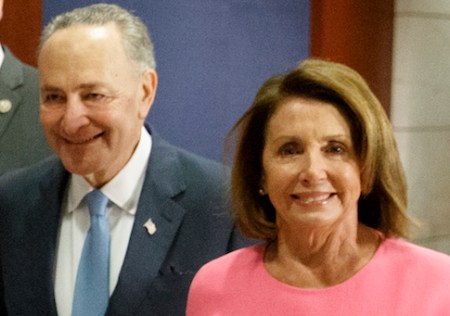
President Barack Obama, joined by, from second from left, Rep. Frederica Wilson, D-Fla., Rep. Joseph Crowley, D-N.Y., Senate Minority Leader Charles Schumer of N.Y., and House Minority Leader Nancy Pelosi of Calif. arrives on Capitol Hill in Washington, Wednesday, Jan. 4, 2017, to meet with members of Congress to discuss his signature healthcare law. (AP Photo/Evan Vucci)

Senate Minority Leader Charles Schumer of N.Y., and House Minority Leader Nancy Pelosi of Calif.  (AP Photo/Evan Vucci)

It takes time to adjust. The Democrats may be counting on inertia and the media to slow the Republicans down and force them into a defensive crouch. Worked in the past. But here’s the thing about Trump: He doesn’t play defense.

************************

Democrats have been in power for so long that they’ve forgotten how to oppose. Their party has been on a roll since 2005 when the botched Social Security reform, the slow bleed of the Iraq war, and Hurricane Katrina sent the Bush administration into a tailspin. The Democrats won the Congress the following year and the White House two years after that. And while they lost the House in 2010 and the Senate in 2014, Democrats still had the advantage of retaining the White House, a president seemingly immune from criticism, the courts, the bureaucracy, and large portions of the media. The correlation of forces in Washington has weighed heavily in favor of the Democrats for a decade.

No longer. The election of Donald Trump has brought unified Republican government to Washington and overturned our understanding of how politics works. Or at least it should have done so. The Democrats seem not to understand how to deal with Trump and the massive change he is about to bring to the nation’s capital. During the general election they fell for the idea that Trump can be defeated by conventional means, spending hundreds of millions of dollars in negative television advertising and relying on political consultants beholden to whatever line Politico was selling on a given day. This strategy failed Trump’s Republican primary opponents, but Democrats figured that was simply because the GOP was filled with deplorables. It was a rationalization that would cost them.

Republicans control the House, the Senate, 34 governor’s mansions, and 4,100 seats in state legislatures. But Democrats act like they run Washington. Nancy Pelosi’s speech to the 115th House of Representatives was a long-winded recitation of the same liberal agenda that has brought her party to its current low. Give her points for consistency I guess. Chuck Schumer is just being delusional.

Smarting from the failed nomination of Merrick Garland to the Supreme Court, the Senate minority leader pledged to oppose Donald Trump’s nominee weeks before inauguration day. “If they don’t appoint somebody good,” he said on MSNBC, “we’re going to oppose them tooth and nail.” That would “absolutely” include keeping the seat held by the late Antonin Scalia empty, he said. “We are not going to make it easy for them to pick a Supreme Court justice.”

I suppose it’s too much to expect a graduate of Harvard Law School to grasp the difference between majority and minority. Mitch McConnell was able to block Garland’s appointment because the Republicans controlled the Senate. The Democrats do not. And McConnell was able to hold his caucus together because he was on solid historical ground. Lyndon Johnson’s nomination of Abe Fortas as chief justice failed in the election year 1968, and the so-called “Biden Rule” of 1992 stipulated no Supreme Court replacements during the last year of a presidency. Schumer himself, in a 2007 speech, expanded the waiting period to the final 18 months of a president’s term. Now, despite a record of calling on the Senate to confirm the president’s nominees—as long as the president is a Democrat—Schumer has adopted the strategy of no Supreme Court confirmations at all. How does he think President Trump will respond? By caving?

The Democrats, lead by head clown Chuck Schumer, know how bad ObamaCare is and what a mess they are in. Instead of working to fix it, they..

An attempt to filibuster the Scalia replacement may force McConnell to change the rules so that Supreme Court vacancies can be approved by a majority vote. And where would Democrats be then? Not only will they have lost the Scalia seat, they will be completely vulnerable should another vacancy arise in the next two years. And Schumer has a reputation for political savvy.

The blanket opposition to president-elect Trump extends to his appointments at large. Democrats can thank Harry Reid for allowing executive branch officials and lower-court judges to be approved by a majority vote. But the Washington Post reports that Schumer wants to prolong the confirmation process so that some Trump cabinet officials are not confirmed until March. The reason: “Democrats have been troubled by a lack of personal disclosure by Cabinet choices that they say mirrors Trump’s refusal to disclose personal tax information during the presidential campaign.” The presidential campaign that, in case the Democrats have forgotten, Trump won.

Reviving the issue of the tax returns makes little sense. It generates headlines but doesn’t move votes. And though it’s entirely possible that one or more of Trump’s nominees won’t be confirmed, I seriously doubt it. In every incoming administration there is a personal revelation or atrocious hearing that dooms a cabinet appointment. But hearings begin next week, whether Chuck Schumer likes it or not, and so far the quality of the opposition research against Trump’s picks has been remarkably blah.

Yes, the first duty of the opposition is to oppose. And I don’t expect the Democrats to roll over for Trump. But I am surprised by their hysterics, and by their race to see who can be the most obnoxious to the new president. They seem to have been caught off guard, to say the least, by their situation. Take for example their willingness to stand on a podium beside a sign that reads, “Make America Sick Again.” By embracing this message, such as it is, the Democrats associated not Trump but themselves with illness. Who on earth thought that was a good idea?

It takes time to adjust. The Democrats may be counting on inertia and the media to slow the Republicans down and force them into a defensive crouch. Worked in the past. But here’s the thing about Trump: He doesn’t play defense.
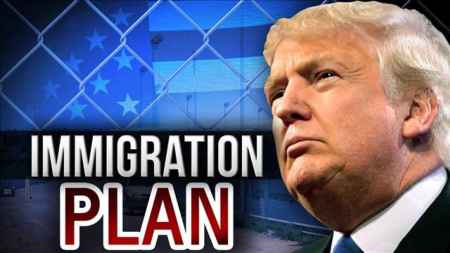

President Trump’s Immigration Challenge

January 4, 2017

President Trump’s Immigration Challenge, Front Page MagazineMichael Cutler, January 4, 2017

nj

On January 20, 2017 President Trump can and likely will end all of Obama’s illegal immigration executive orders, but he needs to do more.

For decades the effective enforcement of our nation’s immigration laws was hobbled by lack of resources in general and a particularly devastating failure to enforce the immigration laws from within the interior of the United States.

For decades the Border Patrol was perceived as the primary enforcement arm of America’s immigration laws and for the Border Patrol this worked out fine.  They got the lion’s share of publicity and, far more importantly, the funding while INS special agents and the interior enforcement mission were all but ignored

When the DHS (Department of Homeland Security) was created in the wake of the terror attacks of 9/11, the former INS was dismantled and broken into several components of the DHS and mixed in with other agencies, principally the U.S. Customs Service.

Bad as it was for INS agents to operate in the shadow of the Border Patrol, the creation of the DHS was disastrous and caused many of the INS agents nostalgic for “the good old days.”

On May 5, 2005 the House Subcommittee on Immigration, Border Security and Claims conducted a hearing on the topic, “New ‘Dual Mission’ Of The Immigration Enforcement Agencies.”

I was one of four witnesses who testified at that hearing.  In point of fact, I testified at several hearings that sought to understand the challenges that the creation of the DHS created for the effective enforcement of our nation’s immigration laws.

In my testimony I clearly articulated my concerns about the myriad issues created when the DHS was established and the former INS was dismantled.

Consider this excerpt from the testimony of then-Subcommittee Chairman John Hostettler in which he articulated the importance of immigration law enforcement and that was, however, hobbled by the creation of the DHS:

The first two Subcommittee hearings of the year examined in detail how the immigration enforcement agencies have inadequate resources and too few personnel to carry out their mission. The witnesses mentioned the lack of uniforms, badges, detention space, and the inevitable low morale of frontline agents who are overwhelmed by the sheer volume of incoming illegal aliens. If this were not enough, these ”immigration enforcement” agencies also face internal confusion resulting from dual or multiple missions in which immigration has all too often taken a back seat. Sadly, contrary to Congress’ expectations, immigration enforcement has not been the primary focus of either of these agencies, and that is the subject of today’s hearing.

The Homeland Security Act, enacted in November 2002, split the former Immigration and Naturalization Service, or INS, into separate immigration service and enforcement agencies, both within the Department of Homeland Security. This split had been pursued by Chairman Sensenbrenner based on testimony and evidence that the dual missions of INS had resulted in poor performance.

There was a constant tug-of-war between providing good service to law-abiding aliens and enforcing the law against law-breakers. The plain language of the Homeland Security Act, Title D, creates a ”Bureau of Border Security,” and specifically transfers all immigration enforcement functions of INS into it. Yet when it came down to actually creating the two: new agencies, the Administration veered off course. Although the service functions of INS were transferred to USCIS, the enforcement side of INS was split in two, what is now Immigration and Customs Enforcement, or ICE, to handle interior enforcement, and Customs and Border Protection (CBP) to guard our borders.

ICE was given all Customs agents, investigators, intelligence and analysis-from the Treasury Department, as well as the Federal Protective Service to guard Federal buildings, and the Federal Air Marshals to protect our airplanes, and finally the INS investigators.

CBP was given all Treasury Customs inspectors at the ports-of-entry, Agriculture Inspector from the Department Of Agriculture, and INS inspectors.

At no time during the reorganization planning was it anticipated by the Committee that an immigration enforcement agency would share its role with other enforcement functions, such as enforcement of our customs laws. This simply results in the creation of dual or multiple missions that the act sought to avoid in the first place.

Failure to adhere to the statutory framework established by HSA has produced immigration enforcement incoherence that undermines the immigration enforcement mission central to DHS, and undermines the security of our Nation’s borders and citizens.

It is not certain on what basis it was determined that customs and agriculture enforcement should become part of the immigration enforcement agency, except to require Federal agents at the border to have more expertise and more functions.

It is also unknown on what basis the Federal Air Marshals should become part of this agency, especially since it has been revealed that the policy is not to apprehend out-of-immigration status aliens when discovered on flights. If the mission of the Department of Homeland Security is to protect the homeland, it cannot effect its mission by compromising or neglecting immigration enforcement for customs enforcement.

The 9/11 terrorists all came to the United States without weapons or contraband—Added customs enforcement would not have stopped 9/11 from happening. What might have foiled al Qaeda’s plan was additional immigration focus, vetting and enforcement. And so what is needed is recognition that, one, immigration is a very important national security issue that cannot take a back seat to customs or agriculture. Two, immigration is a very complex issue, and immigration enforcement agencies need experts in immigration enforcement. And three, the leadership of our immigration agencies should be shielded from political pressures to act in a way which could compromise the Nation’s security.

It was clear that the Bush administration was eager to de-emphasize immigration law enforcement.  What was not noted in the testimony is that most of the management at ICE came from Legacy Customs and not from Legacy INS.

Anti-Israel Lefties Freak Out Over Trump Pick for Ambassador to Israel

December 16, 2016

Anti-Israel Lefties Freak Out Over Trump Pick for Ambassador to Israel, Front Page Magazine (The Point), Daniel Greenfield. December 26, 2016

(There are other “problems” with Friedman: not only is he Jewish, he even speaks Hebrew. Secretary Kerry suffered from neither deficiency. Instead, he reflected Obama’s sense of balance toward Israel and what he hoped would become the sovereign state of Palestine, spreading from sea to shining sea. Seriously though, why would it be detrimental to America, or even to Israel, to help to keep the only democratic, non-Islamic nation in the Middle East alive? — DM)

hitlercries

There’s a fresh wind blowing through a stale room full of embittered lefties. The US Ambassador to Israel isn’t supposed to be pro-Israel. He’s supposed to represent the compelling US interest in the PLO.

Lisa Goldman of the truly vile hate site 972 really loses her mind.

“David Friedman’s views lie to the right of Meir Kahane’s. Trump naming him as Amb to Israel is a FU to the 70% of US Jews who vote Democrat,” she rants.

No, but it is an FU to the 2% of US Jews who vote for the Green Party and hate the Jewish State. But there’s more…

“This is true. It’s on the record. Trump’s ambassador to Israel called fellow Jews who support a 2 state solution “worse than kapos.”

The Kapos often didn’t have a choice. If Not Now and JVP’s howlers of hate do. And they chose to be what they are. We must never forget that.

Jill Jacobs of the anti-Israel group T’ruah is also most unhappy..

“New ambassador to Israel insults all liberal Jews, esp @JeremyBenAmi,” Jacobs whines.

Oh no. Not poor Jeremy Ben Ami. And Jeremy is also discommoded.

“Lord help friends of Israel if someone like David Friedman is making US policy on Israel rather than John Kerry,” Jeremy squeals.

That would indeed be the clearest sign that the Lord is helping Israel.

But David Friedman’s pick has caused a complete meltdown in the underground volcanic cavern serving as J Street’s HQ. J Street was already running back and forth waving its arms over a move of the embassy to Jerusalem, blocking Bolton and freaking out over the Chanukah party.

Now it’s losing what little is left of its ugly little mind.

“Trump’s pick of Friedman for Israel Amb is anathema to values that underlie US-Israel relationship. We’ll fight this with all we’ve got,” Jeremy Ben Ami rants.

The official J Street statement declares, “J Street is vehemently opposed to the nomination of David Friedman to be Ambassador to Israel.”

It’s hard to think of a better recommendation for Friedman than that.

“Well Friedman, the group (@jstreetu) you once called “worse than Kapos” is going to make this a hard 4 years for you,” Brooke Davies of J Street threatens.

“One idea from @jstreetdotorg: The Senate should block the confirmation of this dangerous extremist,” Logan Bayroff demands.

You can see them sweat.

Trump’s envoy: The new administration ‘won’t tell Israel what policies to adopt’

December 16, 2016

Trump’s envoy: The new administration ‘won’t tell Israel what policies to adopt’, Times of IsraelEric Cortellessa, December 16, 2016

WASHINGTON — Sitting in a conference room together 13 years ago, David Friedman told his friend Donald Trump that he just purchased an apartment in Jerusalem.

Trump, the real estate tycoon, was immediately curious to know the particulars. “How big was it? How much did it cost?” Friedman recalled him asking, describing the conversation during an interview last month with The Times of Israel. When Friedman cited the price, Trump was surprised.

“That’s really a lot of money,” he responded, according to Friedman’s recollection. “For that kind of money, why wouldn’t you buy a place in East Hampton? Why do you have to go all the way to Israel for a second home?”

The Long Island native’s answer was probably one that the man soon to be president was not expecting. “The world has been fighting over every inch of Jerusalem for the past 3,000 years,” Friedman told Trump. “There’s nobody fighting over East Hampton.”

Trump’s eyes then “opened up,” Friedman said, “and that initiated a decade-plus conversation about Israel.”

Now, in 2016, that exchange seems to have been more fateful than it initially seemed to Friedman, who was announced on Thursday as President-elect Trump’s nominee to be the next US ambassador to Israel.

And the first move Friedman made in that official capacity was to indicate that Trump plans to follow through on his campaign pledge to move the US embassy from Tel Aviv to Jerusalem, breaking decades of precedent under both Republican and Democratic administrations, and underlining an apparent inclination to do what other presidential candidates have promised but declined to deliver once they took office: recognize the holy city as Israel’s capital.

domeoftherockAn aerial view of the Dome of the Rock, left, in the compound known to Muslims as al-Haram al-Sharif and to Jews as Temple Mount, in Jerusalem’s Old City, and the Western Wall, center, the holiest site for Jews, October 2, 2007. (AFP/Jack Guez)

Official US policy has long been to insist that the status of Jerusalem can only be determined through a negotiated settlement between the parties, as both Israelis and Palestinians claim it as their capital.

In a statement Thursday, Friedman, a Hebrew-speaker, declared he was “deeply honored and humbled” that his friend of 15 years selected him to represent America to the Jewish state, and he also left the world with a zinger when he said he looked forward to doing his new job “from the US embassy in Israel’s eternal capital, Jerusalem.”

But Friedman’s declared appetite to move the embassy is not the only reason liberal Jewish organizations have responded to his nomination with something close to horror. The 57-year-old bankruptcy lawyer has also been an outspoken and active supporter of the settlement movement, and has argued that Israel doesn’t face a “demographic threat” to its Jewish character if it fails to separate from the Palestinians.

Friedman serves as president of American Friends of Bet El Institutions, an organization that supports the large West Bank settlement near Ramallah, and over the last year, he has excoriated groups who express criticism of Israel’s settlement policy.

friedman-c2-305x172David Friedman, Donald Trump’s adviser on Israel, talks to Channel 2 News on September 12, 2016. (screen capture: Channel 2)

In June, Friedman accused J Street supporters of being “far worse than kapos” in a column for the right-wing, pro-settlement Israel National News website, using the term for Jews who aided Nazis during the Holocaust. Speaking before the Brookings Institution’s annual Saban Forum earlier this month, he refused to walk back his comparison.

Now that he is slated to become the United States’ top diplomat in Israel — so long as the US Senate confirms his appointment — he will assume one of the most delicate positions in American foreign policy, mediating the US relationship with a close ally in an increasingly unstable region, and after eight tumultuous years of ties between the administration of President Barack Obama and the government of Prime Minister Benjamin Netanyahu.

Last month, Friedman spoke with The Times of Israel about what Trump’s policies and priorities would be toward the Jewish state if he won. Here is what he said.

‘No daylight’ between the US and Israel

When it comes to the US-Israel relationship, Friedman insisted that Trump would represent a sharp break from his predecessor — including in that there would be “no daylight between Israel and America,” a phrase also used in the transition team’s announcement of his selection on Thursday, which indicates a policy of keeping differences out of the public sphere.

“Donald Trump wants to be as supportive of Israel as possible,” Friedman told The Times of Israel. “He doesn’t view Israel as a client state that you just kind of issue directives to. He views Israel as a partner, one of America’s key partners in a global war against Islamic terrorism, so he wants Israel … to be as strong and secure as possible.”

Unlike Obama, who made Israeli settlement construction in the West Bank a fundamental issue of criticism throughout his presidency, Trump will not “put his finger on the scale or tell Israel what policies they should adopt,” Friedman said, adding that his new boss “doesn’t see Israel as in need of any particular correction at this point.”

That principle, he indicated, covers both how Trump will treat the settlement issue and the manner in which Israel seeks to reach an agreement with the Palestinians. The Trump administration will not “dictate to Israel where it can and cannot build” in the West Bank, according to Friedman.

Trump, for his part, has not publicly stated a position on settlements or detailed what kind of a stance he would take. The most common view among Washington’s foreign policy community, and emphatically within the Obama administration, is that, to keep the two-state option alive and ensure Israel’s future as a Jewish and democratic state, the US should try to limit settlement activity to the principal blocs that Israel is expected to retain under any permanent accord.

For his part, Friedman said that a Trump administration “doesn’t see much opportunity for progress until the Palestinians renounce violence and accept Israel as a Jewish state. That’s really a prerequisite.”

One criticism Friedman had of the current president was that Obama saw Israel as “strong” and the Palestinians as “weak,” and thus he believed it was up to the Israelis to take the risks necessary for peace. “Strong vs. weak is less relevant to Trump than the ‘relative conduct of the parties’,” Friedman said.

According to Friedman, Trump was influenced by seeing a video last spring of a stage production put on at a Hamas-affiliated school in Gaza. “Half the kids were dressed up as Israeli soldiers or traditional garb and the other half were dressed up as shahids, and the kids playing terrorists took their fake knives and stabbed all the Jews,” Friedman said of the film. “Fake blood poured on the stage, and the parents all applauded this. In a first grade class.”

knifeA young Palestinian girl attacks ‘Israeli soldiers’ with a knife in a play held in Gaza as part of the ‘Palestine Festival for Children and Education,’ April 2016 (Channel 2 news)

Trump, he said, sees that kind of incitement as “unacceptable and an insoluble impediment to peace.”

But didn’t Trump say he wanted to be neutral?

In February 2016, then-Republican presidential hopeful Trump called Israeli-Palestinian peace “probably the toughest agreement of any kind to make,” but vowed to give it “one hell of a shot.”

He also pledged he would do that by being “sort of a neutral guy,” when pressed by MSNBC’s Joe Scarborough over whether he ascribed fault to either side for failing to reach an accord. “A lot of people have gone down in flames trying to make that deal. So I don’t want to say whose fault is it,” he said. “I don’t think it helps.”

Trump took immediate heat for this promise on the campaign trail, and seemed to indicate a walk-back during his speech at the 2016 AIPAC Policy Conference and elsewhere, but he has not explicitly rescinded this posture.

Friedman argued, however, that his language has been misunderstood. “What he was really referring to was trying to sponsor negotiations that would take place without preconditions,” he said. “That was what he viewed as neutrality, and that’s frankly been the view of the Israeli government for some time.”

Friedman cited Obama’s demand in his first term that Netanyahu place a moratorium on all West Bank settlement construction, as a trust-building measure, to be “an example of the absence of neutrality, but it’s in favor of the Palestinians against the Israelis.”

And what about that two-state solution?

As one of Trump’s top two Israel advisers at the time, along with Jason Dov Greenblatt, Friedman said the candidate had not yet decided exactly how he’d go about handling Israel’s conflict with the Palestinians, but that he would be open to new ideas, including embracing avenues outside the two-state framework.

Friedman stated that, in his discussions with Trump, “a two-state solution is not a priority. I don’t think he is wed to any particular outcome. A two-state solution is a way, but it’s not the only way.”

Unlike the last three presidents, who have tried to push both parties into negotiating a compromise, Trump will let the Israel make its determinations without pressure from the US, said Friedman.

“A Trump administration will try to be helpful with the Israelis bringing stability to the region, to make it as quiet as possible, as peaceful as possible, and ultimately to come up with a long-term solution,” he said. “As far as what that solution is, Trump will be guided by the Israelis’ view, very much so, and will not be seeking to impose any particular path upon the Israeli government.”

Michelle Malkin DESTROYS The World’s Foremost FAKE NEWS Provider Hillary Clinton 12/10/16

December 10, 2016

Michelle Malkin DESTROYS The World’s Foremost FAKE NEWS Provider Hillary Clinton 12/10/16, Fox News via YouTube, December 10, 2016

Dr. Sebastian Gorka on Trump’s Cabinet: ‘After Eight Years of Pajama Boys, It’s Time for the Alpha Males’

December 9, 2016

Dr. Sebastian Gorka on Trump’s Cabinet: ‘After Eight Years of Pajama Boys, It’s Time for the Alpha Males’, BreitbartJohn Hayward. December 9, 2016

general-james-mad-dog-mattis-ap-640x480AP

Breitbart News National Security editor Dr. Sebastian Gorka, author of the best-selling book Defeating Jihad: The Winnable War, joined SiriusXM host Raheem Kassam on Friday’s Breitbart News Daily to talk about the final act of the secretary of state drama, beginning with Rep. Dana Rohrabacher’s idea of working with former U.N. Ambassador John Bolton as a “dynamic duo” at the State Department.

Dr. Gorka said he has heard the idea of Bolton serving as Rohrabacher’s deputy secretary of state “floated by people who were involved with the Reagan administration, the pre-neocon establishment that so many people miss today.”

“So it’s not an isolated incident, and it’s a very interesting offer,” Gorka said. “I have no idea if the people on the 26th floor in Trump Tower are responding to it, but it’s intriguing.”

He thought some of the drama over the prolonged secretary of state selection process was a matter of “pushback” against Mitt Romney, when it seemed likely he would get the nod, but also due to “a realization that outside of the vice president, this is the most visible embodiment or representation of a presidency, the position of most senior diplomat.”

“As a result, I think they’ve come to the realization in Trump Tower there’s really no hurry,” he said. “If you compare the choice of principals, of cabinet members, chronologically to prior transition teams, the Trump transition team has done very, very well. They’re putting a lot of people in place much faster than Reagan or even Nixon did. So they’ve realized this is a really important one; let’s get it right. Who do we want to be the face of the administration outward to the rest of the world? And as a result, they just slightly enlarged the decision tree with some additional candidates. I, for one, am very glad they’ve done so.”

Gorka agreed with Kassam that the hand-wringing over Trump having too many generals in his cabinet was “a bunch of baloney.”

“I’d like to recognize the fact that after eight years of Pajama Boys, it’s time for the alpha males to come back,” he added. “How appropriate that we’ve got three Marines from the same division, legendary figures in uniform, to represent three of the key posts in the new administration! The fact is, having met Donald Trump a long time ago, and talking about national security issues, one of the first things that was clear to me from this businessman, this very special businessman, is that he understands we are at war, Raheem. He gets it. And he wants to win that war. He knows he’s not going to do it with limp-wristed Pajama Boys. Who better than a bunch of legendary Devil Dogs to do it? So yeah, it’s baloney, and it’s very cool in my opinion.”

Kassam turned to a discussion posted at The Gorka Briefing, in which Dr. Gorka argued that “Europe is collapsing.”

“I think it’s patently obvious that the Trump Train was the result, in part, a reflection of, the general rejection of centralized federative bureaucracy, and as a result, we have Brexit foreshadow the future of what used to be called Project Europe,” Gorka elucidated. “And the fact is, people are waking up. They’re rejecting faceless bureaucracy. We see it all across the continent. Brexit isn’t a uniquely British phenomena. As a result, we will see more and more people say, ‘Enough is enough. We want national sovereignty. We want national security most important of all.’ And as a result, I think Project Europe is on the ropes.”

Kassam countered that Europe is not the same thing as the European Union, and asked, “If the European Union collapses, does that necessarily mean that Europe, constituted of its nation-states, goes down with it – or will it actually be the reverse? Will it be a European resurgence if this happens?”

“It really depends upon all those politicians you mentioned, and whether their successors listen to the people,” Gorka replied. “Let’s just address this word ‘populism.’ A lot of people, that leaves a bad taste in their mouths. How about we talk about the resurgence ofdemocracy? I’ve got a funny accent now, but I’m an American. Let me tell you, 1776 could be described as virulent populism, and you know what? I like it. So the idea that the popular vote, the populist sentiment, is recalibrating politics so that its focus is on the sovereign issues of that community – if you don’t like that, you’re a globalist, and if people aren’t voting for you, tough luck.”

Kassam brought up the growing criticism of Saudi Arabia for financing proxy wars across the Middle East and radical mosques in Europe. He saluted British Foreign Secretary Boris Johnson for speaking clearly on the issue, and asked, “Why do you think it’s so difficult for Number 10 Downing Street, and indeed your own State Department, to look Saudi Arabia in the eye and talk about these things?”

“I think it’s because we’ve forgotten, at least the last eight years here in America, how to do diplomacy,” Gorka replied. “We manufacture a narrative, and everything must protect the narrative. The narrative has been for far too long, if somebody says they are our allies, theyare our ally, and we’re going to stand by that – as opposed to analyzing relationships in the cold light of day, as Mr. Johnson seems to be doing.”

“We have a problem here. We have to address it,” he continued. “And even if it’s not the Saudi government, it is clearly elements of it that are problematic, in terms of the support of the international Salafist movement. The disparity between narrative and reality, I think both of our nations have suffered from that for far too long. It’s time for a healthy dose of common sense.”

‘Panic in Progressive Park’ — What If Trump Is Actually Good?

December 2, 2016

‘Panic in Progressive Park’ — What If Trump Is Actually Good?, Roger L Simon, December 1, 2016

If you thought Trump Derangement Syndrome was a tad excessive, as they say, you ain’t seen nothin’ yet.  To channel an old Pacino flick, opening now for Oscar season, it’s “Panic in Progressive Park.”

Reason for the panic — the dawning realization, repressed and often unrecognized though it may be, that Donald Trump may even a be a good president, possibly a great one.

Then what?

If anything could cause panic among liberals, progressives, and the media (apologies for the redundancy), that’s it.

And Trump has certainly hit the ground running with more “vigah” — this time to channel an old Kennedy phrase — than we have seen in a long while.  And not just because of the Carrier deal, though that clearly caught America’s attention, as it should.

It also caught the attention of the media, which rushed to denigrate it — and demonstrate their “profound knowledge” of deal-making — by reminding us that Donald’s agreement did not keep all the Carrier jobs in America, just most of them.  And they actually had to bargain with the directors of Carrier — imagine that!

For comic relief, the now completely ignored (as he should be) Bernie Sanders rushed to remind us of the same thing, as if anything of that sort (or any sort) could have been done under a Sanders presidency.

Indeed, Trump seems to be firing on all engines to a degree I have never seen in an American president, before he has even been inaugurated. His transition, once said to be confused, is rocketing along with a palpable sense of excitement that Trump and his team are deliberately sharing with the public, by-passing the media when necessary.

The Democrats, who have been floundering to an extent equally never before seen, are participating in a juvenile and over-priced recount while reelecting the terminally botoxed Nancy Pelosi to the House minority leadership even though that same chamber hemorrhaged Democrat members like a hemophilia victim under her rule. Topping that off, they’re considering Keith Ellison to helm the DNC, a man who, according to a recent report, “met with a radical Muslim cleric who endorsed killing U.S. soldiers and with the president of a bank used to pay the families of Palestinian suicide bombers” on a trip to Saudi Arabia organized by an arm of the Muslim Brotherhood.

Talk about a party on a suicide run.

Meanwhile, the thing that Democrats, and many Republicans too, don’t get about Trump is that Donald is an upper.  He’s a real optimist in a world of cynics.  That’s a yuuuge part of his attraction, as that should be, and the catalyst that helps him get things done.  The reaction to Trump is something of a Rorschach test — those who have a positive (even excited) view of the future tend to go for him.  Those that don’t, don’t.

His victory speech in Cincinnati Thursday night — and the reaction to it — was an illustration of that.  Watching the postmortem on Tucker Carlson’s excellent new show (prediction: it will soon be outstripping The Kelly File, if it hasn’t already), the optimistic Tucker himself was wildly positive about Trump’s speech.  His two guests — Caitlin Huey-Burns of RealClearPolitics and Shelby Holliday of the Wall Street Journal — were much more  cautious in their somewhat fearful approaches.  While obviously intelligent women, the conventional wisdom they imparted was pessimistic by nature and unwittingly a minor part of the swamp that Trump seeks to drain.  Perhaps they sensed that.

Most of the media doesn’t just sense it. They know it.  They are at war with Trump and at this moment they are losing, badly.  A wise person would change their tactics.  But the media is not filled with wise people.  These days they’re filled with wounded, entitled people who seem already to have forgotten the rest of us have read WikiLeaks.  We know who they are even if they don’t know themselves.

Look for “Panic in Progressive Park” to run for a long time. It will, however, be more amusing than the original Pacino version.


FULL INTERVIEW — Ted Cruz SLAMS the hypocrisy of Democrats over President Elect Donald Trump’s big win!

November 17, 2016

FULL Ted Cruz SLAMS the hypocrisy of Democrats over President Elect Donald Trump’s big win! Fox News via YouTube, November 17, 2016

(I had hoped that Senator Cruz would support and help President Elect Trump. He seems to be doing so. — DM)