Archive for the ‘Syria war’ category

Obama vs Baghdad on Sunni cleansing of Mosul

October 20, 2016

Obama vs Baghdad on Sunni cleansing of Mosul, DEBKAfile, October 20, 2016

baaj_road_19-10-16

A major dispute on combat tactics which has sprung up between Washington and Baghdad hangs over the coalition’s Mosul offensive after three days of combat. Thursday, Oct. 20, President Barack Obama and US commanders challenged Iraq’s Shiite Prime Minister Haydar al-Abadi and is generals over a 500km long route, the Ba’aj Road, which does not appear on maps, but is pivotal for the offensive’s continuation, DEBKAfile’s exclusive military and intelligence sources report.

This route is a kind of “Burma road” developed by the Islamic State as a private corridor between Mosul in Iraq and Raqqa, the terrorist group’s Syrian capital, during the terrorist group’s two years of control. It runs through the Iraqi town of Tal Afar before crossing into Syria and passing south of areas controlled by Syrian Kurdish militias, among which US special operations forces are embedded.

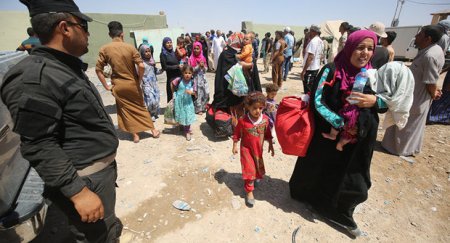
The argument flared over a demand by President Obama and US commanders that Iraqi government forces turn to the Syrian border and block the Ba’aja Road, and so cut off the ISIS fighters’ escape route from Mosul to Syria. The Americans can’t bomb the corridor because it is also packed with a stream of refugees in flight from the fighting in Mosul.

So long as it is open, ISIS is free to move thousands of fighters and masses of weapons, ammunition and other supplies between its two strongholds. This freedom of action, Obama warned Al-Abadi, would prolong the Mosul operation beyond the Dec. 20 deadline set by the coalition for its termination.

However, according to our sources, the Iraqi prime minister countered this demand with a proviso unacceptable to Washington. He was prepared to order Iraqi forces to block the Ba’aja Road provided Mosul’s entire population of 750,000 Sunni Muslims was expelled from the city. He argued that ISIS could not be defeated until then because the Sunnis were supporting and collaborating with the Islamist terrorists.

Obama fiercely opposes the mass Sunni expulsion, seeing it as an attempt by the Shiite Iraqi prime minister to cleanse Iraq’s second city of its Sunni inhabitants and using the Mosul offensive against ISIS as a pretext for such action.

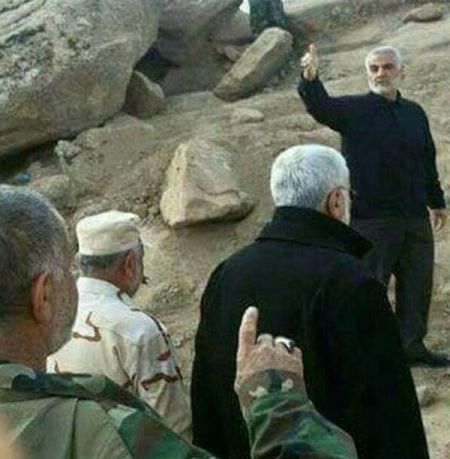
mosul_soulemeni_19-10-16EXCLUSIVE: Iranian Gen. Qassem Soleimani greets Shiite fighters outside Mosul.

DEBKAfile’s sources add that Al-Abadi has found support for his side of the argument with the arrival of the Iranian Al Qods chief Gen. Qassem Soleimani at the command posts of the pro-Iranian Iraqi Shiite militias, who have not yet been thrown into the Mosul battle.

The Mosul offensive came up in the third US presidential debate in Las Vegas early Thursday. The Republican candidate Donald Trump, who appeared to have been updated on the state of play there, commented that the big winner from that offensive would be Iran.

Our military sources report that three days of combat have not brought any major coalition forces advances against ISIS. On some sectors Iraqi forces are moving forward slowly, backed by US air strikes and rocket artillery fire; on others, they are stalled by Islamist resistance.

Fifteen years after the 9/11 attacks, al Qaeda fights on

September 12, 2016

Fifteen years after the 9/11 attacks, al Qaeda fights on, Long War Journal, September 11, 2016

All appeared lost for Osama bin Laden and al Qaeda in December 2001. In the years leading up to the 9/11 hijackings, bin Laden believed that the US was a “paper tiger” and would retreat from the Muslim majority world if al Qaeda struck hard enough. The al Qaeda founder had good reasons to think this. American forces withdrew from Lebanon after a series of attacks in the early 1980s and from Somalia after the “Black Hawk Down” episode in 1993. The US also did not respond forcefully to al Qaeda’s August 1998 embassy bombings in Kenya and Tanzania, or the USS Cole bombing in October 2000.

But bin Laden’s strategy looked like a gross miscalculation in late 2001. An American-led invasion quickly overthrew the Taliban’s regime just weeks after 19 of bin Laden’s men hijacked four airliners and crashed them into the World Trade Center, the Pentagon, and a field in Pennsylvania. Some of al Qaeda’s most senior figures were killed in American airstrikes. With al Qaeda’s foes closing in, bin Laden ordered his men to retreat to the remote Tora Bora Mountains. Here, bin Laden must have thought, al Qaeda would make its last stand. The end was nigh.

Except it wasn’t.

Bin Laden slithered away, eventually making his way to Abbottabad, Pakistan. When Navy SEALs came calling more than nine years later, in early May 2011, the world looked very different.

Documents recovered in bin Laden’s compound reveal that he and his lieutenants were managing a cohesive global network, with subordinates everywhere from West Africa to South Asia. Some US intelligence officials assumed that bin Laden was no longer really active. But Bin Laden’s files demonstrated that this view was wrong.

Writing in The Great War of Our Time: The CIA’s Fight Against Terrorism – From al Qa’ida to ISIS, former CIA official Mike Morell explains how the Abbottabad cache upended the US intelligence community’s assumptions regarding al Qaeda. “The one thing that surprised me was that the analysts made clear that our pre-raid understanding of Bin Laden’s role in the organization had been wrong,” Morell writes. “Before the raid we’d thought that Bin Laden’s deputy, Ayman al Zawahiri, was running the organization on a day-to-day basis, essentially the CEO of al Qaeda, while Bin Laden was the group’s ideological leader, its chairman of the board. But the DOCEX showed something quite different. It showed that Bin Laden himself had not only been managing the organization from Abbottabad, he had been micromanaging it.”*

Consider some examples from the small set of documents released already.

During the last year and a half of his life, Osama bin Laden: oversaw al Qaeda’s “external work,” that is, its operations targeting the West; directed negotiations with the Pakistani state over a proposed ceasefire between the jihadists and parts of the government;ordered his men to evacuate northern Pakistan for safe havens in Afghanistan;instructed Shabaab to keep its role as an al Qaeda branch secret and offered advice concerning how its nascent emirate in East Africa should be run; received status reports on his fighters’ operations in at least eight different Afghan provinces; discussed al Qaeda’s war strategy in Yemen with the head of Al Qaeda in the Arabian Peninsula and other subordinates; received updates from Al Qaeda in the Islamic Maghreb, including details on a proposed truce with the government of Mauritania; authorized the relocation of veteran jihadists to Libya, where they could take advantage of the uprising against Muammar al Qaddafi’s regime; corresponded with the Taliban’s leadership; and generally made decisions that impacted al Qaeda’s operations everywhere around the globe.

Again, these are just a handful of examples culled from the publicly-available files recovered in bin Laden’s compound. The overwhelming majority of these documents remain classified and, therefore, unavailable to the American public.

Al Qaeda has grown under Zawahiri’s tenure

The story of how bin Laden’s role was missed should raise a large red flag. Al Qaeda is still not well-understood and has been consistently misjudged. Not long after bin Laden was killed, a meme spread about his successor: Ayman al Zawahiri. Many ran with the idea that Zawahiri is an ineffectual and unpopular leader who lacked bin Laden’s charisma and was, therefore, incapable of guiding al Qaeda’s global network. This, too, was wrong.

There is no question that the Islamic State, which disobeyed Zawahiri’s orders and was disowned by al Qaeda’s “general command” in 2014, has cut into al Qaeda’s share of the jihadist market and undermined the group’s leadership position. But close observers will notice something interesting about al Qaeda’s response to the Islamic State’s challenge. Under Zawahiri’s stewardship, al Qaeda grew its largest paramilitary force ever.

Brett McGurk, the Special Presidential Envoy for the Global Coalition to Counter ISIL, warned about the rise of Al Nusrah Front during testimony before the Senate Foreign Relations Committee on June 28. “With direct ties to Ayman al Zawahiri, Osama Bin Laden’s successor, Nusra[h] is now al [Qaeda’s] largest formal affiliate in history,” McGurk said. US officials previously contacted by The Long War Journal said Nusrah could easily have 10,000 or more fighters in its ranks.

It is worth repeating that Nusrah grew in size and stature, while being openly loyal to Zawahiri, after the Islamic State became its own jihadist menace. Far from being irrelevant, Zawahiri ensured al Qaeda’s survival in the Levant and oversaw its growth.

image-posted-by-tilmidh-usamah-bin-ladin-1024x348

On July 28, Al Nusrah Front emir Abu Muhammad al Julani announced that his organization would henceforth be known as Jabhat Fath al Sham (JFS, or the “Conquest of the Levant Front”) and would have no “no affiliation to any external [foreign] entity.” This was widely interpreted as Al Nusrah’s “break” from al Qaeda. But Julani never actually said that and al Qaeda itself isn’t an “external entity” with respect to Syria as the group moved much of its leadership to the country long ago. Al Nusrah’s rebranding was explicitly approved by Abu Khayr al Masri, one of Zawahiri’s top deputies, in an audio message released just hours prior to Julani’s announcement. Masri was likely inside Syria at the time.

Julani, who was dressed like Osama bin Laden during his appearance (as pictured above), heaped praise on bin Laden, Zawahiri and Masri. “Their blessed leadership has, and shall continue to be, an exemplar of putting the needs of the community and their higher interests before the interest of any individual group,” Julani said of Zawahiri and Masri.

Most importantly, Al Nusrah’s relaunch as JFS is entirely consistent with al Qaeda’s longstanding strategy in Syria and elsewhere. Al Qaeda never wanted to formally announce its role in the rebellion against Bashar al Assad’s regime, correctly calculating that clandestine influence is preferable to an overt presence for many reasons. This helps explain why Nusrah was never officially renamed as “Al Qaeda in the Levant” in the first place. However, fifteen years after the 9/11 attacks, there is such widespread ignorance of al Qaeda’s goals and strategy that Nusrah’s name change is enough to fool many.

Al Qaeda has grown in South Asia as well. In Sept. 2014, Zawahiri announced the formation of Al Qaeda in the Indian Subcontinent (AQIS), which brought together elements of several existing jihadist organizations. AQIS quickly got to work, attempting to execute an audacious plan that would have used Pakistani arms against American and Indian ships. The plot failed, but revealed that al Qaeda had infiltrated Pakistan’s military.

Pakistani officials recently told the Washington Post that they suspect AQIS has a few thousand members in the city of Karachi alone. And al Qaeda remains closely allied with the Taliban while maintaining a significant presence inside Afghanistan. In October 2015, for instance, Afghan and American forces conducted a massive operation against two large al Qaeda training camps in the southern part of the country. One of the camps was approximately 30 square miles in size. Gen. John F. Campbell, who oversaw the war effort in Afghanistan, explained that the camp was run by AQIS and is “probably the largest training camp-type facility that we have seen in 14 years of war.”

With Zawahiri as its emir, al Qaeda raised its “largest formal affiliate in history” in Syria and operated its “largest training” camp ever in Afghanistan. These two facts alone undermine the widely-held assumption that al Qaeda is on death’s door.

Elsewhere, al Qaeda’s other regional branches remain openly loyal to Zawahiri.

From April 2015 to April 2016, Al Qaeda in the Arabian Peninsula (AQAP) controlled a large swath of territory along Yemen’s southern coast, including the key port city of Mukalla. An Arab-led coalition helped reclaim some of this turf earlier this year, but AQAP’s forces simply melted away, living to fight another day. AQAP continues to wage a prolific insurgency in the country, as does Shabaab across the Gulf of Aden in Somalia. Shabaab’s leaders announced their fealty to Zawahiri in February 2012 and remain faithful to him. They have taken a number of steps to stymie the growth of the Islamic State in Somalia and neighboring countries. Shabaab also exports terrorism throughout East Africa, executing a number of high-profile terrorist attacks in recent years.

Al Qaeda in the Islamic Maghreb (AQIM) continues to operate in West and North Africa, often working in conjunction with front groups. Like al Qaeda’s branches elsewhere, AQIM prefers to mask the extent of its influence, working through organizations such as Ansar al Sharia and Ansar Dine to achieve its goals. Late last year, Al Murabitoon rejoined AQIM’s ranks. Al Murabitoon is led by Mohktar Belmokhtar, who has been reportedly killed on several occasions. Al Qaeda claims that Belmokhtar is still alive and has praised him for rejoining AQIM after his contentious relations with AQIM’s hierarchy in the past. While Belmokhtar’s status cannot be confirmed, several statements have been released in his name in recent months. And Al Murabitoon’s merger with AQIM has led to an increase in high-profile attacks in West Africa.

In sum, AQAP, AQIM, AQIS and Shabaab are formal branches of al Qaeda and have made their allegiance to Zawahiri clear. Jabhat Fath al Sham, formerly known as Al Nusrah, is an obvious al Qaeda project in Syria. Other organizations continue to serve al Qaeda’s agenda as well.

Al Qaeda’s veterans and a “new generation” of jihadist leadership

As the brief summary above shows, Al Qaeda’s geographic footprint has expanded greatly since the Sept. 11, 2001 terrorist attacks. Some US officials argue that al Qaeda has been “decimated” because of the drone campaign and counterterrorism raids. They narrowly focus on the leadership layer of al Qaeda, while ignoring the bigger picture. But even their analysis of al Qaeda’s managers is misleading.

Al Qaeda has lost dozens of key men, but there is no telling how many veterans remain active to this day. Experienced operatives continue to serve in key positions, often returning to the fight after being detained or only revealing their hidden hand when it becomes necessary. Moreover, al Qaeda knew it was going to lose personnel and took steps to groom a new generation of jihadists capable of filling in.

3-aq-leaders-released-from-iran-1023x313From left to right: Saif al Adel, Abu Mohammed al Masri and Abu Khayr al Masri. These photos, first published by the FBI and US intelligence officials, show the al Qaeda leaders when they were younger.

Last year, several veterans were reportedly released from Iran, where they were held under murky circumstances. One of them was Abu Khayr al Masri, who paved the way for Al Nusrah’s rebranding in July. Another is Saif al Adel, who has long been wanted for his role in the 1998 US Embassy bombings in Kenya and Tanzania. At least two others freed by Iran, Abu Mohammed al Masri and Khalid al Aruri, returned to al Qaeda as well.

Masri, Al Adel, and Aruri may all be based inside Syria, or move back and forth to the country from Turkey, where other senior members are based. Mohammed Islambouli is an important leader within al Qaeda. After leaving Iran several years ago, Islambouli returned to Egypt and eventually made his way to Turkey, where he lives today.

Sitting to Julani’s right during his much ballyhooed announcement was one of Islambouli’s longtime compatriots, Ahmed Salama Mabrouk. The diminutive Mabrouk is another Zawahiri subordinate. He was freed from an Egyptian prison in the wake of the 2011 uprisings.

Al Qaeda moved some of its senior leadership to Syria and several others from this cadre are easy to identify. But al Qaeda has also relied on personnel in Yemen to guide its global network. One of Zawahiri’s lieutenants, Hossam Abdul Raouf, confirmed this in an audio message last October. Raouf explained that the “weight” of al Qaeda has been shifted to Syria and Yemen, because that is where its efforts are most needed.

The American drone campaign took out several key AQAP leaders in 2015, but they were quickly replaced. Qasim al Raymi, who was trained by al Qaeda in Afghanistan in the 1990s, succeeded Nasir al Wuhayshi as AQAP’s emir last summer. Raymi quickly renewed his allegiance to Zawahiri, whom Raymi described as the “the eminent sheikh” and “the beloved father.” Another al Qaeda lifer, Ibrahim Abu Salih, emerged from the shadows last year. Salih was not public figure beforehand, but he has been working towards al Qaeda’s goals in Yemen since the early 1990s. Ibrahim al Qosi (an ex-Guantanamo detainee) and Khalid al Batarfi have stepped forward to lead AQAP and are probably also part of al Qaeda’s management team.

This old school talent has helped buttress al Qaeda’s leadership cadre. They’ve been joined by men who signed up for al Qaeda’s cause after the 9/11 attacks as well. In July, the US Treasury Department designated three jihadists who are based in Iran. One of them, known as Abu Hamza al Khalidi, was listed in bin Laden’s files as part of a “new generation” of al Qaeda leaders. Today, he plays a crucial role as the head of al Qaeda’s military commission, meaning he is the equivalent of al Qaeda’s defense minister. Treasury has repeatedly identified other al Qaeda members based in Iran, Afghanistanand elsewhere.

Some members of the “new generation” are more famous than others. Such is the case with Osama’s son, Hamzah bin Laden, who is now regularly featured in propaganda.

This brief survey of al Qaeda is not intended to be exhaustive, yet it is still sufficient to demonstrate that the organization’s bench is far from empty. Moreover, many of the men who lead al Qaeda today are probably unknown to the public.

The threat to the West

Testifying before the Senate Armed Services Committee in February, Director of National Intelligence James Clapper warned that al Qaeda “nodes in Syria, Pakistan, Afghanistan, and Turkey” are “dedicating resources to planning attacks.” His statement underscored how the threats have become more geographically dispersed over time. With great success, the US worked for years to limit al Qaeda’s ability to strike the West from northern Pakistan. But today, al Qaeda’s “external operations” work is carried out across several countries.

During the past fifteen years, Al Qaeda has failed to execute another mass casualty attack in the US on the scale of the 9/11 hijackings. Its most recent attack in Europe came in January 2015, when a pair of brothers backed by AQAP conducted a military-style assault on the Charlie Hebdo office in Paris. AQAP made it clear that the Charlie Hebdo massacre was carried out according to Zawahiri’s orders.

Thanks to vigilance and luck, al Qaeda hasn’t been able to replicate a 9/11-style assault inside the US. Part of the reason is that America’s defenses, as well as those of its partner nations, have improved. Operations such as the 9/11 hijackings are also difficult to carry out in the first place. Even the 9/11 plan experienced interruptions despite a relatively lax security environment. (Most famously, for example, the would-be 20th hijacker was denied entry into the US at an Orlando airport in the summer of 2001.)

But there is another aspect to evaluating the al Qaeda threat that is seldom appreciated. It is widely assumed that al Qaeda is only interested in attacking the West. This is flat false. Most of the organization’s resources are devoted to waging insurgencies in Muslim majority countries.

The story in Syria has been telling. Although al Qaeda may have more resources in Syria than anywhere else, Zawahiri did not order his men to carry out a strike in the West. Al Qaeda’s so-called “Khorasan Group” laid the groundwork for such operations, but Zawahiri did not give this cadre the green light to actually carry them out. Zawahiri’s stand down order is well known. In an interview that aired in May 2015, for instance, Julani explained that the “directives that come to us from Dr. Ayman [al Zawahiri], may Allah protect him, are that Al Nusrah Front’s mission in Syria is to topple [Bashar al Assad’s] regime” and defeat its allies. “We have received guidance to not use Syria as a base for attacks against the West or Europe so that the real battle is not confused,” Julani said. However, he conceded that “maybe” the mother al Qaeda organization is plotting against the West, just “not from Syria.” Julani emphasized that this “directive” came from Zawahiri himself.

To date, al Qaeda has not lashed out at the West from inside Syria, even though it is certainly capable of doing so. Al Qaeda’s calculation has been that such an attack would be too costly for its strategic interests. It might get in the way of al Qaeda’s top priority in Syria, which is toppling the Assad regime. This calculation could easily change overnight and al Qaeda could use Syria as a launching pad against the West soon. But they haven’t thus far. It helps explain why there hasn’t been another 9/11-style plot by al Qaeda against the US in recent years. It also partially explains why al Qaeda hasn’t launched another large-scale operation in Europe for some time. Al Qaeda has more resources at its disposal today than ever, so the group doesn’t lack the capability. If Zawahiri and his advisors decided to make anti-Western attack planning more of a priority, then the probability of another 9/11-style event would go up. Even in that scenario, al Qaeda would have to successfully evade the West’s defenses. But the point is that al Qaeda hasn’t been attempting to hit the West nearly as much as some in the West assume.

In the meantime, it is easy to see how the al Qaeda threat has become more diverse, just as Clapper testified. AQAP has launched several thwarted plots aimed at the US, including the failed Christmas Day 2009 bombing. In 2009, al Qaeda also plotted to strike trains in the New York City area. In 2010, a Mumbai-style assault in Europe was unraveled by security services. It is not hard to imagine al Qaeda trying something along those lines once again. Other organizations tied to al Qaeda, such as the Pakistani Taliban, have plotted against the US as well.

Fifteen years after the 9/11 attacks, al Qaeda lives. Fortunately, Zawahiri’s men have not replicated the hijackings that killed nearly 3,000 Americans. But the al Qaeda threat looms. It would be a mistake to assume that al Qaeda won’t try a large-scale operation again.

*The spellings of al Qaeda and bin Laden are changed in this quote from Morell to make them consistent with the rest of the text.
Putin-Erdogan deal for Syria is ME exit for Obama

September 9, 2016

Putin-Erdogan deal for Syria is ME exit for Obama, DEBKAfile, September 9, 2016

putin_obama_g-20_china

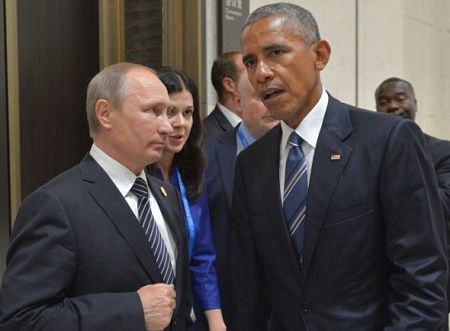
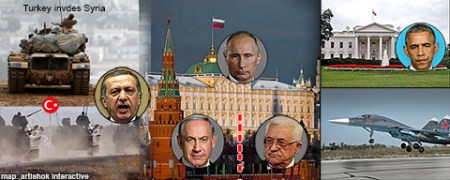
The fledgling “initiatives” reverberating this week in Washington, Moscow, Ankara, Jerusalem and the G20 summit were nothing but distractions from the quiet deals struck by two lead players, Russia and Turkey to seize control of the region’s affairs. Recep Tayyip Erdogan knew nothing would come of his offer on the G20 sidelines to US President Barack Obama to team up for a joint operation to evict ISIS from Raqqa. And, although Moscow was keen on hosting the first handshake in almost a decade between Israeli Prime Minister Binyamin Netanyahu and the Palestinian leader Mahmoud Abbas (Abu Mazen), neither were known to be ready for the last step toward a meeting.

But the game-changing events to watch out for took place in Hangzhou without fanfare – namely, the Obama-Putin talks and the far more fruitful encounter between Putin and Erdogan.

According to DEBKAfile’s intelligence and Mid East sources, Putin virtually shut the door on further cooperation with the United States in Syria. He highhandedly informed Obama that he now holds all the high cards for controlling the Syrian conflict, whereas Washington was just about out of the game.

Putin picked up the last cards, our sources disclose, in a secret deal with Erdogan for Russian-Turkish collaboration in charting the next steps in the Middle East.

The G20 therefore, instead of promoting new US-Russian understanding, gave the impetus to a new Russian-Turkish partnership.

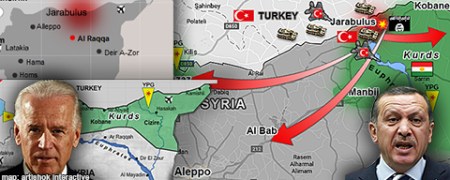
Erdogan raked in instant winnings: Before he left China, he had pocketed Putin’s nod to grab a nice, 4,000-sq.km slice of northern Syria, as a “security zone” under the control of the Turkish army and air force, with Russian non-interference guaranteed.

This Turkish zone would include the Syrian towns of Jarablus, Manjib, Azaz and Al-Bab.

Ankara would reciprocate by withdrawing its support from the pro-US and pro-Saudi rebel groups fighting the Assad army and its allies in the area north of Aleppo.

Turkey’s concession gave Putin a selling-point to buy the Syrian ruler assent to Erdogan’s project. Ankara’s selling-point to the West was that the planned security zone would provide a safe haven for Syrian refugees and draw off some of the outflow perturbing Europe.

kremlinwhitehouse480

It now turns out that, just as the Americans sold the Syrian Kurds down the river to Turkey (when Vice President Joe Biden last month ordered them to withdraw from their lands to the eastern bank of the Euphrates River or lose US support), so too are the Turks now dropping the Syrian rebels they supported in the mud by re-branding them as “terrorists.”

The head of this NATO nation has moreover gone behind America’s back for a deal with the Russian ruler on how to proceed with the next steps of the Syrian conflict.

Therefore, when US Secretary of State John Kerry met Russian Foreign Minister Sergei Lavrov in Geneva Thursday and Friday, Sept. 8-9, for their sixth and seventh abortive sit-downs on the Syrian issue, there was not much left for them to discuss, aside from continuing to coordinate their air traffic over Syria and the eastern Mediterranean.

Washington and Moscow are alike fearful of an accidental collision in the sky in the current inflammable state of relations between the two powers.

As a gesture of warning, a Russian SU-25 fighter jet Tuesday, Sept 6, intercepted a US Navy P8 plane flying on an international route over the Black Sea. When the Russian jet came as close as 12 feet, the US pilots sent out emergency signals – in vain, because the Russian plane’s transponder was switched off. The American plane ended up changing course.

Amid these anomalies, Moscow pressed ahead with preparations to set up a meeting between the Israeli and Palestinian leaders, as the Russian Foreign Ministry announced Thursday.

Putin is keen to succeed where the Obama administration failed. John Kerry abandoned his last effort at peacemaking as a flop two years ago.  But it is hard to see Netanyahu or Abu Mazen rushing to play along with the Russian leader’s plan to demean the US president in the last months of his tenure – especially when no one can tell who will win the November 8 presidential election – Hillary Clinton or Donald Trump – or what policies either will pursue.

All the region’s actors will no doubt be watching closely to see how Turkey’s “Russian track” plays out and how long the inveterate opportunists can hang together.

Hizballah units regroup on Israel’s Golan border

September 7, 2016

Hizballah units regroup on Israel’s Golan border, DEBKAfile, September 7, 2016

qunetrafront

DEBKAfile’s military sources note that the Iranian media attached photos of Israel’s security force opposite Quneitra to their reporting on the new move, thereby framing the target of the Syrian-Iranian-Backed Hizballah build-

***********************

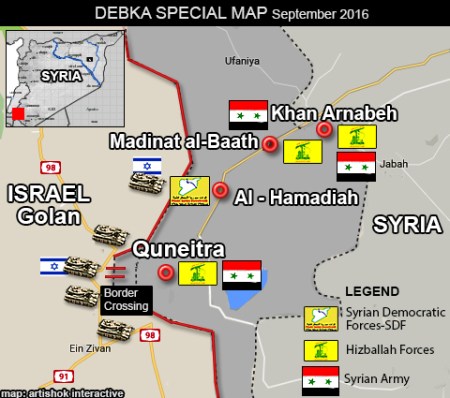
A large Hizballah force, backed by the Syrian army and pro-Iranian Shiite militias, is building up outside Quneitra, just 2km from Israel’s Golan border. The Lebanese Shiite fighters, under the command of Iranian Revolutionary Guards (IRGC) officers, are streaming into southern Syria, armed with tanks and artillery.

Monday night, Sept. 5, Iranian state-controlled media shed light on this movement, reporting that the combined force had “completed preparations necessary for an extensive operation in southern Syria,” adding, “Hizballah aims to put an end to the presence of armed men in the area close to the border.”

The nature of the “armed men” was not specified, but the goal of the new operation was clear: after evicting the assorted anti-Assad groups, including the Islamic State, holding territory “close to the border,” Hizballah and its backers planned to regroup on the Syrian-Israeli boundary.

This would position Iran and its Hizballah surrogate ready to realize their six-year old design, which is to open a second warfront against Israel.

Western and Mid East sources have toldl DEBKAfile that the triple army is in high spirits after last week’s successful operation in Aleppo. By snatching back parts of the city they lost in mid-August, the Syrian army and its allies managed to cut off the rebels’ supply lines from Turkey.

It was then that some Hizballah units were detached from the Aleppo arena and redirected to the Quneitra front in southern Syria to face the Israeli border.

israeliborder480

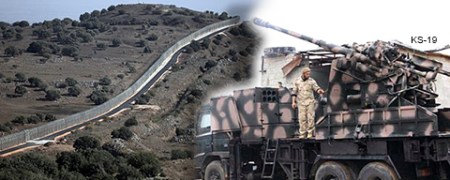
Those sources report that the incoming troops were sighted this week when they arrived at Madinat al-Baath and Khan Amabeh, the main Syrian army bases on the Syrian Golan. They came with tanks and heavy artillery. Seen for the first time in the Quentra sector were heavy, self-propelled KS-19 artillery batteries, which are Russian anti-air guns adapted to ground warfare. They have a range of 21km and a firing capacity of 15 shells per minute.

The newly-arrived Hizballah force appears to have set the capture of Syrian rebel-held al-Hamdiniyah 2km from the Israeli border, as its first objective.

DEBKAfile’s military sources note that the Iranian media attached photos of Israel’s security force opposite Quneitra to their reporting on the new move, thereby framing the target of the Syrian-Iranian-Backed Hizballah build-up.

This fast-approaching development poses two tough questions:

1. Will Israel lie down for the avowedly hostile Hizballah and Iran to occupy territory along its eastern border?Israel officials have repeatedly emphasized that these forces would not be allowed to take up positions on the Golan border, a message Russia most certainly passed on to Damascus.

If Hizballah and its allies go through with their planned offensive, Israel will have to consider serious military action to prevent them from reaching the border fence, i.e., an operation on a scale quite different from the small-shot IDF reprisals for rockets or shells straying across into the Golan from fighting on the other side.

2. Will the advancing Iranian-led force have Syrian air cover? If it does, the Israeli Air Force will also be involved in aerial combat over the Golan.

Who killed Al-Adnani? US, Russia or maybe ISIS?

September 1, 2016

Who killed Al-Adnani? US, Russia or maybe ISIS? DEBKAfile, September 1, 2016

Adnani

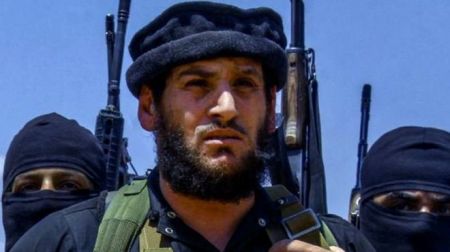
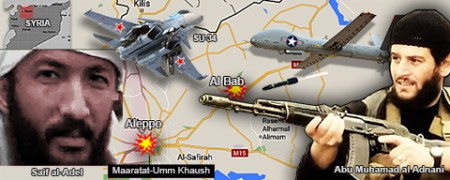
While the US has frequently claimed to have liquidated an Islamic terrorist leader, Russia put in its first claim on Aug. 31, when the defense ministry in Moscow announced for the first time that the day before, an SU-34 bomber had killed ISIS senior terrorist mastermind Mohammed Al-Adnani during a high-profile gathering at Maaratat-Umm Khaush near Aleppo.

The claim was worded so as to indicate that Russian intelligence had pulled off a major feat by a hit that took out 40 high-profile operatives.

This claim came 24 hours after a US official said that a Predator drone rocket had hit a car believed to be carrying Adnani near Al-Bab, and that the results were “being assessed” – even though ISIS itself reported that the terrorist leader, tagged as senior spokesman, “was martyred while surveying the operations to repel the military campaigns against Aleppo.”

The Pentagon sources called the Russian version “lies” and “a joke.”

The distance between al-Bab and Maaratat-Umm Khaush is only 28km, but the gap between the American and Russian claims is less immeasurable.

Fighting has escalated around the city in recent weeks, with rebels breaking a siege by government forces and Syrian and Russian warplanes bombing rebel-held areas.

The competing Russian and American claims of a successful aerial-cum-intelligence action against a high-profile ISIS founder-member break new ground in the war on Islamic terror.

Al-Adnani, who was born in 1977 in the northern Syrian town of Banash, was responsible in the past two years for orchestrating terrorist atrocities in Tunisia, Paris, Brussels, Orlando, Nice, Sinai Peninsula and Istanbul, as well as suicide bombings in Baghdad.

Far from being a joke, the cold war dividing Moscow and Washington appears to have spread to the war on Islamist terror and infected the Syrian arena.

The early collaboration between the two powers in the Syrian conflict has broken down. This was admitted on Aug. 26 in Geneva, after US Secretary of State John Kerry and Russian Foreign Minister Sergei Lavrov failed to agree on further military and intelligence cooperation.

Ironically, it is noted by DEBKAfile’s intelligence and counterterrorism sources, that both powers’ clandestine services received intelligence on their target’s movements from the same source.

IsisSpokesman480

That is another first; never before has any Islamic terrorist organization fed the same piece of intelligence to the US and Russia. If that is what happened, it could mean only one thing: that someone in ISIS had decided it was time for Al-Adani to go.

This would be par for the course in the harsh world of jihadist terror organizations, such as Al Qaeda from which ISIS sprung.

When Osama bin Laden, whom US special forces killed in 2011, felt the need to cull the Al-Qaeda leadership of high-profile operatives who had outlived their usefulness or were suffering from fatigue, he would get rid of them by arranging for US intelligence to be tipped off about their whereabouts.

In one notable instance of this purge, Khalid Sheikh Mohammed, senior planner of the 9/11 attacks on New York and Washington, was turned in to the CIA in 2003.

If this is what happened to Al-Adani, DEBKAfile’s counterterrorism sources link it to the recent reappearance on the Islamist terrorist scene in Syria three weeks ago of the veteran Al-Qaeda master-terrorist Saif al-Adel with a group of followers.

Al-Adel is rated one of the world’s most dangerous terrorists, with long experience of planning and executing mass-casualty operations stretching back to the 1980s. He is “credited” with the large-scale assaults on the East African US embassies in 1998 and a string of murderous strikes in Saudi Arabia in 2003, some of which hit US targets.

It is not yet known how Al-Adel and his gang reached Syria and for what purpose. They are only known to have crossed the border from Iraq. It is presumed by intelligence watchers of terrorist insider politics that, after deciding that Al-Adnan was a spent asset, ISIS leaders found his replacement.

Syrian Kurds clash with Turkish forces

August 26, 2016

Syrian Kurds clash with Turkish forces, DEBKAfile, August 26, 2016

(Please see also, Biden Gushes to Erdoğan That American People ‘Stand in Awe’ of Turkish ‘Courage’ — DM)

Tanks_invading_Syria_B_24.8.16

Just a few days ago, the Americans were speaking highly of Kurds as the sharpest sword in the coalition’s arsenal for vanquishing the jihadists. Since Biden’s deal with Erdogan on Wednesday, Washington can forget about the Syrian Kurdish PYG or the Iraqi Kurdish Pershmerga as spearheads of the campaigns to liberate Raqqa in Syria and Mosul in Iraq for ISIS.

*****************************

Syrian Kurdish militia commanders are flouting the ultimatum US Vice President Joe Biden handed them Wednesday, Aug. 24 to retreat to east of the Euphrates or else forfeit US support.  Instead, DEBKAfile’s military sources report, they decided to stand their ground and fight it out with the Turkish army.

The first clash occurred Thursday overnight, when Kurdish forces from Manbij attacked the positions taken by Turkish tanks in Jarablus, hours after Islamic State forces were put to flight from this border town.

The battles continued into Friday morning, Aug. 26.

The US ultimatum to the Kurds was the outcome of understandings US Vice President Joe Biden reached with Turkey’s President Tayyip Erdogan in Ankara on Wednesday, hours after the Turkish army crossed into northern Syria.

“Syrian Kurdish forces will lose US support if they don’t retreat to east bank of Euphrates,” the US vice president stated at a news conference.

Yet Thursday night, Turkish officials made an effort to counteract the impression that their military intervention in Syria was coordinated with the United States. They announce that Russian chief of staff Gen. Valery Gerasimov would be arriving in Ankara Friday for talks with his Turkish counterpart, Gen. Hulusi Akar.

The US commander of American troops in Iraq and Syria, Lt. Gen. Stephen Townsend, had meanwhile instructed all US Special Operations personnel to withdraw from Syrian-Kurdish YPG militia units, and return to the N. Syrian Rmeilan airfield near Hassaka. This is reported from DEBKAfile military and intelligence sources.

The US general also stopped artillery ammo supplies to the Kurdish militia and the transfer of field intelligence from the fighting in areas newly occupied by the Turkish army.

These measures were temporary, the US officers informed Salih Muslim, Syrian Kurdish Democratic Union Party (PYD) leader, and would be lifted after his YPG militia was instructed to pull back from northern Syria and head east of the Euphrates.

Only last week, the Syrian Kurdish militia was riding high, covered in praise for its feat in capturing Manbij with the assistance of US Special Forces.

Their comedown after the US decided to jump aboard the Turkish invasion would be complete, if they complied with the Biden ultimatum. They would forfeit all their hard-won gains from years of combat against the Islamic State, and have to forget their dream of a Kurdish state linking their enclaves along the 900km Syrian-Turkish border.

A stream of information and misinformation is meanwhile muddying the waters as the Kurds in Syria and Iraq absorb the shock of the American turn against them.

The Ministry of Foreign Affairs in Ankara said Thursday that US Secretary of State John Kerry had informed the Turkish Foreign Minister Mevlut Cavusoglu that the US-backed Syrian Kurdish militias had begun their retreat to the eastern bank of the Euphrates River.


ManbijKoteret480

US sources qualified this claim, confirming only that a ‘main element’ of the Kurds has retreated, but not the entire force. The Kurds were evidently in no hurry to take any marching orders either from Turkey or the United States.

A short Kurdish statement claimed that their forces had indeed withdrawn to the eastern bank of the Euphrates River, but DEBKAfile’s military sources military sources say that a large body of Kurdish fighters is still in place west of the river. Indeed our sources found Kurdish PYG officers adamant in their determination to stay put and take on the Turkish army.

After the Turkish invasion Wednesday, Kurdish leader Salih Muslim declared, “Turkey will be defeated in Syria along with the Islamic State.”

Kurdish units also took up positions on the roads leading to the US base at Rmeilan, ready enforce a blockade. A Kurdish food convoy due at the base Thursday did not arrive.

In Iraq, there is word of a Kurdish Peshmerga mutiny against US instructors at the bases where they are training for the offensive to recapture Mosul from the ISIS.

However, the events of this week around northern Syria have dealt a major setback to the US-led war on ISIS.

Just a few days ago, the Americans were speaking highly of Kurds as the sharpest sword in the coalition’s arsenal for vanquishing the jihadists. Since Biden’s deal with Erdogan on Wednesday, Washington can forget about the Syrian Kurdish PYG or the Iraqi Kurdish Pershmerga as spearheads of the campaigns to liberate Raqqa in Syria and Mosul in Iraq for ISIS.

Anti-Israel Double Standards Enable Assad’s Brutality

August 23, 2016

Anti-Israel Double Standards Enable Assad’s Brutality, Investigative Project on Terrorism,  Noah Beck,August 23, 2016

1789

Syria’s civil war claimed 470,000 lives since it started in March 2011, the Syrian Centre for Policy Research announced in February. That’s an average of about 262 deaths per day and 7,860 per month. The carnage has continued unabated, so, applying the same death rate nearly 200 days after the February estimate, the death toll is over 520,000.

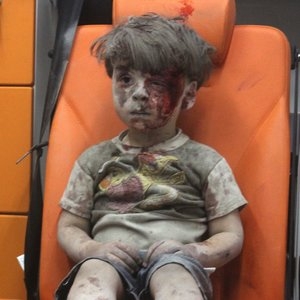
Such numbers are staggering, even by Middle East standards. However, the violence has become so routine that it only occasionally captures global attention, usually when a particularly poignant moment of human suffering is documented. The most recent example is Omran Daqneesh, a 5-year old Syrian boy who was filmed shell-shocked, bloody, and covered in dust after the airstrike bombing of his Aleppo apartment block.

The tragic image of Omran caused outrage around the world, as did the image of Aylan Kurdi, the drowned Syrian boy whose body washed up last September on a beach in Turkey. Yet Omran’s plight demonstrates that, nearly a year after the last child victim of Syrian horrors captured global sympathy, nothing has changed.

If anything, the violence in this multi-party proxy war seems to be getting worse. Since Aylan Kurdi’s drowning, Russia began blitz-bombing Syria in support of the Assad regime. The Syrian Observatory for Human Rights (SOHR) estimates that nine months of Russian airstrikes have killed 3,089 civilians – a toll that is greater, by some estimates, than the number of civilians killed by ISIS. By contrast, Syrian civilian deaths caused by U.S. airstrikes are probably in the hundreds (over roughly twice as much time, since U.S. airstrikes began in the summer of 2015).

But Syrian airstrikes are responsible for the bulk of civilian deaths in Syria. The Assad regime killed 109,347 civilians between March 2011 and July 2014 (88 percent of the total casualties at the time), according to estimates by the Syrian Network for Human Rights. That works out to about 91 civilian deaths per day. More recently, the SOHR documented 9,307 civilian deaths from 35,775 regime airstrikes over a 20-month period running from November 2014 through June 2016. Thus, roughly one innocent Syrian was killed every hour, during the 20 months that the SOHR documented civilian casualties caused by Russian and Syrian airstrikes.

Compare those figures to the number of innocent Palestinians killed by Israel from 2011 to 2014. According to Human Rights Watch (HRW), which has been accused of anti-Israel bias, 37 Palestinians were killed in 2011, 103 in 2012, 15 in 2013 and 1,500in 2014 – the year when Hamas fired rockets at Israel from highly populated Gazan areas. That’s a four-year total of 1,655. During roughly the same four-year period, the number of Syrian civilian deaths was about 76 times greater than the HRW total of Palestinian civilian casualties.

Yet the European Union singles out Israel for conflict-related consumer labels without any similar attempt to warn European consumers about goods or services whose consumption in any way helps the economies of countries responsible for the Syrian bloodshed, including Syria, Russia, and Iran. Human rights lawyer Arsen Ostrovsky has highlighted how none of those countries is targeted by those advocating a boycott of Israel out of a purported concern for human rights. Even more absurd, most of the results produced by a Google search for “academic boycott of Syria” or “academic boycott of Iran” concern academic boycotts of Israel. That asymmetry precisely captures the problem.

In addition to supporting the Assad regime in Syria and contributing to the violence there, Iran executes people for everything from drug offenses to being gay.

Indeed, the global outcry over Syrian suffering is embarrassingly weak when compared to reactions to Israel’s far less bloody conflict with the Palestinians. Imagine if Omran Daqneesh had been a Palestinian boy hurt by an Israeli airstrike on Gaza. College campus protests, the media, NGOs, and world bodies around the planet would be positively on fire. Israeli embassies would be attacked, French synagogues would be firebombed (eight were attacked in just one week during Israel’s 2014 war with Gaza), Jews around the world would be attacked, and condemnations would pour in from the EU, the United Nations, and the Obama administration. UN resolutions and emergency sessions would condemn the incident. International investigations would be demanded. Global blame would deluge Israel, regardless of whether Hamas, a terrorist organization, actually started the fighting or used human shields to maximize civilian deaths. Israel would be obsessively demonized despite any risky and unprecedented measures the Israeli military might have taken to minimize civilian casualties.

Moreover, when an occasional Syrian victim captures global attention, the protests are generally for some vague demand for “peace” in Syria, rather than blaming and demanding the punishment of Syria, Iran, and Russia, even though those regimes are clearly responsible for the slaughter. The starkly different reactions to Israel and Syria are even more shocking when it comes to the United Nations.

From its 2006 inception through August 2015, 62 United Nations Human Rights Council resolutions condemned Israel, compared to just 17 for Syria, five for Iran, and zero for Russia, according to the watchdog group UN Watch. The lopsided focus on Israel is equally appalling at the UN General Assembly, as UN Watch has highlighted. In each of the last four years, as the Syrian bloodbath claimed hundreds of thousands of lives, there were at least five times as many resolutions condemning Israel as those rebuking the rest of the world:

2012: 22 against Israel, 4 for the rest of the world

2013: 22 against Israel, 4 for the rest of the world

2014: 20 against Israel, 3 for the rest of the world

2015: 20 against Israel, 3 for the rest of the world

A corollary of the anti-Israel bias ensures that no Israeli victim will ever enjoy the kind of global sympathy expressed for Omran Daqneesh or Aylan Kurdi. When a Palestinian man enters the bedroom of a 13-year old girl and stabs her to death in her sleep,Obama says nothing even though she was a U.S. citizen and the world hardly notices. By contrast, imagine if the Israeli father of Hallel Yaffa Ariel had decided to take revenge by entering a nearby Palestinian home to stab a 13-year old Palestinian girl to death in her sleep. The global anger would be deafening.

Why do Israeli lives matter so much less? And why do student activists, the UN, the EU, the media, and the rest of the world focus so much more on alleged Palestinian civilian deaths than on Syrian civilian deaths? Doing so is woefully unjust to Syrians. It is also deeply unfair to Israel, which has endured terrorist attacks on its people throughout its existence as a state. It is the one country that, according to Col. Richard Kemp, former commander of British forces in Afghanistan, has done more to protect civilians during war than any other in the history of war.

The global obsession with condemning Israel not only defames a beleaguered democracy doing its best, it also enables the truly evil actors like the Assad regime and Hamas, by giving them a pass on some of the world’s worst crimes.

Officials In Lebanese, Gazan Terror Organizations Confirm: Iran Funds Our Activity

August 11, 2016

Officials In Lebanese, Gazan Terror Organizations Confirm: Iran Funds Our Activity, MEMRI, August 11, 2016

Arab media have recently published statements by officials in the Lebanese Hizbullah and the Gazan Hamas and Islamic Jihad organizations, and by their supporters, confirming what has long been known – namely that these Lebanese and Gazan terror organizations receive substantial financial and military assistance from Iran. These statements join many reports, especially in the anti-Iranian media, regarding Iran’s funding of various terrorist organizations across the Arab world. According to these reports, the assistance comes mainly from the office of Iranian Supreme Leader Ali Khamenei and from the Islamic Revolutionary Guards Corps (IRGC).

The following are some examples of these statements and reports from the last two months:

Hizbullah Secretary-General Nasrallah: Hizbullah’s Entire Budget Is Provided By Iran

In a speech he delivered on June 24, 2016, marking 40 days after the killing of Mustafa Badr Al-Din, who was considered to be Hizbullah’s chief operations officer, and following the imposition of U.S. sanctions on Hizbullah that threaten its financial infrastructure and income, Hizbullah Secretary-General Hassan Nasrallah clarified: “Hizbullah’s budget – its salaries and expenditures, [the money that pays for] its food and drink, weapons and missiles – [all come from] Iran. Is that clear?… As long as Iran has money we have money. Do you require greater transparency than that[?] The funds earmarked for us do not reach us through the banks. We receive them the same way we receive our missiles, with which we threaten Israel.”[1]

Hamas Official Abu Marzouq: Iran’s Assistance To Hamas Is “Not Comparable” To Any Other Assistance

The deputy head of Hamas’s political bureau, Moussa Abu Marzouq, tweeted on June 15, 2016: “The aid extended by Iran to the Palestinian resistance, in provisions, training and funds, is not comparable [to any other aid], and most other countries cannot match it.”[2]

29502Abu Marzouq’s tweet

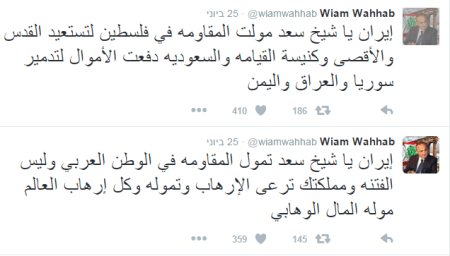
Former Lebanese Minister Wiam Wahhab: Iran Has Funded Resistance In Palestine

On June 25, 2016, in response to a remark by former Lebanese prime minister Sa’d Al-Hariri that Iran funds fitna(internecine strife) in the Arab world,[3] former Lebanese minister Wiam Wahhab, a known supporter of Hizbullah and the resistance axis, tweeted: “O Sheikh Sa’d [Al-Hariri], Iran has funded resistance in Palestine to restore Jerusalem, Al-Aqsa and the Church of the Sepulcher [to Palestinian hands, whereas] Saudi Arabia paid to destroy Syria, Iraq and Yemen.” In another tweet he wrote: ” O Sheikh Sa’d, Iran funded resistance in the Arab homeland rather than fitna, [whereas] your kingdom [Saudi Arabia, who supports Al-Hariri and his faction in Lebanon,] sponsors and funds terrorism. The funds of all the terrorist [organizations] in the world are Wahhabi [i.e., Saudi] funds.”[4]

29503Wiam Wahhab’s tweets

Saudi Daily Al-Sharq Al-Awsat: Hizbullah’s Weapons Come Directly From IRGC; Iran Has Renewed Regular Aid To Islamic Jihad Organization

The anti-Iranian press, such as the London-based Saudi daily Al-Sharq Al-Awsat, also reported on Iran’s funding of terrorist organizations in Lebanon and Gaza. On June 29, 2016, Al-Sharq Al-Awsat confirmed Nasrallah’s statements regarding the Iranian funding. The report stated that Hizbullah’s funds came from the office of Iranian Supreme Leader Ali Khamenei while its weapons are provided by the IRGC. It quoted the director of the Umam Research and Documentation center in Lebanon, Luqman Salim, a Shi’ite known for his opposition to Hizbullah, as saying that between 70% and 80% of Hizbullah’s funds come from Iran. According to Salim, Iran also invests about $400 million of the IRGC’s budget in the Islamic Radio and Television Union, a group of stations which includes the Iranian Al-Alam but also Hizbullah’s Al-Manar and Al-Mayadin and the Hamas-affiliated Al-Quds (all of which broadcast from Lebanon) and Hamas’s Al-Aqsa station, which broadcasts from Gaza.

The daily also cited a “knowledgeable source” as saying that until 2005 Iran transferred to Hizbullah between $200 million and $250 million annually, but since then the allocation has increased: After the 2006 Lebanon War it rose to $850 million, and since Hizbullah entered the Syria war its budget has become unlimited, because it has become part of Tehran’s war effort there.[5]

On May 25, 2016, the daily reported, citing sources close to the Islamic Jihad organization in Gaza, that Iran had renewed its regular financial aid to the organization after the two sides agreed to renew their mutual relations.[6] According to these sources, an Islamic Jihad delegation headed by the organization’s secretary-general Ramadan Shalah visited Iran in April 2016, and during this visit Tehran renewed its sponsorship of the organization after the latter accepted its terms. In meetings held by the delegation during this visit, including with IRGC commander Mohammad Ali Jafari and Qods Force commander Qassem Soleimani, Iran clarified its vision of Islamic Jihad’s course in the coming years. The sources claimed further that Soleimani decided, in coordination with the organization’s military and political bureaus, to grant $70 million a year out of the IRGC budget to Islamic Jihad’s military wing, Saraya Al-Quds, and to reorganize this body and appoint Khaled Mansour, who is close to Tehran, as its commander.[7]

Endnotes:

[1] Alahednews.com.lb, June 24, 2016.

[2] Twitter.com/mosa_abumarzook, June 15, 2016.

[3] Al-Mustaqbal (Lebanon), June 26, 2016; Al-Hariri’s remark was a response to Nasrallah’s  statement one day earlier that Hizbullah’s entire budget comes from Iran.

[4] Twitter.com/wiamwahhab, June 25, 2016.

[5] Al-Sharq Al-Awsat (Lebanon), June 29, 2016.

[6] Reports in the Arab media in the passing year indicated that Iran had suspended its assistance to Islamic Jihad following disagreements between them on the crisis in Yemen. According to these reports, the Islamic Jihad refused Iran’s demand to declare its opposition to the Arab Coalition’s activities in Yemen. See for example Aljazeera.net, May 26, 2016, Janoubia.com, April 3, 2016.

[7] Al-Sharq Al-Awsat (London), May 25, 2016.

Jihadists and other rebels claim to have broken through siege of Aleppo

August 8, 2016

Jihadists and other rebels claim to have broken through siege of Aleppo, Long War Journal, August 7, 2016

Shortly after Al Nusrah Front announced on July 28 that it was relaunching its operations under the name Jabhat Fath Al Sham (“Conquest of the Levant Front”), jihadists, Islamists and other Sunni rebel groups began an offensive to break the siege of Aleppo.

Bashar al Assad’s forces and their Iranian allies, backed by Russia, had been squeezing the rebel held part of the city since earlier this year. The Syrian regime and its partners cut off a key supply road in the north during fighting in June and July, thereby encircling their opponents.

The insurgents orchestrated an offensive to break the blockade focusing on areas in the southern part of Aleppo, including the Ramousa district, which houses key military installations. The insurgents’ offensive is one of their largest undertakings since the beginning of the Syrian war, drawing together the resources of more than 20 factions and organizations. It obviously required extensive planning to coordinate the actions of so many groups.

On Aug. 6, just over one week after the battle began, the opposition to Assad claimed to have broken through the defensive positions manned by the Syrian regime and allied paramilitary forces. According to the Syrian Observatory for Human Rights (SOHR), however, the fighting continues and Russia is bombing the area in an attempt to prevent the insurgents from consolidating their gains.

The effort to break the siege has been led by two coalitions: Jaysh al Fath (“Army of Conquest”) and Fatah Halab (“Aleppo Conquest”). Many of the constituent groups in each alliance streamed videos and released photos from the fighting on their social media pages.

Jaysh al Fath (“Army of Conquest”) and allied jihadist groups

Jaysh-al-Fath-Logo-300x300

Jaysh al Fath was formed by Al Nusrah, Ahrar al Sham, and other organizations in early 2015. The coalition quickly swept through the city of Idlib and the surrounding areas in a matter of weeks. Jaysh al Fath has led multiple other battlesthroughout Syria, with Al Nusrah (now Jabhat Fath Al Sham, or “JFS”) and Ahrar al Sham always leading the charge. Ahrar al Sham models itself after the Taliban and has its own links to al Qaeda.

Suicide bombers dispatched by JFS played a key role in the fight for southern Aleppo. Early on in the battle, JFS launched two “martyrdom” operations using vehicle borne improvised explosive devices (VBIEDs) at a location identified as Al Hikmah school. The official Twitter feed for JFS reported on July 31 that the VBIEDs targeted Assad’s loyalists. The jihadists quickly swarmed the area, claiming to have captured it.

JFS continued to launch suicide operations in the days that followed. On Aug. 5, a “martyr” identified as Abu al Baraa struck another location. JFS released a short of video of Abu al Baraa discussing his dedication to the cause, followed by footage of him driving his vehicle to the scene of the attack. On Aug. 6, JFS Twitter feeds advertised still another “martyr,” Abu Yaqub al Shami, who drove his VBIED into a Shiite-held location in Ramousa.

Jaysh al Fath’s member organizations, including JFS and Ahrar al Sham, celebrated their capture of a series of Syrian military colleges that were used as fortified bases in Ramousa. Jaysh al Fath’s battle plan was divided into several phases, with the phase focusing on the military academies known as the “Battle of Ibrahim al Youssef.” On June 16, 1979, Youssef massacred Alawite cadets at the artillery school in Ramousa. The slayings were blamed on the Syrian Muslim Brotherhood, or an offshoot of the Islamist organization.

Other groups belonging to Jaysh al Fath include Jaysh al Sunna, Ajnad al Sham and Katibat al Tawhid wal Jihad (KTJ), all of which participated in the offensive. Jaysh al Sunna and Ajnad al Sham announced the end of the strike on Aug. 6, with Ajnad al Sham thanking Allah for freeing “our brothers trapped in Aleppo.” The KTJ is a predominately Uzbek group that formally pledged allegiance to Al Nusrah last September.

Jihadists closely allied with Jaysh al Fath took part in the fighting. The Syrian arm of the Turkistan Islamic Party (TIP), which is comprised mainly of Uighurs and is part of al Qaeda’s international network, produced a video trumpeting the beginning of campaign. It is not clear if the TIP is a named member of Jaysh al Fath, but in practice it does not matter. The TIP’s men have been integrated into Jaysh al Fath’s battle plans for more than one year.

Other jihadist organizations tied to the al Qaeda network, such as Ansar al Din and Ansar al Islam, sent fighters to the battlefields in the southern part of Aleppo city as well.

Fatah Halab (“Aleppo Conquest”)

Fatah-Halab

The Fatah Halab coalition in Aleppo was formed in 2015. It was established by more than two dozen rebel organizations, including the Nur al-Din al-Zanki Movement, the Levant Front, other Islamist groups and Free Syrian Army (FSA) brigades. Faylaq al Sham (“Sham Legion”), which is an Islamist organization, fought alongside Fatah Halab, but also joined Jaysh al Fath’s operations in both Idlib and Aleppo.

At its founding, Fatah Halab explicitly excluded Al Nusrah. But some of Fatah Halab’s constituent groups, including Nur al-Din al-Zanki Movement, have long workedwith Nusrah.

Many of Fatah Halab’s constituent groups have posted propaganda from the fighting in Aleppo.

The 1st Regiment, which is a FSA unit, seemingly played a important role. On Aug. 2, the group’s fighters detonated a massive bomb in a tunnel underneath a facility controlled by Assad’s forces. The tunnel bomb paved the way for allied forces to rush into the district. Other photos show the 1st Regiment using guided missiles to destroy a vehiclebelonging to Hezbollah and attack positions held by the Syrian regime.

On its official Twitter feed, the Fastaqem Union (FKO Union) describes itself as “one of the most effective factions in Syria,” aiming “to topple Al-Assad Regime and build free and democratic state for all Syrians.” A FKO Union video tweeted on Aug. 3 purportedly shows a “whole group of Hezbollah” members being killed in a TOW missile strike. Two days later, on Aug. 5, the FKO Union claimed to repel an attack by Iranian troops and allied militias that were trying to relieve the front lines.

The FKO Union isn’t the only group to fire TOW missiles during the battle. On Aug. 2, Jaysh al Nasr (“Army of Victory”) released a video of one of its fighters launching a TOWat enemies perched atop a building in Aleppo.

Other units, such as the Central Division, the Authenticity and Development Front, theNorthern Division, Division 13, Sokoor al Jabal Brigade and the “101st Infantry” all posted images from the battle. The 101st Infantry tweeted a photo of its menmanufacturing mortars and grenades to be used in the offensive.

Still another powerful rebel group, Jaysh al Islam, sent forces into the battle for Aleppo as well.

The coming days will prove whether the offensive was as successful as the parties responsible claim.

Syrian-Russian Provocations Could Spark Golan Clash

July 28, 2016

Syrian-Russian Provocations Could Spark Golan Clash, DEBKAfile, July 28, 2016

EinZivan2

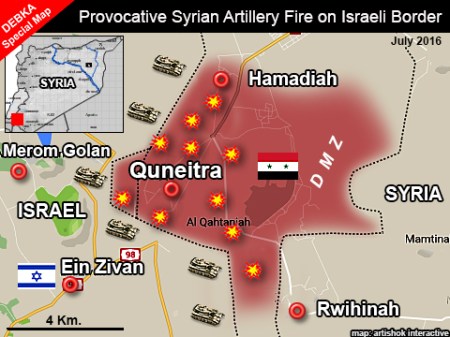
For four days since July 25, the Syrian army has been continuously firing artillery batteries – moved close to Israel’s defense lines on the Golan border – in a manner that comes dangerously close to provoking an Israeli response. This carefully orchestrated Syrian campaign goes on around the clock.

It is the first time in the six years of the Syrian war that Bashar Assad has ventured to come near to provoking Israel. But now he appears to be emboldened by his Russian ally.

The IDF is holding its fire for the moment. But Israeli military and government leaders know that the time is near for the IDF to be forced to hit back, especially since it is becoming evident that the Syrian army’s steps ae backed by Russia.

DEBKAfile’s military sources provide details of the Syrian steps:

  • The Syrian army’s 90th and 121nd battalions have been firing their artillery batteries non-stop across a 10km band along the Golan border from Hamadia, north of Quneitra, up to a point facing the Israeli village of Eyn Zivan. (See attacked map).
    This means that the Syrian army has seized the center of buffer zone between Israel and Syria and made it a firing zone.
  • This artillery fire fans out across a radius that comes a few meters short of the Israeli border and the IDF troops stationed there. It then recedes to a distance of 500 to 600 meters and sweeps across the outposts and bases of the Syrian rebel forces believed to be in touch with Israel or in receipt of Israeli medical aid.
  • The new Syrian attack appears to hold a message for Jerusalem: For six years, you supported the rebels against the Assad regime in southern Syria. That’s now over. If you continue, you will come face to face with Syrian fire.
  • Damascus is also cautioning those rebels:  For years, you fought us with Israel at your backs. But no longer. Watch us bring you under direct artillery fire, while the IDF sits on its hands.
  • On July 26, Russian media published an article revealing that Russia had delivered to the Syrian Air Force, advanced SU-24M2 front-line bombers, which is designed for attack on frontlines of battle. Israeli officials were unpleasantly taken aback by the news. Up until now, the Russians and Syrians refrained from deploying air strength in South Syria near the Israeli border. Now the Syrian air force has the means to do so.
  • DEBKAfile military sources report that the SU-24M2, following recent upgrades and modifications in Russian factories, is now capable of dropping smart bombs – ballistic bombs with a guidance system on their tails that enable them to hit targets with precision.This guidance system does not rely on US GPS satellites but rather the equivalent Russian GLONASS system which is linked to a network of 21 Russian satellites and partially encrypted for military usages.
    In addition, the SU-24M2 is equipped with a system that projects the information the pilot needs (flight details and battle details) on the plane’s windshield (head-up display) and on the pilot’s visor.
  • The Russians delivered to the Syrians two of these sophisticated airplanes this week, out of 10 that they will supply soon.

The IDF has concluded that it is only a matter of time before these planes appear in Southern Syria and so generate a new and highly combustible situation on Israel’s northern and northeastern borders.

The Russians are colluding with Damascus to inform Israel that it will no longer be allowed by either to continue backing the rebel forces in southern Syria or sustain the buffer zone which they man.

Israel may pay dear if Prime Minister Binyamin Netanyahu, Defense Minister Avigdor Lieberman, and Chief of Staff Lt. Gen. Gadi Eisenkot decide to continue to abstain from hitting back at the Syrian fire which is aimed every few hours at the vicinity of IDF posts or the impending arrival of Russian bombers. The price in store would be the weakening of the IDF’s hold on the Golan border.