Archive for the ‘Syria war’ category

Syrian Christian Forces Ask Trump for Help

April 18, 2017

Syrian Christian Forces Ask Trump for Help, Clarion ProjectRyan Mauro, April 18, 2017

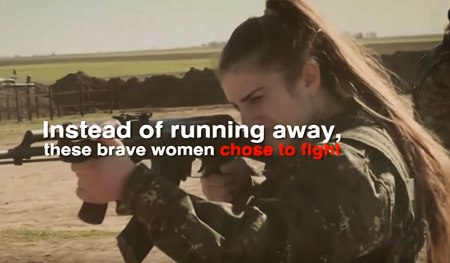
Volunteer with the Syrian Christian Forces (Photo: video screenshot)

A Syriac Christian militia in Syria that is fighting the Islamic State (ISIS) and Al-Qaeda and also opposes the Assad regime is asking President Trump for direct military assistance and to be treated as equals with the U.S.-backed Arab forces preparing to take Raqqa, the “capitol” of ISIS.

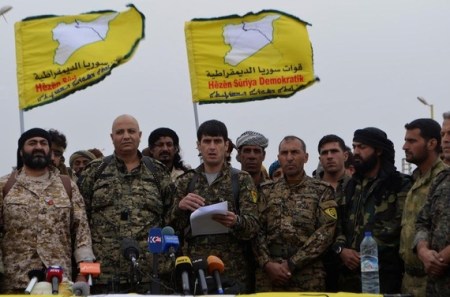
The Syriac Military Council (MFS) is a Christian component of the 50,000-strong Syrian Democratic Forces, an alliance of Kurds, Sunni Arabs, Turkmen and Christians backed by the United States and formed in October 2015. The U.S. military describes the alliance as its “best partnered forces” in Syria. The special operators helping the forces to fight ISIS say they have “absolute confidence” in them as the forces, including 1,000 women, prepare to attack Raqqa.

The MFS’ request for President Trump’s help reads in part:

 “There is no single reason to exclude us from the same support in equipment as is given to the Arabs. The fact that we suffered under genocides emphasizes the need for delivery of military equipment. If we are weak, we are a target of the extremist forces that the SDF is fighting against. 

“We will be part of any operation against Raqqa, regardless our current level of military equipment. We cannot imagine that the U.S. would deliberately want us to be poorer equipped than our Arab partners when we go into that big battle. 

“We thank the U.S. for the air support given in crucial battles and the support to the SDF. We also hope that this is an opportunity to work together for the long-term security and freedom of our people and all the peoples of the region.”

The MFS statement says that the U.S. military assistance favors the Turkmen and Arab components of the SDF over the Christians and Kurds. It also disputed Turkey’s claim that the Kurdish component is part of the PKK terrorist group.

The MFS has a presence in the Christian areas of northeastern Hasakah Province, a multiethnic province with Kurds and Arabs. The province has great potential for U.S. strategy, as it has been suggested as a candidate for a “safe zone” for refugees, most prominently by Dr. Ben Carson when he was running for the GOP presidential nomination. About half of Syria’s oil production is based in Hasakah Province.

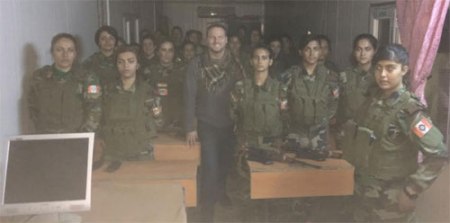
The Syriac Military Council (MFS) launched by the Syriac Union Party in January 2013 and is estimated to be about 2,000-strong and includes a Christian female unit named the Beth Nahrin Women Protection Forces. The organization includes Christians identifying as Assyrians, Syriacs and Chaldeans.

Watch a video of the Christian females’ training camp in the Kurdish area of northern Syria. 

https://www.youtube.com/watch?v=9c97bDXXMC4


The MFS initially tried to ally with various Syrian rebel groups, such as those backed by Turkey who are fighting under the Free Syria Army banner, but their Islamist orientation prevented it from going anywhere. A MFS commander said, “Most have a mentality that they can’t accept diversity within Syria.”

In early 2014, MFS allied with the Kurdish People’s Protection Units (YPG), which Turkey considers to be a branch of the PKK Kurdish terrorist group. The U.S. position is that they are operationally separate, which MFS agrees with, even if they are ideologically unified. The YPG is the Kurdish component of the Syrian Democratic Forces.

The MFS is on the side of the secular-democratic Syrian opposition, even if it doesn’t directly engage Assad’s forces. It “started out as a staunchly anti-government militia, and its leaders insist that its views have not changed,” reports Middle East Eye.

The Syriac Military Council (MFS) and its Beth Nahrin Women Protection Forces (HSNB) condemn the Assad regime as a “murder machine.” When they launched, they declared support for “the Syrian people’s revolution in its desire to bring down the Ba’ath regime.”

The MFS commander in Hasakah says the Assad regime and ISIS should be viewed as part of the same enemy, accusing the ruling dictatorship of exploiting ISIS to stay in power.

“They [the Assad regime] are the ones that bring ISIS in…We want to launch attacks on ISIS, but the army of the regime does not allow us to. They have contracted different outside militias, some of which are sympathetic to ISIS, and allowed them to enter and loot homes,” he said.

With President Trump’s reversal on the Assad regime, U.S. policy is now aligned with the Syrian Christian forces that belong to the Syriac Military Council and oppose Assad, ISIS, Al-Qaeda and Islamist rebels.

As the MFS Christians prepare for the bloody battle in Raqqa, they are hoping that President Trump hears their voice. Let’s hope that their statement reaches him.
US Air Force to quit Incirlik, move to Syria base

April 8, 2017

US Air Force to quit Incirlik, move to Syria base, DEBKAfile, April 8, 2017

When the work is finished, the rising complex of air bases will enable America to deploy twice as many warplanes and helicopters in Syria as the Russians currently maintain.

The five US bases in Syria are part of Trump’s three-pronged strategy which aims at a) fighting Islamist terror; b) blocking Iran’s land and air access to Syria; and c) providing the enclaves of the Syrian Kurdish-PYD-YPG with a military shield against the Turkish army.

********************

Several US engineering teams are working round the clock to build a big new air base in northern Syria after completing the expansion of another four. They are all situated in the Syrian borderland with Iraq, DEBKAfile’s military forces report.

This was going on over the weekend as senators, news correspondents and commentators were outguessing each other over whether the US missile attack on the Syrian Shayrat air base Friday, in retaliation for the Assad regime’s chemical attack on Khan Sheikhoun, was a one-off or the start of a new series.

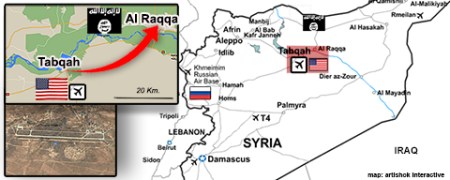
As the White House parried those questions, the Trump administration was going full steam ahead on the massive project of preparing to pull US air force units out of the Incirlik air base in southern Turkey, in active American use since 2002. Those units were in the middle of a big moving job to the five new and expanded air bases in Syria. Their hub is to be Tabqa, which is just 110km west of the Islamic State’s Syrian capital, Raqqa. The other five are Hajar airport in the Rmelan region, two small air fields serving farm transport in Qamishli, which have been converted to military us; and a fifth in the Kurdish Kobani enclave north of Aleppo near the Syrian-Turkish border.

Tabqa is also becoming the main assembly-point for the joint US, Kurdish, tribal Arab force that is coming together in readiness for a major charge on Raqqa.

When the work is finished, the rising complex of air bases will enable America to deploy twice as many warplanes and helicopters in Syria as the Russians currently maintain.

The site of the Tabqa air field was captured as recently as late March by the Syrian Democratic Force (Kurdish-Arab fighters) which were flown in and dropped there by the US Air Force’s Air Mobility Command. It was quickly dubbed “Incirlik 2” or “Qayyarah-2” after the US command center running the Iraqi military offensive against ISIS in Mosul.

Tabqa is designed to accommodate the 2,500 US military personnel housed at Incirlik. Like the Americans, the German Bundeswehr is also on the point of quitting Incirlik and eying a number of new locations in Cyprus and Jordan. The Germans are pulling out over the crisis in their relations with Ankara. The Americans are quitting because President Donald Trump wants to chill US ties with Turkish President Reccep Tayyip Erdogan and cooperation with the Turkish army.

The five US bases in Syria are part of Trump’s three-pronged strategy which aims at a) fighting Islamist terror; b) blocking Iran’s land and air access to Syria; and c) providing the enclaves of the Syrian Kurdish-PYD-YPG with a military shield against the Turkish army.

President Trump and King Abdullah II Hold a Joint Press Conference

April 5, 2017

President Trump and King Abdullah II Hold a Joint Press Conference, White House via YouTube, April 5, 2017

Condemnation will not stop Assad’s chemical war

April 5, 2017

Condemnation will not stop Assad’s chemical war, DEBKAfile, April 5, 2017

The task of locating destroying Assad’s stocks of pernicious weapon of war can only be performed by troops on the ground. And that is unlikely to happen.

****************************

Seven nations maintain elite military units in Syria – the US, Russia, Britain, Germany, France, Jordan and Israel. American, Russian and Turkish troops are backed by air support. Had those powers decided to destroy the Syrian dictator Bashar Assad’s poison chemical arsenal, they could have combined to do so and finished the job in a few days – and this week’s horrific tragedy possibly been averted.

The death toll from the Syrian chemical warfare bombardment of the rebel-held town of Kkhan Sheikhoun Monday, April 3, is now estimated at 150 with several hundred injured, cared for in totally inadequate medical facilities. The number of child victims has raised the pitch of world condemnation  The total figure fluctuates according to source.

But the most tragic truth of all is that no one in Moscow, Washington or Ankara is ready go ahead with this operation, any more than they are focused on ending the six-year old Syrian war, which has claimed a death toll of more than 600,000 – most civilians – and the displacement of 12 million refugees. Instead, they are calling the UN Security Council into another emergency (useless) session.

The most cynical aspect of this international wringing of hands is the sorry record of the way Assad’s toxic warfare record has been handled.

On May 3, 2014, the US military reported that efforts to bring about the dismantling of the Syrian army’s chemical weapons had come to naught after Bashar Assad refused to hand over the 27 tons of sarin precursor chemicals, so long as the UN disarmament agency (OPCW) insisted on his destroying their underground storage sites..

According to DEBKAfile’s sources, 12 of those bunker facilities are still operational and barred to access by UN inspectors.

Five months later, OPCW reported that Assad’s chemical weapons stocks had been liquidated. US Secretary of State John Kerry and Russian Foreign Minister Sergey Lavrov shook hands in Geneva to flashing cameras to celebrate the successful outcome of their negotiations on the subject.

This turned out to a charade, staged to cover up President Barack Obama’s decision to dodge his own red lines and abstain from action against the Assad regime if he resorted to chemical warfare.

Careful reading of the final OPCW report gives the game away: “To date, nearly 95 percent of all chemical weapon stockpiles declared by the possessor states have been destroyed under OPCW verification.” For its extensive efforts in eliminating chemical weapons, the OPCW received the 2013 Nobel Prize for Peace.

So 5 percent of the poisonous substances remained intact. In the interim four years, the Syrian ruler was able to substantially build up his depleted stocks of poison gas, the use of which also spread to the war in Iraq. The Syrian air force meanwhile began unbridled air strikes with chlorine bombs. They were replenished by Iranian freight planes landing at the Damascus military airfield and the T4 military air base near Palmyra with fresh consignments of chlorine bombs custom-made at Iran’s military industry factories.

Neither the Obama administration in Washington nor the Kremlin in Moscow lifted a finger to stop these deliveries. In the opposition camp, certain Syrian rebel groups, ISIS and Al Qaeda’s Nusra Front branch started tests on homemade chemical weapons, some of them successfully building up stocks of primitive poison weapons. Other rebel groups simply purchased Syrian chemical weapons from Syrian army officers.

Today, no international inquiry commissions would be able to establish beyond doubt the source of the chemical substances that poisoned hundreds of people in Idlib this week or determine who was ultimately responsible for this atrocity. It must be said that only the Syrian military had the ability to carry out an aerial attack like the one that struck the rebel-held town of Khan Sheikhoun. The Russians will certainly try to use as a pretext for vetoing a condemnatory UN Security Council resolution the claim that Syrian warplanes had only struck an insurgent storehouse containing toxic substances.

The task of locating destroying Assad’s stocks of pernicious weapon of war can only be performed by troops on the ground. And that is unlikely to happen.

Here’s How ISIS’ Female Enemies Celebrated International Women’s Day

March 10, 2017

Here’s How ISIS’ Female Enemies Celebrated International Women’s Day, Clarion ProjectRyan Mauro, March 9, 2017

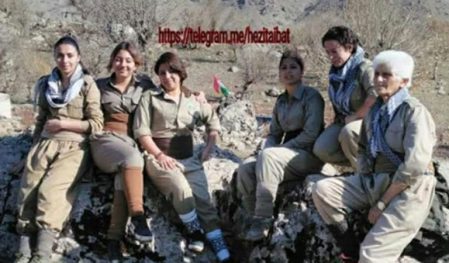
Female fighters from the Kurdistan Democratic Party of Iran (KDPI), including the oldest and youngest soldiers. (Photo: Courtesy)

The Iraqi and Syrian Christians who stare daily into the darkness of genocide have, after a long and bloody period of patience and non-violence, formed self-defense forces, including an all-female force in Syria.

The Beth Nahrin Women Protection Forces is a branch of the 2,000-strong Syriac Military Council, a Christian militia that says it includes Assyrians, Chaldeans and Syriacs. The Christian force is part of a U.S.-backed coalition named the Syrian Democratic Forces that includes Kurds and Sunni Arabs and is marching on Raqqa, the “capitol” of ISIS’ “caliphate.”

International Women’s Day would have been better honored by broadcasting those words and telling these stories than by skipping work, politicizing the day or getting arrested for blocking traffic as the radical Muslim-American activist and left-wing star Linda Sarsour was.

************************************

In America, some attention-seeking activists purposely got arrested by blocking traffic outside the Trump International Hotel so they could later become the face of so-called gender oppression.

Their PR stunt stole attention from the most powerful symbols of feminism: women in the Middle East—Christians, Kurds, Arabs, Yazidis—risking their lives to vanquish Islamic State (ISIS/ISIL) as a step towards starting a new era for women in the region.

The Iraqi and Syrian Christians who stare daily into the darkness of genocide have, after a long and bloody period of patience and non-violence, formed self-defense forces, including an all-female force in Syria.

The Beth Nahrin Women Protection Forces is a branch of the 2,000-strong Syriac Military Council, a Christian militia that says it includes Assyrians, Chaldeans and Syriacs. The Christian force is part of a U.S.-backed coalition named the Syrian Democratic Forces that includes Kurds and Sunni Arabs and is marching on Raqqa, the “capitol” of ISIS’ “caliphate.”

Watch a video about this force titled “Meet the Christian Women Fighting ISIS,” which shows a camp with 50 female recruits in the Kurdish area of northern Syria:

https://www.youtube.com/watch?v=9c97bDXXMC4

SIS is believed to still be holding many Yazidi women and girls as sex slaves and the other female Yazidis are determined to put an end to it. The Kurdish Peshmerga in Iraq has trained at least two female Yazidi forces, the 1,700-strong Sun Ladies and the Sinjar Women’s Units.

The Iraqi Kurdistan government is proud of how its Peshmerga forces put men and women on equal footing. The same goes for other Kurdish groups in Iraq that are fighting both ISIS and the Iranian regime, like the Kurdistan Freedom Party (PAK) and the Kurdistan Democratic Party of Iran (KDPI).

Clarion Project’s National Security Analyst Prof. Ryan Mauro in Iraq with female fighters from the Kurdistan Freedom Party (PAK)

The Syrian Democratic Forces include the Kurdish YPG group, with a female component known as the YPJ Women’s Defense Units. The Kurdish YPG is accused of being a branch of the Kurdistan Workers Party (PKK), which is designated as a terrorist group by the U.S., E.U. and Turkey. The U.S. government nonetheless backs the YPG, disputing the claim that YPG and PKK are synonymous.

A Twitter posting from ANF News shows female Kurdish fighters purportedly handing out flowers to women in villages freed from ISIS and is accompanied with a quote: “We’ll liberate women from slavery, atrocity and make every day March 8 [International Women’s Day].”

Sunni Arab women are also in on the action. The U.S. military has proudly distributed pictures showing female fighters who belong to the Syrian Arab Coalition, another component of the Syrian Democratic Forces (SDF), being trained and armed ahead of the planned attack on Raqqa.

For the female Kurdish commanders, they are not only risking their lives to defeat ISIS but for the sake of the next generation of girls.

The commander of the female Kurdish forces in Syria, Rojda Felat, has vowed to free the Yazidi women enslaved by ISIS as part of a broader struggle for women’s rights. She said, “Wherever a man is threatening a woman, our forces will struggle against this,” according to a report referenced in a PJ Media article.

In an interview published on International Women’s Day, Felat spoke words that should stiffen the spine and inspire every women’s right activist:

“In the Middle East women are assigned traditional roles such as wife, mother, house-worker. With the establishment of the SDF, however, this has changed and traditional roles have been turned upside down … With the SDF, the women of our region have taken developments by the scruff of the neck and left their imprint on the direction of the battle. As a result, women have re-established themselves in every sphere of life.”

International Women’s Day would have been better honored by broadcasting those words and telling these stories than by skipping work, politicizing the day or getting arrested for blocking traffic as the radical Muslim-American activist and left-wing star Linda Sarsour was.

US troops land in Syria to launch Raqqa operation

March 8, 2017

US troops land in Syria to launch Raqqa operation, DEBKAfile, March 8,  2017

According to our sources, President Donald Trump decided, after consulting with Defense Secretary James Mattis and National Security Adviser H.R. McMaster, that the US army would go it alone in the Raqqa offensive together with a single local force: the Kurdish-led Syrian Democratic Forces.

*************************************

EXCLUSIVE:  DEBKAfile’s military and intelligence sources disclose that elements of the 75th Ranger Regiment have arrived in Syria for the Trump administration’s first direct military operation in Syria: the long-delayed offensive to capture Raqqa from the Islamic State. The plan was put before the US, Russian and Turkish chiefs of staff who were getting together for the first time on Tuesday, March 7, in the Turkish town of Antalya, as revealed earlier on this site.

Rangers Regiment troops, which will spearhead the Raqqa attack, flew in from Fort Lewis air base, Washington, to the US air facility in Rmeilan, near the Syrian Kurdish town of Hasaka, equipped with light Striker tanks. More tanks and heavy equipment reached the Syrian base overland from Iraqi Kurdistan.

According to our sources, President Donald Trump decided, after consulting with Defense Secretary James Mattis and National Security Adviser H.R. McMaster, that the US army would go it alone in the Raqqa offensive together with a single local force: the Kurdish-led Syrian Democratic Forces.

The SDF is composed of 45,000 fighters of the Syrian Kurdish YPG militia and 10,000 Arab tribesmen, most belonging to the north Syrian branch of the Shamar.

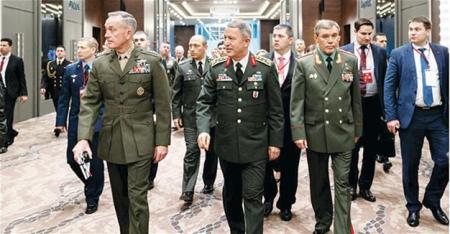
Gen. Joseph Dunford, Chairman of the US Chiefs of Staff, Gen. Valery Gerasimov, Russian Chief of Staff, and Gen. Hulusi Akar, Turkish army chief, were conferring in Antalya when the Rangers landed in Syria.

DEBKA Weekly, which comes out on Friday, March 10, will provide the background leading up to the US president’s decision to go for Raqqa.

If you are not yet a subscriber, click here for this and other exclusive stories.

Epic US, Russian, Turkish military summit on Syria

March 7, 2017

Epic US, Russian, Turkish military summit on Syria, DEBKAfile, March 7, 2017

(According to the article, the Syrian army “is now fully under Russian command.” Iran is not mentioned. — DM)


The three generals are most certainly working with open lines to their presidents – Gen. Dunford to President Trump; Gen. Gerasimov, to Vladimir Putin; and Gen. Akar, to Tayyip Erdogan. If they succeed in pulling off deals for working together, with their presidents’ endorsement, Trump will have achieved his oft-repeated target of teaming up with Moscow for eradicating ISIS.

***********************

EXCLUSIVE:  For the first time ever, the top soldiers of the United States, Russia and Turkey are holding a secret meeting in the Turkish town of Antalya for an urgent two-day effort to avert a clash between their three armies, which stand ominously face to face in northern Syria.

(See DEBKAfile’s exclusive disclosure on March 6)

Gen. Joseph Dunford, Chairman of the US Chiefs of Staff, Gen. Valery Gerasimov, Commander-in-Chief of the Russian armed forces, and Gen. Hulusi Akar, Chief of Staff of the Turkish army sat down together on Tuesday, March 7.

DEBKAfile’s military sources report that the formal agenda for this extraordinary get-together is the state of the Syrian war. But they are ranging over for more comprehensive and detailed issues and addressing at least six urgent challegnes:

1. How to prevent the three armies whose armored convoys are currently converging on the north Syrian town of Mabij, now freed of the Islamic State’s grip, from clashing over which takes over.

2. How to turn this approaching collision round and make it the jumping-off point for their collaboration in the Syrian conflict at large and a concerted drive against the Islamic State, in particular.

3. The three army chiefs will scrutinize plans for a combined trilateral offensive to drive ISIS out of its Syrian capital, Raqqa.

4.  How to translate their three-way collaboration for defeating ISIS in Syria into a combined effort against the same foe in Iraq.

5.  If they are able to hammer out accords in Antalya, the three generals will consider how to apply them to managing the Syrian army, which is now fully under Russian command.

6.  In the event of their failure to reach terms for US-Russian-Turkish cooperation in Syria, the three army chiefs will seek understandings on dividing Syria into sectors. They will determine which sectors are to be ruled by US forces and out of bounds to Russian forces, and which will be placed under exclusive Russian control and barred to American intervention.

DEBKAfile’s military sources describe this unique rendezvous as the most important US-Russian military meeting since Donald Trump took office on Jan. 20.

The three generals are most certainly working with open lines to their presidents – Gen. Dunford to President Trump; Gen. Gerasimov, to Vladimir Putin; and Gen. Akar, to Tayyip Erdogan. If they succeed in pulling off deals for working together, with their presidents’ endorsement, Trump will have achieved his oft-repeated target of teaming up with Moscow for eradicating ISIS.

Putin, too, will have chalked up an historic diplomatic and strategic feat. For the first time since the end of World War II, and after years of cold war, the Russian and American armies will come together to fight a common enemy, namely radical Islamic terror, and create an umbrella for the Russian military operation to branch out into Iraq.

Erdogan will also come out ahead of the game. Turkey and its army will become strategic partners in determining Syria’s future and fighting ISIS. And Barack Obama’s departure from the White House will have marked the start of Turkey’s ascent to regional power status ahead of Iran.

US armored column at Manbij to block Russians

March 6, 2017

US armored column at Manbij to block Russians, DEBKAfile, March 6, 2017

But now, as Russian units geared up to enter Manjib, the Trump administration warned Russian President Vladimir Putin that if they did move in, they would face American forces.

The Trump administration has thus taken its first direct military action in Syria to cut off the expansion of Russian forces in the North.

********************

The Pentagon announced Tuesday, March 6, that a US armored convoy was deployed around the disputed northern Syrian town of Manbij, and in an unusual move, released a video depicting the convoy and its men.

A US military spokesman tweeted that the US deployment was a deliberate action taken to assure that forces within the US-led coalition deterred aggression and kept the focus on defeating ISIS.

Affirming that the US-led coalition was aware of the location of Russian-backed Syrian forces, Pentagon spokesman Captain Jeff Davis told reporters Monday.

“They are certainly aware of where we are, and we are aware of where they are. There is no intention between the two of there being any conflict against any party other than ISIS.”

DEBKAfile’s military sources report that the US armored force landed in the middle of a complicated crisis around the important town of Manjib, ever since a mixed Kurdish-Syrian Arab force captured it from ISIS last year with US air and military support.

A few days ago, the Kurdish YPG militia handed over some of the villages and military positions around the town to Russian and Syrian army units, as we revealed in an article (Monday, March 5) on ramped-up Russian-Iranian military cooperation in Syria, in the absence of American moves.

But now, as Russian units geared up to enter Manjib, the Trump administration warned Russian President Vladimir Putin that if they did move in, they would face American forces.

The Trump administration has thus taken its first direct military action in Syria to cut off the expansion of Russian forces in the North.

Our military sources reveal that the Russian units assigned to Manjib consist mainly of a Chechen commando brigade brought over by Moscow three months ago.

Our sources added:  Tuesday afternoon, President Donald Trump phoned Prime Minister Binyamin Netanyahu while he was being questioned by the police at his residence. That call almost certainly dealt with the possibility of a US-Russian military clash in Manjib, two days before Netanyahu sets out of Moscow for talks with the Russian president.

Putin ramps up Syria pact with Iran in US absence

March 5, 2017

Putin ramps up Syria pact with Iran in US absence, DEBKAfile, March 5, 2017

sdf_3-17

Constantly bombarded by allegations that his campaign associated with Russian intelligence, US President Donald Trump has held back from going through with his original plan for teaming up with Moscow in Syria for the important campaigns of wiping out the Islamic State and relieving Syria of Iran’s iron grip.

His entire Middle East policy is up in the air, while he grapples with domestic foes. The much talked-of US coalition with its regional allies, Saudi Arabia, Egypt, Jordan and Israel, is also in abeyance.

Amid the uncertainty about the Trump administration’s future steps, Prime Minister Binyamin Netanyahu is unlikely to make much headway in his talks with Russian President Vladimir Putin in Moscow on Thursday, March 9,

DEBKAfile’s intelligence and military sources report that, even if does persuade Putin to stick to his promise to prevent Iran and Hizballah from deploying troops on the Syrian-Israeli border opposite the Golan, he won’t get far in his bid to prevent Iran from establishing a permanent military and naval presence in Syria.

This is the situation stacking up against Netanyahu:

1. The Trump administration has decided not to decide on Middle East policy – and Syria, in particular – while engaged in dodging his domestic enemies’ Russian arrows.

2. Some of the president’s advisers maintain that the state of indecision in Washington may turn out into an advantage. It might not be a bad thing for Moscow to carry the heavy lifting of tackling ISIS, Iran and Hizballah, rather than putting US troops in harm’s way.

3. Putin is not waiting for Trump and is already on the move, DEBKAfile’s sources report.

Friday, March 3, Russian special operations units recovered the Syrian town of Palmyra from the Islamic State.

That day too, the Syrian Democratic Forces (SDF), composed predominantly of the Syrian Kurdish YPG militia and Arab tribesmen from the north, agreed to hand over their positions in the strategic town of Manjib to the Russians and the Syrian army,

The SDF was created, trained, armed and funded by the United States as the potential spearhead force for the offensive against the Islamic State. This force was able to last year to capture the small (pop: 50,000) northern town of Manjib, 30km west of the Euphrates, thanks only to US aerial bombardments of ISIS positions and American advisers.

How come that this important US ally suddenly surrendered its positions to the Russians and Assad’s army?

There is more than one reason. Firstly, the SDF’s Kurdish and Arab commanders apparently decided to give up on waiting for Washington to come round, especially since the only weapons they had received from the Obama administration for fighting ISIS were Kalashnikov AK-74 rifles.

Moreover, the Kurds’ most implacable arch enemy is breathing down their necks. On March 1, Turkish President Tayyip Erdogan threatened to order his army, which has occupied northern Syria since last year, to seize Manjib. He said: “Manjib is a city that belongs to the Arabs and the SDF must not be in Raqqa either.”

The Kurdish-Arab force decided to take the Turkish leader at his word. Believing him to be close to Trump, its leaders decided their services were being dispensed with. They saw no point therefore in wasting and risking their troops in battles in the US interest.  In this situation, Moscow looked like a better bet.

DEBKAfile’s military sources stress that, when the Russians say they are working with the Syrian army, they really mean the Iranian Revolutionary Guards, the pro-Iranian Shiite militias and Hizballah, because most Syrian army’s units were decimated by nearly six years of civil war, or exist only on paper.

That being so, even if Putin does promise Netanyahu to distance Iranian and pro-Iranian troops from the Syrian-Israeli border, he may not be in a position to honor his pledge. With the Americans far away, they are Russia’s main partners on the ground for achieving his future goals in Syria.

Iraq hits ISIS in Syria – with Russia, without US

February 25, 2017

Iraq hits ISIS in Syria – with Russia, without US, DEBKAfile, February 25, 2017

If indeed President Donald Trump gave a quiet nod to the four-way Russian-Iranian-Syrian-Iraqi military partnership for fighting this enemy, it would signify the start of US-Russian cooperation for the war on Islamic terror in the Middle East and mean that the two powers were running local forces hand in hand.

But if the Iraqis chose to work in conjunction with Moscow and Tehran, cutting America out, that is a completely different matter. It would indicate that President Vladimir Putin, having noted Trump’s difficulties in lining up his team for a deal with Moscow – and the opposition to this deal he faces from his intelligence agencies – had given up on the US option and was going forward in Syria and Iraq with Tehran instead.

****************************

The Iraqi air force Friday, Feb. 24, conducted its first ever bombardment of the Islamic State in Syria. The target was the southeastern town of Abu Kemal near the Iraqi border, to which ISIS has removed most of its command centers from its main Syrian stronghold in Raqqa. Iraqi Defense Ministry spokesman Brig. Gen. Tahseen Ibrahim stated that Baghdad had coordinated the attack with Moscow, Damascus and Tehran using shared intelligence.

When he was asked if the United State military was involved, he said he did not know.

Likewise, in referring to the Abu Kemal attack, Iraqi Prime Minister Haydar al-Abadi said: “We are determined to follow the terrorism that is trying to kill our sons and our citizens everywhere.” He made no mention of the United States, despite ongoing US support for the Iraqi army’s long offensive to retake Mosul from ISIS.

This omission is of pivotal importance for the future of the war on the Islamic State and America’s involvement in that campaign.

If indeed President Donald Trump gave a quiet nod to the four-way Russian-Iranian-Syrian-Iraqi military partnership for fighting this enemy, it would signify the start of US-Russian cooperation for the war on Islamic terror in the Middle East and mean that the two powers were running local forces hand in hand.

But if the Iraqis chose to work in conjunction with Moscow and Tehran, cutting Ameica out, that is a completely different matter. It would indicate that President Vladimir Putin, having noted Trump’s difficulties in lining up his team for a deal with Moscow – and the opposition to this deal he faces from his intelligence agencies – had given up on the US option and was going forward in Syria and Iraq with Tehran instead.

The Iraqi prime minister’s actions in this regard must have been critical. He may be playing a double game – working with the US commander in Iraq and Syria, Lt. Gen. Stephen Townsend, for the capture Mosul from the jihadis, while at the same time, using Russian and Iranian partners on other anti-ISIS fronts.

DEBKAfile’s military and counterterrorism sources say that in any event the Iraqi air strike presented a major affront to President Donald Trump’s avowed determination to fight radical Islamic terror to the finish. Its timing is unfortunate: Defense Secretary Gen. James Mattis and Joint Chiefs of Staff Chairman Gen. Joseph Dunford are due Monday to submit the review the president commissioned from the Pentagon on policy planning for Syria and the war on terror. Trump’s foreign policy address to Congress is scheduled for the next day.

If the Pentagon’s recommendations hinge on the enlistment of regional military strength for the campaign against ISIS, then Moscow will be seen to have snatched the initiative first.

There are more signs that the war on ISIS may be running away from Washington. The Trump administration has made it clear that it objects to any role for the Turkish army in the offensive to capture Raqqa from ISIS. However, on Saturday, Turkish Foreign Minister Mevlut Cavusoglu, after hailing the victory of the Turkish army over ISIS in the northern Syrian town of Al-Bab, announced that Turkey was planning to lead an operation for the recovery of Raqqa, in cooperation with… France, Britain and Germany, after holding consultations with their representatives. America was not mentioned.