Archive for the ‘Samir Quntar’ category

Gen. Dvornikov: Russia’s combined C-in-C and top diplomat in Syria

January 10, 2016

Gen. Dvornikov: Russia’s combined C-in-C and top diplomat in Syria, DEBKAfile, January 10, 2016
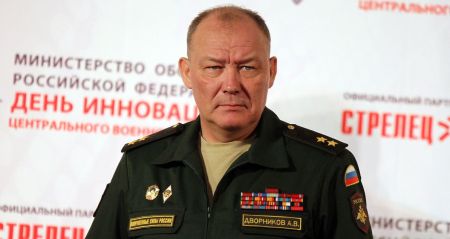
Colonel_General_Alexander_Dvornikov

[T]he Russian general walks on eggs in a job that requires him to collaborate militarily with Iran and Hizballah, on the one hand, and uphold the understandings Putin reached with Prime Minister Binyamin Netanyahu, on the other, over Israeli Air Force actions against terrorists and their conflictive interests in the southern Syrian regions bordering on Israel.

********************

It was in August, 2015, on the eve of the massive Russian military intervention in Syria, that President Vladimir Putin selected Col. Gen. Alexander Dvornikov, 54, as chief of Russia’s military operation in Syria and Iraq, DEBKAfile’s military and intelligence sources report. He resolved a fierce debate among Russia’s top officials and generals over the officer to lead the what was to be the most high-powered venture of the Putin presidency. Many favored a senior air force officer, conceiving the campaign as focusing mainly on air strikes. They proposed Col. Gen. Victor Nikolaevich Bondarev, chief of Aerospace Defense Forces, a branch established just four months ago.

Putin overruled them, having decided that the diplomatic and ground components were to be just as important as the future aerial campaign. He picked Gen Dvornikov, whom he first met 26 years ago in Berlin during the last moments of the dying Soviet empire. In 2015, he judged the general as being the right man for the job he had in mind, by virtue of his extensive military experience in running the 2000-2003 North Caucasus wars against Islamic terror groups, as chief of staff and a motorized infantry division commander.

In his new posting, Gen. Dvornikov was given control of the twin Russian commands in Damascus and Baghdad. They function as two halves of the same war room.

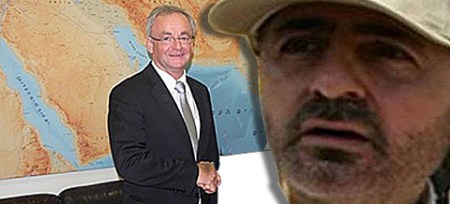
At the Damascus headquarters, he has three partners: the Syrian Chief of Staff Gen. Ali Abdullah Ayyoub, the Iranian Revolutionary Guards Gen. Key Parvar and the commander of Hizballah forces in Syria, Mostafa Bader el-Din. Until his mysterious disappearance in November, Gen. Qassem Soleimani, Iranian commander in Syria and Iraq, would put in an occasional appearance at high command conferences.

The two command centers’ operations are fully coordinated and keep the single overall commander, Col. Gen. Dvornikov, on top of events and in control of decisions 24/7 – a key position of enormous authority and extreme diplomatic sensitivity for juggling Moscow’s opposition allies and interests.

The Saudi government, which operates, arms and funds a number of Syrian rebel militias, regards the Russian general as the ultimate nemesis of its interests in Syria, because he expends as much force on fighting those militias as in striking the Islamic State.

After the Hizballah super terrorist Samir Quntar was assassinated on Dec. 20, the Saudis engineered a press leak showing how Gen. Dvornikov was turned away from the door of the Iranian command headquarters in Damascus when he came to offer condolences for the death of one of their top agents. The Iranians were furious with the Russian commander for allowing Israeli air planes free rein to fire rockets into Quntar’s secret hideout in Damascus.

That incident was an illustration of how the Russian general walks on eggs in a job that requires him to collaborate militarily with Iran and Hizballah, on the one hand, and uphold the understandings Putin reached with Prime Minister Binyamin Netanyahu, on the other, over Israeli Air Force actions against terrorists and their conflciting interests in the southern Syrian regions bordering on Israel.
Hizballah blows up “Mossad” patrol, sparks border clash with Israel

January 4, 2016

Hizballah blows up “Mossad” patrol, sparks border clash with Israel, DEBKAfile, January 4, 2016

Shortly after DEBKAfile’s forecast of a Hizballah revenge strike for the Samir Quntar assassination, a Hizballah roadside bomb blew up against an IDF patrol at the Shebaa Farms on the Hermon slopes Monday afternoon, Jan. 4.  No casualties were caused. The Israeli force responded with tank artillery fire on the southern Lebanese town of Al-Wazzani and was answered by rocket fire from Lebanon

Hizballah announced that it had targeted an Israeli patrol with a bomb on the ceasefire line at the Shebaa Farms targeting a civilian car carrying a “senior Mossad officer”.

The next Hizballah communiqué said: The Martyr al-Quntar Unit blew up a bomb against an Israeli patrol in the Shebaa Farms, destroying a military vehicle and causing casualties.

In a third communiqué, Hizballah said the car attacked carried a “senior Israeli army officer” – amending its previous claim of a Mossad officer.

The Israeli army has closed all northern roads to civilian traffic in case the Hizballah attack spreads into a major clash.

DEBKAfile reported earlier Monday that the rising tension between Tehran and Riyadh may serve Iran and its Lebanese proxy as an oportunity to attack Israel. The leader of that proxy, Hizballah’s Hassan Nasrallah, had repeatedly threatened to punish Israeli for the assassination of its high profile terrorist planner Samir Quntar in Damascus on Dec, 20. Quntar was freed by Israel as part of a prisoner swap in 2008, three decades after he was convicted of killing four Israelis. In September, the United States placed Quntar on its terror blacklist, saying he had “played an operational role, with the assistance of Iran and Syria, in building up Hizballah’s terrorist infrastructure in the Golan Heights.”

IDF, Russian, Iranian forces on war alert for Hizballah attack on Israel – and backlash

December 31, 2015

IDF, Russian, Iranian forces on war alert for Hizballah attack on Israel – and backlash, DEBKAfile, December 31, 2015

Gerhard-Conrad

The IDF and all of the armies involved in the Syrian civil war, namely those of Russia, Syria and Iran, went on their highest war alert on Thursday, Dec. 31 when all their intelligence organizations reported that Hassan Nasrallah could not be stopped from attacking Israel, in revenge for the assassination of Samir Quntar in Damascus on December 20.

More than one intermediary visited Beirut to avert the Hizballah attack and its deadly fallout, including a former senior officer of the German BND foreign intelligence service. According to DEBKAfile’s intelligence sources, Gerhard Conrad, late of the BND and incumbent director of the European Union’s Intelligence and Situation Center, was given this urgent mission by Chancellor Angela Merkel.

He came away from a meeting with Nasrallah on Dec. 29, with the news that the Hizballah chief was not open to persuasion and the attack was already underway.

Conrad has excellent connections in the Arab world, especially in Syria and Lebanon. Seven years ago, he acted as intermediary between Israel and Hizballah for negotiating the recovery of the bodies of two fallen IDF soldiers, Eldad Regev and Ehud Goldwasser, in exchange for the handover of that same Hizballah high-up Samir Quntar and other jailed and convicted Arab terrorists.

The German spy-diplomat then established personal connections with a shadowy figure, Wafik Safa, who is in charge of Hizballah’s intelligence and security network and a close crony of Nasrallah.

Conrad used those connections again in 2011 to broker the release of Gilead Shalit from Hamas captivity.

It was Safa he arranged for him to meet Nasrallah in Beirut Tuesday. He found the Hizballah chief unshakeable in his determination to make Israel pay for Quntar’s death, even at the cost of a painful backlash against the Shiite group’s terrorists in Syria and Lebanon.

He was unmoved by the warning issued by Israel’s chief of staff, Lieut. Gen. Gady Eisenkott, on Monday, just hours before the Conrad mission.  Eisenkott said, “Just as we have proven in the past, we know how to strike anyone who wishes to harm us. Our enemies know they will suffer grave consequences if they try to undermine our security.”

Upon receipt of the German emissary’s report on the meeting, Eisenkott, his deputy, Maj. Gen. Yair Golan, and OC Northern Command, Maj. Gen. Aviv Kochavi, inspected the preparedness of the IDF’s northern border defenses for all contingencies.

They took into account a scenario, whereby Nasrallah would take advantage of the stormy weather forecast for the weekend in Syria, Lebanon and Israel, to strike Israel, in the knowledge that the heavy rain and snow would impede Israeli air force activity and give the Hizballah operation a tactical edge.

Russian military and Iranian Revolutionary Guard forces in Syria have taken into account that a Hizballah attack will not go unanswered by Israel and that the IDF would most likely hit back at Hizballah on Syrian soil, thus ushering in the New Year with a new whirlwind.

Tehran names Raafat Al-Bakkar as new Hizballah Golan terror ring chief

December 28, 2015

Tehran names Raafat Al-Bakkar as new Hizballah Golan terror ring chief, DEBKAfile, December 28, 2015

NasrallaBagdadi480

Tehran Monday, Dec. 28, further ramped up the tension between its Lebanese proxy Hizballah, whose leader Sunday threatened to avenge the death of Samir Quntar, and Israel, which is conducting a military exercise along its northern borders. Four days after Quntar was assassinated in Damascus, Tehran appointed a successor to carry on building a new terrorist network for striking Israel from the Golan.

This successor is revealed by DEBKAfile’s exclusive sources as a Lebanese called Raafat Al-Bakkar, about whom very little is known. According to our sources, the Iranians spotted Al-Bakkar as promising talent earlier this year, shortly after the Israeli air strike which on Jan. 18 killed Iranian Gen. Ali Dadi and the high-profile Hizballah leader Jihad Moughniyeh. They were caught touring the Golan around Quneitra in search of a site for a terrorist base. Al-Bakkar was sent to Tehran at that time for a course in building and running terrorist networks, and this week he was given charge of the new “National Resistance on the Golan” organization for deep strikes inside Israel.

When Nasrallah boasted Sunday that his jihadists were already on their way to punish Israel, he was looking forward to the arrival of Quntar’s successor.

See DEBKA files’ earlier report from Sunday, Dec. 27.

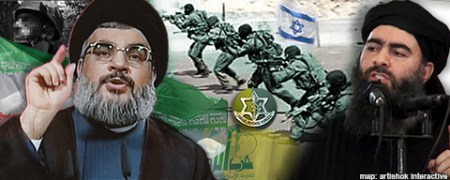
IDF Chief of Staff Lt. Gen. Gady Eisenkott explained why it was necessary to bring forward the launching of the new Commando Brigade by two months, when he addressed the formation ceremony on Sunday, Dec. 27, at the Ein Harod National Park: “The Commando Brigade is more necessary than ever in light of the threats from Hizballah and the Islamic State,” he said, in reference to the boasts heard in the last 48 hours from Hassan Nasrallah and Abu Bakr Al Baghdadi.

The Chief of Staff introduced Col. David Zini as the first commander of the new Brigade.

The ceremony took place shortly after the Hizballah chief Hassan Nasrallah said, “Revenge for the death of Samir Quntar is on the way… The orders have been given and execution is in the hands of resistance fighters on the ground… The Israelis are worried and rightly so – those on the borders [soldiers] and those inside the country…. We shall not let the blood of our Jihadi fighters and brothers to be spilled anywhere in the world,” he said.

DEBKAfile’s military sources report: Analysis of the kinds of threats posed by Hizballah (and ISIS) at this time, which are likely to focus more on terrorism than on tank or infantry border incursions, persuaded IDF leaders of the need for a new framework for bringing under one roof some of the top-notch, highly-trained, experienced, well-armed and determined fighting men who are willing to take on new challenges.

The self-styled Islamic State’s “caliph” Abu Bakr Al-Baghdadi, also devoted special attention to Israel, or rather “the Jews,” in his first audio speech in seven months Saturday, Dec. 26, the day before Nasrallah sounded off. His message was similar to that of his Shiite enemy, albeit in his own inimitable style:

The Islamic State would soon be in Palestine to establish an Islamic state there, he said, “Jews, soon you shall hear from us in Palestine which will become your grave… The Jews thought we had forgotten Palestinian… Not at all, Jews…The pioneers of the jihadist fighters are getting closer every day.”

If and when the Shiite Hizballah and Sunni ISIS make good on their similar but separate threats – or sooner – they will encounter Israel’s new Commando Brigade. Its fighting men are trained for combat in miscellaneous conditions of terrain, day or night, under deep cover. They are equipped with high-tech equipment, most of it classified, for gathering visual and electronic intelligence, communications, photography and targeting. They may either kill terrorists or take them captive.

In a word, these elite troops will hit the enemy in his back yard or at home, and blow the threats heard from Hizballah and ISIS leaders’ back on their own forces.

The 89th Commando Brigade is composed of four battalions:

Duvdevan specializes in operating amidst an Arab population under deep cover for locating and arresting terror suspects.

Egoz is a special kind of infantry battalion, whose commandos operate solo or in very small teams behind enemy lines, especially across the Syrian and Lebanese borders.

Maglan is skilled in the use of weaponry designed for precision operations against high quality enemy targets. These elite fighters go deep inside enemy territory to gather intelligence and use their specialized technology, exclusive for the use of this unit, for devastating assaults.

Rimon members are desert fighters who gained their experience in the terrain of the Gaza Strip and Egypt. Their experience as back-up for operations against drug smugglers is invaluable for urban combat in civilian environments.

Excluded from the new brigade are the separate IDF commando units: Sayeret Matkal, Shayetet 13 (Navy), the Oketz unit which trains dogs for anti-terror work, and Yahalom, of the Engineering Corps.

Picture Tells Arab Journalist the Story on Israeli Prisoner Treatment

December 24, 2015

Picture Tells Arab Journalist the Story on Israeli Prisoner Treatment, Investigative Project on Terrorism, December 24, 2015

This week’s air strike in Syria which killed a notorious Hizballah terrorist generated the usual cries of “death to Israel” and promises of retribution.

Samir Kuntar was one of the most hated terrorists in Israeli history, a man who killed a 4-year-old girl by smashing her head with a rifle butt. He served nearly 30 years in an Israeli prison before being released in a 2008 exchange in which Israel received the remains of two slain soldiers. Kuntar received a hero’s welcome in Lebanon.

1321

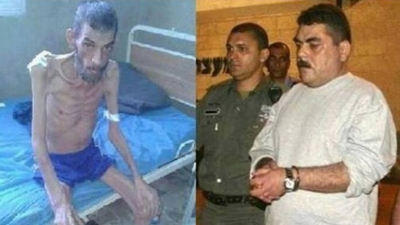
A Syrian journalist took a different tact this week in remembering Kuntar’s release. Faisal al-Qassem was struck by Kuntar’s robust condition in pictures from the release, and placed one next to a picture of a Syrian prisoner.

“Samir Kuntar left an Israeli prison with a beer belly and a doctorate,” al-Qassem wrote in a Facebook post flagged Wednesday by the Times of Israel. “At the other extreme, this is how Syrians leave [dictator Bashar] Assad’s prisons.”

He has a point. Kuntar doesn’t look like a man who missed many meals in Israeli custody, while the emaciated Syrian invokes memories of those who survived Nazi concentration camps.

Many of Qassem’s 8.7 million followers seemed to agree, with more than 100,000 hitting “like.”

“We are taught that Israeli prisons are the worst in the world but in fact we know that the Israelis are more merciful than all of the Arabs,” wrote one Facebook user in Arabic. “Some say that the Zionists are our biggest enemy, dogs and murderers. But Muslims kill more Muslims that the Zionists,” read another.

A lot of Arabic-language media dispense rabidly anti-Israel views and promote anti-Semitic conspiracy theories. It is refreshing to see Qassem’s recognition of reality and the strong support it generated.

Arch terrorist Samir Quntar’s two secret Iranian controllers died with him

December 24, 2015

Arch terrorist Samir Quntar’s two secret Iranian controllers died with him, DEBKAfile, December 24, 2015

Kuntar480

The Hizballah leader Hassan Nasrallah’s eulogy for Samir Quntar at his funeral Monday, Dec. 21 was not only brief but also untraditional. After blaming Israel in a few short sentences for assassinating him, Nasrallah said he would laud the dead terrorist’s deeds and qualities on another occasion.

That was hardly the tribute the Hizballah would normally have awarded a senior operative killed by Zionist missiles.

DEBKAfile’s intelligence and counterterrorism sources explain this odd behavior by events leading up to the rocket strike.

The Druze arch terrorist had of late transferred his services from Hizballah to the Iranian Revolutionary Guards. He kept up his connections in Hizballah, but took orders from the Iranians in preference to instructions from Nasrallah and the commander of Hizballah operations in Syria, Mustafa Badr al-Din.

The Iranian command in Damascus provided him with two apartments in the Jamaran district south of the Syrian capital, where he lived and worked. But he was also given two Iranian handlers, officers of Gen. Qassem Soleimani’s Al Qods Brigades.

The two Iranian officers died in the rocket attack Sunday, Dec. 20, along with Quntar and his deputy, Farhan Issam Sha’alan, head of the “Syrian National Resistance on the Golan” organization, which was just then getting ready to launch attacks deep inside Israeli territory.

DEBKAfile’s exclusive sources name the two Iranian officers as Mohammed Riza Fahemi and Mir Ahmad Ahmadi. Their coffins were flown to Tehran the day after the assassination.

Wednesday, Dec. 23, the IDF raised the level of alert another notch on the Golan, the Lebanese and Syrian borders and on the main roads of northern Israel, in view of signs that the Iranian leadership was bent on avenging the loss of the arch-terrorist and the two Iranian intelligence officers.

Our Iranian and intelligence sources report that high Iranian officials had concluded that Israel had targeted Quntar to get at Tehran, rather than Hizballah. It was seen as a warning from Jerusalem that if the new terrorist network that the Druze terrorist had established, in partnership with Syria and Hizballah, went into action against Israel, Iran would pay a price: more elements of its military and intelligence structure in Syria would be targeted. Iran’s leaders also decided, according to those sources, that the deaths of Quntar and two Iranian officers must not go unpunished.

But the rushed eulogy and unceremonious funeral also had a hidden context. Although the dead man was a member of the Druze faith, the ceremony was conducted according to Shiite rites at Hizballah’s main center of worship, the Shite Hosniyeh mosque in southern Beirut. The hundreds of thousands of Syrian, Lebanese and Israeli Druze who witnessed the ceremony were appalled to discover that Quntar had deserted his ancestral faith and converted to Shiite Muslim.

DEBKAfile’s intelligence and counterterrorism sources have learned that the terrorist kept his conversion a deep secret, known to no one in the Druze community, only to a handful of top Iranian and Hizballah officials. Since the secret has come out, his compatriots in Syria, Lebanon and the Golan feel they were cheated by Iranian and Hizballah agents into following Quntar, in the false belief that he headed an autonomous Druze group, when in fact he was a renegade and the minion of a Shiite power.