Archive for the ‘Russia – Syrian war’ category

Russian-Turkish clash building up over Syria

February 14, 2016

Russian-Turkish clash building up over Syria, DEBKAfile, February 14, 2016

Turkish-self-propelled_howitzers_13.2.16

Turkish President Tayyip Erdogan clearly took a calculated risk when he ordered a two-our cross-border artillery bombardment Saturday, Feb. 13 of Syrian army forces positioned around the northern Syrian town of Azaz and the Kurdish YPG militia units which two days earlier took control of the former Syrian military air base of Minagh some six kilometers from the Turkish border.

Kurdish troops backed by the Russian air force seized that base last week from rebel militias as part of the operation for cutting the rebel groups under siege in Aleppo from their supply routes. The Turkish bombardment was therefore an indirect attack on the Russian forces backing pro-Assad forces against the rebels in the Syria war.

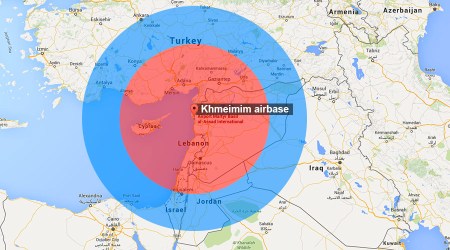
Erdogan knows that Moscow hasn’t finished settling accounts with Turkey for the shooting down of a Russian Su-24 on Nov. 24 and is spoiling for more punishment. After that incident, the Russians deployed top-of-line S-400 ground-to-air missile batteries and advanced Sukhoi Su-35 warplanes to their base in Latakia near the Turkish border. Ankara therefore limited its strike to a two-hour artillery bombardment from Turkish soil, reasoning that a Turkish warplane anywhere near the Syrian border would be shot down instantly.

Emboldened by the delay in the Russian response, the Turks took another step: Prime Minister Ahmet Davutoglu threatened the Kurdish YPG militia with more attacks if they failed to withdraw from the Menagh air base.

Although the Turkish prime minister had called on “allies and supporters” to back the operation against the Russian-backed  Syrian Kurds, Washington took the opposite line by urging Turkey, a fellow member of NATO, to desist from any further attacks.

Washington’s concern is obvious. An outright clash between Turkey and Russia would entitle Ankara to invoke the NATO charter and demand allied protection for a member state under attack.

The Obama administration would have had to spurn this appeal for three reasons:

1. To avoid getting mixed up in a military clash between two countries, just as the US kept its powder dry in the Russian-Ukraine confrontation after Moscow’s annexation of the Crimean Peninsula in February 2014.

2. To avoid upsetting the secret Obama-Putin deal on the allocation of spheres of influence in Syria: the Americans have taken the regions east of the Euphrates River, and the Russians, the west.

The Kurdish YPG militia forces near Aleppo and the city itself come under the Russian area of influence.

3. Regional tensions were tightened another notch Saturday by Russian comments: Russian Prime Minister Dmitry Medvedev said that his country and the West have “slid into a new Cold War period,” and Foreign Minister Sergei Lavrov said a third World War is actually underway -“I call this struggle a third World War by other means.,” he said.

Washington will avoid any action that risks further stoking this high state of international tension, but will act instead to de-escalate the cross-border Turkish-Russian confrontation over Syria.

All eyes are now on Moscow, Much depends on Russia’s response to the artillery bombardment of its Syrian and Kurdish allies. It is up to Putin to decide when and how to strike back – if at all.

Russian hands-off warning to US, Saudis, Turks amid crucial Aleppo battle

February 6, 2016

Russian hands-off warning to US, Saudis, Turks amid crucial Aleppo battle, DEBKAfile, February 6, 2016

S-400_range_map_25.11.15 (1)

The five-year Syrian civil war, faces its most critical moment. Saturday, Feb. 6, a combined force of Syrian army and Hizballah troops and an Iraqi Shiite militia under Iranian officers, were led by Russian air and Spetsnaz (special forces) officers into pressing forward to encircle 35,000 rebels trapped in Aleppo, the country’s largest city. As they tightened the siege, 400,000 Syrian civilians were also trapped and forced to bear heavy Russian air bombardment and savage artillery fire from the ground forces closing in on the city.

Rebel supply routes were cut off Thursday and Friday when Syrian and Hizballah forces captured the Azaz Corridor connecting Aleppo and all of the northern province of Idlib to the Turkish border.

Tens of thousands of refugees fleeing from the beleaguered town are massing at Bab al-Salama, the last Turkish border crossing to be closed against them. This is the largest Syrian refugee exodus since the start of the civil war.

The rebels under siege are painfully short of weaponry for fighting off the massive, combined offensive, DEBKAfile’s military sources report. Their only remaining recourse is to surrender or be ground into submission as the conquering force knocks over their positions and takes over street after street.

Once the combined forces fighting with Bashar Assad’s army take Aleppo and northern Syria, the opposition will have suffered its heaviest defeat since the war began. The rebels groups’ capacity to continue fighting the regime will be gravely diminished.

Their desperate plight – and the fresh surge of Syrian refugees in unmanageable numbers – cut short the conference in Geneva for a settlement of the Syrian conflict, before it got underway – and prompted reactions from sponsors of rebel groups.

In Riyadh, Brig, Gen. Ahmed Asiri, adviser to Saudi Defense Minister Muhammed Bin Salman, announced Friday that Saudi Arabia is ready “to participate in any ground operations that the international coalition launches against ISIS.” This offer was taken as a veiled response to the SOS from the rebel stronghold in Aleppo.

In Washington, State Department circles, in a briefing to US media, said the time had come to establish a no-fly security zone in northern Syria. They said: “Once a zone were established we do not believe Russia would challenge the stronger US and NATO forces, particularly if they were operating mainly from Turkey.”

The next day, Friday, Moscow came back with a sharp response: Russian Deputy Defense Minister Anatoly Antonov said: “Russian air defense systems enable early detection of threats to Russian aircraft flying combat missions over Syria and provide adequate measures to ensure flight safety.”

This was a reminder of the sophisticated air defense S-400 and S-300 missile systems Russia installed at its Syrian air base after the Turkish air force downed a Russian warplane in November.

Syrian Foreign Minister Walid al-Moallem put it more crudely: “Any foreign troops entering Syria would return home in wooden coffins.”

He advised armed opposition groups fighting the government offensive in the area to lay down their weapons because, he said, “government advances signal that the five-year-old Syria war is nearing its end.”

Saturday, US Secretary of State John Kerry urged Russia to implement a ceasefire in Syria, saying its bombing campaign was killing women and children in large numbers and “has to stop.” He told reporters on his return from a trip to Europe: “Russia has indicated to me very directly they are prepared to do a ceasefire,” adding “The Iranians confirmed in London just a day and a half ago they will support a ceasefire now.”

DEBKAfile’s military sources have seen no sign of any ceasefire or even a slowdown in the Russian-led Syrian-Iranian Aleppo offensive.

Iran and Russia in first major falling-out over Syrian war and Assad

February 5, 2016

Iran and Russia in first major falling-out over Syrian war and Assad, DEBKAfile, February 5, 2016

P.V

While diplomats from 70 countries talked in London about how to raise $9 bn for projects to rehabilitate Syria’s refugees and rebuild their war-ravaged country, its future was further clouded this week by an argument that flared between the main arbiters, Russia and Iran.

Ali Akbar Velayati, Iranian supreme leader Ayatollah Ali Khamenei’s foreign affairs advisor, spent three days in Moscow Feb. 1-4 haranguing Russian leaders, including President Vladimir Putin, whom he saw twice, on the differences that had cropped up in their long political and military cooperation for propping up the Assad regime.

The Iranian official went home without resolving those differences, DEBKAfile’s sources report exclusively. Left pending were not just the next stage of the war but also the fate of President Bashar Assad.

Velayati told Iranian reporters on his plane: “We are against stopping the war,” and “The war must be continued until all (Syrian) terror cells are eradicated.”

He did not elaborate, but DEBKAfile’s Iranian and Moscow sources point out that he was underlining Tehran’s concerns about Moscow’s reported plans for the Assad regime, in which Iran is heavily invested, and the slowdown of Russia’s air campaign against every last rebel group.

Most of all, Iran’s leaders were troubled to find that Russia, by dint of its proactive military intervention, had maneuvered itself into position for calling the shots for Syria.

They are particularly distrustful, according to our sources, over Moscow’s complicated deals with Washington on the Syrian question and the dialogue Russia is holding with the Persian Gulf states, led by Saudi Arabia. The Iranians fear that Putin is calibrating his offensive against rebel groups according to the pace of these interchanges and may therefore scale back strikes on pro-American or “moderate” rebels, or even refrain from subduing them.

Tehran also looks askance at the improved relations Moscow is fostering with its rivals in the region, Riyadh and Abu Dhabi. Last week, Russian Foreign Minister Sergei Lavrov visited the two Arab capitals to allay their concerns for the Syrian rebel groups they support. He promised the Saudis not to harm them, so long as they did not get in the way of the joint Russian-Syrian steps in their country.

Given the Russian moves, the Syrian war looks increasingly to Tehran as unlikely to end in President Assad’s favor.

Lavrov seemed to confirm this Iranian concern on Feb. 2 when, during his visit to Oman he said, “Russian air strikes will not cease until we truly defeat the terrorist organizations ISIL and Jabhat al-Nusra, And I don’t see why these air strikes should stop.”

The Iranians immediately jumped on his omission of all other rebel groups but the two Islamists as the enemy, confirming their suspicions that Moscow was now acting in Syria on its own account. This was the cause of raised tempers in Velayati’s second meeting with the Russian president in Moscow.

The Iranian official demanded the expansion of Russian military operations to cover more inclusive rebel targets. Putin shot back that if Iran wants to ramp up war operations, it should send its own troops into the fray – and not just generals.

He touched on a sore point:  Iran’s Revolutionary Guards Corps don’t have troops available for fighting in Syria. And so, Velayati’s mission to Moscow ended on an acrimonious note.

Obama’s Fake Syrian Peace Talks Falling Apart

January 29, 2016

Obama’s Fake Syrian Peace Talks Falling Apart, Front Page Magazine, Daniel Greenfield, January 29, 2016

obama-wears-tan-suit-149481242256_6

The peace talks strategy for Syria comes out of Iran and Russia, two countries determined to keep Assad in power. Obama wanted the peace talks in order to rig a fake settlement that would come apart once he was out of office. But the only people fooled by this were stupid enough to get their news from CNN and their talking points from Think Progress. The Sunni side only participated to the extent that they could wreck the talks and extract some demands. They have no intention in signing on to Assad staying in power or to letting Obama get away with a fake solution that does just that.

And, oh yes, no one actually thinks Obama has any credibility.

As the Obama administration pushes for peace in Syria, its credibility is crumbling among Syrian opposition leaders, many of whom increasingly doubt the U.S. is serious about ending the rule of dictator Bashar Assad.

Because he isn’t.

If the talks peter out or collapse, that will further undermine President Barack Obama’s foreign policy legacy, which already has been tarnished by the endless bloodshed in Syria

It’s okay. Obama will blame Tom Cotton or Bush or Israel. Or someone. And the media will go along with it.

“A number of the opposition has expressed the feeling that the U.S. is not acting as an honest broker and that they’ve lost both trust and faith in the ability of the United States to deliver on a political settlement in Syria,” said Andrew Bowen, a senior fellow at the Center for the National Interest who has contacts among Syrian opposition groups.

Obama signed on with Iran. So he’s about as much of an honest broker as any other foreign agent.

“Kerry did not make any promises, nor did he put forward any initiatives,” said Khaled Khoja, president of the opposition Syrian National Coalition, in onestatement questioning U.S. intentions. “He has long been delivering messages similar to those drafted by Iran and Russia, which call for the establishment of a ‘national government’ and allowing Bashar al-Assad to stay in power and stand for re-election.”

Well yes. What else do you expect Kerry to do? This is the only thing he’s been doing since he got to the Senate and even beforehand with the Viet Cong. Traitors gotta traitor.

Among the numerous reports floating around — some of them highly speculative — are those that allege Kerry warned opposition leaders they could lose international support if they didn’t attend Friday’s talks. The reports come as the U.S. has appeared to be backing away from its demand that Assad must leave office by signaling its support for the notion of a transitional period.

And that period will come to an end once Obama is out of office.

But all this is theater anyway as the groups with the most fighters on the ground, including Al Qaeda and ISIS, are not represented. Most of the Islamists aren’t either. So this is just the Muslim Brotherhood, whose actual strength is weak, throwing a tantrum. Even if the Sunni groups signed some sort of deal it would be as worthless as the fake elections Hillary still talks up in Libya

Russians let Hizballah into Daraa, breaking their promise to Israel

January 28, 2016

Russians let Hizballah into Daraa, breaking their promise to Israel, DEBKAfile, January 28, 2016

Syria_South

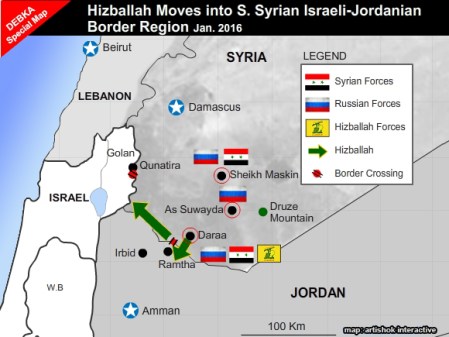
On Wednesday, Jan. 27 a large Hizballah force entered the southern Syrian town of Daraa, a critically dangerous event for Israel’s security. The way to the town, which lies near the Jordanian border and across from the Israeli Golan, was opened before Hizballah by none other than Russian forces. This was a blatant violation of President Vladimir Putin’s commitments to Prime Minister Binyamin Netanyahu and Jordanian King Abdullah not to permit Iranian and Iran-backed forces, such as Hizballah and Iraqi and Afghani Shiite militias, reach their borders in consequence of Russia’s military intervention in the Syria war.

Daraa is just 32 km from the southern Golan and 12 km from the Jordanian border. Hizballah forces in this town are therefore within easy striking distance from northern Israeli and Jordan.

What happened Wednesday was that a sizeable Hizballah contingent made it into Daraa, the day after a Syrian unit under the command of Russian officers captured the town of Sheikh Maskin, cutting off rebel forces east of Daraa from their comrades to the west.

Control of Sheikh Maskin is the key to the crossroads leading to Damascus in the north, the Druze Mountain town of es-Suwaida in the east, and Quneitra on Golan opposite Israel’s northern defenses.

The battle for Sheikh Maskin was the first in the Syrian conflict to be directly fought under Russian command. Its fall sparked accounts of Russian officers commanding Syrian troops in different parts of Syria.

So far, Israel has not reacted to the Hizballah force’s advance, notwithstanding public statements by Prime Minister Binyamin Netanyahu and Defense Minister Moshe Ya’alon that this would never be allowed to happen.

DEBKAfile’s military sources explain this reticence by a persistent misreading of the Syrian crisis in the higher ranks of the Israeli defense establishment. Military Intelligence chief Maj. Gen. Herzl Halevi, who has a good grasp of its complexities, is a lone voice against the defense minister and IDF chief of staff, Lt. Gen. Gady Eisenkot

In Amman, however, King Abdullah and his generals signified both alarm and fury. DEBKAfile’s sources report that Wednesday morning, the king shot off an urgent message to President Putin demanding an explanation for the Russian officers’ action in opening the door of Daraa to hostile Hizballah fighters.

Jordan has fought Hizballah and its conspiracies for three years, ever since its security forces seized an arms cache that Hizballah had smuggled into the kingdom for a terror cell to mount attacks in the northern province of Irbid. Amman is now concerned that Hizballah is close enough to make a grab for Al-Ramtha, the only border crossing between Syria and Jordan. That would be a feather in the cap of Iran’s Lebanese proxy, as the first Arab border crossing to fall to a Hizballah force outside Lebanon, and one, moreover, located athwart a main regional water source, the Yarmouk River.

As of Thursday morning, Jan. 28, Abdullah had not received a reply to his missive from Putin, but a message did come through to Amman from Syrian President Bashar Assad.

Using a back-door intelligence channel, he sent a notice in the name of Gen. Bahjat Suleiman, former Syrian ambassador to Jordan until he was expelled in May 2014, that King Abdullah must now face the consequences of his long support for the rebels of southern Syria.

The monarch was also advised to prepare for the influx of thousands of fleeing rebel fighters whom the combined Syrian and Hizballah forces were pushing towards the Jordanian border.

The next hours will be critical for the development of a similar crisis on the Israel-Syrian border in the Golan region.

A new US-Russian-Turkish military buildup over Syria: In unison or at odds?

January 25, 2016

A new US-Russian-Turkish military buildup over Syria: In unison or at odds? DEBKAfile, January 25, 2016

TurkishAirBase480

The US and Russia are in the process of a military buildup in the Kurdish areas of northern Syria. It is ranged along a narrow strip of land 85 km long, stretching from Hassakeh in the east up to the Kurdish town of Qamishli on the Syrian-Turkish border. Facing them from across that border is a parallel buildup of Turkish strength. This highly-charged convergence of three foreign armies athwart a tense borderland is reported here by DEBKAfile’s military sources. It is too soon to determine whether the three armies are operating in sync or at odds, especially in view of the bitter relations between Moscow and Ankara.

US Forces 

American Special Operations troops and Air Force attack helicopters landed first at Remelan airport. They are the first US troops to operate from a ground base in Syria, accommodated in living quarters built for them in advance by a US engineering corps unit. The airport runway has been widened for US warplanes.

American Special Operations troops and Air Force attack helicopters landed first at Remelan airport. They are the first US troops to operate from a ground base in Syria, accommodated in living quarters built for them in advance by a US engineering corps unit. The airport runway has been widened for US warplanes.

Russian Forces

Next came two Russian military missions on Jan. 16.  One group, led by a general and consisting of air force and Special Operations officers, is preparing to take over a small abandoned base in Syrian army-controlled territory just 80 km from the new US facility at Remelan, and adapt it for Russian use.

The other group, which consists of intelligence officers – some from Russia’s FSB federal security service, the FSB – indicates that Moscow has decided it is high time for professionals to protect the classified information moving around the Russian Task Force in Syria and safeguard it from reaching the wrong hands. .

The abandoned base is less than 3.5 km from the Turkish border, and would act as a Russian barrier between US forces in northern Syria and the Turkish border contingents.

Turkish Forces

This Russian deployment set off alarm bells in Ankara, and so the Turkish army responded with the third troop buildup, arraying tanks and mobile artillery on the border across from Qamishli.

Over the weekend, Turkish President Tayyip Erdogan stated, “We have said this from the beginning: we won’t tolerate such formations (in northern Syria) along the area stretching from the Iraqi border up to the Mediterranean.”

At the same time, US Vice President Joe Biden said Saturday, Jan. 23, that  the U.S. and Turkey are prepared for a military solution against ISIS in Syria should the Syrian government and rebel-opposition forces fail to reach a peace agreement during its upcoming meeting in Geneva.

However, Ankara views its war on terror as focused on both Kurdish separatists and ISIS, which is subjecting Turkey to multi-casualty attacks.

DEBKAfile’s military and intelligence sources note that Turkey’s military options are very limited. Its leaders know they dare not put a foot wrong because the Russian force in Syria is just waiting for an opportunity to avenge the downing of a Russian Su-24 warplane by the Turkish air force on November 24.

Another group of actors stirring the pot in northern Syria is the Kurds, particularly the YPG militia, the only fighting force in Syria capable of defeating ISIS, which has been reinforced by the Iraqi autonomous Kurdish region’s Peshmerga, as well as the outlawed Turkish PKK Kurdish organization.

At this stage, it is impossible to determine how this triple buildup will play out tomorrow – how far the US and Russia are in concert, at what point they may decide to vie for footholds in the Kurdish region of northern Syria and how far the Turks are clued into the joint US-Russian strategy for bludgeoning ISIS.

Russian air strikes slowed down over Syria by weather and maintenance

January 11, 2016

Russian air strikes slowed down over Syria by weather and maintenance, DEBKAfile, January 11, 2016

Air_Strike_Maps_1.16Russian air strike map in January 2016

Russian air raids over Syria were seen to have tapered off in the first 10 days of the New Year to their lowest level since the onset of Moscow’s major intervention in Syria in late September, intelligence sources report. The slowdown was not officially reported or explained. But our sources point to three likely causes:

1.  The Russian Air Force conducted an exceptionally intensive series of aerial strikes over northern and southern Syria in the course of December. This may have caused too many technical problems for the overtaxed ground crews to keep up with the necessary maintenance work.

2.  Winter conditions in the region are subject to extreme and rapid change, often swinging between snow storms and warm air currents in the space of a few hours. Russian air and ground crews alike are finding it hard to adjust to Middle East weather.

3.  The first days of January are Russia’s traditional holiday season. The Eastern churches celebrate Christmas on Jan. 7. Air crews may have decided to take a break from combat missions.

In case the slowdown was misinterpreted in the West, the Russian high command published a set of statistics Monday, Jan. 11 that painted a picture of intense activity.

In the first ten days of 2016, the Russian Air Force was said to have conducted 311 air strikes against 1097 targets.

The communiqué also noted that the first Syrian Air Force MidG-23 fighter plane was able to land at Hama air base. This central Syrian facility had been inactive for months because it was under rebel artillery fire and was now restored to full operation, thanks to Russian air bombardments of rebel forces.

From Hama, the Syrian army is now back in command of the Rte 5 highway linking Aleppo to Damascus, opening up for Syrian, Hizballah and pro-Iranian militia armies their only road link and supply route between central and northern Syria.

The recovery of Hama also provides a shield for defending Latakia, President Bashar Assad’s main power base.

Western intelligence experts estimate that the air strike statistics offered by Moscow are exaggerated. They tie the operation for the relief of the Hama air base with a project about to be launched by the Russian command from its base outside Latakia, namely, the transfer of Russian air force and special operations officers and forces teams to the Palmyra area, in readiness for an offensive to seize all the Syrian air facilities to the west of the town from ISIS control.

Western intelligence experts estimate that the air strike statistics offered by Moscow are exaggerated. They tie the operation for the relief of the Hama air base with a project about to be launched by the Russian command from its base outside Latakia, namely, the transfer of Russian air force and special operations officers and forces teams to the Palmyra area, in readiness for an offensive to seize all the Syrian air facilities to the west of the town from ISIS control.

Russian tacticians in Syria appear to be focusing now on pushing rebel and Islamic State forces out of all the airfields they have captured, in order to get the Syrian Air Force flying and bombing again, and so ease the burden on the Russian flight crews in Syria.

Gen. Dvornikov: Russia’s combined C-in-C and top diplomat in Syria

January 10, 2016

Gen. Dvornikov: Russia’s combined C-in-C and top diplomat in Syria, DEBKAfile, January 10, 2016

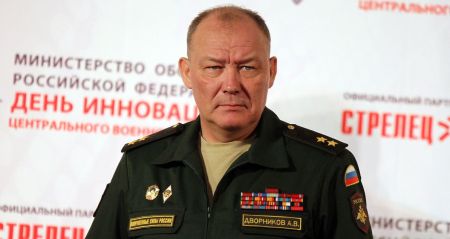
Colonel_General_Alexander_Dvornikov

[T]he Russian general walks on eggs in a job that requires him to collaborate militarily with Iran and Hizballah, on the one hand, and uphold the understandings Putin reached with Prime Minister Binyamin Netanyahu, on the other, over Israeli Air Force actions against terrorists and their conflictive interests in the southern Syrian regions bordering on Israel.

********************

It was in August, 2015, on the eve of the massive Russian military intervention in Syria, that President Vladimir Putin selected Col. Gen. Alexander Dvornikov, 54, as chief of Russia’s military operation in Syria and Iraq, DEBKAfile’s military and intelligence sources report. He resolved a fierce debate among Russia’s top officials and generals over the officer to lead the what was to be the most high-powered venture of the Putin presidency. Many favored a senior air force officer, conceiving the campaign as focusing mainly on air strikes. They proposed Col. Gen. Victor Nikolaevich Bondarev, chief of Aerospace Defense Forces, a branch established just four months ago.

Putin overruled them, having decided that the diplomatic and ground components were to be just as important as the future aerial campaign. He picked Gen Dvornikov, whom he first met 26 years ago in Berlin during the last moments of the dying Soviet empire. In 2015, he judged the general as being the right man for the job he had in mind, by virtue of his extensive military experience in running the 2000-2003 North Caucasus wars against Islamic terror groups, as chief of staff and a motorized infantry division commander.

In his new posting, Gen. Dvornikov was given control of the twin Russian commands in Damascus and Baghdad. They function as two halves of the same war room.

At the Damascus headquarters, he has three partners: the Syrian Chief of Staff Gen. Ali Abdullah Ayyoub, the Iranian Revolutionary Guards Gen. Key Parvar and the commander of Hizballah forces in Syria, Mostafa Bader el-Din. Until his mysterious disappearance in November, Gen. Qassem Soleimani, Iranian commander in Syria and Iraq, would put in an occasional appearance at high command conferences.

The two command centers’ operations are fully coordinated and keep the single overall commander, Col. Gen. Dvornikov, on top of events and in control of decisions 24/7 – a key position of enormous authority and extreme diplomatic sensitivity for juggling Moscow’s opposition allies and interests.

The Saudi government, which operates, arms and funds a number of Syrian rebel militias, regards the Russian general as the ultimate nemesis of its interests in Syria, because he expends as much force on fighting those militias as in striking the Islamic State.

After the Hizballah super terrorist Samir Quntar was assassinated on Dec. 20, the Saudis engineered a press leak showing how Gen. Dvornikov was turned away from the door of the Iranian command headquarters in Damascus when he came to offer condolences for the death of one of their top agents. The Iranians were furious with the Russian commander for allowing Israeli air planes free rein to fire rockets into Quntar’s secret hideout in Damascus.

That incident was an illustration of how the Russian general walks on eggs in a job that requires him to collaborate militarily with Iran and Hizballah, on the one hand, and uphold the understandings Putin reached with Prime Minister Binyamin Netanyahu, on the other, over Israeli Air Force actions against terrorists and their conflciting interests in the southern Syrian regions bordering on Israel.

Saudi Arabia stews in policy hell

January 4, 2016

Saudi Arabia stews in policy hell, Asia Times, January 3, 2016

Last week’s mass executions in Saudi Arabia suggest panic at the highest level of the monarchy. The action is without precedent, even by the grim standards of Saudi repression. In 1980 Riyadh killed 63 jihadists who had attacked the Grand Mosque of Mecca, but that was fresh after the event. Most of the 47 prisoners shot and beheaded on Jan. 2 had sat in Saudi jails for a decade. The decision to kill the prominent Shia cleric Nimr al-Nimr, the most prominent spokesman for restive Saudi Shia Muslims in Eastern Province, betrays fear of subversion with Iranian sponsorship.

Saudi-beheading22-300x183Official Saudi beheading

Why kill them all now? It is very hard to evaluate the scale of internal threats to the Saudi monarchy, but the broader context for its concern is clear: Saudi Arabia finds itself isolated, abandoned by its longstanding American ally, at odds with China, and pressured by Russia’s sudden preeminence in the region. The Saudi-backed Army of Conquest in Syria seems to be crumbling under Russian attack. The Saudi intervention in Yemen against Iran-backed Houthi rebels has gone poorly. And its Turkish ally-of-convenience is consumed by a low-level civil war. Nothing has gone right for Riyadh.

Worst of all, the collapse of Saudi oil revenues threatens to exhaust the kingdom’s $700 billion in financial reserves within five years, according to an October estimate by the International Monetary Fund (as I discussed here). The House of Saud relies on subsidies to buy the loyalty of the vast majority of its subjects, and its reduced spending power is the biggest threat to its rule. Last week Riyadh cut subsidies for water, electricity and gasoline. The timing of the executions may be more than coincidence: the royal family’s capacity to buy popular support is eroding just as its regional security policy has fallen apart.

For decades, Riyadh has presented itself as an ally of the West and a force for stability in the region, while providing financial support for Wahhabi fundamentalism around the world. China has been the kingdom’s largest customer as well as a provider of sophisticated weapons, including surface-to-surface missiles. But China also has lost patience with the monarchy’s support for Wahhabi Islamists in China and bordering countries.

According to a senior Chinese analyst, the Saudis are the main source of funding for Islamist madrassas in Western China, where the “East Turkistan Independence Movement” has launched several large-scale terror attacks. Although the Saudi government has reassured Beijing that it does not support the homegrown terrorists, it either can’t or won’t stop some members of the royal family from channeling funds to the local jihadis through informal financial channels. “Our biggest worry in the Middle East isn’t oil—it’s Saudi Arabia,” the analyst said.

China’s Muslims—mainly Uyghurs in Western China who speak a Turkish dialect—are Sunni rather than Shia.  Like Russia, China does not have to worry about Iranian agitation among Shia jihadis, and tends to prefer Iran to the Sunni powers. As a matter of form, Beijing wants to appear even-handed in its dealings with Iran and Saudi Arabia, for example in recent contacts between their respective navies. Chinese analysts emphasize that Beijing has sold weapons to both—more in absolute to terms to Iran but more sophisticated weapons to the Saudis.

More pertinent than public diplomacy, though, is where China is buying its oil.

Nonetheless, China’s oil import data show a significant shift away from Saudi Arabia towards Russia and Oman (which China considers part of the Iranian sphere of influence). Russia’s oil exports to China have grown fourfold since 2010 while Saudi exports have stagnated. Given the world oil glut, China can pick and choose its suppliers, and it is hard to avoid the inference that Beijing is buying more from Russia for strategic reasons.  According to Russian sources, China also has allowed Russian oil companies to delay physical delivery of oil due under existing contracts, permitting Russia to sell the oil on the open market for cash—the equivalent of a cash loan to Russia.

saudioil1-768x558

China’s interests in Syria coincide with Russia’s. Both have reason to fear the growth of ISIS as a magnet for their own jihadis.  Thousands of Chinese Uyghurs make their way into Southeast Asia via the porous southern border of Yunnan province, with financial assistance from Saudi supporters and logistical support—including passports—from local Turkish consulates. Chinese Uyghurs were implicated in the bombing of Bangkok’s Erawan Temple last August, and have linked up with ISIS supporters as far south as Indonesia. Turkey reported last month that most jihadists crossing its border into Syria to join ISIS are Chinese Muslims.

With Kurdish and allied forces gaining control of Syria’s border with Turkey, aided by Russian air support, Chinese Uyghurs may lose access to Syria. Late in December Kurdish forces crossed to the western bank of the Euphrates River and are in position to link up with Kurdish militias in northwestern Syria, eliminating Turkish hopes of a “safe zone” controlled by Turkey on the southern side of the Syrian border.  For its part, Turkey risks paralysis from a low-intensity civil war with its Kurdish population. The Kurdish-majority southeast of the country is under siege and fighting has spread to Turkey’s western provinces.

It’s an ill wind that blows nobody good, and China seems hopeful that it has contained its jihadist problem. On New Year’s Day, the Communist Party leader in China’s Xinjiang province declared that “the atmosphere for religious extremism has weakened markedly.”

China is extremely reluctant to commit military forces to overseas conflicts, and its military is ill-prepared to do so even if Beijing were to change its mind. The People’s Liberation Army lacks ground attack aircraft like the two squadrons of Russian Su-24 and Su-25 deployed in Syria. Nonetheless, Beijing is happy that Russia is reducing ISIS forces in Syria as well as Saudi- and Turkish-backed Sunni Islamists like the Army of Conquest.

It will be hard to evaluate the success of Russian bombing in Syria until the dust settles, but there is a great deal of dust in the air. According to Israeli sources, Russia is dumping vast amounts of its Cold War inventory of dumb bombs on Syrian Sunnis with devastating effect. The Russian bombing campaign makes up in volume what it lacks in sophistication, killing far more civilians than Western militaries would tolerate, but changing the situation on the ground. That explains Russian President Vladimir Putin’s newfound popularity among world leaders. He is doing their dirty work.

Saudi Arabia’s proxies in Syria are in trouble. Early in 2015, the Army of Conquest (Jaish al-Fateh), a coalition of al-Qaida and other Sunni Islamists backed by the Saudis, Turks and Qataris, had driven the Syrian army out of several key positions in Northwest Syria, threatening the Assad regime’s core Alawite heartland. The coalition began breaking up in November, however, and the Syrian Army recently retook several villages it had lost to the Army of Conquest. One of the Army of Conquest’s constituent militias, Failaq al-Sham, announced Jan. 3 that it was leaving the coalition to defend Aleppo against regime forces reinforced by Russia.

Everything seems to have gone wrong at once for Riyadh. The only consolation the monarchy has under the circumstances is that its nemesis Iran also is suffering from the collapse of oil revenues and the attrition of war. Iran began withdrawing its Revolutionary Guard forces from Syria in December, largely due to high casualties. The high cost of maintaining the war effort as Iran’s finances implode also may have been a factor. Iran’s Lebanese Shia proxy, Hezbollah, has suffered extremely high casualties, virtually neutralizing its whole first echelon of combat troops. And Russia has shown no interest in interfering with Israeli air strikes against Hezbollah.

The oil price collapse turns the competition between Saudi Arabia and Iran into a race to the bottom. But the monarchy’s panicked response to its many setbacks of the past several months raises a difficult question. In the past, the West did what it could to prop up the Saudi royal family as a pillar of stability in the region, despite the Saudis’ support for jihadi terrorism. Soon the West may not be able to keep the House of Saud in power whether it wants to or not.

IDF, Russian, Iranian forces on war alert for Hizballah attack on Israel – and backlash

December 31, 2015

IDF, Russian, Iranian forces on war alert for Hizballah attack on Israel – and backlash, DEBKAfile, December 31, 2015

Gerhard-Conrad

The IDF and all of the armies involved in the Syrian civil war, namely those of Russia, Syria and Iran, went on their highest war alert on Thursday, Dec. 31 when all their intelligence organizations reported that Hassan Nasrallah could not be stopped from attacking Israel, in revenge for the assassination of Samir Quntar in Damascus on December 20.

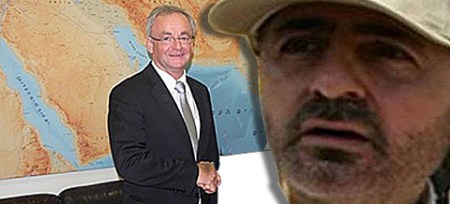
More than one intermediary visited Beirut to avert the Hizballah attack and its deadly fallout, including a former senior officer of the German BND foreign intelligence service. According to DEBKAfile’s intelligence sources, Gerhard Conrad, late of the BND and incumbent director of the European Union’s Intelligence and Situation Center, was given this urgent mission by Chancellor Angela Merkel.

He came away from a meeting with Nasrallah on Dec. 29, with the news that the Hizballah chief was not open to persuasion and the attack was already underway.

Conrad has excellent connections in the Arab world, especially in Syria and Lebanon. Seven years ago, he acted as intermediary between Israel and Hizballah for negotiating the recovery of the bodies of two fallen IDF soldiers, Eldad Regev and Ehud Goldwasser, in exchange for the handover of that same Hizballah high-up Samir Quntar and other jailed and convicted Arab terrorists.

The German spy-diplomat then established personal connections with a shadowy figure, Wafik Safa, who is in charge of Hizballah’s intelligence and security network and a close crony of Nasrallah.

Conrad used those connections again in 2011 to broker the release of Gilead Shalit from Hamas captivity.

It was Safa he arranged for him to meet Nasrallah in Beirut Tuesday. He found the Hizballah chief unshakeable in his determination to make Israel pay for Quntar’s death, even at the cost of a painful backlash against the Shiite group’s terrorists in Syria and Lebanon.

He was unmoved by the warning issued by Israel’s chief of staff, Lieut. Gen. Gady Eisenkott, on Monday, just hours before the Conrad mission.  Eisenkott said, “Just as we have proven in the past, we know how to strike anyone who wishes to harm us. Our enemies know they will suffer grave consequences if they try to undermine our security.”

Upon receipt of the German emissary’s report on the meeting, Eisenkott, his deputy, Maj. Gen. Yair Golan, and OC Northern Command, Maj. Gen. Aviv Kochavi, inspected the preparedness of the IDF’s northern border defenses for all contingencies.

They took into account a scenario, whereby Nasrallah would take advantage of the stormy weather forecast for the weekend in Syria, Lebanon and Israel, to strike Israel, in the knowledge that the heavy rain and snow would impede Israeli air force activity and give the Hizballah operation a tactical edge.

Russian military and Iranian Revolutionary Guard forces in Syria have taken into account that a Hizballah attack will not go unanswered by Israel and that the IDF would most likely hit back at Hizballah on Syrian soil, thus ushering in the New Year with a new whirlwind.