Archive for the ‘Russia – Syrian war’ category

Assad’s troops enter Palmyra after massive Russian air blitz to smash ISIS

March 27, 2016

Assad’s troops enter Palmyra after massive Russian air blitz to smash ISIS, DEBKAfile, March 27, 2016

Forces loyal to Syria's President Bashar al-Assad drive a tank during their offensive to recapture the historic city of Palmyra in this picture provided by SANA on March 24, 2016. REUTERS/SANA/Handout via Reuters ATTENTION EDITORS - THIS PICTURE WAS PROVIDED BY A THIRD PARTY. REUTERS IS UNABLE TO INDEPENDENTLY VERIFY THE AUTHENTICITY, CONTENT, LOCATION OR DATE OF THIS IMAGE. FOR EDITORIAL USE ONLY. NOT FOR SALE FOR MARKETING OR ADVERTISING CAMPAIGNS. THIS PICTURE IS DISTRIBUTED EXACTLY AS RECEIVED BY REUTERS, AS A SERVICE TO CLIENTS

Forces loyal to Syria’s President Bashar al-Assad drive a tank during their offensive to recapture the historic city of Palmyra in this picture provided by SANA on March 24, 2016. REUTERS/SANA/Handout via Reuters

Vladimir Putin after all took the momentous decision for Russian carpet bombing to level the Islamic State forces holding Palmyra since last May, and so clear the way for Bashar Assad’s troops and allied forces to enter the heritage city Saturday and Sunday, March 26-27 and take control of several districts. Television footage showed waves of explosions inside Palmyra and smoke rising from buildings, as Syrian tanks and armored vehicles fired from the outskirts.

But just as the Iraqi army, even with foreign assistance, never completely captured Ramadi or Baiji from Islamist forces, so too Assad’s forces can’t hope for complete control of the strategic town of Palmya. After pulling back to the east, ISIS forces will continue to harass the Syrian army and town with sporadic raids. And government forces will stay dependent on a Russian air umbrella to hang on.

The big question DEBKAfile’s military and intelligence sources were asking Sunday was what brought president Putin to give this groundbreaking military success to the Syrian ruler, just days after he withdrew Russian air support in southern Syria and opened the door for an Islamic State advance. He did this in an effort to break Assad’s resistance to the US-Russian deal for a political solution of the Syrian conflict by August.

Our sources offer two likely motivations:

1. Palmyra is strategically important to the Russian command because its fall to government forces opens the way to ISIS headquarters at Raqqa, 225 kilometers away.

2. Palmyra is also the gateway to Deir ez-Zour, 188 kilometers distant on Syria’s eastern border with Iraq. For the Russian military command, the importance of Deir ez-Zour outweighs that of Raqqa, because it is the key to control of the Euphrates Valley and access from Syria to Baghdad.

While these considerations bear heavily on Moscow’s strategic calculations, they have little direct impact on Assad’s overriding objective, which is to hold on to power. While the Syrian ruler may hope for acclaim for achieving a major success against ISIS, the laurel wreath belongs to Russian pilots. His forces essentially performed  a ground operation in Palmyra in Moscow’s interest and goal, which is to strengthen the Russian grip on his country.

On Saturday, DEBKAfile set forth the background for these events.

Cracks in the united US-Russian front over the Syrian ruler’s fate surfaced – even before the ink was dry on the joint announcement issued in Moscow Friday, March 25, by US Secretary of State John Kerry and Russian Foreign Minister Sergey Lavrov, setting  August as the deadline for a political solution of the five-year Syrian conflict.

Shortly after Kerry’s departure for Brussels, Russian Deputy Foreign Minister Sergey Ryabkov told reporters, “Washington now accepts Moscow’s argument that Assad’s future shouldn’t be open for negotiation right now.” However, taking exception to the phrase “right now,” State Department spokesman John Kirby immedieately snapped back, “Any suggestion that we have changed in any way our view of Assad’s future is false.”

Did this exchange spell another Washington-Moscow impasse on the future of the war and the Syrian ruler? Not exactly; Our military and intelligence analysts report that the two powers are in accord on the principle that Assad must go, but are maneuvering on the timeline for the war to end and the Syrian ruler’s handover of power.

The Americans want it to be sooner. The transition should start in August and result in adding opposition parties to the regime in positions of real influence.

President Barack Obama, when he conducts his farewell Gulf tour in April, would like to show Saudi Arabia and Gulf emirates that he has finally kept his word to them to evict Bashar Assad from power before he leaves the White House next January. The US would also be better placed for bringing the Syrian opposition into line for a negotiated deal.

But Putin prefers a delay because he has problems to solve first. The six-month long Russian military intervention in the Syrian conflict turned the tide of the war. The Syrian army and its Iranian and Hizballah allies were able to stabilize their positions and even score some important victories against rebel forces in central and northern Syria. Last year, Putin and Iran’s supreme leader Ayatollah Ali Khamenei were definitely on the same page and fully coordinated.

That cordial relationship was thrown out of kilter by the Kremlin’s decision to work with the White House for bringing the disastrous Syrian war to an end and terminating the Assad era.

From November, Iran’s Gen. Qassem Soleimani’s frequent visits to Moscow on liaison duty petered out.

Khamanei is adamantly opposed to Russia and the US commandeering the decision on Assad’s departure and its timetable. He is even more outraged by the way Putin has moved in on Syria and made it Russia’s home ground in the Middle East.

The rift with Tehran prompted Putin to announce on March 14 the partial pullback of his military forces from Syria. It was a threat to pull the rug that had turned the tide of the war in favor of Damascus and Tehran.
4 (1)

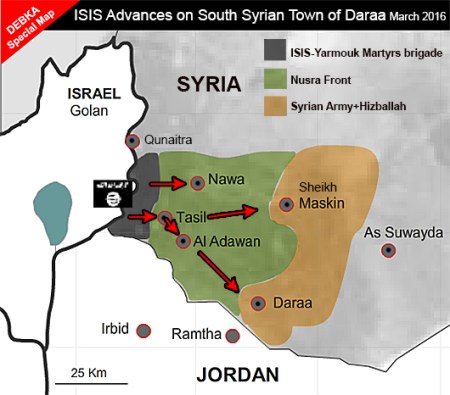
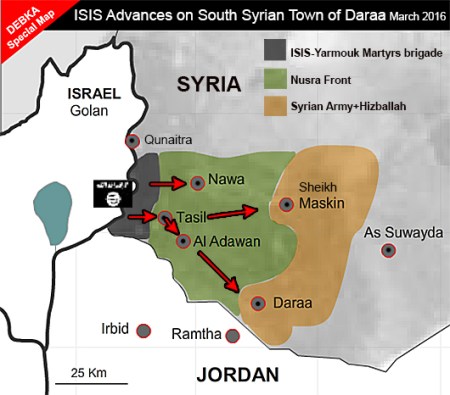
Reluctant to burn those boats, Moscow has been juggling its balls in the air, trying not to drop any. At first, he suspended Russian air cover for government-led battles. The Islamic State immediately seized on this opening in the south and advanced on the towns of Nawa, Sheikh Maskin and Daraa.

Moscow hoped that this setback would teach Bashar Assad to toe the Russian line.

Then, in the second part of last week, Putin ordered the Russian air force to renew its air strikes in the east in support of the Syrian army’s march from central Syria on the historic town of Palmyra. Friday and Saturday, the Syrian army and its allies were battling for control of the UNESCO World Heritage city, nearly a year after the Islamic State overran it and vandalized its historic remains.

DEBKAfile’s military sources stress that their capture of the reconstructed ancient Citadel perched on a hill over the city would have been beyond their strength without Russian air support. Finishing the job and recovering the entire city of Palmyra will depend heavily on Russian air strikes continuing to hammer the jihadist occupiers.

Putin faces a momentous decision. He has already taught Assad and Tehran a harsh lesson: with Russian air support, they win battles, but not without it, as their failure in the south has demonstrated.

Will he help Assad win Palmyra?

Crowning the Syrian dictator with such a striking victory would stiffen his resistance to American pressure for him to quit in short order. He would stand out as the only Syrian war leader capable of pushing ISIS back. But if the Russian leader decides to cut off air support in mid-battle for Palmyra, Assad and Iran will be forced to face the fact that without active Russian military support, they are in hot water.

The Syrian ruler would then have to accept his approaching end. That is the dilemma facing Putin.

Assad’s fate hangs on the Palmyra battle – and on Russian air support

March 26, 2016

Assad’s fate hangs on the Palmyra battle – and on Russian air support, DEBKAfile, March 26, 2016

Forces loyal to Syria's President Bashar al-Assad drive a tank during their offensive to recapture the historic city of Palmyra in this picture provided by SANA on March 24, 2016. REUTERS/SANA/Handout via Reuters ATTENTION EDITORS - THIS PICTURE WAS PROVIDED BY A THIRD PARTY. REUTERS IS UNABLE TO INDEPENDENTLY VERIFY THE AUTHENTICITY, CONTENT, LOCATION OR DATE OF THIS IMAGE. FOR EDITORIAL USE ONLY. NOT FOR SALE FOR MARKETING OR ADVERTISING CAMPAIGNS. THIS PICTURE IS DISTRIBUTED EXACTLY AS RECEIVED BY REUTERS, AS A SERVICE TO CLIENTS

Forces loyal to Syria’s President Bashar al-Assad drive a tank during their offensive to recapture the historic city of Palmyra in this picture provided by SANA on March 24, 2016. REUTERS/SANA/Handout via Reuters ATTENTION EDITORS – THIS PICTURE WAS PROVIDED BY A THIRD PARTY. REUTERS IS UNABLE TO INDEPENDENTLY VERIFY THE AUTHENTICITY, CONTENT, LOCATION OR DATE OF THIS IMAGE.

Cracks in the united US-Russian front over the Syrian ruler’s fate surfaced – even before the ink was dry on the joint announcement issued in Moscow Friday, March 25, by US Secretary of State John Kerry and Russian Foreign Minister Sergey Lavrov, setting  August as the deadline for a political solution of the five-year Syrian conflict.

Shortly after Kerry’s departure for Brussels, Russian Deputy Foreign Minister Sergey Ryabkov told reporters, “Washington now accepts Moscow’s argument that Assad’s future shouldn’t be open for negotiation right now.” However, taking exception to the phrase “right now,” State Department spokesman John Kirby immedieately snapped back, “Any suggestion that we have changed in any way our view of Assad’s future is false.”

Did this exchange spell another Washington-Moscow impasse on the future of the war and the Syrian ruler? Not exactly; Our military and intelligence analysts report that the two powers are in accord on the principle that Assad must go, but are maneuvering on the timeline for the war to end and the Syrian ruler’s handover of power.

The Americans want it to be sooner. The transition should start in August and result in adding opposition parties to the regime in positions of real influence.

President Barack Obama, when he conducts his farewell Gulf tour in April, would like to show Saudi Arabia and Gulf emirates that he has finally kept his word to them to evict Bashar Assad from power before he leaves the White House next January. The US would also be better placed for bringing the Syrian opposition into line for a negotiated deal.

But Putin prefers a delay because he has problems to solve first. The six-month long Russian military intervention in the Syrian conflict turned the tide of the war. The Syrian army and its Iranian and Hizballah allies were able to stabilize their positions and even score some important victories against rebel forces in central and northern Syria. Last year, Putin and Iran’s supreme leader Ayatollah Ali Khamenei were definitely on the same page and fully coordinated.

That cordial relationship was thrown out of kilter by the Kremlin’s decision to work with the White House for bringing the disastrous Syrian war to an end and terminating the Assad era.

From November, Iran’s Gen. Qassem Soleimani’s frequent visits to Moscow on liaison duty petered out.

Khamanei is adamantly opposed to Russia and the US commandeering the decision on Assad’s departure and its timetable. He is even more outraged by the way Putin has moved in on Syria and made it Russia’s home ground in the Middle East.

The rift with Tehran prompted Putin to announce on March 14 the partial pullback of his military forces from Syria. It was a threat to pull the rug that had turned the tide of the war in favor of Damascus and Tehran.

4

Reluctant to burn those boats, Moscow has been juggling its balls in the air, trying not to drop any. At first, he suspended Russian air cover for government-led battles. The Islamic State immediately seized on this opening in the south and advanced on the towns of Nawa, Sheikh Maskin and Daraa.

Moscow hoped that this setback would teach Bashar Assad to toe the Russian line.

Then, in the second part of last week, Putin ordered the Russian air force to renew its air strikes in the east in support of the Syrian army’s march from central Syria on the historic town of Palmyra. Friday and Saturday, the Syrian army and its allies were battling for control of the UNESCO World Heritage city, nearly a year after the Islamic State overran it and vandalized its historic remains.

DEBKAfile’s military sources stress that their capture of the reconstructed ancient Citadel perched on a hill over the city would have been beyond their strength without Russian air support. Finishing the job and recovering the entire city of Palmyra will depend heavily on Russian air strikes continuing to hammer the jihadist occupiers.

Putin faces a momentous decision. He has already taught Assad and Tehran a harsh lesson: with Russian air support, they win battles, but not without it, as their failure in the south has demonstrated.

Will he help Assad win Palmyra?

Crowning the Syrian dictator with such a striking victory would stiffen his resistance to American pressure for him to quit in short order. He would stand out as the only Syrian war leader capable of pushing ISIS back. But if the Russian leader decides to cut off air support in mid-battle for Palmyra, Assad and Iran will be forced to face the fact that without active Russian military support, they are in hot water.

The Syrian ruler would then have to accept his approaching end. That is the dilemma facing Putin.
Despite reports, Syria’s Palmyra and Iraq’s Mosul not on verge of liberation

March 24, 2016

Despite reports, Syria’s Palmyra and Iraq’s Mosul not on verge of liberation, DEBKAfile, March 24, 2016

In complete contrast with media reports issued on Thursday morning, the Iraqi army is not preparing to liberate Mosul, the country’s second largest city, and the Syrian army is not on the verge of capturing Palmyra.

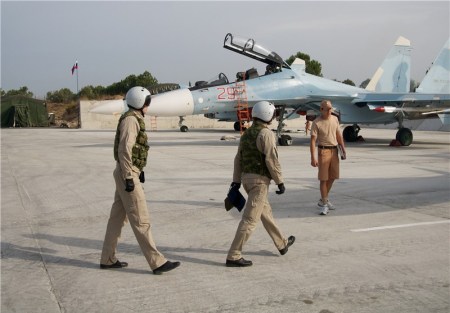
DEBKAfile‘s intelligence and military sources report that the Syrian army is not capable of taking over the historic city without support from the Russian air force. On President Vladimir Putin’s orders, the Russian military has recently reduced its support of the Syrian army to a minimum until Damascus agrees to negotiate with the opposition regarding the country’s future.

The sources add that the Iraqi army does not intend to attack ISIS-held Mosul at any time in the near future, and has even reduced its forces near the city by sending a number of battalions to Baghdad to protect the capital from attacks by the terrorist organization.

Russia’s Pullout from Syria to Be Completed in 2-3 Days

March 17, 2016

Russia’s Pullout from Syria to Be Completed in 2-3 Days, Tasnim News Agency, March 17, 2016

Tasnim Russia

TEHRAN (Tasnim) – The withdrawal of Russian forces from Syria will be completed within two-three days, Russian Aerospace Forces Commander Col. Gen. Viktor Bondarev said.

“I think that this matter will be completed very quickly. Strictly in keeping with the time frames determined by Supreme (Commander-in-Chief Vladimir Putin) and Defense Minister (Sergei Shoigu),” Bondarev told the Russian daily Komsomolskaya Pravda in an interview on Wednesday.

“Within two to three days we will complete the assigned task,” he went on to say, according to a report by Sputnik News.

On Monday, Putin ordered the withdrawal of the main contingent of Russian forces from Syria, stating that they had accomplished their anti-terrorism mission.

Russia had conducted an aerial campaign against terrorists in Syria since September 30 at the request of the Arab country’s President Bashar al-Assad.

The deployment of Russian forces helped turn the tide of the war in favor of Syria’s legitimate government.

Syria has been gripped by civil war since March 2011 with Takfiri terrorists, including the Daesh (ISIL) terrorist group, currently controlling parts of it, mostly in the east.

The Syrian conflict has killed at least 260,000 people, according to the UN, and more than half of Syria’s pre-war population of 22.4 million has been internally displaced or fled abroad.

Russia to keep S-400 in Syria until Saudi warplanes leave Turkey

March 16, 2016

Russia to keep S-400 in Syria until Saudi warplanes leave Turkey, DEBKAfile, March 16, 2016

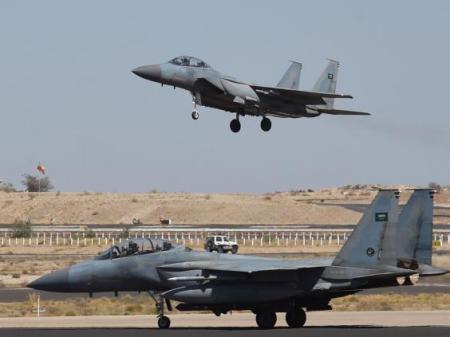
F15-fighter-jetsSaudi F-15 bombers

The highly-advanced S-400 air defense missiles will also eventually be evacuated from Syria, said high-ranking officials in Moscow on Wednesday, March 17, according to an exclusive DEBKAfile report. But their presence for now is crucial in view of the continuing Saudi buildup of warplanes in Turkey, close to the Syrian border.

Our military sources disclose that the initial Saudi deployment of four warplanes to the Turkish air base of Incirlik earlier this month, has been expanded to sixteen, while Saudi officials declare that Riyadh and Ankara are preparing to intervene jointly in the Syrian conflict.

According to our sources, Turkish armored and infantry troops have already crossed the border and set up positions in the northern Syrian province of Idlib, just a few hundred meters inside the border.

Russian Foreign Minister Sergei Lavrov referred Sunday, March 14, to evidence of “a creeping expansion by Turkey in the sovereign nation of Syria.”

This was taken as a warning that Moscow would not tolerate any further Turkish encroachments in Syria, any more than it would accept Saudi air force intrusions of Syrian air space.

The Russians infer from Turkish military movements that Ankara aims to establish enclaves inside Syria as no-fly or security zones, which Moscow has consistently opposed. The presence of the top-grade S-400 anti-air missiles in Syria is meant to obstruct this plan and discourage Turkish and Saudi aerial flights over Syria.

At the same time, the presence of the S-400 missiles close by is a worry for the Israeli Air force.  The batteries, currently positioned at the Latakia base, would cover a broad stretch of air space over northern and central Israel if they were moved further south.

A word of reassurance on this score was understood to have come from Russian military sources Wednesday. They said that the S-400 would be removed eventually, leaving behind only the Pantsir-S1 anti-air missile systems, which have never posed a challenge to the Israeli air force in the last decade.

DEBKAfile’s military sources also confirm that Putin has so far kept his promise to Prime Minister Binyamin Netanyahu to withhold advanced S-400 and S-300 air defense missiles from Iran, by executing a series of delays.

On Feb. 17, Iranian military officials announced a ceremony the next day at the Caspian port of Astrakhan for the handover of the first batch of S-300s. The ceremony never took place.

This week, Russian arms industry sources announced that the missiles would be not be delivered to Iran before August or September – another delay, which is unlikely to  be the last.

Putin to Assad, Tehran: You want to carry on fighting? Count me out

March 14, 2016

Putin to Assad, Tehran: You want to carry on fighting? Count me out, DEBKAfile, March 14, 2016

RussianReatreat480

A deep rift with Tehran over the continuation of the Syrian war and an irreconcilable spat with Syrian ruler Bashar Assad over his future prompted Russian President Vladimir’s shock order Monday, March 14, for the “main part” of Russian military forces to quit Syria the next morning. This is reported by DEBKAfile’s military and intelligence sources.

The final limits of the military withdrawal, five months after the Moscow embarked on its intervention, were not defined. But the Kremlin did say that Moscow would retain a military presence at the naval port of Tartous and the Hmeymim airbase outside Latakia. This left the bulk of Russian military aerial and naval presence in situ; Putin is unlikely to give up this strong foothold in the Eastern Mediterranean.

The Russian president did not fix a timeline for the military withdrawal – only its start. Neither did he promise to discontinue all military operations in Syria.

He did say only that “The task put before the defense ministry and Russian armed forces has on the whole been fulfilled” and he spoke of a “fundamental turnaround in the fight against international terrorism.”

A sign of where Moscow as heading now was disclosed by his order to the Russian foreign Minister to “Intensify our participation in a peaceful solution of the Syrian conflict”

This was a reference to the UN-brokered talks resuming in Geneva Tuesday, March 15, between the warring sides of the Syrian conflict.

DEBKAfile’s intelligence circles noted that, after Putin’s bolt from the blue, Russian warships in the Caspian and Mediterranean Seas remain ready to interfere in the fighting from a distance, if the Assad regime’s situation deteriorates. They saw an omen of Moscow’s impending military exit in last month’s massive delivery to the Syrian army of advanced T-90 tanks and heavy self-propelled artillery.

Western sources viewed the shipments as further Russian investment in high-stakes Syrian military victories in the battles for Aleppo in the north and Deraa in the south.

But this assumption was negated by the Kremlin announcement Monday. The tanks and artillery were, in fact, provided to enable Syria and its Iranian ally to carry on fighting without Russian support.

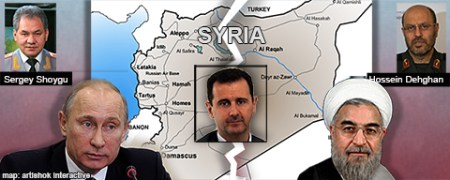
The rift between Moscow and Tehran over the Syrian war came to a head on Feb. 19 during Iranian Defense Minister Gen. Hossein Dehghan’s visit to Moscow. The Iranian minister presented his government’s demand for Russia to back away from its deal with the US for a Syrian ceasefire.

Tehran wants the war to continue without pause. After walking handed in hand with Moscow in the Syrian arena for a time, the Iranians were aghast to find Putin turning aside and entering into collaboration with the Obama administration for an end to hostilities and a political solution to the conflict.

As for Assad, he has no intention of playing along with Putin’s plans for him to step down and hand over rule in Damascus in stages. Assad does not mean to quit at any time.

The Russian president may have acted now because he was simply fed up with the interminable bickering with his two allies, which was going nowhere except for the continuation of the calamitous five-year war. He therefore presented them with a tough fait accompli. If you want to carry on fighting, fine; but count the Russian army out of it.

Putin abruptly orders Russian forces to start withdrawing from Syria

March 14, 2016

Putin abruptly orders Russian forces to start withdrawing from Syria, DEBKAfile, March 14, 2016

President Vladimir Putin dropped a bombshell Monday when he suddenly ordered his defense and foreign ministers to start pulling “the main part” of Russian forces out of Syria the next morning – five months after they intervened  in support of Bashar Assad. Moscow will however retain a military presence at the port of Tartous and the Hmeymim airbase.

“The effective work of our military created the conditions for the start of the peace process,” Putin said. “I believe that the task put before the defense ministry and Russian armed forces has on the whole, been fulfilled. With the participation of the Russian military… the Syrian armed forces and patriotic Syrian forces have been able to achieve a fundamental turnaround in the fight against international terrorism and have taken the initiative in almost all respects,” Putin said.

Putin phoned Bashar Assad to inform him of the decision. The move was announced on the day UN-brokered talks were to restart between the warning sides in Geneva.

Syria Ceasefire Already Collapsing

March 8, 2016

Syria Ceasefire Already Collapsing, Front Page MagazineJoseph Klein, March 8, 2016

syria-bashar

The two week “cessation of hostilities” within Syria is about to run out. Negotiated by the United States and Russia, who were responsible for bringing the parties over which they have influence along, the lull was intended as a confidence building measure and as a way of getting critical humanitarian supplies to besieged and hard to reach areas of Syria. Talks between Syrian government and opposition representatives are supposed to resume in Geneva on March 9th.

Secretary of State John Kerry hailed the agreement to temporarily halt the violence in a conflict that has taken more than 250,000 lives as “a moment of promise.”  While there is evidence that the fighting has dropped noticeably overall since the cessation of hostilities went into effect on February 26, 2016, the violence never really stopped. On the second day alone of the lull, there were reportedly “35 breaches, 27 by violations by government forces, 8 by Russian forces,” according to the Syrian Network for Human Rights.

Airstrikes continued throughout Syria, some by Russia on the pretext that they were aimed at fighting ISIS and al Nusra. Rebel-held enclaves in and around Aleppo have come under particularly intense bombing attacks, said to be by Russian planes.

The Syrian Observatory for Human Rights said last Saturday that 135 people have lost their lives in areas where there was supposed to be a pause in hostilities. According to Israeli sources, the Syrian government has reportedly used chemical weapons against civilians since the cessation of hostilities were supposed to go into effect.

The United Nations has nevertheless been able to use the drop in hostilities to deliver some desperately needed humanitarian relief, although it has been stymied by bureaucratic obstacles put in the UN’s way by Syrian authorities. Sometimes, Syrian officials have gone so far as removing medical supplies from humanitarian convoys that had received permission to deliver their cargoes.

Perhaps the United States and Russia will push for an extension of the cessation of hostilities. Kerry and his Russian counterpart, Russian Foreign Minister Sergei Lavrov, have called for a prompt resumption of the peace talks in Syria, which would be hard to assemble if fighting resumes full throttle. They are evidently hoping that the partial success of the lull in fighting so far will provide momentum for successful talks. If so, they are dreaming. Kerry in particular is relying on the fatally flawed road map to a negotiated political solution in Syria that was laid out in last December’s UN Security Council Resolution 2258 (2015).  As I wrote last December when the resolution was adopted, the players were simply kicking the can down the road to no avail.

The Syrian regime, with Russia’s help, has made major military gains on the ground in recent months. Momentum is on its side. The opposition groups are losing negotiating leverage every day as a result of the regime’s advances and the opposition’s own internal divisions. Though the opposition is at least united on calling for Syrian President Bashar Al-Assad to step down immediately, they are whistling in the wind. Assad has no reason to go as long as Russia and Iran remain willing to stand behind him.

Russia has clearly changed the whole strategic situation in Syria by showing its willingness to engage militarily to the extent necessary to keep Assad in power as long as he serves their purposes. Just as President Obama foolishly dismissed the ISIS threat early on, his dismissal of Russia’s determination and capabilities was premature, to say the least.

The Obama administration’s vacillations in its Syrian policies, which left vacuums for both ISIS and Russia to fill, are now limiting its options going forward. Even in the unlikely case that President Obama now believes that the introduction of a large number of U.S. ground troops has become necessary to fight ISIS, give a nudge to Assad to abdicate and help stabilize what is left of Syria, the American people would not support the prospect of another protracted conflict in the Middle East.

Moreover, the Obama administration cannot even lead the way among its own allies, much less bridge the gap with Russia and Iran who remain committed to Assad. The administration’s efforts to assemble a real coalition of Arab nations willing to commit major ground troops to fight ISIS in tandem with our stepped up airstrikes have gone nowhere. Saudi Arabia and Qatar do not appear willing to cut off the flow of arms and money to the jihadists, whether or not they belong to ISIS or al Nusra. Saudi Arabia is even insisting on which opposition groups should officially represent the opposition in the Geneva talks, with little apparent pushback from the Obama administration.

Turkey is presenting its own headaches for the Obama administration. Its strongman president Recep Tayyip Erdogan accused the Obama administration of adopting a policy that has turned the Mideast into “a sea of blood.” He was particularly upset that the U.S. is relying on Kurdish fighters in Syria to help take on ISIS. The Kurds have been among the most effective ground forces we have to push back ISIS from territories it controls. Erdogan, however, regards the Kurds as terrorists who are more dangerous than ISIS. He blocked the Syrian Kurds from having any official representation in the Geneva peace talks, and is asking the U.S. to choose between Turkey and the Kurds as allies. The way Erdogan has been acting the last several years, we should tell him that unless he starts to fully cooperate and subordinate his parochial concerns to the global fight against ISIS, we will be prepared to support an independent Kurdistan right on his border. That should get his attention.

In short, the cessation of hostilities interlude, even if extended, will do nothing to change the underlying dynamics preventing a viable peace accord leading to the kind of inclusive Syrian government the Obama administration would like to see. However, to the extent lives have been saved and humanitarian relief has been allowed to get through for the first time, the pause in fighting has been a good thing in itself.

Turkey and Saudi Arabia hit back for the Obama-Putin Syrian pact

March 5, 2016

Turkey and Saudi Arabia hit back for the Obama-Putin Syrian pact, DEBKAfile, March 5, 2016

Zaman_4.3.16Headline of last issue of Turkey’s Zaman before government takeover

Turkey and Saudi Arabia have taken separate steps to break free from Washington’s dictates on the Syrian issue and show their resistance to Russia’s highhanded intervention in Syria. They are moving on separate tracks to signal their defiance and frustration with the exclusive pact between Presidents Barack Obama and Vladimir Putin which ostracizes Riyadh and Ankara on the Syrian question.

Turkey in particular, saddled with three million Syrian refugees (Jordan hosts another 1.4 million), resents Washington’s deaf ear to its demand for no-fly zones in northern and southern Syria as shelters against Russian and Syrian air raids.

Last year, President Reccep Erdogan tried in desperation to partially open the door for a mass exit of Syrian refugees to Europe. He was aghast when he found that most of the million asylum-seekers reaching Europe were not Syrians, but Muslims from Africa, Afghanistan and Pakistan, in search of a better life in the West. Most of the Syrians stayed put in the camps housing them in southern Turkey.

Even the Turkish intelligence agency MIT was hard put to explain this setback.  According to one partial explanation, organized crime gangs of Middle East dope and arms smugglers, in which ISIS is heavily represented, seized control of the refugee traffic heading to Europe from Libya, Iraq and Syria.
This human traffic netted the gangs an estimated $1 billion.

Turkey was left high and dry with millions of Syrian refugees on its hands and insufficient international aid to supply their needs. No less painful, Bashar Assad was still sitting pretty in Damascus.

Finding Assad firmly entrenched in Damascus is no less an affront for Saudi Arabia. Added to this, the Syrian rebel groups supported by Riyadh are melting away under continuing Russian-backed government assaults enabled by the Obama-Putin “ceasefire” deal’

The oil kingdom’s rulers find it particularly hard to stomach the sight of Iran and Hizballah going from strength to strength both in Syria and Lebanon.

The Turks threatened to strike back, but confined themselves to artillery shelling of Syrian areas close to the border. While appearing to be targeting the Kurdish YPD-YPG militia moving into these areas, the Turkish guns were in fact pounding open spaces with no Kurdish presence. Their purpose was to draw a line around the territory which they have marked out for a northern no-fly or security zone.

Saturday, March 5, President Erdogan proposed building a “new city” of 4,500 square kilometers on northern Syrian soil, to shelter the millions of war refugees. He again tried putting the idea to President Obama.

The Saudi Defense Minister, Deputy Crown Prince Mohammed bin Salman put together a more high-risk and comprehensive scheme. Its dual purpose is to hit pro-Iranian Hizballah from the rear and forcied [Sic] the two big powers to treat Riyadh seriously as a player for resolving the Syrian imbroglio.

The scheme hinged in the cancellation of a $4 billion Saudi pledge of military aid to the Lebanese army, thereby denying Hizballah, which is a state within the state and also dominates the government, access to Saudi funding. But it also pulled the rug from under Lebanon’s hopes for combating ISIS and Al Qaeda’s Nusra Front, which have grabbed a strip of Lebanese territory in the northern Beqaa Valley.

The Saudi action, by weakening the Lebanese military and its ability to shore up central government in Beirut, risks tipping Lebanon over into another civil war.

The London Economist commented that this Saudi step against Lebanon seems “amateurish.” Under the young prince (30), “Saudi Arabia sometimes acts with bombast and violence that makes it look like the Donald Trump of the Arab World,” in the view of the magazine.

But the Saudi step had a third less obvious motive, a poke in the eye for President Obama for espousing Iran’s claim to Middle East hegemony. Resentment on this score is common to the Saudi royal house and the Erdogan government.

As a crude provocation for Washington, the Turkish president ordered police Friday, March 4, to raid Turkey’s largest newspaper Zaman, after an Istanbul court ruling placed it under government control.

The newspaper released its final edition ahead of the raid declaring the takeover a “shameful day for free press” in the country. A group of protesters outside the building was dispersed with tear gas, rubber bullets and water cannons.

Zaman is owned by the exiled Muslim cleric Felhullah Gulen, who heads the powerful Hizmet movement, which strongly contests Erdogan government policies. A former ally of the president, the two fell out years ago. In 1999, after he was accused of conspiring to overthrow the government in Ankara, Gulen fled to the United States.

Today, the exiled cleric runs the Hizmet campaign against the Turkish president from his home in Pennsylvania, for which he has been declared a terrorist and many of his supporters arrested.

The takeover of Zaman was intended both as a blow by Ankara against Muslim circles opposed to the Erdogan regime and as an act of retaliation against the United States, for harboring its opponents and sidelining Turkey from Obama administration plans for Syria.

Oddly enough, the Turkish president finds himself in a position analogous to Egyptian President Abdel-Fatteh El-Sisi, who is at war with the Muslim Brotherhood, a movement which enjoys Obama’s support.

Israeli Prime Minister Binyamin Netanyahu has his own dilemmas. Struggling to keep his balance while walking a tight rope on the Syrian situation between Israel’s longstanding ties with Washington and handling the Russian tiger lurking next door, he is in no hurry to welcome Erdogan’s determined overtures for the resumption of normal relations.

Turkey is in trouble with both major world powers and, after living for five years under hostile abuse from Ankara, Israel does not owe Erdogan a helping had for pulling  him out of the mess.

Saudis ready to give Syrian rebels missiles against Russian warplanes and tanks

March 4, 2016

Saudis ready to give Syrian rebels missiles against Russian warplanes and tanks, DEBKAfile, March 4, 2016

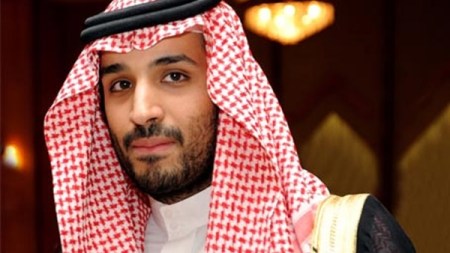
Saudi def minSaudi Defense Minister Prince Mohammed bin Salman

For the first time in the five-year Syrian conflict, Saudi Arabia is preparing to supply Syrian rebel groups with anti-air and anti-tank missiles in an attempt to stall Russia’s military efforts to extend Bashar Assad’s days in power. Deputy Crown Prince Mohammed bin Salman, the defense minister, is choreographing this escalated Saudi intervention in the Syrian war. He plans to arm Syrian rebels militias with missiles capable of striking the new Russian T-90 tanks, which DEBKAfile’s intelligence sources disclose were shipped directly to the Syrian army’s armed divisions in the last two weeks from the Russian Black Sea base of Novorossiysk.

The big Russian landing craft Novocherkassk, which unloaded a further supply of tanks at Tartus port on Thursday, Thursday, March 3, also delivered a consignment of MLRS rocket launchers.

A second Russian vessel is heading for Syria with more hardware.

This is in line with Moscow’s decision to upgrade the Syrian army’s armaments and rebuild the units severely ravaged by five years of combat. For Riyadh, this is tantamount to the indefinite and unacceptable prolongation of Assad’s days in power.

Most Western and Middle East observers think the Saudis may be bluffing about their plan to arm Syrian rebels with missiles, as a ploy to get Washington and Moscow to treat them seriously as a player on the Syrian stage and take their interests into account. Ideally, Riyadh would hope to break up American cooperation with Iran in Iraq and Russian cooperation with Iran in Syria.

The Saudis have so far pitched into this endlessly complex scenario with two tangible steps:

1. The deployment last week of four Saudi Air Force F-15 bomber fighters at the Turkish base of Incirlik near the Syrian border, to be followed by a contingent of ground troops for operations in Syria.

2. A direct challenge to Iran’s fighting arm in Syria, the Lebanese Hizballah and its leader Hassan Nasrallah,  by cancelling the $4 billion defense package Riyadh had pledged for the rehabilitation of Lebanon’s armed forces. The Lebanese high command is collaborating increasingly with Hizballah and a large slice of Saudi assistance funds would most certainly have reached its hands.

According to a high-ranking Saudi source, the decision to arm Syrian rebels with missiles is final. He said, “The Syrian opposition might soon acquire surface-to-air missiles, which will raise the wrath of Russia and Iran.” He added:: “No Saudi official will own up to these consignments but, just as 30 years ago, Saudi Arabia was not deterred from intervening in Afghanistan against the Russian army – and we came out the winners” – we will not hesitate to take on the Russian army in Syria too.

DEBKAfile’s military sources point out that in the Afghan war, the Saudis acted with the full support of the United States, whereas in Syria, the Americans are solidly opposed to any Saudi intervention. That is a huge difference between the two cases.

The introduction of Saudi missiles in support of the anti-Assad opposition would create a new situation in the Syrian conflict, whereby Riyadh also has a say – not just Washington, Moscow and Tehran. And that is exactly what Defense Minister Mohammed was after. Saudi willingness to give the rebels missiles takes the oil kingdom’s intervention in the Syrian conflict a lot farther than Israel, the Gulf emirates, Jordan or Turkey have been ready to go until now.