Archive for the ‘Putin’ category

Moscow acts to oust Iran from Syria, bombs ISIS

January 21, 2017

Moscow acts to oust Iran from Syria, bombs ISIS, DEBKAfile, January 21, 2017

4-3ISIS suicide bombers at Deir ez-Zour

Although Vladimir Putin’s spokesman spoke reservedly Saturday, Jan. 21, about Donald Trump’s inauguration as US president the day before – It would be “an illusion” to expect Russian-US ties to be “free of disagreement” – Moscow’s actions in Syria were clearly designed to meet the new US president more than half way.

Trump in his inauguration speech pledged to wipe radical Islamist terrorism “off the face of the earth.”

His words were still reverberating when Russian long-range Tu-22M3 bombers flying in from bases in Russia smashed Islamic State targets in the eastern Syrian province of Deir ez-Zour the next day. The bombers hit ISIS base camps, weapons stockpiles and armored vehicles, covered overhead by Russian fighter jets from their Syrian air base at Hmeimim. After the sortie, the Tupolev bombers flew home.

DEBKAfile’s military and intelligence sources interpret the heavy Russian bombardment of ISIS as one of several signals Putin is sending out of his willingness to go the extra mile for a common effort with Trump to root ISIS and all its works out of the Middle East.

The Russians stepped in massively when, after holding out for many months of siege and assault at the important provincial town of Deir ez-Zor,, Syrian government forces were about to fold and the town and air base fall to ISIS.

Last Wednesday, Russian transport helicopters flew hundreds of Syrian troops to relieve them: Two brigades from the 15th Infantry Division, belonging to the elite Republic Guard, were lifted out of the northern Qamishli region.  When the Syrian lines were still in danger, the Russian helicopters turned around and flew back with members of the Lebanese Hizballah’s elite Radwan Force, to bolster the Syrian stand and save Deir ez-Zour.

For Putin, the injection of Hizballah into a major Syrian battle came at an awkward moment in terms of his diplomatic strategy on the eve of the Syrian peace conference that opens in Astana, Kazakhstan, Sunday, Jan. 23, under his joint sponsorship with Turkish President Tayyip Erdogan.

The Russian leader had already give his co-sponsor a commitment to initiate a resolution at Astana demanding the withdrawal of all pro-Iranian militias from Syria, including Hizballah. This aimed at pacifying Syrian opposition groups, but was also meant to demonstrate to President Trump that Moscow would be a strong partner in the war on ISIS while also ready to clip Iran’s wings and influence in the affairs of Syria and Lebanon.

At the same time, Russian war strategists appreciate the urgency of averting the fall of Deir ez-our and its air base to the Islamists. This catastrophe would negatively impact the entire campaign against the terrorist organization on its three main fronts, Mosul, Raqqa and Palmyra, and count as ISIS’ biggest victory in the past year.

FULL MEASURE: January 08, 2017 – Russia Watching

January 11, 2017

FULL MEASURE: January 08, 2017 – Russia Watching via YouTube, January 11, 2017


Trump’s team is on point

December 14, 2016

Trump’s team is on point, Israel Hayom, Boaz Bismuth, December 14, 2016

(Please see also, Trump picked Tillerson for tough new Iran policy. — DM)

U.S. President-elect Donald Trump’s nominee for secretary of state, Rex Tillerson, comes from outside the State Department, just like Colin Powell did under former U.S. President George W. Bush. There is one thing that should be noted, however: starting Jan. 20, both the U.S. president and the secretary of state will be outsiders, without political or diplomatic backgrounds. Get ready for changes and Washington-style inventions, like moving the U.S. Embassy to Jerusalem.

Tillerson comes to the State Department with 40 years’ experience in a multinational company, ExxonMobil. For the past decade, Tillerson, who knows the world, has served as head of the company. It’s hard to say that an inexperienced person has been appointed secretary of state. Even Henry Kissinger had less international experience than Tillerson when he was appointed to the role, unless you count the number of foreign students he taught at Harvard.

Some will say that the appointment of Tillerson is problematic, especially for Israel: first of all, because of his close ties with Russian President Vladimir Putin; secondly, because of his close ties with the Gulf states; and third, because the former candidates for Trump’s secretary of state (former New York Mayor Rudy Giuliani, John Bolton, and even former Governor Mitt Romney) are considered more pro-Israel.

Let’s start with Russia: Tillerson might be a Putin favorite, but we can also assume this means he will always find a sympathetic ear at the Kremlin. What’s bad about that? The Obama administration sought to improve ties with Russia and was even responsible for a reboot in relations between Washington and Moscow. That reboot was so “successful” that at times we thought that Russia had resurrected the Soviet Union. We can assume that when Tillerson is in charge at the State Department, things will change. We can also assume that the president-elect and Tillerson will support the removal of sanctions currently in place against the Russians. Offered honey that sweet, the Russian bear will become much less irritable, and might continue strengthening ties with Israel.

Moving on to the Gulf states: Tillerson has worked for oil giants, so it’s obvious that he was in close contact with the Sunni Arab producers. The Gulf states, which like Iran about as much as Israel does, will explain to him that Tehran is a danger, not an opportunity. He’ll hear exactly the same thing in Jerusalem.

What tipped the scales in his favor, for Trump, was the fact that Tillerson knows how to close deals. Unlike former Secretary of State Hillary Clinton, he won’t fly around the world just to try to move things along; he will get on a plane to solve problems. And possibly even help the movers get the embassy equipment from Tel Aviv to Jerusalem. A new president, a new team, a new age.

Trump picked Tillerson for tough new Iran policy

December 14, 2016

Trump picked Tillerson for tough new Iran policy, DEBKAfile, December 14, 2016

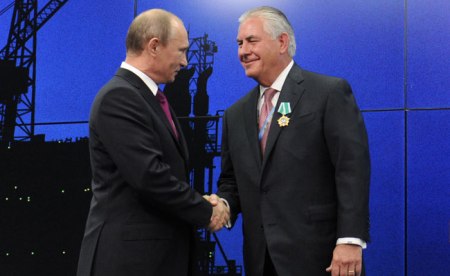
rex-tillerson-putin

Rex Tillerson, Chairman an CEO of Exxon Mobil, was named this week as the next administration’s Secretary of State to execute the tough foreign policies charted by president-elect Donald Trump, including his decision to stiffen the nuclear accord signed with Iran as soon as he moves into the White House on Jan. 20.

DEBKAfile reports this exclusively from New York and its intelligence sources.

While campaigning for the presidency, Trump called the accord “the worst deal” ever.

According to our sources, a special team is already working on revisions of the accord which the US and five other global powers concluded with Iran in 2015 in the hope of retarding Iran’s nuclear weapons program by a decade.

As new president, Trump will issue Tehran with a unilateral demand to accept those revisions as pre-condition for the continuation of relations between the US and Iran. He does not intend consulting America’s co-signers, Russia, China, Germany, Britain and France, or asking them for their endorsement of the revamped accord.

The teams preparing the Trump administration’s Iran policy were put in place last week by Tillerson and designated national security adviser Lt. Gen. Michael Flynn.

No members of the incumbent NSC, State Department, Pentagon or Treasury, who managed the Obama administration’s Iran policy, was invited to take part. The teams were instead chosen from among scientists, military leaders and intelligence officials who opposed the nuclear accord with Iran.

Also attached were former administration officials hired by Exxon for their extensive knowledge of Iran’s oil trade and their close ties with oil circles in the Gulf Emirates, which like Israel, fought hard to pre-empt the nuclear deal with Iran.

Our sources have also learned that if Iran rejects the revised accord, the president elect has a list of new economic sanctions drawn up which are a lot tougher than the sanctions regime imposed by the Bush and Obama administrations.

The incoming president will have a fight on his hands to get the Tillerson appointment through the Senate in the face of objections raised by Republican lawmakers over his ties with Russian President Vladimir Putin. However, Trump hopes to turn those ties to his advantage. He trusts that Tillerson is just the man to sell the new administration’s Iran policies to the Russian president.

Read more about Trump’s plans for his secretary of state in the coming issue of DEBKA Weekly (for subscribers) out on Friday. Dec. 16, 2016.

Trying to overturn a free and fair election

December 13, 2016

Trying to overturn a free and fair election, Washington Times,

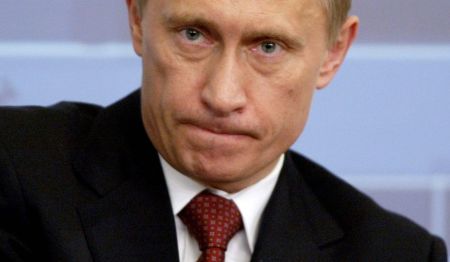
vlad

The world has turned itself upside down. Only yesterday the liberals and the left (the “progressives,” as they want to be called) regarded the CIA as the locus of evil, the gang that couldn’t shoot straight, forever poisoning gentle minds with a diet of conspiracy and tall tale.

In those gloomy days of the Cold War, where every day was seasoned with a sharp wind and a cold rain, it was the Democratic intellectuals who were forever chiding the rest of us that the Soviet Union was not so bad, the Russians just wanted to be understood and maybe deserved an occasional cuddle. It was the Republicans and other conservatives who were mindless rubes who imagined there was a mad Russian under everybody’s bed.

Now the CIA, in the liberal/left’s fevered dreams, is the last bulwark of the republic, the last remaining hope to turn the 2016 election result on its head and deprive Donald Trump of the victory he won. The Russians, it now turns out, are just as bad as the conservatives said they were.

President Obama, who mocked Mitt Romney four years ago for suggesting that Russia and Vladimir Putin was America’s No. 1 enemy, now says it was Mr. Romney who was smart and got it right four years ago. The president himself, in his telling, is the man dumber than a cypress stump.

The president, at last awake and paying attention to Russian cyber warfare, wants answers, and by noon on Jan. 20. He can then only dine out on the answers, because he won’t have any more authority to do anything about them than the cat.

Desperation pursues despair, and the Democrats are stumbling from inanity to insanity in search of a way to block Donald Trump’s path to the White House. Hilary Clinton’s remnant of a campaign has endorsed an attempt by a handful of members of the Electoral College — 9 Democrats and a rogue Republican — to get the “intelligence briefing” they think might derail next Monday’s scheduled day for the members of the Electoral College to vote for president, 306 of whom are honor bound to vote for the Donald. That’s 36 votes more than he needs.

“The bipartisan electors’ letter raises very grave issues involving our national security,” John Podesta said Monday. “Electors have a solemn responsibility under the Constitution and we support their efforts to have their questions addressed.

“Each day our campaign decried the interference of Russia in our campaign and its evident goal of hurting our campaign to aid Donald Trump. Despite our protestations this matter did not receive the attention it deserved by the media in our campaign. We now know that the CIA has determined Russia’s interference in our elections was for the purpose of electing Donald Trump. This should distress every American.”

What should distress every American is the way the left, the liberals, the progressives and their handmaidens in the press have discarded reasonable conversation to try out every absurd alarm, one after the other, to see whether one could stick, to undermine and undercut the results of what everyone agrees was a free and fair election on Nov. 8. None has worked. More than a month later, the republic stands.

Hysteria now threatens to become insanity. Rep. Jim Hines of Connecticut, a Democrat, says it came to him in the night, as if Marley’s ghost was rattling his chains at the bedside, “that this man is not only unqualified to be president, he’s a danger to the republic. I do think the Electoral College should choose someone other than Donald Trump to be president. That will lead to a fascinating legal issue, but I would rather have a legal issue, a complicated legal problem, than to find out the White House was now the Kremlin’s chief ally.”

Accusing a president-elect of treason, of plotting with the enemy against his country, and with no evidence at all, is something that even a congressman from Connecticut should understand is beyond the limits of rational and decent political debate. Alas, it’s par for the course on the left this season.

The sudden deep concern by President Obama and the Democrats about Russia and cyber warfare, is a bit rich. The Washington Post, which continues so deep in denial that its side lost the election that it may never find the way to the next stage of grief, hangs its survival on the conclusion of the intelligence agencies — which, to put it charitably, have a dismal record of finding out what’s going on anywhere.

A competent president and a responsible “intelligence community” would have done something about the Russians and their hackers a long time ago. Whining doesn’t work.

ISIS seizes big Russian-Syrian T-4 air base

December 12, 2016

ISIS seizes big Russian-Syrian T-4 air base, DEBKAfile, December 12, 2016

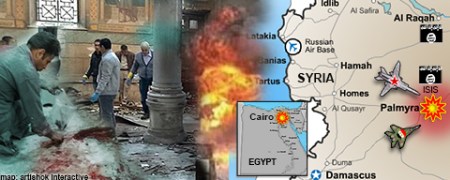
cairo_terror480

Islamic State forces pushed their assault forward to retake the central Syrian town of Palmyra Monday, Dec. 12. By evening, they had entered the big Russian-Syrian T-4 air base outside the town, carrying off substantial quantities of Russian armaments. Reporting this, DEBKAfile’s military sources add that the booty they snatched included different types of ground-to-ground missiles as well as anti-tank and anti-air rockets.

Russian forces manning the base were hurriedly evacuated from Palmyra and the T-4 base, after the worst defeat Russian armed forces had ever experienced at ISIS hands in Syria. Military circles in Moscow commented grimly that the Russian army had suffered “a major disgrace” in Palmyra.

According to our sources, long convoys of ISIS fighters backed by tanks taken booty from the Syrian army, first forced the Syrian 11th Tank Division to abandon the strategic Jhar Crossroad. After that, the way was clear for the jihadis’ column to reach the T-4 base.

DEBKAfile reported on the ISIS terrorists’ fresh momentum Sunday.

Judging from the rash of reports claiming US-Iraqi military progress in the Mosul offensive against ISIS and the extra American special operations forces personnel posted to Syria for an impending US-Kurdish operation to capture the ISIS Syrian stronghold of Raqqa, the Islamic State ought to be cowering under siege, finally defeated – or at least on the run.

But the facts tell another story. ISIS is on the offensive – so far in the Middle East. Over the weekend, Islamist terrorists accounted for dozens of deaths and injured hundreds more.

Sunday, Dec. 11, at least 25 people worshipping at the Coptic St. Peter’s and St. Paul’s church adjacent to St, Mark’s cathedral in Cairo were killed and scores injured. The Coptic pope often leads the prayers there. DEBKAfile’s counterterrorism sources reveal that the attack was carried out by Islamist terrorists from Raqqa who bided their time until they struck in the Egyptian capital. Saturday, six Egyptian troops were killed by another Islamist bomb near the Giza pyramids.

On the same day, ISIS fighters pushed back into the ancient Syrian town of Palmyra, nine months after their expulsion.

The Raqqa terrorist stronghold is clearly alive and kicking on more than one front. A number of contributing factors enable the Islamic State to unleash a fresh spate of terror.

1. The US-Iraqi-Kurdish drive has stalled without driving ISIS out of Mosul or choking off the terrorist fighters’ freedom to move between Mosul and Raqqa, their Syrian bastion.

US Defense Secretary Ashton Carter, who arrived in Baghdad Sunday, Dec. 11, was assigned by the Obama administration to make a last effort to reactivate the Mosul campaign. His chances of success are slim. The military coalition which launched the campaign two months ago has lost a vital component, the Kurdish Peshmerga, which backed out three weeks ago. The Iraqi military units which captured some of the city’s outskirts stopped short when they reached the strongest defense lines set up by the Islamic State and have been unable to break through, even with US air support.

The pro-Iranian Iraqi Shiite front which undertook to seize Tal Afar in order to sever the ISIS connecting link between Iraq and Syria are parked outside, having been warned by Turkey not to set foot in the town.

Added to these setbacks, the US CENTCOM which is running the aerial war in Iraq is at loggerheads with the Iraqi Air Force command and has practically grounded all Iraqi warplanes.

Even if Carter can wave a magic wand and resolve all these issues, the momentum and high hopes that actuated the Mosul campaign when it started have been lost and can hardly be recovered before Barack Obama leaves the White House.

At least two of the incoming president Donald Trump’s designated security advisers – Defense Secretary Gen, James Mattis and National security Adviser Gen. Michael Flynn – have criticized the operation in is current form.

2. What is happening in Raqqa doesn’t fit the designation of an offensive. At most, small Kurdish and Syrian rebel groups are mounting sporadic raids against ISIS fighters on the town’s outskirts, with the support of the Obama administration. Our military experts say that Raqqa can’t be captured from the Islamist terrorists by conventional means – mainly because it is spread over a large area of mostly empty desert. ISIS has taken advantage of this terrain to distribute knots of defenders across a vast area ranging hundreds of kilometers from northern to eastern Syria up to the winding, heavily overgrown banks of the Euphrates River.

So when Ash Carter announced Saturday that he would be sending another 200 Special Operations Forces into Syria to join the battle for Raqqa, he had no idea that he, the Russians and the Syrians were about to be caught off guard by a fresh ISIS initiative to reoccupy Palmyra, the ancient Syrian two from which they are thrown out in March.

This was a poke in the eye for Russian President Vladimir Putin who proclaimed Palmyra’s capture from ISIS as a signal coup for the Russian army in its war on Islamist terror.

3.  He might well commiserate with Egyptian President Abdel-Fatteh El-Sisi. For two years, the Egyptian armed forces have been fighting an uphill battle to crush the ISIS groups infesting the Sinai Peninsula. The jihadists constantly elude punishment with the help of supportive Bedouin tribes.

Every few months, they pose a real threat to the stability of the El-Sisi regime by striking inside Cairo, the capital, with some terrorist atrocity, for which they are aided by the Muslim Brotherhood underground and Palestinian Hamas extremists in the Gaza Strip.

The bombing of the Coptic church Saturday was unusually the work of jihadists deployed from Raqqa, Syria.  Egypt has reacted by placing extra guards at Christian sites and declaring three days of national morning for the disastrous bombing attack on Egypt’s largest minority.

The new Islamist drive is looking ominously like the onset of the Christmas-New Year holiday terror onslaught the Islamic State has threatened to unleash in the Middle East and beyond. US and European security services have been placed on high alert in the belief that returning jihadis are programmed to strike at home.

The Democrats’ Nauseating Putin Hypocrisy

December 12, 2016

The Democrats’ Nauseating Putin Hypocrisy, PJ MediaRoger L. Simon, December 11, 2016

(Please see also, Renowned Russian Scholar Valery Solovei: ‘The New American Administration Will React From A Position Of Strength, And We Can Never Win In This Competition’. — DM)

The degree to which the Democrats have changed their tune on Vladimir Putin almost on a proverbial dime is either black comic or nauseating or both, depending on how you want to look at it. Whatever it is, it is a extremely obvious example of how party politics is conducted in our era (possibly always).

If your side does it, it’s diplomatic genius bound to yield peace in our time. If the other side does the exact same thing, it’s a horrendous mistake bordering on treason likely to cause a national calamity, if not global Armageddon.

If there were any decent, even semi-even-handed political science departments left in our country (okay, maybe there are one or two), what we might call the Democrats’ “Great Putin Flip Flop” would be a textbook case for classroom discussion.

Let’s start at the beginning, March 2009, but a few weeks after the first inauguration of Barack Obama, when a smiling Hillary Clinton presented Russian Foreign Minister Sergei Lavrov the red “reset” button, signaling the arrival of a supposed era of peace between the two countries.  The new administration was greeted with hosannas for their great symbolism from their loyal claque at the New York Times, Washington Post, NBC, et al., who were oblivious, needless to say, that the word “peregruzka” printed in Cyrillic on the button, thought to mean “reset” in Russian by the linguistic geniuses in our State Department, was actually the word for “overload.”

No wonder Lavrov has such a quizzical look on his face in the all the photos. (Imagine what the reaction of the press would have been had Trump’s putative secretary of State, Rex Tillerson, done something similar. Media lynch mob?) Much more important, however,  was the extreme ignorance of the Russian character, from the Czars through Lenin and Stalin and on into the present, evinced by such a naive, almost childish, “reset.” Throughout the East, of which Russia has always been a signal part despite intermittent yearnings for the West, a powerful leader has always been the center of national and tribal life.  Silly, symbolic gestures like “reset” buttons are seen as weakness, not compromises or attempts at global comity. They are something to exploit.

Barack Obama, however, went on undeterred. The U.S. president, in South Korea in March 2012 for a nuclear security summit, was caught on open mic with Russian President Dmitry Medvedev confidentially informing the Russian president, as if Medvedev would be so stupid as not to know, that  “after my election, I will have more flexibility.” Obama wanted that news conveyed to Medvedev’s boss Putin so the true Russian president would give Obama some “space.” Only Barack clearly didn’t realize Vladmir was a capo di tutti capi and would behave like one — not, say, a Republican senator from a swing state who could be swayed with a “chummy presidential phone call.”

We all know how it turned out.  Putin read Obama well. Within a couple of years Russia had retaken the Crimea, destabilized Ukraine, and, making matters so bad that even the namby-pamby John Kerry has admitted it was a mistake, Obama’s red line on Assad’s use of chemical weapons had been crossed with our president doing absolutely nothing about it, allegedly in order not to offend dear Vlad, who was making him “promises.”  The Russian air force was reputedly going to help us extinguish ISIS  — or what Obama for reasons unknown insists on calling ISIL — but ended up somehow misfiring and hitting our quasi-allies in the field, helping rend them at this point virtually non-existent, while Assad is now marching into Aleppo and has Syria, forever a Russian client, practically all to his despotic self again.

And then there’s the little matter of Iran, also a client of Russia when Putin wants it to be, financing as much mayhem as it can from Iraq to Yemen and beyond (they are believed to have camps in Venezuela), arming the terrorist thugs of Hezbollah, all with unbelievable sums of money donated by Obama for an inexplicable and unwelcome nuclear deal hardly a single American understands and about which Vladimir Putin knows far more than any member of the U.S. Congress (which never had a chance to vote on it anyway).

Has any American president done more for Russia for less reason?  (At least FDR united with Stalin to defeat Hitler.)

Obviously not, although the same media claque (aka court eunuchs) aren’t even mentioning this as they all go into a full-tilt attempt, with CIA help, to malign Donald Trump as the next American president selected (but not apparently elected) by the hackers of the Russian Republic.

Do I believe Trump actually was the Russians’ preference? That would be mighty optimistic on their part. How could they do better than Obama, considering the last eight years?  And why not just as well elect a weakened Hillary? My guess is, if (big if) they were the instigators of the hacking of the embarrassingly cyber-incompetent DNC  (what is wrong with these people — it’s 2016), they were equal-opportunity hackers, anxious to create confusion and finger-pointing (they succeed with that), rather than specific results that would be hard to control.

This would be consistent with Russian/Soviet behavior over generations.  For those who have not read it, one of the best places to understand this is Disinformation, a remarkable book by sometime PJ Media contributor Ion Pacepa, one of the highest-ranking defectors from the East.  (He once ran Romanian intelligence under Ceausescu.) Mandatory reading on a similar topic is Whittaker Chambers’ extraordinary memoir Witnesswith its stories of the Soviet infiltration of our government way back to the 1920s.

The question we should all be asking about the CIA’s sudden revelation of online tampering with our election by the Russians is how come it took our intelligence agencies so long to figure this out?  That’s assuming it’s all not a “false flag” operation, as John Bolton is alleging. (I wouldn’t bet against him.)  Nevertheless, why are we so permeable to anyone and everyone? Why did John Podesta fall for a phishing scheme most fourteen-year olds would have avoided? What’s wrong with our cyber-defenses? Didn’t we invent the Internet? Al Gore, where are you?

Well, we know.

But let me ask one last question whose answer should be evident to any sentient being not a member of the editorial board of The New York Times. Who do you think would better understand and deal with Vladimir Putin — Barack Obama or Donald Trump?

Yes, the KGB  and its successors know the difference between a community organizer and a CEO.  Don’t we all?
Renowned Russian Scholar Valery Solovei: ‘The New American Administration Will React From A Position Of Strength, And We Can Never Win In This Competition’

December 6, 2016

Renowned Russian Scholar Valery Solovei: ‘The New American Administration Will React From A Position Of Strength, And We Can Never Win In This Competition’, MEMRI, December 6, 2016

On November 30, 2016, Russia’s daily newspaper Moskovsky Komsomolets published an interview on U.S.-Russia relations with one of the most influential and highly quoted intellectuals, Professor Valery Solovei. According to Solovei, who chairs the department of public relations at the Moscow State Institute of International Relations (University), the new Trump administration will respond from a position of strength, and Russian will never win in such competition. He also added that the new American administration can tear Russia’s economy into shreds within 2-3 years.

Below are excerpts from Solovei’s interview with Mk.ru:[1]

znakcom-709673-890x591Valery Solovei (Source: znak.com)

“[Russian President] Vladimir Putin talked today about his recent telephone conversation with U.S. president-elect Donald Trump, and expressed hope for a correction in  Russian-American relations. How justified are [Putin’s hopes]  Is Trump really ‘ours’? … The Russian ruling elite’s euphoria over Trump’s victory was even higher than that at Trump headquarters – says Valery Solovei – For example, I know that at some government offices, when the results of U.S. elections were announced, they opened champagne and smoked cigars.

“But now, naturally, the euphoria has subsided. First, among people who understand something about foreign policy, and how the U.S. governmental mechanism is built. Trump is not that unpredictable as he is often depicted. To rule successfully he must rule in accord with his own party. Now, by the way, a unique situation has developed in the U.S.: the Republicans control both houses of Congress, and they are also in charge in the majority of states. Hence, Trump must respect the balance of forces, interests and views developed in the party establishment which [in turn] forms part of a common American establishment. And Trump’s first nominations attest to a realistic and very balanced approach.

“It is noteworthy that these personnel decisions have earned encouragement not only from the Republicans, but from Democrats as well. It must be said that presently the American establishment shares a broad anti-Russia consensus that is non-partisan in character. All regard Russia as a former great power in a state of long and irreversible decline. But which tries, in fits of despair, to revise the outcome of the Cold War. I emphasize: this opinion is shared by the entire U.S. establishment.

“Nevertheless, the Americans have several obvious interests for cooperating with Russia. Trump understands perfectly that his ability to solve the Syrian puzzle will be an important indicator of his foreign policy success.  And he does not set himself the goal – not publically, at least –of overthrowing Assad. Trump avers that fighting terrorism is the top priority. Therefore, there a certain foundation exists not only for coordination, but even for some joint actions.

“Of course, the Russian leadership secretly hopes to trade Syria for Ukraine. This means reaching agreement with the Americans on Syria by bargaining for an agreement that includes Ukraine in the Russian interest zone. And I can say that official Kiev is extremely scared of this– to the point of cramps.

‘If We Do Not Reach An Agreement With The U.S., We Shall Find Ourselves In A Most Unpleasant Situation’

“It is not quite clear yet what will happen in this direction. But I’ll return to the beginning of my speech: a Republican establishment exists, an American establishment exists that attaches importance to contain Russia’s feeble revisionist efforts. Even if Trumps decides to conclude such a deal with Moscow, the establishment, most likely, will not allow its implementation.

“As for Crimea, this problem is in any case marginalized. Today it is clear to all. The US, like the EU, will never recognize Crimea as part of the Russian Federation. But de-facto the situation will remain the same.

There are several other problematic subjects in Russian-American relations which are unlikely to be solved with the advent of the Trump administration. For example, [there is] the “Magnitsky List” [of sanctioned Russian officials] or the case of the downed Malaysian “Boeing”. Very soon the international commission investigating this catastrophe will release the list of the guilty. In Moscow they fear that the list will be very unpleasant for us.

“As soon as it appears, the damage suits from the families and relatives of the fallen will immediately follow and will most probably endanger Russian Federation property abroad. Russia, most likely, would prefer the package deal with America – to sit by the [negotiations] table and to solve all the problems. But I am sure that Americans will not go for it.

“That aside, another most serious conceptual problem exists, which few currently consider. The issue in question is that for the last two years Russia had demonstrated to the whole world that it places force in the very forefront. Meaning: you, Americans and Europeans, talk about values, but all this is hypocrisy, lies. You have no values: we applied pressure – you have retreated, without deciding to do anything.

“But Trump is not Obama. In the foreign policy domain, the Obama administration was the weakest postwar American administration. Trump cannot allow himself such weakness. Therefore, though the situation opens some new possibilities before us, it carries much larger risks. The new American administration will react from a position of strength, and we can never win in this competition. The Soviet Union had lost it, and Russia is much weaker than the Soviet Union. Our  [US vis a vis Russia] potentials are grossly disproportionate, have no illusions about it.

“This means that all depends on our readiness to evaluate the situation realistically and to compromise. If we do not reach an agreement with the U.S., we shall find ourselves in a most unpleasant situation. There are many tools in their arsenal that allow [them] to drive us into a corner. The economic and financial ones will suffice: within 2-3 years, Russia’s economy will be torn to shreds.”

Endnote:


[1] Mk.ru, November 30, 2016. The interview was performed by Russian journalist Andrei Kamakin.


New Putin move to win a military base in Libya

November 28, 2016

New Putin move to win a military base in Libya, DEBKAfile, November 28, 2016

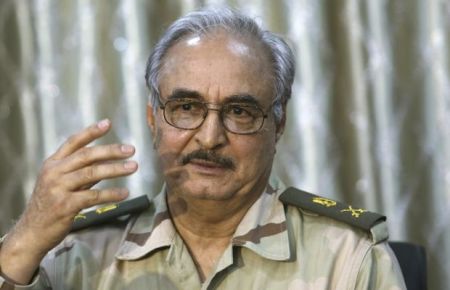
General Khalifa Haftar speaks during a news conference at a sports club in Abyar, a small town to the east of Benghazi. May 17, 2014. The self-declared Libyan National Army led by a renegade general told civilians on Saturday to leave parts of Benghazi before it launched a fresh attack on Islamist militants, a day after dozens were killed in the worst clashes in the city for months. Families could be seen packing up and driving away from western districts of the port city where Islamist militants and LNA forces led by retired General Haftar fought for hours on Friday, killing at least 43 people. REUTERS/Esam Omran Al-Fetori (LIBYA - Tags: CIVIL UNREST MILITARY POLITICS)

General Khalifa Haftar speaks during a news conference at a sports club in Abyar, a small town to the east of Benghazi. May 17, 2014.

It is too soon to say whether the Russian leader’s Libya initiative betokens an invitation to the new US president to work together in the Middle East, or he is cashing in on an uncertain transition period between the presidencies to build up a stack of chips ready to face Trump as a rival power.

**************************

Libyan Gen Khalifa Hafter arrived in Moscow Sunday, Nov. 26, with a request for Russian arms and military support for his army. He was welcomed in Moscow, which saw an opening for Russia to gain its first military base in North Africa. According to DEBKAfile’s military and intelligence sources, President Vladimir Putin began to envision a second Mediterranean base on the coast of Benghazi, twin to Hmeimim in Syria’s Latakia. This one would accommodate Russian naval as well as air units and be located 700km from Europe.

The US-born Hafter, a general in the army of the late Muammar Qaddafi, carries the title of supreme commander of the Libyan army. However, Libya is today riddled with hundreds of militias vying for control. Haftar heads a powerful group that was once backed by the United States. But since refusing to recognize the government established by the UN in Tripoli, he relies mainly on the support of Egypt and some of the Gulf emirates for his eastern Libyan Benghazi stronghold.

Egypt and the UAE provide Hafter’s army with air support from Egyptian bases in the Western Desert. It was their leaders who urged him to accept the Russian invitation to Moscow and bid for military assistance.

This was Hafter’s second trip to Moscow. He was there in June and met with Russian Defense Minister Sergei Shoigu and National Security Adviser Nikolai Patrushev. Then, the Kremlin was wary of extending military aid to the maverick Libyan general.  US, Italian and British special forces were at the time pressing a major offensive to drive ISIS out of the key Libyan port of Sirte. However, this offensive has still not achieved its goal.

russianbaseslibya480

Donald Trump’s election as US president is already causing seismic rumbles in the region. Putin is now offering Hafter’s army jet fighters attack helicopters, armored vehicles and assorted missiles as well as air support for fighting the Islamic State.

It is too soon to say whether the Russian leader’s Libya initiative betokens an invitation to the new US president to work together in the Middle East, or he is cashing in on an uncertain transition period between the presidencies to build up a stack of chips ready to face Trump as a rival power.

At all events, Russian planes in Hmeimim are capable of covering the 1,500km distance to Libya, while the Russian carrier Admiral Kusnetzev is anchored not far away, off Syria’s Mediterranean shore. Both are therefore available for operations in support of the Libyan general.

This would be the first time a Russian aircraft carrier went into action in this part of the Mediterranean.

The battles ongoing along the Mediterranean coast his week among the various militias, including Hafter’s army, are in fact a tug-o’-war for control of Libya’s oil fields. Libya’s oil riches are certainly not absent from Putin’s calculations. Moscow’s assistance in helping his Libyan visitor gain the upper hand in this struggle could augur the first Russian stake in the Libyan oil industry.

Secret Israel-Jordanian-Syrian border talks begin

November 21, 2016

Secret Israel-Jordanian-Syrian border talks begin, DEBKAfile, November 21, 2016

fawwar-camp480

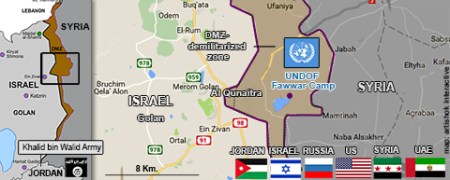
Israel, Jordan and Syria have embarked on secret discussions for the stabilization of their borders in southern Syria by restoring the status quo ante that reigned on the Golan prior to the outbreak of the Syrian civil war in 2011.

This is reported exclusively by DEBKAfile from intelligence, Washington and Moscow sources.

The incoming Trump administration in Washington and Russian President Vladimir Putin are in the picture; so is the United Arab Emirates ruler, Sheikh Mohamed Bin Zayed Al Nahyan.

Although still at a preliminary stage, the talks have produced their first tangible result: A vanguard of the United Nations Disengagement Observer Force (UNDOF) has arrived on the Syrian side of the Golan. It has taken up position at its former Fawwar Camp base 4km east of Quneitra, which it evacuated during the Syrian fighting. The main body of the force, around 1,000 UN soldiers and 70 observers, is expected soon, to take up the task of reconstituting the former demilitarized zone that separated Israel and Syria under the 1974 armistice agreement.

This DMZ runs 80km along the Hermon range up to the Lebanese border in the north and down to the Israel-Syrian-Jordanian triangle in southern Syria up to the Jordanian border. In the 25km long Golan strip, between half a kilometer and 10 deep, the IDF and Syrian army were originally limited as to the number of soldiers and types of weaponry they are allowed to maintain. The strip will revert to Syrian civil administration under UNDOF control, and the Israeli-Syrian border crossing point will be reopened in the Quneitra area under the joint supervision of UN, Israeli and Syrian officers.

The military arrangements are still in discussion and changes may be introduced to this format.

The main obstacle to the return of pre-Syrian war conditions to this sensitive border region is the presence of radical Syrian rebel forces in southern Syria, mainly the Khalid bin Walid Army, whose leaders have sworn allegiance to Islamic State commander Abu Bakr al-Baghdadi.

These forces will face the option of accepting the authority of the Syrian army or fighting a win-or-die battle.

Israel has an additional, compelling interest in restoring the disengagement zone with Syria in that it leaves no room for the grab for a military presence opposite Israeli Golan and Galilee that was made in recent months by Iran and its Lebanese proxy, Hizballah, for the purpose of opening a new front for terrorist attacks against Israel – as DEBKAfile was first to reveal. .

An indirect clue to the secret diplomatic talks ongoing came from the Syrian ruler Bashar Assad in an interview he gave on Nov. 16 to a Portuguese radio station, when he said: “If –if – he [Trump] fights the terrorists, it is clear that we will be a natural ally, together with the Russians, Iranians and many other countries who want to defeat the terrorists.”

The parties with varying degrees of involvement in the restoration of the UN-controlled DMZ on the Golan border are, therefore, the incoming Trump administration, Moscow, Damascus, Amman, Abu Dhabi and Jerusalem. Russia, Jordan and the Emirates have gained relevance for the first time as a result of changes in the strategic balance engendered by the Syrian war.