Archive for the ‘Off Topic’ category

Off Topic: A Sucker is Born Every Minute

June 8, 2015

Woman Claims to Own the Sun and Sold 600 Parcels – Sues eBay for Shutting her Down

By Eric Reed June 7, 2015 Via BuzzPo

(Just a little humorous break I thought y’all might enjoy. – LS)

A woman is claiming ownership of THE SUN, and is selling 11 square foot parcels for $1 on eBay. But, now she’s suing the popular website for removing her listing.

The courts in Madrid have actually agreed to hear 54-year-old Maria Duran’s case next month. But they won’t be ruling on her claim of ownership. Rather, the $11,000 law suit is solely to determine if she violated eBay’s seller agreement.

eBay explained that nothing “tangible” was ever sold, so fearing a scam, they removed her listing.

The USA Today reported:

I am not a stupid person and I know the law,” Duran has said of her solar real estate gambit. She’s basing her claim on a loophole in the UN’s Outer Space Treaty that says no nation can stake ownership to a heavenly body but makes no mention of individuals—borrowing the strategy used by this entrepreneur’s claim on the moon. Duran, as you might imagine, is an eclectic character, observes the Washington Post. “She’s studied nursing and law, dreamt up her own religion, and penned a kinky romance novel,” writes Caitlin Dewey. The story notes that Duran is framing her sun fight as a statement against the corporate world and promises that any profits will go to charity. For those who want in, Duran is still selling parcels on her own website.

Still selling them? I’d like mine in a sub-tropical climate please. How will these so-called buyers access their HOT real estate? Perhaps Duran is assuring their safety by recommending they travel there at night. Maybe if you act now, she’ll even throw in a free pair of sunglasses with every order.

Stories like this are living proof that sometimes the real story is more far-fetched than anything made-up ever could be.
image


Obama’s Worst Lie About his Dirty Castro Deal is in his First Sentence

December 18, 2014

Obama’s Worst Lie About his Dirty Castro Deal is in his First Sentence

December 17, 2014

by Daniel Greenfield

via Obama’s Worst Lie About his Dirty Castro Deal is in his First Sentence | FrontPage Magazine.


Usually you have to get at least two sentences into an Obama speech to find a whopper so  big that McDonald’s wouldn’t be able to figure out what to charge for it. Not this time. Instead the worst lie in Obama’s Cuba speech was in his very first sentence.

“Today, the United States of America is changing its relationship with the people of Cuba,” Obama said.

No, nope. Still no.

Cuban is run by the Castro thugs. There is no democratically elected government. Obama did not make a deal with the elected representatives of the Cuban people.

He made a deal with the Castro crime family.

The people of Cuba have no say in how they live. They have no say in how they are governed. They have no say in their relationship with the United States except to flee by boat. Which many of them have done.

That opening sentence is the slimiest lie in Obama’s series of lies about his dirty deal with the Castros. It’s the slimiest lie because with it Obama makes the explicitly false claim that Raul Castro represents the Cuban people.

It’s an endorsement of the Communist dictatorship.

“There’s a complicated history between the United States and Cuba. I was born in 1961 — just over two years after Fidel Castro took power in Cuba, and just a few months after the Bay of Pigs invasion, which tried to overthrow his regime,” Obama said, as usual making it all about him.

The phrasing of his speech actually makes the case that the history involved doesn’t matter because it took place before Obama was born.

This is disturbingly egocentric even for Obama.

“Neither the American nor the Cuban people are well-served by a policy that’s rooted in events that took place before many of us were born,” Obama states.

Regardless of when Obama was born, the regime he just made a deal with it is still the same one as then. That concept seems to elude Obama’s narcissistic grasp of history.

“First, I’ve instructed Secretary (of State John) Kerry to immediately begin discussions with Cuba to re-establish diplomatic relations that have been severed since January of 1961. Going forward, the United States will re-establish an embassy in Havana, and high-ranking officials will visit Cuba.”

I’m sure Hanoi John will be thrilled.

“Second, I’ve instructed Secretary Kerry to review Cuba’s designation as a state sponsor of terrorism. This review will be guided by the facts and the law. Terrorism has changed in the last several decades. At a time when we are focused on threats from al-Qaida to ISIL, a nation that meets our conditions and renounces the use of terrorism should not face this sanction.”

Marxist terrorist groups haven’t disappeared and some of them interact with Islamic terrorist groups.

Step three involves bailing out the collapsing Castro regime by sending lots and lots of money to Cuba.

No, really. Here’s Obama.

Third, we are taking steps to increase travel, commerce, and the flow of information to and from Cuba…  it will be easier for Americans to travel to Cuba, and Americans will be able to use American credit and debit cards on the island… we’re significantly increasing the amount of money that can be sent to Cuba…  we will facilitate authorized transactions between the United States and Cuba. U.S. financial institutions will be allowed to open accounts at Cuban financial institutions…  it will be easier for U.S. exporters to sell goods in Cuba…

But Obama respects the embargo. No really.

As these changes unfold, I look forward to engaging Congress in an honest and serious debate about lifting the embargo.

Unilateral dictatorship is not an honest and serious debate.

Nuland Warns Russia on Nukes in Crimea

December 18, 2014

Nuland Warns Russia on Nukes in Crimea‘Any effort to further militarize that region will be extremely dangerous and will not be unanswered’

BY:Daniel Wiser Follow @TheWiserChoice

December 17, 2014 3:50 pm

via Nuland Warns Russia on Nukes in Crimea | Washington Free Beacon.


a view of Bakhchisarai, a city in central Crimea, a territory recognized by a majority of countries as part of Ukraine and incorporated by Russia as the Republic of CrimeaA view of Bakhchisarai, a city in central Crimea, a territory recognized by a majority of countries as part of Ukraine and incorporated by Russia as the Republic of Crimea / AP

A top U.S. diplomat on Wednesday warned Russia against deploying nuclear weapons in Crimea and said the United States and its allies would respond if the Kremlin opts to do so.

Victoria Nuland, assistant secretary of state for European and Eurasian affairs, said such a move by Russia would be “extremely dangerous,” though she did not specify what form a U.S. and allied response might take.

Russian Foreign Minister Sergei Lavrov had previously told a state news agency on Monday that “Russia has every reason to dispose of its nuclear arsenal” on the peninsula that it annexed in March, following what international observers condemned as an illegal referendum.

“Crimea belongs to Ukraine,” Nuland said at an American Enterprise Institute (AEI) event in response to a question. “Second of all, any effort to further militarize that region will be extremely dangerous and will not be unanswered by those of us who also live in that neighborhood.”

Nuland noted that she worked on the Budapest Memorandums in 1994 that required Ukraine, Belarus, and Kazakhstan to remove all nuclear weapons from their states in return for security guarantees from the United States. Although Russia was a signatory to those agreements, the Kremlin’s willingness to nuclearize a part of Ukrainian territory that it invaded and captured threatens to nullify them.

Nuland also spoke about the potential for imposing further sanctions on Russia in response to its ongoing support for separatists in eastern Ukraine. President Barack Obama has said he will sign a bipartisan bill that authorizes him to apply additional sanctions on Russia’s defense, energy, and banking industries, but the legislation does not require him to take the tougher actions. White House Spokesman Josh Earnest expressed reservations about deepening sanctions pressure on Russia without the support of Europe.

“The bill gives the administration authorization for a broad set of tools, but it also allows considerable flexibility to use those tools,” Nuland said, declining to confirm whether Obama would push for the tougher sanctions.

Providing lethal assistance to Ukraine’s military also remains “under review,” she said. The bill authorizes but does not require Obama to send $350 million in military equipment to Ukraine, including antitank weapons and surveillance drones.

“What’s most important is that the Russians be deterred in further ventures,” she said.

Russia has transported about 500 pieces of additional military equipment to the separatists in Ukraine since the Minsk Agreement was signed, Nuland said. Those weapon shipments violate the deal that was supposed to broker a “ceasefire” between the pro-Russian rebels and Ukrainian forces. The United Nations said this week that an average of 13 people a day have died in Ukraine since the agreement was reached in early September.

Nuland said the current sanctions on Russia “can be rolled back” if the Minsk provisions are implemented, including an order from the Kremlin to pull back its troops and arms in Ukraine and to close off the border from hostilities. Some experts have warned that Russia’s severe economic hardships, including a collapsing currency and declining oil revenue, could provoke President Vladimir Putin to be more aggressive in Ukraine as a way of tamping down domestic political pressures.

Nuland also pushed back against criticism by some analysts that the West is to blame for Russia’s actions in Ukraine. These critics say Western nations provoked Putin by pushing for NATO enlargement after the fall of the Soviet Union and not respecting Russian interests.

“There were no promises made to Russia that it would have a veto at any point to any American or European leader or other countries’ sovereign choice of alliance,” she said. “Anybody who tells you otherwise doesn’t know the true situation.”

Nuland noted that the United States has provided about $20 billion in assistance to Russia over the last two decades.

Additionally, Nuland sought to clarify reports from last winter that she handed out cookies to Ukrainian demonstrators protesting against now deposed President Viktor Yanukovych. Russian state media said the gift signaled that the United States was supporting a coup to topple Yanukovych’s government.

“They were sandwiches, not cookies,” Nuland said. She also gave some to the Berkut police forces, “those poor 18, 19 year-old Ukrainian kids who had been ordered by their own president to move against their own mothers and grandmothers.”

“The United States will never be shy about supporting efforts for more democracy, more popular choice, more enfranchisement, anywhere in the world,” she said.

Obama’s ISIS Strategy Wednesday Speech here:

September 9, 2014
Obama West Point
President Obama has said the U.S. is “reviewing options” in Iraq. REUTERS/Kevin Lamarque

For the past two weeks, President Obama and other senior U.S. administration officials have been putting together an international coalition to fight the Islamic State in Iraq and Syria, but have revealed few details about how that coalition will function. Obama said in an interview with MSNBC’s Meet the Press on Sunday that he would finally reveal his strategy in a speech Wednesday.

“I just want the American people to understand the nature of the threat and how we’re going to deal with it and to have confidence that we’ll be able to deal with it,” he said in the interview broadcast Sunday.

Given what we have heard so far, what can we expect in Obama’s speech Wednesday about the international coalition’s strategy to “degrade and destroy” ISIS?

1.   More funds and weapons for local fighters

In the case of Iraq, U.S. and other international coalition partners, including other western countries such as Britain, may ramp up funding and distribute more weapons to the Iraqi and Kurdish (peshmerga) military forces to fight ISIS in Iraqi Kurdistan and Anbar Province. Last week Obama approved the deployment of an additional 350 U.S. troops to the country, bringing the total to 1,100. The troops stationed in Iraq will serve no combat role, he said, but would work with the Iraqi and Kurdish military as advisors. The U.S. will continue to work with these forces in Iraq and work toward pushing back ISIS from key areas including those near Kirkuk, a major oil-producing city, and dams.

2.    U.S. airstrikes on ISIS convoys and military strongholds

Those are already happening in Iraq — but not in Syria. The U.S. has already launched more than 100 airstrikes in Iraq on ISIS convoys and other targets. Obama has said those airstrikes will continue as long as ISIS still poses a threat to Americans in the country. Obama will most likely provide an update on the exact number of strikes launched in Iraq and how much more we can expect.

3.    Addressing the humanitarian crisis in Sinjar

Yazidis have been besieged there by ISIS, and the persecution of other ethnic minorities in Iraq. One of the reasons Obama authorized targeted strikes against ISIS was to prevent a “potential genocide” against the Yazidi people living in the Sinjar Mountains.

4.    Naming all, or some, of the partners who have signed on to the international coalition to fight ISIS 

Obama, as well as spokespeople at the State Department and Pentagon, have alluded to the fact that several countries in the Middle East, and some in the west, had already agreed to sign on to the coalition. But it is not yet known in what capacity they will help in the fight against ISIS.

“We are going to systematically degrade their capabilities. We’re going to shrink the territory that they control. And ultimately we’re going to defeat them,” Obama said in his interview with Meet The Press.

The Arab League on Sunday agreed to take all necessary measures to confront the Sunni militant group. The group did not explicitly back U.S. military action against the group, but did endorse a U.N. resolution issued last month that imposes sanctions on a number of the group’s fighters and “act to suppress the flow of foreign fighters, financing and other support to Islamist extremist groups in Iraq and Syria.”

U.S. rhetoric between the president’s speech at West Point in May and now could give us an indication of how the U.S. and the international coalition will play out.

“We should not go it alone,” Obama said in his speech at West Point in May. “We need to mobilize allies and partners to take collective actions. We need to broaden our tools to include diplomacy and development, sanctions and isolation, appeals to international law and, if just and effective, multilateral military action.”

State Department Spokeswoman Jen Psaki said in a press briefing Monday that more than 40 countries have already contributed to the effort in Iraq over the past several months. She said the U.S. would build on this already established effort. Psaki gave some indication in her briefing of countries that are already helping fight ISIS in Iraq, but said that the U.S. did not consider Iran as one of them. She said some Arab League members are already involved in the fight against ISIS in Iraq.

U.S. officials have said that Britain and Australia were potential candidates to include in the new coalition, as well as Turkey, France, Saudi Arabia, Qatar, the United Arab Emirates, Jordan and Germany.

5. Setting a timeline for the international coalition’s fight against ISIS 

President Obama said in his speech at West Point in May that “for the foreseeable future the most direct threat to America at home and abroad remains terrorism.” Obama will most likely lay out a loose timeframe for when the international coalition will begin the offensive against ISIS, and how long it will last.

6. Details on how the international coalition will operate and in what capacity

The international coalition could align with the strategy Bush adopted in 2001 to fight al Qaeda. His policy included a coalition that would fight terrorists diplomatically and militarily, and would work to stop finances from flowing to the terrorists. The coalition would most likely include countries that could help quell the ISIS threat not only militarily, but also by cutting off aid or ramping up efforts to secure border crossings.

7. Reliance on Sunni counterparts in the Middle East for possible military intervention in Syria 

Last week Obama noted that the international coalition would rely heavily on Sunni partners in the region “that reject the extremists, that say that it is not what Islam is about.” In the past, the U.S. has relied on Jordan and Saudi Arabia to support its mission of propping up the moderate opposition in Syria. Both countries could be key partners in the fight against ISIS, along with other Gulf states like Qatar and the United Arab Emirates, experts say.

8. Helping the moderate opposition in Syria 

The U.S. administration has been training and giving weapons to the moderate opposition in Syria for more than a year. During that time, leaders of the Free Syrian Army have asked that the CIA-led U.S. program provide more sophisticated weaponry such as MANPADS, portable anti-aircraft missile launchers. But so far, the U.S. has not fulfilled that request for fear that powerful weapons could fall into the wrong hands. In his speech Wednesday, Obama is most likely to address the need to send more money to the moderate opposition in Syria, but he will most likely not approve the deployment of MANPADS.

9. Counterterrorism funds

At his speech at West Point in May, Obama called on Congress to approve a $5 billion counter terrorism partnerships fund. According to the White House, the fund would “build on existing tools and authorities” to establish a “more sustainable and effective” counterterrorism approach, focusing on building the counterterrorism capacity of partners worldwide through “train-and-equip” and other activities. The White House said Monday that Obama wants Congress to inject money into that fund.

Woman Beheaded In Back Garden Of London Property

September 4, 2014

Britain’s Lost Freedoms: “We’re Living in a Madhouse” — CBN News (US)

September 4, 2014

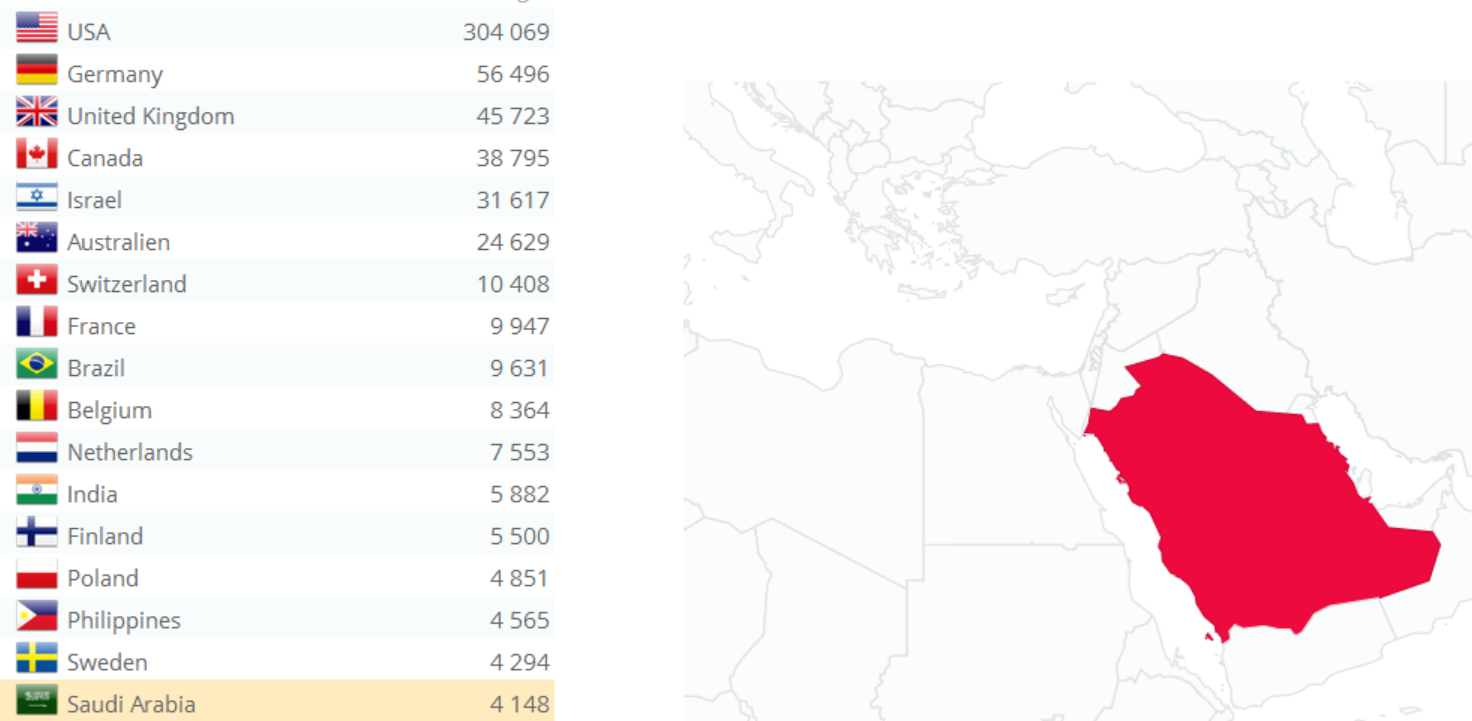
Many Saudis follow this blog – SA among the top 17 last 12 months

September 2, 2014

warsclerotic popularity 2

US Corporations Boycott Glasgow for Supporting Gaza

August 22, 2014

US Corporations Boycott Glasgow for Supporting Gaza


glasgow palestine

Hundreds of US businesspeople have scrapped plans to visit Glasgow after the Scottish city decided to fly the Palestinian flag during Israel’s Operation Protective Edge in Gaza.

The visitors represented major US corporations such as Wal-Mart, ExxonMobil, and Coca-Cola, and were expected to visit Glasgow as a reward for investing millions into its economy.

The vice president of a leading Fortune 500 company, Richard Cassini, organized the delegation of 600 CEOs and business leaders.

However, after the Glasgow City Council’s decision to fly the Palestinian flag over its city chambers as a sign of solidarity with Gaza, Cassini wrote to Glasgow’s Lord Provost, Sadie Docherty and canceled the planned event.

“We were scheduling six days in Glasgow, three for business and three for leisure time,” Cassini wrote. “Having read your statement endorsing Hamas and its leadership due to the number of Muslims in your city, I have decided to cancel all plans for our trip. We are a Fortune 500 Company, so costs were really not a serious consideration, location was,” Cassini said.

“Hopefully, the Muslim population that you so sincerely endorse will have the spending power of the very people you have chased away so well.” Cassini added.

While Glasgow City Council has acknowledged receiving the email, it has not responded “because of the volume” of emails relating to the council’s decision to fly the Palestinian flag.

“The council has received more than 1,500 emails/calls/online forms, etc., about the flag and is responding to each” of them, a council spokeswoman said to RT.

The council sparked controversy when it decided to raise the Palestinian flag in light of the ongoing conflict between Israel and Gaza, which started in July.

In a letter to the Mayor of Bethlehem, Israel, Docherty offered her “heartfelt sympathy” to the people of Gaza.

“Glasgow is home to many friends of Palestine and this is a deeply distressing time for them. They represent a variety of ethnicities, political persuasions, faiths and none. However, they are united by a common desire to support the Palestinian people,” Docherty said.

The council’s decision was met with criticism from a number of Jewish representative groups, including the Glasgow Jewish Representative Council, which referred to the act as “the worst kind of gesture politics.”

It “does nothing to alleviate the suffering on either side of the conflict,” the council added.

Cassini insisted that his decision to abandon the business leaders’ trip to Glasgow would not be reversed.

Something different

August 18, 2014

WB Yeats – The Second Coming

Turning and turning in the widening gyre
The falcon cannot hear the falconer;
Things fall apart; the centre cannot hold;
Mere anarchy is loosed upon the world,
The blood-dimmed tide is loosed, and everywhere
The ceremony of innocence is drowned;
The best lack all conviction, while the worst
Are full of passionate intensity.

Surely some revelation is at hand;
Surely the Second Coming is at hand.
The Second Coming! Hardly are those words out
When a vast image out of Spiritus Mundi
Troubles my sight: somewhere in sands of the desert
A shape with lion body and the head of a man,
A gaze blank and pitiless as the sun,
Is moving its slow thighs, while all about it
Reel shadows of the indignant desert birds.
The darkness drops again; but now I know
That twenty centuries of stony sleep
Were vexed to nightmare by a rocking cradle,
And what rough beast, its hour come round at last,
Slouches towards Bethlehem to be born?

Hat tip

http://ejbron.wordpress.com/

Obama’s Hubris is His Undoing

August 18, 2014

Contentions Obama’s Hubris is His Undoing

Jonathan S. Tobin | @tobincommentary 08.17.2014 – 8:00 PM

via Obama’s Hubris is His Undoing « Commentary Magazine.


Historians will have the rest of the century to unravel the mess that is the Barack Obama presidency. While they can explore these years of foreign policy disaster and domestic malaise at leisure, the rest of us have 29 more months to see just how awful things can get before he slides off to a lucrative retirement. But those who want to start the post-mortem on this historic presidency would do well to read Jackson Diehl’s most recent Washington Post column in which he identifies Obama’s hubris as the key element in his undoing.

As our Pete Wehner wrote earlier today, the president’s reactions to what even Chuck Hagel, his less-than-brilliant secretary of defense, has rightly called a world that is “exploding all over” by blaming it all on forces that he is powerless to control. As Pete correctly pointed out, no one is arguing that the president of the United States is all-powerful and has the capacity to fix everything in the world that is out of order. But the problem is not so much the steep odds against which the administration is currently struggling, as its utter incapacity to look honestly at the mistakes it has made in the past five and half years and to come to the conclusion that sometimes you’ve got to change course in order to avoid catastrophes.

As has been pointed out several times here at COMMENTARY in the last month and is again highlighted by Diehl in his column, Obama’s efforts to absolve himself of all responsibility for the collapse in Iraq is completely disingenuous. The man who spent the last few years bragging about how he “ended the war in Iraq” now professes to have no responsibility for the fact that the U.S. pulled out all of its troops from the conflict.

Nor is he willing to second guess his dithering over intervention in Syria. The administration spent the last week pushing back hard against Hillary Clinton’s correct, if transparently insincere, criticisms of the administration in which she served, for having stood by and watched helplessly there instead of taking the limited actions that might well have prevented much of that country — and much of Iraq — from falling into the hands of ISIS terrorists.

The same lack of honesty characterizes the administration’s approach to the Israel-Palestinian conflict and the nuclear negotiations with Iran, two topics that Diehl chose not to highlight in his piece.

Obama wasted much of his first term pointlessly quarreling with Israel’s government and then resumed that feud this year after an intermission for a re-election year Jewish charm offensive. This distancing from Israel and the reckless pursuit of an agreement when none was possible helped set up this summer’s fighting. The result is not only an alliance that is at its low point since the presidency of the elder George Bush but a situation in which the U.S. now finds itself pushing the Israelis to make concessions to Hamas as well as the Palestinian Authority, a state of affairs that guarantees more fighting in the future and a further diminishment of U.S. interests in the region.

On Iran, Obama wasted years on feckless engagement efforts before finally accepting the need for tough sanctions on that nation to stop its nuclear threat. But the president tossed the advantage he worked so hard to build by foolishly pursuing détente with Tehran and loosening sanctions just at the moment when the Iranians looked to be in trouble.

On both the Palestinian and the Iranian front, an improvement in the current grim prospects for U.S. strategy is not impossible. But, as with the situation in Iraq, it will require the kind of grim soul-searching that, as Diehl points out, George W. Bush underwent in 2006 before changing both strategy and personnel in order to pursue the surge that changed the course of the Iraq War. Sadly, Obama threw away the victory he inherited from Bush. If he is to recover in this final two years in office the way Bush did, it will require the same sort of honesty and introspection.

But, unfortunately, that seems to be exactly the qualities that are absent from this otherwise brilliant politician. Obama is a great campaigner — a talent that is still on display every time he takes to the road to blame Republicans for the problems he created — and is still personally liked by much of the electorate (even if his charms are largely lost on conservative critics such as myself). But he seems incapable of ever admitting error, especially on big issues. At the heart of this problem is a self-regard and a contempt for critics that is so great that it renders him incapable of focusing his otherwise formidable intellect on the shortcomings in his own thinking or challenging the premises on which he has based his policies.

Saying you’re wrong is not easy for any of us and has to be especially hard for a man who has been celebrated as a groundbreaking transformational figure in our history. But that is exactly what is required if the exploding world that Obama has helped set in motion is to be kept from careening even further out of control before his presidency ends. The president may think he’s just having an unlucky streak that he can’t do a thing about. While it is true that America’s options are now limited (largely due to his mistakes) in Syria and Iraq, there is plenty he can do to prevent things from getting worse there. It is also largely up to him whether Iran gets a nuclear weapon or Hamas is able to launch yet another war in the near future rather than being isolated. But in order to do the right things on these fronts, he will have to first admit that his previous decisions were wrong. Until he shed the hubris that prevents him from doing so, it will be impossible.