Archive for the ‘Obama’ category

The Unresolved Problem with Boots on the Ground

October 10, 2014

The Unresolved Problem with Boots on the Ground, Commentary Magazine, October 10, 2014

(If the U.S. were to put boots on the ground, how many would be needed to do what? Trainers? Spotters for airstrikes? Infantry? Artillery? Psychological operations? Field medics? Something else? Could we shift from a peacetime mode to a wartime mode in time to do significant damage to the Islamic State, et al? — DM)

[T]here is nothing more dangerous to any potential ground troops than to be inserted into a warzone without broad public consensus about their mission and to have a commander-in-chief who has consistently met the requests of forces in the field with indecision and a failure to deliver what ground commanders consider their minimum basic needs.

****************

A growing chorus of analysts, generals, and even cabinet secretaries who served under President Obama suggest that Obama’s stated goal to “degrade and ultimately destroy” ISIS is not going to occur by means of air power alone. That might be true, although it’s also true that Obama hasn’t used airpower to its full effect. To read a Pentagon press release is to read reports of five, six, or seven airstrikes. Given that an aircraft carrier can launch planes every 30 to 40 seconds, this suggests that the Obama administration is effectively committing the equivalent of three or four minutes of dedicated aircraft carrier time to achieve its goals. And even then, many of the strikes Obama has ordered (and the president has said that he approves every strike carried out inside Syria) attack empty buildings or equipment far away from the fronts of the fight.

But even if boots on the ground are necessary with an augmented air campaign, there is one problem that is unsolvable, and that is the personality and lack of commitment of the commander-in-chief. President Obama has the strategic equivalent of Attention Deficit Disorder. Despite his September 10 speech, it’s unclear whether he is truly committed to destroying ISIS or was simply reacting to the spike in public outrage following the murder of James Foley.

Now make no mistake: I personally feel that the defeat of ISIS is an overwhelming national interest, and that the goal should not simply be “deradicalization” for its fighters, but rather their death. That said, there is nothing more dangerous to any potential ground troops than to be inserted into a warzone without broad public consensus about their mission and to have a commander-in-chief who has consistently met the requests of forces in the field with indecision and a failure to deliver what ground commanders consider their minimum basic needs.

What can be done? Unfortunately, there’s no good answer with such lackluster leadership in the White House and Congress. But those serving in uniform and placing themselves in harm’s way should not be a political football. At present, however, that is exactly how the president and some members of both parties treat them and the ISIS problem. Until there is focus and responsibility in both the White House and Congress, and recognition that military action cannot be governed by polls or political timelines, it is foolhardy to insert ground forces.  Regardless of how they might be needed and how determined ISIS is to strike the United States, ground troops without serious leadership would be unwise. Never again should there be a deployment of ground forces without political consensus, broad public support. If these are lacking and we have to pay the consequence, then that will be a “teachable moment” for the public about the importance of freedom and the nature of the evil that the United State must confront.

Bombing for show? Or for effect?

October 10, 2014

Bombing for show? Or for effect? Washington Post OpinionCharles Krauthammer, October 9, 2014

The indecisiveness and ambivalence so devastatingly described by both of Obama’s previous secretaries of defense, Leon Panetta and Bob Gates, are already beginning to characterize the Syria campaign.

The Iraqis can see it. The Kurds can feel it. The jihadists are counting on it.

*********************

During the 1944 Warsaw uprising, Stalin ordered the advancing Red Army to stop at the outskirts of the city while the Nazis, for 63 days, annihilated the non-Communist Polish partisans. Only then did Stalin take Warsaw.

No one can match Stalin for merciless cynicism, but President Recep Tayyip Erdogan of Turkey is offering a determined echo by ordering Turkish tanks massed on the Syrian border, within sight of the besieged Syrian town of Kobane, to sit and do nothing.

For almost a month, Kobane Kurds have been trying to hold off Islamic State fighters. Outgunned, outmanned and surrounded on three sides, the defending Kurds have begged Turkey to allow weapons and reinforcements through the border. Erdogan has refused even that, let alone intervening directly. Infuriated Kurds have launched demonstrations throughout Turkey protesting Erdogan’s deadly callousness. At least 29 demonstrators have been killed.

Because Turkey has its own Kurdish problem — battling a Kurdish insurgency on and off for decades — Erdogan appears to prefer letting the Islamic State destroy the Kurdish enclave on the Syrian side of the border rather than lift a finger to save it. Perhaps later he will move in to occupy the rubble.

Moreover, Erdogan entertains a larger vision: making Turkey the hegemonic power over the Sunni Arabs, as in Ottoman times. The Islamic State is too radical and uncontrollable to be an ally in that mission. But it is Sunni. And it fights Shiites, Alawites and Kurds. Erdogan’s main regional adversary is the Shiite-dominated rule of Syria’s Bashar al-Assad. Erdogan demands that the United States take the fight to Assad before Turkey will join the fight against the Islamic State.

 It took Vice President Biden to accidentally blurt out the truth when he accused our alleged allies in the region of playing a double game — supporting the jihadists in Syria and Iraq, then joining the U.S.-led coalition against them. His abject apologies to the United Arab Emirates, Saudi Arabia and Turkey notwithstanding, Biden was right.

The vaunted coalition that President Obama touts remains mostly fictional. Yes, it puts a Sunni face on the war. Which is important for show. But everyone knows that in real terms the operation remains almost exclusively American.

As designed, the outer limit of its objective is to roll back the Islamic State in Iraq and contain it in Syria. It is doing neither. Despite State Department happy talk about advances in Iraq, our side is suffering serious reverses near Baghdad and throughout Anbar province, which is reportedly near collapse. Baghdad itself is ripe for infiltration for a Tet-like offensive aimed at demoralizing both Iraq and the United States.

As for Syria, what is Obama doing? First, he gives the enemy 12 days of warning about impending air attacks. We end up hitting empty buildings and evacuated training camps.

Next, we impose rules of engagement so rigid that we can’t make tactical adjustments. Our most reliable, friendly, battle-hardened “boots on the ground” in the region are the Kurds. So what have we done to relieve Kobane? About 20 airstrikes in a little more than 10 days, says Centcom.

That’s barely two a day. On the day after the Islamic State entered Kobane, we launched five airstrikes. Result? We hit three vehicles, one artillery piece and one military “unit.” And damaged a tank. This, against perhaps 9,000 heavily armed Islamic State fighters. If this were not so tragic, it would be farcical.

No one is asking for U.S. ground troops. But even as an air campaign, this is astonishingly unserious. As former E.U. ambassador to Turkey Marc Pierini told the Wall Street Journal, “It [the siege] could have been meaningfully acted upon two weeks ago or so” — when Islamic State reinforcements were streaming in the open toward Kobane. “Now it is almost too late.”

Obama has committed the United States to war on the Islamic State. To then allow within a month an allied enclave to be overrun — and perhaps annihilated — would be a major blow.

Guerrilla war is a test of wills. Obama’s actual objectives — rollback in Iraq, containment in Syria — are not unreasonable. But they require commitment and determination. In other words, will. You can’t just make one speech declaring war, then disappear and go fundraising.

The indecisiveness and ambivalence so devastatingly described by both of Obama’s previous secretaries of defense, Leon Panetta and Bob Gates, are already beginning to characterize the Syria campaign.

The Iraqis can see it. The Kurds can feel it. The jihadists are counting on it.

Special Report: How Syria policy stalled under the ‘analyst in chief’

October 9, 2014

Special Report: How Syria policy stalled under the ‘analyst in chief, Reuters, David Rohde and Warren Strobel, October 9, 2014

(Fireman: “Chief! The firehouse is on fire. Can we hose it down” Fire Chief: “Let’s analyze this. First we need to requisition a new fire hose. The old one has holes at both ends.” Fireman: “But it needs them. Water goes in one end and out the other.” Fire Chief. “So get one closed at both ends. It will work better. Trust me on this. Wait a minute. We need to decide what color hose to requisition. We’ll need a committee for that.” Et tu, Reuters?– DM)

U.S. President Obama speaks on the phone with Saudi Arabia's King Abdullah from the Oval Office of the White House in WashingtonPresident Obama speaks on the phone from the Oval Office, September 10, 2014. CREDIT: REUTERS/KEVIN LAMARQUE

Decisions small as well as large are made at the White House, often with scant influence from the Pentagon and State Department and their much larger teams of analysts and advisers. Senior Cabinet officials spend long hours in meetings debating tactics, not long-term strategy, the officials said.

**********************

Throughout 2012, as signs mounted that militants in Syria were growing stronger, the debate in the White House followed a pattern. In meeting after meeting, as officials from agencies outside the executive residence advocated arming pro-Western rebels or other forms of action, President Barack Obama’s closest White House aides bluntly delivered the president’s verdict: no.

“It became clear from the people very close to the president that he had deep, deep reservations about intervening in Syria,” said Julianne Smith, who served as deputy national security advisor to Vice President Joe Biden. “And the likelihood of altering those views was low, very low.”

This summer, events overwhelmed the status quo. In June, the radical group Islamic State, after seizing wide swaths of Syria, conquered Iraq’s second largest city and threatened Baghdad as the Iraqi army collapsed. The insurgents beheaded two American journalists, increasing U.S. public support for military action. Finally, U.S. intelligence agencies detected foreign jihadists who they believe had moved to Syria to plot attacks against the United States and Europe.

The radicals had undermined the administration’s argument it had successfully ended the war in Iraq and were threatening Obama’s record of defending the homeland. The jihadists, said Smith, “turned the debate on its head.”

On September 18, Obama reversed his three-and-a-half-year opposition to military action in Syria and ordered open-ended airstrikes against militants. It wasn’t his first U-turn on Syria. In August 2012, Obama had warned President Bashar Assad that using chemical weapons was a “red line” Syria dare not cross; when evidence emerged that Damascus had gassed the rebels and civilians, Obama opted not to respond with force.

The bombing campaign, which could last for years, is a major course correction for a president with a famously cautious foreign policy.

Obama’s handling of Syria – the early about-face, the repetitive debates, the turnabout in September – is emblematic, say current and former top U.S. officials, of his highly centralized, deliberative and often reactive foreign policy.

They say Obama and his inner circle made three fundamental mistakes. The withdrawal of all American troops from neighboring Iraq and the lack of a major effort to arm Syria’s moderate rebels, they say, gave Islamic State leeway to spread. Internal debates focused on the costs of U.S. intervention in Syria, while downplaying the risks of not intervening. And the White House underestimated the damage to U.S. credibility caused by Obama’s making public threats to Assad and then failing to enforce them.

“REAL CHOKEPOINT”

This week, former Defense Secretary and CIA director Leon Panetta joined Hillary Clinton and a growing list of former cabinet members and aides who said Obama made major mistakes in the Middle East. Panetta singled out the U.S. troop withdrawal from Iraq.

“It was clear to me – and many others,” Panetta wrote in his memoir, “Worthy Battles,” “that withdrawing all our forces would endanger the fragile stability then barely holding Iraq together.”

Such arguments were rejected at the time inside the White House, where the foreign policy machine has grown dramatically in power under Obama and cabinet members and their departments have felt marginalized.

The National Security Council staff, which coordinates U.S. defense, diplomatic and intelligence policy from inside the White House, has nearly doubled in size on his watch. It has gone from about 50 under George H.W. Bush to 100 under Bill Clinton, 200 under George W. Bush and about 370 under Obama.

Decisions small as well as large are made at the White House, often with scant influence from the Pentagon and State Department and their much larger teams of analysts and advisers. Senior Cabinet officials spend long hours in meetings debating tactics, not long-term strategy, the officials said.

Robert S. Ford, the former U.S. ambassador to Damascus, recalled long meetings to debate small issues, such as which Syrian opposition members he could meet with and whether it was okay to give cell phones, media training and management classes to a local Syrian government council controlled by the opposition.

Sometimes, this more centralized White House system becomes overwhelmed.

“There’s a real choke point,” said Michele Flournoy, who served as the Under Secretary of Defense for Policy, the No. 3 Pentagon civilian, in Obama’s first term. “There’s only so much bandwidth and there’s only so much they can handle at one time. So, things start to slow down.”

Flournoy and other former officials who criticize the administration’s approach concede that the most important decisions – using military force – must ultimately be the president’s call. They argue, though, that intensified White House control has resulted in the United States being behind the curve, whether in trying to counter Russian propaganda about the Ukraine crisis or battle online recruitment by jihadists.

Syria, where the estimated death toll has topped 190,000, is cited as a prime example.

By the fall of 2012, covertly arming Syria’s rebels had been accepted by Obama’s top three national security Cabinet members – Clinton, Panetta and CIA chief David Petraeus – as the best way to slow radicalism in Syria. The president and his inner circle first rejected the advice, then mounted a small scale program to arm the rebels, and now, two years later, after Islamic State has seized swaths of Syria and Iraq, embrace the approach.

Obama’s aides say tight White House coordination is a must in an era when the United States faces threats like terrorism, which requires harnessing the capabilities of the Pentagon, the U.S. intelligence community, the State Department and other agencies. It’s the president’s duty to take ultimate responsibility for matters of war and peace, they say.

“Other than, of course, the men and women in uniform” and other officials deployed abroad, said Ben Rhodes, a White House deputy national security adviser, “only the president of the United States is assuming the risk of the cost of action.”

WHITE HOUSE CONTROL

This account of Obama’s national security decision-making is based on interviews with more than 30 current and former U.S. government officials, who have served both Democratic and Republican administrations going back to President Richard Nixon.

In some ways, Obama’s closer control and the frequent marginalization of the State and Defense departments continues a trend begun under Bill Clinton and George W. Bush.

But under Obama, the centralization has gone further. It was the White House, not the Pentagon, that decided to send two additional Special Operations troops to Yemen. The White House, not the State Department, now oversees many details of U.S. embassy security – a reaction to Republican attacks over the lethal 2012 assault on the U.S. consulate in Benghazi, Libya. A decision to extend $10 million in nonlethal aid to Ukraine also required White House vetting and approval.

On weightier issues, major decisions sometimes catch senior Cabinet officers unawares. One former senior U.S. official said Obama’s 2011 decision to abandon difficult troop negotiations with Baghdad and remove the last U.S. soldiers from Iraq surprised the Pentagon and was known only by the president and a small circle of aides.

The president, initially perceived as one of the greatest communicators of his generation, is now viewed as having done a poor job of defining and defending his foreign policy, polls indicate. A majority of Americans – 54 % – disapprove of Obama’s foreign policy performance, according to Reuters/Ipsos polling, one of the lowest ratings of his presidency.

Rhodes, one of Obama’s longest-serving national security aides, says a series of complex world crises, not policy mistakes, has driven down the president’s approval numbers. More broadly, he says, Obama has been right to be deliberative in the wake of costly wars in Iraq and Afghanistan.

“What he’s always said is that if there’s a threat against us, we will act,” Rhodes said. “But when it comes to shaping events in cultures that are foreign to the United States we have to have some degree of realism.”

Obama has had notable national security successes. His record of protecting U.S. territory from attack remains largely unblemished. Current and former officials praise his policy on nuclear talks with Iran as clear and consistent. He is building a coalition against Islamic State that includes Arab nations participating in airstrikes with the United States, Britain,France and others.

And while past presidents faced grave dangers, most notably the possibility of Cold War Armageddon, for Obama the world is very different. The decisions he must make on using U.S. military force have multiplied. This reality, supporters say, is overlooked by detractors.

Obama has launched a humanitarian military intervention in Libya; overseen counter-terrorism operations in Pakistan, Libya, Somalia, Yemen, Iraq, Afghanistan and elsewhere; moved to end his predecessor’s wars in Iraq and Afghanistan;  wrestled with lethal threats to U.S. hostages and diplomatic posts; and sent the American military to West Africa to help tackle the Ebola virus and search for kidnapped Nigerian schoolgirls.

“ANALYST IN CHIEF”

Current and former officials say the globalized world of Twitter and 24-7 news creates an expectation at home and abroad that the United States will quickly take a position on any foreign policy issue. The demand for instant American positions – and American leadership – can be overwhelming.

“One of the biggest problems in Washington,” said retired General James Jones, who was Obama’s national security advisor from 2009 to 2010, “is to find the time to think strategically, not tactically. You’d wake up and there would be a new crisis and you’d be scrambling to deal with them.”

Six years of grinding partisan warfare over foreign policy (and much else) have left Obama increasingly fatalistic about his critics.

While on vacation in Martha’s Vineyard in late August, he was widely criticized for golfing after making a condolence call to the family of murdered American journalist James Foley. Minutes after declaring Foley’s murderer – Islamic State – a “cancer” that had “no place in the 21st century,” Obama teed off with a campaign contributor, an old friend and a former NBA star.

Obama later told aides the criticism was inevitable. No matter what I do, he said, my enemies will attack me.

Far from being disengaged or indecisive on foreign affairs, as he is sometimes portrayed, Obama drives decision-making, say current and former officials.

Obama prepares thoroughly for meetings, has an encyclopedic memory and methodically dissects problems, former officials who have been with him in meetings say. The former law professor dominates foreign policy sessions, from small Oval Office gatherings to formal National Security Council meetings he chairs. Obama promoted open NSC debate, asked for dissenting opinions from cabinet members and called on junior officials who traditionally don’t speak at such meetings, they said.

Some aides complained that alternative views on some subjects, such as Syria, had little impact on the thinking of the president and his inner circle. Despite the open debate, meetings involving even Cabinet secretaries were little more than “formal formalities,” with decisions made by Obama and a handful of White House aides, one former senior U.S. official said.

Obama “considers himself to be analyst in chief, in addition to Commander in Chief,” on certain issues, according to Fred Hof, a former State Department envoy on Syria. “He comes to a lot of the very fundamental judgments on his own, based on his own instincts, based on his own knowledge, based on his own biases, if you will.”

The president’s supporters say his approach is based on principle, not bias. He ran on a platform of winding down the Iraq War and made his views crystal-clear on military action in the Middle East. Obama believed that the human and financial costs of large-scale interventions weren’t worth the limited outcomes they produced. He held that U.S. force could not change the internal dynamics of countries in the region.

THE SYRIA DEBATE

In August 2011, Obama issued a 620-word statement on Syria that his aides hoped would put him on the right side of history. After weeks of pressure from Congress, Syrian-Americans and allies in the Middle East and Europe, he called for Assad to “step aside.”

“It is time for the Syrian people to determine their own destiny,” Obama said.

Ford, ambassador to Syria from 2011 to 2014, said he supported the statement, but now regrets it because Washington didn’t back up the words with action. He said the Syria case reflects a pattern in the administration of issuing public statements without developing a clear policy.

When Assad refused to relinquish power, it became clear that the administration and its allies lacked a plan – or the political will – to forcibly remove him. American and European credibility in the region suffered.

Taking the removal of Assad into their own hands, Turkey and other Arab states overtly backed – or turned a blind eye to – the emergence of jihadist groups in Syria. American officials warned the countries that it would be impossible to control the militants, according to former U.S. officials. The Turks, according to one former official, replied that with Washington itself sitting on the sidelines, they had no choice but to back certain anti-Assad radicals.

As jihadists gained strength in the Syrian opposition in 2012, members of Obama’s first-term cabinet began to support covert U.S. action in Syria.

In the summer of 2012, three senior advisors outside the White House – Clinton, Panetta and Petraeus – proposed that the CIA train and equip the relatively moderate Syrian rebels operating as the Free Syrian Army.

At about that time, Ford said, the Free Syrian Army was warning – and U.S. officials confirmed independently – that militant groups were luring away fighters with cash. The more Western-friendly rebels had few funds to counter with.

In December 2012, Obama rejected the proposal.

Eight months later, in August 2013, U.S. intelligence concluded that Assad had used poison gas against rebels and civilians in a Damascus suburb, defying Obama’s public warning against chemical attacks. For a week, Obama appeared on the verge of launching airstrikes. After a walk with Chief of Staff and longtime aide Denis McDonough on the White House grounds, Obama changed course without consulting his national security Cabinet members and announced he would seek Congress’ approval, which never materialized. Instead, Washington and Moscow agreed on a deal to remove Syria’s chemical arms.

The missile strike reversal was widely cited by officials interviewed as the clearest example of Obama not engaging in a full Cabinet-level debate before making a strategic decision.

State Department officials warned for years that extremists would benefit from a power vacuum in Syria. “We were saying this area is going to be controlled by extremists and they’ll link up with Iraq,” said Ford. Obama made the wrong decision, Ford concludes. “It’s clear, in retrospect, that they needed more help then to counter the extremism.”

Another former official involved in Syria policy defended Obama. He said that in the early years of the Syrian conflict, with the long Iraq War fresh in their minds, Obama’s senior lieutenants struggled to find any vital national interest that would merit American intervention. Warnings of terrorism were discussed, this official said. But the White House responded that there were “more efficient and cheaper ways of dealing with the threat than intervening in Syria.”

Smith, the former NSC aide, said the Obama years hold a lesson.

“The instinct is to centralize decision-making with the hope of exerting more control,” she said. “But that often limits the U.S. government’s agility and effectiveness at a time when those two traits are most needed.”

Iran Tightens Grip on Yemen

October 8, 2014

Iran Tightens Grip on Yemen, National Review On LineAndrew C. McCarthy, October 8, 2014

(Obama continues to tell us that Islam helped to make America what she is today and is not his our enemy. Since we seem to have some, who might they be? Surely not the soon-to-be Islamic Nuclear Republic of Iran. — DM)

It is the height of folly to believe we can degrade and ultimately destroy anti-American jihadist organizations while continuing to turn a blind eye to Iran’s essential support for those organizations, while accommodating the mullahs on nuclear weapons, and while idling as Tehran’s agents seize control of key strategic territory (see Mr. Gerstman’s excerpt from Michael Segall’s analysis of Iran’s goals in Yemen and beyond). Again, we cannot defeat our enemies without recognizing who they are.

******************

Iran, the enemy of the United States that the Obama administration nonetheless regards as a potential ally and stabilizing influence in the Middle East, has seized substantial control of Yemen.

Under the apt headline, “While you were watching ISIS, Iran took Yemen,” Legal Insurrection’ David Gerstman sifts through reports from the Washington Post and Reuters, relating that the Houthi, Shiite jihadists backed by Tehran’s mullahs, have wrested “control of almost all state buildings, from the airport and the cental bank to the Defense Ministry.” They have likewise festooned Sanaa with signs proclaiming their mullah-echoing slogan, “Death to America, death to Israel, a curse on the Jews and victory to Islam.”

As Mr. Gertzman observes, the same chant is routinely heard from Iran’s forward jihadist militia, Hezbollah. Hezbollah means the “Party of Allah” and the Houthisimilarly call themselves “Ansal Allah,” the “Supporters of Allah.” And, taking another page out of the Hezbo playbook, the Houthi are blocking the appointment of a new prime minister – just as Hezbollah has done in Lebanon in the terror group’s role as, to quote the Post report, “top down brokers dominating the government and running a virtual state-within-a-state.

As in Syria, the Shiites are opposed by the combination of the “moderate” Muslim Brotherhood – i.e., the Islah party, whose power-sharing arrangement with the rump of the ousted Sunni government the Houthi reject – and the local al Qaeda franchise (al Qaeda in the Arabian Peninsula), which continues to attack Houthitargets.

Not to beat a dead horse, but we are in a global conflict in which the Islamic State is only one component of the enemy – and not the most significant one. I argued it this way a few weeks back:

The main challenge in the Middle East is not the Islamic State; it is the fact that the Islamic State and its al-Qaeda forebears have been fueled by Iran, which supports both Sunni and Shiite terrorism as long as it is directed at the United States. There cannot be a coherent strategy against Islamic supremacismunless the state sponsors of terrorism are accounted for, but Obama insists on seeing Iran as a potential ally rather than an incorrigible enemy.

It is the height of folly to believe we can degrade and ultimately destroy anti-American jihadist organizations while continuing to turn a blind eye to Iran’s essential support for those organizations, while accommodating the mullahs on nuclear weapons, and while idling as Tehran’s agents seize control of key strategic territory (see Mr. Gerstman’s excerpt from Michael Segall’s analysis of Iran’s goals in Yemen and beyond). Again, we cannot defeat our enemies without recognizing who they are.

U.S. officials: ISIS will capture Kobani, but it’s not a big concern to us

October 8, 2014

U.S. officials: ISIS will capture Kobani, but it’s not a big concern to us, CNN, Holly Yan and Elise Labott, October 8, 2014

(Please see video at the link. Turkey is not interested in helping the Kurds in Kobani, including the Kurdish fighters who are getting overwhelmed. Is keeping Turkey happy part of the Obama Administration war “strategy?”– DM)

As Time.com put it, “If the ISIS militants take control of Kobani, they will have a huge strategic corridor along the Turkish border, linking with the terrorist group’s positions in Aleppo to the west and Raqqa to the east.”

And Staffan de Mistura, U.N. special envoy for Syria, warned of the horrors ISIS could carry out against the people of Kobani — horrors it has carried out elsewhere. “The international community needs to defend them,” he said. “The international community cannot sustain another city falling under ISIS.”

********************

The key Syrian border city of Kobani will soon fall to the Islamist terror group ISIS, several senior U.S. administration officials said.

They downplayed the importance of it, saying Kobani is not a major U.S. concern.

But a look at the city shows why it would mark an important strategic victory for the Islamic mlitant group. ISIS would control a complete swath of land between its self-declared capital of Raqqa, Syria, and Turkey — a stretch of more than 100 kilometers (62 miles).

As Time.com put it, “If the ISIS militants take control of Kobani, they will have a huge strategic corridor along the Turkish border, linking with the terrorist group’s positions in Aleppo to the west and Raqqa to the east.”

And Staffan de Mistura, U.N. special envoy for Syria, warned of the horrors ISIS could carry out against the people of Kobani — horrors it has carried out elsewhere. “The international community needs to defend them,” he said. “The international community cannot sustain another city falling under ISIS.”

Coalition batters ISIS positions with airstrikes

A U.S.-led coalition has been pounding ISIS positions in the region with airstrikes for a few weeks.

The latest strikes, late Tuesday into Wednesday, included nine in Syria, the U.S. military said. Six were in the Kobani area, destroying an ISIS armored personnel carrier, four armed vehicles and two artillery pieces, U.S. Central Command said. U.S. and coalition forces also conducted five airstrikes against ISIS in Iraq, the military said.

The primary goal of the aerial campaign is not to save Syrian cities and towns, the U.S. officials said. Rather, the aim is to go after ISIS’ senior leadership, oil refineries and other infrastructure that would curb the terror group’s ability to operate — particularly in Iraq.

Saving Iraq is a more strategic goal for several reasons, the officials said. First, the United States has a relationship with the Iraqi government. By contrast, the Obama administration wants Syrian President Bashar al-Assad to step down.

Another reason: The United States has partners on the ground in Iraq, including Iraqi forces and Kurdish fighters known as Peshmerga.

Local fighters apparently made some headway Wednesday morning, when some ISIS militants in Kobani were pushed back to the city’s perimeter, Kurdish official Idriss Nassan said.

The battles have been bloody. More than 400 people have been killed in the fight for Kobani since mid-September, the Syrian Observatory for Human Rights said. The opposition group said it has documented the deaths of 219 ISIS jihadists, 163 members of the Kurdish militia and 20 civilians.

Kobani mapMap: Kobani (Ayn al-Arab)

U.S. plan against ISIS: Iraq first, then Syria

The United States’ goal is to first beat back ISIS in Iraq, then eliminate some of its leadership and resources in Syria, the U.S. administration officials said.

If all goes as planned, by the time officials turn their attention to Syria, some of the Syrian opposition will be trained well enough to tackle ISIS in earnest.

Washington has been making efforts to arm and train moderate Syrian opposition forces who are locked in a fight against both ISIS and the al-Assad regime.

Training Syrian rebels could take quite a long time.

“It could take years, actually,” retired Gen. John Allen said last week. “Expectations need to be managed.”

The United States also wants Turkey to do more, the officials said. The administration is urging Turkey to at least fire artillery at ISIS targets across the border.

But the Turkish reluctance, the officials say, is wrapped up in the complex relationship with their own Kurds and the idea that they don’t want to help any of the Kurds in any way.

Hundreds of strikes, millions of dollars

The United States and its allies have made at least 271 airstrikes in Iraq and 116 in Syria.

The cost? More than $62 million for just the munitions alone.

The effect? Negligible, some say, particularly in Iraq.

One by one, the cities have fallen to ISIS like dominoes: Hit, Albu Aytha, Kubaisya, Saqlawia and Sejal.

And standing on the western outskirts of Baghdad, ISIS is now within sight.

“That’s DAIISH right over there,” said Iraqi Brig. Gen. Ali Abdel Hussain Kazim, using the Arabic acronym for ISIS.

The militants’ proximity to the capital is cause for concern. If the terror group manages to infiltrate and launch attacks in Baghdad or its green zone, the results could be disastrous.

Kazim said ISIS has not been able to move from eastern Anbar province to Baghdad. But another brigadier general said that’s not even the biggest threat.

The real danger to the Iraqi capital, Brig. Gen. Mohamed al-Askari said, is from ISIS sympathizers in the city.

“They are a gang,” he said. “They deploy among civilians. They disappear into the civilian population and camouflage themselves.”

U.S. Denies Visa to Victim of Boko Haram, Muslim Persecution of Christians, May 2014

October 8, 2014

U.S. Denies Visa to Victim of Boko Haram, Muslim Persecution of Christians, May 2014, Gatestone InstituteRaymond Ibrahim, October 8, 2014

(Gee, couldn’t Obama at least have explained, gently, in a friendly way but persuasively to King Abdullah that Islam is the Religion of Peace and why torturing and executing people on account of their religious beliefs is not Islamic? Just think of the difference he might have made (none whatever).– DM)

U.S. President Barack Obama did not “publicly broach the subject of religious freedom” during talks with Saudi King Abdullah, despite a letter from 70 members of Congress urging him to “address specific human rights reforms” both in public and in direct meetings with King Abdullah. It was “remarkable that the resident could stay completely silent about religious freedom…. as well as other human rights concerns, with King Abdullah.” — International Christian Concern advocacy group.

Al-Shabaab Islamists publicly beheaded a mother of two girls and her cousin after discovering they were Christians. The two daughters of one of the women, ages 8 and 15, “were witnesses to the slaughter,” sources said, with the younger girl screaming for someone to save her mother.

“You will regret why you left the prophet’s religion.” — Threatening phone message, Kenya.

The deplorable state of religious freedom in the Islamic world really came to the fore in May with the arrest, imprisonment, and death sentencing of a pregnant Christian wife and mother on the accusation that she had left Islam for Christianity. On May 15, Meriam Ibrahim of Sudan, after repeatedly refusing to convert to Islam, was sentenced to being flogged with 100 lashes, followed by being hanged for apostasy.

During her 6-month imprisonment, with her one-year-old son by her side, she gave birth to another child. The girl was born with disabilities due to the harsh conditions of the prison cell in which she was delivered, and the chains with which her “apostate” mother was still shackled as she gave birth.

Because Meriam Ibrahim’s plight made it to the mainstream media, however, Sudan released Ibrahim and her children in June.

Before her release, Islamic clerics were often sent to her cell where they repeatedly pressured, and threatened her with death, to convert to Islam. In a recent interview with Megyn Kelly on Fox News, Ibrahim said: “My faith was the only weapon that I had in these confrontations with imams and Muslim scholars because that’s what I believe. Faith means life. If you don’t have faith, you’re not alive.”

When Kelly asked her why she didn’t simply do what the clerics wanted and convert to Islam in the interest of freedom, Ibrahim replied:

If I did, that would mean I gave up. It’s not possible because it’s not true. It’s my right to follow the religion of my choice. I’m not the only one suffering from this problem. There are many Meriams in Sudan and throughout the world. It’s not just me; I’m not the only one…. With regard to the situation of Christians, this is a well-known fact that they live under difficult circumstances and they are persecuted and treated harshly. They are afraid to say they are Christian out of fear of persecution. Sometimes imprisoned Christians with financial difficulties are told that the government will pay off their debts if they convert to Islam…. If you are a Christian and you convert to Islam it will become hard to leave Islam because if you do so you will be subjected to the death penalty.

As Ibrahim’s son, imprisoned with her, is an American citizen from his father’s side, many Americans wondered why the Obama administration was not saying or doing much. Speaking of Ibrahim’s ordeal, Sen. Ted Cruz said, “There is urgency, a dire need for U.S. leadership. President Obama should speak out publicly and call upon the government of Sudan to free Meriam Ibrahim. Secretary of State John Kerry should speak out loudly and forcibly and call up on.” [sic]

Members of Congress are increasingly urging Obama to speak up on behalf of persecuted minorities throughout the Islamic world.

A few weeks earlier, human rights activists criticized the U.S. president for not addressing the plight of Christians and other minorities during his talks with leaders in Saudi Arabia, where Christianity is banned.

Many Christians, far from being released, are killed for being Christian and refusing Islam.

Around the same time the world was hearing about Ibrahim’s plight, a prominent underground church Christian leader was killed by Muslims from the al-Shabaab group in Somalia. “Sadness and grief has befallen our community when our dear brother Abdishakur Yusuf was mercilessly murdered in Mogadishu by unknown gunmen,” said a local source: “He was found outside his house lying in a pool of blood… He was shot in the head multiple times, so that his face is barely recognizable.” Yusuf leaves a widow and three children, ages 11, 8 and 5. Weeks before this murder, al-Shabaab Islamists publicly beheaded a mother of two girls and her cousin after discovering they were Christians. According to local sources, the Islamists “called residents to the town center to witness the executions of the 41-year-old mother, Sadia Ali Omar, and her 35-year-old cousin, Osman Mohamoud Moge.” Before slaughtering the two women, an al-Shabaab member announced, “We know these two people are Christians who recently came back from Kenya—we want to wipe out any underground Christian living inside ofmujahidin [jihadi] area.” The two daughters of one of the women, ages 8 and 15, “were witness to the slaughter,” sources said, with the younger girl screaming for someone to save her mother.

According to the Washington-based International Christian Concern advocacy group, Obama did not “publicly broach the subject of religious freedom” during talks on March 28 with Saudi King Abdullah, despite a letter from 70 members of Congress urging him to “address specific human rights reforms” both in public and in direct meetings with Abdullah and other officials.

“This visit was an excellent opportunity for the president to speak up on an issue that affects millions of Saudi citizens and millions more foreign workers living in Saudi Arabia,” said Todd Daniels, ICC’s Middle East regional manager. He added that it was “remarkable that the president could stay completely silent about religious freedom” despite pressure from Congress “to publicly address the issue, as well as other human rights concerns, with King Abdullah…”

Another report appearing in May further highlighted the U.S. government’s indifference. Deborah Peters, a Christian teenage from Nigeria girl told of how Boko Haram came to her household and slaughtered her father and brother because they refused to convert to Islam. After abusing her, they tied her up and left her in a state of shock between the two corpses. Emmanuel Ogebe, the human rights attorney who helped Peters come to the United States after the murders, said that visa requests filed on Peters’ behalf were denied “multiple times” in 2011, with the State Department citing no family ties in the U.S. as the reason. The incident became public only this May.

Similarly, a month earlier, the United States Institute for Peace brought together the governors of Nigeria’s mostly Muslim northern states for a conference in the U.S., but the State Department blocked the visa of the region’s only Christian governor, an ordained minister, citing “administrative” problems.

The rest of May’s roundup of Muslim persecution of Christians around the world includes (but is not limited to) the following accounts, listed by theme and country alphabetical order, not necessarily according to severity.

Muslim Attacks on Christian Churches

Iran: Plainclothes security authorities raided an Easter service in a house-church in southern Tehran. They arrested and hauled off all those in attendance. Neighbors said that security authorities were “very disrespectful to those in the house-church as well as to the neighbors.”

Malaysia: Two Catholic nuns in the Muslim-majority nation “were viciously attacked on the grounds of the Church of Visitation in Seremban in what is believed to be a robbery attempt early this morning,” reported the Malaysian Insider. Sister Juliana Lim was hospitalized in critical condition and on a respirator, while Sister Mary-Rose received treatment for various injuries. “Both nuns from the Infant Jesus Convent, were left bruised, bleeding and in shock following the attack, said Fr Chan in his Facebook posting, adding: ‘As I anointed them [two nuns], tears streamed down my face. I couldn’t help it. How wicked it is to do this to our nuns, who have given their whole life to God.'” In response, the Council of Churches of Malaysia said: “The voices of antagonism and hatred have been on the increase in the country and it would be no surprise if the attack on the nuns were not conspired by those out to cause inter-religious conflict in the country.”

Nigeria: Seven churches were attacked and 29 Christians slaughtered. On Sunday, May 25, during a worship service, Islamic terrorists from Boko Haram killed 21 Christians of the Church of Christ in Nations congregation in town of Gwoza. The next day, Boko Haram Islamists burned down six churches and slaughtered eight more Christians in the area.

Palestinian Authority: St. George’s Orthodox Church in Bethlehem was attacked by Muslims during its annual St. George’s Day services on May 6, leaving one Christian stabbed, several injured, and the building damaged. According to Leila Gilbert, “Some local Muslims either tried to park a car too close [to] the church and/or tried to enter the church during a service honoring St. George—the initial instigation isn’t clear. But when the intruders were asked to leave, one of them stabbed a Christian man who was outside the church serving as a guard. He was hospitalized. Several then started throwing stones at the church. 7 or 8 Christians were injured and some physical damage was done—broken windows etc. The police didn’t show up for an hour.”

Tanzania: Two churches were attacked. As Christians were gathered for overnight prayers in the Assemblies of God church, around 80 Muslim men armed with arrows and knives attacked the church building while shouting “death to apostates.” They set fire to the church, leaving its interior in ruins, and then went looking for its pastor, a Muslim convert to Christianity, presumably to slaughter him. Separately, a homemade explosive device in a plastic bag left inside the Evangelical Lutheran Church of Tanzania exploded in the face of a female employee who found it, causing serious injuries to her face and legs and leaving her in critical condition.

Turkey: At least one Turkish church’s website was labeled “pornographic” and blocked from computers at the Grand National Assembly of Turkey, prompting one legislator to demand an investigation. When asked, the speaker for the ruling Islamist Justice and Development Party (AKP) said it was likely a technical glitch, but Aykan Erdemir, the legislator who discovered it, said “I wouldn’t be surprised if there was some malicious intent.” Umut Ṣahin, general secretary for Turkey’s Association of Protestant Churches, said the ban was “horrible… It’s a shame. It really pains us at having this kind of accusation when we have a high moral standard.”

Muslim Attacks on Christian Freedom: Apostasy, Blasphemy, Proselytization

Egypt: A Coptic Christian teacher, Bishoy Camille, was sentenced to four years in prison and fined 10,000 Egyptian pounds [$1,400 USD]. He was found guilty of sharing cartoons of the Islamic prophet Muhammad on Facebook, prompting Muslim riots against the Copts.

Iran: A May report by Morning Star News said that “Iran’s secret police and Revolutionary Guard are subjecting Christians to a continuing wave of arrests, and increased torture and brutal beatings, in an effort to crush the house-church movement, activists said. Human rights activists confirmed that there has been a noticeable increase this month in the number of reported assaults against Christians imprisoned in Iran. The assaults, which are taking place against converts who lead house churches, are meant to send a message to Christians in the country, said a Middle East Concern [MEC] researcher who focuses on Iran.” On May 5, for instance, internal security agents arrested Silas Rabbani, a leader with the Church of Iran in Karaj. Rabbani, a former Muslim, has been “informally charged” with apostasy and was accordingly beaten while in custody. “He was then transferred to Gohardasht Prison, also known as Rajai Shahr, where the torture has continued.”

Kenya: Three weeks after converting to Christianity, Hassan Hussein Mohammed, a 26-year-old former Muslim, was severely beaten in a mosque. Although he was training to become a Muslim leader, he met some Christians, discussed religion, and eventually converted. According to Morning Star News, “Mohammed later went to the mosque only to collect his identification papers, but leaders ordered him to stay and conduct evening prayers. After some hesitation, he agreed. A voice within, he later told church leaders, told him not to lead the prayers, and when he tried to say them his mind blanked. He then admitted that he had accepted ‘Isa,’ Jesus. Those in the mosque beat him with a blunt object, kicked him and struck him until he was unconscious, he told church leaders. When he regained consciousness a few minutes later, he said, ‘I am ready to die for Isa, and I forgive you for what you have done to me.'” He managed to escape, but after news of his conversion spread, Mohammed began receiving threatening phone messages and texts. One said: “You will regret why you left the prophet’s religion.”

Pakistan: When a Muslim religious leader discovered that four Christians, a married couple, and two women, were handing out Christian pamphlets, he immediately informed police who arrested the Christians, taking them away from a growing crowd of angry Muslims. According to Fr. Arshad John of the Archdiocese of Karachi, who is engaged in the protection of minority rights: “The claims that the religious minorities are free to practice and preach their religion, is clearly evident from this act. Although the act of distributing the religious material and preaching in such areas is not very wise, in the past such cases have produced unfortunate results. We pray for the group and hope they will be released soon.” Separately, the Pakistan Christian Post reported that Dr. Nazir S. Bhatti, President of Pakistan Christian Congress, was concerned about a recent example of double standards concerning the implementation of blasphemy laws. He said that when any Muslim commits blasphemy on electronic media watched by millions, he or she is pardoned after a simple apology note, but when a Christian or Ahmadiyyia community member is accused of blasphemy by one Muslim wittiness, then he faces death sentence even if he swears that he did not insult the name of prophet Muhammad: “All Christian victims of blasphemy laws after arrests have publically denied committing blasphemy but not any court or complainant have pardoned them but when a Muslim cleric or any Muslim very openly defiles name of Prophet Mohammad then uproar of Islamic decrees appear to Pardon these Muslims.”

Sudan: In the town of al-Gadarif on Sudan’s eastern border with Ethiopia, another Christian woman, like Meriam Ibrahim, was incarcerated on the accusation that she had apostatized from Islam. Immigration authorities arrested Faiza Abdalla, 37, when she responded to officers’ questions about her religion that she was Christian. They immediately arrested her based on her Muslim name. (Her family had converted to Christianity before she was born but kept their former name.) As with Meriam Ibrahim and others, a court went on to annul Faiza’s marriage to her husband, a lifelong Catholic from South Sudan, on grounds that she had committed “adultery” by allegedly having left Islam and married a Christian.

Dhimmitude: Generic Hostility, Abuse, and Discrimination

Egypt: Lawyers for a Muslim man who attacked Christian properties and persons—stabbing one Coptic woman to death—maintain that he is innocent by reason of insanity, even though psychiatric evaluations found him sane and fit to stand trial. Last February, Mahmoud Mohamed Ali went on a violent rampage, attacking three Christians with a knife. When his intended victim, a male Coptic pharmacy clerk, fought him off, Ali fled. Next, Ali stabbed Demian, a Coptic shopkeeper in another Christian-owned pharmacy; he severed an artery in her neck. She fell to the floor and bled to death. Soon after, Ali stabbed a female Coptic high school student, who barely managed to escape with her life. But according to Morning Star News: “Confirming fears of human rights activists who said attorneys for Mahmoud Mohamed Ali would use a tactic that has freed other Muslims from punishment for premeditated, religiously motivated murder, the lawyers are challenging results of the evaluation.”

Some Islamic teachings state that the life and worth of a Muslim is greater than that of an “infidel” and so they should not be punished, or should receive the minimum punishment when they kill non-Muslims. Egyptian human rights activist Osama Wagdy said the “insanity” plea is a tactic commonly used in Egypt by those who have violently targeted Christians: “They are pretending, because that is how they get out of cases… Nobody thinks he is mentally ill. He went from one place to another knowing what he was doing and told one of the victims, ‘You deserve it.'” Separately, five “unidentified persons” kidnapped a Coptic Christian pharmacy owner at gunpoint in Sohag, Upper Egypt. Shortly after Friday mosque prayers, a car pulled up in front of the pharmacy and opened fire on it before the assailants raided it and drove off with the kidnapped owner, Mr. Marcos, a 52-year-old Copt, at gunpoint.

Eritrea: Five Christians of the Evangelical Lutheran Church were arrested after their church announced that they were set to be ordained for pastoral ministry. “The arrests clearly show how even government recognized churches, namely the Catholic, [Eritrean] Orthodox [Church] and Evangelical Lutheran churches, are not free from government control,” said a source from the Open Doors organization on condition of anonymity. “The arrest of these pastoral candidates reminds us of one of the greatest challenges churches in Eritrea face…. Due to the constant turnover of pastors due to arrest or threats, continuous and biblically consistent pastoral care for Christians is hampered.” Further, “1,500 Christians are languishing in prison for their faith.” In 2010, an estimated 3,000 Christians were incarcerated for their faith; most were held in shipping containers in desert camps and others in underground cells; some were tortured to death while others perished in the desert trying to escape.

Germany: A Turkish man being treated in a hospital attacked his nurse because there were too many crosses on the wall. According to Mainpost, a German publication (as translated by Nicolai Sennels for Jihad Watch), “A 34-year-old went to St. Joseph Hospital early on Saturday morning due to a ‘gastro-intestinal flu.’ Suddenly he refused to be treated, because he thought there were too many Christian crosses on the wall. Because of the crosses, the man started insulting the nurse, calling her a bitch, fascist, and the like. Then the man, according to police report, also started becoming physically aggressive. The hospital called the police. The officers seized the man in front of the hospital and checked him.”

Pakistan: Five Christian families that, according to Agenzia Fides, were “kidnapped and enslaved by their Muslim employers” in the Punjab were released after nearly three decades of slavery. After their release, one of the families told of their suffering: they were victims of forced labor and were treated as slaves for over 25 years. One of the women, Safia Bibi, began working at the brick kiln along with her husband, Anwar Masih, right after her wedding. When their nine children were old enough, they also started to work in the same place. They lived in the factory complex with no toilets and often did not receive compensation. If they tried to leave their job, they were beaten and tortured, left days without food. In 2013, Safia’s husband died due to illness and weakness; no doctor was called. Her children could not attend his funeral—or go to prayer meetings or celebrate Christmas—because they were forced to work.

Nasir Saeed, a human rights activist, said: “It is sad to see that even in the 21st century slavery continues to exist in Pakistan. The owners of furnaces are often wealthy and influential and are rarely prosecuted. The workers, often Christian, work a life in slave-like conditions to pay their debts, that last generations. Sometimes they are sold from one furnace to another. The government is aware of the situation, but has never taken serious measures.”

Turkey: According to ANSamed, “Prime Minister Recep Tayyip Erdogan’s government plans to turn Istanbul’s Hagia Sofia Basilica into a mosque in the afternoon and evening and a museum in the morning. The historical monument, which draws millions of tourists every year, will have the Byzantine [Christian] frescoes covering its walls cast into shadow by ‘dark light’ so as to avoid offending Islam. The government would thus like to turn what is today seen as a symbol of Christianity back into a place of worship for Muslims, as it was after the Ottoman conquest of Constantinople in 1453.” A campaign to turn the Hagia Sofia back into a mosque has been brewing for quite some time now, raising alarm among Christian communities in the east. Patriarch of Constantinople, Bartholomew I, said that, “We and all other Christians will oppose it.” And Athens called it [sic] an “insult to the religious sensibilities of millions of Christians.” Even so, the Islamist party submitted a formal motion in parliament to transform Hagia Sofia into a mosque.

Hagia SophiaThe Turkish government plans to convert Istanbul’s Hagia Sofia Basilica, currently used as a museum, into a mosque. (Image source: Wikimedia Commons/Jerzy Kociatkiewicz )

While not all, or even most, Muslims are involved, persecution of Christians is expanding. “Muslim Persecution of Christians” was developed to collate some—by no means all—of the instances of persecution that surface each month.

It documents what the mainstream media often fails to report.

It posits that such persecution is not random but systematic, and takes place in all languages ethnicities and locations.

Is it a ‘war’? An ‘armed conflict’? Why words matter in the U.S. fight vs. the Islamic State.

October 8, 2014

Is it a ‘war’? An ‘armed conflict’? Why words matter in the U.S. fight vs. the Islamic State, Washington PostKaren DeYoung, October 7, 2014

(The teachings of “international law” are amorphous; meanings depend largely on who interprets it and why. See also  Humpty Dumpty: “”When I use a word,” Humpty Dumpty said, in rather a scornful tone, “it means just what I choose it to mean—neither more nor less.” “The question is,” said Alice, “whether you can make words mean so many different things.”  “The question is,” said Humpty Dumpty, “which is to be master—that’s all.” — DM)

When is a war not a war? Does it matter, when a bomb is dropped or a missile launched, whether it’s called “counterterrorism,” or “armed conflict,” or “hostilities”?

Actually, it does — especially to a president who has said he wants to keep American military action within the bounds of U.S. and international law, and to administration officials who have spent countless hours in recent weeks parsing the language used to describe operations in Syria.

It matters to the American people, who have said in surveys that they favor airstrikes against Islamic State militants in both Syria and Iraq but aren’t much interested in fighting another Middle East ground war. It also matters to Congress, which has not authorized a war since World War II but may decide to approve this specific “use of military force.”

For civilians on the ground, the likelihood of being hit by a U.S. airstrike may be different under President Obama’s narrow guidelines for non-war counterterrorism than under broader international rules governing “armed conflict.” And European allies, several of which have joined U.S. air operations in Iraq, remain uncertain of the international legal justification for military action in Syria.

The administration’s definition of what it is doing has continued to evolve in recent weeks. As government lawyers struggle to provide the president with maximum flexibility under both domestic and international law, the results at times have seemed both inconsistent and confusing.

When Obama announced on Sept. 10 that he had authorized offensive U.S. military action, he emphasized the potential threat the Islamic State posed to the U.S. homeland and said his objective was to “degrade and ultimately destroy” the group. Neither the president nor White House briefers who provided additional context for his remarks mentioned a request by the government of Iraq to conduct airstrikes in Syria.

Yet that request is now cited as a key international legal underpinning for the strikes that began on Sept. 22. It is not clear when it was initially made. On Sept. 23, U.S. Ambassador to the United Nations Samantha Power referred to an Iraqi letter sent to the U.N. secretary general three days earlier reporting an appeal to the United States to “lead international efforts to strike ISIL sites and military strongholds in Syria in order to end the continuing attacks on Iraq.”

Power cited the U.N. Charter’s recognition of the legitimacy of using force for both individual and collective self-defense. She did not mention the objective of destroying the Islamic State, also known as ISIL and ISIS.

The day after Obama’s nationwide address, CNN asked Secretary of State John F. Kerry whether the United States was at war with the Islamic State. That was the “wrong terminology,” Kerry said. “What we are doing is engaging in a very significant counterterrorism operation.”

Three days later, on CBS’s “Face the Nation,” Kerry called such semantic debates “a waste of time.” But, he said, “If people need a place to land . . . yes, we’re at war with ISIL.”

Obama, who has said in the past that the United States is “at war with al-Qaeda,” seemed to disagree when asked the war question about the Islamic State on CBS’s “60 Minutes” on Sept. 28.

“This is not America against ISIL,” he said. “This is America leading the international community to assist a country [Iraq] with whom we have a security partnership with, to make sure that they are able to take care of their business.”

When reporters asked the Pentagon press secretary, Rear Adm. John F. Kirby, on Tuesday whether the U.S. military was “at war with ISIL,” his response was succinct. “Yes, yes,” Kirby said.

Administration lawyers, seeking outside advice, have discussed the Iraq and Syria operations with a number of former officials. “We have encouraged them . . . to clarify publicly their legal theories under both domestic and international law,” said a participant in some of those closed-door discussions who would only discuss a private meeting on the condition of anonymity.

‘Armed conflict’ vs. ‘war’

International law, which uses the words “armed conflict” instead of “war,” applies whether states are fighting each other or against “non-state actors,” such as terrorist groups, although terrorists by definition do not follow the rules.

The law recognizes the possibility of civilian casualties. But governments cannot intentionally target civilians, and any action putting civilians at risk must be proportionate to the importance of the military objective.

In guidelines for lethal counterterrorism action he outlined last year, Obama imposed the narrower standard of “near certainty” that there would be no civilian casualties. But “that was then and this is now,” said John B. Bellinger III, State Department legal counsel in the George W. Bush administration. “I mean that seriously. When they were coming up with all those rules a year ago, they thought the terrorist threat was heading in one direction. Now it seems to be a completely different direction.”

Amid reports of civilian casualties from U.S. strikes in Syria — which the Pentagon said it had not confirmed — administration officials said the “near certainty” standard applied only “outside areas of active hostilities,” based on “among other things, the scope and intensity of the fighting,” said a senior administration official who spoke on the condition of anonymity about legal conclusions.

“We consider Iraq and Syria to be ‘areas of active hostilities,’ based on what we are seeing on the ground right now,” the official said. “This is not the same as a determination that an armed conflict is taking place in the country at issue.” Nevertheless, the official said, the administration has chosen to comply with laws applicable to armed conflict where possible civilian casualties are concerned.

But “in international law, there is only one concept — an armed conflict, or not,” said one former senior administration official who spoke on the condition of anonymity to candidly describe the administration’s quandary. The United States, the former official said, now recognizes something in between — a new category of “a hot battlefield, or an area of active hostilities.”

The administration has also said its actions are a legal response to the threat because Syria is “unwilling or unable” to fight the Islamic State itself. Naz Modirzadeh, founding director of the Harvard Law School Program on International Law and Armed Conflict, called that concept an example of “folk international law.”

Established law, she wrote Thursday on the Lawfare blog, includes no such distinction for violations of sovereignty.

The role of Congress

Under the Vietnam-era War Powers Resolution, the president must notify Congress whenever he sends U.S. forces into “hostilities” and must withdraw them after 60 days unless lawmakers agree.

Obama observed the requirement when launching U.S. military operations in Libya in the spring of 2011 but then adopted what critics called an elastic definition in deciding that the situation did not constitute “hostilities” that put U.S. military personnel at risk, and thus was not subject to the deadline.

In Iraq and Syria, Obama sent the notifications but has said he does not need congressional approval, because U.S. actions are separately justified by the president’s constitutional authority as commander in chief and the 2001 Authorization for Use of Military Force (AUMF) against al-Qaeda and its associates.

Last year, Obama proposed narrowing, and ultimately repealing, the al-Qaeda measure as outdated in an era in which that organization’s core leadership had been “decimated” and new, independent terrorist threats were emerging. Although he pledged to consult Congress on new authorizations for new threats, and some legislation was proposed, nothing had happened by the time the Islamic State took over vast territory in both Syria and Iraq.

The Islamic State and al-Qaeda have mutually and publicly rejected any association with each other. But the administration has said the once-rejected AUMF is valid, because the Islamic State is rooted in an al-Qaeda-linked group born in Iraq a decade ago.

Col. Ralph Peters: Massacre Looms in Kobane Thanks to Obama Cowardice

October 7, 2014

Col. Ralph Peters: Massacre Looms in Kobane Thanks to Obama Cowardice, You Tube, October 6, 2014

(Don’t worry. They are just Kurds and our ally Turkey does not like them. — DM)


Surrender in the War of Ideas

October 7, 2014

Surrender in the War of Ideas, Washington Free Beacon, October 7, 2014

(The U.S. Constitution, ignored by the Obama Administration whenever convenient, has very little to do with the matter. In any event, Obama has repeatedly claimed that the Islamic State is not Islamic, thus erroneously interpreting and supporting what he apparently considers to be Islamic religious doctrine. — DM)

Constitutional religious clause prevents Obama administration from countering Islamic State ideology.
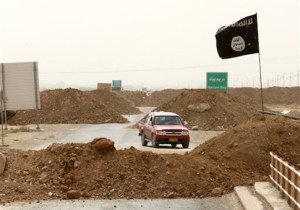
Mideast IraqIslamic State militants pass a checkpoint bearing the group’s trademark black flag in the village of Maryam Begg in Kirkuk, 290 kilometers (180 miles) north of Baghdad, Iraq / AP

Obama stated in a speech on Sept. 10 that ISIL is “not Islamic” despite the group’s use of a fundamental Islamic precept of jihad, or holy war, in expanding its reach and imposing anti-democratic, hardline Islamic sharia law in areas it now controls.

Analysts and statements by the president and other administration spokesmen also indicate the administration may not clearly understand ISIL ideology, a required first step in developing a counter to it.

The Obama administration, under pressure from domestic Muslim advocacy organizations, has adopted a politically correct approach toward Islam and terrorism that has resulted in removing mentions of Islam from its current policies and programs. Instead, counterterrorism programs and policies are carried out under the less-specific rubric of “countering violent extremism” (CVE).

******************

The Obama administration is failing to wage ideological war against Islamic State of Iraq and the Levant (ISIL or ISIS) terrorists over fears that attacking its religious philosophy will violate the constitutional divide between church and state, according to an in-depth inquiry by the Washington Free Beacon.

Instead, the task of countering what President Obama called the “warped ideology” of ISIL is being farmed out to foreign states and Muslim communities that often share some of the same goals as the groups the administration calls violent extremists. This approach allows the administration to avoid identifying links between terrorism and Islam.

“While the government has tried to counter terrorist propaganda, it cannot directly address the warped religious interpretations of groups like ISIL because of the constitutional separation of church and state,” said Quintan Wiktorowicz, a former White House counterterrorism strategist for the Obama administration.

“U.S. officials are prohibited from engaging in debates about Islam, and as a result will need to rely on partners in the Muslim world for this part of the ideological struggle,” he said in an email interview.

Is ISIL Islamic?

Obama announced last month for the first time that his new counterterrorism strategy includes programs aimed at countering ISIL’s ideology. But a review of administration efforts shows very little—if anything—is being done to defeat or destroy the terrorist group’s religious ideology in a war of ideas.

At the United Nations on Sept. 24, the president asked the world body to come up with a plan over the next year designed to counter ISIL and al Qaeda’s ideology. He said ending religious wars through an ideological campaign in the Middle East will be “generational” and led by those who live in the region. No external power, the president insisted, can change “hearts and minds,” and as a result the United States would support others in the unspecified program of “counter extremist ideology.”

The administration’s so-called soft power approach to countering Islamist terrorism also appeared to have difficulty with clearly defining the religious doctrine behind the ideology of the resurgent al Qaeda offshoot now rampaging its way across Iraq and Syria.

Obama stated in a speech on Sept. 10 that ISIL is “not Islamic” despite the group’s use of a fundamental Islamic precept of jihad, or holy war, in expanding its reach and imposing anti-democratic, hardline Islamic sharia law in areas it now controls.

Analysts and statements by the president and other administration spokesmen also indicate the administration may not clearly understand ISIL ideology, a required first step in developing a counter to it.

Sebastian Gorka, a counterterrorism specialist, said the major problem for the administration in countering ISIL ideology is that most senior officials hold “post-modern” and “secular” views.

“As a result, they have almost no ability to understand the drivers of violent terrorists which are religious,” said Gorka, the Horner chairman of military theory at the Marine Corps University.

“When you don’t take religion seriously, it’s almost impossible for you to comprehend the philosophy of a suicide bomber, or someone who cuts off the heads of people in the name of jihad,” Gorka said.

Senior State Department officials have expressed the view that ideology plays no role in Islamist terror and is spawned instead by “local grievances” such as poverty or other economic and social privation, Gorka said. “That is utterly fallacious. If that were true, half of India would be terrorists,” he said.

The latest issue of the ISIL English-language magazine Dabiq reveals some of the group’s ideology, using references to Islamic practices of jihad and sharia law. “The Islamic State has long maintained an initiative that sees it waging jihad alongside a dawah [proselytizing campaign] that actively tends to the needs of its people,” the magazine said, adding that the group “fights to defend the Muslims, liberate their lands, and bring an end to tawaghit[the evil corrupt system].”

The magazine also sought to legitimize its mass executions, beheadings, and other atrocities as religiously justified responses to all opponents who refuse to submit to its ideology.

The president stated in his Sept. 10 speech announcing the anti-ISIL strategy that the group is “not Islamic” because it kills Muslims and innocents, something he asserted no religion condones, and a claim disputed by many experts on Islam.

“I’ve studied Islam and I did not find a very peaceful religion,” said a current senior U.S. counterterrorism specialist who disagrees with the administration’s approach of not directly addressing the Islamic nature of terrorism in counter-ideology efforts.

Wictorowicz, the former counterterrorism strategist, defended the State Department approach. “Having spoken to them at length about this, their position is that Islam, as a religion, is not the issue,” he said. “It is particular interpretations of Islam that are, in part, driving support for violence.”

Not fighting a war of ideas

The Obama administration, under pressure from domestic Muslim advocacy organizations, has adopted a politically correct approach toward Islam and terrorism that has resulted in removing mentions of Islam from its current policies and programs. Instead, counterterrorism programs and policies are carried out under the less-specific rubric of “countering violent extremism” (CVE).

Discussing Islam also has been placed off limits in many government and intelligence community counterterrorism programs as a result of pressure groups and Muslim advisers who insist such topics would violate constitutional separation of church and state issues.

That pressure has inhibited the U.S. government from addressing Islamist ideology in a significant way, critics say. Instead, the government has been forced to indirectly counter claims by terrorists, such as the false notion that the United States and the West are at war with Islam. It used public diplomacy programs and global “messaging” campaigns whose effectiveness has been questionable, to try and counter such claims.

James Glassman, former undersecretary of state for public diplomacy, said “absolutely,” that the administration is hampered by concerns over First Amendment constitutional religious issues from conducting aggressive counter-ideology efforts against groups such as al Qaeda and ISIL.

“There is reticence, especially at State, to criticize a noxious political ideology based on a religion,” said Glassman, now with the American Enterprise Institute.

Glassman said from the start, Obama has played down the war of ideas in the struggle against terrorism.

During the transition from the Bush to Obama administration, “I was told by the Obama operatives assigned to State that the term ‘war of ideas’ was not to be used,” Glassman said.

“The war of ideas had been my focus at State, but the administration had no interest in continuing the work we were doing,” he said. “Ideology provides the environment and the justification for the activities of al Qaeda and ISIL. It must be dealt with—just as we dealt with communism from 1945 to 1990. It’s a long battle.”

“The way around the problem is leadership,” Glassman said. “The president needs to make clear—as President Bush did immediately after 9/11—that the terrorists have constructed a phony ideology and that they are trying to take over an entire religion.”

Obama appears to be in the early stages of doing that “but it is very late in the game and he needs to devote resources, not just words, to the war of ideas,” Glassman said.

Looking for allies

Obama told the United Nations in a speech to the General Assembly Sept. 24 that “extremist ideology” has spread despite more than a decade of military and intelligence efforts to kill al Qaeda leaders. Groups such as ISIL and al Qaeda have “perverted one of the world’s great religions,” he said.

The world, and specifically “Muslim communities,” the president said, must now take steps to “explicitly, forcefully, and consistently reject the ideology of al Qaeda and ISIL.”

However, most of the Islamic countries, such as Saudi Arabia and Turkey, so far have not denounced the ISIL ideology and do not appear to be engaged in counter-ideological campaigns designed to discredit the motivating force behind the group.

The president elaborated in the U.N. speech on his administration’s approach to countering ISIL’s message, but not its Islamist ideology. He called for a “new compact” among civilized peoples to stop the “corruption of young minds by violent ideology.”

He called for cutting off funding and contesting terrorists’ use of social media to recruit and propagandize. Additionally, he called upon religious leaders of all faiths to join together and propagate the Christian concept of “do unto thy neighbor as you would have done unto you.”

“The ideology of ISIL or al Qaeda or Boko Haram will wilt and die if it is consistently exposed, confronted, and refuted in the light of day,” Obama said.

Wiktorowicz said he agrees more needs to be done. “Not enough resources are being devoted to the counter-ideology component of the administration’s strategy,” he said. “The long war is the war against violent ideologies and there hasn’t been the resource investment since 9/11. As a result of this and other factors, we’re seeing the reincarnation of al Qaeda as ISIL in Iraq and Syria.”

Wiktorowicz also said the administration is working with partners in the Muslim world “who can push back against the ideology.”

“The Salafi jihadists, however, have assassinated and intimidated Islamic scholars and others who have spoken out against violence, increasing the danger for the brave individuals involved in the counter-ideological struggle,” he said.

A hashtag campaign

To date, the allied campaign against ISIL is limited to U.S.-led missile, drone, and air strikes against vehicles and command posts of the group in territories it controls in Iraq and Syria. The bombing has slowed but not reversed territorial gains by the group.

The Obama strategy as outlined last month will involve four elements: Air strikes; support for local forces on the ground; counterterrorism efforts to prevent ISIL attacks; and humanitarian assistance to deal with the mass of refugees fleeing ISIL control.

Under the counterterrorism program, the president declared: “Working with our partners, we will redouble our efforts to cut off its funding; improve our intelligence; strengthen our defenses; counter its warped ideology; and stem the flow of foreign fighters into and out of the Middle East.”

Asked for specifics on what the White House is doing to counter ISIL ideology, White House and National Security Council spokesmen declined to discuss the matter. Ned Price, an NSC spokesman, provided a recent White House “fact sheet” that contains no reference to counter-ideology efforts.

Price said White House counterterrorism coordinator Lisa Monaco was “too busy” to discuss the counter-ideology campaign.

The fact sheet mentions various steps being taken, including the adoption of a “whole-of-government-approach,” cutting off funds to ISIL, and preventing foreigners from joining the group. An international group called the Global Counterterrorism Forum and other, non-government organizations also are said to be focusing on unspecified efforts to prevent foreign fighters from joining ISIL.

At the State Department, a State-led interagency Center for Strategic Counterterrorism Communications is engaged in “messaging” on social media and elsewhere. But those efforts appear limited to a counter-terror Twitter feed with few followers and limited reach.

A glimpse into the center’s activity was disclosed in February by a Saudi national who said he was paid to use Twitter in an online campaign to discredit Syrian jihadists.

The Saudi said he was unemployed when he was approached with an offer of money to attend a U.S. workshop with instructors who schooled him on the covert campaign against both al Qaeda and rival ISIL in Syria. The goal was to use Twitter to link both groups to Iran and its Lebanese surrogate, Hezbollah, he said.

The training included the use of hashtags designed to expand the reach of tweets to the largest number of people, particularly women. Instructions were relayed to the Saudi from a special iPhone application downloaded from the State Department web site.

State Department spokesmen ignored repeated emails seeking comment on the counter-ideology campaign, and the department’s public affairs office blocked the Free Beacon from speaking to officials in the center, without explanation.

Ideology as the center of gravity

At the Pentagon, spokesman Adm. John Kirby told reporters two days after the president’s speech that a “purely military solution” would not be enough to destroy ISIL.

“It also is going to take the ultimate destruction of their ideology,” Kirby said.

Ideological destruction, Kirby said, will be done through “good governance” in Iraq and in Syria. “And in a responsive political process so that the people that are falling sway to this radical ideology are no longer drawn to it,” he said. “That’s really the long-term answer.”

Because ISIL is not a formal military organization but a terrorist group, its center of gravity, in military terms, is the group’s ideology, Kirby said, adding that one non-military goal is delegitimizing ISIL while using U.S. and allied forces to destroy its ability to conduct attacks and control territory in the region.

Kirby did not elaborate and referred questions to the Central Command, the military command in charge of military operations against ISIL.

Lt. Col. Steven Wollman, a Central Command spokesman, said the command’s counter ideology efforts against ISIL are focused on exposing al Qaeda and ISIL “fallacies, particularly their incongruity with Islam and their penchant for violence, crime, and terror.”

“We demonstrate that despite their claims of creating a Caliphate for the good of the Muslim world their sole method is violence and only violence which has no positive short term or long term impact on the population,” Wollman said in a statement to the Free Beacon.

“To do so we highlight their total disregard for basic human needs and desires such as education, medical care, a free press, use of tobacco, and an expectation of freedom of choice.”

Additionally, the command said ISIL’s use of extreme violence such as beheadings, mass executions, and rape are “totally out of line of any Islamic teachings,” an aspect highlighted to local and regional audiences.

Terrorist groups also are using all forms of communication, including social media to recruit, fundraise, and spread violent ideology, Wollman said.

“It would be inappropriate to disclose all the specifics of what we are currently doing to counter the al Qaeda and ISIL fallacies campaign, but I can tell you that this command’s information operations activities are focused on foreign audiences across the region,” Wollman said, adding that message dissemination includes website, social media, print media, radio, and television in local languages.

“We align our efforts with other U.S. government agencies, and often are in direct support of U.S. ambassadors and with the knowledge of our partnered nations,” he said.

Additionally, “all of this is conducted by, with, and through our partner nations, often with our partner’s face on the message,” Wollman said.

“We also conduct training on how to combat extremist ideologies with our regional partner nations, as part of Foreign Internal Defense, Security Force Assistance, Building Partner Capacity, and other State Department-led activities.”

‘We won that battle already’

The administration’s point man for propaganda and so-called “soft power,” Rick Stengel, a former Time magazine reporter who is now undersecretary for public diplomacy, said in a recent speech that the administration is not trying to wage a war of ideas against ISIL.

“I would say that there is no battle of ideas with ISIL,” Stengel said. “ISIL is bereft of ideas, they’re bankrupt of ideas. It’s not an organization that is animated by ideas. It’s a criminal, savage, barbaric organization—I feel like we won that battle already.”

However, ISIL and its supporters are using social media effectively both to promote their Islamic-centered ideology and to recruit both foreign and regional fighters to their cause.

Twitter and Facebook have cracked down on ISIL supporters since the new counterterrorism campaign began last month. But the group has found ways to circumvent the crackdown, through innovative ways of creating new social media accounts.

In fact, the group has been so successful online that U.S. and foreign intelligence agencies have been able to use information publicly available on the Internet to track and identify ISIL targets for bombing. In response, ISIL supporters on Twitter and Facebook have launched a campaign to limit the information about the group online to undermine the bombing strikes.

ISIL also uses social media to link to recruitment videos and publications that, according to U.S. officials, have gained wide circulation.

All the videos and publications highlight the group’s adherence to Islamic principles.
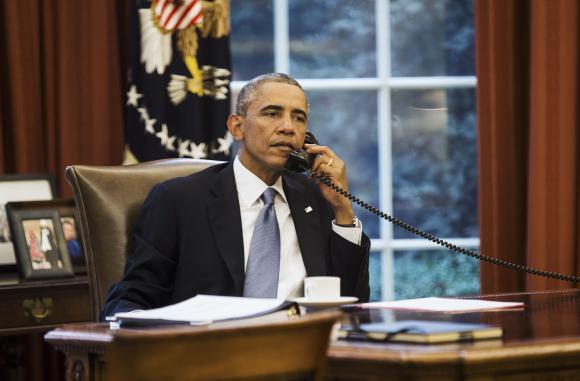
Changing only our rules of engagement won’t help much – Updated October 6th

October 6, 2014

Changing only our rules of engagement won’t help much – Updated October 6th, Dan Miller’s Blog, October 6, 2014

(The rather “defeatist” views expressed here are mine and do not necessarily reflect those of Warsclerotic. — DM)

I posted this article from Israel Hayom at Warsclerotic, of which I am an editor. The article argues that to fight the Islamic State we need to change our rules of engagement. The parenthetical comment at the top of the Warsclerotic post is mine and is reproduced below.

(Could the U.S. and her allies put effective boots on the ground, or have the boots and the nation become too multiculturally damaged to do what needs to be done? More than the rules of war needs to change.

When the U.S. responded to the Russian supplied, trained and initially led North Korean invasion on June 25, 1950, we had been at peace for only five years. We were tired and wanted peace to continue but war came to us unexpectedly; it should have been expected. Our peacetime boots were badly supplied, trained and, more often than not, led. Some but not enough officers and senior noncoms had experienced war and knew what to do. Very few in the lower enlisted ranks had or did and “bug out” became a much used phrase. The NK troops had been hardened in combat, were adequately supplied, well trained and well led. Those who did not fight were executed. They pushed us back nearly to Pusan. By mid-September, we had more better led and trained troops; they had also become very angry at the NK troops, and intense anger is a powerful force multiplier. The NK tide was reversed, for a couple of years.

Were we now to try to put green boots on the ground to do what is necessary against well trained, led and financed Islamic troops, a  majority  of the public would oppose it and it would be politically unpopular. Were we to put boots on the ground anyway, they would likely need to undergo lengthy and deadly immersion-style baptism by fire. There would be substantial casualties and the opposition would increase.

Should we do it anyway if only the rules of engagement change? Can we, or is that now a fantasy? — DM)

Can the Obama Nation field a well trained, led and supplied contingent, of adequate size, to defeat the “non-Islamic” Islamic State, its cohorts and friends? Or are we too multicultural and decadent? Is our multicultural focus more on such nonsense as, for only one example, “gender equality” in the military than on winning wars?

I have few if any concerns about real gender equality. Kurdish women fighting against the Islamic State have disabused me of most that I once had. Please watch the video embedded below. One of the commanders was asked why she joked and smiled when around her troops. She answered, “I have to in order to keep their morale high.” That is a statement one would expect from a seasoned and competent commander.

However, when politically correct gender “equality” means that military training and other standards are lowered so that young ladies can serve, it becomes gender inequality and diminishes the effectiveness of our military. It would be only slightly less absurd, and only slightly less dangerous — to them and to those around them — to send such green “boots” on the ground into combat wearing high heel shoes and carrying only their purses.

Compare the Kurdish women fighters to this specimen of our deranged, multicultural and politically correct society:

Back to the Korea “police action:” President Truman had served in World War I as an artillery battery commander and rose to colonel in the reserves. Although a far from perfect Commander in Chief, he knew more about war than Obama could ever learn. Obama has no desire to learn; the “smartest person” in any room, He commonly ignores advice from those who have learned. Truman knew about the need for good military discipline, Obama has very little discipline himself and does not.

We fared poorly during the June 25 through mid-September period in South Korea. Could we now expect green boots on the ground to do even as well if plucked from a peaceful, multicultural environment and sent to fight against the Islamic State, et al, no less brutal than were the North Korean and later Chinese forces? Is there sufficient reason to try, now, even though our “kinetic activity” can not be successful with air power alone?

Do we even know the enemy, when Obama and others continue to refer to Islam as the “Religion of Peace” and praise its contributions to American culture? From Obama’s 2014 Eid Greeting:

While Eid marks the completion of Ramadan, it also celebrates the common values that unite us in our humanity and reinforces the obligations that people of all faiths have to each other, especially those impacted by poverty, conflict, and disease.

In the United States, Eid also reminds us of the many achievements and contributions of Muslim Americans to building the very fabric of our nation and strengthening the core of our democracy. [Emphasis added.]

When the Islamic State is erroneously deemed non-Islamic? When we continue to label Islamic terrorism at home as “workplace violence?” When, shortly after the recent Oklahoma beheading by an Islamist, Obama sends a special messenger from the White House to deliver a belated note of thanks to the mosque he attended for “helping rebuild the Moore community after a destructive tornado tore through the city in 2013.” [Emphasis added.]

Your service is a powerful example of the powerful roots of the Abrahamic faiths and how our communities can come together with shared peace with dignity and a sense of justice,” President Barack Obama said.

The Imam, the leader of the prayer service, stated during his sermon that the Muslim faith has been called a “cancer that needs to be cut off from the American society.

It seems unlikely, at best, that we — or at least too many of us — know the enemy that cannot be named.

According to the linked Israel Hayom article,

Islamic State is not an organization that can be defeated with slow, uncertain, limited action. It cannot be defeated without “boots on the ground.” It is imperative to hit them with force; with waves of growing intensity. They must be attacked continuously, without breaks, without cease-fires and with the utmost determination. [Emphasis added.]

I agree, and wish that we could field a fighting force of that caliber to move quickly and effectively, before too many get clobbered and before we have to bring them all home, many in body bags. We seem less able to do that now than we were during the opening months of the “police action” in Korea. Since we can’t defeat the Islamic State, et al, with “slow, uncertain, limited action,” can we dispatch boots in the tens of thousands to do the job effectively? For the reasons suggested above, that seems even less likely.

Unfortunately, fantasy now trumps reality; until that changes, we should not send green boots into combat; we have few others to send. We. Are. Screwed.