Archive for the ‘Obama’ category

Obama’s Iranian-nuclear strategy brings dividend: Rev Guards lead military assault on Tikrit

March 4, 2015

Obama’s Iranian-nuclear strategy brings dividend: Rev Guards lead military assault on Tikrit, DEBKAfile, March 4, 2015

(Please see also The World Bows to Iranian Regional Hegemony and Should We Give Up on the Iraqi Army? — DM)

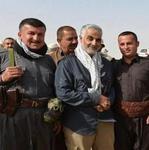
General_Qassam_Suleimani_IRAQ_1.15Iranian Gen. Qassem Soleimani on Tikrit battlefront

US President Barack Obama’s plans for Iran, which were spectacularly challenged by Binyamin Netanyahu in his Congress speech Tuesday, March 3, were manifested 10,000 kilometers from Washington in the firestorm over Tikrit, the important Sunni town north of Baghdad. There, Iranian-led Iraqi troops are on the offensive against the Islamic State in the biggest ground battle fought in Iraq since the Iraqi army fell apart and scattered last June against the conquering Islamist march through western and central Iraq.

For four reasons, this battle is loaded with ramifications for Obama’s Iran policy and the Islamic Republic’s drive for recognition as the leading Middle East power:

1.   For Tehran it is a high-stake gamble for prestige, Its top military strategist, Al Qods Brigades chief Gen. Qassem Soleimani, was thrown into the Tikrit operation, to become the first high-ranking general Iran has ever placed publicly up front in direct command of a key battle as a guarantee of its success.

2.  However, three days after the offensive was launched on Sunday, March 1, the 25,000 Iranian and Iraqi troops, backed by Iraqi Shiite militias, were still fighting outside its gates, upsetting the high hopes of a swift victory and breakthrough into the city.

Islamist forces slowed their advance by strewing hundreds of mines and roadside bombs on all the roads leading to Tikrit, while teams of suicide bombers jumped out and blew themselves up amidst the invading army – a tactic seen before in the battle for the Syrian Kurdish town of Kobani.
ISIS boasted that one of the suicide bombers was an American citizen whom they dubbed “Abu Dawoud al-Amriki.”

3.  The United States has no military input in the battle – neither US advisers on the ground nor aerial bombardment. On Tuesday, March 3, while Netanyahu was advising Congress in reference to the relative merits of radical Iran and ISIS that “the enemy of your enemy is the enemy,” Gen. Martin Dempsey, Chairman of the US Joint Chiefs of Staff, revealed some of the Obama administration’s thinking on the subject.

He said Iran and its allies (Iraqi Shiite militias) had taken part in the Iraq war ever since 2004. “But the Tikrit campaign signals a new level of involvement,” he said. “This is the most overt conduct of Iranian support in the form of artillery and other things” and “…could turn out to be a positive thing.”

These comments corroborated DEBKAfile’s disclosures on the US-led war on ISIS, which defined America as confining itself to air strikes over Iraq and Syria and assigning the brunt of the ground war to Iran’s Revolutionary Guards forces – a division of labor, which Israeli military chiefs watch with increasing concern as it brings the Iranian peril closer than ever to Israel, DEBKAfile’s military sources report.

The Iraq format is replicated in southern Syria, where the same Gen. Soleimani, joined by a group of fellow Iranian generals, is leading an operation to seize that part of the country from Syrian rebel hands, including the Golan town of Quneitra .

4. The role Obama has assigned Iran in the two embattled Middle East countries bears directly on the scope of his concessions in the bargaining for a comprehensive nuclear deal.

The World Bows to Iranian Regional Hegemony

March 4, 2015

The World Bows to Iranian Regional Hegemony, Asia Times Online via Middle East Forum, David P. Goldman, March 4, 2015. Originally published under the title, “World Bows to Iran’s Hegemony.”
1025The looming nuclear agreement is a dark cloud for countries within range of Iranian ballistic missiles.

The powers of the world hope to delay, but not deter, Iran’s eventual acquisition of nuclear weapons.

The US has tacitly accepted the guiding role of Iranian commanders in Iraq’s military operations against ISIS.

Washington destroyed the balance of power that defined the region’s politics when it pushed through majority rule in Iraq.

****************

The problem with Israeli Prime Minister Benyamin Netanyahu’s address to Congress March 3 was not the risk of offending Washington, but rather Washington’s receding relevance. President Barack Obama is not the only leader who wants to acknowledge what is already a fact in the ground, namely that “Iran has become the preeminent strategic player in West Asia to the increasing disadvantage of the US and its regional allies,” as a former Indian ambassador to Oman wrote this week.

For differing reasons, the powers of the world have elected to legitimize Iran’s dominant position, hoping to delay but not deter its eventual acquisition of nuclear weapons. Except for Israel and the Sunni Arab states, the world has no desire to confront Iran. Short of an American military strike, which is unthinkable for this administration, there may be little that Washington can do to influence the course of events. Its influence has fallen catastrophically in consequence of a chain of policy.

The best that Prime Minister Netanyahu can hope for is that the US Congress will in some way disrupt the Administration’s efforts to strike a deal with Iran by provoking the Iranians. That is what the White House fears, and that explains its rage over Netanyahu’s appearance.

Tehran may overplay its hand, but I do not think it will. The Persians are not the Palestinians, who discovered that they were a people only a generation ago and never miss an opportunity to miss and opportunity; they are ancient and crafty, and know an opportunity when it presents itself.

Most of the world wants a deal, because the alternative would be war. For 10 years I have argued that war is inevitable whatever the diplomats do, and that the question is not if, but how and when. President Obama is not British prime minister Neville Chamberlain selling out to Hitler at Munich in 1938: rather, he is Lord Halifax, that is, Halifax if he had been prime minister in 1938. Unlike the unfortunate Chamberlain, who hoped to buy time for Britain to build warplanes, Halifax liked Hitler, as Obama and his camarilla admire Iran.

China is Chamberlain, hoping to placate Iran in order to buy time. China’s dependence on Middle East oil will increase during the next decade no matter what else China might do, and a war in the Persian Gulf would ruin it.

Until early 2014, China believed that the United States would guarantee the security of the Persian Gulf. After the rise of Islamic State (ISIS), it concluded that the United States no longer cared, or perhaps intended to destabilize the region for nefarious reasons. But China does not have means to replace America’s presence in the Persian Gulf. Like Chamberlain at Munich, it seeks delay.

Obama, to be sure, portrays his policy in the language of balance of power. He told the New Yorker’s David Remnick in 2014,

It would be profoundly in the interest of citizens throughout the region if Sunnis and Shias weren’t intent on killing each other. And although it would not solve the entire problem, if we were able to get Iran to operate in a responsible fashion – not funding terrorist organizations, not trying to stir up sectarian discontent in other countries, and not developing a nuclear weapon – you could see an equilibrium developing between Sunni, or predominantly Sunni, Gulf states and Iran in which there’s competition, perhaps suspicion, but not an active or proxy warfare.

That, as the old joke goes, is the demo version.

On the ground, the US has tacitly accepted the guiding role of Iranian commanders in Iraq’s military operations against ISIS. It is courting the Iran-backed Houthi rebels who just overthrow a Saudi-backed regime in Yemen. It looks the other way while its heavy arms shipments to the Lebanese army are diverted to Hezbollah.

At almost every point at which Iran has tried to assert hegemony over its neighbors, Washington has acquiesced. “In the end, peace can be achieved only by hegemony or by balance of power,” wrote Henry Kissinger. The major powers hope for peace through Iranian hegemony, although they differ in their estimate of how long this will last.

Apart from its nuclear ambitions, the broader deal envisioned by Washington would leave Iran as a de facto suzerain in Iraq. It would also make Iran the dominant power in Lebanon (via Hezbollah), Syria (via its client regime) and Yemen (through its Houthi proxies). Although Sunni Muslims outnumber Shi’ites by 6:1, Sunni populations are concentrated in North Africa, Turkey and South Asia. Iran hopes to dominate the Levant and Mesopotamia, encircling Saudi Arabia and threatening Azerbaijan.

It is grotesque for America to talk of balance of power in the Persian Gulf, because America destroyed the balance of power that defined the region’s politics from the end of the First World War until 2006, when Washington pushed through majority rule in Iraq.

The imperialist powers in their wisdom established a power balance on two levels. First, they created a Sunni-dominated state in Iraq opposite Shi’ite Iran. The two powers fought each other to a standstill during the 1980s with the covert encouragement of the Reagan administration. Nearly a million soldiers died without troubling the world around them.

Second, the Sykes-Picot agreement of 1916 created two states, Syria and Iraq, in which minorities ruled majorities – the Alawite minority in Syria, and the Sunni minority in Iraq. Tyranny of a minority may be brutal, but a minority cannot exterminate a majority.

America’s first great blunder was to force majority rule upon Iraq. As Lt General (ret.) Daniel Bolger explained in a 2014 book,

The stark facts on the ground still sat there, oozing pus and bile. With Saddam gone, any voting would install a Shiite majority. The Sunni wouldn’t run Iraq again. That, at the bottom, caused the insurgency. Absent the genocide of Sunni Arabs, it would keep it going.

Under majority Shi’ite rule, Iraq inevitably became Iran’s ally. Iranian Revolutionary Guards are now leading its campaign against the Sunni resistance, presently dominated by ISIS, and Iranian officers are leading Iraqi army regulars.

This was the work of the George W Bush administration, not Obama. In its ideological fervor for Arab democracy, the Republicans opened the door for Iran to dominate the region. Condoleezza Rice, then Bush’s National Security Advisor, proposed offering an olive branch to Iran as early as 2003. After the Republicans got trounced in the 2006 Congressional elections, defense secretary Donald Rumsfeld got a pink slip, vice president Dick Cheney got benched, and “realist” Robert Gates – the co-chairman of the 2004 Council on Foreign Relations task force that advocated a deal with Iran – took over at Defense.

China and Russia

In the past, China has sought to strike a balance between Saudi Arabia and Iran with weapons sales, among other means. One Chinese analyst observes that although China’s weapons deliveries to Iran are larger in absolute terms than its sales to Saudi Arabia, it has given the Saudis its best medium-range missiles, which constitute a “formidable deterrent” against Iran.

1026A Chinese warship arrives in Bandar Abbas, Iran in September 2014.

As China sees the matter, its overall dependency on imported oil is rising, and the proportion of that oil coming from Iran and its perceived allies is rising. Saudi Arabia may be China’s biggest provider, but Iraq and Oman account for lion’s share of the recent increase in oil imports. China doesn’t want to rock the boat with either prospective adversary.

Among the world’s powers, China is the supreme rationalist: it views the world in terms of cold self-interest and tends to assume that others also view the world this way. One of China’s most respected military strategists told me bluntly that the notion of a nuclear exchange between Israel and Iran (and by implication any regional nuclear power and Iran) was absurd: the Iranians, he argued, know that a nuclear-armed Israel could destroy them in retaliation.

Other Chinese analysts are less convinced and view Iran’s prospective acquisition of nuclear weapons with trepidation. It is not only war with Israel but with Saudi Arabia that concerns the oil-importing Chinese. For the time being, Beijing has decided to accommodate Iran. In a March 2 commentary, Xinhua explicitly rejected Israeli objections:

The US Congress will soon have a guest, Israeli Prime Minster Benjamin Netanyahu, who is expected to try to convince lawmakers that a deal with Iran on its nuclear program could threaten the very existence of the Jewish state.

Despite the upcoming pressure, policymakers in Washington should have a clear mind of the potential dangers of back-pedaling on the current promising efforts for a comprehensive deal on the Iranian nuclear issue before a March 31 deadline …

With a new round of talks in Switzerland pending, it is widely expected that the P5+1 [the five permanent members of the UN Security Council plus Germany] could succeed in reaching a deal with Iran to prevent the latter from developing a nuclear bomb, in exchange for easing sanctions on Tehran.

The momentum does not come easy and could hardly withstand any disturbances such as a surprise announcement by Washington to slap further sanctions on Tehran.

The Obama administration needs no outside reminder to know that any measures at this stage to “overwhelm” Iran will definitely cause havoc to the positive atmosphere that came after years of frustration over the issue.

While it is impossible for Washington to insulate itself from the powerful pro-Israel lobbyist this time, the US policymakers should heed that by deviating from the ongoing endeavor on Iran they may squander a hard-earned opportunity by the international community to move closer to a solution to the Iran nuclear issue, for several years to come if not forever.

Russia has taken Iran’s side explicitly, for several reasons.

First, Russia has stated bluntly that it would help Iran in retaliation for Western policy in Ukraine, as I wrote in this space January 28. Second, Russia’s own Muslim problem is Sunni rather than Shi’ite. It has reason to fear the influence of ISIS among its own Muslims. If Iran fights ISIS, it serves Russian interests. Russia, to be sure, does not like the idea of a nuclear power on its southern border, but its priorities place it squarely in Iran’s camp.

Demographic Time Bomb

The Israeli prime minister asserted that the alternative to a bad deal is not war, but a better deal. I do not think he believes that, but Americans cannot wrap their minds around the notion that West Asia will remain at war indefinitely, especially because the war arises from their own stupidity.

Balance of power in the Middle East is inherently impossible today for the same reason it failed in Europe in 1914, namely a grand demographic disequilibrium: Iran is on a course to demographic disaster, and must assert its hegemony while it still has time.

Game theorists might argue that Iran has a rational self-interest to trade its nuclear ambitions for the removal of sanctions. The solution to a multi-period game – one that takes into account Iran’s worsening demographic weakness – would have a solution in which Iran takes great risks to acquire nuclear weapons.

Between 30% and 40% of Iranians will be older than 60 by mid-century (using the UN Population Prospect’s Constant Fertility and “Low” Variants). Meanwhile, its military-age population will fall by a third to a half.

Belated efforts to promote fertility are unlikely to make a difference. The causes of Iranian infertility are baked into the cake – higher levels of female literacy, an officially-sanctioned culture of sexual license administered by the Shi’ite clergy as “temporary marriage,” epidemic levels of sexually-transmitted disease and inbreeding. Iran, in short, has an apocalyptic regime with a lot to be apocalyptic about.

Henry Kissinger is right: peace can be founded on either hegemony or balance of power. Iran cannot be a hegemon for long because it will implode economically and demographically within a generation. In the absence of either, the result is war. For the past 10 years I have argued in this space that when war is inevitable, preemption is the least damaging course of action. I had hoped that George W Bush would have the gumption to de-fang Iran, and was disappointed when he came under the influence of Condoleezza Rice and Robert Gates. Now we are back in 1938, but with Lord Halifax rather than Neville Chamberlain in charge.
IRGC Navy Commander Ali Fadavi Presents New “Strategic” Weapon, Says: We Have Deterred America

March 4, 2015

IRGC Navy Commander Ali Fadavi Presents New “Strategic” Weapon, Says: We Have Deterred America, MEMRI Videos via You Tube, March 4, 2015


Should We Give Up on the Iraqi Army?

March 4, 2015

Should We Give Up on the Iraqi Army? The Daily BeastPeter W. Galbraith, March 4, 2015

(Please see also Video shows abandoned Iraqi Security Forces armored vehicles near Ramadi.– DM)

1425464112618.cachedSgt. Shawn Miller/US Army

In Baghdad’s Firdos Square, where in 2003 U.S. Marines helped Iraqis topple the statue of Saddam Hussein, there is now a billboard featuring Iran’s Supreme Leader Ayatollah Khameini.

**********************

The U.S. is training a national army for a nation that does not exist.

The Iraqi Army and Shiite militias have now launched an operation to retake Tikrit, a Sunni city 95 miles north of Baghdad that was Saddam Hussein’s hometown. The Americans are standing back. The U.S.-led coalition air forces are not flying missions in support because this is essentially an Iranian-organized and -led operation dominated by Shiite militias that answer to Tehran as much as Baghdad. This may be the shape of things to come.

In mid-February, a Pentagon official made headlines by announcing an April-May time frame for an Iraqi offensive to take Mosul from the so-called Islamic State. Mosul is the second-largest city in Iraq. As The Daily Beast reported last week, the Pentagon now says the April/May date is no longer operative. The Iraqi Army, it was explained, is not ready.

It may never be ready.

1425464110516.cachedStaff Sgt. Tanya Thomas/US Army

At the beginning of 2014, the Iraqi Army comprised 17 divisions. By the end of the year, it was at most seven divisions, possibly as few as five. And, even at full strength, the Iraqi Army was not much of a fighting force.

In spite of outnumbering the ISIS attackers by a ratio of between 10/1 and 15/1, the Iraqi Army lost Mosul in just 10 hours on June 10, 2014. The ISIS forces came to Mosul in pickup trucks. The defenders had armored American Humvees, tanks, helicopters, artillery, and advanced rifles, all of which ended up in ISIS’s hands. Two months later, ISIS used these American weapons to attack the Kurds. The United States, which provided weapons worth billions to the Iraqi Army, is now spending hundreds of millions on airstrikes to destroy them.

Pentagon planners understand the deficiencies of the Iraqi Army. It is disorganized, poorly led, politicized, corrupt, and plagued by sectarian and ethnic divisions. But, where they go wrong is to imagine that these problems can be corrected with better leadership, training, and a policy of inclusiveness towards disaffected Sunnis and Kurds.

In fact, the problems of the Iraqi Army reflect the problems of Iraq where Shiites and Sunnis don’t agree on what it means to be Iraqi and where the Kurds unanimously don’t want to be Iraqi at all. The deficiencies of the army cannot be corrected because they reflect the realities of the society.

The Obama administration and virtually all American foreign policy experts blame former Iraqi Prime Minister Nouri al Maliki’s sectarian policies for contributing to the rise of ISIS. In this telling, Maliki alienated Sunnis by breaking promises to include the Sons of Iraq (the Sunni militia that was key to the defeat of al Qaeda in 2007) in the Iraqi Army, by appointing Shiite loyalists as top officers, and by marginalizing Sunnis in the army, government, and society. Maliki’s administration was sectarian, corrupt and ineffective. But, he may have been right about the Sunnis.

George W. Bush engineered a revolution in Iraq, albeit apparently unaware that he was doing so. The 2003 invasion ended 80 years of Sunni Arab dictatorships and replaced them with democratically elected governments. In each of the elections held since 2005, Iraqi Shiites voted overwhelmingly for Shiite religious parties.

Sunnis, even the many who are not particularly religious, do not accept that the Iraqi identity should be defined in a way that excludes them or treats them as a minority. Many Sunnis believe that Iraq’s new rulers are more loyal to their Shiite co-religionists in Iran than they are to Iraq.

Iran’s decades-long sponsorship of Iraq’s Shiite parties, including the Dawa party of both Maliki and current Prime Minister Haider al Abadi—reinforces Sunni perceptions, which, in any event, may not be wrong. In Baghdad’s Firdos Square, where in 2003 U.S. Marines helped Iraqis topple the statue of Saddam Hussein, there is now a billboard featuring Iran’s Supreme Leader Ayatollah Khameini.

As the Shiites see it, the Sunnis have refused to accept majority rule. They remember—as American planners seem to have forgotten—that Sunni tribal leaders welcomed and supported the al Qaeda extremists who, between 2003 and 2006, assassinated Shiite clerics, massacred Shiite pilgrims, and bombed markets and bus stations in Shiite cities and towns.

The Sunnis turned against al Qaeda not out of revulsion with the killing of Shiites or because they wanted reconciliation, but rather because the extremists had turned on the tribal leaders. When al Qaeda demanded money, daughters and fealty, the Sunni sheikhs had enough. Helped with American cash, they formed militias that finished off al Qaeda in Mesopotamia in a matter of months.

Maliki understood full well that there was no genuine reconciliation between the Shiite religious parties and the Sunnis. He minimized the Sunni role in the Iraqi Army (and central government) because he saw no value in incorporating Sunnis into an army whose primary mission is to protect a Shiite state from Sunnis. And, he was not wrong in his judgment.

When ISIS approached Mosul, some Sunni officers and troops acted as a fifth column providing intelligence and weapons to the attackers. Sunni soldiers who surrendered either went home or joined ISIS. The Shiite commanders fled to nearby Kurdistan, leaving Shiite recruits to face torture and execution (all recorded in videos) at the hands of ISIS.

Ever since Bush’s administrator in Iraq, L. Paul Bremer III, dissolved Saddam Hussein’s army in 2003, the United States has struggled to create an effective Iraqi army. It is impossible to build a real national army when Iraqis do not have a shared idea of the nation and when its components see each other as the enemy.

There are, of course, effective fighting forces in Iraq that are combatting ISIS. The Kurdistan Peshmerga pushed ISIS out of territory it took in August and continue to battle ISIS around Kirkuk, Makhmur, and Mosul. The Kurds have sustained nearly 1,000 casualties and, supported by American close air support, inflicted many times that number on ISIS.

The Kurds, of course, are motivated to defend Kurdistan. They may support a Mosul operation from their territory, but they have made it clear that they will not sacrifice Kurdish lives in a Sunni Arab city or on behalf of a country, Iraq, that they don’t want to be part of.

Shiite militias—armed and, in some cases, led by the Iranians—defended Baghdad and Samarra (home to an important Shiite shrine) last summer. More recently, they have pushed ISIS out of villages in religiously and ethnically mixed Diyala province (sometimes clashing with Peshmerga units).

The Iraqi Army itself is increasingly a sectarian institution. Ironically, this may make it a more effective fighting force. Sunni Arabs who remain in the army are reluctant to sacrifice their lives on behalf of a Shiite state, especially if it means fighting against fellow Sunnis. (Many recruits signed up not to defend Iraq but for a salary, which also contributes to a reluctance to get killed.) By contrast, the Shiite militias fought hard in 2014 to defend their homes and their religion. To the extent that the Iraqi Army becomes more like a Shiite militia (albeit paid and better armed), it may share the militias’ zeal.

The Pentagon still sees the Iraqi Army as a national institution and, as a result, provides it with the lion’s share of U.S. military assistance. Seeing it as another of the ethnic and sectarian forces in Iraq is probably more realistic and may lead to a more effective distribution of weaponry. Currently, more U.S. weapons go to an Iraqi Army that is not ready to fight than to a Kurdistan Pershmerga that is fighting. (Iran supplies the Shiite militias as part of the informal division of labor among the anti-ISIS forces.)

If the offensive against Tikrit now underway should fail (and the Iraqi Army has had considerable difficulty trying to take even some small villages adjacent to a large air base in Anbar province), it will not auger well for a Mosul campaign.

But, success in Tikrit will not necessarily translate into success in Mosul. A foreign army—and this is exactly how Mosul’s Sunnis will see the Iraqi Army—fighting house to house in a city of 3 million is certain to kill a lot of civilians even if the Army behaves well, which is unlikely.

Should it lose Mosul, ISIS would still have substantial territory in Iraq, a pool of resentful Sunnis and a sanctuary in Syria.

In a deeply divided Iraq, a successful government offensive to take Mosul may not solve much.

Bad Ideas Breed Bad Foreign Policy

March 4, 2015

Bad Ideas Breed Bad Foreign Policy, Front Page Magazine, March 4, 2015

201113jobs

The triumph of secularization has disarmed us in the fight against modern jihadism. No matter how often jihadists evoke the religious foundations of their actions, no matter how many Koranic verses and Hadith they quote, we cannot imagine a people for whom the spiritual realm is more real than the material world. We cannot imagine a life permeated with the divine and directed by submission––what “Islam” literally means––to Allah and the model of Mohammed. We ignore, as Bernard Lewis has written, the fact that “in most Islamic countries, religion remains a major political factor,” for “most Muslim countries are still profoundly Muslim, in a way and a sense that most Christian countries are no longer Christian.” Hence the worldwide Muslim support for shari’a law and its codified sexism, intolerance, and penal cruelty.

**********************

Barack Obama’s foreign policy will go down in U.S. history as one of the most dangerously inept ever. Created by equal amounts of ignorance, arrogance, and partisan politics, the president’s policies have left behind a world in which rivals and enemies are on the march, while allies and friends are endangered and alienated. He deserves the opprobrium with which future history should load him.

But focusing on individuals and their personal flaws can prevent us from seeing the larger bad ideas that transcend any one person or party. We justly remember British Prime Minister Neville Chamberlain as the architect of the 1938 Munich conference that paved the way for Hitler’s aggression. And indeed, Chamberlain’s flaws of character––most important a vanity about his personal powers of persuasion that blinded him to Hitler’s brilliant diplomatic misdirection about his true intentions––contributed to that debacle. But we should also remember the delirious public joy that greeted Chamberlain when he returned to England, and the global acclaim he received for avoiding war with Germany. Millions of people thought Chamberlain had heroically succeeded because many shared the assumptions and ideas that drove his decisions.

So too today, Obama’s vanity and self-regard have from the beginning led to dangerous foreign policy decisions. His belief that he was a global “transformational” and “world-historical” figure drove him to court inveterate enemies like Iran, the Taliban, and the Muslim Brothers, who he mistakenly believed would be seduced by his brilliance and sympathy for their grievances. His fatuous Cairo speech in 2009 and his numerous groveling letters to Iran honcho Ayatollah Khamenei were predicated on Obama’s notion that as a person “of color,” who had spent a few childhood years in a Muslim country and was ashamed of America’s global sins, he had an instant rapport with hard, cruel men who despise the West as “Crusaders,” godless infidels to be conquered, converted, or killed. Indeed, Obama’s delusional self-estimation recalls Chamberlain’s comments to his cabinet that in the negotiations over Czechoslovakia “Hitler was speaking the truth,” and that “he had established some degree of personal influence over Herr Hitler.” Herr Hitler, in fact, considered Chamberlain “a little worm.”

But beyond these failures of character and self-knowledge, larger cultural ideas have contributed to this country’s mistakes in dealing with a resurgent Islamic jihad. Most important has been the triumph of secularism in the West, the marginalization of religion in our politics and culture. Anyone who believes the received wisdom that the U.S. is a religious country should ignore the polling data on churchgoing and look instead at our public culture. Sordid sexual content in movies, television shows, and popular music; 58 million abortions since 1973; the legitimization of same-sex marriage; the incessant demonization of any participation of religion in schools or politics––all bespeak a culture in which religion has been reduced to a private life-style choice and comforting holiday rituals, as Obama suggested when he reduced the First Amendment’s protection of religion to the “freedom to worship.” Anyone who does take Christianity or Judaism more seriously than that is considered, to quote Polish poet Czeslaw Milosz, “shamans or witch doctors from savage tribes whom one humors until one can dress them in trousers and send them to school.”

More important, the animus against faith has contributed to the fashionable self-loathing and dislike of their home country on the part of many progressives and leftists, who have implicated Christianity in the crimes of capitalism, colonialism, and imperialism. Hence Obama’s bringing up and distorting the history of the Crusades and the Spanish Inquisition in a speech about religious violence. Meanwhile, a noble-savage multiculturalism masquerading as tolerance for the oppressed “other” considers Islam an exotic “religion of peace,” despite its 14 centuries of slaughter, invasion, pillage, slaving, occupation, and colonization. Those tolerant Muslims of Granada in 1066 killed as many Jews in one day as the Spanish Inquisition did in its 3 centuries of existence.

The triumph of secularization has disarmed us in the fight against modern jihadism. No matter how often jihadists evoke the religious foundations of their actions, no matter how many Koranic verses and Hadith they quote, we cannot imagine a people for whom the spiritual realm is more real than the material world. We cannot imagine a life permeated with the divine and directed by submission––what “Islam” literally means––to Allah and the model of Mohammed. We ignore, as Bernard Lewis has written, the fact that “in most Islamic countries, religion remains a major political factor,” for “most Muslim countries are still profoundly Muslim, in a way and a sense that most Christian countries are no longer Christian.” Hence the worldwide Muslim support for shari’a law and its codified sexism, intolerance, and penal cruelty.

Given this failure of imagination, we have misunderstood jihadism ever since it burst onto the global scene in 1979 with the Iranian Revolution, when our foreign policy establishment ignored or dismissed its religious roots. Thirty-five years later, Obama continues the same mistake, refusing to identify ISIS as an expression of Islamic doctrine, or to use the adjective “Islamic” to describe the numerous jihadist movements active today, or to recognize the apocalyptic messianism and genocidal aims of the Iranian mullahcracy. This blindness reflects widespread delusions like the long mischaracterization of Islam as the “religion of peace,” the reinterpretation of jihad to mean a self-improving “inner struggle,” or the historical fantasies of Islamic “tolerance” in Ottoman Turkey or Andalusian Spain.

Behind this Orwellian rhetoric lies the assumption that all religions are basically the same and preach the same doctrines of “love thy neighbor” and “do unto others as you would have them do unto you.” This reduction of religion to Hallmark-card sentimentalism is yet another instance of the refusal to take spirituality seriously, and to acknowledge that all spiritual aims are not the same or compatible. How much easier it is to indulge a flabby ecumenicalism and dismiss the jihadists as “evil” or “barbaric,” as though we are dealing with psychopathic serial killers rather than fervent believers in a worldwide faith with doctrines and practices dating back to the 7th century.

Finally, the dismissal of spiritual causes leads us to focus on material ones, which in turn creates the preposterous analyses of jihadism as a reflection of material conditions or psychological dysfunctions created by them. Hence this administration recently has talked about “root causes” like “lack of opportunity for jobs” (State Department spokesman Marie Harf); the need for “peaceful democratic change” and “economic growth and devoting more resources on education, including for girls and women” (Barack Obama); “alienation, poverty, thrill-seeking, and other factors” (John Kerry); and “the perceived effect of U.S. foreign policy in the Muslim world” (Rashad Hussain, recently named Obama’s Special Envoy and Coordinator for Strategic Counter-terrorism Communications), to name a few.

Yet even some Christian and observant Jewish conservatives have ignored the power of spiritual imperatives and religious differences, particularly in their focus on democracy promotion as the cure for jihadist terror. George W. Bush, in his 2002 National Security Strategy, focused U.S. foreign policy on promoting a “single sustainable model for national success: freedom, democracy, and free enterprise,” for “these values of freedom are right and true for every person, every society.” These dubious ideals became strategic aims during the wars in Iraq and Afghanistan. And for all he styles himself the anti-Bush, Barack Obama has made the same claims, as in his 2012 remarks at the U.N. “Freedom and self-determination,” he said, “are not unique to one culture. These are not simply American values or Western values—they are universal values.”

But no matter how potentially true these claims may be, to those pious Muslims who consider themselves the “slaves of Allah,” freedom and democracy as we understand them are incompatible with shari’a law, and “national success” will be achieved by restoring Islam to its original purity, and following the “model” that empowered Allah’s warriors to create a global empire stretching from the Atlantic to China. If we take seriously Islam’s spiritual aims––the necessity of obeying Allah’s precepts in order to create for Muslims a totalizing political-social order of justice, piety, and equality, and to ensure an eternity of bliss in paradise––then we will see that our notions of earthly freedom, leisure, confessional tolerance, and prosperity are to millions of Muslims mere temptations to abandon their faith and risk their eternal souls. And we will understand that waging jihad against those responsible for those temptations, especially a rich and powerful infidel West, is the communal duty of the Islamic ummah, and death in that battle the key to paradise.

Trapped in our own secularist and materialist assumptions, we mistake the nature of the enemy and thus create policies––most important the appeasement of Iran through negotiations and concessions that will end with the world’s foremost terrorist state in possession of nuclear weapons––doomed to fail and damage our security and interests. But Barack Obama will not be the only father of that failure.

Netanyahu: ‘Even if Israel has to stand alone, Israel will stand.’

March 4, 2015

Netanyahu: ‘Even if Israel has to stand alone, Israel will stand.’ Front Page Magazine, Daniel Greenfield, March 4, 2015

Screen-Shot-2015-03-03-at-10.57.51-PM-420x350

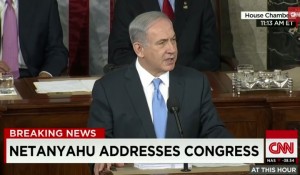
“America’s founding document promises life, liberty and the pursuit of happiness. Iran’s founding document pledges death, tyranny, and the pursuit of jihad,” he said. It was the type of clarity that he had brought to the difficult questions of life as a teenager. It is a clarity that still evades Obama today.

A measure of how thoroughly Netanyahu exposed Obama’s unseriousness can be found in Obama’s reply that before taking a position on a nuclear deal “it is very important not to be distracted by the nature of the Iranian regimes’ ambitions when it comes to territory or terrorism.”

For Netanyahu and for many in Congress, Iran’s terrorism is not a distraction; it is the main issue.

********************

In 1967, Benjamin Netanyahu skipped his high school graduation in Pennsylvania to head off to Israel to help in the Six Day War. That same year Obama moved with his mother to Indonesia.

When Obama suggested that Israel return to the pre-1967 borders, described by Ambassador Eban, no right-winger, as “Auschwitz borders,” it was personal for Netanyahu. Like many Israeli teens, he had put his life on hold and risked it protecting those borders.

In the seventies, Obama was part of the Choom Gang and Netanyahu was sneaking up on Sabena Flight 571 dressed as an airline technician. Inside were four terrorists who had already separated Jewish passengers and taken them hostage. Two hijackers were killed. Netanyahu took a bullet in the arm.

The Prime Minister of Israel defended the operation in plain language. “When blackmail like this succeeds, it only leads to more blackmail,” she said.

Netanyahu’s speech in Congress was part of that same clash of worldviews. His high school teacher remembered him saying that his fellow students were living superficially and that there was “more to life than adolescent issues.” He came to Congress to cut through the issues of an administration that has never learned to get beyond its adolescence.

Obama’s people had taunted him with by calling him “chickens__t.” They had encouraged a boycott of his speech and accused him of insulting Obama. They had thrown out every possible distraction to the argument he came to make. Unable to argue with his facts, they played Mean Girls politics instead.

Benjamin Netanyahu had left high school behind to go to war. Now he was up against overgrown boys and girls who had never grown beyond high school. But even back then he had been, as a fellow student had described him, “The lone voice in the wilderness in support of the conservative line.”

“We were all against the war in Vietnam because we were kids,” she said. The kids are still against the war. Against all the wars; unless it’s their own wars. Netanyahu grew up fast. They never did.

Netanyahu could have played their game, but instead he began by thanking Obama. His message was not about personal attacks, but about the real threat that Iran poses to his country, to the region and to the world. He made that case decisively and effectively as few other leaders could.

He did it using plain language and obvious facts.

Netanyahu reminded Congress that the attempt to stop North Korea from going nuclear using inspectors failed. The deal would not mean a denuclearized Iran. “Not a single nuclear facility would be demolished,” he warned. And secret facilities would continue working outside the inspections regime.

He quoted the former head of IAEA’s inspections as saying, “If there’s no undeclared installation today in Iran, it will be the first time in 20 years that it doesn’t have one.”

And Netanyahu reminded everyone that Iran’s “peaceful” nuclear program would be backed by ongoing development of its intercontinental ballistic missile program that would not be touched under the deal.

He warned that the deal would leave Iran with a clear path to a nuclear endgame that would allow it to “make the fuel for an entire nuclear arsenal” in “a matter of weeks”.

Iran’s mission is to export Jihad around the world, he cautioned. It’s a terrorist state that has murdered Americans. While Obama claims to have Iran under control, it has seized control of an American ally in Yemen and is expanding its influence from Iraq to Syria.

Its newly moderate government “hangs gays, persecutes Christians, jails journalists.” It’s just as bad as ISIS, except that ISIS isn’t close to getting a nuclear bomb.

“America’s founding document promises life, liberty and the pursuit of happiness. Iran’s founding document pledges death, tyranny, and the pursuit of jihad,” he said. It was the type of clarity that he had brought to the difficult questions of life as a teenager. It is a clarity that still evades Obama today.

A measure of how thoroughly Netanyahu exposed Obama’s unseriousness can be found in Obama’s reply that before taking a position on a nuclear deal “it is very important not to be distracted by the nature of the Iranian regimes’ ambitions when it comes to territory or terrorism.”

For Netanyahu and for many in Congress, Iran’s terrorism is not a distraction; it is the main issue.

Obama insists in that same interview that “sanctions are not sufficient to prevent Iran from pursuing its nuclear ambitions.” And yet the entire premise of the deal he’s pushing is that the sanctions forced Iran to come to the negotiating table and agree to give up its race for the bomb. Sanctions can’t stop Iran from going nuclear, but negotiations using the sanctions as leverage can.

And to believe all this, we have to avoid being distracted by Iran’s invasions of other countries and support for terrorists.

It’s self-contradictory nonsense that wouldn’t pass muster in a high school paper in 1967. And yet it’s the unchallenged argument dominating the political class, foreign policy experts and the media today.

Netanyahu came to challenge the argument that Iran could be appeased out of getting the bomb. He had to do it because Obama and his media allies had ignored or shut up everyone who had made it before him. By making Netanyahu’s very appearance into the issue, they hoped to shut him down the way they had senators from their own party. They succeeded in making his appearance controversial, but that just meant that more people were listening when he finally broke through and spoke.

“Would Iran be less aggressive when sanctions are removed and its economy is stronger? If Iran is gobbling up four countries right now while it’s under sanctions, how many more countries will Iran devour when sanctions are lifted? Would Iran fund less terrorism when it has mountains of cash with which to fund more terrorism?” he asked.

It’s a question that the administration and its defenders do not want to answer because it strikes at the heart of their logic of appeasement.

The appeasers claim that the negotiations will stabilize the region. Instead Netanyahu demonstrated that they will lead to a region in which every major Muslim country has nukes and is ready to use them.

The appeasers insist that we need to ally with Iran to stop ISIS. Netanyahu brought clarity to that as well.

“Iran and ISIS are competing for the crown of militant Islam. One calls itself the Islamic Republic. The other calls itself the Islamic State. Both want to impose a militant Islamic empire first on the region and then on the entire world,” he warned. “They just disagree among themselves who will be the ruler of that empire,”

Netanyahu offered an alternative to another worthless nuclear agreement by focusing not only on Iran’s nuclear capability, but on its intentions. He asked the world to turn its attention to stopping Iran from attacking its neighbors and engaging in terrorism.

The things that Obama calls a distraction are for Benjamin Netanyahu the main point.

The former high school student who had been described as a “lone voice in the wilderness” closed his speech by saying, “Even if Israel has to stand alone, Israel will stand.”

Netanyahu knows something about standing alone. No Israeli politician has faced the continuing level of hate by the left that he has. The mockery and sneers directed at him by Obama’s media allies in these past weeks have been nothing. The teenager who had learned to stand by his values in a high school in the sixties and as Israel’s ambassador to the United Nations in the eighties has let it all roll off him.

In war, Netanyahu had nearly drowned in the Suez Canal. In politics, he has kept his head above water. In Congress, he concluded by quoting Moses. “Be strong and resolute, neither fear nor dread them.”

It can refer to Iran or to the political mobs of the left who thought that smearing him would silence him.

Netanyahu understood what was at stake when Israel was fighting for its life in 1967. He did not let the comforts of suburbia blind him to the personal sacrifices that he had to make by going to Israel.

That is why he came to America now.

Arab Commentators Strongly Back Netanyahu on Congress Speech, Iran Nuclear Threat

March 4, 2015

Arab Commentators Strongly Back Netanyahu on Congress Speech, Iran Nuclear Threat, Algemeiner, Shirym Ghermezian, March 3, 2015

netanyahu-congress-300x175Prime Minister Netanyahu addresses Congress on the Iranian nuclear threat. Photo: Screenshot.

“What is absurd, however,” Abbas continues, “is that despite this being perhaps the only thing that brings together Arabs and Israelis (as it threatens them all), the only stakeholder that seems not to realize the danger of the situation is President Obama, who is now infamous for being the latest pen-pal of the Supreme Leader of the World’s biggest terrorist regime: Ayottallah Ali Khamenei.”

******************

Leading Arab opinion makers weighed in on the controversy surrounding Israeli Prime Minister Benjamin Netanyahu’s address to Congress on Tuesday and expressed strong support for his stance on the Iranian nuclear threat.

In an op-ed for the Saudi Arabian daily Al-Jazirah on Monday, columnist Dr. Ahmad Al-Faraj asserted that Netanyahu is justified in his campaign against the proposed nuclear deal with Iran, according to The Middle East Media Research Institute. Al-Faraj said Netanyahu’s effort to prevent the signing of the agreement is in the interests of the Gulf states, and that the prime minister “is right to insist on addressing Congress about the nuclear deal.”

“I am very glad of Netanyahu’s firm stance and [his decision] to speak against the nuclear agreement at the American Congress despite the Obama administration’s anger and fury,” Al-Faraj wrote. “I believe that Netanyahu’s conduct will serve our interests, the people of the Gulf, much more than the foolish behavior of one of the worst American presidents.”

The powerful editor-in-chief of Al Arabiya English, Faisal J. Abbas, published a column on Tuesday in which he asked Obama to take notes from Netanyahu on the extent of the Iranian threat. In the piece, titled “President Obama, Listen to Netanyahu on Iran,” Abbas says, “one must admit, Bibi did get it right, at least when it came to dealing with Iran.”

Abbas notes that Netanyahu “hit the nail right on the head” when he said at a recent event in Tel Aviv that “Middle Eastern countries are collapsing and that ‘terror organizations, mostly backed by Iran, are filling in the vacuum.’” In his remarks, Netanyahu “managed to accurately summarize a clear and present danger, not just to Israel (which obviously is his concern), but to other US allies in the region,” Abbas writes.

“What is absurd, however,” Abbas continues, “is that despite this being perhaps the only thing that brings together Arabs and Israelis (as it threatens them all), the only stakeholder that seems not to realize the danger of the situation is President Obama, who is now infamous for being the latest pen-pal of the Supreme Leader of the World’s biggest terrorist regime: Ayottallah Ali Khamenei.”

Abbas slams Obama’s “controversial take on managing global conflicts that raises serious questions.”  The “real Iranian threat” says Abbas, is not just the country’s nuclear ambitions, “but its expansionist approach and state-sponsored terrorism activities which are still ongoing.”

Off topic? Free speech on campus

March 4, 2015

Free speech on campus, Pat Condell via You Tube, March 2, 2015

(Many “highly educated” leftists believe that they should vent their views freely but that others not only should not but should be prevented from doing so. Might the objections of Obama and his cohorts to PM Netanyahu’s address to the Congress have been motivated by substantially the same sort of nonsense Mr. Condell ascribes to academia:  If you don’t agree with Obama, know your place, sit down and shut up?– DM)


Bibi’s Triumph Puts Obama on the Defensive

March 3, 2015

Bibi’s Triumph Puts Obama on the Defensive, Commentary Magazine, March 3, 2015

(Please see also Iran calls Obama’s 10-year nuclear demand ‘unacceptable’– DM)

If President Obama was hoping that Israeli Prime Minister Netanyahu would lay an egg with his much-anticipated and controversial speech to a joint session of Congress, he was gravely disappointed. Netanyahu’s address was a triumph that put the administration on the defensive over its reckless pursuit of détente with Iran. But though the administration’s apologists are willing to admit that Netanyahu won on style points, they are wrong when they claim he offered no alternative to a deal with Iran that abandons the president’s previously stated principles about forcing the Islamist regime to abandon their nuclear ambitions. To the contrary, Netanyahu’s speech was more than stirring rhetoric. It laid out clear benchmarks for what must be achieved in any deal and pointed the way toward a return to tough sanctions and equally tough negotiating tactics. In doing so, he put the administration on the defensive and, no matter what happens in the talks, forces it to explain an indefensible deal and reminded Congress that it has a responsibility to weigh in on the issue to ensure the nation’s security.

What had to most frustrate the White House was Netanyahu’s ability to debunk their main talking point about the speech. After weeks of hyping the address as an injection of partisanship into the U.S.-Israel relationship, the prime minister’s willingness to give the president his due for past support of Israel and his refusal to mention the many instances in which Obama had undercut the Jewish state’s position and deliberately attempted to create more distance between the two allies made the White House’s angry reaction look petty. The prime minister’s initial decision to accept House Speaker John Boehner’s invitation gave the president the opening he needed to distract the country from his Iran policy. With the help of the president’s always helpful press cheering section, White House political operatives made Netanyahu’s supposed breach of protocol the issue rather than the appeasement of Iran. But they eventually succumbed to overkill in denouncing Netanyahu and by the time the prime minister took the podium at the Capitol, the administration’s efforts had the unintended effect of giving him a bigger audience than he might otherwise have had.

Thus, by the time the address was over, the issue was no longer whether he should have given the speech. Though the White House is doggedly trying to portray the speech as partisan, it was not. Now it is the substance of Netanyahu’s concerns about Iran’s behavior and the failure of the Western powers to negotiate a deal that would stop Iran from getting a weapon that is the subject of discussion. Which is to say that after winning news cycles at Netanyahu’s expense throughout February, the White House has set itself up to have to explain years of concessions to a dangerous regime with almost nothing to show for it in terms of making the world any safer.

At the core of the disagreement between Netanyahu and Obama on Iran is the president’s faith that Iran can or will change. Even Obama apologists no longer regard the notion that Hassan Rouhani’s election as president signaled a move toward moderation as a serious argument. Though the administration has been careful not to defend Iran’s past and present behavior, by eloquently laying out the Islamist regime’s record of terrorism and aggression, it put the onus on the president to explain why he thinks that over the course of the next decade, Iran is going to, “get right with the world,” as he has said.

Equally important, the speech forces the president to defend the substance of the deal he is desperately trying to entice the Iranians to sign. Netanyahu reminded the world what has happened since Obama’s pledge during his 2012 foreign-policy debate with Mitt Romney that any deal with Iran would force it to give up its nuclear program. Since then, the administration has not only recognized Iran’s right to enrich uranium but also agreed to let them keep several thousand centrifuges and the rest of their nuclear infrastructure.

As Netanyahu pointed out, even if they abide by the terms of the deal—something about which reasonable people are doubtful given their past record of cheating and unwillingness to open their country to United Nations inspectors—the ten-year sunset clause Obama mentioned in interviews yesterday gives the regime the ability to eventually build a nuclear weapon. Rather than stopping Iran from getting a bomb, the path that Obama has travelled ensures they will eventually get one even if the accord works. The president not only guarantees that Iran will become a threshold nuclear power but, as Netanyahu rightly argued, sets in motion a series of events that will create a new nuclear arms race in the Middle East.

Did Netanyahu offer an alterative to the president’s policy? The answer is yes. The administration is right when they say Netanyahu offered nothing new, but that was the point. After belatedly adopting sanctions, the administration quickly gave up on them just at the moment in 2013 when they were starting to bite. By toughening sanctions, as the Kirk-Menendez bill currently before Congress would do, and increasing the political and economic pressure on the regime, the U.S. has a chance to reverse Obama’s concessions and bring Iran to its knees. The West must insist that Iran change its behavior before sanctions are lifted, rather than afterward. Instead of Obama and Kerry’s zeal for a deal encouraging the Iranians to make no concessions, Netanyahu was correct to remind Congress that Tehran needs a deal more than the U.S. Indeed, Netanyahu not only offered an alternative; he put forward the only one that has a chance of stopping Iran from getting a weapon without using force.

Try as they might to continue to abuse Netanyahu for a brilliant speech, the White House’s response demonstrates nothing but its intolerance for criticism and inability to defend a policy of capitulation to Iran. Rather than engage in pointless discussions about the president’s hurt feelings or Netanyahu’s chutzpah for telling the truth about the negotiations, it’s time for the press and Congress to start asking the administration tough questions about a reckless deal before it is too late.

What Benjamin Netanyahu just did

March 3, 2015

What Benjamin Netanyahu just did, The Washington PostJennifer Rubin, March 3, 2015

Prime Minister Benjamin Netanyahu’s speech to Congress was a devastating indictment of the P5+1′s entire approach, and it reminded and reunited Democrats and Republicans, as did Sen. Robert Menendez’s speech to AIPAC Monday, on what is at stake and why the deal under contemplation can never come to pass.

As a preliminary matter, it is evident that had the president not thrown a fit, Netanyahu’s speech might not have garnered quite so much attention. But to be honest, the fuss mostly remained in the media. When the chips were down, it appeared that all but far-left lawmakers and Congressional Black Caucus members attended. That, incidentally, is a problem on the left, which has become virulently anti-Israel, as has the left in Europe and elsewhere (hence the BDS movement’s prominence on left-wing campuses and European capitals).

The speech was not aimed at the president, who is immune to reason, nor to the negotiators who suffer from a variation of Stockholm Syndrome, whereby they come to identify with their bargaining opponents more than the country they represent. It was aimed at American public opinion and uncertain Democrats on whose good judgment Netanyahu must rely to derail a disastrous deal. By flattering the president and Democrats, Netanyahu gave them an out to agree with him without crossing the president or appearing to give in to Republicans. He said so bluntly it was starting: This is a bad deal. No deal is better. And he explained exactly why.

In laying out his argument in such logical order — explaining the nature of the threat, the two central flaws in the deal (leaving Iran with most of its nuclear infrastructure and lifting restrictions after a decade) and explaining the false choice between this deal and war (instead, hold the line and beef up sanctions) — he made clear that if one understands the nature of the Iranian regime and what the concessions mean, one cannot be in favor of this deal. “Absent a dramatic change, we know for sure that any deal with Iran will include two major concessions to Iran. The first major concession would leave Iran with a vast nuclear infrastructure, providing it with a short break-out time to the bomb. Break-out time is the time it takes to amass enough weapons-grade uranium or plutonium for a nuclear bomb. . . . But the second major concession creates an even greater danger that Iran could get to the bomb by keeping the deal. Because virtually all the restrictions on Iran’s nuclear program will automatically expire in about a decade.” The conclusion was nearly inescapable: “It doesn’t block Iran’s path to the bomb; it paves Iran’s path to the bomb.”

From identical talking points spouted by Obama administration apologists, we know the Obama defense is that there is no alternative. But Netanyahu gave them one, and in doing so pointed Congress in the right direction.”We can insist that restrictions on Iran’s nuclear program not be lifted for as long as Iran continues its aggression in the region and in the world. Before lifting those restrictions, the world should demand that Iran do three things. First, stop its aggression against its neighbors in the Middle East. Second, stop supporting terrorism around the world. And third, stop threatening to annihilate my country, Israel, the one and only Jewish state.” He was greeted with thunderous applause.

And how to get there? “Well, nuclear know-how without nuclear infrastructure doesn’t get you very much. A race car driver without a car can’t drive. A pilot without a plane can’t fly. Without thousands of centrifuges, tons of enriched uranium or heavy water facilities, Iran can’t make nuclear weapons. Iran’s nuclear program can be rolled back well-beyond the current proposal by insisting on a better deal and keeping up the pressure on a very vulnerable regime, especially given the recent collapse in the price of oil. Now, if Iran threatens to walk away from the table — and this often happens in a Persian bazaar — call their bluff. They’ll be back, because they need the deal a lot more than you do. And by maintaining the pressure on Iran and on those who do business with Iran, you have the power to make them need it even more.” In other words, stop chasing a deal, tighten the screws and give the regime a choice between economic collapse and nukes.

He made three other salient points that the administration would rather obscure.

First, even if the deal on the table was inked, it would set off a series of events far worse than having no deal: “So this deal won’t change Iran for the better; it will only change the Middle East for the worse. A deal that’s supposed to prevent nuclear proliferation would instead spark a nuclear arms race in the most dangerous part of the planet. This deal won’t be a farewell to arms. It would be a farewell to arms control.”

Second, he explained that the hope of Iran changing its stripes down the road is entirely illogical. “Why should Iran’s radical regime change for the better when it can enjoy the best of both world’s: aggression abroad, prosperity at home? This is a question that everyone asks in our region. Israel’s neighbors — Iran’s neighbors know that Iran will become even more aggressive and sponsor even more terrorism when its economy is unshackled and it’s been given a clear path to the bomb. . . . If anyone thinks — if anyone thinks this deal kicks the can down the road, think again. When we get down that road, we’ll face a much more dangerous Iran, a Middle East littered with nuclear bombs and a countdown to a potential nuclear nightmare. Ladies and gentlemen, I’ve come here today to tell you we don’t have to bet the security of the world on the hope that Iran will change for the better. We don’t have to gamble with our future and with our children’s future.”

And finally, he went to the heart of the problem with the administration’s premise, namely that reconciliation with Iran can help us defeat the Islamic State. He argued, “Iran and ISIS are competing for the crown of militant Islam. One calls itself the Islamic Republic. The other calls itself the Islamic State. Both want to impose a militant Islamic empire first on the region and then on the entire world. They just disagree among themselves who will be the ruler of that empire. In this deadly game of thrones, there’s no place for America or for Israel, no peace for Christians, Jews or Muslims who don’t share the Islamist medieval creed, no rights for women, no freedom for anyone. So when it comes to Iran and ISIS, the enemy of your enemy is your enemy.”

It was masterful in many ways. But ultimately, Israel won’t be hobbled or restrained if Netanyahu’s message falls on deaf ears. He wrapped up with a reminder, as he pointed to Holocaust survivor Elie Wiesel in the gallery: “And I wish I could promise you, Elie, that the lessons of history have been learned. I can only urge the leaders of the world not to repeat the mistakes of the past. Not to sacrifice the future for the present; not to ignore aggression in the hopes of gaining an illusory peace.  But I can guarantee you this, the days when the Jewish people remained passive in the face of genocidal enemies, those days are over. We are no longer scattered among the nations, powerless to defend ourselves. We restored our sovereignty in our ancient home. And the soldiers who defend our home have boundless courage. For the first time in 100 generations, we, the Jewish people, can defend ourselves.”

He hastened to add to tumultuous applause that “But I know that Israel does not stand alone. I know that America stands with Israel. I know that you stand with Israel. You stand with Israel, because you know that the story of Israel is not only the story of the Jewish people but of the human spirit that refuses again and again to succumb to history’s horrors.”

That’s the hope, and he made it that much more likely by debunking nearly every false note, phony argument and wrong assumption guiding the administration. He is betting congressional Democrats and the American people are smarter and wiser than Obama. How could they not be?