Archive for the ‘Obama – rogue president’ category

Why the Iran nuclear deal will mean war

September 8, 2015

Why the Iran nuclear deal will mean war, Front Page Magazine, Daniel Greenfield, September 8, 2015

mars-mushroom-562873

Iran . . . is not looking for a deterrent weapon against its neighbors. With the fall of Saddam, it faces no serious threat of invasion by Sunni forces. Today its nuclear program can have no other purpose except to expand its power and territory while forcing the United States out of the region. Nuking Israel would help seal its right to rule over the Muslim world while intimidating its enemies.

********************

Like a snake oil salesman trying to move a gallon of lies by promising that it’s either buy the bottle or die, Obama sold the Iran deal as the only alternative to war. In fact the deal is a certain road to war.

Or as Churchill said, “You were given the choice between war and dishonor. You chose dishonor, and you will have war.” Before long, the British and French were facing Czech tanks redesignated as Panzers that had been seized as part of the Nazi spoils of appeasement.

When Obama claimed that the Iran nuclear deal was the only alternative to war, he was lying in more ways than one. The United States has already been dragged into Iran’s war for control of Iraq. That war was one of the levers that Iran exploited to get its way on its nuclear program. Iran also came close to dragging us into its war in Syria and we are hovering on the edge of being dragged into Yemen.

Iran and ISIS have done a thorough job of carving up entire countries into Shiite and Sunni blocs. And there’s no sign that this Islamic realignment of the Sykes Picot borders is going to stop. If the process continues, the scale and scope of the war will expand and transform the region away from nation states.

Everyone will have a choice between backing a Sunni ISIS or a Shiite ISIS. Obama chose the Shiite ISIS.

This would be happening even without the deal, but Iran’s victory and Obama’s appeasement will speed up the process. Russia is blatantly joining the Shiite military coalition as part of Tehran’s victory celebration. And the Russians aren’t there just to protect Assad, but to push America out of the region. As areas of operations overlap, there will be incidents. And Obama will back off once again.

But it’s not just about Syria. Iran promised its Russian and Chinese backers that they will benefit from a major regional realignment. Nations allied with the US will be overthrown or suppressed. And once that process really gets underway and will begin to threaten oil supplies, even a Democrat won’t be able to stay out. But by then America will have little credibility, few allies and major strategic disadvantages.

The real test won’t be in Syria. It has already come and gone in Yemen. It will probably come in Bahrain. Bahrain has a majority Shiite population and is the home of the Fifth Fleet. During the Arab Spring the Saudis put down Iran’s “civilian” uprising in Bahrain using tanks. The next time, it won’t be that easy for the House of Khalifa or the House of Saud. If there’s one thing that Iran knows it’s how to arm and train insurgencies and this time around its bid for a takeover of Bahrain will have Russian backing.

Iran’s Islamic Front for the Liberation of Bahrain played a significant role in the Arab Spring protests under the umbrella of political Islam and human rights organizations. Iran’s ideal game plan would be for its front groups to win Western political backing for a takeover the way that the Muslim Brotherhood did in Egypt. Turning over Bahrain to admirers of the Iranian Revolution would seem insane, but so was turning over Iran to Khomeini or Egypt to Al Qaeda’s parent Muslim Brotherhood organization.

The Saudis have had to consider the possibility that Obama, Hillary or Biden would back Iran over the Saudis in Bahrain as they did in Iraq and Yemen. And they have been making their own plans.

Some months after Iran’s Ahmadinejad visited Cairo and met with the Muslim Brotherhood’s Morsi, the Saudis reversed the Qatari-Obama coup that had put the Muslim Brotherhood in power. As the deadline for last year’s negotiations with Iran approached, the Saudis began dumping oil to hurt Russia and Iran. A similar Saudi move against Iran had helped bring on the Islamic Revolution. The Saudis probably don’t expect to undo that disaster, but they were hoping to offset any Obama-backed Iranian recovery.

Instead of fighting to keep sanctions in place, the Saudis were instead poisoning the well.

Whether he understood it or not, by signing off on Iran’s Shiite bomb, Obama was also signing off on an Egyptian-Saudi Sunni bomb. Israel’s nuclear capability was tacitly understood as a defensive weapon of last resort that would not trigger a regional arms race. Genocidal military invasions of Israel came to an end and any weapons remained under wraps.

Iran however is not looking for a deterrent weapon against its neighbors. With the fall of Saddam, it faces no serious threat of invasion by Sunni forces. Today its nuclear program can have no other purpose except to expand its power and territory while forcing the United States out of the region. Nuking Israel would help seal its right to rule over the Muslim world while intimidating its enemies.

A Middle Eastern MAD with Iranians and Saudis in a nuclear standoff would be bad enough, but both powers have a long history of using terrorists to do their dirty work. And the transfer of nuclear materials to terrorists is a lot harder to track than ICBM launches.

Iran and Saudi Arabia getting the bomb won’t be the end. It will only be the beginning. A decade ago, Iran had already funneled a billion dollars into helping Syria get its own nuclear reactor. A nuclear Iran will expand its points of proliferation to the Shiite regime in Baghdad, to Hezbollah in Lebanon and any other Shiite allied states it can set up. The Saudis will expand their own nuclear capabilities to their GCC allies and Egypt so that instead of two nuclear powers, there may be as many as ten nuclear nations.

Imagine the Cold War in miniature with a lot more proliferation and Jihadists with nukes on both sides.

That is what the Iran nuclear deal really means. Every Sunni kingdom will be glaring out from under its own nuclear shield as petty tyrants keep one finger on the populace and the other on the button. A single popular uprising could see nuclear weapons in the hands of Al Qaeda or ISIS.

On the other side, Iran will be aggressively expanding its influence while engaging in escalating naval confrontations with America and its allies. It’s possible that Obama, Biden or Hillary will be able to run away fast enough to avoid a war, but they won’t be able to avoid the resulting economic chaos. And the war will follow them home as Muslim countries have a history of settling their scores by aiming at more “legitimate” non-Muslim targets. That is how 9/11 happened as part of a Saudi power struggle.

And if the United States stays, our people will be trying to keep the peace in a region gone nuclear where American bases will be prime targets for Iran and its terrorist allies. The United States will retaliate against a nuclear strike directly from Iran, but what if it comes from one of the Hezbollahs?

The question isn’t whether there will be a war. It’s how bad the war will be.

That is what Churchill understood and Chamberlain didn’t. While Churchill had fought in Afghanistan against the forerunners of the Taliban, Chamberlain had run family businesses. He saw the military as an unnecessary expense and war as something that could be negotiated away. Churchill knew better.

We are up against something similar today.

The Middle East has exploded before. It will explode again. All we’ve been doing is keeping the lid on. Obama’s surrender means that we won’t control how that explosion happens, but it won’t stop us from getting dragged in anyway once the bombs start going off.

Obama’s advisers have told him to outsource American foreign policy to Tehran. And that’s what he did. Turning over your power to your enemy won’t make him your friend. It won’t stop a war.

It will make the war much worse.
What is to be done? (2)

September 8, 2015

What is to be done? (2), Power LineScott Johnson, September 8, 2015

The first resolution the House should consider when it returns [today] should be one stating that Congress has not been provided the material it needs, that the Iran deal has not been properly submitted to Congress, and therefore that the president has no authority to waive or suspend sanctions on Iran.

********************

Yesterday I noted that the Obama administration has failed to comply with the condition precedent to Congress’s review of the deal with Iran (and the president’s authority to waive sanctions). I asked what is to be done.

I asked, Bill Kristol answered. Bill wears many hats, one of which is Chairman of the Emergency Committee for Israel. In this capacity he released the following statement addressing the question yesterday:

The Obama Administration has not complied with the legal requirement that it provide Congress “any additional materials” related to the Iran deal, including “side agreements, implementing materials, documents, and guidance, technical or other understandings, and any related agreements, whether entered into or implemented prior to the agreement or to be entered into or implemented in the future.” The Administration has not given Congress a key side agreement between Iran and the International Atomic Energy Agency, one which describes how key questions about the possible military dimensions of Iran’s nuclear program will be resolved, as well as how the verification regime will work.

Congress should not accept this evasion of the law by the Obama Administration. Congress should insist on the text of this and any other side agreements. Lacking this, Congress can and should take the position that the Iran deal has not been properly submitted to Congress to review, and therefore that the president has no authority to waive or suspend sanctions.

We understand the temptation of leadership to get to a vote on a resolution of disapproval and then to move on to other votes. But the Iran deal isn’t just another legislative issue where some corner-cutting by the Administration is to be accepted with a brief expression of discontent followed by a weary sigh of resignation.

The Iran deal is the most important foreign policy issue this Congress will have before it. Congress should rise to the occasion and insist on its prerogative — and the American people’s prerogative — to see the whole deal. The first resolution the House should consider when it returns [today] should be one stating that Congress has not been provided the material it needs, that the Iran deal has not been properly submitted to Congress, and therefore that the president has no authority to waive or suspend sanctions on Iran.

I think this is the correct direction and congressional leadership should follow it.

Rep. Gohmert Introducing Resolution to Declare Iran Deal a Treaty

September 7, 2015

Rep. Gohmert Introducing Resolution to Declare Iran Deal a Treaty, Town HallCortney O’Brien, September 7, 2015

cda995d7-4ffe-417b-8d94-702f8bfdaa92

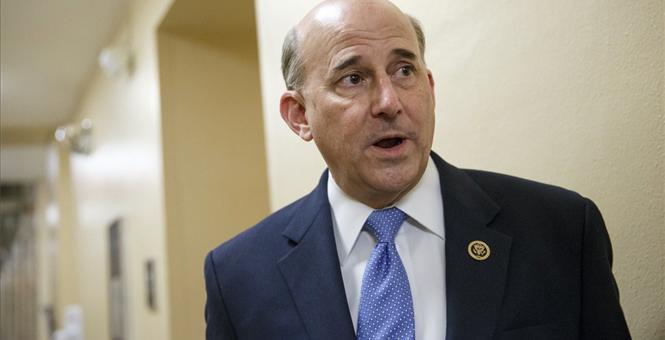
On March 11, 2015, Secretary of State John Kerry said the Obama administration was “not negotiating a legally binding plan” with Iran and therefore their nuclear agreement did not have to be submitted to Congress for approval. Rep. Louie Gohmert (R-TX) is ready to challenge that notion by putting forward a resolution that would define the Joint Comprehensive Plan of Action as a treaty.

The Corker-Cardin bill, a.k.a. the Iran Nuclear Agreement Review Act of 2015, was introduced as an accountability tool for the Iranian deal, requiring a ‘yes’ or ‘no’ vote from Congress. Yet, as more details about the Joint Comprehensive Plan Of Action (JCPOA) have surfaced, Corker and Cardin’s effort has become basically null, Rep. Gohmert is convinced. The Obama administration, he asserts, left Congress in the dark about the specifics of JCPOA. For instance, the Corker-Cardin bill was only meant to rein in nuclear sanctions, but JCPOA allows for a lifting of sanctions on ballistic missiles and international arms embargoes. Congress also had no clue about the side deals allowing Iran to inspect itself at nuclear sites.

In his resolution, Gohmert also exposes Secretary of State Kerry’s hypocrisy regarding his refusing to label the Iran deal a treaty.

Whereas, on June 4, 2015, less than two months before Secretary Kerry testified that it has become “physically impossible” for the Senate to ratify treaties, he stated that the State Department is “preparing the instruments of ratification of [several] important treaties” and that he “want[s] to personally thank the U.S. Congress . . . for their efforts on” the implementing legislation for the nuclear security treaties;

Gohmert is not the only legislator to demand the Iran agreement be defined as a treaty. Sen. Tom Cotton (R-AR), the only senator not to vote for the Corker-Cardin act, demanded the clarification be made back in May:

“A nuclear-arms agreement with any adversary—especially the terror-sponsoring, Islamist Iranian regime—should be submitted as a treaty and obtain a two-thirds majority vote in the Senate as required by the Constitution,” he said.

Such a consequential handshake should be accompanied by some oversight from our elected representatives. It’s what Americans want.

Should the resolution pass, Gohmert says the Senate should deliberate on the ratification of the Iran Deal within 30 days hence.

US Congress – rip up Iran deal – pass resolution!

September 7, 2015

US Congress – rip up Iran deal – pass resolution! United West via You Tube, September 7, 2015

(Please see also, What is to be done? — DM)

What is to be done?

September 7, 2015

What is to be done? Power LineScott Johnson, September 7, 2015

(In this context, the refusal of Obama — a rogue president — to comply with U.S. law jeopardizes our national security. He will probably continue to get away with it until he leaves office. — DM)

President Obama has failed to comply with the conditions of the Iran Nuclear Agreement Review Act (the Corker-Cardin bill) that he himself signed into law. By its express terms the law required Obama to transmit to Congress “the agreement. . . . including all related materials and annexes.” He was obligated to do this “not later than five days after reaching the agreement.”

Obama has not done so. The administration has failed or refused to submit the IAEA side deal with Iran regarding the possible military dimensions of Iran’s research at the Parchin military facility to Congress.

Indeed, the administration claim not even to have seen the IAEA side deal. Rather, administration officials claim only to have been briefed by the IAEA on the terms of the side deal. They claim it is cloaked in secrecy that prevents its disclosure. The side deal is nevertheless an integral part of the JCPOA and its disclosure expressly required by the act.

Whether or not the side deal is “confidential” matters not one iota under the terms of the Corker-Cardin bill. It should be noted, however, that the administration appears to have constructed an elaborate pretense regarding the side deal. Fred Fleitz has advanced a highly plausible case that administration officials themselves drafted one or more side deals including this one for the IAEA including the Parchin side deal. He calls the arrangement “a national security fraud.”

Obama’s noncompliance with the act is more than problematic. It precludes (or should) the president’s authority to waive sanctions. It prevents (or should) the JCPOA itself from coming to a vote in Congress. Yet little notice has been taken of any of the serious issues that Obama has created in the service of his Iranian fantasies. As always, Obama acts by the executive equivalent of main force and trusts others to fall into line.

Rep. Mike Pompeo and attorney David Rivkin take note in a brief Washington Post column. They write:

Congress must now confront the grave issues of constitutional law prompted by the president’s failure to comply with his obligations under the act. This is not the first time this administration has disregarded clear statutory requirements, encroaching in the process upon Congress’s legislative and budgetary prerogatives. The fact that this has happened again in the context of a national security agreement vital to the United States and its allies makes the situation all the more serious.

For Congress to vote on the merits of the agreement without the opportunity to review all of its aspects would both effectively sanction the president’s unconstitutional conduct and be a major policy mistake. Instead, both houses should vote to register their view that the president has not complied with his obligations under the act by not providing Congress with a copy of an agreement between the IAEA and Iran, and that, as a result, the president remains unable to lift statutory sanctions against Iran. Then, if the president ignores this legal limit on his authority, Congress can and should take its case to court.

At the least, the congressional leaders should refuse to call up the JCPOA for a vote of approval and “register their view” as Pompeo and Rivkin suggest. Congress should force the issue in other ways within the scope of their powers. I don’t know about the proposed judicial remedy; it seems like weak tea. I don’t have the answer, but Congress should not proceed as though the conditions precedent to a vote of approval and the waiver of sanctions have occurred as required under the Corker-Cardin bill; they have not.

What the axis of evil owes Obama

September 4, 2015

What the axis of evil owes Obama, Israel Hayom, Ruthie Blum, September 4, 2015

His presidency has been paved not with failures, but with a string of the most successfully orchestrated disasters in history. For this, the “axis of evil” Obama so stringently denies owes him a great debt of gratitude.

********************

On Wednesday, U.S. President Barack Obama fulfilled a lifelong dream he has spent nearly seven years in office trying to realize.

It is a very different dream from that of Martin Luther King Jr., whom Obama invokes whenever it feeds his own visions of a particular form of grandeur.

This is not to say that rising from modest means to becoming the head of the United States and, by extension, the leader of the free world, is not already about as grand as one can get. But it is America’s greatness — not Obama’s — that enabled him to make it to the White House in the first place.

His ability to pull it off a second time, in spite of a bad economy and the sweeping radicalization of the Middle East, is a measure of how well he had already implemented the methods of his mentor, “Rules for Radicals” author Saul Alinsky, of infiltrating the country’s institutions and destroying them from within.

Indeed, the previously imperfect, but still functional, systems he tackled to chip away at the fabric of society were health, education, welfare and, of course, the family unit. He even set back the very societal strides that allowed for the election of a black president, creating an environment in which race relations took a sharp turn for the worse.

All of this made America ripe for the picking of its enemies.

This is where Obama’s foreign policy comes into play. Like the chisel he took to domestic affairs, Obama strived to strip the United States of its global superpower status. The crowning moment of this endeavor took place in July in Vienna, when the tireless efforts of the U.S.-led P5+1 to persuade the Islamic Republic of Iran to sign an agreement Obama desperately wanted finally paid off.

According to the agreement, Iran will be able to continue to develop and hone its nuclear weapons program, unfettered by the financial constraints of economic sanctions, and increase the flow of funds to its strategically placed terrorist proxies the world over. In exchange, Russia and China, two laughable members of the P5+1, get to do dubious deals with the mullahs in Tehran; Europe, inundated with refugees from Muslim countries, gets phony guarantees about its short-term safety; and Obama gets to tell himself he has finally earned the Nobel Peace Prize he was awarded about five minutes into his presidency.

This week, he scored his ultimate coup — over Congress. Faced with a majority of the House and Senate opposing the deal, Obama announced that if it did not pass when put to a vote in September, he would exercise his presidential veto power and force it down the throats of the American people.

The only thing that could have prevented this from happening was a veto-override majority. Alas, one was not to be had. By Wednesday, the fate of the deal was sealed by the Obama camp.

Obama deserves full credit for this and the other disasters he has wreaked.<

Where Iran is concerned, one need only look back in time to the early months of Obama’s first term to grasp what he was up to then, and how it led to where we are today.

On June 12, 2009, a rigged election in Iran reinstated then-President Mahmoud Ahmadinejad. Though opposition candidate Mir-Hossein Mousavi clearly had come out ahead of the incumbent, the latter declared victory and hailed his reign as the “will of the people.”

Millions of Iranians took to the streets to protest the false claims on the part of the regime they had intended to replace with what they believed would be a more democratic one.

During these demonstrations, in the course of which Iranians begged the U.S. to help them, a young woman named Neda was gunned down, and the photo of her bullet-ridden body and haunted eyes became the key symbol of the Iranian people’s wish to be free of the repression the Islamic Revolution of 1979 had imposed on them.

Viewing these events from behind his desk in the Oval Office, Obama was “impartial.” He had entered the White House only five months earlier, pledging to overturn his predecessor’s policies. Among these was George W. Bush’s position on radical Muslim regimes and groups in general, and on Iran specifically.

Claiming that the only way to rid Iran of its nuclear and hegemonic ambitions would be by extending goodwill gestures to its leaders, Obama abandoned the term “axis of evil,” which Bush had coined to define state sponsors of terrorism, Iran being a prime example.

Convinced, as well, that the U.S. had become a pariah among nations for being a capitalist, imperialist bully, Obama set about to show the world that America was in no way superior to other countries and cultures.

His wife, Michelle, shared this dim view of her country. Her response to her husband’s electoral victories in a series of Democratic primaries was to say it was the first time in her adult life that she was proud to be an American.

It was neither ignorance nor oversight, then, which caused Obama to abandon the genuine freedom-seekers in Iran, and try to engage the vicious ayatollahs. It was part of his plan, born of a twisted ideology that America was to blame for the hatred it inspired among despots — so ridiculous a notion that it allows for ignoring the plight of truly terrorized populations, prey to the tyrannical oppression of their leaders.

It is also at the core of his appalling attitude towards Israel. As a traditional ally of the U.S., with shared values, it, too — in Obama’s eyes — is to blame for the enmity it arouses.

It is impossible to get into Obama’s head to determine whether he actually believes the nuclear pact he is signing with the devil is the lesser of all evils.

One thing is clear, however: His presidency has been paved not with failures, but with a string of the most successfully orchestrated disasters in history. For this, the “axis of evil” Obama so stringently denies owes him a great debt of gratitude.

The Senate Must Sue Obama to Block the Iran Treaty

August 31, 2015

The Senate Must Sue Obama to Block the Iran Treaty, American ThinkerRobert B. Sklaroff and Lee S. Bender, August 31, 2015

(I assume that suit would be filed in a Federal District Court, most likely the one sitting in Washington, D.C., followed by appeals to the D.C. Circuit and thence to the Supreme Court. The process would likely take years, with the outcome currently difficult to assess. An assessment would have to take into account that the Supreme Court has become increasingly “pragmatic” in recent years and tends to favor the Executive Branch.

Such a suit is not a bad idea, but the Congress should also note Obama’s failure to disclose key information necessary to evaluate the “deal” and disapprove it. Obama will veto its disapproval and the Congress is unlikely to override his veto. That will leave the “deal” a mere executive agreement and, therefore, subject to being overturned by the next president. That would likely happen well before rendition of a final adjudication on the suggested suit.

Interestingly, Iranian President Rouhani has asked the Iranian Parliament not to approve the “deal” because it would then become legally binding on Iran. — DM)

When Congress returns from recess after Labor Day, one of the most pressing issues on the agenda is the Joint Comprehensive Plan of Action (JCPOA), known commonly as “the Iran deal.” Much has been discovered since the Corker-Cardin-Menendez bill was enacted, including the White House’s and State Department’s deceit which influenced the Senate to abandon its constitutionally-provided role regarding treaties.

Now it might take a lawsuit spearheaded by Senate Majority Leader Mitch McConnell (R-KY) to reverse not only the damage to the Constitution but also potential damage to America and our allies as a result of the provisions of the Iran nuclear-deal.

Senate Majority Leader Mitch McConnell has overwhelming justification to sue President Obama over the JCPOA which constitutes a treaty and thereby must be ratified by a 2/3-vote of those present prior to implementation.

Such a suit could ultimately prompt the Supreme Court to disclaim Obama’s portrayal of this document as an Executive Agreement. It could also sustain the overwhelming will of the American people–according to polling data—to trash this “legacy” effort, for reasons that have been exhaustively detailed.

Blocking implementation of the Iran nuclear-deal would thereby necessitate the legislative branch triggering a confrontation between the judicial and the executive branches.

Two essays {authored by RBS} published in The Hill explored the legalities of this initiative, focused on its “treaty” [July 29] and “rule-of-law” [August 25] components.

In the interim [USA Today, August 5], Professor Alan Dershowitz recognized that a Supreme Court opinion challenged the president’s power to enter into long-term deals with foreign powers without the consent of Congress. He is cannot avoid congressional oversight by simply declaring an important deal with foreign powers to be an executive agreement rather than a treaty [Gibbons v. Ogden]:  “[G]eneral and permanent commercial regulations with foreign powers must be made by treaty, but…the particular and temporary regulations of commerce may be made by an agreement of a state with another, or with a foreign power, by the consent of Congress.”

Two other authors, legal-authority Andrew C. McCarthy [National Review Online, July 17] and accomplished-author Caroline B. Glick [Jerusalem Post, July 21] also claimed the deal is a treaty, but none of these columnists proposed a remedy that would force a clash with this out-of-control Obama Administration. Jerry Gordon has detailed, comprehensively, “How Best to Overturn the Iran Nuclear Pact” [New English Review, August].

The drip-drip-drip of news about details of the deal as well as “secret” side arrangements that has emerged this summer congeals into two major rationales for such litigation, addressing both specifics and lack of transparency. Specifically, multiple side-deals between Iran and the IAEA satirize the concept of “anytime, anywhere surveillance” but, perhaps more important, Obama and his cabinet-members “inexplicably” failed to reveal this information to Congress as secrets.  Moreover, the Administration also misled Congress and the American public about the nature of the deal and the resulting preservation of Iran’s nuclear infrastructure and right to continue advanced research that will provide it with a bomb when the pact expires in a mere decade to 15 years.

The “legislative intent” of the Corker-Cardin Bill (Iran Nuclear Agreement Review Act of 2015) was focused exclusively on Iran’s nuclear program, contrasting with the final pact the Administration concluded that was expanded to allow lifting of conventional-weapon sanctions. Iran sought—and was granted—this specific concession at the very end of the negotiations.  This was outside what the Administration had originally advised Congress about the parameters of this deal, focused on nuclear-weapons capability and not conventional weapons (or ICBMs). Thus, the final version of the Iran nuclear-deal encompassed issues, such as weaponization, that the Administration did not disclose to Congress before it debated and passed the Corker-Cardin Bill.

(Other facets of the negotiation were also misrepresented by the Obama Administration prior to when Kerry inked the deal. For example, although release of American prisoners was not ultimately achieved, Deputy Secretary of State Antony Blinken testified before the Senate Foreign Relations Committee on  January 21, 2015 that the Administration’s negotiators “continue to insist” that Americans held in detention be released.)

This pattern of deception started before the Corker-Cardin Bill was passed in May. It was even maintained by Iran when the Tasnim News agency reported [June 15] “Secretary of Iran’s Supreme National Security Council (SNSC) Ali Shamkhani reiterated that negotiations between Tehran and six major world powers solely focus on nuclear topics, dismissing any talk of military subjects in the talks.” And, reflecting the persistence of the deception,  it was manifest one week prior to when the deal was signed [July 14] during a Senate Armed Services Committee hearing via testimony from Defense Secretary Carter and Chairman of the Joint Chiefs of Staff Dempsey that the arms embargo, pursuant to Security Council Resolution 1929, was not to be lifted [July 7].

Thus, overall, absent the ability to review all relevant data, the Senate (1)—cannot render an informed judgment, consistent with its “advise/consent” role, and (2)—cannot be viewed to be facing a 60-day deadline, for the Corker-Cardin Bill mandates that this “clock” start “ticking” only after the database has been completed.

Refusal to provide copies of side-agreements to Congress continues unabated, as per testimony on August 5 by chief-negotiator Wendy Sherman and IAEA Director General Yukiya Amano. We now know why normally-sedate Senator Corker exploded (“We cannot get him to even confirm that we will have physical access inside of Parchin”) because such inspections have been serially outsourced by Obama to the IAEA and then, we learned more recently, by the IAEA to Iran.

The “toughest inspections-regime in history” forces America (and the world) to allow Iran to provide proof that Iran is not making nukes in Iran.

Perhaps more ominous is the dismissive posture adopted by Secretary of State Kerry [July 28] when confronted by Rep. Brad Sherman (D-CA) during a House Foreign Affairs Committee hearing. The innocent hypothetical was unambiguous:  Would he “follow the law” governing existing congressional sanctions if Congress voted to override a veto? The elitist reply challenged rule-of-law:  “I can’t begin to answer that at this point without consulting with the President and determining what the circumstances are.”

Could BHO go rogue?

The ability of the Supreme Court to exercise “judicial review” is rooted in the Supremacy Clause, was affirmed in 1803 [Marbury v. Madison], and has never been tested again to this day.

But, because the Supreme Court does not command any enforcement-military, the remedy for potential lawlessness is unclear. Indeed, this concern would extend to any nullification effort by the President related to the prospect that the Supreme Court would declare the Iran-Nuclear Deal to be a “treaty” rather than the “executive agreement” the President has potentially improperly considered it to be, to skirt congressional oversight and approval.

These concerns were predicted [May 7] and corroborated [July 23] in essays that presage the current crisis [by RBS, both published in The American Thinker]. They were confirmed in an e-mail exchange by noted constitutional scholar, Dr. John C. Eastman [the Henry Salvatori Professor of Law & Community Service at the Dale E. Fowler School of Law at Chapman University and Founding Director of The Claremont Institute’s Center for Constitutional Jurisprudence]:First, because only a ‘treaty’ is the Supreme law of the land, a mere executive agreement could not overturn statutorily-imposed sanctions.” Eastman continued in an e-mail, “And neither, in my view, could a change in the constitutionally-mandated default rule for adopting a treaty.  Second, if that is true, then members of the Senate who, collectively, had the votes to prevent ratification of a treaty would have standing to challenge the process that negated their vote.  That’s the Coleman v. Miller case on all fours.” This 1939 landmark decision ensured that Congress was empowered to specify a deadline by which an external entity was to affirm proposed legislation, such as a Constitutional amendment.

The Ottoman-Islamic defeat at the “Gates of Vienna” in 1683 is on the verge of being reversed by Obama/Kerry and their P5+1 partners, again in Vienna; the irony is that the West is validating Iranian-Islamic supremacism. It seems only the U.S. Senate can rescue (Judeo-Christian) Western Civilization from the Administration’s collaboration and perfidy.

The Senate must definitively impose a limit to the President’s executive lawlessness before a constitutional crisis erupts. Resolution by the courts may be the most effective way to check and to balance the scales that Obama has usurped.


