Archive for the ‘Obama and Russia’ category

US, Russia on brink of military showdown in Syria

September 30, 2016

US, Russia on brink of military showdown in Syria, DEBKAfile, September 30, 2016

5-3

The fact that President Obama instituted a secret inquiry to discover which link in the American chain of command ordered the attack pointed to his suspicion that a high-up in the Pentagon or possibly the CIA, had ordered the air strike, in order to sabotage the US-Russian military cooperation deal in Syria, which Secretary Kerry obtained after long and arduous toil.

The concessions he made to Russian Foreign Minister Lavrov in those negotiations, especially his consent for extensive sharing of intelligence, were found totally unacceptable in the US Defense Department, its military and intelligence community.

********************************

There is a sense in Washington and Moscow alike that a military showdown between the US and Russia is inevitable – direct this time, not through proxies, like the downing of a Russian warplane by Turkish jets last year. When the big powers are in direct confrontation, minor players step aside and run for cover.

When President Barack Obama Friday, Sept. 30 attended the funeral in Jerusalem of the Israeli leader Shimon Peres, he must have realized he was only 514km as the crow flies from Aleppo, the raging crux of the escalating big-power conflict.

The moment after the ceremonies ended the president and his party, including Secretary of State John Kerry and his security adviser Susan Rice, made haste to head back to Washington to navigate the crisis.

The first step toward a direct showdown was taken by the United States.

By now, it is no secret in Moscow, or indeed in any Middle East capital, that the American A-10 air strike of Sept. 17 against a Syrian military position at Jebel Tudar in the Deir ez-Zour region of eastern Syria was intentional, not accidental, as originally claimed. Scores of Syrian soldiers died in the attack.

The fact that President Obama instituted a secret inquiry to discover which link in the American chain of command ordered the attack pointed to his suspicion that a high-up in the Pentagon or possibly the CIA, had ordered the air strike, in order to sabotage the US-Russian military cooperation deal in Syria, which Secretary Kerry obtained after long and arduous toil.

The concessions he made to Russian Foreign Minister Lavrov in those negotiations, especially his consent for extensive sharing of intelligence, were found totally unacceptable in the US Defense Department, its military and intelligence community.

uspalnvsrussian480

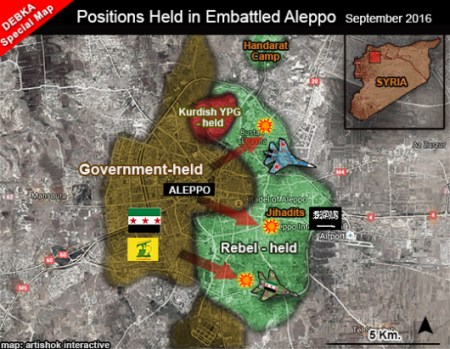
The Russian-Syrian reprisal came two days after the A-10 strike. On Sept. 19, an emergency aid convoy was obliterated on its way to the desperate population of Aleppo. Moscow and Damascus denied responsibility for the deadly bombardment, but no other air force was present in the sky over the embattled city.

On the ground, meanwhile, an unbridled onslaught on rebel-held eastern Aleppo was launched Wednesday by the Russians, Syria, Hizballah and pro-Iranian Shiite militias under the command of Iranian Revolutionary Guards officers.

The fall of Aleppo, Syria’s second city after Damascus, would give Bashar Assad his most resounding victory in the nearly six-year civil war against his regime.

On Sept. 29, Kerry threatened Moscow that “the United States would suspend plans to coordinate anti-Islamic State counter-terrorism efforts if Moscow does not stop attacking Aleppo.”

Russia’s Deputy Foreign Minister Sergey Ryabkov answered with a sneering: “Once again there was a certain emotional breakdown yesterday against the backdrop of the Obama administration’s unwillingness to fulfill its part of the agreements.”

This was a strong hint of the knowledge in the Kremlin that someone in the US administration was holding out against the implementation in full of the cooperation deal agreed upon and was therefore responsible for its breakdown.

The United States is left with two options:

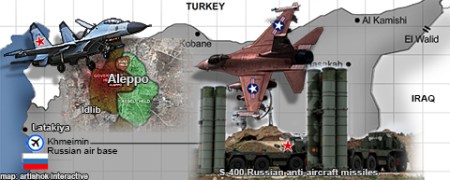
Either stand idly by in the face of the Russian-Syrian-Iranian onslaught on Aleppo, or shelve the coordination arrangements for US and Russian air operations in Syria, with the inevitable risk of a clash in the air space of Syria or over the eastern Mediterranean.

Rockets on Golan, Pentagon flouts Obama, no truce

September 18, 2016

Rockets on Golan, Pentagon flouts Obama, no truce, DEBKAfile, September 17, 2016


syria_golankipat

The Pentagon and US army are not following the orders of their Commander-in-Chief Barack Obama in the execution of the military cooperation accord in Syria concluded by US Secretary of State John Kerry and Russian Foreign Minister Sergei Lavrov in Geneva on Sept. 12.

Five days after the truce they agreed would go into effect Monday, fighting was still raging Saturday, Sept. 17.

DEBKAfile was the only Western publication to foresee this eventuality in an article published on July 18.

It was already evident then that any military cooperation agreement between the two powers would be contingent on America exposing its intelligence-gathering methods to Russia – not just in Syria but worldwide.

As our military sources predicted, this new intelligence sharing arrangement would necessarily extend to the Syrian Air Force as a third partner.

In advance of the deal, Moscow deployed its aircraft carrier, the Admiral Kutzenov, post haste to Syrian waters, to make sure that the Joint Implementation Center set up by the Kerry-Lavrov deal for intelligence-sharing would also apply to the warplanes and cruise missiles on the carrier’s decks and its escort of missile cruisers.

This deal was perceived in Moscow as an opportunity to study the combat methods and tactics practiced by the US Navy and Air force in real battlefield conditions.

But this eventuality was far from the intentions of US security and intelligence chiefs at a time of deepening adversity between Washington and Moscow.

The remarks of State Department spokesman Mark Toner on Thursday, Sept. 5 hinted at these conflicting perceptions: “I don’t think anyone in the US government is necessarily taking at face value Russia’s – or certainly not the Syrian regime’s – commitment to this arrangement.” He went on to say: “What really matters here is that the president of the United States supports this agreement, and our system of government works in such a way that everyone follows what the president says.”

Is that really so?

The fact that Kerry’s spokesman found it necessary to emphasize that “everyone follows what the president says,” strongly indicated that not everyone in Washington was in fact obeying the president.

Such disobedience is almost unheard of and would never be admitted publicly. In this case, it is being kept carefully under wraps.

Defense Secretary Ashton Carter and Chairman of the US Chiefs of Staff Gen. Joseph F. Dunford will never on any account admit that, in the execution of military collaboration with Russia in the Syrian conflict, they are not exactly carrying out the president’s precise instructions.

syrianceasefire480

But Washington sources report that Defense Secretary Carter maintains that he can’t act against a law enacted by Congress. He was referring to the law that prohibits all military-to-military relations with Russia as a result of Moscow’s annexation of the Crimea region of Ukraine.

According to DEBKAfile’s military sources, they are simply dragging their feet in ground operations. This is driving Vladimir Putin and his generals into fits of rage.

Friday, Sept 16, Lavrov accused the US of “stalling on its promise to separate moderate rebel groups in Syria from terrorists,” adding, “US progress in delivering on the promise is slow.”

Saturday, Putin himself burst out that the rebels were “regrouping under the ceasefire.” He put the blame on those “rebels” for the failure of the agreed truce to take effect after five days.

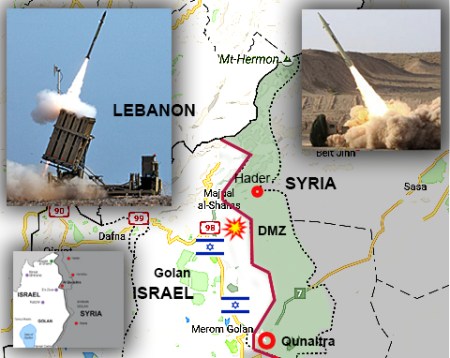
Our military and intelligence sources see a connection between Putin’s angry outburst and the rising tensions on the Syrian-Israeli border in the past week, culminating in the two Syrian rockets that were shot down Saturday over the Golan by Israel’s Iron Dome batteries.

For some time, the Russians and Syrians have made no bones about their objection to Israel’s policy of supporting a motley assortment of Syrian rebel groups in southern Syria close to its border. Among these groups is Al Qaeda’s Syrian arm Jabhat Al-Nusra (the Nusra Front) that has renamed itself Jahat Fath Al-Sham.

Whatever Assad, Iran or Hizballah may accept or reject, President Putin utterly refuses to tolerate Israel allowing the Nusra Front to control parts of this border sector.

Therefore, the rockets and missiles apparently “straying” across the border onto the Golan may well multiply in the coming days.

Yet another complication raised its head over the weekend when the US-backed rebel militia, the Free Syrian Army, vented its fury over the Kerry-Lavrov truce deal by driving away American Special Operations troops helping them in the battle for Al-Rai and abusing them as “infidels.”

The US blames the Russian leader for failing to force Bashar Assad to hold his fire and to let emergency supplies reach the beleaguered population in Aleppo, thereby undermining their ceasefire accord.

But it is becoming evident that the brutal standoff in Syria will be sustained until Putin is satisfied that the US is cooperating with Russian forces in Syria and the Mediterranean region in all spheres.

Before he decides to lean hard on Assad to cease hostilities, he will want to see the White House twisting the arms of the Pentagon and US forces to play ball in the most sensitive spheres.

Obama hands Syria over to Putin

September 10, 2016

Obama hands Syria over to Putin, DEBKAfile, September 10, 2016

putin_obama_g-20_china-1

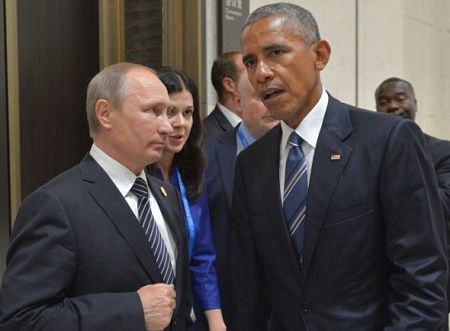
The Syrian cease-fire agreement that US Secretary of State John Kerry and Russian Foreign Minister Sergey Lavrov announced Friday night, September 9, in Geneva hands Syrian affairs over to Russia’s President Vladimir Putin and the country’s military.

The accord marked a sharp reversal for Washington. In his meeting with Putin in China last week, US President Barack Obama did not agree to those steps for the simple reason that such an agreement would be in line with the policy and stance of Republican presidential nominee Donald Trump, not those of the Democratic nominee Hillary Clinton.

Trump suggested several months ago that the US should let Putin finish the war in Syria, asserting that the Russian leader would be able to do it better.

Under the current situation it is no wonder that Kerry and Lavrov agreed not to release the details of the agreement.

Publication of the details would reveal that the rebels in the Aleppo area, and perhaps in all of Syria, have been abandoned.

The Syrian rebels now find themselves trapped by both the Russian-Turkish agreement and the Russian-US agreement, with a noose seemingly closing around them.

Meanwhile, on Friday, DEBKAfile released the following report:

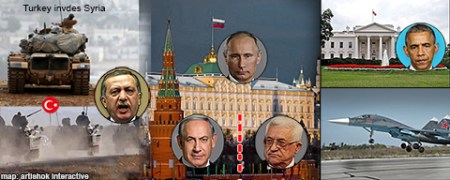
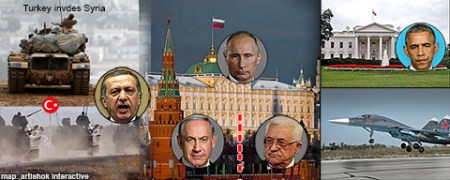
The fledgling “initiatives” reverberating this week in Washington, Moscow, Ankara, Jerusalem and the G20 summit were nothing but distractions from the quiet deals struck by two lead players, Russia and Turkey to seize control of the region’s affairs. Recep Tayyip Erdogan knew nothing would come of his offer on the G20 sidelines to US President Barack Obama to team up for a joint operation to evict ISIS from Raqqa. And, although Moscow was keen on hosting the first handshake in almost a decade between Israeli Prime Minister Binyamin Netanyahu and the Palestinian leader Mahmoud Abbas (Abu Mazen), neither were known to be ready for the last step toward a meeting.

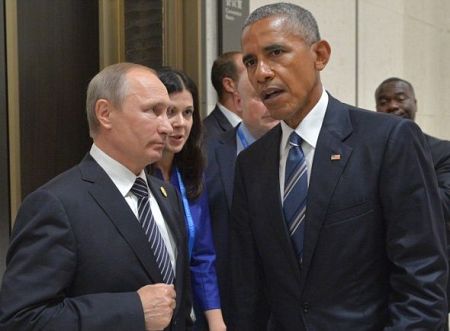
But the game-changing events to watch out for took place in Hangzhou without fanfare – namely, the Obama-Putin talks and the far more fruitful encounter between Putin and Erdogan.

According to DEBKAfile’s intelligence and Mid East sources, Putin virtually shut the door on further cooperation with the United States in Syria. He highhandedly informed Obama that he now holds all the high cards for controlling the Syrian conflict, whereas Washington was just about out of the game.

Putin picked up the last cards, our sources disclose, in a secret deal with Erdogan for Russian-Turkish collaboration in charting the next steps in the Middle East.

The G20 therefore, instead of promoting new US-Russian understanding, gave the impetus to a new Russian-Turkish partnership.

Erdogan raked in instant winnings: Before he left China, he had pocketed Putin’s nod to grab a nice, 4,000-sq.km slice of northern Syria, as a “security zone” under the control of the Turkish army and air force, with Russian non-interference guaranteed.

This Turkish zone would include the Syrian towns of Jarablus, Manjib, Azaz and Al-Bab.

Ankara would reciprocate by withdrawing its support from the pro-US and pro-Saudi rebel groups fighting the Assad army and its allies in the area north of Aleppo.

Turkey’s concession gave Putin a selling-point to buy the Syrian ruler assent to Erdogan’s project. Ankara’s selling-point to the West was that the planned security zone would provide a safe haven for Syrian refugees and draw off some of the outflow perturbing Europe.

kremlinwhitehouse480-1

It now turns out that, just as the Americans sold the Syrian Kurds down the river to Turkey (when Vice President Joe Biden last month ordered them to withdraw from their lands to the eastern bank of the Euphrates River or lose US support), so too are the Turks now dropping the Syrian rebels they supported in the mud by re-branding them as “terrorists.”

The head of this NATO nation has moreover gone behind America’s back for a deal with the Russian ruler on how to proceed with the next steps of the Syrian conflict.

Therefore, when US Secretary of State John Kerry met Russian Foreign Minister Sergei Lavrov in Geneva Thursday and Friday, Sept. 8-9, for their sixth and seventh abortive sit-downs on the Syrian issue, there was not much left for them to discuss, aside from continuing to coordinate their air traffic over Syria and the eastern Mediterranean.

Washington and Moscow are alike fearful of an accidental collision in the sky in the current inflammable state of relations between the two powers.

As a gesture of warning, a Russian SU-25 fighter jet Tuesday, Sept 6, intercepted a US Navy P8 plane flying on an international route over the Black Sea. When the Russian jet came as close as 12 feet, the US pilots sent out emergency signals – in vain, because the Russian plane’s transponder was switched off. The American plane ended up changing course.

Amid these anomalies, Moscow pressed ahead with preparations to set up a meeting between the Israeli and Palestinian leaders, as the Russian Foreign Ministry announced Thursday.

Putin is keen to succeed where the Obama administration failed. John Kerry abandoned his last effort at peacemaking as a flop two years ago.  But it is hard to see Netanyahu or Abu Mazen rushing to play along with the Russian leader’s plan to demean the US president in the last months of his tenure – especially when no one can tell who will win the November 8 presidential election – Hillary Clinton or Donald Trump – or what policies either will pursue.

All the region’s actors will no doubt be watching closely to see how Turkey’s “Russian track” plays out and how long the inveterate opportunists can hang together.

Putin-Erdogan deal for Syria is ME exit for Obama

September 9, 2016

Putin-Erdogan deal for Syria is ME exit for Obama, DEBKAfile, September 9, 2016

putin_obama_g-20_china

The fledgling “initiatives” reverberating this week in Washington, Moscow, Ankara, Jerusalem and the G20 summit were nothing but distractions from the quiet deals struck by two lead players, Russia and Turkey to seize control of the region’s affairs. Recep Tayyip Erdogan knew nothing would come of his offer on the G20 sidelines to US President Barack Obama to team up for a joint operation to evict ISIS from Raqqa. And, although Moscow was keen on hosting the first handshake in almost a decade between Israeli Prime Minister Binyamin Netanyahu and the Palestinian leader Mahmoud Abbas (Abu Mazen), neither were known to be ready for the last step toward a meeting.

But the game-changing events to watch out for took place in Hangzhou without fanfare – namely, the Obama-Putin talks and the far more fruitful encounter between Putin and Erdogan.

According to DEBKAfile’s intelligence and Mid East sources, Putin virtually shut the door on further cooperation with the United States in Syria. He highhandedly informed Obama that he now holds all the high cards for controlling the Syrian conflict, whereas Washington was just about out of the game.

Putin picked up the last cards, our sources disclose, in a secret deal with Erdogan for Russian-Turkish collaboration in charting the next steps in the Middle East.

The G20 therefore, instead of promoting new US-Russian understanding, gave the impetus to a new Russian-Turkish partnership.

Erdogan raked in instant winnings: Before he left China, he had pocketed Putin’s nod to grab a nice, 4,000-sq.km slice of northern Syria, as a “security zone” under the control of the Turkish army and air force, with Russian non-interference guaranteed.

This Turkish zone would include the Syrian towns of Jarablus, Manjib, Azaz and Al-Bab.

Ankara would reciprocate by withdrawing its support from the pro-US and pro-Saudi rebel groups fighting the Assad army and its allies in the area north of Aleppo.

Turkey’s concession gave Putin a selling-point to buy the Syrian ruler assent to Erdogan’s project. Ankara’s selling-point to the West was that the planned security zone would provide a safe haven for Syrian refugees and draw off some of the outflow perturbing Europe.

kremlinwhitehouse480

It now turns out that, just as the Americans sold the Syrian Kurds down the river to Turkey (when Vice President Joe Biden last month ordered them to withdraw from their lands to the eastern bank of the Euphrates River or lose US support), so too are the Turks now dropping the Syrian rebels they supported in the mud by re-branding them as “terrorists.”

The head of this NATO nation has moreover gone behind America’s back for a deal with the Russian ruler on how to proceed with the next steps of the Syrian conflict.

Therefore, when US Secretary of State John Kerry met Russian Foreign Minister Sergei Lavrov in Geneva Thursday and Friday, Sept. 8-9, for their sixth and seventh abortive sit-downs on the Syrian issue, there was not much left for them to discuss, aside from continuing to coordinate their air traffic over Syria and the eastern Mediterranean.

Washington and Moscow are alike fearful of an accidental collision in the sky in the current inflammable state of relations between the two powers.

As a gesture of warning, a Russian SU-25 fighter jet Tuesday, Sept 6, intercepted a US Navy P8 plane flying on an international route over the Black Sea. When the Russian jet came as close as 12 feet, the US pilots sent out emergency signals – in vain, because the Russian plane’s transponder was switched off. The American plane ended up changing course.

Amid these anomalies, Moscow pressed ahead with preparations to set up a meeting between the Israeli and Palestinian leaders, as the Russian Foreign Ministry announced Thursday.

Putin is keen to succeed where the Obama administration failed. John Kerry abandoned his last effort at peacemaking as a flop two years ago.  But it is hard to see Netanyahu or Abu Mazen rushing to play along with the Russian leader’s plan to demean the US president in the last months of his tenure – especially when no one can tell who will win the November 8 presidential election – Hillary Clinton or Donald Trump – or what policies either will pursue.

All the region’s actors will no doubt be watching closely to see how Turkey’s “Russian track” plays out and how long the inveterate opportunists can hang together.

Syrian Opposition Official: West Responsible For Assad Remaining In Power; U.S. Enabled Russia To Become Main Player In Syria Crisis

May 19, 2016

Syrian Opposition Official: West Responsible For Assad Remaining In Power; U.S. Enabled Russia To Become Main Player In Syria Crisis, MEMRI, May 18, 2016

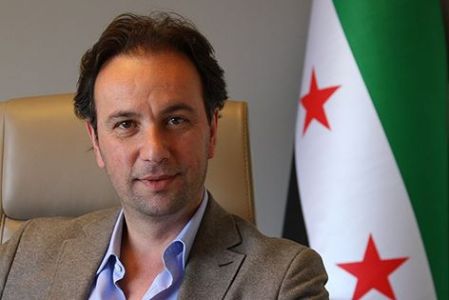
Khaled Khoja, who served as president of the National Coalition for Syrian Revolutionary and Opposition Forces until March 2016, gave an interview to the London-based Saudi daily Al-Sharq Al-Awsat on April 17, 2016, in which he harshly attacked the international community and particularly the U.S. Khoja argued that the U.S. never desired regime change in Syria and therefore did not take a decisive stand against Bashar Al-Assad despite his many crimes, and did not significantly support the Syrian opposition. According to him, the Americans showed apathy regarding the crisis, enabling Russia to fill the vacuum that they had created in a way that suited Russian interests. He added that the purpose of American military aid to the Kurds was to create a Kurdish canton, which would effectively lead to the splintering of Syria. Khoja stressed that the Syrian High Negotiations Committee remains insistent that the first step is to establish a transitional governing body, and only then can a new constitution, elections, and other topics be addressed.

It should be mentioned that the interview was given prior to the April 19 announcement by the head of the Syrian High Negotiations Committee, Riyad Hijab, that its delegation was suspending its participation in the Geneva talks.

Following are excerpts from the interview:[1]

28054Khaled Khoja (image: Zamanalwsl.net)

We Insist On A Serious Transition Of Power And All Authority

Khoja started by mentioning the Syrian High Negotiations Committee’s expectations from the current round of the Geneva talks: “We are here to focus on forming the governing body for the transitional phase. U.S. Special Envoy Staffan de Mistura is continuing his relentless efforts to begin discussing the political transitional phase, which will be based on establishing the ‘governing body,’ as stated in the Geneva announcement, UN Security Council Resolution 2218, and other resolutions. We have been empowered by opposition forces to discuss realizing these goals and we cannot deviate from them. Negotiations today should pick up where Geneva II left off [in February 2014] under the supervision of [former UN Special Envoy to Syria] Lakhdar Brahimi. We must start by forming this [governing] body and then proceeding to discuss the issues of the constitution, the elections, and other matters that fall under the governing body’s authority. Naturally, we have clear views on all these issues, which we will reveal at the appropriate time. I wish to say that we reject the verbal slips replacing the phrase ‘transitional governing body’ with ‘transitional regime’ or ‘transitional government’ and adhere to ‘transitional phase governing body’ and all it implies – meaning a serious transition of power and all authority.”

International And American Support For The Opposition Is Feeble

According to Khoja, “the position of international, and especially American, support for the Syrian opposition is feeble. The sad thing is that the true positions [of the U.S. and international community] regarding Assad is still feeble and vague despite all the evidence marking Bashar Al-Assad as a ‘war criminal,’ and despite the many official American statements that hold him responsible for ongoing killing and acts of slaughter. The lack of international political desire to push for the start of the transitional political phase in Syria has provided Assad and the parties supporting him, whether Iranians or Russians, with room to maneuver, enabling him [Assad] to continue heading the regime and to remain a chaos-creating factor in the region, [a factor] which exacerbates the refugee crisis and uses it as a card for pressuring neighboring countries and Europe, and which exports ISIS and terrorism…”

U.S. Apathy Is A Main Factor In Russia Becoming The Main Player In The Crisis

Khoja said further: “There is clearly American apathy regarding the Middle East, which opens the door for Russia to fill the vacuum left by the Americans… When we speak of the mass extermination of the Syrian people, their expulsion, the use of chemical weapons against them, the documentation of regime crimes in detention centers, forced disappearances, preplanned acts of murder, and red lines that have become green lights – all this causes observers to lose faith in the American position… Had the Americans not created this vacuum, we would not have been in the state we are in today, and Russia would not have become the main player in the crisis, holding the reins of initiative… Politically speaking, I believe the American position has not changed much since the onset of the Syrian revolution… [From the start] there was no real American support for change… The military aid we received [from the U.S.] is no match for the [American] military aid received by the Kurdish [Democratic] Union Party and the Kurdish People’s Defense Unit militias [YPG]. We believe that this aid for the Kurds was meant to create a new Kurdish ‘canton’ and to enforce a new reality as a foregone conclusion. American apathy has turned Syria into a series of ‘cantons’. The ‘Southern Canton,’ which is apart from the ‘Northern Canton,’ the ‘Kurdish Canton,’ and the ‘Alawi Canton.’ We cannot discount the possibility that as part of the political process, we will see a strengthening of [the phenomenon] of these cantons, but we will absolutely not agree to this…”

Syria Cannot Remain A Group Of Cantons In The Medium And Long Term

Khoja said that during the second round of negotiations there was talk of a federal solution that was “marketed by the Americans, the Russians, and UN Special Envoy de Mistura, who spoke openly and explicitly in one press conference on the topic of federation. Except that he did not discuss this issue with us, but rather only with other parties. The Russians did not hide their support for the federal solution and in my opinion, there is a serious attempt to create facts on the ground in Syria in order to strengthen the ‘canton’ situation.

“Any international solution, regardless of which parties promote it, cannot impose a situation that the Syrian people do not agree to. It is possible that the current situation will continue in the near future, but not in the medium and long term. The proof of this is that in the 1920s, the French tried to establish four statelets in Syria, but they only lasted a few years.”


Endnotes:


[1] Al-Sharq Al-Awsat (London), April 17, 2016.

Arab Press Reports On U.S.-Russia Understandings Allowing Assad To Remain In Power In Syria During Transitional Phase

April 22, 2016

Arab Press Reports On U.S.-Russia Understandings Allowing Assad To Remain In Power In Syria During Transitional Phase, MEMRI, N. Mozes*, April 22, 2016

(The analysis does not mention the Arab press’ reaction to the Putin – Obama agreement to turn Golan over to Syria. — DM)

According to many reports in the Arab press in recent days, alongside the indirect talks in Geneva between the Syrian regime and opposition that are being mediated by UN Special Envoy Staffan de Mistura, the U.S. and Russia have been conducting separate secret talks to draw up understandings on resolving the crisis. The reports state that the U.S. is inclined to accept the position of the Syrian regime and its Russian ally, namely, that the idea of a transitional governing body should be abandoned in favor of a joint regime-opposition body, and that the Syrian regime should remain in the hands of President Bashar Al-Assad, at least in the transitional phase.

Concurrently, during his talks with the regime and opposition delegations, de Mistura presented an idea that he claims he did not initiate, which involves Assad remaining as a figurehead president and appointing deputies to whom he would delegate his political and military authority. It is hard to imagine that the U.S. and Russia were unaware of this proposal, which is in line with what has been reported on their own understandings regarding Assad’s remaining president during the transitional period. These reports, if true, show that the U.S. has backed down even further from its position vis-à-vis Assad and the Syrian opposition, and that it is disregarding the clause in the 2012 Geneva I communique calling for the establishment of a transitional body with full authority.

Arab press reports on these U.S.-Russia efforts increased greatly after Secretary of State John Kerry’s March 24, 2016 meetings with Russian Foreign Minister Sergey Lavrov and President Vladimir Putin. Following the meetings, Kerry said that both sides had agreed to step up their efforts to achieve a political transition in Syria and had agreed on a timetable and that a draft constitution would be submitted in August 2016.[1] On April 8, Kerry confirmed reports that the U.S. was further backing down from its previous position when he told the Saudi Al-Arabiya TV channel that while Assad can no longer lead his country in light of the many crimes he had committed, he would still be present at the start of the transitional phase. He added that if Assad would facilitate this phase, then a safe exit for him could be discussed.[2]

According to the Arab reports, the U.S.-Russia understandings would be imposed on the parties involved, as with the February 12, 2016 agreement on cessation of hostilities. In another similarity to that agreement, the Assad regime will be the main one to benefit.

This paper will review the reports on U.S.-Russia understandings on the Syrian crisis:

27751U.S. Secretary of State John Kerry and Russian Foreign Minister Lavrov (image: Orient-news.net, April 17, 2016)

Anti-Assad Media: American-Russian Deal Includes Assad Remaining In Power

On April 16, 2016, three days after the start of the third round of indirect talks in Geneva between the Syrian regime and opposition under the mediation of UN Special Envoy Staffan de Mistura, the London-based Saudi daily Al-Sharq Al-Awsat reported that Western diplomats “are warning that there will be a U.S.-Russia deal on Syria before the summer.” According to the report, it is the Americans who are pressuring the Russians to arrive at understandings that are to be “very close to the Russia proposal regarding the nature of the transitional phase, the regime, the constitution, and the elections.” The diplomats cited in the report said that the U.S. is trusting Moscow to find a solution for the Syrian crisis while ignoring Western and regional elements.[3]

The following day, the newspaper reported that the U.S. and Russia were discussing not only “regime leader Bashar Al-Assad’s remaining in power during the transitional phase, but also the central role he would play in it, including in drafting a constitution and in the elections set for 18 months after the start of negotiations between the sides.”[4] In a later report, the paper cited Western sources who warned against recycling “the Yemen model” under which Yemen president ‘Ali ‘Abdallah Saleh had officially been removed but had in effect remained in control of the armed forces and in possession of many political cards.[5]

On April 17, the London-based Saudi daily Al-Hayat also reported on the U.S.-Russia talks. According to the daily, Robert Malley, the White House Coordinator for the Middle East and chief advisor to President Obama on Syria, and Putin’s Syria envoy Alexander Lavrentiev were holding intensive talks behind the scenes with the aim of drawing up “constitutional and political principles” based on a “political partnership” between the regime and the opposition, “in accordance with an improved Lebanese model.”[6] Under this proposal, the regime and opposition would share executive, military, security, legal, and constitutional authority. The newspaper also stated that Obama would present these understandings during his visit to the Gulf states on April 21, and that the Russians would present them to Qassem Soleimani, commander of the Qods Force of Iran’s Islamic Revolutionary Guard Corps (IRGC), who recently visited Moscow. The understandings would then be brought before Syrian regime representatives, and a “select list” of oppositionists who agree to a political solution.[7]

On April 18, 2016, the London-based daily Al-Arabi Al-Jadid reported that in light of the Geneva talks’ failure so far to bring the sides closer together, representatives of presidents Obama and Putin are working in Geneva to formulate an alternative plan in the event that the negotiations fail; this plan would be imposed on the sides via a UN Security Council resolution, under Chapter VII of the United Nations Charter. Two main proposals to resolve the crisis were presented at these U.S.-Russia Talks: The first is based on the principle of a “political partnership” among all elements of Syrian society, which would be more comprehensive than the 1989 Taif Agreement and would include leaving Assad in power, because he controls the main power base in Syria. The second proposal includes the establishment of a transitional council comprising eight technocrats; this council would lead the transitional phase.[8]

Russian Foreign Minister Lavrov denied the reports about secret U.S.-Russia talks, stressing that they were “routine consultations.”[9] However, during the regime-opposition Geneva talks, de Mistura brought the delegations a proposal “from an expert” that also involved Assad’s remaining in power, at least temporarily. Under this proposal, he would continue to serve as president and would appoint three deputies to whom he would delegate his political and military authority and who would manage the country during the transitional phase.[10] It is hard to imagine that the U.S. and Russia, who sponsor the Geneva talks, were unaware of this proposal, which is in line with what has been reported on their own understandings regarding Assad’s remaining president during the transitional period.

As noted, these reports come in addition to similar reports in the Arab press following Kerry’s March 24 visit to Moscow that focused on a U.S.-Russia convergence on the issue of the Syrian crisis. Thus, the London-based Qatari daily Al-Quds Al-Arabi reported on March 29, 2016 that the U.S. and Russia had drawn up the general details of a three-point plan that includes general parliamentary elections under UN auspices, a new constitution, and creation of a presidential election mechanism allowing Assad to run “even though the U.S. would prefer that Russia persuade him not to do so.” The report also added that the president’s authority would be downgraded.[11]  Al-Hayat reported on March 31 that Kerry had informed Arab countries that the U.S. and Russia had arrived at understandings that included Assad’s exit to another country, but not a timetable for it.[12]

On April 11, 2016, a Syrian oppositionist website reported that Russia had prepared an alternative plan in case the Geneva talks failed; it dictated the establishment of a military council comprising both regime and opposition elements; this council would rule the country and prepare for parliamentary and presidential elections. Under this plan, there would be no transitional phase and no interim ruling body, as neither are compatible with the current Syrian constitution. Russia reportedly presented this plan to Kerry during the latter’s Moscow visit, and Kerry assured his hosts that the U.S. would not oppose it but that Russia would have to persuade the opposition to accept it.[13]

Kerry: Assad Should Remain For Start Of Transitional Phase

The American administration’s statements on resolving the Syrian crisis are rife with internal contradictions. For example, officials repeatedly state that Assad is illegitimate because of his crimes against his people, and that he cannot unite Syria, but at the same time Kerry said that Russia and the U.S. have agreed that he should remain for the start of the transitional phase. This effectively confirms reports that the American position is moving closer to the Russian one, and that the former no longer objects to Assad’s remaining in power during the transitional phase.

In an April 8, 2016 interview, Kerry told the Saudi Al-Arabiya TV: “During the transitional phase, Assad will remain in power in accordance with the Geneva [I] communique, since this communique required joint [regime and opposition] consensus regarding the phase. This means that both Assad and the opposition must join this consensus… The U.S. and Russia have reached an agreement that was reached also with many other countries, that is, there is no escaping a transitional phase followed by a united, secular, and non-sectarian Syria… Likewise, we agreed that Assad should be present at the start of the transitional phase…

“The Russians have made it clear that Assad has assured them that he will participate in the transitional phase and support the drafting of a new constitution and the holding of presidential elections. If he does not meet his commitments, I do not believe the Russians will continue to support him.”

In response to the question of whether Assad would be allowed safe passage out of Syria if he agreed to step down, Kerry responded: “… If Assad is willing to be a constructive factor in the efforts to make peace in Syria, this safe passage would receive significant attention, and the sides should seriously consider this effort and enable Assad to live safely, which is what I wish for him…”[14]

On April 16, a Syrian opposition website also reported that the U.S. had agreed to postpone the debate on Assad’s fate, and stated that Kerry, on his April 7 visit to Bahrain, had told the Gulf Cooperation Council foreign ministers that Assad’s withdrawal from power should not be discussed at this time.[15]

U.S.-Russia Military Coordination

Although U.S. administration officials reject the prospect of military coordination with Russia and the Syrian regime against the Islamic State (ISIS), there are indications of U.S.-Russia coordination regarding military activity in Syrian territory. Thus, the Syrian Democratic Forces – an umbrella organization of Kurdish and Sunni Arab forces fighting ISIS, Jabhat Al-Nusra, and Islamist opposition factions – received aerial support from both the U.S.-led international coalition and the Russian air force during its takeover of the city of Al-Shaddadi in southern Al-Hasakah in northwest Syria.[16] On March 24, the Pentagon reported that international coalition jets had bombed an ISIS post near Tadmur.[17]  A Syrian oppositionist website reported that this attack was carried out as regime forces, backed by the Russian air force, reached the outskirts of the city.[18]

The Syrian Opposition Fears That The U.S. Will Back Down Still More From Its Original Position

The Syrian opposition, represented by the High Negotiations Committee (HNC) that was established in Riyadh, expressed grave concern at the reports of an imminent U.S.-Russia deal enabling Assad to remain in power, and displeasure at the U.S. for not updating it on the details of such a deal. [19] On April 2, 2016, HNC general coordinator Riyad Hijab said: “It is clear that the U.S. has agreed with Russia on vague matters of whose nature we are not being informed… We do not fear rapprochement between the U.S and Russia, but rather the vagueness and opaqueness of these relations.”[20] Basma Qadmani, a member of the HNC delegation to the Geneva talks, stressed: “The American ambiguousness is disturbing to the Syrian opposition… We do not know what the U.S. discussed with Moscow. There are all sorts of rumors, and we are waiting for the U.S. to confirm that it still opposes leaving Assad in power.”[21]

In light of this ambiguity, HNC officials stressed that the purpose of the current Geneva talks was to establish a transitional governing body with full authority in accordance with the Geneva I communique, which they interpret as including Assad’s departure and a replacement of the existing regime.

* N. Mozes is a research fellow at MEMRI.

Endnotes:

[1] Nytimes.com, March 24, 2016.

[2] Alarabiya.net, April 8, 2016.

[3] Al-Sharq Al-Awsat (London), April 16, 2016.

[4] Al-Sharq Al-Awsat (London), April 17, 2016.

[5] Al-Sharq Al-Awsat (London), April 18, 2016.

[6] A reference to the 1989 Taif Agreement that ended the Lebanese civil war and distributed political, civil, and military authority in the country along sectarian lines. Past reports indicated an intention to implement the Lebanese model in Syria as well.

[7] Al-Hayat (London), April 17, 2016.

[8] Al-Arabi Al-Jadid (London), April 18, 2016.

[9] Sputniknews.com, April 18, 2016.

[10] Webtv.un.org, April 18, 2016.

[11] Al-Quds Al-Arabi (London), March 29, 2016.

[12] Al-Hayat (London), March 31, 2016.

[13] Orient-news.net, April 11, 2016.

[14] Alarabiya.net, April 8, 2016.

[15] Alsouria.net, April 16, 2016.

[16] Orient-news.net, February 19, February 20, 2016.

[17] Defense.gov, March 24, 2016.

[18] Zamanalwsl.net, March 24, 2016.

[19] See MEMRI Special Dispatch No. 6280, Syrian Opposition On Eve Of Geneva Talks: U.S. Made ‘A Scary Retreat’ From Its Former Position, January 27, 2016.

[20] Etilaf.org, April 2, 2016.

[21] Orient-news.net, April 3, 2016.

IDF’s drill secures Netanyahu-Putin summit

April 18, 2016

IDF’s drill secures Netanyahu-Putin summit, DEBKAfile, April 18, 2016

1 (3)

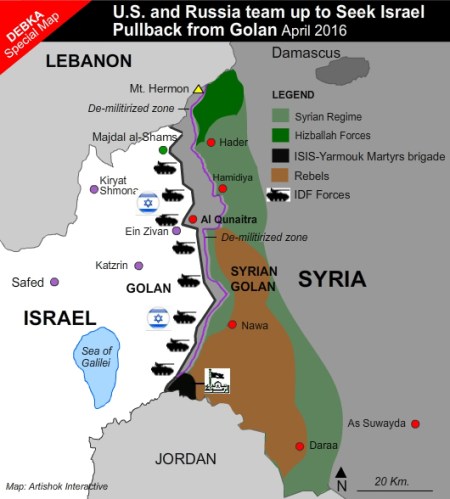
The IDF launched an unannounced military-air exercise in northen Israel Monday April 18. It will also be held in the Jordan valley, strategically located south of the Golan Heights and the Sea of Galilee. Despite the official explanation that the drills are part of the IDF’s training schedule for 2016, it is difficult not to see it as a follow-up to the Cabinet meeting on the Golan the previous day, including Prime Minister Benyamin Netanyahu’s declaration that “Israel will never withdraw from the Golan.”

Just as the Cabinet meeting was an “emergency” one, the exercise is not part of standard training, as an IDF statement claimed, but rather part of the overall picture of the war in Syria on the other side of the northeastern border.

The drill is mainly intended to prevent a possible attack by ISIS, Syrian, Iranian or Hizballah forces aimed at torpedoing Netanyahu’s discussions in Moscow with Russian President Vladimir Putin on Thursday, April 21.

DEBKAfile’s military sources report that the IDF exercise shows only half of the military picture in the area.
On the other side of the border, in the triangular pocket where the Israeli, Syrian and Jordanian borders meet, heavy fighting has been underway for several days between Syrian rebels and forces of the Yarmouk Martyrs Brigades and the al-Muthanna organization, which have both sworn allegiance to ISIS. The battles are taking place across from Israel’s Hamat Gader, south of the Sea of Galilee, which is the reason why the exercise is also being held in the Jordan Valley.

On the other side of the border, in the triangular pocket where the Israeli, Syrian and Jordanian borders meet, heavy fighting has been underway for several days between Syrian rebels and forces of the Yarmouk Martyrs Brigades and the al-Muthanna organization, which have both sworn allegiance to ISIS. The battles are taking place across from Israel’s Hamat Gader, south of the Sea of Galilee, which is the reason why the exercise is also being held in the Jordan Valley.

On the other side of the border, in the triangular pocket where the Israeli, Syrian and Jordanian borders meet, heavy fighting has been underway for several days between Syrian rebels and forces of the Yarmouk Martyrs Brigades and the al-Muthanna organization, which have both sworn allegiance to ISIS. The battles are taking place across from Israel’s Hamat Gader, south of the Sea of Galilee, which is the reason why the exercise is also being held in the Jordan Valley.

On Sunday, the leader and commander of Al-Muthanna was killed during the fighting. The goal of the rebel attack is to capture the Syrian villages in the territory held by ISIS, which threatens the Galilee and the Golan communities of Tel Katzir, Shaar Hagolan and Masada. Sources in Kuwait reported last week that Jordanian special forces and Israeli drones marked in the colors of the Jordanian air force are participating in the battles. The developments on the ground indicate that the goal of the attacking forces is to uproot ISIS from the Israeli and Jordanian border areas.

DEBKAfile’s sources provided the following exclusive details on April 17:   

The Israeli cabinet holds its weekly session Sunday April 17, on the Golan. Prime Minister Benyamin Netanyahu will visit Moscow on Thursday, April 21 to meet with Russian President Vladimir Putin and to launch the most important battle of his political career, and one of Israel’s most decisive contests of the last 10 years: the battle over the future of the Golan Heights.

DEBKAfile’s intelligence sources and its sources in Moscow report exclusively that Israel’s top political leaders and military commanders were stunned and shocked last weekend when they found out that US President Barack Obama and Russian President Vladimir Putin have agreed to support the return of the Golan to Syria. The two presidents gave their top diplomats, Secretary of State John Kerry and Foreign Minister Sergei Lavrov, the green light to include such a clause in a proposal being drafted at the Geneva conference on ending the Syrian civil war.

Israeli prime minister Benjamin Netanyahu seen during a security and defense tour in the Golan Heights, near the Northern Israeli border with Syria. April 11, 2016. Photo by Kobi Gideon/GPO *** Local Caption *** ??? ?????? ?????? ?????? ????? ?????? ?????. ????? ?????? ?????? ????? ?? ????? ??????? ???? ????? ?????? ?????? ?????

Israeli prime minister Benjamin Netanyahu seen during a security and defense tour in the Golan Heights, near the Northern Israeli border with Syria. April 11, 2016. Photo by Kobi Gideon/GPO

Israel captured the Golan from the Syrian army 49 years ago, during the Six-Day War in 1967 after the Syrian army invaded Israel.

In 1981, during the tenure of then Prime Minister Menachem Begin, Israel passed a law defining the Golan as a territory under Israeli sovereignty. However, it did not state that the area belongs to Israel.

While Israel was preparing for a diplomatic battle over the future of Jerusalem, Judea and Samaria, Obama and Putin decided to deal a diplomatic blow to Israel and Netanyahu’s government on an unexpected issue, the Golan.

It is part of an endeavor by the two powers to use their diplomatic and military cooperation regarding Syria to impose agreements on neighboring countries, such as Israel, Turkey, Saudi Arabia and Jordan.

For example, Washington and Moscow are trying to impose an agreement regarding the granting of independence to Syrian Kurds, despite Ankara’s adamant opposition. The two presidents are also pressuring Riyadh and Amman to accept the continuation of Syrian President Bashar Assad’s rule, at least for the immediate future.

DEBKAfile’s sources report that just like the other diplomatic or military steps initiated by Obama and Putin in Syria, such as those for Assad’s eventual removal from power, the two powers see a resolution of the Golan issue as a gradual process that may take a long time, perhaps even years. But as far as they are concerned, Israel will have to withdraw from the Golan at the end of that process.

It should be noted that Prime Minister Netanyahu is not traveling to Washington to discuss the Golan issue with Obama. The frequent trips by the prime minister, senior officials and top IDF brass to Moscow in recent months show where the winds are blowing in the Middle East.

However, Moscow is not Washington, and Israel has no lobby in the Russian capital defending its interests.

It should be made very clear that the frequent trips by senior Israeli officials to Moscow have not created an Israeli policy that can influence Putin or other senior members of the Russian leadership. Putin has made occasional concessions to Israel on matters of minimal strategic importance, but on diplomatic and military steps regarding Syria and Iran he has shown little consideration of Jerusalem’s stance.

It should also be noted that there has been no basis for the enthusiasm over the Russian intervention in Syria shown by Netanyahu, Israeli ministers and senior IDF officers.

All of the calls by a number of Russia experts, mainly those of ll of the calls by a number of Russia experts, mainly those of DEBKAfile, for extreme caution in ties with Putin have fallen on deaf ears among the political leadership in Jerusalem and the IDF command in Tel Aviv.

Amid these developments, three regional actors are very pleased by Washington and Moscow’s agreement to demand Israeli withdrawal from the Golan: Syrian President Assad, the Iranian leadership in Tehran and Hizballah leader Hassan Nasrallah.

Now, they do not need to risk a military confrontation with Israel over the Golan because Obama and Putin have essentially agreed to do the dirty work for them.

Putin Praises Obama’s “Strength”

April 15, 2016

Putin Praises Obama’s “Strength” Front Page Magazine, Daniel Greenfield, April 14, 2016

obama-medvedev-mar-2012-2

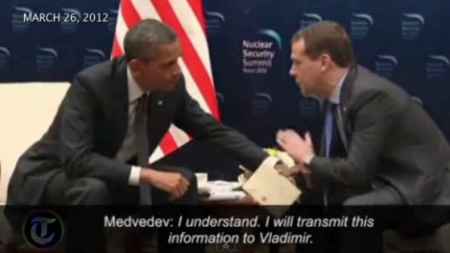
This is A+ trolling. Count on a KGB guy to take Obama’s “weakness is strength” meme and turn it around on him.

“That’s very good that my colleague possesses the courage to make such statements.”

“Barack, as a senator, criticized the administration for its actions in Iraq. But, as president, he allowed a mistake to happen, he has said it himself, in Libya. Not everyone can do that. They snap at him from different sides over that but only a strong man could have done that.”

A very strong man. Let’s get some context on that.

Obama dismissed the notion that Putin was acting “out of strength,” telling the San Diego station the annexation of Crimea was an action taken “out of weakness.”

So Putin turned Obama’s contention that weakness is strength and strength is weakness by praising his weakness as strength. Does Putin mean this? This is a regime whose propagandists depict Obama on toilet paper. But this throws in a dose of mockery and some trolling that Obama is unlikely to get as he’s eating up the flattery.

Now if Putin does encounter a strong US president, he’ll call him weak.

When asked whether he regretted Obama’s leaving office, Putin said, “We all go sooner or later, probably. It’s pointless to regret.”

I bet.

Putin’s Message

April 15, 2016

Putin’s Message, Power LineScott Johnson, April 14, 2016

Vladimir Putin has a message for Barack Obama and the United States, a message he sent via Russian warplanes buzzing the Navy destroyer Donald Cook in the Baltic Sea. Yesterday the Pentagon released video of the jets flying extremely close to the ship more than 30 times over the past two days. Military Times originally reported the story yesterday here. CBS News quotes the Obama administration calling the “simulated attack” passes unsafe. The video below shows two Russian jets coming incredibly close on one of their passes.

https://www.youtube.com/watch?v=j6g_Wli7WJY

Putin’s message is that he holds Obama in the utmost contempt and that it is safe for him to show it. He knows Obama thinks him retrograde. Obama transcends concerns about national pride as a relic of the past. Putin wants to spread his message and publicize Obama’s attitude to those who take matters of national pride and humiliation seriously, even if it is redundant in both cases.

President Of Kremlin-Funded Think Tank Calls For A ‘Reset’ Of Russia–U.S. Relations

March 29, 2016

President Of Kremlin-Funded Think Tank Calls For A ‘Reset’ Of Russia–U.S. Relations, MEMRI, March 29, 2016

The Kremlin-funded think tank Russian International Affairs Council (RIAC) recently published on its website an article by Igor Ivanov, the think tank’s president of and former minister of foreign affairs of the Russian Federation (1998–2004). In the article, titled “Russia-U.S. relations: The Limits of the Possible” on the RIAC’s website. In the article Ivanov explains that the main goal of Russia-U.S. relations today is to create conditions to end the crisis between the two countries.

Ivanov presents an analysis of the recent crisis in Russia-U.S. relations and points out that the relations are now very different from what they were during the Cold War. He also admits that today’s Russia cannot compete with the U.S. in the same way the USSR could.[1] However, Ivanov warns that the risk of “the political confrontation turning into a military one continues to grow.”

It should be noted that U.S. Defense Secretary Ashton Carter, speaking at a U.S. Senate hearing devoted to the U.S. military budget on March 17, 2016, listed Russia, China, North Korea, Iran, and terrorism as the five evolving strategic challenges that are driving the U.S. Department of Defense’s planning and budgeting.[2] In 2015, Gen. Joseph Dunford, chairman of the U.S. Joint Chiefs of Staff, stated that Russia represents the “greatest threat to the [U.S.] national security.” He then added: “If you want to talk about a nation that could pose an existential threat to the United States, I’d have to point to Russia.”[3]

On March 23-24, 2016, U.S. Secretary of State John Kerry visited Moscow and met with Russian President Vladimir Putin and Foreign Minister Sergei Lavrov. According to reports, the meeting, which focused on Syria and the Ukrainian crisis, was “relaxed”, “friendly” and characterized by a “touch of humor, “and “John Kerry and Sergei Lavrov moved from reciprocal accusations to dialogue.”[4] However, Kerry told his hosts that President Barack Obama would lift sanctions off Russia only if the Minsk agreements concerning Ukraine were implemented.[5]

According to Ivanov, in order to avoid worst-case scenarios between Russia and the U.S., specific steps must be taken immediately, without waiting for new American and Russian administrations to take office in 2017 and 2018, respectively. He stresses that it is necessary to address those areas of international relations where, in the absence of cooperation, the two sides will face growing problems, especially because neither side is interested in the collapse of the current international system. Hence, the damage control channels of U.S.-Russia dialogue should be restored, the hostile rhetoric should be muted and positive aspects of bilateral relations should be protected and strengthened. Tension may also be reduced if both countries participate in multilateral mechanisms and forums, in which they can demonstrate flexibility without appearing to make unilateral concessions. Ivanov also recommends developing connections between Russian and American civil society, and strengthening Russian studies departments in the U.S. and American studies departments in Russia as a means to promote constructive dialogue.

It is worth noting that the Russian pro-Kremlin media are masters of doublespeak when it comes to the U.S. On the one hand, the threat of an imminent U.S.-Russia confrontation is a constant leitmotif;[6] on the other hand, editorialists and the Kremlin itself declare Russia’s interest in cooperating closely with the West.[7]

The Following are excerpts from the English version of Ivanov’s article, published on the RIAC website on March 16: [8]

27419Igor Ivanov (Source: Russiancouncil.ru)

The Risk Of The Russia-U.S. Political Confrontation Becoming A Military Confrontation Continues To Grow

“…It has become fashionable lately to speak of a new chapter in the Cold War in global politics, and draw parallels between the current standoff between Moscow and Washington and the Soviet–U.S. confrontation that dominated the second half of the 20th century. But it seems like a bit of a stretch: relations between Moscow and the White House were the main axis of world politics during the Cold War, whereas now they are still important, but they do not determine the global system. We no longer live in a bipolar world, and returning to the rigid bipolarity of the Cold War is impossible.

“Moreover, ideology is not at the core of the current standoff between Russia and the United States, as it was during the Cold War (Soviet communism versus Western democracy). The antagonistic conflict of civilizations dominant today is not between the United States and Russia, of course, but between Western liberalism and Islamic fundamentalism.

“Finally, while Russia may remain a great power in terms of its potential, it is unable to compete with the United States in a number of fields in the same way that the Soviet Union did, particularly in terms of economy and high technology…

“Does all this mean that the current crisis in Russia–U.S. relations is any less dangerous than the situation during the Cold War? Quite the opposite. At that time [during the Cold War], Moscow and Washington were able to set certain rules that served to reduce the risks of an uncontrolled confrontation breaking out. By combining efforts, we created a dense infrastructure of communication channels, consultation mechanisms, and bilateral and multilateral agreements designed to increase the predictability and manageability of international situations. The unique architecture of bilateral relations between Moscow and Washington that existed during the Cold War was mostly stable, and this enabled it to remain almost completely unchanged for quite a long time.

“The current state of Russia–U.S. relations can hardly be called stable. Practically all channels of communication between the two countries have been disrupted, the legal and contractual basis of relations is being eroded in front of our very eyes, and the concept of ‘rules of the game’ with regard to global politics is not even on the agenda. The risk of conflicts breaking out by accident, because of technical glitches or misinterpreted actions, is objectively on the rise…

“Recent events have sparked hopes that Moscow and Washington are beginning to realize the scale of the growing risks and threats to international security: consultations on the Ukrainian issue are underway; efforts to find a political solution to the Syrian crisis are ongoing; cooperation on the Iranian nuclear dossier continues; and the parties hold similar positions with regard to the nuclear situation on the Korean Peninsula. All this is true, but it is too early to talk about any stabilization of U.S.–Russia relations.

“The risk of a political confrontation turning into a military one continues to grow, and there have been no breakthroughs in terms of agreeing to new rules of the game in bilateral relations. The negative dynamics in relations between Moscow and Washington are becoming a serious problem not only for the two countries in question, but for the entire international system…”

27418

Is A New “Reset” Possible?

“Everything indicates that both parties will find it extremely difficult to achieve the most important goal – to restore trust in bilateral relations. No high-level meetings or summits are taking place. Track II diplomacy [i.e. informal contacts] is non-existent. Agreements on local, however important, issues do nothing to help solve the problem of deep mutual suspicion that exists on both sides, and these agreements do not mean that the numerous mutual disagreements and grievances have been removed. Trust has been completely eroded between Moscow and Washington, and it will take a long time, great effort and considerable political will on both sides to restore it.

“Russia and the United States do not have a unified vision of the main trends of global development, the driving forces behind such development, the future world order, the fate of leading international organizations, the reform of international law, etc. And it is unlikely that they will see eye to eye on these matters anytime soon. The White House and the Kremlin have wildly differing views on what they consider to be ‘legal,’ ‘correct,’ ‘ethical,’ and ‘responsible’ in global politics. In this sense, we observe a ‘values gap’ between the Russian and American political elites, which, however, does not necessarily mean an equally wide gap in the fundamental values of the Russian and American people.

“This lack of trust and a unified vision for the development of international relations in the near future means that a new ‘reset’ of U.S.–Russia relations is practically impossible, no matter who comes to the White House in January 2017 and who is elected President of the Russian Federation in 2018.The ‘reset’ that did happen was made possible by a unique confluence of historical circumstances. And even then it ran its course fairly quickly. It did not lead to any kind of breakthrough in relations between the countries, did not give them a new quality…

“So what can we consider as ‘possible’ in U.S.–Russia relations? To answer this question, it is necessary to address those areas of international relations where the roles of Russia and the United States in the near future will continue to have significance and where, without their active cooperation, the two sides will face growing problems.

“First of all, despite their differing views about the future world order, Russia and the United States have no interest in seeing the complete collapse of the current system. Both countries are predominantly conservative players, and on the whole are oriented towards maintaining the global status quo… Despite the nuclear arsenals of a number of countries, there are still only two nuclear superpowers in the world, just as there were during the Cold War. And it will remain this way for a long time.

“It is also clear that Russia and the United States are united, and will continue to be united, by the common desire to avoid a nuclear conflict. Russian and American interests also coincide in terms of combating the proliferation of weapons of mass destruction and fighting international terrorism. We should not forget that efforts to resolve the nuclear issue in Iran and eliminate chemical weapons in Syria continued even during the most critical moments of the Ukrainian crisis…

“Many people believe that no progress is possible in U.S.–Russia relations until the new administration comes into power in the United States in January 2017. In fact, considering the time it will take to form a new presidential team, we should not expect any important initiatives from the American side before summer, or even autumn, of next year.”

The U.S. Administration May Differ From Its Predecessors In Terms Of Style, But Not In Terms Of Understanding Its Basic National Interests

“How justified is this ‘wait-and-see’ approach? First of all, we should not exaggerate the significance of partisan differences in U.S. foreign policy. The new U.S. administration may differ from its predecessors in terms of style and the tactical decisions it might make, but not in terms of understanding and interpreting the country’s basic national interests. In any case, there is no chance of turning a page and starting a new chapter in relations between Moscow and Washington. On the contrary, the more significant the backlog inherited by Barack Obama’s successor, the easier it will be for him or her to move forward.

“What is more, the rapidly changing international situation means that any pause in the U.S.–Russia dialogue is a luxury we cannot afford. Experience shows that such pauses only exacerbate crises in various regions of the world, increasing the risk of a direct military confrontation between Russia and the United States, and bolstering the positions of hawkish actors on both sides.

“In order to avoid worst-case scenarios for U.S.–Russia relations, we should not wait for the right moment, which may never present itself. Rather, we should start working on specific issues immediately.

“First, the damaged channels of U.S.–Russia dialogue need to be restored – at various levels and with various participants, from military leaders to members of parliament, from government officials to representatives of security services. Dialogue has never been seen as merely one side making concessions to the other… But the lack of dialogue inevitably breeds mistrust and fear, creating additional risks.

“Second, it is vitally important to mute hostile rhetoric, primarily at the official level. This kind of rhetoric filters down to the general public, appeals to long-standing stereotypes and the darker instincts of national consciousness, and builds a momentum of its own, until it is incredibly difficult to stop.

“Third, we must make every effort to protect the positive aspects of U.S.–Russia relations from the negative impact of the current crisis… It is almost impossible, of course, to completely isolate these aspects from the overall negative political atmosphere, but we need to work towards this.

“Fourth, the intensity of the U.S.–Russia confrontation can be reduced by the participation of both countries in the work of multilateral mechanisms… It is no coincidence that it was through multilateral efforts that progress was made on the Iranian nuclear issue, and it is in the multilateral format that issues like the Syrian settlement and the North Korean nuclear program are being discussed. This format allows the parties to demonstrate great flexibility, and at the same time to avoid appearing to be making unilateral concessions.

“Fifth, an extremely important, although difficult, task is to revive and develop the dialogue between Russian and American civil societies.

“Sixth, it is becoming increasingly important to strengthen and develop Russian studies [departments] in the United States and American studies [departments] in Russia. Professionals in both countries have long been suffering financial woes, and the worsening political situation does not help. The lines between expert, propagandist, academic and pseudo-scientific journalism are being blurred almost beyond recognition. The waning quality of independent expert analysis, or the lack of demand for such analysis, objectively reduces the chances of turning U.S.–Russia dialogue into something constructive.

“It will take some time before the United States and Russia find a way out of the current crisis in their relations. The immediate goal should be to change the dynamics of the crisis from negative to positive. This would create the necessary prerequisites for setting more ambitious targets.”

Endnotes:


[1] For a broader presentation of U.S.-Russia relations in historic perspective see MEMRI report Understanding Russian Political Ideology And Vision: A Call For Eurasia, From Lisbon To Vladivostok, March 23, 2016.

[2] Defense.gov, March 17, 2016.

[3] YouTube video of Gen. Joseph Dunford’s speech:  https://www.youtube.com/watch?v=LFo976aIw-4

[4]  See MEMRI Special Dispatch No. 6363, Kerry’s Visit to Moscow: Much ‘Humor’ About Nothing, March 28, 2016.

[5] Izvestia.ru, March 25, 2016.

[6] See MEMRI Special Dispatch No. 6345, Russian State-Owned Media Outlet: ‘Why American GDP Won’t Matter In A War With Russia,’ March 11, 2016.

[7] See MEMRI Inquiry and Analysis No. 1239, Understanding Russian Political Ideology And Vision: A Call For Eurasia, From Lisbon To Vladivostok, March 23, 2016.

[8] Russiancouncil.ru, March 14, 2016. The Russian version of the article was published in the website on March 14.

© 1998-2016, The Middle East Media Research Institute All Rights Reserved. M