Archive for the ‘Obama and Russia’ category

The Obama doctrine’s crushing denouement in Syria

December 16, 2016

The Obama doctrine’s crushing denouement in Syria, Washington Examiner, December 16, 2016

(Please see also, Russian role in Aleppo’s fall impacts US politics. — DM)

syriaandobamaPresident Obama’s fecklessness emboldened not just Russia, but also Iran, whose combat troops continue to bolster Assad’s forces across Syria, as well as jihadists around the world. (AP Photo/Carolyn Kaster)

President Obama said this week that the civil war in Syria “is one of those things that has kept me up at night a lot.” On a previous occasion he said that the situation there “haunts me constantly.”

But for all the worry and consternation it supposedly evokes in him, Obama still insists he wouldn’t do things differently if he could.

If in the story of Obama’s Middle East policy, the war in Syria represents the dramatic climax, then the imminent fall of rebel-held eastern Aleppo and the humanitarian crisis unfolding there is its crushing denouement.

The Obama administration’s determination to prevent the U.S. from being drawn into more wars — and to “lead from behind” when it felt it was forced to engage, as in Libya — allowed terrorist groups such as the Islamic State and geopolitical rivals such as Russia to fill the vacuum.

Obama’s first mistake in Syria was his 2012 failure to follow through on enforcing a “red line” over dictator Bashar Assad’s use of chemical weapons. Obama’s inaction taught Assad that there would be no repercussions for his regime’s crimes.

Obama’s decision in 2013 not to back moderate groups in the armed opposition only reinforced that lesson. When Russia moved in last year to help Assad, Obama again did nothing.

Obama’s fecklessness emboldened not just Russia, but also Iran, whose combat troops continue to bolster Assad’s forces across Syria, as well as jihadists around the world. All of them quickly learned that they had little to fear in Obama.

Obama repeatedly rejected recommendations from his generals for tougher military response against Assad. Obama seems to be willing to pay almost any cost to find a diplomatic solution to Syria. He believes peace talks will somehow lead to a transition in which Assad gives up power. Obama has focused instead on the Islamic State, but even there the U.S. response has been confined to bombing and the deployment of a few U.S. Special Forces.

Secretary of State John Kerry has been working for months to negotiate a ceasefire between the Assad regime and opposition forces. But Assad has refused to comply with previous agreements, continuing to bomb rebel-held areas of Aleppo.

Obama isn’t the only one who’s in denial about how the war can be resolved. The State Department on Wednesday refused to acknowledge that U.S. policy and strategy failed to bring peace to Syria. Russia, Iran and the Assad regime were to blame, a State Department spokesman told reporters, for trying to find a military solution instead of a political one.

The war in Syria has taken the lives of 400,000 people and left another 11 million homeless. As many as 100,000 civilians remain trapped in Aleppo, potential victims of the regime’s revenge.

Obama’s failure to act decisively has left Syria devastated, much of the greater Middle East in chaos and Europe teeming with refugees. It has also left America less trusted and respected throughout the world. Obama’s dithering in Syria will be a black mark on his legacy.

Russian role in Aleppo’s fall impacts US politics

December 16, 2016

Russian role in Aleppo’s fall impacts US politics, DEBKAfile, December 16, 2016

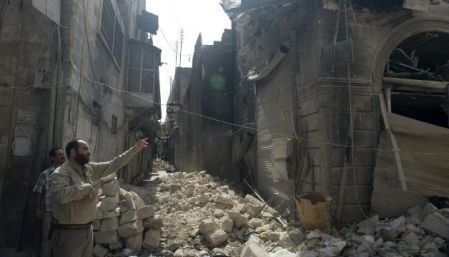
aleppo-damage_9-15

The Putin factor comes in handy for the latest tactic in a series pursued since the November 8 election, for delegitimizing Trump’s victory and negating his fitness to reach the White House.

This campaign may resonate strongly on America’s future policy and position as a world power, because it is designed to block Trump’s path to a deal with Putin for resolving the Syrian conflict. The Obama administration has no wish to see the new president succeed where it failed for nearly six years.

********************************

Aleppo’s fall to the Assad regime with the surrender Thursday, Dec. 15, of the Syrian rebel forces locked in a corner of the eastern districts was the most disastrous military and strategic setback to befall the Obama administration for two years. It started evolving in September 2015, when Russia stepped up its military intervention in the Syria war and rescued Bashar Assad.

When Aleppo succumbed to the Russian-backed government army and its allies, Iran, Hizballah and fellow Shite militias, it did not fall alone.  It brought down the entire architecture of US-backed positions in northern Syria. The US had invested in and trained local groups, such as the Syrian Kurdish militia and the rebel Free Syrian Army, as the bedrock for its policy and interests in the conflict. Those groups have melted away.

The acknowledged overlords of northern Syria today are Russian President Vladimir Putin and Turkish President Recep Tayyip Erdogan, who can claim the Aleppo victory. Bashar Assad and Iran are reduced to playing second fiddle. But whereas the Al Qods chief Iranian general Qassem Soleimani commands pro-Iranian forces in the region, America has been divested of all its military assets and has no real say in the next chapter of the horrific war.

Hence US Secretary of State John Kerry’s despairing appeal Thursday in a press briefing to bring the bloodshed and suffering to an end: “We can’t have another Srebrenica” – a reference to the Serbian slaughter of 8,000 Bosnian Serbs in 1985 – he said.

Kerry has toiled tirelessly for a diplomatic solution to the dreadful Syrian war, but his appeal falls on senses hardened by the many Srebrenicas perpetrated in more than five years of conflict. Hundreds of thousands of civilians and soldiers have been slaughtered – according to an unofficial estimate up to a million – and many subjected to chemical warfare. The secretary can’t count on the Kremlin to relent and so, even after the last Syrian rebels and their families are out of Aleppo, the killing will go on.

In Washington, 10,000 kilometers away, the Aleppo calamity is being dished up as a political tool. The claim was heard Thursday that the “same Vladimir Putin” who sponsored the atrocities in Aleppo, also interfered in the US presidential election by sending hackers to influence the results in favor of Donald Trump. The claim is touted by Obama administration spokesmen and the Democratic Party, whose candidate Hillary Clinton lost the election. It appears to be fodder for a Democratic party drive building up for the president-elect’s impeachment even before he is sworn in as president on Jan. 20.

The Putin factor comes in handy for the latest tactic in a series pursued since the November 8 election, for delegitimizing Trump’s victory and negating his fitness to reach the White House.

This campaign may resonate strongly on America’s future policy and position as a world power, because it is designed to block Trump’s path to a deal with Putin for resolving the Syrian conflict. The Obama administration has no wish to see the new president succeed where it failed for nearly six years.

Putin will have no qualms about capitalizing on Washington’s preoccupation with its internal power struggle and will build up as many gains in Syria as he can before Donald Trump takes over. Obama’s threat Friday, Dec. 12, to retaliate for Russia’s efforts to influence the presidential election will just provoke the Russian president to move faster and more determinedly in his grab for more assets in Syria.

10 Ways the CIA’s ‘Russian Hacking’ Story is Left-Wing ‘Fake News’

December 12, 2016

10 Ways the CIA’s ‘Russian Hacking’ Story is Left-Wing ‘Fake News’, BreitbartJoel B. Pollak, December 12, 2016

podesta-and-putin-640x480

On Monday, Senate Majority Leader Mitch McConnell (R-KY) pledged to support a congressional investigation into whether Russian hacking affected the 2016 election. Republicans have nothing to fear from such an investigation, because they won the election fair and square.

No, Russia is not the friend that President Barack Obama and former Secretary of State Hillary Clinton spent several years pretending it was. But the idea that Russian hackers coronated Trump is only the latest left-wing opiate — after white supremacists and “fake news” — designed to dull the pain of electoral defeat, and postpone the reckoning that must occur if Democrats are to pose a significant threat as an opposition party at any time in the near future.

Here are just ten of the reasons the “Russian hacking” story is a sham — a left-wing twist on the red-baiting McCarthyism of the 1950s.

1. There is actually no new information leading the CIA to its conclusion. The New York Times reports: “The C.I.A.’s conclusion does not appear to be the product of specific new intelligence obtained since the election, several American officials, including some who had read the agency’s briefing, said on Sunday. Rather, it was an analysis of what many believe is overwhelming circumstantial evidence — evidence that others feel does not support firm judgments — that the Russians put a thumb on the scale for Mr. Trump, and got their desired outcome.” In other words, someone only decided after Trump won that it the accusation was worth making.

2. The “evidence” that the CIA has gathered is inconclusive. The FBI also disagrees with some of the CIA’s conclusions about Russia’s motives. “While lawmakers were seemingly united on the need to present a strong bipartisan response, the FBI and CIA gave lawmakers differing accounts on Russia’s motives, according to The Post,” The Hill reported on Sunday.

3. The CIA is not making public claims that Russia hacked the election. Several CIA veterans, in fact, have urged caution about the leaked reports. As Newsweek reports: “‘I am not saying that I don’t think Russia did this,’ Nada Bakos, a top former CIA counterterrorism officer tells Newsweek, in a typical comment. ‘My main concern is that we will rush to judgment. The analysis needs to be cohesive and done the right way.’” Thus far there is not even a clear idea what the CIA’s conclusions are.

4. Despite left-wing “fake news,” there is no evidence Russian hackers actually distorted the voting process. The most that the CIA is alleging is that the Russians may have helped hack of the Democratic National Committee emails, as well as (possibly) the emails of Hillary Clinton campaign chaiman John Podesta. There is zero evidence Russian hackers messed with voting. Ironically, Green Party candidate Jill Stein’s recount has eliminated any doubt about the integrity of the results.

5. The Obama administration has a history of manipulating intelligence for political gain. The most under-reported scandal of Obama’s presidency was the CENTCOM scandal, in which it emerged that “senior U.S. Central Command (CENTCOM) leaders manipulated intelligence assessments in 2014 and 2015 to make it appear that President Barack Obama is winning the war against the Islamic State (ISIS/ISIL).” There is even more reason to doubt the truth of a selective leak about the election.

6. Julian Assange and Wikileaks have vigorously denied that the Russians were involved in Wikileaks’ disclosures. Of the Democratic National Committee emails, Assange said: “That is the circumstantial evidence that some Russian, or someone who wanted to make them look like a Russian, was involved, with these other media organisations. That is not the case for the material that we released.” Assange made similar denials about the Podesta email leaks later in the election.

7. The fact that the Russians might constantly be trying to hack U.S. systems, and might even specifically have targeted the election, does not prove that they succeeded. Nor does it prove that they tipped the election to Trump even if they had some effect. As pollster Frank Luntz tweeted: “Did Russia also hack Hillary’s campaign calendar and delete all her stops in rural Wisconsin, Penn., and Michigan?” Hillary Clinton lost the election for reasons entirely of her own making.

8. Foreign interference in elections is nothing new — and the Obama administration is a prime culprit. In 2015, the Obama administration made a strenuous and not-terribly-well-hidden effort to swing the Israeli elections toward the opposition and away from Prime Minister Benjamin Netanyahu. The State Department gave $300,000 to a “pro-peace” Israeli group, which then paid political activists whose goal was to unseat Netanyahu. In 1984, the late Sen. Ted Kennedy (D-MA) actually asked for Soviet help. Russian efforts to intervene would be bad, but not unique, either for Russia or for the U.S.

9. What would the consequences of allowing undue Russian influence in our elections be, exactly? Would we yield primacy in Eastern Europe to Vladimir Putin? Would we give up our plans for missile defense? Would we make deep unilateral cuts in our nuclear arsenal in exchange for flimsy concessions ? Would we tolerate a Russian land invasion of a friendly, pro-Western country? Would we cede the Middle East to Russian hegemony? Because Hillary Clinton and Obama already did that.

10. Occam’s razor: the simplest explanation for the “Russian hacking” story is that it is “fake news” that suits the left-wing media. It is not unknown for Russia to use false propaganda to affect public opinion in foreign countries. Nor is it unknown for the U.S. media to use bias, “fake news,” and outright lies to shift public opinion in this country. The current focus on Russian “hacking,” based on no new evidence and — again — zero evidence of tampering with the voting process.

Remember when the Russians Hacked the White House’s Computers?

December 12, 2016

Remember when the Russians Hacked the White House’s Computers? Power Line, John Hinderaker, December 11, 2016

Now, the same news outlets that refused to cover the Russian government’s hacking into White House and State Department computers and email systems try to tell us that an intrusion into Debbie Wasserman Schultz’s and John Podesta’s email accounts by someone–allegedly the same Russian government–is a story of world-historical importance. What a load of bulls–t.

**************************

You probably don’t. We broke the story on Power Line in October 2014, writing about it here, here, here, here, here and here. The White House’s computers were down for weeks because of the intrusion by a “foreign power,” which the administration finally identified as Russia. It wasn’t just the White House, either; it was the entire Executive Office of the President, which comprises a good chunk of the executive branch. Nor was that all: the State Department’s computer system was hacked, too.

While we pounded away at the story, the White House refused to respond to our inquiries. The Washington press corps, which must have known that the White House’s computers were out of action, maintained a discreet silence, declining to write about the Russian hack, even though many D.C. reporters no doubt followed the story on Power Line. Why the coy silence? Because it was October 2014, weeks before the midterm elections, and the story reflected poorly on the Obama administration, which didn’t even discover the intrusion itself. It turned out that American officials were alerted to the Russian hack of the White House and State Department by an unidentified ally (I’m guessing Israel).

Only when the election was safely over did news outlets like CNN report the story (“How the U.S. thinks Russians hacked the White House”). Throughout, the Obama administration minimized the story, claiming that no harm was done and only unclassified material was accessed–an excuse that, as CNN wrote post-election, “belies the seriousness of the intrusion.”

Now, the same news outlets that refused to cover the Russian government’s hacking into White House and State Department computers and email systems try to tell us that an intrusion into Debbie Wasserman Schultz’s and John Podesta’s email accounts by someone–allegedly the same Russian government–is a story of world-historical importance. What a load of bulls–t.

The Democrats’ Nauseating Putin Hypocrisy

December 12, 2016

The Democrats’ Nauseating Putin Hypocrisy, PJ MediaRoger L. Simon, December 11, 2016

(Please see also, Renowned Russian Scholar Valery Solovei: ‘The New American Administration Will React From A Position Of Strength, And We Can Never Win In This Competition’. — DM)

The degree to which the Democrats have changed their tune on Vladimir Putin almost on a proverbial dime is either black comic or nauseating or both, depending on how you want to look at it. Whatever it is, it is a extremely obvious example of how party politics is conducted in our era (possibly always).

If your side does it, it’s diplomatic genius bound to yield peace in our time. If the other side does the exact same thing, it’s a horrendous mistake bordering on treason likely to cause a national calamity, if not global Armageddon.

If there were any decent, even semi-even-handed political science departments left in our country (okay, maybe there are one or two), what we might call the Democrats’ “Great Putin Flip Flop” would be a textbook case for classroom discussion.

Let’s start at the beginning, March 2009, but a few weeks after the first inauguration of Barack Obama, when a smiling Hillary Clinton presented Russian Foreign Minister Sergei Lavrov the red “reset” button, signaling the arrival of a supposed era of peace between the two countries.  The new administration was greeted with hosannas for their great symbolism from their loyal claque at the New York Times, Washington Post, NBC, et al., who were oblivious, needless to say, that the word “peregruzka” printed in Cyrillic on the button, thought to mean “reset” in Russian by the linguistic geniuses in our State Department, was actually the word for “overload.”

No wonder Lavrov has such a quizzical look on his face in the all the photos. (Imagine what the reaction of the press would have been had Trump’s putative secretary of State, Rex Tillerson, done something similar. Media lynch mob?) Much more important, however,  was the extreme ignorance of the Russian character, from the Czars through Lenin and Stalin and on into the present, evinced by such a naive, almost childish, “reset.” Throughout the East, of which Russia has always been a signal part despite intermittent yearnings for the West, a powerful leader has always been the center of national and tribal life.  Silly, symbolic gestures like “reset” buttons are seen as weakness, not compromises or attempts at global comity. They are something to exploit.

Barack Obama, however, went on undeterred. The U.S. president, in South Korea in March 2012 for a nuclear security summit, was caught on open mic with Russian President Dmitry Medvedev confidentially informing the Russian president, as if Medvedev would be so stupid as not to know, that  “after my election, I will have more flexibility.” Obama wanted that news conveyed to Medvedev’s boss Putin so the true Russian president would give Obama some “space.” Only Barack clearly didn’t realize Vladmir was a capo di tutti capi and would behave like one — not, say, a Republican senator from a swing state who could be swayed with a “chummy presidential phone call.”

We all know how it turned out.  Putin read Obama well. Within a couple of years Russia had retaken the Crimea, destabilized Ukraine, and, making matters so bad that even the namby-pamby John Kerry has admitted it was a mistake, Obama’s red line on Assad’s use of chemical weapons had been crossed with our president doing absolutely nothing about it, allegedly in order not to offend dear Vlad, who was making him “promises.”  The Russian air force was reputedly going to help us extinguish ISIS  — or what Obama for reasons unknown insists on calling ISIL — but ended up somehow misfiring and hitting our quasi-allies in the field, helping rend them at this point virtually non-existent, while Assad is now marching into Aleppo and has Syria, forever a Russian client, practically all to his despotic self again.

And then there’s the little matter of Iran, also a client of Russia when Putin wants it to be, financing as much mayhem as it can from Iraq to Yemen and beyond (they are believed to have camps in Venezuela), arming the terrorist thugs of Hezbollah, all with unbelievable sums of money donated by Obama for an inexplicable and unwelcome nuclear deal hardly a single American understands and about which Vladimir Putin knows far more than any member of the U.S. Congress (which never had a chance to vote on it anyway).

Has any American president done more for Russia for less reason?  (At least FDR united with Stalin to defeat Hitler.)

Obviously not, although the same media claque (aka court eunuchs) aren’t even mentioning this as they all go into a full-tilt attempt, with CIA help, to malign Donald Trump as the next American president selected (but not apparently elected) by the hackers of the Russian Republic.

Do I believe Trump actually was the Russians’ preference? That would be mighty optimistic on their part. How could they do better than Obama, considering the last eight years?  And why not just as well elect a weakened Hillary? My guess is, if (big if) they were the instigators of the hacking of the embarrassingly cyber-incompetent DNC  (what is wrong with these people — it’s 2016), they were equal-opportunity hackers, anxious to create confusion and finger-pointing (they succeed with that), rather than specific results that would be hard to control.

This would be consistent with Russian/Soviet behavior over generations.  For those who have not read it, one of the best places to understand this is Disinformation, a remarkable book by sometime PJ Media contributor Ion Pacepa, one of the highest-ranking defectors from the East.  (He once ran Romanian intelligence under Ceausescu.) Mandatory reading on a similar topic is Whittaker Chambers’ extraordinary memoir Witnesswith its stories of the Soviet infiltration of our government way back to the 1920s.

The question we should all be asking about the CIA’s sudden revelation of online tampering with our election by the Russians is how come it took our intelligence agencies so long to figure this out?  That’s assuming it’s all not a “false flag” operation, as John Bolton is alleging. (I wouldn’t bet against him.)  Nevertheless, why are we so permeable to anyone and everyone? Why did John Podesta fall for a phishing scheme most fourteen-year olds would have avoided? What’s wrong with our cyber-defenses? Didn’t we invent the Internet? Al Gore, where are you?

Well, we know.

But let me ask one last question whose answer should be evident to any sentient being not a member of the editorial board of The New York Times. Who do you think would better understand and deal with Vladimir Putin — Barack Obama or Donald Trump?

Yes, the KGB  and its successors know the difference between a community organizer and a CEO.  Don’t we all?

Obama, Russia, The Election, and A Visitor From Mars

December 11, 2016

Obama, Russia, The Election, and A Visitor From Mars, PJ Media, Claudia Rosett, December 10, 2016

(But Obama says his Administration is the most transparent in history.

You can see right through him. — DM)

So, as chance would have it we are currently hosting a newly arrived visitor from Mars, who has been avidly following the headlines. Having studied our world for some time, he is intrigued by the news, as reported first by the Washington Post on Friday: “Secret CIA assessment says Russia was trying to help Trump win White House.”

This is the story in which U.S. “officials” told the Post it is “now ‘quite clear’ that electing Trump was Russia’s goal.” Earlier in the week, according to White House spokesman Eric Schultz, President Obama “instructed the intelligence community to conduct a full review of the pattern of malicious cyber activity related to our presidential election cycle.” Obama wants this report completed and submitted to him before the end of his term, Jan. 20 — now less than six weeks ahead.

Since this story broke, we have been trying to field questions from our inquisitive Man from Mars, who seems oddly disinclined to take things at face value. (We think our visitor is a he, so I’ll proceed on that assumption, though we have not inquired about gender identification).

I’m sharing below some excerpts from our chat. For convenience, I’ve abbreviated “Man from Mars” as MFM. Our replies, I am attributing simply to “Us.”

MFM: This is shocking news about Russia, but surely meddling in America’s elections is not new. What were the findings of the deep-dive report produced at speed by the Obama administration, its concerns leaked in advance to the press, over the effects, starting early in his first term, of the IRS targeting conservative groups?

Us: There was no such report. There were congressional hearings in which a prominent witness from the IRS took the Fifth. There were tussles over destroyed hard drives, emails not turned over, or some turned over long after the deadlines, and this year brought news that the targeting may still be going on — see Kim Strassel’s May 19 column in the Wall Street Journal on the “The IRS’s Ugly Business as Usual.”

MFM: But wasn’t Obama deeply worried that this targeting might silence a lot of conservatives, skew public debate and warp America’s political process?

Us: Nah. In 2014, Obama in a TV interview dismissed it all as nothing worse than “bone-headed decisions,” saying there was “not even a smidgen of corruption.” So much for that.

MFM: OK. But what about the deep-dive report Obama demanded, urgently, prior to the 2012 presidential election, to shed light on his own administration’s lies about the Sept. 11, 2012 terrorist attack in Benghazi. You remember, all that “messaging” about an ad hoc mob, and blaming the “video.” That sure looked like Obama was trying to mislead the American public in order to bolster his campaign line that “the tide of war is receding,” plus his administration’s claims that leading-from-behind in Libya was a success. I mean, there were four Americans murdered, including — as I discern from your Earth records — the first American ambassador killed on the job in 33 years. Obama, who had the authority to send help directly to Benghazi, never did. What does Obama’s urgently ordered, in-depth and surely impartial report tell you about what Obama himself was doing that night?

Us: Get real. Obama was hardly likely to order an all-out urgent investigation of himself and his team, especially during the final weeks of his reelection campaign. He was already booked to go to Vegas, he needed his sleep. Anyway, by the morning after the Benghazi attack, the damage was already done. So — as somebody-or-other told Congress — “What difference, at this point, does it make?”

MFM: Right-o. I can see that a president needs his sleep. But I’m still puzzled over these latest news stories that imply President Obama thinks Russia is an enemy trying to subvert the United States. Yes, but…wasn’t Obama a buddy of Vladimir Putin?

Us: Well, yes. But only for the first six or seven of Obama’s eight years in office. There was Obama’s chummy 2009 “Reset” with Russia — you remember that mislabeled red button Hillary Clinton presented to Russia’s foreign minister. Obama threw in, as a bit more swag for Putin, the gift of shelving missile defense plans for Eastern Europe. And when NATO missile-defense plans became a sore point with the Kremlin during Obama’s 2012 reelection campaign, there was that open-microphone moment in which Obama was caught promising Putin’s sidekick, Dmitry Medvedev, “After my election I will have more flexibility.” To which Medvedev replied, companionably, “I will transmit this information to Vladimir, and I stand with you.” Pretty friendly, actually. But, hey, dude, that was like four years ago.

MFM: Fair enough. But wasn’t there a bit more to it?

Us: OK, yeah, but let’s not get too bogged down in the past. There was Obama’s 2013 red line in Syria over chemical weapons, which he erased by way of basically turning over the Middle East to Putin — and, of course, to Iran. And of course there was the case that same year of Edward Snowden, the guy who fled the U.S. with a trove of National Security Agency secrets. After a quick sojourn in Hong Kong, Snowden washed up as Putin’s guest in Russia, where Putin has not gotten around to sending him back. Obama apparently didn’t like that, but he didn’t let a transient thing like wholesale plundering of the NSA, or Moscow’s asylum for the plunderer, interfere with buddying up to Moscow to clinch the 2015 nuclear deal with Iran.

MFM: Well, at least when Putin snatched Crimea from Ukraine in 2014, Obama made him give it back.

Us: Umm, actually, no, he didn’t. Russia now owns Crimea, has roughed up more of Ukraine and seems to be eyeing the Baltics. Though Obama did impose sanctions on Russia, which Putin didn’t like.

MFM: And those sanctions, of course, stopped Russian aggression and put Putin back in his box?

Us: Would you like more coffee?

MFM: Thanks. You Earth people have such nice customs.

Us: Coffee’s even better with sugar, not salt. Try it.

MFM: Wow. Who knew? Which brings me to just a few more questions. In the stories this week about the urgent report Obama has ordered — following up on conclusions reached secretly with “high confidence” by U.S. “intelligence agencies” that Russia acted covertly to promote Donald Trump over Hillary — why are all the official sources anonymous? I see a couple of officials quoted by name, commenting on the need for such a report, including Obama’s counterterrorism and homeland security adviser, Lisa Monaco, who had breakfast recently with some reporters. But the whole thing seems based on specifics which the press has attributed only to anonymous “officials briefed on the matter,” or officials “who spoke on the condition of anonymity to discuss intelligence matters.”

Us: Look, this is delicate stuff. The intel guys have to worry about exposing sources, and there are clearly big secrets involved. Check out the cloak-and-dagger stuff in the penultimate paragraph of the Washington Post story, telling how administration officials briefed select members of Congress, in ” a secure room in the Capitol used for briefings involving classified information.” That ought to tell you just how extremely secret and classified this stuff is.

MFM: Call me an idiot, but how secret is an assessment that has details of its contents leaked to one of America’s major newspapers, including the sweeping conclusion that, as one nameless “senior U.S. official” told the Post, “Russia’s goal here was to favor one candidate over the other, to help Trump get elected.” Isn’t Obama, with his concerns for the integrity of state secrets, trying frantically to stop these anonymous officials from leaking these secrets to the press? Haven’t people lower down the food chain gone to prison for leaking classified information?

Us: Yes, but as you say, those jailbirds were lower down the food chain. Maybe Obama doesn’t know who exactly is leaking this information to the press. As you say, they’re anonymous.

MFM: Give me a break. If these anonymous officials have it right about Russia’s cyber abilities, I’d bet the Russians already know who these same anonymous officials really are. Surely Obama could find out. If he can’t find out direct, maybe he could order U.S. intelligence to steal the information from the Russians? Can’t he order up another urgent report, to get to the bottom of who’s leaking some of the state secrets that inspired him to order up the original urgent report?

Us: Enough already. You may know plenty about Mars, but you’ve got a lot to learn about White House politics under Obama.

MFM: Speaking of Mars, we Martians love conspiracy theories. There’s lots here that we don’t know, but all this leaking seems tilted toward delegitimizing the victory of Donald Trump, even before he takes office. I mean, how does someone defend himself, when accusations are all over the headlines, conveyed by anonymous officials, while the actual basis for these stories is officially secret? Is that what Obama meant when he promised to run the most “transparent” administration ever?

Us: Give it a rest. U.S. elections are sacred to our democracy, and if anyone — and we mean anyone — tries to fiddle them, we have to get to the bottom of it.

MFM: Calm down. I’m just curious. If the Russians did try to intervene, by hacking and flooding the public with emails humiliating to Hillary and the Democrats, but not to Trump, then did Trump have any control over this? Wasn’t it the responsibility of Obama to protect the country, and the election, from any such intrusions?

Us: You’ve been reading too much fake news. Obama’s a busy guy. He’s been trying for years to control the level of the oceans. He can’t cover everything.

MFM: And if the Russians, emboldened by Obama’s reset and flexibility and vanished red lines, did actually try to tip the 2016 American election, did they succeed? Did it make a difference?

Us: Look, please stop with the questions. We’re just the little guys here. Normal Americans. We don’t have time to read reams of emails dumped out by anybody. We come home tired from our day jobs. Or we’ve been reading about the wealth and fashions of the liberal elite, and the fat pensions of the federal bureaucracy, while we work the part-time night shifts, and look for any extra income we can scrounge up.

I’ll tell you what we read during the recent presidential campaign. We read the letter that arrived a week before the election, from our health insurance company, informing us of the double-digit rate hike slated for our premiums, yet again. We read about the terrorist attacks — in Paris, Nice, San Bernardino, Orlando — inspired or linked to ISIS, the “JV team” that was expanding its murderous reach while Obama was still boasting about killing Osama bin Laden. We listened to Obama exhorting people to vote for Hillary, in order to cement and extend his legacy. We listened to Hillary denouncing tens of millions of Americans as “deplorables.” Did Russia make her do that?

MFM: Don’t ask me. I’m from Mars.

Us: We get it. But watch out. If you keep asking questions like these, someone’s going to report you as part of a Russian plot. Speaking of… enough with the coffee. It’s gonna take more than caffeine to get through these next six weeks. Ever tried vodka?

How Clinton’s National-Security Cluelessness Emboldened Putin

November 4, 2016

How Clinton’s National-Security Cluelessness Emboldened Putin, Center for Security Policy, Fred Fleitz, November 4, 2016

whatmeworry

Joby Warrick and Karen DeYoung authored an important column for the Washington Post yesterday in which they tried to explain Hillary Clinton’s supposed feud with Russian President Vladimir Putin.  According to Warrick and DeYoung, when Clinton left the State Department in 2013, she advised President Obama to snub Putin, avoid working with him and turn down any invitations by Putin for a presidential summit.

Clinton also counseled Obama that “strength and resolve were the only language Putin would understand.”

Clinton’s advice reflected her frustration that the so-called U.S.–Russia reset she attempted in 2009 went nowhere. Instead, U.S.–Russian relations deteriorated drastically while Clinton was Secretary of State and Russia engaged in destabilizing and belligerent behavior in Ukraine and Syria.

Clinton’s recommendation that President Obama snub Putin goes to the heart of her foreign-policy incompetence. While the United States obviously does not condone Russia’s foreign adventurism and support for the genocidal Assad regime, Russia is nevertheless a major power with the world’s largest nuclear arsenal, thus Washington must maintain an ongoing dialogue with Moscow, especially at the head of state level. Despite the bashing Donald Trump has endured from the Clinton campaign and the mainstream media for supposedly admiring Putin, Trump seems to understand this since he has called for America to find a way to work cooperatively with Russia.

Trump gave his best response to Clinton’s criticism of him over Russia and Putin at the last presidential debate on October 9 when he said that “Putin has outsmarted her at every step of the way. From everything I see he has no respect for this person [Clinton].”

Clinton’s call to snub Putin ignores the reality that our country frequently must deal with many regimes accused of violating international law and having abysmal human rights records.

For example, China’s active oppression of Tibet and Xinjiang is far worse than anything Putin has done in Ukraine. China also has significantly increased international tensions by its naval maneuvers to seize control of the entire South China Sea. If Clinton believes the United States must shun Russia because of its human rights record and aggressive behavior, why did she not also call for China to be shunned?

And of course there is Cuba and Iran. The Obama administration decided to ignore both countries’ abysmal human rights records because it wanted to strike historic agreements – normalization of relations with Cuba and the 2015 nuclear deal with Iran – with both states.    The world sees these agreements for what they really are: American hypocrisy and appeasement.

Making this worse was Clinton’s advice that “strength and resolve were the only language Putin would understand.” I agree, but it is laughable that such a weak Secretary of State representing one of the weakest presidents in history would say this. Putin never sensed resolve or strength from the Obama administration or Clinton.

Instead of strength and resolve, the Obama administration’s Russia policy has consisted of fecklessness and confusion. President Obama and Secretaries of State Clinton and Kerry constantly issued ultimatums and endorsed sanctions in response to Russia’s intervention in Ukraine and support for the Assad regime. These actions undermined America’s credibility since Russia ignored them and Washington failed to back them up.

At the same time the Obama administration was condemning Russia’s intervention in Ukraine, it was simultaneously trying to engage it as a partner to negotiate the nuclear deal with Iran and has tried to work with Russia on the Syrian crisis.  This obviously undermined the Obama administration’s efforts to isolate Russia over Ukraine. But even worse, Russia exploited both situations to expand its influence with these countries and throughout the Middle East at America’s expense.

There was a good example of the Obama administration’s toothless Russia policy in September 2016 when Secretary of State Kerry told Moscow after it ignored a two-week old U.S.–Russia Syria cease-fire plan by stepping up airstrikes on the Syrian city of Aleppo that the United States would cease Syria talks with Russia if it continued to violate the cease-fire.  In a joint statement, Senators John McCain and Lindsey Graham perfectly captured the absurdity of this threat.

Finally, a real power move in American diplomacy. Secretary of State John “Not Delusional” Kerry has made the one threat the Russians feared most – the suspension of U.S.-Russia bilateral talks about Syria. No more lakeside tête-à-têtes at five-star hotels in Geneva. No more joint press conferences in Moscow. We can only imagine that having heard the news, Vladimir Putin has called off his bear hunt and is rushing back to the Kremlin to call off Russian airstrikes on hospitals, schools, and humanitarian aid convoys around Aleppo. After all, butchering the Syrian people to save the Assad regime is an important Russian goal. But not if it comes at the unthinkable price of dialogue with Secretary Kerry.

Warrick and DeYoung cite officials who claim Putin dislikes Clinton because of policy differences and her condemnation of Russian elections.  Many experts have claimed this may be why Russia could be behind the WikiLeaks disclosures of Clinton campaign and DNC emails.  Although I don’t doubt Putin dislikes Clinton, I believe his aggressive policies and possible interference in the 2016 U.S. presidential election are in response to his perception of American weakness under the Obama administration and have little to do with any personal animus toward Hillary Clinton.

The overall consequences of the failed Obama/Clinton/Kerry failed approach to Russia are much more alarming. In recent years there have been significant improvements in Russia’s nuclear ballistic missile arsenals, drastically improved air and missile defenses, and hardened shelters against nuclear attacks, apparently in preparation to survive a nuclear war. Russia also has stepped up economic, cyber, information and intelligence warfare against the United States to undermine American security and create a new global order.

The Center for Security Policy addresses these issues in a new book, Putin’s Reset: The Bear is Back and How America Must Respond.  This series of essays I edited by nine U.S. national security experts — Dr. Stephen Blank, Kevin D. Freeman, Frank J. Gaffney, Jr., Dr. Daniel Gouré, Cliff Kincaid, Roger W. Robinson, Jr, David Satter, Dr. Mark B. Schneider, and Dr. J. Michael Waller — document how the threat from Russia is growing as it gears up, at best, for a do-over of the Cold War. And at worst, how Russia is creating what the Soviets used to call “a correlation of forces” that will enable the Kremlin to engage decisively in actual hostilities against the United States.

The bottom line in this book is that the cluelessness of President Obama, Hillary Clinton and John Kerry undermined American credibility to such an extent that it emboldened Putin’s belligerent and destabilizing behavior.

Strength and resolve are the only language Putin understands.  We haven’t seen that from the Obama administration. I am certain we would not see in in a Clinton presidency.

I am hopeful that Donald Trump, if he wins the 2016 presidential election, will launch a new U.S. approach to Russia that deals with Russia from a position of strength and restores a relationship of trust and respect between Moscow and Washington.

Russia & Turkey carve anti-US enclaves in Syria

October 15, 2016

Russia & Turkey carve anti-US enclaves in Syria, DEBKAfile, October 15, 2016

rusturk

US President Barack Obama told Pentagon and military chiefs he met Friday, Oct. on Oct. 14, that instead of arming anti-Assad rebel groups in Syria, Washington was going back to negotiations with Moscow for cooperation in achieving a cessation of hostilities in the Syrian war.

US Secretary of State John Kerry therefore scheduled his umpteenth meeting with Russian Foreign Minister Sergey Lavrov for Saturday in Lausanne. This time, the foreign ministers of Turkey, Turkey, Iran, Saudi Arabia and possibly Qatar, tagged along.

Beyond the high words, recriminations and the unspeakable horrors attending the battle for Aleppo, Obama never seriously considered providing the anti-Syrian rebels holed up in Aleppo with the anti-air weapons they need to shoot down the Russian and Syrian warplanes blitzing them – any more than UK Foreign Secretary Boris Johnson’s statement that it was time for British military involvement in the Syrian war was for real

Above all, Britain is short of the military heft for backing up hypothetical intentions.

The options for serious Western intervention in the Syrian war are constantly diminishing for the reasons outlined here by DEBKAfile’s military sources:

1.  American missiles have no way of reaching Syrian rebel groups, certainly not those still fighting in eastern Aleppo. Neither Russia, nor Turkey, whose army now controls 5,000 sq. km of northern Syria, would let them through to that destination.

2. Had Turkish President Tayyip Erdogan chosen to do so, he could have simply ordered his army to open up a route for the supply of missiles to the rebels who are hemmed in in Aleppo by Russia, Syrian, Iranian and Hizballah forces. He is withholding that order because the military deals he concluded with President Vladimir Putin last week in Istanbul override any concerns he may have for the fate of those rebels or Aleppo’s population.

3. Those deals in a word sanctify the Turkish “security zone” in northern Syria which is covered by a no-fly zone for all but Russian and Turkish flights. They also provide for the Syrian rebels retreating from the various Syrian war zones, including Aleppo, to be taken in and absorbed in the Turkish enclave. Erdogan would thus become the senior patron of the Syrian opposition rebel movement, barring only the Al-Qaeda-affiliated Nusra Front and other Islamic extremist groups. This would enable him to steal from the United States, Saudi Arabia, Jordan and Qatar their sponsorship roles and their influence in the anti-Assad movement.

4. Ankara’s military alliance with Moscow is steadily eroding Turkey’s ties with the United States as well as NATO. Matters have gone so far that the two capitals or in advanced discussion of the supply of Russian air defense missiles to the Turkish army.

DEBKAfile’s intelligence sources reveal that under discussion is the installation in Turkey of a system of advanced Russian missiles linked to the Russian anti-air missile shield under construction in Syria.

Turkey would thus become the first member of NATO to arm itself with a Russian anti-air missile shield.

How was this allowed to happen?

According to our sources, Putin and Erdogan are moving fast to cash in on President Obama’s repugnance for military intervention in Syria and his waning powers at the tail end of his presidency.

Furthermore –

a) Neither is configuring Syrian President Bashar Assad into their calculations. They are going forward with their plans while ignoring him and his drastically diminished army as factors worth consideration.

b)  Their objectives are similar and interlocking:  Both are intent on developing their respective enclaves in northern Syria, Moscow for a long-term military presence in the country: likewise, Ankara.

Up until now, the Obama administration stood firm against the two goals, which is why Washington and Moscow were unable to achieve any real cooperation over a secession of hostilities in the war-torn country;  even when Kerry and Lavrov struck a truce accord on Sept 9, it never held up beyond a few hours.

Most recently, Putin and Erdogan tried signaling the US president that their sole ambitions with regard to Syria’s future lie in the two military enclaves now under construction.

Obama saw this as a sufficient basis to continue withholding advanced arms from Syrian rebel groups and to go for another round of diplomacy with Russia – with Turkey hitching a ride this time on the opposite side of the table..

Column One: From Yemen to Turtle Bay

October 14, 2016

Column One: From Yemen to Turtle Bay, Jerusalem Post, Caroline Glick, October 13, 2016
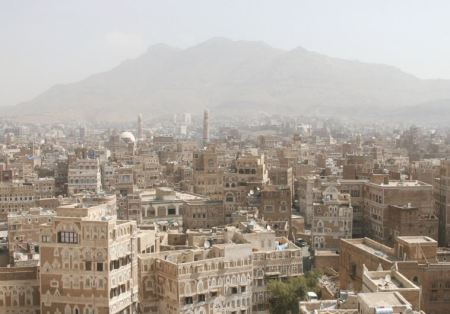
sana-yemen


As far as Obama is concerned, Iran is a partner, not an adversary.

****************************

Off the coast of Yemen and at the UN Security Council we are seeing the strategic endgame of Barack Obama’s administration. And it isn’t pretty.

Since Sunday, Iran’s Houthi proxies in Yemen have attacked US naval craft three times in the Bab al-Mandab, the narrow straits at the mouth of the Red Sea. The Bab al-Mandab controls maritime traffic in the Red Sea, and ultimately controls the Suez Canal.

Whether the Iranians directed these assaults or simply green-lighted them is really beside the point. The point is that these are Iranian strikes on the US. The Houthis would never have exposed themselves to US military retaliation if they hadn’t been ordered to do so by their Iranian overlords.

The question is why has Iran chosen to open up an assault on the US? The simple answer is that Iran has challenged US power at the mouth of the Red Sea because it believes that doing so advances its strategic aims in the region.

Iran’s game is clear enough. It wishes to replace the US as the regional hegemon, at the US’s expense.

Since Obama entered office nearly eight years ago, Iran’s record in advancing its aims has been one of uninterrupted success.

Iran used the US withdrawal from Iraq as a means to exert its full control over the Iraqi government. It has used Obama’s strategic vertigo in Syria as a means to exert full control over the Assad regime and undertake the demographic transformation of Syria from a Sunni majority state to a Shi’ite plurality state.

In both cases, rather than oppose Iran’s power grabs, the Obama administration has welcomed them. As far as Obama is concerned, Iran is a partner, not an adversary.

Since like the US, Iran opposes al-Qaida and ISIS, Obama argues that the US has nothing to fear from the fact that Iranian-controlled Shiite militias are running the US-trained Iraqi military.

So, too, he has made clear that the US is content to stand by as the mullahs become the face of Syria.

In Yemen, the US position has been more ambivalent. In late 2014, Houthi rebel forces took over the capital city of Sanaa. In March 2015, the Saudis led a Sunni campaign to overthrow the Houthi government. In a bid to secure Saudi support for the nuclear agreement it was negotiating with the Iranians, the Obama administration agreed to support the Saudi campaign. To this end, the US military has provided intelligence, command and control guidance, and armaments to the Saudis.

Iran’s decision to openly assault US targets then amounts to a gamble on Tehran’s part that in the twilight of the Obama administration, the time is ripe to move in for the kill in Yemen. The Iranians are betting that at this point, with just three months to go in the White House, Obama will abandon the Saudis, and so transfer control over Arab oil to Iran.

For with the Strait of Hormuz on the one hand, and the Bab al-Mandab on the other, Iran will exercise effective control over all maritime oil flows from the Arab world.

It’s not a bad bet for the Iranians, given Obama’s consistent strategy in the Middle East.

Obama has never discussed that strategy.

Indeed, he has deliberately concealed it. But to understand the game he has been playing all along, the only thing you need to do listen to his foreign policy soul mate.

According to a New York Times profile published in May, Obama’s deputy national security adviser Ben Rhodes is the president’s alter ego. The two men’s minds have “melded.”

Rhodes’s first foreign policy position came in the course of his work for former congressman Lee Hamilton.

In 2006, then-president George W. Bush appointed former secretary of state James Baker and Hamilton to lead the Iraq Study Group. Bush tasked the group with offering a new strategy for winning the war in Iraq. The group released its report in late 2006.

The Iraq Study Group’s report contained two basic recommendations. First, it called for the administration to abandon Iraq to the Iranians.

The group argued that due to Iran’s opposition to al-Qaida, the Iranians would fight al-Qaida for the US.

The report’s second recommendation related to Israel. Baker, Hamilton and their colleagues argued that after turning Iraq over to Iran, the US would have to appease its Sunni allies.

The US, the Iraq Study Group report argued, should simultaneously placate the Sunnis and convince the Iranians of its sincerity by sticking it to Israel. To this end, the US should pressure Israel to give the Golan Heights to Syria and give Judea and Samaria to the PLO.

Bush rejected the Iraq Study Group report. Instead he opted to win the war in Iraq by adopting the surge counterinsurgency strategy.

But once Bush was gone, and Rhodes’s intellectual twin replaced him, the Iraq Study Group recommendations became the unstated US strategy in the Middle East.

After taking office, Obama insisted that the US’s only enemy was al-Qaida. In 2014, Obama grudgingly expanded the list to include ISIS.

Obama has consistently justified empowering Iran in Iraq and Syria on the basis of this narrow definition of US enemies. Since Iran is also opposed to ISIS and al-Qaida, the US can leave the job of defeating them both to the Iranians, he has argued.

Obviously, Iran won’t do the US’s dirty work for free. So Obama has paid the mullahs off by giving them an open road to nuclear weapons through his nuclear deal, by abandoning sanctions against them, and by turning his back on their ballistic missile development.

Obama has also said nothing about the atrocities that Iranian-controlled militia have carried out against Sunnis in Iraq and has stopped operations against Hezbollah.

As for Israel, since his first days in office, Obama has been advancing the Iraq Study Group’s recommendations. His consistent, and ever escalating condemnations of Israel, his repeated moves to pick fights with Jerusalem are all of a piece with the group’s recommended course of action. And there is every reason to believe that Obama intends to make good on his threats to cause an open rupture in the US alliance with Israel in his final days in office.

Prime Minister Benjamin Netanyahu’s phone call with Secretary of State John Kerry on Saturday night made this clear enough. In the course of their conversation, Netanyahu reportedly asked Kerry if Obama intended to enable an anti-Israel resolution to pass in the UN Security Council after the presidential election next month. By refusing to rule out the possibility, Kerry all but admitted that this is in fact Obama’s intention.

And this brings us back to Iran’s assaults on US ships along the coast of Yemen.

Early on Sunday morning, the US responded to the Houthi/Iranian missile assaults by attacking three radar stations in Houthi-controlled territory. The nature of the US moves gives credence to the fear that the US will surrender Yemen to Iran.

This is so for three reasons. First, the administration did not allow the USS Mason destroyer to respond to the sources of the missile attack against it immediately. Instead, the response was delayed until Obama himself could determine how best to “send a message.”

That is, he denied US forces the right to defend themselves.

Second, it is far from clear that destroying the radar stations will inhibit the Houthis/Iranians.

It is not apparent that radar stations are necessary for them to continue to assault US naval craft operating in the area.

Finally, the State Department responded to the attack by reaching out to the Houthis. In other words, the administration is continuing to view the Iranian proxy is a legitimate actor rather than an enemy despite its unprovoked missile assaults on the US Navy.

Then there is the New York Times’ position on Yemen.

The Times has repeatedly allowed the administration to use it as an advocate of policies the administration itself wishes to adopt. Last week for instance, the Times called for the US to turn on Israel at the Security Council.

On Tuesday, the Times published an editorial calling for the administration to end its military support for the Saudi campaign against the Houthis/Iran in Yemen.

Whereas the Iranian strategy makes sense, Obama’s strategy is nothing less than disastrous.

Although the Iraq Study Group, like Obama, is right that Iran also opposes ISIS, and to a degree, al-Qaida, they both ignored the hard reality that Iran also views the US as its enemy. Indeed, the regime’s entire identity is tied up in its hatred for the US and its strategic aim of destroying America.

Obama is not the only US president who has sought to convince the Iranians to abandon their hatred for America. Every president since 1979 has tried to convince the mullahs to abandon their hostility. And just like all of his predecessors, Obama has failed to convince them.

What distinguishes Obama from his predecessors is that he has based US policy on a deliberate denial of the basic reality of Iranian hostility. Not surprisingly, the Iranians have returned his favor by escalating their aggression against America.

The worst part about Obama’s strategy is that it is far from clear that his successor will be able to improve the situation.

If Hillary Clinton succeeds him, his successor is unlikely to even try. Not only has Clinton embraced Obama’s policies toward Iran.

Her senior advisers are almost all Obama administration alumni. Wendy Sherman, the leading candidate to serve as her secretary of state, was Obama’s chief negotiator with the Iranians.

If Donald Trump triumphs next month, assuming he wishes to reassert US power in the region, he won’t have an easy time undoing the damage that Obama has caused.

Time has not stood still as the US has engaged in strategic dementia. Not only has Iran been massively empowered, Russia has entered the Middle East as a strategic spoiler.

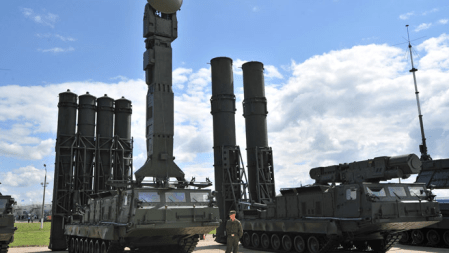
Moreover, since 2001, the US has spent more than a trillion dollars on its failed wars in the Middle East. That investment came in lieu of spending on weapons development. Today Russia’s S-400 anti-aircraft missiles in Syria reportedly neutralize the US’s air force.

US naval craft in the Bab al-Mandab have little means to defend themselves against missile strikes.

The US’s trillion-dollar investment in the F-35 fighter jet has tethered its air wings to a plane that has yet to prove its capabilities, and may never live up to expectations.

Israel is justifiably worried about the implications of Obama’s intention to harm it at the UN.

But the harm Israel will absorb at the UN is nothing in comparison to the long-term damage that Obama’s embrace of the Iraq Study Group’s disastrous strategic framework has and will continue to cause Israel, the US and the entire Middle East.
Obama set for Mosul battle, leaves Aleppo to Putin

October 8, 2016

Obama set for Mosul battle, leaves Aleppo to Putin, DEBKAfile, October 8, 2016

(Please see also, The Obama administration is pushing Iraq into further chaos. — DM)

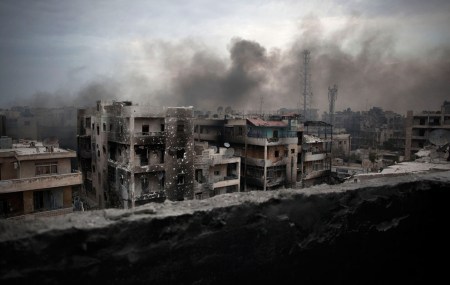
aleppo_destruction

Obama is brooking no distractions from his main objective, He hopes the Mosul operation will be over and done with by mid-December, so that when he exits the White House in January, he will have chalked up a major victory against the Islamic State as part of his legacy.

****************************

The warlike rhetoric heard from Washington over the plight of the stricken Syrian town of Aleppo does not represent any current Obama administration plan for military intervention to halt the ever-mounting carnage.

President Barack Obama’s mind is elsewhere.

This was discovered by his national security adviser Susan Rice every time she tried to arrange for Defense Secretary Ashton Carter and the Chairman of the Chiefs of Staff Gen. Joseph Dunford to be received by the president. After the collapse of diplomacy with Moscow for a cessation of hostilities, they had drawn up a plan for limited US military intervention in Syria that would enable essential humanitarian aid to reach the population.

Obama refused to hear what the trio had to say and the plan was shelved.

DEBKAfile’s Washington sources report that, for now, the US president’s mind is fixed exclusively on the preparations for the Oct. 19 offensive for the liberation of the Iraqi city of Mosul from ISIS occupation. US, Iraqi, Iraqi and Kurdish forces are aligned for the battle.

Obama is brooking no distractions from his main objective, He hopes the Mosul operation will be over and done with by mid-December, so that when he exits the White House in January, he will have chalked up a major victory against the Islamic State as part of his legacy.

In the process, the Democratic president intends to debunk the Republican candidate Donald Trump’s criticism of his administration as showing weakness in the face of ISIS.

Russian President Vladimir Putin is exploiting Obama’s preoccupation with the Mosul offensive to snatch a free hand for pushing the Aleppo battle to its barbaric limit. He is letting Bashar Assad and his allies conduct a scorched earth policy – even if this means reducing Syria’s second town to ruins.

Russian and Syrian jets are bombing the city, building by building, leaving the 8,000 rebels still fighting there with little hope of survival, since food, water, medicine or ammunition and anti-air missiles are out of their reach. The only form of resistance remaining to them is marksmen sniping from the rubble in an attempt to slow the advance of Syria, Iranian and Hizballah foot soldiers.

Obama, Putin and Assad are not alone in sentencing Aleppo to its doom: Turkish President Tayyip Erdogan, after grabbing 5,000 sq. km of northern Syria, is letting his army stand by idly as every attempt to bring life-saving assistance from Turkey to the beleaguered population is thrown back.

The Turkish leader is shielding himself with his secret deal with Putin, whereby his army is given a free hand in northern Syria without Russian interference, while the Aleppo arena becomes a Russian-Syrian precinct that is off-limits to Turkey.

This secret deal has also neutralized the US special operations forces deployed in northern Syria as well as the small Syrian rebel militias they trained and sponsor. Washington has therefore lost any leverage for swaying events in that part of the country. Since they are hemmed in on all sides, Obama refuses to hear of any military intervention in an area under Russian-Turkish control.

As he sees the larger picture, the northern Syrian devolution as a sphere of Turkish-Russian influence is balanced by US-Iraqi-Kurdish domination of northern Iraq

On paper, the US plans and preparations afoot for the liberation of Mosul are impressive.

Elite US troops are being pumped into the Mosul region – 600 just this week. Altogether an estimated 12,500 US servicemen are assigned for the offensive, which is due to be launched in 11 days, on Oct. 19.

This is the largest American military force to fight in Iraq since the battles against Al Qaeda during 2006-2007.

US military engineers are working overtime on the construction of bases around Mosul for the intake of US and Iraqi army units. The Kurdish Republic’s Peshmerga army is in position to the north.

Two new US facilities have just been completed. One is near the Mosul Dam, which regulates the flow of the Tigris River bisecting the targeted city. A second is located in the Bashiqa Mountains north of Mosul.

The two bases plus Kurdish army posts are designed as jumping-off points on the city from the south, east and Uninvited military forces are hovering nearby hoping to pick up a piece of the action. Among them are Turkish military units, local Iraqi militias, such as Turkmen, which the Turkish army is training for combat, and pro-Iranian Iraqi militias, such as the Badr Brigades and the Popular Mobilization Forces.

US commanders are intent on keeping these hangers-on out of the action, because their participation in the Mosul offensive would deepen the discord dividing Iraq’s Shiite, Sunni and Kurdish communities, and throw the city into chaos after the jihadists are driven out. US officers failed to check the sectarian violence that erupted in another Sunni-dominated town, Fallujah, in the wake of the battles for its recovery from ISIS in May and June.