Archive for the ‘North Korean nukes’ category

How to neutralize the North Korea threat

July 11, 2017

How to neutralize the North Korea threat, Washington Times,  Ronald Kessler, July 10, 2017

(Here’s a May 16th video about the capabilities of the technology:

The new technology is similar to EMP but more selective and therefore more accurate. It seems excellent. — DM)

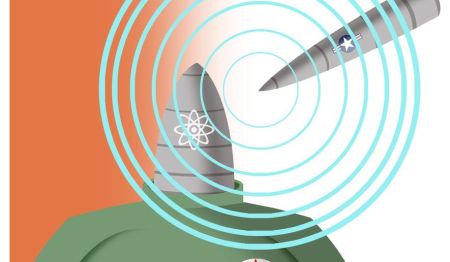
Illustration on way to neutralize the North Korean threat by Alexander Hunter/The Washington Times
They may sound like science fiction, but no doubt Mr. Trump has both HPM and robotic weapons in mind when he says he is contemplating “pretty severe things” to counter the North Korean threat.

**********************************

ANALYSIS/OPINION:

Whenever we hear about viable options for stopping North Korea’s nuclear ambitions, the answer is always the same: There are none. Any military strike against that country would result in retaliation against South Korea, we are told.

But what has gone largely unnoticed in the media is that there are viable alternatives to waiting passively until North Korea has the capability of wiping out millions of Americans with nuclear weapons. The first is the U.S. Air Force’s development of missiles that zap electronics with high-power microwaves (HPM).

That capability, which is entirely different from cyberwarfare designed to confuse computers, has been advancing secretly ever since the Air Force successfully tested use of a missile equipped with HPM in 2012.

Called the Counter-Electronics High Power Microwave Advanced Missile Project (CHAMP), the missile was built by Boeing’s Phantom Works for the U.S. Air Force Research Laboratory at a cost of $38 million. The Boeing missile emits high power microwaves that fry computer chips so that no electronic devices targeted by the missile can operate.

On Oct. 16, 2012, the CHAMP missile flew over a two-story building on the Utah Test and Firing Range. The building in the west Utah desert was crammed with computers and security and surveillance systems. The microwaves took down the compound’s entire spectrum of electronic systems, including video cameras set up to film the test, without damaging anything else.

“We hit every target we wanted to,” Boeing’s CHAMP Program Manager Keith Colman said in a company press release. “Today we made science fiction into science fact.”

Until the announcement of the successful test, the project had been top secret. When it was announced, only a few trade publications ran the story, and since then, beyond a few mentions, the media have ignored the story. Instead, they have focused on how impossible it is to deal with the North Korea threat.

The beauty of the HPM missile is that its microwave beam can penetrate bunkers where facilities are hidden without harming humans inside. Even if a bunker is buried inside a mountain, HPM penetrates the facilities through its connections to power cables, communication lines and antennas. Thus, HPM can penetrate any underground military facility and fry its electronics.

While North Korea may attempt to shield its equipment, U.S. officials doubt that would be effective against CHAMP.

Most amazing of all, the missile renders inoperable any radar that might detect it as it flies to and from a target. Thus, a country cannot take out CHAMP before it strikes and has no way of knowing why its facilities have suddenly gone dead.

Besides underground bunkers, HPM can quickly disable fighter planes, tanks, ships and missile systems. And it can wipe out facilities for developing and testing nuclear weapons.

Unlike an electromagnetic pulse (EMP) created by detonating a nuclear weapon in the atmosphere, because it is targeted, HPM leaves intact civilian facilities needed to sustain life. Unlike any other existing system like cyber-attacks, CHAMP permanently destroys electronic equipment.

America’s national laboratories operated by the Department of Energy have been working on these capabilities for decades. Equally impressive, one of those laboratories, Sandia National Laboratories, has been developing robots the size of insects that could assassinate the North Korean leader with deadly toxins.

These robotic weapons using nanotechnology employed in surgical operations in hospitals are being developed secretly with funding by the Defense Advanced Research Projects Agency.

While President Ford banned assassinations with an executive order, that order was based on the assumption that other world leaders are rational and would refrain from trying to assassinate our president unless we tried to assassinate them. But we are dealing today with terrorist organizations and world leaders who are not rational and do not care if they are killed.

President Trump could reverse Ford’s obsolete executive order with the stroke of a pen. With robotlike weapons using nanotechnology, the CIA could wipe out Kim Jong-un without risking American lives.

They may sound like science fiction, but no doubt Mr. Trump has both HPM and robotic weapons in mind when he says he is contemplating “pretty severe things” to counter the North Korean threat.

While President Obama preached “strategic patience” in dealing with North Korea, Mr. Trump has made it clear he will not stand by while the North Korean leader threatens our survival.

Haley on North Korean Missile Test: ‘Action is Required. The World is on Notice.’

July 5, 2017

Haley on North Korean Missile Test: ‘Action is Required. The World is on Notice’, Washington Free Beacon via YouTube, July 5, 2017


Top Armed Services Dem: Russia, China ‘Spectacularly Disingenuous’ on North Korea

July 5, 2017

Top Armed Services Dem: Russia, China ‘Spectacularly Disingenuous’ on North Korea, PJ MediaBridget Johnson, July 5, 2017

(Please see also, North Korean Missiles Reaching USA. President Trump seems to have decided that joint action with China and Russia won’t work and that unilateral action by America will be needed. — DM)

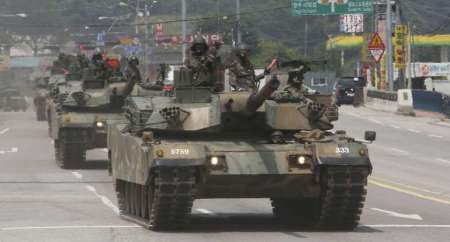
South Korean army K-1 tanks move during the annual exercise in Paju, South Korea, near the border with North Korea, on July 5, 2017. (AP Photo/Ahn Young-joon)

China and Russia issued a joint statement calling Pyongyang’s ICBM test “unacceptable.”

“The two sides propose that the DPRK (North Korea) as a voluntary political decision declares a moratorium on testing nuclear explosive devices and ballistic rocket launches, and the US and South Korea refrain from carrying out large-scale joint exercises,” the statement said. “Parallel to this, the opposing sides should start negotiations and affirm general principles of their relations including the non-use of force, rejection of aggression and peaceful co-existence.”

“Neither one of them is doing a darn thing to stop North Korea. And they want to use it as an excuse to push us out of the region,” he added. “What we have to make clear to them is it’s going to have the exact opposite effect. Once North Korea is able to threaten us and even now, as they threaten our allies, we have to be in there to protect our own interests. 

******************************

The top Democrat on the House Armed Services Committee declared this morning that the “threat from North Korea, regrettably, is not going to be removed” by the “global action” proposed by the Trump administration to curb Kim Jong-un’s behavior.

Pyongyang said Tuesday that it successfully test-fired Hwasong-14, a long-range intercontinental ballistic missile. According to Chosun Ilbo in South Korea, state TV in the North declared the regime “a full-fledged nuclear power… possessed of the most powerful intercontinental-ballistic rocket capable of hitting any part of the world.”

Kim reportedly watched the launch at the scene. The missile, said to be capable of reaching Alaska or Hawaii, flew for 39 minutes before hitting open waters.

Secretary of State Rex Tillerson issued a statement Tuesday evening condemning the July Fourth launch. “Testing an ICBM represents a new escalation of the threat to the United States, our allies and partners, the region, and the world,” he said. “Global action is required to stop a global threat.”

“Any country that hosts North Korean guest workers, provides any economic or military benefits, or fails to fully implement UN Security Council resolutions is aiding and abetting a dangerous regime. All nations should publicly demonstrate to North Korea that there are consequences to their pursuit of nuclear weapons. We intend to bring North Korea’s provocative action before the UN Security Council and enact stronger measures to hold the DPRK accountable,” Tillerson continued.

“The United States seeks only the peaceful denuclearization of the Korean Peninsula and the end of threatening actions by North Korea. As we, along with others, have made clear, we will never accept a nuclear-armed North Korea.”

President Trump and his national security team “are continuing to assess the situation in close coordination with our allies and partners,” he added.

Armed Services Committee Ranking Member Adam Smith (D-Wash.) doubted that Tillerson’s vow would put pressure on North Korea.

“If there is an idea floating around out there for how we can remove that threat, I’m open to it. But we have been circling around this discussion of what we want China to do and what we want sanctions to do and all these other different pieces,” Smith said. “The bottom line is, what we need against North Korea, we need to put the best economic sanctions we can. I think it’s perfectly appropriate for the secretary of state to try to put pressure on other nations to do the same. But the most important thing we need is a credible military deterrent, so that whatever North Korea does in terms of building a missile, they know that if they act against South Korea or against Japan or against us, we will obliterate them.”

“That’s why THAAD [missile defense system] is important. That is why our alliance with South Korea and Japan is important, to have that credible military force, because what’s been proven — and all of the options have been discussed with your previous guests — is that North Korea is going to do it. They want to build nuclear weapons. They want to develop an intercontinental ballistic missile. And short of an all-out war on the Korean Peninsula, we don’t really have an option for stopping them.”

China and Russia issued a joint statement calling Pyongyang’s ICBM test “unacceptable.”

“The two sides propose that the DPRK (North Korea) as a voluntary political decision declares a moratorium on testing nuclear explosive devices and ballistic rocket launches, and the US and South Korea refrain from carrying out large-scale joint exercises,” the statement said. “Parallel to this, the opposing sides should start negotiations and affirm general principles of their relations including the non-use of force, rejection of aggression and peaceful co-existence.”

Smith slammed the statement as “spectacularly disingenuous.”

“Neither one of them is doing a darn thing to stop North Korea. And they want to use it as an excuse to push us out of the region,” he added. “What we have to make clear to them is it’s going to have the exact opposite effect. Once North Korea is able to threaten us and even now, as they threaten our allies, we have to be in there to protect our own interests. China’s not acting against North Korea. And the reason they’re not acting against North Korea is, they don’t want to cut off North Korea’s economic aid. They don’t want North Korea to collapse because they don’t want millions of North Korean refugees pouring across their border. They’re not happy that North Korea is causing such instability in the region, but the alternative of them trying to crush the regime somehow is something they’re not willing to do, and they haven’t been willing to do it through four administrations. So, we need a credible military deterrent, and that is our only option.”

Smith noted that Kim’s actions have been “all about ensuring regime survival,” as he’s “looked at Iraq and Afghanistan and Libya, and they feel that unless they have a nuclear weapon and a credible deterrent of their own, that their regime is in jeopardy.”

“So, all the economic sanctions, all that needs to be done. But understand what I’m saying here. As you have discussed, there is not a good military option,” he said. “Thinking that we can preemptively go in there and somehow take out their capabilities, whatever we do leads to a massive war in the Korean Peninsula… we need our THAAD system in the region. We need a system to give us a shot at shooting down that missile if they decide to launch it. And then we also need a clear diplomatic policy that we will destroy them.”

After the THAAD system was installed in South Korea, Trump said Seoul should fork over a billion dollars for the missile defense. New South Korean President Moon Jae-in recently suspended further THAAD deployment pending a review of the program.

Smith stressed that Russia and China must “stop screwing around.”

“If you guys really want us to be less involved in the region, then you have got to figure out a way to control North Korea,” he said. “Now, I don’t think they’re going to do that. But that means that we have to stay active in the region.”

North Korean Missiles Reaching USA

July 5, 2017

North Korean Missiles Reaching USA, Front Page MagazineMatthew Vadum, July 5, 2017

(Peace talks have failed and the leftist view seems to be “if at first you don’t succeed try the same thing again.” President Trump does not agree and is no longer willing to rely on China. He recently tweeted, “Trade between China and North Korea grew almost 40% in the first quarter. So much for China working with us – but we had to give it a try!” Please see also, Trump Hits China Over Trade Relationship With North Korea. If, as is now apparent, China wants more fruitless negotiations, it’s time to employ our military resources to eliminate North Korea’s nuclear and missile capabilities. An EMP attack could be effective.– DM)

But Americans are finally being disabused of left-wing arms control fantasies, and fortunately, after eight years of dithering and appeasement, we now have a president who actually wants to defend the country from external threats.

And alongside President Trump there are serious adults in the White House and Foggy Bottom willing to respond with an appropriate show of force to the latest provocation from Pyongyang and take other necessary action.

Pentagon spokesman Dana White said “we remain prepared to defend ourselves and our allies and to use the full range of capabilities at our disposal against the growing threat from North Korea.”

*************************************

Less than six months into Donald Trump’s presidency America has awakened to the nightmare of a North Korea armed with intercontinental ballistic missiles that the Trump administration says are capable of reaching Alaska.

U.S., South Korean, and Japanese officials say the North Korean Hwasong-14 ICBM flew approximately 580 miles in 40 minutes and achieved an altitude of 1,500 miles, besting previously reported North Korean test results. North Korea’s successful but unexpected test is a sobering reminder of how urgently the United States needs to ramp up its antiballistic missile program after years of reckless military downsizing by the Obama administration.

The North Korean launch was “the big story we have all been waiting for,” Professor Bruce Bechtol of Angelo State University in Texas told Fox News on Tuesday. “All of the paradigms have changed. It is now time to see what action the USA will take.”

The missile was apparently launched from a mobile launcher, which “nearly destroys our warning time and also means that the North Koreans have a real shot at launching this system at us without us being able to destroy it on the ground.”

North Korea also carried out a successful ballistic missile test on May 14, and the U.S. Missile Defense Agency conducted its first successful interception of an ICBM on May 30. A long-range ground-based interceptor missile launched from Vandenberg Air Force Base in California hit and destroyed the ICBM launched from the U.S. Army’s Reagan Test Site on Kwajalein Atoll in the Marshall Islands.

This idea of missile defense, oft-compared to trying to shoot a bullet with another bullet, grew out of President Reagan’s Strategic Defensive Initiative (SDI), derided by left-wingers at the time and for years after as “Star Wars.” Unsurprisingly, Barack Obama used to scoff at the idea that a missile could take out another missile.

Meanwhile, Monday evening after news of the successful Hwasong-14 ICBM test broke, President Trump took to Twitter.

North Korea has just launched another missile. Does this guy have anything better to do with his life? Hard to believe that South Korea and Japan will put up with this much longer. Perhaps China will put a heavy move on North Korea and end this nonsense once and for all!

Apparently, “this guy” refers to dictator Kim Jong-un. Communist China has been propping up Kim’s dictatorship for years. The Trump administration wants China to push its North Korean ally harder to scrap its nuclear weapons program.

During Independence Day remarks at a picnic for military families on the South Lawn of the White House Trump did not refer to North Korea’s activities but said, “we do have challenges, but we will handle those challenges. Believe me.”

How did we get to this dangerous juncture in world affairs?

Blame the Left. After all, it’s not rocket science.

While left-wingers in Washington were busy reaching out to Islamofascists and projecting American weakness on the international scene over the eight long years of Barack Obama’s presidency, Kim Jong-il and his heir Kim Jong-un were busy transforming their Stalinist hellhole of a country into a nuclear power. They were aided not just by the permissive Obama administration, which did more or less nothing to curb Pyongyang’s nuclear ambitions, but also years earlier by the enabling Clinton administration.

In 1994 Bill Clinton unveiled an agreement between the U.S. and North Korea that he claimed would achieve “an end to the threat of nuclear proliferation on the Korean Peninsula.” Under the deal, North Korea “agreed to freeze its existing nuclear program and to accept international inspection of all existing facilities,” Clinton said at the time. The pact “is good for the United States, good for our allies, and good for the safety of the entire world.”

But Americans are finally being disabused of left-wing arms control fantasies, and fortunately, after eight years of dithering and appeasement, we now have a president who actually wants to defend the country from external threats.

And alongside President Trump there are serious adults in the White House and Foggy Bottom willing to respond with an appropriate show of force to the latest provocation from Pyongyang and take other necessary action.

While American and South Korean forces conducted joint ballistic missile drills following the North’s ICBM test, Secretary of State Rex Tillerson said yesterday that the U.S. government would “never accept a nuclear-armed North Korea.” He urged countries around the world to fully enforce UN sanctions against the rogue nation, saying “global action is required to stop a global threat.”

Pentagon spokesman Dana White said “we remain prepared to defend ourselves and our allies and to use the full range of capabilities at our disposal against the growing threat from North Korea.”

The UN Security Council may convene an emergency meeting as soon as today. On Twitter, U.S. Ambassador to the UN Nikki Haley demonstrated her exasperation at having to devote her Independence Day holiday to emergency consultations by using the hashtag “#ThanksNorthKorea.”

Haley doesn’t have it quite right. If she wants to sarcastically “thank” anybody for the North Korean ICBM test, she should be “thanking” Barack Obama and Bill Clinton, whose suspect policies helped a pariah nation join the nuclear club.

North Korea claims it tested first intercontinental missile

July 4, 2017

North Korea claims it tested first intercontinental missile, Washington Times, , July 4, 2017

This image made from video of a news bulletin aired by North Korea’s KRT on Tuesday, July 4, 2017, shows what was said to be North Korea leader Kim Jung Un, center, applauding after the launch of a Hwasong-14 intercontinental ballistic missile, ICBM, in North Korea’s northwest.

SEOUL — North Korea claimed to have tested its first intercontinental ballistic missile in a launch Tuesday, a potential game-changing development in its push to militarily challenge Washington — but a declaration that conflicts with earlier South Korean and U.S. assessments that it had an intermediate range.

The North has previously conducted satellite launches that critics say were disguised tests of its long-range missile technology. But a test-launch of an intercontinental ballistic missile, if confirmed, would be a major step forward in developing a nuclear-armed missile that can reach anywhere in the United States.

Still, the launch appeared to be the North’s most successful missile test yet, a weapon analyst said could be powerful enough to reach Alaska.

The launch seems designed to send a political warning to Washington and its chief Asian allies, Seoul and Tokyo, even as it allows North Korean scientists a chance to perfect their still-incomplete nuclear missile program. It came on the eve of the U.S. Independence Day holiday, days after the first face-to-face meeting of the leaders of South Korea and the United States, and ahead of a global summit of the world’s richest economies.

U.S., South Korean and Japanese officials say the missile fired from North Phyongan province, in the North’s western region, flew for about 40 minutes and reached an altitude of 2,500 kilometers (1,500 miles), which would be longer and higher than any other similar tests previously reported. It also covered a distance of about 930 kilometers (580 miles). South Korean analysts said it was likely that it was a retest of one of two intermediate-range missiles launched earlier this year.

Once U.S. missile scientist, David Wright, estimated that the missile, if the reported time and distance are correct, would have been on a very highly lofted trajectory and could have a possible maximum range of 6,700 kilometers (4,160 miles), which could put Alaska in its range, if fired at a normal trajectory.

North Korea has a reliable arsenal of shorter-range missiles, but is still trying to perfect its longer-range missiles. Some analysts believe North Korea has the technology to arm its short-range missiles with nuclear warheads, but it’s unclear if it has mastered the technology needed to build an atomic bomb that can fit on a long-range missile.

Soon after the morning launch, President Donald Trump responded on Twitter: “North Korea has just launched another missile. Does this guy have anything better to do with his life? Hard to believe that South Korea and Japan will put up with this much longer. Perhaps China will put a heavy move on North Korea and end this nonsense once and for all!”

“This guy” presumably refers to North Korean leader Kim Jong Un. China is North Korea’s economic lifeline and only major ally, and the Trump administration is pushing Beijing to do more to push the North toward disarmament.

Japanese Chief Cabinet Secretary Yoshihide Suga suggested the altitude of this missile might have been higher than earlier tests. He did not give further details, including the distance of the flight and where in Japan’s exclusive economic zone in the Sea of Japan the missile landed.

Just last week South Korean President Moon Jae-in and Trump met for the first time and vowed to oppose North Korea’s development of atomic weapons.

Japan’s Prime Minister Shinzo Abe sharply criticized North Korea for the launch. “The latest launch clearly showed that the threat is growing,” Abe said.

Abe, who talked by phone with Trump on Monday, said the two leaders plan to seek cooperation from world leaders when they attend a G20 summit in Germany.

Lee Illwoo, a Seoul-based military commentator, said the missile traveled for a far longer period of time than if it would have been fired at a normal angle. A North Korean scud-type missile, with a range of 800-900 kilometers, would land in its target site within 10 minutes if fired at a standard angle of 45 degrees. Lee said it’s likely that North Koreafired either Hwasong-12 missile or a solid-fuel Pukguksong-2, both of which were tested in May.

On May 14, North Korea launched the Hwasong-12 missile, which its state media later said flew as high as 2,111 kilometers (1,310 miles) and landed in a targeted area in the ocean about 787 kilometers (490 miles) from the launch site. On May 21, North Korea also tested the Pukguksong-2, which traveled about 500 kilometers (310 miles).

China’s U.N. ambassador, Liu Jieyi, warned Monday that further escalation of already high tensions with North Korea risks getting out of control, “and the consequences would be disastrous.”

The Korean Peninsula has been divided since before the 1950-53 Korean War. Almost 30,000 U.S. troops are stationed in South Korea.

Tuesday’s launch is the first by the North since a June 8 test of a new type of cruise missile that Pyongyang says is capable of striking U.S. and South Korean warships “at will.”

Since taking office on May 10, Moon has tried to improve strained ties with North Korea, but the North has continued its missile tests. Pyongyang says it needs nuclear weapons and powerful missiles to cope with what it calls rising U.S. military threats.

A nuclear trip wire for North Korea

June 29, 2017

A nuclear trip wire for North Korea, Washington TimesDaniel Gallington, June 28, 2017

(Don’t pussyfoot around. — DM)

Illustration on locking down North Korea’s nuclear weapons threat by Linas Garsys/The Washington Times

ANALYSIS/OPINION:

Now that North Korea has a bunch of nukes and is testing ways to deliver them by ballistic missile, we need to address the stark realities of what this new threat really means for us.

And just as important — what it should mean for them.

However, before we begin, it should now be a reality for us that negotiations with fat boy Kim Jong-un’s regime are a total waste of our time, energy and money, just as they were with his stroked-out father’s crew.

Politically, of course, this result was the collective failure of our State Department, the Clinton, Bush and Obama administrations, together with the defective concept of the “Six Party Talks.” The only “accomplishment” was to provide the time and diplomatic cover for the Democratic People’s Republic of Korea’s nuke program, plus give the regime lots of oil and money in the process. In short, the Six Party Talks enabled North Korea’s nuke weapons program. If this sounds familiar, Barack Obama and John Kerry made the same mistakes with Iran.

So, North Korea is now a dangerous nuclear rookie and we must develop — and articulate — policies that reflect, in the words of Defense Secretary James Mattis, the “clear and present danger” they represent.

What should our new policies look like? What should be the “red lines,” and what North Korean behaviors should cause virtually automatic responses from us? As this is a whole new ball game, what should be the thresholds for our responses and what should we be telling the Russians and Chinese about it?

This because nothing we do in response to North Korean aggressive behaviors should come as a surprise to anyone.

It also seems clear we need both short- and longer-term strategies. Along with this approach, we should rule out a number of troublesome scenarios for possible armed conflicts with North Korea — in other words, let’s also define those situations in which we simply will not “play.”

Shorter-term strategies: The short term is, for a number of reasons, the most dangerous. This is because it’s the nuclear muscle-flexing stage for the fat boy and also the period he is most likely to make a mistake or do something dumb. For this same reason, it’s also the period when our responses should be in the virtually “automatic” mode, including pre-emptive strikes.

While there are a number of scenarios that should be addressed, there are a few that deserve special attention. In this category should be a pre-planned nuclear response option for each North Korean action:

• Preparations for a massive artillery attack on Seoul.

• Massing troops at the border.

• Interception of ocean or coastal traffic.

• Interception of aviation.

• Launch of any ballistic missile with an aggressive trajectory.

Longer-term strategies: These should be developed with urgency, but on a different track from the shorter-term ones. In this category should be:

• Discussions with the Japanese for a cooperative nuclear relationship.

• Re-positioning nuclear assets — and nuclear-capable assets — to and around the Korean peninsula.

• Excluding North Korea from any relevant diplomatic discussions; maximizing all types of sanctions — in the U.N. and domestically; terminating any remaining Six Party benefits.

• Working trade embargoes; interceptions of suspicious commerce; very aggressive information operations.

Defining when we won’t “play”: This category is as important as the other two — maybe more so, because it is the essence of deterring the fat boy from doing something stupid. Here are some things we won’t do in context of any conflict or confrontation with the North:

• A land war on the Korean peninsula — been there, done that.

• A build-up of our conventional forces in the region in response to North Korean aggressive behaviors — gradualism does not work.

• Any kind of negotiations with the North — they have given up this option.

Combined, these strategies are intended to have a simple “message” for the North Korean regime: We have defined the limits of your behavior. If you cross the lines, our response will be quick — and pre-emptive if we decide you are about to do something dumb. The response will be nuclear if that is appropriate for the risk you present to us — and in that event, you will cease to exist as a political entity.

Perhaps as important as promulgating these strategies is that they be articulated publicly and fully briefed to our allies and enemies alike.

A useful analogy: During the Cold War, we had a SIOP — a Single Integrated Operational Plan — that included a targeting doctrine (promulgated during the Carter administration) that focused on the top Soviet leadership. My personal experience during the ‘80s was that the leadership-targeting aspect of the SIOP got the attention of the Soviets, along with President Reagan’s Strategic Defense Initiative.

Will the fat boy behave differently if we promulgate the strategies described above? That’s his choice, of course, but if he doesn’t, he should realize that the slightest miscalculation on his part, let alone a dangerous overt act, could cause the end of him and his regime. In short, he has no margin for error — nor do we — and it should surprise no one.

• Daniel Gallington served through 11 rounds of bilateral negotiations in Geneva as a member of the U.S. Delegation to the Nuclear and Space Talks with the former Soviet Union.

Hmm: China’s National Oil Firm Cuts Off North Korea

June 28, 2017

Hmm: China’s National Oil Firm Cuts Off North Korea, Hot Air, Ed Morrissey, June 28, 2017

Beijing had already cut off coal imports from North Korea, depriving Kim of income that could have been used to pay for the fuel. It looks like a squeeze, one that may be picking up in intensity, and one that sends a direct message to North Korea’s military leaders, who will understand only too well what a fuel embargo will do to their readiness posture. It won’t take much more for the situation to reach critical mass on the Korean peninsula.

***********************

Has North Korea run out of credit with China, or has Beijing finally run out of patience with Pyongyang? China’s state-run petroleum operation has cut off fuel sales to rogue nation, Reuters reports, ostensibly due to a lack of payment. However, it’s no secret that the Trump administration has put a lot of pressure on Beijing to get tougher with the Kim regime, and a fuel cutoff will hit Kim Jong-un where he’s most vulnerable:

China National Petroleum Corp has suspended sales of fuel to North Korea over concerns the state-owned oil company won’t get paid, as pressure mounts on Pyongyang to rein in its nuclear and missile programmes, three sources told Reuters.

It’s unclear how long the suspension will last. A prolonged cut would threaten critical supplies of fuel and force North Korea to find alternatives to its main supplier of diesel and gasoline, as scrutiny of China’s close commercial ties with its increasingly isolated neighbour intensifies.

North Korea needs the fuel not just for its farmers and shipping, but also for its military. That presents a particularly difficult problem for Pyongyang’s leaders, who already operate in a crisis-shortage environment. Kim can’t afford to cut back on military supplies, not with all of the saber rattling taking place at the moment, which means he’ll have to starve the rest of the country of fuel resources, which will hamper food production and distribution even further. It will ratchet up internal tension, and it might get worse if military needs can’t be satisfied.

CNPC won’t sell the fuel on credit, Reuters’ Chen Aizhu notes, which means that Pyongyang is having trouble coming up with hard currency. Aizhu’s source says the issue came up over “the last month or two,” and that timing is intriguing. Four months ago, Kim ordered a bizarre assassination of his older brother Kim Jong-nam, using VX nerve agent in the airport of Malaysia’s capital of Kuala Lumpur.  The target and especially the weapon made it clear who ordered the hit, and Malaysia — one of the few nations willing to do business with North Korea — cut off diplomatic and economic ties to Pyongyang, which set off a round of hostage-taking by the Kim regime. Malaysia had been a key partner in avoiding international sanctions and a vital link to hard currency for Pyongyang until the assassination. If North Korea has had trouble paying for diesel and gasoline over the last couple of months, it might signal that Pyongyang has no more options for avoiding sanctions and that its economic back is against the wall, so to speak.

Aizhu’s sources say that this was a “commercial decision,” but nothing’s that simple in China. Beijing had already cut off coal imports from North Korea, depriving Kim of income that could have been used to pay for the fuel. It looks like a squeeze, one that may be picking up in intensity, and one that sends a direct message to North Korea’s military leaders, who will understand only too well what a fuel embargo will do to their readiness posture. It won’t take much more for the situation to reach critical mass on the Korean peninsula.

Spotlight: China, U.S. reach consensus at high-level security dialogue

June 24, 2017

Spotlight: China, U.S. reach consensus at high-level security dialogue, XinhuaNet, June 24, 2017

(The words sound friendly, but what do we get at what cost? — DM)

Chinese State Councilor Yang Jiechi (1st R) co-chairs a diplomatic and security dialogue with U.S. Secretary of State Rex Tillerson (1st L) and Secretary of Defense James Mattis (2nd L) as Fang Fenghui (2nd R), a member of China’s Central Military Commission (CMC) and chief of the CMC Joint Staff Department, also participates in the dialogue in Washington D.C., the United States, on June 21, 2017. China and the United States began their first diplomatic and security dialogue on Wednesday at the U.S. State Department in Washington D.C. (Xinhua/Yin bogu)

At the dialogue, China the United States agreed to work closely on the Korean Peninsula’s nuclear issue.

Both countries reaffirmed their commitment to achieving the goal of “complete, verifiable and irreversible” denuclearization on the Peninsula.

*********************

WASHINGTON, June 23 (Xinhua) — China and the United States reached an important consensus on the development of bilateral relations and security issues at a high-level dialogue held Wednesday in the U.S. capital of Washington D.C.

The First Round of China-U.S. Diplomatic and Security Dialogue, which was described by both sides as “constructive” and “fruitful,” represents a major step in implementing the consensus reached by Chinese President Xi Jinping and his U.S. counterpart Donald Trump during their meeting in Florida in April.

Looking ahead, the two sides pledged to expand mutually-beneficial cooperation and manage differences on the basis of mutual respect, all in a bid to promote the steady development of China-U.S. relations in the long term.

FREQUENT DIALOGUES

Following Wednesday’s dialogue, U.S. Secretary of State Rex Tillerson said such talks “provide an opportunity to consider how we’re going to engage and how we’re going to live with one another over the next 40 years.

“The action items we have agreed upon today have set a foundation for additional areas of cooperation and we look forward to our next interaction at this level and between our two presidents,” said the top U.S. diplomat.

Emphasizing the importance of high-level exchanges, China and the United States expressed their willingness to achieve a positive outcome for the Hamburg meeting between the two Presidents in July and Trump’s state visit to China later this year.

Meeting with Chinese State Councilor Yang Jiechi at the White House on Thursday, Trump said he looked forward to meeting with Xi in Hamburg and visiting China. He also hoped that these high-level interactions will further promote the development of U.S.-China relations.

PRODUCTIVE MILITARY RELATIONSHIP

Fang Fenghui, a member of China’s Central Military Commission (CMC) and chief of the CMC Joint Staff Department, participated in the dialogue co-chaired by Yang, Tillerson and U.S. Secretary of Defense James Mattis.

At the dialogue, China and the United States recognized that their military-to-military relationship is an important component in the bilateral ties. The two sides agreed that the relationship between the militaries of the two powers should be “constructive, pragmatic, and effective,” according to a statement released Friday.

China and the United States are committed to implementing the annual military exchange program and enhancing high-level engagements, starting with the visits between the two defense ministers and the visit of the Chairman of the U.S. Joint Chiefs of Staff to China as soon as possible.

The two sides also “reaffirm the importance of building mutual understanding, and of reducing the risk of miscalculation between our two militaries,” said the statement.

MAINTAINING COORDINATION ON KOREAN PENINSULAR ISSUE

At the dialogue, China the United States agreed to work closely on the Korean Peninsula’s nuclear issue.

Both countries reaffirmed their commitment to achieving the goal of “complete, verifiable and irreversible” denuclearization on the Peninsula.

“The two sides are ready to continue their efforts to this end, including by fully and strictly implementing relevant United Nations Security Council resolutions, and by promoting relevant dialogue and negotiation,” said the statement.

The two countries also reaffirmed their commitment to maintaining peace and stability on the Peninsula, according to the statement.

Iran gets North Korean expertise in building up, testing and hiding its ballistic missiles

June 21, 2017

Iran gets North Korean expertise in building up, testing and hiding its ballistic missiles, Washington Times

(The North Korea – Iran nuclear/missile axis has been active for years. Why not? Iran has lots of money courtesy of Obama’s Iran Scam and North Korea has technology that Iran wants. Iran is also likely pleased that the threat of North Korean nuke-laden missiles may be diverting attention from the dangers posed by Iran. — DM)

Iranian dissidents have documented work at 42 missile centers operated by the Islamic Revolutionary Guard Corps, the regime’s dominant security force. A dozen of those sites had never been disclosed before. (Associated Press/File)

Iran has increased production and testing of ballistic missiles since the 2015 nuclear deal with the U.S. while playing permanent host to scientists from North Korea, which has the know-how to build and launch atomic weapons, a leading Iranian opposition group said Tuesday.

The National Council of Resistance of Iran issued a white paper that the dissidents say identifies and documents work at 42 missile centers operated by the Islamic Revolutionary Guard Corps, the regime’s dominant security force.

A dozen sites had never been disclosed before, said the council, which operates a spy network that has exposed Iran’s hidden nuclear program.

Tehran views expertise from North Korea as being so critical that it has established residences in Tehran for Pyongyang’s scientists and technicians, according to the white paper. North Koreans have shown Iran how to dig tunnels and build “missile cities” deep inside mountains to prevent destruction by airstrikes, among other projects.

“On the basis of specific intelligence, the IRGC’s missile sites have been created based on North Korean models and blueprints,” the white paper said. “North Korean experts have helped the Iranian regime to build them. Underground facilities and tunnels to produce, store, and maintain missiles have also been modeled after North Korean sites and were created with the collaboration of the North Korean experts.”

Iranians also are traveling to North Korea, which uses occasional missile test-firings to rattle its neighbors South Korea and Japan, two strong U.S. allies.

“In the context of these trainings and relations, delegations of the IRGC’s aerospace constantly travel to North Korea and exchange knowledge, information and achievements with North Korean specialists,” the report said. “North Korea’s experts constantly travel to Iran while the IRGC’s missile experts visit North Korea.”

President Trump has been harshly critical of the 2015 deal struck by the Obama administration and five international allies to lift economic sanctions and other financial penalties in exchange for curbs on Iran’s nuclear weapons programs, but has said he will stick with the accord for now while closely monitoring Tehran’s adherence to the deal.

Iran’s leaders say they have yet to see all the benefits promised with the lifting of sanctions.

But even supporters of the Obama deal say there has been little sign that Iran’s Islamic Republic has moderated its behavior on other fronts, including the series of ballistic missile tests in recent months that some argue violate U.N. sanctions. U.S. officials also say Iran continues to back terror groups and foment instability in regional hot spots such as Syria and Yemen.

At a press conference Tuesday, Alireza Jafarzadeh, the council’s deputy director in Washington, displayed satellite photos that he said clearly show trademark North Korean mountain entrances to “cities” that hold hundreds of missiles.

He said the regime reorganized the IRGC Aerospace Force to focus almost exclusively on missile production and testing rather than aircraft.

“It’s not by accident,” Mr. Jafarzadeh said. “It’s part of their overall strategy.”

He said a huge missile arsenal allows the ruling Shiite mullahs to intimidate Sunni Muslim neighbors such as rival Saudi Arabia. In addition, missiles provide a delivery system for the nuclear weapons that the regime plans to build once the 2015 nuclear deal, known as the Joint Comprehensive Plan of Action, expires in less than 10 years.

“We’re racing against the clock,” he said.

The National Council of Resistance of Iran held a press conference in Washington in April to present evidence that Tehran’s harsh Islamic regime is cheating on the nuclear deal by continuing secret work on atomic bomb components. The Trump administration recently certified that the Islamic republic is living up to its obligations in the deal, which restricts Tehran’s production of only nuclear material, not missiles.

The council’s report pays close attention to the Semnan missile center, a complex of storage facilities and launching pads for medium-range ballistic missiles in north-central Iran. It is here, the white paper says, that Iran melds missile work with nuclear research conducted by the Organization of Defensive Innovation and Research, known by the Persian acronym SPND.

The council first disclosed SPND’s existence in 2011. In 2014, the Obama administration imposed sanctions on SPND for conducting illicit work not allowed at by the pending nuclear deal.

“The Semnan center for missile projects has been much more active after the JCPOA,” a council official said. “The speed and scope of activities and research in Semnan has increased significantly in this period and the exchanges and traffic between SPND.”

Iran has flouted U.N. resolutions repeatedly by test-firing ballistic missiles. In February, the nonprofit Foundation for Defense of Democracies put the number at 14 since the nuclear deal was signed in July 2015. Since then, Iran has conducted at least two more tests.

On Sunday, Iran for the first time since 2001 fired an operational missile outside its boundaries, targeting an Islamic State-controlled town in eastern Syria. Tehran said the ground-to-ground missile strike was retaliation for the Islamic State’s June 7 terrorist attack on the Iranian parliament. In 2001, the regime fired missiles on resistance targets in Iraq.

Iran owns one of the world’s largest inventories of ballistic missiles. GlobalSecurity.org lists more than a dozen different short- and medium-range Iranian missiles, some of which closely resemble North Korea’s Nodong arsenal.

Tehran this year announced the launch of the Emad, which has a range of 1,000 miles. It said the test marked a first for an Iranian precision-guided ballistic missile.

More than ever, the resistance council said, Iran’s religious leaders see missiles as instrumental to their survival strategy.

“The Iranian regime has remained in power in Iran by relying on two pillars: internal repression and external export of Islamic fundamentalism and terrorism,” the council said. “Its illicit nuclear weapons program and its continued expansion of ballistic missiles serve its policy of export of Islamic fundamentalism and terrorism.”

North Korea Nuclear EMP Attack: An Existential Threat

June 2, 2017

North Korea Nuclear EMP Attack: An Existential Threat, 38 North, June 2, 2017

(38 North is not a “click bait” site and tends to be fairly conservative in its analyses. Its conclusion that the threat of an EMP attack is real and that the consequences would be horrific should be credited. Although not mentioned, Iran is also a possible present or future source of an EMP attack. “Hardening the grid,” apparently our current focus, would help, but not very much.

Perhaps America should “test” the effects of EMP attacks by “experimenting” on North Korea and Iran simultaneously. In North Korea, the privileged few who are close to the Kim regime would be affected to a far greater extent than the peasants elsewhere. — DM)

In 2004, two Russian generals, both EMP experts, warned the EMP Commission that the design for Russia’s super-EMP warhead, capable of generating high intensity EMP fields of 200,000 volts per meter, was “accidentally” transferred to North Korea, and that due to “brain drain,” Russian scientists were in North Korea, helping with their missile and nuclear weapon programs. South Korean military intelligence told their press that Russian scientists are in North Korea helping develop an EMP nuclear weapon. In 2013, a Chinese military commentator stated North Korea has super-EMP nuclear weapons.[2]

***********************

Analysts like Jack Liu and Jeffrey Lewis are to be commended for their interest in educating the public about North Korea’s missile and nuclear programs and endeavoring to provide their readers with “informed analysis.” However, in a series of recent articles, both analysts have written off the possibility of a nuclear electromagnetic pulse (EMP) attack from North Korea as “unlikely” and “science fiction” because they believe the 10 to 20 kiloton nuclear weapons currently possessed by North Korea are incapable of making an effective EMP attack. This dismisses the consensus view of EMP experts who have advanced degrees in physics and electrical engineering along with several decades of experience in the field—with access to classified data throughout that time—and who have conducted EMP tests on a wide variety of electronic systems, beginning in 1963.

By way of background, the Commission to Assess the Threat to the United States from Electromagnetic Pulse Attack was established by Congress in 2001 to advise the Congress, the President, the Department of Defense and other departments and agencies of the US Government on the nuclear EMP threat to military systems and civilian critical infrastructures. The EMP Commission was re-established in 2015 with its charter broadened to include natural EMP from solar storms, all manmade EMP threats, cyber-attack, sabotage and Combined-Arms Cyber Warfare. The EMP Commission charter gives it access to all relevant classified and unclassified data and the power to levy analysis upon the Department of Defense.

In the interest of better informing 38 North readers about the EMP threat, we offer this commentary to correct errors of fact, analysis, and myths about EMP.

Primitive and “Super-EMP” Nuclear Weapons are Both EMP Threats

The EMP Commission finds that even primitive, low-yield nuclear weapons are such a significant EMP threat that rogue states, like North Korea, or terrorists may well prefer using a nuclear weapon for EMP attack instead of destroying a city.[1] In its 2004 report, the Commission cautioned: “Certain types of relatively low-yield nuclear weapons can be employed to generate potentially catastrophic EMP effects over wide geographic areas, and designs for variants of such weapons may have been illicitly trafficked for a quarter-century.”

In 2004, two Russian generals, both EMP experts, warned the EMP Commission that the design for Russia’s super-EMP warhead, capable of generating high intensity EMP fields of 200,000 volts per meter, was “accidentally” transferred to North Korea, and that due to “brain drain,” Russian scientists were in North Korea, helping with their missile and nuclear weapon programs. South Korean military intelligence told their press that Russian scientists are in North Korea helping develop an EMP nuclear weapon. In 2013, a Chinese military commentator stated North Korea has super-EMP nuclear weapons.[2]

Super-EMP weapons are low-yield and designed to produce not a big kinetic explosion, but rather a high level of gamma rays, which generate the high-frequency E1 EMP that is most damaging to the broadest range of electronics. North Korean nuclear tests—including the first in 2006, which was predicted to the EMP Commission two years in advance by the two Russian EMP experts—mostly have yields consistent with the size of a super-EMP weapon. The Russian generals’ accurate prediction of when the North would perform its first nuclear test, and the yield being consistent with a super-EMP weapon, indicates their warning about a North Korean super-EMP weapon should be taken very seriously.

EMP Threat from Satellites

While most analysts are fixated on when in the future North Korea will develop highly reliable intercontinental ballistic missiles, guidance systems, and reentry vehicles capable of striking a US city, the present threat from EMP is largely ignored. An EMP attack does not require an accurate guidance system because the area of effect, having a radius of hundreds or thousands of kilometers, is so large. No reentry vehicle is needed because the warhead is detonated at high-altitude, above the atmosphere. Missile reliability matters little because only one missile has to work to make an EMP attack.

For instance, North Korea could make an EMP attack against the United States by launching a short-range missile off a freighter or submarine or by lofting a warhead to 30 kilometers burst height by balloon. While such lower-altitude EMP attacks would not cover the whole US mainland, as would an attack at higher-altitude (300 kilometers), even a balloon-lofted warhead detonated at 30 kilometers altitude could blackout the Eastern Grid that supports most of the population and generates 75 percent of US electricity.

Moreover, an EMP attack could be made by a North Korean satellite. The design of an EMP or even a super-EMP weapon could be relatively small and lightweight, resembling the US W-79 Enhanced Radiation Warhead nuclear artillery shell of the 1980s, designed in the 1950s. Such a device could fit inside North Korea’s Kwangmyongsong-3 (KMS-3) and Kwangmyongsong-4 (KMS-4) satellites that presently orbit the Earth. The south polar trajectory of KMS-3 and KMS-4 evades US Ballistic Missile Early Warning Radars and National Missile Defenses, resembling a Russian secret weapon developed during the Cold War, called the Fractional Orbital Bombardment System (FOBS) that would have used a nuclear-armed satellite to make a surprise EMP attack on the United States.[3]

Kim Jong Un has threatened to reduce the United States to “ashes” with “nuclear thunderbolts” and threatened to retaliate for US diplomatic and military pressure by “ordering officials and scientists to complete preparations for a satellite launch as soon as possible” amid “the enemies’ harsh sanctions and moves to stifle” the North.[4]

Addressing Misinformation

Recent assessments by Jeffrey Lewis and Jack Liu regarding North Korea’s EMP capabilities have some fundamental flaws.[5]

For starters, in his article, Jeffrey Lewis claimed that “just one string of street lights failed in Honolulu” during the 1962 Starfish Prime high-altitude nuclear test, and that this is proof of EMP’s harmlessness.[6] In fact, the EMP knocked out 36 strings of street lights, caused a telecommunications microwave relay station to fail, burned out HF (high frequency) radio links (used for long-distance communications), set off burglar alarms, and caused other damage. The Hawaiian Islands also did not experience a catastrophic protracted blackout because they were on the far edge of the EMP field contour, where effects are weakest; are surrounded by an ocean, which mitigates EMP effects; and were still in an age dominated by vacuum tube electronics. In addition, the slow pulse (E3) component of the EMP waveform only couples effectively to very long electric power transmission lines present on large continents, but were in short supply in Hawaii.

Starfish Prime was not the only test of this kind. Russia, in 1961-62, also conducted a series of high-altitude nuclear bursts to test EMP effects over Kazakhstan, an industrialized area nearly as large as Western Europe.[7] That test damaged the Kazakh electric grid.[8] Moreover, modern electronics, in part because they are designed to operate at much lower voltages, are much more vulnerable to EMP than the electronics of 1962 exposed to Starfish Prime and the Kazakh nuclear tests. A similar EMP event over the US today would be an existential threat.[9]

In his article, Lewis also suggested that vehicle transportation would continue after an EMP event based on the fact that only 6 of 55 vehicles were shut down by a single simulated EMP test on vehicles.[10] However, the EMP test protocol limited testing vehicles only to upset, not to damage, because the EMP Commission could not afford to repair damaged cars. Even with this limitation, one vehicle was still damaged, indicating that at least 2 percent of vehicles were severely affected by EMP damage. Over 50 years of EMP testing indicates that full field damage to vehicles would probably be much higher than 2 percent. Modern vehicles are even more susceptible to EMP attack because of their much larger complement of electronics than present in the vehicles tested by the Commission more than a decade ago. Furthermore, vehicles cannot run without fuel and gas stations cannot operate without electricity. Gas pumps could also be damaged in an EMP attack.

In an article by Jack Liu, he asserts in a footnote that because EMP from atmospheric nuclear tests in Nevada did not blackout Las Vegas, therefore EMP is no threat. However, the nuclear tests he describes were all endo-atmospheric tests that do not generate appreciable EMP fields beyond a range of about 5 miles. The high-altitude EMP (HEMP) threat of interest requires exo-atmospheric detonation, at 30 kilometers altitude or above, and produces EMP out to ranges of hundreds to thousands of miles.

Liu also miscalculates that “a 20-kiloton bomb detonated at optimum height would have a maximum EMP damage distance of 20 kilometers” in part, because he assumes “15,000 volts/meter or higher” in the E1 EMP component is necessary for damage. This figure is an extreme overestimation of system damage field thresholds. Damage and upset to electronic systems will happen from E1 EMP field strengths far below Liu’s “15,000 volts/meter or higher.” A one meter wire connected to a semiconductor device, such as a mouse cord or interconnection cable, would place hundreds to thousands of volts on microelectronic devices out to ranges of hundreds of miles for low-yield devices. Based on our experience with many EMP tests, semiconductor junctions operate at a few volts, and will experience breakdown at a few volts over their operating point, allowing their power supply to destroy exposed junctions.

Furthermore, Liu ignores system upset as a vulnerability. Digital electronics can be upset by extraneous pulses of a few volts. For unmanned control systems present within the electric power grid, long-haul communication repeater stations, and gas pipelines, an electronic upset is tantamount to permanent damage. Temporary upset of electronics can also have catastrophic consequences for military operations. No electronics should be considered invulnerable to EMP unless hardened or tested to certify survivability. Some highly-critical unprotected electronics have been upset or damaged in simulated EMP tests, not at “15,000 volts/meter or higher,” but at threat levels far below 1,000 volts/meter.

Therefore, even for a low-yield 10-20 kiloton weapon, the EMP field should be considered dangerous for unprotected US systems. The EMP Commission 2004 Report warned against the US military’s increasing use of commercial-off-the-shelf-technology that is not protected against EMP: “Our increasing dependence on advanced electronics systems results in the potential for an increased EMP vulnerability of our technologically advanced forces, and if unaddressed makes EMP employment by an adversary an attractive asymmetric option.”[11] The North Korean missile test on April 29, which apparently detonated at an altitude of 72 kilometers, the optimum height-of-burst for EMP attack by a 10 KT warhead, would create a potentially damaging EMP field spanning an estimated 930 kilometer radius [kilometers radius = 110 (kilometers burst height to the 0.5 Power)], not Liu’s miscalculated 20 kilometer radius.

US Vulnerabilities to EMP

When assessing the potential vulnerability of US military forces and civilian critical infrastructures to EMP, it is necessary to be mindful of the complex interdependencies of these highly-networked systems, because EMP upset and damage of a very small fraction of the total system can cause total system failure.[12]

Real world failures of electric grids from various causes indicate that the Congressional EMP Commission, US Department of Defense, US Federal Energy Regulatory Commission (FERC), US Department of Homeland Security, and US Defense Threat Reduction Agency are right that a nuclear EMP attack would have catastrophic consequences. Significant and highly-disruptive blackouts have been caused by single-point failures cascading into system-wide failures, originating from damage comprising far less than 1 percent of the total system.[13]

In contrast to blackouts caused by single-point or small-scale failures, a nuclear EMP attack would inflict massive widespread damage to the electric grid, causing millions of failure points. With few exceptions, the US national electric grid is unhardened and untested against nuclear EMP attack. In the event of a nuclear EMP attack on the United States, a widespread protracted blackout is inevitable. This common sense assessment is also supported by the nation’s best computer modeling.[14]

Thus, even if North Korea only has primitive, low-yield nuclear weapons, and if other states or terrorists acquire one or a few such weapons as well as the capability to detonate them at an altitude of 30 kilometers or higher over the United States. As, the EMP Commission warned over a decade ago in its 2004 Report, “the damage level could be sufficient to be catastrophic to the Nation, and our current vulnerability invites attack.”

[1] John S. Foster, Jr., Earl Gjelde, William R. Graham, Robert J. Hermann, Henry M. Kluepfel, Richard L. Lawson, Gordon K. Soper, Lowell L. Wood, Jr., and Joan B. Woodard, Report of the Commission to Assess the Threat to the United States from Electromagnetic Pulse (EMP) Attack, Volume. 1: Executive Report (Washington DC: EMP Commission, 2004), 2.

[2] Peter V. Pry, Statement Before the United States Senate Subcommittee on Terrorism, Technology, and Homeland Security Hearing on Terrorism and the EMP Threat to Homeland Security: “Foreign Views of Electromagnetic Pulse (EMP) Attack,” March 8, 2005, https://www.gpo.gov/fdsys/pkg/CHRG-109shrg21324/pdf/CHRG-109shrg21324.pdf.; Min-sek Kim and Jee-ho Yoo, “Military Source Warns of North’s EMP Bomb” JoonAng Daily, September 2, 2009; Daguang Li, “North Korean Electromagnetic Attack Threatens South Korea’s Information Warfare Capabilities” Tzu Chin, June 1, 2012, 44-45.

[3] Miroslav Gyűrösi, “The Soviet Fractional Orbital Bombardment System Program,” Air Power Australia, January 27, 2014, http://www.ausairpower.net/APA-Sov-FOBS-Program.html.

[4] Alex Lockie, “North Korea threatens ‘nuclear thunderbolts’ as US And China finally work together,” Business Insider, April 14, 2017, http://www.businessinsider.com/north-korea-us-china-nuclear-thunderbolt-cooperation-war-2017-4; “US General: North Korea ‘will’ develop nuclear capabilities to hit America,” Fox News, September 20, 2016, www.foxnews.com/world/2016/09/20/north-korea-says-successfully-ground-tests-new-rocket-engine.html.

[5] Jeffrey Lewis, “Would A North Korean Space Nuke Really Lay Waste to the U.S.?” New Scientist, www.newscientist.com/article/2129618; Lewis quoted in Cheyenne MacDonald, “A North Korean ‘Space Nuke’ Wouldn’t Lay Waste To America” Daily Mail, May 3, 2017, http://www.dailymail.co.uk/sciencetech/article-4471120/A-North-Korean-space-nuke-WOULDN-T-lay-waste-America.html.; Lewis interviewed by National Public Radio, “The North Korean Electromagnetic Pulse Threat, Or Lack Thereof,” NPR, April 27, 2017, www.npr.org/2017/04/27/525833275.; “NPR hosts laugh hysterically while America remains in the cross hairs of a North Korean nuclear warhead EMP apocalypse,” Natural News, May 1, 2017, www.naturalnews.com/2017-05-01-npr-laughs-hysterically-north-korean-emp-nuclear-attack.html.

[6] Lewis, “Would A North Korean Space Nuke Really Lay Waste to the U.S.?”

[7] High-altitude EMP (HEMP), the phenomenon under discussion, results from the detonation of a nuclear weapon at high-altitude, 30 kilometers or higher. All nuclear weapons, even a primitive Hiroshima-type A-bomb, can produce levels of HEMP damaging to modern electronics over large geographic regions.

[8] According to Electric Infrastructure Security Council, Report: USSR Nuclear EMP Upper Atmosphere Kazakhstan Test 184, (www.eiscouncil.org/APP_Data/upload/a4ce4b06-1a77-44d-83eb-842bb2a56fc6.pdf), citing research by Oak Ridge National Laboratory, a comparable EMP event over the U.S. today “would likely damage about 365 large transformers in the U.S. power grid, leaving about 40 percent of the U.S. population without electrical power for 4 to 10 years.”

[9] Foster, et al., Report of the Commission to Assess the Threat to the United States from Electromagnetic Pulse (EMP) Attack, Volume. 1: Executive Report, 4-8.

[10] Lewis, “Would A North Korean Space Nuke Really Lay Waste to the U.S.?”

[11] Ibid., 47.

[12] John S. Foster, Jr., Earl Gjelde, William R. Graham, Robert J. Hermann, Henry M. Kluepfel, Richard L. Lawson, Gordon K. Soper, Lowell L. Wood, Jr., and Joan B. Woodard, Report of the Commission to Assess the Threat to the United States from Electromagnetic Pulse (EMP) Attack: Critical National Infrastructures (Washington, D.C.: EMP Commission, April 2008), http://www.empcommission.org/ docs/A2473-EMP_Commission-7MB.pdf.

[13]For example, the Great Northeast Blackout of 2003—that put 50 million people in the dark for a day, contributed to at least 11 deaths, and cost an estimated $6 billion—originated from a single failure point when a powerline contacted a tree branch, damaging less than 0.0000001 (0.00001%) of the total system. The New York City Blackout of 1977, which resulted in the arrest of 4,500 looters and injury of 550 police officers, was caused by a lightning strike on a substation that tripped two circuit breakers. India’s nationwide blackout of 2012—the largest blackout in history, effecting 670 million people, 9% of the world population—was caused by overload of a single high-voltage powerline.

[14]Modeling by the US FERC reportedly assesses that a terrorist attack that destroys just 9 of 2,000 EHV transformers–merely 0.0045 (0.45%) of all EHV transformers in the US national electric grid–would be catastrophic damage, causing a protracted nationwide blackout. Modeling by the Congressional EMP Commission assesses that a terrorist nuclear EMP attack, using a primitive 10-kiloton nuclear weapon, could destroy dozens of EHV transformers, thousands of SCADAS and electronic systems, causing catastrophic collapse and protracted blackout of the US Eastern Grid, putting at risk the lives of millions. For the best unclassified modeling assessment of likely damage to the US national electric grid from nuclear EMP attack see: US Federal Energy Regulatory Commission (FERC) Interagency Report, coordinated with the Department of Defense and Oak Ridge National Laboratory: Electromagnetic Pulse: Effects on the U.S. Power Grid, Executive Summary (2010); FERC Interagency Report by Edward Savage, James Gilbert and William Radasky, The Early-Time (E1) High-Altitude Electromagnetic Pulse (HEMP) and Its Impact on the U.S. Power Grid (Meta-R-320) Metatech Corporation (January 2010); FERC Interagency Report by James Gilbert, John Kappenman, William Radasky, and Edward Savage, The Late-Time (E3) High-Altitude Electromagnetic Pulse (HEMP) and Its Impact on the U.S. Power Grid (Meta-R-321) Metatech Corporation (January 2010).