Archive for the ‘North Korea – negotiations’ category

Right Angle – A Little Advice For Kim Jong Un – 09/21/17

September 22, 2017

Right Angle – A Little Advice For Kim Jong Un – 09/21/17, Bill Whittle Channel via YouTube

(Please see also, Korea: Escalation Is A Two-Way Street, suggesting that North Korea is a bigger problem for China than for any other country. — DM)


As the blurb beneath the video states,

As North Korea grows more and more unhinged, the nuclear threat becomes more and more real. Recently, North Korea threatened to launch a nuke at the island of Guam. In light of this escalation of threats, the Right Angle team has a little advice for Kim Jong Un: Do not mess with the United States of America.

Haley: ‘North Korea Will Be Destroyed’ if the U.S. Has to Defend Itself

September 17, 2017

Haley: ‘North Korea Will Be Destroyed’ if the U.S. Has to Defend Itself, Washington Free Beacon, , September 17, 2017

(Please see also, Our Rhineland moment. — DM)


U.N. Ambassador Nikki Haley said Sunday “North Korea will be destroyed” if the U.S. is forced to defend itself against the belligerent country.

CNN host Dana Bash asked Haley on “State Of The Union” if President Donald Trump’s “fire and fury” remarks last month against dictator Kim Jong Un was an empty threat.

Haley said the threats were not empty and if the diplomatic process with North Korea doesn’t work she “would be perfectly happy to send this over to [Defense] Secretary Mattis” since he has “plenty of military options.”

“It was not an empty threat. What we were doing is being responsible. Where North Korea is being irresponsible and reckless, we were being responsible by trying to use every diplomatic possibility that we could possibly do. We’ve pretty much exhausted all the things that we could do at the security council at this point,” Haley said.

Bash followed up the original question by asking if Trump’s “fire and fury” remark meant a military option.

“By saying General Mattis will take care of it, you’re are talking about the Pentagon and you’re talking about a military option. Is that what ‘fire and fury’ meant?” Bash asked.

Haley answered firmly saying if the United States has to defend itself “North Korea will be destroyed.”

“You have to ask the president what fire and fury meant. But I think we all know that basically if North Korea keeps on with this reckless behavior, if the United States has to defend itself or defend its allies in any way, North Korea will be destroyed,” Haley said. “We all know that, and none of us want that.”

“None of us want war, but we also have to look at the fact that you’re are dealing with someone who is being reckless and irresponsible and is continuing to give threats not only to the United States but to all of their allies, so something is going to have to be done,” she added.

Our Rhineland moment

September 17, 2017

Our Rhineland moment, Israel National News, Dr. Peter Vincent Pry, September 17, 2017

Just as the Neville Chamberlains of 1939 were so paralyzed by fear of a replay of World War I that they preferred to ignore or explain away Nazi Germany’s rearmament and Imperial Japan’s naval build-up, their U.S. counterparts in 2017 are so fearful of facing a nuclear-armed North Korea that some would like to pretend a nation that has the H-Bomb cannot build a simple reentry vehicle or make an EMP attack.

Our elites cling to the fantasy that China and economic sanctions can save us, that North Korean denuclearization can be achieved peacefully.  But the evidence is now overwhelming that China and Russia have helped build the North Korean nuclear threat as part of their New Cold War to force the United States out of the Pacific and out of its role as the world policeman.

When the U.S. and its allies must seek security from North Korea by appealing for help from Beijing and Moscow, as we are doing now, the world order is already being transformed.  The Nuclear Axis seeks our acquiescence to their domination, peacefully if possible, if necessary through war.

North Korea’s nuclear Hitler has entered the technological Rhineland of H-Bombs and ICBMs.  We must strike.

*********************************

North Korea’s successful test of an H-Bomb on September 2 has been preceded by many years of denial behavior by U.S. statesmen, intelligence experts, academics and the press about the sophistication of Pyongyang’s nuclear missile program. Again?

Is the naivete and willful blindness that helped begin World War II on September 1, 1939, being repeated in the response of the U.S. and its allies to North Korea’s nuclear missile program, that apparently tested a thermonuclear H-Bomb warhead on September 2, 2017?

Parallels are striking between what psychiatrists describe as “denial behavior” by western elites that contributed to the Second World War, and “denial behavior” toward the North Korean nuclear threat.

As everyone used to know, when history was taught in schools, prior to 1939 Nazi Germany and Imperial Japan ruthlessly violated international treaties to arm themselves for a major war of conquest, that would become World War II.  Berlin and Tokyo were ineffectually opposed by the League of Nations and the western democracies, who would become their victims.

Less well known is that Nazi Germany and Imperial Japan were helped, unwittingly, by western statesmen, military experts, academics and the press, who could not believe any rational actor would risk replaying the holocaust that was World War I, still recent in many memories.  Complex rationalizations were invented to explain away the words and deeds of Adolph Hitler and Imperial Japan, including their treaty violations and aggression.

Nazi Germany and Imperial Japan’s growing military strength, when it could no longer be denied, was dismissed by confidence that the horrors of a new world war would be sufficient to deter.  Mutual Assured Destruction was an article of faith before World War II, expressed in different words, as when British Prime Minister Neville Chamberlain opined, “The bomber will always get through.”

Underestimation of German and Japanese military capabilities set up the allies for near defeat when war came.

North Korea’s successful test of an H-Bomb on September 2 has been preceded by many years of denial behavior by U.S. statesmen, intelligence experts, academics and the press about the sophistication of Pyongyang’s nuclear missile program:

–Just six months ago, most experts thought North Korea’s nuclear arsenal was primitive and tiny, perhaps as few as 6 A-Bombs.  Now the intelligence community estimates North Korea has 60 nuclear weapons.

–Just six months ago, many experts thought North Korea’s ICBMs were fake missiles, only for show, and most experts thought, if they were real, they could not strike the U.S. mainland.  Now the intelligence community estimates North Korea’s ICBMs can strike at least as far as Chicago, and probably hit anywhere in the United States.

–Just six months ago, most experts thought North Korea was many years away from developing an H-Bomb.  Now the U.S. intelligence community assesses that North Korea has the H-Bomb, with a yield tested at 140 kilotons (Japan estimates160 kilotons), about 14-16 times more powerful than the A-Bomb that destroyed Hiroshima, comparable in power to sophisticated U.S. two-stage thermonuclear weapons.

–Just six months ago, most experts claimed North Korean ICBMs could not deliver a nuclear warhead, because Pyongyang had not yet “demonstrated” it could miniaturize an A-Bomb to fit inside a reentry vehicle, or design a reentry vehicle capable of penetrating the atmosphere.  Now the intelligence community assesses North Korea has miniaturized A-Bombs and H-Bombs, and reentry vehicles for missile delivery, including by ICBMs that can strike the United States.

Perhaps the most extreme denial behavior is over North Korea’s capability to make a nuclear electromagnetic pulse (EMP) attack-that could destroy the United States with a single weapon.  The blue ribbon Congressional EMP Commission has warned for years that North Korea probably has Super-EMP weapons.

North Korea confirmed the EMP Commission’s assessment by testing an H-Bomb that could make a devastating EMP attack, and in a public statement: “The H-Bomb, the explosive power of which is adjustable from tens of kilotons to hundreds of kilotons, is a multi-functional thermonuclear weapon with great destructive power which can be detonated even at high altitudes for super-powerful EMP attack according to strategic goals.”

Pyongyang also released a technical report accurately describing a Super-EMP weapon.

Just six months ago, some academics dismissed EMP Commission warnings and even, literally, laughed on National Public Radio at the idea North Korea could make an EMP attack.

Amazingly, Sig Hecker, a respected scientist and former director of Los Alamos National Laboratory, is still in denial about the North Korean EMP threat, claiming it must be disinformation.  But since their H-Bomb is undeniably real, so too is North Korea’s EMP threat.

Amazingly, some academics are still bending over backwards to deny North Korea has miniaturized warheads, reentry vehicles, and ICBMs that can strike the U.S., inventing preposterous theories to escape reality, just like their brethren who paved the way to World War II with denial.

Just as the Neville Chamberlains of 1939 were so paralyzed by fear of a replay of World War I that they preferred to ignore or explain away Nazi Germany’s rearmament and Imperial Japan’s naval build-up, their U.S. counterparts in 2017 are so fearful of facing a nuclear-armed North Korea that some would like to pretend a nation that has the H-Bomb cannot build a simple reentry vehicle or make an EMP attack.

Another factor that helped bring on World War II was the western democracies were undergoing a civilizational crisis, as we are today.

Elites and peoples lost faith in themselves and their institutions as a result of the Great Depression and World War I.  Many believed the false narrative that the First World War resulted from a conspiracy by “merchants of death” among the industrial and political elites to become wealthy by war profiteering.  Nationalism was condemned by many as the root of war.  Globalists of the 1920s and 1930s fantasized that a Kellogg-Briand Pact and League of Nations could outlaw war, just as globalists today fantasize that the United Nations, international treaties and sanctions can achieve a world without nuclear weapons, while doubting the nationalist values and institutions that made the United States, and the Free World, great and free.

Indeed, economic sanctions against Imperial Japan, viewed as a peaceful way to stop Tokyo’s aggression against China and Manchuria, instead resulted in Japan’s surprise attack against the U.S. Navy at Pearl Harbor on December 7, 1941.

Most dangerous, the Neville Chamberlains of 1939 believed that because “the bomber will always get through” they could deter World War II.  The Neville Chamberlains of 2017 are so fearful of nuclear weapons that they are ready to surrender to the fantasy that we can learn to live with a nuclear-armed North Korea.

Those like Susan Rice, former national security advisor to President Obama, who are willing to make the world, in President Kennedy’s famous words about protecting freedom, “pay any price, bear any burden” to stop Global Warming, are all too eager to surrender our children to a future of Mutual Assured Destruction with Kim Jong-Un.

The new rationalization for doing nothing militarily is it is too late, would cost too many lives, and we can learn to live with nuclear North Korea as we did with the USSR during the Cold War.  But North Korea is not the USSR, and the nuclear-armed Caligula in Pyongyang is not  Moscow’s Politburo, dangerous as it was.  And the Cold War is no good paradigm for survival.  The world barely escaped a thermonuclear holocaust at least a dozen times. (See my book “War Scare: Russia and America on the Nuclear Brink.”)

The U.S. and allied elites have so educated themselves about the horrors of nuclear war that we are self-deterred, and will not act militarily to save ourselves.

Our elites cling to the fantasy that China and economic sanctions can save us, that North Korean denuclearization can be achieved peacefully.  But the evidence is now overwhelming that China and Russia have helped build the North Korean nuclear threat as part of their New Cold War to force the United States out of the Pacific and out of its role as the world policeman.

When the U.S. and its allies must seek security from North Korea by appealing for help from Beijing and Moscow, as we are doing now, the world order is already being transformed.  The Nuclear Axis seeks our acquiescence to their domination, peacefully if possible, if necessary through war.

If Russia and China’s North Korean nuclear gambit works in the Pacific, look next to Iran going nuclear, creating another nuclear crisis for the United States and its allies in the Middle East and Europe.  Iran’s nuclear missile program has been and is being helped by Moscow, Beijing, and Pyongyang, because Tehran is part of the Nuclear Axis waging the New Cold War against the still unwitting democracies of East and West.

U.S. abject surrender to a nuclear-armed North Korea by accepting Mutual Assured Destruction with Kim Jong-Un for ourselves and our allies, after proclaiming for 25 years that this is impossible, will destroy our credibility.  Russia, China, North Korea, and Iran will see such weakness as an invitation to aggression in Asia, the Middle East, Europe, and against the United States.

Just as the Neville Chamberlains of 1939 brought World War II on themselves, the Neville Chamberlains of 2017 are on the verge of bringing on World War III.

Most historians agree that World War II could have been prevented and 60 million lives saved if the Allies had crushed Hitler when his military was still weak in 1936, but he seized the Rhineland anyway to test their political will.

Right now, North Korea has two satellites and fewer than a dozen ICBMs that could threaten the U.S. homeland.  These the U.S. could assuredly destroy in a very limited surgical strike using conventional weapons.

Kim Jong-Un would not likely retaliate massively as his regime would remain in power and retain nearly 1,000 short and medium-range missiles armed with conventional, chemical, biological, and nuclear warheads.  Nonetheless, the U.S. should be prepared to promptly launch a large-scale disarming strike against North Korea using all means necessary-including nuclear weapons.

If Kim is so aggressive that he would bring on himself a nuclear holocaust over the loss of a dozen missiles and two satellites, we had better deal with him now, before he has 100 ICBMs.

North Korea’s nuclear Hitler has entered the technological Rhineland of H-Bombs and ICBMs.  We must strike.

Sent to Arutz Sheva by the author. A version of this piece also appeared on http://www.newsmax.com/
NKorea Seeks ‘Equilibrium’ With US, Says Nuclear Capability Nearly Complete

September 16, 2017

NKorea Seeks ‘Equilibrium’ With US, Says Nuclear Capability Nearly Complete, Newsmax, AP, September 16, 2017

South Korean President Moon Jae-in, a liberal who initially pushed for talks with North Korea, said its tests currently make dialogue “impossible.”

“If North Korea provokes us or our allies, we have the strength to smash the attempt at an early stage and inflict a level of damage it would be impossible to recover from,” said Moon, who ordered his military to conduct a live-fire ballistic missile drill in response to the North Korean launch.

********************************

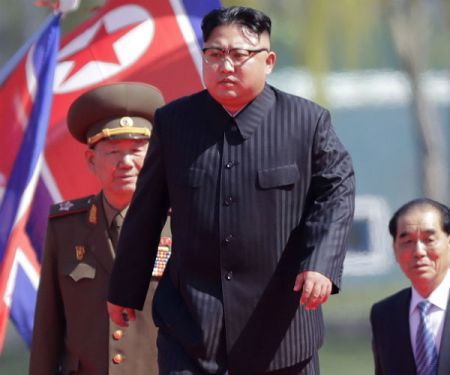
North Korean leader Kim Jong Un said his country is nearing its goal of “equilibrium” in military force with the United States, as the United Nations Security Council strongly condemned the North’s “highly provocative” ballistic missile launch over Japan on Friday.

The North’s official Korean Central News Agency carried Kim’s comments on Saturday — a day after U.S. and South Korean militaries detected the missile launch from the North Korean capital of Pyongyang.

It traveled 3,700 kilometers (2,300 miles) as it passed over the Japanese island of Hokkaido before landing in the northern Pacific Ocean. It was the country’s longest-ever test flight of a ballistic missile.

The North has confirmed the missile as an intermediate range Hwasong-12, the same model launched over Japan on Aug. 29.

Under Kim’s watch, North Korea has maintained a torrid pace in weapons tests, including its most powerful nuclear test to date on Sept. 3 and two July flight tests of intercontinental ballistic missiles that could strike deep into the U.S. mainland when perfected.

The increasingly frequent and aggressive tests have added to outside fears that the North is closer than ever to building a military arsenal that could viably target the U.S. and its allies in Asia. The tests, which could potentially make launches over Japan an accepted norm, are also seen as North Korea’s attempt to win greater military freedom in the region and raise doubts in Seoul and Tokyo that Washington would risk the annihilation of a U.S. city to protect them.

The KCNA said Kim expressed great satisfaction over the launch, which he said verified the “combat efficiency and reliability” of the missile and the success of efforts to increase its power.

While the English version of the report was less straightforward, the Korean version quoted Kim as declaring the missile as operationally ready. He vowed to complete his nuclear weapons program in the face of strengthening international sanctions, the agency said.

Photos published by North Korea’s state media showed the missile being fired from a truck-mounted launcher and a smiling Kim clapping and raising his fist while celebrating from an observation point. It was the first time North Korea showed the missile being launched directly from a vehicle, which experts said indicated confidence about the mobility and reliability of the system. In previous tests, North Korea used trucks to transport and erect the Hwasong-12s, but moved the missiles on separate firing tables before launching them.

The U.N. Security Council accused North Korea of undermining regional peace and security by launching its latest missile over Japan and said its nuclear and missile tests “have caused grave security concerns around the world” and threaten all 193 U.N. member states.

Kim also said the country, despite “limitless” international sanctions, has nearly completed the building of its nuclear weapons force and called for “all-state efforts” to reach the goal and obtain a “capacity for nuclear counterattack the U.S. cannot cope with.”

“As recognized by the whole world, we have made all these achievements despite the U.N. sanctions that have lasted for decades,” the agency quoted Kim as saying.

Kim said the country’s final goal “is to establish the equilibrium of real force with the U.S. and make the U.S. rulers dare not talk about military option for the DPRK,” referring to North Korea’s official name, the Democratic People’s Republic of Korea.

He indicated that more missile tests would be forthcoming, saying that all future drills should be “meaningful and practical ones for increasing the combat power of the nuclear force” to establish an order in the deployment of nuclear warheads for “actual war.”

Prior to the launches over Japan, North Korea had threatened to fire a salvo of Hwasong-12s toward Guam, the U.S. Pacific island territory and military hub the North has called an “advanced base of invasion.”

The Security Council stressed in a statement after a closed-door emergency meeting that all countries must “fully, comprehensively and immediately” implement all U.N. sanctions.

Japan’s U.N. Ambassador Koro Bessho called the missile launch an “outrageous act” that is not only a threat to Japan’s security but a threat to the whole world.

Bessho and the British, French and Swedish ambassadors demanded that all sanctions be implemented.

Calling the latest launch a “terrible, egregious, illegal, provocative reckless act,” Britain’s U.N. Ambassador Matthew Rycroft said North Korea’s largest trading partners and closest links — a clear reference to China — must “demonstrate that they are doing everything in their power to implement the sanctions of the Security Council and to encourage the North Korean regime to change course.”

France’s Foreign Ministry said in a statement that the country is ready to work on tougher U.N. and EU measures to convince Pyongyang that there is no interest in an escalation, and to bring it to the negotiating table.

Friday’s launch followed North Korea’s sixth nuclear test on Sept. 3 in what it described as a detonation of a thermonuclear weapon built for its developmental ICBMs.

The Hwasong-12 and the Hwasong-14 were initially fired at highly lofted angles to reduce their range and avoid neighboring countries. The two Hwasong-12 launches over Japan indicate North Korea is moving toward using angles close to operational to evaluate whether its warheads can survive the harsh conditions of atmospheric re-entry and detonate properly.

While some experts believe North Korea would need to conduct more tests to confirm Hwasong-12’s accuracy and reliability, Kim Jong Un’s latest comments indicate the country would soon move toward mass producing the missiles for operational deployment, said Kim Dong-yub, an analyst at Seoul’s Institute for Far Eastern Studies. He also said that the North is likely planning similar test launches of its Hwasong-14 ICBM.

South Korean President Moon Jae-in, a liberal who initially pushed for talks with North Korea, said its tests currently make dialogue “impossible.”

“If North Korea provokes us or our allies, we have the strength to smash the attempt at an early stage and inflict a level of damage it would be impossible to recover from,” said Moon, who ordered his military to conduct a live-fire ballistic missile drill in response to the North Korean launch.

When nothing deters the clever brutal tyrant

September 5, 2017

When nothing deters the clever brutal tyrant, Washinton TimesWesley Pruden, September 4, 2017

(Words, words, I’m so sick of words.

Yep. But not in the same context — DM)

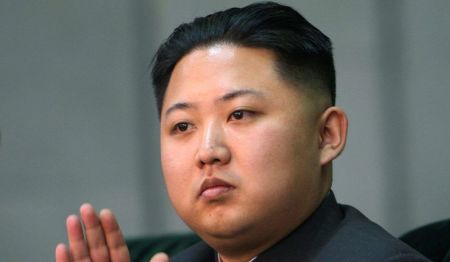
Kim Jong-Un

ANALYSIS/OPINION:

If words were bullets, the crazy fat kid in Pyongyang would have been dead a long time ago, with his ample carcass on display now within a shrine of marble, plaster and tears. But under that goofy haircut there’s a brain that is not so crazy at all.

Words, words, words. Nikki Haley, the U.S. ambassador to the United Nations, says North Korea is “begging for war,” which suggests that North Korea will get it if the begging continues. “Enough is enough. War is never something the United States wants. We don’t want it now. But our country’s patience is not unlimited.”

President Trump telephoned President Moon Jae-in in Seoul and they agreed that the fat kid’s explosion of a hydrogen bomb, underground or not, is not only a grave provocation, but “unprecedented,” too.

One after another, diplomats of America’s more or less reliable European allies, Britain, France and Italy, renewed demands for Kim Jong-un to behave himself, or else be sent to his room without supper. They demand that he halt his nuclear weapons program and ballistic missile scheme, or else — “else” being more of the sanctions that so far haven’t worked.

Francois Delattre, the French ambassador to the U.N., proposes “new” sanctions by the U.N., implementing the sanctions already in place, and new and separate sanctions that also might not work by the European Union. Words, words, words.

Sebastiano Cardi, the Italian ambassador, repeats the chorus as if he were singing the grace notes in an aria from Verdi: “Pyongyang poses a clear threat challenging the global nonproliferation regime.” Mr. Cardi is chairman of the U.N. North Korean compliance committee, and observes that North Korea is the only country to have tested a nuclear device in the 21st century. Mr. Cardi imagines this might shame the fat kid, but Kim takes it as a compliment. He has the toys that the other kids can only envy.

Japan and South Korea have unique critical concerns, sharing a neighborhood with the villains in the North. “We cannot waste any more time,” says the Japanese ambassador, Koro Bessho. “We need North Korea to feel the pressure, that if they go down this road there will be consequences.”

All true, all to the point, but Kim can count it all as just more yada, yada, yada from those he torments. He has his neighbors, and the lord protector the United States, backed into a corner, and he has never had so much fun. He doesn’t mind being the international pariah. He knows the United States dare not put the American boot with its hobnails on his neck, where it could squash him like a bug on the sidewalk, for fear of inviting massive retaliation on Seoul, killing upwards of a million innocents.

Nikki Haley suggests spreading the pain of sanctions, punishing nations that do business with Pyongyang, whether in contraband food and oil, or textiles, the profitable North Korean export so far untouched by the sanctions in place. Tighter limits on exporting North Korean laborers to other nations have been suggested, too. Much of the money these laborers earn is confiscated by the Pyongyang government, and important to the North Korean economy.

Russia and China, always eager to be helpful, suggest bartering Kim’s nuclear threat against the American guarantee of South Korean national security. Eliminate both and every conflict would be resolved, every rough place made smooth and plain. Both Russia and China know this is unacceptable to both Washington and Seoul, and it’s not a solution offered in good faith, anyway.

Some diplomats, pundits and other speculators argue that since nothing else works, returning to “diplomacy,” that vague and formless cure-all that usually cures nothing and invites only more yada, yada, yada, is the way to go. “Jaw, jaw beats war, war,” as Mr. Churchill said, but jaw, jaw has its limits, too.

Doing nothing is what brought the United States — and its allies — to the present moment. Bill Clinton, distracted by staining Monica Lewinsky’s little blue dress and spending the rest of his attention on the hot pursuit of other passing skirts, imagined that sending groceries to North Korea would transform the Kim family into small-d democrats, eager to make the world a happy place. They took the groceries and continued work on splitting the atom. Barack Obama, itching to reduce America’s size in the world, was always ready to make another speech, but not much else.

No one disputes that the way forward is hard, but the threat of an out-of-control regime armed with nuclear bombs and the missiles to deliver them to faraway places, is real and the hour is late. The strategy of three presidential administrations seems fashioned by Mr. Micawber, the Dickens character who could never quite succeed at anything but was always sure that “something will turn up.” Something must, and soon.

• Wesley Pruden is editor in chief emeritus of The Times.

Part II: Tough Is Not Enough

September 4, 2017

Part II: Tough Is Not Enough, 38 North, September 4, 2017

(In what fantasy world does the author live? He states,

What sort of deployments (strategic systems, missile defense, precision strike conventional weapons, conventional land, sea, special and air forces) would be a function of both military and diplomatic would need to be hammered out in the National Security Council and with regional allies.

It is inconceivable that the UN Security Council, where each permanent member has a veto, would approve any “deployment of significant and visible assets [which] would make it clear to the DPRK that it cannot compete with the US in the nuclear field regardless of the size, scope, pace and duration of that effort.”  Even were it to happen, North Korea would be told, in advance, how to prepare for whatever America and perhaps our allies will do when North Korea again tests or uses a nuke or missile. 

Please see also, North Korea Nuclear Test Puts Pressure on China and Undercuts Xi. — DM)

North Korea Nuclear Test Puts Pressure on China and Undercuts Xi

In Part I of this seriesI argued that advocates for “getting tough on North Korea” were prone to adopt inappropriate models for a harsher sanctions regime and to ignore the risk of counterproductive North Korean reactions to such sanctions. This is not an argument for no more sanctions. Given North Korean progress on its ICBM and nuclear weapons capabilities, we remain in an ongoing cycle of actions and reactions that may lead to a major war. A very vigorous political/military effort to contain and eventually eliminate the DPRK nuclear threat is essential now before the tensions and ill-considered rhetoric once again create the risk of the US and North Korea bellowing and stumbling their way into a catastrophic conflict. But sanctions should be only one element of the effort. The final push for a stabilization[1] of the North Korean nuclear and missile issue has to include the following components.

Military Deterrence and Defense

The additional deployment of significant and visible assets would make it clear to the DPRK that it cannot compete with the US in the nuclear field regardless of the size, scope, pace and duration of that effort. What sort of deployments (strategic systems, missile defense, precision strike conventional weapons, conventional land, sea, special and air forces) would be a function of both military and diplomatic would need to be hammered out in the National Security Council and with regional allies. The purpose of these forces would be both to provide diplomatic leverage and to prevent Kim from believing a military gamble would pay off.

Sanctions and Targeted Secondary Sanctions

The sanctions campaign should begin with the enforcement of UNSCRs 2270 and 2371. The initial goal would be to get full compliance with some of the difficult-to-enforce provisions, notably the caps on joint ventures and on North Korean labor exports. To this end, the US should target secondary sanctions on Chinese and other third country entities that are violating the UN resolutions. Rather than seeking to squash every sanctions-evading gnat, it should inflict significant pain on one large and vulnerable entity to have a bracing effect on many more. And, it might well create massive ripple effects if it is a key node in North Korea’s sanctions evasion network—for example, Chinese companies outlined in the recent C4ADS report—that are clearly violating UN sanctions and making extensive use of the US banking system. The US may also wish to find a similar target outside the Chinese network of businesses—perhaps one in a friendly Middle Eastern or African country that has chosen to ignore past US efforts to cut connections to Pyongyang. The US should for now avoid steps to coerce others to accept its own definition of sanctions that go beyond the resolutions. It appears that the most recent sanctions by the US Treasury against Chinese, Russian and one Namibian entity, as well as a recent freeze on some aid to Egypt, may fit the model described above.

However, it is unlikely the UN sanctions as currently written will suffice. The US should be building the case now for significant sanctions tightening if North Korea does not shift its current direction. This should best be done in steps, perhaps starting with the change of the labor and investment caps and moving to a full ban as a first iteration with the dusted off version of UNSCR 661 as the final alternative to military conflict. As the risk of conflict moves closer, the US will have to consider when secondary sanctions as a coercive mechanism for third countries needs to be deployed more widely. This is a high-risk enterprise in an already risky situation, but when stacked up against nuclear war in Asia, surely secondary sanctions are preferable.

Many Tracks of Diplomacy

These tough military and sanctions components will do nothing but open the door to miscalculation and war if other “softer” components are ignored or—more likely—mishandled. A stabilization of the Korean nuclear and missile issue is going to require multilateral diplomacy—and only the US has the ability to be at the center of this effort. It cannot subcontract the effort primarily to China. The PRC does not have the entre with some of the players, nor could it speak for the US to the most difficult audience of all: Pyongyang. These rings of diplomatic activity have existed in one form or another for many years, but they will need to be greatly invigorated and placed in the service of a clear set of policy objectives. These rings include:

  • US-ROK and US-Japan: This ring will need to create a solid front on possible military deterrence force deployments and on a sanctions strategy in the United Nations. The Trump administration appears to be in the middle of such an effort.
  • US-PRC: This ring is key. It needs to be removed from undisciplined and uncoordinated public commentary and shifted to sustained bilateral dialogue. Washington will need to enlist Chinese assistance both to create sanctions pressure on Pyongyang and to generate multilateral negotiations and a viable US-DPRK diplomatic channel. The US cannot expect pressure without political dialogue and Beijing cannot expect dialogue without real pressure on Pyongyang. The less we hear about the content of this channel (not to mention the US-DPRK channel) in public the better.
  • UN Security Council: Iraq sanctions failed when P-5 unity in the UNSC failed. The Trump Administration deserves credit for maintaining P-5 unity with the passage of UNSCR 2371, but this will have to be the first of many efforts in the Council.
  • Six Party (US, ROK, China, Russia, Japan and DPRK): At some point this channel will have to generate the political agreements and the framework for a settlement. There is nothing sacred about this particular forum or format, but something like it will have to be active and available for the formal public structure of a diplomatic settlement.
  • A direct US-DPRK channel: With one exception in the second term of the George W. Bush administration, the most rapid and extensive progress I have seen in over 28 years of interchange with North Korea over the nuclear issue has always taken place in a US-DPRK bilateral channel. The potential causes of war lie between Washington and Pyongyang. The US would be well advised to put together a small, tight, empowered negotiating team to create a channel for bilateral discussions. If the leak-prone and undisciplined Trump administration could manage to do so without us all hearing about it, so much the better.

Orchestrating this diplomacy will be one of the most complex challenges of the past 50 years. It is unclear whether the US State Department—suffering from several levels of missing leadership, low morale and persistent and unhelpful interference from the White House—is up to the task. But a way will have to be found to perform it if there is to be success on this issue.

Clarity, Discipline and Accountability in Public Commentary

US diplomacy during the recent dust-up with North Korea over its July ICBM tests was clumsy and amateurish: the incendiary rhetoric coming out of the White House needlessly escalated tensions and the uncoordinated and incoherent public messaging sowed confusion among our allies over US goals and intentions. That said, it did signal that the United States was approaching the limit of its patience over North Korean missile developments. Nevertheless, a policy vacuum continues to exist.

The United States has not made clear to Pyongyang, the American public, or its allies how it would respond to North Korean nuclear intimidation or aggression. There may be a place for strategic ambiguity in deterrence policy under some circumstances but not strategic incoherence. As a result of the loose and imprecise US rhetoric and mixed messaging, all parties are groping for an understanding of what might trigger nuclear conflict in Korea and beyond. To end this confusion and uncertainty, an authoritative figure such as the Secretary of State or Defense should give a policy speech which lays out for the American public, our allies, the Chinese and the North Koreans what American nuclear deterrence policy is vis-a-vis North Korea—and then the White House needs to discipline itself and other agencies to hew scrupulously to this script in all their public messaging on the policy.

The speech or the press backgrounding around it should also designate a single, high level official who would be accountable for the North Korean issue; this is simply not an issue that can survive current White House tong wars, presidential pique or bureaucratic backstabbing. This speech will also be the best place to signal that toughness will be accompanied by dialogue. It needs to open the door to real negotiations with a concrete proposal. This could be done through a proposal to reopen Six Party Talks or through a prearranged signal to Pyongyang that certain words in the speech are an invitation to a private authoritative back-channel discussion.

Goals and Trade Bait

The Obama administration’s efforts on North Korea foundered on a couple of rocks. The first was its inability or unwillingness to commit political capital to an issue that was highly controversial, with a very small (or nonexistent) solution set and a timeline that was less pressing than the Iran nuclear issue. The second was that the only goal for resolving or even trying to resolve the crisis that could garner consensus support was complete DPRK denuclearization. However, given the Obama administration’s unwillingness to invest fully in the issue, the White House’s highly constrained room for political maneuvering and Pyongyang’s commitment to its nuclear strategy, the goal of denuclearization became an obstacle to even starting a process for dealing with Pyongyang’s nuclear and missile progress.

Denuclearization remains a worthy goal and it is the only one that preserves the global nonproliferation regime and the long-term security of the US and its allies. But the first goal of renewed diplomatic engagement needs to be more focused and urgent: to stabilize peace in Northeast Asia and to prevent a stumble into a nuclearized second Korean War. Achieving this goal, by definition, will require North Korea to put limits on its ICBM program, which is the essential immediate need for American security policy. There are interim steps that would be of value in preserving peace and security. The parties might wish to develop mechanisms to prevent accidental war. It might also be a worthy tactical goal to create geographic limits on North Korean missile testing targets, thus putting US territories like Guam and Japanese waters off limits. The US might, at some point, trade off a particular sanction in return for a firm ICBM testing ban or moratorium or a halt to nuclear tests.

At no point should the US take ultimate denuclearization off the table, but it is necessary first to identify immediate steps to stabilize what is a dangerous dynamic. The two great dangers to pursuing more modest, immediate goals will be the accusation the US has “accepted” a nuclear DPRK and the concessions the DPRK may want. Sanctions should be considered legitimate items to trade. Our alliances should not. Our political relationship with the DPRK—including at some point a peace treaty ending the Korean War—should be legitimate points of discussion. Tangible payments to the DPRK should not, given the unfortunate experiences the ROK and US had with such payments in past agreements.

Conclusion

In a policy with any hope of resolving US and global concerns about North Korea’s nuclear and missile threat, sanctions play an important but supporting role. The key to a successful effort to deal with the North Korean threat without war is a combination of military deterrence, sanctions, a complex diplomatic offensive with clear and realistic short-term goals, and perhaps most importantly, a disciplined, clear public elucidation of US deterrence and diplomatic policy for Korea. The “tough” part of this approach (military deterrence and sanctions) is well within the reach of the Trump administration. Whether it has the personnel, structure and capacity for discipline for the diplomatic and public components of the effort is yet unproven.


  1. [1]

    Stabilization is chosen deliberately in this sentence. Denuclearization should be the long term stated goal of the effort but that goal should be placed in the same context as “general and complete disarmament” as used in Article VI of the Nuclear Nonproliferation Treaty. It is a legitimate goal, but one that is far over the horizon. The key goal at this moment is to halt momentum towards having North Korean nuclear weapons capable of reaching the US homeland.

North Korea Nuclear Test Puts Pressure on China and Undercuts Xi

September 4, 2017

North Korea Nuclear Test Puts Pressure on China and Undercuts Xi, New York Times

(Assuming the accuracy of the analysis, it is doubtful that President Trump has much economic or other leverage with China vis a vis North Korea. — DM)

President Xi Jinping of China arriving on Sunday for the opening ceremony of a business forum in Fujian Province. Credit Pool photo by Mark Schiefelbein

The biggest concern for China’s leadership is the possibility of North Korea turning on China, the country’s only ally. “If cornered, North Korea could take military action against China, given the relationship has reached a historic low,” Mr. Zhao said.

China supplies more than 80 percent of the North’s crude oil, and suspending delivery would be the ultimate economic sanction, more far-reaching than those imposed, with China’s support, by the United Nations.

 ****************************

BEIJING — It was supposed to be Xi Jinping’s moment to bask in global prestige, as the Chinese president hosted the leaders of some of the world’s most dynamic economies at a summit meeting just weeks before a Communist Party leadership conference.

But just hours before Mr. Xi was set to address the carefully choreographed meeting on Sunday, North Korea’s leader, Kim Jong-undetonated his sixth nuclear bomb.

Mr. Kim has timed his nuclear tests and missile launches with exquisite precision, apparently trying to create maximum embarrassment for China. And on Sunday, a gathering in southeast China of leaders from Russia, Brazil, India and South Africa, members of the so-called BRICS group, was immediately overshadowed by news of the test, which shook dwellings in China and revived fears of nuclear contamination in the country’s northeast region.

This is not the first time Mr. Kim has chosen a provocative moment to flaunt his country’s weapons. In May, he launched a ballistic missile hours before Mr. Xi spoke at a gathering of world leaders in Beijing assembled to discuss China’s signature trillion dollar One Belt, One Road project.

The confluence of North Korea’s nuclear testing and Mr. Xi’s important public appearances is not a coincidence, analysts said. It is intended to show that Mr. Kim, the leader of a small, rogue neighboring state, can diminish Mr. Xi’s power and prestige as president of China, they said. In fact, some analysts contended that the latest test may have been primarily aimed at pressuring Mr. Xi, not President Trump.

“Kim knows that Xi has the real power to affect the calculus in Washington,” said Peter Hayes, the director of the Nautilus Institute, a research group that specializes in North Korea. “He’s putting pressure on China to say to Trump: ‘You have to sit down with Kim Jong-un.’”

What Mr. Kim wants most, Mr. Hayes said, is talks with Washington that the North Korean leader hopes will result in a deal to reduce American troops in South Korea and leave him with nuclear weapons. And in Mr. Kim’s calculation, China has the influence to make that negotiation happen.

While some Chinese analysts say North Korea should be made to pay a price for its contempt of China, the North’s ally and major trading partner, they were not optimistic that Sunday’s test would change Mr. Xi’s determination to remain above the fray and not get his hands sullied trying to force Mr. Kim to change his ways.

Even the North’s claim that the weapon detonated was a hydrogen bomb that could be mounted on an intercontinental ballistic missile would probably not sway Mr. Xi, they said.

“This sixth nuclear test should force China to do something radical; this will be a political test,” said Cheng Xiaohe, a nuclear expert at Renmin University. “But the mood is not moving that way.”

China’s Foreign Ministry did express “strong condemnation” of the test. But despite the North’s repeated incitements, the Chinese leadership is likely to stick to its position that a nuclear-armed North Korea is less dangerous to China than the possibility of a political collapse in the North, Mr. Cheng said. That could result in a unified Korean Peninsula under the control of the United States and its ally, South Korea.

China fears such an outcome if it uses its greatest economic leverage: cutting off the crude oil supplies that keep the North’s rudimentary economy running.

“Cutting off oil supplies could severely impact North Korean industries and undermine the regime’s stability, a solution which China and Russia have serious qualms about,” said Zhao Tong, a fellow at the Carnegie-Tsinghua Center for Global Policy in Beijing.

China has put forward a proposal that hinges on North Korea stopping its nuclear testing in exchange for an end to American military exercises around the Korean Peninsula.

But Mr. Xi is consumed at the moment with domestic matters, Chinese analysts said. The political machinations surrounding the Communist Party’s National Congress that will convene in Beijing in mid-October to select new members of the ruling elite are at the top of his agenda. Mr. Xi will be awarded his second five-year term at the meeting.

China always aims for domestic calm in the period leading up to the secretive congress, and so it is unlikely to do anything before Oct. 19, the start of the conclave, Mr. Zhao said.

The biggest concern for China’s leadership is the possibility of North Korea turning on China, the country’s only ally. “If cornered, North Korea could take military action against China, given the relationship has reached a historic low,” Mr. Zhao said.

China supplies more than 80 percent of the North’s crude oil, and suspending delivery would be the ultimate economic sanction, more far-reaching than those imposed, with China’s support, by the United Nations.

Even The Global Times, the nationalist, state-run newspaper, said several months ago that China should consider cutting off its oil supplies to North Korea if Mr. Kim detonated a sixth nuclear bomb. But with the party congress looming, the paper modified its position Sunday.

“The origin of the North Korean nuclear issue is the sense of uncertainty that is generated by the military actions of the U.S./South Korea military alliance,” the paper said. “China should not be at the front of this sharp and complicated situation.”

There were also some doubts whether severing oil supplies would make much a huge difference to the North Korean regime. “The economic effects will be substantial but not regime crippling,” said Mr. Hayes of the Nautilus Institute, which specializes in the North’s energy needs.

The hardships, he said, would be most felt by ordinary people, with less food getting to market and fewer people able to travel between cities in buses.

The North’s army has oil stockpiles for routine nonwartime use for at least a year, Mr. Hayes said. “They can last for about a month before they run out of fuel in wartime, at best; likely much earlier,” he said.

Another major concern for the Chinese government is the fears of residents in the northeast of the country about nuclear contamination from North Korea’s test site at Punggye-ri, not far from the Chinese border.

Many residents in Yanji in Jilin Province, which borders the North, said they felt their apartments shake after the test. Some posted photos of stocks of food and drinks shattered on the floors of a grocery store. At first residents believed the cause was an earthquake, they said, and only later in the day heard the news from state-run media that North Korea had detonated a nuclear bomb.

“I was in my study when the earthquake began,” said Sun Xingjie, an assistant professor at Jilin University in Changchun about 350 miles from the North Korean test site. Mr. Sun said he checked with friends on social media, and they determined from the location and the depth of the explosion that it was a nuclear test.

Even though there is no evidence of any contamination from the test reaching China, it is a worry of residents, Mr. Sun said.

“We are at the border region, so we have a sense of fear about leakage from the nuclear test,” he said.

North Korea and Iran: The nuclear result of strategic patience

August 23, 2017

North Korea and Iran: The nuclear result of strategic patience, Israel National News, Barry Shaw, August 23, 2017

(Please see also, US Says to Ask IAEA Questions about Inspecting Iran’s Military Sites and Discussion Of Iranian Violations Of JCPOA Is Futile; The Inspection Procedure Designed By The Obama Administration Precludes Actual Inspection And Proof Of Violations. “Strategic patience” —  stupidity or worse? — DM)

While American politics in melt down mode over the Democrats almost yearlong obsession in trying to find a scintilla of evidence with which they can hang Trump on charges of colluding with the Russians, both North Korea and Iran have been busy getting on with developing their nuclear missile programs.

North Korean President Kim Jong-Un has blatantly carried out a series of missile tests that show their capability of launching a nuclear missile strike that will put the west coast of the United States within range. 

When President Trump warned North Korea of the “fire and fury, never seen before” should they test America’s patience, some Democrats and Obama hang-overs, such as Ben Rhodes, the White House Deputy National Security Secretary under President Obama, accused Trump on MSNBC of “extreme and false statements about all manner of things. It’s more concerning,” he said, “when they are about nuclear weapons.”

So who gets it? Ben Rhodes, or President Trump?  Rhodes introduced a security policy of “strategic patience.” Rhodes, it should be remembered, was an ardent promoter of Obama’s nuclear deal with Iran which rewarded the Islamic Republic to the tune of $150 Billion while allowing them to continue their intercontinental ballistic missile development program.

Compare Rhodes criticism to Trump’s statement to Donald Trump’s comments about making nuclear deals with regimes like North Korea on an NBC’s ‘Meet the Press’ TV interview in October 1999. That was a decade and a half before Donald Trump entered politics. Here is what he said about the Administration’s refusal, or inability, to adequately close down North Korea’s nuclear program, “Do you want to do it in five years when they have warheads all over the place, each one of them pointing at New York and Washington, is that when you want to do it, or do you want to do it now?”

In that interview, Trump talking about the US negotiators, and using his familiar verbal style, added that the North Korean leaders “are laughing at us. They think we’re a bunch of dummies.”

Who can say, faced with today’s crisis, that Trump was wrong?

The most recent North Korean testing has seen them use their missile launch capability for carrying miniaturized nuclear weapons which they announced would be placed on their warships to aim at Guam. This is not new technology or intelligence. Revelations show that the US Military Intelligence reported this technology to the Obama Administration back on April 2013, but, operating on Ben Rhodes’s “strategic patience” paradigm, President Obama decided to deny the contents of this intelligence assessment, and do nothing about it. In other words, they covered up the intelligence as being politically inconvenient. Strategic patience bathed in denial has resulted in North Korea arriving at this dangerous moment for the United States and the Trump Administration.

It is worth reminding ourselves that Wendy Sherman was one of the architects of both the North Korean and the Iranian nuclear deals. The North Korean deal was used as the US template for the negotiations with Tehran over their advanced nuclear program.  Both were based on the fallacy of a strategic patience policy of “let’s go easy on them and see what happened in ten years’ time.”

How did the US Intelligence and the Obama Administration allow this dramatic national security failure to occur? This should be required study for leading Strategic and National Security think tanks.

The strategic patience policy is a frightening failure. It is nothing more than politically kicking the can down the road to be picked up by a future Administration when it is about to explode in a mushroom cloud.

America is in crisis mode right now. They are scrambling to come up with a solution to the North Korean nuclear threat, but there appears to be no good solution in sight, particularly when you are dealing with unpredictable rogue regimes. Conflict seems inevitable.

This is the consequence of kicking that can down the road.  Tomorrow, they will wake up to the same crisis when Iran takes the wraps off their project and are ready for a nuclear breakout.

Barry Shaw is the Senior Associate for Public Diplomacy at the Israel Institute for Strategic Studies. 

Top Armed Services Dem: Russia, China ‘Spectacularly Disingenuous’ on North Korea

July 5, 2017

Top Armed Services Dem: Russia, China ‘Spectacularly Disingenuous’ on North Korea, PJ MediaBridget Johnson, July 5, 2017

(Please see also, North Korean Missiles Reaching USA. President Trump seems to have decided that joint action with China and Russia won’t work and that unilateral action by America will be needed. — DM)

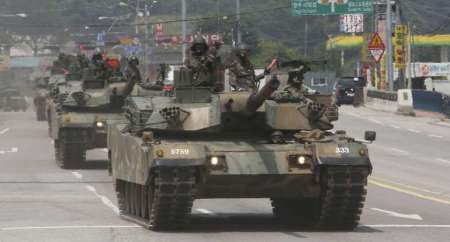
South Korean army K-1 tanks move during the annual exercise in Paju, South Korea, near the border with North Korea, on July 5, 2017. (AP Photo/Ahn Young-joon)

China and Russia issued a joint statement calling Pyongyang’s ICBM test “unacceptable.”

“The two sides propose that the DPRK (North Korea) as a voluntary political decision declares a moratorium on testing nuclear explosive devices and ballistic rocket launches, and the US and South Korea refrain from carrying out large-scale joint exercises,” the statement said. “Parallel to this, the opposing sides should start negotiations and affirm general principles of their relations including the non-use of force, rejection of aggression and peaceful co-existence.”

“Neither one of them is doing a darn thing to stop North Korea. And they want to use it as an excuse to push us out of the region,” he added. “What we have to make clear to them is it’s going to have the exact opposite effect. Once North Korea is able to threaten us and even now, as they threaten our allies, we have to be in there to protect our own interests. 

******************************

The top Democrat on the House Armed Services Committee declared this morning that the “threat from North Korea, regrettably, is not going to be removed” by the “global action” proposed by the Trump administration to curb Kim Jong-un’s behavior.

Pyongyang said Tuesday that it successfully test-fired Hwasong-14, a long-range intercontinental ballistic missile. According to Chosun Ilbo in South Korea, state TV in the North declared the regime “a full-fledged nuclear power… possessed of the most powerful intercontinental-ballistic rocket capable of hitting any part of the world.”

Kim reportedly watched the launch at the scene. The missile, said to be capable of reaching Alaska or Hawaii, flew for 39 minutes before hitting open waters.

Secretary of State Rex Tillerson issued a statement Tuesday evening condemning the July Fourth launch. “Testing an ICBM represents a new escalation of the threat to the United States, our allies and partners, the region, and the world,” he said. “Global action is required to stop a global threat.”

“Any country that hosts North Korean guest workers, provides any economic or military benefits, or fails to fully implement UN Security Council resolutions is aiding and abetting a dangerous regime. All nations should publicly demonstrate to North Korea that there are consequences to their pursuit of nuclear weapons. We intend to bring North Korea’s provocative action before the UN Security Council and enact stronger measures to hold the DPRK accountable,” Tillerson continued.

“The United States seeks only the peaceful denuclearization of the Korean Peninsula and the end of threatening actions by North Korea. As we, along with others, have made clear, we will never accept a nuclear-armed North Korea.”

President Trump and his national security team “are continuing to assess the situation in close coordination with our allies and partners,” he added.

Armed Services Committee Ranking Member Adam Smith (D-Wash.) doubted that Tillerson’s vow would put pressure on North Korea.

“If there is an idea floating around out there for how we can remove that threat, I’m open to it. But we have been circling around this discussion of what we want China to do and what we want sanctions to do and all these other different pieces,” Smith said. “The bottom line is, what we need against North Korea, we need to put the best economic sanctions we can. I think it’s perfectly appropriate for the secretary of state to try to put pressure on other nations to do the same. But the most important thing we need is a credible military deterrent, so that whatever North Korea does in terms of building a missile, they know that if they act against South Korea or against Japan or against us, we will obliterate them.”

“That’s why THAAD [missile defense system] is important. That is why our alliance with South Korea and Japan is important, to have that credible military force, because what’s been proven — and all of the options have been discussed with your previous guests — is that North Korea is going to do it. They want to build nuclear weapons. They want to develop an intercontinental ballistic missile. And short of an all-out war on the Korean Peninsula, we don’t really have an option for stopping them.”

China and Russia issued a joint statement calling Pyongyang’s ICBM test “unacceptable.”

“The two sides propose that the DPRK (North Korea) as a voluntary political decision declares a moratorium on testing nuclear explosive devices and ballistic rocket launches, and the US and South Korea refrain from carrying out large-scale joint exercises,” the statement said. “Parallel to this, the opposing sides should start negotiations and affirm general principles of their relations including the non-use of force, rejection of aggression and peaceful co-existence.”

Smith slammed the statement as “spectacularly disingenuous.”

“Neither one of them is doing a darn thing to stop North Korea. And they want to use it as an excuse to push us out of the region,” he added. “What we have to make clear to them is it’s going to have the exact opposite effect. Once North Korea is able to threaten us and even now, as they threaten our allies, we have to be in there to protect our own interests. China’s not acting against North Korea. And the reason they’re not acting against North Korea is, they don’t want to cut off North Korea’s economic aid. They don’t want North Korea to collapse because they don’t want millions of North Korean refugees pouring across their border. They’re not happy that North Korea is causing such instability in the region, but the alternative of them trying to crush the regime somehow is something they’re not willing to do, and they haven’t been willing to do it through four administrations. So, we need a credible military deterrent, and that is our only option.”

Smith noted that Kim’s actions have been “all about ensuring regime survival,” as he’s “looked at Iraq and Afghanistan and Libya, and they feel that unless they have a nuclear weapon and a credible deterrent of their own, that their regime is in jeopardy.”

“So, all the economic sanctions, all that needs to be done. But understand what I’m saying here. As you have discussed, there is not a good military option,” he said. “Thinking that we can preemptively go in there and somehow take out their capabilities, whatever we do leads to a massive war in the Korean Peninsula… we need our THAAD system in the region. We need a system to give us a shot at shooting down that missile if they decide to launch it. And then we also need a clear diplomatic policy that we will destroy them.”

After the THAAD system was installed in South Korea, Trump said Seoul should fork over a billion dollars for the missile defense. New South Korean President Moon Jae-in recently suspended further THAAD deployment pending a review of the program.

Smith stressed that Russia and China must “stop screwing around.”

“If you guys really want us to be less involved in the region, then you have got to figure out a way to control North Korea,” he said. “Now, I don’t think they’re going to do that. But that means that we have to stay active in the region.”

North Korean Missiles Reaching USA

July 5, 2017

North Korean Missiles Reaching USA, Front Page MagazineMatthew Vadum, July 5, 2017

(Peace talks have failed and the leftist view seems to be “if at first you don’t succeed try the same thing again.” President Trump does not agree and is no longer willing to rely on China. He recently tweeted, “Trade between China and North Korea grew almost 40% in the first quarter. So much for China working with us – but we had to give it a try!” Please see also, Trump Hits China Over Trade Relationship With North Korea. If, as is now apparent, China wants more fruitless negotiations, it’s time to employ our military resources to eliminate North Korea’s nuclear and missile capabilities. An EMP attack could be effective.– DM)

But Americans are finally being disabused of left-wing arms control fantasies, and fortunately, after eight years of dithering and appeasement, we now have a president who actually wants to defend the country from external threats.

And alongside President Trump there are serious adults in the White House and Foggy Bottom willing to respond with an appropriate show of force to the latest provocation from Pyongyang and take other necessary action.

Pentagon spokesman Dana White said “we remain prepared to defend ourselves and our allies and to use the full range of capabilities at our disposal against the growing threat from North Korea.”

*************************************

Less than six months into Donald Trump’s presidency America has awakened to the nightmare of a North Korea armed with intercontinental ballistic missiles that the Trump administration says are capable of reaching Alaska.

U.S., South Korean, and Japanese officials say the North Korean Hwasong-14 ICBM flew approximately 580 miles in 40 minutes and achieved an altitude of 1,500 miles, besting previously reported North Korean test results. North Korea’s successful but unexpected test is a sobering reminder of how urgently the United States needs to ramp up its antiballistic missile program after years of reckless military downsizing by the Obama administration.

The North Korean launch was “the big story we have all been waiting for,” Professor Bruce Bechtol of Angelo State University in Texas told Fox News on Tuesday. “All of the paradigms have changed. It is now time to see what action the USA will take.”

The missile was apparently launched from a mobile launcher, which “nearly destroys our warning time and also means that the North Koreans have a real shot at launching this system at us without us being able to destroy it on the ground.”

North Korea also carried out a successful ballistic missile test on May 14, and the U.S. Missile Defense Agency conducted its first successful interception of an ICBM on May 30. A long-range ground-based interceptor missile launched from Vandenberg Air Force Base in California hit and destroyed the ICBM launched from the U.S. Army’s Reagan Test Site on Kwajalein Atoll in the Marshall Islands.

This idea of missile defense, oft-compared to trying to shoot a bullet with another bullet, grew out of President Reagan’s Strategic Defensive Initiative (SDI), derided by left-wingers at the time and for years after as “Star Wars.” Unsurprisingly, Barack Obama used to scoff at the idea that a missile could take out another missile.

Meanwhile, Monday evening after news of the successful Hwasong-14 ICBM test broke, President Trump took to Twitter.

North Korea has just launched another missile. Does this guy have anything better to do with his life? Hard to believe that South Korea and Japan will put up with this much longer. Perhaps China will put a heavy move on North Korea and end this nonsense once and for all!

Apparently, “this guy” refers to dictator Kim Jong-un. Communist China has been propping up Kim’s dictatorship for years. The Trump administration wants China to push its North Korean ally harder to scrap its nuclear weapons program.

During Independence Day remarks at a picnic for military families on the South Lawn of the White House Trump did not refer to North Korea’s activities but said, “we do have challenges, but we will handle those challenges. Believe me.”

How did we get to this dangerous juncture in world affairs?

Blame the Left. After all, it’s not rocket science.

While left-wingers in Washington were busy reaching out to Islamofascists and projecting American weakness on the international scene over the eight long years of Barack Obama’s presidency, Kim Jong-il and his heir Kim Jong-un were busy transforming their Stalinist hellhole of a country into a nuclear power. They were aided not just by the permissive Obama administration, which did more or less nothing to curb Pyongyang’s nuclear ambitions, but also years earlier by the enabling Clinton administration.

In 1994 Bill Clinton unveiled an agreement between the U.S. and North Korea that he claimed would achieve “an end to the threat of nuclear proliferation on the Korean Peninsula.” Under the deal, North Korea “agreed to freeze its existing nuclear program and to accept international inspection of all existing facilities,” Clinton said at the time. The pact “is good for the United States, good for our allies, and good for the safety of the entire world.”

But Americans are finally being disabused of left-wing arms control fantasies, and fortunately, after eight years of dithering and appeasement, we now have a president who actually wants to defend the country from external threats.

And alongside President Trump there are serious adults in the White House and Foggy Bottom willing to respond with an appropriate show of force to the latest provocation from Pyongyang and take other necessary action.

While American and South Korean forces conducted joint ballistic missile drills following the North’s ICBM test, Secretary of State Rex Tillerson said yesterday that the U.S. government would “never accept a nuclear-armed North Korea.” He urged countries around the world to fully enforce UN sanctions against the rogue nation, saying “global action is required to stop a global threat.”

Pentagon spokesman Dana White said “we remain prepared to defend ourselves and our allies and to use the full range of capabilities at our disposal against the growing threat from North Korea.”

The UN Security Council may convene an emergency meeting as soon as today. On Twitter, U.S. Ambassador to the UN Nikki Haley demonstrated her exasperation at having to devote her Independence Day holiday to emergency consultations by using the hashtag “#ThanksNorthKorea.”

Haley doesn’t have it quite right. If she wants to sarcastically “thank” anybody for the North Korean ICBM test, she should be “thanking” Barack Obama and Bill Clinton, whose suspect policies helped a pariah nation join the nuclear club.