Archive for the ‘Middle East’ category

Ron Dermer and Dore Gold on Fox

March 8, 2015

Ron Dermer and Dore Gold on Fox, via You Tube, March 8, 2015

(Giving Iran years to pursue its ambition of obliterating the U.S. and Israel, with few or no remaining sanctions as Iran continues its efforts to control the Middle East, and no significant progress in allowing the IAEA to pursue its investigations of Iran’s past and future progress in nuclear weaponry strikes me as worse than merely absurd.– DM)

White House pushing Israel to recall ambassador?

March 5, 2015

White House pushing Israel to recall ambassador? Hot Air, Ed Morrissey, March 5, 2015

Yesterday, the Washington Post and former Obama adviser and Middle East envoy Dennis Ross urged Barack Obama to provide a serious response to the “strong case” presented by Benjamin Netanyahu to a joint session of Congress against the administration’s Iran deal. The left-leaning Israeli paper Ha’aretz reports that the “serious response” has been to treat Israeli ambassador Ron Dermer as an unwelcome guest to the party. Dermer created the embarrassment of Barack Obama this week, as Ha’aretz reports the White House’s thinking, and Dermer has to go if Netanyahu wants to do business over the next two years:

“We are not the ones who created this crisis,” said a senior administration official. “President Obama has another two years in office and we wish to go back to a reality where you can work together despite the differences. The prime minister of Israel is the one who needs to find a way to fix this.”

Although White House officials don’t say so explicitly, they seem to imply that one way to repair the relations between Netanyahu and Obama would be to replace Israel’s ambassador to Washington, Ron Dermer. The latter is seen as an instigator who concocted Netanyahu’s Congress speech behind Obama’s back with John Boehner, the Republican speaker of the House of Representatives.

In his speech to AIPAC, Netanyahu praised Dermer for standing firm and taking the heat in Washington. If Netanyahu wins the election and continues to back Dermer, the ambassador will find himself isolated in the American capital. As long as Obama is in the White House, nobody in the administration will work with him.

Ha’aretz reporter Barak Ravid reports this in a matter-of-fact manner, which misses the irony in this passage:

Over the past six years, there have been more than a few ups and downs in the Netanyahu-Obama relationship – tensions, crises, public recriminations and wrangling before the cameras. Senior U.S. officials say that to date, ongoing relations between the two countries continue to function despite these strains. But this time, they stressed, there was the feeling that Netanyahu was using these differences – in fact, highlighting and intensifying them – for his own political needs.

“Historians can probably find examples of times when there were similar crises in the U.S.-Israel relations in the past,” said a senior U.S. official. “In the last six years we had big differences over the peace process and on other issues, but the situation now is extremely difficult and feels more politically charged than ever before.”

Ahem. When Hamas opened fire on Israel last summer, which country went to Qatar to legitimize the terrorist group in negotiations in order to push Israel into recognizing them? That came just after the Bowe Bergdahl swap sent five high-ranking Taliban commanders to Doha, and the Obama administration needed to show that Qatar could be trusted, and to allow Qatar to curry favor in the region. It took Egypt Abdel Fatah al-Sisi to bigfoot John Kerry out of that particular folly.

Don’t think for a moment that the Obama administration hasn’t been playing politics with Iran all along, too. Which country in this equation has a foreign-policy track record so poor that it has desperately glommed onto the idea of a rapprochement with the largest state sponsor of terrorism in the world? For this White House to accuse another government, especially an ally as beleaguered as Israel, of playing politics with foreign policy and alliances is the height of hypocrisy. Obama’s entire policy in the region has been predicated on playing footsie with Iran since he first took office, either in a sham “containment” relationship or a fully endorsed policy of regional hegemony.

As for Dermer, he’s clearly not the problem. However, as one former US ambassador to Israel says, ambassadors are “an expendable lot,” and Netanyahu may need to find another envoy if he wins another term as Prime Minister. That won’t change the trajectory of this administration’s folly on Iran, though, nor the chronic ineptitude of Obama’s State Department on Israel and the region.

Update on the Update below: That story was from last year, actually, as Gabriel Malor pointed out later on Twitter. We both missed that. I’ve changed the headline to remove the red headline and wanted to post this above the link. My apologies for the confusion, even though it’s still a pretty good reminder of the threat Iran poses to Israel and the region.

Update: Here’s a timely reminder that Netanyahu accurately warned that Iranian support for terrorism was a direct threat to Israel (via Gabriel Malor):

The Israel Navy intercepted a ship early on Wednesday that Iran was using to smuggle dozens of long-range rockets to Gaza.

The IDF’s “Operation Discovery” took place in the Red Sea, 1,500 kilometers away from Israel and some 160 kilometers from Port Sudan. IDF Chief of Staff Lt.-Gen. Benny Gantz oversaw the raid.

Missile ships and navy commandos from the Flotilla 13 unit, backed by the air force, raided the Klos-C cargo ship, which was carrying Syrian- manufactured M-302 rockets.

The ship’s crew is in Israeli custody, and the navy is towing the vessel to Eilat, where it is expected to arrive in the coming days.

The rockets originated in Syria, according to Military Intelligence assessments. Iran reportedly flew the rockets from Syria to an Iranian airfield, trucked them to the seaport of Bander Abbas, and shipped them to Iraq, where they were hidden in cement sacks. The ship then set sail for Port Sudan, near the Sudanese-Eritrean border, on a journey that was expected to last some 10 days.

Hey, but I’m sure the Tehran mullahcracy will be totally trustworthy with those thousands of uranium centrifuges!


US State Department Slams Netanyahu’s ‘Magic Formula’

March 5, 2015

US State Department Slams Netanyahu’s ‘Magic Formula’, Israel National News, Ari Yashar, March 4, 2015

img569560John Kerry Reuters

Harf continued “you can throw out a lot of very scary hypotheticals, but if we look at the technology and we look at where they are today and where they could be in a double-digit duration (i.e. the ten years Obama has called for the deal to last which Iran rejected – ed.), that is further away from a nuclear weapon.”

*********************

US State Department Deputy Spokesperson Marie Harf responded to Prime Minister Binyamin Netanyahu’s Congress Address on Tuesday, and like US President Barack Obama her reaction was highly negative to Netanyahu’s criticism of the approaching Iran deal.

In a similar vein to Obama, she said: “we didn’t hear any – certainly any new ideas today, but more importantly, didn’t hear one single concrete alternative in today’s speech from the Prime Minister about how we could get to a double-digit duration, push breakout time to a year, and cut off the four pathways Iran could…use to get…fissile material for a nuclear weapon.”

Israeli officials responded to this point, arguing there was much new in Netanyahu’s proposal which would require Iran to take real actions indismantling its nuclear program instead of making mere promises to remove sanctions, and would also deal with its ballistic missile program which the current deal avoids.

While Netanyahu and US officials alike have argued no deal is better than a bad deal, Harf opined “no deal means much shorter breakout than under an agreement. Right now, outside experts have said publicly we’re at about two to three months breakout. Our goal is a year.”

Calling Netanyahu’s talk of a better deal “hypothetical” and “rhetoric,” she added “anyone who tells you there’s a magic formula that they have in their head that we don’t have is just not looking at the situation realistically.”

“We need to be very clear about what we’re trying to achieve and what the alternatives look like, not in a fantasy world, not in a world without specifics, but in the real world. And that’s what we’re doing,” she claimed.

Harf stated that Netanyahu said “some sort of perplexing things…including that all sanctions will eventually be lifted on Iran. That is not the case.” She admitted that the nuclear sanctions indeed would indeed be lifted, but “sanctions for terrorism, sanctions for human rights” will remain.

“He also said that at the end of the duration, Iran would have ‘fullinternational legitimacy,’ which is also a little overstated and just not accurate,” stated Harf.

When asked whether by maintaining the deal Iran’s nuclear program would not get legitimacy, she acknowledged that indeed the program would receive such legitimacy, but attempted to differentiate between “full legitimacy” for Iran as opposed to legitimacy for its nuclear program.

“We have always said they would be able to have a domestic enrichment that is peaceful in nature,” she added.

Iran has repeatedly threatened Israel with annihilation, and is the leading state sponsor of terrorism worldwide.

Centrifuges for a nuclear arsenal in weeks

Harf was asked about Netanyahu’s statement that US Secretary of State John Kerry had acknowledged Iran would be allowed to increase to 190,000 centrifuges as its Supreme Leader Ayatollah Ali Khamenei has demanded, a state of affairs that would allow the Islamic regime to produce a nuclear arsenal within weeks.

She insisted that Kerry had not said Iran would be allowed to increase to 190,000 centrifuges in the deal.

“When you are a member, a non-nuclear-weapons member of the NPT (Non-Proliferation Treaty) – and I’m not an NPT expert – but at the conclusion of the duration of this, in addition to the lasting transparency measures we have, Iran will not be able to do things to get to a nuclear weapon,” she claimed.

Harf continued “you can throw out a lot of very scary hypotheticals, but if we look at the technology and we look at where they are today and where they could be in a double-digit duration (i.e. the ten years Obama has called for the deal to last which Iran rejected – ed.), that is further away from a nuclear weapon.”

In response to the bill being proposed to allow Congress to vote on the Iran nuclear deal before it is agreed upon, Harf made clear Obama intends to shoot down any such motion.

“If that comes to the President’s desk, he will veto it. …We can’t negotiate an agreement while Congress is attempting to legislate either what might be in it or that it can’t be implemented, how it could be implemented, which is part of this as well,” she said.

Obama’s Iranian-nuclear strategy brings dividend: Rev Guards lead military assault on Tikrit

March 4, 2015

Obama’s Iranian-nuclear strategy brings dividend: Rev Guards lead military assault on Tikrit, DEBKAfile, March 4, 2015

(Please see also The World Bows to Iranian Regional Hegemony and Should We Give Up on the Iraqi Army? — DM)

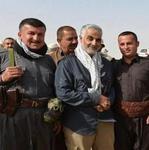
General_Qassam_Suleimani_IRAQ_1.15Iranian Gen. Qassem Soleimani on Tikrit battlefront

US President Barack Obama’s plans for Iran, which were spectacularly challenged by Binyamin Netanyahu in his Congress speech Tuesday, March 3, were manifested 10,000 kilometers from Washington in the firestorm over Tikrit, the important Sunni town north of Baghdad. There, Iranian-led Iraqi troops are on the offensive against the Islamic State in the biggest ground battle fought in Iraq since the Iraqi army fell apart and scattered last June against the conquering Islamist march through western and central Iraq.

For four reasons, this battle is loaded with ramifications for Obama’s Iran policy and the Islamic Republic’s drive for recognition as the leading Middle East power:

1.   For Tehran it is a high-stake gamble for prestige, Its top military strategist, Al Qods Brigades chief Gen. Qassem Soleimani, was thrown into the Tikrit operation, to become the first high-ranking general Iran has ever placed publicly up front in direct command of a key battle as a guarantee of its success.

2.  However, three days after the offensive was launched on Sunday, March 1, the 25,000 Iranian and Iraqi troops, backed by Iraqi Shiite militias, were still fighting outside its gates, upsetting the high hopes of a swift victory and breakthrough into the city.

Islamist forces slowed their advance by strewing hundreds of mines and roadside bombs on all the roads leading to Tikrit, while teams of suicide bombers jumped out and blew themselves up amidst the invading army – a tactic seen before in the battle for the Syrian Kurdish town of Kobani.
ISIS boasted that one of the suicide bombers was an American citizen whom they dubbed “Abu Dawoud al-Amriki.”

3.  The United States has no military input in the battle – neither US advisers on the ground nor aerial bombardment. On Tuesday, March 3, while Netanyahu was advising Congress in reference to the relative merits of radical Iran and ISIS that “the enemy of your enemy is the enemy,” Gen. Martin Dempsey, Chairman of the US Joint Chiefs of Staff, revealed some of the Obama administration’s thinking on the subject.

He said Iran and its allies (Iraqi Shiite militias) had taken part in the Iraq war ever since 2004. “But the Tikrit campaign signals a new level of involvement,” he said. “This is the most overt conduct of Iranian support in the form of artillery and other things” and “…could turn out to be a positive thing.”

These comments corroborated DEBKAfile’s disclosures on the US-led war on ISIS, which defined America as confining itself to air strikes over Iraq and Syria and assigning the brunt of the ground war to Iran’s Revolutionary Guards forces – a division of labor, which Israeli military chiefs watch with increasing concern as it brings the Iranian peril closer than ever to Israel, DEBKAfile’s military sources report.

The Iraq format is replicated in southern Syria, where the same Gen. Soleimani, joined by a group of fellow Iranian generals, is leading an operation to seize that part of the country from Syrian rebel hands, including the Golan town of Quneitra .

4. The role Obama has assigned Iran in the two embattled Middle East countries bears directly on the scope of his concessions in the bargaining for a comprehensive nuclear deal.

The World Bows to Iranian Regional Hegemony

March 4, 2015

The World Bows to Iranian Regional Hegemony, Asia Times Online via Middle East Forum, David P. Goldman, March 4, 2015. Originally published under the title, “World Bows to Iran’s Hegemony.”
1025The looming nuclear agreement is a dark cloud for countries within range of Iranian ballistic missiles.

The powers of the world hope to delay, but not deter, Iran’s eventual acquisition of nuclear weapons.

The US has tacitly accepted the guiding role of Iranian commanders in Iraq’s military operations against ISIS.

Washington destroyed the balance of power that defined the region’s politics when it pushed through majority rule in Iraq.

****************

The problem with Israeli Prime Minister Benyamin Netanyahu’s address to Congress March 3 was not the risk of offending Washington, but rather Washington’s receding relevance. President Barack Obama is not the only leader who wants to acknowledge what is already a fact in the ground, namely that “Iran has become the preeminent strategic player in West Asia to the increasing disadvantage of the US and its regional allies,” as a former Indian ambassador to Oman wrote this week.

For differing reasons, the powers of the world have elected to legitimize Iran’s dominant position, hoping to delay but not deter its eventual acquisition of nuclear weapons. Except for Israel and the Sunni Arab states, the world has no desire to confront Iran. Short of an American military strike, which is unthinkable for this administration, there may be little that Washington can do to influence the course of events. Its influence has fallen catastrophically in consequence of a chain of policy.

The best that Prime Minister Netanyahu can hope for is that the US Congress will in some way disrupt the Administration’s efforts to strike a deal with Iran by provoking the Iranians. That is what the White House fears, and that explains its rage over Netanyahu’s appearance.

Tehran may overplay its hand, but I do not think it will. The Persians are not the Palestinians, who discovered that they were a people only a generation ago and never miss an opportunity to miss and opportunity; they are ancient and crafty, and know an opportunity when it presents itself.

Most of the world wants a deal, because the alternative would be war. For 10 years I have argued that war is inevitable whatever the diplomats do, and that the question is not if, but how and when. President Obama is not British prime minister Neville Chamberlain selling out to Hitler at Munich in 1938: rather, he is Lord Halifax, that is, Halifax if he had been prime minister in 1938. Unlike the unfortunate Chamberlain, who hoped to buy time for Britain to build warplanes, Halifax liked Hitler, as Obama and his camarilla admire Iran.

China is Chamberlain, hoping to placate Iran in order to buy time. China’s dependence on Middle East oil will increase during the next decade no matter what else China might do, and a war in the Persian Gulf would ruin it.

Until early 2014, China believed that the United States would guarantee the security of the Persian Gulf. After the rise of Islamic State (ISIS), it concluded that the United States no longer cared, or perhaps intended to destabilize the region for nefarious reasons. But China does not have means to replace America’s presence in the Persian Gulf. Like Chamberlain at Munich, it seeks delay.

Obama, to be sure, portrays his policy in the language of balance of power. He told the New Yorker’s David Remnick in 2014,

It would be profoundly in the interest of citizens throughout the region if Sunnis and Shias weren’t intent on killing each other. And although it would not solve the entire problem, if we were able to get Iran to operate in a responsible fashion – not funding terrorist organizations, not trying to stir up sectarian discontent in other countries, and not developing a nuclear weapon – you could see an equilibrium developing between Sunni, or predominantly Sunni, Gulf states and Iran in which there’s competition, perhaps suspicion, but not an active or proxy warfare.

That, as the old joke goes, is the demo version.

On the ground, the US has tacitly accepted the guiding role of Iranian commanders in Iraq’s military operations against ISIS. It is courting the Iran-backed Houthi rebels who just overthrow a Saudi-backed regime in Yemen. It looks the other way while its heavy arms shipments to the Lebanese army are diverted to Hezbollah.

At almost every point at which Iran has tried to assert hegemony over its neighbors, Washington has acquiesced. “In the end, peace can be achieved only by hegemony or by balance of power,” wrote Henry Kissinger. The major powers hope for peace through Iranian hegemony, although they differ in their estimate of how long this will last.

Apart from its nuclear ambitions, the broader deal envisioned by Washington would leave Iran as a de facto suzerain in Iraq. It would also make Iran the dominant power in Lebanon (via Hezbollah), Syria (via its client regime) and Yemen (through its Houthi proxies). Although Sunni Muslims outnumber Shi’ites by 6:1, Sunni populations are concentrated in North Africa, Turkey and South Asia. Iran hopes to dominate the Levant and Mesopotamia, encircling Saudi Arabia and threatening Azerbaijan.

It is grotesque for America to talk of balance of power in the Persian Gulf, because America destroyed the balance of power that defined the region’s politics from the end of the First World War until 2006, when Washington pushed through majority rule in Iraq.

The imperialist powers in their wisdom established a power balance on two levels. First, they created a Sunni-dominated state in Iraq opposite Shi’ite Iran. The two powers fought each other to a standstill during the 1980s with the covert encouragement of the Reagan administration. Nearly a million soldiers died without troubling the world around them.

Second, the Sykes-Picot agreement of 1916 created two states, Syria and Iraq, in which minorities ruled majorities – the Alawite minority in Syria, and the Sunni minority in Iraq. Tyranny of a minority may be brutal, but a minority cannot exterminate a majority.

America’s first great blunder was to force majority rule upon Iraq. As Lt General (ret.) Daniel Bolger explained in a 2014 book,

The stark facts on the ground still sat there, oozing pus and bile. With Saddam gone, any voting would install a Shiite majority. The Sunni wouldn’t run Iraq again. That, at the bottom, caused the insurgency. Absent the genocide of Sunni Arabs, it would keep it going.

Under majority Shi’ite rule, Iraq inevitably became Iran’s ally. Iranian Revolutionary Guards are now leading its campaign against the Sunni resistance, presently dominated by ISIS, and Iranian officers are leading Iraqi army regulars.

This was the work of the George W Bush administration, not Obama. In its ideological fervor for Arab democracy, the Republicans opened the door for Iran to dominate the region. Condoleezza Rice, then Bush’s National Security Advisor, proposed offering an olive branch to Iran as early as 2003. After the Republicans got trounced in the 2006 Congressional elections, defense secretary Donald Rumsfeld got a pink slip, vice president Dick Cheney got benched, and “realist” Robert Gates – the co-chairman of the 2004 Council on Foreign Relations task force that advocated a deal with Iran – took over at Defense.

China and Russia

In the past, China has sought to strike a balance between Saudi Arabia and Iran with weapons sales, among other means. One Chinese analyst observes that although China’s weapons deliveries to Iran are larger in absolute terms than its sales to Saudi Arabia, it has given the Saudis its best medium-range missiles, which constitute a “formidable deterrent” against Iran.
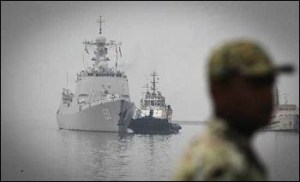
1026A Chinese warship arrives in Bandar Abbas, Iran in September 2014.

As China sees the matter, its overall dependency on imported oil is rising, and the proportion of that oil coming from Iran and its perceived allies is rising. Saudi Arabia may be China’s biggest provider, but Iraq and Oman account for lion’s share of the recent increase in oil imports. China doesn’t want to rock the boat with either prospective adversary.

Among the world’s powers, China is the supreme rationalist: it views the world in terms of cold self-interest and tends to assume that others also view the world this way. One of China’s most respected military strategists told me bluntly that the notion of a nuclear exchange between Israel and Iran (and by implication any regional nuclear power and Iran) was absurd: the Iranians, he argued, know that a nuclear-armed Israel could destroy them in retaliation.

Other Chinese analysts are less convinced and view Iran’s prospective acquisition of nuclear weapons with trepidation. It is not only war with Israel but with Saudi Arabia that concerns the oil-importing Chinese. For the time being, Beijing has decided to accommodate Iran. In a March 2 commentary, Xinhua explicitly rejected Israeli objections:

The US Congress will soon have a guest, Israeli Prime Minster Benjamin Netanyahu, who is expected to try to convince lawmakers that a deal with Iran on its nuclear program could threaten the very existence of the Jewish state.

Despite the upcoming pressure, policymakers in Washington should have a clear mind of the potential dangers of back-pedaling on the current promising efforts for a comprehensive deal on the Iranian nuclear issue before a March 31 deadline …

With a new round of talks in Switzerland pending, it is widely expected that the P5+1 [the five permanent members of the UN Security Council plus Germany] could succeed in reaching a deal with Iran to prevent the latter from developing a nuclear bomb, in exchange for easing sanctions on Tehran.

The momentum does not come easy and could hardly withstand any disturbances such as a surprise announcement by Washington to slap further sanctions on Tehran.

The Obama administration needs no outside reminder to know that any measures at this stage to “overwhelm” Iran will definitely cause havoc to the positive atmosphere that came after years of frustration over the issue.

While it is impossible for Washington to insulate itself from the powerful pro-Israel lobbyist this time, the US policymakers should heed that by deviating from the ongoing endeavor on Iran they may squander a hard-earned opportunity by the international community to move closer to a solution to the Iran nuclear issue, for several years to come if not forever.

Russia has taken Iran’s side explicitly, for several reasons.

First, Russia has stated bluntly that it would help Iran in retaliation for Western policy in Ukraine, as I wrote in this space January 28. Second, Russia’s own Muslim problem is Sunni rather than Shi’ite. It has reason to fear the influence of ISIS among its own Muslims. If Iran fights ISIS, it serves Russian interests. Russia, to be sure, does not like the idea of a nuclear power on its southern border, but its priorities place it squarely in Iran’s camp.

Demographic Time Bomb

The Israeli prime minister asserted that the alternative to a bad deal is not war, but a better deal. I do not think he believes that, but Americans cannot wrap their minds around the notion that West Asia will remain at war indefinitely, especially because the war arises from their own stupidity.

Balance of power in the Middle East is inherently impossible today for the same reason it failed in Europe in 1914, namely a grand demographic disequilibrium: Iran is on a course to demographic disaster, and must assert its hegemony while it still has time.

Game theorists might argue that Iran has a rational self-interest to trade its nuclear ambitions for the removal of sanctions. The solution to a multi-period game – one that takes into account Iran’s worsening demographic weakness – would have a solution in which Iran takes great risks to acquire nuclear weapons.

Between 30% and 40% of Iranians will be older than 60 by mid-century (using the UN Population Prospect’s Constant Fertility and “Low” Variants). Meanwhile, its military-age population will fall by a third to a half.

Belated efforts to promote fertility are unlikely to make a difference. The causes of Iranian infertility are baked into the cake – higher levels of female literacy, an officially-sanctioned culture of sexual license administered by the Shi’ite clergy as “temporary marriage,” epidemic levels of sexually-transmitted disease and inbreeding. Iran, in short, has an apocalyptic regime with a lot to be apocalyptic about.

Henry Kissinger is right: peace can be founded on either hegemony or balance of power. Iran cannot be a hegemon for long because it will implode economically and demographically within a generation. In the absence of either, the result is war. For the past 10 years I have argued in this space that when war is inevitable, preemption is the least damaging course of action. I had hoped that George W Bush would have the gumption to de-fang Iran, and was disappointed when he came under the influence of Condoleezza Rice and Robert Gates. Now we are back in 1938, but with Lord Halifax rather than Neville Chamberlain in charge.
IRGC Navy Commander Ali Fadavi Presents New “Strategic” Weapon, Says: We Have Deterred America

March 4, 2015

IRGC Navy Commander Ali Fadavi Presents New “Strategic” Weapon, Says: We Have Deterred America, MEMRI Videos via You Tube, March 4, 2015


Arab Commentators Strongly Back Netanyahu on Congress Speech, Iran Nuclear Threat

March 4, 2015

Arab Commentators Strongly Back Netanyahu on Congress Speech, Iran Nuclear Threat, Algemeiner, Shirym Ghermezian, March 3, 2015

netanyahu-congress-300x175Prime Minister Netanyahu addresses Congress on the Iranian nuclear threat. Photo: Screenshot.

“What is absurd, however,” Abbas continues, “is that despite this being perhaps the only thing that brings together Arabs and Israelis (as it threatens them all), the only stakeholder that seems not to realize the danger of the situation is President Obama, who is now infamous for being the latest pen-pal of the Supreme Leader of the World’s biggest terrorist regime: Ayottallah Ali Khamenei.”

******************

Leading Arab opinion makers weighed in on the controversy surrounding Israeli Prime Minister Benjamin Netanyahu’s address to Congress on Tuesday and expressed strong support for his stance on the Iranian nuclear threat.

In an op-ed for the Saudi Arabian daily Al-Jazirah on Monday, columnist Dr. Ahmad Al-Faraj asserted that Netanyahu is justified in his campaign against the proposed nuclear deal with Iran, according to The Middle East Media Research Institute. Al-Faraj said Netanyahu’s effort to prevent the signing of the agreement is in the interests of the Gulf states, and that the prime minister “is right to insist on addressing Congress about the nuclear deal.”

“I am very glad of Netanyahu’s firm stance and [his decision] to speak against the nuclear agreement at the American Congress despite the Obama administration’s anger and fury,” Al-Faraj wrote. “I believe that Netanyahu’s conduct will serve our interests, the people of the Gulf, much more than the foolish behavior of one of the worst American presidents.”

The powerful editor-in-chief of Al Arabiya English, Faisal J. Abbas, published a column on Tuesday in which he asked Obama to take notes from Netanyahu on the extent of the Iranian threat. In the piece, titled “President Obama, Listen to Netanyahu on Iran,” Abbas says, “one must admit, Bibi did get it right, at least when it came to dealing with Iran.”

Abbas notes that Netanyahu “hit the nail right on the head” when he said at a recent event in Tel Aviv that “Middle Eastern countries are collapsing and that ‘terror organizations, mostly backed by Iran, are filling in the vacuum.’” In his remarks, Netanyahu “managed to accurately summarize a clear and present danger, not just to Israel (which obviously is his concern), but to other US allies in the region,” Abbas writes.

“What is absurd, however,” Abbas continues, “is that despite this being perhaps the only thing that brings together Arabs and Israelis (as it threatens them all), the only stakeholder that seems not to realize the danger of the situation is President Obama, who is now infamous for being the latest pen-pal of the Supreme Leader of the World’s biggest terrorist regime: Ayottallah Ali Khamenei.”

Abbas slams Obama’s “controversial take on managing global conflicts that raises serious questions.”  The “real Iranian threat” says Abbas, is not just the country’s nuclear ambitions, “but its expansionist approach and state-sponsored terrorism activities which are still ongoing.”

Netanyahu, Churchill and Congress

March 2, 2015

Netanyahu, Churchill and Congress, The Gatestone InstituteRichard Kemp, March 1, 2015

There are striking similarities between the objectives of Churchill’s speech nearly 75 years ago and Netanyahu’s today; both with no less purpose than to avert global conflagration. And, like Churchill’s in the 1930s, Netanyahu’s is the lone voice among world leaders today.

There is no doubt abut Iran’s intent. It has been described as a nuclear Auschwitz. Israel is not the only target of Iranian violence. Iran has long been making good on its promises to mobilize Islamic forces against the US, as well as the UK and other American allies. Attacks directed and supported by Iran have killed an estimated 1,100 American troops in Iraq in recent years. Iran provided direct support to Al Qaeda in the 9/11 attacks.

Between 2010 and 2013, Iran either ordered or allowed at least three major terrorist plots against the US and Europe to be planned from its soil. Fortunately, all were foiled.

Iran’s ballistic missile program, inexplicably outside the scope of current P5+1 negotiations, brings Europe into Iran’s range, and future development will extend Tehran’s reach to the US.

It is not yet too late to prevent Iran from arming itself with nuclear weapons. In his 1941 speech to Congress, Churchill reminded the American people that five or six years previously it would have been easy to prevent Germany from rearming without bloodshed. But by then it was too late.

This vengeful and volatile regime must not in any circumstances be allowed to gain a nuclear weapons capability, whatever the P5+1 states might consider the short-term economic, political or strategic benefits to themselves of a deal with Tehran.

In a few days, Israeli Prime Minister Benjamin Netanyahu will address the US Congress for the third time. The only other foreign leader to have had that privilege was Winston Churchill. Like Churchill when he first spoke to Congress in December 1941, Netanyahu is taking a risk.

For Churchill the risk was to his life — he had to make a hazardous transatlantic voyage aboard the battleship HMS Duke of York through stormy, U-boat infested waters. For Netanyahu the risk is to his own political life and to his country’s relationship with the United States, given the intense presidential opposition to his speech.

But like Churchill was, Netanyahu is a fighting soldier and, like Churchill, a tough political leader, unafraid to shoulder such risks when so much is at stake. And in both cases, the stakes could not be higher, greater than their own lives, political fortunes or rivalries and affecting not just their own countries and the United States, but the whole of the world.

961Israel’s Prime Minister Benjamin Netanyahu addresses a joint session of U.S. Congress on May 24, 2011. (Image source: PBS video screenshot)

There are striking similarities between the objectives of Churchill’s speech nearly 75 years ago and Netanyahu’s today: both with no less a purpose than to avert global conflagration.

Speaking days after the Japanese attack on Pearl Harbor, Churchill summarized the course of the war thus far but then concluded with a dramatic appeal to the American people for Anglo-American unity to prevent conflict in the future, reminding them that “twice in a single generation, the catastrophe of world war has fallen upon us.”

“Do we not owe it to ourselves, to our children, and to mankind,” he asked, “to make sure that these catastrophes do not engulf us for the third time?”

No less profound, and no less far-reaching, will be Netanyahu’s appeal for American-Israeli unity in the face of a new danger. A danger perhaps even greater than Churchill was able to comprehend in pre-nuclear 1941. Whereas Churchill spoke of a future, as yet unknown peril, Netanyahu will focus on the clear and present threat to world peace if Iran is allowed to produce nuclear weapons.

And like Churchill in the 1930s, Netanyahu’s is a lone voice among world leaders today.

In pursuit of both uranium and plutonium tracks to a bomb, as well as the development of long-range ballistic missiles, there is no doubt about Iran’s intent. It has been described as a nuclear Auschwitz.

It is Netanyahu’s duty to sound the alarm against such a prospect. It is Israel’s survival that is at stake. It is Israel that will have to conduct military intervention if the US will not. And it is Israelis who will die in any subsequent regional conflagration.

But this is not only an existential threat to Israel — it is a danger to other states in the Middle East and to us all. Doubtful of Western resolve, Saudi Arabia, Egypt and Turkey are already investigating the development of their own nuclear capabilities.

An agreement that leaves Iran with the potential to achieve nuclear breakout will trigger a Middle East arms race that will exponentially increase the risks of global nuclear war, a risk multiplied by the vulnerability of regional governments to overthrow by extremists.

Iran’s ballistic missile program, inexplicably outside the scope of current P5+1 negotiations, brings Europe into Iran’s range, and future development will extend Tehran’s nuclear reach to the US. The world’s number one sponsor of terrorism, the regime of the ayatollahs would have no qualms about supplying their terrorist proxies with nuclear weapons.

This is the greatest threat the world faces today. Yet all the signals suggest that the P5+1, driven by President Obama’s apparent desperation for détente with Tehran, is already set on a path towards 1930s-style appeasement that will end with Iran’s acquisition of nuclear weapons.

The view that Cold War style containment and mutual deterrence could prevent this apocalyptic, fanatical regime from using its nuclear weapons is dangerously naïve. Yet the Western leaders who seem to be on the verge of reaching an agreement are not naïve. Lacking the moral strength to face down Iran, they see deception and appeasement as the only way out of their dilemma.

To gauge their intentions, we do not need to rely just on frequent Iranian threats, such as those of General Hossein Salami, who said recently, with negotiations still under way: “As long as the US continue to use the Islamic world as the scene for their regional policies, all the forces of the Islamic world will undoubtedly be mobilized against them.” In the same interview, he threatened Israel too: “The very existence of the Zionist entity and its collapse are of crucial importance.”

Iran’s determination to bring about the violent collapse of the “Zionist entity” is continuously manifested in its directing and funding of armed attacks against Israeli soldiers and civilians at home and overseas, by proxies including Hizballah, Hamas and Palestinian Islamic Jihad. The Gaza conflict last summer, for example, owed much to Iranian funding and weaponry.

Just a few weeks ago, Islamic Revolutionary Guard Corps General Mohammad Allahadi was operating with senior Hizballah commanders to set up a new front on Syrian territory in the Golan, from which to launch attacks against Israel. He was killed by an Israeli air strike while visiting his planned area of operations.

Israel is not the only target of Iranian violence. Iran has long been making good on its promises to mobilize Islamic forces against the US, as well as the UK and other American allies. Attacks directed and supplied from Tehran killed an estimated 1,100 American troops in Iraq in recent years. Strikes have been facilitated in Afghanistan, killing US, British and other Coalition soldiers.

Iran provided direct support to Al Qaeda in the 9/11 attacks and continues to harbor Al Qaeda terrorists. Between 2010 and 2013, Tehran either ordered or allowed at least three major terrorist plots against the US and Europe to be planned from its soil. Fortunately, all were foiled. Direction, support and facilitation to both Sunni and Shia terrorist groups in planning attacks against the US and its allies continues today.

This vengeful and volatile regime must not in any circumstances be allowed to gain a nuclear weapons capability, whatever the P5+1 states might consider the short-term economic, political or strategic benefits to themselves of a deal with Tehran.

Even before the world’s first experience of nuclear bombing in August 1945, Churchill and Roosevelt both understood the dangers of allowing their enemies and potential enemies to acquire such capability. When Allied intelligence identified a Nazi uranium production plant in Oranienburg in eastern Germany, 612 bombers destroyed it in a single raid in March 1945 with 1,506 tons of high explosives and 178 tons of incendiary bombs, to prevent it falling into the hands of advancing Russian troops.

Only a strong stand by the West, and rejection of an agreement that allows development of nuclear weapons, will ensure that such action does not in the future become necessary against Iran. In his 1941 speech to Congress, Churchill reminded the American people that five or six years previously it would have been easy to prevent Germany from rearming without bloodshed. But by then it was too late, and the world was engulfed in unprecedented violence.

It is not yet too late to prevent Iran from arming itself with nuclear weapons. The American people, the American government and the West as a whole must heed Netanyahu’s clear warning not to reach a deal that will allow the mendacious and malevolent Iranian regime to acquire nuclear weapons. Instead, sanctions that stand a chance of compelling Tehran to abandon its world-threatening ambitions must be maintained, and if necessary, increased.

Iran’s Expansive Role In The Middle East And Latin America, And The Nuclear Negotiations

February 28, 2015

Iran’s Expansive Role In The Middle East And Latin America, And The Nuclear Negotiations, Center for Security Policy, Nancy Menges Luis Fleischman, February 26, 2015

(Aside from everything, what’s wrong with letting Iran get and use (or keep and use) nukes?  Afer all, they are “our” partner for peace.)– DM)

333893762

As negotiations move forward on a nuclear arms agreement with the Islamic Republic of Iran, the United States along with the P5+1 appears to be oblivious to activities of Iran in the Western Hemisphere and other regions of the world.

In the Middle East, Iran has most recently supported insurgencies in both Bahrain and Yemen. The pro-Iranian Houthis just overthrew the American backed government in Yemen which we were working with on terrorism related issues.

In Syria, Iran and its proxy, Hezbollah, continue to support the Bashar Al Assad regime with Hezbollah fighting together with Assad’s forces. So far 200,000 people have been killed in Syria with millions dispersed in refugee camps in Jordan and Turkey. Hezbollah now has a perfect excuse to be involved in supporting Assad by invoking the need to defeat the bloody Islamic State. Hezbollah may think that this card could play well in the West which is trying to avoid direct intervention to defeat ISIS and would prefer that local forces to do the fighting.

In Iraq, hundreds of thousands of young Shiites are fighting as part of Iranian-backed militias, with a Shiite sectarian orientation likely to aggravate the sectarian strife prevailing in the country. These militias outnumber the Iraqi security forces, and in addition members of the Iranian revolutionary guards, the pro-Iranian Badr organization, and the pro-Iran Katain Hezbollah are heavily involved, mostly operating outside of Iraqi government control.

In Latin America ever since the election of the late Hugo Chavez to the presidency of Venezuela in 1998, Iran has become more embedded in the region in an effort to spread its influence. Several episodes and activities are illustrative of this point.

A few years ago the late Argentinean prosecutor, Alberto Nisman reported in a 500 page document the presence of Iranian and Hezbollah cells in twelve countries in South America.

For at least ten years if not longer, there have been direct airline flights from Caracas to Tehran. Though these are commercial airlines no passengers are allowed and no one seems to know the cargo they carry but it is believed that weapons and members of Hezbollah or the Iranian Revolutionary Guards might be on those flights. Hezbollah has reportedly trained Venezuelan and other guerillas and has strengthened relations with a number of revolutionary regimes in the region. Likewise, tunnels built across the Mexican-American border are akin to those built by Hezbollah along the Israeli/Lebanese border.

In 2011, U.S. Attorney General Eric Holder accused the Iranian Quds Force of plotting to assassinate the Saudi Ambassador to the United States. Though Iran vehemently denied complicity, the American government pointed to high officials in the Iranian hierarchy with having approved the plan.

Another Iranian activity that goes largely unnoticed is Iran’s outreach to several small Caribbean nations. In return for financial assistance, these nations have issued passports to Iranian citizens who wish to enter the United States but could not do so using their Iranian passports. Venezuela and a number of other countries connected directly or indirectly to ALBA countries are providing passports to Iranians. One of those holding such a passport is Moshen Rabbani, the man believed to be behind the terrorist attacks against the Argentinean Jewish Community Center (AMIA) in 1994.

Iran has also been the recipient of uranium from Venezuela.

Most recently the government of Uruguay confirmed that an Iranian diplomat left the country after Uruguayan security suspected him of collecting intelligence about the Israeli embassy in Montevideo.

The diplomat was thought to have placed an explosive device near the Israeli embassy early in January. The device was not particularly powerful but investigations carried out by Uruguayan intelligence indicated the possibility of Iran’s involvement in this serious incident. It was not clear to the authorities whether the device was intended to do harm or was just testing their ability to respond.

But what is astonishing about this story is that two months earlier another incident occurred which was intentionally kept out of the public eye by the Uruguayan government. Indeed, on November 24, somebody placed a suitcase near the building that belonged to the old Israeli embassy in Montevideo. Although the suitcase was empty, cameras located a car belonging to the Iranian embassy nearby. Inside there was a man that the police could not identify immediately but it was assumed he was an Iranian diplomat. The police concluded that the empty suitcase was aimed at testing Uruguayan security forces’ ability to respond.

The Uruguayan government apparently decided to expel the diplomat, who himself, is an appointee of the former Iranian president Mahmoud Ahmadinejad. That appointee was a vocal anti-Semite, a Holocaust denier and apparently served as a translator in the conversations between Ahmadinejad and the late Venezuelan president, Hugo Chavez. Furthermore, the man was reportedly working in Uruguay with Muslim converts that have been activists in a radical left wing party. These individuals could well have been potential candidates for terrorist recruitment; an activity Iran has been systematically performing.

Interestingly enough, Uruguay has been and is a friendly country towards Iran (without being a close ally like Venezuela and the other ALBA countries). Uruguay’s outgoing president, Jose Mujica, declared in the past that his country would pursue relations with Iran because it is good and convenient for the country. The Uruguayan foreign minister Luis Almagro was a commercial attaché in Teheran for about five years and under his watch commercial relations between the two countries flourished. Likewise, a Uruguayan parliamentary delegation visited Teheran to strengthen relations and Almagro himself defined Uruguay and Iran as “two countries that fight against injustice and oppression”. (Almagro is the most likely candidate to be the next Secretary General of the Organization of American States).

The incident in Uruguay is another instance where Iran once again displays its nature as a terrorist entity that does not hesitate in using its embassies and the good faith of the host countries to apply its lethal methods. This is what Iran did in Argentina previous to the two deadly terrorist attacks against the Israeli Embassy and the Jewish community center.

Why shouldn’t Iran be doing so if there is no demand for Iran to stop supporting and encouraging terrorism? After all, a year ago Argentina signed a memorandum with Iran where representatives from that country would be part of the investigation into a terrorist attack where Iran remains the main suspect. By the same token, the chief investigator of the terrorist attack, Mr. Nisman, is dead because he dared to investigate a suspected cover up by the Argentinean government-a government that allegedly wanted to exonerate Iran.

Furthermore, the Argentinean foreign minister Hector Timerman summoned the American and Israeli Ambassadors and asked that these two countries stop meddling in Argentinean internal affairs and stop bringing Middle East conflicts to Argentina. The irony of this statement is that Iran chose Argentina as the target of its’ own intense hatred and violence.

Iranians probably laugh at these events where they are being given a pass over and over again. So, the fact that Iranians may have considered an attack on the Israeli Embassy in a country that is friendly to them such as Uruguay shows the ruthless nature of the regime and how little relations or agreements mean to them.

The negotiations between Iran and the P 5 +1 are mainly focused on Iran’s nuclear program. Thus, Iran is treated as a partner in a negotiation over a specific issue but Iran’s terrorist and treacherous nature is not a factor being considered in this equation.

At this point the U.S. strategy could well be to try to reach an agreement with Iran where the latter would be allowed to enrich uranium at a low level. However, there could be a possibility that if Iran decides to develop nuclear weapons, it could take the Iranians a short time to develop them from the moment they make the decision to do so.

The examples of Iran’s activities show several negative signs. First, if Iran can betray friendly countries like Uruguay, why wouldn’t it betray the P5+1? Likewise, what makes us think that we can live with a terrorist subversive Iran that not only has good chances of having a dominant role in a post-ISIS Syria and Iraq but also expands its influence and activities beyond the Middle East including regions as far as Latin America (from where Iran can strike the U.S. via a terrorist attack or by placing missiles in friendly countries such as Venezuela or Nicaragua)?

Iran presents a very complex challenge. Iran’s non –nuclear, threat is not being discussed, nor considered. This possible nuclear arms agreement should not be treated, as if it were something comparable to a commercial transaction. After all, as a nation state, Iran for the last thirty five years has been the foremost exporter of terrorism.. As the United States along with the P5+1 continues with its negotiations with Iran, they might question whether as a non-nuclear power, Iran presents a threat to world peace and stability and if so how will that play out once they were to become a nuclear power.

On moral blindness

February 27, 2015

On moral blindness, Israel Hayom, Dror Eydar, February 27, 2015

1. Scholars who study our civilization a hundred years in the future will be able to point out the key geopolitical shifts in the Middle East, the collapse of the geographical nations and the return to the ancient social borders, and the rise of radical Islam. They will describe how the Islamic Republic of Iran took over countries like Yemen, Iraq, Syria and Lebanon, its tentacles of terrorism reaching every corner, including Gaza, Judea and Samaria.

They will study the Iranian nuclear issue and be able to quote hundreds of instances in which Iranian leaders vowed to destroy the Jewish state. But when they begin studying the Israeli society of our time, they will encounter a failure of logic. Amid a virtual consensus on preventing an Iranian nuclear bomb, they will not be able to understand the Israeli focus on bottles recycled by the prime minister’s wife, the electrician the prime minister hired and the frivolous reports that grabbed massive headlines while world powers were busy leaving Iran with the ability to manufacture a bomb. They will have trouble understanding what the Jews were arguing about while facing such an obvious threat.

In an effort to solve this mystery, the scholars will turn to historians who studied the 1930s in Europe: Western leaders’ willful blindness to Hitler’s explicit threats; Europe’s desperate longing for reconciliation with the fuhrer. They will review the history of France, which was warned in those years but failed to prepare an army. They will review Neville Chamberlain’s declaration of “peace for our time” while waving a worthless piece of paper. They will examine the history of European Jewry, which failed to accurately read the political map. Among other things, they will look at U.S. Jewry in the 1940s. They may read the memoirs of Rebecca Kook, the daughter of Hillel Kook, a prominent member of the Irgun.

2. In 1940, the members of the Irgun arrived in the U.S. at the behest of Ze’ev Jabotinsky, to recruit a Hebrew army to fight the Nazis alongside the allied forces. In 1942, when the extermination of Europe’s Jewry began to emerge, the delegation changed course and devoted themselves to saving Jewish lives. They had the nerve to challenge the official stance adopted by the Roosevelt administration — accepted with little opposition by the Jewish leaders of the United States — that the only way to save the Jews was to win the war.

The Irgun members pressured the leaders of the free world to make saving Jewish lives a goal of equal importance to winning the war, and to dedicate special resources to making it happen. They focused their efforts on campaigning in the media, among intellectuals, in the U.S. Congress and to the administration. They convinced then-President Franklin D. Roosevelt to establish the War Refugee Board — an executive agency created to save Jews. It is estimated that the board was responsible for saving 200,000 Jewish lives.

The future scholars will delve deep into the battle waged by the Jewish leadership in America against the Irgun’s delegation. The mudslinging campaign against them was not led by the administration. It was spearheaded by House Foreign Affairs Committee Chairman Sol Bloom — a New York Jew, Rabbi Stephen Samuel Wise and Nahum Goldmann of the American Jewish Congress and other Jewish leaders.

Every effort made by the Irgun delegation was met with criticism and active sabotage efforts. They claimed that their activity was too political, too vocal, too aggressive, and that in fact they did not represent anyone. Hundreds of letters were sent to senators and representatives and Jewish leaders. The letters said that the Irgun members were part of a fascist terrorist outfit from Palestine. Jewish activists handed out pamphlets warning that the delegation would bring catastrophe and destruction on the Jewish people.

Several explanations were provided for this hostile behavior. The main explanation was that Jewish leadership’s fear of tarnishing the image of the Jewish community. In a secret British Foreign Office document, Nahum Goldmann was quoted as saying that just as Hitler brought anti-Semitism to Europe, Hillel Kook would bring anti-Semitism to the U.S.

At the end of the 19th century, Germany’s Jews were also fearful of Zionism. It made them susceptible to accusations of dual loyalty, and labeled them as belonging in Palestine. That is why they resisted the Zionist movement and made extra efforts to be even more German than the rest of the Germans.

3. For the last 20 years, Prime Minister Benjamin Netanyahu has been warning anyone who would listen of Iran’s perilous ambitions. Much like Nazi Germany, Iran and radical Islam do not threaten only Israel but the entire free world. But the left-wing liberal mindset, inspired by U.S. President Barack Obama, complacently dismisses these warnings, often with a side of disrespect.

Over the last month, the White House and a long line of cultural figures and politicians have been confronting a far greater threat: Netanyahu’s upcoming speech at the U.S. Congress. The future historians will note the American Jews who disrespected the Israeli prime minister for fighting for the safety of his people. They will add to that list a number of Israelis who took pains to undermine Netanyahu’s legitimacy and sabotage his address.

One of these critics, Peter Beinart, recently slammed Nobel Peace Prize laureate Elie Wiesel for urging Obama to join him at Netanyahu’s address.

“Wiesel is acutely, and understandably, sensitive to the harm Jews suffer. Yet he is largely blind to the harm Jews cause,” Beinart wrote. Cause to whom? To the Palestinians, of course. The American Left is stuck in its 1980s elitist morality that refused to see that the reality has changed.

There is no occupation anymore, Mr. Beinart. Certainly not in the way that you and your friends make it out. The Arabs of Judea and Samaria enjoy expanded autonomy — a de facto state with a national anthem, a flag, a government and enormous budgets. It is true that the IDF is present on the outskirts, because we do not trust our neighbors. But incidentally, they, too, do not trust themselves to ward off Hamas and the radical Islamists. Israel in fact protects the lives of the Palestinian leadership and population from the perils of the Islamic caliphate, which has the ability to turn the lives of these Arabs into a hell devoid of human rights, and heads.

4. This blindness is not just geopolitical, but it is also moral. We are students of the great teacher Rabbi Akiva, who in the second century classified the commandment to “love your neighbor as you love yourself” (Leviticus 19:18) as a great principle of the Torah (Genesis Rabbah 24:7). In this he built on the work of Hillel the Elder who in the first century B.C.E. placed the entire Torah upon the foundation of this dictum (Babylonian Talmud: Tractate Shabbat 31a).

But the same Rabbi Akiva taught us that in the event of a conflict between your life and your neighbor’s life, “your brother shall live with you.” Namely, your own life comes first (Babylonian Talmud: Tractate Baba Mezi’a, 62a). That is the proper way to approach altruistic love. If you do not love your own life, or the lives of your own people, more than the lives of others, especially those who are hostile toward you, then you do not truly possess a moral understanding, but rather a nihilistic intellectualism that plays pretend in living rooms across the east and west coasts of the U.S.

Next Tuesday, truth seekers will be called upon to support Netanyahu when he addresses a joint session of Congress. The State of Israel needs your courageous support.