Archive for the ‘Lebanon’ category

Today in appeasement

June 11, 2015

Today in appeasement, Power LineScott Johnson, June 11, 2015

So on one side the US is strengthening Lebanese institutions that insulate Hezbollah from the consequences of its Syria warfighting. On the other side – this is the WSJ scoop – the US is kneecapping organizations inside Lebanon that are trying to wrest control of those very institutions away from Hezbollah. The combination can’t help but feed regional fears that Washington is realigning with Tehran, and that the US’s traditional Arab allies have to go it alone.

********************

Omri Ceren writes to draw attention to Jay Solomon’s Wall Street Journal article “U.S. Strategy in Lebanon Stirs Fears.” Omri writes:

Hayya Bina is a Beirut-based civil society NGO that – among other things – works to craft and promote an alternative Shiite identity in in opposition to Hezbollah. The WSJ reported yesterday that the State Department has just cut some of its funding. Not all of its funding, which would make sense if the organization was inefficient or corrupt.

The administration only cut the funding for programs – and this is a direct quote from a State Department letter viewed by the WSJ – “intended [to] foster an independent moderate Shiite voice.” Regional actors and folks in town are drawing the straightforward conclusion:

[T]he U.S. move feeds into an increasingly alarmed narrative held by many Arab leaders who say that U.S. and Iranian interests appear increasingly aligned—at their expense. Both Washington and Tehran are fighting Islamic State forces in Iraq and Syria, with U.S. conducting airstrikes against the militants, but notably not against Mr. Assad’s Iran-backed regime… Some pro-democracy activists in Washington also voiced concern that cutting Hayya Bina’s funding will send a message that the U.S. is tacitly accepting Hezbollah in an effort to appease Iran. “At best, the decision shows poor political judgment,” said Firas Maksad, director of Global Policy Advisors, a Washington-based consulting firm focused on the Middle East. “Coming on the heels of an expected deal with Iran, it is bound to generate much speculation about possible ulterior motives.”… the Obama administration has also cooperated with Lebanese institutions—including the armed forces and an intelligence agency—that are considered close to Hezbollah and combating Islamic State and Nusra Front, an al Qaeda-affiliated militia in Syria.

That last part of the excerpt – about the Obama administration’s cooperation with Lebanese institutions controlled by Hezbollah – has separately been getting a lot of play lately. Last week the Pentagon quietly posted a news release announcing “the State Department has made a determination approving a possible Foreign Military Sale to Lebanon for AGM-114 Hellfire II missiles” (I haven’t seen this one reported out, incidentally [1]). Yesterday State Department Press Office Director Jeff Rathke confirmed that the US will be delivering TOW missiles to the Lebanese Armed Forces (LAF) and is contemplating the delivery of six A29 aircraft [2].

That’s just since June began. The problem is that the LAF’s operations are objectively oriented toward shoring up Hezbollah’s position in Lebanon, more or less serving as a rear guard while Hezbollah fights in Syria. Hezbollah and the LAF have been fighting alongside one another on the Lebanese-Syrian border for months [3]. Inside Lebanon top politicians have long accused Hezbollah of using Lebanese security institutions to prevent blowback from Syria [4].

Tony Badran from the Foundation for Defense of Democracies already published a kind of canonical piece on how the LAF has become a domestic tool for Hezbollah last year in English-language Lebanese media [5]. The punchline on the new A29 delivery is that the administration says it’s aimed in part at helping the LAF “enforce United Nation’s security council resolutions 1559 and 1701″ [6]. Those resolutions call on the LAF to act against Hezbollah. Except the LAF doesn’t so much disrupt Hezbollah these days as de facto back its play in Syria.

So on one side the US is strengthening Lebanese institutions that insulate Hezbollah from the consequences of its Syria warfighting. On the other side – this is the WSJ scoop – the US is kneecapping organizations inside Lebanon that are trying to wrest control of those very institutions away from Hezbollah. The combination can’t help but feed regional fears that Washington is realigning with Tehran, and that the US’s traditional Arab allies have to go it alone. Remember that in a little over two weeks the Arab countries will be making those calculations with an Iran deal in the background that puts the Iranians on a 10 year glide path to a nuclear weapon.

________________

[1] http://www.dsca.mil/major-arms-sales/lebanon-agm-114-hellfire-ii-missiles
[2] http://www.state.gov/r/pa/prs/dpb/2015/06/243337.htm#LEBANON
[3] http://www.dailystar.com.lb/News/Lebanon-News/2015/Feb-03/286269-hezbollah-army-pound-militant-hideouts-along-syria-border.ashx
[4] http://www.dailystar.com.lb/News/Lebanon-News/2015/Jan-26/285359-hezbollah-exploiting-armys-anti-jihad-campaign-rifi.ashx
[5] https://now.mmedia.me/lb/en/commentary/540966-the-sum-of-its-parts
[6] http://www.flightglobal.com/news/articles/us-approves-possible-462m-a-29-super-tucano-sale-to-413350/
IDF Rehearsing for Nightmare Scenario: 4,000 Killed in Days

June 7, 2015

IDF Rehearsing for Nightmare Scenario: 4,000 Killed in Days, Israel National News, Gil Ronen, June 7, 2015

Security forces are currently rehearsing and preparing for a scenario in which Israel’s enemies launch a “carpet” missile attack that Iron Dome will be unable to counter, due to the sheer number of missiles involved, Arutz Sheva has learned from knowledgeable sources that wish to remain anonymous.

In this scenario, up to 4,000 Israelis will be killed in the first days of the attack, which could happen as early as this summer.

“Iran is seeking to cover Israel with intense fire,” Prime Minister Binyamin Netanyahu warned in a special briefing for journalists at the week’s end.

“In Lebanon, the Iranians are inserting the most advanced weapons in the world, and strengthening Hezbollah, so that it can hit any spot in Israel,” Netanyahu was quoted as saying in the daily Makor Rishon. “They are trying to build a second front in the Golan, and of course, in Gaza.”

‘Earth-shaking shock’ 

Former prime minister and defense minister Ehud Barak also sounded dire warnings last week, regarding Hezbollah’s ability to deal a heavy blow to Israel, and Israel’s unpreparedness for this.

“Our rival is serious, and we have no room for smugness on any front,” he said. “We must not be smug and take our superiority as something that is self-evident and supposedly God-given. Superiority is the result of serious work. We have not really dealt with 100,000 rockets, and we have not started to deal with the matter of their accuracy. When the rockets are accurate, it is not more of the same thing. It is something completely different.”

“The country has no choice but to reach conclusions,” Barak warned. “One cannot deal with this challenge by deploying in all of the places, from which [anti-missile] missiles can be fired. These things are very expensive: Iron Dome and Magic Wand, Arrow and Super-Arrow are expensive projects.

“One cannot exaggerate the importance of safeguarding security,” he added, “and one cannot exaggerate the earth-shaking shock that can take place when it turns out that we did not prepare and we did not understand the urgency and practicality of challenges of this sort, and the need to translate clear thought to conclusions, and we will find ourselves [in a situation where] citizens suddenly discover that one cannot walk slowly and lackadaisically to the bomb shelters, knowing that nothing can happen, as we did in during Operation Protective Edge. These things must be done now, we must not wait.”

Hezbollah shows off ‘advanced tunnel network’ on Israeli border

May 23, 2015

Hezbollah shows off ‘advanced tunnel network’ on Israeli border, Times of IsraelTamar Sharon and AP, May 23, 2015

(“Quick Watch” video at link.– DM)

According to the [Israeli intelligence] official, Hezbollah has an estimated 100,000 short-range rockets capable of striking northern Israel, several thousand missiles that can reach Tel Aviv and central Israel and hundreds more that can strike the entire country.

********************

Hezbollah has built a vast network of advanced tunnels along the border with Israel for us in a future war, using them to conceal tens of thousands of rockets aimed at the Jewish state, a Lebanese newspaper with ties to the Lebanese terror group reported on Friday.

In a series of articles published over the weekend, the daily As-safir examined Hezbollah’s preparations for war against Israel, painting a picture of a military force highly prepared for conflict, both in terms of equipment and of infrastructure.

It should be noted that As-safir, a mouthpiece for the Shiite organization, is neither an objective nor necessarily a credible news source. The accuracy of its claims cannot be verified.

According to the reports, based on a tour of Hezbollah facilities given to the newspaper, the group has built a sprawling underground array of tunnels, bunkers and surveillance outposts along the border with Israel, which it is manning at peak readiness for battle.

The tunnels are said to be highly-advanced, with durable concrete, a 24-hour power supply via underground generators, a ventilation system to prevent damp from damaging military equipment and a web of secondary escape shafts in case of attack. The tunnels are said to be housing tens of thousands of rockets ready for launch, themselves wrapped in protective materials in order to preserve them.

The paper reported that Hezbollah was constantly surveying the Israeli border area with electronic equipment as well as observation posts equipped with night-vision technology.

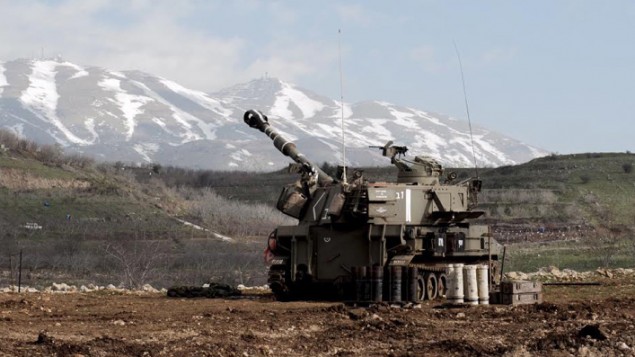
F150128IDF01-e1422508122867-635x357Israeli artillery on the Lebanon border, January 28, 2015 (Photo credit: IDF Spokesperson)

Tunnel construction was said to be continuing around the clock, using primitive means rather than advanced machinery in order to avoid detection by Israeli surveillance.

A senior Israeli intelligence official said last week that Hezbollah has built up a massive arsenal of rockets and other advanced weapons in Shi’ite villages of southern Lebanon, warning civilians would be at risk if war breaks out.

According to the official, Hezbollah has an estimated 100,000 short-range rockets capable of striking northern Israel, several thousand missiles that can reach Tel Aviv and central Israel and hundreds more that can strike the entire country.

Most of the weapons have been transferred to Lebanon through war-torn Syria, coming from Hezbollah’s key allies, the Syrian government and Iran, he said.

The official showed reporters satellite photos of what Israeli intelligence believes are Hezbollah positions in dozens of Shiite villages in southern Lebanon.

The photos were marked with dozens of red icons, signaling what are believed to be missile launchers, arms depots, underground tunnels and command posts.

The official, who spoke on condition of anonymity under military guidelines, said an estimated 200 villages have been turned into “military strongholds.”

One photo showed the village of Muhaybib, with a population of around 1,000 people and 90 buildings, of which more than a third had been marked as Hezbollah assets. In the larger village of Shaqra, with some 4,000 people, Israeli intelligence identified Hezbollah targets in around 400 out of some 1,200 buildings.

The army refused to allow publication of the images.

If war breaks out and Hezbollah fires missiles at Israel, these buildings will be targeted by Israel’s air force, the official said, adding that Israel would give civilians time to evacuate.

Israel and Hezbollah fought a month-long war in 2006 that killed some 1,200 Lebanese, including hundreds of civilians, and 160 Israelis and caused heavy damage to Lebanon’s infrastructure.

Though another Israel-Hezbollah war is always possible, analysts say the group has no interest in renewing hostilities while it is busy fighting alongside President Bashar Assad’s forces against rebels trying to topple him in Syria, including the forces of Islamic State.

Hezbollah leader Hassan Nasrallah warned Friday that the Islamic State posed an existential threat to Lebanon and said his organization may soon be required to call for a general mobilization to fight the group.

“Now is the time for everyone to enlist, anyone who can take part,” Nasrallah told senior organization commanders in a speech. “The danger that threatens us is an existential threat similar to 1982,” he added, referring to the Lebanon War and the Israeli military invasion of Lebanon.

The Hezbollah chief vowed to “use all our strength and all our capabilities to cope with extremist groups.

“In the next phase we may declare general mobilization to all people,” he said.

US and Hizballah coordinate spy drone flights over Qalamoun, share US combat intelligence

May 23, 2015

US and Hizballah coordinate spy drone flights over Qalamoun, share US combat intelligence, DEBKAfile, May 23, 2015

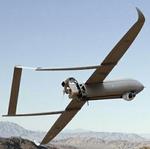
U.S._special_forces_operating_recon_drones_in_Lebanon_5.15Reconnaissance drone operated by US special forces in Lebanon

How do Obama’s repeated commitments to Israel’s security square with close US military and intelligence cooperation with an organization whose vow to destroy Israel is backed by 100,000 missiles – all pointed south?

************************

Another strange pair of bedfellows has turned up in one of the most critical Middle East battlefields: the United States is helping Hizballah, Iran’s Lebanese surrogate, in the battle for control of the strategic Qalamoun Mountains. DEBKAfile’s intelligence sources disclose that a US special operations unit, stationed at the Hamat air base on the coast of northern Lebanon, is directing unarmed Aerosonde MK 4.7 reconnaissance drone intelligence-gathering flights over the Qalamoun Mt arena, 100 km to the west.

Washington set up the base originally in line with an assurance to Beirut of military assistance for the next three years to counter any threatened invasion by extremist elements.

However, it turns out that the data the US drones pass to Lebanese army general staff in Beirut goes straight to Hizballah headquarters – and on to the Iranian officers in Syria running Bashar Assad’s war effort.

The Aerosonde MK 4.7 can stay aloft for 10 to 12 hours at a stretch at an altitude of 4.5 km. It functions day or night, equipped with an advanced laser pointer capability. It is capable of carrying ordnance but US sources say they the aircraft in Lebanon are unarmed.

Since Hizballah is also operating Ababil-3 surveillance drones of its own over Qalamoun, coordination had become necessary between the American team and the Shiite group.  The consequence is that for the first time, the US military is working directly with an internationally-designated terrorist organization – a development with earthshaking ramifications for Israel’s security. This partnership has in fact become a game-changer for the worse in terms of Israel’s security ties with the US and has caused an upheaval in its military and intelligence disposition in the region, in at least six respects:

1. To counter US-Hizballah intelligence collaboration, Israel is obliged to reshuffle the entire intelligence mechanism it maintains to protect its northern borders with Lebanon and Syria.

2.  Israel finds itself forced to monitor the progress of the US special unit’s interface with Hizballah, its avowed enemy.

3.  Israel can no longer trust American intelligence coming in from Lebanon because it is likely tainted by Hizballah sources.

4.  Hizballah is gaining firsthand insights into the operating methods of US special operations forces, which Israel’s methods strongly resemble and must therefore revamp.

5. The Hizballah terrorist group is winning much needed prestige and enhanced status in the region from its collaboration with the US.

6. Hizballah’s Ababil drones are in fact operated by the hostile Iranian Revolutionary Guards, which leaves Israel with no option but to overhaul from top to bottom the intelligence-gathering systems employed by its surveillance drones to track Iranian movements in the region.

At the Washington Adas Israel synagogue Friday, May 22, President Barack Obama wearing a kipah “forcefully” objected to suggestions that policy differences between his administration and the Israeli government signaled his lack of support for the longtime US ally.

This raises a question: How do Obama’s repeated commitments to Israel’s security square with close US military and intelligence cooperation with an organization whose vow to destroy Israel is backed by 100,000 missiles – all pointed south?

Some 250 Hizballah dead in Qalamoun battle. Nasrallah pushes Lebanese army to enter Syrian war

May 13, 2015

Some 250 Hizballah dead in Qalamoun battle. Nasrallah pushes Lebanese army to enter Syrian war, DEBKAfile, May 13, 2015

Hezbollah-Qalamoun_15.8.14Hizballah fighter on Mt. Qalamoun

Amid Hizballah’s rising war losses, its leader Hassan Nasrallah strongly urged the Lebanese chief of staff Gen. Jean Kahwagi to send his troops into battle over the strategic Qalamoun Mountain, alongside Hizballah and the Syrian army, DEBKAfile’s military sources disclose. Nasrallah argued that the time had come for the Lebanese army to take a hand in the fighting, since the Syrian rebels led by Al Qaeda’s Syrian arm, the Nusra Front, were shelling the eastern Beqaa Valley of Lebanon from their Syrian strongholds on the mountain that sits athwart the Syrian-Lebanese border.  Thousands of jihadis, he said, were seizing land around the northeastern Lebanese villages of Arsal and Nahleh.

Another of Nasrallah’s demands was for Gen. Kahwagi to bring out the Lebanese army’s heavy artillery to shell rebel Qalamoun concentrations, positions and moving vehicles, because they endangered Lebanese national security.

The Lebanese general gave the Hizballsah chief a flat no. He declared the Lebanese army would not “slip” into any war inside the Syrian area of Qalamoun where Hizballah and the Syrian army are currently fighting jihadis, but added: “The army is ready to confront any assault on Lebanese sovereignty and push back any infiltration by militants.”

Tuesday, May 12, in Beirut, US Ambassador David Hale interceded in the argument: “I would say that ISIS posed no threat to Lebanon until Hizballah went into the war in Syria and that provided the magnet that drew these terrorists here.”

Listing the American weapons reaching Beirut of late, as Hellfire missiles fired from helicopters against ground targets, precision guided missiles and howitzers, the ambassador said firmly: “This is exactly what they (the Lebanese army) need to target this particular terrorism phenomenon.”

DEBKAfile’s military and counter-terrorism sources don’t believe that the Lebanese army chief will be able to hold out for long against the gradual ISIS and Nusra slide into his country. At the moment, the intruders are mostly fleeing Islamists, driven by the Syrian army and Hizballah from their mountain positions and out of the eastern Lebanese border districts close to the battle front.

But although the Syrian army and Hizballah are claiming to have taken strategic hills in the volatile border region last week, the battle is far from over and does not appear to be anywhere near a clear resolution.

Even when Syria and Hizballah do achieve a local gain here or there, fresh ISIS and Nusra forces keep on pouring back – mostly from the north – to constantly open up new battlefronts on the Qalamoun mountains. Their commanders have already grasped that no one will stop them slipping back and forth between Syria and Lebaon – both to escape Syrian and Hizballah fire and meanwhile to hit Hizballah’s rear strongholds in the Lebanese Beqaa.

Hizballah’s death toll in battle is soaring disastrously – at least 250 reported in the last few days, including 9 senior commanders.

Most military and intelligence experts agree that, as time goes by, however hard they try, the United States and Lebanese army will not be able to stem the jihadists’ spillover into the Beqaa Valley.

PM Netanyahu’s Remarks to the Washington Institute for Near East Policy

May 3, 2015

PM Netanyahu’s Remarks to the Washington Institute for Near East Policy, via You Tube, May 2, 2015

Lebanon: IDF in pre-emptive action at Shebaa Farms

April 27, 2015

Lebanon: IDF in pre-emptive action at Shebaa Farms, DEBKAfile, April 27, 2015

Israeli air and ground forces are reported by Lebanese sources Monday to be conducting preventive counter-terror action around the disputed Shabaa Farms area north of the Golan. Large IDF ground forces are scouring the area, with air force jets, drones and helicopters cruising overhead. Machine gun fire is heard occasionally. Other Lebanese sources report low-flying Israeli jets over South Lebanon.

Islamist State plots terror attacks inside Tehran. Hizballah high-up killed in Damascus bus blast

February 2, 2015

Islamist State plots terror attacks inside Tehran. Hizballah high-up killed in Damascus bus blast, DEBKAfile, February 2, 2015

Shiite_Bus_in_Damascus_1.2.15Shiite pilgrim bus explosion in Damascus

The Islamic State of Iraq and the Levant has launched a new terror offensive against Iranians, their followers and other Shiites.  It was kicked off Sunday, Feb. 2 with an attack on a Damascus bus carrying Lebanese Shiite pilgrims to shrines in Syria. Nine people were killed and at least 20 injured. ISIS has set its sights next on the Muslim Shiite heartland, Iran and its cities – especially the capital Tehran.

The Damascus bus attack is ascribed by some sources to a Saudi suicide bomber by the name of Abu al-Ezz al-Ansari. The claim that the Syrian rebel Jabhat al-Nusra was the perpetrator was false, say DEBKAfile’s intelligence and counter-terrorism sources. This group does not go in for Saudi recruits and certainly not suicide bombers of that ilk.

ISIS fingered Nusra to conceal its own responsibility for the attack and its real target. Our sources reveal that the Islamic State attacked the Shiite pilgrims in order to get at a high-ranking officer of Hizballah’s armed wing, who was on the bus.

Hizballah headquarters in Beirut has imposed deep hush on his death and identity. But because they could not pretend the bus explosion did not happen, they pinned it Monday on “takfir [infidel] groups” which they say collaborate with Israel.

This attack revealed most significantly that Hizballah has begun covering the tracks in Syria of its top Hizballah men by inserting them among Shiite pilgrims traveling by bus from Lebanon to Damascus. They are camouflaging the movements of their top men in Syria by an elaborate security net, ever since an Israeli air strike on Jan. 18, killed around nine Hizballah and Iranian officers, including the Iranian general, Ali Allah Dadi.

Still, ISIS agents were able to find the bus and blow it up, indicating deep hostile penetration of the Iranian and HIzballah forces assigned to Syria to fight for Bashar Assad.

Conscious of the Islamic State’s next plans, the Iranian Al Qods Brigades commander, Gen. Qassem Soleimani, paid an unscheduled visit to Beirut last Thursday, Jan. 29, for urgent talks with Hizballah leader Hassan Nasrallah and briefings for the organization’s military council members. Their most pressing concern was the detailed ISIS program, which is ready to go, for a broad new campaign of terror against Iranian and pro-Iranian targets in Lebanon, Syria, Iraq and the Iranian homeland.

Nasrallah to Israel: Accept “the mix of Lebanese and Iranian blood on Syrian soil in Quneitra” or face war

January 31, 2015

Nasrallah to Israel: Accept “the mix of Lebanese and Iranian blood on Syrian soil in Quneitra” or face war, DEBKAfile, January 30, 2015

Nasrallah_30.1.15More saber-rattling from Hizballah leader Hassan Nasrallah

In is first speech since the cross-border military clash with Israel this week, Hizballah leader Hassan Nasrallah Friday, Jan. 30 tried dictating terms to Israel for border calm to continue. He said Israel must give up the right it reserves to strike out against the presence of his Lebanese Shiite organization and Iran on Syrian soil in Quneitra – or else, the war goes on.

“The resistance no longer cares about rules of engagement,” he said in reference to Israeli leaders’ repeated warning that they would not tolerate an Iranian-backed Hizballah takeover of Syrian Golan for opening up a second front against the Jewish state.

The Hizballah leader went on to say: “From now on, if any member of Hizballah is assassinated, we will blame it on Israel and reserve the right to respond to it whenever and however we choose.”

The main point he made was this: “The mix of Lebanese and Iranian blood on Syrian soil in Quneitra represents the unity of our battle and fate.”

During the day he conferred with a visitor from Tehran: Al Qods Brigades chief, Gen. Qassem Sioleimani.

Clearly, the high tension emanating from the Golan and its environs since the air strike on Jan. 18 that killed an Iranian general and six Hizballah officers near Quneitra – up until the Hizballah attack on an IDF convoy from Mt. Dov Wednesday, Jan. 28 – was just a preamble.

DEBKAfile’s military sources report that Israel’s armed forces find they are pitched against a dangerous concerted drive by Iranian Revolutionary Guards, Hizballah, local and Iraqi Shiite militias, to seize and control a new pro-Iranian front line – a narrow strip 150-km long – which runs from the Qalamoun Mountains of Syria up to Mt. Hermon and includes the Syrian Golan.

This line overlooks Israel and touches its borders at more than one point.

Hizballah’s chief undoubtedly recognizes – as do his masters in Tehran – that they face more armed clashes with Israel in the coming weeks, because the terms Nasrallah dictated as Tehran’s mouthpiece are unacceptable.

Israeli PM Binyamin Netanyahu said Friday that the continuous offensive staged by Iran to uproot Israel won’t succeed. He spoke on a hospital visit to soldiers injured in the Hizballah rocket attack on their convoy Wednesday.

Deadly Fighting Between Hezbollah and Israel

January 30, 2015

Deadly Fighting Between Hezbollah and Israel, Fox News with Oliver North via You Tube, January 29, 2015

(Obama: acting like a “petulant child.” — DM)