Archive for the ‘Jordan’ category

First US ground operation in Syria kills ISIS oil chief – as Islamists advance on three new fronts

May 16, 2015

First US ground operation in Syria kills ISIS oil chief – as Islamists advance on three new fronts, DEBKAfile, May 16, 2015

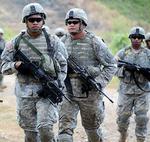
USspecialforcesJoran10.6.14US Special Operations forces in Jordan.

America’s first ground operation in the five years of Syrian war was directed against the Islamic State of Iraq and the Levant – ISIS.  US sources report that Special Operations forces mounted a raid Saturday, May 16, on an ISIS convoy in the Deir a-Zour district of eastern Syria, and killed senior Islamist commander and oil and gas chief, Abu Sayyaf, when he resisted capture. His Iraqi wife, Umm Sayyaf, was taken to Iraq for interrogation by the US troops, all of whom returned safely.

Abu Sayyaf’s importance for the Islamist group cannot be overrated as the man in charge of its commandeered oil fields in Syria and Iraq. He also managed their overseas sales in a thriving black market, netting an estimated $5million a day for bankrolling the group’s wars.

Catching him alive was the preferred object of the raid. Under interrogation, he would have been a valuable source of information on the working of the group’s illicit oil and gas trade, how it was managed, the identities of its customers and routes of payment to the ISIS war chest.

DEBKAfile’s military sources report that the US raid was staged from Jordan, not Iraq. In normal circumstances, the Jordanians don’t permit US ground or air operations to be staged directly from their territory. However, a joint 10-day US-Jordanian war game, Eager Lion, was in progress in the Hashemite Kingdom. Some 10,000 troops from various countries, including the US, were practicing special operations against ISIS. And so the US unit was ready to hand a short distance from a high-value target at Deir a-Zour.

DEBKAfile adds that the operation came just two days after the Arab Gulf leaders’ summit convened by President Barack Obama ended at Camp David Thursday, May 14. The war on ISIS was a key item on their agenda.

Sources in Washington disclose that the order for the raid came directly from President Barack Obama on the advice of national security council heads in the White House. The troops landed in the middle of a hotbed of fighting between the Syrian army and ISIS. They were no doubt lifted in and out of the scene at speed by helicopter.

The Islamists are in full flight on three Syrian fronts (as well as the same number in Iraq). The group has overrun Al-Sina’a, Ar-Rusafa and Al-Omal in this district, as well as seizing Saker Island in the middle of the Euphrates River north of Deir a-Zour, from which it is shelling the largest Syrian air base in eastern Syria.

Islamist fighters are also advancing on Syria’s ancient city of Palmyra (Tadmor). This is a 2,000-old desert site with precious remains of antiquity, but also home to Bashar Assad’s infamous Tadmor prison, notorious for torture and summary executions.

ISIS targets near this ancient town are the biggest Syrian air base in central Syria and more oil fields. Most of the Iranian and Russian air transports delivering military equipment for the Syrian army and Hizballah land at this base.

The Islamists are additionally targeting Syrian military positions in eastern Homs.

King Abdullah II: We’re War With “Outlaws Of Islam” – Special Report

April 14, 2015

King Abdullah II: We’re War With “Outlaws Of Islam” – Special Report via You Tube, April 13, 2015

(He seems quite diplomatic, but what does he actually think? — DM)


Could Saudi Arabia Need Israel More than Vice Versa?

April 12, 2015

Could Saudi Arabia Need Israel More than Vice Versa? Israel National News, Gedalyah Reback, April 12, 2015

Israel’s status as a regional superpower is unusual for its lacking a reliable set of local allies. Even where security ties with Egypt, Jordan and Saudi Arabia might be strong, the country is forced to keep those ties in the background. Regardless, it exerts a degree of influence just by its own strategic value. While ties are not public, they are also not available for public scrutiny, perhaps enhancing the relationship opportunities with the above mentioned countries as well as other Arab states.

“Rather than a charm offensive,” asserts Robert Kappel of the German Institute of Global and Area Studies, “Israel needs an assertive regional foreign policy” in order to gain more allies.

But is that really true?

“I don’t think that it’s either-or,” says Professor Eytan Gilboa of Bar Ilan University. “I think Israel has a regional policy. We don’t see it but it collaborates with Arab countries and the Persian Gulf, especially on Iran and much more on counter-terrorism. It has a regional policy but it’s undercover.”

Solving the Israeli-Palestinian Conflict is not a Condition for an Alliance

Turning back specifically to Kappel, Gilboa states “I think he means to use it to deal with the Palestinian issue; then comes the Arab Peace Initiative. The assumption is the PA is unable, unable, to reach an agreement with Israel.”

Gilboa sees an Arab desire to expand relations with Israel in spite of the conflict with the Palestinians. Thus, the Arab Peace Initiative might be evidence the Arab countries are eager to reach out with a public offer that would allow them to open the door for Jerusalem without necessarily having to seal a deal on the conflict.

“I reject one claim: that resolution of the Israeli-Palestinian issue is a condition for a regional alliance. The reason for this is simple – all these countries couldn’t care less about the Palestinians. They have an interest in blocking Iran and extremist Islamic organizations. They made all kinds of statements to the contrary but that is not the issue. I don’t think there’s a linkage here.”

Pressing his point, Gilboa says “There’s much less opportunity for regional pressure on the Palestinians than most people think. ‘Collaboration’ is a euphemism for security cooperation on ‘negative interests.’”

Those negative interests are opposition to common regional security challenges like the above mentioned Iran and Islamist terrorist organizations. But to create an alliance, you need much more than common enemies, says Gilboa – you need common interests.

“Turkey ambivalent to ISIS – they share an ideology but still see it as a competitor. Erdogan would like to revive the Ottoman Empire where a non-Arab country leads the Arab world. Where you see this kind of geopolitics, there are a lot of opportunities for collaboration with these countries.”

And actually, “there’s criticism of Israel for not exploiting the situation,” says Gilboa.

New Countries?

When Arutz Sheva asked if Israel’s chances for regional alliances might actually increase if Syria were to collapse into several smaller states or the Iraqi Kurdish Regional Government (KRG) were to become a full-fledged independent state, Gilboa sees the idea as having validity.

“I think this is a valid point. I am only hearing that Israel is collaborating with the Kurds there and you can do a little bit more, but it is a lot more than it used to be. The alliance with Turkey had prohibited close collaboration with the Kurds. But now that the relationship is bad, this condition is nonexistent. I think indeed they could do more.”

Focusing on the much more developed autonomy, infrastructure and ambitions of the Iraqi Kurds than other groups that could emerge in Syria, Gilboa says Kurdistan could definitely become a game-changer in the region’s mixture of waxing and waning alliances. Most significantly, it could be something that does not necessarily replace Arab states as a reliable ally, but actually enhances the chances of a strong alliance between those Arab countries and Israel.

“I also think there is room for a strategic alliance between Israel and pro-US Arab states. Not just potential between Israel and the non-Arab groups, but collaboration with Israel, non-Arab states and those emerging new political entities in the Middle East. It could be done on a bilateral basis first – perhaps between Israel and Kurdistan – or multilateral. Once you gain influence with a group like the Kurds, you could translate that into the other (multilateral) type of alliance.”

Israel and Kurdistan have a long history of both covert and overt relations, especially on security. Kurdistan might then be an example of an emerging country where Israel could carry more influence than the Saudis (assuming Kurdistan is able to gain more autonomy or full sovereignty). Saudi Arabia’s diplomatic and military clout is still behind that of Israel, according to Gilboa.

“Saudi Arabia’s power is limited to its ability to manipulate oil markets, but their strength is precarious as major importers like the United States become self-sufficient in that realm. Even their military strength might turn out to be limited as its operation in Yemen is one of the largest it has ever undertaken. The assumption the Saudis might have strong influence over Pakistan and could persuade Islamabad to sell Riyadh a nuclear bomb to pull ahead of the Iranians has been thrown into doubt by Pakistan’s decision not to join the military operation against the Houthis.”

Ultimately, it might be Israel’s power that the Saudis need more.

Anything but a Saudi win (in Yemen) would not be good for Saudi Arabia,” emphasizes Gilboa. On the other hand, “Israel is much stronger diplomatically, militarily and its society is much more vibrant.”

Book review: The Islamic War

March 16, 2015

The Islamic War: Book review, Dan Miller’s Blog, March 16, 2015

(The views expressed in this article are mine and do not necessarily reflect those of Warsclerotic or its other editors. — DM)

The Islamic War, Martin Archer, 2014

The novel begins with a terror attack on a residential area in Israel, resulting in multiple causalities. It may, or may not, have involved members of the Iranian Revolutionary Guard. Menachem Begin is the Israeli Prime Minister and Ariel Sharon is the Defense Minister. The story begins immediately after the (postponed?) end of the Iran – Iraq war in 1988.

A massive armor, infantry, artillery and air attack on Israeli positions in the Golan follows the terrorist attack. The Israelis are outnumbered and suffer many thousands of casualties.

Israel had anticipated a simultaneous attack via Jordan, so most Israeli tank, infantry and air resources are deployed there, rather than in the Golan, to conceal themselves and await the arrival of Iranian, Iraqi and Syrian forces. They come and are defeated, most killed or fleeing. The Israeli forces then move into Syria and have similar successes there as well.

As the story evolves, it becomes evident that Israel must have known that the Iran – Iraq war had been allowed to fester to permit Iran, Iraq and Syria to develop a well coordinated plan to dispose of Israel, in hopes that a surprise attack could be made as soon as the Iran – Iraq war ended. Other events also suggest that Israel had prior notice:

Nuclear facilities of several hostile nations explode mysteriously.

The Israeli Navy had managed to infiltrate Iranian oil ports — apparently before the attack on the Golan — without being noticed. Then, at a propitious moment near the end of the fighting elsewhere, they destroyed all oil tankers in, entering or leaving port, along with all Iranian oil storage facilities.

The Israel Navy, which had suffered no losses, then moved to Saudi Arabia to protect her oil ports and ships coming to buy her oil and leaving.

As these events unfold, Israel, Egypt, Jordan, Saudi Arabia and Turkey* are negotiating a united front against Iran, Iraq and Syria, much to the displeasure of the U.S. Secretary of State, who wants a cease fire and return to the status quo ante. Fortunately, the U.S. President favors Israel and her coalition and generally ignores his SecState.

I won’t spoil the story by relating what happens at the end, but it’s very good for Israel, Egypt, Jordan, Saudi Arabia, Turkey and the Kurds, and very bad for Iran, Iraq and Syria. The novel is well worth reading, perhaps twice.

_____________

*Historical note: Turkey in 1988 was reasonably secular and also in other ways quite different from now. Egypt under President Al-Sisi is, in some but not all respects, similar to Egypt in 1988 under President Mubarak. Beyond a good relationship with Israel, Al-Sisi is working to modernize and reform Islam by turning it away from the violent jihad which drives both the Islamic State (Sunni) and the Islamic Republic of Iran (Shiite). Egypt remains under fire from the Obama administration due to the “coup” which ousted President Morsi, who had made Egypt essentially an arm of the Muslim Brotherhood. Egypt now helps to protect Israel with her military presence in the Sinai to oppose Hamas and Muslim Brotherhood activities there. Saudi Arabia and Jordan, like most countries in the Middle East, look out for the interests of their rulers first and are quite concerned about both the Islamic State and Iran.

It’s Not Just Islam, It’s the Tribal Mentality

March 12, 2015

It’s Not Just Islam, It’s the Tribal Mentality, Front Page Magazine, March 12, 2015

fft-450x253

Islam in part is the “theologizing” of the tribal mentality. Islam’s important innovation was to redefine the “tribe” as the whole umma of believers, creating in effect a “super tribe” that transcends mere blood as the bonding agent. But the tribal warrior ethos persists–– in the doctrine of jihad, tribal atrocities in contemporary terror and its gruesome videos, the privileging of men in polygamy, honor killings, and social restrictions on women, the disdain for the infidel “other” in the Koranic belief that Muslims are the “best of nations,” the betrayal of alliances in the religious sanction of lying to infidels (taqiyya), and the obsession with “honor” that today we find in violent Muslim reactions to “blasphemy” against Mohammed or the Koran.

Ignoring the tribal mentality is as dangerous for our foreign policy as downplaying Islamic doctrine.

The Obama administration’s serial appeasement of Iran––currently the “strongest tribe” spreading its influence throughout the region–– has damaged our prestige among allies like Jordan, Saudi Arabia, and Egypt, who are already shopping around for a more reliable and forceful partner. If we want to destroy the jihadists, check Iran’s nuclear ambitions, and protect our interests, we must again become the “strongest tribe.”
********************

The “nothing to do with Islam” mantra took a hit recently in one of the premier organs of liberal received wisdom, The Atlantic. Many have greeted as a revelation Graeme Wood’s article on the Islamic doctrines behind ISIS’s atrocities. Regular readers of FrontPage and Jihad Watch will not be as impressed. For years they have understood the link between jihadism and Islam. In 1994 Andy McCarthy made this connection when he prosecuted the perpetrators of the first World Trade Center bombing the previous year, a connection that the FBI ignored or discounted at the time––a failure, by the way, that has become a pernicious tradition for those charged with protecting our nation’s security and interests. For everyone else who has been paying attention to the rise of modern jihadism, Wood’s article is a dog bites man story.

One can hope that perhaps now, with the truth revealed by one of the Acela corridor’s oracles, the jihad deniers will wise up, though I wouldn’t bet on it. Unexamined opinions comprise the bulk of the progressive mind, and are notoriously resistant to empirical evidence and sound argument. But the current mess in the Middle East results from more than just Islam and its traditional belligerence, supremacist pretensions, and illiberal religious laws and doctrines. These characteristics reflect variations on the mentality of the tribe, one antithetical to modernity and the principles of liberal democracy, and still powerful in the Middle East, the region once described as “tribes with flags.”

For all the differences among tribal peoples, the components of this mentality are consistent, from the ancient Gauls and Germans Caesar conquered and the Vikings terrorizing much of Europe, to the American Indians the U.S. Cavalry fought and the jihadist gangs rampaging in the Middle East.

First, there is little notion of a common humanity that transcends ethnicity or culture. Universal principles are scarce, and personal identity is found solely in the collective customs and traditions of the tribe. Outsiders are to be distrusted, plundered, or conquered when possible. Loyalty is not to principle, but to blood. Most tribal peoples consider their tribe the acme of humanity, the only genuine humans. Hence their word for “human” is usually identical to the name of their tribe. They are literally ethnocentric.

Second, violence, particularly against outsiders, is an acceptable instrument for resolving conflict and asserting tribal superiority. Not just the violence of war, but also the cruel torture and slaughter of outsiders, including women and children, are legitimate for serving the interests of the tribe. Indeed, what we call terrorism was a tactic of tribal warfare to prevent a full-scale war by so terrorizing enemies that they would give up without a fight, a phenomenon common in the various Indian wars of American history. Hence the scary face-paint, tattoos, war cries, bizarre hairstyles, tortures like scalping, mutilation of enemies, or slaughter of their women and children, all of which are meant to frighten and demoralize the enemy. The same intent explains the blustering threats, braggadocio, and insults typical of tribal warfare and diplomacy. These practices can be documented in tribal societies from the Iroquois to the ancient Gauls.

Next, loyalty in tribal societies counts only for those within the tribe. Alliances with other tribes or peoples are ad hoc and contingent on the immediate interests of the tribe. They can be abandoned or betrayed if circumstances or perceptions change. Moreover, respect for others beyond the tribe is based solely on their capacity to inflict violence on their enemies. The “strongest tribe,” a status based on its effectiveness and success in conflict, will attract allies, who will abandon the hegemon once it loses that perception of its strength. Thus during Caesar’s wars in Gaul various Gallic and Germanic tribes would ally with the Romans when they appeared dominant, and betray them in an instant if they thought them weak. Likewise during the U.S. Cavalry’s wars against the Plains Indians, many tribes victimized by the Sioux or Apache or Cheyenne would ally with the Americans if they seemed to be winning, then switch sides the moment they seemed weak.

Finally, tribal societies are centered on the male warrior and his honor. Forget the Women’s Studies fantasies of matriarchal tribal societies. Tribal cultures privilege males, for men fight, and the survival and honor of the tribe depends on martial valor. Women bear children and work, as the skeletons of pre-contact American Indian remains demonstrate. Female bones show much more damage from hard physical labor than do male. This doesn’t mean that women had no status within the tribe, or did not enjoy somewhat more equality than women in more sophisticated civilizations. But warrior males still dominated, and culture in the main centered on men and their prowess in war, which earned honor, what we call prestige, for the whole tribe.

Sound familiar? It should, for Islam in part is the “theologizing” of the tribal mentality. Islam’s important innovation was to redefine the “tribe” as the whole umma of believers, creating in effect a “super tribe” that transcends mere blood as the bonding agent. But the tribal warrior ethos persists–– in the doctrine of jihad, tribal atrocities in contemporary terror and its gruesome videos, the privileging of men in polygamy, honor killings, and social restrictions on women, the disdain for the infidel “other” in the Koranic belief that Muslims are the “best of nations,” the betrayal of alliances in the religious sanction of lying to infidels (taqiyya), and the obsession with “honor” that today we find in violent Muslim reactions to “blasphemy” against Mohammed or the Koran.

Ignoring the tribal mentality is as dangerous for our foreign policy as downplaying Islamic doctrine. The chronic disorder in northern Iraq today is not just about the Sunni-Shi’a divide, or ISIS’s dream of a caliphate. It also reflects the bewildering number of tribes and clans in the region, whose complex alliances and enmities continually shift depending on circumstances and the perceptions of which tribe is the stronger. Our ally today can instantly become our enemy tomorrow. Factions that appear “moderate” today can become jihadist terrorists tomorrow. Our “friends” will tell us what we want to hear today, and then betray their words tomorrow. Most important, anything we do that creates the perception of weakness––especially concessions, or failure to inflict revenge, or acts of mercy––will also damage our prestige as the “strongest tribe” and invite tribes to abandon us.

These tribal practices defined most peoples, including Europeans, before the advent of modernity. They have survived among Middle Eastern Muslims because they were encoded in religious doctrines that promise global power for the tribe of the faithful in this life, and paradise in the next, especially for jihadist warriors. This amalgamation in part explains the spectacular success of Muslim warriors for a 1000 years, a record of martial achievement the memory of which today fuels the resentment and anger of those Muslims who wish to restore that lost honor. It also contributes to the difficulty of many Muslim societies to reconcile with modernity, particularly liberal democracy and its cargo of human rights, confessional tolerance, and equality for women and those of other faiths.

Of course, worldwide millions of Muslims have managed to transcend tribalism and adjust their faith to modernity. But millions more haven’t, and it is they who are fomenting most of the mayhem and murder on every continent except Antarctica. Our tactics and strategies in confronting this threat must indeed be based on a correct understanding of the spiritual imperatives that motivate the jihadists. But they also must take into account the tribal mentalities that respect force and honor the strong.

The Obama administration’s serial appeasement of Iran––currently the “strongest tribe” spreading its influence throughout the region–– has damaged our prestige among allies like Jordan, Saudi Arabia, and Egypt, who are already shopping around for a more reliable and forceful partner. If we want to destroy the jihadists, check Iran’s nuclear ambitions, and protect our interests, we must again become the “strongest tribe.”

Iranian Al Qods chief on landmark visit to Amman as guest of Jordan’s national intelligence director

March 9, 2015

Iranian Al Qods chief on landmark visit to Amman as guest of Jordan’s national intelligence director, DEBKAfile, March 9, 2015

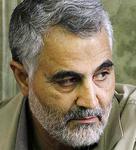
Qassem_Suleimani_Jordan_5.3.15Al Qods chief Gen. Soleimani welcomed in Amman

[T]he Jordanian king lately shows a different face in private conversations to his public aspect as steadfast friend of the Obama administration. In private, Abdullah is highly critical of current US policies in the region.

*************************

DEBKAfile’s military and intelligence sources reveal exclusively that Gen. Qassem Soleiman, commander of the Revolutionary Guards elite Al Qods Brigades, paid a groundbreaking visit last Thursday, March 5, to the Hashemite Kingdom of Jordan as guest of Gen. Faisal Al-Shoulbaki, director of General Intelligence and a close adviser to King Abdullah II.

The visit, encouraged by Obama administration policy, showed one of America’s oldest Sunni Arab allies, recognizing the direction of the trending regional reality to jump the lines over to Tehran. Iran’s grab for Middle East influence is now reaching from four capitals, Baghdad, Damascus, Sanaa, Beirut to a fifth, Amman.

Our sources report that Royal Jordanian Air Force fighter jets escorted the Iranian general’s armored motorcade as it drove from Baghdad to Amman through the main highway connecting the two Arab capitals.

It is not known whether the king gave Soleimani an audience, but the possibility is not ruled out.

His talks with Jordan’s intelligence and military heads ranged widely over the battles in Iraq and Syria against the Islamic State in Iraq and the Levant-ISIS. This suggests that Jordan has shown willingness to take the first step towards coordinating its policies and military operations with Tehran – not just with Washington as hitherto.

Some 12,000 American soldiers are posted to Jordan, most of them members of elite US combat units. Their primary task is to safeguard the throne against threats from Syria and Al Qaeda and its affiliates.

Interestingly, Soleimani’s landmark trip to Amman was carefully timed to take place just a day before Gen. Martin Dempsey, Chairman of the Joint US Chiefs of Staff, arrived in Baghdad, so that by the time he landed, the Iranian general, who commands his coutry’s expanding military input in the war on ISIS, had returned to the  Iraqi capital from his visit to Amman.

Our sources also report that the Jordanian king lately shows a different face in private conversations to his public aspect as steadfast friend of the Obama administration. In private, Abdullah is highly critical of current US policies in the region. In meetings with US lawmakers on visits to Amman, Abdullah has voiced bitter disappointment in President Barack Obama’s tepid response to the  burning alive by ISIS of the Jordanian pilot Lt. Moath al-Kasasbeh.

He was on a visit to the White House when the horrific video was released on Feb. 3.

The Jordanian king has been heard to remark that Obama’s military partnership with Iran, which has the effect of providing the Assad regime with an extra shield, cannot survive long, because the Sunni Arab world finds it intolerable and won’t accept it.

State Dept: ‘We Can Not Kill Our Way’ To Victory Against the Islamic State

February 17, 2015

State Dept: ‘We Can Not Kill Our Way’ To Victory Against the Islamic State, Washington Free Beacon via You Tube, February 17, 2015

(When will Obama give the Islamic State, et al, ObamaCare? — DM)


Columnist On Jordanian Daily: ISIS ‘Did Not Invent A New Islam’

February 11, 2015

Columnist On Jordanian Daily: ISIS ‘Did Not Invent A New Islam,’ MEMRI, February 11, 2015

(It would be encouraging if such statements were more often made in the “legitimate news” media of the U.S. and the “free” world. — DM)

In a February 10, 2015 article in the English-language Jordanian daily Jordan Times, titled “We Have a Problem”, attorney and columnist Zaid Nabulsi wrote that Muslims must not suffice with protesting that “Islam is innocent” of the terrorists’ actions. They must also acknowledge that the extremism of terrorist organizations like ISIS emanates directly from the teachings of Wahhabi Islam that now permeate the Sunni world, and from messages spread by the Muslim Brotherhood and by prominent clerics like Yousuf Al-Qaradawi. He added that Muslims must be brave enough not merely to condemn the ideology of the terrorists, but also to renounce Islamic texts that are incompatible with basic human values, including certain hadiths that are erroneously attributed to the Prophet Muhammad, as well as the writings of certain prominent medieval scholars, such as Ibn Taymiyyah.

The following are excerpts from his article:

“Some Wahabist Teachings, Which Have Permeated The Air We Breathe In The Muslim World, Are Simply Irreconcilable With Decent Human Values”

“Enough is enough. It is time to speak out. ‘Islam is innocent’ is an incomplete sentence. Introspection is needed, for, if we shy away from reality, the alternative will be more images like those we witnessed last Tuesday night, when brave Lt. Muath Al-Kasasbeh was burnt to death in a cage…

“Some Wahabist teachings, which have permeated the air we breathe in the Muslim world, are simply irreconcilable with decent human values, especially the ones that declare that every non-Wahabist is a disposable body whose bloodletting is unproblematic. So enough of this burial of our heads in the sand. It has become tiresome to keep hearing the unproductive cliché that Islam is innocent after each atrocity committed by devout fanatics who did nothing except execute the exact letter of their textbooks, which order them to slaughter the infidels.

“The escapism that mainstream Islam has nothing to do with those atrocities does not hold water anymore because Wahabism and Islam have become indistinguishable. To understand the crisis of Muslims today, one has to remember that Wahabism exists in several textbooks containing the alleged sayings of the Prophet Mohammad, or books of ‘Hadith,’ revered by so many. What we must confront is the undeniable fact that it is from many stories found in these books that the unprecedented cruelty of groups such as the so-called Islamic State and Jabhat Al-Nusra emanates.

“The problem today has nothing to do with the original spirit of Prophet Mohammad’s message. Nor has it anything to do with the tumultuous history of Muslims over 14 centuries, parts of which were no doubt glorious and enlightened. The catastrophe today is with the visible manifestation of Islam in the modern world, as demonstrated by the prevalent beliefs and practices of many people who call themselves Muslims.”

“[The] Negative Image Of Muslims Is Not All Just Smoke And No Fire”

“[But] this negative image of Muslims is not all just smoke and no fire. This is what those 120 Islamic scholars who sent a letter to Abu Bakr Al-Baghdadi last year could not fathom. [ISIS] did not invent a new Islam. On the contrary, its followers are strict adherents of the same textbooks quoted in that long letter (bizarrely addressed to ‘Dr Ibrahim Awwad Al-Badri,’ Baghdadi’s real name, bestowing intellectual respectability upon this mass murderer, as if one were writing a letter to the mayor of Copenhagen). In fact, the scholars’ letter was a misguided attempt to disinfect Wahabism, to cleanse it from itself, by claiming that IS simply misinterpreted texts that are otherwise compatible with human decency. In that sense, the letter squabbled over the semantics of the alleged instructions by the Prophet to spread Islam by the sword, but it did not dare renounce the authenticity of those same sayings…

“If we truly want to defend Islam, we need to perform a much more invasive surgery. Take the Muslim Brotherhood as an example of the prevalence of the Wahabist teachings among Muslims today. The Brotherhood is the virtual womb that incubated all the current jihadist groups, including Al-Qaeda itself (Al- Zawahiri hailed from the Egyptian MB offshoot that murdered president Anwar Sadat). Yet, when Abu Musab Al-Zarqawi was killed in 2006, the three most senior leaders of the MB in Jordan brazenly visited the condolence house in Zarqa and announced to the media that Zarqawi was a martyr in the eyes of God, despite Zarqawi having blown up three hotels in Amman the previous year, killing scores of Jordanians going about their lives or celebrating a peaceful wedding…

“The orgy of decapitations in Syria over the last four years was promoted by very rich Sunni clerics such as Yusuf Al-Qaradawi and Mohammad Al-Uraifi, aided by the countless satellite stations openly calling for the murder of Alawites and Shiites, and financed by billions from extremely wealthy but hateful Muslims. So, enough with the denials. It is time to raise the alarm. We have a problem!”

“If We Really Want To Defend Islam As A Religion Of Mercy… We Have To Muster The Courage To Identify The Specific Texts That Actually Defame Islam, Denounce Them And Permanently Cleanse Islamic Tradition Of Them”

“There is obviously a propensity towards eliminating ‘the other’ imbedded deep within Wahabist ideology. It is not only foolish to deny this fact, it is also dangerous, for we would be covering the cancerous tumour with a bandage. What we cannot deny is that many of the Wahabist textbooks are the same operating manuals that Islamist butchers use to justify their savagery. For example, very few people know that while [the Jordanian pilot] Muath was being set on fire in that macabre video, the voiceover was a recitation of an Ibn Taymiyah fatwa deeming the incineration of unbelievers a legitimate act of jihad. Ibn Taymiyah is not some obscure scholar on the fringe of Sunni Islam. In the Sunni world, he is universally venerated with the title ‘Sheikh of Islam,’ elevating him to an almost infallible clerical status.

“If we really want to defend Islam as a religion of mercy, if we really want to be believed when we proclaim the innocence of this religion, we need to do more than just repeat this meaningless mantra about us having nothing to do with [ISIS]. We have to muster the courage to identify the specific texts that actually defame Islam, denounce them and permanently cleanse Islamic tradition of them.”

What Is the Islamic State Trying to Accomplish?

February 7, 2015

What Is the Islamic State Trying to Accomplish? National Review on line, Andrew C. McCarthy, February 7, 2015

(As soon as Obama defeats climate change, he may begin to focus on other less important problems.  — DM)

pic_giant_020715_SM_ISIS-Fighter(Image: ISIS video)

The Islamic State and al-Qaeda are our problem.

*********************

The Islamic State’s barbaric murder of Lieutenant Mouath al-Kasaebeh, the Jordanian air-force pilot the jihadists captured late last year, has naturally given rise to questions about the group’s objectives. Charles Krauthammer argues (here and here) that the Islamic State is trying to draw Jordan into a land war in Syria. It is no doubt correct that the terrorist group would like to destabilize Jordan — indeed, it is destabilizing Jordan. Its immediate aim, however, is more modest and attainable. The Islamic State wants to break up President Obama’s much trumpeted Islamic-American coalition.

As the administration proudly announced back in September, Jordan joined the U.S. coalition, along with the United Arab Emirates, Saudi Arabia, Bahrain, and Qatar. The only potential value of the coalition is symbolic: It has enabled the president to claim that Muslim countries were lining up with us against the Islamic State. Militarily, the coalition is of little use. These countries cannot defeat the Islamic State.

Moreover, even the symbolism is insignificant. Symbolism, after all, cuts both ways. As I pointed out when the administration breathlessly announced the coalition, our five Islamic partners have only been willing to conduct (extremely limited) aerial operations against the Islamic State. They would not attack al-Qaeda targets — i.e., the strongholds of al-Nusra (the local al-Qaeda franchise) and “Khorasan” (an al-Qaeda advisory council that operates within al-Nusra in Syria).

Obviously, if the relevance of the five Islamic countries’ willingness to fight the Islamic State is the implication that the Islamic State is not really Islamic, then their unwillingness to fight al-Qaeda equally implies their assessment that al-Qaeda is representative of Islam. The latter implication no doubt explains why the Saudis, Qatar, and the UAE have given so much funding over the years to al-Qaeda . . . the terror network from which the Islamic State originates and with which the Islamic State shares its sharia-supremacist ideology.

I’ll give the Saudis this: They don’t burn their prisoners alive in a cage. As previously recounted here, though, they routinely behead their prisoners. In fact, here’s another report from the British press just three weeks ago:

Authorities in Saudi Arabia have publicly beheaded a woman in Islam’s holy city of Mecca. . . . Laila Bint Abdul Muttalib Basim, a Burmese woman who resided in Saudi Arabia, was executed by sword on Monday after being dragged through the street and held down by four police officers.

She was convicted of the sexual abuse and murder of her seven-year-old step-daughter.

A video showed how it took three blows to complete the execution, while the woman screamed “I did not kill. I did not kill.” It has now been removed by YouTube as part of its policy on “shocking and disgusting content”.

There are two ways to behead people according to Mohammed al-Saeedi, a human rights activist: “One way is to inject the prisoner with painkillers to numb the pain and the other is without the painkiller. . . . This woman was beheaded without painkillers — they wanted to make the pain more powerful for her.”

The Saudi Ministry of the Interior said in a statement that it believed the sentence was warranted due to the severity of the crime.

The beheading is part of an alarming trend, which has seen the kingdom execute seven people in the first two weeks of this year. In 2014 the number of executions rose to 87, from 78 in 2013.

Would that the president of the United States were more worried about the security of the United States than about how people in such repulsive countries perceive the United States.

In any event, the Islamic State is simply trying to blow up the coalition, which would be a useful propaganda victory. And the strategy is working. It appears at this point that only Jordan is participating in the airstrikes. While all eyes were on Jordan this week for a reaction to Lieutenant al-Kasaebeh’s immolation, the administration has quietly conceded that the UAEsuspended its participation in bombing missions when the pilot was captured in December.

The explanation for this is obvious: The Islamic countries in the coalition know they can’t stop the Islamic State unless the United States joins the fight in earnest, and they know this president is not serious. The White House says the coalition has carried out a total of about 1,000 airstrikes in the last five months. In Desert Storm, we did 1,100 a day.

Seven strikes a day is not going to accomplish anything, especially with no troops on the ground, and thus no search-and-rescue capability in the event planes go down, as Lieutenant al-Kasaebeh’s did. With no prospect of winning, and with a high potential of losing pilots and agitating the rambunctious Islamists in their own populations, why would these countries continue to participate?

The Islamic State knows there is intense opposition to King Abdullah’s decision to join in the coalition. While the Islamic State’s sadistic method of killing the pilot has the king and his supporters talking tough about retaliation, millions of Jordanians are Islamist in orientation and thousands have crossed into Syria and Iraq to fight for the Islamic State and al-Qaeda. There will continue to be pressure on Jordan to withdraw. Without a real American commitment to the fight, this pressure will get harder for Abdullah to resist.

Jordan has no intention of getting into a land war the king knows he cannot win without U.S. forces leading the way. But the Islamic State does not need to lure Jordan into a land war in order to destabilize the country — it is already doing plenty of that by intensifying the Syrian refugee crisis, sending Jordanians back home from Syria as trained jihadists, and trying to assassinate Abdullah.

I will close by repeating the larger point I’ve argued several times before. We know from experience that when jihadists have safe havens, they attack the United States. They now have more safe havens than they’ve ever had before — not just because of what the Islamic State has accomplished in what used to be Syria and Iraq (the map of the Middle East needs updating) but because of what al-Qaeda has done there and in North Africa, what the Taliban and al-Qaeda are doing in Afghanistan, and so on.

If we understand, as we by now should, what these safe havens portend, then we must grasp that the Islamic State, al-Qaeda, and the global jihad constitute a threat to American national security. That they also (and more immediately) threaten Arab Islamic countries is true, but it is not close to being our top concern. Ensuring our security is a concern that could not be responsibly delegated to other countries even if they had formidable armed forces — which the “coalition” countries do not.

The Islamic State and al-Qaeda are our problem.

Al Qaeda jihadists celebrate release of anti-Islamic State ideologue

February 7, 2015

Al Qaeda jihadists celebrate release of anti-Islamic State ideologue, Long War Journal, Thomas Joscelyn, February 5, 2015

Screen Shot 2015-02-05 at 4.25.03 PM-thumb-560x740-5716

No official explanation for Maqdisi’s release has been given. But a Jordanian “security source” told Reuters that “Maqdisi was expected to denounce the immolation of the Jordanian pilot” as being contrary to “faith values.”

******************

Jordanian officials announced the release of Abu Muhammad al Maqdisi, a pro-al Qaeda, anti-Islamic State jihadist ideologue earlier today. And the news was quickly celebrated by Maqdisi’s allies on social media.

A Twitter feed associated with Abu Qatada, one of Maqdisi’s closest comrades, tweeted the news of the release. One tweet praises Allah and shows a picture of the two longtime jihadist thinkers sitting together. The picture can be seen above, with Maqdisi on the reader’s left and Abu Qatada on the right.

The pair has helped lead al Qaeda’s ideological attack against the Islamic State, which claims to rule over large parts of Iraq and Syria as a “caliphate.” Al Qaeda officially disowned Abu Bakr al Baghdadi’s organization in February 2014.

The celebratory tweets posted in Abu Qatada’s name were quickly retweeted by other al Qaeda jihadists, including Sami al Uraydi, a Jordanian who serves as the Al Nusrah Front’s chief sharia official. The Al Nusrah Front is al Qaeda’s official branch in Syria.

Abu Mariya al Qahtani, another official in Al Nusrah, praised Maqdisi’s release. And so did Dr. Abdallah Muhammad al Muhaysini, an al Qaeda-linked cleric who works with Al Nusrah in Syria. Muhaysini tweeted the photo shown above as well.

Maqdisi’s release comes just days after the Islamic State posted a grotesque video online showing a Jordanian pilot, Mouath al Kasaesbeh, being burned alive.

No official explanation for Maqdisi’s release has been given. But a Jordanian “security source” told Reuters that “Maqdisi was expected to denounce the immolation of the Jordanian pilot” as being contrary to “faith values.”

And a Jordanian television station is already advertising an “exclusive interview” with Maqdisi, who criticizes the Islamic State once again. He reportedly will say that he tried to negotiate the pilot’s freedom in exchange for the release of Sajida al Rishawi, a failed al Qaeda in Iraq suicide bomber. Rishawi was executed by the Jordanian government after Kasaesbeh’s death was publicly confirmed.

One of the Islamic State’s most influential critics

It has long been assumed that Jordanian authorities are willing to tolerate some of Maqdisi’s activities, as he is one of the Islamic State’s most authoritative critics within the jihadist community. But such an arrangement puts the Jordanians in the awkward position of being tacitly allied, even if only on occasion, with a thinker who strongly backs al Qaeda and its leader, Ayman al Zawahiri.

In January 2014, Maqdisi denounced the Islamic State’s fatwas, which “obligate Muslims to make a grand pledge of allegiance to [Abu Bakr al] Baghdadi as a caliph.” Maqdisi also explained that the fatwas from the Islamic State of Iraq and the Sham (ISIS), as it was known at the time, led to the shedding of Muslim blood and incited jihadists “to disobey the authorities’ orders, particularly the orders of Sheikh Dr. Ayman al Zawahiri.”

While still imprisoned in May 2014, Maqdisi released a statement blasting the Islamic State as a “deviant organization.” The message was promoted online by the Al Nusrah Front.

In the jailhouse letter, Maqdisi revealed that he had attempted to broker an end to the dispute between the Islamic State and al Qaeda, as the two jihadist organizations had been openly at odds since April 2013. He claimed to have advised Abu Bakr al Baghdadi and Zawahiri. Maqdisi even said that he had been in direct contact with Zawahiri, whom he referred to as “our beloved brother, the Sheikh, the Commander.” He blamed the failure of his mediation efforts solely on Baghdadi.

Maqdisi has been periodically released from prison, only to find himself behind bars once again. He was released for a time in mid-June of 2014 and, in short order, issued another statement concerning the Islamic State. He refused to disavow his rebuke of the group from the month before, saying the speculation that Jordanian authorities put him up to it was false. Officials in the Al Nusrah Front praised Maqdisi’s short-lived freedom at the time.

Jihadists from around the world have attempted to impeach the Islamic State’s credentials by relying on Maqdisi’s teachings. For instance, Ali Abu Muhammad al Dagestani, the head of the Islamic Caucasus Emirate (ICE), has spoken of Maqdisi, along with Zawahiri and other al Qaeda ideologues, in glowing terms. Some ICE jihadists have defected to the Islamic State, but web sites affiliated with the organization continue to advertise Maqdisi’s anti-Islamic State writings.

Maqdisi’s animosity for the West and the US is clear. On Sept. 30, 2014, he and other jihadist thinkers released a proposal calling for a ceasefire between the warring factions in Syria. Their main argument was that the Islamic State, Al Nusrah and other groups had a common enemy in the “Crusaders.” The US-led coalition began bombing Syria one week earlier. The proposed ceasefire appears to have been rejected by the Islamic State.

Last December, the Guardian (UK) reported that Abu Qatada and Maqdisi had attempted to negotiate with the Islamic State on behalf of Peter Kassig, an American aid worker who was held captive by the group. Their effort failed as Kassig was ultimately beheaded. Some al Qaeda officials objected to Kassig’s murder on the grounds that he was assisting Muslims in Syria and had been welcomed by their co-religionists. In their view, therefore, it was illegal under sharia law to kill him.

The Islamic State, however, consistently disregards the sharia arguments made by al Qaeda officials, Maqdisi, and others.