Archive for the ‘Iranian proxies’ category

Pro-Iranian Shiites ready to lead Mosul operation

October 28, 2016

Pro-Iranian Shiites ready to lead Mosul operation, DEBKAfile, October 28, 2016

1-5

The US-led coalition offensive for liberating Mosul from ISIS suffered two ominous downturns on its 10th day

Friday, Oct. 28, DEBKAfile’s military sources report. One: Pro-Iranian Iraqi Shiites stand ready to assume a lead role, sparking the threat of sectarian violence in the mainly Sunni city; and, two, the Islamic State is poised to launch surface missiles with a range of 500km against Baghdad, as well as Jordan and Israel.

Friday, a spokesman for the Iraqi Shiite paramilitary groups the Bader Brigades and the Population Mobilization Force announced that their advance toward the Islamic State-held town of Tal Afar, about 55 km west of Mosul, was imminent.

These militias are fighting under the command of the Iranian Al Qods chief, Gen. Qasem Soleimani, who takes his orders from Tehran.

The capture of Tal Afar – a mix of Sunni and Shiite ethnic Turkmen until the Islamic State’s takeover two years ago – would cut off ISIS-held Mosul from Syria.

Turkey, Iraq’s northern neighbor, and the Kurds are seriously alarmed by the Shiite groups’ initiative.

The Shiites, who are not part of the main coalition fighting body preparing to storm Mosul, are about to strike ISIS from the north.

DEBKAfile’s military sources note that coalition commanders erred by not taking Tal Afar in the early stage of the Mosul offensive and so blocking ISIS supply lines.

The offensive was hobbled two days day earlier by the Kurdish decision to withdraw Peshmerga fighters from the operation to retake Mosul. President Masoud Barzani of the autonomous Kurdish Regional Government stated Wednesday, Oct. 26, that his army had ended its role in the warfare, after cleansing dozens of mostly uninhabited villages on the road to Mosul, and did not intend to enter the city at this time.

This decision by the KRG in Irbil was not published.

Since the Kurds and the Shiite militias are out of it, who is left to finish the job and go into Mosul?

The mission which started out as a grand coalition enterprise has been left now to US forces and the Iraqi army.

However, Iraq’s elite 9th Golden Division and its federal anti-terror police unit have not made much headway in their advance against ISIS forces east of Mosul. Their commanders now warn the government in Baghdad that they can’t go any further without reinforcements.

But there are no Iraqi military reserves to draw on, without stripping any more main Iraqi towns of their defenses and laying them open to Islamists assaults, like those ISIS staged successfully last week on the oil city of Kirkuk, the Kurdish town of Sinjar and Rutba near the Jordanian border.

The long and short of it is that the Mosul offensive has virtually ground to a halt.

ISIS meanwhile is compounding its atrocities and gearing up for escalation.

1. The UN Human Rights agency reported Friday that, since the Mosul offensive began on Oct. 17, Islamic State forces in Iraq have abducted tens of thousands of men, women and children from areas around Mosul and are using them as “human shields” in the city as Iraqi government troops advance.

They shot dead at least 232 people on Wednesday, including 190 former Iraqi troops and 42 civilians when they refused to obey their orders.

2.  ISIS has plans to use chemical weapons against the coalition forces advancing any further towards Mosul.

3.  Following their raids on key Iraqi cities, the Islamist State is preparing to launch surface missiles against Baghdad.

4. ISIS may not confine its missile attacks to targets in Iraq. Our military sources report that the jihadists have laid hands on Syrian and Iraqi ground-to-ground missiles with a range of 500km and are holding them ready for attacks on Iraq’s neighbors, which could be Jordan. Israel too is in their sights.

Tehran will fight Turkey’s role in Mosul operation

October 24, 2016

Tehran will fight Turkey’s role in Mosul operation, DEBKAfile, October 24, 2016

bashiqa_b

The involvement of Turkish special operations, armored and artillery forces in support of the Kurdish Peshmerga battle to drive ISIS out of Bashiqa, 12 south of Mosul, marks a pivotal moment in the US-led coalition’s anti-ISIS offensive to free Iraq’s second city. The entire Mosul operation hangs in the balance since Turkey stepped into the fighting in Iraq, at the initiative of the US. Instead of fighting ISIS, the coalition’s partners are squaring off to fight each other.

DEBKAfile’s military sources report that Turkey was allowed to gatecrash the fighting around Mosul after US Defense Secretary Ashton Carter visited the KRG capital of Irbil Sunday, Oct. 23. He urged Kurdish leaders to bow to President Tayyip Erdogan’s demands for a role in the battle.

The Kurdish leaders succumbed to the pressure with the proviso that Turkey cease its air and artillery assaults on Syrian Kurdish militias in northern Syria.

When Ankara accepted this condition, Ashton set out for the Bashiqa arena, becoming the first US defense secretary to come that close to a battlefront against ISIS in Iraq.

He visited the Turkish military encampment outside Bashiqa and was given a briefing by their commanders. As soon as he departed, Turkish units entered the fray in support of the Peshmerga fighters

According to Turkish Prime Minister Binali Yildrim, this involvement was limited to tank and artillery support for the Kurdish forces. Our military sources report, however, that it went much further and included Turkish special operations forces and tanks. By Monday, Oct. 24, Turkish troops were still backing up the Kurdish effort to purge Bashiqa of ISIS fighters.

Tehran’s reaction to this change on the game board was extreme. Our sources report that the pro-Iranian Iraqi Shiite militias assigned to subordinate tasks in the Mosul operation were immediately put on a state of readiness. Commanders of the Bader Brigades, the Population Mobilization Force and the Hashd eal-Shaabi reported that they were standing ready to attack the Turkish forces operating at Bashiqa, whom they termed “gangs of terrorists no less dangerous than ISIS.”

The Iranian government leaned hard on Iraq’s Shiite Prime Minister Haidar Al-Abadi to make him redirect Iraqi government forces from the Mosul arena to join the Shiite forces preparing to strike the Turkish troops at Bashiqa.

Al-Abadi had in the past week demanded the removal of Turkish troops from Iraqi soil, a demand Ankara just as steadily rebuffed.

Building up at present is an imminent head-to-head fight between Turkish and Kurdish forces on the one hand and Iraqi Shiites on the other.

In an effort to prevent the long-awaited Mosul operation degenerating into an all-out conflagration among US allies, with the Islamist State no doubt cheering on, the Obama administration Monday turned to Tehran, Baghdad, Ankara and Irbil and asked them back off lest they wreck their primary mission of evicting ISIS from Mosul.

Tehran may decide to give ground on this but the price it exacts will be steep: an overhaul of the Iraqi Shiite militias’ rear position and permission for their direct intervention in the battle for Mosul, including their entry into the city. This permission the US commanders have hitherto withheld.

This would be a big prize. Mosul has been coveted by Iranian strategists as a major transit point on the land bridge they have designed to link the Islamic Republic to Syria and the Mediterranean. This prize would go by the board if the Turks and Kurds were first in the liberated city first and assumed control.

America is addicted, sleepy and becoming comatose.

October 18, 2016

America is addicted, sleepy and becoming comatose, Dan Miller’s Blog, October 18, 2016

(The opinions expressed in this article are mine and do not necessarily reflect those of Warsclerotic or its other editors. — DM)

Hillary and her media titillate us with their sexual fantasies and put us to sleep with heroin for the body and heroin for the mind. Trump yells “Wake up and Fix our open borders!” Hillary mumbles “America is already great and that’s not who we are.” Is “H” for Hillary or Heroin?

hillbutton

Sources of America’s Hard Drugs

Most heroin consumed in America enters across our southern border.

According to the DEA, the majority of the heroin consumed in the United States comes from Mexico (50%) and Colombia (43-45%) via Mexican criminal cartels such as Sinaloa Cartel.[90] However, these statistics may be significantly unreliable, the DEA’s 50/50 split between Colombia and Mexico is contradicted by the amount of hectares cultivated in each country and in 2014, the DEA claimed most of the heroin in the US came from Colombia.[91] As of 2015, the Sinaloa Cartel is the most active drug cartel involved in smuggling illicit drugs such as heroin into the United States and trafficking them throughout the United States.[92]

That’s the border that Trump wants to close and Hillary wants to keep open for the Mexican criminal cartels, rapists, other criminals and potential Democrat voters; U.S. citizen or non-U.S. citizen? What difference it make now? Just play Catch and Release.

Heroin is not the only “recreational” drug transiting our southern border.

Venezuela, Iran, USA and Narco-Terrorism

[D]eeper and more alarming than the Venezuelan homicide toll, there appears to be an imminent threat to the entire Western hemisphere from partnerships between Venezuelan drug traffickers and terrorist networks like Hamas and Hezbollah, two groups that act a proxies for Iran.

Together, terrorism and illegal drugs represent a significant export for Venezuela. Iran and Venezuela partner together to move terrorist cells and drugs to hubs in the United States and throughout North America.

. . . .

Hezbollah’s annual budget of more than 100 million dollars is provided by the Iranian government directly and through a complex system of finance cells scattered around the world, from Bangkok and Paraguay to Michigan and North Carolina.

Far from being the passive beneficiaries of drug-trafficking expats and sympathizers, Hezbollah has high-level officials directly involved in the South American cocaine trade and its most violent cartels, including the Mexican crime syndicate Los Zetas. Hezbollah’s increasing foothold in the cocaine trade is facilitated by an enormous Lebanese diaspora.

. . . .

Alongside their efforts to battle their own serious homegrown drug problems in Iran, the Revolutionary Guards are also reportedly working to harness the strategic and tactical potential of the international drug trade in order to advance Iran’s expansion. [Emphasis added.]

. . . .

At the same time, the U.S. administration continues to purchase 10% of its oil (roughly 300 million barrels per year) from Venezuela, the same entity that it sanctioned in 2011 for shipping gasoline to Iran.

This is all happening while terrorist groups are regularly connecting to drug cartels in the region, and forging a deepening narco-terror machine that in turn is funding terrorist activities. [Emphasis added.]

Miami: Three Hizballah operatives busted for laundering $500,000 of cocaine money for Colombian cartel:

Hizballah is a wholly owned and operated subsidiary of the Islamic Republic of Iran. Iran has repeatedly declared its intention to destroy the United States, as you can read about in detail in my book The Complete Infidel’s Guide to Iran (Regnery). Hizballah working with the drug cartel kills two birds with one stone: drugs weaken and destroy Americans, and sap American resources in largely futile anti-drug efforts, and the cash Hizballah earns in working with the drug cartel goes for more jihad against the U.S. [Emphasis added.]

How do the drugs get to America and elsewhere?

Drug ‘mule’ aged 12

Police in New York said the boy, a U.S. citizen who had been living with grandparents in Nigeria, is one of the youngest drug ‘mules’ they have ever seen.

He was only caught because his body began to pass the condoms the drug was hidden in while he was in a taxi.

Doctors who removed the remaining ‘packages’ from his colon said he would have died if one had burst. [Emphasis added.]

Police said the boy, Prince Nnaedozie Umegbolu, made the dangerous journey because he wanted to see his mother, who lives in Atlanta, Georgia. He was to be paid £1,200.

His father, Chukwunwieke Umegbolu, is in prison in Virginia for drugsmuggling.

The boy’s journey began in Nigeria where drug smugglers gave him the condoms to swallow.

He then travelled alone to London by Air Nigeria before flying on to New York by British Airways.

Please see also,  Here’s What It Feels Like to Smuggle 700 Grams of Cocaine in Your Stomach and The Down And Dirty Of Vagina Smuggling.

(Update — This new Project video was just posted. It’s about vote fraud and how to engage in it without being caught.)

(Update — This new Project video was just posted. It’s about vote fraud and how to engage in it without being caught.)

Heroin for the mind

Don’t look behind the curtain; you might see how the witch wizards are feeding us heroin for the mind.

Conclusions

America has a substantial drug problem; most hard drugs, such as heroin and cocaine, come across our southern border with help from Iran and its proxies. Trump wants to close the border to “undocumented aliens” and Hillary wants to keep it open to all, regardless of why they are coming and regardless of the consequences to Americans (as well as to young drug mules). Trump has the first endorsements ever by the Border Patrol Employees’ Union and the Immigration and Customs Enforcement Employees’ Union because they are not being permitted to do their jobs.

Aside from her hopes for votes from new Democrat voters, why does Hillary support open borders? I don’t know because (unlike Abraham Lincon) she often lies about what she thinks and wants. But is it possible that she favors a continuous and copious supply of hard drugs for many of her supporters in large, Democrat controlled, American cities? Because she believes that America should share the disasters the “third world” continues to face? Because has sees no problem with this?

an imminent threat to the entire Western hemisphere from partnerships between Venezuelan drug traffickers and terrorist networks like Hamas and Hezbollah, two groups that act a proxies for Iran.

Together, terrorism and illegal drugs represent a significant export for Venezuela. Iran and Venezuela partner together to move terrorist cells and drugs to hubs in the United States and throughout North America.

Perhaps she is uncomfortable with the notions that, despite the Iran Scam, Iran continues to be our enemy and that Iranian proxies Hezbollah and Hamas are terrorist organizations.

If Hillary becomes our next president, will America’s already serious problems with Iran and drugs worsen? I think so.

Mosul assault – a military Tower of Babel

October 17, 2016

Mosul assault – a military Tower of Babel, DEBKAfile, October 17, 2016

mosul_offensive_declaration_16-10-16

The underlying US rationale for embarking on this high-wire operation is President Barack Obama’s aspiration to achieve Mosul’s liberation before his departure from the White House in January, in the hope that this landmark success will provide a major distraction from his administration’s failed policies in Syria.

****************************

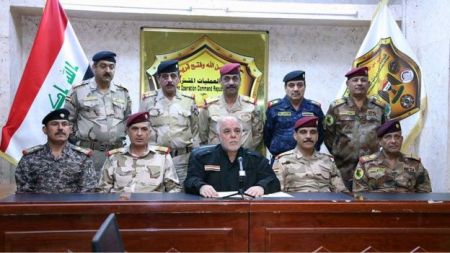
Sunday night, Oct. 16, Iraqi Prime Minister Haidar al-Abadi, supported by a bevy of generals, announced that the military operation to recapture Mosul from its two-year occupation by the Islamic State had begun.

Three formally approved participants are taking part in the operation, DEBKAfile’s military sources report:

1. American special operations, artillery and engineering units – equipped with floating bridges for crossing the Tigris River – plus the US air force for massive bombardment to crush enemy resistance.

2. Iraqi army armored divisions, special ops forces, regular troops and anti-terror police units.

3. The Iraqi Kurds’ Peshmerga.

The Iraqi prime minister pledged formally that only Iraqi fighters would enter Mosul, i.e. no Americans, Kurds or other non-Iraqi forces.

It was a pledge that neither the Iraqi Sunni and Shiite combatants nor the Kurdish and Turkmen fighters trusted him to uphold, after similar promises went by the wayside in the US-led coalition battles fought in the past two years to retake the Iraqi towns of Ramadi, Tikirit, Baiji and Fallujah from ISIS.

The first forces to enter those cities were by and large pro-Iranian Iraqi Shiite militias, especially the Bader Brigades and the Popular Mobilization Units, under Iran’s supreme Middle East commander Gen. Qassem Soleimani. Nonetheless, despite the ravages they wrought in those Sunni cities, US air support was forthcoming for their advance, while in Washington US officials pretended they were helping Iraqi government army units.

With regard to the Mosul campaign, Obama administration officials and military officers, like the Iraqi prime minister, insist there will be no repetition of the Iranian-backed Shiite invasion and conquest of yet another Sunni city, where a million inhabitants still remain.

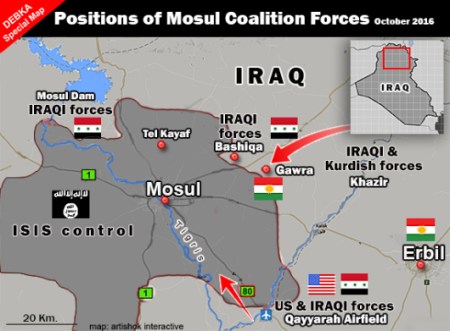
mosul_offensive_17-10-16

They don’t explain how this will be prevented when those same pro-Iranian Iraqi Shiite forces are already massing northeast of Mosul, near the Iraqi-Syria border, and standing by for the order to advance into the city.

Tehran quite obviously has no intention of being left out of the epic capture of Mosul.

Neither is another uninvited party, Turkish President Tayyip Erdogan. He too has positioned a Turkish military concentration in Iraq, in defiance of strong objections from Washington and Baghdad. Turkish troops stand ready to move forward to do Erdogan’s will and achieve three strategic goals:

a) To actively frustrate Kurdish Peshmerga entry to Mosul, although its 15,000 fighters out of the 25,000 invasion force are a vital element of the spearhead thrust into the city. Ankara has warned that if Kurds set foot in Mosul, Turkish troops will follow.

b)  To block the path of Syrian Kurdish YPG militiamen from entering Iraq and linking up with their Iraqi brothers-in-arms.

c) To provide backing, including Turkish air support, for the Iraqi Turkmen militias still present in the Turkmen quarter of Mosul.

DEBKAfile’s military sources count six assorted military groupings taking part in the liberation of Mosul. They have nothing in common aside from their determination to drive the Islamic State out.

They are utterly divided on the two main aspects of the offensive: How to achieve their common goal and what happens to Mosul after the Islamist invaders are gone.

The underlying US rationale for embarking on this high-wire operation is President Barack Obama’s aspiration to achieve Mosul’s liberation before his departure from the White House in January, in the hope that this landmark success will provide a major distraction from his administration’s failed policies in Syria.

The Islamic State might have been expected to take advantage of the prior warning of the offensive for a stand in defense of the Iraqi capital of Abu Bakr Al-Baghdadi’s caliphate and so exploit the conflicting interests of the invading force.

But ISIS leaders decided against waiting for the combined offensive. Indeed, according to DEBKAfile’s sources, thousands of jihadis made tracks out of the city two or three months ago, relocating the bulk of their combat strength and institutions in two new locations: in the western Iraqi desert province of Anbar at a site between the Jordanian and Saudi borders and eastern Syria. Several hundred fighters were left behind in Mosul to harass the US-Iraq-Kurdish armies as they advance into the city and exploit the invaders’ discord to retain a foothold in Mosul.

Russia & Turkey carve anti-US enclaves in Syria

October 15, 2016

Russia & Turkey carve anti-US enclaves in Syria, DEBKAfile, October 15, 2016

rusturk

US President Barack Obama told Pentagon and military chiefs he met Friday, Oct. on Oct. 14, that instead of arming anti-Assad rebel groups in Syria, Washington was going back to negotiations with Moscow for cooperation in achieving a cessation of hostilities in the Syrian war.

US Secretary of State John Kerry therefore scheduled his umpteenth meeting with Russian Foreign Minister Sergey Lavrov for Saturday in Lausanne. This time, the foreign ministers of Turkey, Turkey, Iran, Saudi Arabia and possibly Qatar, tagged along.

Beyond the high words, recriminations and the unspeakable horrors attending the battle for Aleppo, Obama never seriously considered providing the anti-Syrian rebels holed up in Aleppo with the anti-air weapons they need to shoot down the Russian and Syrian warplanes blitzing them – any more than UK Foreign Secretary Boris Johnson’s statement that it was time for British military involvement in the Syrian war was for real

Above all, Britain is short of the military heft for backing up hypothetical intentions.

The options for serious Western intervention in the Syrian war are constantly diminishing for the reasons outlined here by DEBKAfile’s military sources:

1.  American missiles have no way of reaching Syrian rebel groups, certainly not those still fighting in eastern Aleppo. Neither Russia, nor Turkey, whose army now controls 5,000 sq. km of northern Syria, would let them through to that destination.

2. Had Turkish President Tayyip Erdogan chosen to do so, he could have simply ordered his army to open up a route for the supply of missiles to the rebels who are hemmed in in Aleppo by Russia, Syrian, Iranian and Hizballah forces. He is withholding that order because the military deals he concluded with President Vladimir Putin last week in Istanbul override any concerns he may have for the fate of those rebels or Aleppo’s population.

3. Those deals in a word sanctify the Turkish “security zone” in northern Syria which is covered by a no-fly zone for all but Russian and Turkish flights. They also provide for the Syrian rebels retreating from the various Syrian war zones, including Aleppo, to be taken in and absorbed in the Turkish enclave. Erdogan would thus become the senior patron of the Syrian opposition rebel movement, barring only the Al-Qaeda-affiliated Nusra Front and other Islamic extremist groups. This would enable him to steal from the United States, Saudi Arabia, Jordan and Qatar their sponsorship roles and their influence in the anti-Assad movement.

4. Ankara’s military alliance with Moscow is steadily eroding Turkey’s ties with the United States as well as NATO. Matters have gone so far that the two capitals or in advanced discussion of the supply of Russian air defense missiles to the Turkish army.

DEBKAfile’s intelligence sources reveal that under discussion is the installation in Turkey of a system of advanced Russian missiles linked to the Russian anti-air missile shield under construction in Syria.

Turkey would thus become the first member of NATO to arm itself with a Russian anti-air missile shield.

How was this allowed to happen?

According to our sources, Putin and Erdogan are moving fast to cash in on President Obama’s repugnance for military intervention in Syria and his waning powers at the tail end of his presidency.

Furthermore –

a) Neither is configuring Syrian President Bashar Assad into their calculations. They are going forward with their plans while ignoring him and his drastically diminished army as factors worth consideration.

b)  Their objectives are similar and interlocking:  Both are intent on developing their respective enclaves in northern Syria, Moscow for a long-term military presence in the country: likewise, Ankara.

Up until now, the Obama administration stood firm against the two goals, which is why Washington and Moscow were unable to achieve any real cooperation over a secession of hostilities in the war-torn country;  even when Kerry and Lavrov struck a truce accord on Sept 9, it never held up beyond a few hours.

Most recently, Putin and Erdogan tried signaling the US president that their sole ambitions with regard to Syria’s future lie in the two military enclaves now under construction.

Obama saw this as a sufficient basis to continue withholding advanced arms from Syrian rebel groups and to go for another round of diplomacy with Russia – with Turkey hitching a ride this time on the opposite side of the table..

Kerry Negotiating Ceasefire W/Death to America Terrorists After They Attack US Ships

October 14, 2016

Kerry Negotiating Ceasefire W/Death to America Terrorists After They Attack US Ships, Front Page Magazine, Daniel Greenfield

kerry_whitehousegov-1

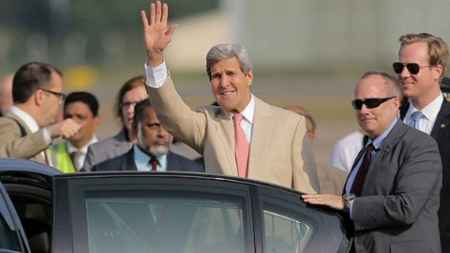
John Kerry never changes. Whatever happens, he can always be found rushing to appease the enemies of this country. After Iranian backed Houthi Islamic Jihadists attacked a US ship, Kerry has jumped into action to do his usual thing

As the U.S. launched missile attacks Thursday on Houthi-controlled areas of Yemen, behind the scenes Secretary of State John Kerry has been trying to negotiate a temporary cease-fire and reinvigorate a political process to end the country’s civil war.

The conflict has dragged on for over two years now, since the Shiite rebels seized control of the capital of Sanaa in September of 2014. The conflict escalated in March 2015 and since then over 4,000 civilians have been killed, the U.N. has said.

“What the Secretary has been pushing hard for is to get back … to a cessation of hostilities, a 72-hour cessation of hostilities which can at least then create some kind of climate where a political dialogue or a dialogue can begin again,” State Department Deputy Spokesperson Mark Toner said Thursday.

Here’s whom Kerry wants a dialogue with. The Houthis are not “rebels”, they’re Islamic Jihadists, backed by Iran. Their slogan is, “Allah Akbar, Death to America, Death to Israel, A curse upon the Jews, Victory to Islam.”

But part of that is Kerry and Obama’s slogan too. Meanwhile Obama’s NSC put out a statement warning the Saudis about further attacks on the Houthis.

U.S. security cooperation with Saudi Arabia is not a blank check. Even as we assist Saudi Arabia regarding the defense of their territorial integrity, we have and will continue to express our serious concerns about the conflict in Yemen and how it has been waged. In light of this and other recent incidents, we have initiated an immediate review of our already significantly reduced support to the Saudi-led Coalition and are prepared to adjust our support so as to better align with U.S. principles, values and interests, including achieving an immediate and durable end to Yemen’s tragic conflict. We call upon the Saudi-led Coalition, the Yemeni government, the Houthis and the Saleh-aligned forces to commit publicly to an immediate cessation of hostilities and implement this cessation based on the April 10th terms.

Maybe Kerry and the Houthis can bond over their mutual hatred of America.

Column One: From Yemen to Turtle Bay

October 14, 2016

Column One: From Yemen to Turtle Bay, Jerusalem Post, Caroline Glick, October 13, 2016
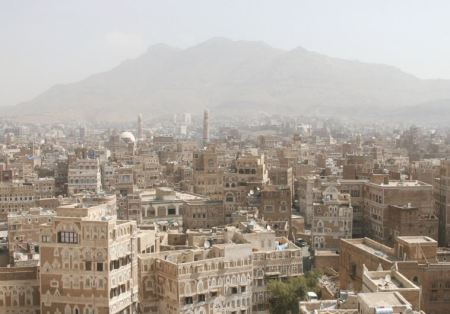
sana-yemen


As far as Obama is concerned, Iran is a partner, not an adversary.

****************************

Off the coast of Yemen and at the UN Security Council we are seeing the strategic endgame of Barack Obama’s administration. And it isn’t pretty.

Since Sunday, Iran’s Houthi proxies in Yemen have attacked US naval craft three times in the Bab al-Mandab, the narrow straits at the mouth of the Red Sea. The Bab al-Mandab controls maritime traffic in the Red Sea, and ultimately controls the Suez Canal.

Whether the Iranians directed these assaults or simply green-lighted them is really beside the point. The point is that these are Iranian strikes on the US. The Houthis would never have exposed themselves to US military retaliation if they hadn’t been ordered to do so by their Iranian overlords.

The question is why has Iran chosen to open up an assault on the US? The simple answer is that Iran has challenged US power at the mouth of the Red Sea because it believes that doing so advances its strategic aims in the region.

Iran’s game is clear enough. It wishes to replace the US as the regional hegemon, at the US’s expense.

Since Obama entered office nearly eight years ago, Iran’s record in advancing its aims has been one of uninterrupted success.

Iran used the US withdrawal from Iraq as a means to exert its full control over the Iraqi government. It has used Obama’s strategic vertigo in Syria as a means to exert full control over the Assad regime and undertake the demographic transformation of Syria from a Sunni majority state to a Shi’ite plurality state.

In both cases, rather than oppose Iran’s power grabs, the Obama administration has welcomed them. As far as Obama is concerned, Iran is a partner, not an adversary.

Since like the US, Iran opposes al-Qaida and ISIS, Obama argues that the US has nothing to fear from the fact that Iranian-controlled Shiite militias are running the US-trained Iraqi military.

So, too, he has made clear that the US is content to stand by as the mullahs become the face of Syria.

In Yemen, the US position has been more ambivalent. In late 2014, Houthi rebel forces took over the capital city of Sanaa. In March 2015, the Saudis led a Sunni campaign to overthrow the Houthi government. In a bid to secure Saudi support for the nuclear agreement it was negotiating with the Iranians, the Obama administration agreed to support the Saudi campaign. To this end, the US military has provided intelligence, command and control guidance, and armaments to the Saudis.

Iran’s decision to openly assault US targets then amounts to a gamble on Tehran’s part that in the twilight of the Obama administration, the time is ripe to move in for the kill in Yemen. The Iranians are betting that at this point, with just three months to go in the White House, Obama will abandon the Saudis, and so transfer control over Arab oil to Iran.

For with the Strait of Hormuz on the one hand, and the Bab al-Mandab on the other, Iran will exercise effective control over all maritime oil flows from the Arab world.

It’s not a bad bet for the Iranians, given Obama’s consistent strategy in the Middle East.

Obama has never discussed that strategy.

Indeed, he has deliberately concealed it. But to understand the game he has been playing all along, the only thing you need to do listen to his foreign policy soul mate.

According to a New York Times profile published in May, Obama’s deputy national security adviser Ben Rhodes is the president’s alter ego. The two men’s minds have “melded.”

Rhodes’s first foreign policy position came in the course of his work for former congressman Lee Hamilton.

In 2006, then-president George W. Bush appointed former secretary of state James Baker and Hamilton to lead the Iraq Study Group. Bush tasked the group with offering a new strategy for winning the war in Iraq. The group released its report in late 2006.

The Iraq Study Group’s report contained two basic recommendations. First, it called for the administration to abandon Iraq to the Iranians.

The group argued that due to Iran’s opposition to al-Qaida, the Iranians would fight al-Qaida for the US.

The report’s second recommendation related to Israel. Baker, Hamilton and their colleagues argued that after turning Iraq over to Iran, the US would have to appease its Sunni allies.

The US, the Iraq Study Group report argued, should simultaneously placate the Sunnis and convince the Iranians of its sincerity by sticking it to Israel. To this end, the US should pressure Israel to give the Golan Heights to Syria and give Judea and Samaria to the PLO.

Bush rejected the Iraq Study Group report. Instead he opted to win the war in Iraq by adopting the surge counterinsurgency strategy.

But once Bush was gone, and Rhodes’s intellectual twin replaced him, the Iraq Study Group recommendations became the unstated US strategy in the Middle East.

After taking office, Obama insisted that the US’s only enemy was al-Qaida. In 2014, Obama grudgingly expanded the list to include ISIS.

Obama has consistently justified empowering Iran in Iraq and Syria on the basis of this narrow definition of US enemies. Since Iran is also opposed to ISIS and al-Qaida, the US can leave the job of defeating them both to the Iranians, he has argued.

Obviously, Iran won’t do the US’s dirty work for free. So Obama has paid the mullahs off by giving them an open road to nuclear weapons through his nuclear deal, by abandoning sanctions against them, and by turning his back on their ballistic missile development.

Obama has also said nothing about the atrocities that Iranian-controlled militia have carried out against Sunnis in Iraq and has stopped operations against Hezbollah.

As for Israel, since his first days in office, Obama has been advancing the Iraq Study Group’s recommendations. His consistent, and ever escalating condemnations of Israel, his repeated moves to pick fights with Jerusalem are all of a piece with the group’s recommended course of action. And there is every reason to believe that Obama intends to make good on his threats to cause an open rupture in the US alliance with Israel in his final days in office.

Prime Minister Benjamin Netanyahu’s phone call with Secretary of State John Kerry on Saturday night made this clear enough. In the course of their conversation, Netanyahu reportedly asked Kerry if Obama intended to enable an anti-Israel resolution to pass in the UN Security Council after the presidential election next month. By refusing to rule out the possibility, Kerry all but admitted that this is in fact Obama’s intention.

And this brings us back to Iran’s assaults on US ships along the coast of Yemen.

Early on Sunday morning, the US responded to the Houthi/Iranian missile assaults by attacking three radar stations in Houthi-controlled territory. The nature of the US moves gives credence to the fear that the US will surrender Yemen to Iran.

This is so for three reasons. First, the administration did not allow the USS Mason destroyer to respond to the sources of the missile attack against it immediately. Instead, the response was delayed until Obama himself could determine how best to “send a message.”

That is, he denied US forces the right to defend themselves.

Second, it is far from clear that destroying the radar stations will inhibit the Houthis/Iranians.

It is not apparent that radar stations are necessary for them to continue to assault US naval craft operating in the area.

Finally, the State Department responded to the attack by reaching out to the Houthis. In other words, the administration is continuing to view the Iranian proxy is a legitimate actor rather than an enemy despite its unprovoked missile assaults on the US Navy.

Then there is the New York Times’ position on Yemen.

The Times has repeatedly allowed the administration to use it as an advocate of policies the administration itself wishes to adopt. Last week for instance, the Times called for the US to turn on Israel at the Security Council.

On Tuesday, the Times published an editorial calling for the administration to end its military support for the Saudi campaign against the Houthis/Iran in Yemen.

Whereas the Iranian strategy makes sense, Obama’s strategy is nothing less than disastrous.

Although the Iraq Study Group, like Obama, is right that Iran also opposes ISIS, and to a degree, al-Qaida, they both ignored the hard reality that Iran also views the US as its enemy. Indeed, the regime’s entire identity is tied up in its hatred for the US and its strategic aim of destroying America.

Obama is not the only US president who has sought to convince the Iranians to abandon their hatred for America. Every president since 1979 has tried to convince the mullahs to abandon their hostility. And just like all of his predecessors, Obama has failed to convince them.

What distinguishes Obama from his predecessors is that he has based US policy on a deliberate denial of the basic reality of Iranian hostility. Not surprisingly, the Iranians have returned his favor by escalating their aggression against America.

The worst part about Obama’s strategy is that it is far from clear that his successor will be able to improve the situation.

If Hillary Clinton succeeds him, his successor is unlikely to even try. Not only has Clinton embraced Obama’s policies toward Iran.

Her senior advisers are almost all Obama administration alumni. Wendy Sherman, the leading candidate to serve as her secretary of state, was Obama’s chief negotiator with the Iranians.

If Donald Trump triumphs next month, assuming he wishes to reassert US power in the region, he won’t have an easy time undoing the damage that Obama has caused.

Time has not stood still as the US has engaged in strategic dementia. Not only has Iran been massively empowered, Russia has entered the Middle East as a strategic spoiler.

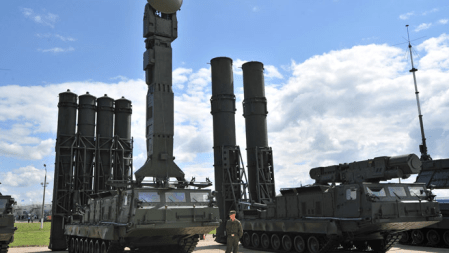
Moreover, since 2001, the US has spent more than a trillion dollars on its failed wars in the Middle East. That investment came in lieu of spending on weapons development. Today Russia’s S-400 anti-aircraft missiles in Syria reportedly neutralize the US’s air force.

US naval craft in the Bab al-Mandab have little means to defend themselves against missile strikes.

The US’s trillion-dollar investment in the F-35 fighter jet has tethered its air wings to a plane that has yet to prove its capabilities, and may never live up to expectations.

Israel is justifiably worried about the implications of Obama’s intention to harm it at the UN.

But the harm Israel will absorb at the UN is nothing in comparison to the long-term damage that Obama’s embrace of the Iraq Study Group’s disastrous strategic framework has and will continue to cause Israel, the US and the entire Middle East.
US Tomahawks destroy Iran’s radar bases in Yemen

October 13, 2016

US Tomahawks destroy Iran’s radar bases in Yemen, DEBKAfile, October 13, 2016

uss_mason_fires__9-10-16_an_sm-2-1

Tomahawk cruise missiles launched by US Navy destroyer USS Nitze early Thursday, Oct. 13, destroyed three Iranian-Yemeni coastal radar stations, after C-802 anti-ship missiles supplied by Iran to Yemeni Houthi rebels were fired at US naval vessels off the Yemeni coast. The stations were built and  operated  by Iran’s Revolutionary Guards (IRGC) for their Yemeni proxies to back up a threat to blockade the Red Sea.

From Oct. 9, the new missiles four times targeted the US flotilla shortly after it arrived to patrol the Red Sea and the Bab al-Mandeb Strait. Neither the US nor Iran has acknowledged their mounting confrontation over control of these strategic waters, which Tehran is waging through its Yemeni proxy.

DEBKAfile was first to disclose this confrontation in a special report Wednesday. (see below)

Iran’s Guards are repeating the mode of operation they employed a decade ago at another Middle East flashpoint. On July 14, 2006, Hizballah used an earlier version of the C-802 to attack and cripple the Israeli Hanit missile ship on the day this Iranian Lebanese proxy launched the Second Lebanese War against Israel. Rev Guards seized control of Lebanese shore radar station to guide their aim.

A highly advanced radar installation is required for the use of the C-802. Two radar stations set up outside Yemen’s two principal Red Sea ports, Mokha and Hudaydah earlier this month were operated by Rev. Guards missile and radar teams until they were destroyed Thursday, DEBKAfile’s military sources report. The third station was added for triangulation. The destruction of all three by a US Tomahawk has knocked out the Houthis’ ability to use C-802 missiles and Iran’s threat to blockade the Red Sea.

To drive this lesson home, the US Pentagon issued the following statement:

“Destroying these radar sites will degrade their ability to track and target ships in the future. These radars were active during previous attacks and attempted attacks on ships in the Red Sea, including last week’s attack on the USA-flagged vessel “Swift-2”, and during attempted attacks on USS Mason and other ships as recently as yesterday.

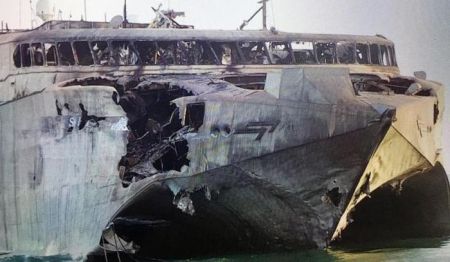
The official was referring to the United Arab Emirates US-flagged transport ship that was badly damaged last week in the Bab al-Mandeb strait by a Houthi missile..

DEBKAfile reported earlier:

Contrary to Tehran’s assurance to Washington in August that Iranian arms supplies to Yemeni Houthi rebels had been suspended, the rebels took delivery last week of the largest consignment of Iranian weapons to date.

According to DEBKAfile’s military sources, the shipment included highly sophisticated Scud D surface-to-surface missiles with a range of 800km; and C-802 anti-ship missiles (an upgraded version of the Chinese YJ-8 NATO-named CSS-N-8 and renamed by Iran Saccade).

They came with Iranian Revolutionary Guards officers and radar systems to fine-tune the targeting of these missiles by Iran’s Yemeni proxies.

The Scuds were given to the Houthi forces fighting in northern Yemen on the Saudi border, while the C-802s were delivered to the Houthis’ Ansar Allah faction, which is under direct Iranian Rev Guards command.

The missiles were posted at special launch bases constructed by Iran outside Yemen’s two principal Red Sea ports of Mokha and Hudaydah.

Since no more than 62km of Red Sea water divides the Saudi and African coasts, the Iranian missiles are well able to block shipping and tanker traffic plying to and from the Gulf of Suez and the Persian Gulf. Therefore, the threat of blockade hangs imminently over one-third of Saudi and Gulf Emirate oil exports.

The same threat hangs over Israeli civilian and naval shipping from its southern port of Eilat through the Gulf of Aden and out to the Indian Ocean.

One of the most troubling aspects of this pivotal new menace to an international waterway was that US, Saudi, Egyptian and Israeli intelligence agencies missed the huge consignment of Iranian missiles as it headed towards Yemen. Neither did they pick up on the construction by Iranian military engineers of three ballistic missile bases – one facing Saudi Arabia and two Red Sea traffic.

Tehran’s Yemeni proxies moreover landed large-scale military strength on Perim island in the mouth of the Bab al-Mandeb strait, the chokepoint for ingress and egress from the Red Sea.

Since the strait is just 20km wide, control of this island empowers this force to regulate shipping movements through this strategic strait.
Tehran wasted no time after all its assets were in place to begin using them:

1. On Oct. 1, Iran’s Houthi surrogates launched C-8-1 missiles against a United Arab Emirates transport HSV-2 Swift logistics catamaran as it was about to pass through the strait. The ship, on lease from the US Navy, was badly damaged. No information was released about casualties.

uae_hsv-2_1-1-16-1

DEBKAfile’s military and intelligence sources discerned that the aim of this attack was to choke off the movements of UAE warships from the southern Yemeni port of Aden, where large Emirate and Saudi forces are concentrated, to the Eritrean port of Assab, where the UAE has established a large naval base.

This attack did finally evoke a US response. The guided missile destroyers, USS Mason and USS Nitze, were dispatched to the Red Sea, along with the USS Ponceafloat forward staging base, to patrol the strait opposite the Yemeni coast

2. This did not deter Tehran or its Yemeni pawns: On Oct. 9, they fired an additional barrage of C-802 at the American flotilla, which according to a US spokesman, missed aim.

The Mason hit back with two Standard Missile-2s and a single Enhanced Sea Sparrow Missile.

There has been no official word about whether these weapons destroyed a Yemeni launching site. But the event itself was a landmark as the first direct Iranian-Houthi attack of its kind on an American naval vessel.

3. That same day, the Houthis fired Scud-D missiles at the Saudi town of Ta’if, 700 km from the Yemeni border and only 70km from the Muslim shrine city Mecca. This was meant as a direct assault on the Saudi royal house and its claim to legitimacy, by virtue of its role as Guardian of the Holy Places of Islam.

In America’s heated presidential campaign, the Democratic contender Hillary Clinton boasts repeatedly that as Secretary of State she helped “put the lid on Iran’s nuclear program without firing a single shot.”

That is factually true. America did not fire a single shot. Iran did the shooting and still does, constantly upgrading its arsenal with sophisticated ballistic missiles.

Miami: Three Hizballah operatives busted for laundering $500,000 of cocaine money for Colombian cartel

October 13, 2016

Miami: Three Hizballah operatives busted for laundering $500,000 of cocaine money for Colombian cartel, Jihad Watch,

(Please see also, Venezuela, Iran, USA and Narco-Terrorism. — DM

Hizballah is a wholly owned and operated subsidiary of the Islamic Republic of Iran. Iran has repeatedly declared its intention to destroy the United States, as you can read about in detail in my book The Complete Infidel’s Guide to Iran (Regnery). Hizballah working with the drug cartel kills two birds with one stone: drugs weaken and destroy Americans, and sap American resources in largely futile anti-drug efforts, and the cash Hizballah earns in working with the drug cartel goes for more jihad against the U.S.

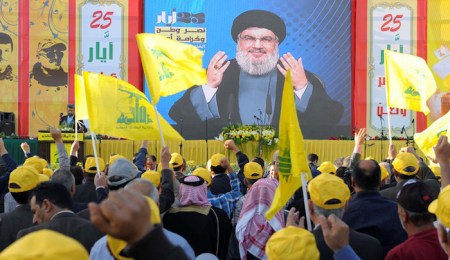
People watch Lebanon's Hezbollah leader Sayyed Hassan Nasrallah as he appears on a screen during a live broadcast to speak to his supporters at an event marking Resistance and Liberation Day, in Bekaa valley May 25, 2016. The event is to commemorate the 16th anniversary of Israel's withdrawal from southern Lebanon. REUTERS/Hassan Abdallah - RTSFWSN

People watch Lebanon’s Hezbollah leader Sayyed Hassan Nasrallah as he appears on a screen during a live broadcast to speak to his supporters at an event marking Resistance and Liberation Day, in Bekaa valley May 25, 2016. The event is to commemorate the 16th anniversary of Israel’s withdrawal from southern Lebanon. REUTERS/Hassan Abdallah – RTSFWSN

“State: Hezbollah-linked group laundered drug money through Miami banks,” by David Ovalle, Miami Herald, October 11, 2016:

Three men suspected of laundering cocaine money for the Colombian cartel have been busted after agents say they illegally moved $500,000 into Miami banks through a series of complicated financial transactions stretching from Australia to Europe.

That’s not uncommon in Miami, but the trio’s background is: They are suspected associates of the Middle Eastern terror group Hezbollah.

The main player is Mohammad Ahmad Ammar, 31, who was living in Medellín, Colombia. He was quietly booked into a Miami-Dade jail last week to face state felony money laundering charges in a case that underscores increased law-enforcement scrutiny on the role of Middle Eastern terror groups who use financial networks in Latin America to earn untold millions off drug profits.

Along with Ammar, two other Hezbollah associates are facing charges charges in the same case. One of them is in custody in Paris, while the other is on the lam, possibly in Lebanon or Nigeria.

The DEA investigated the case along with the the South Florida Money-Laundering Strike Force, a group of federal and state investigators that recently helped bust 22 people suspected in a large run connected to Mexican kingpin Joaquín “El Chapo” Guzmán.

“Drug dealers, potential terrorists and money launderers should all get the message that Miami-Dade County is not the place to do your dirty business,” Miami-Dade State Attorney Katherine Fernandez Rundle said in a statement.

The involvement of radical Islamic terrorist groups in Latin American is not new but has increased in recent years, according to federal law enforcement and security experts.

In November 2012, a congressional report on border security noted that Latin America has “become a money laundering and major fundraising center” for Hezbollah, the Shiite Muslim group classified as a terrorist organization by the U.S. government. The group, based in Lebanon, has been a key ally of Syrian dictator Bashar Assad in the bloody war that has decimated the country for the past five years.

“The notion of terrorist groups, especially Islamists using Latin America as place for money laundering, drug trafficking and other nefarious trades — it’s been known for some time now,” Jerry Haar, a Latin America expert at Florida International University, said in an interview.

In February, the U.S. Drug Enforcement Administration announced a “significant enforcement activity” against people connected with Hezbollah, The DEA’s efforts in “Operation Cassandra” came after the U.S. Department of Treasury announced sanctions against Hezbollah’s financiers, whom they the believe are capable of earning $400 million a year from drug trafficking and money laundering.

Exactly how much of money generated from laundering drug money is used directly to fund terror attacks is unknown. Many of those business associates such as Ammar “are more concerned with generating cash than religious or political doctrine” — though they readily send money back to their handlers in the Middle East, according to an arrest warrant.

Hezbollah-related arrests stemming from Latin American have popped up before in South Florida.

In 2008, a Lebanese man named Chekri Harb was arrested and convicted as part of a large-scale Colombian cocaine ring. U.S. authorities did not name Hezbollah in charging documents, but Colombian security officials described him as having links to the group.

Federal agents in 2010 arrested three South Florida businessmen accused of exporting video games and other electronic products to a shopping mall in Paraguay that allegedly served as a front to Hezbollah. They wound up being convicted of non-terrorism-related charges.

The lawless area at the borders of Paraguay, Brazil and Argentina has long been identified by the U.S. as a hotspot for money launderers who send their money back to the Middle East.

The latest Miami case was a spinoff from the DEA investigation into Colombian cocaine operations that netted dozens of trafficking and money-laundering arrests. In custody in Miami is Ammar, described in court documents as a Hezbollah associate whose job was to launder money for the Colombian cocaine operation known as La Oficina, or The Office, an off-shoot of the notorious Medellín cartel.

He was known to launder money through Holland, Spain, the United Kingdom, Australia and Africa, according to an arrest warrant. Ammar is charged with eight felonies, including money laundering and conspiracy to launder money; court records do not list a defense attorney.

According to court documents, his father is a well-connected Hezbollah associate living in Los Angeles, where the younger Ammar was arrested last month.

Also facing charges is Ghassan Diab, another purported Hezbollah associate based in Nigeria. According to court documents, Diab is related to a “high-ranking member of Hezbollah who has access to numerous international bank accounts.” He remains on the loose, possibly in Nigeria or Lebanon.

The third man facing charges is Hassan Mohsen Mansour, another Hezbollah associate with dual Lebanese and Canadian citizenship. He is in custody in Paris, and is facing a separate but similar federal money-laundering prosecution in South Florida.

The 42-page arrest warrant reads like a plot out of a international spy thriller, detailing a complicated web of encrypted communications between players in far-flung countries — some of them secretly working as informants — and murky financial transactions on six different continents.

A confidential source first tipped of Miami DEA agents to Ammar in early 2014, introducing him a second confidential informant who secretly recorded their meetings.

The second informant eventually asked Ammar to help him launder $250,000 worth of Australian dollars that was netted from cocaine sales. The task: Move the money to banks in Miami, where it could be moved later to Colombia or used by Colombian traffickers in South Florida.

Ammar was not aware, however, that the money was actually DEA cash and the Miami accounts were set up by the feds.

Using encrypted communications, Ammar enlisted the help of Mansour in Paris, who contacted a source in Australia (who by coincidence, happened to be an informant for the police there) to pick up the cash.

The money was deposited into an account in Dubai in the United Arab Emirates — where the anything-goes banking system remains out of reach of U.S. authorities. It was then then broken up and moved through a sham company called Al Haitham Exhibition and Conference Organizers, which purports to organize events but authorities believe is simply a front for money laundering.

From there, the money was cashed out and disappeared, according to an arrest warrant by DEA agent Kenneth Martin and state prosecutor Jared Nixon.

Back in Miami, the bank accounts set up by the DEA soon began receiving the money in chunks from obscure companies with names like “Tropical Trading” and “Khofo International.” To make them look like legitimate business, phony invoices were sent by Diab for nebulous goods or “payment for shipment.”

After the first deal went through successfully, Ammar soon admitted to the DEA informant that he was working with La Oficina, the chief cartel in Medellin, the warrant said.

In September 2014, another deal to launder $250,000 was struck. The Australian cash was sent to the events company in Dubai, with a note that it was for the purchase of a four-carat diamond ring head for Majorca, Spain. Through more bogus companies, some of the money was eventually transferred into the DEA’s Miami bank accounts; one transaction was disguised as payment for 50-kilogram bags of white rice.

Throughout the undercover operation, Ammar made admissions of interest to investigators, according to the warrant, including that he knew two brothers who worked for Avianca airlines who could smuggle in cocaine to Miami.

He also boasted that his family was well connected with Hezbollah, and inquired if the informant would be interested in helping smuggle 150 kilograms of cocaine from Costa Rica to the Netherlands.

Which Nation is (Still) the Number One Sponsor of Terrorism?

October 3, 2016

Which Nation is (Still) the Number One Sponsor of Terrorism? Gatestone InstitutePeter Huessy, October 3, 2016

The June State Department report also lists 58 “Foreign Terrorist Organizations,” of which over a dozen are allied with Iran. One Iranian Al Qaeda agent was specifically sanctioned by the US Treasury for distributing cash to the same al-Nusra Front the Iranian Foreign Minister complains is a terrorist organization.

Even more chilling has been Iran’s joint missile and technology cooperation with North Korea, making the potential use of weapons of mass destruction against the US a growing possibility.

On September 14, the Iranian Foreign Minister wrote in the New York Times that, “coordinated action at the United Nations to cut off the funding for ideologies of hate and extremism” is needed along with “a willingness from the international community to investigate the channels that supply the cash and the arms” to terrorists. He concluded with an appeal to “join hands with the rest of the community of nations to eliminate the scourge of terrorism and violence that threatens us all.”

Given that in 2015 alone there were some 11,774 terrorist attacks in 92 countries, killing 28,300 people, one can agree that such action is needed. The irony, of course, is that the US Department of State released its annual report in June on state sponsors of terrorism, and Iran was the gold medalist for the world’s number one terrorist nation — an honor it has held since 1984. Only two other countries were listed as state sponsors of terror: Syria and Sudan.

Having Iran’s Foreign Minister call for an end to terrorism is like having Bonnie and Clyde call for law and order.

The report makes clear, along with other available evidence, that much of the terrorism in the world is Iran’s handiwork — especially the terrorism directed at America.

The report emphasized that Iran “remained the foremost state sponsor of terrorism in 2015, providing a range of support, including financial, training, and equipment, to [terror] groups around the world.” Iran provided arms and cash to terrorist groups and to nearly 30 Shia terrorist militias in Lebanon, Syria, Iraq and Afghanistan, especially Hezbollah, as well as Hamas, Palestinian Islamic Jihad, Houthi rebels in Yemen, and Shia militias in Bahrain.

On September 13, 2015, the US Central Command officially reported that Iran is specifically responsible for killing at least 500 American soldiers through the use of Improvised Explosive Devices (IEDs) in Iraq and Afghanistan.

And the current defense minister in Iran, appointed by President Rouhani, orchestrated the bombing of the Marine barracks in Lebanon in 1983 that killed 241 American soldiers.

Overall, the State Department report lists 13 “terrorist safe havens” around the world where “terrorists are able to organize, plan, raise funds, communicate, recruit, train, transit and operate.” These safe havens include remote areas in Southeast Asia, the Middle East and South America, virtually all of which have seen terrorist related activity by Iran and its IRGC. In just the Americas, this includes, says the Clarion Project, intelligence and terrorist networks in Argentina, Brazil, Uruguay, Chile, Columbia, Guyana, Trinidad and Tobago, and Suriname.

The State Department report also lists 58 “Foreign Terrorist Organizations,” of which over a dozen are allied with Iran. One Iranian al-Qaeda agent was specifically sanctioned by the US Treasury for distributing cash to the same al-Nusra Front the Iranian Foreign Minister complains is a terrorist organization.

1323-2The current defense minister in Iran, appointed by President Hassan Rouhani (left), orchestrated the bombing of the Marine barracks in Lebanon in 1983 that killed 241 American soldiers. Foreign Minister Javad Zarif (right) complains the al-Nusra Front is a terrorist organization, even as an Iranian al-Qaeda agent was specifically sanctioned by the US Treasury for distributing cash to the organization.

Iran has evidently harbored senior Al Qaeda operatives since 9/11, including facilitating the flow of fighters and funds to al-Qaeda through Iran — a kind of jihadi pipeline. In the mid-1990s, reported the Clarion Project, Iran negotiated an agreement with Osama Bin Laden to allow al-Qaeda terrorists to freely transit Iran.

And, of course, Tehran’s senior leadership financed and facilitated, along with Hezbollah, the training of the 9/11 hijackers that killed nearly three thousand people in New York, Washington and Pennsylvania. According to a December 2011 decision by Judge George B. Daniels “Iran and Hezbollah materially and directly supported Al Qaeda in the September 11, 2001 attacks.”

But 9/11 was not Iran’s first terror attack against the United States. The Iranian government also financed the attack on the Pan Am flight that blew up over Scotland in December 1988, and was also responsible for the 1996 terror attacks against Americans at Khobar Towers in Saudi Arabia, the 1998 bombings of the American embassies in Kenya and Tanzania and the 1983 bombings of our Marine barracks and embassy in Lebanon.

A number of American courts, upon hearing the evidence of Iranian government support for terrorism, found Iran guilty of terrorist attacks against the United States and its citizens, culminating in at least $56 billion in damages, which included being found guilty complicity in the 9/11 attacks.

Even more chilling has been Iran’s joint missile and technology cooperation with North Korea, making the potential use of weapons of mass destruction against the US a growing possibility.

If any UN action is taken to stop terrorism, it should start with shutting down the number one source of state-sponsored terrorism in the world — the Islamic Republic of Iran.