The nuclear deal reached with Iran on Tuesday is clouded by uncertainty about whether the Iranian regime will live up to its relatively weak commitments. One outcome is almost certain, however: Israel will launch a pre-emptive strike against Iran, hoping to weaken the regime and stop, or slow, its nuclear program.
Israel will attack–possibly by year’s end–because there is no other way to disrupt Iran’s advance to regional hegemony, which will become unstoppable once the deal’s provisions–especially the non-nuclear provisions–begin to take effect.
Despite what the Obama administration and its media supporters are saying, there is almost no doubt that the Iran deal, should it survive Congress, will enable Iran to become a nuclear power.
President Barack Obama himself admitted as much in April, when he defended the provisional deal signed in Lausanne by admitting it allowed Iran to reach “breakout” shortly after the ten-year (now eight-year) expiration date. The only question is whether Iran will move that date forward and risk the meager diplomatic consequences of breaking the deal.
There are Israeli analysts–a minority–who believe that Israel can live in the shadow of a nuclear-armed Iran, at least for a while. After all, Israel has developed a lethal “second-strike” capacity, in the form of nuclear missiles aboard Dolphin-class submarines programmed to target Iran. That leaves the Iranian regime to weigh the odds of surviving an Israeli counterattack versus the chances of causing the end of the world as they know it. From a fanatical religious perspective, it is a win-win scenario–but cooler, or less pious, heads may prevail.
The problem is that the Iran deal goes so much further than the nuclear issue alone. The Iranians shrewdly bargained for a host of late concessions: an end to the international arms embargo, the lifting of a ban on ballistic missile technology, and an accelerated schedule of sanctions relief that will pour over $100 billion into depleted Iranian coffers. The regime knew that Obama would not walk away–that he had committed his political career to a deal, and he was already dismissing all other alternatives, severely undermining his own leverage.
Israel just might find a way to live with a nuclear Iran, but it cannot live with a nuclear Iran and an array of turbo-charged Iranian proxies on its borders.
Iran has already renewed its support for Palestinian terror groups in Gaza, and the U.S. has quietly allowed Iranian-backed Hezbollah to regroup in Lebanon, even as it has been weakened by losses in the Syrian civil war. Flush with cash, armed with advanced new weapons, and perhaps equipped with nuclear contaminants, these groups will pose an ever-greater threat to Israel’s security–and soon.
That is why the alternative that Israeli Prime Minister Benjamin Netanyahu presented to Congress–and he did present an alternative to the present deal, though Obama pretended not to notice–included three provisions: “first, stop its aggression against its neighbors in the Middle East; second, stop supporting terrorism around the world; and third, stop threatening to annihilate my country, Israel–the one and only Jewish state.” None of those referred directly to the Iranian nuclear program. Obama ignored Netanyahu’s suggestions and forged ahead.
An Israeli strike might not stop the Iranian nuclear program. But it could stall that program, and create a renewed sense of vulnerability around the regime, which was near collapse as recently as 2009. Israel could also make Iran pay a direct cost for arming Hezbollah, Hamas, and other terror groups–a cost historically borne by the civilians of southern Lebanon or Gaza. It could project a conventional deterrent that would affect Iran here and now, as opposed to a nuclear deterrent whose effect might only be felt after an atomic exchange (i.e. not at all).
For Israel, the costs of such an attack on Iran–even a successful one–could be severe. It would be condemned and isolated internationally. It might suffer thousands of rocket attacks from Lebanon and Gaza. It may lose thousands of soldiers and civilians in a ground war.
Obviously the consequences will be less damaging–or more bearable–if the pre-emptive strike is successful. The reason Israelis are willing to take the risk at all is twofold. First, they have done it before (Iraq 1981; Syria 2007). Second, the alternative–thanks to the Iran deal–looks far worse.
The Obama administration has done all it can to prevent an Israeli pre-emptive strike, from leaking Israeli attack scenarios to denying Israel air space over Iraq. As a result, the only realistic bombing plans–whether Israel targets Iran’s nuclear and political installations directly, or detonates an electromagnetic pulse (EMP) over the country–involve a Doolittle Raid-style attack from which Israel’s pilots will not expect to return, or a landing in Saudi Arabia. The latter was once a non-starter, but–ironically–Obama’s overtures to Iran have made it possible.
The Saudis are expected to respond to the Iran deal by seeking nuclear weapons of their own. But the monarchy could also strike an alliance with Israel–perhaps even a grand bargain.
The Saudis could give Israel landing rights, logistical support, and intelligence. In return, Israel could accept Saudi Arabia’s proposal for a Palestinian state roughly along the “1967 lines”–plus Saudi control of Jerusalem’s Muslim holy sites, which would cement the royal family’s legitimacy. (Ironically, Obama, by provoking war, would enable Arab-Israeli peace.)
The clock is ticking, however. Before the Iran deal, it was thought that Israel could only carry out a pre-emptive strike in the time period before Iran actually became a nuclear power. Now, the deadlines are even shorter, and more complex.
Israel would need to attack before Russian S-300 surface-to-air missiles, already sold to Iran, can be delivered and activated. It would also need to attack while Hezbollah and Hamas are still weak, war-weary and cash-strapped–i.e. before sanctions relief delivers billions to Iran’s regional war and terror efforts.
Israel must also be wary of attacking too soon. It will not attack in the next ten days, for example, because they coincide with a religious period of mourning for historic defeats. It would also make little sense for Israel to attack while Congress is debating the Iran deal.
But Israel will attack before it loses the option. It will do so because the purpose of Israeli statehood is to enable Jews to defend themselves, and not rely on the help or mercy of others.
Obama wants to build a new legacy, but Netanyahu has inherited an old legacy–one he cannot ignore.
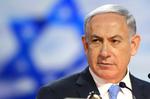
Israeli Prime Minister Binyamin Netanyahu bitterly accused the “leading international powers of gambling our collective future on a deal with the foremost sponsor of international terrorism” – roundly condemning all six world powers who signed the nuclear deal with Iran in Vienna Tuesday, July 14.
President Barack Obama topped the list. Netanyahu pointed out that the president had determined on a deal with Iran at any price before he took office, which is true. Therefore, it had nothing to do with the poor relations between himself and the US President, he said in answer to critics. It was now time for Israeli leaders to set aside differences and pull together, he said. Opposition leader, the Zionist Union’s Yitzhak Herzog, agreed and said he was enlisting for the necessary effort on behalf of Israeli security. Tuesday night he received an update on the situation from the prime minister.
The special security cabinet meeting, called to discuss the ramifications of the nuclear deal, hours after it was signed, unanimously rejected it and declared “this deal does not commit Israel.”
Unfortunately, Israel was never asked for its commitment, any more than the other Middle East powers directly affected by it. The cabinet statement was therefore no more than a meaningless expression of futility, a sensation shared equally by Saudi King Salman and Egyptian President Abdel-Fatteh El-Sisi, in the face of the iron wall Obama and Secretary of State John Kerry have built for Iran in the region.
Both unceremoniously ditched Israel and its Arab neighbors in order to join hands with Iran. By this reshuffle of allies, Washington has created a new geopolitical reality in the region at the expense of its equilibrium.
The US Congress has 60 days to review the nuclear accord and reach a decision. But if Netanyahu had had any hopes of swinging the Senate around to voting down the veto President Obama promised to impose to mullify its rejection, that hope swiftly vanished in thin air. Leading presidential contender Hillary Clinton announced that if she wins the 2016 election she would abide in full by the nuclear accord Obama signed with Iran. This announcement assured Obama of a Senate majority.
The dead end reached by Netanyahu on this issue also symbolizes the end of Israeli’s special standing in Washington as “America’s leading Middle East ally.”
Iran has stepped into this position. There is little point in Israel knocking on the White House door to renew the old understanding and sympathy, as advised by former prime minister Ehud Barak and others. It does not matter who sits in the prime minister’s office in Jerusalem, as matters stand now, he/she will find themselves on the wrong side of that door.
Defense Secretary Ashton Carter will visit Israel next week. But that is only an attempt to soften the blow.
This does not mean that the Obama administration will totally abandon Israel, only that it will no longer enjoy favored status compared with other Middle East nations. By ditching the Arab world, Obama equally dumped the Palestinian issue. This has some advantages for the Netanyahu government, but is not the end of the world for the Palestinians. They, like Arab governments, have the option of seeking an understanding with Tehran, whereas that door is shut tight against Israel.
In this situation, Israel’s quiet understandings with a number of Arab leaders directed at forming a bloc to counter the US-Iran alliance, have no immediate future. When the earth shakes in a major upheaval, each individual is out to save himself and has no time to look around for allies.
In some ways, the Netanyahu government may find relief in being released from the political and strategic constraints bound up in the relationship with the Obama administration, and find the freedom to be more pragmatic and independent in its policy-making.
After all, Israel still has the strongest army and the most vibrant economy in the Middle East. Its leaders must learn to use those huge assets wisely and independently of the Obama administration.
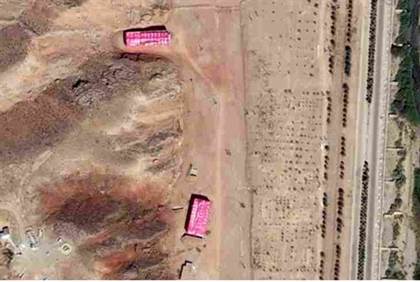
Suspicious activity at Parchin (illustration)Reuters
As experts got a chance to examine the details of the 159-page Iran nuclear deal signed Tuesday, they warned that it ignores various key aspects of the Islamic regime’s nuclear program, and that the lifting of arms sanctions may pave Iran’s path to nuclear-capable missiles.
A glaring omission is seen in the absolute lack of any reference to the highly covert Parchin military base located southeast of Tehran, which is suspected of being the center of Iran’s secret nuclear weapons program, according to the International Atomic Energy Agency (IAEA).
IAEA reports in November 2011 pointed to nuclear weapons development previously conducted at the site, and a 2012 IAEA report likewise confirmed explosives containment vessels were at the site and likely used to test nuclear detonations. Satellite photos have shown Iran has been modifying the site, possibly expanding the tests and covering up their existence.
Iran has repeatedly refused IAEA requests to inspect Parchin. IAEA chief Yukiya Amano announced on Tuesday that in addition to the nuclear deal, a “road map” agreement was sealed, by which Iran will disclose military aspects of its nuclear program by October 15.After this, Amano will write an assessment of Iran’s claimed disclosures by December 15 “with a view to closing the issue.”
Amano said the agreement would include a visit to Parchin, but it remains to be seen how much time Iran will have to prepare for such a visit and possibly hide evidence of nuclear tests; Iranian officials rejected last-minute reports that inspections would be allowed at all covert sites.
IAEA roadmap: putting the cart in front of the horse
Thomas Moore, an arms control specialist and staff member of the SenateForeign Relations Committee, told Washington Free Beacon that the IAEA “road map” should have taken place before the nuclear deal, and not after it.
“The IAEA’s resolution of the possible military dimensions of Iran’s nuclear program should precede the deal, not by months but by as much time as it takes to verify the absence of Iran’s (past military work), including the full historical picture of its program. And the deal does not do that,” said Moore.
Not only does the deal not directly address military aspects of Iran’s nuclear program, critics warn it contains several loopholes that will greatly limit its effectiveness in stopping Iran’s march to a nuclear weapon.
For one, the agreement calls for Iran’s “voluntary” compliance with the terms of the deal in several places, instead of implementing mandatory steps Iran must fulfill. It also outlines a convoluted bureaucratic process to confront Iranian violations, reports Washington Free Beacon.
What’s more, a section of the deal may allow Iran to avoid revealing its past nuclear weapons testing, stating that Iran “may propose to the IAEA alternative means of resolving the IAEA’s concerns that enable the IAEA to verify the absence of undeclared nuclear materials and activities or activities inconsistent with the JCPOA (Joint Comprehensive Plan of Action) at the location in question.”
The deal also includes removing a large number of sanctions, including those targeting Parchin Chemical Industries (PCI), which operates sites at the Parchin base and is thought to be highly involved in the covert nuclear weapons program.
“Iran can get its first bombs in weeks”
Aside from Parchin, experts were alarmed to see that the nuclear deal does not directly impose limits on or even reference the Russian-made Bushehr nuclear power plant, which they warn can produce enough plutonium for a large number of atomic weapons.
Henry Sokolski, director of the Nonproliferation Policy Education Center, told Washington Free Beacon that Bushehr’s exclusion from the deal was a mistake.
“That reactor can produce enough plutonium for dozens of bombs per year,” warned Sokolski. “Iran could remove the fuel from the reactor and use a small, cheap reprocessing plant to extract plutonium, and get its first bombs in a matter of weeks.”
Regarding plutonium, after 15 years the deal stipulates that Iran will be able to “engage in producing or acquiring plutonium or uranium metals or their alloys,” and likewise conduct research and development “on plutonium or uranium (or their alloys) metallurgy, or casting, forming, or machining plutonium or uranium metal.”
At the Natanz nuclear facility, a limitation on 5,060 centrifuges in 30 cascade units will cease in ten years, and after 15 years Iran will be able to enrich uranium over 3.67% – a 20% enrichment is needed to build nuclear weapons. In eight years, Iran can start producing up to 200 partial advanced centrifuges each year, and two years later it can construct complete advanced centrifuges.
Sokolski warned that “ultimately, this is a gamble on Iran not wanting to make bombs. If they really don’t, the deal will work. If they do, the fine print won’t stop them.”
Nuclear-capable missile sanctions lifted
In addition to the details on Iran’s nuclear program, experts warn there are pitfalls in how the deal approaches – or ignores – Iran’s nuclear-capable missile program. Notably the deal avoids addressing Iran’s ICBM (intercontinental ballistic missile) program.
It also removes sanctions against Iran’s Al Ghadir missile command based in Tehran, which has been leading the development of missiles capable of delivering a nuclear warhead, and is thought to hold operational control of Iran’s missiles.
A UN conventional arms embargo on Iran will end in five years due to the deal, and sanctions against selling ballistic missiles to Iran will likewise expire in eight years. However, it is possible that China and Russia will covertly sell arms to Iran before those dates, as they have done in the past.
Fred Fleitz, who has formerly served as a CIA analyst, State Department arms control official, and House Intelligence Committee staff member, told Washington Free Beacon that these facets of the deal will allow Iran to arm itself freely.
“Language on lifting conventional arms and missile embargoes is very weak,” stated Fleitz.
“The IAEA simply has to certify that Iran isn’t currently engaged in nuclear weapons work to lift these embargoes early. The IAEA will be hard pressed to find evidence of this and will probably issue a report allowing these embargoes to be lifted early,” he concluded.
(Here’s a video of Mr. Rhodes explaining that we never sought anywhere, anytime inspections:
Unfortunately, as I observed here, the November “Joint plan of action” did not contemplate investigation of Iran’s military sites, possible military uses or development of nukes, other than by limiting uranium enrichment. — DM)
Throughout the negotiation process, Iran’s government has been more forthright and more reliable in characterizing the parties’ interim agreements than the Obama administration. So it is worth noting what the Iranians say the deal entails. This is from FARS, Iran’s news agency:
Iran’s President Hassan Rouhani said his country has achieved all its four goals in the agreement that his foreign minister Zarif signed with the six world powers in Vienna on Tuesday.
President Rouhani said his nation started talks with the world powers in a bid to remove all sanctions while maintaining its nuclear program and nuclear progress as two main goals.
All sanctions, including the financial, banking, energy, insurance, transportation, precious metals and even arms and proliferation sanctions will be, not suspended, but terminated according to the Tuesday agreement as soon as the deal comes into force, he said, adding that Iran will only be placed under certain limited arms deal restrictions for five years.
Meantime, Iran will inject gas into its highly advanced IR8 centrifuge machines, continue its nuclear research and development, and keep its Arak Heavy Water Facility and Fordo and Natanz enrichment plants under the agreement, he said, elaborating on Iran’s gains.
Another goal, Rouhani said, was taking Iran off Chapter Seven of the UN Charter, “and we did it”.
More details on the deal:
The agreement, the Joint Comprehensive Plan of Action (JCPOA), will be presented to the United Nations Security Council (UNSC), which will adopt a resolution in seven to 10 days making the JCPOA an official document.
Based on the agreement, which has been concluded with due regard for Iran’s red lines, the world powers recognize Iran’s civilian nuclear program, including the country’s right to the complete nuclear cycle.
The UNSC sanctions against the Islamic Republic, including all economic and financial bans, will be lifted at once under a mutually agreed framework and through a new UN resolution.
None of the Iranian nuclear facilities will be dismantled or decomissioned.
Furthermore, nuclear research and development activities on all types of centrifuges, including advanced IR-6 and IR-8 machines, will continue.
The nuclear-related economic and financial restrictions imposed by the United States and the European Union (EU) targeting the Iranian banking, financial, oil, gas, petrochemical, trade, insurance and transport sectors will at once be annulled with the beginning of the implementation of the agreement.
The arms embargo imposed against the Islamic Republic will be annulled and replaced with certain restrictions, which themselves will be entirely removed after a period of five years.
Additionally, tens of billions of dollars in Iranian revenue frozen in foreign banks will be unblocked.
I have now read the agreement in its entirety–you, too, can read it here–and I think the Iranians’ description is accurate. I also agree with what Paul wrote earlier today.
Some aspects of the agreement are technical and can’t be well understood without knowledge of nuclear engineering or the history of various sanctions that have been imposed. But those details are immaterial. Loopholes could make the agreement slightly worse, but no technical interpretation can save it.
The mullahs may cheat on the agreement, or they may not. They may decide to walk away from the agreement at some point and openly develop nuclear weapons, or they may not. It makes very little difference. There are no undertakings in the agreement that go beyond 10 years (in most instances) or 15 years (in a few). The Ayatollah takes the long view: ten or fifteen years are nothing. In the meantime, what does Iran get?
First, and most important, it gets in excess of $100 billion in currently-frozen assets. This will happen in the near future, on or about the agreement’s Implementation Date. I think this prospect is what is making Iran’s leaders so jubilant. With that money, they can step up their support for allies in Syria, Yemen and Iraq, and their support for terrorism everywhere. (By way of perspective, the entire United States military budget for the current fiscal year is only $560 billion.) To the extent that they spend some of it at home, it will help cement their position domestically.
Second, the agreement grants Iran international legitimacy. Since the revolution of 1979 and the seizure of America’s embassy in Tehran, Iran has been treated as a rogue state. Under the agreement, that status comes to an end. Investment in Iran will be permitted and likely will flourish. Sanctions will be removed and Iran’s nuclear program will not only be tolerated, it will be explicitly recognized and to some degree supported by the international community. The agreement contemplates that upon implementation, “the Iranian nuclear programme will be treated in the same manner as that of any other non-nuclear-weapon state party to the NPT [non-proliferation treaty].” It is hard to overstate how important this legitimacy is to the regime.
The third benefit to Iran’s rulers is perhaps the most important, and is closely linked to the first two. The agreement guarantees that, at least for the foreseeable future, the mullahs will remain in power. Realistically, the only way Iran could be denied a nuclear arsenal in the long term is through regime change. Early in the Obama administration, that seemed like a plausible scenario, but the administration declined to aid, or even encourage, anti-regime forces when such support might have made a difference. Now, with the mullahs both flush with cash and blessed with international legitimacy, their grip on power is probably stronger than ever. Nuclear weapons will follow, sooner or later, at a time of the regime’s choosing. And in the meantime, Iran’s ability to make mischief in the Middle East and around the world (e.g., through its newfound alliance with Venezuela) has been greatly enhanced.
Obama isn’t Chamberlain. He doesn’t mean well. Kerry isn’t making honest mistakes. They negotiated ineptly with Iran because they are throwing the game. They meant for America to lose all along.
******************
The last time a feeble leader of a fading nation came bearing “Peace in our time,” a pugnacious controversial right-winger retorted, “You were given the choice between war and dishonor. You chose dishonor, and you will have war.” That right-winger went on to lead the United Kingdom against Hitler.
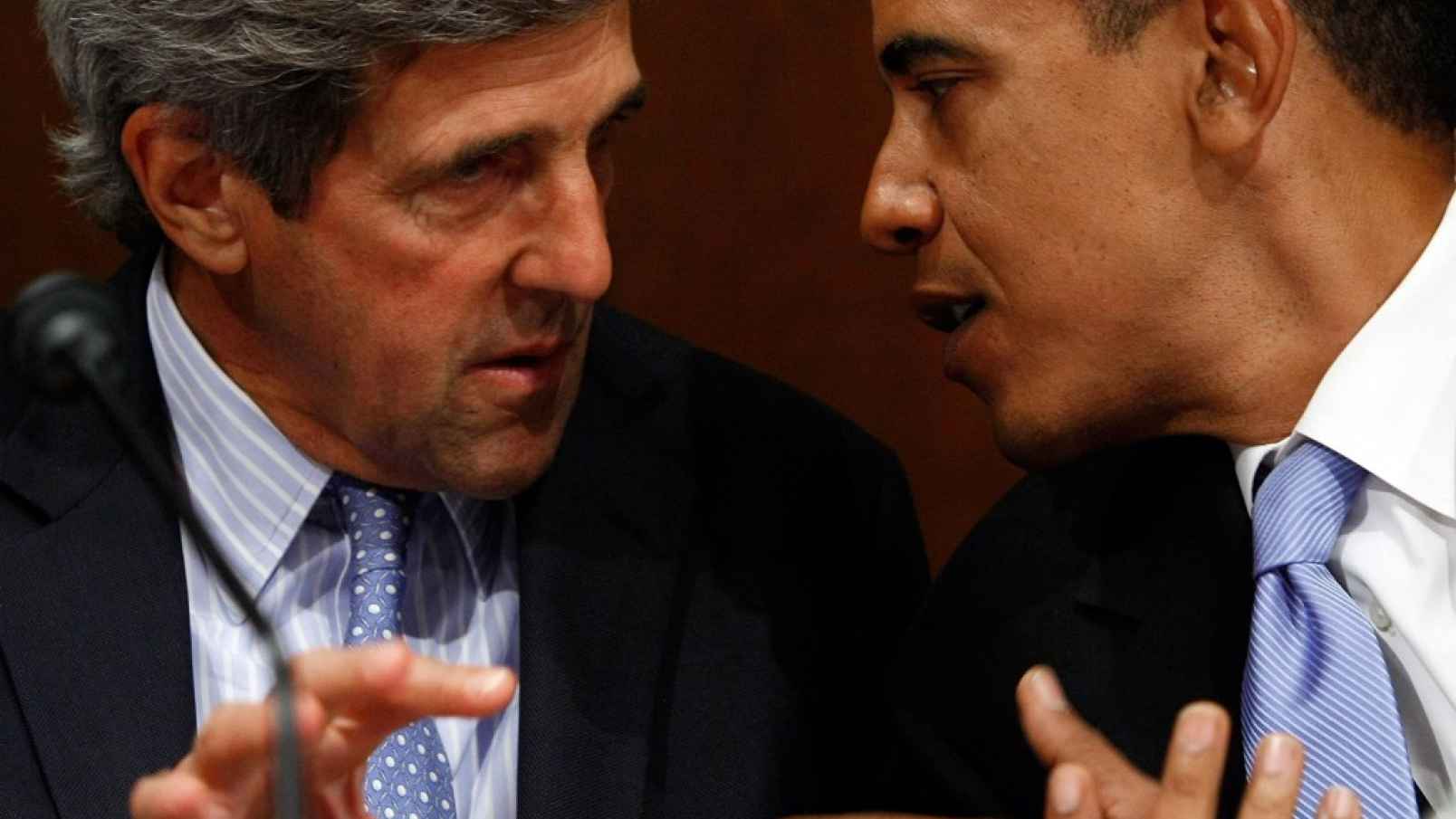
The latest worthless agreement with a murderous dictatorship is being brandished by John Kerry, a man who instinctively seeks out dishonor the way a pig roots for truffles.
John Kerry betrayed his uniform and his nation so many times that it became his career. He illegally met with the representatives of the North Vietnamese enemy in Paris and then next year headed to Washington, D.C. where he blasted the American soldiers being murdered by his new friends as rapists and murderers “reminiscent of Genghis Khan.”
Even before being elected, Kerry was already spewing Communist propaganda in the Senate.
Once in the Senate, Kerry flew to support the Sandinista Marxist killers in Nicaragua. Just as Iran’s leader calling for “Death to America” didn’t slow down Kerry, neither did the Sandinista cries of “Here or There, Yankees Will Die Everywhere.”
Kerry revolted even liberals with his gushing over Syria’s Assad. Now he’s playing the useful idiot for Assad’s bosses in Tehran.
For almost fifty years, John Kerry has been selling out American interests to the enemy. Iran is his biggest success. The dirty Iran nuke deal is the culmination of his life’s many treasons.
It turns America from an opponent of Iran’s expansionism, terrorism and nuclear weapons program into a key supporter. The international coalition built to stop Iran’s nukes will instead protect its program.
And none of this would have happened without Obama.
Obama began his rise by pandering to radical leftists on removing Saddam. He urged them to take on Egypt instead, and that’s what he did once in office, orchestrating the takeover of the Muslim Brotherhood in Egypt and across the region. The Muslim Brotherhood was overthrown by popular uprisings in Egypt and Tunisia, but Obama had preserved the Iranian regime when it was faced with the Green Revolution. Now Iran is his last best Islamist hope for stopping America in the Middle East.
Obama and Kerry had both voted against designating Iran’s IRGC terrorist ringleaders who were organizing the murder of American soldiers as a terrorist organization while in the Senate. Today they have turned our planes into the Air Force of the IRGC’s Shiite Islamist militias in Iraq.
Throughout the process they chanted, “No deal is better than a bad deal.” But their deal isn’t just bad. It’s treason.
Obama isn’t Chamberlain. He doesn’t mean well. Kerry isn’t making honest mistakes. They negotiated ineptly with Iran because they are throwing the game. They meant for America to lose all along.
When Obama negotiates with Republicans, he extracts maximum concessions for the barest minimum. Kerry did the same thing with Israel during the failed attempt at restarting peace negotiations with the PLO. That’s how they treat those they consider their enemies. This is how they treat their friends.
A bad deal wasn’t just better than no deal, it was better than a good deal.
Obama did not go into this to stop Iran from going nuclear. He did it to turn Iran into the axis of the Middle East. After his failures in the rest of the region, this is his final act of spite. With the fall of the Muslim Brotherhood and the decline of Islamists in Turkey, supporting Iran is his way of blocking the power of his successors in the White House to pursue a more pro-American foreign policy.
Obama made this deal to cripple American power in the Middle East.
Iran get to keep its nuclear facilities, its reactors, including the hidden underground fortified Fordow facility which Obama had repeatedly stated was, “inconsistent with a peaceful program.”
The deal gives Iran a “peaceful” nuclear program with an equally peaceful ballistic missile program. It puts into place a complicated inspection regime that can be blocked by Iran and its backers. It turns Iran into the new North Korea and the new Saddam Hussein, lavishing money on it while running future administrations through a cat and mouse game of proving violations by the terrorist regime.
And Obama made sure the Iran deal was written to make the proof as hard to obtain as possible.
The United States and other world powers will help to teach Iran how to thwart and detect threats to its nuclear program, according to the parameters of a deal reached Tuesday to rein in Iran’s contested nuclear program.
Under the terms of a deal that provides Iran billions of dollars in sanctions relief, Iran and global powers will cooperate to help teach Iran how to manage its nuclear infrastructure, which will largely remain in tact under the deal.
Senior Iranian officials, including the country’s president, celebrated the deal as a victory for the country. Iran’s state controlled media quoted President Hassan Rouhani as saying that the deal will “remove all sanctions while maintaining [Tehran’s] nuclear program and nuclear progress.”
In what is being viewed as a new development, European countries and potentially the United States agreed to “cooperate with Iran on the implementation of nuclear security guidelines and best practices,” according to a copy of the agreement furnished by both the Russians and Iranians.
This will include “training courses and workshops to strengthen Iran’s ability to prevent, protect and respond to nuclear security threats to nuclear facilities and systems as well as to enable effective and sustainable nuclear security and physical protection systems,” according to the text.
Additional “training and workshops” would work to “strengthen Iran’s ability to protect against, and respond to nuclear security threats, including sabotage, as well as to enable effective and sustainable nuclear security and physical protection systems,” the text states.
The language was viewed as disturbing by analysts and experts who said such cooperation could help protect Iran against efforts by the Israelis or other countries to sabotage the Islamic Republic’s nuclear program in the future.
“The United States and its partners have just become the international protectors of the Iranian nuclear program. Instead of rolling back the Iranian nuclear program, we’re now legally obligated to help the Iranians build it up and protect it,” said one Western source present in Vienna and who is apprised of the details of the deal.
In addition to teaching Iran how to protect its nuclear infrastructure, world powers pledge in the agreement to help Iran construct next-generation centrifuges—the machines that enrich uranium—at its once-secret nuclear site in Fordow, where Iran has been suspected of housing a weapons program.
Fordow is an underground and fortified military site that is largely immune from air strikes by those seeking to eradicate Iran’s nuclear infrastructure.
While Iran will not be permitted to enrich nuclear material with these centrifuges, the know-how gained from operating these advanced centrifuges could help it advance clandestine nuclear weapons work, experts say.
The Obama administration had once vowed that Iran would have to fully dismantle its centrifuge program. However, this demand was walked back as the Iranians demanded greater concessions over the past months.
“Now the international community will be actively sponsoring the development of Iranian nuclear technology,” Omri Ceren, an analyst from the Israel Project (TIP), wrote in an email to reporters. “And since the work will be overseen by a great power, it will be off-limits to the kind of sabotage that has kept the Iranian nuclear program in check until now.”
Meanwhile, Iranian President Rouhani celebrated the deal in a speech that detailed how the country received everything it was looking for from the United States.
This includes the full rollback on sanctions on Iran’s financial, energy, and banking sectors, as well as others, and the suspension of international resolutions banning the sale of arms to Tehran.
Iran will also move forward with work on its advanced centrifuges and also “continue its nuclear research and development,” according to Rouhani’s comments. “All our goals materialized under the deal,” Rouhani said, according to Fars.
Iran’s nuclear reactors in Arak—which could provide with a second pathway to a nuclear weapon—also will continue to operate under the deal. It will continue in conjunction with the nuclear enrichment plants located in Fordow and Natanz.
Rouhani went on to say that Iran “will scrutinize implementation of the agreement” to ensure that the United States and other world powers uphold their end of the bargain.
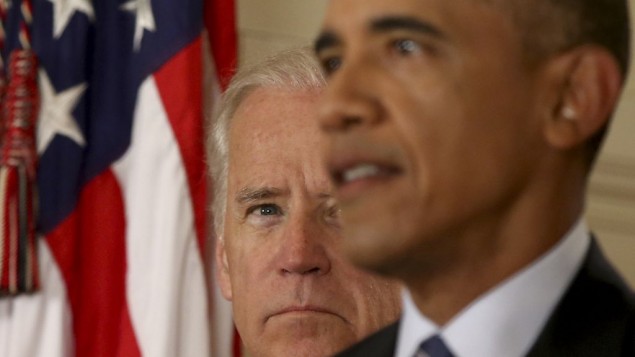
Vice President Joe Biden listens as President Barack Obama delivers remarks in the East Room of the White House in Washington, Tuesday, July 14, 2015, after an Iran nuclear deal is reached. (AP Photo/Andrew Harnik, Pool)
Because of this deal we will for the first time be in a position to verify all of these commitments. That means this deal is not built on trust. It is built on verification. Inspectors will have 24/7 access to Iran’s nuclear facilities. Iran will have access to Iran’s entire nuclear supply chain, its uranium mines and mills, its conversion facility and its centrifuge manufacturing and storage facilities.
Because of this deal, inspectors will also be able to access any suspicious location — put simply, the organization responsible for the inspections, the IAEA, will have access where necessary, when necessary. That arrangement is permanent. And the IAEA has also reached an agreement with Iran to get access that it needs to complete its investigation into the possible military dimensions of Iran’s past nuclear research.
********************
After two years of negotiations, the United States, together with our international partners, has achieved something that decades of animosity has not: a comprehensive long-term deal with Iran that will prevent it from obtaining a nuclear weapon.
This deal demonstrates that American diplomacy can bring about real and meaningful change, change that makes our country and the world safer and more secure.
This deal is also in line with a tradition of American leadership. It’s now more than 50 years since President Kennedy stood before the American people and said, “Let us never negotiate out of fear, but let us never fear to negotiate.” He was speaking then about the need for discussions between the United States and the Soviet Union, which led to efforts to restrict the spread of nuclear weapons.
In those days, the risk was a catastrophic nuclear war between two superpowers. In our time, the risk is that nuclear weapons will spread to more and more countries, particularly in the Middle East, the most volatile region in our world.
Today, because America negotiated from a position of strength and principle, we have stopped the spread of nuclear weapons in this region. Because of this deal, the international community will be able to verify that the Islamic Republic of Iran will not develop a nuclear weapon.
This deal meets every single one of the bottom lines that we established when we achieved a framework this spring. Every pathway to a nuclear weapon is cut off, and the inspection and transparency regime necessary to verify that objective will be put in place. Because of this deal, Iran will not produce the highly enriched uranium and weapons-grade plutonium that form the raw materials necessary for a nuclear bomb.
Because of this deal, Iran will remove two thirds of its installed centrifuges, the machines necessary to produce highly enriched uranium for a bomb and store them under constant international supervision. Iran will not use its advanced centrifuges to produce enriched uranium for the next decade. Iran will also get rid of 98 percent of its stockpile of enriched uranium.
To put that in perspective, Iran currently has a stockpile that could produce up to 10 nuclear weapons. Because of this deal that stockpile will be reduced to a fraction of what would be required for a single weapon. This stockpile limitation will last for 15 years.
Because of this deal, Iran will modify the core of its reactor in Arak so that it will not produce weapons grade plutonium and it has agreed to ship the spent fuel from the reactor out of the country for the lifetime of the reactor. For at least the next 15 years Iran will not build any new heavy water reactors.
Because of this deal we will for the first time be in a position to verify all of these commitments. That means this deal is not built on trust. It is built on verification. Inspectors will have 24/7 access to Iran’s nuclear facilities. Iran will have access to Iran’s entire nuclear supply chain, its uranium mines and mills, its conversion facility and its centrifuge manufacturing and storage facilities.
This ensures that Iran will not be able to divert materials from known facilities to covert ones. Some of these transparency measures will be in place for 25 years.
Because of this deal, inspectors will also be able to access any suspicious location — put simply, the organization responsible for the inspections, the IAEA, will have access where necessary, when necessary. That arrangement is permanent. And the IAEA has also reached an agreement with Iran to get access that it needs to complete its investigation into the possible military dimensions of Iran’s past nuclear research.
Finally Iran is permanently prohibited from pursuing a nuclear weapon under the Nuclear Nonproliferation Treaty, which provided the basis for the international community’s efforts to apply pressure on Iran.
As Iran takes steps to implement this deal, it will receive relief from the sanctions that we put in place because of Iran’s nuclear program, both America’s own sanctions and sanctions imposed by the United Nations Security Council.
This relief will be phased in. Iran must complete key nuclear steps before it begins to receive sanctions relief.
And over the course of the next decade, Iran must abide by the deal before additional sanctions are lifted, including five years for restrictions related to arms and eight years for restrictions related to ballistic missiles.
All of this will be memorialized and endorsed in a new United Nations Security Council resolution. And if Iran violates the deal, all of these sanctions will snap back into place. So there is a very clear incentive for Iran to follow through and there are very real consequences for a violation.
That’s the deal. It has the full backing of the international community. Congress will now have an opportunity to review the details and my administration stands ready to provide extensive briefings on how this will move forward.
As the American people and Congress review the deal it will be important to consider the alternative. Consider what happens in a world without this deal. Without this deal, there is no scenario where the world joins us in sanctioning Iran until it completely dismantles its nuclear program. Nothing we know about the Iranian government suggests that it would simply capitulate under that kind of pressure and the world would not support an effort to permanently sanction Iran into submission.
We put sanctions in place to get a diplomatic resolution and that is what we have done. Without this deal there would be no agreed-upon limitations for the Iranian nuclear program. Iran could produce, operate and test more and more centrifuges. Iran could fuel a reactor capable of producing plutonium for a bomb and we would not have any of the inspections that would allow us to detect a covert nuclear weapons program.
In other words, no deal means no lasting constraints on Iran’s nuclear program. Such a scenario would make it more likely that other countries in the region would feel compelled to pursue their own nuclear programs, threatening a nuclear arms race in the most volatile region of the world.
It would also present the United States with fewer and less effective options to prevent Iran from obtaining a nuclear weapon.
I have been president and commander in chief for over six years now. Time and again I have faced decisions about whether or not to use military force. It’s the greatest decision that any president has to make.
Many times, in multiple countries, I have decided to use force. And I will never hesitate to do so when it is in our national security interest. I strongly believe that our national security interest now depends upon preventing Iran from obtaining a nuclear weapon, which means that, without a diplomatic resolution, neither I nor a future U.S. president would face a decision about whether or not to allow Iran to obtain a nuclear weapon or whether to use our military to stop it.
Put simply, no deal means a greater chance of more war in the Middle East. Moreover, we give nothing up by testing whether or not this problem can be solved peacefully. If, in a worst-case scenario, Iran violates the deal, the same options that are available to me today will be available to any U.S. president in the future.
And I have no doubt that 10 or 15 years from now, the person who holds this office will be in a far stronger position with Iran further away from a weapon and with the inspections and transparency that allow us to monitor the Iranian program.
For this reason, I believe it would be irresponsible to walk away from this deal. But on such a tough issue, it is important that the American people and the representatives in Congress get a full opportunity to review the deal.
After all, the details matter. And we’ve had some of the finest nuclear scientists in the world working through those details. And we’re dealing with a country — Iran — that has been a sworn adversary of the United States for over 35 years.
So I welcome a robust debate in Congress on this issue and I welcome scrutiny of the details of this agreement. But I will remind Congress that you don’t make deals like this with your friends. We negotiated arms control agreements with the Soviet Union when that nation was committed to our destruction and those agreements ultimately made us safer.
I am confident that this deal will meet the national security interests of the United States and our allies. So I will veto any legislation that prevents the successful implementation of this deal. We do not have to accept an inevitable spiral into conflict. And we certainly shouldn’t seek it. And precisely because the stakes are so high this is not the time for politics or posturing. Tough talk from Washington does not solve problems. Hard-nosed diplomacy, leadership that has united the world’s major powers offers a more effective way to verify that Iran is not pursuing a nuclear weapon.
Now that doesn’t mean that this deal will resolve all of our differences with Iran. We share the concerns expressed by many of our friends in the Middle East, including Israel and the Gulf states, about Iran’s support for terrorism and its use of proxies to destabilize the region.
But that is precisely why we are taking this step, because an Iran armed with a nuclear weapon would be far more destabilizing and far more dangerous to our friends and to the world.
Meanwhile we will maintain our own sanctions related to Iran’s support for terrorism, its ballistic missile program and its human rights violations. We will continue our unprecedented efforts to strengthen Israel’s security, efforts that go beyond what any American administration has done before.
And we will continue the work we began at Camp David, to elevate our partnership with the Gulf States to strengthen their capabilities to counter threats from Iran or terrorist groups like ISIL.
However, I believe that we must continue to test whether or not this region, which has known so much suffering, so much bloodshed, can move in a different direction.
Time and again I have made clear to the Iranian people that we will always be open to engagement on the basis of mutual interests and mutual respect. Our differences are real and the difficult history between our nations cannot be ignored. But it is possible to change.
The path of violence and rigid ideology, a foreign policy based on threats to attack your neighbors or eradicate Israel, that’s a dead end. A different path, one of tolerance and peaceful resolution of conflict, leads to more integration into the global economy, more engagement with the international community and the ability of the Iranian people to prosper and thrive. This deal offers an opportunity to move in a new direction. We should seize it.
We have come a long way to reach this point: decades of an Iranian nuclear program, many years of sanctions, and many months of intense negotiation.
Today, I want to thank the members of Congress, from both parties, who helped us put in place the sanctions that have proven so effective as well as the other countries who joined us in that effort. I want to thank our negotiating partners — the United Kingdom, France, Germany, Russia, China, as well as the European Union — for our unity in this effort, which showed that the world can do remarkable things when we share a vision of peacefully addressing conflict. We showed what we can do when we do not split apart.
And finally, I want to thank the American negotiating team. We had a team of experts working for several weeks straight on this, including our secretary of energy, Ernie Moniz. And I want to particularly thank John Kerry, our secretary of state, who began his service to this country more than four decades ago when he put on our uniform and went off to war. He is now making this country safer through his commitment to strong, principled American diplomacy.
History shows that America must lead, not just with our might, but with our principles. It shows we are stronger, not when we are alone, but when we bring the world together. Today’s announcement marks one more chapter in this pursuit of a safer and more helpful, more hopeful world.
Thank you. God bless you and God bless the United States of America.







 anneinpt
 artaxes
 danmillerinpanama
 davidking1530
 Peter Hofman
 Joseph Wouk
 Peter
Peter Louisiana Steve
 WarSclerotic
Recent Comments