Archive for the ‘Iranian missiles’ category

What North Korea Should Teach Us about Iran

April 18, 2017

What North Korea Should Teach Us about Iran, Gatestone InstituteAlan M. Dershowitz, April 18, 2017

(The proposed legislation should explicitly authorise military action whenever Iran develops nukes; not merely after the Iran Scam permits their development. — DM

If we are not to make the same mistake with Iran that we made with North Korea, we must do something now – before Iran secures a weapon – to deter the mullahs from becoming a nuclear power, over which we would have little or no leverage.

Congress should now enact legislation declaring that Iran’s reaffirmation that it will never “develop or acquire nuclear weapons” is an integral part of the agreement and represents the policy of the United States. It is too late to change the words of the deal, but it is not too late for Congress to insist that Iran comply fully with all of its provisions, even those in the preamble.

Congress should authorize the President “to take military action against Iran’s nuclear weapon’s program if it were to cross the red lines….”

*****************************

We failed to prevent North Korea from developing nuclear weapons. As a result, our options to stop them from developing a delivery system capable of reaching our shores are severely limited.

The hard lesson from our failure to stop North Korea before they became a nuclear power is that we MUST stop Iran from ever developing or acquiring a nuclear arsenal. A nuclear Iran would be far more dangerous to American interests than a nuclear North Korea. Iran already has missiles capable of reaching numerous American allies. They are in the process of upgrading them and making them capable of delivering a nuclear payload to our shores. Its fundamentalist religious leaders would be willing to sacrifice millions of Iranians to destroy the “Big Satan” (United States) or the “Little Satan” (Israel). The late “moderate” leader Hashemi Rafsanjani once told an American journalist that if Iran attacked Israel with nuclear weapons, they “would kill as many as five million Jews,” and that if Israel retaliated, they would kill fifteen million Iranians, which would be “a small sacrifice from among the billion Muslims in the world.” He concluded that “it is not irrational to contemplate such an eventuality.” Recall that the Iranian mullahs were willing to sacrifice thousands of “child-soldiers” in their futile war with Iraq. There is nothing more dangerous than a “suicide regime” armed with nuclear weapons.

The deal signed by Iran in 2015 postpones Iran’s quest for a nuclear arsenal, but it doesn’t prevent it, despite Iran’s unequivocal statement in the preamble to the agreement that “Iran reaffirms that under no circumstances will Iran ever seek, develop or acquire nuclear weapons.” (Emphasis added). Recall that North Korea provided similar assurances to the Clinton Administration back in 1994, only to break them several years later — with no real consequences. The Iranian mullahs apparently regard their reaffirmation as merely hortatory and not legally binding. The body of the agreement itself — the portion Iran believes is legally binding — does not preclude Iran from developing nuclear weapons after a certain time, variously estimated as between 10 to 15 years from the signing of the agreement. Nor does it prevent Iran from perfecting its delivery systems, including nuclear tipped inter-continental ballistic missiles capable of reaching the United States.


If we are not to make the same mistake with Iran that we made with North Korea, we must do something now – before Iran secures a weapon – to deter the mullahs from becoming a nuclear power, over which we would have little or no leverage.

Congress should now enact legislation declaring that Iran’s reaffirmation that it will never “develop or acquire nuclear weapons” is an integral part of the agreement and represents the policy of the United States. It is too late to change the words of the deal, but it is not too late for Congress to insist that Iran comply fully with all of its provisions, even those in the preamble.

In order to ensure that the entirety of the agreement is carried out, including that reaffirmation, Congress should adopt the proposal made by Thomas L. Friedman on 22 July 2015 and by myself on 5 September 2013. To quite Friedman:

“Congress should pass a resolution authorizing this and future presidents to use force to prevent Iran from ever becoming a nuclear weapons state … Iran must know now that the U.S. president is authorized to destroy – without warning or negotiation – any attempt by Tehran to build a bomb.”

I put it similarly: Congress should authorize the President “to take military action against Iran’s nuclear weapon’s program if it were to cross the red lines….”

The benefits of enacting such legislation are clear: the law would underline the centrality to the deal of Iran’s reaffirmation never to acquire nuclear weapons, and would provide both a deterrent against Iran violating its reaffirmation and an enforcement authorization in the event it does.

A law based on these two elements — adopting Iran’s reaffirmation as the official American policy and authorizing a preventive military strike if Iran tried to obtain nuclear weapons — may be an alternative we can live with. But without such an alternative, the deal as currently interpreted by Iran will not prevent Iran from obtaining nuclear weapons. In all probability, it would merely postpone that catastrophe for about a decade while legitimating its occurrence. This is not an outcome we can live with, as evidenced by the crisis we are now confronting with North Korea. So let us learn from our mistake and not repeat it with Iran.

U.S. Options in Syria Don’t Include Ground Troops

April 10, 2017

U.S. Options in Syria Don’t Include Ground Troops, PJ Media, David P. Goldman, April 10, 2017

FILE – In this file image provided on Friday, April 7, 2017 by the U.S. Navy, the guided-missile destroyer USS Porter (DDG 78) launches a tomahawk land attack missile in the Mediterranean Sea. The U.S. missile attack has caused heavy damage to one of Syria’s biggest and most strategic air bases, used to launch warplanes to strike opposition-held areas in central, northern and southern Syria. (Mass Communication Specialist 3rd Class Ford Williams/U.S. Navy via AP, File)

The war has already displaced half of Syria’s 22 million people, and Iran plans to replace Sunnis with Shi’ite immigrants in order to change the demographic balance. The Sunni side of the conflict has become globalized with fighters from the Russian Caucasus, China’s Xinjiang Province, as well as Southeast Asia.

The U.S. State Department last year estimated that 40,000 foreign fighters from 100 countries were in Syria; Russia cited a figure of 30,000. Whatever the number is today, it would not be difficult to add a zero to it.

Russia and China must be frightened of America’s prowess, especially in military technology. A Reagan-style effort to established unquestioned U.S. supremacy in military technology is the Big Stick we require. Tomahawk missiles are not a Big Stick. They speak loudly. Trump was magnificently right to send the signal to Moscow and Beijing, especially (as Secretary Tillerson said) in the light of Russia’s duplicity or incompetence in the matter of Syrian poison gas. Now we need to get to work.

***************************

Writing in the Washington Post, neo-conservatives Reuel Gerecht and Ray Takeyh propose to send U.S. ground troops to fight Iran and its proxies in Iran and Syria:

It is way past time for Washington to stoke the volcano under Tehran and to challenge the regime on the limes of its Shiite empire. This will be costly and will entail the use of more American troops in both Syria and Iraq. But if we don’t do this, we will not see an end to the sectarian warfare that nurtures jihadists. We will be counting down the clock on the nuclear accord, waiting for advanced centrifuges to come on line. As with the Soviet Union vs. Ronald Reagan, to confront American resolution, the mullahs will have to pour money into their foreign ventures or suffer humiliating retreat.

They’re nuts.

It isn’t Iran that we would be fighting: It’s an international mercenary army that already includes thousands of fighters recruited from the three million Hazara Afghans now seeking refuge in Iran, from the persecuted Pakistani Shi’ites who comprise a fifth of that country’s huge population, and elsewhere. As I reported recently in Asia Times:

The IRGC’s foreign legions include volunteers from Afghanistan and Pakistan, where Shi’ites are an oppressed minority often subject to violent repression by the Sunni majority. IRGC-controlled forces include the Fatemiyoun Militia recruited mainly from Shi’ite Hazara refugees from Afghanistan, with reported manpower of perhaps 12,000 to 14,000 fighters, of whom 3,000 to 4,000 are now in Syria. Iranians also command the Zeinabiyoun militia composed of Pakistani Shi’ites, with perhaps 1,500 fighters in Syria.

The manpower pool from which these fighters are drawn is virtually bottomless. The war has already displaced half of Syria’s 22 million people, and Iran plans to replace Sunnis with Shi’ite immigrants in order to change the demographic balance. The Sunni side of the conflict has become globalized with fighters from the Russian Caucasus, China’s Xinjiang Province, as well as Southeast Asia.

The U.S. State Department last year estimated that 40,000 foreign fighters from 100 countries were in Syria; Russia cited a figure of 30,000. Whatever the number is today, it would not be difficult to add a zero to it.

Russia and China, as I explained in the cited Asia Times essay, blame the U.S. for opening the Pandora’s Box of Sunni radicalism by destroying the Iraqi State and supporting majority (that is, Shi’ite) rule in Iraq. Sadly, they are broadly correct to believe so. Thanks to the advice of Gerecht and his co-thinkers at the Weekly Standard and Commentary, the Bush administration pushed Iraq’s and Syria’s Sunnis into the hands of non-state actors like al-Qaeda and ISIS.

A seventh of Russia’s population is Muslim, and 90% of them are Sunnis. China has a restive Muslim population among the Uyghurs in its far West, and all of them are Sunnis. Moscow and Beijing therefore support Shi’ite terrorists as a counterweight to Sunni jihadists. A Eurasian Muslim civil war is unfolding as a result. Daniel Pipes of the Middle East Forum thinks America should let Sunnis and Shi’ites exhaust each other. If it were just Syria, that would make sense, but the Syrian conflict is the nodal point for a much larger and more dangerous conflagration. If the 300 million Muslims of Southeast Asia were to become involved, the consequences would be horrific.

Gerecht and Tayekh want the U.S. to back the anti-regime forces whom Obama left twisting in the wind during the 2009 demonstrations against Iran’s rigged elections. That is the right thing to do. The Trump administration should create a special task force for regime change in Iran and recruit PJ Media’s Michael Ledeen to run it. Iran is vulnerable to subversion. With 40% youth unemployment and extreme levels of social pathology (the rate of venereal disease infection is twenty times that of the U.S.), Iranians are miserable under the theocratic regime.

But I don’t know if that will work: Iran gets all its money from oil, and the mullahs have the oil, the money, and all the guns. If we can’t overthrow the Iranian regime, we will have two choices.

The first is to bomb Iran — destroy nuclear facilities and Iran Revolutionary Guard Corps bases. That risks war with Russia and China. It is an option, but a dangerous one, and not anyone’s first choice. We could have done this before Iran became a Russian-Chinese ally.

The second is to cut a deal with Russia and China: We muzzle the Sunni jihadists whom we (or our allies like Saudi Arabia) supported, and Russia and China cut Iran off at the knees. I sketched out such a deal in August 2016. It won’t happen easily, or any time soon, because Russia and China are not sufficiently afraid of us to want to come to the table. Russia would demand other concessions (e.g., recognition of its acquisition of territory by force in Ukraine). As the use of poison gas despite past Russian assurances makes clear, one can’t trust the Russians unless, of course, they really are scared of us.

So it all comes down to Grand Strategy: Russia and China must be frightened of America’s prowess, especially in military technology. A Reagan-style effort to established unquestioned U.S. supremacy in military technology is the Big Stick we require. Tomahawk missiles are not a Big Stick. They speak loudly. Trump was magnificently right to send the signal to Moscow and Beijing, especially (as Secretary Tillerson said) in the light of Russia’s duplicity or incompetence in the matter of Syrian poison gas. Now we need to get to work.

—————

Update: Christina Lin, a former senior U.S. Defense Department analyst and fellow at SAIS (and frequent Asia Times contributor), told The Diplomat in an interview today:

As a recent Israeli intelligence report documented, there are thousands of Chinese Uyghurs fighting in the ranks of al-Qaeda affiliates and ISIS in Syria, namely in the Turkistan Islamic Party (TIP) based in Idlib — an al-Qaeda stronghold. The August 30, 2016 bombing of the Chinese embassy in  Krgyzstan, planned by TIP in Syria and financed by Al Nusra, signals increasing threats to Chinese citizens and interests overseas if Syria becomes a terrorist safe haven.

Because of “inter-mingling” with Ahrar al Sham and other so called “moderate” jihadists, TIP and Nusra enjoy U.S. and its allies’ protection even though they are designated as terrorist organizations. The have procured advanced Western weapons such as U.S.-supplied anti-tank TOW missiles, Grad missiles, and likely anti-aircraft MANPADS, and drones that they used to record their recent suicide campaigns against the Syrian army. These Western weapons enhance their war fighting capabilities to launch future attacks on China and Chinese interests, so Beijing will likely step up its military support to the Syrian army. Chinese military advisers are already on the ground in Syria, according to media reports.

The Real War in ‘Syria’ and the Strategy for Long-Term Victory

April 7, 2017

The Real War in ‘Syria’ and the Strategy for Long-Term Victory, PJ MediaMichael Ledeen, April 6, 2017

(Iran is ripe for regime change and the sooner the better. Please see also, Iran’s Elections: A Breaking Crisis? and All 15 Arab Summit resolutions blast Iran.– DM)

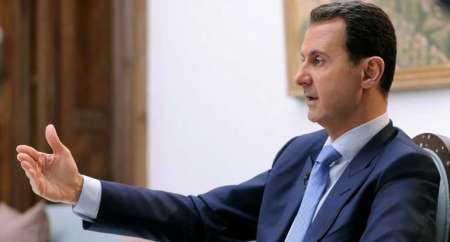
Syria’s President Bashar al-Assad (Reuters, RTX34BQA)

Punishing Assad would be satisfying, but we’ve got a big war to win. It’s smarter and more effective to go after the regime in Tehran. Not militarily, but rather supporting the tens of millions of Iranians who detest the Khamenei regime. Call it political warfare, or subversion, or democratic revolution. It worked against the Soviet Empire, and there are good reasons to believe it would work in Iran as well. Most Iranians, suffering under the failed regime, want a freely chosen government that will address their problems instead of dispatching their husbands and sons sent to the battlefield.

Regime change in Iran would be devastating to Assad and Putin, and its positive effects would be felt in North Africa and our own hemisphere, striking at the Revolutionary Guards and Hezbollah in Latin America. And it would remind the tyrants that America’s greatest weapon is political. We are the most revolutionary country in the world, and we should act like it.

****************************

Of course I loathe Assad. And of course I despise the Obamans for that phony red line and the subsequent retreat-and-bogus-Russian-deal. But just carrying out vengeance against Assad isn’t good enough. It fails to address the central problem of our time: the global anti-American alliance.

There is no Syria any more, and the enemy forces on the Middle Eastern battlefield come from various jihadi groups, and three regimes: Moscow, Tehran, and Damascus. We have to defeat them all, and other members of the enemy alliance, including Cuba and North Korea. Nikki Haley has it right: “The truth is that Assad, Russia and Iran have no interest in peace.”

Indeed, they are waging war, and the principal force driving that war is not Assad, but Iranian Supreme Leader Ali Khamenei. Khamenei’s killers have been alongside Assad’s from the very beginning, as the survival of the Syrian dictator is crucial to Iranian ambitions and quite likely also the survival of the Islamic Republic itself. Listen to Defense Secretary James Mattis a few days ago (from Reuters):

Asked about comments Mattis made in 2012 that the three primary threats the United States faced were “Iran, Iran, Iran,” Mattis told reporters that Iran’s behavior had not changed in the years since.

“At the time when I spoke about Iran I was a commander of US central command and that (Iran) was the primary exporter of terrorism, frankly, it was the primary state sponsor of terrorism and it continues that kind of behavior today,” Mattis said.

True, and Mattis’ characteristically strong language points the way to the best American action in the region, namely bringing down the Tehran regime. Lashing out at Assad isn’t nearly good enough. After all, what strategic objective would we accomplish by smashing, even removing, Assad? The Iranian and Russian fighters would still be there, as would the Islamist forces. The demands on our military would dramatically expand. We do not want to occupy a significant land mass in what used to be called Syria, nor do we seem to have sorted out what we want to do with the Turks and the Kurds.

Punishing Assad would be satisfying, but we’ve got a big war to win. It’s smarter and more effective to go after the regime in Tehran. Not militarily, but rather supporting the tens of millions of Iranians who detest the Khamenei regime. Call it political warfare, or subversion, or democratic revolution. It worked against the Soviet Empire, and there are good reasons to believe it would work in Iran as well. Most Iranians, suffering under the failed regime, want a freely chosen government that will address their problems instead of dispatching their husbands and sons sent to the battlefield.

Regime change in Iran would be devastating to Assad and Putin, and its positive effects would be felt in North Africa and our own hemisphere, striking at the Revolutionary Guards and Hezbollah in Latin America. And it would remind the tyrants that America’s greatest weapon is political. We are the most revolutionary country in the world, and we should act like it.

Iran: A “Paper Tiger”

April 1, 2017

Iran: A “Paper Tiger,” Iran Focus, March 31, 2017

(What would Russia do? Please see also, Iran’s Elections: A Breaking Crisis? — DM)

London, 31 Mar – While Iran calls for the destruction of Israel, according to some experts, an American or Israeli attack against the Islamic Republic’s nuclear and military sites would be fairly easy to execute. This is because, although Iran points to technological advancement in their military, it is actually has overextended itself in Syria.

A report published in March by the Middle East Media Research Institute (MEMRI), noted Iran has backed off their provocations against U.S. Navy vessels, and has even ceased their threats to sink these ships in the Persian Gulf. The report continued, “The slogan ‘death to America’ has disappeared almost entirely from the official discourse of regime spokesmen, including Iranian Supreme Leader Ali Khamenei himself, as have public burnings of the American flag.”

Fars News Agency reported on March 26, that deputy chief of staff of Iran’s armed forces, Brigadier General Masoud Jazayeri, warned the U.S. to be more careful about its warship movements in the Persian Gulf, which is a softer warning than we’ve heard in the past from Iranian leaders.

President and founder of MEMRI, Yigal Carmon, has stated that Iran’s claims of domestic development of military technologies are “complete nonsense,” but said that the country’s acquisition of North Korean missiles is concerning. Carmon said further, that Iran imports North Korean missiles and renames them to give the impression that they were domestically developed.

He explained that Iranian media publishes stories every few weeks about success of their military programs. One such story in January 2013, announced that Iran’s Space Agency had sent a monkey into space, yet pictures of the monkey before and after the “mission” failed to match up. “Iran does not create any quality military equipment, they only are able to buy from abroad. What do they invent to counter U.S. ships? All they are able to come up with is suicide speed boats,” he said.

Iran has also “displayed what they claimed to be domestically built submarines, but when we saw the picture that they put out, we saw that the size would be good for the Baltimore aquarium,” said Carmon.

The ballistics test Iran conducted in January failed. Carmon believes that Iran poses no real challenge to the U.S. “If the U.S. or Israel attack Iran’s nuclear sites and military targets, it will be a done deal,” he said.

A comparison of American and Iranian financial resources may bolster this argument. Fox News columnist Jonathan Adelman, an international studies professor at the University of Denver, wrote in February, “Look at the figures. The American GDP of over $18 trillion is more than 40 times the GDP of Iran ($450 billion)…. Given all this, the fear of Iran getting nuclear weapons still remains real. But, even more real is the notion that the biggest power in the world, plus three significant regional powers (Israel, Egypt and Saudi Arabia), could handle Iran if they would put their minds to it.”

Iran sank $6 billion annually of its resources into the Syrian Civil War, according to Bloomberg News.

Dr. Harold Rhode, a distinguished senior fellow at the Gatestone Institute, and a former U.S. Defense Department official, has stated that while America is strong both militarily and internally, Iran and North Korea “appear strong, but are weak and rotten inside.” Rhode said that while Iran is trying to develop nuclear weapons, it is destroying its country by inaction on domestic problems such as its water crisis. London-based NGO Small Media published a study in March 2016, saying that Iran “faces an unprecedented crisis of water resources that threatens to render vast swathes of the country near-uninhabitable within the coming decades.”

A dangerous opium drug problem is also facing Iran. Rhode speculated that Iranian authorities could crack down on drugs, but ignore it instead, in order “to keep the people preoccupied so they don’t concern themselves with overthrowing the government.”

Rhode believes the American or Israeli approach should be one of strength, but said, “Do we need to have a massive invasion [of Iran]? No. We must show that this regime cannot do what is necessary to keep themselves in power.”

There are alternatives to “actual physical attacks,” such as electronic warfare, when it comes to confronting Iran, according to MEMRI’s Carmon.

Rhode said other options should be considered before putting troops on the ground, including bringing about regime change. “We live in very stable societies, we expect changes to come slowly, but that is not how it works in totalitarian societies like Iran. The moment the people see the regime has lost its ability and willingness to keep itself in power, the regime will topple very quickly, as happened to the shah in 1979. The shah was not willing to do what was necessary to put down the rioting,” he said, and called Iran a “potentially a paper tiger” adding that it is “our job to encourage regime change—and we can.”

Iran Faces Stricter Sanctions in Bipartisan House, Senate Bills

March 25, 2017

Iran Faces Stricter Sanctions in Bipartisan House, Senate Bills, Washington Free Beacon, March 25, 2017

Getty Images

Menendez told Reuters the bipartisan group “assiduously worked” to ensure the bill does not violate the Iranian nuclear pact enacted last year. The bill only applies to Iran’s non-nuclear activities.

**********************************

Legislation introduced Thursday in the House and Senate by a bipartisan group of lawmakers would hit Iran with tougher sanctions for the ongoing development of its ballistic missile program.

While Washington focused on the health care saga in the House, the chairman of the Senate Foreign Relations Committee, Sen. Bob Corker (R., Tenn.), quietly introduced a new bill that would impose mandatory sanctions on individuals involved with Iran’s ballistic missile program.

The legislation would expand terrorism-related sanctions to include the Islamic Revolutionary Guard Corps, Tehran’s elite military force. The bill would codify sanctions announced by the Treasury Department last month that applied to anyone tied to Iran’s support for terrorism.

The bill has support from more than a dozen senators, including Democratic co-sponsors Ben Cardin (Md.), Robert Menendez (N.J.), Bob Casey (Pa.), and Chris Coons (Del.). Republican backers include Sens. Marco Rubio (Fla.), Tom Cotton (Ark.), James Risch (Idaho), and Dan Sullivan (Alaska).

Menendez told Reuters the bipartisan group “assiduously worked” to ensure the bill does not violate the Iranian nuclear pact enacted last year. The bill only applies to Iran’s non-nuclear activities.

The bill is expected to pass through the Senate given its broad support.

The chairman and ranking member of the House Foreign Affairs Committee, Ed Royce (R., Calif.) and Eliot Engel (D., N.Y.), introduced a similar bill late Thursday in the lower chamber.

Like the Senate version, the House legislation would target individuals and entities involved in Iran’s ballistic missile development, including foreign companies and banks.

A staffer with the House Foreign Affairs Committee told the Washington Free Beacon on Friday that the legislation’s strong bipartisan support would likely propel it to the House floor. Majority Leader Kevin McCarthy (R., Calif.) and Minority Whip Steny Hoyer (D., Md.) are both cosponsoring the bill.

The staffer, who asked not to be named, said the bill was introduced in response to a recent committee hearing that detailed Tehran’s ongoing development of missiles capable of carrying nuclear weapons.

“Under the cover of a deeply-flawed nuclear deal, Iran has accelerated its ballistic missile development,” Royce said in a statement Thursday. “These tests—carried out in defiance of the U.N. Security Council—are aimed at perfecting the delivery system for a nuclear warhead.”

Both bills were introduced ahead of the annual conference in D.C. by the American Israel Public Affairs Committee, which begins Sunday. Iran has not commented on the bills, but has said in the past that any U.S. sanctions are a violation of the nuclear agreement.

The White House said in February it was “putting Iran on notice” before unveiling sanctions against 25 entities and individuals in Iran who have ties to terrorist groups, including Hezbollah. The sanctions were in response to a Jan. 29 missile test by Iran. Tehran immediately threatened retaliation.

Dr. Majid Rafizadeh: Why the Islamist State of Iran is So Dangerous

March 22, 2017

Dr. Majid Rafizadeh: Why the Islamist State of Iran is So Dangerous, Clarion ProjectElliot Friedland, March 22, 2017

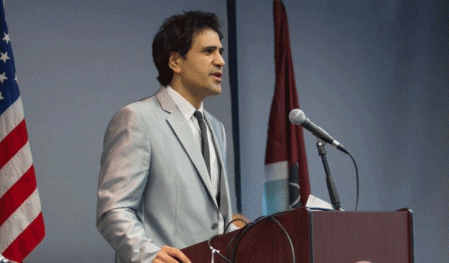
Dr. Majid Rafizadeh. (Photo: Supplied)

Dr. Majid Rafizadeh is a world-renowned Iranian-American political scientist,  businessman and author. He is a leading expert on Iran, Middle East, US foreign policy, and president of the International American Council on the Middle East and North Africa. Harvard-educated, Rafizadeh serves on the board on Harvard International Review. Born in Iran, Dr. Rafizadeh lived most of his life in Iran and Syria.

He can be reached on Twitter: @Dr_Rafizadeh or by email at Dr.Rafizadeh@Post.Harvard.Edu

He graciously agreed to speak with Clarion Project Dialogue Coordinator Elliot Friedland about Iran and why he feels so strongly about the threat posed by the regime. The views expressed below are those of Dr. Rafizadeh’s and not necessarily those of Clarion Project.

1. Clarion Project: What do you think is so dangerous about the regime of Iran?

Dr. Majid Rafizadeh: There are so many reasons why the Islamist state of Iran is extremely dangerous. They could fill an entire book.

Briefly speaking, I believe there are four major reasons, or what I will call, five concentric forces of extremism and fundamentalism:

First of all, from my perspective, the Iranian regime is far more dangerous than terrorist groups such as the Islamic State or Al Qaeda. On a daily basis, Iran tortures and executes people on a much larger scale than terrorist organizations such as ISIS. It is the top state sponsor of terrorism in the world. It supports militarily and financially hundreds of militia and terrorist groups all around the world. It regularly gives birth to terrorist groups. Only one country, the Islamist state of Iran single-handedly assists almost one quarter of world-designated terrorist groups. The Iranian regime contributes in terrorist attacks around the world. This means that the Iranian regime is responsible for blood spilled across many nations, for the slaughter of countless victims of terrorism. Iran has placed spies, lobbyists and agents across the globe, even in the U.S.

The Iranian regime is more dangerous than ISIS and Al Qaeda combined because the Islamist state of Iran operates under the “legitimacy” of the state system. Unlike ISIS or Al Qaeda, the Iranian regime has easily gotten away with its brutal actions for almost four decades because it is a “government” and supported by the United Nations when it comes to sovereignty. Since the ruling clerics rule a country, no one questions their actions.

Unlike terrorists groups such as ISIS and Al Qaeda, the Iranian regime has powerful ballistic missiles which can hit any country in the region; it has military institutions, it hires hundreds of thousands of militiamen, it freely controls the wealth of a large nation and wields all of the influence that comes with it. Instead of solely focusing on ISIS, the international community should also address the Iranian regime.

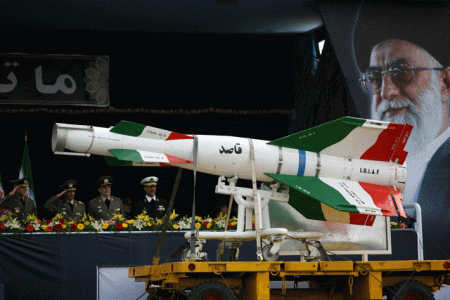
A military parade in Iran. (Photo: Getty Images)


Secondly, the Iranian regime is a radical theocracy. This means that its core pillars are anchored in radical Islamism and extreme interpretations of the religion of Islam. The Iranian regime imposes strict Shia sharia laws to suppress and control its population and export its ideology beyond its borders.  For nearly four decades, the ruling political establishment has exploited Islam and used their fundamentalist version of Islam in order to advance its parochial, religious, ideological, revolutionary and political interests. From the Iranian regime’s perspective, it is mandatory to commit any act of terrorism necessary to advance these religious and political goals.

Third, the Iranian regime ranks at the very top when it comes to human rights abuses according to Amnesty International and Human Rights Watch. This regime brutally cracks down on religious and ethnic minorities. It crushes all kinds of freedoms on a daily basis, engages in torture, and executes children.

Fourth, the Iranian regime’s objective is to spread its Shia radical Islamism across the globe. The Islamist state of Iran’s constitution clearly states that it is the mission of the Islamic state to export its ideology, religion and revolutionary principles beyond its borders. The functions of Iran’s Quds Force, proxies, lobbyists and agents among others, are to accomplish this goal. The constitution mandates an “Imam” or “Velyat-e Faqih” to rule people; which is another form of authoritarian theocracy. The regime believes that the world will be ruled under the power of the Islamic state of Iran and its Shia sharia law. It will do anything to achieve this religious and political objective.

Fifth, the Iranian regime aims at directly damaging the US and Israel’s national security interests in addition to any other country that opposes its authoritarian views. The regime has killed Americans and Westerners and it continues to fund efforts to harm the lives of American and Israeli people, as well as millions of other people.


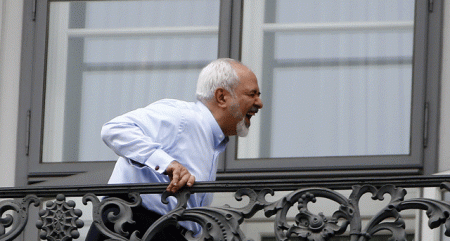
Iranian Foreign Minister Mohammed Javad Zarif laughs during the nuclear negotiations. (Photo: Reuters)


2. Clarion: The Iranian people are a lot more liberal than the regime. How can outside powers such as the United States reach out to and empower the people without emboldening the regime?

Rafizadeh: First of all, the U.S. government and other powers need to cooperate with those voices which oppose the theocratic and Islamist state of Iran. Powerful countries should stand on the right side of history.  There are many human rights groups and civil societies inside and outside of Iran that aim to democratize Iran and eliminate its violence. The U.S. specifically can help these people and unite the groups they form. It is in the long-term interest of any influential country that makes the effort to unify those that oppose the Islamic state and the human rights activists that struggle against it. Providing support to  opposition groups is an effective tool that will empower the Iranian people without emboldening the government. Seeing these groups strengthen and grow in numbers would frighten Iran’s government and weaken its grasp on the country as a whole.

Secondly, the U.S. and other powerful countries should cease all diplomatic, political, or economic ties with the Islamist state of Iran. They need to put pressure on the regime to respect human rights and to moderate its militaristic and ideological foreign policy. Four decades of diplomacy has not changed the violent behavior of the Islamist state of Iran.

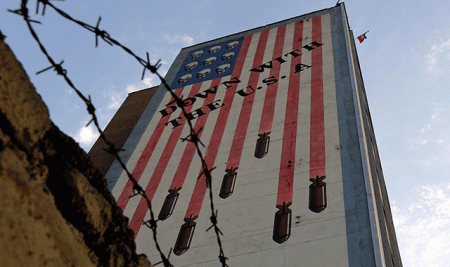
A building in Tehran emblazoned with anti-American graffiti. (Photo: ATTA KENARE/AFP/Getty Images)

3. Clarion: Now that the Iran Deal has gone through and will be upheld, what is the next step for those worried about the regime’s nuclear ambitions?

Rafizadeh: I strongly believe, and we should all be aware, that the Iranian regime will use every opportunity to acquire nuclear weapons. Nuclear weapons are the Iranian regime’s golden shield which can guarantee its rule for eternity and will ensure the achievement of its radical goals.

The nuclear deal is very dangerous. When it expires, it will allow Iran to legally become a nuclear state. It is already providing Iran with billions of dollars every year, wealth that is used for extremism, terrorism, damaging U.S. national interests, and killing Westerners and Americans.

The nuclear activities of the Iranian regime should be monitored by independent groups meticulously. History has shown us, that the International Atomic Energy Agency or the UN will not detect Iran’s undercover nuclear operations. They have failed to do so several times.  All violations should be brought to the attention of the public. In addition, sanctions (particularly the UN Security Council’s sanctions) should be re-imposed on the Iranian regime. The Iranian regime should be punished for its ballistic activities and violations of UN resolutions. Without consequences, they have no motivation to limit their activities or progress toward becoming a nuclear state.

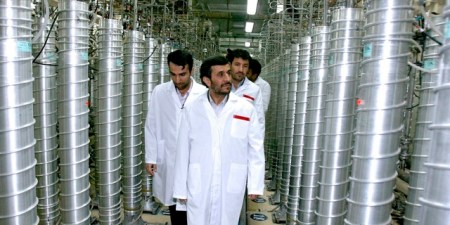
Then Iranian President Mahmoud Ahmadinejad tours the nuclear facility at Natanz. (Photo: Reuters)

4. Clarion: Should international activists who want to see the Iranian situation improve be using a policy of detente and engagement or isolation, boycotts and shaming?

Rafizadeh: The only policy that has resulted in success against the Iranian Regime was the application of pressure and boycotts. For example, in several cases, when there has been an international outcry and when the media paid attention to a victim of torture or execution in Iran, the Iranian regime has been forced to change its sentence. The economic boycotts successfully forced the Iranian regime to the negotiating table.

For the Islamic state of Iran, engagement and concessions signal weakness, not diplomacy. Negotiations only embolden and empower the regime. Applying pressure is the most effective, and likely only way, to create change within the regime.

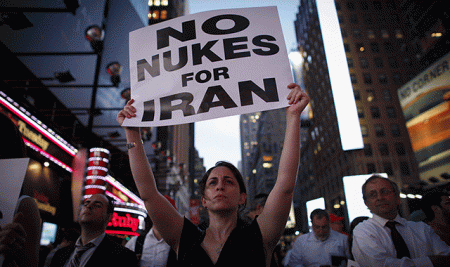
A woman protests against nuclear weapons for Iran at a rally in Times Square. (Photo: KENA BETANCUR/AFP/Getty Images

5.  Clarion: What is the most important thing people who want to eliminate extremism and see positive relations between Muslims and non Muslims should be doing?

Rafizadeh: The most important thing is to do what you [Clarion] are doing: to give a voice to those Muslims who strongly oppose radical Islam and attempt to create reforms from within Islam. Those silent moderate Muslims need to speak up, and need to be supported when they do. If we stay silent, radical Islam will continue winning and expanding. It is our job to strongly stand against radical Islam even if that endangers our life. People should know that there are truly some Muslims who want to forge genuine reformation in Islam and help eliminate radical Islam.

Many Muslims, including myself and my family, who have endured oppression under radical Islam in Muslim nations, would like to eliminate radical Islam, promote a peaceful moderate form of Islam and lead a reformation.

Finally, I describe in detail other important topics in this article “As a Muslim, I am shocked by Leftists and Liberals” as well as in my books.

I grew up between two authoritarian governments, the Islamic Republic of Iran and Syria, under the leadership of people such as Assad, Ayatollah Ali Khamenei, and Mahmoud Ahmadinejad. My youth was influenced by two major denominations of Islam in the Muslim world; the Shia and Sunni. I also studied Shia and Sunni Islam academically, and at one point I was a very devout Muslim. My parents, who still live in Iran and Syria, come from two different ethnic Muslim groups; Arab and Persian.

Unfortunately, in the West and particularly in the US I have witnessed that there are some groups, who have access to megaphones, including liberals, democrats, leftists and Western Muslim scholars (who have never experienced radical Islam first hand and have never lived under states ruled by sharia law) spread apologetic views toward radical Islam. They also criticize those Muslims who attempt to promote social justice and peace within Islam.

If liberals, leftists and many Western Muslim scholars truly stand for values which they call for, such as peace and social justice, they should be aware that their actions are actually contributing to the expansion of radical Islam, and they are hurting us and our efforts to lead reformation in Islam and weaken radical Islam.

Facing Trump Administration, Iran Shows Fear And Military Self-Restraint, Halts Provocations, Threats, And Incitement – While Boosting Morale At Home And Delegating The Bulk Of Conflict To Its Proxies

March 20, 2017

Facing Trump Administration, Iran Shows Fear And Military Self-Restraint, Halts Provocations, Threats, And Incitement – While Boosting Morale At Home And Delegating The Bulk Of Conflict To Its Proxies, MEMRIA. Savyon and Yigal Carmon* March 20, 2017

Introduction

Since the establishment of the administration of U.S. President Donald Trump, which is known to be against Iran’s revolutionary regime, Iran has faced a new reality. On the one hand, the U.S. is acting to organize the Gulf countries and Arab countries into an arrangement that Arab media have dubbed an “Arab NATO” which is aimed against Iran. On the other hand, Iran senses that despite the Iran-Russia cooperation in recent years and in various areas, Russia is abandoning it for its other vital interests, such as an understanding with the U.S. in order to advance the lifting of the sanctions against it, and an understanding with Turkey as its top regional partner.[1]

These developments have given rise in Tehran to a sense that it is besieged and under an emerging existential threat, in light of the crystallization of a comprehensive U.S.-Russia-Arab (including Israel) front against the Iranian revolutionary regime.

This report will review the overall Iranian reaction to this new situation:

The Iranian Response To The New Developments

Iran’s response to these new developments is characterized by fear of U.S. activity against its regime, as can be seen in several areas:

1. Considerable military restraint and a halt to long-range missile tests, in response to the warning by President Trump: Following Iran’s failed January 29, 2017 launch of its long-range Khorramshahr missile, the Trump administration announced that Iran was being “put on notice.” At that time, Iran had been making preparations to launch yet another long-range missile, and had made the practical arrangements for doing so; the launch was cancelled following the U.S. warning. Islamic Revolutionary Guard Corps (IRGC) Aerospace Force commander Amir Ali Hajizadeh complained, on March 9, that Iran had been so firmly deterred that it is even refraining from using a missile to launch a satellite into orbit: “We have a missile for non-military purposes for launching satellites. But it is being put into storage because of America’s angry tone?! … How much longer will we be blackmailed and forced to compromise? If we do not change our strategy, and continue to operate according to orders from officials who are stuck in the mud, our situation will deteriorate daily.”[2]

The satellite images below, taken by ImageSat International (ISI),[3] show the launch site in Semnan. The first image, taken January 17, shows the launch site and launch pedestal as inactive; it also shows, on the ground, the emblem of the Iranian Space Agency (ISA) and the emblem of the Simorgh (“Phoenix”) orbital carrier rocket that is used to launch satellites. The second image, taken February 3, shows the launch pedestal ready for launch and many vehicles at the launch site.

Left to right: Image 1: Launch site in Semnan showing inactive launch pedestal, with emblems, taken January 17, 2017; Image 2: Launch site showing pedestal ready for launch and vehicles surrounding the site, taken February 3, 2017.

Images 3 and 4 below, also taken February 3, show the integration facility during a visit by a VIP in advance of the launch. The VIP’s vehicle, and many others, including jeeps from the VIP’s motorcade, can be seen.

Left to right: Images 3 and 4, showing integration facility during the VIP’s visit; taken February 3, 2017.

Image 5, taken two days later, on February 5, shows that the launch site is again inactive.

Image 5 – launch site again inactive, taken February 3, 2017.

The day after the cancellation of the missile launch, on February 4, IRGC Aerospace Force commander Amir Ali Hajizadeh said: “America is looking for excuses surrounding our missile tests, because the enemy has set its sights on [harming] our security. The enemy deals with issues such as [our] nuclear capabilities and science, the might of [our] missiles, and so on. These are all merely excuses [to justify] their hostility towards the Islamic regime and the Iranian nation.”[4]

Also indicating Iran’s military self-restraint were February 9, 2017 statements by Defense Minister Hossein Dehghan. On the eve of Iran’s Revolution Day, he spoke about “the new claim by American elements and media outlets regarding an additional missile test by Iran. These false claims,” he added, “are a type of creating an enemy and Iranophobia. This is planned by the Zionist regime, which incites while spreading lies.

“First, this is a false claim, and nothing like [such a missile launch] happened; second, even if such a test was conducted, it had nothing to do with them at all; and third, Iran’s missile program is a standard program, and missile tests are part of these plans, which are made in advance; these tests are conducted in order to maintain our country’s defensive readiness.”[5]

  1. A halt to provocations against U.S. Navy vessels, and even an official IRGC statement that responsibility for handling the crews of foreign vessel apprehended penetrating Iranian territorial waters was being transferred from the IRGC to the civilian Ports & Maritime Organization (PMO): This is due to fear of a harsh response by the Trump administration to humiliation of American captives – as happened in January 2016, even though there had been no real response to this from the Obama administration.[6]
  2. A halt to public threats to burn and sink U.S. Navy vessels in the Persian Gulf,[7] and a near-total moratorium on hostile anti-U.S. statements: The slogan “death to America” has disappeared almost entirely from the official discourse of regime spokesmen, including Iranian Supreme Leader Ali Khamenei himself,[8] as have public burnings of the American flag.[9]

In a March 16, 2017 article, the ideological camp mouthpiece Kayhan attacked the government of Iranian President Hassan Rohani, stating that the government is claiming that “when Trump was elected, [Rohani government officials] said that Trump was unpredictable and makes unconsidered decisions – and that is why it is better for us to refrain from saying anything to offend him…”[10]

  1. Boosting morale and persuading Iranians of the might of their country and of the need for faith in God and in the armed forces’ ability to face down the U.S.: One example of this was a television interview with Defense Minister Dehghan on February 7, 2017, on the eve of Revolution Day. In it, Dehghan said that today, that is, after Trump took office, Iran is on the defensive against the American threat: “We consider defense to be necessary for our country, for other Muslim countries, and for Muslims [in general]… It is certain that the enemies are lying in wait for our regime. It is our duty to equip ourselves to the point that no one dares threaten us, blackmail us, or attack our country. All defensive elements, together with the nation as a whole, stand against the enemy to prevent an attack by it, and if the enemy attacks, we will punish it…

“The countries around us are no threat to us. The threat to us is an extra-regional threat known as the regime of arrogance [i.e. the U.S.], which is why we must acquire anything that gives us the upper hand – that is, asymmetric warfare. We must operate so that on the designated day [when war breaks out], not only will we not be caught off guard strategically, but we will surprise the enemy and inflict the maximum damage on it…”[11]

One example of efforts to boost national morale was a speech by IRGC Deputy Commander Hossein Salami, who had often issued threats to the U.S. and had said that Iran would destroy its forces in the Gulf. On February 2, 2017, Salami highlighted Iran’s defensive capabilities in light of the uniting of ranks by its enemies: “Today, the enemies have joined forces against our great revolution, but their plans have been defeated. The entire world wants to wipe us off the geographical map… but the martyrs have shown that any superpower can be confronted with reliance on faith, with Islam, and with obedience to the leader. By relying on jihad and martyrdom, we can confront any power and defend the honor of Muslims.

“Our glorious history is full of victories over the arrogance [i.e. the U.S.]… The Islamic regime of Iran has succeeded in gaining major influence in the Islamic world… Our nation is so mighty… We are involved in a great jihad, and as long as the Muslims [meaning the Shi’ites] dream of martyrdom and rely on the directives of the Koran, which light our way, we will never be defeated, but we will defeat the enemy…

“Iran’s mighty missile force is included in the list of unprecedented global deterrents. If the enemy fears our nuclear might, it can flee to the bomb shelters.

“The Iranian nation has learned to create might by reliance on internal faith… Every day, the number of defensive missiles, warships, and launchers increases. The air, land, and sea are under the control of this nation… here, in the land of heroes and martyrs.”[12]

Also in his February 4 speech, IRGC Aerospace Force commander Amir Ali Hajizadeh highlighted Iran’s ability to withstand an American attack: “The threats to Iran made by certain American elements are merely boasts. Due to my knowledge of the capabilities of our armed forces, I confidently say that a foreign threat will not influence our Islamic regime. We rely on the infinite might of God, while America relies on earthly equipment and might. We will emerge victorious from the arena in any possible scenario. We will not hesitate for a single moment in creating and strengthening our defensive capabilities… 24 hours a day, we work to defend the security of the nation, and if the enemy makes the smallest error, our missiles will land on its head like a thunderclap.”[13]

  1. Strengthening the resistance front and delegating the fight against Iran’s enemies – the West, Israel, Saudi Arabia, and the Gulf states – to Iran’s proxies: These proxies include the Shi’ite militias in Iraq and the Houthis in Yemen, as well as Syria, Hizbullah, and the Palestinian organizations, which are operated by Iran, to revive the battlefront against Israel (see MEMRI Special Dispatch No. 6811, Iran Prepares Militarily And Politically Vis-à-vis Trump Administration: Strategic Alliance With Russia, Dragging Israel Into War With Hizbullah, Palestinians, March 3, 2017).

The Iran-backed Houthis in Yemen have recently been firing missiles at Saudi Arabia: On March 17, the Houthis fired a medium-range ballistic missile at an Aramco facility in Jazan, Saudi Arabia.[14] Also on March 17, the Houthis fired three missiles at a mosque in an army base in Ma’rib Governorate during Friday prayers. The attack killed and wounded dozens of officers and soldiers.[15] Additionally, a locally made Yemeni Borkan-2 missile was fired at the King Salman airbase in Riyadh.[16]

Further, the Syrian regime has been escalating its responses to Israeli attacks on convoys transferring strategic missiles from Iran to Hizbullah. Unlike in the past, this week the Syrian regime fired anti-aircraft missiles at Israeli aircraft. MEMRI assesses that this was the result of Iranian pressure on Syrian President Bashar Al-Assad and on Hizbullah to respond in accordance with Iranian policy in order to spark a military confrontation with Israel.

Furthermore, it should be mentioned that as part of the Iranian regime’s efforts to revive the Palestinian front against Israel, on February 21, 2017, Tehran held the Sixth Conference in Support of the Palestinian Intifada. In his opening remarks at the conference, Supreme Leader Khamenei stressed the need to assist resistance movements in their military struggle against Israel, and said that Iran’s aid to these movements is directly tied to the level of these movements’ commitment to the principles of “resistance” (i.e. the struggle against Israel). He especially highlighted the need to continue aiding the resistance in the West bank, saying: “The main pivot of the Resistance is the steadfastness and endurance of the Palestinian people who have raised courageous and resistant children. Meeting the needs of the Palestinian people and Palestinian resistance is an important and vital responsibility which should be carried out by all of us. In doing so, we should not ignore the basic needs of the Resistance in the West Bank because the West Bank shoulders the main burden of the suppressed intifada.” (see MEMRI Special Dispatch No. 6795, Khamenei In Speech At Iran’s Sixth International Conference In Support Of Palestinian Intifada: ‘We [Stand] With Every Group That Is Steadfast On This Path [Of Resistance]’; ‘Cancerous Tumor’ Israel Must Be Cured In Several Phases, February 21, 2017).

It should also be mentioned that as part of Iranian efforts against Israel, Hizbullah secretary-general Hassan Nasrallah has recently made aggressive statements about Israel in interviews with Iranian and Lebanese media.

  1. Attempting to connect Russia to Iran in a strategic alliance (see MEMRI Special Dispatch No. 6795, Iran Prepares Militarily And Politically Vis-à-vis Trump Administration: Strategic Alliance With Russia, Dragging Israel Into War With Hizbullah, Palestinians, March 3, 2017).
  2. Clinging insistently to the JCPOA, even in light of actions by the U.S. that Iranian representatives had once stated would lead Iran to revert to a pre-JCPOA situation.

Moreover, in this context, MEMRI assesses that Iran will under no circumstances withdraw from the JCPOA, even if the Trump administration increases the sanctions against it, and even if the U.S. takes military action against Iranian interests in the region. This is because the JCPOA is an historic achievement for Iran, since it grants it the status of a nuclear state. Furthermore, according to the Iranian regime mouthpiece Kayhan, the Rohani government had presented the JCPOA as a tool to prevent a war against the Iranian regime.[17]


*A. Savyon is Director of the MEMRI Iranian Media Project; Y. Carmon is President of MEMRI.


[1] See MEMRI Inquiry and Analysis No. 1303, ‘Iran Diplomacy’ Following Tripartite U.S.-Russia-Turkey Military Chiefs of Staff Meeting: ‘If You Aren’t Sitting At The Table, You Are Being Eaten At The Table,‘ March 15, 2017.

[2] Tasnim (Iran), March 9, 2017.

[3] ISI – ImageSat International – is a privately owned company which provides confidential earth imagery acquisition under prioritized tasking management with very high resolution image quality.

[4] Tasnim (Iran), February 4, 2017.

[5] Asr-e-Iran (Iran), February 9, 2017.

[6] According to IRGC Navy commander Ali Fadavi, the IRGC signed an agreement with the Ports and Maritime Organization of Iran (PMO) under which the crews of all foreign naval vessels penetrating Iranian territorial waters and captured by the IRGC would be handed over to the PMO. Defapress.ir February 27, 2017.

[7] An isolated incident on March 4, 2017 saw IRGC boats approach an American destroyer, forcing it to change course. The Iranians later argued that the incident came about because the destroyer had deviated from its regular path. Tasnim (Iran), March 8, 2017.

[8] Assembly of Experts head and Guardian Council secretary Ayatollah Ahmad Jannati was the one official who did use the “death to America” slogan during a Revolution Day parade on February 10, 2017. He said: “Today, we all chant the slogan ‘death to America’ and trample its flag. This means we will not compromise nor back down to evil. We are not alone in the world, and throughout the world there are many nations that trample the American flag. Hostility towards America is the slogan of all those who are oppressed and desire freedom. We will never end our hostility towards evil, and we will always chant the slogan ‘no to humiliation.'” Fars (Iran), February 10, 2017.

[9] It should be noted that some attempted to justify this by calling it a sign of respect for the American people who voted against Trump.

[10] Kayhan (Iran), March 16, 2017. It should be mentioned that while the ideological camp’s hawks, such as the IRGC and Kayhan, accuse the pragmatic camp and President Rohani of responsibility for this policy of self-restraint, Supreme Leader Khamenei consents to this policy, and even leads it himself.

[11] Tasnim (Iran), February 8, 2017.

[12] Tasnim (Iran), February 2, 2017.

[13] Tasnim (Iran), February 4, 2017.

[14] Al-Akhbar (Lebanon), March 18, 2017.

[15] ‘Okaz (Saudi Arabia), March 18, 2017.

[16] Al-Quds Al-Arabi (London), March 18, 2017.

[17] Kayhan (Iran), March 16, 2017.
More Missiles Ready to Hit Saudi Capital: Yemen’s Army Spokesman

March 20, 2017

More Missiles Ready to Hit Saudi Capital: Yemen’s Army Spokesman, Tasnim New Agency, March 20, 2017

(There were reports at Fars News Agency and other Iranian or Iranian -linked media of a successful missile attack on Riyadh on February 5th. However, according to the March 20th Tasnim article, “The Yemeni official said it was the first such attack by the Yemeni forces on the Saudi capital.” A search at the Saudi media outlet Al-Arabiya produced nothing about either the February 5th or the more recent attack. Are such reports reliable?– DM)

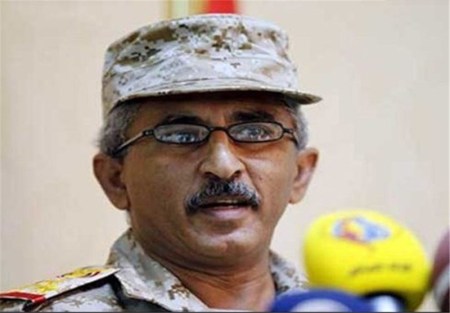
TEHRAN (Tasnim) – Yemen’s Army Spokesman Sharaf Luqman confirmed the firing of a Scud-type ballistic missile at a Saudi air base in Riyadh, saying that more missiles are ready to confront the invading regime.

“We have managed to boost our missile production capabilities and our missiles can now reach the Saudi capital,” Luqman told Lebanon’s al-Mayadeen news network on Sunday.

His remarks came after Yemeni forces on Saturday night fired a long-range ballistic missile at King Salman Air Base in the Saudi capital Riyadh, inflicting major material losses on the kingdom. The Scud-type Borkan-2 (Volcano-2) ballistic missile hit its target.

The Yemeni official said it was the first such attack by the Yemeni forces on the Saudi capital.

Luqman further said that more missiles are ready to be launched against the positions of the Saudi regime, stressing that the new missiles will change the equation of the kingdom’s war on the impoverished Arab country.

The missile attacks are in response to the aggression launched by Saudi Arabia and some of its Arab allies in March 2015.

The Saudi-led coalition has been launching deadly airstrikes against the Houthi Ansarullah movement for two years in an attempt to restore power to the fugitive former President Abd Rabbuh Mansour Hadi, a close ally of Riyadh.

Some 11,000 Yemenis, including thousands of women and children, have lost their lives in the deadly military campaign.

Iran’s latest terrorist plots

March 9, 2017

Iran’s latest terrorist plots, American ThinkerHeshmat Alavi, March 9, 2017

Iran is continuing its blatant belligerence against the international community, especially the Middle East, despite President Donald Trump and his administration threatening to take major action. During the past month alone Iran has test launched a number of ballistic missiles enjoying the capability of delivering a nuclear payload. This includes last weekend’s pair of ballistic missile launches.

Knowing its military capabilities are outdated and limited, Iran is resorting to a range of different terrorist measures in an attempt to maintain the leverage gained through the preposterous concessions they enjoyed during the Obama years.

The most recent scenario involves fast-attack vessels approaching a U.S. Navy surveillance ship in the Strait of Hormuz in a threatening manner described as “unsafe and unprofessional” in a recent statement.

Iran’s Revolutionary Guards, under major discussion in Washington to be designated as a foreign terrorist organization, has suffered a major blow after the discovery of a terrorist network in Bahrain. This unveils, yet again, further aspects of Iran’s unbridled meddling in the region.

The IRGC Bahrain network consists of 54 members focusing on planning and executing terrorist plots. To date, 25 such individuals have been arrested. These individuals were coordinating with Tehran to assassinate, terrorize, and target Bahrain security forces.

Following their raids, Bahrain authorities announced a significant cache of arms, explosives, and ammunition were also confiscated.

All individuals are reportedly Bahrain natives, further indicating the sophistication of Iran’s blueprints in using locals for such plots. Following their arrest, it was revealed the cells received support from both Iran and Lebanon, procuring arms or coordinates where such logistics were hidden. In the past weeks Bahrain witnessed two bomb blasts killing and injuring civilians, and most specifically, Shiite Muslims. This can be assumed as an attempt to instigate Shiite dissent in the small Gulf island.

It is crystal clear how the IRGC commanded this proxy group, as the individual calling the shots is currently in Iran. Other members of this group are even stationed in Iraq and directly involved in the attacks carried out in Bahrain.

Iran also has intentions to increase its use of suicidal drone boats in Yemen through the Houthi militias. The U.S. Navy command issued a recent warning over this threat against ships in the Red Sea. This warning follows a recent revelation of the Houthis obtaining drone boats in their attack against a Saudi Navy frigate.

Vice Adm. Kevin Donegan, commander of the Bahrain-based U.S. Fifth Fleet and head of U.S. Naval Forces Central Command, accused Iran of supporting the Houthis in preparing such boats.

This new development can pose a major threat to shipping lines in strategic naval routes, Donegan said in an interview with Defense News, adding that terrorist groups can now obtain such lethal boats.

It is worth noting that the attack on the Saudi frigate Al-Madinah on January 30th was carried out with a remote-controlled drone suicide boat packed with explosives. This was the first such attack resembling actual suicide attacks in the past.

The U.S. has recently issued a warning that the Iran-backed Houthis and forces loyal to former Yemeni president Ali Abdullah Salah are placing underwater mines in the Bab-el-Mandeb Strait passage near the entrance of Port Mokha.

The Bab-el-Mandeb Strait, narrowing to 25 kilometers in width at some points, is of grave importance for global shipping lines, providing access to the Red Sea, the Suez Canal, and the Mediterranean Sea. Much of the world’s oil and other goods are transferred through these very strategic waterways.

More than 60 ships containing commercial goods pass through the Bab-el-Mandeb Strait each day, carrying around 3.3 million barrels of crude oil. The U.S. Navy’s warning indicates the closing of such a crucial water passage can lead to major financial costs and a significant rise in global oil prices.

Further reports also indicate that Iran is having a tough time digesting a series of defeats suffered by the Houthis in Yemen. In response, Iran is weighing the possibility of dispatching Shiite militias from Iraq to Yemen, according to Khalij Online. As the fighting has decreased in Iraq, Tehran may dispatch units of the 140,000-strong Popular Mobilization Front, consisting of 54 different sectarian militia groups, to Yemen.

In an international scene undergoing drastic changes, all of them threatening Iran’s short and long-term interests, the mullahs in Tehran are desperately searching for a method to both keep a straight face and maintain their previous leverage across the Middle East.

Such developments gain even more importance as we inch closer to Iran’s presidential elections in May, when the regime in its entirety will face a major test.

Saudi spy chief visits Israel, Ramallah

February 22, 2017

Saudi spy chief visits Israel, Ramallah, DEBKAfile, February 22, 2017

riadhmissileseng_480

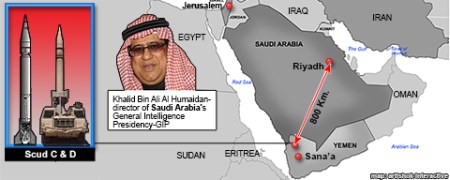
The director of Saudi Arabia’s General intelligence agency, Khalid Bin Ali Al Humaidan, paid surprise visits to Ramallah and Jerusalem on Tuesday and Wednesday, Feb. 21-22. Neither Palestinian nor Israeli officials have confirmed that the visit took place.

Last week, DEBKA Weekly carried an exclusive report that Iranian engineers were working round the clock on a project dubbed “Riyadh First,” for adding an extra 100km to the intermediate range of the Scud-C (600km) and Scud-D (700km) surface missiles, to enable them to reach the Saudi capital and explode in the center of Riyadh. The project, which is going forward at the Al Ghadi base in Big Ganesh, 48km west or Tehran, was ordered by supreme leader Ayatollah Ali Khamenei and President Hassan Rouhani.

This plan was behind the threat made by IRGC Air Force Commander Gen. Amir Ali Hajizadeh on Saturday, Feb. 11, at the start of an Iranian military exercise: “Should the enemy make a mistake, our roaring missiles will rain down on them,” he said.

Gen. Hajizadeh, who is in charge of the missile testing site, ordered all other work halted in order to concentrate on the fast-track “Riyadh First” Scud development project.

On Feb. 4, Iranian-backed Yemeni Houthis fired a missile which they claimed was a homemade Borkan with a range of 800km into Saudi Arabia. It struck the al-Mazahimiyah military camp west of Riyadh.

According to our military sources, the Houthis don’t possess a missile of that range. Their attack was in fact the first test of the newly-extended Iranian Scud, as a dress rehearsal for the real strike.

If the visit by the Saudi spy chief is confirmed, he will have come for several missions. In Ramallah, he would have warned the Palestinians not to go through with their bid to strengthen direct ties with Tehran (which was first revealed by DEBKAfile on Feb. 13). The first meeting of Iranian and Palestinian delegations has already taken place in Brussels.

In Jerusalem, Al-Huymaidan may have explored security issues related to the US-Israeli-Arab regional conference proposed by US President Donald Trump and Prime Minister Binyamin Netanyahu when they met in Washington on Feb. 15.

DEBKAfile’s sources note that the Saudi spy chief is a professional soldier and the first commoner to hold the post of Director of Saudi General Intelligence. Among his predecessors were high-ranking princes such as Bandar Bin Sultan, Turki Bin Faisal and Muqrin Bin Abdul Aziz.