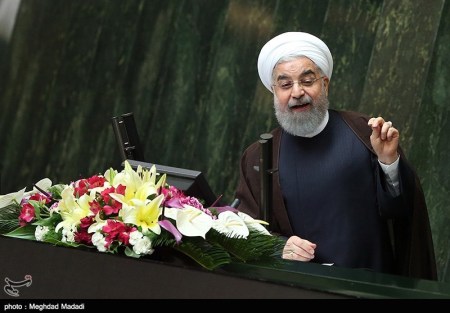
Archive for the ‘Iranian missiles’ category

North Korea Nuclear Progress Puts Iran on Renewed Pathway to Bomb

September 4, 2017

North Korea Nuclear Progress Puts Iran on Renewed Pathway to Bomb, Washington Free Beacon, September 4, 2017
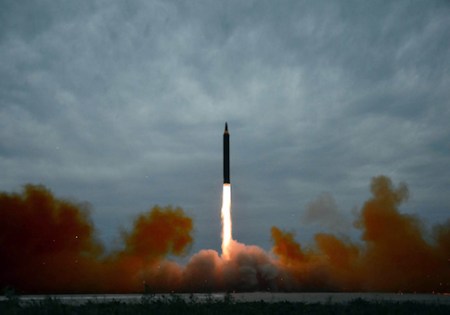
North Korea’s intermediate-range strategic ballistic rocket Hwasong-12 lifts off / Getty Images

Iran and North Korea have been sharing nuclear materials and know-how for well over a decade, according to sensitive intelligence community communications published by WikiLeaks and dating as far back as 2009.

The Obama administration took little action during its time in office to thwart this growing alliance, leading to increased nuclear ties between Iran and North Korea, multiple sources said.

In order to comply with the nuclear agreement, Iran outsourced much of its nuclear technology to North Korea, according to multiple sources, who pointed to evidence of a key 2015 meeting between the two countries surrounding the nuclear portfolio.

“Thanks to the Obama-Khamenei nuclear deal, Iran is flush with cash and has the capacity to be a willing buyer for nuclear material,” DeSantis said. “This represents a major threat to the United States and should be taken seriously.”

**************************

U.S. officials are closely monitoring an ongoing meeting between senior North Korean and Iranian officials that comes on the heels of a nuclear test by Pyongyang, according to senior Trump administration officials and other sources who expressed concern that North Korea is helping to put the Islamic Republic back on the pathway to a functional nuclear weapon.

Sources told the Washington Free Beacon that Pyongyang continues to stockpile illicit nuclear material on Iran’s behalf in order to help the Islamic Republic skirt restrictions implemented under the landmark nuclear deal.

North Korea’s latest nuclear test of a hydrogen bomb has roiled Trump administration officials and led President Donald Trump to consider multiple options for war. However, it also has renewed fears among U.S. officials and foreign policy insiders about Pyongyang’s long-standing relationship with Iran, which centers on providing the Islamic Republic with nuclear technology and know-how.

The head of North Korea’s parliament arrived this weekend in Iran for a 10-day visit aimed at boosting ties between the two countries amid an international crackdown on Pyongyang’s nuclear weapons program, a situation U.S. officials tell the Free Beacon is being closely monitored.

As North Korea makes progress in its nuclear pursuits, it is likely this information is being shared with senior Iranian officials who continue to maintain and build upon the country’s weapons program, despite the nuclear agreement, which only limits a portion of Iran’s nuclear enrichment and research abilities.

One senior U.S. official currently handling the Iranian and North Korean nuclear portfolios told the Free Beacon that the collaboration between these two countries is being closely monitored by the Trump administration, which will not hesitate to take action to disrupt this relationship.

“The history of collaboration between North Korea and Iran has been an ongoing concern and needs to be watched closely,” the official told the Free Beacon. “We’ve been laboring under the false assumption that these oppressive regimes are rational and that we can persuade them to act for the greater good. President Trump has made it clear those days are at an end, and that the United States will do what is necessary to prevent Iran from turning into another North Korea.”

Iran and North Korea have long collaborated on their missile programs and nuclear technology, and the U.S. intelligence community continues to monitor ongoing efforts by the two countries to boost cooperation.

Kim Yong Nam, the head of North Korea’s parliament, reportedly arrived in Iran on Thursday for a high-profile meeting with Iranian President Hassan Rouhani that is likely to center around Tehran’s quest for technology and North Korea’s need for hard currency and financial assets.

Iran has been flush with cash and other financial assets since the nuclear agreement lifted international sanctions and opened the Islamic Republic to new business ties.

Rep. Ron DeSantis (R., Fla.), a member of the House Foreign Affairs Committee and the National Security Subcommittee, told the Free Beacon that the increased ties are cause for concern, particularly in light of Iran’s renewed economic success.

“Given that Kim Jong Un is a plump, immature kid who only rules because of accident of birth, it is not clear that he can, through traditional means, be deterred from commencing an attack against the United States using his nuclear arsenal,” DeSantis told the Free Beacon. “What is completely clear is that Kim is willing to transfer nuclear technology to, and assist with nuclear development for, rogue regimes such as Iran.”

“Thanks to the Obama-Khamenei nuclear deal, Iran is flush with cash and has the capacity to be a willing buyer for nuclear material,” DeSantis said. “This represents a major threat to the United States and should be taken seriously.”

North Korea’s latest nuclear test has sparked a fierce war of words with the Trump administration, which announced on Monday that it is considering a range of military options.

United Nation’s Ambassador Nikki Halley said that North Korean leader Kim Jong Un is “begging for war” and urged the U.N.’s Security Council to consider a strong response.

“Enough is enough,” Haley was quoted as saying. “War is never something the United States wants. We don’t want it now. But our country’s patience is not unlimited.”

Israeli officials also have warned that North Korea’s latest test is a boon to Iran’s own nuclear program.

“The international response, led by the U.S., to the North Korean regime’s provocations, sheds light on how it will behave toward the Iranian regime on their nuclear efforts in the near future,” Moshe Ya’alon, a former Israeli defense minister, tweeted. “Although the nuclear test is not our issue, the tension should concern us.”

Iran and North Korea have been sharing nuclear materials and know-how for well over a decade, according to sensitive intelligence community communications published by WikiLeaks and dating as far back as 2009.

The Obama administration took little action during its time in office to thwart this growing alliance, leading to increased nuclear ties between Iran and North Korea, multiple sources said.

In order to comply with the nuclear agreement, Iran outsourced much of its nuclear technology to North Korea, according to multiple sources, who pointed to evidence of a key 2015 meeting between the two countries surrounding the nuclear portfolio.

Iran also has opened ballistic missile factories in Syria with the help of Russia and North Korea, according to regional reports.

“North Korea and Iran’s military and political ties are long-standing, and can be traced back to the 1980-1988 Iran-Iraq War, the same time that Tehran developed an interest in nuclear and missile technology,” said Behnam Ben Taleblu, an Iran analyst at the Foundation for Defense of Democracies.

“North Korea’s provision of the Nodong-A liquid fueled medium-range ballistic missile to Iran in the 1990s enabled the mullahs to make significant strides in the missile program and eventually even their satellite launch-vehicle technology,” Ben Taleblu explained.

“While some may see the long-standing missile relationship as merely evidence of the two countries’ interest in conventional munitions, these missiles are capable of carrying nuclear payloads, and offer both rogues the ultimate deterrent weapon with which to ensure regime survival,” he said.

Iranian officials and scientists have been spotted at several of North Korea’s key nuclear test, fueling speculation that the two countries are in close contact on the issue.

“What is almost certain, however, is the following: both in the post- and pre-JCPOA [or Joint Comprehensive Plan of Action, the formal name for the Iran deal] era, the two closely watched how each one negotiated with the international community, what deals it struck, the lies that worked and didn’t work, and where and how it could supplement resolve for material capability,” Ben Taleblu said.

Michael Rubin, a former Pentagon adviser and expert on rogue regimes, further told the Free Beaconthat it is suspected North Korean officials played a role in helping Iran recently test fire a series of ballistic missiles, which sparked international outrage and accusations the Islamic Republic is violating legally binding bans on such behavior.

“For those who want to deny the links between Pyongyang and Tehran, it’s easy so long as they ignore their military, diplomatic, and economic ties,” Rubin said. “It’s doubtful there has been a single Iranian missile test where North Korean scientists weren’t present, nor a North Korean test where Iranian scientists didn’t have a front row seat.”

One veteran congressional foreign policy adviser who works on the Iran portfolio told the Free Beacon that efforts to promote a new North Korean nuclear deal in the same vein as the Iran agreement are fruitless, and would only strengthen Pyongyang’s appetite to publicly test its nuclear weaponry.

“The same people who sold the Iran deal are now trying to sell what they call an ‘Iran deal for North Korea,'” the source said. “It’s the same groups, the same people, and the same playbook. Up until this weekend’s nuclear test, they were telling journalists that diplomacy has time to work, that North Korea is still years away from an H-Bomb, and—of course—that additional pressure would lead to war.”

“Now, all at once, their narratives about Iran and North Korea are both colliding with reality,” the source added. “The cost for American national security is staggering.”

Rubin went on to describe the North Korean stand-off as a glimpse into future situations with Iran.

“North Korea is a crystal ball into the future of the Iranian nuclear agreement, and the current diplomatic behavior in which there will be no support for inspections, which risk finding Iran in violation and imperiling the agreement, fits the pattern to a ‘T,'” Rubin said. “In addition, one of the biggest holes to which the Obama administration agreed was not recognizing that Iranian nuclear work doesn’t necessarily take place in Iran.”
Ex-Israeli Defense Minister: Iran Will Be Watching How World Reacts to North Korea’s Nuclear Provocations

September 4, 2017

Ex-Israeli Defense Minister: Iran Will Be Watching How World Reacts to North Korea’s Nuclear Provocations, AlgemeinerBarney Breen-Portnoy, September 3, 2017

(Another good reason for America to take prompt and decisive military action rather than merely sitting around at the UN and talking. — DM)

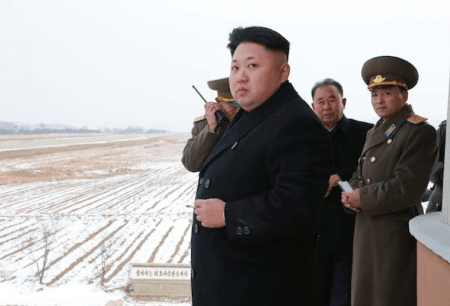
North Korean Supreme Leader Kim Jong-un. Photo: Twitter.

Iran will be watching how the world reacts to North Korea’s latest nuclear test, a former Israeli defense minister said on Sunday.

Following the news that Pyongyang had detonated what it claimed to be an advanced hydrogen bomb that could be put on an intercontinental ballistic missile, Moshe Ya’alon — a retired IDF lieutenant general who now heads the Manhigut Aheret NGO — tweeted, “The response of the international system, led by the US, to the North Korean regime’s provocations will be reflected in the Iranian regime’s behavior on the nuclear issue in the near future.”

“Although the nuclear test is not our concern, the tension should worry us,” Ya’alon continued.

תגובת המערכת הבינ״ל בהובלת ארה״ב להתגרויות המשטר הצפון קוריאני, תקרין על התנהלות המשטר האיראני בנושא הגרעין בעתיד הקרוב. 1/2

תגובת המערכת הבינ״ל בהובלת ארה״ב להתגרויות המשטר הצפון קוריאני, תקרין על התנהלות המשטר האיראני בנושא הגרעין בעתיד הקרוב. 1/2

למרות שהניסוי הגרעיני הוא לא מענייננו, המתיחות צריכה להדאיג אותנו. 2/2

In a March interview with The Algemeiner, proliferation expert David Albright said that paying attention to any potential nuclear cooperation between North Korea and Iran should be a priority for the Trump administration.

Iran a Far Greater Threat Than North Korea, Warns Scholar

September 4, 2017

Iran a Far Greater Threat Than North Korea, Warns Scholar, PJ MediaKarl Herchenroeder, September 2, 2017

(This article may have been written before North Korea’s successful H Bomb test. We know what North Korea is doing because the Kim regime brags about it. We don’t know what Iran is doing because of the limitations placed on inspections of its military and other nuke facilities. It is quite likely that Iran has, or soon will have, whatever nuclear capabilities North Korea has. Nevertheless, North Korea presently is a more immediate and probably more dangers problem than Iran. — DM)

President Hassan Rouhani attends an interview with the state-run TV at the presidency office in Tehran on Aug. 29, 2017. (Iranian Presidency Office via AP)

WASHINGTON – If the U.S. stays on its present path, Iran will emerge in the coming years as a far more ominous nuclear threat than North Korea, a Heritage Foundation scholar said Wednesday.

“If you like what North Korea is doing today, you’re going to love what Iran is going to be doing a few years down the road,” said James Phillips, a senior research fellow.

The Obama administration, a handful of international partners, Russia and Iran agreed to the Joint Comprehensive Plan of Action in 2015, which dictated that Iran significantly curb nuclear operations in return for the lifting of international economic sanctions. The agreement dealt an estimated $100 billion in sanctions relief and unfrozen assets to Iran.

But international consensus is that Tehran has not upheld its end of the bargain, ramping up its ballistic missile program and expanding subversive forces throughout Iraq, Syria and Yemen. Iran’s list of proxies includes Hezbollah, Hamas and Houthis. The last administration acknowledged that such bad behavior was not meant to be covered by the P5+1 nuclear deal.

In Syria, Iran has cooperated closely with Russia, deploying some 5,000 revolutionary guards. According to Phillips, since the agreement, Tehran has boosted its defense budget by about $300 million for a ballistic missile program and the Quds Force, elite special forces of Iran’s Revolutionary Guard Corps charged with protecting and advancing the Islamic Republic. Phillips said the 2015 deal handed Iran an “economic bonanza.”

“The nuclear deal has not moderated Iran. In fact, it has strengthened and emboldened hardliners within Iran, and Washington must impose clear and increasing costs on Iran, on the regime, in order to dissuade it from continuing on its present path,” he said.

Iran differs from North Korea, he continued, in that Tehran leads a much stronger economy, has more allies around the world, and it has a far more aggressive track record of violent regional intervention.

Jim Hanson, president of the Security Studies Group who served in the U.S. Army Special Forces, said that America stood by for the past eight years watching President Obama empower Tehran. He was “stunned” that the Obama administration treated Iran as a potential peace partner, given that there is no historical basis for such an approach. Iran, he said, has been killing Americans since its revolution in the late 1970s. In the Iraq War, Iran was one of the major producers and distributors of weapons used by al-Qaeda and Shia militias, he said, which killed somewhere between 500 and 1,000 American troops.

“Yet somehow (Obama) decided that they were ones that we should back,” Hanson said. “2016 – (Iran was) the State Department’s leading sponsor of terrorism worldwide. Now, that might not get you much in the Trump administration. In the Obama administration, it got you pallets full of cash flown in the middle of the night.”

Mark Dubowitz, CEO of Foundation for Defense of Democracies, said that Iran’s regime took advantage of the “policy paralysis” of the past eight years.

“We were so afraid of the Iranian shadow,” he said. “We were so afraid that the Iranians would reach a nuclear deal, and then we were so afraid the Iranians would walk away from that nuclear deal that we were unwilling actually to counter Iranian aggression.”

In 10 years, he continued, Iran will have an industrial-sized nuclear weapons program.

“All they have to do is wait until the key restrictions on the program sunset, and they will emerge with a legal, internationally recognized, NPT-compliant, industrial-sized nuclear program,” he said.

He noted that Iran’s economy in 2013 was growing at a negative 6.5 percent GDP rate and was on the verge of collapse. The economy is now growing between 4 percent and 5 percent. Dubowitz recommended that the Trump administration not allow nuclear provisions in the agreement to sunset, comparing the situation to President Reagan’s showdown with the Soviet Union. Six years after Reagan issued National Security Decision Directive 75 in 1983, the Soviet Union collapsed.

“We have a huge project ahead of us, but what Reagan did to the communists, Donald Trump has to do to the mullahs,” he said.

Obama’s chief negotiator Wendy Sherman, who served as undersecretary of State for political affairs from 2011 to 2015, defended the Iran deal in May. Trump in August signed a veto-proof sanctions bill targeting Russia, Iran and North Korea, but complained that Congress had hamstrung his business-dealmaking skills with the “seriously flawed” legislation.

North Korea’s latest test: More diplomacy will only make matters worse, says Amb. Bolton

September 3, 2017

North Korea’s latest test: More diplomacy will only make matters worse, says Amb. Bolton, Fox Business, September 3, 2017

(Please see also, Powers may end up with Iranian model for NKorea. — DM)

Bolton said the U.S. has “fooled around” with North Korea for 25 years, and if that continues, the current situation will only worsen.

“It would be a lesson to every nuclear state in the world that if you just have patience enough you can wear the United States down. The notion that we can accept North Korea or Iran with any kind of nuclear capability just means that we will forever be at their mercy,” he said.

*****************************

Following North Korea’s announcement that it successfully tested a thermonuclear device on Sunday, former U.S. Ambassador to the United Nations John Bolton said more diplomacy will only make matters worse regarding the Hermit Kingdom’s nuclear threat to surrounding countries and America.

“I think the only diplomatic option left is to end the regime in North Korea by effectively having the South take it over,” Bolton told “Sunday Morning Futures.” “Anybody who thinks that more diplomacy with North Korea or sanctions, whether against North Korea or an effort to apply sanctions against China, is just giving North Korea more time to increase its nuclear arsenal, increase its ballistic missile capability, increase the accuracy of its guidance systems and put us, South Korea and Japan in more jeopardy.”

The artificial earthquake caused by the test was “five to six times stronger” than tremors created by previous tests; South Korean officials put the magnitude at 5.7 and the U.S. Geological Survey said it was a magnitude 6.3 Opens a New Window., according to The Associated Press.

In addition to the threat of the country launching a thermonuclear weapon, Bolton explained that the willingness of Kim Jong Un to sell anything for money is also quite worrisome.

“They could sell these weapons, ballistic missiles and the nuclear devices themselves to Iran in a heartbeat. North Korea can sell these devices to terrorist groups around the world; they could be used as electromagnetic pulse weapons (EMPs), not necessarily hitting targets, but destroying our electric grid’s capabilities,” the former ambassador said, adding that they could also be used for nuclear blackmail.

President Trump reacted to the news of the alleged test on Twitter saying, “North Korea is a rogue nation which has become a great threat and embarrassment to China, which is trying to help but with little success.”

..North Korea is a rogue nation which has become a great threat and embarrassment to China, which is trying to help but with little success.

He also criticized South Korea for not taking a tougher stand against the communist country.

South Korea is finding, as I have told them, that their talk of appeasement with North Korea will not work, they only understand one thing!


Bolton said the U.S. has “fooled around” with North Korea for 25 years, and if that continues, the current situation will only worsen.

“It would be a lesson to every nuclear state in the world that if you just have patience enough you can wear the United States down. The notion that we can accept North Korea or Iran with any kind of nuclear capability just means that we will forever be at their mercy,” he said.

How to Get Out of the Iran Nuclear Deal

August 28, 2017

How to Get Out of the Iran Nuclear Deal, National Review, John R. Bolton, August 28, 2017

(A very dispiriting article appeared at MEMRI today. It notes that

Within three months, the U.S.’s position in the Middle East has changed from one of might and deterrence against Iran to one of weakness, retreat, and being deterred by Iran. This situation, of course, in no way reflects the real balance of power between the U.S. and Iran, neither generally nor regionally. It is an image created jointly by President Trump’s policies and Iran’s offensive approach.

. . . .

It is the approach of the Trump administration – which has agreed to Iran’s regional expansion, under the cover of the war on ISIS – that has prompted this huge shift in the attitude of Iran, which also is relying on Russian backing.

It appears that some in the National Security Council and elsewhere in the Trump administration have intentionally deprived President Trump of information he needs in order to deal resolutely with Iran and Iran scam. –DM)

Although candidate Donald Trump repeatedly criticized Barack Obama’s Iran nuclear agreement, his administration has twice decided to remain in the deal. It so certified to Congress, most recently in July, as required by law. Before the second certification, Trump asked repeatedly for alternatives to acquiescing yet again in a policy he clearly abhorred. But no such options were forthcoming, despite “a sharp series of exchanges” between the president and his advisers, as the New York Times and similar press reports characterized it. 

Many outside the administration wondered how this was possible: Was Trump in control, or were his advisers? Defining a compelling rationale to exit Obama’s failed nuclear deal and elaborating a game plan to do so are quite easy. In fact, Steve Bannon asked me in late July to draw up just such a game plan for the president — the option he didn’t have — which I did.

Here it is. It is only five pages long, but like instant coffee, it can be readily expanded to a comprehensive, hundred-page playbook if the administration were to decide to leave the Iran agreement. There is no need to wait for the next certification deadline in October. Trump can and should free America from this execrable deal at the earliest opportunity.

I offer the Iran nonpaper now as a public service, since staff changes at the White House have made presenting it to President Trump impossible. Although he was once kind enough to tell me “come in and see me any time,” those days are now over.

If the president is never to see this option, so be it. But let it never be said that the option didn’t exist.

I. Background:

The Trump Administration is required to certify to Congress every 90 days that Iran is complying with the July 2015 nuclear deal (the Joint Comprehensive Plan of Action — JCPOA), and that this agreement is in the national-security interest of the United States.1 While a comprehensive Iranian policy review is currently underway, America’s Iran policy should not be frozen. The JCPOA is a threat to U.S. national-security interests, growing more serious by the day. If the President decides to abrogate the JCPOA, a comprehensive plan must be developed and executed to build domestic and international support for the new policy. Under the Iran Nuclear Agreement Review Act of 2015, the President must certify every 90 days that:

(i) Iran is transparently, verifiably, and fully implementing the agreement, including all related technical or additional agreements;

(ii)  Iran has not committed a material breach with respect to the agreement or, if Iran has committed a material breach, Iran has cured the material breach;

(iii)  Iran has not taken any action, including covert activities, that could significantly advance its nuclear weapons program; and

(iv)  Suspension of sanctions related to Iran pursuant to the agreement is – (I)  appropriate and proportionate to the specific and verifiable measures taken by Iran with respect to terminating its illicit nuclear program; and (II) vital to the national-security interests of the United States.

(I)  appropriate and proportionate to the specific and verifiable measures taken by Iran with respect to terminating its illicit nuclear program; and

(II) vital to the national-security interests of the United States.

U.S. leadership here is critical, especially through a diplomatic and public education effort to explain a decision not to certify and to abrogate the JCPOA. Like any global campaign, it must be persuasive, thorough, and accurate. Opponents, particularly those who participated in drafting and implementing the JCPOA, will argue strongly against such a decision, contending that it is reckless, ill-advised, and will have negative economic and security consequences.

Accordingly, we must explain the grave threat to the U.S. and our allies, particularly Israel. The JCPOA’s vague and ambiguous wording; its manifest imbalance in Iran’s direction; Iran’s significant violations; and its continued, indeed, increasingly, unacceptable conduct at the strategic level internationally demonstrate convincingly that the JCPOA is not in the national-security interests of the United States. We can bolster the case for abrogation by providing new, declassified information on Iran’s unacceptable behavior around the world.

But as with prior Presidential decisions, such as withdrawing from the 1972 ABM Treaty, a new “reality” will be created. We will need to assure the international community that the U.S. decision will in fact enhance international peace and security, unlike the JCPOA, the provisions of which shield Iran’s ongoing efforts to develop deliverable nuclear weapons. The Administration should announce that it is abrogating the JCPOA due to significant Iranian violations, Iran’s unacceptable international conduct more broadly, and because the JCPOA threatens American national-security interests.

The Administration’s explanation in a “white paper” should stress the many dangerous concessions made to reach this deal, such as allowing Iran to continue to enrich uranium; allowing Iran to operate a heavy-water reactor; and allowing Iran to operate and develop advanced centrifuges while the JCPOA is in effect. Utterly inadequate verification and enforcement mechanisms and Iran’s refusal to allow inspections of military sites also provide important reasons for the Administration’s decision.

Even the previous Administration knew the JCPOA was so disadvantageous to the United States that it feared to submit the agreement for Senate ratification. Moreover, key American allies in the Middle East directly affected by this agreement, especially Israel and the Gulf states, did not have their legitimate interests adequately taken into account. The explanation must also demonstrate the linkage between Iran and North Korea. We must also highlight Iran’s unacceptable behavior, such as its role as the world’s central banker for international terrorism, including its directions and control over Hezbollah and its actions in Iraq, Syria, and Lebanon. The reasons Ronald Reagan named Iran as a state sponsor of terrorism in 1984 remain fully applicable today.

We must also highlight Iran’s unacceptable behavior, such as its role as the world’s central banker for international terrorism, including its directions and control over Hezbollah and its actions in Iraq, Syria, and Lebanon. The reasons Ronald Reagan named Iran as a state sponsor of terrorism in 1984 remain fully applicable today.

II. Campaign Plan Components

There are four basic elements to the development and implementation of the campaign plan to decertify and abrogate the Iran nuclear deal: 1.     Early, quiet consultations with key players such as the U.K., France, Germany, Israel, and Saudi Arabia, to tell them we are going to abrogate the deal based on outright violations and other unacceptable Iranian

1.     Early, quiet consultations with key players such as the U.K., France, Germany, Israel, and Saudi Arabia, to tell them we are going to abrogate the deal based on outright violations and other unacceptable Iranian behavior, and seek their input. 2.     Prepare the documented strategic case for withdrawal through a detailed white paper (including declassified intelligence as appropriate) explaining why the deal is harmful to U.S. national interests, how Iran has violated it, and why Iran’s behavior more broadly has only worsened since the deal was agreed. 3.     A greatly expanded diplomatic campaign should immediately follow the announcement, especially in Europe and the Middle East, and we should ensure

2.     Prepare the documented strategic case for withdrawal through a detailed white paper (including declassified intelligence as appropriate) explaining why the deal is harmful to U.S. national interests, how Iran has violated it, and why Iran’s behavior more broadly has only worsened since the deal was agreed. 3.     A greatly expanded diplomatic campaign should immediately follow the announcement, especially in Europe and the Middle East, and we should ensure

3.     A greatly expanded diplomatic campaign should immediately follow the announcement, especially in Europe and the Middle East, and we should ensure continued emphasis on the Iran threat as a top diplomatic and strategic priority.

4.     Develop and execute Congressional and public diplomacy efforts to build domestic and foreign support.

III. Execution Concepts and Tactics

1.     Early, quiet consultations with key players It is critical that a worldwide effort be initiated to inform our allies, partners, and others about Iran’s unacceptable behavior. While this effort could well leak to the press, it is nonetheless critical that we inform and consult with our allies and partners at the earliest possible moment, and, where appropriate, build into our effort their concerns and suggestions. This quiet effort will articulate the nature and details of the violations and the type of relationship the U.S. foresees in the future, thereby laying the foundation for imposing new sanctions barring the transfer of nuclear and missile technology or dual use technology to Iran. With Israel and selected others, we will discuss military options. With others in the Gulf region, we can also discuss means to address their concerns from Iran’s menacing behavior. The advance consultations could begin with private calls by the President, followed by more extensive discussions in capitals by senior Administration envoys. Promptly elaborating a comprehensive tactical diplomatic plan should be a high priority.

2.     Prepare the documented strategic case The White House, coordinating all other relevant Federal agencies, must forcefully articulate the strong case regarding U.S. national-security interests. The effort should produce a “white paper” that will be the starting point for the diplomatic and domestic discussion of the Administration decision to abrogate the JCPOA, and why Iran must be denied access to nuclear technology indefinitely. The white paper should be an unclassified, written statement of the Administration’s case, prepared faultlessly, with scrupulous attention to accuracy and candor. It should not be limited to the inadequacies of the JCPOA as written, or Iran’s violations, but cover the entire range of Iran’s continuing unacceptable international behavior.

Although the white paper will not be issued until the announcement of the decision to abrogate the JCPOA, initiating work on drafting the document is the highest priority, and its completion will dictate the timing of the abrogation announcement.

A thorough review and declassification strategy, including both U.S. and foreign intelligence in our possession should be initiated to ensure that the public has as much information as possible about Iranian behavior that is currently classified, consistent with protecting intelligence sources and methods. We should be prepared to “name names” and expose the underbelly of the Iranian Revolutionary Guard business activities and how they are central to the efforts that undermine American and allied national interests. In particular, we should consider declassifying information related to activities such as the Iran-North Korea partnership, and how they undermine fundamental interests of our allies and partners.

3.      Greatly expanded diplomatic campaign post-announcement

The Administration, through the NSC process, should develop a tactical plan that uses all available diplomatic tools to build support for our decision, including what actions we recommend other countries to take. But America must provide the leadership. It will take substantial time and effort and will require a “full court press” by U.S. embassies worldwide and officials in Washington to drive the process forward. We should ensure that U.S. officials fully understand the decision, and its finality, to help ensure the most positive impact with their interlocutors.

Our embassies worldwide should demarche their host governments with talking points (tailored as may be necessary) and data to explain and justify abrogating JCPOA. We will need parallel efforts at the United Nations and other appropriate multilateral organizations. Our embassies should not limit themselves to delivering the demarche, however, but should undertake extensive public diplomacy as well.

After explaining and justifying the decision to abrogate the deal, the next objective should be to recreate a new counter-proliferation coalition to replace the one squandered by the previous Administration, including our European allies, Israel, and the Gulf states. In that regard, we should solicit suggestions for imposing new sanctions on Iran and other measures in response to its nuclear and ballistic-missile programs, sponsorship of terrorism, and generally belligerent behavior, including its meddling in Iraq and Syria.

Russia and China obviously warrant careful attention in the post-announcement campaign. They could be informed just prior to the public announcement as a courtesy, but should not be part of the pre-announcement diplomatic effort described above. We should welcome their full engagement to eliminate these threats, but we will move ahead with or without them.

Iran is not likely to seek further negotiations once the JCPOA is abrogated, but the Administration may wish to consider rhetorically leaving that possibility open in order to demonstrate Iran’s actual underlying intention to develop deliverable nuclear weapons, an intention that has never flagged.

In preparation for the diplomatic campaign, the NSC interagency process should review U.S. foreign-assistance programs as they might assist our efforts. The DNI should prepare a comprehensive, worldwide list of companies and activities that aid Iran’s terrorist activities.

4.      Develop and execute Congressional and public diplomacy efforts

The Administration should have a Capitol Hill plan to inform members of Congress already concerned about Iran, and develop momentum for imposing broad sanctions against Iran, far more comprehensive than the pinprick sanctions favored under prior Administrations. Strong congressional support will be critical. We should be prepared to link Iranian behavior around the world, including its relationship with North Korea, and its terrorist activities. And we should demonstrate the linkage between Iranian behavior and missile proliferation as part of the overall effort that justifies a national-security determination that U.S. interests would not be furthered with the JCPOA.

Unilateral U.S. sanctions should be imposed outside the framework of Security Council Resolution 2231 so that Iran’s defenders cannot water them down; multilateral sanctions from others who support us can follow quickly.

The Administration should also encourage discussions in Congress and in public debate for further steps that might be taken to go beyond the abrogation decision. These further steps, advanced for discussion purposes and to stimulate debate, should collectively demonstrate our resolve to limit Iran’s malicious activities and global adventurism. Some would relate directly to Iran; others would protect our allies and partners more broadly from the nuclear proliferation and terrorist threats, such as providing F-35s to Israel or THAAD resources to Japan. Other actions could include:

End all landing and docking rights for all Iranian aircraft and ships at key allied ports;

End all visas for Iranians, including so called “scholarly,” student, sports, or other exchanges;

Demand payment with a set deadline on outstanding U.S. federal-court judgments against Iran for terrorism, including 9/11;

Announce U.S. support for the democratic Iranian opposition;

Expedite delivery of bunker-buster bombs;

Announce U.S. support for Kurdish national aspirations, including Kurds in Iran, Iraq, and Syria;

Provide assistance to Balochis, Khuzestan Arabs, Kurds, and others — also to internal resistance among labor unions, students, and women’s groups; Actively organize opposition to Iranian political objectives in the U.N.

IV. Conclusion

This effort should be the Administration’s highest diplomatic priority, commanding all necessary time, attention, and resources. We can no longer wait to eliminate the threat posed by Iran. The Administration’s justification of its decision will demonstrate to the world that we understand the threat to our civilization; we must act and encourage others to meet their responsibilities as well.

___________________________

1 Although this paper will refer to “the JCPOA,” the abrogation decision should also encompass the July 14, 2015, statement by the Security Council’s five permanent members and Germany, attached as Annex B to Security Council Resolution 2231. The JCPOA is attached as Annex A to Resolution 2231.

North Korea and Iran: The nuclear result of strategic patience

August 23, 2017

North Korea and Iran: The nuclear result of strategic patience, Israel National News, Barry Shaw, August 23, 2017

(Please see also, US Says to Ask IAEA Questions about Inspecting Iran’s Military Sites and Discussion Of Iranian Violations Of JCPOA Is Futile; The Inspection Procedure Designed By The Obama Administration Precludes Actual Inspection And Proof Of Violations. “Strategic patience” —  stupidity or worse? — DM)

While American politics in melt down mode over the Democrats almost yearlong obsession in trying to find a scintilla of evidence with which they can hang Trump on charges of colluding with the Russians, both North Korea and Iran have been busy getting on with developing their nuclear missile programs.

North Korean President Kim Jong-Un has blatantly carried out a series of missile tests that show their capability of launching a nuclear missile strike that will put the west coast of the United States within range. 

When President Trump warned North Korea of the “fire and fury, never seen before” should they test America’s patience, some Democrats and Obama hang-overs, such as Ben Rhodes, the White House Deputy National Security Secretary under President Obama, accused Trump on MSNBC of “extreme and false statements about all manner of things. It’s more concerning,” he said, “when they are about nuclear weapons.”

So who gets it? Ben Rhodes, or President Trump?  Rhodes introduced a security policy of “strategic patience.” Rhodes, it should be remembered, was an ardent promoter of Obama’s nuclear deal with Iran which rewarded the Islamic Republic to the tune of $150 Billion while allowing them to continue their intercontinental ballistic missile development program.

Compare Rhodes criticism to Trump’s statement to Donald Trump’s comments about making nuclear deals with regimes like North Korea on an NBC’s ‘Meet the Press’ TV interview in October 1999. That was a decade and a half before Donald Trump entered politics. Here is what he said about the Administration’s refusal, or inability, to adequately close down North Korea’s nuclear program, “Do you want to do it in five years when they have warheads all over the place, each one of them pointing at New York and Washington, is that when you want to do it, or do you want to do it now?”

In that interview, Trump talking about the US negotiators, and using his familiar verbal style, added that the North Korean leaders “are laughing at us. They think we’re a bunch of dummies.”

Who can say, faced with today’s crisis, that Trump was wrong?

The most recent North Korean testing has seen them use their missile launch capability for carrying miniaturized nuclear weapons which they announced would be placed on their warships to aim at Guam. This is not new technology or intelligence. Revelations show that the US Military Intelligence reported this technology to the Obama Administration back on April 2013, but, operating on Ben Rhodes’s “strategic patience” paradigm, President Obama decided to deny the contents of this intelligence assessment, and do nothing about it. In other words, they covered up the intelligence as being politically inconvenient. Strategic patience bathed in denial has resulted in North Korea arriving at this dangerous moment for the United States and the Trump Administration.

It is worth reminding ourselves that Wendy Sherman was one of the architects of both the North Korean and the Iranian nuclear deals. The North Korean deal was used as the US template for the negotiations with Tehran over their advanced nuclear program.  Both were based on the fallacy of a strategic patience policy of “let’s go easy on them and see what happened in ten years’ time.”

How did the US Intelligence and the Obama Administration allow this dramatic national security failure to occur? This should be required study for leading Strategic and National Security think tanks.

The strategic patience policy is a frightening failure. It is nothing more than politically kicking the can down the road to be picked up by a future Administration when it is about to explode in a mushroom cloud.

America is in crisis mode right now. They are scrambling to come up with a solution to the North Korean nuclear threat, but there appears to be no good solution in sight, particularly when you are dealing with unpredictable rogue regimes. Conflict seems inevitable.

This is the consequence of kicking that can down the road.  Tomorrow, they will wake up to the same crisis when Iran takes the wraps off their project and are ready for a nuclear breakout.

Barry Shaw is the Senior Associate for Public Diplomacy at the Israel Institute for Strategic Studies. 

Nikki Haley Increasing Scrutiny of Iran Amid Nuclear Deal Review

August 17, 2017

Nikki Haley Increasing Scrutiny of Iran Amid Nuclear Deal Review, Washington Free Beacon, August 17, 2017

(Please see also, President [of Iran]: Iran Could Swiftly Return to Pre-JCPOA Conditions. Will Ambassador Haley discuss — or be permitted to review — the limitations imposed on the IAEA under the “secret agreements” between it and the Iranian regime?– DM)

Nikki Haley / Getty Images

Haley will meet next week with members of the International Atomic Energy Agency, which is tasked with monitoring Iran’s compliance with the deal, as part of a fact-finding mission to investigate the extent of Tehran’s nuclear activities.

The trip is part of a policy review ordered by President Donald Trump in April to evaluate Iran’s adherence to the 2015 agreement. The administration said the review will be completed before the deal is up for recertification in October.

*********************************

U.S. Ambassador to the United Nations Nikki Haley has ramped up pressure on Iran ahead of a trip to Vienna next week, where she will meet with international atomic watchdog officials concerning Tehran’s nuclear activities.

Haley on Tuesday rejected threats from Iranian President Hassan Rouhani, who warned the country could walk away from its nuclear agreement with world powers “within hours” if the United States continued to impose new sanctions.

Rouhani said recently enacted sanctions targeting Iran’s ballistic missile program violated its pact with the United States and five other world powers, which aimed to limit Tehran’s nuclear activities in exchange for the lifting of sanctions related to the program.

Haley said the sanctions were separate from the deal and were instead imposed “to hold Iran responsible for its missile launches, support for terrorism, disregard for human rights, and violations of UN Security Council resolutions.”

“Iran cannot be allowed to use the nuclear deal to hold the world hostage,” Haley said in a statement directed at Rouhani. “The nuclear deal must not become ‘too big to fail.'”

Earlier this month, the United States, backed by Britain, France, and Germany, demanded the UN Security Council take action against Iran after the Islamic Republic launched a rocket carrying a satellite into space in late July.

The group, spearheaded by Haley, warned in a letter to the council that the Iranian missile was “inherently capable of delivering a nuclear warhead” and therefore violated an international resolution.

Under UN Security Council resolution 2231, Iran is “called upon” to refrain from conducting “any activity” related to ballistic missiles capable of delivering nuclear weapons, “including launches using such ballistic missile technology.”

The Trump administration, which previously accused Rouhani’s government of failing to comply with the “spirit” of the nuclear deal, swiftly imposed sanctions on six Iranian companies for their role in the country’s ballistic missile program in response to the rocket launch.

Haley will meet next week with members of the International Atomic Energy Agency, which is tasked with monitoring Iran’s compliance with the deal, as part of a fact-finding mission to investigate the extent of Tehran’s nuclear activities.

The trip is part of a policy review ordered by President Donald Trump in April to evaluate Iran’s adherence to the 2015 agreement. The administration said the review will be completed before the deal is up for recertification in October.

If Trump rejects certification, his administration can reapply sanctions that were suspended under the pact.

Similar to Trump, Haley has repeatedly criticized the deal for empowering Iran and Russia while handicapping U.S. leverage over the Rouhani regime.

US Diplomacy: When failure became an accepted option

August 15, 2017

US Diplomacy: When failure became an accepted option, Israel National News, Meir Jolovitz, August 15, 2017

(Please see also, President [Rouhani of Iran]: Iran Could Swiftly Return to Pre-JCPOA Conditions. — DM)

For what it’s worth, future historians will judge the North Korean crisis as the less significant one of our generation – simply because China is able to control it. The more formidable and dangerous threat is the nuclearization of Iran. The occasional terror attacks in Europe, murderous as they are, pale in comparison.

In kind, the geopolitical threat that has already been unleashed – remarkably with more support than opposition by the West – is the facilitation of an Iranian nuclear capability. With the overt and covert support of the Obama Administration – despite its denials – the Iranians were fast changing the rules of the game. Unless stopped forcibly in the next year or two, Iran will be in possession of the bomb. Correction: bombs.

********************************

It’s been said by many, in various forms, that “hindsight is everyone’s favorite perspective.”  The problem is, few grasp when “it” is happening until “it” has happened.

Political analysts and pundits are seemingly in concert: the most disquieting crisis that confronts our world today is the realization that North Korea presents a horrifying threat that remains unchecked. It didn’t have to be.

When Susan Rice, President Obama’s National Security Advisor from 2013 to 2017, admitted this past week that the two-decade-old US strategy on preventing North Korea from obtaining a nuclear capability was a “failure,” our hindsight was offered some unclouded perspective.

And yet, it was her other comments that made us understand that the lessons of history remain unlearned. Rice, with a criticism directed at President Donald Trump, opined that pragmatism dictates that we should simply accept, and tolerate, a nuclear North Korea.  Worse was the quiet acquiescence:  “The fact of the matter is, that despite all of these efforts, the North Korean regime has been able to succeed in progressing with its program, both nuclear and missile. That’s a very unfortunate outcome; but we are where we are.” Rice added: “It will require being pragmatic.

Pause to laugh, and cry.

Trump, luckily, did not hire Rice as an adviser, and did what he thought was right.

In 1967, a couple of years before he achieved notoriety as the controversial founder and voice of the Jewish Defense League, Rabbi Meir Kahane coauthored a book – The Jewish Stake in Vietnam –  whose implications were largely ignored. One might still find it on the shelves of some antiquarian book store, but the book is largely lost. Its relevance, decades lately, offers food for serious thought.

While the book’s theoretical message was clear, the practical implications remain undeniable.

The radical rabbi argued that the anti-Vietnam war sentiment that had targeted the hearts and minds of a confused American population that was increasingly drawn to slogans of “peace,” “liberation,” and “democratic freedom” – would pressure its government to abandon an ally, South Vietnam. The implication, seemingly unthinkable even to Jewish liberals in the aftermath of Israel’s victory in the Six Day War, was that if the United States could not stand firm in its commitment to support an ally in Southeast Asia, it would one day be willing to abandon its commitment to its only ally in the Middle East as well. Ergo, the Jewish state.

Times have changed, and with it, America’s foreign policy. Israel is no longer considered America’s only ally in a still-troubled Middle East. In fact, the United States counts many, mostly as a result of a misbegotten reinterpretation of what allies are, thanks in great measure to the US State Department’s purposeful redefinition of American interests in the region.

One recalls the comment most often attributed to Charles de Gaulle: “Nations don’t have friends, only interests.”

Despite the very strong relationship that ostensibly exists between President Trump and Israel – at great contrast with that of his predecessor – his State Department and the National Security Council are still adherents of ‘interests before friends’. And, they mistakenly and quite foolishly attribute American interests to the wrong side. Governed by the belief that the “occupied” territories and the settlements are the reason of the impasse to the conflict between Muslims and Jews, Trump is ready to dispatch his son-in-law to once again bridge the unbridgeable gap.

In an oil-thirsty world, the Muslim states (we include here of course, the Islamic Republic of Iran) seemed to have gained a leverage that was simply unthinkable in 1967. The Europeans seemed the first to turn the other cheek when Arab terror spread, still in its nascent stages – mostly one would think, because it was not their cheeks that were being most often slapped.

Over the years, the terror in Europe proliferated. And correlatively, so did the finger of blame that was directed at Israel. As long as the Muslim antipathy was directed at the Jewish State – and more telling, Jews everywhere – the Europeans would assuage the perpetrators. It was Israel that was called to make compromises, territorial and (axiomatically) ideological. The more threatening and damaging the terror, the more shrill the calls for Israeli capitulation.

Undeniably, the greatest threat to the ever-elusive peace in the Middle East, and the invariable spill-over of violence into a Europe that is fast becoming a battlefield, is the terror that so many of its nations have voluntarily imported with the jihadis who carry the torch of Islam.

For what it’s worth, future historians will judge the North Korean crisis as the less significant one of our generation – simply because China is able to control it. The more formidable and dangerous threat is the nuclearization of Iran. The occasional terror attacks in Europe, murderous as they are, pale in comparison.

In kind, the geopolitical threat that has already been unleashed – remarkably with more support than opposition by the West – is the facilitation of an Iranian nuclear capability. With the overt and covert support of the Obama Administration – despite its denials – the Iranians were fast changing the rules of the game. Unless stopped forcibly in the next year or two, Iran will be in possession of the bomb. Correction: bombs.

Meanwhile, the new Trump foreign policy team, despite its frequent criticism of the Obama-Iran nuke deal, has yet to do anything significant. Worse, it has twice certified that Iran remains compliant. Of a deal that Trump called “the worst in diplomatic history.”

Yes, allies are often sacrificed on the mantle of political expedience. The US national security apparatus prefers to call it pragmatism.

And count on it. Susan Rice will one day again be interviewed by the New York Times and CNN, in a joint appearance with President Trump’s National Security Advisor H.R. McMaster, admitting another failure. This will be the statement that they will issue: “The fact of the matter is, that despite all of these efforts, the Iranian regime been able to succeed in progressing with its program, both nuclear and missile. That’s a very unfortunate outcome; but we are where we are.” McMaster, resplendent in his uniform and its military regalia, will add: “It will require being pragmatic.”

After all, we are where we are!

Today, despite the unmistakable danger that Iran poses to Israel directly, it is more than simply a Jewish stake. This is an American interest. The message is quite clear. The practical implications are quite ominous. Let us hope Trump deals with Iran as he is dealing with North Korea.

Pause to cry.

Meir Jolovitz is a past national executive director of the Zionist Organization of America, and formerly associated with the Institute for Advanced Strategic and Political Studies.

President [of Iran]: Iran Could Swiftly Return to Pre-JCPOA Conditions

August 15, 2017

President: Iran Could Swiftly Return to Pre-JCPOA Conditions, Tasnim News Agency, (Iranian), August 15, 2017

(This appears to be an acknowledgment that — despite the JCPOA or because of its gaping loopholes —  Iran has continued its development of nuclear weapons and/or that its collaboration with North Korea has continued to flourish. Thanks again, President Reject Obama. — DM)

If the US opts to repeat its previous experiences, Iran will be capable of returning to conditions “much more advanced” in comparison to the pre-negotiations era in a short time – not a week or a month but within hours, he added.

*********************************

TEHRAN (Tasnim) – Should the US government decide to repeat the failed experience of imposing sanctions on Iran, Tehran can immediately acquire capabilities in its nuclear industry that would be much more advanced than those prior to the JCPOA negotiations, Iran’s president said.

The new US administration should know that failure of Washington’s policy of anti-Iran sanctions prompted it to go to the negotiating table with Iran, President Hassan Rouhani said on Tuesday, in an address to a parliamentary session to defend his proposed list of ministers.

If the US opts to repeat its previous experiences, Iran will be capable of returning to conditions “much more advanced” in comparison to the pre-negotiations era in a short time – not a week or a month but within hours, he added.

Describing the Joint Comprehensive Plan of Action (JCPOA), the 2015 nuclear agreement between Iran and the Group 5+1 (Russia, China, the US, Britain, France and Germany), as a symbol of peace and diplomacy’s victory over war and unilateralism, President Rouhani underscored that the JCPOA is not and will not be “the only option” for Iran.

He also pointed to US president’s repeated threats of ripping up the nuclear deal, saying Trump has been advised by his aides to accuse Iran of violating the spirit of the JCPOA for fear of US isolation in the international community in case of abandoning the nuclear deal.

Despite US claims, President Rouhani noted, seven reports by the International Atomic Energy Agency have confirmed Iran’s full commitment to the JCPOA.

Iran Sending Warships to Atlantic Ocean Amid Massive New Military Buildup

August 14, 2017

Iran Sending Warships to Atlantic Ocean Amid Massive New Military Buildup, Washington Free Beacon, August 14, 2017

Iranian military ship and light replenishment ship are seen docked for refueling / Getty Images)

Iran is preparing to send a flotilla of warships to the Atlantic Ocean following the announcement of a massive $500 million investment in war spending, according to Iranian leaders, who say the military moves are in response to recent efforts by the United States to impose a package of new economic sanctions on Tehran.

The military investment and buildup comes following weeks of tense interactions between Iran and the United States in regional waters, where Iranian military ships have carried out a series of dangerous maneuvers near U.S. vessels. The interactions have roiled U.S. military leaders and prompted tough talk from the Trump administration, which is currently examining potential ways to leave the landmark nuclear deal.

Iran’s increasingly hostile behavior also follows a little-noticed United Nations report disclosing that Iran has repeatedly violated international accords banning ballistic missile work. Lawmakers in the U.S. Congress and some policy experts also believe that Iran has been violating some provisions in the nuclear agreement governing nuclear-related materials.

With tensions over sanctions and Iran’s compliance with the nuclear agreement growing, Iranian parliamentary members voted to increase war spending by more than $500 million. This is at least the second recent cash influx to Iran’s military since the landmark nuclear deal that unfroze billions in Iranian assets and saw the United States awarding Tehran millions in cash.

Iranian lawmakers reportedly shouted “death to America” as they passed the measure, which boosts spending to Iran’s contested missile programs by around $260 million.

The bill also imposes sanctions on U.S. military officials in the region. Additionally, Iranian officials are moving to set up courts to prosecute the United States for the recent sanctions, which Iran claims are in violation of the nuclear deal.

Meanwhile, following several aggressive encounters with U.S. military vessels in the Persian Gulf, Iranian military leaders announced that they would be leading a flotilla of warships into the Atlantic Ocean.

“No military official in the world thought that we can go round Africa to the Atlantic Ocean through the Suez Canal but we did it as we had declared that we would go to the Atlantic and its Western waters,” Iranian Navy Commander Rear Admiral Habibollah Sayyari was quoted as saying over the weekend.

“We moved into the Atlantic and will go to its Western waters in the near future,” Sayyari said.

U.S. military officials reported Monday yet another “unsafe” encounter with an Iranian drone that was shadowing a U.S. carrier in the Persian Gulf region and reportedly came close enough to an American F-18 jet to risk the pilot’s life.

As with other similar encounters during the past months, the Iranian craft did not respond to repeated radio calls by the United States. While the drone is said to have been unarmed, it is capable of carrying missiles.

Iranian leaders have been adamant that the country will not halt its work on ballistic missile technology, which could be used to carry nuclear weapons.

The United States has issued several new packages of sanctions as a result of this behavior, but U.N. members have yet to address the issue, despite recent reporting that found Iran is violating international accords barring such behavior.

“Little-noticed biannual reporting by the UN Secretary General alleges that Iran is repeatedly violating these non-nuclear provisions,” Iran Watch, a nuclear watchdog group, reported on Monday.

“Thus far, the United States has responded to such violations with sanctions and designations of Iranian and foreign entities supporting Tehran’s ballistic missile development,” the organization found. “However, the U.N. and its member states have not responded. More must be done to investigate allegations of noncompliance and to punish violations of the resolution.”

Michael Rubin, a former Pentagon adviser and expert on rogue regimes, said that Iran’s recent behavior shows the regime has not moderated since the nuclear deal was implemented. The Obama administration sold the deal in part on promises that it could help bring Tehran into the community of nations.

“Every time the Islamic Republic has cash, it chooses guns over butter,” Rubin told the Washington Free Beacon. “What the [nuclear deal] and subsequent hostage ransom did was fill Iran’s coffers, and now we see the result of that.”

“What [former President Barack] Obama and [former Secretary of State John] Kerry essentially did was gamble that if they funded a mad scientist’s lab, the scientist would rather make unicorns rather than nukes,” Rubin said. “News flash for the echo chamber: Iranian reformist are just hardliners who smile more. Neither their basic philosophy nor their commitment to terrorism have changed.”