Archive for the ‘Iranian missiles’ category

Commander: Most IRGC Missiles Can Reach Israel

March 8, 2016

Commander: Most IRGC Missiles Can Reach Israel, TASNIM News Agency, March 8, 2016

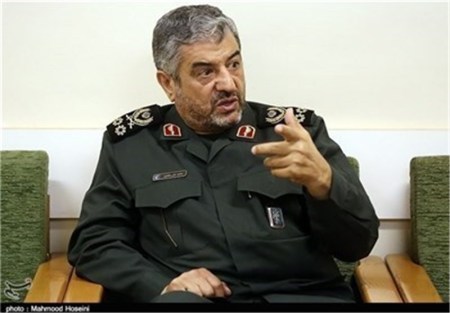
IRG leader

TEHRAN (Tasnim) – The occupying Zionist regime of Israel is within the range of most of the missiles in IRGC’s possession, Commander of the Islamic Revolution Guards Corps Major General Mohammad Ali Jafari said Tuesday.

Whoever feels more hostility towards Iran will be naturally more fearful of the country’s military capabilities and achievements, the top general told reporters on Tuesday on the sidelines of an ongoing missile drill staged by the IRGC, codenamed ‘Might of Velayat’.

Since most of the IRGC missiles have the enough range to reach the lands occupied by the Zionist regime of Israel, the Tel Aviv regime has the most degree of concerns, he added.

“Enemies of the Islamic Revolution and security in the region should be in panic about the roar of the IRGC missiles,” Jafari stated.

The commander noted that the launch of various types of missiles in the drill was only a slight indication that the IRGC’s missile silos, scattered all over the country, are fully operational.

He underscored that the country’s missile capabilities have been achieved under sanctions imposed by the foreigners, stressing that Iran’s missiles are fully indigenous.

The message of the missile drills is security for Iran and the neighboring countries, Major General Jafari underlined.

The missile drill has been in progress for a couple of days, but its final stage kicked off on Tuesday in different parts of the country.

According to the IRGC, the exercise is meant to demonstrate Iran’s might and sustainable security in light of unity, convergence, empathy and harmony.

Iranian officials have already made it clear that the country’s military program, including the routine exercises and test of new missiles, will not be hampered by anything, including a recent nuclear deal with the Group 5+1 (Russia, China, the US, Britain, France and Germany), which took effect on January 16.

Iran Threatens to Walk Away From Nuke Deal After New Missile Test

March 8, 2016

Iran Threatens to Walk Away From Nuke Deal After New Missile Test, Washington Free Beacon, March 8, 2016

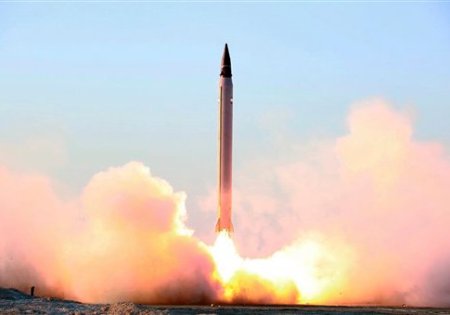
FILE - This file picture released by the official website of the Iranian Defense Ministry on Sunday, Oct. 11, 2015, claims to show the launching of an Emad long-range ballistic surface-to-surface missile in an undisclosed location. Iran tested a ballistic missile again in November 2015, a U.S. official said Dec. 8, describing the second such test since this summerís nuclear agreement. The State Department said only that it was conducting a "serious review" of such reports. The test occurred on Nov. 21, according to the official, coming on top of an Oct. 10 test Iran confirmed at the time. The official said other undeclared tests occurred earlier than that, but declined to elaborate. The official wasnít authorized to speak on the matter and demanded anonymity. (Iranian Defense Ministry via AP)

FILE – This file picture released by the official website of the Iranian Defense Ministry on Sunday, Oct. 11, 2015, claims to show the launching of an Emad long-range ballistic surface-to-surface missile in an undisclosed location. Iran tested a ballistic missile again in November 2015, a U.S. official said Dec. 8, describing the second such test since this summerís nuclear agreement. The State Department said only that it was conducting a “serious review” of such reports. The test occurred on Nov. 21, according to the official, coming on top of an Oct. 10 test Iran confirmed at the time. The official said other undeclared tests occurred earlier than that, but declined to elaborate. The official wasnít authorized to speak on the matter and demanded anonymity. (Iranian Defense Ministry via AP)

Iranian leaders now say that they are poised to walk away from the deal if the United States and other global powers fail to advance the Islamic Republic’s “national interests.”

*************************

Iran on Tuesday again threatened to walk away from the nuclear agreement reached last year with global powers, hours after the country breached international agreements by test-firing ballistic missiles.

Iran’s most recent ballistic missile test, which violates current U.N. Security Council resolutions, comes a day after the international community’s nuclear watchdog organization disclosed that it is prohibited by the nuclear agreement from publicly reporting on potential violations by Iran.

Iranian leaders now say that they are poised to walk away from the deal if the United States and other global powers fail to advance the Islamic Republic’s “national interests.”

“If our interests are not met under the nuclear deal, there will be no reason for us to continue,” Abbas Araqchi, Iran’s deputy foreign minister, warned during remarks delivered to a group of Iranian officials in Tehran.

“If other parties decide, they could easily violate the deal,” Araqchi was quoted as saying by Iran’s state-controlled media. “However, they know this will come with costs.”

Araqchi appeared to allude to the United States possibly leveling new economic sanctions as a result of the missile test. The Obama administration moved forward with new sanctions earlier this year as a result of the country’s previous missile tests.

Iran’s latest missile test drew outrage from longtime regime critics on Capitol Hill.

“The administration’s response to Iran’s new salvo of threatening missile tests in violation of international law cannot once again be, it’s ‘not supposed to be doing that,’” Sen. Mark Kirk (R., Ill.) said in a statement. “Now is the time for new crippling sanctions against Iran’s Islamic Revolutionary Guard Corps, Ministry of Defense, Aerospace Industries Organization, and other related entities driving the Iranian ballistic missile program.”

House Majority Leader Kevin McCarthy (R., Calif.) warned that the nuclear agreement has done little to moderate Iran’s rogue behavior.

“Far from pushing Iran to a more moderate engagement with its neighbors, this nuclear deal is enabling Iran’s aggression and terrorist activities,” McCarthy said in a statement. “Sanctions relief is fueling Iran’s proxies from Yemen to Iraq to Syria to Lebanon. Meanwhile, Khamenei and the Iranian regime are acting with impunity because they know President Obama will not hold them accountable and risk the public destruction of his nuclear deal, the cornerstone of the president’s foreign policy legacy.”

McCarthy went on to demand that the Obama administration step forward with new sanctions as punishment for the missile test.

Meanwhile, the U.S. State Department had difficulty Monday explaining why the nuclear agreement limits public reporting by the International Atomic Energy Agency, or IAEA, on potential deal violations by Iran.

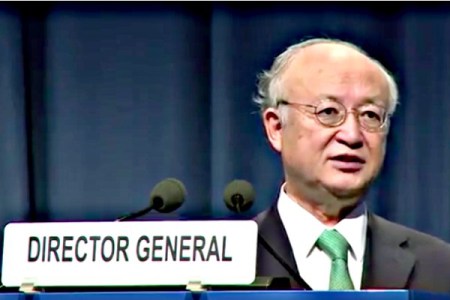
Yukiya Amano, the IAEA’s chief, disclosed on Monday that his agency is no longer permitted to release details about Iran’s nuclear program and compliance with the deal. The limited public reporting is a byproduct of the nuclear agreement, according to Amano.

When asked about these comments again Tuesday, a State Department official told the Free Beacon that the IAEA’s reports would continue to provide a complete picture of Iran’s nuclear program, though it remains unclear if this information will be made publicly available.

“There isn’t less stringent monitoring or reporting on Iran’s nuclear program,” the official said. “The IAEA’s access to Iran’s nuclear program and its authorization to report on it has actually expanded. It’s a distortion to say that if there is less detail in the first and only post-Implementation Day IAEA report then that somehow implies less stringent monitoring or less insight into Iran’s nuclear program.”

While the IAEA “needs to report on different issues” under the final version of the nuclear agreement, the agency continues to provide “a tremendous amount of information about Iran’s current, much smaller nuclear program,” the source maintained.

The IAEA’s most recent February report—which was viewed by nuclear experts as incomplete and short on detail—“accurately portrays the status of Iran’s nuclear program,” including its efforts to uphold the nuclear deal, the official added.

“We expect this professional level of reporting to continue in the future,” the official said.

Thumbing nose at US, Iran unveils depot for nuclear-capable missiles

January 5, 2016

Thumbing nose at US, Iran unveils depot for nuclear-capable missiles, DEBKAfile, January 5, 2016

In clear defiance of the Obama administration, Iran revealed on Tuesday a second underground facility for storing ballistic missiles capable of carrying nuclear warheads.

In a one-minute video shown on Iranian state-run television,  Ali Larijiani, speaker of Iran’s parliament, was shown inspecting the depot of “Emad” ballistic missiles along with officers from Iran’s Revolutionary Guard Corps.

DEBKAfile military sources: The Emad, which has a 750-kilogram warhead and a range of 1,700 kilometers, is capable of striking any point in Israel. Iran carried out a successful test of the missile four months ago, in October 2015.

Washington announced that the test was a violation of the nuclear agreement between Iran and Western powers. Tehran replied that it never agreed in any stage of the negotiations to limit its missile program in the framework of the agreement.

At the end of December, the Obama administration announced that it was weighing the possibility of imposing fresh sanctions on Iran following the launch of the missile. Several days later, however, Washington withdrew the plan after Tehran threatened that it would view the imposition of new sanctions as a breach of the nuclear agreement.

On Tuesday, Iran not only said it will continue to develop the Emad, but claimed the weapon is already in operational use by the Revolutionary Guard Corps.

Iran Deal Backers Embarrassed By Obama Admin’s Sanctions Blunder

January 4, 2016

Iran Deal Backers Embarrassed By Obama Admin’s Sanctions Blunder, Washington Free Beacon, January 4, 2016

Hassan Rouhani

A last minute delay last week in the implementation of new Iran sanctions has some prominent congressional backers of the nuclear deal accusing the Obama administration of capitulating to Iranian demands, according to sources both on and off Capitol Hill.

Senior Obama administration officials at the White House’s National Security Council told Congress Wednesday morning that new sanctions were coming as a result of Iran’s repeated ballistic missile tests, which violate current United Nations Security Council Resolutions prohibiting such activity.

However, the administration quietly walked back its announcement, telling lawmakers that the sanctions would be indefinitely delayed.

The move sparked a fierce backlash among prominent congressional leaders who have served as chief advocates for the administration’s efforts to ink a nuclear deal with Iran.

Sources who spoke to the Washington Free Beacon about the delay claim that the administration has repeatedly allowed Iran to dictate the terms of the deal out of fear that the Islamic Republic will ditch the deal before it is officially implemented later this month.

Iranian leaders have made clear that any new U.S. sanctions will force it to walk away from the nuclear agreement. In the wake of the new sanctions debate, Iranian military leaders announced over the weekend they are working to increase the strength and destructive power of the country’s arsenal.

The White House’s initial message to Congress on Wednesday morning offered tough rhetoric chastising Iran’s ballistic missile program and its recent test firings.

“Iran’s ballistic missile program poses a significant threat to regional and global security, and it will continue to be subject to international sanctions,” Adam Szubin, the Treasury Department’s acting under secretary for terrorism and financial intelligence, said in an embargoed statement that was forwarded to congressional offices that morning and viewed by the Free Beacon.

“We have consistently made clear that the United States will vigorously press sanctions against Iranian activities outside of the Joint Comprehensive Plan of Action—including those related to Iran’s support for terrorism, regional destabilization, human rights abuses, and ballistic missile program,” Szubin maintained in the statement, which was later scrapped.

Hours after that initial communication was sent to the Hill, the administration nixed the announcement, saying in a subsequent communication that the new sanctions—which were to hit 11 entities and individuals known to be enabling Iran’s missile program—would be indefinitely delayed.

Lawmakers who just that morning had applauded the new sanctions were not pleased.

Rep. Steny Hoyer (D., Md.), a leading supporter of the Iran deal, blasted the move, expressing disappointment with the administration’s efforts to appease Iran.

“I am disappointed that the Administration has delayed punitive action in response to Iran’s recent ballistic missile tests,” Hoyer said in a statement. “We are always in a sensitive moment in our dealings with Iran, and there is never a perfect time to undertake such actions. But Iran must know with certainty that violating U.N. Security Council resolutions, both inside and outside the scope of the Joint Comprehensive Plan of Action (JCPOA), will be met with serious consequences.”

Sen. Chris Coons (D., Del.), another leading deal supporter who initially praised the new sanctions, also expressed dismay at the administration’s move to delay the effort.

“I believe in the power of vigorous enforcement that pushes back on Iran’s bad behavior,” Coons told the Wall Street Journal. “If we don’t do that, we invite Iran to cheat.”

When asked to address the issue on Sunday, a senior Obama administration official told the Free Beacon that there are still “remaining issues” that need to be addressed before new sanctions are announced.

“As we’ve said, we’ve been looking for some time‎ at options for additional actions related to Iran’s ballistic missile program based on our continued concerns about its activities, including the October 10th launch,” the senior official explained, reiterating the White House’s commitment to sanctions.

“We are considering various aspects related to additional designations, as well as evolving diplomatic work that is consistent with our national security interests,” the official said. “As always, we keep Congress informed about issues related to Iran sanctions, and will continue to do so as we work through remaining issues.”

A State Department spokesman echoed this stance, telling the Free Beacon that it continues to explore ways to increase sanctions on Iran’s ballistic missile program.

Sanctions expert Mark Dubowitz, executive director of the Foundation for Defense of Democracies, told the Free Beacon that the administration might reconsider new sanctions once it strikes a “side deal” with Iran.

“I would expect that the administration will return to these sanctions after cutting some kind of side deal with the Iranians offering even more unilateral concessions,” Dubowitz said.

Critics of the move remain skeptical.

“To push back against Iran’s repeated missile and human rights provocations, Congress should pass the Menendez-Kirk bill to immediately renew a critical Iran sanctions law that expires this year,” said Sen. Mark Kirk (R., Ill.), an opponent of the Iran nuclear deal.

One consultant who has worked with Congress on issues pertaining to the nuclear deal told the Free Beacon that the administration fears Iran’s threats to break the deal.

“First the Obama administration strong-armed congressional Democrats into approving a politically toxic nuclear deal, under the pretense that at least the White House would fight Iranian aggression in other ways,” the source said, explaining that lawmakers who have defended the deal were made to look foolish by the sanctions delay.

“People like Coons and Hoyer went home and told constituents that they’d at least make sure Iranian terrorism and missile work was punished,” the source said. “Now the Obama team has deprived them of even that fig leaf. They’re going to have to defend total capitulation to their constituents.”

Meanwhile, Iran announced on Friday that it is working to significantly boost “the destruction power and precision” of its missiles, according to comments carried in the country’s state-controlled press.

Iran President Hassan Rouhani instructed the country’s military leaders to strengthen the missile program following rumors that the United States was contemplating new sanctions.

“Following [on] the president’s letter, we held numerous meetings with the executive officials, commanders, and officials in the missile sector and decided work out appropriate plans as soon as possible to enhance the defensive power and capability as well as the effective deterrence power of our missiles contrary to the will of the hegemonic system which seeks to restrict the Islamic Republic militarily,” Hossein Dehqan, Iran’s defense minister, said.
The Mullahs Thank Mr. Obama

January 3, 2016

The Mullahs Thank Mr. Obama, Power LineScott Johnson, January 3, 2016

The American people should know that we have sustained a defeat without a war, the consequences of which will travel far with us along our road.

******************

Yesterday’s Wall Street Journal carries an incisive editorial (“The mullahs thank Mr. Obama,” accessible here via Google) on developments with the Islamic Republic of Iran. Every step along the way, Iran proves itself the mortal enemy of the United States, and yet President Obama thinks otherwise.

Iranian intentions are clear. Their actions comport with their announced view of the world. When the mullahs chant “Death to America,” we have no ground for believing they don’t mean it. No ground, that is, other than wishful thinking.

As John put it, it is difficult to reconcile Obama administration policies strengthening the Iranian regime with a good faith intention to pursue peace in the Middle East or to advance the national security interests of the United States. We can only infer that Obama’s highly ideologized view of the world is immune to experience.

The Journal’s editorial provides this handy summary of current complexities:

The U.S. and United Nations both say Iran is already violating U.N. resolutions that bar Iran from testing ballistic missiles. Iran has conducted two ballistic-missile tests since the nuclear deal was signed in July, most recently in November. The missiles seem capable of delivering nuclear weapons with relatively small design changes.

The White House initially downplayed the missile tests, but this week it did an odd flip-flop on whether to impose new sanctions in response. On Wednesday it informed Congress that it would target a handful of Iranian companies and individuals responsible for the ballistic-missile program. Then it later said it would delay announcing the sanctions, which are barely a diplomatic rebuke in any case, much less a serious response to an arms-control violation.

Under the nuclear accord, Iran will soon receive $100 billion in unfrozen assets as well as the ability to court investors who are already streaming to Tehran. Sanctioning a few names is feckless by comparison, and Iran is denouncing even this meager action as a U.S. violation of the nuclear deal. Iranian President Hassan Rouhani responded to the sanctions reports on Thursday by ordering his defense minister to accelerate Iran’s missile program. Your move, Mr. Obama.

Opponents of the nuclear accord predicted this. Mr. Obama says the deal restricts Iranian action, but it does far more to restrict the ability of the U.S. to respond to Iranian aggression. If the U.S. takes tough action in response to Iran’s missile tests or other military provocations, Iran can threaten to stop abiding by the nuclear deal. It knows the world has no appetite for restoring serious sanctions, and that Mr. Obama will never admit his deal is failing. The mullahs view the accord as a license to become more militarily aggressive.

Further proof came Wednesday when U.S. Central Command acknowledged that Iranian Revolutionary Guard vessels last week fired several rockets that landed within 1,500 yards of the aircraft carrier Harry S. Truman. A Revolutionary Guard spokesman Thursday denied the incident but a day earlier the semiofficial Tabnak news agency quoted an unnamed Iranian official as saying the rockets were launched to warn the U.S. Navy away from “a forbidden zone” in the Persian Gulf.

The Strait of Hormuz is one of the world’s most heavily trafficked waterways, and the USS Truman carrier group has every right to sail there. By any measure the rocket launch was a hostile act that could have resulted in American casualties.

This follows Iran’s arrest in October of Iranian-American businessman Siamak Namazi, who according to Iranian media reports is being held in Evin Prison though no charges have been filed. The reports suggest that Mr. Namazi is suspected of spying because he is one of the World Economic Forum’s “Young Global Leaders.” That’s the dangerous outfit that sponsors the annual gabfest in Davos.

Iran has also shown its gratitude for the nuclear deal by convicting Washington Post reporter Jason Rezaian on absurd charges of espionage. The Iranian-American has been held for more than 500 days.

The White House’s media allies are blaming all of this on Iranian “hard-liners” who are supposedly trying to undermine President Rouhani for having negotiated the nuclear deal. Memo to these amateur Tehranologists: The hard-liners run Iran.

The American people should know that we have sustained a defeat without a war, the consequences of which will travel far with us along our road.

Deputy National Security Adviser Ben Rhodes renders his deep thoughts via Twitter (below).

In the annals of inanity, this is Hall of Fame material.

The Iran deal will be implemented. The United States has an Embassy in Havana. .


One day later: Obama backs off new Iran sanctions

January 1, 2016

One day later: Obama backs off new Iran sanctions, Israel National News, Elad Benari, January 1, 2016

(Please see also, Possible New US Sanctions against Iran “Illegal”, Says Spokesman and Rpt: U.S. Preparing New Sanctions On Iran After Rocket Test – America’s Newsroom. — DM)

Pussy ObamaPresident Barack Obama

New American sanctions on Iran over its ballistic missile program? Not so fast.

The White House has delayed its plan to impose new financial sanctions on Iran for its ballistic missile program, American officials said Thursday, according to The Wall Street Journal.

The announcement comes just one day after it was reported that the Obama administration is preparing new sanctions on international companies and individuals who played a role in Iran’s ballistic endeavors.

According to the officials, the decision to back off the new sanctions comes amid growing tensions with Iran over the nuclear deal struck earlier this year.

The officials said the Obama administration remains committed to combating Iran’s missile program and that sanctions being developed by the U.S. Treasury Department remain on the table. They also said imposing such penalties was legal under the landmark nuclear agreement forged between global powers and Iran in July.

But they offered no definitive timeline for when the sanctions would be imposed after the decision was made to delay them. At one point, they were scheduled to be announced Wednesday morning in Washington, according to a notification the White House sent to Congress.

In October, Iran conducted a ballistic missile test, eliciting strong condemnation from members of the UN Security Council.

A month later, it tested another ballistic missile, and an American official said other undeclared tests occurred earlier than that.

A team of UN sanctions monitors said in a confidential report seen byReuters on December 15 that a medium-range Emad rocket that Iran tested on October 10 was a ballistic missile capable of delivering a nuclear warhead, making it a violation of a UN Security Council resolution.

Iran, however, has rejected claims that the missiles it is testing are capable of delivering a nuclear warhead and has also rejected the idea that the missile tests are against UN resolutions.

Republican leaders on Thursday accused the Obama administration of losing its will to impose the sanctions, after Tehran countered on Thursday that it would accelerate the development of its arsenal.

“If the president’s announced sanctions ultimately aren’t executed, it would demonstrate a level of fecklessness that even the president hasn’t shown before,” said Rep. Mike Pompeo (R-KS), a leading critic of the nuclear deal, according to The Wall Street Journal.

President Hassan Rouhani had earlier said on Twitter that he had instructed Iran’s Ministry of Defense to accelerate the development of ballistic missiles in response to the news reports of the impending U.S. sanctions.

Asked to comment, State Department spokesman John Kirby said the timeline for missile-related sanctions was unrelated to threats made by Iran on Thursday and the broader nuclear deal recently reached with Tehran.

The State Department offered no explanation for the delay, noted The Wall Street Journal.

“We’ve been clear from the outset that—outside the parameters of Iran’s nuclear program—we would continue to take appropriate actions to address Tehran’s destabilizing behavior,” said Kirby.

Rpt: U.S. Preparing New Sanctions On Iran After Rocket Test – America’s Newsroom

December 31, 2015

Rpt: U.S. Preparing New Sanctions On Iran After Rocket Test – America’s Newsroom, Fox News via You Tube, December 31, 2015

(Please see also, Possible New US Sanctions against Iran “Illegal”, Says Spokesman. — DM)


https://www.youtube.com/watch?v=fbVWxHuLkbQ

Possible New US Sanctions against Iran “Illegal”, Says Spokesman

December 31, 2015

Possible New US Sanctions against Iran “Illegal”, Says Spokesman, Tasnim News Agency, December 31, 2015

Tasnim img

TEHRAN (Tasnim) – Iranian Foreign Ministry Spokesman Hossein Jaberi Ansari on Thursday lashed out at the new sanctions the US administration is preparing to impose on Iran, saying Tehran has already warned Washington against such unilateral and illegal moves.

“Such measures are unilateral, arbitrary, and illegal, and the Islamic Republic of Iran has already warned the US administration (against such moves),” Jaberi Ansari stressed.

He made the remarks in reaction to recent reports that the Obama administration is preparing to impose its first financial sanctions on Iran since Tehran and six world powers, including the US, reached a landmark nuclear agreement in July.

“As they themselves have already announced, Iran’s missile program has nothing to do with the JCPOA (the nuclear deal), and nothing could deprive the Islamic Republic of Iran from its legitimate and legal rights to reinforce its defense power and national security,” he asserted.

Therefore, Jaberi Ansari went on to say, Iran will maintain its attempts to improve its defense power in reaction to any US interference against the Islamic Republic’s defense programs.

Iran in October successfully test-fired a homegrown ballistic missile dubbed ‘Emad’, a long-range guided projectile that can hit targets with high precision.

Using the missile test as a pretext, US officials announced on Wednesday that the Treasury Department will put in the blacklist nearly a dozen companies and individuals in Iran, Hong Kong and the United Arab Emirates for their alleged role in developing Iran’s ballistic-missile program.

Tehran has denied that the missile launch was in violation of UN resolutions, with Foreign Minister Mohammad Javad Zarif saying that it was not designed to carry nuclear warheads.

Iran’s test of missiles is an issue relating to defense of its territorial integrity and has nothing to do with the comprehensive nuclear deal between Tehran and world powers or with a subsequent resolution the UNSC passed to endorse the accord, Iran’s foreign minister underscored in October.

Obama Admin: Congressional Crackdown on Terror Will Violate Iran Deal

December 21, 2015

Obama Admin: Congressional Crackdown on Terror Will Violate Iran Deal, Washington Free Beacon, December 21, 2015

Polish President Bronislaw Komorowski met with outgoing United States Ambassador to Poland Stephen D. Mull. Ambassador have received state distinctions from President in Belweder Palace in Warsaw. | Warsaw, Poland, 07 July 2015 (Photo by Mateusz Wlodarczyk/NurPhoto) *** Please Use Credit from Credit Field ***

Stephen Mull / AP

Senior Obama administration officials are expressing concern that congressional attempts to tighten laws preventing terrorists from entering the United States could violate the Iran nuclear agreement and prompt Tehran to walk away from the agreement.

Congress is considering measures that would tighten the Visa Waiver Program to make it harder for potential terrorists to legally enter the United States by increasing restrictions on individuals who have travelled to countries with prominent terrorist organizations from bypassing security checks upon entering the United States.

Iranian officials have in recent days repeatedly issued threatening statements to the Obama administration, saying that such moves would violate the nuclear agreement, and the Obama administration last week conveyed the Iranian anger to American lawmakers.

Stephen Mull, the State Department official in charge of implementing the Iran deal, warned the Senate Foreign Relations Committee late last week that these congressional efforts “could have a very negative impact on the deal.”

Under the revised law, which came in the week of a deadly terrorist attack in California, individuals who have travelled to Iran—a lead sponsor of global terrorism—would no longer be eligible to participate in the Visa Waiver Program, which permits individuals from 38 partner nations to more easily enter the United States.

Congress remains concerned that gaps in the program could prevent federal law enforcement officials from detecting terror-tied individuals before they are granted entrance to U.S. soil.

However, a portion of the Iran nuclear deal mandates that the United States not take any action that could harm Iran’s economic relationships with other countries. Iranian officials maintain that the new restrictions violate this passage of the deal.

Ali Larijani, the speaker of Iran’s parliament, said last week that these tightened measures “are aimed at harassment” and that they “blatantly violate the nuclear agreement,” according to comments carried by the Iranian state-controlled press.

Larijani warned that this action will detonate the deal before it has even been implemented.

“If the Americans pursue the plan, they will destroy an achievement with their own hands since it is against the [nuclear deal] and it will trouble them,” he warned.

Rep. Patrick Murphy (D., Conn.) echoed these concerns last week when he questioned Mull during a Senate hearing.

Visa waiver reform efforts include “a naming of Iran such that individuals who have travelled to Iran will no loner be eligible for the visa waiver program,” Murphy said. “There has been a suggestion because there is an element of the agreement that obligates us to not to take steps that would stop economic relations between other nations and Iran that we could perhaps be in jeopardy of breaching the agreement.”

Mull agreed with this assessment.

“I have heard from very senior, and Secretary [of State John] Kerry has as well, from very senior officials of differing European allies of ours that it could have a very negative impact on the deal,” he said.

Sources working with Congress on the Iran deal criticized the Obama administration for attempting to stymie increased action on terrorism due to its desire to preserve the nuclear deal.

“According to the Obama administration’s latest interpretation, the nuclear deal allows Iran to test ballistic missiles in violation of international law, but does not allow Congress to prevent terrorists from coming into the United States,” Omri Ceren, the managing director of press and strategy at The Israel Project, a D.C.-based organization that works with journalists on Middle East issues, told the Washington Free Beacon.

Seyed Araqchi, Iran’s deputy foreign minister, also warned that Iran is prepared to “take action” against the United States for implementing visa restrictions.

Iran’s latest threat to break the deal comes amid numerous Iranian provocations, including multiple tests of advanced ballistic missiles, acts prohibited under United Nations Security Council resolutions.

The Obama administration repeatedly said that, while it does not agree with those launches, they do not violate the nuclear deal.

Kerry Welcomes End of Investigation into Iran’s Past Nuclear Efforts (Including Lies)

December 16, 2015

Kerry Welcomes End of Investigation into Iran’s Past Nuclear Efforts (Including Lies), The Jewish PressLori Lowenthal Marcus, December 15, 2015

IAEA-AmanoIAEA’S Dir. Gen. Yukiya Amano in Vienna. Sept. 14, 2015. Photo Credit: YouTube screen capture

U.S. Secretary of State John Kerry is thrilled that the world’s nuclear watchdog agency has decided, despite the continued lying by Iran about its nuclear weapons program and its violations of UN ballistic missile bans, to close its investigation into whether there had been any possible military dimensions to Iran’s nuclear weapons program.

Kerry’s statement, released on Tuesday, Dec. 15, noted that a Dec. 2 assessment by Yukiya Amano, Director General of the IAEA, revealed Iran had engaged in activities consistent with a nuclear weapons program as recently as a mere six years ago.

For some reason, Kerry seemed to find that reassuring.

The Secretary of State said that with the consensus adoption by the IAEA Board of Governors, it will now be able to “turn its focus now to the full implementation and verification of the Joint Comprehensive Plan of Action (JCPOA).”

In other words, everyone can now move towards lifting sanctions against Iran which not only continued to lie about its past nuclear activity, but which has already twice violated United Nations missile bans on it since the time the JCPOA was agreed to in July.

U.S. Ambassador to the U.N. Samantha Power acknowledged Iran’s October violation of the missile ban.

Iran’s latest violation of the missile ban was made public by a United Nations Panel in a report dated Dec. 11, Reuters reported on Tuesday. That report was forwarded to the UNSC’s sanctions committee.

Iran has consistently said it will defy any limitations on its ballistic missile program, whether enshrined in UN resolutions or otherwise.

Congressman Mike Pompeo (R-KS) was outraged by the IAEA’s decision, and the green light it gives to the administration’s willingness to move towards implementation of its nearly toothless Nuclear Iran Deal.

“The vote today is a total capitulation to the Iranian regime’s aggressively dishonest behavior with respect to its commitment under the Joint Comprehensive Plan of Action (JCPOA). Sadly, though not surprisingly, the IAEA Board of Governors closed the investigation into Iran’s nuclear program, despite proof of Iran’s dishonesty and in the absence of thorough, truthful answers to many outstanding issues. The president will now use this decision to lift sanctions on Iran without having the complete truth regarding its nuclear weapons related activity. This is a grave and historic error that sends the wrong message,” wrote Pompeo.

The Kansas member of Congress pointed out that the Iran deal, which lasts for more than a decade, means many more years of the U.S. and its partner nations look the other way while the world’s leading sponsor of terrorism continues “cheating, lying, and breaking the rules.”

“This is wholly unacceptable and will most assuredly lead to more of the same from Ayatollah Khamenei. Other rogue nations now know too that America will accept deceit and fraud in dealings with respect to nuclear proliferation.”

Kerry said on Tuesday that the watchdog agency can still investigate Iran if “there is reason to believe” that country is “pursuing any covert nuclear activities in the future, as it had in the past. In fact, the JCPOA – by providing for implementation of the Additional Protocol as well as other enhanced transparency measures – puts the IAEA in a far better position to pursue any future concerns that may arise.”

The IAEA may be able to continue to investigate, but given that past violations have been met with no consequences, it’s a cold assurance that such investigations can continue.

Incredibly, Kerry’s statement concludes:

Today’s resolution makes clear that the IAEA’s Board of Governors will be watching closely to verify that Iran fully implements its commitments under the JCPOA. We will remain intensely focused going forward on the full implementation of the JCPOA in order to ensure the exclusively peaceful nature of Iran’s nuclear program.

Isn’t that comforting?