Archive for the ‘Iran’ category

Netanyahu’s epic understandings with Egyptian, Saudi and UAE rulers – a potential campaign weapon

December 6, 2014

Netanyahu’s epic understandings with Egyptian, Saudi and UAE rulers – a potential campaign weapon, DEBKAfile, December 6, 2014

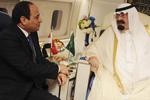
Abdullah-al_sisiEgyptian and Saudi rulers take charge of Arab affairs

Netanyahu may or may not opt to brandish Israel’s diplomatic breakthrough to the Arab world as campaign fodder to boost his run for re-election.  Whatever he decides, the rulers of Saudi Arabia, the Arab emirates and Egypt are turning out to have acquired an interest in maintaining him in office as head of the Israeli government, in direct opposition to President Obama’s ambition to unseat him.

******************

The six Gulf Cooperation Council (GCC) rulers meet in the Qatari capital of Doha next week amid high suspense across the Arab world. Its agenda is topped by moves to finally unravel the 2010 Arab Spring policy championed by US President Barack Obama, moves that also bear the imprint of extensive cooperation maintained on the quiet between Israel and key Arab rulers.

DEBKAfile reports that the Doha parley is designed to restore Egypt under the rule of President Abdel Fatteh El-Sisi to the lead role it occupied before the decline of Hosni Mubarak. Another is to root out the Muslim Brotherhood by inducing their champion, the young Qatari ruler, Emir Tamim bin Hamad Al Thani, to drop his government’s support.

At talks taking place in Riyadh ahead of the summit, Qatari officials appeared ready to discontinue the flow of weapons, funds and intelligence maintained since 2011 to the Brothers and their affiliates across the Arab world (Libya, Egypt, Syria, Jordan and Hamas-ruled Gaza), as well shutting down the El Jazeera TV network – or at least stopping the channel’s use as the Brotherhood’s main propaganda platform.

The Doha summit is designed to crown a historic effort led by Saudi King Abdullah, UAE ruler Sheikh Mohammed bin Zayed and President El-Sisi to undo the effects of the Obama administration’s support for elements dedicated to the removal of conservative Arab rulers, such as the Brotherhood.

They have found a key ally in this drive in Israel’s Prime Minister Binyamin Netanyahu, who took advantage of the chance of an epic breakthrough in relations with the leading bloc of Arab nations, with immediate and far-reaching effect on Israeli security and its standing in the region.

Yet at the same time, Netanyahu has kept this feat under his hat – even while smarting under a vicious assault by his detractors – ex-finance minister Yair Lapid and opposition leader Yakov Herzog of Labor – on his personal authority and leadership credibility (“everything is stuck,” “he’s out of touch.”) and obliged to cut short the life of his government for a general election on March 17.

He faces the voter with the secret still in his pocket of having achieved close coordination with the most important Arab leaders – not just on the Iranian nuclear issue and the Syrian conflict, but also the Palestinian question, which has throughout Israel’s history bedeviled its ties with the Arab world.

When Yair Lapid, whom Netanyahu sacked this week, boasted, “I am talking to the Americans” while accusing the prime minister of messing up ties with Washington, he meant he was talking to the Americans close to Barack Obama, whom Egypt, Saudi Arabia and Abu Dhabi, hand in hand with Netanyahu, have judged adverse to their regimes.

This Arab-Israeli collaboration encompasses too many areas to keep completely hidden. Its fruits have begun breaking surface in a string of events.

This week, Israel apparently out of the blue, quietly agreed to Egypt deploying 13 army battalions in Sinai (demilitarized under their 1979 peace treaty), including tanks, and flying fighter jets over terrorist targets.

A joint Saudi-Israeli diplomatic operation was instrumental in obstructing a US-Iran deal on Tehran’s nuclear program.

Another key arena of cooperation is Jerusalem.

Friday, Dec. 5, Jordan announced the appointment of 75 new guards for the Al Aqsa Mosque compound on Temple Mount. The director of the mosque, Sheikh Omar al-Kiswani, said they will begin work in the coming days.

This was the outcome of Jordanian King Abdullah’s talks with the Egyptian president in Cairo Sunday, Nov. 30, in which they agreed that the Muslim Waqf Authority on Temple Mount must change its mode of conduct and replace with new staff the violent elements from Hamas, the Al Tahrir movement and Israeli Arab Islamists, which had taken charge of “security.”.

The Moslem attacks from the Mount on Jewish worshippers praying at the Western Wall below and Israeli police have accordingly ceased in the two weeks since Israel lifted its age restrictions on Muslim worshippers attending Friday prayers at Al Aqsa. Israel groups advocating the right to Jewish prayer on Temple Mount were discreetly advised to cool their public campaign.

The Palestinian riots plaguing Jerusalem for months have died down, except for isolated instances, since, as DEBKAfile revealed, Saudi and Gulf funds were funneled to pacify the city’s restive Palestinian neighborhoods.

Cairo and the Gulf emirates have used their influence with Palestinian Authority Chairman Mahmoud Abbas to get him to moderate his invective against Israel and its prime minister, and slow his applications for Palestinian membership of international bodies as platforms for campaigning against the Jewish state.

Concerned by the way the mainstream Arab world was marginalizing the Palestinian question, Hamas leader Khaled Meshaal chose his moment Friday – ahead of the White House meeting between the Jordanian monarch and President Obama – to try and re-ignite the flames of violence in Jerusalem. He went unheeded.

Netanyahu may or may not opt to brandish Israel’s diplomatic breakthrough to the Arab world as campaign fodder to boost his run for re-election.  Whatever he decides, the rulers of Saudi Arabia, the Arab emirates and Egypt are turning out to have acquired an interest in maintaining him in office as head of the Israeli government, in direct opposition to President Obama’s ambition to unseat him.

Op-Ed: Obama Empowers Enemies and Imperils Friends

December 4, 2014

Op-Ed: Obama Empowers Enemies and Imperils Friends, Israel National News, Matthew M. Hausman, December 2, 2014

The panel concluded that the United States and Israel have similar security concerns and identical interests in preserving cultural and political values common to both their societies.  Accordingly, they find the administration’s policies in the region counterproductive and dangerous.

Clearly, Israel cannot place her trust in the Obama administration, but she can still draw strength and inspiration from Yehoshua, whose words have resonated for thousands of years and will continue to do so long after this president leaves office.
*********************

Even after the recent war in Gaza – and in spite of the dangers posed by ISIS and other Islamist forces – many American Jews still do not fully comprehend the risk to Israel and the West of a rejectionist ideology that promotes jihad and genocide.  But the threat is real and arises from a doctrine that demands total submission from the vanquished.  In failing to recognize the scope of the threat, western progressives – Jews and Gentiles alike – view the world as they believe it should be, not the way it actually is.  The reality, however, is that liberal ideals are irrelevant in regions where politics have no existence independent of religion and religion is unforgivingly totalitarian.

This failure is as much political as intellectual.  Moreover, it engenders complacency with the foreign policy of an administration that has not only failed to respond adequately to the Islamist threat, but whose actions have bolstered fundamentalism across the Mideast and undercut the interests of Israel – America’s only stable and dependable ally in the region.

These points were articulated at a security panel conference entitled, “Israel and the US: The Fight to Save Western Civilization from Global Jihad,” which took place in Massachusetts recently.  The program featured retired Generals Jerry Boykin and Tom McInerney, former CIA Station Chief Gary Berntsen, and retired Lt. Colonel (and former congressman) Allen West.  The program focused on the need to recognize the threat of jihadist extremism, as well as the myriad foreign policy failures that have helped destabilize the Mideast.

Secular progressives have become unwitting foils for Islamist radicalism by their failure to acknowledge its supremacist aspirations and their perception of Muslims as a vulnerable minority despite a global population of approximately 1.6 billion.  This view is a little ironic considering the progressive tendency to disparage Jewish national claims and values and to condemn any perceived Christian intrusion into American politics, but nevertheless to discourage speech that criticizes Islam or mentions any Muslim involvement in terrorism.

Secular progressives often support anti-blasphemy laws and are quick to label as racists those who criticize Muslims on political grounds, although Islam is a religion and is not defined by race or ethnicity.  Moreover, while they often rationalize Islamist extremism as an indigenous voice of protest against western chauvinism, its ubiquity is the result of conquest,colonialism, and the subjugation of “infidel” minorities.  It is the height of cognitive dissonance when feminists, gay rights activists and other social progressives express support for religious extremists who persecute and kill based on gender, sexuality, and dissenting religious belief or political opinion, but condemn Israel – the only country in the Mideast where minorities have equal rights and protections under the law.

Over the last six years, the administration has sought rapprochement with the Islamic world through a series of questionable policies.  Domestically, it has discouraged official use of terms such as “Islamic terrorism,” instead referring to terror incidents involving Muslims as criminal acts, workplace violence or violent extremism.  On the foreign stage, it enabled the rise of the Muslim Brotherhood in Egypt, provided funding in areas governed by Hamas despite that organization’s stated goals of jihad and genocide, and failed to honor strategic commitments to Israel during the Gaza war.

Perhaps most troubling, the administration has used the pretense of negotiations to allow Iran to continue its quest for nuclear weapons – to the consternation not only of Israel, but of Saudi Arabia and all Sunni states in the region.  Though it rationalizes that Iran should be permitted to develop nuclear energy for peaceful purposes, critics point out that 55 percent of Iran’s domestic energy comes from natural gas, 42 percent from oil and two percent from hydroelectricity, such that it has no apparent consumer need for nuclear power. Its true intentions are reflected in the statements of its leaders, including Ayatollah Ali Khamenei, who recently tweeted that Israel “… has no cure but to be annihilated.”

Whether promoting Islamists, enabling Iran’s nuclear ambitions, or chastising the way Israel defended herself in Gaza, the administration has pursued policies that have empowered America’s enemies and imperiled its allies.  Furthermore, by drawing meaningless redlines that it refuses to enforce and unilaterally disarming in Europe, it has signaled to the world that it is no longer willing to defend its own interests or those of its allies, but instead will stand aside while Russia, China and other geopolitical rivals assert themselves within traditional U.S. spheres of influence.

Speaking to a packed house at Ahavath Torah Congregation in Stoughton, Massachusetts, Generals Boykin and McInerney, Colonel West, and Agent Berntsen discussed the weakening of American strength and prestige under the current administration, and how this has enhanced Islamist resolve, endangered the safety of Israel, and compromised American interests around the globe.

They spoke with inside knowledge of the U.S. military and intelligence establishments and with a deep and abiding respect for Israel.  General Boykin, a 36-year veteran and the first commander of Delta Force, related how he was in Jerusalem last summer when Hamas kidnapped and murdered three yeshiva boys, and how the outrage it spawned illustrated the inevitability of a military response.  According to Boykin, who has spent considerable time in Israel and lived with the Golani Brigade, the kidnapping was the tipping point in a string of events, including rocket attacks against Israeli civilians and the construction of terror tunnels, which necessitated decisive counteraction.

In the panel’s view, Operation Protective Edge was essential, not only to stop rocket attacks and destroy terror tunnels, but because of the existential implications of radical Islam.  These implications are reinforced by various charters calling for the destruction of Israel and Hamas’s explicit goal of exterminating the Jews, by ISIS’s goal of establishing a caliphate throughout the Mideast, and by Iran’s repeated pledges to blow Israel off the map. Despite political differences between the Muslim Brotherhood, Hamas, ISIS, Hezbollah, al-Qaeda and Boko Haram, and doctrinal differences between Sunni and Shiite terror states, they all represent the same threat to Israel and the West.

Boykin sees a clear thread connecting past actions against the United States, such as the bombing of the marine barracks in Beirut in 1983 and the first World Trade Center attack in 1993, with the kidnappings and beheadings of westerners today.  Unfortunately, Americans often have a limited frame of reference, particularly in a political climate that shuts down any critical discussion of these issues as “Islamophobic.”  The problem is exacerbated by an administration that appeases enemies and alienates allies and by political elements in the military that lack the resolve to implement appropriate corrective strategies.  In Boykin’s view, the latter problem is related to the exodus of young officers from all service branches in response to cuts in military spending and concomitant reductions in personnel.

The military is being cut back at a time when Islamist extremism is ascending, as demonstrated by the gruesome success of ISIS.  Political and military leaders willfully ignore the ramifications of jihadi radicalism and the need to confront it from a position of strength.  Despite recent acts of terror committed on North American soil, including beheadings and murders by lone-wolf perpetrators and the attack on Canada’s Parliament, the administration refuses to concede any terrorist links.  Indeed, while Canadian Prime Minister Harper proclaimed that the Parliament attack was an act of terror, President Obama would not draw the same conclusion.

In contrast, Israel knows how high the stakes are because they challenge her very existence.  “Israel has nowhere to go,” Boykin said, and thus cannot afford to be ignorant about the nature of an existential threat grounded in ideology, not geography.

General McInerney, a former U.S. Air Force Vice Chief of Staff and Vice Commander in Chief of U.S. Forces in Europe, agrees that the battle against Islamists is ideological.  “We have to understand the threat we face [and that] Radical Islam is as dangerous an ideology as Nazism and Communism.”  According to McInerney, Islamism is not a response to western provocations, but derives from Muslim scriptural sources.  Likewise, the jihadist impulse does not arise from economic privation, class struggle or geographic dispossession as western progressives often preach.  Rather, it comes from deeply held religious convictions that must be understood if they are to be confronted effectively.

In order for this to happen, though, control of the dialogue has to be taken back from those who censor the use of language deemed offensive to extremists and who employ moral equivalency to justify radicalism.  In addition, the dialogue should be purged of intentionally misleading buzzwords that have become commonplace, including such terms as: “occupation,” which refers to the entire State of Israel; “historical Palestine,” which legitimizes a country that never existed; and “proportionality,” which is used to criticize defensive actions taken by Israel, but not the acts of those who attack her citizens and use civilians as shields.

Accusations that Israel’s military responses are disproportionate are particularly galling, especially considering how she routinely sacrifices her strategic advantage by warning civilians of impending strikes ahead of time and by providing aid to those caught in the crossfire.  The unprecedented humanity displayed by Israel during wartime should debunk the ongoing critique of the proportionality of her response in Gaza and her supposed failure to protect civilians.  Such statements bespeak ignorance, bad faith or complicity in advancing anti-Israel propaganda.

According to General McInerney, the term “proportionality” is simply a euphemism for “not enough Israelis killed” and should be given no credence. Nevertheless, White House and State Department voices seem more vested in chiding Israel for civilian casualties than in blaming Hamas for starting the conflict and using noncombatants as human shields.  The treatment of Hamas as a legitimate political entity defies history, logic and common sense.

The Obama administration’s apparent affinity for Islamists has not garnered it support from the Islamic world, and military reductions on its watch have fostered an image of international weakness.  By unilaterally disarming in Europe, where the U.S. currently maintains almost no tanks or mechanized divisions, General McInerney believes the administration has eroded the deterrent effect of American military strength.

And by treating Iran, perhaps the largest state sponsor of global terrorism, as a rational partner for constructive engagement, the administration increases the risk of a regional arms race as the Sunni states may be forced to seek parity.  The threat of a nuclear Iran cannot be minimized, the panel said, noting that it would take only a few nuclear weapons to destroy Israel.  To claim that a nuclear Iran could ever be trusted is to ignore the radical ideology that has driven its quest for nuclear weapons since the Islamic revolution in 1979 and its dogmatic fixation on destroying Israel.  It also ignores an Iranian worldview in which the United States remains the “Great Satan.”

The panel’s perspective on the spread of Islamism is buttressed by the long view of many in the intelligence community, but the administration seems to ignore any observations and analyses that do not jibe with the partisan and politicized assumptions underlying its foreign policy.  This is all the more disturbing in light of reports during the ISIS fiasco claiming that President Obama does not read all intelligence memos that cross his desk.

The intelligence angle was addressed by Gary Berntsen, a career CIA officer, former station chief and former counter-terrorism director.  A fluent Farsi speaker, Berntsen directed counterterrorism deployments in response to the bombings of the U.S. Embassy in East Africa and the attacks on 9/11, and is familiar with the evolution of both Hezbollah and ISIS.  Whereas Mr. Obama claimed to have been surprised by the rise of ISIS, Berntsen said that U.S. intelligence has been tracking the faction from which it grew for years; and that despite the president’s attempt to blame the intelligence community for failing to identify the threat, the administration has been fully briefed about the capabilities and resources of ISIS on an ongoing basis.

Moreover, in evaluating the evolution of ISIS, the intelligence community had a model for comparison in Hezbollah.  According to Berntsen, there were parallels to the growth of Hezbollah, which together with Islamic Jihad serves as the operational wing of the Iranian Revolutionary Guard. Hezbollah maintains a standing army, finances its operations through unsavory enterprises and billions in funding from Iran, and serves as a conduit for Iranian-exported terrorism, Berntsen noted.  Moreover, it has insinuated itself in Lebanon, where it persecutes non-Muslims and threatens Israel.

ISIS followed a similar trajectory on its way to amassing a fighting force of some 30,000 men and a large arsenal of sophisticated weaponry.  Initially supported by a number of Sunni states, ISIS has become self-sustaining by reaping profits from banks and oil production facilities it has seized and by stockpiling weapons and hardware taken from routed opponents across Syria and Iraq.

Though ISIS is certainly a menace that must not be ignored, the United States cannot afford to lose sight of Iran’s influence throughout the region.  Without minimizing the ISIS threat, Berntsen believes that “Iran is the major confrontation state” and that American interests are ill-served by the obsession with concluding a nuclear deal.  The administration appears to believe it can encourage a shift in Iranian loyalty and seems prepared to sacrifice its relationships with Sunni allies, such as Saudi Arabia, in order to do so.  Given that Iran’s official views regarding the United States have not changed, and that it continues to call for the annihilation of Israel, the initiative to flip its allegiance seems grounded in fantasy.

The panel concluded that the United States and Israel have similar security concerns and identical interests in preserving cultural and political values common to both their societies.  Accordingly, they find the administration’s policies in the region counterproductive and dangerous.

These observations are especially poignant in light of recent events, including continuing criticisms of Israel by the administration and State Department over the Gaza war.  Official malice against Israel seemed incontrovertible after General Martin Dempsey, Chairman of the Joint Chiefs of Staff, recently lauded Israel for taking unprecedented steps to minimize civilian casualties in Gaza and stated that the U.S. military would adopt similar strategies for fighting in civilian areas.  The State Department responded by distancing itself from Dempsey’s remarks and denying that they reflected the government’s position.

Then there were the recent comments from an unnamed White House source who used expletives to describe Benyamin Netanyahu and called him cowardly for failing to strike Iran’s nuclear facilities, although the Obama administration discouraged the strike and reportedly leaked sensitive information (regarding strikes on similar sites in Syria) to prevent Israel from acting.  When these comments are juxtaposed against the administration’s failure to contain ISIS and the domestic loss of confidence in Mr. Obama’s ability to protect and defend, the foreign policy landscape looks very bleak indeed.

The American Jewish community needs to wake up and acknowledge the administration’s abandonment of Israel.  Though some Jewish Democrats still contend that Obama “has Israel’s back,” his order blocking shipments of Hellfire missiles and other military equipment to Israel during the Gaza war shows the fallacy of such claims.   Furthermore, his preoccupation with reaching a nuclear deal with Iran – a rogue regime that has repeatedly vowed to obliterate the Jewish State – should give pause to all who profess support for his administration’s intentions regarding Israel.

The message delivered by the esteemed panel in Massachusetts was that American and Israeli interests are identical when it comes to dealing with global jihad, and that the failure to support Israel will only embolden those who seek to take the fight directly to the United States.  The proof on the ground becomes more apparent with each foreign policy gaffe, and seems to be denied only by those who choose to ignore it or who continue to promote the administration’s regional agenda out of blind partisan allegiance.

The opening remarks of Colonel West, who moderated the panel discussion with wit and insight, actually set the tone for its conclusion.  “America is at a critical crossroads in our global standing,” he said.  “And this is clearly apparent in the Mideast [where] we’re facing a vile existential threat in ISIS.”  The increase in Hamas’s destructive power, the evolution of ISIS in Syria and Iraq, and the empowerment of extremists across North Africa have coincided with the administration’s conduct in pivoting U.S. policy away from its traditional interests in the Mideast and undercutting the American-Israeli relationship.

Nevertheless, Colonel West believes the American people’s bond with Israel cannot be broken by the policies of a hostile administration.  Regarding Israel’s future, he referred to the Book of Yehoshua, which says:  “Be strong and courageous; be not afraid, nor be dismayed; for the Lord your G-d is with you wherever you go.” (Joshua, 1:9.).

Clearly, Israel cannot place her trust in the Obama administration, but she can still draw strength and inspiration from Yehoshua, whose words have resonated for thousands of years and will continue to do so long after this president leaves office.

Obama Admin Wants Hamas Ally Qatar to Remain Chief Broker in Peace Process

December 2, 2014

Obama Admin Wants Hamas Ally Qatar to Remain Chief Broker in Peace Process, Washington Free Beacon, December 1, 2014

(Please see also Hamas Declares Palestinian Unity Government Dead. According to the article republished below, “The State Department maintains that Qatar shares President Obama’s views about the Middle East peace process.” Their views have long been anti-Israel, pro-Islam. But what difference does it make nowThe “peace process” is already moribund and Qatar will administer the last rites.  — DM)

Khaled MashaalHamas chief Khaled Mashaal and Hamas Prime Minister Ismail Haniyeh / AP

Qatar promised the State Department it would not give more money to Hamas.

The State Department maintains that Qatar shares President Obama’s views about the Middle East peace process.

***********

The Obama administration is pressing for the Qatari government to remain a chief broker in the Israeli-Palestinian peace process despite the country’s longstanding financial support for the terror group Hamas, according to recent correspondence from the State Department to lawmakers on Capitol Hill.

Qatar—which has come under harsh criticism by lawmakers in recent months due to its longtime financial support for Hamas—has promised the Obama administration that it will not allow the terror group to benefit from a new $150 million cash infusion that is meant to go toward reconstruction efforts in the Gaza Strip, according to the letter.

The Obama administration will maintain its close ties with Qatar and push for it to have a key role in the tenuous peace process, despite protestations from lawmakers on Capitol Hill who say that the country cannot be trusted due to its close ties to Hamas, according to the letter sent by State Department officials late last month to Rep. Peter Roskam (R., Ill.).

Although Qatar has pledged in past years to give Hamas at least $400 million in aid, it has assured the United States that the next $150 million sent to the Palestinians will not make its way to the terror group.

“Qatar has pledged financial support that would be directed to the Palestinian people in Gaza,” Julia Frifield, an assistant secretary for legislative affairs at the State Department, informed Roskam in a Nov. 21 letter. “Qatar assured us that its assistance would not go to Hamas. We continue to interact closely with the government of Qatar and will reinforce that such assistance should not go to Hamas.”

The Obama administration in turn will continue to rely on Qatar to serve a role in the peace process and to engage with Hamas, according to the letter.

“Qatar has said it wants to help bring about a cease fire to the ongoing hostilities in Israel and Gaza,” the letter states. “The Qatari government has engaged with Hamas to this end.”

While the United States still regards Hamas as a terrorist organization, “We need countries that have leverage over the leaders of Hamas to help put a ceasefire in place,” Frifield wrote. “Qatar may be able to play that role as it has done in the past.”

Lawmakers and experts remain dubious that Qatar can be taken at its word given its robust support for Hamas in the past.

“It’s an indisputable fact that Qatar has become the chief sponsor of Hamas—an internationally recognized terrorist organization committed to the destruction of Israel,” Roskam said earlier this year after he petitioned the administration to reassess its close ties to Qatar.

“With Qatar’s financial backing, Hamas continues to indiscriminately launch thousands of rockets at our ally Israel,” Roskam said. “The Obama administration must explain its working partnership with a country that so brazenly funds terrorism right before our eyes, even going so far as turning to Qatar to help broker a ceasefire between Hamas and Israel.”

The administration cannot blindly trust Qatar to cut its close ties with Hamas, said one senior congressional aide who works on the issue.

“It appears the administration is willing to take Qatar for its word on funding some of the world’s most dangerous terrorist organizations, and the notion that Qatar can simultaneously fund Hamas and help broker and Israeli-Palestinian peace treaty is laughable,” the source said. “Congress is intent on holding the Qataris responsible for their illegal behavior and send a message that under no circumstances should the United States tolerate such brazen support for terrorism.”

The State Department maintains that Qatar shares President Obama’s views about the Middle East peace process.

“Qatar has welcomed President Obama’s commitment to a solution to the Israeli-Palestinian conflict and shares the view that such a solution would advance security, prosperity, and stability in the Middle East,” the letter states.

In addition to its role in the peace process, the administration believes that Qatar can help in the international fight against terrorism and groups such as the Islamic State (IS).

“We remain strongly committed to working with Qatar to confront ongoing terrorist financing and advance our shared regional goals,” the State Department told Roskam, noting that more than 8,500 U.S. troops are housed at the country’s Al Udeid Air Base.

“We also have a productive relationship with Qatar on key regional issues ranging from Syria to Iran,” the State Department wrote.

Erdogan slams US on Syria again, days after Biden visit

December 1, 2014

Erdogan slams US on Syria again, days after Biden visit, Al-Monitor, Week in Review, November 30, 2014

U.S. VP Biden meets with Turkey's President Erdogan in IstanbulUS Vice President Joe Biden (L) meets with Turkey’s President Recep Tayyip Erdogan at Beylerbeyi Palace in Istanbul, Nov. 22, 2014. (photo by REUTERS/Murad Sezer)

Turkish President Recep Tayyip Erdogan calls US “impertinent” on Syria, says West likes seeing Muslim children die; Israel considers extension of Iran nuclear talks as better than a bad deal.

*********************

Turkish President Recep Tayyip Erdogan said on Nov. 26 that he is “against impertinence, recklessness and endless demands” coming from “12,000 kilometers away” (7,456 miles), his latest not-so-veiled rebuke of US policy toward Syria.

Erdogan’s outburst came four days after US Vice President Joe Biden departed Turkey. Biden, the latest in a seemingly endless stream of senior US official visitors to Ankara, spoke of the “depth” of the US-Turkish relationship and how the United States “needs” Turkey. The US vice president praised Turkey’s turnaround, for now, in its ties with Iraq, as reported this week by Semih Idiz, and Turkey’s handling of close to 1.6 million Syrian refugees (the UN High Commissioner for Refugees puts the number at approximately 1.1 million).

Despite the predictable deadening public platitudes, Biden’s visit, like those of other senior US officials, was a flop for the anti-Islamic State (IS) coalition. Erdogan prefers to hold his support against IS as ransom for a US-backed buffer or no-fly zone inside Syria. Not that the Turkish president, or others hawking such a plan, present any “day after” strategies for Syria; explain how a buffer zone or “doubling down” on the Syrian opposition would do anything more than prolong the war and wreck what remains of the Syrian state; lay out how the United States can avoid another Libya or another Iraq (that is, a failed state or a prolonged occupation) if it pursues regime change in Syria; identify where a post-transition stabilization force may come from given the limitations of Syrian rebel forces; or explain why the jihadists would not gain the upper hand in a divided post-Assad Syria with such a weak and fragmented opposition.

Turkey’s unwillingness to combat IS and other terrorist groups stands in contrast with US allies Saudi Arabia, United Arab Emirates, Jordan and Bahrain, as well as Iran, all of whom have concerns about US policy but are nonetheless engaged in combat operations against terrorists in Syria and Iraq.

Bruce Riedel explains how Saudi Arabia, which uncovered an IS-linked cell operating in the kingdom this week, is struggling with managing the threat from IS and its regional rivalry with Iran, but is nonetheless playing a leading role in the anti-IS coalition. Hossein Mousavian points out that among the “ground forces” combating IS, besides US-supported Syrian rebel forces, are the Iraqi and Syrian armies and Hezbollah, which are all backed by Iran. According to Mousavian, Tehran could be ready to do more if a nuclear deal is reached. Ali Hashem reports this week on Hezbollah’s role in Iraq, and Ali Mamouri chronicles the higher profile role that Iran Quds Force leader Qasem Soleimani is playing with Iraqi forces battling IS. Iraqi Kurdistan Region President Massoud Barzani, whose forces are also on the frontlines of the battle against IS, praised Iran’s role, saying in August that “Iran was the first country to provide us with weapons and ammunition” to confront the IS advance toward Erbil. Syrian government warplanes bombed Raqqa, an IS stronghold, on Nov. 25, although the United States accused Syria of killing many civilians in the process. US-led coalition forces also conducted airstrikes against IS forces in Raqqa this week.

Erdogan appears to be the odd man out in the coalition, compared with the actions of the other regional powers, and his policies and statements should raise broader questions about the direction of Turkish foreign policy, including what it means for Turkey’s membership bid in the EU and its role in NATO. Idiz writes that Erdogan appears to be turning his back on Turkey’s EU membership bid. On Nov. 28, the eve of Pope Francis’ visit to Turkey, Erdogan offered the following about Western countries: “Believe me, they don’t like us,” AFP reported him as saying. “They look like friends, but they want us dead — they like seeing our children die. How long will we stand that fact?”

The United States might soon tire of the all-pain, no-gain appeals to Turkey and simply ask Erdogan to pick a side in the US war against terrorists, making clear, as US President Barack Obama recently said, that the United States is not planning to remove Syrian President Bashar al-Assad at this time. Turkey is a critical US ally that must play a constructive role in Syria and the region, but the trends are becoming alarming. The United States, for its part, does not “need” Turkish bases to train anti-IS or anti-Assad rebels, does not “need” Turkish troops in Syria, and certainly does not “need” a buffer or no-fly zone, unless Washington is longing for a quagmire. What the coalition “needs” is for Turkey to crack down, hard, on the terrorist transit, trade and financial networks operating through Turkey into Syria, which have contributed to the rise of these groups over the past three years. Turkey’s intensified efforts at border security and counterterrorism cooperation would be a major contribution to the coalition. It does not seem to be an unreasonable ask, even if Ankara disagrees with the US approach to Assad.

As this column wrote on Nov. 16, it is the prospect of a nuclear deal with Iran, and the potential for regional cooperation with Iran, that is the key to a settlement of many of the region’s problems, including a political settlement in Syria and whether Assad stays or goes: “US interests in both defeating IS and securing a political settlement to end the Syria war depend on Iran’s good offices in Damascus. The United States cannot deal with Assad, but Iran can. Iran, like Washington’s regional allies, has a high tolerance for the spilling of Syrian blood. If the United States wants to deal Iran out in Syria, especially in the context of a bid to oust Assad, then Iran’s card will be to make the awful situation in Syria go from bad to worse. Iran is not necessarily immovable on Assad’s survival. Iran’s four-point plan for Syria includes a decentralization of power away from the Syrian presidency. Iranian officials privately signal that Assad may not be untouchable, under the right conditions, but such conversations — if they are to bear fruit — can only occur with Iran in a spirit of collaboration, not confrontation. Otherwise, Iran will simply hunker down, and the war will go on.”

Israel OK with extension of Iran nuclear talks

The seven-month extension of the P5+1 nuclear talks with Iran has sparked reactions across the region. Laura Rozen reports from Vienna that progress was made as the Nov. 24 deadline approached but observers are still divided on whether this can be turned into a finished deal in the upcoming months.

Ben Caspit writes of the furious diplomatic effort by Israel to fend off what it would consider a bad deal: “Israel has invested enormous amounts of energy in this. Over the past few months, and especially in the last few weeks, Minister of Intelligence Yuval Steinitz, who has coordinated these efforts, has become a ‘frequent flyer,’ plowing through the relevant capitals right and left. And Steinitz wasn’t alone in this. Senior Israeli intelligence officials also made frequent trips abroad to present their colleagues in different relevant capitals with intelligence documents, intelligence per se, and plenty of new information obtained by the Mossad and other Israeli intelligence agencies about the dangers inherent in that ‘bad agreement.’

“As the deadline approached this week, Steinitz intensified his activities, making two more quick visits, to London and to Paris, and meeting with German Foreign Minister Frank-Walter Steinmeier. Steinitz’s message, backed as always with intelligence reports, expert assessments and various analyses: ‘The agreement under discussion is a terrible agreement. It leaves room for huge potential breaches, which means that it is propped up on weak foundations. If those gaps are not sealed, it would be preferable to avoid reaching any agreement whatsoever than to sign the current one.’”

Retired Israel Defense Forces Gen. Michael Herzog writes that Israel views the extension of the talks as the least of all possible evils, “The truth is that Israel’s ability to influence the relationship between Iran and the West has reduced considerably. The credibility of its military option (which still exists) has decreased in the eyes of the United States and Iran, and its tense relationship with US President Barack Obama’s administration makes it difficult to engage in open dialogue between the two country’s top leaders. At this stage, as long as Iran is not hurtling toward the critical nuclear threshold, all that is left for Israel to do is to maintain the hope that Iran will continue to be intransigent, and that the US Congress will continue to play tough.”


Clearing my spindle, Iran edition

November 30, 2014

Clearing my spindle, Iran edition, Power LineScott Johnson, November 29, 2014

(A very good summary of the Iranian mullahs vs. those who don’t want them to have nukes. — DM)

I take it that the mullahs who run the show in Iran have been pursuing nuclear warheads to hitch to ballistic missiles for about as long as the regime as been in business. They have sacrificed much in pursuit of their goals and they are within shouting distance of success, mostly minus whatever sacrifice imposed by the sanctions crafted by Congress against the will of the Obama administration.

Watching the absurd negotiations taking place with the Iranian regime in Vienna, with the United States and the rest of the crew steadily bidding against themselves, I wonder what is to be done by the likes of us. We understand what is happening, but are powerless to do a blessed thing about it.

As the negotiations drag on past their appointed hour, I want to round up some of the recent news and commentary that sheds some light on where we are and whither we are tending. Beyond the links I have little in the way of commentary other than to say that they provide an aid to understanding the consequential events taking place behind closed doors.

Rebecca Shimoni Stoil, Times of Israel, “Former envoy: Iran showed no flexibility in nuke talks.” What do you make of that? Probably more than the Obama administration does.

Bret Stephens, Wall Street Journal, “Iran cheats, Obama whitewashes” (subscribers only, accessible via Google here). Stephens makes a powerful case that the Obama administration has gone into public relations on behalf of the Islamic Republic of Iran:

Why the spin and dishonesty? Partly it’s the old Platonic conceit of the Noble Lie—public bamboozlement in the service of the greater good—that propels so much contemporary liberal policy-making (cf. Gruber, Jonathan: transparency, lack of). So long as the higher goal is a health-care bill, or arms control with Russia, or a nuclear deal with Iran, why should the low truth of facts and figures interfere with the high truth of hopes and ideals?

But this lets the administration off too easily. The real problem is cowardice. As a matter of politics it cannot acknowledge what, privately, it believes: that a nuclear Iran is undesirable but probably inevitable and hardly catastrophic. As a matter of strategy, it refuses to commit to the only realistic course of action that could accomplish the goal it professes to seek: The elimination of Iran’s nuclear capabilities by a combination of genuinely crippling sanctions and targeted military strikes.

And so—because the administration lacks the political courage of its real convictions or the martial courage of its fake ones—we are wedded to this sham process of negotiation. “They pretend to pay us; we pretend to work,” went the old joke about labor in the Soviet Union. Just so with these talks. Iranians pretend not to cheat; we pretend not to notice. All that’s left to do is stand back and wait for something to happen.

Caroline Glick, Jerusalem Post, “Iran’s no China.” Glick draws the inevitable contrast, not to our benefit:

Not only will Obama’s Iran opening not redound to the US’s benefit in the short term. Its inevitable result will be a decade or more of major and minor regional wars and chronic instability, with the nuclear-armed Iran threatening the survival of all of America’s regional allies. It will also lead to shocks in the global economy and massively expand Iran’s direct coercive power over the world as a whole.

Not only is Obama no Nixon, compared to him, Neville Chamberlain looks like a minor, almost insignificant failure.

Ron Ben-Yishai, YnetNews, “Despite nuclear talks’ extension, Iran still on the verge of a bomb.” Not sure about “despite,” but you get the idea.

Michael Herzog, Al Monitor, “Israel views extension of Iran talks as lesser of two evils.” Keep hope alive!

Andrew McCarthy, PJ Media, “Iran celebrates victory over Great Satan because American have clearly surrendered.” As I have observed previously, the public pronouncements of the powers-that-be in Iran have proved far better guides to the course of events than have those of their opposite numbers in the P5+1. Why would that be?

Amos Yadlin, INSS, “Kicking the can down the road.” Keep hope alive!

Aaron David Miller & Jason Brodsky, Wilson Center, “4 big reasons the Iran nuclear deal didn’t happen.” Miller and Brodsky usefully summarize the conventional wisdom while overlooking the glaringly obvious. By contrast, Michael Ledeen extracts the 1 big reason in“The fantasy of the deal.”

Eds., New York Daily News, “Obama bombs in Iran again.” The editors of the Daily News pay attention to what the mullahs have to say:

The supreme religious leader of Iran has confirmed what many Americans already knew: The seven-month extension of talks on Iran’s nuclear program is a victory for the fanatics in Tehran and a serious setback for the world.

Ayatollah Ali Khamenei crowed that, in blowing through the deadline set for Iran to agree to curbs on its uranium enrichment, the West had failed to cow a resurgent Islamic Republic.

“In the nuclear issue,” he told fellow mullahs, “America and colonial European countries got together and did their best to bring the Islamic Republic to its knees — but they could not do so — and they will not be able to do so.”

As I say, the public pronouncements of the mullahs on this matter of the utmost seriousness have a higher truth quotient than those of the Obama administration. The least we can do is attend to them.

Reuel Marc Gerecht, Weekly Standard, “Extending extensions.” In the department of what is to be done?, Gerecht offers this: “Increase the pressure. Don’t be scared of Ali Khamenei. We still hold the high ground. Use it—or lose it. Iranian research and development continue to advance.”

George Will, Washington Post, “Better a contained Iran than an all out war.” Will seems to me the lamest commenter on this subject. He holds to the views expressed in this December 2013 column, but he has yet to explain what he means by “containment.”

Will assumes that the same theory of deterrence applies to Iran’s ongoing war against the United States as applied to the Soviet Union’s against what we used to call the free world. For these purposes Will does not differentiate between a theologically driven regime such as Iran’s and a militantly atheist regime such as the Soviet Union’s. Will has thus opted for discretion as the better part of valor in ignoring the case made by Norman Podhoretz in the Wall Street Journal column “Strike Iran now to avert disaster later” (accessible via Google here).

Obama’s Parallel Universe

November 26, 2014

Obama’s Parallel Universe, Front Page Magazine, November 26, 2014

obama_iran_0117-383x350

[T]here is not a single aspect of Iran’s nuclear program that has stopped advancing. On the contrary, they are making progress by leaps and bounds.

******************

You’ve got to hand it to Obama. He is no slouch when it comes to redefining reality.

He can look at an elephant and proclaim it a donkey without a bat of the eye. Or in the case of Iran, look at spinning centrifuges and see no threat.

Over the weekend he told George Stephanapolous that the nuclear deal with Iran, which his negotiators extended for another eight months on Monday without a single concession from Iran, has “definitely stopped Iran’s nuclear program from advancing.”

Welcome to Obama’s Parallel Universe.

Iran continues to spin centrifuges and expand its stockpiles of enriched uranium. It continues to develop new generations of centrifuges that will allow Iran to race to the bomb five times faster than it can today. As we learned earlier this month, the International Atomic Energy Agency even found that Iran was feeding uranium gas into some of these new generation centrifuges in violation of the interim nuclear deal. The U.S. declined to call out the Iranians for cheating.

Iran also continues work on the plutonium bomb plant at Arak, rather than dismantling it as the U.S. initially demanded. It continues to deny full scope inspections and to refuse inquiries from the IAEA to explain its past nuclear weapons-related activities, without which the United States and its allies cannot map the full scope of the Iranian program or verify it.

In fact, there is not a single aspect of Iran’s nuclear program that has stopped advancing. On the contrary, they are making progress by leaps and bounds.

When Stephanapolous played the sceptic and asked Obama whether he could get the deal through Congress, Obama said he was “confidant that if we reach a deal that is verifiable and assures that Iran does not have breakout capacity, not only can I persuade Congress but I can persuade the American people that it’s the right thing to do.”

The problem is, no one believes that is what this deal will accomplish, including the French and German foreign ministers who took part in the months-long farce in Vienna, Austria that gave birth to yet another extension of talks.

Former CIA Director General Michael Hayden told Congress last week that without an “invasive inspections regime” attached to any deal, “I am unwilling to guarantee American intelligence can sufficiently verify the agreement on its own.”

That’s a pretty damning admission. Given the track record so far – massive U.S. and Western concessions on sanctions relief and enrichment, and no meaningful concessions on Iran’s side – it’s unlikely such an inspection regime will ever exist.

Former U.S. Ambassador Eric Edelman told a Washington, DC conference last week that the Western powers have been in “serial retreat” on their negotiating demands toward Iran since the EU-3 first started unsuccessful talks in 2003.

At the start of the current process, one year ago, Secretary of State John Kerry was still talking about “dismantling” Iran’s centrifuge enrichment program.

But in the first stage of talks, the P5+1 (US., UK, France, Russia, China + Germany) swept that demand off the table, caving into Iran’s demand that the great powers recognize a supposed “right to enrich,” which I and others argue Iran forfeited in the mid-2000s when the United Nations Security Council passed resolutions condemning Iran for violating its commitments under the Nonproliferation treaty.

Why would Iran agree to make meaningful concessions when the United States continues to back off its demands and to throw away its trump card: the complex tissue of U.S. and multilateral sanctions that had crippled Iran’s economy and brought it to the negotiating table in the first place?

The Economist published a series of revealing economic charts on the impact of the Iran sanctions in its November 1st edition, drawing on sources from the Economist Intelligence Unit, the Energy Information Administration, the Statistical Centre of Iran, and the Central Bank of Iran.

Once crippling oil and financial sanctions imposed in 2010-2011 began to kick in, Iran’s economy went into a freefall. Iran’s GDP has been gradually expanding for several years. In 2012, the economy went into full recession, retracting by 6%. Consumer prices skyrocketed by 40%, as did the youth unemployment rate. Vehicle production plunged, the currency collapsed, while both imports and exports declined dramatically.

By all accounts, the halving of Iran’s oil exports – a much greater impact than most analysts had expected – resulted in bringing Iran to the table.

But now, all of that is changing.

Mark Dubowitz, of the Foundation for Defense of Democracies, estimates that real sanctions relief over the first year of negotiations was close to $20 billion – far more than the administration has claimed.

“The Geneva process has turned around Iran’s economy,” he told a Washington, DC conference last week. As a result, “their nuclear intransigence has increased, not decreased.”

Former IAEA nuclear safeguards chief Olli Heinonen told the same conference that the negotiations were “rewarding Iran for its past bad behavior,” and set a “bad example for future proliferators.”

The Iranians “will just lie their faces off to get a bomb,” Senator Mark Kirk (R,IL) added.

On Monday, Secretary of State John Kerry declared in Vienna that a final agreement, to be negotiated in the coming months, would “close off all the pathways for Iran to get fissile material for a nuclear weapon.”

The formula was designed to meet a key criterion set down by Democrats in the House and Senate, such as Florida Rep. Ted Deutch, who agree with their Republican colleagues that Congress must set a high threshhold for what an acceptable deal must look like.

For these security-minded Democrats, an acceptable nuclear deal “must dismantle Iran’s centrifuge program to prevent Iran from becoming a threshold nuclear state, create robust verification and monitoring mechanisms to prevent undetectable breakout, force Iran to come clean on its past nuclear activities including possible military dimensions and cover a long enough duration that the regime won’t simply ‘wait it out.’”

If a deal along these lines cannot be reached, “Congress must make clear to Iran that sanctions will be ratcheted up dramatically at the end of the extension period,” he added.

The problem is, Obama has no intention of letting that happen, and has made it clear he will remove additional sanctions by the stroke of his Executive Order pen or by issuing waivers to legislative sanctions. (On pages 5-7 of his excellent testimony before Congress last week, FDD’s Dubowitz outlines “the administration’s plan to circumvent Congress” through executive branch sanctions relief).

Die-hard Obama loyalists in Congress, such as Virginia Democrat Gerry Connolly, argue that a bad nuclear agreement is better than no agreement. “Beware making the perfect the enemy of the good,” he said last week. “Without an agreement, we are condemning the world to a conflict with Iran.”

That in the end is Obama’s hammer. He will accuse anyone who opposes his massive concessions to Iran as a war-mongerer – a charge that Rep. Ted Deutch has tried to tackle head on. “Those who oppose a bad deal do not support a ‘march to war,’ but refuse an agreement that allows Iran to acquire a nuclear weapon,” he said.

Want to bet what Obama will be saying about him when he and Kerry finally reveal the terms of the bad deal they want Congress to approve? “They’ve red-teamed this. They will paint their opponents as war-mongers,” Dubowitz says.

Get ready to enter Obama’s parallel universe.

Like Hassan ibn Saba, leader of the 11th century hashish cult fictionalized by novelist Vladimir Bartol, Obama believes himself to be a master of illusion. If you can make people believe the illusion, then the illusion becomes reality. Perception is everything.

So here we go. Obama wants us to watch his hands and repeat after him: Iran is not a threat. We have stopped Iran’s nuclear weapons development. Iran is our ally against ISIS. Iran is a rational regime.

It’s up to us and to Congress to break the spell. Don’t look at his hands but at the fire burning just behind him.

Iranian Negotiators Brag How They Are Artfully Tricking Western Diplomats With A Good Cop/Bad Cop Tactic

November 25, 2014

Iranian Negotiators Brag How They Are Artfully Tricking Western Diplomats With A Good Cop/Bad Cop Tactic, Jonathan Turley’s Blog, Jonathan Turley, November 25, 2014

No doubt, Kerry and others never heard of this tactic even though every kid watching old cop shows is well-versed in it.

*********************

mohammad_javad_zarif_2014
220px-john_kerry_official_secretary_of_state_portrait


Many cops, attorneys and others have used the classic good cop/bad cop tactic to try to force concessions or confessions. The key of course is not to admit that you are just doing good cop/bad cop. That seems to have escaped Iranian negotiators in the ongoing nuclear program talks who have been giving interviews bragging about how they are screaming at American and other diplomats in a good cop/bad cop ploy. Hmmmm. It is nothing like a man screaming like a lunatic to convince you that he and his country should have access to weapons-grade nuclear material.

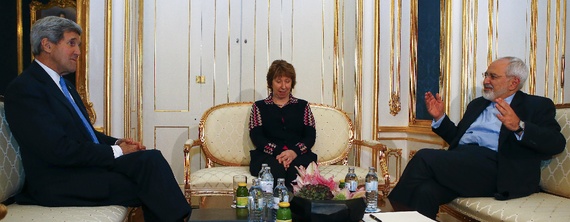
Part of the tactic does not appear to be an act. This appears to be the signature style of Iran’s foreign minister and lead negotiator Javad Zarif. His shouting and screaming is so loud that security repeatedly came bursting into the room out of concern that there was a violent breakout. Western diplomats have been sitting back to allow Zarif to blow himself out in each of the tirades. In one incident, European Union Foreign Policy Chief Catherine Ashton assured worried security officers that it was just Zarif again and that everyone was used to it.

What really caught my eye however was that Zarif’s unprofessional outbursts were openly discussed in the Iranian press and that the Iranian team also has been discussing how they are tricking Western diplomats with the use of the good cop/bad cop tactic. No doubt, Kerry and others never heard of this tactic even though every kid watching old cop shows is well-versed in it.

Iranian diplomat Abbas Araghchi discussed how Zarif “shouted” at Kerry in a way that was likely “unprecedented” in the history of U.S. diplomacy. That appears to be a good thing and a source of pride. He then went on to brag that he and Zarif play the roles of “good cop, bad cop” to “baffle the Western diplomats” and keep them uneasy. Clever.

As if to show the triumph of Iranian diplomacy, Araghchi said that after Zarif yells at Kerry and other diplomats there is largely silence in the room except for “one or two very respectful sentences.” They appear to mistake shocked and embarrassed silence of diplomats with people are cowed by the brilliant screaming and pounding of Zarif. They will see the same reaction to people raving on the New York subway. Few people call the guy screaming about the microchip in his brain in the Penn Station “a master negotiator.” However, they may now wonder if he is an Iranian diplomat.

McCain: Failed Korea Nuke Negotiators Now Bringing You Iran Talks

November 24, 2014

McCain: Failed Korea Nuke Negotiators Now Bringing You Iran Talks, National ReviewMichael Auslin, November 24, 2014

Halifax — As news spreads that the failed Iranian nuclear talks require a second extension, this time for seven-months, U.S. officials at an international security conference here essentially admitted that North Korea was now a nuclear power, underscoring the failure of decades of high-level diplomacy. Yet the White House is doubling-down on its equally suspect negotiations with Tehran.

General Charles H. Jacoby, outgoing commander of U.S. Northern Command and NORAD, told the Halifax International Security Forum that he was treating North Korea as a “practical threat” due to its nuclear and ballistic missile capability that could potentially reach the U.S. homeland. Jacoby did not specify whether this meant that North Korea’s missiles and nukes were an operational threat, nor how he had changed NORAD’s operating posture, if at all. Admiral Cecil Haney, commander of U.S. Strategic Command (in control of all of America’s nuclear weapons), refused to answer whether he also considered Pyongyang a practical threat, but noted that he wanted more focus on trying to understand North Korean dictator Kim Jong-un. The generals’ comments came just weeks after General Curtis Scaparotti, commander of U.S. Forces Korea, testified before Congress that he believed Pyongyang could build a nuclear warhead and mount it on a ballistic missile.

There is little doubt that America’s policy towards North Korea has failed, and that Pyongyang has played Democratic and Republican administrations alike, promising concessions, making agreements, and playing for time. Time enough to be close to a nuclear break out, which may be imminent. When Pyongyang mates a functional nuclear warhead with a reliable long-range or intercontinental ballistic missile, then two things will happen: first, the nuclear balance in Asia will tip, second, the Iranians will be opening their checkbooks immediately for access to both technologies. Above all, Japan will begin thinking seriously about either dramatically expanding its strike capabilities or maybe even its own nuclear deterrent. After all, given that two decades of American diplomacy resulted in a rogue regime with nukes, how much can the U.S. nuclear umbrella be trusted? Will Washington really be willing to trade Los Angeles for Tokyo? Our ally won’t admit it publicly, but highly doubts it.

To paraphrase: Diplomacy has consequences. Unfortunately, it seems that Washington doesn’t quite get that. Instead, the dialogue dependency trap continues to ensnare our top officials, who convince themselves that talking is always better than the opposite, that rationality and self-interest will ultimately win out. That’s probably true, but the Obama administration’s problem (like the Bush administration’s) is that they don’t understand North Korean concepts of self-interest. Hence, an Asia about to get much more dangerous.

The real dangers of our failed diplomacy were summed up by Senator John McCain in Halifax, who bluntly stated that the North Koreans have nuclear weapons and delivery systems. “It’s a wake up call,” said McCain, who topped it off by looking at the greater danger of Iran. “The same people who negotiated with North Korea are now negotiating with the Iranians,” McCain explained, likely referring to Acting Deputy Secretary of State and Under Secretary of State for Political Affairs Wendy Sherman. Sherman, who is lead negotiator for the flailing Iranian talks, was the point person for talks with the North Koreans back in the Clinton administration, under Madeleine Albright. If McCain is right, then expect years more of failed negotiations and a nuclear Iran sometime this decade or next.

The Many Iranian Obstacles in the Way of a Strong Nuclear Deal

November 23, 2014

The Many Iranian Obstacles in the Way of a Strong Nuclear Deal, The Atlantic, November 23, 2014

(Assuming an eventual bad nuke deal, will the U.S. Congress be able to kill it? In a reasonably bipartisan fashion?– DM)

I just want this much‘I just want this much enriched uranium’ (Reuters)

It will be near-impossible, especially after the immigration debate, to sell the Republican-controlled Congress on whatever Iran deal Obama negotiates. But the Democrats won’t be an easy sell, either.

***********

The other day I fell into conversation with a very smart congressman named Ted Deutch, a Democrat from Florida, about his minimum requirements for an Iran nuclear deal. Deutch, who sits on the House Foreign Affairs Committee, is—like a large number of Democrats—fairly-to-very dubious about the possibility of a true breakthrough with Iran, and fairly-to-very worried about the consequences of a bad deal. (It seems likely, at this moment at least, that the Iran talks will be extended for several more months.)

Democrats such as Deutch will need to be convinced by the Obama administration that it hasn’t been outplayed by Iran. If an accord is eventually reached, and if Obama cannot convince the Democrats that he has delivered to them the toughest possible deal, then Congress will do everything in its power to undo the agreement. The Republicans, of course, are itching to subvert an Obama-negotiated deal, and Democratic support will be important to them as they make their case.

As I’ve written previously, I support a diplomatic solution to the challenge posed by the Iranian nuclear program because such a solution could theoretically achieve, without bloodshed, what a military strike might not achieve with bloodshed. But as I outline in this column, I don’t believe that either the diplomatic solution, or a solution that requires crushing sanctions and the credible threat of force, are overly likely to neutralize this threat. (And yes, it is a threat. An Iran with nuclear weapons would pose an acute challenge to pro-American moderates across the Middle East, and to the cause of nuclear non-proliferation, in particular in the world’s most volatile region. And it would pose a genocidal threat to Israel; please see, in case you haven’t read it yet, John Kerry’s condemnation of Iranian Supreme Leader Ayatollah Khamenei’s recently tweeted nine-point plan for Israel’s destruction.)

(One more parenthetical: Of course the Iranian regime wants a nuclear capability. Iran is surrounded by enemies—imagined, in some cases, but real, in others—and it is completely rational for Iran’s leaders to want to deter these enemies with nuclear weapons. Its leaders see what happened to Saddam Hussein and Muammar Qaddafi, who didn’t have nuclear weapons. And these leaders also have pretensions of empire, by the way.)

The goal of a deal is to make it as hard as possible for Iran to reach the nuclear threshold. Deutch’s analysis focuses on three potential weaknesses. The first is the notion that any agreement to curtail Iranian uranium-enrichment activities would one day expire. “I worry about a time-limited deal, one which remains in place for a 10- or 15-year term,” he said. “What happens after that period? Does Iran then have a free path to a bomb?”

The answer is, yes, Iran would have a free path to the bomb. Ten or 15 or even 20 years might seem like a long time in the U.S., but the people of the Middle East are patient. Any agreement that contains an expiration date is an inadequate agreement, because it will, in essence, grant Iran time-delayed permission to build nuclear weapons.

Deutch’s second concern relates to sanctions relief: “I don’t want to see the Iranian economy prematurely bolstered.” A legitimate fear on the part of skeptics is that the U.S. will agree to lift the most biting sanctions now in place before guaranteeing real progress in the deconstruction of Iran’s nuclear program. “The third issue,” Deutch went on to say, “concerns our ability to access any enrichment, research, or military sites.” He makes the point that the Iranian regime had kept hidden from the world at least two uranium-enrichment facilities, at Natanz and Fordow. “We need access to sites like Parchin which have military dimensions and which the Iranians prohibited us from seeing. If we can’t become comfortable in our knowledge about what they’re doing in nuclear-weapons development, then I’m not comfortable with a deal.”

It seems unlikely that the Iranians will share with the West the true scope of their nuclear-weapons development work. And unfortunately, it seems as if the West is willing to let Iran slide on this important issue. From Reuters:

World powers are pressing Iran to stop stonewalling a U.N. atomic bomb investigation as part of a wider nuclear accord, but look likely to stop short of demanding full disclosure of any secret weapon work by Tehran to avoid killing an historic deal.

Officially, the United States and its Western allies say it is vital that Iran fully cooperate with a U.N. nuclear agency investigation if it wants a diplomatic settlement that would end the sanctions severely hurting its oil-based economy. …

A senior U.S. official stressed that the powers had not changed their position on Iran’s past activities during this week’s talks: “We’ve always said that any agreement must resolve the issue to our satisfaction. That has not changed.”

Privately, however, some officials acknowledge that Iran may never be prepared to admit to what they believe it was guilty of: covertly working in the past to develop the ability to build a nuclear-armed missile—something it has always denied.

Deutch’s position on the matter of Iranian concealment is not particularly hawkish for his party. He is fairly representative of a broad swath of Democratic thinking and, in fact, on important issues he scans less hawkish than the (putatively) most important Democrat, Hillary Clinton. Given what Clinton told me in an interview over the summer, I can’t imagine that she’s overjoyed by reports coming out of the nuclear talks this week. “I’ve always been in the camp that held that they did not have a right to enrichment,” she said. “Contrary to their claim, there is no such thing as a right to enrich. This is absolutely unfounded. There is no such right. I am well aware that I am not at the negotiating table anymore, but I think it’s important to send a signal to everybody who is there that there cannot be a deal unless there is a clear set of restrictions on Iran. The preference would be no enrichment. The potential fallback position would be such little enrichment that they could not break out. So, little or no enrichment has always been my position.”

It will be near-impossible, especially after the immigration debate, to sell the Republican-controlled Congress on whatever Iran deal Obama negotiates. But the Democrats won’t be an easy sell, either.

Iran: Inspectors may access suspect nuclear site

November 23, 2014

Iran: Inspectors may access suspect nuclear site, Times of Israel, November 22, 2014

(Why not Parchin? Please see also, West seen easing demands on Iran atom bomb ‘mea culpa’ in deal. — DM)

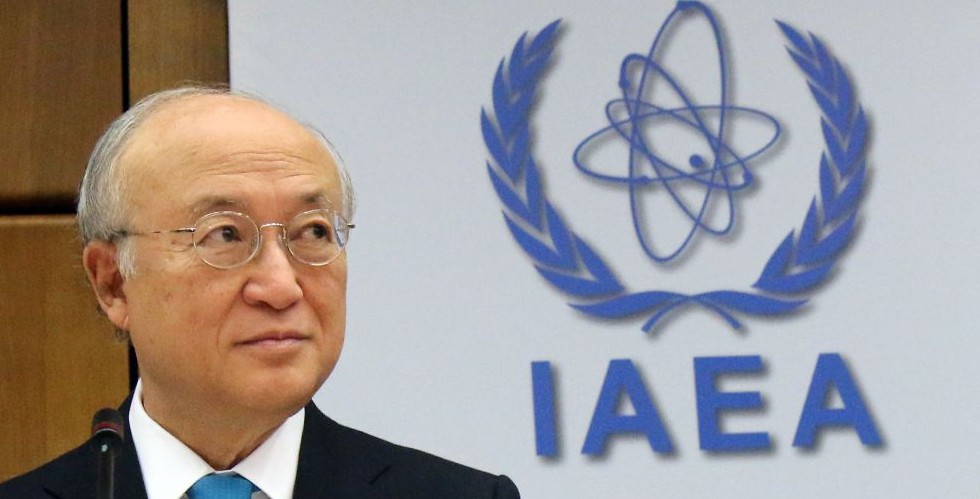
Austria-Iran-Nuclear_Horo-e1401748045152Yukiya Amano of Japan, director general of the International Atomic Energy Agency (IAEA) awaits the board of governors meeting at the International Center in Vienna, Austria, Monday, June 2, 2014. (photo credit: AP/Ronald Zak)

IAEA says ‘large-scale, high-explosive experiments’ may have been conducted at the Marivan military base.

As well as Marivan, IAEA inspectors are also interested in the Parchin military base, where they suspect tests that could be applied to a potential nuclear site have been carried out.

Iran has so far denied access to Parchin.

********************

TEHRAN, Iran – Tehran is ready to allow nuclear inspectors access to its Marivan military site, an Iranian official said Saturday, a facility long suspected of being used to develop explosive weapons.

The declaration comes as Iran and six world powers hold talks in Vienna to reach a lasting agreement on Tehran’s disputed nuclear program before November 24.

Such a deal, after 12 years of rising tensions, is aimed at easing fears that Tehran will develop nuclear weapons under the guise of its civilian activities — an ambition the Islamic Republic has always fiercely denied.

The Marivan site, close to the Iraqi border, was mentioned in a 2011 report by the International Atomic Energy Agency (IAEA) on Iran’s alleged pursuit of nuclear weapons.

The UN agency suggested at the time that “large scale high explosive experiments” may have been carried out at the complex.

Britain, China, France, Russia, the United States and Germany have been locked in talks with Iran since February after an interim accord gave it some relief from economic sanctions in return for nuclear curbs.

“We are ready to allow the IAEA controlled access to the Marivan site,” Behrouz Kamalvandi, spokesman for Iran’s Atomic Energy Organisation, was quoted as saying by the IRNA news agency.

He said the IAEA’s view of Marivan was based on “false” information.

IAEA spokeswoman Gill Tudor said the watchdog “will discuss the offer” with Tehran.

“The situation regarding a visit to the Marivan region is not as simple as that conveyed by Iran,” she told AFP.

As well as Marivan, IAEA inspectors are also interested in the Parchin military base, where they suspect tests that could be applied to a potential nuclear site have been carried out.

Iran has so far denied access to Parchin.