Archive for the ‘Iran’ category

Egypt-Qatar rapprochement rattles Hamas

December 31, 2014

Egypt-Qatar rapprochement rattles Hamas, Al-MonitorAdnan Abu Amer, December 30, 2014

(These guys could form several pretty adequate stand-up comedy teams.

— DM)

Egyptian woman gestures during a protest against what they say is Qatar's backing of ousted Egyptian president Mohamed Mursi's government, outside the Qatari Embassy in CairoAn Egyptian woman gestures during a demonstration against what protesters call Qatar’s backing of ousted Egyptian President Mohammed Morsi’s government, outside the Qatari Embassy in Cairo, Nov. 30, 2013. (photo by REUTERS)

At a time when Hamas is mending its relationship with Iran, Egypt and Qatar are also in the process of rapprochement after more than a year of tension. Resumed ties between them will likely have an impact on Hamas, but questions remain as to whether the Palestinian Islamist movement stands to gain or lose from this important regional development.

Hamas waited several days to announce its final position on the return of positive relations between Doha and Cairo on Dec. 20, when President Abdel Fattah al-Sisi met the envoy of Qatar’s emir in Cairo, Sheikh Mohammed bin Abdulrahman bin Jassim Al-Thani, the minister’s assistant for International Cooperation Affairs.

On Dec. 28, senior Hamas leader Mahmoud al-Zahar welcomed the Egyptian-Qatari convergence and denied Qatar was pressuring the Hamas leadership to leave Doha. He also denied reports that Qatar was planning to suspend its support for Hamas over the warming of ties with Egypt, reiterating that Hamas supports the unity of Arab countries to serve the Palestinian cause.

Yousef Rizqa, the former minister of information and political adviser to former Gaza Prime Minister Ismail Haniyeh, said in an interview with Al-Monitor, “The Egyptian-Qatari rapprochement serves the interest of the Palestinian national project, and Hamas has no concerns about its relations with Doha being harmed after the Doha-Cairo rapprochement because the movement is not a party to the internal Arab conflict, and it is accepted by the Arab capitals.”

However, an anonymous Egyptian official said in Dec. 26 press statement that Doha informed Hamas leaders that it would temporarily suspend its support for the movement in a bid to pressure Hamas to change its policies against Cairo.

Husam Badran, spokesman for Hamas and a resident of Doha, told Al-Monitor, “There is no suspension of the Qatari financial support for the movement, since their relationship is ongoing.” But Palestinian Minister of Labor Maamoun Abu Shahla revealed Dec. 28 that Qatar had postponed the financial grant supposed to be sent to Gaza’s state workers.

Rizqa neither confirmed nor denied this report, but he told Al-Monitor that Qatar has not cut its support and relationship with Hamas over the rapprochement with Egypt, saying, “The Hamas-Doha relationship is stable and Qatar’s support for the movement is sustained and has never ceased. Moreover, Qatar’s position on Hamas is strategic.”

It is worth noting that Hamas’ fear of Qatar halting its financial support for the movement at Egypt’s request coincides with its renewed attempt to improve ties with Iran, as well as political head Khaled Meshaal’s recent visit to Turkey. Hamas may be reaching out to possible alternatives for regional support should Doha downgrade its ties with the movement in a “secret” deal with Cairo.

The Palestinian Authority did not express a position on the Egyptian-Qatari rapprochement, but on Dec. 25 Ambassador Hazem Abu Shanab, a member of the Revolutionary Council of Fatah, ruled out the consideration that the Egyptian-Qatari convergence would contribute to the improvement of relations between Hamas and Cairo, because this depends on how Cairo decides to deal with the Muslim Brotherhood and its affiliates, such as Hamas.

This prompted the Egyptian official to reveal Dec. 26, also on condition of anonymity, that Hamas demanded Doha mediate with Cairo to calm the atmosphere with Hamas, as the movement expressed its goodwill toward overcoming the tension with Cairo.

A senior Hamas official told Al-Monitor on condition of anonymity that Hamas is analyzing the extent of Doha’s ability to influence Cairo on reconciling with the movement. Should the rupture between Hamas and Egypt continue irrespective of the Doha-Cairo rapprochement, this would be interpreted by Hamas as being made a scapegoat.

A former member of the Qatari Shura Council, asking not to be named, revealed to Al-Monitor, “There have been contacts made between the Hamas leadership, represented by Meshaal, and Emir Tamim bin Hamad al-Thani, among other Qatari officials. They discussed the rapprochement with Egypt. Meshaal told the emir that he fully supports any Qatari effort to unify Arab positions.”

The Qatari official told Al-Monitor by phone from Doha, “Meshaal received a formal Qatari pledge not to attack the Hamas leadership or tighten the noose around its neck in Doha in exchange for rapprochement with Cairo. This is because Qatar never establishes relations based on bargaining between one party or another, and our relationship with Hamas will continue to exist.”

Interestingly, coinciding with the rapprochement, Egyptian media outlets reported that Cairo threatened to cut ties with Hamas on Dec. 26 unless 13 accused members of the movement were extradited to Egypt. The 13 were accused of involvement in armed operations in Egypt, and allegedly, Egyptian authorities have insisted that extradition proceedings must conclude before they consider improving relations with Hamas.

On Dec. 28, Zahar denied Egyptian media reports that Hamas interfered in Egypt’s domestic affairs.

A senior Hamas official in Gaza who spoke to Al-Monitor on condition of anonymity also denied the reports, saying, “Egypt made no formal request to extradite any Hamas member, and these accusations were featured across all media outlets, which only creates more tensions,” he said.

Ahmed Yousef, a senior Hamas official, told Al-Monitor that he hopes “the breakthrough in the Doha-Cairo relations will positively affect Hamas’ relations with Egypt and that Qatar would do its best to alleviate the tension between Gaza and Cairo,” adding, “The Hamas and Cairo dossier is likely to be opened after the meeting of Emir Tamim with Sisi.” He denied the existence of contacts between the movement and Egypt following the Doha-Cairo rapprochement.

The timing of the Egyptian-Qatari warming may have come as a surprise to Hamas, which took nearly a week to announce that it welcomes the move, making sure that it would not come at its expense. The atmosphere prevailing within Hamas is still ambiguous over whether the Qatari position toward the movement will be affected, despite promises made by Doha to the contrary. Hamas knows that the pressure exerted on Qatar may be stronger than its ability to resist.


Turkey: America’s unacknowledged problem

December 31, 2014

Turkey: America’s unacknowledged problem, Israel Hayom, Prof. Efraim Inbar, December 31, 2014

(The foreign policy of the Obama administration is difficult to understand. What might be the reasoning behind its apparently continuing support for Islamic Turkey, a bitter foe of Israel? What are the administration’s interests in the Middle East?– DM)

It is not clear why Washington puts up with such Turkish behavior. The Obama ‎administration seems to be unable to call a spade a spade. It refuses to acknowledge ‎that Turkey is a Trojan horse in NATO, and that Ankara undermines American interests ‎in the Middle East and elsewhere.‎

***************

Turkey is a NATO ally, and U.S. President Barack Obama has called Turkish President Recep Tayyip Erdogan his best friend. But Erdogan-led Turkey does not ‎behave as an ally or a friend of the U.S. This is not a new development.‎

Erdogan and his Islamist party, the Justice and Development Party (AKP), have ruled Turkey since 2002. Erdogan’s ‎Turkey has gradually distanced itself from the West, adopting domestic and foreign ‎policies fueled by Ottoman and Islamist impulses. ‎

Turkey has been on the road to an authoritarian regime for several years. Infringements ‎on human rights have gradually increased. In truth, Turkey has never had a political ‎system with checks and balances able to constrain attempts to consolidate power ‎around one politician. In recent years, Erdogan has weakened further the few ‎constitutional constraints against “Putinization” of the Turkish political system. ‎

The longer Erdogan rules, the more power-hungry he seems. His authoritarian ‎personality becomes clearer every day. The press is hardly free. Erdogan arrests even ‎Islamist journalists who are critical of his policies. His party has infiltrated the judicial ‎system and the police. Foci of power, such as the bureaucracy, the banking system, ‎industrial associations and trade unions, have been mostly co-opted by the AKP. ‎Opposition political parties are largely discredited. The military, once active in politics ‎as the defender of the Kemalist secular tradition, has been successfully sidelined. ‎

From a realpolitik perspective, the domestic political developments, deplorable as they ‎may be in Turkey, could be ignored by the democratic West as long as Ankara ‎continues to be a useful ally. Unfortunately, Turkey no longer qualifies as a trusted ‎ally. ‎

The most recent examples of nefarious Turkish behavior are its support of Islamic State and ‎Hamas. Turkey is playing a double game on the issue of Islamic State. It pretends to ‎cooperate with the U.S. policy in the attempt to contain radical Islam, but actually ‎Turkey supports the radical group. It allows passage of volunteers through Turkish territory to join ‎Islamic State in Iraq. The group gets logistical support via Turkey, and sends its wounded militants for ‎treatment in Turkey. Turkish military forces stood idly by the besieged city of Kobani, ‎just across the Turkish border, while the Islamists killed Kurdish fighters. Finally, ‎Turkey denies the American air force access to Turkish bases, forcing the U.S. to use far‎away bases when attacking Islamic State targets. ‎

Turkey is also openly supporting another radical Islamist organization, Hamas. ‎Despite the fact that the West regards Hamas a terrorist organization, Ankara regularly ‎hosts Hamas representatives to meet the highest Turkish dignitaries. Hamas, an ‎offshoot of the Muslim Brotherhood, has a rabid anti-American position. Moreover, ‎Salah al-Aruri, a senior Hamas operative, operates out of Istanbul. Recently, the ‎Turkish branch of Hamas was involved in a series of attempts to carry out terrorist ‎attacks against Israel, and in orchestrating a coup against the current leadership of the ‎Palestinian Authority.‎

Such behavior should not surprise policy makers in Washington. In 2003, Ankara ‎denied the request from Washington to open its territory so that the U.S. military could ‎attack Saddam Hussein’s forces from two separate fronts.‎

AKP-ruled Ankara also defied American preferences on Syria, a country allied with ‎radical Iran and on the American list of states supporting terrorism. In January 2004, ‎Bashar Assad became the first Syrian president ever to visit Turkey. In April 2009, the ‎two states conducted their first ever joint military exercise. No other NATO member ‎had such close relations with the authoritarian regime in Damascus, which has been ‎closely allied with Iran for several decades.‎

Turkey further deviated from the Western consensus in 2008 by hosting Sudanese ‎President Omar Hassan al-Bashir twice. Bashir, who was charged with war crimes and ‎genocide in Darfur, presided over an Islamist regime. ‎

Turkey even welcomed the president of the Islamic Republic of Iran, Mahmoud ‎Ahmadinejad, for a visit in August 2008. No Western country has issued such an ‎invitation to the Iranian leader. Additionally, Erdogan congratulated Ahmadinejad ‎immediately after his re-election in June 2009. When it comes to Iran’s nuclear threat, ‎Ankara, unlike its NATO allies, has refused to adopt the U.S. stance on harsher ‎sanctions, fearing in part the economic consequences of such steps. In June 2010, ‎Turkey voted at the U.N. Security Council against a U.S.-sponsored resolution meant to ‎impose a new round of sanctions on Iran.‎

Turkey also has consistently defied advice from Washington to tone down its anti-‎Israel statements and mend relations with an important American ally. All American ‎efforts in this direction have failed.‎

There is also a clear divergence between the U.S. and Turkey on important global issues ‎such as Russia and China. For example, U.S. wanted to send ships into the Black Sea via ‎the Bosporus Strait during the Georgia war in August 2008. Turkey flatly denied ‎several such requests on the pretext that the military vessels were too large. Moreover, ‎Turkey proposed the creation of a regional security framework involving Turkey, ‎Russia, Georgia, Armenia and Azerbaijan that left out a NATO role. More blatantly, ‎Turkey has failed to participate in the Western economic sanctions imposed on Russia ‎during the recent Ukraine crisis.‎

Dissonance exists also with regards to China. While the U.S. fears the rise of China, ‎Turkey sees this country as a potential economic partner and not a problem. It held ‎military exercises with China. Ankara even considered purchasing anti-aircraft systems ‎from Beijing, an incredibly brazen position for a NATO member.

It is not clear why Washington puts up with such Turkish behavior. The Obama ‎administration seems to be unable to call a spade a spade. It refuses to acknowledge ‎that Turkey is a Trojan horse in NATO, and that Ankara undermines American interests ‎in the Middle East and elsewhere.‎

The Israelis who back UN hypocrisy

December 29, 2014

The Israelis who back UN hypocrisy, Israel Hayom, Dr. Limor Samimian-Darash, December 29, 2014

[T]he more one delves into the U.N.’s outrageous conduct, the harder it becomes to separate the actions of the international community from the tailwind provided by certain Israelis.

******************

The growing relationship between Iran and the Palestinian Authority, as well as Iran’s arms shipments and its involvement in terrorism, are, as always, not being condemned internationally. This is in addition to the world’s silence about the Palestinian terrorist attacks in recent months, which have included stabbings, vehicular rammings and firebombings. None of these produced a U.N. resolution against the Palestinians. And if the massacre at the synagogue in Jerusalem had not looked like a classic anti-Semitic attack in Europe, it is doubtful we would have heard any condemnation of it at all.

One can, of course, complain about the hypocrisy of the world, and particularly that of European nations, who have continued to ignore the growth of Islamic radicalism and terrorism in the world and have focused instead, in a biased manner, on the Israeli-Palestinian conflict. Alongside this, more and more nations are symbolically recognizing a Palestinian state and turning a blind eye to all Palestinian misdeeds. These moves are indeed symbolic, not just because they have no diplomatic meaning, but also, ironically, because Israel is once again being placed on the altar for sacrifice.

But the more one delves into the U.N.’s outrageous conduct, the harder it becomes to separate the actions of the international community from the tailwind provided by certain Israelis. Indeed, Tzipi Livni, Isaac Herzog and even Avigdor Lieberman have explained to us that this is all happening because of a lack of diplomatic initiative on the part of Prime Minister Benjamin Netanyahu. They do this, of course, without attributing any blame to Palestinian Authority President Mahmoud Abbas, who, despite all the concessions offered by Netanyahu, would not even agree to begin peace talks.

And there are now more false accusations being hurled around, such as the claim that the lack of negotiations following Operation Protective Edge is leading us toward a renewal of hostilities in the Gaza Strip. There is no mention of Hamas or its desire to expel us from the region. There is also no mention of the use of reconstruction funds by Hamas to re-arm itself ahead of the next round of fighting or the fact that the Palestinian Authority was kicked out of Gaza by the Palestinians themselves. No, they say, everything is the Israeli government’s fault for not initiating a diplomatic process.

And even more bluntly, Israeli politicians are directly appealing to the international community to apply pressure on the Israeli government. For example, Livni had the gall to implore U.S. Secretary of State John Kerry to not support the unilateral Palestinian move at the U.N., as this would have strengthened the Israeli Right. Herzog made a similar claim when he sought to dissuade the British parliament from recognizing a Palestinian state.

Former Labor MK Avraham Burg took a different tack, urging his British friends to recognize a Palestinian state and force a diplomatic solution on Israel. And if we look not too far back in history, this was the exact line taken by Livni when she was appointed foreign minister in 2006 by then-Prime Minister Ehud Olmert. Her first speech at the U.N. did not remind the nations of world about the historical right of the Jewish people to the land of Israel. Instead, her debut speech on the world stage was dedicated to presenting her vision of the establishment of a Palestinian state.

These are not some words uttered by one Palestinian government minister or another. And no, they are not a biased report by a BBC presenter. Rather, these are Israeli politicians who, whether they are just trying to butt heads with the government or if they truly believe in the righteousness of Abbas, are ultimately providing fuel for unilateral anti-Israel moves at the U.N. And when they do this, they are helping the lowlifes at the U.N.

Palestinians desire only true Islamic peace with Jews.

December 28, 2014

Palestinians desire only true Islamic peace with Jews, Dan Miller’s Blog, December 28, 2014

Palestinians are Islamic and Islam is the religion of peace. Don’t forget it, unless you are a hateful Islamophobe and look forward to being murdered.

A You Tube copy of a heart-warming Palestinian instructional video on how to achieve blessed Islamic peace with Jewish oppressors is embedded a few paragraphs below. The video has “gone viral” in the Palestinian social media.

The 1 minute and 13 second-video, as seen below, shows the “teacher” calmly walking up to a “victim,” stabbing him, and walking away.

One of the tactics appears to imitate the Islamic State method of beheading.

The guide to killing Jews teaches that after stabbing the victim, the knife should be twisted to maximize wounds and cause death.

To put the video in proper perspective, here’s an excerpt from Imam Obama’s October 3, 2014 Eid al-Adha greeting to Muslims around the world:

As our Muslim neighbors and friends gather for Eid celebrations, Muslim Americans are among the millions of pilgrims joining one of the world’s largest and most diverse gatherings.  Hajj brings together Muslims from around the world – Sunni and Shiite – to share in reverent prayer, side by side.  It serves as a reminder that no matter one’s tribe or sect, race or religion, gender or age, we are equals in humanity. [Emphasis added.]

On Eid, Muslims continue the tradition of donating to the poor and joining efforts with other faith communities in providing assistance to those suffering from hunger, sickness, oppression, and conflict.  Their service is a powerful example of the shared roots of the world’s Abrahamic faiths and how our communities can come together in shared peace, with dignity and a sense of justice. [Emphasis added.]

And now, the beautiful video showing Palestinian pathways to a shared humanitarian peace between Muslims and Jews with dignity and (social) justice for all:

In similar vein, a Palestinian envoy to Iran recently “said that ‘Israel is a cancer’ that ‘will be destroyed’ . . . ”

anti-Israel-allah

He is the envoy from the Palestinian Authority, Israel’s peace partner in discussions which Secretary Kerry has pushed ever since he first honored and delighted Israel by becoming the U.S. Secretary of State.

Kerry I'm an idiot

Here’s an Andrew Klavan video condemning Israel’s own brutal war on innocent cancer cells. They are probably not the types of cancer cells to which the esteemed Palestinian Authority envoy referred.

Finally, here’s an uplifting video from November of 2011 about the glories of the Arab Islamic Spring and the peace, enlightenment and happiness it is bringing to all whom it touches.

Iranian Soldiers Photographed on Lebanon-Israel Border

December 28, 2014

Iranian Soldiers Photographed on Lebanon-Israel Border, Israel National News, Cynthia Blank, December 28, 2014

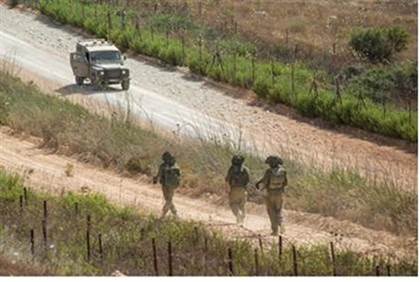
img537100IDF troops patrol northern border Flash 90

Iran’s military published photos of soldiers on Israel’s border with the message: ‘with Allah’s help, we will trample their bodies.’

****************

The Middle East Media Research Institute (MEMRI) has published a report documenting photographs of Iranian Revolutionary Guard soldiers “killing time” at the Lebanon-Israel border.

Preliminary information suggests the pictures were taken in October, but were released only recently, along with verbal threats against Israel. Several photographs published contain the caption: “We have arrived to the cursed Israel.”

The Twitter account linked to the Revolutionary Guards uploaded a number of the pictures on Thursday, with the headline, “The Islamic Republic soldiers are on the border of occupied Palestine.”

The soldiers’ faces were blurred, so as not to be identified.

B52G5N_CEAAVU31

According to MEMRI’s reports, the photos were also published a week and a half ago on the Iranian military’s website. In this case, the soldiers’ faces are visible.

The Iranian military’s websites showcases photos of soldiers taken in the Bekaa Valley and Baalbek in south Lebanon. “We have come close to the motherland of corruption – the cursed Israel. With Allah’s help, we will trample over their bodies” the website writes.

In October, the Hezbollah-affiliated Lebanese newspaper Al-Akhbar said that terrorists from Hezbollah, which controls south Lebanon, could be found operating in the area near the Litani River – in violation of a United Nations resolution.

More recently, on Thursday, the Iranian army began a massive military drill sprawling from the farthest eastern expanses of the Islamic regime all the way to its southern maritime borders opposite the principality of Oman, in the Strait of Hormuz and the Gulf of Aden.

A full 13,000 Iranian soldiers are taking part in the six-day drill, reportedly marking the first time the Iranian navy is conducting a drill so far offshore.

Iranian media reported Saturday that Iran has begun running tests on a new weapon in their arsenal: domestically produced exploding “suicide” drones meant to strike targets on land, air and sea.

Iranian Navy Commander, Habib Allah Sayyari told a news conference that one of the main objective of the extensive military exercise is to convey a message of peace.

He claims that Iran’s neighbors need to know that improving the combat capabilities of the Iranian army are not directed toward anyone in particular, but are intended only for the protection of Iran’s borders and interests.

Over 7,000 Iranian Revolutionary Guards in Iraq to compensate for Maliki’s ouster not to fight ISIS

December 28, 2014

(Interesting if accurate. A few sometimes reliable sources are cited, but without links. — DM)

Original posted by Dan Miller

Over 7,000 Iranian Revolutionary Guards in Iraq to compensate for Maliki’s ouster not to fight ISIS, National Council of Resistance of Iran, December 26, 2014

suleimani-ameriQassem Suleimani and Hadi al-Ameri head of Badr Organization

The objective of mullahs in dispatching revolutionary guards and strengthening militias is not to fight ISIS but to compensate for the decisive blow of Nouri al-Maliki’s ouster and to consolidate dominion of velayat-e faqih caliphate over Iraq

NCRI – The Iranian Resistance warns of the escalating presence of the criminal revolutionary guards of the terrorist Qods Force (QF) in Iraq that is a blatant breach of UN Security Council resolutions and underscores that their objective is not to fight ISIS, but to compensate for the heavy blow caused by Maliki’s ouster and to consolidate the velayat-e faqih caliphate in Iraq.

The slaughter and forced migration, along with aggression against the Iraqi people, in particular the Sunnis, and ridding them of their property by the revolutionary guards and their affiliated militias under the pretext of fighting ISIS has endangered peace and security throughout the region and fuels the machine of extremism and terrorism in the whole region.

1. According to Resistance’s information from inside the regime, the number of revolutionary guards of the QF now reaches 7000 in Iraq. A large number of them have been stationed in Baghdad, Diyala and Salah ad-Din provinces and the cities of Samarra, Karbala, Najaf, Khaneqain, Sa’adiyah and Jaloula. A great number of commanders and experts from the revolutionary guards accompany the terrorist militias in various areas of Iraq. Regime’ fighter jets have been flying in Iraq since early November and are currently carrying out military missions in Diyala and Salah ad-Din provinces.

2. The extent of this meddling is such that mullahs’ Defense Minister Dehqan stated on December 20: “In the realm of weapons and equipment, usually their governments (Iraq and Syria) purchase from us and in the realms of training and advising we are serving the armies and resistance forces of Syria, Lebanon and Iraq.” He added: The presence of Qasem Soleimani in Iraq “is to offer advice, guidance and training… the people who have gone there are to advise and offer training to help out with organizing and training and to offer advice on operational plans”.

3. The clerical regime and the QF that had brought Iraq under their hidden occupation in a step by step manner since 12 years ago, had taken over all aspects of that country through their proxy prime minister. Subsequent to the initiation of the popular uprising against Maliki in January 2013, they broadened their interference to suppress the uprising and to strengthen their hand in Iraq.

4. Since January 2014 that Maliki initiated the Anbar conflict and suffered a severe defeat in the hands of the people and tribes of that region, the Iranian regime felt imperiled and thus the presence of the QF in Iraq took on new dimensions. Mohammad Hejazi, Deputy for Logistics in regime’s General Command Headquarters of the Armed Forces, announced that the clerical regime is prepared to offer Iraq equipment and consultation (IRNA News Agency – January 5, 2014).

5. In February 2014, a number of QF commanders who had participated in the slaughter of the Syrian people went to Iraq to pass on their experiences in trainings to the Iraqi forces. Intimately and directly they transferred their experience in Iran and Syria to Ali Qaidan, the at the time Commander of the Army, and Fadhil Barwari, the Commander of the Golden (Dirty) Division. They primarily order to Maliki to establish a Basij-like force. They noted that they had initiated the civil defense in Syria which is capable of saving Assad’s regime; the classical army is designed to fight an external war and is useless in guerrilla warfare.

6. During this period, the QF beefed up the terrorist militia groups under its command such as Asa’ib Ahl al-Haq, Kata’ib Hezbollah and Badr Corps and dispatched them to Anbar Province, especially to Ramadi and Garmeh regions. Their first task was to pump morale into Maliki’s military. Since March 2014, 15-day training courses were arranged for these militias in Iran; the same thing that the regime had initiated two years ago for the mercenaries who were dispatched to Syria.

7. In March 2014, the QF sent some trainers from the Lebanese Hezbollah to Iraq to organize and train the militias and concurrently sent all types of weapons and equipment in an attempt to organize a powerful force capable of preserving the power in the hands of Maliki and Iranian regime’s elements.

8. Since late March 2014, the militias who had been equipped and organized in orderly units and were accompanied by QF commanders were deployed in battlefields and specific defensive lines were trusted to them. The Garmeh region until Zaidan and Baghdad Beltway from Taramiyah to Abu Ghoraib was given to Asa’ib militias; Fallujah and Baghdad Beltway from south of the airport to Yousefiyah was given to the Kata’ib terrorist group; and the Badr forces were deployed to the west of Fallujah and Ramadi. A division composed of the militias was organized to be deployed in Baghdad’s Beltway from Taramiyah to Madaen, west of Baghdad. Maliki and the QF jointly provided their equipment. Special equipment, bombs and missiles were transferred to Najaf and Baghdad through air transport with coordination by Hadi Ameri, Iraq’s at the time Minister of Transportation, to be transferred subsequently to these forces.

9. During this period, the commanders of the QF were placed in active liaison and direct coordination with Maliki’s army and police commanders and a joint Tactical Operating Center (TOC) was set up in Anbar. IRGC Brigadier General Iraj Masjedi, Qasem Soleimani’s “supreme advisor”, and a number of other commanders of the QF were deployed in Iraq. In addition, “Esmail Qa’ani Akbarnejad”, Deputy to Qasem Soleimani, regularly travelled to Iraq to supervise the situation.

10. Following the disintegration of Maliki’s army on June 10 and as Ninawa and Salah ad-Din slipped from his hands, the QF dispatched its command system to Iraq in a matter of hours. In the early days of this development, over 2000 seasoned revolutionary guards entered Iraq who were primarily tasked to Baghdad’s Beltway. Others were deployed in Diyala. Concurrently, people from IRGC Air Force were deployed in Diyala, Salah ad-Din and Kurdistan to collect information and direct drones. The number of revolutionary guards continues to rise and has now reached 7000.

11. At this stage, Soleimani used Abu Mehdi Mohandess, the known terrorist, as his Deputy of Operations in Iraq and commander of the militias and formed a special TOC for coordinating the militias in Baghdad. The military and security responsibility for Diyala was given to Hadi Ameri, Maliki’s Minister of Transportation. These two are both in the list of 32000 employees of IRGC in Iraq. This is the list that the Iranian Resistance exposed back in 2006.

12. To compensate for the sidelining of Maliki and regain former status, the clerical regime ramped up the presence of the QF in August and the presence of Qasem Soleimani increased, especially in battlefields such as Amerli, Jarf al-Sakhar, Sa’adiyah and Jaloula. In order to build up the morale of its defeated mercenaries, regime’s Farsi and Arabic speaking media staged a noisy propaganda campaign about the presence of Soleimani and the IRGC in Iraq.

13. During this period, organizing the “popular Basij” forces was left to the militias and the QF. In an interview with al-Iraqiya state TV on December 22, Maliki’s National Security Advisor Faleh Fayad stipulated that there are a number of “Iranian advisors” within the “popular Basij” forces.

14. The objective of IRGC and the militias is not to fight ISIS, but to exploit on the present situation and consolidate their grip on Iraq. That is why the massacres, aggressions, forced migration of populations, and ridding the Sunnis of their property that have been ongoing by these forces since 2003 took on unprecedented dimensions in the recent months. In an interview on December 1st with the official website of Kurdish Democratic Party (KDP), Sheik Jafar, KDP’s official in Khaneqain, said: “The actions of Shia militias is like ISIS or even worse. They are experts in killing, burning and looting. They have disrupted 90% of Sa’adiyah and looted and burned all its places… Their objective is to expand their rule and influence… They rarely use the Iraqi flag and mostly hoist a flag that carries the emblem of the Islamic Republic of Iran… They have initiated purging of all Sunnis and kill people anywhere they can… These forces blew up people’s homes under the pretext of neutralizing mines and explosives.”

15. In a shocking report on December 15, the Al-Jazeera TV unveiled the bombing of Sunni areas and forcible displacement of the Sunnis in Iraq including in Diyala and Salah ad-Din and especially in Samarra, various districts of Baghdad and its suburbs such as Mahmoudiyah, Arab Jabour, Jarf-al-Sakhar, Yousefiyah, Latifiyah, Abu Ghraib, Taji and Moshahedeh by the militias affiliated with the QF. The number of forcibly displaced people in Baghdad reaches one million. A resident of Jarf-al-Sakhar testified, “Militias burn homes, arrest the youth, and kill them in undisclosed locations… No Sunni family is left in Jarf-al-Sakhar. They arrest young and old men, forcibly displace the families, and kill them… We are witnessing the beginning of an Iranian caliphate just as ISIS has announced its caliphate.”

16. On 14 October 2014, in a detailed report titled “Absolute impunity, Militia rule in Iraq”, Amnesty International underscored the affiliation of the militias to the Iranian regime and wrote:
• The growing power of Shi’a militias has contributed to an overall deterioration in security and an atmosphere of lawlessness.
• Shi’a militias are ruthlessly targeting Sunni civilians on a sectarian basis under the guise of fighting terrorism, in an apparent bid to punish Sunnis for the rise of the IS and for its heinous crimes.
• Scores of unidentified bodies have been discovered across the country handcuffed and with gunshot wounds to the head, indicating a pattern of deliberate execution-style killings.
• Militia members, numbering tens of thousands, wear military uniforms, but they operate outside any legal framework and without any official oversight.
• By granting its blessing to militias who routinely commit such abhorrent abuses, the Iraqi government is sanctioning war crimes and fuelling a dangerous cycle of sectarian violence that is tearing the country apart.
• Successive Iraqi governments have displayed a callous disregard for fundamental human rights principles. The new government must now change course and put in place effective mechanisms to investigate abuses by Shi’a militias and Iraqi forces and hold accountable those responsible.

17. On 18 September 2014, the Foreign Policy website in an article titled “Iraq’s Shiite militias are becoming as great a danger as the Islamic State” wrote: “These groups, many of which have deep ideological and organizational links to Iran… are actively recruiting — drawing potential soldiers away from the Iraqi army and police and bringing fighters into highly ideological, anti-American, and rabidly sectarian organizations. Many of these trainees are not simply being used to push back Sunni jihadists, but in many cases form a rear guard used to control districts that are supposedly under Baghdad’s control…In early June, Shiite militias, along with Iraqi security forces, reportedly executed around 255 prisoners, including children…The growth of these pro-Iranian Shiite militias, and many more like them, helps demonstrate Iran’s goals for the domination of Shiite Iraq. These groups not only benefit from Iran’s patronage and organizational capabilities — they also all march to Tehran’s ideological tune. They are loyal to Iran’s Supreme Leader Ayatollah Khamenei and Iran’s ideology of absolute wilayat-e faqih.”

18. On September 16, New York Times wrote: “‘We break into an area and kill the ones who are threatening people,’ said one 18-year-old fighter with Asaib Ahl al-Haq… insisting that their militia commanders had been given authority by Iraqi security officials… This militia was once a leading killer of American troops … Alla Maki, a Sunni lawmaker said that under former Prime Minister Nuri Kamal al-Maliki, Asaib Ahl al-Haq was ‘encouraged to do dirty jobs like killing Sunnis, and they were allowed to operate freely. Now the international community are all being inspired by the removal of Maliki personally, but the policy is still going on’… So far, though, there is no sign of any official attempts to investigate even the most publicized allegations of extrajudicial killings of Sunnis by Asaib Ahl al-Haq.”

Meshaal on point of relocating Hamas’ political headquarters from Doha to Tehran

December 27, 2014

Original posted by Dan Miller

Meshaal on point of relocating Hamas’ political headquarters from Doha to Tehran, DEBKAfile, December 27, 2014

Khaled_Mashaal_12.14Hamas’ Khaled Meshaal heads for new exile

Hamas’ political leader Khaled Meshaak, forced to quit his old headquarters in Damascus after abandoning his longtime host Bashar Assad and finding sanctuary in Doha – is again being hounded from pillar to post.

A deal struck this week between Egypt and Qatar could result in the Hamas leader settling in the Iranian capital. This would afford Tehran a foothold in the Gaza Strip, its second Mediterranean outpost after Lebanon on the Israeli border.

The Egyptian-Qatar deal, revealed here by DEBKAfile’s Middle East sources, covers the future of the Muslim Brotherhood, the nemesis of Egyptian President Abdel-Fatteh El-Sisis, and its offspring, the Palestinian Hamas, which rules the Gaza Strip. Their memorandum of understanding was concluded Wednesday, Dec. 24, in Cairo by a delegation of Qatari intelligence chiefs and the new Egyptian director of intelligence Gen. Khaled Fawzi. They spent most of the day hammering out its six points, which are listed here:

1.  Qatar withdraws its support from all Brotherhood operations against Egypt and Saudi Arabia;

2.  This point applies equally to any Hamas activity that may be interpreted as inimical to Egypt;

3.  Qatar’s assistance to Hamas will be limited to “civilian” projects (such as repairing war damage in Gaza), which too will be subject to President El-Sisi’s approval;

4. Given the close cooperation maintained at present between the Egyptian president and Israeli Prime Minister Binyamin Netanyahu on affairs relating to Gaza, Israel will implicitly have the right to disqualify certain Palestinian projects in the enclave;

5.  Qatar is to shut down the anti-Egyptian propaganda channel run by its Al Jazeera television station;

6.  The emirate is not required to sever all its ties with the Muslim Brotherhood and Hamas, just to keep them under control as its “strategic reserve.”

It is extremely hard to conceive of these two radical Islamist organizations bowing to the restrictions placed on their operations under the Egyptian-Qatari deal.

Brotherhood leaders have exited Doha and made arrangements to establish residence and a new center of operations in London, U.K.  Khaled Meshaal, after he was denied permission by Turkish President Tayyip Erdogan to set up shop in Istanbul, is on the point of a decision to relocate his offices in Tehran. Iran would thus gain a proxy foothold in the Gaza Strip, its second outpost on the Mediterranean after the first was provided by Hizballah in Lebanon. If Meshaal decided to settle in Tehran, Iran would acquire a handy springboard for action against Egypt and southern Israel.

Satire: How Obama briefly shut down North Korea’s internet

December 23, 2014

How Obama briefly shut down North Korea’s internet, Dan Miller’s Blog, December 23, 2014

Obama’s confidential adviser on all matters Islamic, Mohamed Allah-dork, is disgusted with Obama’s recent attack on North Korea’s internet because the methods He used were contrary to true Islamic doctrine. Concerned that his silence might be viewed as agreement with Obama’s methods, Allah-dork decided to divulge what really happened and how.

Mohamed Allah-dork

Mohamed Allah-dork

Great technological sophistication was needed to take down North Korea’s internet. Therefore, experts who had created the ObamaScare website, together with experts from the Federal Communications Commission (FCC), managed the project. Together, they provided an elegant solution which, unlike the ObamaScare website, worked perfectly (if only briefly) on the second attempt.

First, all of the glitches thus far identified in the ObamaScare website were recycled and combined in one enormous package. Next, FCC experts working diligently to degrade the U.S. internet devised a set of protocols to accomplish the same for North Korea. ObamaScare website experts then translated the FCC protocols into binary code and placed it in a massive glitch package for transmission by the National Security Agency (NSA) to all computers and internet hubs in North Korea.

Initially, the outages were limited, sporadic and hence disappointing. NSA had been unaware of the substantial time differences between Washington and North Korea and therefore made their transmissions during periods of highest internet usage in the Washington, D.C. area (during the day and early evening hours). When it was discovered that North Korea does not operate on Eastern Standard Time, NSA repeated the transmissions during periods of lowest D.C. area internet usage (late at night). That required overtime pay, but the necessary funds were easily diverted from the Department of Defense. The cyber attack worked beautifully until it failed.

According to Mohamed Allah-dork, the technology that Obama used to take down North Korea’s internet was un-Islamic for at least two reasons. First: no modern technology, including computers and the internet, is mentioned in the Holy Koran and all are therefore prohibited. Second: such technology — unlike tried and true Islamic methods — does not kill apostates and other infidels efficiently. Indeed, the first (but not, of course, the second) was the basis for the unwritten fatwa issued by Iran’s Supreme Leader declaring nuclear weapons un-Islamic. Iran does not even use modern technology to execute its domestic enemies.

Iran hangings by crane

Obama Clinton and Muslim Brotherhood

Allah-dork had explained to Obama that the Islamic Republic of Iran would never develop nuclear weapons due to the Supreme Leader’s fatwa and its basis in proper Koranic interpretation. Obama agreed, and that continues to be the foundation of His superb leadership of the P5+1 negotiations with Iran which, as all true Islamic scholars know, desires only Islamic peace and tranquility for all.

North Korea’s internet has recovered from Obama’s efforts. Although not previously reported, it is due to Allah’s displeasure with Obama’s deviation from true Islamic doctrine. Despite His universally understood transparency and candor, Obama will never admit the truth of Allah-dork’s revelations because He is embarrassed about the un-Islamic methods He used and their ultimate failure due to Allah’s displeasure. Hence, it is my civic duty to relay here what really happened and why.

The very highest credibility should be assigned to Allah-dork’s revelations because, as is well known, truth telling and the enlightenment it brings are among the greatest and most treasured of all Islamic values. Truth telling is no less important than slaughtering all who are unwilling to submit to the proper version of Islam, the religion of true (Islamic) peace everlasting.

EU Gives Hamas Green Light to Attack Israel

December 22, 2014

EU Gives Hamas Green Light to Attack Israel, Gatestone InstituteKhaled Abu Toameh, December 22, 2014

Although the EU court has said that its controversial decision was “technical” and was not a reassessment of Hamas’s classification as a terrorist group, leaders of the Islamist movement believe that the move will eventually earn them legitimacy in the international arena.

The EU court’s decision represents a “severe blow to the Palestinian Authority and Egypt,” according to Palestinian political analyst Raed Abu Dayer.

Any victory for Hamas, albeit a small and symbolic one, is a victory for the Islamic State, Al-Qaeda, Islamic Jihad, the Muslim Brotherhood and other fundamentalist groups, and causes tremendous damage to those Muslims who are opposed to radical Islam.

Hours before the EU court’s decision was made public, Hamas leader Mahmoud Zahar announced that his movement would never recognize Israel, and that Hamas seeks to overthrow the Palestinian Authority and seize control of the West Bank.

The EU court’s decision also coincided with a rapprochement between Hamas and Iran. Now, the Iranians and other countries, such as Turkey and Qatar, are likely to interpret the EU court’s decision as a green light to resume financial and military aid, including rockets and missiles, to Hamas — not only to Gaza but to the West Bank as well — to support those Palestinians whose aim it is to eliminate Israel.

Less than 48 hours after a top European Union court ruled that Hamas should be removed from the bloc’s list of terrorist groups, supporters of the Palestinian Islamist movement responded by firing a rocket at Israel. The attack, which did not cause any casualties or damage, did not come as a surprise.

Buoyed by the EU court’s ruling, Hamas leaders and spokesmen see it as a “political and legal achievement” and a “big victory” for the “armed struggle” against Israel.

Musa Abu Marzouk, a top Hamas leader, issued a statement thanking the EU court for its decision. He hailed the decision to remove his movement from the terrorist list as a “victory for all those who support the Palestinian right to resistance.”

When Hamas leaders talk about “resistance,” they are referring to terrorist attacks, such as the launching of rockets and suicide bombings against Israel. In other words, Hamas has interpreted the court’s decision as a green light to carry out fresh attacks as part of its ambition to destroy Israel.

The rocket that was fired from the Gaza Strip at Israel only days after the court decision is not likely to be the last.

Although the EU court has said that its controversial decision was “technical” and was not a reassessment of Hamas’s classification as a terrorist group, leaders of the Islamist movement believe that the move will eventually earn them legitimacy in the international arena.

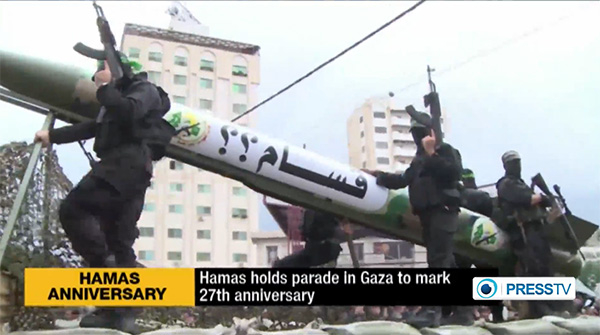
Ironically, the EU court’s decision coincided with Hamas celebrations marking the 27thanniversary of its founding. Once again, Hamas used the celebrations to remind everyone that its real goal is to destroy Israel. And, of course, Hamas used the event to display its arsenal of weapons that include various types of rockets and missiles, as well as drones.

845 (1)Thousands of armed Hamas troops showed off their military hardware at a Dec. 14, 2014 parade in Gaza, marking the organization’s 27th anniversary. (Image source: PressTV video screenshot)

Hours before the EU court decision was made public, Hamas leader Mahmoud Zahar announced that his movement would never recognize Israel. Zahar also made it clear that Hamas seeks to overthrow the Palestinian Authority [PA] regime and seize control over the West Bank.

The EU court’s decision also coincided with increased efforts to achieve rapprochement between Hamas and Iran. Recently, a senior Hamas leadership delegation visited Tehran as part of efforts to mend fences between the two sides. The main purpose of the visit was to persuade the Iranians to resume military and financial aid to Hamas. The visit, according to senior Hamas officials, appears to have been “successful.”

“There are many signs that our relations are back on the right track,” explained Hamas’s Musa Abu Marzouk. “Hamas and Iran have repaired their relations, which were strong before the Syrian crisis.” Relations between Hamas and Iran deteriorated due to the Islamist movement’s refusal to support the regime of Syrian President Bashar Assad.

Now the Iranians are likely to interpret the EU court decision to remove Hamas from the list of terrorist groups as a green light to resume financial and military aid to the movement.

Iran’s leaders recently announced that they intend to dispatch weapons not only to the Gaza Strip, but to the West Bank as well, as part of Tehran’s effort to support those Palestinians who are fighting to eliminate Israel.

Moreover, the EU court’s move will also embolden other countries that provide Hamas with political and financial aid, first and foremost Qatar and Turkey. Oil-rich Gulf countries such as Kuwait, Bahrain, Oman and Saudi Arabia will now face pressure from many Arabs and Muslims to join Qatar, Turkey and Iran in extending their support to Hamas.

The biggest losers, meanwhile, are Palestinian Authority President Mahmoud Abbas and Egypt’s President Abdel Fattah el-Sisi. Over the past few months, the two men have been doing their utmost to undermine Hamas and end its rule over the Gaza Strip.

Abbas has been fighting Hamas by blocking financial and humanitarian aid and arresting its supporters in the West Bank, while Sisi continues to tighten the blockade on the Gaza Strip and destroy dozens of smuggling tunnels along the border with Egypt.

The EU court’s decision represents a “severe blow to the Palestinian Authority and Egypt,” noted Palestinian political analyst Raed Abu Dayer. “As far is Abbas is concerned, the decision grants Hamas political legitimacy and challenges his claim to be the sole legitimate leader [of the Palestinians]. With regards to Egypt, the European court decision calls into question rulings by Egyptian courts that Hamas is a terrorist organization.”

Even if the EU court decision is reversed in the future, there’s no doubt that it has already caused tremendous damage, especially to those Muslims who are opposed to radical Islam.

Any victory for Hamas, albeit a small and symbolic one, is a victory for the Islamic State, Al-Qaeda, Islamic Jihad, the Muslim Brotherhood and other fundamentalist groups around the world.

The decision has left many Arabs and Muslims with the impression that Hamas, after all, is not a terrorist organization, especially if non-Muslims in Europe say so through one of their top courts. Even worse, the decision poses a real and immediate threat to Israel, as evident from the latest rocket attack.

If the Europeans have reached the conclusion that Hamas is not a terrorist organization, then why don’t their governments openly invite tens of thousands of Hamas members and supporters to move to London, Paris and Rome? And they should not forget to ask the Hamas members to bring along with them their arsenal of weapons.

Imperialism, Obama style

December 20, 2014

Imperialism, Obama style, Dan Miller’s Blog, December 20, 2014

Obama condemns “wicked” U.S. imperialism for supporting American values such as freedom and democracy abroad. Simultaneously, he tries to precipitate “regime change” in Israel so that she will support His values and those of Palestinians rather than American and Israeli values of freedom and democracy.

The Palestinians have placed before the United Nations Security Council a “peace proposal” intended to force Israel to agree to creation of a Palestinian state and “an Israeli withdrawal to the pre-1967 lines” by the end of 2017. Secretary Kerry has argued that the matter should not be considered until after the Israeli Knesset elections in March. According to an article in Foreign Policy,

Speaking at an annual luncheon with the 28 European Union ambassadors, Kerry cautioned that any action by the U.N. Security Council would strengthen the hands of Israeli hardliners who oppose the peace process. . . . [Emphasis added.]

“Kerry has been very, very clear that for the United States it was not an option to discuss whatever text before the end of the Israeli election,” according to a European diplomat.

The diplomat, who spoke on condition of anonymity because the luncheon was confidential, said that Kerry explained that Israel’s liberal political leaders, Shimon Peres and Tipzi Livni, had expressed concern that a Security Council move to pressure Israel on the eve of election would only strengthen the hands of Israeli hardliners, including Prime Minister Benjamin Netanyahu, and Naftali Bennett, an implacable foe of a Palestinian state and leader of the right-wing Jewish Home party. Netanyahu is also fiercely opposed to the Palestinians effort to secure Security Council backing for its statehood drive. [Emphasis added.]

Kerry said Livni had “told him that such a text imposed by the international community would reinforce Benjamin Netanyahu and the hardliners in Israel,” as well as the hardliners in Palestine, according to the European diplomat.

The message, said another European diplomat, was that U.N. action would “give more impetus to more right-wing parties, that there was a risk this could further embolden the more right-wing forces along the Israeli political spectrum.” [Emphasis added.]

Kerry’s remarks highlight the Obama administration’s delicate balancing act when it comes to its tense relationship with the Israeli government. On the one hand, senior  administration officials make little attempt to hide the personal dislike between Netanyahu and President Barack Obama or their sharp disagreements on issues ranging from the peace process to Iran. On the other hand, Kerry and other top policymakers have tried to avoid saying or doing anything that could be seen as meddling in the Israeli election in an effort to oust Netanyahu and replace him with a more centrist prime minister. [Emphasis added.]

On an open microphone in March of 2012, Obama

told Dmitry Medvedev that he would have more flexibility after November’s election to deal with contentious issues such as missile defence. . . .

Obama’s candid remark was considered a gaffe because He made it assuming that the microphone had been turned off and that no one other than Medvedev would hear Him. Kerry, however, candidly but intentionally told twenty-eight European Union ambassadors that it is U.S. policy to encourage the Israeli left, to diminish the Israeli right and to make it more difficult for Prime Minister Netanyahu to remain in office. Aside from his incredible naivete, why did Kerry do that?

For Obama and European leaders, Israel is reducible to the peace process. And the Israeli left depends on the support of foreign governments for its network of foreign funded non-profit organizations. The Israeli left can’t let go of its exploding version of ObamaCare [Palestine] because the left is becoming a foreign organization with limited domestic support. Its electorate isn’t in Israel; it’s in Brussels. [Emphasis and bracketed insert added.]

. . . .

Escalating a crisis in relations has been the traditional way for US administrations to force Israeli governments out of office. Bill Clinton did it to Netanyahu and as Israeli elections appear on the horizon Obama would love to do it all over again.

There’s only one problem.

The United States is popular in Israel, but Obama isn’t. Obama’s spats with Netanyahu ended up making the Israeli leader more popular. The plan was for Obama to gaslight Israelis by maintaining a positive image in Israel while lashing out at the Jewish State so that the blame would fall on Netanyahu. [Emphasis added.]

Kerry’s remarks — covered by Israeli media — seem, contrary to his intentions, likely to enhance the chances of Israeli “hardliners” on the “right,” to hurt the chances of those on the left and hence to increase PM Netanyahu’s chances of remaining in office. Even leaving that aside, how will Kerry’s remarks favoring regime change be viewed by other increasingly reluctant U.S. allies in the Middle East?

Israeli “hardliners” have already yielded to the Palestinians as much as, if not more than, they can without greatly endangering the security of Israel because there is no Palestinian entity with which peace can be made other than through Israel’s suicide.

The remarks of the Islamic preacher at the mosque in Jerusalem reflect a general Palestinian view.

Interestingly, the speaker doesn’t mention the longing for Palestinian statehood or independence. Instead, he talks of the establishment of the “Islamic Caliphate.” “Oh Allah’” he states, “Hasten the establishment of the State of the Islamic Caliphate,” and further rants, “Oh Allah hasten the pledge of allegiance to the Muslim Caliph.” He spews forth the latter statement three times to chants of “Amen!” from the large, approving crowd congregating around him.

These comments, which would register horror and revulsion in the West (at least in some quarters) are almost banal among Palestinians. In fact, a similar video featuring a different speaker some days earlier at the same venue, conveyed identical sentiment, expressing admiration for the Islamic State and calling for murder of Jews and annihilation of America. [Emphasis added.]

Here’s the other video referenced in the article:

Guttural anti-Semitism is ingrained and interwoven in the fabric of Palestinian society. Despite their minuscule numbers, 78% of Palestinians believe that Jews are responsible for most of the world’s wars while a whopping 88% believe that Jews control the global media and still more believe that Jews wield too much power in the business world. [Emphasis added.]

Much of the blame for this can be placed squarely on the doorstep of Mahmoud Abbas’s Palestinian Authority, which subjects the Palestinian population to a steady diet of hate-filled, Judeophobic rhetoric through state-controlled media and educational institutions. It is so well entrenched that the process of deprogramming, if it were ever attempted, would take generations to reverse. [Emphasis added.]

As noted in the Wall Street Journal article linked in the quote immediately above,

To understand why peace in Palestine is years if not decades away, consider the Palestinian celebrations after Tuesday’s murder in a Jerusalem synagogue of five Israelis, including three with joint U.S. citizenship. Two Palestinian cousins armed with meat cleavers and a gun attacked worshipers during morning prayers, and the response was jubilation in the streets.

The Popular Front for the Liberation of Palestine claimed responsibility, while Hamas praised the murders as a “response to continued Israeli crimes.” The main obstacle to peace isn’t Jewish settlements in the multireligious city of Jerusalem. The barrier is the culture of hatred against Jews that is nurtured by Palestinian leaders. [Emphasis added.]

Palestinian Prime Minister Mahmoud Abbas condemned the killings, but not without calling for Israel to halt what he called “invasions” of the holy Al Aqsa Mosque in Jerusalem. Mr. Abbas has previously said the Temple Mount was being “contaminated” by Jews, despite assurances by Prime Minister Benjamin Netanyahu that the Dome of the Rock and Al Aqsa Mosque are for Muslim worship only. The Memri news service reports that the Oct. 29 issue of the Palestinian daily Al-Hayat Al-Jadida was full of false accusations that Israel is damaging Jerusalem’s holy sites. [Emphasis added.]

Moreover,

An overwhelming majority of Palestinian Arabs support the recent spate of terrorist attacks against Israelis, an opinion poll released Tuesday finds, according to The Associated Press (AP).[Emphasis added.]

The poll also found that more than half of Palestinian Arabs support a new “intifada” (uprising) against Israel, and that Hamas would win presidential elections if they were held today. [Emphasis added.]

Palestinian Arab pollster Khalil Shikaki said the results reflected anger over Israeli statements about Jerusalem, as well as a loss of hope following the collapse of U.S.-brokered peace talks and Israel’s recent war with Hamas in Gaza.

Shikaki heads the Palestinian Center for Policy and Survey Research, which interviewed 1,270 people in the Palestinian Authority-assigned areas of Judea and Samaria and Gaza last week. The poll had an error margin of 3 percentage points.

“There is an environment in which violence is becoming a dominant issue,” Shikaki told AP. “This seems to be one of the most important driving forces.”

Hamas is, if possible, even worse than Abbas’ Palestinian Authority.

Both Hamas and Abbas’ Palestinian Authority seek the death of Israeli Jews and the destruction of Israel, the only democratic and free nation in the Middle East. Kerry’s ill-conceived efforts to assist them at the expense of Israel, most recently by actively seeking to promote Israel’s left wing, to diminish its right wing and hence to empower Palestinians intent upon the death of Israel, may well fail. Succeed or fail, those efforts are consistent with Obama’s preference for Islamic dictators over democracy coupled with freedom.

Barack Mitsvah