Archive for the ‘Iran scam’ category

Israel’s First Project with Trump

December 9, 2016

Israel’s First Project with Trump, Front Page MagazineCaroline Glick, December 9, 2016

firstproject

Originally published by the Jerusalem Post

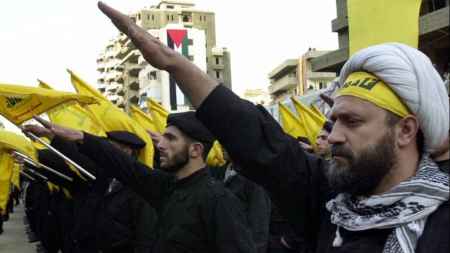
[R]ecently Hezbollah commander Hassan Nasrallah bragged, “We’re open about the fact that Hezbollah’s budget, its income, its expenses, everything it eats and drinks, its weapons and rockets are from the Islamic Republic of Iran.”

******************************

Israeli officials are thrilled with the national security team that US President-elect Donald Trump is assembling. And they are right to be.

The question now is how Israel should respond to the opportunity it presents us with.

The one issue that brings together all of the top officials Trump has named so far to his national security team is Iran.

Gen. (ret.) John Kelly, whom Trump appointed Wednesday to serve as his secretary of homeland security, warned about Iran’s infiltration of the US from Mexico and about Iran’s growing presence in Central and South America when he served as commander of the US’s Southern Command.

Gen. (ret.) James Mattis, Trump’s pick to serve as defense secretary, and Lt.-Gen. (ret.) Michael Flynn, whom he has tapped to serve as his national security adviser, were both fired by outgoing President Barack Obama for their opposition to his nuclear diplomacy with Iran.

During his video address before the Saban Forum last weekend, Prime Minister Binyamin Netanyahu said that he looks forward to discussing Obama’s nuclear Iran nuclear deal with Trump after his inauguration next month. Given that Netanyahu views the Iranian regime’s nuclear program – which the nuclear deal guaranteed would be operational in 14 years at most – as the most serious strategic threat facing Israel, it makes sense that he wishes to discuss the issue first.

But Netanyahu may be better advised to first address the conventional threat Iran poses to Israel, the US and the rest of the region in the aftermath of the nuclear deal.

There are two reasons to start with Iran’s conventional threat, rather than its nuclear program.

First, Trump’s generals are reportedly more concerned about the strategic threat posed by Iran’s regional rise than by its nuclear program – at least in the immediate term.

Israel has a critical interest in aligning its priorities with those of the incoming Trump administration.

The new administration presents Israel with the first chance it has had in 50 years to reshape its alliance with the US on firmer footing than it has stood on to date. The more Israel is able to develop joint strategies with the US for dealing with common threats, the firmer its alliance with the US and the stronger its regional posture will become.

The second reason it makes sense for Israel to begin its strategic discussions with the Trump administration by addressing Iran’s growing regional posture is because Iran’s hegemonic rise is a strategic threat to Israel. And at present, Israel lacks a strategy for dealing with it.

Our leaders today still describe Hezbollah with the same terms they used to describe it a decade ago during the Second Lebanon War. They discuss Hezbollah’s massive missile and rocket arsenal.

With 150,000 projectiles pointed at Israel, in a way it makes sense that Israel does this.

Just this week Israel reinforced the sense that Hezbollah is more or less the same organization it was 10 years ago when – according to Syrian and Hezbollah reports – on Tuesday Israel bombed Syrian military installations outside Damascus.

Following the alleged bombing, Defense Minister Avigdor Liberman told EU ambassadors that Israel is committed to preventing Hezbollah from transferring advanced weapons, including weapons of mass destruction, from Syria to Lebanon.

The underlying message is that having those weapons in Syria is not viewed as a direct threat to Israel.

Statements like Liberman’s also send the message that other than the prospect of weapons of mass destruction or precision missiles being stockpiled in Lebanon, Israel isn’t particularly concerned about what is happening in Lebanon.

These statements are unhelpful because they obfuscate the fact that Hezbollah is not the guerrilla organization it was a decade ago.

Hezbollah has changed in four basic ways since the last war.

First, Hezbollah is no longer coy about the fact that it is an Iranian, rather than Lebanese, organization.

Since Iran’s Revolutionary Guards founded Hezbollah in Lebanon in 1983, the Iranians and Hezbollah terrorists alike have insisted that Hezbollah is an independent organization that simply enjoys warm relations with Iran.

But today, with Hezbollah forming the backbone of Iran’s operations in Syria, and increasingly prominent in Afghanistan and Iraq, neither side cares if the true nature of their relationship is recognized.

For instance, recently Hezbollah commander Hassan Nasrallah bragged, “We’re open about the fact that Hezbollah’s budget, its income, its expenses, everything it eats and drinks, its weapons and rockets are from the Islamic Republic of Iran.”

What our enemies’ new openness tells us is that Israel must cease discussing Hezbollah and Iran as separate entities. Israel’s next war in Lebanon will not be with Hezbollah, or even with Lebanon. It will be with Iran.

This is not a semantic distinction. It is a strategic one. Making it will have a positive impact on how both Israel and the rest of the world understand the regional strategic reality facing Israel, the US and the rest of the nations of the Middle East.

The second way that Hezbollah is different today is that it is no longer a guerrilla force. It is a regular army with a guerrilla arm and a regional presence. Its arsenal is as deep as Iran’s arsenal.

And at present at least, it operates under the protection of the Russian Air Force and air defense systems.

Hezbollah has deployed at least a thousand fighters to Iraq where they are fighting alongside Iranian forces and Shi’ite militia, which Hezbollah trains. Recent photographs of a Hezbollah column around Mosul showed that in addition to its advanced missiles, Hezbollah also fields an armored corps. Its armored platforms include M1A1 Abrams tanks and M-113 armored personnel carriers.

The footage from Iraq, along with footage from the military parade Hezbollah held last month in Syria, where its forces also showed off their M-113s, makes clear that Hezbollah’s US platform- based maneuver force is not an aberration.

The significance of Hezbollah’s vastly expanded capabilities is clear. Nasrallah’s claims in recent years that in the next war his forces will stage a ground invasion of the Galilee and seek to seize Israeli border towns was not idle talk. Even worse, the open collaboration between Russia and Iran-Hezbollah in Syria, and their recent victories in Aleppo, mean that there is no reason for Israel to assume that Hezbollah will only attack from Lebanon. There is a growing likelihood that Hezbollah will make its move from Syrian territory.

The third major change from 2006 is that like Iran, Hezbollah today is much richer than it was before Obama concluded the nuclear deal with the ayatollahs last year. The deal, which canceled economic and trade sanctions on Iran, has given the mullahs a massive infusion of cash.

Shortly after the sanctions were canceled, the Iranians announced that they were increasing their military budget by 90%. Since Hezbollah officially received $200 million per year before sanctions were canceled, the budget increase means that Hezbollah is now receiving some $400m. per year from Iran.

The final insight that Israel needs to base its strategic planning on is that a month and a half ago, Hezbollah-Iran swallowed Lebanon.

In late October, after a two-and-a-half-year fight, Saad Hariri and his Future Movement caved to Iran and Hezbollah and agreed to support their puppet Michel Aoun in his bid for the Lebanese presidency.

True, Hariri was also elected to serve as prime minister. But his position is now devoid of power.

Hariri cannot raise a finger without Nasrallah’s permission.

Aoun’s election doesn’t merely signal that Hariri caved. It signals that Saudi Arabia – which used the fight over Lebanon’s presidency as a way to block Iran’s completion of its takeover of the country – has lost the influence game to Iran.

Taken together with Saudi ally Egyptian President Abdel Fattah al-Sisi’s announcement last week that he supports Syrian President Bashar Assad’s remaining in power, Aoun’s presidency shows that the Sunnis have accepted that Iran is now the dominant power in Iraq, Syria and Lebanon.

This brings us back to Hezbollah’s tank corps and the reconstruction of the US-Israel alliance.

After the photos of the US-made armored vehicles in Hezbollah’s military columns were posted online, both Hezbollah and the Lebanese Armed Forces insisted that the weapons didn’t come from the LAF.

But there is no reason to believe them.

In 2006, the LAF provided Hezbollah with targeting information for its missiles and intelligence support. Today it must be assumed that in the next war, the LAF, and its entire arsenal will be placed at Hezbollah-Iran’s disposal. In 2016 alone, the US provided the LAF with $216m. in military assistance.

From Israel’s perspective, the most strategically significant aspect of Hezbollah-Iran’s uncontested dominance over all aspects of the Lebanese state is that while they control the country, they are not responsible for it.

Israeli commanders and politicians often insist that the IDF has deterred Hezbollah from attacking Israel. Israel’s deterrence, they claim, is based on the credibility of our pledge to bomb the civilian buildings now housing Hezbollah rockets and missiles in the opening moments of the next conflict.

These claims are untrue, though. Since Hezbollah- Iran are not responsible for Lebanon despite the fact that they control it through their puppet government, Iranian and Hezbollah leaders won’t be held accountable if Israel razes south Lebanon in the next war. They will open the next war not to secure Lebanon, but to harm Israel. If Lebanon burns to the ground, it will be no sweat off their back.

The reason a war hasn’t begun has nothing to do with the credibility of Israel’s threats. It has to do with Iran’s assessment of its interests. So long as the fighting goes on in Syria, it is hard to see Iran ordering Hezbollah to attack Israel. But as soon as it feels comfortable committing Hezbollah forces to a war with Israel, Iran will order it to open fire.

This then brings us back to the incoming Trump administration, and its assessment of the Iranian threat.

Trump’s national security appointments tell us that the 45th president intends to deal with the threat that Iran poses to the US and its interests.

Israel must take advantage of this strategic opening to deal with the most dangerous conventional threat we face.

In our leaders’ conversations with Trump’s team they must make clear that the Iranian conventional threat stretches from Afghanistan to Israel and on to Latin America and Michigan. Whereas Israel will not fight Iran in Iraq and Afghanistan, or in the Americas, it doesn’t expect the US to fight Iran in Lebanon. But at the same time, as both allies begin to roll back the Iranian threat, they should be operating from a joint strategic vision that secures the world from Iran’s conventional threat.

And once that it accomplished, the US and Israel can work together to deal with Iran’s nuclear program.
Threadbare Iran appeasement policy to be rescued with propaganda

December 2, 2016

Threadbare Iran appeasement policy to be rescued with propaganda, Iran Focus, December 2, 2016

(Please see also, Giuliani’s Ties to Iranian Resistance Group MEK Should be Viewed as a Valuable Contribution. — DM)

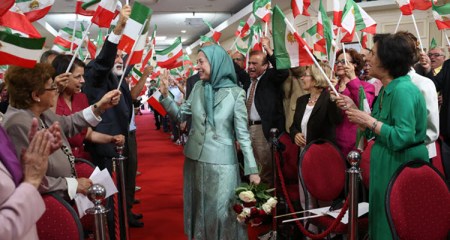
rajavi-700-if

London, 2 Dec – Now that the end is in sight for the Obama administration, the Iranian regime, Iran apologists and Iranian regime lobbies are concerned about the continuation of the appeasement policy. Amir Basiri, an Iranian human rights activist, said in the Washington Examiner that those wanting rapprochement with Tehran are setting propaganda in motion.

This propaganda is in the form of inaccurate and “lopsided reports” and “hastily scribbled op-eds with enticing titles on highly viewed media outlets”. They are attempting to dissuade Trump from selecting anyone with a vocal criticism of the brutal Iranian regime for his cabinet.

One such op-ed was in the Washington Post. In this article Josh Rogin said that Rudy Giuliani has been involved with a dubious group. He was referring to the main opposition to the Iranian regime, the People’s Mojahedin Organization of Iran (PMOI/MEK). This is not the first time he has attacked the PMOI, and he is known for using quotes from the Tehran lobbies in his work. In the op-ed in the Washington Post he called the PMOI “a shady Iranian dissident group”.

Last month, Politico published an article entitled “Giuliani Took Money From a Group That Killed Americans”. This provocative article warns Trump that Giuliani is a questionable choice for his cabinet.

These articles are similar in that they ignore the truth, are based on rumours and are “obtained from sources with economic and political ties to the Iranian regime”. Basiri said that a similar, low-level of reporting can been seen in a New York Times article in which “76 so-called national security experts” call on Trump to reverse his hostility with regards to the Iran nuclear deal, as they think the threat of War in the Middle east has been reduced because of it.

Basiri points out: “The article fails to clarify that the source of the report, which it describes as a group ‘that has advocated improved relations with Iran, even while sharply criticizing Iranian leaders over human rights issues’, is in fact a well-known Tehran lobby with deep economic ties to the Iranian regime.”

The article also fails to mention that billions of dollars worth of concessions have been given to Tehran, which in turn appends it in areas that “fuel mayhem and chaos in the region”.

So this is why the lobbies are “resorting to propaganda and dishonest reporting,” said Basiri.

Iranian Cleric Urges Retaliation for US Breaches of Nuclear Deal

December 2, 2016

Iranian Cleric Urges Retaliation for US Breaches of Nuclear Deal, Tasnim News Agency, December 2, 2016

retaliate-for-sanctions

“We are disgusted by recent moves by the US,” he said, adding that if Washington seeks to tear up the nuclear deal, Iran will set it ablaze as Leader of the Islamic Revolution has said.

*******************************

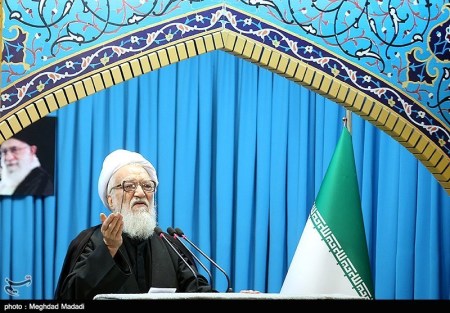
TEHRAN (Tasnim) – A senior Iranian cleric slammed the US Congress for its recent move to extend sanctions against Iran for another ten years, saying that it is now time for the Islamic Republic to retaliate such violations of the JCPOA, a nuclear deal between Tehran and world powers.

“Nothing is expected from the US except hostility (toward the Iranian nation) and now is the time for retaliation,” Ayatollah Mohammad Ali Movahedi Kermani said in an address to a gathering of Friday prayer worshippers in Tehran.

“We are disgusted by recent moves by the US,” he said, adding that if Washington seeks to tear up the nuclear deal, Iran will set it ablaze as Leader of the Islamic Revolution has said.

The US Senate voted unanimously on Thursday to extend the Iran Sanctions Act (ISA) for another decade.

The ISA will expire on Dec. 31 if not renewed. The White House had not pushed for an extension, but had not raised serious objections.

While the Joint Comprehensive Plan of Action (JCPOA), the nuclear agreement between Iran and the Group 5+1 (Russia, China, the US, Britain, France and Germany) came into force in January, some Iranian officials complain about the US failure to fully implement the accord.

In an address to a gathering of Basij forces in Tehran on November 23, Leader of the Islamic Revolution Ayatollah Seyed Ali Khamenei made it clear that implementation of the bill to extend sanctions on Iran for 10 more years will translate into a breach of the JCPOA.

“If such extension (of anti-Iran sanctions) is implemented and comes into force (in the US), it will be definitely a violation of the JCPOA,” the Leader said at the time.

“They (Americans) should know that the Islamic Republic of Iran will certainly show reaction to it,” Ayatollah Khamenei underlined.

Senate sends Iran sanctions bill to Obama with 99-0 vote

December 1, 2016

Senate sends Iran sanctions bill to Obama with 99-0 vote, Washington ExaminerSusan Crabtree, December 1, 2016

mcconnelSenate Majority Leader Mitch McConnell, R-Ky., said Thursday that the bill, which would preserve existing sanctions set to expire at the end of the year, is critical given Iran’s “continued pattern of aggression” and “efforts to expand its sphere of influence across the region.” (Graeme Jennings/Examiner)

The Obama administration has opposed the legislation, arguing that it already has the power to extend or impose additional sanctions on Tehran and the sanctions are no longer necessary after the nuclear deal.

********************

The Senate unanimously passed legislation Thursday that would extend sanctions on Iran for 10 years, a move many supported as a way to ensure the U.S. maintains its leverage over Iran in light of questions about its implementation of the Iran nuclear agreement.

The 99-0 Senate vote sends it along to the president’s desk for his signature. The vote came after the House overwhelmingly approved the measure, known as the Iran Sanctions Extension Act, two weeks ago in a 419-1 vote.

Senate Majority Leader Mitch McConnell, R-Ky., said Thursday that the bill, which would preserve existing sanctions set to expire at the end of the year, is critical given Iran’s “continued pattern of aggression” and “efforts to expand its sphere of influence across the region.”

“This is even more important given how the current administration has been held hostage by Tehran’s threats to withdraw from the nuclear agreement, and how it has ignored Iran’s overall efforts to upset the balance of power in the greater Middle East,” he said.

Under the nuclear agreement between Iran, the United States and five other world powers, many sanctions were lifted or eased in exchange for Iran’s agreement to roll back its nuclear program and an inspections regime to try to enforce it. The Obama administration and supporters of the deal insisted that sanctions could easily “snap back” if Iran was found to have violated the terms of the deal.

But critics argued that sanctions, once lifted, could not easily be re-imposed because foreign investors previously barred from doing business with Tehran before the nuclear pact couldn’t easily cancel contracts and abandon their financial ties to the country.

The U.S. sanctions, which Congress first passed in 1996, target any outside investments in Iran’s energy sector to prevent Tehran from developing nuclear weapons, and would have expired at the end of 2016 if Congress hadn’t acted.

In the months since the nuclear deal went into effect, Iran has complained that these non-nuclear related sanctions are preventing businesses from investing in the country, particularly the prohibition on Iranian access to the U.S. financial system. Tehran argues that the strict limits are preventing many companies from engaging in new business deals in Iran, in effect, subverting the economic benefits it expected the nuclear deal to produce.

Critics, however, countered that Iran is still suffering because foreign businesses are nervous about violating the new rules and risking U.S. sanctions on them and are reluctant to contribute to revenue to a top state sponsor of terrorist activity.

The Obama administration has opposed the legislation, arguing that it already has the power to extend or impose additional sanctions on Tehran and the sanctions are no longer necessary after the nuclear deal.

Members of Congress, including key Democrats, are adamant that the existing sanctions remain in effect in order to demonstrate to Iran that the U.S. will respond to any provocations or violations of the nuclear agreement.

CIA’s Brennan says tearing up the Iran deal would be “height of folly”

December 1, 2016

CIA’s Brennan says tearing up the Iran deal would be “height of folly”, Jihad Watch

(Brennan’s statement is not the “clearest indication yet” that the Iran Scam needs to be rejected; many others predated it. It is, however, another pretty good indication of Brennan’s level of competence. — DM)

This is the clearest indication yet that tearing up the Iran deal is just what the U.S. needs to do. “Do the opposite of what John Brennan recommends” would be the wisest course the next administration could possibly take. John Brennan is the person who — after U.S. Muslim groups demanded he do so – “purged” all mention of Islam and jihad from law enforcement counter-terror training materials in 2011.

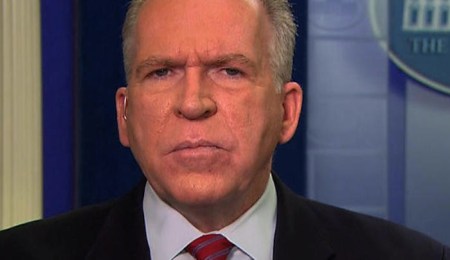
john_brennan

“CIA’s Brennan says tearing up Iran deal would be ‘folly,’” CNBC, November 30, 2016 (thanks to Lookmann):

Outgoing CIA Director John Brennan has said it would be the “height of folly” for U.S. President-elect Donald Trump to tear up Washington’s deal with Tehran because it would make it more likely that Iran and others would acquire nuclear weapons.

“It could lead to a weapons program inside of Iran that could lead other states in the region to embark on their own programs,” Brennan said in an interview with the BBC aired on Wednesday.

“So I think it would be the height of folly if the next administration were to tear up that agreement.”…

New UN Security Council Resolution Strengthens Sanctions Against North Korea

December 1, 2016

New UN Security Council Resolution Strengthens Sanctions Against North Korea, Front Page MagazineJoseph Klein, December 1, 2016

kim

But Iran, freed of sanctions, is likely to be the spoiler.

The United Nations Security Council unanimously adopted Resolution 2321 (2016) on November 30th. It condemns the North Korean (DPRK) regime’s continued pursuit of nuclear weapons and ballistic missiles while its people continue to suffer under inhumane conditions. The resolution strengthens previous UN-imposed sanctions on the DPRK in response to its fifth nuclear test conducted on September 9, 2016.

The prior resolutions have failed to slow, much less eliminate, the DPRK’s nuclear program involving the development and testing of both nuclear device and ballistic missile capabilities. As UN Secretary General Ban Ki-moon pointed out in his remarks to the Security Council following the vote, “The Council first adopted a resolution on the DPRK nuclear issue in 1993. Twenty-three years and six sanctions resolutions later, the challenge persists.”

The new resolution is intended to put more of a financial squeeze on the DPKR regime than ever before by closing loopholes and cutting the DPRK off from sources of hard currency that can be used to fund its nuclear bomb and ballistic missile programs.

Most notably, the new resolution places tighter restrictions on the DPRK’s export of coal. There will now be an absolute cap on how much coal the DPRK can export per year, closing a loophole that had allowed an exemption from any coal export limitations so long as the transactions were determined to be exclusively for “livelihood” purposes. Member states must report all transactions promptly to the 1718 DPRK Sanctions Committee, which is directed to monitor total volumes and notify states when the allowed quantities have been reached and all procurement of coal from the DPRK must end.

The binding export cap will potentially cut the DPRK’s largest export, coal, by approximately $700 million per year from 2015 (more than 60%). Considering the fact that China is the DPRK’s principal purchaser of coal, the new restrictions agreed to by China are significant if fully implemented.

In addition, the new resolution imposes further restrictions on the sale or transfer of copper and other non-ferrous metals. It also places a ban on the supply, sale or transfer from the DPRK of statues, which has proven to be a lucrative source of hard currency needed by the regime. The resolution contains travel bans and assets freezes directed to individuals and entities not previously listed for such punitive actions, who are determined to be involved in the development, production, and financing of the DPRK’s nuclear weapons and ballistic missile programs, as well as the DPRK coal and conventional arms trade. There are more dual-use items, materials, equipment, goods and technology that will be subject to the embargo covering transfers to and from the DPRK.  Strict new sanctions on the DPRK’s illicit transportation activities are imposed.  Inspections of cargo transiting to and from the DPRK by rail, sea, air and road are to be expanded. And the new resolution contains further measures to isolate the DPRK from the global financial system and to prohibit financial support for trade with the DPRK in the form of export credits, guarantees, insurance and the like.

Resolution 2321 emphasizes, for the first time, a human rights dimension beyond the DPKR’s proliferation activities – the need for the DPRK to respect and ensure the inherent dignity of people in its territory. It also warns the DPRK that it is subject to being suspended from its UN rights and privileges.

U.S. Ambassador to the UN Samantha Power, who led the negotiations of the text primarily with her Chinese counterpart, heralded the new resolution. She said it “imposes unprecedented costs on the DPRK regime for defying this Council’s demands.” She admitted, however, that “No resolution in New York will likely, tomorrow, persuade Pyongyang to cease its relentless pursuit of nuclear weapons.” Ambassador Power stressed that for the resolution to have any material impact on the DPRK’s behavior “all Member States of this United Nations must fully implement the sanctions that we have adopted today.” Secretary General Ban Ki-moon, while lauding the new resolution for including “the toughest and most comprehensive sanctions regime ever imposed by the Security Council,” reinforced Ambassador Power’s admonition. He warned that “sanctions are only as effective as their implementation. It is incumbent on all Member States of the United Nations to make every effort to ensure that these sanctions are fully implemented.”

The problem with such an expectation for full implementation by all member states is Iran, which is known to have a tight collaborative relationship with the DPRK to bolster both countries’ nuclear weapons and missile programs. Iran has flouted UN Security Council resolutions in the past aimed at its own nuclear program. And despite the nuclear deal under which Iran is expected to curtail its nuclear program, it is continuing the testing and development of ballistic missiles designed to carry nuclear weapons. When I raised the concern about Iran’s relationship with the DPRK to Ambassador Power after she delivered some brief remarks to the press, she refused to answer my question and walked away. It is not surprising in this case why she ducked my question. The concessions President Obama and Secretary of State John Kerry made in order to reach agreement with Iran on the nuclear deal known as the Joint Comprehensive Plan of Action (JCPOA) have provided a huge loophole for Iran and the DPRK to exploit together.

More specifically, the JCPOA contains a long “Specially Designated Nationals” list of individuals and entities that will no longer be subject to previously instituted nuclear-related sanctions. This delisting includes entities involved in supporting Iran’s ballistic missile program, which Iran is now arguably freer to pursue thanks to other concessions offered by Obama and Kerry.

One of the entities removed from both the UN and U.S. sanctions lists is Bank Sepah, a large Iranian state-owned financial institution. Bank Sepah had been sanctioned by the U.S. Treasury Department back in 2007 for “facilitating Iran’s weapons program” and providing “support and services to designated Iranian proliferation firms.”   The bank had also been listed as an entity “involved in nuclear or ballistic missile activities” in UN Security Council Resolution 1747.

In addition to supporting Iran’s own missile program, Bank Sepah has also been involved, according to the U.S. Treasury Department, in transferring large sums of money from Iran’s Aerospace Industries Organization to a North Korean firm associated with the Korea Mining Development Trading Bureau (KOMID), “a North Korean entity designated for providing Iran with missile technology.”

The DPRK’s Tanchon Commercial Bank, which has been designated by the US and the UN Security Council for sanctions due to its suspected proliferation-related activities, has served as the financial arm for KOMID.  “Since 2005,” according to a statement issued several years ago by the Treasury Department, “Tanchon has maintained an active relationship with various branches of Iran’s Bank Sepah…the U.S. has reason to believe that the Tanchon-Bank Sepah relationship has been used for North Korea-Iran proliferation-related transactions.”

Bank Sepah now is no longer hobbled by sanctions as a result of the JCPOA and a follow-up Security Council resolution endorsing the JCPOA and terminating the previous UN sanctions resolutions against Iran. This means not only more funding for Iran’s missile program, which Iran is continuing to pursue without any consequences. It also means a potential source of hard currency for North Korea’s nuclear program – precisely the opposite of what Ambassador Power said was the intent of the new DPRK Security Council sanctions resolution. And this is only scratching the surface of how the unfreezing of billions of dollars of Iranian assets and removal of sanctions on Iranian entities involved in nuclear-related activities, which have had ties with North Korean entities involved in nuclear-related activities, will help accelerate the nuclear weapons and missile programs of both rogue regimes.

In short, for the Obama administration, “The one hand giveth; the other hand taketh away.” Hopefully, the new Trump administration will do a better job in connecting the dots in the dangerous collaborative relationship between Iran and the DPKR and undo the damage the Iran nuclear deal is likely to do in helping to further that relationship.

Who Will Blink First: Iran, or Trump?

November 30, 2016

Who Will Blink First: Iran, or Trump? PJMediaRobert Spencer,November 29, 2016

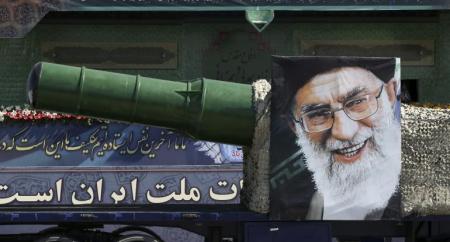
khameneigunsA portrait of Ayatollah Ali Khamenei is placed with weapons during a military parade just outside Tehran on Sept. 22, 2015. (AP Photo/Vahid Salemi)

Assuming that Hillary Clinton will not find some last-ditch bit of Clintonesque chicanery that will put her in the White House after all, Donald Trump will likely be inaugurated president come January 20, and he will have an ultimatum waiting for him.

The Ayatollah Khamenei warned the day before Thanksgiving that if the U.S. dared to extend sanctions on Iran, the Islamic Republic would retaliate. President-elect Trump, meanwhile, has vowed to cancel the deal altogether, which would almost certainly include restored and new sanctions.

Who will blink first?

The House of Representatives already set the confrontation on course last week, when it reauthorized the Iran Sanctions Act (ISA) for ten years. This was an almost entirely symbolic move, however, as the ISA will expire at the end of this year unless the Senate approves it and Barack Obama signs it — and Obama is about as likely to do that as he is to put on a Make America Great Again cap.

Indeed, Obama continues to be notoriously protective of the Iran deal. The known elements of the deal are bad enough, as I explain in my book The Complete Infidel’s Guide to Iran. But the secret codicils just keep making things worse, and administration officials continue to appear determined that they not leak out to the public.

Investigative journalist Adam Kredo reported last Tuesday:

Senior Obama administration officials in their final days in office are seeking to cover up key details of the Iran nuclear deal from Congress, according to documents and sources who spoke to the Washington Free Beacon about continued efforts by the White House to block formal investigations into secret diplomacy with Tehran that resulted in a $1.7 billion cash payment by the United States.

As far as Khamenei was concerned, Obama’s obvious anxiousness to keep the mullahs happy was all for show. He proclaimed: “The current U.S. government has breached the nuclear deal in many occasions.” In reality, Iran is the one breaching the agreement. Recently, according to Reuters, the International Atomic Energy Agency revealed:

[Iran] exceeded a soft limit on sensitive material set under its nuclear deal with major powers. … [This is the] second time Tehran has surpassed the 130 metric tonne threshold for heavy water, a material used as a moderator in reactors like Iran’s unfinished one at Arak, since the deal was put in place in January.

The Obama State Department’s response was feeble: it was all just an accident, you see. State spokesman Mark Toner put the best face on things that he could, confusing impunity with good faith:

It’s important to note that Iran made no effort to hide this, hide what it was doing from the IAEA.

This ongoing Obama administration solicitude for Iran may have fostered complacency in Iranian President Hassan Rouhani, who boasted right after the election that there was no chance of Trump rolling back the deal. Rouhani explained:

Iran’s understanding in the nuclear deal was that the accord was not concluded with one country or government but was approved by a resolution of the UN Security Council and there is no possibility that it can be changed by a single government. … The United States no longer has the capacity to create Iranophobia and to create a consensus against Iran. The constructive engagement policies of Iran towards the world, and the fact that international sanctions have been lifted, have placed the Iranian economy on a road where there is no possibility of going backwards.

Khamenei was apparently a bit less certain that it would be all smooth sailing from here on out, as he felt compelled to add a threat:

The latest is extension of sanctions for 10 years, that if it happens, would surely be against JCPOA [Joint Comprehensive Plan of Action, the official name of the Iran nuclear deal], and the Islamic Republic would definitely react to it.

It remains to be seen whether President-elect Trump will take such threats seriously enough to back off on his pledge to “rip up” the Iranian nuclear deal. It is certain, however, that if he is serious about restoring America’s national security and standing in the world, he will not be able to afford to continue Obama’s policies of ignoring Iranian breaches of the agreement and showering upon them all manner of largesse.

It will either be no deal with Iran and a secure America, or a deal with Iran and continued appeasement and weakness in response to enemies who have vowed to destroy us. This is one swamp in dire need of draining.

Giuliani’s Ties to Iranian Resistance Group MEK Should be Viewed as a Valuable Contribution

November 29, 2016

Giuliani’s Ties to Iranian Resistance Group MEK Should be Viewed as a Valuable Contribution, Iran Focus, November 29, 2016

(The objected-to Politico article was written by Daniel Benjamin, often referred to below but not identified as author of that article. — DM)

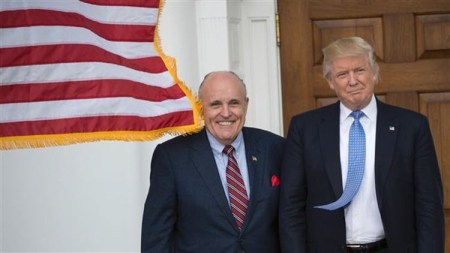
trumpandgu

London, 29 Nov – On November 28, in an article for Politico Magazine, Robert G. Torricelli, former U. S. Senator from New Jersey, and a former member of the U.S. House of Representatives, wrote about the Iranian Resistance Group, Mujahidin e-Khalq (MEK).  His article was written  in response to an article published in Politico last week, criticizing the MEK and the U.S. politicians who support them, particularly former New York Mayor Rudy Giuliani.

Torricelli, a former Democratic member of the Senate Foreign Relations Committee, who is familiar with the MEK and with Giuliani’s work on behalf of the organization says, “I can say unequivocally that Benjamin’s assertions are outrageous—so outrageous that I must respond.” 

A large bipartisan coalition supports the MEK in its campaign for regime change in Iran, including two former chairmen of the joint chiefs, two former CIA directors, a former attorney general and the former chairs of both political parties. People with such varied political ideals, such as Howard Dean and Patrick Kennedy to Newt Gingrich and John Bolton support the MEK. Torricelli says, “From this perspective, the outlier isn’t Rudy Giuliani; it’s Daniel Benjamin.” 

The history of the MEK began when it was part of the coalition opposing the shah of Iran in the late 1970s. The shah’s secret police executed and imprisoned most of their leadership. That vacuum was briefly filled by a Marxist group who were rejected by the incarcerated MEK leaders. Most of the Marxist leaders were killed by the shah or by the mullahs after their ascent to power in 1979. The MEK eventually regained its original leadership, and the MEK became an opposition group to the theocratic regime, and fled into exile in Paris and Iraq.

Torricelli writes, “Throughout this time, the MEK did take part in legitimate political and military action against the Iranian regime, but I have seen no evidence to support the assertion Benjamin makes that it took part in terrorist activities against Iranians or Americans.”

In Iraq in the 1980s, the refugee camps of the MEK were under the protection of the government of Iraq. MEK fighters were aligned with Iraqi Army during Iran/Iraq War. “But Benjamin’s claims that they assisted in Saddam Hussein’s repression of the Kurds have been denied by both MEK and U.S. Army leaders in Iraq. Upon the arrival of U.S. forces in 2003, the MEK willingly handed over its weapons, accepted U.S. protection and actively exposed the Iranian regime and its proxies’ terrorist activities. This included saving American lives by identifying IED locations. This, more than anything, explains the group’s support by former U.S. military personnel, including the former army anti-terror officer and the U.S. military police general assigned to the camp,” writes Torricelli.

The MEK provided invaluable intelligence regarding the Iranian nuclear program that helped counter Tehran’s efforts to develop atomic weapons. Maryam Rajavi, leader of the movement, committed herself publicly to a democratic, non-nuclear, secular Iran at peace with its neighbors with gender equality and a ban on capital punishment. The MEK organized thousands in the Iranian diaspora and built political support in Congress and parliaments across Europe. It is now the most organized and disciplined of the Iranian opposition groups.

“Some current and former State Department employees, including Mr. Benjamin, have a different concept. They remain committed to the idea that the MEK was a terrorist organization—a notion, I believe, which stems from an illusion of American reconciliation with the mullahs. In 1997, a group at State succeeded in convincing President Bill Clinton to place the MEK on the State Department list of terrorist organizations. Some claimed at the time that this decision was mainly intended as a goodwill gesture to Iran. The State Department gave as its reasons the MEK’s long record of violence, but I can tell you that as a member of the Foreign Relation Committee, I reviewed the State Department file on the MEK and found no evidence, no testimony and no reason for the designation except placating Tehran,” Torricelli writes, adding, “Thousands of Iranian-Americans and literally hundreds of members of Congress protested. In 2011, as a private attorney, I led a team of lawyers in a State Department inquiry to resolve the issue. After four hours of testimony, we yielded to the State Department to present their contradictory evidence. They had nothing.”

Without evidence, an order by the U.S. District Court was issued.  The MEK was removed from the State Department list of terrorist organizations by Secretary Hillary Clinton in 2012.

Torricelli continues, “Defeat came hard for the Iran apologists within the department. Mr. Benjamin isn’t the first to argue that the broad coalition of former U.S. intelligence, military, diplomatic and congressional leaders can’t be believed because some accepted speaking fees to attend MEK meetings around the world. The fact that these people faced combat for or dedicated their entire careers to our country, and are among our most respected leaders seems to be of no consequence. It’s an argument that requires no rebuttal except to note that by this standard the views of Thomas Paine, Elie Wiesel and Winston Churchill—all of whom accepted speaking fees from various international organizations—would have been silenced as well.”

Rudy Giuliani was one of the most outspoken supporters. The 3,000 MEK refugees settled along the Iran/Iraq border were under imminent threat in 2012. Iraqi relations with the United States were tense. Torricelli writes,  “Secretary Clinton requested that I assemble a persuasive group of distinguished Americans to travel to Europe and persuade Mrs. Rajavi to relocate the refugees to a former U.S. military base near Baghdad. I appealed to Louis Freeh, Ed Rendell, Michael Mukasey and Rudy Giuliani. Each accepted, canceled commitments, paid his own transportation to Paris and argued persuasively that the MEK assist the United States by relocating.”

Such a broad coalition of diverse Americans has varied perspectives. Torricelli says that, “Some believe that in the political vacuum following an economic or political collapse in Tehran, a determined and well-funded political opposition like the MEK could seize power. Others believe that the MEK might simply be part of a broader coalition, a simple pressure point or just a source of continuing intelligence.” Although rationales for support might differ, this group of Americans is united by the beliefs that the MEK is a genuine democratic force, and that regime change in Tehran is the best option to keep the peace, avoid a nuclear Iran, and benefit American interests.

Going back to Mr. Benjamin’s argument that Rudy Giuliani’s participation in this coalition should disqualify him for consideration as secretary of state, Torricelli has this to say, “Experience and participation in public policy issues was once a condition for high government service. It’s now a complication, because a record of advocacy creates controversy. But the selection of secretary of state needs to be different. Among the most likely crises facing the new president is an escalation in the struggle with the fundamentalist Islamic Republic of Iran. Rudy Giuliani has lived that struggle for a decade. Mr. Benjamin may quarrel with his efforts but it’s important to note that voices in the American foreign policy establishment as diverse as Senator McCain, Secretary Clinton, Deputy Secretary Blinken and John Kerry’s own personal representative on the MEK, Jonathan Weiner disagree. Each has thanked Rudy Giuliani and the other Americans involved in these efforts.”

Whether or not the president-elect chooses Mr. Giuliani as secretary of state, countering Tehran and assisting our country should not be seen as anything other than a valuable contribution to his consideration.

Intel: Iran Using Commercial Planes to Smuggle Weapons to Terrorists

November 24, 2016

Intel: Iran Using Commercial Planes to Smuggle Weapons to Terrorists, Washington Free Beacon, November 24, 2016

(Please see also, Israel: Iran is smuggling weapons to Hezbollah on commercial flights  — DM)

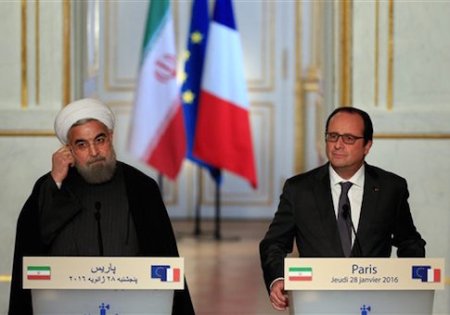
France's President Francois Hollande, right, and Iranian President Hassan Rouhani give a press conference, at the Elysee Palace, in Paris, Thursday, Jan. 28, 2016. Iran Air has signed a deal to buy 118 aircraft from Airbus in the first of an expected host of commercial deals expected to be announced during the visit of Iranian President Hassan Rouhani to Paris. (AP Photo/Thibault Camus)

France’s President Francois Hollande, right, and Iranian President Hassan Rouhani give a press conference, at the Elysee Palace, in Paris, Thursday, Jan. 28, 2016. Iran Air has signed a deal to buy 118 aircraft from Airbus in the first of an expected host of commercial deals expected to be announced during the visit of Iranian President Hassan Rouhani to Paris. (AP Photo/Thibault Camus)

The Obama administration has given clearance to Western airline manufacturers to sell planes to Iran at the same time the Islamic Republic is using commercial airliners to smuggle weapons and other illicit arms to Hezbollah terrorists in Lebanon, according to new intelligence and congressional communications obtained by the Washington Free Beacon.

The disclosure of this new intelligence, which shows that Iran has been using its commercial airline company to smuggle advanced weaponry to Hezbollah and terrorists operating in Syria, has placed renewed focus on a congressional inquiry that has been stymied by Obama administration officials since early October.

Senators, led by Sen. David Perdue (R., Ga.), have been pushing Obama administration officials to explain why they are helping airline manufacturers Boeing and AirBus sell planes to Iran, despite clear evidence that Tehran is using its commercial airline as cover for its continued terrorist operations across the region.

As with multiple other congressional investigations into the Obama administration’s efforts to roll back economic sanctions and conduct secret dealings with Iran, officials have stonewalled Perdue, refusing to answer key questions about the motivation for aiding Tehran’s pursuit of planes that could be used to further its terrorist enterprise.

This new intelligence comes just days after the Obama administration approved a second license for AirBus, a French company, to pursue even more sales with Iran.

The Free Beacon recently disclosed that several American-made planes are currently being flown by Iran’s Air Force, while other jets are being used in its commercial sector to smuggle arms.

Perdue on Wednesday accused the Obama administration of facilitating Iran’s terrorist operations by signing off on the multi-billion dollar deals to sell Iran planes, according to a letter sent to the Treasury Department, which oversees such sales, and obtained by the Free Beacon.

The senator chided the department for ignoring his initial Oct. 6 request for information, describing this lack of response as “troubling.”

“While I find your lack of a response to our last letter troubling, I would not that the issue surrounding commercial aircraft usage for illicit purposes by the Iranian regime has now expanded, given new intelligence information alleging that Iran has indeed been using Mahan Air — a commercial airline that is currently subject to U.S. and UN sanctions — to smuggle weapons and ammunition to Hezbollah in Lebanon,” Perdue writes.

New intelligence unearthed by the Israelis and disseminated to United Nations Security Council members in an “urgent letter” shows that Iran has been using Mahan Air to smuggle a large quantity of arms into Lebanon, where they are then transferred to Hezbollah, which remains committed to destroying the Jewish state.

“These planes fly directly to the airport in Lebanon or Damascus and from there the weapons are transferred on the ground to Hezbollah,” according to the letter sent by Israeli officials to U.N. Security Council members.

This includes weapons, ammunition, and missile technology to Hezbollah, which is placed inside suitcases and placed on Mahan’s commercial flights.

The intelligence further shows that Hezbollah now has about 12,000 missiles hidden underground in Lebanon, or “more than 17 times the number of missiles it possessed 10 years ago, and more than the European NATO allies have above the ground,” according to Perdue’s letter.

The intelligence appears to confirm fears by many in Congress that the easing of airline sales to Iran by the Obama administration will directly fuel Tehran’s global terrorist operation, according to the senator.

“This report confirms precisely the fear we expressed in our October 6 letter: that Iran continues to use commercial aircraft to smuggle weapons and ammunition in violation of UN Security Council Resolution 2231 to support its terrorist proxies,” Perdue wrote, referring to the UN resolution currently governing last year’s comprehensive nuclear deal with Iran.

“We are rightly concerned that Iran may continue to do so with the new commercial aircraft it purchases from Boeing and Airbus, as permitted by the U.S. Treasury Department,” the letter stated.

Despite this intelligence, the Obama administration continues to sign off on and endorse these sales to Iran.

“I was also disturbed to see that Airbus, one of the companies seeking licenses for the sale of commercial aircraft to the government of Iran, was just awarded a second license from U.S. Office of Foreign Asset Control (OFAC) to sell up to 118 jets to Iran,” Perdue wrote. “To echo the concerns of our last letter, what, if any, end-use monitoring controls can you guarantee will follow this license to ensure that these aircraft are not used to further support Iran’s terrorist proxies or support for the Assad regime in Syria?”

One senior congressional aide familiar with the matter told the Free Beacon that the Obama administration’s permissive attitude towards Tehran has only emboldened its bad behavior.

“The sanctions relief President Obama agreed to has allowed Iran to ramp up support for its destructive ambitions,” the source said. “Given this recent discovery by [Israeli U.N.] Ambassador Danon, President Obama and Congress shouldn’t wait to see what this rogue nation has planned for this massive increase in commercial aircraft.”

“It’s been nearly a year since the implementation of President Obama’s nuclear deal and we’ve seen Iran become increasingly aggressive in its support of terrorism,” the source noted. “In fact, Iran is still the number one state sponsor of terrorism. If this isn’t a symptom of a failed deal, what is?”

Iran, Hamas and the Dance of Death

November 23, 2016

Iran, Hamas and the Dance of Death, Gatestone InstituteKhaled Abu Toameh, November 23, 2016

It now appears that the Obama Administration’s failed policies in the Middle East have increased the Iranians’ appetite, such that they are convinced that they can expand their influence to the Palestinians as well.

Iran has one goal only: to eliminate the “Zionist entity” and undermine moderate and progressive Arabs and Muslims.

“Relations between Iran and Hamas are currently undergoing revitalization, and are moving in the right direction,” announced Osama Hamdan, a senior Hamas official. He went on to explain that “moving in the right direction” means that Iran would “continue to support the resistance” against Israel.

Hamas and Iran have no meaningful ideological or strategic differences. Both share a common desire to destroy Israel and replace it with an Islamic empire. Iran expects results: Hamas is to use the financial and military support to resume attacks on Israel and “liberate all of Palestine, from the Jordan River to the Mediterranean Sea.”

As far as Iran is concerned, there is nothing better than having two proxy terror organizations on Israel’s borders — Hezbollah in the north and Hamas in the south.

The biggest losers, once again, will be President Mahmoud Abbas and his Palestinian Authority in the West Bank.

Israel’s presence in the West Bank has thus far thwarted Iran’s repeated attempts to establish bases of power there.

The Iranians and Hamas are exploiting the final days of the Obama Administration to restore their relations and pave the way for Tehran to step up its meddling in the internal affairs of the Palestinians in particular and the Israeli-Palestinian conflict in general.

Emboldened by the nuclear deal framework with the world powers, Iran has already taken the liberty of interfering in the internal affairs of other Arabs, particularly the Iraqis, Lebanese, Syrians, Yemenites and some Gulf countries.

It now appears that the Obama Administration’s failed policies in the Middle East have increased the Iranians’ appetite, such that they are convinced that they can expand their influence to the Palestinians as well.

Thanks to the civil war in Syria, relations between Hamas and Iran have been strained over the past few years. Hamas’s refusal to support the regime of Bashar Assad — Iran’s chief ally in the region — has led the Iranians to suspend financial and military aid to the Islamist movement in the Gaza Strip. However, recent signs indicate that Iran and Hamas are en route to a kind of Danse Macabre — a move that will undoubtedly allow Tehran to become a major player in the Israeli-Palestinian conflict.

1162-2Iran used to funnel money to Hamas because the terrorist group shares Iran’s desire to destroy Israel and replace it with an Islamic empire. Relations between Iran and Hamas foundered a few years back, when Hamas leaders refused to support the Iranian-backed Syrian dictator, Bashar Assad. Pictured above: Hamas leader Khaled Mashaal (left) confers with Iranian “Supreme Leader” Ali Khamenei, in 2010. (Image source: Office of the Supreme Leader)

This, of course, bodes badly for any future peace process between Israel and the Palestinians. Iran has one goal only: to eliminate the “Zionist entity” and undermine moderate and progressive Arabs and Muslims.

The new US administration would do well to take very seriously Iran’s comeback to the Israeli-Palestinian conflict, because of its implications not only concerning prospects for peace, but also because it means that this will lead to an upsurge in violence and terror attacks against Israel.

Proof of Iran’s renewed effort to infiltrate the Palestinian arena was provided this week by statements made by a senior Hamas official, Osama Hamdan, who is in charge of the Islamist movement’s “external affairs.” Asked about Hamas’s relations with Iran, Hamdan was quoted as saying that he had good reason to be optimistic.

“Relations between Iran and Hamas are currently undergoing revitalization, and are moving in the right direction,” Hamdan announced. He went on to explain that “moving in the right direction” means that Iran would “continue to support the resistance” against Israel:

“Relations between Iran and Hamas extend over a period of 25 years. Undoubtedly, any flaw in this relationship has a negative impact. But this relationship is capable of renewing itself. This is a relationship that is based on supporting the resistance and the Palestinian cause.”

In reality, Hamas and Iran have no meaningful ideological or strategic differences. Both share a common desire to destroy Israel and replace it with an Islamic empire. The two entities are also committed to an “armed struggle” against Israel, and are vehemently opposed to any compromise with it.

The crisis between the two sides over the civil war in Syria is no more than a minor, tactical dispute. When it comes to the real agenda, such as destroying Israel and launching terror attacks, Iran and Hamas continue to be in total alignment.

Another sign of the apparent rapprochement between Iran and Hamas came in the form of reports that the Islamist movement has appointed a new leader in the Gaza Strip with close ties to Tehran. According to the reports, Emad El Alami, who previously served as Hamas’s first emissary to Tehran, has been entrusted with temporarily replacing Ismail Haniyeh as the ruler of the Gaza Strip. Haniyeh has in recent months relocated from the Gaza Strip to Qatar. At this stage, it remains unclear when and if Haniyeh will return to the Gaza Strip. Some Palestinians have surmised that Haniyeh may replace the Doha-based Khaled Mashaal as head of the Hamas “Political Bureau.” If this happens, then El Alami, who is regarded by many Palestinians as Iran’s agent, will become the permanent de facto ruler of the Gaza Strip.

El Alami’s rise to power will undoubtedly further facilitate Iran’s ambition to become a significant player in the Israeli-Palestinian conflict through the gates of the Gaza Strip. This means that Hamas can expect more cash and weapons to enter Gaza in the coming weeks and months. Such an influx would significantly increase the likelihood of another war between Hamas and Israel. Iran’s millions will not be used by Hamas for building schools and hospitals, or providing desperately needed jobs for Palestinians in the Gaza Strip. Nor will the Iranian-supplied weapons be stored in Hamas warehouses and tunnels, or used in military parades.

Iran expects results: Hamas is to use the financial and military support to resume attacks on Israel and “liberate all of Palestine, from the Jordan River to the Mediterranean Sea.”

When Hamas leaders talk about Iranian support for the Palestinian “resistance,” they mean suicide bombings, rocket attacks and other forms of terrorism. They are saying with unmistakable clarity that they seek a resumption of Iranian support for the “resistance” — not for the tens of thousands of unemployed and impoverished Palestinians living under the Hamas regime in the Gaza Strip. The well-being of the Palestinians living under its rule is the last thing on Hamas’s mind.

The Iranians, for their part, appear to be extremely eager to resume their role as enablers and funders of any group that vows to eliminate Israel. As far as Iran is concerned, there is nothing better than having two proxy terror organizations on Israel’s borders — Hezbollah in the north and Hamas in the south.

Iran is already backing other terror groups in the Gaza Strip, such as the Palestinian Islamic Jihad and Al-Sabireen. But these are tiny groups compared to Hamas, which has tens of thousands of gunmen and a strong military group, Ezaddin Al Kassam. And there is nothing to prevent Iran from extending its control to the Gaza Strip through Hamas, especially in the wake of the Obama Administration’s policy of appeasing not only the Iranians, but also the Muslim Brotherhood.

In the coming months, Hamas is scheduled to hold secret elections to elect a replacement for Khaled Mashaal. Mashaal’s departure from the scene is also set to facilitate Iran’s effort to infiltrate the Gaza Strip. The three candidates who are seen as potential successors to Mashaal — Ismail Haniyeh, Musa Abu Marzouk and Yehya Al Sinwar — have all pledged to improve their movement’s ties with Iran.

The biggest losers, once again, will be President Mahmoud Abbas and his Palestinian Authority (PA) in the West Bank.

PA officials continue to express deep concern over Iran’s meddling in Palestinian affairs, especially its financial and military support for terror groups in the Gaza Strip and even some parts of the West Bank. Yet Israel’s presence in the West Bank has thus far thwarted Iran’s repeated attempts to establish bases of power there. Abbas has no choice but to work with Israel if he wishes to prevent Iran and its supporters from overthrowing his regime, and perhaps dragging him to the center of Ramallah and hanging him as a traitor.

Abbas and his senior aides are nonetheless plenty worried about Iran’s increased efforts to infiltrate the Palestinian arena. At a lecture in Bahrain last week, PLO Secretary-General Saeb Erekat sounded an alarm bell when he said:

“Iran has no right to interfere in the internal affairs of the Palestinians. Iran must respect the particularity of our country. We hope that Iran will focus on placing Palestine back on the map and not intervene through this or that group.”

But this warning is likely to fall on deaf ears in the waning Obama Administration, which obviously no longer shares the widespread concern among Arabs and Palestinians that Iran remains a major threat to stability and security in the region, including Israel. Perhaps the new US administration will see Iran and its machinations a bit more clearly. The alternative is allowing Iran and its proxy terror groups further to drench the region in blood.