Archive for the ‘Iran nuke inspections’ category

Our World: Obama’s nuclear contrition

April 12, 2016

Our World: Obama’s nuclear contrition, Jerusalem Post, Caroline B. Glick, April 4, 2016

On Monday, State John Kerry visited Hiroshima. While there meeting with this G-7 counterparts, Kerry strongly hinted that his visit was a precursor to a visit to the site of the first nuclear bombing by President Barack Obama next month.

The irony of course is that for all his professed commitment to ridding the world of nuclear weapons, Obama is responsible for drastically increasing the chance of nuclear war. Indeed, Obama’s own actions lend easily to the conclusion that he wishes to do penance for America’s decision to attack Hiroshima and Nagasaki with nuclear bombs, (and so end World War II with far fewer dead than a land invasion of Japan would have required), by enabling America’s enemies to target the US and its allies with nuclear weapons.

Obama views his nuclear deal with Iran – the so-called Joint Comprehensive Plan of Action – as his greatest foreign policy achievement.

Unfortunately for his legacy building and for global security, for the past several weeks news stories have made clear that critics of Obama’s nuclear deal with Iran – who claimed that far from preventing Iran from acquiring nuclear weapons, the deal would enable Iran to develop them in broad daylight, and encourage Iran to step up its support for terror and regional aggression – were entirely correct.

All of the warnings sounded by Prime Minister Binyamin Netanyahu and other leaders have been borne out. All of the warnings sounded by the leaders of the Persian Gulf kingdoms were correct.

Every major commitment Obama made to Congress and to US allies in the wake of the deal have been shown in retrospect to have been false.

Obama told Congress that while the deal did require the US to drop its nuclear sanctions against Iran, the non-nuclear sanctions would remain in place. In recent weeks, media reports have made clear that the administration’s commitment to maintain non-nuclear sanctions on Iran has collapsed.

This collapse is most immediately apparent in the administration’s helpless response to Iran’s recent tests of ballistic missiles.

When Obama and his advisers sold the nuclear deal to Congress last summer, they promised that the binding UN Security Council resolution that Ambassador Samantha Power rushed to pass to anchor the nuclear deal maintained the previous UN ban on Iranian ballistic missile development.

This, it works out, was a lie. The resolution significantly waters down the language. Given the weak language, today the Russians convincingly argue that Iran’s recent tests of ballistic missiles did not violate the UN resolution.

Then and now, Obama and his advisers argued that ballistic missiles are not part of the mullahs’ nuclear project. This claim, which made little sense at the time, makes no sense whatsoever today.

Ballistic missiles of course are the Iranians’ delivery systems of choice for their nuclear warheads.

This fact was driven home last week when the Iranian media reported the opening of a high explosives factory in Tehran. Iranian Defense Minister Hossein Dehgan participated in the opening ceremony.

According to nuclear experts, HMX or octogen high explosives are suitable for building nuclear triggers. In other words, Tehran just built, in a very public manner, a new facility for its military nuclear program. As Iran’s Tasnim news service explained, HMX is a “high explosive used almost exclusively in military applications, including as a solid rocket propellant.”

Last week at his nuclear conference, Obama said that Iran has been abiding by the letter, but not the spirit of the nuclear deal. But this is another lie. Last summer Obama insisted that the deal would prevent Iran from developing and building nuclear weapons by imposing an intrusive, unlimited inspections regime on all of Iran’s nuclear sites.

But this was a lie. As Eli Lake noted in Bloomberg News last week, in contravention of Obama’s explicit commitments to Congress, Iran is refusing to permit UN nuclear inspectors access to its military nuclear sites.

Not only were UN inspectors barred last fall from visiting the Parchin nuclear military site where the Iranians are suspected of developing nuclear warheads. The UN’s International Atomic Energy Agency admitted recently that far from expanding its access to Iran’s nuclear sites, the deal severely limited it. Out of fear that Iran will walk away from the deal, the US is allowing Iran to block IAEA inspectors.

So while the US gave up its right to unlimited inspection of Iran’s nuclear installations, and consequently has little way of knowing what is happening inside them, the US stands back and allows Iran to develop the means to deliver nuclear warheads which the US cannot know whether or not Iran possesses because it cannot access Iran’s nuclear facilities.

But for Obama, none of this is a reason to stop canceling the sanctions on Iran’s nuclear program. Indeed, as Obama sees things, Iran’s non-compliance with the letter of the deal seems to be a reason to cancel the non-nuclear sanctions as well.

Take the dollarization of the Iranian economy.

Obama administration officials pledged to Congress that in the aftermath of the deal, Iran would remain barred from using US financial institutions and so barred from trading in the dollar.

Yet, in what Omri Ceren from the Israeli Project refers to as a “one-hop, two-hops” process, the administration is allowing Iran to use foreign banks to gain access to the US dollar and dollarize is transactions.

Following his visit to Hiroshima, Kerry traveled to the Persian Gulf where the US’s spurned Arab allies and commanders of the US navy’s Fifth Fleet demonstrated to him how Iran has been emboldened by the deal.

Since it was concluded, they noted, Iran has stepped up its support for terrorism and its regional aggression. The leaders of Saudi Arabia, Bahrain, the UAE and other states told Kerry that since the deal was concluded Iran’s support for terrorism and insurgencies has expanded in Yemen and Syria. Naval commanders reported on the four shipments of illicit Iranian arms the navy commandeered en route to Yemen.

Although slightly embarrassed, Kerry was unmoved. He merely maintained Obama’s line that Iran is keeping the letter of the agreement if ignoring its spirit. He insisted that there are moderates in the regime that support the deal – although they have no power.

Then, as The New York Times reported, Kerry said the US would “continue to lift the economic sanctions against Iran that it agreed to as part of the nuclear accord, even while imposing new ones to counter Tehran’s missile launches, an effort now underway at the UN Security Council.”

But again, Russia has blocked further sanctions against Iran. Moreover Russia is doubling down on its deal to sell advanced SU-30 fighters to the Iranian air force. With the S-30, Iran will be able to end Israel’s air superiority and threaten all of its neighbors in the Persian Gulf.

As to air forces, Iran’s Hezbollah proxy have inherited a US-trained one.

According to testimony Middle East expert Tony Badran gave before the House Foreign Affairs Committee last week, the Lebanese Military Forces, generously supported by the US, is now a junior partner to Hezbollah.

As Badran put it, “The partnership between the Lebanese Armed Forces (LAF) and Hezbollah has grown to such an extent that it is now meaningful to speak of the LAF as an auxiliary force in Hezbollah’s war effort.”

At Hiroshima Monday, Kerry and his fellow foreign ministers signed a declaration reaffirming their “commitment to seeking a safer world for all and to creating the conditions for a world without nuclear weapons.”

They went on to pat themselves on the back for their nuclear deal with Iran, which they insisted showed that the Nuclear Non-Proliferation Treaty – which the Iran deal effectively gutted – remains “the cornerstone of the international non-proliferation architecture.”

Several commentators have urged Obama not to visit Hiroshima. But really, what would it matter? Obama’s lies about his nuclear deal launched the world on a course where the worst regimes now know that all they need to do to get immunity for their aggression is to develop nuclear weapons while the Obama administration hectors US allies to deplete their own nuclear arsenals.

Visiting Hiroshima and symbolically apologizing for the US strikes that ended World War II would be far less devastating to the cause of international peace than the war Obama ensured by permitting the world’s most prolific sponsor of terrorism to acquire a nuclear arsenal.
Iran Threatens to Walk Away From Nuke Deal After New Missile Test

March 8, 2016

Iran Threatens to Walk Away From Nuke Deal After New Missile Test, Washington Free Beacon, March 8, 2016

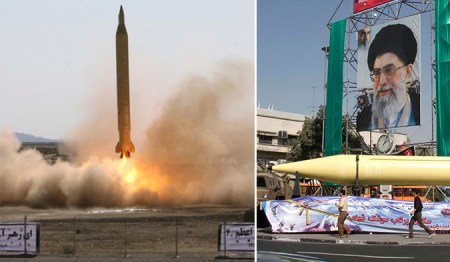
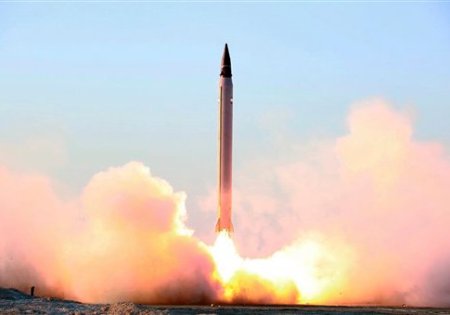
FILE - This file picture released by the official website of the Iranian Defense Ministry on Sunday, Oct. 11, 2015, claims to show the launching of an Emad long-range ballistic surface-to-surface missile in an undisclosed location. Iran tested a ballistic missile again in November 2015, a U.S. official said Dec. 8, describing the second such test since this summerís nuclear agreement. The State Department said only that it was conducting a "serious review" of such reports. The test occurred on Nov. 21, according to the official, coming on top of an Oct. 10 test Iran confirmed at the time. The official said other undeclared tests occurred earlier than that, but declined to elaborate. The official wasnít authorized to speak on the matter and demanded anonymity. (Iranian Defense Ministry via AP)

FILE – This file picture released by the official website of the Iranian Defense Ministry on Sunday, Oct. 11, 2015, claims to show the launching of an Emad long-range ballistic surface-to-surface missile in an undisclosed location. Iran tested a ballistic missile again in November 2015, a U.S. official said Dec. 8, describing the second such test since this summerís nuclear agreement. The State Department said only that it was conducting a “serious review” of such reports. The test occurred on Nov. 21, according to the official, coming on top of an Oct. 10 test Iran confirmed at the time. The official said other undeclared tests occurred earlier than that, but declined to elaborate. The official wasnít authorized to speak on the matter and demanded anonymity. (Iranian Defense Ministry via AP)

Iranian leaders now say that they are poised to walk away from the deal if the United States and other global powers fail to advance the Islamic Republic’s “national interests.”

*************************

Iran on Tuesday again threatened to walk away from the nuclear agreement reached last year with global powers, hours after the country breached international agreements by test-firing ballistic missiles.

Iran’s most recent ballistic missile test, which violates current U.N. Security Council resolutions, comes a day after the international community’s nuclear watchdog organization disclosed that it is prohibited by the nuclear agreement from publicly reporting on potential violations by Iran.

Iranian leaders now say that they are poised to walk away from the deal if the United States and other global powers fail to advance the Islamic Republic’s “national interests.”

“If our interests are not met under the nuclear deal, there will be no reason for us to continue,” Abbas Araqchi, Iran’s deputy foreign minister, warned during remarks delivered to a group of Iranian officials in Tehran.

“If other parties decide, they could easily violate the deal,” Araqchi was quoted as saying by Iran’s state-controlled media. “However, they know this will come with costs.”

Araqchi appeared to allude to the United States possibly leveling new economic sanctions as a result of the missile test. The Obama administration moved forward with new sanctions earlier this year as a result of the country’s previous missile tests.

Iran’s latest missile test drew outrage from longtime regime critics on Capitol Hill.

“The administration’s response to Iran’s new salvo of threatening missile tests in violation of international law cannot once again be, it’s ‘not supposed to be doing that,’” Sen. Mark Kirk (R., Ill.) said in a statement. “Now is the time for new crippling sanctions against Iran’s Islamic Revolutionary Guard Corps, Ministry of Defense, Aerospace Industries Organization, and other related entities driving the Iranian ballistic missile program.”

House Majority Leader Kevin McCarthy (R., Calif.) warned that the nuclear agreement has done little to moderate Iran’s rogue behavior.

“Far from pushing Iran to a more moderate engagement with its neighbors, this nuclear deal is enabling Iran’s aggression and terrorist activities,” McCarthy said in a statement. “Sanctions relief is fueling Iran’s proxies from Yemen to Iraq to Syria to Lebanon. Meanwhile, Khamenei and the Iranian regime are acting with impunity because they know President Obama will not hold them accountable and risk the public destruction of his nuclear deal, the cornerstone of the president’s foreign policy legacy.”

McCarthy went on to demand that the Obama administration step forward with new sanctions as punishment for the missile test.

Meanwhile, the U.S. State Department had difficulty Monday explaining why the nuclear agreement limits public reporting by the International Atomic Energy Agency, or IAEA, on potential deal violations by Iran.

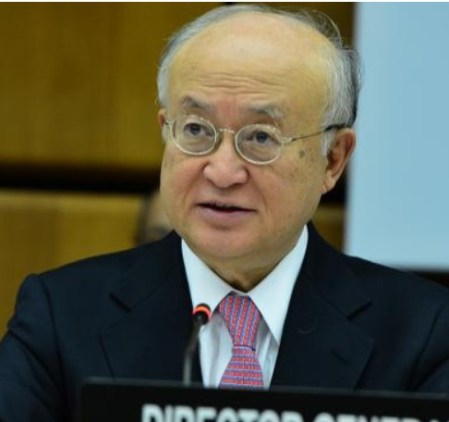
Yukiya Amano, the IAEA’s chief, disclosed on Monday that his agency is no longer permitted to release details about Iran’s nuclear program and compliance with the deal. The limited public reporting is a byproduct of the nuclear agreement, according to Amano.

When asked about these comments again Tuesday, a State Department official told the Free Beacon that the IAEA’s reports would continue to provide a complete picture of Iran’s nuclear program, though it remains unclear if this information will be made publicly available.

“There isn’t less stringent monitoring or reporting on Iran’s nuclear program,” the official said. “The IAEA’s access to Iran’s nuclear program and its authorization to report on it has actually expanded. It’s a distortion to say that if there is less detail in the first and only post-Implementation Day IAEA report then that somehow implies less stringent monitoring or less insight into Iran’s nuclear program.”

While the IAEA “needs to report on different issues” under the final version of the nuclear agreement, the agency continues to provide “a tremendous amount of information about Iran’s current, much smaller nuclear program,” the source maintained.

The IAEA’s most recent February report—which was viewed by nuclear experts as incomplete and short on detail—“accurately portrays the status of Iran’s nuclear program,” including its efforts to uphold the nuclear deal, the official added.

“We expect this professional level of reporting to continue in the future,” the official said.

IAEA: Iran Nuke Deal Limits Public Reporting on Possible Violations

March 7, 2016

IAEA: Iran Nuke Deal Limits Public Reporting on Possible Violations, Washington Free Beacon, , March 7, 2016

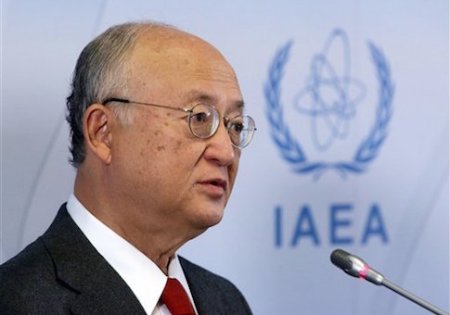
Director General of the International Atomic Energy Agency, IAEA, Yukiya Amano of Japan addresses the media during a news conference after a meeting of the IAEA board of governors at the International Center in Vienna, Austria, Monday, March 7, 2016. (AP Photo/Ronald Zak)

Director General of the International Atomic Energy Agency, IAEA, Yukiya Amano of Japan addresses the media during a news conference after a meeting of the IAEA board of governors at the International Center in Vienna, Austria, Monday, March 7, 2016. (AP Photo/Ronald Zak)

The head of the international community’s nuclear watchdog organization disclosed Monday that certain agreements reached under the Iran nuclear deal limit inspectors from publicly reporting on potential violations by the Islamic Republic.

Yukiya Amano, chief of the International Atomic Energy Agency, or IAEA, which is responsible for ensuring Iran complies with the agreement, told reporters that his agency is no longer permitted to release details about Iran’s nuclear program and compliance with the deal.

Amano’s remarks come on the heels of a February IAEA oversight report that omitted many details and figures related to Iran’s nuclear program. The report sparked questions from outside nuclear experts and accusations from critics that the IAEA was not being transparent with its findings.

Amano disclosed in response to questions from reporters that the last report was intentionally vague because the nuclear agreement prohibits the IAEA from publishing critical data about Iran’s program that had been disclosed by the agency in the past.

“The misunderstanding is that the basis of reporting is different,” Amano said. “In the previous reports, the bases were the previous [United Nations] Security Council Resolutions and Board of Governors. But now they are terminated. They are gone.”

Most U.N. measures pertaining to Iran—including its military buildup and illicit work on nuclear technology—were removed following the nuclear agreement, which essentially rewrote the organization’s overall approach to the country.

The IAEA, which operates under the U.N. umbrella, must now follow the new resolutions governing the implementation of the nuclear pact, Amano said.

“These two resolutions and the other resolutions of the Security Council and Board are very different,” he said. “And as the basis is different, the consequences are different.”

Amano said that going forward, the agency would only release reports that are consistent with the most recent Security Council resolutions on Iran, meaning that future reports are likely to impact the international community’s ability to determine if Iran is fully complying with its end of the agreement.

Last month’s report was viewed as particularly significant because it allowed the nuclear agreement to proceed to its implementation stage. However, the dearth of information in it has angered some experts.

The latest report “provides insufficient details on important verification and monitoring issues,” Olli Heinonen, the IAEA’s former deputy director general, stated in a policy brief.

“The report does not list inventories of nuclear materials and equipment or the status of key sites and facilities,” Heinonen said in his analysis, which was published by the Foundation for Defense of Democracies. “Without detailed reporting, the international community cannot be sure that Iran is upholding its commitments under the nuclear deal.”

The IAEA’s latest report also failed to disclose information about Iran’s stockpiles of low-enriched uranium, which is supposed to be significantly reduced as part of the nuclear deal.

Additional information about Iran’s nuclear centrifuges, the machines responsible for enriching uranium, also was withheld by the IAEA.

Other critics accused the Obama administration of misleading Congress during negotiations over the deal. White House officials maintained at the time that the agreement would provide increased transparency into Iran’s nuclear endeavors.

“When nuclear negotiations began in late 2013, the administration asked Congress to stand down on pressuring the Iranians, and promised to force the Iranians to dismantle significant parts of their nuclear program if Congress gave negotiators space,” Omri Ceren, an official with The Israel Project, which works with Congress on the Iran issue, wrote in an analysis sent to reporters on Monday.

“U.S. negotiators eventually caved on any demands that would have required the destruction of Iran’s uranium infrastructure, and instead went all-in on verification and transparency: Yes, the Iranians would get to keep what they’d built, and yes, their program would eventually be fully legal, but the international community would have full transparency into everything from uranium mining to centrifuge production to enriched stockpiles,” Ceren explained.

However, “now Amano has revealed that the nuclear deal gutted the ability of journalists and the public to have insight into Iran’s nuclear activities,” he said. “In critical areas, it’s not even clear that the IAEA has been granted the promised access.”

Will The West Ease The Sanctions Even Though Iran Is Not Meeting Its JCPOA Obligations?

December 18, 2015

Will The West Ease The Sanctions Even Though Iran Is Not Meeting Its JCPOA Obligations? MEMRI, A. Savyon and Y. Carmon* December 17, 2015

26096

According to various reports, Iran is holding contacts with the U.S. vis-à-vis implementation of the JCPOA. On November 29, 2015, Iranian Foreign Minister Javad Zarif announced that the U.S. must do its part, that is, lift the sanctions, even before Iran meets its obligations – expressly contradicting the JCPOA.

*********************

Introduction

With the International Atomic Energy Agency (IAEA) Board of Governors’ closure, on December 15, 2015, of Iran’s PMD (Possible Military Dimensions) dossier, the JCPOA is now back on track for the implementation that began on Adoption Day, October 18, 2015.

It is now Iran’s turn to meet its JCPOA obligations, which include removing nine tons of low-level enriched uranium from the country, dismantling centrifuges so that only 6,000 active ones remain, pouring concrete into the core of the nuclear reactor at Arak in a way that will prevent it from being used for producing plutonium, adopting the Additional Protocol of the Nuclear Non-Proliferation Treaty, and more.

Once the IAEA confirms that Iran has done this, Implementation Day will be declared; under it, the lifting of some of the sanctions on Iran and the suspension of others will take place, as promised by the U.S. and European countries on October 19, 2015.

However, at this point, Iran is providing only a show of making progress in its implementation of its obligations. Inactive centrifuges are being transferred from site to site, and not a single active centrifuge has yet been dismantled. Iran has reached agreements with Russia to store its enriched uranium, and documents have been signed with the superpowers for changing the designation of the Arak reactor. But so far Iran has actually met none of its obligations.[1]

Holding back Iran’s implementation is the October 21, 2015 letter from Iranian Supreme Leader Ali Khamenei to Iranian President Hassan Rohani setting nine new conditions that must be met first.

According to various reports, Iran is holding contacts with the U.S. vis-à-vis implementation of the JCPOA. On November 29, 2015, Iranian Foreign Minister Javad Zarif announced that the U.S. must do its part, that is, lift the sanctions, even before Iran meets its obligations – expressly contradicting the JCPOA.[2] Zarif also announced, upon his arrival in New York on December 17, 2015, that there is a possibility that he will meet with U.S. Secretary of State John Kerry “for discussions on the implementation of the JCPOA.”[3]

Could The U.S. And Europe Ease Or Lift Sanctions Even If Iran Does Not Meet Its JCPOA Obligations?

U.S. representatives have given no indication that the sanctions will be eased or lifted if Iran does not meet its obligations under the JCPOA. However, in his December 15, 2015 statements, when he presented his PMD report to the IAEA Board of Governors, IAEA secretary-general Yukiya Amano hinted at such a possibility. He said: “First, Iran needs to complete the necessary preparatory steps to start implementing its nuclear-related commitments under the Joint Comprehensive Plan of Action agreed with the E3/EU+3 countries. JCPOA Implementation Day will occur when the Agency has verified that Iran has implemented measures specified in that agreement. I will inform the Board promptly when the Agency has verified that the preparatory steps have been completed [emphasis MEMRI’s].”[4]

The term “preparatory steps” does not appear in the JCPOA. It is not reasonable to suppose that the West would be satisfied with mere “preparatory steps” on Iran’s part instead of full implementation of its obligations before sanctions are eased.

It should also be noted that Amano said on the same occasion: “All parties must fully implement their commitments under the JCPOA.”[5]

At this stage, it is unclear whether Amano’s use of the words “preparatory steps” instead of the words “fully implement… commitments under the JCPOA” represents intentions on the part of the U.S. administration; it could be nothing more than a general statement. This will become clear in the near future.

In the meantime, in his December 16, 2015 address to the nation, Iranian President Rohani effusively praised the JCPOA and Iran’s gains under it, and stated that in “January” the sanctions on Iran would be lifted.[6]

However, “January” is not a reasonable time frame. Iran would not succeed in completing all its tasks in such a short time, and IAEA would certainly not be able to submit a report verifying it had done so by then.


*A. Savyon is Director of the MEMRI Iran Media Project; Y. Carmon is President of MEMRI.


Endnotes:

[1] MEMRI Inquiry & Analysis No. 1209, Power Struggle Between Iranian Supreme Leader Khamenei’s Ideological Camp And Rafsanjani’s Pragmatic Camp Intensifies – Part I: Khamenei Blocks Iran’s Implementation Of The JCPOA, December 11, 2015.

[2] See Zarif’s statements in MEMRI Inquiry & Analysis No. 1209, Power Struggle Between Iranian Supreme Leader Khamenei’s Ideological Camp And Rafsanjani’s Pragmatic Camp Intensifies – Part I: Khamenei Blocks Iran’s Implementation Of The JCPOA, December 11, 2015.

[3] ISNA (Iran), December 17, 2015. It was also reported that secret talks were held in Oman in November 2014 between U.S. Energy Secretary Ernest Moniz and Atomic Energy Agency of Iran (AEAO) director Ali Akbar Salehi, on the possibility that Kazakhstan would be the country to which Iran would sent its enriched uranium, instead of Russia. The Wall Street Journal, December 8, 2015.

[4] Iaea.org/newscenter/statements/introductory-statement-board-governors-67, December 15, 2015.

[5] Iaea.org/newscenter/statements/introductory-statement-board-governors-67, December 15, 2015.

[6] President Rohani said: “I announce to the Iranian people that in January the sanctions will be lifted; thus, one of the 11th government’s election promises to the people will be kept, the sanctions will be lifted from the feet of the Iranian economy, and the way will be opened for more cooperation with the world.” President.ir (Iran), December 16, 2015.

US bows to Russian demand to keep Assad in office. Israel follows suit

December 16, 2015

US bows to Russian demand to keep Assad in office. Israel follows suit, DEBKAfile, December 16, 2015

kerry-meets-putin-moscow_15.12.15

After two tries, US Secretary of State John Kerry finally turned President Barack Obama away from his four-year insistence that Bashar Assad must go, as a precondition for a settlement of the Syrian conflict. Tuesday, night, Dec. 15, the Secretary announced in Moscow: “The United States and our partners are not seeking so-called regime change.”

After Kerry’s first try, Obama still stuck to his guns. He said in Manilla on Nov.19 that he didn’t believe the civil war in Syria “will end while the dictator remains in power.”

Almost a month went by and then, Tuesday night, after a day of dickering with Foreign Minister Sergei Lavrov culminating in a joint conference with Putin at the Kremlin, Kerry confirmed this evolution in US policy. The focus now, he said, is “not on our differences about what can or cannot be done immediately about Assad.” Rather, it is on facilitating a peace process in which “Syrians will be making decisions for the future of Syria.”

Rather, it is on facilitating a peace process in which “Syrians will be making decisions for the future of Syria.”

This statement brought Washington in line with Moscow’s demand for the Syrian president’s future to be determined by his own people.

This statement brought Washington in line with Moscow’s demand for the Syrian president’s future to be determined by his own people.

On this demand, Iran’s Ayatollah Ali Khamenei is even more obdurate than Putin.

DEBKAfile’s Middle East sources wonder about the measure of freedom the Syrian people can expect while it is clamped firmly in a military vice by Russia, Iran and Hizballah. However, this was of no immediate concern to the big power players. Washington’s surrender to the Russian and Iranian line on Assad’s future was offered in the short-term hope of progress at the major international conference on the Syrian question taking place in New York Friday.

Another major US concession – this one to Tehran – was scarcely noticed.

Earlier Tuesday, the UN nuclear watchdog’s 35-nation board in Vienna closed its investigation into whether Iran sought atomic weapons, opting to back the international deal with Tehran rather than dwell on Iran’s past activities.

This motif of going forward toward the future rather than dwelling on the past was a repeat of the argument for keeping Assad in power. It provided an alibi for letting Tehran get away with the suspicion of testing a nuclear detonation at its Parchin military complex, without forfeiting sanctions relief, by the simple device of denying access to UN nuclear agency monitors to confirm those suspicions.

In a single day, the Obama administration handed out certificates of legitimacy to the Syrian dictator, who is responsible for more than a quarter of a million deaths, and to Iran’s advances toward a nuclear weapon.

These epic US policy reversals carried three major messages:

1. The Obama administration has lined up behind Putin’s Middle East objectives which hinge on keeping Bashar Assad in power.

2. Washington endorses Russia’s massive military intervention in Syria, although as recently as last month Obama condemned it as doomed to failure.

3. The US now stands behind Iran – not just on the Syrian question – but also on the existence of an Iranian-Syrian-Hizballah alliance, based on a solid land bridge from Iran and the Gulf up to the Mediterranean coast under Russian military and political protection and influence.

Even more surprising were the sentiments heard this week in Jerusalem.

Our military and intelligence sources cite officials urging the government to accept the American policy turnaround. In some military circles, senior voices were heard commenting favorably on Assad’s new prospects of survival in power, or advising Israel to jump aboard the evolving setup rather than obstructing it.

Those same “experts” long claimed that Assad’s days were numbered. They were wrong then and they are wrong now.

Israel was forced to yield on the Iranian nuclear program, but its acceptance of the permanence of Assad and the indefinite presence in Syria of his sponsors, Iran and Hizballah, will come at a high price for Israel in the next conflict.

The inspection joke

December 16, 2015

The inspection joke, Israel Hayom, Dan Margalit, December 16, 2015

Amano knew very well what was expected of him as early as 2014, and he acted accordingly. Obama and other Western leaders wanted an agreement at any cost, and as a result they gave without taking. Rather than letting Amano visit the site on his terms, Iran handed over soil samples collected by Iran itself, with no supervision, making a mockery of the inspection process.

*************************

U.S. President Barack Obama addressed the American nation from the Oval Office following the San Bernardino terrorist attack earlier this month. In his address, he beat around the bush, doing all he could to avoid describing the attack as the work of Islamic terrorists. He opted instead for euphemism and bland language. This turned him into the butt of a viral joke online about how he would have responded to the Pearl Harbor attack almost exactly 74 years ago. “A few bad men arrived on planes and shot people on ships,” Obama would have told the nation, making no mention of “Japanese” “war” or “attack on America.” This approach neatly dovetails with what happened on Tuesday, when the International Atomic Energy Agency adopted a resolution ending its probe into Iran’s efforts to manufacture nuclear bombs.

The Iran nuclear deal stipulates that the IAEA director general “will provide by 15 December 2015 the final assessment on the resolution of all past and present outstanding issues” regarding “possible military dimensions” of Iran’s nuclear program. Although current IAEA chief Yukiya Amano is highly regarded, it was clear early in the negotiations that the Iran deal was skewed in favor of Tehran.

Almost two years ago, Defense Minister Moshe Ya’alon attended a panel in Munich. On stage were Iran’s Foreign Minister Mohammad Javad Zarif and Amano, among others. When Zarif was asked why his government would not let Amano visit Parchin [where some of the clandestine research was carried out], Zarif lied, telling the audience that such a visit was prohibited. When Ya’alon asked Amano why he didn’t interject and expose Zarif’s lie, Amano said the timing, and the venue, weren’t right. From that moment onward, it was clear that Amano would probably shirk his duty as chief inspector when it came to the Iranian nuclear deal, culminating with the Tuesday’s decision at the IAEA Board of Governors meeting (Iran, for its part, was not convinced that the IAEA would be on its side, and staged a conflict in the upper echelons of the regime, but it calmed down once it became clear that the IAEA would pass a very nonthreatening resolution.)

Amano knew very well what was expected of him as early as 2014, and he acted accordingly. Obama and other Western leaders wanted an agreement at any cost, and as a result they gave without taking. Rather than letting Amano visit the site on his terms, Iran handed over soil samples collected by Iran itself, with no supervision, making a mockery of the inspection process.

Why has Amano let Iran off the hook? Why has he forgone, at the very least, an effort to get to the bottom of Iran’s deception over the years? Why does Amano think that it is not worth exposing the truth, even if the West wants to look the other way and ignore Iran’s bomb making efforts? Only he knows.

Even the proponents of the deal should view Amano’s approach as a mistake. During the 2014 conference in Germany, Ya’alon warned that the West was fooling itself if it thinks the deal would work. Tuesday’s decision has two ramifications: First, Iran will consider it a concession and assume that this will define the West’s conduct down the road, and second, it will embolden the ayatollahs in Iran. From now on their approach to the West will be “anything goes, because we are always successful.” One day, a leader may rise in the West and try to end Iran’s lucky streak, but it may be too late.

History has proven that mistakes are bound to be repeated.

Kerry Welcomes End of Investigation into Iran’s Past Nuclear Efforts (Including Lies)

December 16, 2015

Kerry Welcomes End of Investigation into Iran’s Past Nuclear Efforts (Including Lies), The Jewish PressLori Lowenthal Marcus, December 15, 2015

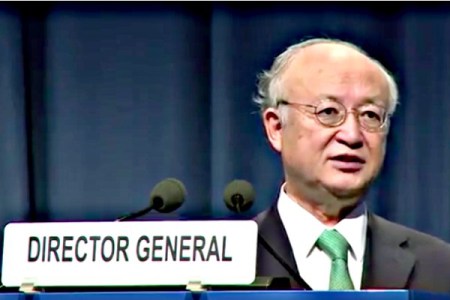
IAEA-AmanoIAEA’S Dir. Gen. Yukiya Amano in Vienna. Sept. 14, 2015. Photo Credit: YouTube screen capture

U.S. Secretary of State John Kerry is thrilled that the world’s nuclear watchdog agency has decided, despite the continued lying by Iran about its nuclear weapons program and its violations of UN ballistic missile bans, to close its investigation into whether there had been any possible military dimensions to Iran’s nuclear weapons program.

Kerry’s statement, released on Tuesday, Dec. 15, noted that a Dec. 2 assessment by Yukiya Amano, Director General of the IAEA, revealed Iran had engaged in activities consistent with a nuclear weapons program as recently as a mere six years ago.

For some reason, Kerry seemed to find that reassuring.

The Secretary of State said that with the consensus adoption by the IAEA Board of Governors, it will now be able to “turn its focus now to the full implementation and verification of the Joint Comprehensive Plan of Action (JCPOA).”

In other words, everyone can now move towards lifting sanctions against Iran which not only continued to lie about its past nuclear activity, but which has already twice violated United Nations missile bans on it since the time the JCPOA was agreed to in July.

U.S. Ambassador to the U.N. Samantha Power acknowledged Iran’s October violation of the missile ban.

Iran’s latest violation of the missile ban was made public by a United Nations Panel in a report dated Dec. 11, Reuters reported on Tuesday. That report was forwarded to the UNSC’s sanctions committee.

Iran has consistently said it will defy any limitations on its ballistic missile program, whether enshrined in UN resolutions or otherwise.

Congressman Mike Pompeo (R-KS) was outraged by the IAEA’s decision, and the green light it gives to the administration’s willingness to move towards implementation of its nearly toothless Nuclear Iran Deal.

“The vote today is a total capitulation to the Iranian regime’s aggressively dishonest behavior with respect to its commitment under the Joint Comprehensive Plan of Action (JCPOA). Sadly, though not surprisingly, the IAEA Board of Governors closed the investigation into Iran’s nuclear program, despite proof of Iran’s dishonesty and in the absence of thorough, truthful answers to many outstanding issues. The president will now use this decision to lift sanctions on Iran without having the complete truth regarding its nuclear weapons related activity. This is a grave and historic error that sends the wrong message,” wrote Pompeo.

The Kansas member of Congress pointed out that the Iran deal, which lasts for more than a decade, means many more years of the U.S. and its partner nations look the other way while the world’s leading sponsor of terrorism continues “cheating, lying, and breaking the rules.”

“This is wholly unacceptable and will most assuredly lead to more of the same from Ayatollah Khamenei. Other rogue nations now know too that America will accept deceit and fraud in dealings with respect to nuclear proliferation.”

Kerry said on Tuesday that the watchdog agency can still investigate Iran if “there is reason to believe” that country is “pursuing any covert nuclear activities in the future, as it had in the past. In fact, the JCPOA – by providing for implementation of the Additional Protocol as well as other enhanced transparency measures – puts the IAEA in a far better position to pursue any future concerns that may arise.”

The IAEA may be able to continue to investigate, but given that past violations have been met with no consequences, it’s a cold assurance that such investigations can continue.

Incredibly, Kerry’s statement concludes:

Today’s resolution makes clear that the IAEA’s Board of Governors will be watching closely to verify that Iran fully implements its commitments under the JCPOA. We will remain intensely focused going forward on the full implementation of the JCPOA in order to ensure the exclusively peaceful nature of Iran’s nuclear program.

Isn’t that comforting?

What About Iran’s “JCPOA”?

December 15, 2015

What About Iran’s “JCPOA”? Gatestone InstituteLawrence A. Franklin, December 15, 2015

(The article mentions, but otherwise provides little of substance concerning, Iran’s interpretation of the Joint Cooperative Plan of Action (JCPOA).  This analysis by the Middle East Media Institute is about Supreme Leader Khamenei’s “guidelines” for its interpretation and implementation. They suggest something quite different from the document presented to the U.S. Congress.– DM)

  • The self-appointed P5+1, elected by no one but themselves, should be embarrassed to find that they have made a deal with no one but themselves.
  • The media’s emphasis on the JCPOA has sadly neglected any in-depth coverage of Iran’s own comprehensive plan of action, which seems to consist of developing nuclear weapons, ballistic missiles and related systems to deliver them.
  • The IAEA cannot even confirm with certainty that Iran does not already possess a nuclear bomb, and yet is not expected to challenge Tehran’s assertion that it ceased nuclear weapons development more than a decade ago.
  • Although the U.S. also cannot be certain of Iran’s intentions, it would be advisable to assume that Iran means what it says: “Death to America” and “Death to Israel.”

Iran is cheating already — or is it? Iran has not signed anything, so presumably it cannot be cheating on something it never agreed to – as predicted on these pages half a year ago. The self-appointed P5+1 (the five permanent members of the UN Security Council plus Germany), elected by no one but themselves, should be embarrassed to find that they have made a deal with no one but themselves.

The lavishly touted and lavishly dangerous “Iran Deal” not only paves the way for Iran to have nuclear weapons, as it was planning, anyway; it also rewards Iran’s repeated violations of the Non-Proliferation Treaty — which it did sign — with up to $150 billion. With a punishment like that, we should all start violating commitments.

Iran’s recent missile tests have, been undermining the rationale of the Joint Comprehensive Plan of Action (JCPOA), which the P5+1 signed with itself. If Iran is concerned that its missile tests might have violated multiple UN Resolutions, a paltry detail such as that clearly has not bothered anyone before, so why should it bother anyone now?

The media’s emphasis on the JCPOA has sadly neglected any in-depth coverage of Iran’s own comprehensive plan of action, which seems to consist of developing nuclear weapons, ballistic missiles and related systems to deliver them.

While Western diplomats were congratulating themselves on their JCPOA arrangement, Iran sent a “slap-in-the-face” signal to the Free World by launching an Emad [“Pillar”] ballistic missile on October 10. On December 8, State Department spokesperson John Kirby indirectly acknowledged the launch of a second ballistic missile, fired on November 21. Kirby was quick to point out that test was not a violation of the JCPOA.

The launches are violations, however, of UN Security Council Resolution #2231, which bans ballistic missile tests by Iran. Although these tests do not defy the letter of the JCPOA, they do defy the spirit of it. Even though the initial missile test was denounced by the U.S. and allied UN representatives, no action has so far been taken against Iran. The U.S. Ambassador to the United Nations, Samantha Power, did condemn the October test and probably will also condemn the second test. But if this is outrage, that may be the extent of it.

What seems clear is that Iran’s Islamic Revolution Guard Corps (IRGC), which controls the ballistic missile program, is attempting to goad the West into additional punitive action against the Islamic Republic. Such response would serve to strengthen the hardline opposition to the JCPOA in Iran. Further, if the United States does nothing but issue condemnatory rhetoric, it will be interpreted by the regime as additional confirmation that the U.S. desires a nuclear agreement at virtually any cost.

1388

The International Atomic Energy Association (IAEA), after its investigation into the Possible Military Dimensions (PMD) of Iran’s past nuclear weapons development activities, was forced, thanks to Tehran’s lack of cooperation and transparency to deliver an inconclusive initial report on December 2[1].

The Iranian regime’s officials, such as Deputy Foreign Minister Sayed Abbas Araghchi, have demanded the immediate lifting of the 12 UN Resolutions against Iran when the IAEA Board of Governors votes on the final PMD report on December 15.

The IAEA cannot therefore confirm with certainty that Iran does not already possess a nuclear bomb, or whether or not Tehran is presumably still pursuing one. The IAEA Board of Governors is, nevertheless, not expected to challenge Tehran’s assertion that it ceased any such activities more than a decade ago.

Iran currently has several types of ballistic missiles in varying stages of development. The range of these missiles extends from the regional to the intercontinental — with a version of one missile capable of reaching the continental United States. The most touted operational system is the Shahab (“Meteor”) program, with several follow-on versions. The Shahab system has benefited by seemingly close cooperation with North Korea’s ballistic missile program, Russian nuclear weapons engineers who were unemployed after the Soviet Union imploded, and China’s direct and indirect technical assistance.

The principal threat to regional states, particularly to Israel, is that one does not know what one does not know — in this instance, the stage of Iran’s nuclear weapons programs.

Action by the U.S. Congress to inquire why the public disclosure of Iranian ballistic missile tests is being disseminated in dribs and drabs is long overdue, especially as America’s technical intelligence collection methods provide immediate and certain knowledge of such tests.

Although the U.S. also cannot be certain of Iran’s intentions, it would be advisable to assume that Iran means what it says: “Death to America” and “Death to Israel.” If one assumes that these statements, made by a regime that stones women to death, are not mere propaganda, but ideological commitments, the time to demonstrate the Free World’s resolve by way of strategic military exercises on Iran’s borders is long overdue.

______________________________
[1] Initial PMD Report summary observations are that Iran had a coordinated program to develop a nuclear explosive device up through 2003 but the program appears not to have advanced beyond scientific testing which did permit Iran to acquire certain competencies and capabilities. However, some aspects of the program continued until 2009.

Nuclear Agency Says Iran Worked on Weapons Design Until 2009

December 2, 2015

Nuclear Agency Says Iran Worked on Weapons Design Until 2009, New York Times

(Please see also, Iran threatens to walk away from nuke deal. — DM)

[W]hile the International Atomic Energy Agency detailed a long list of experiments Iran had conducted that were “relevant to a nuclear explosive device,” it found no evidence that the effort succeeded in developing a complete blueprint for a bomb.

In part that was because Iran refused to answer several essential questions, and appeared to have destroyed potential evidence in others.

**********************

VIENNA — Iran was actively designing a nuclear weapon until 2009, longer than the United States and Western intelligence agencies have publicly acknowledged, according to a final report by the United Nations nuclear inspection agency.

The report, based on partial answers Iran provided after reaching its nuclear accord with the West in July, concluded that Tehran conducted “computer modeling of a nuclear explosive device” before 2004. It then resumed the efforts during President Bush’s second term and continued them into President Obama’s first year in office.

But while the International Atomic Energy Agency detailed a long list of experiments Iran had conducted that were “relevant to a nuclear explosive device,” it found no evidence that the effort succeeded in developing a complete blueprint for a bomb.

In part that was because Iran refused to answer several essential questions, and appeared to have destroyed potential evidence in others.

The report, issued here Wednesday evening to the 167 countries that make up the board of the agency, is intended to complete a decade-long attempt to determine what kind of progress Iran made toward the technological art of designing a warhead that could fit atop a nuclear missile.

The completion of the report is one of the steps that Iran had to take — along with dismantling centrifuges and shipping nuclear fuel out of the country — before sanctions will be lifted under the nuclear deal.

Mr. Obama and his secretary of state, John Kerry, concluded this year that it was more important to secure a deal that will, if carried out fully, prevent Iran from gaining the material to build a bomb for at least 15 years than making it admit to past activities. So, the report’s publication allows the deal to go through, no matter how definitive or inconclusive the final result.

But Iran’s refusal to cooperate on central points could set a dangerous precedent as the United Nations agency attempts to convince other countries with nuclear technology that they must fully answer queries to determine if they have a secret weapons program.

The agency’s bottom line assessment was that Iran had a “coordinated effort” to design and conduct tests on nuclear weapon components before 2003 — echoing a United States national intelligence estimate published in 2007 — and that it had conducted “some activities” thereafter.

“These activities did not advance beyond feasibility and scientific studies” and the acquisition of technical capabilities, the agency concluded. The efforts ended “after 2009,” or just as Mr. Obama was taking office and accelerating the sanctions and cyber sabotage program against Iran’s nuclear facilities that ultimately brought Iranian officials to the negotiating table.

Tehran gave no answer to one quarter of the dozen specific questions or documents it was asked about, leaving open the question of how much progress it had made.

The report, titled “Final Assessment of Past and Present Outstanding Issues Regarding Iran’s Nuclear Program,” will not satisfy either critics of the nuclear deal or those seeking exoneration for Iran. Instead, it draws a picture of a nation that was actively exploring the technologies, testing and components that would be needed to produce a weapon someday, without coming to a conclusion about how successful that effort was.

The agency’s director, Yukia Amano, said last week that the document would not be “black and white,” and that assessment proved correct.

Nothing in the report suggests that Iran will prevent the I.A.E.A. from monitoring its production of nuclear fuel for the next decade and a half, the crucial element of the July agreement. But Iran’s refusal to answer some of the questions also does not portend well for its transparency about its activities.

At Iran’s Parchin complex, where the agency thought there may have been nuclear experimental work in 2000, the agency said “extensive activities undertaken by Iran” to alter the site “seriously undermined the Agency’s ability” to come to conclusions about past activities.

Diplomats familiar with the compilation of the report said that they met “experts” in Iran, but would not say if they met the leader of the effort, Mohsen Fakhrizadeh. (Other diplomats said Mr. Fakhrizadeh was definitely not among those the inspectors met.) One diplomat said Iran had said it feared the scientists could be assassinated if they were identified. The agency appeared to have visited two laboratories.

Time and again, the agency seemed close to rejecting Iranian arguments that its experimentation was for civilian purposes. The inspectors found that Iran’s nuclear program was “suitable for the coordination of a range of activities relevant to the development of a nuclear explosive device” and that its experiments have “characteristics relevant to a nuclear explosive device.”

In one or two areas, notably a document provided by Western intelligence agencies indicating that Iran was looking at how to make uranium metal, a step needed for a weapon, it found “no indication of Iran having conducted activities” related to the document.

Recently, as the report’s publication approached, Iran’s position of complete denial that it had sought a bomb seemed to soften. In October, a former Iranian president, Ali Akbar Hashemi Rafsanjani, told journalists in Tehran that the nation had considered making nuclear arms during its war with Iraq in the 1980s but backed away.

“We sought to have that possibility for the day that the enemy might use a nuclear weapon,” he was quoted as saying. “That was the thinking. But it never became real.” He said nothing about what happened up to 2004 or the more sporadic efforts beyond.

The issues the I.A.E.A. addressed in Wednesday’s report date back a decade. Starting around mid-2004, thousands of pages of detailed evidence of Iran’s suspected research on how to design a weapon were collected by intelligence agencies in the United States, Israel and Europe, and eventually turned over to the agency’s inspectors here in Vienna.

Some of the evidence came from a laptop computer smuggled out of Iran by a person American and German officials identified as an Iranian technician, who had access to some of the most sensitive results from two secret Iranian nuclear projects. Both appeared related to different technologies needed to design a nuclear warhead, including the vital process of building a detonation system to fit inside the nose cone of Iran’s Shahab-3 missile, Persian for shooting star.

Iran claimed that the documents were fabrications, part of a Western conspiracy to set the groundwork for bombing the country’s nuclear facilities or overthrowing the government. The technician apparently never made it out of the country; he remained in Iran after sending the laptop out with his wife and family.

“We never figured out if he was imprisoned or executed,” a former intelligence officer involved in the operation said in an interview in 2008.

The year before that interview, however, the American intelligence community had warned the Bush administration of a surprising finding: While Iran once had a full-scale weapons development effort underway, it had suspended the project sometime in late 2003, shortly after the American invasion of Iraq.

“Prior to 2003 they had a full-scale Manhattan Project,” said Gary Samore, Mr. Obama’s top nuclear proliferation expert in the first term. After that, he said, the effort was sporadic, even as Iran pressed ahead to build the facilities to produce uranium fuel — the program that was rolled back and frozen by the agreement reached in July.

Even after the 2007 report, though, I.A.E.A. inspectors pressed Iran to address the questions raised in the documents. In 2008, the agency’s chief inspector gathered officials from around the world into a large auditorium here and displayed the evidence to them. This included, memos signed by Mr. Fakhrizadeh, the elusive academic who ran the program for the Islamic Revolutionary Guards Corps, and Iranian videos appearing to show how to detonate a weapon in an “air burst,” much as the bomb exploded high over Hiroshima, Japan, in 1945.

In 2011, frustrated that Iran had failed to honor several agreements to answer questions and turn over documents, the atomic agency published a list of a dozen issues — “possible military dimensions,” in bureaucratic jargon — that it had to clear up before it could close Iran’s file.

But as the deal got closer last spring, Mr. Obama and Mr. Kerry had to make a crucial decision: whether it was worth jeopardizing the deal by insisting that Iran must admit to its past activities. From all indications since then, the president seemed to have decided it was more important to get commitments about limiting future activities than forcing Iranian officials to admit to a past the country insists never happened.

Mr. Kerry, pressed on the question of Iranian disclosure of past activities by Judy Woodruff on the “PBS NewsHour,” said: “They have to do it. It will be done. If there’s going to be a deal, it will be done.” But weeks later, he said United States intelligence agencies already had “perfect knowledge” of Iran’s activities, suggesting that a public confession was not necessary.

The result was a carefully designed diplomatic compromise. Iran had to meet deadlines to turn over documents, but the agreement did not specify how complete the disclosures had to be, whether important scientists had to be interviewed or whether inspectors had to be allowed into the sensitive research sites, including some universities, where the work happened.

IAEA’s PMD Report Is Being Written In Negotiation With Iran, Not Independently

November 29, 2015

Statements By Iranian Deputy Foreign Minister Abbas Araghchi Indicate: IAEA’s PMD Report Is Being Written In Negotiation With Iran, Not Independently, MEMRI, November 27, 2015

(Here’s a link to a July 16, 2015 interview in which Kerry stated,

“The possible military dimensions, frankly, gets distorted a little bit in some of the discussion, in that we’re not fixated on Iran specifically accounting for what they did at one point in time or another,” Kerry said. “We know what they did. We have no doubt. We have absolute knowledge with respect to the certain military activities they were engaged in. What we’re concerned about is going forward. It’s critical to us to know that going forward, those activities have been stopped, and that we can account for that in a legitimate way.”

— DM)

Araghchi’s interview indicates that Iran has been following the writing of the IAEA report and has been submitting comments to the IAEA and the P5+1, and has in fact been exerting constant pressure on Amano and on the P5+1 in order to ensure that the PMD dossier be closed and the report be worded unequivocally and to Iran’s complete satisfaction.

********************

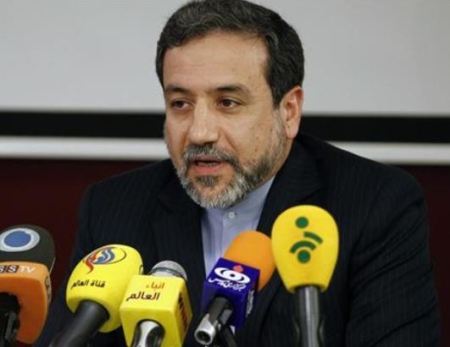
In a November 25, 2015 interview on Iranian television, Iran’s deputy Foreign Minister Abbas Araghchi said that he recently held talks with IAEA director-general Yukiya Amano on “closing the Possible Military Dimension (PMD) dossier”, and the latter filled him in about “some of the points he is to present” in the upcoming IAEA report on this issue. Araghchi noted that he had also spoken with the Americans and Europeans in Vienna, and had understood from them that “they too were heading towards closing the PMD dossier.” [1]

25842Abbas Araghchi (Image: Press TV, Iran)

It should be recalled that Ali Akbar Salehi, the head of Iran’s Atomic Energy Organization and a member of the nuclear negotiation team, said in a June 21, 2015 interview on Iranian television that Iran had “reached understandings with the IAEA” on the PMD issue, and added: “Now there is political backing [of the P5+1], and the [PMD] issue should be resolved.” He stated further: “By December 15, [2015], at the end of the year, the issue [of the PMD] should be determined. The IAEA will submit its report to [its] board of governors. It will only submit it. The Joint Comprehensive Plan of Action will continue independently of the results of this report. We have reached understandings with the IAEA… The technical issues are now being resolved in a political framework. They have set a time frame and, God willing, the issue must be resolved by December 15.” In response to the interviewers’ remark that the IAEA has “a bad record” (in terms of cooperating with Iran), Salehi stated: “In short, they [the IAEA] will be the losers. As I have said, the issue has received political backing. The work of [the IAEA] must be reasonable. They cannot do anything unreasonable. When there is no political backing, they do whatever they want, but now there is political backing, and the issue should be resolved.”[2]

In a recent news conference, Amano said that that “the report will not be black and white,” and that the PMD issue “is an issue that cannot be answered by ‘yes’ or ‘no'”.[3]

In his November 25 interview, Araghchi said: “In the next few days our experts will be in contact with the IAEA experts, and if necessary they will bring up additional points. I may also meet with Amano again… They [our experts] told us there were some weak points in the IAEA report and I commented on them. I am optimistic that they will be corrected…”

He added: “I don’t think there is any plan behind the scenes to leave the PMD dossier open. We have not received any indications that there is a plan [of this kind] behind the scenes. In any case I provided the Americans and Europeans with the necessary comments.”

He stated further: “On December 1, 2015, we expect this report to be published and submitted to the [IAEA] Board of Governors. A special board meeting has been scheduled for December 15, 2015, in which a resolution on the IAEA report will be taken. During this time [until December 15], the P5+1 group will submit a [draft] resolution [to the IAEA Board of Governors] with the objective of  closing the PMD dossier, and [this draft resolution] will come up for a vote in its December 15, 2015 meeting. Also, on December 7, 2015, there will be a meeting of the JCPOA Joint Commission in Vienna, attended by [representatives of] Iran and the P5+1, in which we will discuss the P5+1 [draft] resolution on closing the PMD. We have taken all the necessary steps so that on December 15, 2015, [the IAEA Board of Governors] will resolve to close the PMD dossier and this issue will be put to rest.”

According to Araghchi, “if the [IAEA] Board of Governors does not close the PMD dossier, the process of implementing the JCPOA will stop. Hence, the P5+1 must decide between the PMD and the JCPOA… In the past, the P5+1 chose the JCPOA. The [Supreme] Leader [Khamenei]’s letter on Iran’s implementation of the nuclear steps [a document published by Khamenei in October 21 detailing 9 additional conditions for Iranian compliance with the JCPOA][4] likewise emphasizes that they must choose between the JCPOA and the PMD.”[5]

According to Iran’s Press TV news agency, Araghchi said in the same interview: “If Yukiya Amano or the [IAEA’s] board of governors will present their report in such a way that it does not meet the stipulated commitments, the Islamic Republic of Iran will also stop [the implementation of] the JCPOA.”[6] In this statement, Araghchi implies that Iran has received commitments that the PMD dossier will be closed.

Araghchi’s interview indicates that Iran has been following the writing of the IAEA report and has been submitting comments to the IAEA and the P5+1, and has in fact been exerting constant pressure on Amano and on the P5+1 in order to ensure that the PMD dossier be closed and the report be worded unequivocally and to Iran’s complete satisfaction.

It should also be recalled that the inspection of the Parchin military facility, carried out to determine whether Iran’s program had military dimensions, consisted of Iran submitting samples that were not collected in the presence of IAEA inspectors and were later submitted to the IAEA, so that their origin cannot be absolutely determined.

As for the steps currently being taken by Iran to comply with the JCPOA, Araghchi clarified that “none of the steps so far taken by Iran in this matter contravenes the [Supreme] Leader’s letter…  and, as far as I know, [we] are still in the stage of dismantling the inactive centrifuges.” (Both Iranian Atomic Agency Spokesman  Behrouz Kamalvandi and Iranian National Security Council secretary Ali Shamkhani have indeed said that Iran has transferred inactive centrifuges from one facility to another, but no active centrifuges have been dismantled).[7]


Endnotes:

[1] ISNA (Iran), November 25, 2015.

[2] See MEMRI TV Clip No. 5014,  We Have Reached Understandings with the IAEA about the PMD; Technical Issues Are Now Being Resolved on a Political Level, July 21, 2015.

[3] Reuters.com, November 26, 2015.

[4] See MEMRI Daily Brief No.65, MEMRI: ‘The Emperor Has No Clothes,’ October 30, 2015.

[5] ISNA (Iran), November 25, 2015.

[6] Press TV (Iran), November 26, 2015.

[7] Kamalvandi: ISNA (Iran), November 3, 2015; Shamkhani: Fars (Iran), November 10, 2015.