Archive for the ‘Iran in Yemen’ category

Saudis Renew Air Strikes After Iran-Backed Rebels Attack Yemeni Troops

April 22, 2015

Saudis Renew Air Strikes After Iran-Backed Rebels Attack Yemeni Troops
by TheTower.org Staff | 04.22.15 8:19 am


(Game on….again. – LS)

In response to an attack by Iranian-backed Houthi rebels, Saudi Arabia resumed air strikes today against the rebels in Yemen, CNN reported. The resumption of air strikes comes less than a day after Saudi Arabia announced that it was ending the air war against the Houthis and seeking a diplomatic solution to the crisis in Yemen.

The strikes returned after rebel forces launched an attack on a government military brigade not under Houthi control, security sources in Taiz said. The brigade quickly fell to the rebels, they said.

It was unclear if the fighting represented a resumption of the operation or was a short-term resumption of hostilities.

After a month of air raids, Saudi Arabia and its allies, including Qatar, United Arab Emirates, Bahrain, Kuwait, Egypt, and Sudan, announced (Arabic link) the end of Operation Decisive Storm yesterday, claiming that all goals of the operation had been obtained, including the destruction of the Houthis’ heavy weapons and ballistic missile stockpiles. The Saudis called the operation a victory and argued that threats against Saudi Arabia and its neighbors by the rebels have been removed.

Saudi Arabia simultaneously announced (Arabic link) the beginning of a new campaign called “Renewal of Hope,” which apparently will not include any ground military operations in Yemen. It will instead focus on finding a diplomatic solution to the conflict between rebels and ousted President Abed Mansour Hadi. The spokesperson for the Arab coalition said vaguely that Saudi Arabia will continue to prevent the Houthis from carrying out their activities and will act militarily whenever it sees fit.

Hundreds of people were killed as a result of more than 2,000 air strikes by the Saudi-led coalition. The Saudis say that Hadi himself (Arabic link) requested the end of the military operation, and that he thanked the Arab states for their assistance and asked them to try and reach a diplomatic solution to the conflict. The president said that he thinks the legitimate regime will soon be able to return to Yemen’s capital Sanaa, which was captured by the rebels last September.

During the operation, the Saudi-led forces were able to destroy (Arabic link) some 80% of the weapons of the Houthi arsenal through air raids aimed primarily against Houthi bases. The bombings destroyed heavy weapons such as tanks, artillery and ballistic missiles.

However, a few hours after the declaration, Al-Arabiya news network reported (Arabic link) that armed clashes are continuing, with the Houthis taking advantage of the end of the air raids to continue fighting Hadi supporters in southern Yemen.

Obama: US could ‘penetrate’ Iran S-300 defense system

April 22, 2015

Obama: US could ‘penetrate’ Iran S-300 defense system
BY TIMES OF ISRAEL STAFF April 22, 2015, 6:51 am


(If there’s one thing in which I still have faith, it’s the ability of the US military of overcome virtually any obstacle, even the supposedly almighty S-300’s. – LS)

US President Barack Obama warned that the US could penetrate any air defense system Iran has, should a military option be needed, playing down concerns over Russia’s decision to supply advanced S-300 surface-to-air missiles to Tehran last week.

“Even if they’ve got some air defense systems, if we had to, we could penetrate them,” Obama told MSNBC late Tuesday.

The US president urged to keep things “in perspective,” noting that the US defense budget was “somewhere just a little under $600 billion. Theirs is a little over $17 billion.”

“This is a sale that’s been pending for six years,” Obama said. “It’s of concern, we object to it, particularly because right now we’re still negotiating [a nuclear agreement].”

The US-led P5+1 world powers were negotiating a nuclear deal with Iran to curb its atomic program, with a final deal set to be penned by June 30. Talks are set to resume in Vienna later this week. The initial framework, known as the Lausanne agreement, has been criticized as not having extracted enough concessions from Tehran and being too soft on the Islamic Republic, leaving it with too many capabilities to break out to the bomb and not being tough enough regarding the lifting of sanctions.

Last week, Obama indicated that the US was open to discussing the immediate lifting of sanctions on Iran, as demanded by Tehran but contrary to what the initial agreement calls for.

Israel, particularly, has been a vocal opponent of the deal, with Prime Minister Benjamin Netanyahu saying the deal would threaten the very survival of Israel and would pave the way for Iran to become a nuclear states.

Obama said Tuesday that it was“up to the Iranians to make sure that they come to the table prepared to memorialize what has already been agreed to.”

In the MSNBC interview on Tuesday, the US president also issued a warning to Iran against delivering weapons to Shiite Houthi rebels in Yemen, said to be armed and trained by the Revolutionary Guards.

“There’s a reason why we keep some of our ships in the Persian Gulf region and that is to make sure we maintain freedom of navigation. And what we’ve said to them is if there are weapons delivered to factions within Yemen that could threaten navigation, that’s a problem.”

“What we need to do is bring all the parties together and find a political arrangement,” he said. “It is not solved by having another proxy war in Yemen. We’ve indicated to the Iranians that they need to be part of the solution, and not part of the problem.”

On Sunday, Netanyahu said Israel was treating Russia’s move to supply the S-300 air system to Iran with “utmost gravity.”

“Israel views with utmost gravity the supply of S-300 missiles from Russia to Iran, especially at a time when Iran is stepping up its aggression in the region and around the borders of the State of Israel,” he said at the start of the weekly cabinet meeting in Jerusalem.

The prime minister also reiterated Israel’s stance about the framework long-term nuclear deal between Iran and world powers, saying it didn’t address Iran’s regional military aspirations.

“Israel also views with utmost gravity the fact that there is no reference to this aggression in the agreement being made between the major powers and Iran,” he said. “There is no stipulation that this aggression be halted, whether at the start of the agreement or as a condition for the lifting of sanctions.

On Saturday, Russian President Vladimir Putin responded to Israeli media reports to the effect that Jerusalem was considering arms sales to Ukraine in response to the planned S-300 supply, warning Israel against such a “counterproductive” move.

Netanyahu spoke with Putin on Thursday, but failed to convince to halt the sale. Channel 2 reported that he may go to Moscow to meet with Putin in person to try to persuade him against it.

Putin defended his decision to sell the system to the Iranians, saying Russia’s 2010 ban against it was voluntary and not connected to other sanctions against the Islamic Republic.

US officials say the sale is more a sign of Russia’s economic woes and less a desire to cause controversy in the West.

Obama said Friday he was surprised that Russia’s suspension of missile sales to Iran “held this long.”

U.S. Warships On Watch – Leading From Behind – Lt Col Ralph Peters – Willis Report

April 22, 2015

U.S. Warships On Watch – Leading From Behind – Lt Col Ralph Peters – Willis Report, Fox News via You Tube, April 21, 2015

(It’s from yesterday and the situation remains fluid. Still, it’s worth watching. — DM)


US Yemen ceasefire bid founders as Saudis resume air strikes, Iranian warships on course for Gulf of Aden

April 22, 2015

US Yemen ceasefire bid founders as Saudis resume air strikes, Iranian warships on course for Gulf of Aden, DEBKAfile, April 22, 2015

The tone coming from the White House towards the end of the day was that the US naval buildup opposite Yemen was intended to give diplomacy a military boost, rather than confront the Iranian fleet.

******************

Just hours after halting military operations in Yemen, Saudi Arabia Wednesday, April 22 resumed its air strikes, bombing pro-Iranian Houthi rebel positions southwest of Taiz, after they seized a brigade base from forces loyal to fugitive President Abdu-Rabbu Mansour Hadi. DEBKAfile’s military sources report that the Saudi-led coalition went back on a promise published Tuesday to shift its focus from military action to peace talks after Houthi rebels opted out of the ceasefire the Obama administration was trying to broker between Riyadh and Tehran. Tehran further refrained from ordering its warships to turn around and told them to stay on course for the Gulf of Aden opposite Yemen.
DEBKAfile reported earlier Wednesday:

Wide overnight predictions of a Yemen ceasefire coming out of US mediation between Iran and Saudi Arabia were unfulfilled by Wednesday, April 22. All that happened was Saudi Arabia’s termination of its air strikes against the Iran-backed Houthi rebels – but not its sea and air blockade of the country. The rebels made it clear that for them, the war goes on. From Washington, US President Barack Obama warned Tehran against delivering weapons to Yemen that could be used to threaten shipping traffic in the region. Speaking in a televised interview on MSNBC’s “Hardball,” the president said: “What we’ve said to them is that ‘if there are weapons delivered to factions within Yemen that could threaten navigation, that’s a problem.’”

He was referring to the Iranian buildup of nine vessels, some carrying weapons, and warning that US warships were deploying to defend international navigation in the Gulf of Aden and the strategic Strait of Bab el-Mandeb off the shores of Yemen.

DEBKAfile reported earlier::

Iran’s Deputy Foreign Minister Hossein Amir Abdolllahian said Tuesday night, April 21, that Tehran is optimistic that ‘in the coming hours we shall see a halt to military attacks in Yemen.”

He did not say whether the Saudi Arabia had accepted a ceasefire after three weeks of air strikes, or its targets, the Houthi rebels and their Yemeni army allies – or both. Their acceptance would terminate the Yemen civil war.

Earlier Tuesday, White House spokesman Josh Earnest tried to play down the danger of a collision between a US naval strike force led by the USS Theodore Rooseveltaircraft carrier and an Iranian naval convoy believed to be carrying arms for the Houthis. Both were due to arrive in the Gulf of Aden opposite the Yemeni shore. Earnest said the US fleet’s mission was “to ensure the free flow of commerce” i.e. the freedom of navigation through the Gulf of Aden and Strait of Bab El-Mandeb.

He did not repeat an earlier statement by US defense officials that The Roosevelt carrier, the guided-missile cruiser USS Normandy and other accompanying warships had been sent to pre-empt any attempt by the Iranian vessels to unload weapons for the Houthis – in violation of a UN Security Council resolution.

Pentagon officials said an Iranian convoy of nine cargo ships had reached international waters in the Gulf of Aden, but that to their knowledge, the US and Iranian ships had not yet seen each other or made any contact.

The tone coming from the White House towards the end of the day was that the US naval buildup opposite Yemen was intended to give diplomacy a military boost, rather than confront the Iranian fleet.

Reports from Riyadh likewise pointed to active diplomacy afoot for ending the violence in Yemen.

A statement read out on Saudi-owned Arabiya TV announced the end of the kingdom’s military operation against the Iran-allied Houthi rebels in Yemen. “The alliance had achieved its goals in Yemen through the “Storm of Resolve” campaign and would now begin a new operation called “Restoring Hope.”

This operation, the statement said, would focus on security at home and counter-terrorism, aid and a political solution in Yemen.

At the same time, DEBKAfile’s Gulf sources report the same TV channel carried the opposite message from Riyadh:

Saudi Arabia’s King Salman Abdulaziz has ordered the Kingdom’s National Guard to join the military campaign in Yemen, said another communique. Minister of the Saudi National Guard Prince Mutaib bin Abdullah said his forces are on high alert and are ready to take part in Operation Storm of Resolve, a Saudi-led coalition of 10 states battling the advance of the Iran-backed rebels.

The Saudi National Guard is a strong armed force, superior to and better equipped than the Saudi national army. It would provide a solid increment for the Saudi air strikes in Yemen.

Behind this cloud of apparent contradictions hovering over the Yemen conflict Tuesday, is an Obama administration bid to broker the contest between Saudi Arabia and Yemen and bring about a ceasefire. The various parties are meanwhile jockeying for advantageous positions without surrendering their options. If the bid is successful, a truce may be announced in the Yemen war in the coming hours, but it is still hanging fire.

Saudi-led coalition ends military operation in Yemen

April 21, 2015

Saudi-led coalition ends military operation in Yemen, Reuters, April 21, 2015

The Saudi-led coalition bombing Yemen announced on Tuesday the end to a military operation that pounded the Iran-allied Houthi rebels for more than three weeks, a statement read on Saudi-owned Arabiya TV said.

The alliance had achieved its military goals in Yemen through the campaign dubbed “Storm of Resolve” and will now begin a new operation called “Restoring Hope,” it said.

The mission, the statement said, would focus on security at home and counter-terrorism, aid and a political solution in Yemen.

Arab states snub Obama’s D.C. summit as Iran Mocks Obama

April 21, 2015

Arab states snub Obama’s D.C. summit as Iran Mocks Obama, BreitbartJoel B. Pollak, April 21, 2015

ap_saud-bin-faisal-bin-abdulaziz-al-saud_ap-photo-640x422The Associated Press

As the U.S.S. Theodore Roosevelt heads to Yemen to confront a convoy of Iranian ships, including destroyers, it is worth asking why President Barack Obama is still talking to the Iranian regime about its nuclear program. The Iranians, who used the Houthi militia to knock over the American-aligned Yemeni government, clearly has no fear that Obama will suspend negotiations. If anything, Iranian tactics are winning more concessions.

When you strike a deal with an enemy who continues to attack you, that is not called “peace,” but “surrender.”

It is a wonder Obama is even bothering to send an aircraft carrier to the region at all. His hand has been forced by two factors: first, that Saudi Arabia has gone to war in Yemen without bothering to ask for American approval; second, Yemen is key to Obama’s drone policy against Al Qaeda, his only modest military success.

America has lost more than an ally in Yemen or a foothold in Iraq. It has lost the opportunity to defend hundreds of thousands of innocent lives from being murdered by Iran’s Syrian ally, which is using chemical weapons against civilians. It has lost the opportunity to demilitarize Lebanon—an achievement then-Sen. Joe Biden foolishly claimed in his debate with Sarah Palin in 2008. It may even have lost the chance to stop a nuclear Iran.

Iranian foreign minister Javad Zarif made clear in his New York Times op-ed this week that the regime sees a nuclear deal as the key to regional domination. He offered—no, demanded—American cooperation on ISIS and other issues, not as a possible outcome of a deal but as a condition for a deal.

Yet the White House refuses to make its own regional demands—such as recognition of Israel, or an end to Iran’s global terrorism.

Israel has made clear that the Iran deal is an existential threat, and even that has not moved Obama to reconsider. The Arab nations are not waiting to be double-crossed, and are making their own plans, which likely include Saudi Arabia obtaining nuclear warheads from Pakistan.

In an attempt to save face, Obama has invited the Arab nations to a May 13 summit at the White House—long after final negotiations with Iran have begun

Already, some Arab states have indicated that they will not be attending (Oman), or will only send junior delegations (Saudi Arabia, United Arab Emirates). Amir Taheri of theNew York Post quotes  one Arab official: “He is going to give a Churchillian speech. But we know that you can’t be Chamberlain one day and Churchill the next.”

Meanwhile, Israel quietly signals that it is not going to wait for a Churchill to arrive in the Oval Office.

Pentagon: US Warship Repositioning, Not Intercepting Iranian Ships Off Yemen

April 21, 2015

Pentagon: US Warship Repositioning, Not Intercepting Iranian Ships Off Yemen, Voice if America, April 20, 2015

(Who is the U.S. Navy about to protect from whom? Does it have anything to do with the P5+1 nuke “negotiations?”– DM)

The Pentagon says the American warship USS Theodore Roosevelt is “repositioning” as part of a security operation at sea, and not to intercept Iranian vessels off the coast of Yemen.

Citing unnamed officials, the Associated Press reported earlier in the day that the aircraft carrier would join other U.S. ships in the area to confront Iranian vessels, which are said to be carrying weapons to resupply Houthi rebels that have overrun parts of the country.

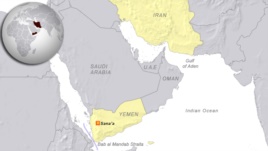
Yemen and IranYemen and Iran

But Pentagon spokesman Col. Steve Warren dismissed the report, saying the Roosevelt is ”repositioning to conduct maritime security operations.”

The guided-missile cruiser USS Normandy escorted the ship en route from the Arabian Gulf to the Arabian Sea, where they joined other U.S. military vessels “to ensure the vital shipping lanes in the region remain open and safe,” according to a statement from the U.S. Navy.

U.S. officials told media late last week that Iran has deployed at least seven ships, some carrying weapons, to Yemen in a bid to shore up Houthi arms supplies through the port city of Aden.

Houthi insurgents face daily air raids from a Saudi Arabian-led coalition and ongoing clashes with local forces.

White House spokesman Josh Earnest told reporters Monday there is “evidence that Iranians are supplying weapons and other forms of support to Houthis.”

“That’s the kind of support that will only contribute to greater violence in Yemen,” he said.

On Saturday, Iranian President Hassan Rouhani said the presence of Iranian naval ships “in the Persian Gulf and the Gulf of Aden is intended to ensure the security of neighboring countries and maritime traffic.”

The Saudi coalition has Aden under a naval blockade.

U.S. Navy warships to intercept Iranian weapons shipments in Yemeni waters

April 20, 2015

U.S. Navy warships to intercept Iranian weapons shipments in Yemeni waters, Associated Press via Washington Times, April 20, 2015

U.S. Navy officials say the aircraft carrier USS Theodore Roosevelt is steaming toward the waters off Yemen and will join other American ships prepared to intercept any Iranian vessels carrying weapons to the Houthi rebels fighting in Yemen.

The U.S. Navy has been beefing up its presence in the Gulf of Aden and the southern Arabian Sea amid reports that a convoy of Iranian ships may be headed toward Yemen to arm the Houthis.

The Houthis are battling government-backed fighters in an effort to take control of the country.

There are about nine U.S. ships in the region, including cruisers and destroyers carrying teams that can board and search other vessels.

The officials spoke on condition of anonymity because they were not authorized to discuss the ship movement on the record.

Iranian ship convoy moves toward Yemen, alarming US officials

April 18, 2015

Iranian ship convoy moves toward Yemen, alarming US officials, The HillKristina Wong, April 17, 2015

Iran sent a destroyer and another vessel to waters near Yemen last week but said it was part of a routine counter-piracy mission. 

What’s unusual about the new deployment, which set out this week, is that the Iranians are not trying to conceal it, officials said. Instead, they appear to be trying to “communicate it” to the U.S. and its allies in the Gulf.

********************

U.S. military officials are concerned that Iran’s support for Houthi rebels in Yemen could spark a confrontation with Saudi Arabia and plunge the region into sectarian war. 

Iran is sending an armada of seven to nine ships — some with weapons — toward Yemen in a potential attempt to resupply the Shia Houthi rebels, according to two U.S. defense officials.

Officials fear the move could lead to a showdown with the U.S. or other members of a Saudi-led coalition, which is enforcing a naval blockade of Yemen and is conducting its fourth week of airstrikes against the Houthis.

Iran sent a destroyer and another vessel to waters near Yemen last week but said it was part of a routine counter-piracy mission.

What’s unusual about the new deployment, which set out this week, is that the Iranians are not trying to conceal it, officials said. Instead, they appear to be trying to “communicate it” to the U.S. and its allies in the Gulf.

It is not clear what will happen as the convoy comes closer to Yemen. Saudi Arabia has deployed ships around Yemen to enforce the blockade, as has Egypt. An official said the ship convoy could try to land at a port in Aden, which the Houthis have taken over.

Although the U.S. is assisting with the Saudi-led air campaign, it is not participating in the naval blockade of Yemen, said U.S. Central Command spokesman Col. Pat Ryder.

However, the U.S. Navy is in the region and has already “consensually boarded” one Panamanian-flagged ship in the Red Sea on April 1 on the suspicion it was illegally carrying arms for the Houthis.

None were found, but the move raised alarm bells in Washington over an increasingly active U.S. military role in the conflict. The Pentagon indicated this week that more boardings could occur.

“We will continue to vigilantly defend freedom of navigation and to conduct consensual searches in an effort to ensure that drugs, human trafficking, weapons trafficking and other contraband are limited,” Army Col. Steve Warren said on Monday.

Officials fear a naval confrontation between Iran and Saudi Arabia could escalate what has become a proxy war between the two countries.

The U.S. has been supporting the airstrikes with intelligence and logistical support, and last week began refueling Saudi fighter jets. Administration officials say it is important to support Saudi Arabia.

Earlier this week, a senior State Department official said the U.S. would try to ensure that a United Nations Security Council arms embargo against Houthi leadership is enforced.

“We will be taking very careful look and examining very closely efforts to violate the embargo,” senior State Department official Gerald Feierstein told the House Foreign Affairs Committee.

The deepening of the conflict comes as the U.S. hopes to reach a deal with Iran to roll back its nuclear program in exchange for sanctions relief. Officials say U.S. support for the Saudi-led coalition has not affected the negotiations with Iran.

The conflict also threatens to complicate U.S.’s relations with Iraq. Iraqi Prime Minister Haider al-Abadi, an Iran ally, criticized Saudi Arabia for its airstrike campaign during a visit to Washington this week.

U.S. officials say they are unsure why Iran is making the brazen move. One theory they have floated is that the Saudi-led coalition has effectively blockaded any air routes into Yemen and there are no other ways to resupply the Houthis.

Another theory is that Iran is trying to distract the coalition from another ship it has tried hard to conceal that is currently docked at Oman — a potential land route for smuggling arms into Yemen.

Yet another theory is that Iran wants to force a confrontation with Saudi Arabia that it believes it will win, because Iran views the Saudi military as weak and suspects the U.S. lacks the willpower to support its Gulf ally.

Earlier this week, Iranian Supreme Leader Ali Khamenei on Twitter taunted Saudi Arabia, calling its military puny and smaller than Israel’s. He also said the air campaign was tantamount to genocide of innocent Yemeni civilians and that the U.S. would also fail in Yemen.

U.S. officials say they hope the airstrikes will force Houthis to the negotiating table in order to restore stability in Yemen, where America faces a terrorist threat from al Qaeda in the Arabian Peninsula (AQAP).

“We’re assisting the Saudis to protect their own territory and to conduct operations that are designed to lead ultimately to a political settlement to Yemen,” said Defense Secretary Ashton Carter on Thursday.

“That’s good for the people of Yemen, first and foremost. It’s good for Saudi Arabia that doesn’t need this on its southern border.  And … it’s good for us, among other reasons, because of AQAP’s presence in Yemen. But for that to occur, it’ll require more than military action,” he added.

King Abdullah II: We’re War With “Outlaws Of Islam” – Special Report

April 14, 2015

King Abdullah II: We’re War With “Outlaws Of Islam” – Special Report via You Tube, April 13, 2015

(He seems quite diplomatic, but what does he actually think? — DM)