Archive for the ‘Iran and Israel’ category

Hamas Rejoins Iran’s Terrorist Axis

October 26, 2017

Hamas Rejoins Iran’s Terrorist Axis, Investigative Project on Terrorism, Yaakov Lappin, October 26, 2017

(Please see also, The Iran-Hamas Plan to Destroy Israel. — DM)
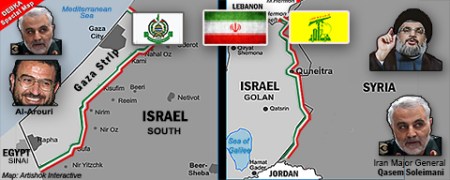
One immediate result of the Iranian-Hamas reconciliation is the new Hamas outpost being built in Lebanon.

Lebanon is under the firm control of Iran’s proxy, Hizballah. It is now seeing the arrival of Hamas members who have set up a new command center. From there, Hamas could set up terrorist cells in the West Bank.

Hamas’ new presence in Lebanon could also be used to create a rocket-firing base, or cross-border terror cells operating from Lebanon, with Hizballah’s and Iran’s approval.

******************************

Hamas is deepening its ties with Iran and its radical Shi’ite axis. Iranian cash is once again expected to fund Gaza’s war preparations and arms build-up program.

Before the 2011 outbreak of the war in Syria, Sunni Hamas and Shi’ite Iran were united by their goal to destroy Israel. Iran helped arm and fund Hamas’ terrorist-guerilla army in Gaza.

But the two fell out after finding themselves on opposite sides of the sectarian fence in the bloody Syria war. Iran, largely through its Lebanese proxy Hizballah, has committed troops and weapons to prop up dictator Bashar Al-Assad.

Now, out of cash and isolated, Hamas is in search of backing from a major regional power, and it is returning to Iran’s orbit.

The Iranians have been indicating that past fall-outs are history, and that Hamas will get all of the help it needs to prepare for future war against Israel. Israel’s intelligence community is closely monitoring these developments.

The Islamic Republic will grant Hamas “all assistance that it requests,” a senior Iranian official told the Lebanon-based Al Mayadin TV network, according to Israel’s Ynet website.

“Relations with Iran are excellent and Iran is the largest supporter of the [Hamas armed wing] Izz Al-Din Kassam Brigades with money and arms,” Hamas’ chief in Gaza, Yehya al-Sinwar said.

“The relationship today is developing and returning to what it was in the old days,” Sinwar told Reuters.

“This will be reflected in the resistance [against Israel] and in the agenda to achieve the liberation,” he said. “Liberation” is a reference to Hamas’ ideological long-term commitment to destroy Israel and replace it with a Palestinian-Islamist state.

One immediate result of the Iranian-Hamas reconciliation is the new Hamas outpost being built in Lebanon.

Lebanon is under the firm control of Iran’s proxy, Hizballah. It is now seeing the arrival of Hamas members who have set up a new command center. From there, Hamas could set up terrorist cells in the West Bank.

Hamas’ new presence in Lebanon could also be used to create a rocket-firing base, or cross-border terror cells operating from Lebanon, with Hizballah’s and Iran’s approval.

One of the Hamas members seen in Beirut recently is its No. 2 man, Saleh Al-Arouri. He has been responsible for remotely setting up terrorist cells in the West Bank. Until recently, Al-Arouri operated out of Hamas’ headquarters in Turkey.

Al-Arouri has been appointed Hamas deputy leader. He took part in a senior Hamas delegation to Iran earlier this month.

Those ties with Iran are one reason why Israel’s cabinet rejected recognition of a fledgling Hamas-Fatah unity government. Israel will not recognize the new Palestinian government until Hamas agrees to give up its weapons, recognize Israel, and cut links with Tehran.

“Our presence in Iran is the practical denial of the third precondition — cutting ties with Iran,” Arouri said. “Undoubtedly, the Palestinian resistance forces will never give up… their arms,” he was quoted by Reuters as saying.

Iran’s Supreme Leader, Ayatollah Khamenei, praised Hamas’ stance. Khamenei’s representative congratulated Hamas “for declaring that you will not set your weapons aside,” according to the semi-official Fars news agency.

Renewed Iranian support probably will take the form of suitcases of cash entering Gaza via smuggling tunnels.

Some tunnels linking Gaza to the Sinai Peninsula remain, though many others have been demolished by Egypt.

Iranian know-how in producing rockets, RPGs, mortars, and drones will also, once again, be used to train Hamas engineers, who are in charge of Hamas’ domestic weapons industry.

Iranian guerilla combat doctrines, which already have influenced Hamas greatly, could also reappear in Gaza, in updated forms.

Iran might also try to smuggle materials to make weapons into Gaza via small fishing boats.

Hamas has been open and frank about its intentions in renewing Iranian sponsorship. A senior Hamas official said it was about securing “Iranian financial and logistical support,” according to the Agence France-Presse.

Hamas’ new relationship with Iran will displease Sunni Arab countries who, like Israel, view the Iranians and their regional destructive behavior as a top threat.

But this is a risk Hamas’ leadership is prepared to take in its quest to replenish cash supplies for its military and terrorist operations.

Hamas’s isolation – the force that drove it into Iran’s arms – is also what caused it to enter a reconciliation agreement with its arch Palestinian rival, Fatah.

Seeking to avoid a collapse of its regime in Gaza due to dwindling cash and energy resources, and under pressure from Palestinian Authority President Mahmoud Abbas, who had been reducing Gaza’s electricity flow, Hamas decided to feign compromise with Fatah.

This is a short-term tactical move designed to serve the longer-term radical vision. Both Hamas and Iran would like to eventually use the Palestinian reconciliation to depose Fatah from power in the West Bank.

Hamas can be expected to use the coming years to build up its political power in the West Bank, Fatah’s home turf, and then try to take it over through elections. Hamas’s end goal is to create two armed fronts against Israel – from Gaza and the West Bank – with Iran creating the third and most potent third front from Lebanon, in the form of Hizballah.

Hamas and Iran still have their differences, but Hamas’s new leadership, and its distress stemming from isolation, have led it firmly back into Iran’s orbit. So long as Egypt remains under a government that is hostile to Islamists and jihadists, Hamas will continue to see Iran as its state backer, despite the Shi’ite-Sunni divide.

Meanwhile, a senior Hamas member with a history of funneling tens of millions of dollars from Iran to the organization’s military wing has recently been unveiled as a new top-level overseas liaison, according to Israel’s Kan television news service.

Maher Salah, a senior Hamas financier, recently appeared at a Turkish rally for the deceased Egyptian former Muslim Brotherhood leader Mohammed Mahdi Akef, in which he eulogized Akef as one who “loved jihad fighters and the jihad for Allah.”

The U.S. Treasury Department sanctioned Salah, together with Al-Arouri, in 2015.

“The fate of your country is to pass from the world,” Salah said, addressing Israeli Prime Minister Benjamin Netanyahu. “The fate of your kingdom is to be eliminated. I promise him that his country will not live to celebrate 100 years.”

Salah could use his ties in Iran to restart large-scale terrorist financing efforts.

The Gaza Strip is the quietest it has been in 30 years, and Hamas today remains deterred by Israel’s military might.

But its recent actions and statements show that Hamas is exploiting the ceasefire to gear up for long-term and destructive conflict with Israel. It is returning to Iran’s fold to help it in this effort.

Yaakov Lappin is a military and strategic affairs correspondent. He also conducts research and analysis for defense think tanks, and is the Israel correspondent for IHS Jane’s Defense Weekly. His book, The Virtual Caliphate, explores the online jihadist presence.
Article In Saudi Daily Slams Hamas: It Has Founded An ‘Iranian Emirate’ In Gaza And Is Completely Subordinate To Iran’s Ayatollahs

October 25, 2017

Article In Saudi Daily Slams Hamas: It Has Founded An ‘Iranian Emirate’ In Gaza And Is Completely Subordinate To Iran’s Ayatollahs, MEMRI, October 25, 2017

(Please see also, The Iran-Hamas Plan to Destroy Israel. — DM)

In an October 23, 2017 article in the Saudi daily Al-Riyadh, Saudi journalist and academic Baina Al-Mulhim leveled scathing criticism at Hamas. The article was written against the backdrop of the recent rapprochement between Hamas and Iran, reflected in a visit by a high-ranking Hamas delegation to Tehran and in statements by Hamas officials on the importance of tightening relations with Iran and of this country’s financial and political support of Hamas.[1] Al-Mulhim wrote that Hamas is experiencing a crisis of identity because, despite being a Sunni movement, it follows the Shi’ite Iranian model and has established an Iranian emirate in Gaza, and its leaders are completely subordinate to Iran’s ayatollahs. She added that Hamas, like Hizbullah, is not a resistance movement but rather a “contractor” implementing the Iranian agenda, and is exploiting the problems of the Palestinian people for political purposes.

The following are excerpts from her article:

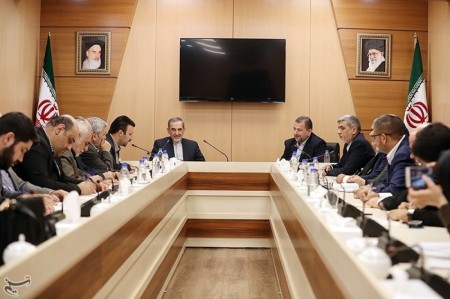
The Hamas delegation meets with Iranian officials in Tehran (image: alray.ps, October 22, 2017)

“It has been only a short while since the Hamas-Fatah reconciliation [agreement] was signed, [during which] I wondered, in another article, if Hamas was really serious, and if the reconciliation would cause it to return to its sanity and Arabhood… [yet] behold, just days ago [a report] was published about a Hamas delegation headed by Salah Al-‘Arouri, deputy chairman of Hamas’s political bureau, that arrived in Tehran last Friday [October 20, 2017] for a meeting with Iranian officials, as confirmed by a Hamas official… The official, who asked to remain unnamed, disclosed that the high-ranking delegation included several [other] members of Hamas’s political bureau, and that it was to meet with several Iranian officials over several days. He stated that the purpose of the visit was ‘to inform the Iranian officials about the reconciliation agreement signed by Hamas and Fatah, and about [recent] political developments,’ adding that the delegation would also discuss ‘ways to strengthen and develop the bilateral relations between Hamas and Iran and ensure Iran’s financial and political support of the movement, as well as [its assistance in] weapons.’ Hamas’s leader in Gaza, Yahya Al-Sinwar, likewise stressed that ‘Iran is the greatest supporter of the Al-Qassam Brigades,’ Hamas’s military wing, ‘in terms of weapons, money and training.’

“As is known, Iran is patron, for political purposes, of Sunni movements that maintain views that are radical in nature, among them Hamas. No one disagrees that political support is one thing and sectarian support is another. One of the paradoxes that should give pause to anyone who has tried in the past to justify Hamas is that Iran is supporting the [Sunni] Muslim Brotherhood in Egypt more than it is supporting the Shi’ite Da’wa Party in Iraq.

“In Gaza, Hamas has established an Iranian emirate that is completely subject to the Ayatollah [i.e. Iranian Supreme Leader Ali Khamenei]. We have not forgotten [Hamas leader] Khaled Mash’al’s October 1, 2011 speech at Khamenei’s palace, which was basically a reiteration his loyalty and obedience [to Iran]. Mash’al was, after all, no more and no less than a clerk to Iran’s ayatollahs!

“The problem of ideological movements, such as Hizbullah and Hamas – which have marketed themselves as resistance movements while, according to the political path both have taken… are nothing but ‘contractors’ [for Iran] – is that their leveraging of in their people’s problems for political, economic, and material purposes is the dominant pattern of behavior in their activity and positions. This is proven by their position on the revolution in Syria – which corresponds to that of their patron, Iran!

“Hamas is experiencing an internal crisis – a crisis more of identity than political – vis-à-vis the Arabs or vis-à-vis several Arab countries, headed by Saudi Arabia and Egypt. [Hamas] fears both these countries, [and] chose Iran not because it [Hamas] is an outcast – as those who defend its [pro-]Iran position try to claim – but because Hamas considers Iran a model it aspires [to emulate] when it establishes an Islamic emirate in Gaza.

“Hamas’s return to the [bosom of the] Iranian regime, as evident from its visit [to Tehran] – when it knows full well that the path of return to the Arab [fold] passes only through Saudi Arabia – sends a message, that Hamas is still ‘marching in place.'”[2]

___________________________

[1] On the recent rapprochement between Hamas and Iran, see MEMRI Special Dispatch No.7144, Alongside Reconciliation With Fatah, Hamas Officials Tighten Relations With Iran, Call To ‘Wipe Israel Off The Map’, October 23, 2017.

[2] Al-Riyadh (Saudi Arabia), October 23, 2017.

The Iran-Hamas Plan to Destroy Israel

October 23, 2017

The Iran-Hamas Plan to Destroy Israel, Gatestone InstituteKhaled Abu Toameh, October 23, 2017

Abbas and the Egyptians were probably naïve to think that Hamas would disarm and allow Abbas loyalists to deploy in the Gaza Strip after the signing of the “reconciliation” agreement. It is possible that some of the Hamas leaders had lied to Abbas and the Egyptians by hinting that Hamas would give up security control of the Gaza Strip.

The Egyptians, who played a major role in brokering the Hamas-Fatah deal, are also believed to be worried about Iran’s renewed meddling in the internal affairs of the Palestinians. Both the Palestinian Authority and Egypt see the visit of the Hamas delegation to Iran as a serious setback to the “reconciliation” agreement and as a sign that Hamas is not sincere about implementing the accord.

********************************

Iran’s goal in this move? For Hamas to maintain and enhance its preparation for war against Israel.

Iran’s message to Hamas: If you want us to continue providing you with financial and military aid, you must continue to hold on to your weapons and reject demands to disarm.

Iran wants Hamas to retain its security control over the Gaza Strip so that the Iranians can hold onto another power base in the Middle East, as it does with Hezbollah in Lebanon.

In a historic reawakening, Iran is once again meddling in the internal affairs of the Palestinians. This does not bode well for the future of “reconciliation” between Hamas and Palestinian Authority’s Fatah faction run by President Mahmoud Abbas.The re-emergence of Iran, as it pursues its efforts to increase its political and military presence in the region, does not bode well for the future of stability in the Middle East.

The Iranians are urging Hamas to hold on to its weapons in spite of the recent “reconciliation” agreement signed between Hamas and Fatah under the auspices of Egypt. Iran’s goal in this move? For Hamas to maintain and enhance its preparation for war against Israel.

A high-level Hamas delegation headed by Saleh Arouri, deputy chairman of Hamas’s “political bureau,” traveled to Tehran last week to brief Iranian leaders on the “reconciliation” deal with Fatah. During the visit, Iranian leaders praised Hamas for resisting demands (by Fatah) to disarm and relinquish security control over the Gaza Strip.

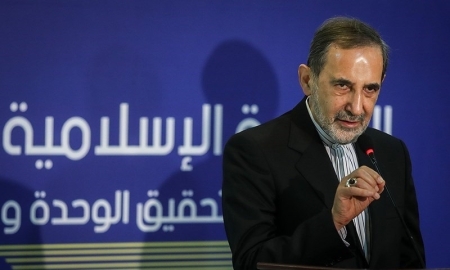
“We congratulate you on your refusal to abandon your weapons, an issue that you consider as a red line,” Ali Velayati, a senior Iranian politician and advisor to Leader of the Islamic Revolution Ayatollah Khamenei, told the visiting Hamas officials. “The Palestinian cause is the most important cause of the Islamic world, and after all this time you remain committed to the principle of resistance against the Zionists despite all the pressure you are facing.”

During the visit of a high-level Hamas delegation to Iran last week, Ali Velayati (pictured above in 2016), a senior Iranian politician and advisor to Supreme Leader Ayatollah Ali Khamenei, told the visiting Hamas officials: “We congratulate you on your refusal to abandon your weapons…” (Image source: Hamed Malekpour/Wikimdia Commons)

Arouri and his colleagues rushed to Tehran to seek the support of the Iranian regime in the wake of demands by Abbas that Hamas allow the Palestinian Authority to assume security control over the Gaza Strip. The “reconciliation” agreement stipulates nothing about the need for Hamas to disarm, and Hamas officials have stressed during the past two weeks that they have no intention of laying down their weapons or dismantling their security apparatus in the Gaza Strip.

Hamas views the demand to disarm as part of an Israeli-American “conspiracy” designed to eliminate the Palestinian “resistance” and thwart the “reconciliation” accord with Abbas’s Fatah. Hamas’s refusal to disarm is already threatening to spoil the “reconciliation.”

Arouri was quoted during his visit to Tehran as saying that Hamas “will not backtrack on the option of defending the Palestinian people.” He specified that the “reconciliation” agreement with Fatah would not affect the weapons of the Palestinian “resistance,” including Hamas. Hamas, he added, will “confront the Israeli-American conspiracy through national unity and reconciliation and by continuing the resistance. The Palestinian resistance forces will always stick to their weapons and will not lay them down.”

Hamas also sees the visit of its top officials to Tehran as a rejection of Israel’s demand that it cut off its ties with Iran. Hamas officials say they continue to see their relations with Iran as “strategic and significant,” especially in wake of Tehran’s financial and military aid to their movement in the Gaza Strip.

By aligning itself with Iran, Hamas is also seeking to resist any demand that it abandon its ideology and charter, which call for the destruction of Israel and oppose any peace process between Israelis and Palestinians.

Iranian officials apparently do not like Mahmoud Abbas and the Palestinian Authority and are not keen on seeing them return to the Gaza Strip. Iran considers Abbas a “traitor” because his Palestinian Authority conducts security coordination with Israel in the West Bank and claims that it is committed to a “peace process” with Israel. This position goes against Iran’s wish to destroy the “Zionist entity.”

Abbas, for his part, has always considered Iran a threat to his regime as well as to stability in the region. In the past, he has criticized Iran for “meddling” in the internal affairs of the Palestinians by supporting Hamas and Palestinian Islamic Jihad in the Gaza Strip.

Earlier this year, the Palestinian Authority strongly condemned Iran after a senior Iranian official accused Abbas of waging war in the Gaza Strip on behalf of Israel. The official’s statement came in response to a series of punitive measures imposed by Abbas on the Gaza Strip.

Abbas’s spokesman, Nabil Abu Rudaineh, accused Iran of meddling in the internal affairs of the Palestinians and some Arab countries. He said that Iran’s actions “encouraged divisions” among the Palestinians. “Iran must stop feeding civil wars in the Arab world,” he said. “Iran must stop using rhetoric that only serves Israel and the enemies of the Arabs.”

Abbas and the Palestinian Authority are now convinced that Iran is working towards foiling the “reconciliation” agreement with Hamas. They believe that Iran invited the Hamas leaders to Tehran to pressure them not to lay down its weapons.

Abbas and the Egyptians were probably naïve to think that Hamas would disarm and allow Abbas loyalists to deploy in the Gaza Strip after the signing of the “reconciliation” agreement. It is possible that some of the Hamas leaders had lied to Abbas and the Egyptians by hinting that Hamas would give up security control of the Gaza Strip.

The Egyptians, who played a major role in brokering the Hamas-Fatah deal, are also believed to be worried about Iran’s renewed meddling in the internal affairs of the Palestinians. Both the Palestinian Authority and Egypt see the visit of the Hamas delegation to Iran as a serious setback to the “reconciliation” agreement and as a sign that Hamas is not sincere about implementing the accord.

Some Palestinian Authority and Hamas officials have recently claimed that Israel was not happy with their “reconciliation” agreement and was doing its utmost to foil it. The truth, however, is that it is Iran and Hamas that are working to thwart the agreement by insisting on maintaining the status quo in the Gaza Strip. Iran’s message to Hamas: If you want us to continue providing you with financial and military aid, you must continue to hold on to your weapons and reject demands to disarm.

What is in it for Iran? Iran wants Hamas to retain its security control over the Gaza Strip so that the Iranians can hold onto another power base in the Middle East.

Iran wants Hamas to continue playing the role of a proxy, precisely as Hezbollah functions in Lebanon.

The last thing Iran wants is for the Palestinian Authority security forces to return to the Gaza Strip: that would spoil Tehran’s plans to advance its goal of destroying Israel.

Iran’s continued support for Hamas stems not out of love for either Hamas or the Palestinians, but from its own interest in consolidating its presence in the Middle East.

Many Palestinians see the “successful” visit of the Hamas officials to Tehran as a major setback for efforts to end the 10-year-long Hamas-Fatah dispute. Similarly, the Egyptians are now wary of the sudden rapprochement between Iran and Hamas and are beginning to ask themselves whether they have been duped by Hamas. An Israeli delegation that visited Cairo on the eve of the signing of the Hamas-Fatah deal is said to have warned the Egyptians that the “reconciliation” would not work unless Hamas disarms and severs its ties with Iran. However, the Egyptians reportedly failed to listen to the Israeli warning.

As for Israel, the US and other Western parties, the lesson to be drawn from the renewal of ties between Hamas and Iran is that Hamas has not changed one iota.

Contrary to delusional hopes, discussed on the heels of the “reconciliation” agreement in Cairo and based on lies and thin air, Hamas is not headed toward moderation and pragmatism. By openly supporting Hamas, Iran is once again demonstrating that it aims to fan the fire in the Middle East and continue to sabotage any prospects for peace.

Khaled Abu Toameh, an award-winning journalist, is based in Jerusalem.

US in agreement with Israel on PA-Hamas reconciliation

October 19, 2017

US in agreement with Israel on PA-Hamas reconciliation, Israel National News, Uzi Baruch, October 19, 2017

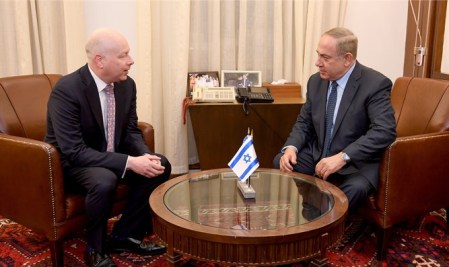
Netanyahu and GreenblattMati Shtern, US Embassy, Tel Aviv

US Special Envoy to the Middle East Jason Greenblatt on Wednesday issued a statement regarding the Palestinian Authority’s (PA) recent reconciliation agreement with the Hamas terror group.

“All parties agree that it is essential that the Palestinian Authority be able to assume full, genuine, and unhindered civil and security responsibilities in Gaza and that we work together to improve the humanitarian situation for Palestinians living there,” Greenblatt said.

“The United States reiterates the importance of adherence to the Quartet principles: any Palestinian government must unambiguously and explicitly commit to nonviolence, recognize the State of Israel, accept previous agreements and obligations between the parties – including to disarm terrorists – and commit to peaceful negotiations.

“If Hamas is to play any role in a Palestinian government, it must accept these basic requirements.”

Education Minister Naftali Bennett (Jewish Home) said, “I thank Special Envoy Jason Greenblatt and the US government for their clear message: A Palestinian government must disarm all terror organizations and recognize the State of Israel.”

“I emphasize our government’s stance: The State of Israel will not negotiate with a Palestinian government dependent on the Hamas terror organization, until Hamas disarms, recognizes Israel, and returns to Israel captured citizens and the bodies of fallen Israeli soldiers.”

Israel’s Diplomatic-Security Cabinet on Tuesday decided that it will not negotiate with a PA-Hamas unity government should it be established, and will not maintain contact with a PA government which rests on Hamas support.

In an announcement released by the Prime Minister’s Office, a number of Israeli conditions necessary for negotiations with a PA resting on Hamas were outlined, including adherence to the Quartet conditions.

Additional conditions included the return of soldiers’ bodies and civilians being held in Gaza to Israel, complete security control of the PA over Gaza, and the prevention of smuggling and Hamas terror infrastructure in Judea and Samaria.

The cabinet also demanded that Hamas cut ties with Iran, and announced that it will allow the flow of humanitarian aid and supplies to Gaza only through the PA and the bodies established for this purpose.

Put Iran back on the defensive

October 13, 2017

Put Iran back on the defensive, Israel Hayom, Amnon Lord, October 13, 2017

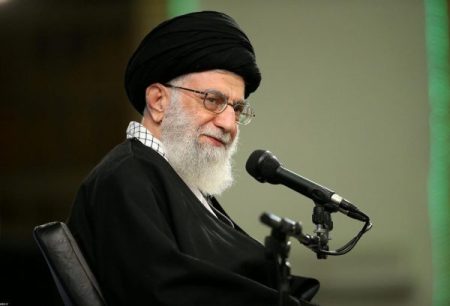
Iran’s Supreme Leader Ayatollah Ali Khamenei | Photo: Reuters

A recent interview with Brig. Gen. (ret.) Uzi Eilam, former director of the Atomic Energy Commission at the Prime Minister’s Office, has all but slipped under everyone’s radar.

During the interview, Eilam let it slip that in early 2015, when the fight against the nuclear deal with Iran was in full gear, he traveled to Washington to lobby support for the deal among Democratic senators and congressmen. Recently, we also learned that former National Security Adviser Uzi Arad and former Israeli Consul General in New York Alon Pinkas are part of a campaign by the left-wing Jewish lobby group J Street, which purports to be pro-Israel, to preserve the deal.

If the 2015 deal is so good, why is Prime Minister Benjamin Netanyahu so eager to amend it? And why did he so vehemently oppose it to begin with? If the deal is solid, why do the moderate Sunni states such as Egypt and Saudi Arabia oppose it? Why is U.S. President Donald Trump against it? Does the Israeli public really have to trust the judgment of former defense and diplomatic officials?

The truth is that it is quite bewildering that experts continue to insist on sticking to the deal when, two years in, the results are clear: Iran has massively infiltrated Syria and a new threat to Israel has emerged from the north. Those who supported the agreement apparently failed to fully understand its implications, or they knowingly covered up then-President Barack Obama’s rapprochement attempts with Iran at Israel’s expense.

Meanwhile, the Iranians have successfully taken over not only Damascus and Beirut, but also Iraq, Yemen and the Bab el Mandab Strait, a strategic waterway between Yemen on the Arabian Peninsula and Djibouti and Eritrea in the Horn of Africa. A senior intelligence official told me a month ago that there was a clear link between the approval of the nuclear agreement in July 2015 and the Russian invasion of Syria two months later. If anything, there is no doubt that Obama’s policy and the nuclear agreement paved the way for an Iranian-Russian takeover of the war-torn country.

The Israeli media all but ignored Obama’s moves over Iran. The Israeli and American intelligence agencies conducted effective warfare to sabotage the secret networks through which Iran built its nuclear program, but Obama vetoed these efforts, effectively terminating cyber warfare against Iran and lending international legitimacy to the Islamic republic’s nuclearization effort – efforts by a nation that has openly and repeatedly announced its clear intention to annihilate the State of Israel.

Above all, the nuclear agreement lifted the economic sanctions the international community had imposed on Iran. These sanctions, imposed due to American and Israeli pressure, had pushed into a corner, isolated it and placed it under constant international pressure. Obama freed Iran from this yoke and all but launched a campaign that delegitimized Israel, its government and its leader. Yet all of it was covered up by senior Israeli security officials and the Israeli media.

If Trump makes good on his threat and decertifies the nuclear deal, it will be the first step toward rectifying the situation and putting Iran back on the defensive. This would benefit Israel by pushing back the threat of an armed conflict on the northern border.

At this time, the effort to change the 2015 agreement in a way that prevents Iran from pursuing nuclear armament within eight years should be clear to the intelligence and security sages who are so supportive of the deal. North Korea barreled through two nuclear agreements negotiated by Wendy Sherman, the chief American negotiator with Iran, and emerged as a menacing nuclear threat.

Between the cabinet and the battlefield

The meeting between Netanyahu and Russian President Vladimir Putin in August, the massive military exercise in the northern sector in early September, the strike on a chemical weapons facility near Damascus last month, and defense officials’ publicly-voiced concerns about Iran’s military entrenchment in Syria, all made various pundits catch a whiff of napalm in the morning. But contrary to the perceived rise in security tensions in recent weeks, the IDF believes that chances of a flare-up on the Lebanese-Syrian front are waning.

One can argue about the scope of the strategic impact the Russian-Iranian alliance has on Israel. American analysts, who understood early on where Obama was heading with respect to Iran, believe the Russian-Iranian axis is very bad news for the United States as well as for Israel.

But the IDF has a different assessment, at least for the foreseeable future, according to which the Russian presence in Syria is deferring a potential conflict. Moreover, the Iranian presence in Syria appears less menacing when Revolutionary Guard soldiers are replaced by random Shiite militias.

The military says its multi-year work plan continues to evolve according to the dynamic map of threats from the north and it rejects claims that it is leading the IDF down the wrong path. According to a report by the Foreign Affairs and Defense Committee’s Subcommittee on the Defense Doctrine, which is an important intellectual venture led by Yesh Atid MK Ofer Shelah, the preparatory work done by the IDF to compose the multi-year work plan and its implementation so far are indeed impressive.

Nevertheless, even the apparently flattering report alludes to the fact that 11 years after the Second Lebanon War, the ground forces have yet to fully stabilize, while the Israeli Air Force has undergone a tremendous process of reinforcement. This is the military arm decision-makers continue to rely on, in conjunction with the IDF’s special forces, at the moment of truth.

Still, a critical review of the report reveals a serious problem that has not been resolved in Israel’s political reality: the interface between the political leadership and the IDF. The report criticizes the political echelon, saying it fails to provide the military with clear, written instructions and objectives. This makes it difficult for the military to adapt, outline its operational plans and build its strength.

Committees and cabinet meetings will not bring salvation. The IDF’s senior echelon must consider the fact that cabinet ministers cannot serve as a collective commander of the IDF’s operations in wartime. The cabinet was designed to supervise military moves, and while it can be called upon to decide on various operational alternatives before and during a conflict, it is up to military commanders to assume operational responsibility. The desire by lawmakers who see themselves as military experts to be involved to the point of making the military’s decisions for it is very unhealthy.

But there is one thing that can be expected from the political echelon: a decision on the strategic concept with respect to Hezbollah. Is Lebanese infrastructure a legitimate target in a potential future war, or is the IDF required to surgically deal only with Hezbollah elements? The answer to this question is not as simple as the hawks in the government would have the public believe.

Syrian/Hizballah troops cross Euphrates to east

September 16, 2017

Syrian/Hizballah troops cross Euphrates to east, DEBKAfile, September 16, 2017

It is worth noting in this regard that, in recent weeks, Israel’s generals and colonels have suddenly dropped references in their discourse to Iran and Hizballah as existential threats.

This may be the time to remind them of an unfortunate precedent. In the months leading up to the Yom Kippur War of 1973, Israel’s leaders brushed aside the Egyptian and Syrian armies as threats to the state’s survival –  only to find defeat at their hands staring the IDF in the face in the early days of that war.

No less dangerous would be a war fought by the Syrian army, Hizballah and Iran, with powerful Russian military support. By establishing a foothold on both banks of the Euphrates River and both sides of the Syrian-Iraqi border, Iran has taken a step towards pursuing its avowed goal of Israel’s destruction.

***********************************

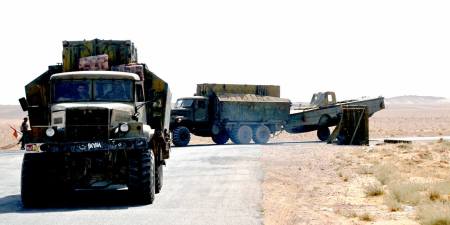
Shortly after the US-led coalition threatened to strike any Syrian Arab Army units if they crossed the Euphrates River, Syrian and Hizballah troops were marching across imported Russian pontoon bridges to reach the river’s eastern bank. By Friday, Sept. 15 they were able to establish a bridgehead there.

The attached photo shows the pontoons being lifted and set in place in a manner which recalls the method by which the IDF  was able to cross the Suez Canal for a landing in Egypt towards the end of the 1973 war.

Throughout the three-day operation, the Syrians and Hizballah worked under the cover of more newly-arrived Russian armaments, the MiG-29SMT (Nato-codenamed “Fulcrum),  whose landing in Syria was announced on Wednesday. This twin-engine jet fighter aircraft is a match for the F-18 in service with the US Air Force as well as the Israeli Air force’s F-15, F-16 and F-16 fighters.

The day the MiG-29s arrived in Syria, British Maj. Gen. Rupert Jones, Deputy Commander in Chief of the US-led Coalition in Syria, threatened to strike any units of the SAA if they crossed the Euphrates River.

The crossing operation, as well as deepening Russia’s military involvement in Syrian and Hizballah offensives, is a major boost for Iran’s objectives, with grave strategic implications for the US and Israel.

1. For the Trump administration, it trampled the principle Presidents Barack Obama and Vladimir Putin established exactly two years ago, i.e., for eastern Syrian across the Euphrates to be assigned to American military control and the west to the Russians.

2.  US satellites and reconnaissance planes watched the Russian army trucking the pontoons east and saw them being thrown over the river for the crossing. Nonetheless, no orders came from the White House or the Pentagon to make good on the coalition’s threat of a strike and to interfere.

3. Established on the east bank of the Euphrates, Syrian and Hizballah troops are in position to go forward for the operation to capture the Syrian-Iraqi border town of Abu Kamal from ISIS. They have moreover opened the way to link up with the Iraqi Population Mobilization Units (PMU), a surrogate of Iran’s Revolutionary Guards.

4. DEBKAfile’s military sources report that PMU units are already heading for this rendezvous on the Iraqi-Syrian border. This step is tantamount to opening up an Iranian-controlled military corridor between Iraq and Syria by cutting deep into the US-ruled region of eastern Syria.

5.  As recently as Thursday night, Sept. 14, President Donald Trump declared: “We are not going to stand for what they [Iran] are doing “

6.  The US president was not alone in refraining from lifting a finger to stop “what they are doing.” Prime Minister Binyamin Netanyahu likewise chose words over deeds. “Israel would not tolerate an Iranian presence on its northern border with Syria,” he reiterated Friday, Sept. 14, on his arrival in New York to address the UN General Assembly and meet Donald Trump.

But already Iran and its pawns were creating an accomplished fact, with massive logistical and military assistance from the Russian army.

It is worth noting in this regard that, in recent weeks, Israel’s generals and colonels have suddenly dropped references in their discourse to Iran and Hizballah as existential threats.

This may be the time to remind them of an unfortunate precedent. In the months leading up to the Yom Kippur War of 1973, Israel’s leaders brushed aside the Egyptian and Syrian armies as threats to the state’s survival –  only to find defeat at their hands staring the IDF in the face in the early days of that war.
No less dangerous would be a war fought by the Syrian army, Hizballah and Iran, with powerful Russian military support. By establishing a foothold on both banks of the Euphrates River and both sides of the Syrian-Iraqi border, Iran has taken a step towards pursuing its avowed goal of Israel’s destruction.

Iran Quadruples Cash Flow to Hizballah Since Nuclear Deal

September 15, 2017

Iran Quadruples Cash Flow to Hizballah Since Nuclear Deal, Investigative Project on Terrorism, September 15, 2017

Proponents of the Iran nuclear deal, including many within the Obama administration, argued that the agreement would moderate Iran’s behavior. On the contrary, Iran immediately enhanced its support for terrorist organizations, while extremist factions within Iran gained more influence. Two years later, Iran has proved to be even more emboldened to pursue its regional hegemonic ambitions, drastically increasing financial and military support to terrorist organizations and cells worldwide.

*************************************

Iran has drastically increased financial support for its Lebanese-based terrorist proxy Hizballah since the Iran nuclear deal was signed two years ago, the Jerusalem Post reports.

Iran secured $100 billion in frozen assets and sanction relief in January 2016 as a result of the deal with the United States and European countries. Flush with cash, Iran immediately increased its support for terrorist proxies in the region and nefarious activities worldwide. Hizballah was receiving $200 million from Iran. Now, it’s $800 million.

Last month, Hamas terrorist leader Yahya Sinwar admitted that “relations with Iran are excellent and Iran is the largest supporter of the [Hamas military wing] Izz el-Deen al-Qassam Brigades with money and arms.” Iran reportedly provides Hamas with about $60-$70 million.

Both Hizballah and Hamas remain dedicated to Israel’s destruction and continue to invest considerable resources to fight the Jewish state. Iran also spends hundreds of millions of dollars for Shi’ite militias in Syria and Iraq, while increasing support for Houthi militants in Yemen.

Shortly after the July 2015 nuclear deal was signed, Iran expanded its presence in regional conflicts and even increased its own intervention in Syria’s civil war, leading to mounting Iranian Revolutionary Guard Corps (IRGC) casualties.

Iran also increased efforts to subvert its neighbors. In March, Bahrain security authorities arrested members of an Iranian-sponsored terrorist cell, accusing them of planning to assassinate senior government officials. The IRGC reportedly provided military training to several cell members.

Beyond Iran’s regional ambitions, it continues to plan terrorist attacks around the world. Earlier this year, for example, Germany accused Iran of plotting attacks on Israeli and Jewish targets.

Proponents of the Iran nuclear deal, including many within the Obama administration, argued that the agreement would moderate Iran’s behavior. On the contrary, Iran immediately enhanced its support for terrorist organizations, while extremist factions within Iran gained more influence. Two years later, Iran has proved to be even more emboldened to pursue its regional hegemonic ambitions, drastically increasing financial and military support to terrorist organizations and cells worldwide.

Iran/Hizballah noose tightens around Israel

September 1, 2017

Iran/Hizballah noose tightens around Israel, DEBKAfile, September 1, 2017

Seen from the strategic-military angle, Israel can be said to have regressed 11 years to 2006, when two foes were poised menacingly on its northern and southern borders. Israel was then compelled to fight a war against Hizballah in Lebanon. This time, the conflict could potentially flare up simultaneously on three fronts – Lebanon, Gaza and Syria.

********************************

Nikki Haley, the US Ambassador to the UN, challenged the international community to hold Iran to account on Thursday, Aug. 31, after the Islamic Republic showed its “true colors” by restoring its ties with the Palestinian extremist Hamas. In her statement, she described as “stunning” the Hamas leader’s boast that Tehran is again the biggest provider of money and arms. The breach between them followed the terrorist group’s refusal to side with Bashar Assad in the Syrian civil war.

“Iran must decide whether it wants to be a member of the community of nations that can be expected to take its international obligations seriously, or whether it wants to be the leader of a jihadist terrorist movement. It cannot be both,” Haley said in her statement.

Islamic Iran has long made that decision, as the ambassador knows very well from the intelligence reports she sees. But her brave words were meant as a wakeup call for the rapid advances made by Iran and Hizballah during August to impose their will on the Middle East, often with great stealth.

Haley will have learned about the Aug. 2 meeting in Beirut between Hamas’s military chief Salah al-Arouri and Iranian officials, following which Hizballah’s Hassan Nasrallah confirmed that the Palestinian rulers of the Gaza Strip were worthy of restored military and financial aid.

That deal was clinched at the highest level in Tehran, after Arouri and a delegation from Gaza were received by top Iranian officials, including Revolutionary Guards General Qassem Soleimani. He is not only commander of Iran’s Middle East warfronts, but also head of Al Qods, which runs Iran’s intelligence, subversion and terror networks.

These events and their ramifications were itemized in the latest issue of DEBKA Weekly, out Friday, Sept. 1.

It was Soleimani who assigned Hamas and its military arm with its next tasks. Since both parties are dedicated to violent tactics (terror) to achieve their ends, one of which is the destruction of the State of Israel, all that remains to be seen is the precise form the Iranian-backed Hamas-Hizballah partnership will take – and where. Those practicalities were aired at the secret sessions between Hamas and Al Qods in Tehran

Present at some of those sessions were also Soleimani’s secret agents and heads of the terrorist networks he runs across the Middle East and in the Gulf emirates.

The inauguration ceremony for Hassan Rouhani’s second term as Iran’s president on Aug. 5 provided a convenient cover for these get-togethers.

Nikki Haley’s warning to the international community was prompted by these dangerous events. Although her words were powerful, telling and timely, it is hard to see any sign of their being followed up by other parts of the Trump administration.

With the southern front against Israel in the bag, Iran and Hizballah this week put together its northern front, just two or three kilometers from Israel’s Golan border with Syria. This could not have happened without the Trump administration submitting to Russia’s demand to revise their de-escalation zone project for the Syrian Golan, so that Iranian and Hizballah forces are no longer required to distance themselves 40-50km from the zone, but only 8km.

Iran and Hizballah in Syria have in consequence been quietly shortening their distance from the Israeli border. But this week, they made a major leap forward, when the Russian monitors brought a group of Iranian and Hizballah officers all the way to Quneitra. There, they were given a base under Russian protection within sight of the Israeli Golan.

Tehran and its pawn therefore used the month of August to climb into position for drawing a noose around Israel and tightening it at will.

Prime Minister Binyamin Netanyahu this week boasted that his tenure was marked by relative calm. Israel, he said, had successfully avoided getting embroiled in any major war.

That is correct. However, his policy of preserving the calm and maintaining a purely defensive stance has carried a price. That price was totted up on Sept. 1. By then, Iran and Iran had been able to move unopposed into position on Israel’s borders with Syria and Lebanon in the north and had crept up to the Gaza border in the south.

Seen from the strategic-military angle, Israel can be said to have regressed 11 years to 2006, when two foes were poised menacingly on its northern and southern borders. Israel was then compelled to fight a war against Hizballah in Lebanon. This time, the conflict could potentially flare up simultaneously on three fronts – Lebanon, Gaza and Syria.

Israel’s red lines in Syria long crossed by Iran

August 24, 2017

Israel’s red lines in Syria long crossed by Iran, DEBKAfile, August 23, 2017

Prime Minister Binyamin Netanyahu set out for President Vladimir Putin Israel’s red lines against Iran establishing a permanent, expanded military presence in Syria. This theme dominated their three-hour conversation in Sochi on Wednesday, Aug. 23. Netanyahu stiffened his warning with a veiled threat that should Iran or Hizballah cross those lines, there would be a regional war.

It was the first time that the prime minister had publicly threatened to go to war against Iran and Hizballah. After talking to Putin, he said to reporters that what is new today is Iran’s attempt to “Lebanonize Syria.” in the same way as it seized control of Lebanon through its surrogate, Hizballah. “We are looking at Tehran’s future takeover of Syria through its Shiite militias.

If that happens, “we will not remain passive,” he said – nor if Syria becomes a link in Iran’s overland corridor via Iraq and Syria to Lebanon. And we certainly can’t accept Iranians and Hizballah close to the Golan.

“We told President Putin plainly that we won’t put up with Iran using Syria as a military base for attacking Israel.

Putin, in the part of the meeting to which reporters had access, did not address Netanyahu’s remarks about Iran’s role in Syria, nor his warning of unilateral military action. The Russian president just repeated the standard Moscow line that foreign forces would not stay in Syria at the end of the war, but offered no timetable or guarantees.

The Russian leader would clearly prefer not to see an Israel war against Iran and Hizballah breaking out in Syria, DEBKAfile’s sources say, especially since Russian special forces, naval and air force contingents are deployed there – albeit not in large numbers.

At the same time, he may well find Netanyahu’s strong words useful for boosting Russia’s clout in Syria. If Tehran believes an Israeli war against its forces and Hizballah is potential, it will be in Iran’s interest to strengthen its military ties with Russia so as to gain its military and political backing.

For Putin, this would be a welcome change from the atmosphere of acrimony prevailing for some weeks between Iranian and Russian officers in Syria. Russian colonels have been posted at the most sensitive sectors in Syria, such as Aleppo, Hama, Homs and eastern Damascus. They are taking over both the military and civilian administration there and, in effect, shouldering the Iranian officers aside.

In Iraq, the Iranians seized control of the country from within, by setting up armed militias and getting them integrated in the national army, as Trojan horses. Tehran knows how to manage this ruse on the quiet, without drawing unwanted attention from the powers on the spot.

In Syria, the problem facing Israel is quite different. If Netanyahu shared sensitive intelligence with Putin that he had not known before, he can’t help noticing that Israel’s red lines for Iran’s expansion were crossed months ago, some of them with Russian assistance.

Four instances stand out:

1. Iran and Hizballah have already set up a chain of military bases in Syria – notably in the Qalamoun Mountains on the Syrian-Lebanese border, from which missiles can be launched against Israel.

2. Iran has already won its coveted land bridge through Iraq to Syria. Bashar Assad’s army has taken over whole sections of the Syrian-Iraqi border, and opened the door for pro-Iranian Shiite militias, Hizballah and Iraqi Shiite groups to move into strategic positions on both sides of the border.

3.  Netanyahu warned of the danger of planting an extremist Shiite entity in the heart of the Sunni Muslim region. But this is already underway. On orders from Moscow, the Syrian army’s 5th Corps is in the process of absorbing the pro-Iranian Shiite militias which fought for Assad.

The prime minister did not inform Putin of any timetable for Israeli action. But the Russian leader will take it for granted that the Israeli army will not move into Syria without a nod from the Trump administration in Washington.

For now, Putin and Trump are synchronizing their operations in Syria with better results than Netanyahu’s understanding with the US administration.

US Diplomacy: When failure became an accepted option

August 15, 2017

US Diplomacy: When failure became an accepted option, Israel National News, Meir Jolovitz, August 15, 2017

(Please see also, President [Rouhani of Iran]: Iran Could Swiftly Return to Pre-JCPOA Conditions. — DM)

For what it’s worth, future historians will judge the North Korean crisis as the less significant one of our generation – simply because China is able to control it. The more formidable and dangerous threat is the nuclearization of Iran. The occasional terror attacks in Europe, murderous as they are, pale in comparison.

In kind, the geopolitical threat that has already been unleashed – remarkably with more support than opposition by the West – is the facilitation of an Iranian nuclear capability. With the overt and covert support of the Obama Administration – despite its denials – the Iranians were fast changing the rules of the game. Unless stopped forcibly in the next year or two, Iran will be in possession of the bomb. Correction: bombs.

********************************

It’s been said by many, in various forms, that “hindsight is everyone’s favorite perspective.”  The problem is, few grasp when “it” is happening until “it” has happened.

Political analysts and pundits are seemingly in concert: the most disquieting crisis that confronts our world today is the realization that North Korea presents a horrifying threat that remains unchecked. It didn’t have to be.

When Susan Rice, President Obama’s National Security Advisor from 2013 to 2017, admitted this past week that the two-decade-old US strategy on preventing North Korea from obtaining a nuclear capability was a “failure,” our hindsight was offered some unclouded perspective.

And yet, it was her other comments that made us understand that the lessons of history remain unlearned. Rice, with a criticism directed at President Donald Trump, opined that pragmatism dictates that we should simply accept, and tolerate, a nuclear North Korea.  Worse was the quiet acquiescence:  “The fact of the matter is, that despite all of these efforts, the North Korean regime has been able to succeed in progressing with its program, both nuclear and missile. That’s a very unfortunate outcome; but we are where we are.” Rice added: “It will require being pragmatic.

Pause to laugh, and cry.

Trump, luckily, did not hire Rice as an adviser, and did what he thought was right.

In 1967, a couple of years before he achieved notoriety as the controversial founder and voice of the Jewish Defense League, Rabbi Meir Kahane coauthored a book – The Jewish Stake in Vietnam –  whose implications were largely ignored. One might still find it on the shelves of some antiquarian book store, but the book is largely lost. Its relevance, decades lately, offers food for serious thought.

While the book’s theoretical message was clear, the practical implications remain undeniable.

The radical rabbi argued that the anti-Vietnam war sentiment that had targeted the hearts and minds of a confused American population that was increasingly drawn to slogans of “peace,” “liberation,” and “democratic freedom” – would pressure its government to abandon an ally, South Vietnam. The implication, seemingly unthinkable even to Jewish liberals in the aftermath of Israel’s victory in the Six Day War, was that if the United States could not stand firm in its commitment to support an ally in Southeast Asia, it would one day be willing to abandon its commitment to its only ally in the Middle East as well. Ergo, the Jewish state.

Times have changed, and with it, America’s foreign policy. Israel is no longer considered America’s only ally in a still-troubled Middle East. In fact, the United States counts many, mostly as a result of a misbegotten reinterpretation of what allies are, thanks in great measure to the US State Department’s purposeful redefinition of American interests in the region.

One recalls the comment most often attributed to Charles de Gaulle: “Nations don’t have friends, only interests.”

Despite the very strong relationship that ostensibly exists between President Trump and Israel – at great contrast with that of his predecessor – his State Department and the National Security Council are still adherents of ‘interests before friends’. And, they mistakenly and quite foolishly attribute American interests to the wrong side. Governed by the belief that the “occupied” territories and the settlements are the reason of the impasse to the conflict between Muslims and Jews, Trump is ready to dispatch his son-in-law to once again bridge the unbridgeable gap.

In an oil-thirsty world, the Muslim states (we include here of course, the Islamic Republic of Iran) seemed to have gained a leverage that was simply unthinkable in 1967. The Europeans seemed the first to turn the other cheek when Arab terror spread, still in its nascent stages – mostly one would think, because it was not their cheeks that were being most often slapped.

Over the years, the terror in Europe proliferated. And correlatively, so did the finger of blame that was directed at Israel. As long as the Muslim antipathy was directed at the Jewish State – and more telling, Jews everywhere – the Europeans would assuage the perpetrators. It was Israel that was called to make compromises, territorial and (axiomatically) ideological. The more threatening and damaging the terror, the more shrill the calls for Israeli capitulation.

Undeniably, the greatest threat to the ever-elusive peace in the Middle East, and the invariable spill-over of violence into a Europe that is fast becoming a battlefield, is the terror that so many of its nations have voluntarily imported with the jihadis who carry the torch of Islam.

For what it’s worth, future historians will judge the North Korean crisis as the less significant one of our generation – simply because China is able to control it. The more formidable and dangerous threat is the nuclearization of Iran. The occasional terror attacks in Europe, murderous as they are, pale in comparison.

In kind, the geopolitical threat that has already been unleashed – remarkably with more support than opposition by the West – is the facilitation of an Iranian nuclear capability. With the overt and covert support of the Obama Administration – despite its denials – the Iranians were fast changing the rules of the game. Unless stopped forcibly in the next year or two, Iran will be in possession of the bomb. Correction: bombs.

Meanwhile, the new Trump foreign policy team, despite its frequent criticism of the Obama-Iran nuke deal, has yet to do anything significant. Worse, it has twice certified that Iran remains compliant. Of a deal that Trump called “the worst in diplomatic history.”

Yes, allies are often sacrificed on the mantle of political expedience. The US national security apparatus prefers to call it pragmatism.

And count on it. Susan Rice will one day again be interviewed by the New York Times and CNN, in a joint appearance with President Trump’s National Security Advisor H.R. McMaster, admitting another failure. This will be the statement that they will issue: “The fact of the matter is, that despite all of these efforts, the Iranian regime been able to succeed in progressing with its program, both nuclear and missile. That’s a very unfortunate outcome; but we are where we are.” McMaster, resplendent in his uniform and its military regalia, will add: “It will require being pragmatic.”

After all, we are where we are!

Today, despite the unmistakable danger that Iran poses to Israel directly, it is more than simply a Jewish stake. This is an American interest. The message is quite clear. The practical implications are quite ominous. Let us hope Trump deals with Iran as he is dealing with North Korea.

Pause to cry.

Meir Jolovitz is a past national executive director of the Zionist Organization of America, and formerly associated with the Institute for Advanced Strategic and Political Studies.