Archive for the ‘Iran and Hezbollah’ category

Germany: Iran Plotting Terror on Jewish and Israeli Targets

April 25, 2017

Germany: Iran Plotting Terror on Jewish and Israeli Targets, Investigative Project on Terrorism, April 24, 2017

Last month, Bahrain security authorities arrested members of an Iranian-sponsored terrorist cell, accusing them of planning to assassinate senior government officials. The IRGC reportedly provided military training to several cell members.

************************

Iran is responsible for a significant amount of espionage activity in Germany over the past decade, and is responsible for planning terrorist attacks on Israeli and Jewish targets, the Jerusalem Post reports.

In a letter sent to a Left Party deputy from German’s interior ministry, the federal government launched 22 criminal investigations concerning Iran’s illegal espionage activity – more than China and Turkey who were suspected in 15 spy cases each. Only Russia, with 27 cases, is involved in more suspected espionage activity than Iran.

In one case, German prosecutors allege that Haidar Syed-Naqfi was ordered to identify Jewish and Israeli institutions in Germany and other Western European countries as potential targets for terrorist attacks. For example, he was accused of monitoring the headquarters of a Jewish newspaper in Berlin. Syed-Naqfi also identified several Israel supporters, including the former chief of the German-Israel Friendship Society and a French-Israeli business professor. German authorities believe his preparations were “a clear indication of an assassination attempt.”

Between July 2015 and July 2016, Iran’s Revolutionary Guards Corps’ (IRGC) al-Quds Force paid Syed-Naqi more than $2,200.

Half of Germany’s state governments reported Iranian attempts to acquire material related to nuclear activities in 2015, the Post reports. An examination of intelligence sources in 2016 also produced new revelations surrounding Iran’s chemical and biological weapons programs.

Iran pursued German businesses in the Rhineland-Palatinate state seeking dual-use goods that could be “used for atomic, biological and chemical weapons in a war,” according to that state’s intelligence report.

An estimated 250 active Iranian-backed Hizballah operatives, out of about 950 Hizballah members throughout Germany, according to a 2014 Berlin intelligence report summarized by the Post.

Last month, Bahrain security authorities arrested members of an Iranian-sponsored terrorist cell, accusing them of planning to assassinate senior government officials. The IRGC reportedly provided military training to several cell members.

Iran has been accused of plotting terrorist attacks in recent years – mainly through proxies like Hizballah and IRGC’s Quds Force – in countries such as Egypt, Cyprus, Georgia, Thailand, India and others. In July 2012, a bus bomb widely attributed to Hizballah killed five Israeli tourists and a bus driver in Bulgaria.

In October 2011, the United Stated disrupted an Iranian plot to assassinate the Saudi Arabian ambassador in Washington D.C. and bomb the Saudi and Israeli embassies in the U.S. capital.

Mission accomplished in Syria

April 12, 2017

Mission accomplished in Syria, Israel Hayom, Clifford D. May. April 12, 2017

(Accomplished or just begun? — DM)

Congress should send Trump the legislation it is now considering, seeking to impose new sanctions on Iran in reprisal for its continuing support of terrorists, its missile tests and its maintenance of more than 35,000 troops in Syria, including its own, those of its Lebanese proxy, Hezbollah, and Shiite fighters recruited from Iraq and Afghanistan. Suspending Iran’s deal with Boeing/Airbus would be useful, too. Only the willfully credulous believe that Iran’s theocrats won’t use such aircraft for illicit military purposes.

************************

If you’re still unsure about whether U.S. President Donald Trump did the right thing when he launched 59 cruise missiles at Syria’s Shayrat Air Base last week, consider the alternative.

He knew that Syrian dictator Bashar Assad had yet again used chemical weapons to murder Syrian civilians, women and children prominent among them. He knew that Iran and Russia had enabled this atrocity, as they have many others. He knew he had two choices.

He could shrug, instruct his U.N. ambassador to deliver a tearful speech calling on the “international community” to do something, and then go play a round of golf. Or he could demonstrate that the United States still has the power and the grit to stand up to tyrants and terrorists, thereby beginning to re-establish America’s deterrent capability.

In other words, this was what Sun Tzu and Carl von Clausewitz would call a no-brainer. (Well, loosely translated.) A mission was accomplished. Do harder missions lie ahead? Yes, of course. But I suspect Defense Secretary James Mattis and National Security Adviser H.R. McMaster have made that abundantly clear to the new president.

We now know for certain that Russia failed to live up to its 2013 commitment to ensure that Assad surrendered all his illegal chemical weapons under the deal it brokered. Secretary of State Rex Tillerson acerbically questioned whether that was the result of complicity or incompetence or whether Russia allowed itself to be duped by Assad.

The strike ordered by President Trump was not “unbelievably small” — then-Secretary of State John Kerry’s description of the punishment then-President Barack Obama decided not to impose in response to Assad’s earlier use of chemical weapons. It was big enough to make clear that American diplomats are again carrying big sticks. (For Obama to insist that diplomacy and force are alternatives was patently absurd.)

Conveniently, Trump was dining with Chinese President Xi Jinping when the strikes occurred. It’s fair to speculate that Xi is today thinking harder about American requests to rein in Kim Jong Un, the North Korean dictator whose drive to acquire nuclear-tipped missiles that can reach the American mainland has become what Tillerson called an “imminent” threat.

Having passed his first major national security test, Trump is now obliged to demonstrate firmness and consistency. What plans might the Pentagon have on the shelf to respond to further provocations? The next round of Tomahawk missiles could permanently ground Assad’s air force. That would make it easier to then establish no-fly zones. If such measures do not alter the calculations of Assad and his Iranian and Russian patrons, consideration could be given to leveling his defense, intelligence and command-and-control centers as well.

Another idea under discussion: setting up safe havens, or, to use a better term, “self-protection zones,” for those fleeing the Syrian regime and various jihadist forces, Sunni and Shiite alike. Israel and Jordan could help the inhabitants of such areas adjacent to their borders defend themselves. The Saudis, Emiratis and Bahrainis could contribute to the cost. Might this lead to the partition of Syria? Most likely, but it’s difficult to imagine a “political solution” that would not include such readjustments.

All this, while useful and perhaps even necessary, should be seen as insufficient. Syria is a major humanitarian catastrophe but only one piece in a much larger geopolitical puzzle. Sooner rather than later, the Trump administration needs to develop what Obama refused to contemplate: a comprehensive and coherent strategy to counter the belligerent, imperialist and supremacist forces that have emerged from the Middle East and are now spreading like weeds around the world.

The Islamic State group will of course need to be driven off the lands on which it has attempted to establish a caliphate. After that, its terrorists will have to be hunted, along with those of al-Qaida, wherever they hide (e.g., Egypt where, over the weekend, they bombed two Coptic Christian churches).

But — and this is crucial — accomplishing these missions must not serve to further empower Iran’s jihadist rulers, who dream of establishing an expanding imamate, the Shiite version of a caliphate.

Most immediately, Congress should send Trump the legislation it is now considering, seeking to impose new sanctions on Iran in reprisal for its continuing support of terrorists, its missile tests and its maintenance of more than 35,000 troops in Syria, including its own, those of its Lebanese proxy, Hezbollah, and Shiite fighters recruited from Iraq and Afghanistan. Suspending Iran’s deal with Boeing/Airbus would be useful, too. Only the willfully credulous believe that Iran’s theocrats won’t use such aircraft for illicit military purposes.

That the United States cannot solve all the world’s problems was one of Trump’s campaign themes. But the implication is not necessarily, as some of his supporters hoped, that he would turn a blind eye to all atrocities and threats not already within America’s borders.

In the last century, most Americans recognized, in some cases with enormous reluctance, that there was no good alternative to doing whatever was necessary to rout the Nazis and communists, enemies whose goal was to kill off the democratic experiment.

In this century, jihadists and Islamists harbor the same ambition. We can attempt to appease them. We can try to make ourselves inoffensive to them. We can keep our hand extended, hoping that in time they will unclench their fists. Or we can decide instead to plan for a long war that will end with the defeat of these latest enemies of America and the rest of the civilized world. If Trump has grasped that within his first 100 days, he’s not off to such a bad start.

Radical Iran-led Axis Confronted with U.S. Deterrence for First Time

April 11, 2017

Radical Iran-led Axis Confronted with U.S. Deterrence for First Time, Investigative Project on Terrorism, Yaakov Lappin, April 11, 2017

Until recently, the United States focused its attention exclusively on Sunni jihadist threats – ISIS and al-Qaida-affiliated groups. While these terrorists certainly need to be attacked, turning a blind eye to the activities of the more powerful radical Shi’ite coalition did nothing to stop the region’s destabilization. In this context, Assad’s numerous crimes against humanity went unanswered.

This helped embolden Assad to use chemical weapons. It also gave the Iranians confidence to magnify their meddling in Syria, Lebanon, Iraq, Yemen, Bahrain, and to target many other states. The end result is Iran’s enhanced ability to export its Khomeiniest Islamic fundamentalist doctrine.

Just as Iranian-backed Shi’ite militias have poured into Syria, the same has happened in Iraq, where 100,000 fighters supported by Tehran fight alongside the Iraqi government forces against ISIS. The IRGC’s network extends to Yemen’s Houthi Ansar Allah forces, who receive Iranian assistance. Ansar Allah, a heavily armed Shi’ite military force, fires ballistic missiles at Saudi Arabia on a regular basis.

The IRGC and Hizballah have been linked to a recent large-scale terrorist plot in Bahrain.

If the message addressed in the cruise missile strike is followed up with a strategy of deterrence, addressed to Ayatollah Khamenei as much as it was addressed to Assad, the U.S. could begin projecting to the world that it recognizes the threat posed by Shi’ite jihadists as much as it takes seriously the threat from their fundamentalist Sunni equivalents.

**********************

The conflict in Syria has long ceased being a civil war, becoming instead a clash between coalitions and blocs that divide the entire Middle East.

The Iranian-led axis is the most dangerous and highly armed bloc fighting in Syria. Bashar al-Assad’s regime is not an independent actor, but rather, a component of this wider axis. In many respects, Assad is a junior member of the Iranian coalition set up to fight for him.

Russia joined the Iranian axis in 2015, acting for its own reasons as the pro-Assad coalition’s air force, helping to preserve the Syrian regime.

This coalition enabled the Assad regime to conduct mass murder and ethnic cleansing of Sunnis from Syria, while also using unconventional weapons against civilians in an effort to terrorize rebel organizations into submission.

Feeling confident by its growing control of Syria, Iran also uses its regional coalition to arm, finance, and deploy Shi’ite jihadist agents all over the Middle East, and to attack those who stand in the way of Iranian domination.

The Iranian-led axis has been able to spread violence, terrorism, and Islamic militancy without facing repercussions.

Until recently, the United States focused its attention exclusively on Sunni jihadist threats – ISIS and al-Qaida-affiliated groups. While these terrorists certainly need to be attacked, turning a blind eye to the activities of the more powerful radical Shi’ite coalition did nothing to stop the region’s destabilization. In this context, Assad’s numerous crimes against humanity went unanswered.

This helped embolden Assad to use chemical weapons. It also gave the Iranians confidence to magnify their meddling in Syria, Lebanon, Iraq, Yemen, Bahrain, and to target many other states. The end result is Iran’s enhanced ability to export its Khomeiniest Islamic fundamentalist doctrine.

That sent a troubling message to America’s regional allies, who, in the face of these threats, formed a de facto coalition of pragmatic Sunni states – a coalition that includes Israel.

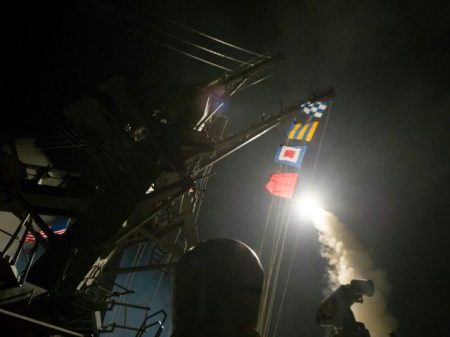
On April 6, the U.S. sent a signal that something may have changed. A cruise missile attack on an Assad regime air base, in response to a savage chemical weapons massacre in Idlib, Syria, was, first and foremost, a moral response to an intolerable act of evil.

But the strike also carries a wider prospective message about Washington’s new willingness to enforce red lines against Assad and his Shi’ite allies.

Potentially, it is an indication that the U.S. is willing to use its military prowess beyond the objective of targeting ISIS, and that it recognizes that Sunni jihadists are not the only global security threat that warrants the use of military force.

Statements by senior Trump administration officials indicate that a shift has occurred. “What you have in Syria is a very destructive cycle of violence perpetuated by ISIS, obviously, but also by this regime and their Iranian and Russian sponsors,” National Security Adviser H. R. McMaster told Fox News Sunday.

Russia must choose between its alignment with Assad, Iran, and Hizballah, and working with the United States, Secretary of State Rex Tillerson said Tuesday. The firm comment was made hours before he touched down in Moscow for talks.

According to U.S. officials, the April 6 missile attack destroyed 20 percent of Assad’s fighter jets. It represents the first time that Washington has taken military action against a member of the Iranian-led coalition.

The strike could evolve into a ‘dialogue of deterrence’ that the U.S. initiates against dangerous actors. These radical actors all have ‘return addresses,’ and are likely to prove responsive to cost-benefit considerations, despite their extreme ideology. They may think twice before considering further development and usage of unconventional weapons.

Washington is now able to exercise muscular diplomacy – the only kind that is effective in the Middle East – and inform all members of the Iran’s pro-Assad coalition that the deployment of unconventional weapons will not be tolerated. It can also begin to rally and strengthen the pro-American coalition of states in the Middle East, who seek to keep a lid on both ISIS and Iran.

With American officials indicating that they are “ready to do more” in Syria if necessary, signs suggest that the strike represents the start of a policy of deterrence, and leaving open future options for drawing additional red lines.

In theory, should Washington decide that Iran’s transfer of weapons and extremist Shi’ite military forces to other lands has reached unacceptable levels, or that Iran’s missile development program has gone far enough, it could call on Tehran to cease these activities. This call would carry substantially more weight following last week’s missile attack on the Syrian airbase.

The U.S. is in a better position to inform Assad and his allies that there is a limit to how far they can go in pursuing their murderous ambitions.

While the objective of creating a renewed American deterrent posture is vital, it should not be confused with plans for wider military intervention in the seemingly endless Syrian conflict.

There is little reason to believe that conventional weapons use against Syrian civilians is going to stop any time soon, or that the enormous tragedy suffered by the Syrian people is about to end.

And there is certainly no indication that the U.S. is planning to initiate large-scale military involvement in this failed state.

Hence, the missile strike should be seen for what it is: an attempt to boost American deterrence, which can then be leveraged to restrain radical actors that have, until now, been operating completely unchecked.

That is a message that will likely be heard loud and clear not only in Damascus, but also in Tehran, which has not given up its long-term ambition of building nuclear weapons.

North Korea, which helped build Syria’s plutonium nuclear plant (destroyed in 2007 in a reported Israeli air strike), and which maintains close links with Iran’s nuclear and missile programs, can be expected to take note as well.

If a policy of strategic deterrence follows the strike, it could have an impact on a coalition that is not just keeping Assad’s regime alive, but spreading its radical influence in many other areas.

In Syria, the Iranian Republican Guards Corps (IRGC) oversees ground operations across many battlefields to prop up Bashar al-Assad. Iran has gathered and armed tens of thousands of Shi’ite militia members from across the region into Syria, and manages a local force composed of 100,000 members. They fight alongside the Syrian Arab Army against Sunni rebel organizations, thereby increasing and entrenching Iranian influence.

The IRGC and its elite Quds Force are also helping to fill Hizballah’s weapons depots in Lebanon, with a vast array of surface-to-surface projectiles that are all pointed at Israel, often using Syria as an arms trafficking transit zone. Syria acts as a bridge that grants Iran access to Lebanon, and allows it to threaten both Israel and Jordan.

Jordan, an important U.S. ally, is deeply concerned by Iran’s actions in Syria, as evidenced by recent comments made by King Abdullah, who told the Washington Post that “there is an attempt to forge a geographic link between Iran, Iraq, Syria and Hezbollah/Lebanon.” IRGC forces are stationed within a mere 45 miles from Jordan’s border, he warned, adding that any hostile forces approaching the Hashemite Kingdom “are not going to be tolerated.”

Hizballah, a Lebanese-based Iranian Shi’ite proxy, evolved into a powerful army by sending 7,000 to 9,000 of its own highly trained members into Syria’s ground war. It helped rescue the Assad regime from collapse, and took part in battles stretching from Aleppo to the Qalamoun Mountains northeast of Damascus.

Last year, the Arab League and the Sunni countries of the Gulf Cooperation Council all declared Hizballah to be a terrorist entity.

Just as Iranian-backed Shi’ite militias have poured into Syria, the same has happened in Iraq, where 100,000 fighters supported by Tehran fight alongside the Iraqi government forces against ISIS. The IRGC’s network extends to Yemen’s Houthi Ansar Allah forces, who receive Iranian assistance. Ansar Allah, a heavily armed Shi’ite military force, fires ballistic missiles at Saudi Arabia on a regular basis.

The IRGC and Hizballah have been linked to a recent large-scale terrorist plot in Bahrain.

If the message addressed in the cruise missile strike is followed up with a strategy of deterrence, addressed to Ayatollah Khamenei as much as it was addressed to Assad, the U.S. could begin projecting to the world that it recognizes the threat posed by Shi’ite jihadists as much as it takes seriously the threat from their fundamentalist Sunni equivalents.

Washington’s campaign to pressure Russia to distance itself from its Middle Eastern allies could play an important part of this message.

Russia, Iran, Hizballah set up joint command in Syria

April 9, 2017

Russia, Iran, Hizballah set up joint command in Syria, DEBKAfile, April 9, 2017

(Trump, also known as “Putin’s Puppy,” has been nasty to Iran by declining to wag his tail whenever Khamenei whistles. Obama did, so Trump should too. Tsk tsk. The DEBKAfile article linked in the last paragraph is also available here. It deals with the transfer of substantial U.S. military air assets from Iraq to Syria.– DM)

The joint command center also said the presence of U.S troops in northern Syria where Washington has hundreds of special forces helping the Syrian Democratic Forces (SDF) to oust Islamic State was “illegal” and that Washington had a long-term plan to occupy the area.

**************************

A new joint command center made up of the forces of Russia, Iran and the pro-Iranian Shiite militias supporting Syrian President Bashar Assad accused America Sunday of waging aggression on Syria and crossing red lines. The center issued this warning: “From now on we will respond with force to any aggressor or any breach of red lines from whoever it is [against the Assad regime] and America knows our ability to respond well,” said the statement. It was issued in response to the US missile attack Friday on a Syrian air base from which chemical weapons were launched against civilians.

The joint command center also said the presence of U.S troops in northern Syria where Washington has hundreds of special forces helping the Syrian Democratic Forces (SDF) to oust Islamic State was “illegal” and that Washington had a long-term plan to occupy the area. Read DEBKAfile article.

KLEIN – Iran Is the Wild Card Following U.S. Air Strikes In Syria

April 7, 2017

KLEIN – Iran Is the Wild Card Following U.S. Air Strikes In Syria, BreitbartAaron Klein, April 7, 2017

U.S. Navy/via AP

President Vladimir Putin cannot risk a military confrontation with Trump and Russia is already signaling willingness to abandon Assad to come to a larger regional accommodation.

Still, there is the possibility that Russia may quietly support action by others, especially agents of a very nervous Iranian regime that has been preparing proxies for years who can heat up Israel’s northern border and beyond.  Both Moscow and Tehran have reason for wanting Trump to pay a price for acting in their Syrian playground.  The question is whether they will dare to respond, even tacitly.

The next few days and weeks will be critical in determining Iran and Russia’s resolve in the face of an awakened America that has returned from its eight-year slumber.

******************************

TEL AVIV – Following the U.S. launch of Tomahawk missiles targeting a strategic Syrian airfield on Thursday night, Iran must be monitored carefully for the possibility that it may use its proxies for retaliation, especially against Israel’s northern border.

Following eight years of inaction on Syria under the Obama administration, President Donald Trump demonstrated last night that he is willing to hold Syrian President Bashar al-Assad to account, this time by striking the Shayrat Airfield near the Syrian city of Homs that was believed to have been utilized to carry out a chemical weapons attack that killed scores of civilians.

The U.S. airstrikes signaled to Assad and his Russian and Iranian backers that Trump will act in Syria and the administration strongly supports the removal of the Syrian president – an important strategic ally of Moscow and Tehran. The U.S. military move demonstrates to Israel and the Sunni Arab bloc cast aside by Obama’s nuclear deal with the mullahs that American leadership has officially returned to the region.

Assad himself is unlikely to retaliate since the last thing he wants amidst a years-long insurgency attempting to topple his regime is to go to war with Trump or expand the battlefield to U.S. ally Israel.

Trump’s bold authority in Syria directly threatens Russian interests since it was Moscow that largely filled the security vacuum in that country when Obama repeatedly failed to take any meaningful action against Assad. However, Russia’s direct response will most likely be confined to vocal protestation, such as Kremlin spokesman Dmitry Peskov calling the U.S. strikes “aggression against a sovereign nation” carried out on a “made-up pretext.”

President Vladimir Putin cannot risk a military confrontation with Trump and Russia is already signaling willingness to abandon Assad to come to a larger regional accommodation.

Still, there is the possibility that Russia may quietly support action by others, especially agents of a very nervous Iranian regime that has been preparing proxies for years who can heat up Israel’s northern border and beyond.  Both Moscow and Tehran have reason for wanting Trump to pay a price for acting in their Syrian playground.  The question is whether they will dare to respond, even tacitly.

And that brings us to Iran.  Trump’s embrace of America’s traditional Sunni Arab partners at the expense of Tehran and his strong positions against the disastrous international nuclear agreement have been deeply concerning to the expansionist, terrorist-supporting Twelvers in Tehran.  And while the removal of Assad from power would be a blow to Russia, depending on the ultimate outcome such a move could be disastrous for Iran’s position in Syria.  Iranian Revolutionary Guard units have been fighting the anti-Assad insurgents alongside the Syrian military and the Iran-backed Hezbollah militia.  Syria represents a key pawn in Iran’s geopolitical chessboard that stretches across the vital region.

In recent weeks, there have been strong indications that Iran has been seeking to arm its Hezbollah proxy with even more advanced weapons that can target the Jewish state. Last month, Israel took the unusual step of striking a Hezbollah weapons convoy near the city of Palmyra that Prime Minister Benjamin Netanyahu said was transporting advanced weapons to the Iran-backed militia.

Israeli leaders and Hezbollah terrorists have in recent weeks ratcheted up war rhetoric, with Israeli officials warning that Hezbollah, which can only act at the direction of Iran, has been preparing for conflict.

Last Sunday, IDF Chief of Staff Lt. Gen. Gadi Eisenkot warned the IDF would not hold back from striking Lebanese state institutions in a future conflict with Hezbollah. “The recent declarations from Beirut make it clear that in a future war, the targets will be clear: Lebanon and the organizations operating under its authority and its approval,” Eisenkot stated.

Hezbollah is not Iran’s only option. Breitbart Jerusalem has been reporting on the formation of a “Golan Liberation Brigade,” which was announced last month by the secretary-general of the Iraqi Harakat al Nujaba Shiite militia and is reportedly being trained by the Iranian Revolutionary Guard Corps.  The so-called militia is another Iranian front that could be used to target Israel’s Golan Heights at the behest of Tehran.

The next few days and weeks will be critical in determining Iran and Russia’s resolve in the face of an awakened America that has returned from its eight-year slumber.

Trump’s Greatest Deal

March 24, 2017

Trump’s Greatest Deal, Front Page MagazineCaroline Glick, March 24, 2017

(Before the Flynn debacle, Trump’s efforts to get Russia to divorce itself from Iran appeared to be proceeding well. Please see, Highly Classified National Security Information Must Not be Leaked. Part b of the article is titled “Flynn telephone conversations.” Part c is titled “General Flynn, Russia and Iran.” Flynn’s departure from the Trump administration and America’s current Russophobia do not augur well for future success in pushing for the divorce. — DM)

Originally published by the Jerusalem Post

If Trump can convince Russia to ditch Iran, then he has a chance of dismantling the regime in Tehran and so defusing the Iranian nuclear program and destroying Hezbollah without having to fight a major war.

The payoff to Russia for agreeing to such a deal would be significant. But if Trump were to adopt this policy, the US has a lot of bargaining chips that it can use to convince Putin to walk away from the ayatollahs long enough for the US to defuse the threat they pose to its interests.

The problem with the Russia strategy is that since Trump defeated Hillary Clinton in the presidential race, the Democrats, their allied media outlets and powerful forces in the US intelligence community have been beset by a Russia hysteria unseen since the Red scares in the 1920s and 1950s.

The fact that Obama bent over backward to cater to Putin’s interests for eight years has been pushed down the memory hole.

***************************************

What can be done about Iran? In Israel, a dispute is reportedly raging between the IDF and the Mossad about the greatest threat facing Israel. IDF Chief of General Staff Lt.-Gen. Gadi Eisenkot thinks that Hezbollah is the greatest threat facing Israel. Mossad Director Yossi Cohen thinks Iran’s nuclear program is the greatest danger facing the Jewish state.

While the media highlight the two men’s disagreement, the underlying truth about their concerns has been ignored.

Hezbollah and Iran’s nuclear program are two aspects of the same threat: the regime in Tehran.

Hezbollah is a wholly owned subsidiary of the regime. If the regime disappeared, Hezbollah would fall apart. As for the nuclear installations, in the hands of less fanatical leaders, they would represent a far less acute danger to global security.

So if you undermine the Iranian regime, you defeat Hezbollah and defuse the nuclear threat.

If you fail to deal with the regime in Tehran, both threats will continue to grow no matter what you do, until they become all but insurmountable.

So what can be done about Tehran? With each passing day we discover new ways Iran endangers Israel and the rest of the region.

This week we learned Iran has built underground weapons factories in Lebanon. The facilities are reportedly capable of building missiles, drones, small arms and ammunition. Their underground location protects them from aerial bombardment.

Then there is Hezbollah’s relationship to the Lebanese Armed Forces (LAF).

For more than a decade, the Americans have been selling themselves the implausible claim that the LAF is a responsible fighting force capable and willing to rein in Hezbollah. Never an easy claim – the LAF provided targeting information to Hezbollah missile crews attacking Israel in 2006 – after Hezbollah domesticated the Lebanese government in 2008, the claim became downright silly. And yet, over the past decade, the US has provided the LAF with weapons worth in excess of $1 billion. In 2016 alone the US gave the LAF jets, helicopters, armored personnel carriers and missiles worth more than $220 million.

In recent months, showing that Iran no longer feels the need to hide its control over Lebanon, the LAF has openly stated that it is working hand in glove with Hezbollah.

Last November, Hezbollah showcased US M113 armored personnel carriers with roof-mounted Russian anti-aircraft guns, at a military parade in Syria. The next month the Americans gave the LAF a Hellfire missile-equipped Cessna aircraft with day and night targeting systems.

Lebanon’s President Michel Aoun is a Hezbollah ally. So is Defense Minister Yaacoub Sarraf and LAF commander Gen. Joseph Aoun.

Last month President Aoun told Sen. Bob Corker, the chairman of the US Senate Foreign Affairs Committee, that Hezbollah serves “a complementary role to the Lebanese army.”

And yet the Americans insist that it continues to make sense – and to be lawful – to arm the LAF.

You can hardly blame them. Denial is an attractive option, given the alternatives.

For the past eight years, the Obama administration did everything in its power to empower Iran. To make Iran happy, Obama did nothing as hundreds of thousands of Syrians were killed and millions more were forced to flee their homes by Iran and its puppet Bashar Assad.

Obama allowed Iran to take over the Iraqi government and the Iraqi military. He sat back as Iran’s Houthi proxy overthrew the pro-US regime in Yemen.

And of course, the crowning achievement of Obama’s foreign policy was his nuclear deal with the mullahs. Obama’s deal gives Iran an open path to a nuclear arsenal in a bit more than a decade and enriches the regime beyond Ayatollah Khamenei’s wildest dreams.

Obama empowered Iran at the expense of the US’s Sunni allies and Israel, and indeed, at the expense of the US’s own superpower status in the region, to enable the former president to withdraw the US from the Middle East.

Power of course, doesn’t suffer a vacuum, and the one that Obama created was quickly filled.

For decades, Russia has been Iran’s major arms supplier. It has assisted Iran with its nuclear program and with its ballistic missile program. Russia serves as Iran’s loyal protector at the UN Security Council.

But for all the help it provided Tehran through the years, Moscow never presented itself as Iran’s military defender.

That all changed in September 2015. Two months after Obama cut his nuclear deal with the ayatollahs, Russia deployed its forces to Syria on behalf of Iran and its Syrian and Lebanese proxies.

In so doing, Russia became the leading member and the protector of the Iranian axis.

Russia’s deployment of forces had an immediate impact not only on the war in Syria, but on the regional power balance as a whole. With Russia serving as the air force for Iran and its Syrian and Hezbollah proxies, the Assad regime’s chances of survival increased dramatically. So did Iran’s prospects for regional hegemony.

For Obama, this situation was not without its advantages.

In his final year in office, Obama’s greatest concern was ensuring that his nuclear deal with Iran would outlive his presidency. Russia’s deployment in Syria as the protector of Iran and its proxies was a means of achieving this end.

Russia’s alliance with Iran made attacking Iran’s nuclear program or its Hezbollah proxy a much more dangerous prospect than it had been before.

After all, in 2006, Russia supported Iran and Hezbollah in their war against Israel. But Russia’s support for Iran and its Lebanese legion didn’t diminish Israel’s operational freedom. Israel was able to wage war without any fear that its operations would place it in a direct confrontation with the Russian military.

This changed in September 2015.

The first person to grasp the strategic implications of the Russian move was Prime Minister Benjamin Netanyahu. Netanyahu recognized that with Russian forces on the ground in Syria, the only way for Israel to take even remedial measures to protect itself from Iran and its proxies was to drive a wedge between President Vladimir Putin and the ayatollahs wide enough to enable Israel to continue its raids against weapons convoys to Hezbollah and other targets without risking a confrontation with Russia. This is the reason that Netanyahu boarded a flight to Moscow to speak to Putin almost immediately after the Russian leader deployed his forces to Syria.

Israel’s ability to continue to strike targets in Syria, whether along the border on the Golan Heights or deep within Syrian territory, is a function of Netanyahu’s success in convincing Putin to limit his commitment to his Iranian allies.

Since President Donald Trump entered the White House, Iran has been his most urgent foreign policy challenge. Unlike Obama, Trump recognizes that Iran’s nuclear program and its threats to US economic and strategic interests in the Persian Gulf and the Levant cannot be wished away.

And so he has decided to deal with Iran.

The question is, what is he supposed to do? Trump has three basic options.

He can cut a deal with Russia. He can act against Iran without cutting a deal with Russia. And he can do nothing, or anemically maintain Obama’s pro-Iran policies.

The first option has the greatest potential strategic payoff. If Trump can convince Russia to ditch Iran, then he has a chance of dismantling the regime in Tehran and so defusing the Iranian nuclear program and destroying Hezbollah without having to fight a major war.

The payoff to Russia for agreeing to such a deal would be significant. But if Trump were to adopt this policy, the US has a lot of bargaining chips that it can use to convince Putin to walk away from the ayatollahs long enough for the US to defuse the threat they pose to its interests.

The problem with the Russia strategy is that since Trump defeated Hillary Clinton in the presidential race, the Democrats, their allied media outlets and powerful forces in the US intelligence community have been beset by a Russia hysteria unseen since the Red scares in the 1920s and 1950s.

The fact that Obama bent over backward to cater to Putin’s interests for eight years has been pushed down the memory hole.

Also ignored is the fact that during her tenure as secretary of state, Clinton approved deals with the Russians that were arguably antithetical to US interests while the Clinton Foundation received millions of dollars in contributions from Russian businessmen and companies closely allied with Putin.

Since November 8, the Democrats and their clapping seals in the media and allies in the US intelligence community have banged the war drums against Russia, accusing Trump and his advisers of serving as Russian patsies at best, and Russian agents at worst.

In this climate, it would be politically costly for Trump to implement a Russian-based strategy for dismantling the Iranian threat.

This brings us to the second option, which is to confront Iran and Russia. Under this option, US action against Iran could easily cause hostilities to break out between the US and Russia. It goes without saying that the political fallout from making a deal with Russia would be nothing compared to the political consequences if Trump were to take the US down a path that led to war with Russia.

Obviously, the economic and human costs of such a confrontation would be prohibitive regardless of the political consequences.

This leaves us with the final option of doing nothing, or anemically continuing to implement Obama’s policies, as the Americans are doing today.

Although tempting, the hard truth is that this is the most dangerous policy of all.

You need only look to North Korea to understand why this is so.

Seemingly on a daily basis, Pyongyang threatens to nuke America. And the US has no good options for dealing with the threat.

As Secretary of State Rex Tillerson acknowledged during his recent trip to Asia, decades of US diplomacy regarding North Korea’s nuclear program did nothing to diminish or delay the threat.

North Korea has been able to develop nuclear weapons and intercontinental ballistic missiles while threatening the US with destruction because North Korea enjoys the protection of China. If not for the Chinese, the US would long ago have dealt a death blow to the regime.

Israel has moved Russia as far away from Iran as it can on its own. It is enough to stop convoys of North Korean weapons from crossing into Lebanon.

But it isn’t enough to cause serious harm to Tehran or its clients.

The only government that can do that is the American government.

Trump built his career by mastering the art of deal making. And he recognized that Obama’s deal with Iran is not the masterpiece Obama and his allies claim but a catastrophe.

The Iran deal Trump needs to make with the Russians is clear. The only question is whether he is willing to pay the political price it requires.
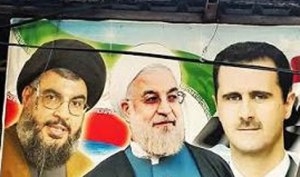
Kuwaiti Daily: Missile, Arms Factories Built By IRGC In Lebanon Have Recently Been Handed Over To Hizbullah

March 14, 2017

Kuwaiti Daily: Missile, Arms Factories Built By IRGC In Lebanon Have Recently Been Handed Over To Hizbullah, MEMRI, March 14, 2017

The Kuwaiti daily Al-Jarida reported on March 11, 2017, citing an aid to Mohammad Ali Jafari, commander of the Iranian Revolutionary Guards Corps (IRGC), that Iran established facilities for manufacturing missiles and other weapons in Lebanon and has recently handed them over to the management and oversight of Hizbullah. According to the daily’s source, the facilities are more than 50 meters underground and heavily shielded against aerial attacks. He also clarified that various parts of the missiles are manufactured in different factories and then assembled together.

The following is a translation of the report:[1]

The Al-Jarida report

With Iran facing growing pressures from the Donald Trump administration and the Israeli government under Binyamin Netanyahu, an aid to the IRGC commander told Al-Jarida that Iran has built factories [for manufacturing] missiles and [other] weapons in Lebanon and has recently turned them over to Hizbullah. In response to statements by Iranian Defense Minister Hossein Dehghan several days ago – who said that Hizbullah is capable of manufacturing missiles [that can] hit any part of Israel [but] gave no details or explanations – a knowledgeable source who wished to remain anonymous said that, after Israel destroyed an Iranian arms factory in Sudan several years ago that had supplied arms to Hizbullah, and after [Israel also] bombed an arms convoy that was intended to reach Hizbullah via Syria, the IRGC launched a project for establishing arms factories in Lebanon [itself]. [The source] also claimed that a special department has been established at the IRGC’s Imam Hossein University [in Tehran] to train Lebanese and other experts, and that hundreds of experts have already been trained.

“According to the source, the factories are more than 50 meters underground, and above them are several layers of shielding so that Israeli planes cannot hit them. Moreover, manufacture of the missiles does not take place in one factory; different parts are built in different factories and then assembled together. He added that the transfer of the factories to Hizbullah’s [management] was gradual but that they have been under full Hizbullah management and oversight for three months now.

“The source stressed that Hizbullah is able to manufacture several kinds of missiles, some with a range of over 500 km, including surface-to-surface and surface-to-sea missiles; torpedoes launched from light high-speed boats; spy drones and [attack] drones armed with weapons and rockets; anti-tank missiles, and fast armored boats. He clarified that weapons produced in these plants have been used in the Syria war and were proved to be effective. Anti-tank missiles managed to destroy car bombs that targeted Hizbullah fighters. He [also] noted that Hizbullah manufactures cannon, machine guns, anti-aircraft guns, mortars, and various [other] missiles and bullets, especially armor-piercing ones…”

_____________________________

[1] Al-Jarida (Kuwait), March 11, 2017.

Mystery blasts in Damascus: Syria accuses Israel

January 13, 2017

Mystery blasts in Damascus: Syria accuses Israel, DEBKAfile, January 13, 2017

syrian_iaf_attack_13-1-17

Some unknown hand struck into the heart of that regime in the space of a few hours – not once, but twice.The Assad regime used its standard scapegoat, Israel, for covering up embarrassing and inexplicable occurrences.

However, DEBKAfile’s military and intelligence sources disclose that the regime has reached an awkward crossroads. The Russians have taken charge of the Syrian war and no longer bother to consult with the Syrian president or Iran on its conduct. They are deeply immersed in preparing the Syrian peace conference they are sponsoring which is scheduled to open at Astana, Kazakhstan on Jan. 23.

If Moscow coordinates its Syrian strategy with anyone, it is Turkish President Tayyip Erdogan, but even then only to a limited extent.

***************************

There were two unclaimed explosions in Damascus overnight Thursday and early Friday (Jan.12-13) – one at an officers club in Damascus and the second at Mezzeh airport, which Syria alleged was the work of the new Israeli S-35 stealth aircraft firing across the border from a point over the Sea of Galilee.

There was no claim to either of the attacks.

The standard Israeli policy of striking any Iranian arms shipments for Hizballah in Lebanon when they cross through Syria would not longer be applicable to any such air strike, if indeed one was launched..

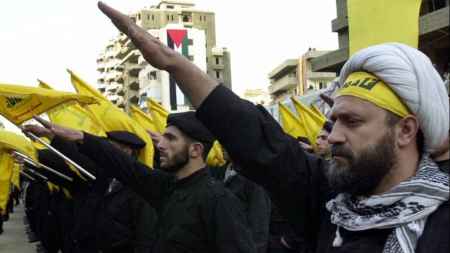
The Lebanese Shiite Hizballah deploys 9,000 elite fighters in Syria to fight for Bashar Assad. Its Iranian arms supplies no longer need to risk being trucked through Syria to Lebanon; they can be delivered directly to Hizballah bases in Syria without exposure to Israel air strikes.

Indeed, should the pro-Iranian Hizballah decide to go back to shooting missiles at Israel – or using Iranian-supplied unconventional weapon – it has new launching pads readily available in Syria from those very bases. They are located in the Qalamoun mountains in western Syria and at Zabadani, a Syrian ghost town near the Damascus-Beirut highway, which the Lebanese terror group has made its military center.

Both would be obvious targets for Israel to attack rather than Damascus’ Mezzeh airport.

Tehran, having grasped from bitter experience that Mezzeh is under close surveillance by Israeli intelligence, no longer uses its facilities. Instead Iran flies arms shipments for Hizballah to Beirut by commercial aircraft, which Israel prefers not to attack, or overland through Iraq to northwestern Syria, where the consignments are picked up and transferred to Lebanon by sea.

So if an Israeli F-35 air strike on the Damascus airport should be confirmed, its target would not have been Iranian and Hizballah military supplies. Mezzeh is the site of a sterile zone set aside for the exclusive use of President Bashar Assad, his family and his top military and intelligence chiefs. It also houses laboratories for developing and manufacturing unconventional weapons, as well serving as the main command center for the 4th Division, whose Republican Guard unit protects the president, his family and members of the ruling caste.

In the first attack, a suicide bomber blew himself up Thursday night at the officers’ club in the heavily policed Kafra Sousa district of Damascus. At least ten people were killed and dozens injured. Located there are the homes of many Assad loyalists in the security and military establishments, as well as top secret facilities.

The ability of a suicide bomber to penetrate one of the most heavily secured locations in Damascus and blow up at an exclusive regime watering hole raises questions about the inner workings of the Assad regime.

Some unknown hand struck into the heart of that regime in the space of a few hours – not once, but twice.The Assad regime used its standard scapegoat, Israel, for covering up embarrassing and inexplicable occurrences.

However, DEBKAfile’s military and intelligence sources disclose that the regime has reached an awkward crossroads. The Russians have taken charge of the Syrian war and no longer bother to consult with the Syrian president or Iran on its conduct. They are deeply immersed in preparing the Syrian peace conference they are sponsoring which is scheduled to open at Astana, Kazakhstan on Jan. 23.

If Moscow coordinates its Syrian strategy with anyone, it is Turkish President Tayyip Erdogan, but even then only to a limited extent.

The Syrian ruler and Iran, after being sidelined by the Russians, are following their example. Both have taken to holding their cards close to their vests and operating under in close secrecy.

In an attempt to pierce the resulting aura of mistrust spreading over the staunch Iranian-Syrian alliance, Ali Shamkhani, Secretary of the Supreme National Security Council of Iran and one of supreme leader Ayatollah Ali Khamenei’s closest confidants, was sent to Damascus Sunday, Jan 8, to find out what is going on there

The mystery deepened further Friday morning, when Syrian state media ran photos of a big blaze – which may or may not be authentic – to illustrate the alleged Israeli attack on Mezzeh airport.

Israel’s First Project with Trump

December 9, 2016

Israel’s First Project with Trump, Front Page MagazineCaroline Glick, December 9, 2016

firstproject

Originally published by the Jerusalem Post

[R]ecently Hezbollah commander Hassan Nasrallah bragged, “We’re open about the fact that Hezbollah’s budget, its income, its expenses, everything it eats and drinks, its weapons and rockets are from the Islamic Republic of Iran.”

******************************

Israeli officials are thrilled with the national security team that US President-elect Donald Trump is assembling. And they are right to be.

The question now is how Israel should respond to the opportunity it presents us with.

The one issue that brings together all of the top officials Trump has named so far to his national security team is Iran.

Gen. (ret.) John Kelly, whom Trump appointed Wednesday to serve as his secretary of homeland security, warned about Iran’s infiltration of the US from Mexico and about Iran’s growing presence in Central and South America when he served as commander of the US’s Southern Command.

Gen. (ret.) James Mattis, Trump’s pick to serve as defense secretary, and Lt.-Gen. (ret.) Michael Flynn, whom he has tapped to serve as his national security adviser, were both fired by outgoing President Barack Obama for their opposition to his nuclear diplomacy with Iran.

During his video address before the Saban Forum last weekend, Prime Minister Binyamin Netanyahu said that he looks forward to discussing Obama’s nuclear Iran nuclear deal with Trump after his inauguration next month. Given that Netanyahu views the Iranian regime’s nuclear program – which the nuclear deal guaranteed would be operational in 14 years at most – as the most serious strategic threat facing Israel, it makes sense that he wishes to discuss the issue first.

But Netanyahu may be better advised to first address the conventional threat Iran poses to Israel, the US and the rest of the region in the aftermath of the nuclear deal.

There are two reasons to start with Iran’s conventional threat, rather than its nuclear program.

First, Trump’s generals are reportedly more concerned about the strategic threat posed by Iran’s regional rise than by its nuclear program – at least in the immediate term.

Israel has a critical interest in aligning its priorities with those of the incoming Trump administration.

The new administration presents Israel with the first chance it has had in 50 years to reshape its alliance with the US on firmer footing than it has stood on to date. The more Israel is able to develop joint strategies with the US for dealing with common threats, the firmer its alliance with the US and the stronger its regional posture will become.

The second reason it makes sense for Israel to begin its strategic discussions with the Trump administration by addressing Iran’s growing regional posture is because Iran’s hegemonic rise is a strategic threat to Israel. And at present, Israel lacks a strategy for dealing with it.

Our leaders today still describe Hezbollah with the same terms they used to describe it a decade ago during the Second Lebanon War. They discuss Hezbollah’s massive missile and rocket arsenal.

With 150,000 projectiles pointed at Israel, in a way it makes sense that Israel does this.

Just this week Israel reinforced the sense that Hezbollah is more or less the same organization it was 10 years ago when – according to Syrian and Hezbollah reports – on Tuesday Israel bombed Syrian military installations outside Damascus.

Following the alleged bombing, Defense Minister Avigdor Liberman told EU ambassadors that Israel is committed to preventing Hezbollah from transferring advanced weapons, including weapons of mass destruction, from Syria to Lebanon.

The underlying message is that having those weapons in Syria is not viewed as a direct threat to Israel.

Statements like Liberman’s also send the message that other than the prospect of weapons of mass destruction or precision missiles being stockpiled in Lebanon, Israel isn’t particularly concerned about what is happening in Lebanon.

These statements are unhelpful because they obfuscate the fact that Hezbollah is not the guerrilla organization it was a decade ago.

Hezbollah has changed in four basic ways since the last war.

First, Hezbollah is no longer coy about the fact that it is an Iranian, rather than Lebanese, organization.

Since Iran’s Revolutionary Guards founded Hezbollah in Lebanon in 1983, the Iranians and Hezbollah terrorists alike have insisted that Hezbollah is an independent organization that simply enjoys warm relations with Iran.

But today, with Hezbollah forming the backbone of Iran’s operations in Syria, and increasingly prominent in Afghanistan and Iraq, neither side cares if the true nature of their relationship is recognized.

For instance, recently Hezbollah commander Hassan Nasrallah bragged, “We’re open about the fact that Hezbollah’s budget, its income, its expenses, everything it eats and drinks, its weapons and rockets are from the Islamic Republic of Iran.”

What our enemies’ new openness tells us is that Israel must cease discussing Hezbollah and Iran as separate entities. Israel’s next war in Lebanon will not be with Hezbollah, or even with Lebanon. It will be with Iran.

This is not a semantic distinction. It is a strategic one. Making it will have a positive impact on how both Israel and the rest of the world understand the regional strategic reality facing Israel, the US and the rest of the nations of the Middle East.

The second way that Hezbollah is different today is that it is no longer a guerrilla force. It is a regular army with a guerrilla arm and a regional presence. Its arsenal is as deep as Iran’s arsenal.

And at present at least, it operates under the protection of the Russian Air Force and air defense systems.

Hezbollah has deployed at least a thousand fighters to Iraq where they are fighting alongside Iranian forces and Shi’ite militia, which Hezbollah trains. Recent photographs of a Hezbollah column around Mosul showed that in addition to its advanced missiles, Hezbollah also fields an armored corps. Its armored platforms include M1A1 Abrams tanks and M-113 armored personnel carriers.

The footage from Iraq, along with footage from the military parade Hezbollah held last month in Syria, where its forces also showed off their M-113s, makes clear that Hezbollah’s US platform- based maneuver force is not an aberration.

The significance of Hezbollah’s vastly expanded capabilities is clear. Nasrallah’s claims in recent years that in the next war his forces will stage a ground invasion of the Galilee and seek to seize Israeli border towns was not idle talk. Even worse, the open collaboration between Russia and Iran-Hezbollah in Syria, and their recent victories in Aleppo, mean that there is no reason for Israel to assume that Hezbollah will only attack from Lebanon. There is a growing likelihood that Hezbollah will make its move from Syrian territory.

The third major change from 2006 is that like Iran, Hezbollah today is much richer than it was before Obama concluded the nuclear deal with the ayatollahs last year. The deal, which canceled economic and trade sanctions on Iran, has given the mullahs a massive infusion of cash.

Shortly after the sanctions were canceled, the Iranians announced that they were increasing their military budget by 90%. Since Hezbollah officially received $200 million per year before sanctions were canceled, the budget increase means that Hezbollah is now receiving some $400m. per year from Iran.

The final insight that Israel needs to base its strategic planning on is that a month and a half ago, Hezbollah-Iran swallowed Lebanon.

In late October, after a two-and-a-half-year fight, Saad Hariri and his Future Movement caved to Iran and Hezbollah and agreed to support their puppet Michel Aoun in his bid for the Lebanese presidency.

True, Hariri was also elected to serve as prime minister. But his position is now devoid of power.

Hariri cannot raise a finger without Nasrallah’s permission.

Aoun’s election doesn’t merely signal that Hariri caved. It signals that Saudi Arabia – which used the fight over Lebanon’s presidency as a way to block Iran’s completion of its takeover of the country – has lost the influence game to Iran.

Taken together with Saudi ally Egyptian President Abdel Fattah al-Sisi’s announcement last week that he supports Syrian President Bashar Assad’s remaining in power, Aoun’s presidency shows that the Sunnis have accepted that Iran is now the dominant power in Iraq, Syria and Lebanon.

This brings us back to Hezbollah’s tank corps and the reconstruction of the US-Israel alliance.

After the photos of the US-made armored vehicles in Hezbollah’s military columns were posted online, both Hezbollah and the Lebanese Armed Forces insisted that the weapons didn’t come from the LAF.

But there is no reason to believe them.

In 2006, the LAF provided Hezbollah with targeting information for its missiles and intelligence support. Today it must be assumed that in the next war, the LAF, and its entire arsenal will be placed at Hezbollah-Iran’s disposal. In 2016 alone, the US provided the LAF with $216m. in military assistance.

From Israel’s perspective, the most strategically significant aspect of Hezbollah-Iran’s uncontested dominance over all aspects of the Lebanese state is that while they control the country, they are not responsible for it.

Israeli commanders and politicians often insist that the IDF has deterred Hezbollah from attacking Israel. Israel’s deterrence, they claim, is based on the credibility of our pledge to bomb the civilian buildings now housing Hezbollah rockets and missiles in the opening moments of the next conflict.

These claims are untrue, though. Since Hezbollah- Iran are not responsible for Lebanon despite the fact that they control it through their puppet government, Iranian and Hezbollah leaders won’t be held accountable if Israel razes south Lebanon in the next war. They will open the next war not to secure Lebanon, but to harm Israel. If Lebanon burns to the ground, it will be no sweat off their back.

The reason a war hasn’t begun has nothing to do with the credibility of Israel’s threats. It has to do with Iran’s assessment of its interests. So long as the fighting goes on in Syria, it is hard to see Iran ordering Hezbollah to attack Israel. But as soon as it feels comfortable committing Hezbollah forces to a war with Israel, Iran will order it to open fire.

This then brings us back to the incoming Trump administration, and its assessment of the Iranian threat.

Trump’s national security appointments tell us that the 45th president intends to deal with the threat that Iran poses to the US and its interests.

Israel must take advantage of this strategic opening to deal with the most dangerous conventional threat we face.

In our leaders’ conversations with Trump’s team they must make clear that the Iranian conventional threat stretches from Afghanistan to Israel and on to Latin America and Michigan. Whereas Israel will not fight Iran in Iraq and Afghanistan, or in the Americas, it doesn’t expect the US to fight Iran in Lebanon. But at the same time, as both allies begin to roll back the Iranian threat, they should be operating from a joint strategic vision that secures the world from Iran’s conventional threat.

And once that it accomplished, the US and Israel can work together to deal with Iran’s nuclear program.