Archive for the ‘Intelligence community’ category

Why Trump and US intel clash over Russia

January 6, 2017

Why Trump and US intel clash over Russia, DEBKAfile, January 6, 2017

5-4

The furious clamor keeping the alleged Russian hacking scandal on the boil is being orchestrated by the outgoing president and his intelligence chiefs to ramp up US-Russian friction to an eve-of-cold war pitch.

It is important to note that Trump and his advisers, including designated Secretary of State Rex Tillerson, don’t propose rushing into détente with Moscow or any sort of honeymoon. They are acting to restore relations to an even keel and end the disequilibrium of the past eight years, during which Obama just talked and Putin did what he wanted, especially in East Europe and the Middle East.

****************************

America’s intelligence chiefs may have been singing their swan’s song Thursday and Friday (Jan. 5-6) when they hurled allegations of election-meddling “ordered at the highest Kremlin level” against Russia at a Senate Intelligence Committee hearing in Washington. The committee’s chair John McCain picked up the ball and declared that Russian hacking was “an act of war,” after hearing grim testimony from the Director of National Intelligence James Clapper and the National Security Agency head Adm. Michael Rogers.

They disclosed that they had compiled a confidential intelligence report that demonstrated how President Vladimir Putin interfered in the US election campaign in favor of the winner, Donald Trump. They declined to divulge its contents but promised to release a shorter, censored version to the public next Monday, Jan. 9.

CIA chief John Brennan and Homeland Secretary Jeh Johnson then proceeded to the White House to present the confidential report to President Barack Obama.

It will be put before President-elect Trump Friday.

The furious clamor keeping the alleged Russian hacking scandal on the boil is being orchestrated by the outgoing president and his intelligence chiefs to ramp up US-Russian friction to an eve-of-cold war pitch.

DEBKAfile’s Washington and intelligence sources find that the campaign is prompted by five motives:

1. The president-elect not only proposes to put relations with Moscow on a new and different footing, his transition teams are already at work with Putin’s advisers to chart areas of cooperation between the two powers, ready for the Trump administration to go forward when he moves into the White House on Jan. 20.

The most prominent area is the war on the Islamic State; another – the conflicts in Syria and Iraq. They are also exploring a joint US-Russian effort to resolve the decades-long Israeli-Palestinian dispute.

2. Obama, who has decided to retain a team for monitoring Trump’s policies, has plunged into a dogged fight against his successor’s decision to reset US-Russian ties.

Battling to salvage a part of his “legacy” is, Obama, exceptionally for departing American presidents, is determined to cast a long shadow over his successors’ actions and policies.

In the next four years, Barack Obama will keep hammering at the Russian hacking affair in order to keep the flames high against Trump’s “Russian steps.”

3. It is important to note that Trump and his advisers, including designated Secretary of State Rex Tillerson, don’t propose rushing into détente with Moscow or any sort of honeymoon. They are acting to restore relations to an even keel and end the disequilibrium of the past eight years, during which Obama just talked and Putin did what he wanted, especially in East Europe and the Middle East.

If the effort to restore balance to the relationship works, cooperation in common areas of concern might follow. But if not, the rivalry will continue, except that henceforth America will operate from a position of strength.

4. Working together in the war on Islamic terror will call for a large measure of cooperation between US intelligence agencies and the Russian secret services.

Sixteen years ago, after 9/11, Putin proposed this kind of cooperation to President George W. Bush in the fight against Al Qaeda.

In 2011, he stepped in again with an offer of assistance to Obama in the Libyan war.

Putin was rebuffed by both presidents rebuffed him. Donald Trump is the first US leader ready to seriously explore Putin’s intentions.

The US intelligence community is up on arms at this prospect, mainly because its clandestine branches were purpose-built to confront Russia, America’s historic Cold War enemy. It is hard for them to wrench the wheel round and head in the opposite direction at the bidding of the Trump administration.

5, Notwithstanding denials by administration officers, the president elect has every intention of overhauling the character and operational methods of America’s intelligence services. His overarching goal is to cut down the vast numbers off officers, analysts and computer operations, which turn out mountains of intelligence reports most of which he claims no one reads.

Trump plans to focus more on the product of secret agents in the field, and so save the hundreds of billions of dollars spent on desk staff and high-tech computer systems. His administration will prefer to rely more on human intelligence and less on technology-based input.

Trump encapsulated his approach to intelligence and computers in a remark to reporters on New Year’s day: “No computer is safe. You want something to really go without detection, write it out and have it sent by courier.”

How President Trump Can Make American Intelligence Great Again

December 13, 2016

How President Trump Can Make American Intelligence Great Again, Center for Security Policy, Fred Fleitz, December 12, 2016

(But please see, Abolish the CIA? Perhaps Trump’s CIA will be better than the old CIA.– DM)
ciastuff

Source: National Review

In 2010, when I was on the staff of the House Permanent Select Committee on Intelligence, I attended a committee hearing on the North Korean nuclear program. That hearing epitomized the failure of post-9/11 reforms of U.S. intelligence and showed why the Trump administration must take aggressive steps to streamline American intelligence. Only then can it can return to being the great institution that provides the intelligence support our presidents need to protect our nation against national-security threats facing our nation today.

This process should start by sharply scaling back or eliminating the Office of the Director of National Intelligence (ODNI).

The lead witness at this hearing, seated at the center of a long witness table, was the ODNI North Korea issue manager. Seated next to him on each side were the ODNI issue manager for WMD proliferation and the director of the ODNI National Counterproliferation Center.

Joining them were the National Intelligence Council (NIC) officers for WMD proliferation and East Asia, both part of the ODNI. The CIA sent two witnesses, from its proliferation and North Korea–analysis offices. The Defense Intelligence Agency (DIA), the State Department, and the Department of Energy sent one witness each.

In addition to these 10 witnesses, other senior intelligence officials attended as backbenchers. There also was a gaggle of aides, handlers, and congressional liaison staffers. There were so many that they could not all fit into the hearing room.

The hearing seemed to go on forever, since the lead witness kept inviting all his colleagues to weigh in on every question asked by committee members. Some of the backbenchers spoke too. This became monotonous, since every witness (except for the one from DIA) parroted the same watered-down consensus view. Making this worse, the witnesses’ consensus statements were proven to be completely wrong a few months later.

This mob of intelligence officials spouting the same watered-down pablum exemplified why the reform of U.S. intelligence mandated by the 2004 Intelligence Reform and Terrorism Prevention Act (IRTPA) has been an utter failure. Although IRTPA created the position of the director of national intelligence as a new official to oversee all U.S. intelligence agencies, to ensure that these agencies would cooperate and share information, the Office of the Director of National Intelligence has developed into a huge additional layer of bureaucracy, with far too many officials, that has made American intelligence analysis and collection less efficient and more risk-averse.

This is in part due to blowback from 9/11 and Iraq War intelligence failures, but also is a typical situation for a 70-year-old, multi-billion-dollar bureaucracy that has become complex and complacent. As is true with many established government bureaucracies, political factors and fear of being wrong weigh heavily on the operations of U.S. intelligence agencies. While America still has the world’s best and most capable intelligence service, it has lost the “can-do” intrepid spirit of its predecessor, the heroic World War II-era Office of Strategic Services.

The ODNI has made this problem much worse — not just because it is an additional layer of stifling bureaucracy, but also because it has become a 17th intelligence agency, with its own intelligence analysts, thousands of employees, and a huge — and ever growing — budget.

In 2007, House Intelligence Committee members were so disturbed about the rapid growth of the ODNI bureaucracy that they approved, on a bipartisan basis, an amendment to the 2008 intelligence authorization bill to freeze the ODNI staff to the number working for it as of May 1, 2007. I drafted this amendment, which was co-sponsored by Congressmen Mike Rogers (R., Mich.) and Alcee Hastings (D., Fla.).

Hastings said at the time about this amendment:

We will not give you a blank check with which you could continue to grow a new bureaucracy before we know what you are doing with what you already have. A bigger bureaucracy does not make better intelligence.

Although Hastings was right, the Hastings/Rogers amendment was never implemented, since Congress did not pass an intelligence authorization bill that year. I hate to think how many times the ODNI staff has doubled since the House Intelligence Committee attempted to halt its growth in 2007.

The IRTPA reforms have hurt U.S. intelligence in other ways. The President’s Daily Brief (PDB), which used to be a lean and effective daily intelligence publication for the president produced by the CIA, has become an ODNI publication, weighed down with bureaucracy to make it “fair” so that all 17 intelligence organizations can participate and use it to publish articles justifying their budget requests to Congress.

The ODNI bureaucracy has also burdened intelligence agencies with unnecessary reports, regulations, and foreign travel by ODNI staff.

Aside from being an attempt to improve the sharing of information between intelligence agencies in the aftermath of the 9/11 intelligence failures, the ODNI also was created because some believed it is impossible for the CIA director to both manage the CIA and oversee the rest of the U.S. Intelligence Community.

I have long believed that these reasons are false. The CIA director, as the director of central intelligence (DCI), worked well for decades as the head of all U.S. intelligence agencies. The failure to share intelligence between U.S. intelligence agencies prior to the 9/11 terrorist attacks could have been addressed without creating the DNI position and its huge and plodding bureaucracy. Moreover, intelligence agencies have failed to share crucial information despite the creation of the ODNI.

For example, the Senate Select Committee on Intelligence (SSCI) issued a damning report in 2010 on how U.S. intelligence agencies failed to share information that could have prevented Umar Farouk Abdulmutallab — the 2009 “underwear bomber” — from boarding a plane from Europe that he almost blew up over the city of Detroit. The report found that U.S. intelligence agencies had the information to stop Umar Farouk Abdulmutallab from boarding a plane to the United States but had failed to cooperate with each other and share intelligence. According to the report, “no one agency saw itself as being responsible” for assessing such threats. The report identified 14 specific failures by intelligence agencies which included a bureaucratic process for adding names to terror watch lists that was too complicated and too rigid to address quickly emerging terrorist threats.

Concerning the argument that the CIA director can’t simultaneously manage the CIA and the rest of the intelligence community, if the president can manage the White House and the entire U.S. government, there’s no reason why we can’t have the CIA director in charge of his home agency and overseeing other U.S. intelligence agencies.

Eliminating the ODNI and rolling its duplicative organizations into the CIA would save at least $1 billion and could make U.S. intelligence more efficient and nimble. Such a move should include eliminating the huge number of redundant ODNI managers and officials such as those mentioned above.

More needs to be done to streamline U.S. intelligence and fix problems caused by earlier reforms and reorganizations.

For example, CIA director Brennan carried out a huge and controversial reorganization in 2015 that many critics believe created a confusing and bloated bureaucratic structure that will hurt long-term analysis and create security risks. This reorganization needs to be carefully reviewed by the next CIA director and possibly reversed.

There also are redundant units in multiple intelligence organizations that perform identical missions that should be streamlined. More of these crop up every year.

For example, U.S. intelligence agencies have increased their efforts to counter cyberwarfare over the last few years by creating large, separate organizations to address this issue. These include:

  • The ODNI Cyber Threat Intelligence Integration Center, created in 2015.
  • The U.S. Cyber Command, created in 2009, to defend Department of Defense networks, systems and information, to defend the homeland against cyberattacks, and to provide support to military and contingency operations.
  • The Department of Homeland Security National Cybersecurity and Communications Integration Center, created in 2009, to monitor cyber threats across government agencies and critical infrastructure.
  • The CIA Directorate of Digital Innovation, created in 2015.

There are many other examples of such duplication and redundancy, especially concerning counterterrorism.

To the greatest extent possible, these types of offices should be streamlined into a single inter-agency entity with one agency having the lead.

A reconstituted DCI should also take the lead in doing a better job of encouraging cooperation between intelligence agencies by pressing intelligence officers to take temporary assignments in other agencies. Having worked as an analyst with CIA and DIA, I know their analysis missions are very similar and would greatly benefit from closer collaboration, possibly by creating a joint CIA/DIA intelligence analyst service.

Managers and experts need to be brought in from outside the U.S. intelligence community to challenge the groupthink and analysis-by-committee that has gripped our intelligence agencies in the aftermath of the 9/11 and Iraq WMD intelligence failures. To deal with emerging security threats, we need more out-of-the-box and “competitive” analysis that provides policymakers with alternative assessments of global threats. There also is a great need for better strategic analysis of future threats.

U.S. intelligence agencies also need to improve their efforts to analysze and collect against new technological developments and challenges, including social media, big data, and hostile actors utilizing increasingly powerful encryption.

Outside managers and experts could also help counter the politicization of intelligence by intelligence officers who don’t like President Trump. This was a serious problem for previous Republican presidents. Recent leaks to the press by intelligence officers about Trump’s daily briefings suggest this problem has already resurfaced.

Implementing intelligence reforms to make U.S. intelligence agencies into the innovative and effective institution they once were will take strong leaders in top intelligence positions who will act independently and are not beholden to the intelligence community. These officials must have the full backing of the president.

President-elect Trump, by appointing Mike Pompeo as CIA director, General Mike Flynn as National Security advisor, and KT McFarland as deputy national security advisor, is off to an excellent start to implementing these kinds of intelligence reforms to make American intelligence great again.
Trying to overturn a free and fair election

December 13, 2016

Trying to overturn a free and fair election, Washington Times,

vlad

The world has turned itself upside down. Only yesterday the liberals and the left (the “progressives,” as they want to be called) regarded the CIA as the locus of evil, the gang that couldn’t shoot straight, forever poisoning gentle minds with a diet of conspiracy and tall tale.

In those gloomy days of the Cold War, where every day was seasoned with a sharp wind and a cold rain, it was the Democratic intellectuals who were forever chiding the rest of us that the Soviet Union was not so bad, the Russians just wanted to be understood and maybe deserved an occasional cuddle. It was the Republicans and other conservatives who were mindless rubes who imagined there was a mad Russian under everybody’s bed.

Now the CIA, in the liberal/left’s fevered dreams, is the last bulwark of the republic, the last remaining hope to turn the 2016 election result on its head and deprive Donald Trump of the victory he won. The Russians, it now turns out, are just as bad as the conservatives said they were.

President Obama, who mocked Mitt Romney four years ago for suggesting that Russia and Vladimir Putin was America’s No. 1 enemy, now says it was Mr. Romney who was smart and got it right four years ago. The president himself, in his telling, is the man dumber than a cypress stump.

The president, at last awake and paying attention to Russian cyber warfare, wants answers, and by noon on Jan. 20. He can then only dine out on the answers, because he won’t have any more authority to do anything about them than the cat.

Desperation pursues despair, and the Democrats are stumbling from inanity to insanity in search of a way to block Donald Trump’s path to the White House. Hilary Clinton’s remnant of a campaign has endorsed an attempt by a handful of members of the Electoral College — 9 Democrats and a rogue Republican — to get the “intelligence briefing” they think might derail next Monday’s scheduled day for the members of the Electoral College to vote for president, 306 of whom are honor bound to vote for the Donald. That’s 36 votes more than he needs.

“The bipartisan electors’ letter raises very grave issues involving our national security,” John Podesta said Monday. “Electors have a solemn responsibility under the Constitution and we support their efforts to have their questions addressed.

“Each day our campaign decried the interference of Russia in our campaign and its evident goal of hurting our campaign to aid Donald Trump. Despite our protestations this matter did not receive the attention it deserved by the media in our campaign. We now know that the CIA has determined Russia’s interference in our elections was for the purpose of electing Donald Trump. This should distress every American.”

What should distress every American is the way the left, the liberals, the progressives and their handmaidens in the press have discarded reasonable conversation to try out every absurd alarm, one after the other, to see whether one could stick, to undermine and undercut the results of what everyone agrees was a free and fair election on Nov. 8. None has worked. More than a month later, the republic stands.

Hysteria now threatens to become insanity. Rep. Jim Hines of Connecticut, a Democrat, says it came to him in the night, as if Marley’s ghost was rattling his chains at the bedside, “that this man is not only unqualified to be president, he’s a danger to the republic. I do think the Electoral College should choose someone other than Donald Trump to be president. That will lead to a fascinating legal issue, but I would rather have a legal issue, a complicated legal problem, than to find out the White House was now the Kremlin’s chief ally.”

Accusing a president-elect of treason, of plotting with the enemy against his country, and with no evidence at all, is something that even a congressman from Connecticut should understand is beyond the limits of rational and decent political debate. Alas, it’s par for the course on the left this season.

The sudden deep concern by President Obama and the Democrats about Russia and cyber warfare, is a bit rich. The Washington Post, which continues so deep in denial that its side lost the election that it may never find the way to the next stage of grief, hangs its survival on the conclusion of the intelligence agencies — which, to put it charitably, have a dismal record of finding out what’s going on anywhere.

A competent president and a responsible “intelligence community” would have done something about the Russians and their hackers a long time ago. Whining doesn’t work.

The Michael Flynn Selection

November 19, 2016

The Michael Flynn Selection, Power LinePaul Mirengoff, November 18, 2016

Donald Trump has selected Michael Flynn to be his national security adviser. The selection is a natural one. Flynn was Trump’s go-to guy on national security matters during the campaign.

The retired Lt. General is already under attack on a number of fronts, both personal and substantive. The focus should be on substance.

I don’t know Flynn’s views on the full range of national security related topics. I agree with his line on two vital issues — ISIS and Iran. His general view of the threat posed by Islam also strikes me as sound, if not always expressed with sufficient nuance.

As for Russia, Flynn will continue to take fire for his recent trip to Moscow. However, as we noted here, Flynn criticized Russian foreign policy while in Moscow.

Flynn’s recent book, discussed below, also comes down on Russia. It takes issue with the view, advanced by Trump, that Russia can be a reliable partner in the fight against ISIS in Syria.

Keep this in mind as those speaking out against Flynn make him out to be pro-Putin. Critics of the Russian autocrat may end of being pleased that Trump is getting advice from Flynn.

Folks who have heard Flynn speak — be it at the Republican Convention, on cable news, or in person — may share my impression that he isn’t very articulate. Flynn probably comes across well in conversation, though. Otherwise, it’s unlikely that Trump would elevate him to national security adviser, however loyal Flynn has been. Indeed, it’s unlikely that Flynn would gotten Trump’s ear to begin with.

Flynn’s views on the all-important issue of combating radical Islam come through clearly in the book, mentioned above, that he wrote with out friend Michael Ledeen — The Field of Fight: How We Can Win the Global War Against Radical Islam and Its Allies. In evaluating Flynn’s approach to radical Islam, his book, not his tweets or off-hand comments, should be the touchstone.

Finally, when critics complain that Flynn’s selection is just a reward for his loyalty to Trump, think of Susan Rice, the current national security adviser. She got the job after loyally peddling the Obama-Clinton tale that the attacks in Benghazi were due to an anti-Islam video.

Flynn may be loyal, but to my knowledge he never spread falsehoods on behalf of Trump.

Is Flynn an ideal national security adviser? Not in my view. However, he’s the voice Trump wants most to hear on national security issues. I believe that most of what Trump hears from Flynn will be sound.

Clueless Clapper Calls It Quits

November 18, 2016

Clueless Clapper Calls It Quits, Front Page MagazineRobert Spencer, November 18, 2016

crapper

While he was Director of National Intelligence, Clapper made every American less safe. He epitomized the denial and willful ignorance that characterized the Obama administration’s approach to the jihad threat. In this time of swamp-draining, Clueless Clapper is leaving the stage not a moment too soon.

************************

Barack Obama’s Director of National Intelligence, James Clapper, submitted his letter of resignation on Wednesday, and the next day he told the House Select Committee on Intelligence that doing so “felt pretty good….I have 64 days left and I’d have a pretty hard time with my wife going past that.” Why? Is Mrs. Clapper opposed to intelligence policies based on politically correct fantasies and willful ignorance?

Nothing epitomizes more perfectly the Obama Administration’s consistent refusal to come to grips with the reality of the global jihad than Clapper’s embarrassing tenure as Director of National Intelligence.

One incident that took place in December 2010, four months after Clapper took office, epitomized his abject incompetence. British authorities arrested twelve jihadists who had been planning to set off bombs in a variety of locations; that same day, Clapper appeared on Diane Sawyer’s ABC show, on which Sawyer said to him that she expected he must be very busy with the London arrests. Clapper looked confused, and admitted that he had no idea what she was talking about. Arrests? A terror plot?

Had Sawyer been conducting a man-on-the-street interview, and Clapper was in reality the befuddled accountant he appears to be, he might be excused for having no idea that a large-scale anti-terror operation had just been carried out in London. But this was the Director of National Intelligence, and he was far less informed and up to speed on the situation than was Sawyer herself, or probably an entire legion of befuddled accountants.

Obama’s team ran interference for Clapper, claiming essentially that Clapper had been so involved with the London arrests that he was too preoccupied to answer Sawyer’s question properly, but that his display of cluelessness was no indication of…cluelessness.

But it was. Clapper showed that again in February 2011, when he claimed at the height of the Egyptian “Arab Spring” that the Muslim Brotherhood was “largely secular,” a claim as absurd as it was inaccurate. Although the subsequent torrent of ridicule compelled the Obama camp to issue a correction, the subtext of Clapper’s statement was clear: the Obama Administration had no problem with Muslim Brotherhood rule in Egypt, and was not only going to do nothing to stop it, but was going actively to enable it.

The Brotherhood that Obama worked so assiduously to aid is dedicated, of course, to establishing the rule of Islamic law not only in Egypt, but everywhere that it possibly can. And if that rather commonplace fact was too much for Clapper and his boss, they could have resorted to a much simpler indicator of the religious foundation of the Brotherhood’s political program: its name. It isn’t, after all, called the Arab Nationalist Brotherhood, or the Egyptian Brotherhood, but rather the Muslim Brotherhood. Its name itself shows that it is no more secular than the Christian Brothers religious order.

Clapper also appeared woefully (if not willfully) ignorant of the Brotherhood’s pro-Sharia agenda, and no doubt completely oblivious to the implications for the United States and the world of an Egypt governed by Islamic law.

There was, of course, more. In March 2011, Clapper told Senator Joe Manchin (D-WV) that Russia and China represented the greatest “mortal threat” to the United States.

Russia and China? Not North Korea and Iran, or the forces of the global jihad that grew steadily more aggressive while Clapper was Director of National Intelligence? Clapper’s statement sounded like a Rip Van Winkle who had been sleeping for twenty years or longer, and nobody had gotten around to clueing him in to the fact that the Cold War was over.

Had Clapper, a retired lieutenant general in the Air Force and longtime intelligence professional, made any study in the area of national intelligence since 1985? Was he aware that the world situation has drastically changed since 1985? Had he had any kind of thought at all since 1985?

James Clapper is perhaps the most abysmally ignorant and unqualified individual ever to have held a position of so much responsibility. While he was Director of National Intelligence, Clapper repeatedly demonstrated that he had no idea about the nature of the world today, no sense of the genuine threats that face the United States, and no clue as to what to do about those threats.

Yet instead of firing him, Obama continually made excuses for him, explaining away his idiotic remarks, and running interference for him with the international media. What Clapper did to merit such solicitude is unclear, but the stakes were far too high for the nonsense and fantasy that Clapper purveyed. While he was Director of National Intelligence, Clapper made every American less safe. He epitomized the denial and willful ignorance that characterized the Obama administration’s approach to the jihad threat. In this time of swamp-draining, Clueless Clapper is leaving the stage not a moment too soon.

Unsolicited Advice for the Trump Transition Team on National Security Intelligence

November 10, 2016

Unsolicited Advice for the Trump Transition Team on National Security Intelligence, PJ Media, Andrew C. McCarthy, November 10, 2016

isis

It was encouraging Wednesday to hear that President Obama intends to emulate President Bush, who generously provided Obama with a highly informative and smooth transition process.

Running the Executive Branch is a daunting task, so there is no aspect of the transition to a new administration that is unimportant. But obviously, the most crucial focus for New Jersey Governor Chris Christie, who is heading up President-elect Donald Trump’s transition team, must be national security.

That transition is going to be more complicated than it should be, but there are things Gov. Christie can do – better to say, people he ought to consult — to make sure his team is getting accurate information.

The Bush National Security Council was very good about putting together briefing books so their successors could hit the ground running. The problem now, however, is the trustworthiness of what is in those books.

As PJ Media has reported, a highly disturbing report by a congressional task force this summer found that the Obama administration had politicized its intelligence product.

Rep. Mike Pompeo (R-KS), who has been stellar on national security issues and was among the leaders of the task force (comprised of the Intelligence, Armed Services, and Appropriations Committees), put it this way when the report was issued:

After months of investigation, this much is very clear: from the middle of 2014 to the middle of 2015, the United States Central Command’s most senior intelligence leaders manipulated the command’s intelligence products to downplay the threat from ISIS in Iraq.The result: consumers of those intelligence products were provided a consistently “rosy” view of U.S. operational success against ISIS. That may well have resulted in putting American troops at risk as policymakers relied on this intelligence when formulating policy and allocating resources for the fight.

The intelligence manipulation became a controversy in 2015, when 50 intelligence-community whistleblowers complained that their reports on the Islamic State and al-Qaeda terror networks were being altered.

The manipulation, driven by Obama’s Office of the Director of National Intelligence (ODNI) and carried out in the Defense Department by senior Central Command (CENTCOM) officers, aimed to downplay the jihadist threat.

This is a reckless practice I have written about several times over the last eight years (see, e.g., here). The Obama administration has made a concerted effort to miniaturize the terrorist threat in order to project a mirage of policy success.

Intelligence has routinely been distorted — portraying the networks as atomized, largely detached cells that are not unified by any overarching ideology — in an attempt to make them appear smaller and less threatening. Basically, a nuisance to be managed rather than an enemy to be defeated.

Even when the terrorists are on the march, the administration claims they are in retreat. Indeed, less than 24 hours after four Americans, including our ambassador to Libya, were killed by al-Qaeda-affiliated jihadists in the 2012 siege of Benghazi, President Obama stated this in a political fundraising speech:

A day after 9/11, we are reminded that a new tower rises above the New York skyline, but al-Qaeda is on the path to defeat and bin Laden is dead.

Intel manipulation ran rampant after Obama fired Marine General James Mattis, CENTCOM’s commander, in 2013. General Mattis had the irksome habits of demanding clear-eyed assessments of America’s enemies and forcing administration policymakers to confront the potential consequences of their ludicrously optimistic assumptions, particularly regarding Iran’s behavior. Obama officials replaced him with Army General Lloyd Austin.

Meanwhile, it was made clear to the Pentagon that because the president made campaign commitments to end the U.S. mission in Iraq, he did not want to hear information contradictory to his narrative that withdrawing our forces was the right thing to do. After retiring, Army General Anthony Tata confirmed that an ODNI official instructed the Defense Department not to put in writing assessments that portrayed al-Qaeda and ISIS as fortified and threatening.

The result, of course, was that the president was told what wanted to hear.

This eventually led to Obama’s infamous assertion that ISIS was merely a “JV” terrorist team. Naturally, when the JV team rampaging through Iraq and Syria rendered that judgment embarrassing, the White House shifted the blame to General Austin, pushing him out the CENTCOM door.

The administration has done more to sculpt the narrative than quell the enemy. So Gov. Christie and his team will need to regard with skepticism any briefing books Obama’s transition coordinators supply.

Of course, Team Trump already has a tremendous resource to rely on: retired Army General Michael Flynn, the former head of the Defense Intelligence Agency (and the author, along with PJ Media columnist Michael Ledeen, of The Field of Fight, which pleads for a desperately needed strategy for fighting the global war against jihadists and their allies). Like General Mattis, General Flynn (in 2014) was pushed out of his job because he rejected the politicization of our intelligence product for purposes of low-balling the terrorist threat. He knows his stuff, knows what we are up against, and will be a major asset not only to the transition, but to the Trump administration.

I would also respectfully suggest that Gov. Christie consult with General Mattis and General Jack Keane: smart, experienced former commanders who have given a great deal of thought to, and sound advice to Congress regarding, the current administration’s strategic and intelligence voids.

In understanding global jihadist networks — who the players are, how the organizations collude and compete — Tom Joscelyn, editor of The Long War Journal, is the best expert in the United States, bar none. While his value would be limitless, Tom is especially knowledgeable about the jihadists released from Guantanamo Bay, many of whom have gone back to the jihad.

Yet again, this is a context in which briefings from the Obama administration would be suspect. The president adheres to another narrative driven by foolish campaign promises, namely: the cost of Gitmo as a “recruiting tool” for the enemy outweighs the benefit of detaining committed, capable, anti-American jihadists. To justify both this absurd premise and the release of the terrorists, the administration watered down intelligence that supported holding the terrorists as enemy combatants who posed continuing danger to the United States.

The new administration needs accurate information for purposes of grasping the threat and formulating sound detention policy.

Finally, it is vital to understand “Countering Violent Extremism,” the Obama administration’s strategic guidance — their playbook for military, intelligence, and law-enforcement officials on how to approach and respond to terrorism. CVE is where the dereliction that I have labeled “willful blindness” has devolved into compulsory blindness.

Under CVE guidelines, the fact that Islamic-supremacist ideology spurs the jihadist threat and knits together terrorists and their sponsors is no longer just consciously avoided; taking notice of it is verboten.

The most thoroughgoing critique of this lunacy is Catastrophic Failure: Blindfolding America in the Face of Jihad. Its author is Stephen Coughlin, a trained military intelligence officer and an attorney who has made a point of learning how Islamic law principles inform the goals and tactics of our enemies. Steve is extraordinarily informed about the administration’s wayward assumptions. If the Trump transition team wants to check the premises on which their work is based, he’s the guy.

Let’s welcome President Obama’s assurances of a seamless transition to the Trump administration. But my best unsolicited advice to Gov. Christie: When it comes to briefing books, don’t believe everything you read.

Director of National Intelligence: Climate Change (Not Sharia) Leads to Jihad

September 13, 2016

Director of National Intelligence: Climate Change (Not Sharia) Leads to Jihad, Counter Jihad, Bruce Cornibe, September 13, 2016

It’s ridiculous when an elite university like MIT promotes bogus lectures such as Is Islamophobia Accelerating Global Warming? However, one can argue that it’s even worse when our top U.S. government leaders advocate for similar bogus theories such as linking climate change to terrorism.

This is what happened recently at the annual Intelligence & National Security Summit in Washington, D.C., when DNI’s James Clapper suggested a connection between environmental issues and terrorism.

The political left has been trying to establish a linkage between the two topics to provide a way to divert attention away from the actual radical Islamic ideology that is at the heart of modern day terrorism.

For example, in Paris a couple weeks after the horrific November 2015 attacks, U.S. President Obama had the audacity to insinuate a connection between climate change and terrorism. It’s bad enough that some leftists continue to push the narrative that humans are the main reason for climate change – now we have to hear our government officials promote a political agenda that basically says if we don’t go “green” we can expect terrorism to continue. Defense One reveals Clapper’s rationale behind this climate change and terrorism connection stating:

…Increased competition for “ever-diminishing food and water resources” will amplify socio-economically motivated armed conflicts, countries’ difficulties controlling their borders, and instability more generally, he said.

“I think climate change is going to be an underpinning for a lot of national security issues,” Clapper said. It affects “so many things: the availability of basics like water and food and other resources which are continually going to become matters of conflict, and already are, between and among countries.”

Defense One goes on to add:

The Pentagon has been getting increasingly serious about preparing for it, warning that warming global temperaturesand extreme weather events would act as a “threat multiplier” and foster terrorism. Earlier this year, Deputy Defense Secretary Bob Work ordered the military to adapt current and future operations to address climate change.

Clapper echoed this warning. Climate change-driven instability and other factors mean that “after ISIL is gone, you can expect some other terrorist entity to arise, and the cycle of extremism [to] continue for the foreseeable future.”

It seems like the line of logic is as follows: Humans (implied) -> climate change -> diminished resources -> struggle for resources -> “extremism”/terrorism

To say that climate change is causing a depletion of our resources like food and water–which then causes conflict that leads to terrorism is a massive stretch of the imagination. Of course, this didn’t stop President Obama and Secretary of State John Kerry from linking climate change to the Syrian civil war.

Even left-leaning national security analyst Peter Brookes debunked this in an article last year, writing that, “there seems to be no strong quantitative (i.e., empirical) evidence to prove a cause-and-effect relationship between changes in the climate and conflict.”

It’s one thing to say that natural resources like fresh water are a security concern in arid regions like areas in the Middle East and Africa, and enter into countries’ national security policy. That much is true– and also obvious. However, to say Islamic jihad is a result from supposed conflict caused by a lack of resources is ludicrous.

Jihadists are driven by motives such as Sharia law and bringing back the Caliphate, not by frustration over the contention of scarce food and water supplies. This type of linkage is even weaker than the belief that terrorists are essentially joining the cause of jihad because of a lack of jobs/economic opportunities. ISIS could be living on the most resource-replete land and they still wouldn’t be satisfied until they bring the world under Islamic rule.

Regardless of their differences, there is a commonality between those who are hyper-ideological; a link between those who are so obsessed with their worldview that they believe it explains literally everything: In Paris last year, Obama said, “climate change — affects all trends”; the totalitarian Islamist thinks implementing Sharia law globally is the answer to solving the world’s problems.

Of course, Obama wants to see the establishment of liberal-progressive values, while the Islamist wants everything Islamic; however, both groups need each other politically at least temporarily in order to build up a powerful enough coalition to launch their respective agendas on the world stage.

Leftist politicians tend to dismiss or ignore the worldwide jihadist movement and seek to combat what they call “extremism” with vague solutions that furthers their political agenda.

Anyone with common sense realizes that hardcore jihadists like ISIS are not going to put down the sword of jihad through diplomacy and random acts of global kindness. The West needs to militarily wipe jihadists like those involved with ISIS off of the face of the earth, but also seek ways in countering their Sharia ideology that is reaching our next generation’s youth.

Trump Will Face a Huge Challenge with U.S. Intelligence If He Wins

August 18, 2016

Trump Will Face a Huge Challenge with U.S. Intelligence If He Wins, Center for Security Policy, Fred Fleitz, August 18, 2016

cia logo

Before his classified national-security briefing yesterday, Donald Trump said he didn’t trust U.S. intelligence. His comments attracted the expected condemnations and ridicule from the media pundits and foreign-policy experts. However, based on my 25 years working in U.S. intelligence, I believe Trump’s concerns are well-founded.

On Wednesday, Trump received the intelligence briefing traditionally provided by the U.S. Intelligence Community to newly nominated presidential candidates. This briefing was preceded by calls from the Clinton campaign, other Democrats, and, privately, by some intelligence officials that Trump be denied these briefings because, they claim, he can’t be trusted to protect classified information.

Harry Reid, the top Democrat in the Senate, actually asked intelligence analysts to give Trump fake briefings.

The Washington Post’s intelligence reporter Greg Miller reported on July 28 that a senior intelligence official told Miller privately that he would refuse to brief Trump because of concerns about Trump’s alleged admiration of Russian president Putin and because “he’s been so uninterested in the truth and so reckless with it when he sees it.” Reuters ran a similar story on June 2, reporting that eight senior security officials said they had concerns about briefing Trump; Reuters did not indicate how many of the officials cited were intelligence officials or Obama appointees.

These calls to deny intelligence briefings to a presidential candidate are unprecedented, but they also reflect a serious problem within the U.S. intelligence community that awaits a possible Trump administration: the politicization of American intelligence by the Left.

I saw this constantly during my 19 years as a CIA analyst. CIA officers frequently tried to undermine CIA directors Casey and Gates because they disagreed with President Reagan’s policy goal of defeating the Soviet Union. Several testified against Gates’s nomination to be CIA director in 1991 by lodging false claims that he and Casey had politicized intelligence. Former senator Warren Rudman, a moderate Republican who headed President Clinton’s Foreign Intelligence Advisory Board, described these attacks by CIA analysts as “an attempted assassination, an assassination of [Gates’s] character . . . McCarthyism, pure and simple.”

The liberal tilt within the CIA, especially in the Directorate of Intelligence (the analysis office), grew worse during the Clinton years as personnel were hired and promoted to support Clinton-Gore policy objectives. These included wasteful initiatives such as the DCI Environmental Center, launched at the same time the CIA was dangerously downplaying counterterrorism analysis.

Unfortunately, the intensified liberal tilt at the CIA during the Clinton years was not reversed by the George W. Bush administration. Bush kept on Clinton’s CIA director, George Tenet, who had no interest in cleaning house or taking steps to ensure that CIA analysis would be balanced and not politicized. When his successor, Porter Goss, tried to clean up the agency, CIA careerists fought back aggressively by leaking to Congress and the media, eventually forcing Goss out.

As a result, intelligence careerists often paid no price for engaging in blatantly political activities to undermine the Bush administration. One officer in the CIA inspector general’s office was fired after she admitted she’d leaked classified information on Bush counterterrorism programs to aWashington Post reporter. In 2005, several intelligence officers attempted to sabotage John Bolton’s nomination to be U.N. ambassador — an act of political skullduggery for which they were never punished.

The most notorious example of partisan political activity by U.S. intelligence officers occurred just before the 2004 presidential election when Paul Pillar, the CIA’s national intelligence officer for Near East and South Asia, while giving a speech at a dinner on September 21, criticized President Bush and CIA director Tenet for ignoring critical intelligence that he claimed might have prevented the Iraq War. Incredibly, CIA management had cleared Pillar’s comments, saying that the substance of his remarks, but not the speaker or the audience, could be disclosed. The late columnist Robert Novak, who attended the dinner, sparked an uproar when he reported Pillar’s identity and the dinner anyway. Clearly, Pillar’s presentation was intended to affect the outcome of the 2004 presidential election.

The Wall Street Journal condemned such political activities by CIA officers in a scathing September 29, 2004, editorial titled “The CIA’s Insurgency”:

It’s become obvious over the past couple of years that large swaths of the CIA oppose U.S. anti-terror policy, especially toward Iraq. But rather than keep this dispute in-house, the dissenters have taken their objections to the public, albeit usually through calculated leaks that are always spun to make the agency look good and the Bush administration look bad. . . . Yet what the CIA insurgents are essentially doing here, with their leaks and insubordination, is engaging in a policy debate. Given the timing of the latest leaks so close to an election, they are now clearly trying to defeat President Bush and elect John Kerry.

Politicization of America’s intelligence agencies by the Left has grown worse during the Obama years. Recall that the CIA drafted the politicized (and later discredited) 2012 talking points on the Benghazi terrorist attacks. Additionally, the agency now uses racial, gender, gender identity, sexual orientation, age, religion, socioeconomic status, and other quotas for CIA hiring and promotions.

Significant examples of politicization in other intelligence agencies since 2009 include the congressional testimony of Director of National Intelligence James Clapper. During a briefing to the House Intelligence Committee in February 201, Clapper tried to downplay the Muslim Brotherhood as a radical Islamist group, saying: “The term Muslim Brotherhood is an umbrella term for a variety of movements. In the case of Egypt, a very heterogeneous group, largely secular, which has eschewed violence and has decried al-Qaeda as a perversion of Islam.”

And in 2015, as widely reported, more than 50 U.S. Central Command intelligence analysts lodged a formal complaint with the Pentagon’s inspector general. In the complaint, they alleged that their intelligence assessments were being intentionally manipulated by senior officials to downplay the threat from ISIS and the al-Nusra Front (the al-Qaeda branch in Syria) in order to support the Obama administration’s claim that the U.S. was making progress in defeating these Islamist terrorist groups. A recent congressional task force concluded this month that these complaints were valid and expressed alarm that nothing has been done to improve CENTCOM intelligence analysis in response to them.

In light of this history, it is no surprise that Democrats, intelligence officers, and the liberal media urged that Trump be denied an intelligence briefing as the GOP presidential candidate. Naturally, they did not raise similar concerns about briefing Hillary Clinton, although the FBI director determined she was “extremely careless” in handling classified information as secretary of state, even sharing classified intelligence with people who had no security clearance. Comey also stated that due to this carelessness, it’s possible hostile actors have gained access to the highly classified information that traveled through the multiple private servers Clinton used.

It’s true that intelligence briefings to presidential candidates are offered at the discretion of a sitting president. But calls to deny these briefings to Trump or to give him fake briefings are an affront to the American tradition of peaceful transfer of power and could undermine his presidential transition if he wins the election.

It is not up to Senator Reid or U.S. intelligence officers to prevent a duly elected major-party presidential candidate from receiving intelligence briefings because they don’t like him or because he is from the wrong political party. Of more concern is whether some intelligence personnel, out of political bias, would refuse to provide a President Trump with the intelligence support he would need to protect American national security.

Trump may have been too hard on U.S. intelligence agencies when he said that they got it wrong before the Iraq War; and perhaps he was unfair to lambaste Obama’s dismissal of ISIS as the “jayvee” team. Intelligence agencies must be held accountable for their work, but their analysis will never be 100 percent accurate. In addition, intelligence agencies only advisepolicymakers. They cannot force a president to use their analysis.

I was pleased to hear that Trump realizes he will have a lot of work ahead of him to fix the U.S. intelligence community if he becomes president. To get the objective, accurate, and hard-hitting intelligence support he will need if elected, Trump must name strong, decisive leaders — including good managers from the business community — to top intelligence posts. He must hire people who understand that America’s intelligence agencies do not work for themselves, for either party in Congress, or the foreign-policy establishment; they work for the president. Any U.S. intelligence officer who is not prepared to loyally provide whomever wins the presidency with his best efforts should find another job.

US intelligence misses cues to terror – again

June 13, 2016

US intelligence misses cues to terror – again, DEBAfile,June 13, 2016

Moner_Mohammad_AbusalhaMoner Mohammad Abusalha, the suicide bomber who was the Orlando killer’s buddy

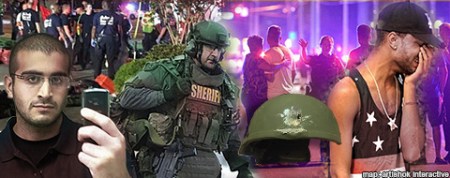
Omar Mir Seddique Mateen, a US Muslim citizen aged 29, son of Afghan migrants, perpetrated the deadliest shooting attack in American history on June 12, when he massacred 50 people and injured 53 at the Pulse gay club in Orlando, Florida, with an AR 15 assault rifle and a Glock 17 handgun.

The guns were purchased legally a few days earlier at a local shop. This alone ought to have alerted the various US intelligence and surveillance agencies responsible for countering terrorism – except that, for lack of coordination, they missed the fact that a man twice questioned by the FBI was suddenly loading up on deadly weapons.

Mateen fit the profile of an Islamic terrorist, whose attributes the incumbent US administration consistently refuses to acknowledge: He was a Muslim, whose Afghan immigrant father is a Taliban supporter; a religious extremist, who recently made the pilgrimage to Mecca; he was divorced, known for violence, and licensed as a security officer to carry a gun.

The Orlando killer had long been overdue for close monitoring – or least a flag to prevent him from working as a security officer or carrying arms.

In 2013-14, the FBI interviewed him after he made “inflammatory remarks” to a colleague, before closing its investigation.

In 2014, the FBI hauled him in again over a connection with Mohammad Abu-Salha, a 22-year old Palestinian American. They had grown up together at the small Florida coastal town of Fort Pierce. Abu Salha went off to Syria, joined the al Qaeda-linked Nusra Front and killed himself in a suicide attack by driving a massive truck bomb into a restaurant filled with Syrian government soldiers.

Yet the FBI against closed the file on Mateen after determining that the links between the two young Muslims did not warrant a full-dress inquiry.

Compiling all the known data on the Orlando killer with the results of the FBI interviews with him would have placed him high on the list of suspects and called in for further questioning.

The oversights of US law enforcement, intelligence and security agencies recur each time Islamists terrorist strike. The Ramadan 2016 attack in Orlando showed that no lessons had been learned from the lapses that led to 9/11.

The FBI erred gravely in closing the case over the Mateen connection with the Palestinian American suicide bomber. This explains why senior FBI officials are down-playing the importance of that connection.

When he was exculpated, the federal authorities also discontinued electronic surveillance of the terrorist’s movements. So they missed his mounting extremism, his frequent attendance at a mosque led by a radical imam, who regularly incited his flock to murder (“Gays must die”). He thus kept his Security Officer’s ID which gave him access to secure government sites. His name was kept on the list of licensees for carrying firearms.

It is especially hard to understand the lackadaisical handling by federal agents of this prime suspect when the FBI Director James Comey was reiterating: “The Islamic State remains the top threat America is facing.”

Before entering the Pulse night club with the intent to slaughter those partying inside, Mateen called 911 and swore allegiance to the leader of the ‘Islamic State’ Abu Bakr al-Baghdadi, and recalled Tamerlan and Dzhokhar, the brothers responsible for the 2013 Boston Marathon terror attack.

Orlando_Terror480

For 20 minutes, the dispatchers did not understanding what he was saying and lost the chance to triangulate his cellular phone’s location and send police to nab him.

At the door of the club, he got into a brief exchange of fire with policeman before going in. Mateen went from room to room, firing well aimed semi-automatic rounds, killing tens of people, wounding tens more, and rounding up 30 people as hostages. He knew enough from his experience as a security guard to lock them in the restrooms which had no windows.

Long before the police, the city hall or any other official entity came to their senses, the club’s management sent a message via social networks: ‘Everyone get out of pulse and keep running.’

For three precious hours, dozens of police cars and ambulances, with FBI agents, dog handlers, special bomb disposal units, and other security officials huddled outside the club without doing anything. During these hours only a few shots sounded and many of those wounded lost their lives from blood loss and lack of medical treatment.

Only at 5 am, did the special anti-terror unit enter the scene, with one team using small detonators and firing at the terrorist to distract him while a force of 9 officers blew up the opposite wall and broke a hole through which officers could enter, fire and kill the terrorist. This entire event took 4 minutes.

Despite the three-hour wait, not enough ambulances had reached the scene, and some of the casualties had to be driven in civilian vehicles.

Mateen committed his murderous assault on the 300 partygoers at the Pulse club with ease, due to a number of factors:

  1. US law enforcement agencies have shown inexplicable tolerance toward Islamist extremists to the point that the Orlando killer was free to purchase an unlimited amount of deadly weapons.
  2. Due to lack of coordination between intelligence and law enforcement agencies, this killer was able to gain employment with a firm that trains its personnel in the use of firearms.
  3. As soon as the local police were alerted to gunfire at the door of the club, they should have swarmed in to neutralize the killer. The three-hour wait for the SWAT team’s arrival betokened weakness and an unwillingness to fight, so leaving the horrendous event in the hands of the terrorist.
  4. Pinning the dreadful episode on lack of gun control avoids the issue. Terrorists will always find murder weapons – if not guns, then homemade bombs like the Boston Marathon brothers, kitchen knives or vehicles. Even in countries with strict gun control, there is always a black market.

Clapper: Iran Views Deal as ‘Means to Remove Sanctions While Preserving Nuclear Capabilities’

February 9, 2016

Clapper: Iran Views Deal as ‘Means to Remove Sanctions While Preserving Nuclear Capabilities’ Washington Free Beacon, February 9, 2016

Director of National Intelligence James Clapper testified to lawmakers Tuesday that Iran sees the nuclear deal it struck with the United States and five other world powers as a way to remove burdensome sanctions while simultaneously maintaining a strong nuclear infrastructure.

Clapper made his statement to the Senate Armed Services Committee at a hearing in which the intelligence chief discussed the intelligence community’s annual assessment of worldwide threats to U.S. interests and national security.

Part of Clapper’s testimony focused on the threats posed by the Islamic Republic and how the Iran nuclear deal, known formally as the Joint Comprehensive Plan of Action (JCPOA), affects the country’s relationship with America going forward.

“Iran probably views the JCPOA as a means to remove sanctions while preserving nuclear capabilities,” Clapper told lawmakers.

He added that “Iran’s perception of how the JCPOA helps it achieve its overall strategic goals will dictate the level of its adherence to the agreement over time.”

The nuclear deal was signed in July and implemented on Jan. 16, at which time Iran received an estimated $50 billion to $150 billion in sanctions relief after it took steps to curb its nuclear program.

Some experts have said Iran’s objective throughout negotiations was to ensure the removal of sanctions that were crippling its economy while retaining a nuclear weapons capability to possibly exercise at a future time.

One argument critics of the JCPOA make is that the agreement grants Tehran large-scale sanctions relief whileallowing it to have a vast nuclear infrastructure whose most important restrictions have clear expiration dates, after which time Iran could breakout to a nuclear weapon in little time.

The Obama administration maintains that the deal ensures Iran cannot obtain a nuclear weapon and is at least a year away from producing one.

Clapper’s testimony comes upon his release of the annual “Worldwide Threat Assessment of the U.S. Intelligence Community,” which outlines the current array of challenges threatening U.S. national security.

The report says the intelligence community “continue[s] to assess that Iran does not face any insurmountable technical barriers to producing a nuclear weapon, making Iran’s political will the central issue.”

Directly addressing Iran’s political will, the document adds that “Supreme Leader [Ayatollah Ali] Khamenei continues to view the United States as a major threat to Iran, and we assess that his views will not change, despite implementation of the JCPOA deal … Iran’s military and security services are keen to demonstrate that their regional power ambitions have not been altered by the JCPOA deal.”

The assessment also describes how Tehran’s pursuit of nuclear weapons is part of its “overarching strategic goals of enhancing its security, prestige, and regional influence.”

Beyond the nuclear deal, the intelligence assessment calls the Islamic Republic the world’s foremost state sponsor of terrorism. Clapper explained to lawmakers how Iran’s aggression in the Middle East and elsewhere is dangerous to American interests and national security, as well as its growing missile arsenal and cyber capabilities.

The intelligence community, according to its assessment, views Iran as “an enduring threat to US national interests” and a country that sees itself as leading an “axis of resistance” against American influence and the influence of U.S. allies.

“Tehran might even use American citizens detained when entering Iranian territories as bargaining pieces to achieve financial or political concessions in line with their strategic intentions,” the report added.