Archive for the ‘Hezbollah’ category

Hezbollah’s Massive Arms Build-up in Lebanese Civilian Areas

July 19, 2016

Hezbollah’s Massive Arms Build-up in Lebanese Civilian Areas, Front Page MagazineJoseph Klein, July 19, 2016

hn

Every calendar quarter the United Nations Security Council holds an extensive debate on the Israeli-Palestinian “situation.” The Israeli and Palestinian UN representatives make speeches following the Secretary General’s report on the current status, which are normally predictable restatements of their respective positions. This time, however, Israel’s ambassador Danny Danon, addressing the Security Council at its July 12th meeting, presented new graphic evidence of Hezbollah’s alarming arsenal of rockets and missiles located in civilian areas of southern Lebanon.

Ten years ago, when Security Council Resolution 1701 was adopted, ending the war that had broken out between Israel and Hezbollah, the terrorist group was estimated to have had about 7000 rockets. The resolution called for Hezbollah and other armed groups not officially a part of the Lebanese government’s armed forces to relinquish their weapons. Instead, precisely the opposite has happened. Hezbollah never stopped its arms build-up, which has been funded and supplied principally from the world’s leading state sponsor of terror, Iran.

Hezbollah now has approximately 120,000 rockets and missiles aimed at Israeli civilian population centers.  By way of comparison, Ambassador Danon said that “more missiles are hidden underground in 10,000 square kilometers [of Lebanon] than the above-ground 4 million square kilometers” of the European North Atlantic Treaty Organization countries.

Referring to aerial satellite imagery, based on the latest Israeli intelligence, Ambassador Danon demonstrated to the members of the Security Council the location of rocket launchers and arms depots that Hezbollah had placed in civilian areas. “The village of Shaqra has been turned into a Hezbollah stronghold with one out of three buildings used for terror activities, including rocket launchers and arms depots,” Ambassador Danon said.  “Hezbollah has placed these positions next to schools and other public institutions putting innocent civilians in great danger.”

Hezbollah, aided and abetted by Iran, was “committing double war crimes,” the Israeli ambassador charged. “They are attacking civilians, and using Lebanese civilians as human shields,” he said. “We demand the removal of Hezbollah terrorists from southern Lebanon.”

Not surprisingly, Ambassador Danon’s presentation of irrefutable evidence of Hezbollah’s clear and present danger to Israeli and Lebanese civilians, and his demand for Security Council action, fell on deaf ears. In her own statement that followed Ambassador Danon’s remarks, U.S. Ambassador to the UN Samantha Power said not a word about what was just presented regarding Hezbollah. Instead, she stuck to her canned talking points that continue to draw a moral equivalence between acts of Palestinian terrorism and Israeli self-defense. “In recent months, there’s been a steady stream of violence on both sides of the conflict,” she said. Then Ambassador Power proceeded to criticize the building of Israeli settlements, as if again to draw a moral equivalence between housing construction and terrorism. She assailed what she called Israel’s “systematic process of land seizures, settlement expansions, and legalizations of outposts that is fundamentally undermining the prospects for a two-state solution.” All that Ambassador Power said about Lebanon was to decry the political stalemate in electing a new president and to state that “the United States is helping the Lebanese armed forces build the capabilities necessary to counter violent extremism and protect the Lebanese people.”  If the Obama administration were truly interested in countering “violent extremism” in Lebanon and protecting the Lebanese people, it would start by doing everything possible to eliminate the violent extremist threat posed by Hezbollah’s massive rearmament. That, in turn, would require the Obama administration to reverse its appeasement course towards Iran and tighten, not loosen, the financial screws on the regime.

There is no doubt where the bulk of Hezbollah’s funding and arms is coming from. Even Secretary of State John Kerry acknowledged last January Iran’s leading role in arming Hezbollah.

The terrorist organization’s chief Hasan Nasrallah boasted last month about Iran’s bankrolling its operations:

“We are open about the fact that Hezbollah’s budget, its income, its expenses, everything it eats and drinks, its weapons and rockets, are from the Islamic Republic of Iran,” Nasrallah was quoted by Hezbollah’s official Al Ahed newspaper as saying.  “As long as Iran has money we will have money. Hezbollah gets its money and arms from Iran, as long as Iran has money, so does Hezbollah. We extend gratitude to the Leader Imam, [His Eminence] Sayyed Khamenei, and to the leadership of the Islamic Republic and its government, president, scholars and people for their generous support which has never stopped.”

To add insult to injury, Nasrallah made his remarks while honoring the “martyrdom” of a top Hezbollah terrorist killed in Syria whom has been linked to the 1983 attack on the U.S. Marines barracks in Lebanon. That attack took the lives of 241 Americans. Now, Hezbollah is stronger than ever, with Iran’s “generous support.”

Iran continues to fund global terrorism, with its treasury being replenished thanks to the Obama administration’s largesse.

Iranians and Walid suicide units on Golan border

July 8, 2016

Iranians & Walid suicide units on Golan border, DEBKAfile, July 8, 2016

GolanIsrael_military

A flurry of false Hizballah claims amid rising military tension this week was designed to cover up a direct Israeli hit of the Iranian Revolutionary Guards HQ in South Syria, DEBKAfile military and intelligence sources disclose.

Whereas Hizballah reported on July 5 that Israeli helicopters had attacked Syrian army positions near the Golan town of Quneitra, in fact, one of the two Israeli “Tamuz” IDF rockets fired on July 4, in response to stray cross-border Syrian army mortar shells, struck the Syrian Ministry of Finance building near Quneitra, which housed Iranian Guards and Hizballah regional headquarters. An unknown number of Iranian officers were killed as a result.

On July 6, Hizballah sources reported a high level of tension at its east Lebanese outposts in Hasbaya, al-Qarqoub and Mount Hermon, indicating possible preparations to retaliate for the Iranian casualties.

The mortar shells that occasionally stray into Israel are aimed by the Syrian forces in Quneitra at Syrian rebel engineering units, which are digging an anti-tank trench on the town’s southern edge to prevent Syrian tanks from mounting an all-out assault against them (See attached map).

These skirmishes are put in the shade by the dangerous gains by Islamist terrorists in southern Syria.

Both ISIS and al-Qaeda’s Nusra Front have overrun the entire Syrian strip bordering on Israel and Jordan – a distance of 106km from Daraa up to the Druze villages of Mount Hermon.

The Islamists have seized control of this strategic borderland by taking advantage of the fighting between Syrian army and Syrian rebel forces in southern Syria.

Israel and Jordan were also remiss. The IDF and the Jordanian Army were so busy trying to prevent the Syrian army, the Iranian Revolutionary Guards and Hizballah from encroaching on their northern defense lines in northern Jordan and the Golan that they failed to notice the Islamic terrorists creeping up on their borders.

The terrorist presence which Israel finds most alarming is that of the “Khaled Bin Al-Walid Army” – a militia linked to both ISIS and al-Qaeda, which now controls a 36km band bordering on central and southern Golan from south Quneitra to the Jordan-Israel-Syria tri-border area – opposite Hamat Gader and Shaar HaGolan (See map).

The Khaled Bin Al-Walid Army was spawned by a union between the Islamist Liwa Shouada Yarmouk and Mouthana Islamic Movement militias. Its commander is Abu Abdullah al-Madani,  a Palestinian from Damascus, who is one of al-Qaeda’s veteran fighters. Close to Osama Bin-Laden, he fought with hhimagainst the Americans when they invaded Afghanistan 15 years ago. Ten years ago, he moved to Iraq, still fighting Americans, now alongside the al-Qaeda commander Abu Musab al-Zarqawi.

When al-Qaeda was defeated in Iraq, al-Madani moved to Syria.

DEBKAfile counter terror sources report that this veteran of Islamist terrorism, who is believed to be in touch wit Bin Laden’s successor Ayman al Zawahri, is active in three areas:

1. He is purchasing and stockpiling chemical weapons – a high priced commodity frequently traded among various Syrian rebel organizations.

2. Abu Abdullah al-Madani is recruiting from his militia suicide units for which he is personally training for operations inside Israel. DEBKAfile sources say that his plan is being taken very seriously by Israel security chiefs.

3. He is maintaining operational ties with Al Nusra commanders in the border region, possibly seeking access to the Israeli border through their turf for his chemical weapons and suicide units.

First Palestinians in Syria war – under Hizballah

June 19, 2016

First Palestinians in Syria war – under Hizballah, DEBKAfile, June 19, 2016

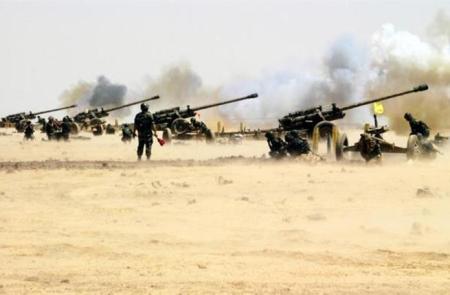
Hezbollah_Zabadani_12.8.15Hizballah artillery in action in Syria

On Sunday, June 19, helicopters of the Syrian Air Force started transporting Palestinian militia fighters from the Damascus area to the Deir-ez-Zor region of eastern Syria, DEBKAfile’s military sources said in an exclusive report. They are joining Hizballah troops in an all-out assault on Islamic State’s grip on the area, notably the Euphrates River valley.

The Hizballah buildup was first revealed by DEBKAfile Friday, June 17.

It is the first time since the Syrian war began in 2011 that Palestinians are fighting for the regime of President Bashar Assad under the direct command of Hizballah. It is also the first time Palestinian forces are engaged in direct combat with ISIS.

The Palestinian troops are from a militia set up by Syrian and Iranian military intelligence officers called the al-Jaleel Forces, or the “Young Men Return to Palestine Movement”. It was armed and trained for terrorist attacks deep inside Israeli territory.

However, after Russian President Vladimir Putin promised Israeli Prime Minister Binyamin Netanyahu, during their June 9 meeting in Moscow, that no terror forces of any kind, whether Iranian, Syrian or Hizballah, would be allowed to set foot in southern Syria, or gain access to Israel’s northern border, the Palestinian militia was reassigned to the eastern Syrian front to boost the Hizballah operation against ISIS.

In the last hours, the Palestinian fighters were transferred from Damascus to al-Qusour near Deir ez-Zor and some, according to DEBKAfile’s military and intelligence sources, were sent directly into battle against ISIS as soon as they arrived in the area, and immediately suffered losses. Syrian sources name three fatalities as Mohamed Abbas, Eid al-Mohamed and Essam al-Abbas, with no further details.

On Friday, June 17, our military sources first revealed the new Hizballah mission: 

Hizballah this week ordered a general military call-up for their biggest combat mission in the Syrian war since their forces began fighting in support of the Assad regime in 2013, DEBKAfile military forces report.

Iran’s Lebanese proxy has been assigned the task of expelling the Islamic State from broad areas it occupied in the Deir ez-Zor region of eastern Syria and, in particular, the Euphrates River valley which connects eastern Syria and western Iraq.

This Hizballah offensive is designed to open the way for the pro-Iranian Shiite Popular Mobilization Forces and the Badar Forces militias which entered the ISIS-held Iraqi town of Fallujah Friday June 17 to move west and up the Iraqi side of the valley. The two militias spearheaded the Fallujah operation under the command of Iran’s Maj. Gen. Qassem Soleimani of the Revolutionary Guards and Ground Corps Brig. Gen. Mohammad Pakpour.

The plan is for Hizballah forces to meet these pro-Iranian militia forces on the Syria-Iraq border and so gain control over the most important strategic land pass between Iraq and Syria.

Whereas the pro-Iranian militias in Iraq are fighting under US air cover, Hizballah is assured of Russian air support in Syria.  And so, for the first time in the Syria conflict and its own history, Hizballah will receive air cover from both the US and Russia, the two superpowers now coordinating their military moves in Syria and Iraq.

This strategy, which essentially connects the Syrian and Iraqi campaigns against ISIS, was charted on June 9, at a secret meeting in Tehran of the Russian, Iranian and Syrian defense chiefs.

DEBKAfile military sources in Washington say that the operation’s plan was put before President Barack Obama and he sanctioned it as part of the war on ISIS.

In the run-up to the Syrian segment of the plan, Hizballah is transferring substantial combat strength from Lebanon into Syria, and emptying its other Syrian fronts, especially around Aleppo, for the large-scale concentration around Palmyra.

The Hizballah force will start out by targeting the Syrian town of Al-Sukhna, 63km south of Palmyra and 136km north of Deir ez-Zor, thus gaining command of M20, the main highway link between northern to eastern Syria. DEBKAfile military sources say that this military offensive by Hizballah against ISIS, with combined US-Russian support, threatens to transform a terrorist organization dedicated to fighting Israel in the service of Iran into one of the most powerful armies in the Middle East. Israel cannot stop this happening. The former Israel defense ministers who harangued this week against the Netanyahu government’s alleged “scaremongering” willfully ignored this dangerous development. They must also be held at least partly accountable for the failure of Israel’s air raids over Syria to diminish Hizballah’s military capabilities.

Hizballah set to fight ISIS for Euphrates Valley

June 17, 2016

Hizballah set to fight ISIS for Euphrates Valley, DEBKAfile, June 17, 2016

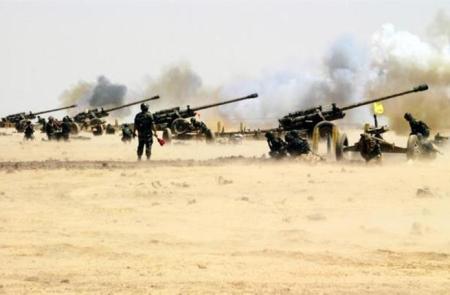
Hezbollah_Zabadani_12.8.15Hizballah artillery in action in Syria

Hizballah this week ordered a general military call-up for their biggest combat mission in the Syrian war since their forces began fighting in support of the Assad regime in 2013, DEBKAfile military forces report.

Iran’s Lebanese proxy has been assigned the task of expelling the Islamic State from broad areas it occupied in the Deir ez-Zor region of eastern Syria and, in particular, the Euphrates River valley which connects eastern Syria and western Iraq.

This Hizballah offensive is designed to open the way for the pro-Iranian Shiite Popular Mobilization Forces and the Badar Forces militias which entered the ISIS-held Iraqi town of Fallujah Friday June 17 to move west and up the Iraqi side of the valley. The two militias spearheaded the Fallujah operation under the command of Iran’s Maj. Gen. Qassem Soleimani of the Revolutionary Guards and Ground Corps Brig. Gen. Mohammad Pakpour.

The plan is for Hizballah forces to meet these pro-Iranian militia forces on the Syria-Iraq border and so gain control over the most important strategic land pass between Iraq and Syria.

Whereas the pro-Iranian militias in Iraq are fighting under US air cover, Hizballah is assured of Russian air support in Syria. And so, for the first time in the Syria conflict and its own history, Hizballah will receive air cover from both the US and Russia, the two superpowers now coordinating their military moves in Syria and Iraq.

This strategy, which essentially connects the Syrian and Iraqi campaigns against ISIS, was charted on June 9, at a secret meeting in Tehran of the Russian, Iranian and Syrian defense chiefs.

DEBKAfile military sources in Washington say that the operation’s plan was put before President Barack Obama and he sanctioned it as part of the war on ISIS.

In the run-up to the Syrian segment of the plan, Hizballah is transferring substantial combat strength from Lebanon into Syria, and emptying its other Syrian fronts, especially around Aleppo, for the large-scale concentration around Palmyra.

The Hizballah force will start out by targeting the Syrian town of Al-Sukhna, 63km south of Palmyra and 136km north of Deir ez-Zor, thus gaining command of M20, the main highway link between northern to eastern Syria.

DEBKAfile military sources say that this military offensive by Hizballah against ISIS, with combined US-Russian support, threatens to transform a terrorist organization dedicated to fighting Israel in the service of Iran into one of the most powerful armies in the Middle East. Israel cannot stop this happening. The former Israel defense ministers who harangued this week against the Netanyahu government’s alleged “scaremongering” willfully ignored this dangerous development. They must also be held at least partly accountable for the failure of Israel’s air raids over Syria to diminish Hizballah’s military capabilities.

State Dept.: Hezbollah, Islamic State Maintain Presence in Latin America

June 7, 2016

State Dept.: Hezbollah, Islamic State Maintain Presence in Latin America, BreitbartEdwin Mora, June 6, 2016

Hezbollah-Getty-640x480Getty Images

WASHINGTON, D.C. —The U.S. Department of State (DOS) has determined that Venezuela, which has refused to cooperate with the United States’ antiterrorism efforts in Latin America for nearly a decade, remains a “permissive environment” that promotes ideological and financial support for terrorist organizations, namely Iran’s Lebanese proxy Hezbollah.

Although the “primary threats” to the Western Hemisphere stem from left-wing guerrillas known as the Revolutionary Armed Forces of Colombia (FARC) and the National Liberation Army (ELN), the Islamic extremist groups Shiite Hezbollah, also spelled Hizballah, and Sunni Islamic State (ISIS/ISIL) also maintain a presence across the region, according to DOS’ Country Reports on Terrorism 2015, a congressionally mandated assessment of terrorism activities across the world authored by DOS.

The assessment declares:

South America and the Caribbean also served as areas of financial and ideological support for ISIL and other terrorist groups in the Middle East and South Asia. In addition, Hizballah continued to maintain a presence in the region, with members, facilitators, and supporters engaging in activity in support of the organization. This included efforts to build Hizballah’s infrastructure in South America and fundraising, both through licit and illicit means.

[…]

There were credible reports that Venezuela maintained a permissive environment that allowed for support of activities that benefited known terrorist groups… [including] Hizballah supporters and sympathizers.

Moreover, the DOS evaluation highlights the Tri-Border Area (TBA) between Paraguay, Brazil, and Argentina, in addition to Peru, as regions where Hezbollah was operating last year.

“Illicit activities within the TBA remained potential funding sources for terrorist organizations, most notably Hizballah,” it says, adding, “The Tri-Border Areas of Argentina, Brazil, and Paraguay remained an important regional nexus of arms, narcotics, pirated goods, human smuggling, counterfeiting, and money laundering — all potential funding sources for terrorist organizations.”

The TBA border region has long been a hotbed for Hezbollah members.

In its terrorism reports, the DOS also points out that Peruvian authorities in 2014 arrested a Lebanese national and his wife, a U.S-Peruvian citizen, for suspected links to Hezbollah, adding that “there were residue and traces of explosives” in their apartment.

Hezbollah, along with other terrorists and criminals in Latin America, are known to use networks that support illicit activities, such as trafficking drugs, wildlife, bulk cash, weapons, humans, in addition to illegal logging and mining.

The DOS released its assessment Thursday, a day after the U.S. military declared the region’s illicit trafficking networks as one of the greatest security threats facing the United States.

Gen. John Kelly – former commander of U.S. Southern Command (SOUTHCOM), which oversees military activities in Latin America and the Caribbean – warned last year that jihadist groups like ISIS could exploit the illicit networks in the region to infiltrate the United States, adding that Hezbollah is already using known routes to traffic drugs and other contraband.

Although Hezbollah is believed to be the most prominent jihadist group in Latin America and the Caribbean due to Iran’s enduring presence in the region, Gen. Kelly warned in March 2015 that a small number of Sunni extremists are actively “radicalizing  converts and other Muslims in the region and also provide financial and logistical support to designated terrorist organizations within and outside Latin America.”

Pentagon and DOS have recently revealed that between 100 and 150 people from Latin America and the Caribbean have traveled to the Middle East to engage in jihad on behalf of ISIS, without specifying the names of any of the countries in the region.

According to the Department of State, some people from Trinidad and Tobago, as well as Argentina, are believed to have joined ISIS in the Middle East.

“More than 70 nationals of Trinidad and Tobago are believed be fighting with ISIL in Syria,” reports DOS, adding, “It is possible small numbers of Argentine citizens may have sought to travel to Syria and Iraq to join ISIL,” without providing any specific figures.

DOS also mentioned an ISIS-related arrest in Brazil involving a money laundering group accused of moving $10 million-plus and having social media ties to the jihadist group.

Iran’s growing presence in Latin America is believed to be facilitated by Venezuela.

“The International Development Bank, a subsidiary of the Development and Export Bank of Iran, continued to operate in Venezuela [in 2015] despite its designation in 2008 by the U.S. Treasury Department under E.O. [Executive Order] 13382 (‘Blocking Property of Weapons of Mass Destruction Proliferators and their Supporters’),” mentions the DOS assessment.

Justin Siberell, acting coordinator for counterterrorism at the State Department, briefed reporters Thursday about the 2015 Country Reports on Terrorism, stressing that the enduring presence in the region of leading state sponsor of terror Iran continues to trouble the United States.

“I think Iran’s presence in the Western Hemisphere and its support for groups that might be engaged in facilitation or operational planning is a continued concern,” Siberell told reporters.

Nevertheless, he added, “I don’t think we’ve seen an increase in 2015 in Iran’s activity in the Western Hemisphere, but it remains a high priority for us.”

First test for Lieberman from Iran and Hizballah

May 26, 2016

First test for Lieberman from Iran and Hizballah, DEBKAfile, May 26, 2016

IranianDiplomats480_Koteret

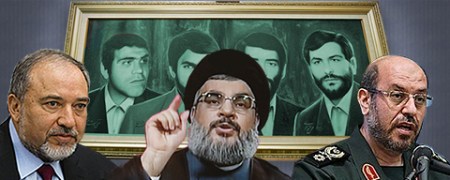
The Middle East is full of surprises, but they are rarely disconnected from events. This applies to the speech made by Hizballah secretary Hassan Nasrallah on Wednesday May 25 which dredged up the past from 1992 in an allegation that the IDF while in Beirut, kidnapped four Iranian diplomats and is secretly holding them alive till this day in a jail in Israel.

He was not the first to resuscitate this old story. Monday May 23 the Iranian Defense Minister Brigadier General Hossein Dehqan brought it up, suddenly and surprisingly, in a special interview he gave to the Iranian news site Defa Press News.

General Dehqan said, “We claim on the basis of proofs that they are alive and in captivity by the Zionist regime.” He went on to say that, “the Israelis are responsible for the health of the Iranian diplomats.” He was referring to: charge d’affaires of the Iranian Embassy in Beirut Seyed Mohsen Mousavi, military attaché Ahmad Motevaselian, embassy technician Taghi Rastegar Moghadam, Islamic republic news agency Kazzem Akhavan.

Two days later, on Wednesday, while saying that ‘the resistance axis’ – meaning Iran-Syria-Hizballah – has not forgotten the Palestinian problem, Nasrallah said: “We have more land under Israeli occupation.”

Nasrallah had a long orderly list of ‘occupied places’: Shaaba Farms, The Kfar Shouba Hills, meaning Har Dov, and Ghajar village. “We also have”, Nasrallah continued, “captives and missing people whose families still wait for their return.”  And, “On the legal and ethical level, there is a Lebanese responsibility towards the four Iranian diplomats who were handed over to Israel.”

According to Nasrallah, just as the occupied lands must be returned, so must the Iranian diplomats be returned, first of all to Lebanon.

Nasrallah next turned to speak about the new Israeli Defense Minister calling him “crazy”.

Seven years ago, in 2009, German mediators were invited to broker a prisoner swap between Israel and Hizballah. They arranged for the bodies of the IDF soldiers: Ehud Goldwasser and Eldad Regev, whom Hizballah abducted and murdered in 2006, to be returned. The Germans established that the four Iranian diplomats had never been by held by Israel but were captured by Christian Phalangists and were apparently executed by them.

This finding was never accepted by the Iranian Foreign Ministry who insisted that their four diplomats were still in Israeli captivity.

The Iranian Defense Minister and the Hizballah leader have obviously coordinated the resuscitation of the diplomats’ fate and intended to use it as a tool to justify military or terrorist action against Israel.

DEBKAfile’s military and intelligence sources point to two reasons for the Iranian-Hizballah move:

  1. A first test for the new Israeli defense minister Avigdor Lieberman. They want to determine his responses to aggression and establish the measure of his control of Israeli military deployments on the Syrian and Lebanese borders. His predecessor, Moshe Yaalon, was conversant with every detail of those deployments.
  2. Tehran and Hizballah, have publically admitted that Israel had no hand in the assassination of the Hizballah military leader in Syria, Mustafa Badr Al Din, near Damascus on May 13. But as a morale booster for Shiite forces in Syria they may resort to a strike against Israel, Saudi Arabia or Jordan, whom they believe complicit in the killing.

They estimate that Israel, with its new defense minister, is the most vulnerable target.

Lebanese ‘Al-Safir’ Daily Marks 16th Anniversary Of Israel’s Withdrawal From South Lebanon: Hizbullah Is Digging Tunnels On Israel Border

May 26, 2016

Lebanese ‘Al-Safir’ Daily Marks 16th Anniversary Of Israel’s Withdrawal From South Lebanon: Hizbullah Is Digging Tunnels On Israel Border, MEMRI, May 25, 2915

On May 25, 2016, the Lebanese daily Al-Safir, which is known for its support for Hizbullah, published a front- page article celebrating “Liberation Day,” i.e. the 16th anniversary of Israel’s withdrawal from South Lebanon. The article, which appears without a byline, analyzes the current situation of Hizbullah (which it calls “the resistance”) as well as its combative actions on the Syrian and Israeli fronts. It claims that this year’s Liberation Day celebrations are mixed with heartbreak for Hizbullah supporters, due to the large number of Hizbullah casualties in the Syria war. It adds that in its fight in Syria, Hizbullah currently faces the toughest challenge since its establishment, greater even than its conflict against Israel, because the price thus far paid by Hizbullah in this war – both in capabilities and casualties – is unprecedented, and no solution in Syria is on the horizon.

The article assesses that Hizbullah may expand its theater of operations even further in the future, in response to new challenges, and that this will turn it into a “regional power” that “formulates new equations in the region.”

Adding that alongside its fighting in Syria, Hizbullah is continuing its activity against Israel, the article also reports that resistance fighters work day and night along the Israeli border, “conducting observations, preparing, and digging tunnels that cause the settlers and enemy soldiers to lose sleep.” It also states that in fighting “tafkiri organizations,” Hizbullah has encountered an enemy that excavates tunnels, after becoming accustomed to being the only one digging them; in fact, it was Hizbullah that taught other resistance fighters, particularly Palestinians in the Gaza Strip, the tunnel doctrine.[1]

The following are excerpts from the article:[2]

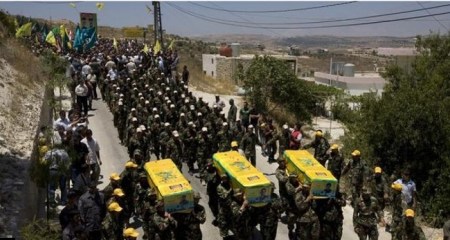
28169Funeral of Hizbullah fighters killed in Syria (image: Safa.ps)

“[Since its founding], the resistance [i.e. Hizbullah] never found itself deployed on several fronts and facing more than one challenge and more than one danger at once [as is happening today]. These four years since it became involved in the war in Syria represent the greatest trial it has [ever] faced… The movement has never paid in flesh, blood and abilities as it has paid [during the Syria war] and as it may continue to pay in the future, in the open confrontation with the takfiri [groups, i.e. the groups fighting against the Assad regime in Syria].[3] [So far] over 1,000 [fighters] have died and thousands have been wounded and disabled, and many others may meet [the same fate] in the ever-expanding confrontation that is becoming more difficult and more aggressive every day. This, especially since the horizon of a political solution seems to have been eliminated for the foreseeable future.

“Amid all this comes the 16th [anniversary] of the liberation [of South Lebanon], which underscores an element that Israel cannot ignore, namely the strengthening of the security and stability equation on both sides of the Palestine-Lebanon border. [This is] thanks to the deterrence system, or more accurately the balance of terror, which is an equation that has turned South Lebanon into the most secure region in the entire Middle East. Though we must not ignore other factors, no less important, [that contribute to this security], including [UN] Resolution 1701, UNIFIL and the Lebanese army.

“The celebrations of liberty are held amid heartbreak mixed with joy. Heartbreak [at the sight of] the processions of martyrs crossing the boundary south of the Litani every day [i.e. bodies of Hizbullah fighters killed in Syria being returned to Lebanon for burial], and joy [at the sight of] the processions [of people] rejoicing over [Hizbullah’s victory in some of] the local elections [that have been held in Lebanon in recent weeks]…

“The heartbreak over the martyrs is a necessary tax [that must be paid] in the struggle, [a struggle] which the Lebanese, of all sectors, regard as existential, even though they are divided on whether the preemptive war against the terrorists outside the borders of the homeland is justified. This heartbreak is present in every home in South [Lebanon]… When Hizbullah secretary-general Hassan Nasrallah speaks at Liberation Day ceremonies [today] in the town of Al-Nabi Shayth in the Bekaa [Valley], he will be speaking to a public that has contributed to the resistance [by supporting Hizbullah’s activity in Syria] just as residents of the South have contributed [in fighting against Israel], and perhaps even more, since [Bekaa Valley residents] face a danger today on their eastern border that is just as bad as the Israeli danger.

“It is right to say that the men of resistance on the eastern border complement the mission of the first men of resistance [who operate against Israel], who work day and night [along the border, from] the last border point in Al-Naquora to [the one in] Kfar Shouba, conducting observations, preparing, and digging tunnels that cause the settlers and enemy soldiers to lose sleep. [All this they do] without abandoning the [other] tasks of the resistance, which stands ready, openly and secretly, throughout Lebanon, and especially in the Southern Dahiya, in order to prevent any terrorist attack by the takfiris, in full coordination with the Lebanese army and Lebanon’s other security apparatuses. There might be further expansion of Hizbullah’s battle front, in accordance with future challenges, and this expansion turns this Lebanese group [Hizbullah], which was established 34 years ago in Sheikh ‘Abdallah’s base in Baalbek, into a regional force that formulates new equations in the region…

“In all of its rounds of fighting with the Israeli enemy, the resistance never faced what it has been facing for years in confronting the dark [elements] armed with the Prophet Muhammad’s Koran and Sunnah, who receive funding from tyrannical regimes and innumerable intelligence apparatuses, and are armed with military [equipment] that only armies possess.”

“The resistance also never experienced a four-year war in an area several times larger than Lebanon [itself]. It never experienced [war] against groups that imitate its methods and ways of warfare, but [who] instead of blowing themselves up against an Israeli convoy terrorize innocent people in the cities and villages, without batting an eyelash, as happened in the southern Dahiya or yesterday in Tartus and Jableh.

“The resistance never experienced war against groups fighting in caves and in the hills, mountains, wadis and even deserts, as happened at Tadmor and in the rural areas of Homs and Aleppo… Before [the war with Syria], the resistance did not storm cities and did not fight armies deep in the mountains.  Before this, no one lay in wait for it in tunnels like the ones that only it used to excavate, and [the doctrine of which] it spread to the rest of the men of the resistance, particularly to the Palestinians in the Gaza Strip.

“All these have been the unique characteristics of the resistance throughout the 16 years since May 25, 2000. All these [characteristics] and others will cause Hassan Nasrallah to declare that defending the achievement of liberation will end only with the defeat of the terrorists…”

Endnotes:

[1] Regarding the issue of the tunnels, it should be noted that Ibrahim Al-Amin, chairman of the board of the Lebanese dailyAl-Akhbar, wrote in a January 13, 2014 article that Hamas members fighting in Syria, in the Al-Quseir area and other regions, had dug tunnels there, similar to the ones excavated by Hamas in Gaza. He explained that Hizbullah had taught Hamas to dig these tunnels in the days when the two organizations were cooperating in smuggling arms into Gaza and preparing military plans against Israel.

[2] Al-Safir (Lebanon), May 25, 2016.

[3] Hizbullah, like the Syrian regime, does not draw a distinction between the rebels and the Salafi-jihadi groups.

How Terrorists and Dictators Silence Arab Journalists

May 19, 2016

How Terrorists and Dictators Silence Arab Journalists, Gatestone InstituteKhaled Abu Toameh, May 19, 2016

♦ That is the sad state of journalism in the Arab world: “If you’re not with us, then you must be against us and that is why we need to shut your mouth.” A journalist who does not agree to serve as a governmental mouthpiece is denounced as a “traitor.”

♦ Hamas shut the Gaza offices of Al-Arabiya in July 2013, under the pretext that the station broadcasted “incorrect news” about the situation in the Gaza Strip. The closure did not receive much attention from the international community and human rights organizations. Had the office been closed by Israel, there would have been an international outcry, with journalists screaming about Israeli “assaults on freedom of the media.”

♦ Al-Arabiya, like many other Arab TV stations, has a bureau in Israel, and its reporters enjoy more freedom reporting out of Jerusalem and Tel Aviv than they do in the Arab world. Today, the only free and independent Arabic newspapers in the Middle East can be found inside Israel.

Thirty-five Arab journalists have been fired since the beginning of April as a result of a campaign of intimidation and terrorism waged against them by Hamas and Hezbollah.

The journalists were working for the Saudi-owned pan-Arab Al-Arabiya television news channel, based in Dubai Media City in the United Arab Emirates. The network was previously rated by the BBC among the top pan-Arab stations.

But life for Al-Arabiya reporters has never been easy. Like most Arab journalists covering the Arab and Islamic countries, they too have long faced threats from various parties and governments.

That is the sad state of journalism in the Arab world: “If you’re not with us, then you must be against us and that is why we need to shut your mouth.” A journalist who does not agree to serve as a governmental mouthpiece is denounced as a “traitor.”

The absence of democracy and freedom of speech in most Arab and Islamic countries has forced many Arab journalists to relocate to the West. In the past four decades, some of the Arab world’s best journalists and writers moved to France and Britain, where they could work without fearing for their lives.

But in the Arab world, freedom of the media remains a far-fetched dream. There, if you are not threatened by the government, there is always someone else who will find a reason to target you.

The case of the Al-Arabiya journalists is yet another example of the dangers facing media representatives who do not toe the line or who dare to challenge a government or a terrorist group.

Earlier this week, Al-Arabiya announced that it was firing its eight workers in the Gaza Strip — three years after the Hamas government decided to shut the station’s offices there. The workers are Mohamed Jahjouh, Jamal Abu Nahel, Hanan al-Masri, Rula Elayan, Mahmdouh al-Sayed, Sha’ban Mimeh, Ala Zamou and Ahmed al-Razi.

In an email to the workers, the Al-Arabiya management wrote:

“We appreciate your work with us during the previous period. You were all an example of professional performance, but the time has come for the hard decision after we exhausted all attempts to reopen the offices, which were forcibly closed, as you know, by the party that controls the street in the Gaza Strip.”

Hamas shut the Gaza offices of Al-Arabiya in July 2013, under the pretext that the station had been broadcasting “incorrect news” about the situation in the Gaza Strip. In addition to the closure, Hamas also confiscated the equipment and furniture with an estimated value of $500,000, and prevented the employees from entering the offices.

1609Hamas shut the Gaza offices of Al-Arabiya in July 2013, under the pretext that the station had been broadcasting “incorrect news” about the situation in the Gaza Strip. (Image source: JN1 video screenshot)

The closure of the Al-Arabiya offices in the Gaza Strip did not receive much attention from the international community and human rights organizations. Had the office been closed by Israel, of course, there would have been an international outcry, with journalists around the world screaming about Israeli “assaults on freedom of the media.”

Here is an unpleasant fact: Al-Arabiya, like many other Arab TV stations, has a bureau in Israel, and its reporters enjoy more freedom reporting out of Jerusalem and Tel Aviv than they do in the Arab world. Today, the only free and independent Arabic newspapers in the Middle East can be found inside Israel.

In the West Bank and Gaza Strip, the only newspapers available are those that serve as an organ for the Palestinian Authority (PA) and Hamas. Many Arab journalists feel unsafe working under the PA in the West Bank. For the PA and Hamas alike, criticism is a crime.

Just this week, for example, Palestinian Authority security officers arrested journalist Tareq Abu Zeid in Nablus after confiscating his personal computer and mobile phone. No reason was given for Abu Zeid’s arrest. He joins scores of other journalists and bloggers who have been arrested or interrogated by the PA in recent years.

Even Arab countries that once used to boast of being a base for free media, such as Lebanon, are no longer able to defend journalists from threats and violence.

Last month, Al-Arabiya also closed its offices in Beirut, citing “security concerns.” In a statement, the Saudi-owned station said that the decision to quit Beirut was taken “out of concern for the safety” of its 27 employees.

The decision is believed to be the direct result of threats by the Iranian-backed Hezbollah militia. Hezbollah is furious with Saudi Arabia and other Arab countries for their recent decision to label the Shiite militia as a terrorist group.

Al-Arabiya’s decision to close its bureau in Beirut came shortly after suspected Hezbollah thugs went on the rampage inside the offices of the Saudi-owned newspaper Asharq Al-Awsat, destroying equipment and furniture.

The attack came after the pan-Arab newspaper published a cartoon marking April Fool’s Day, which was deemed “offensive” to Lebanon and its flag. The message behind the cartoon was that Lebanon has become a failed state because of the growing power of Hezbollah and Iranian meddling in the internal affairs of the country — something that has prevented the election of a new Lebanese president.

The crackdown on Arab journalists and media outlets by Hamas, Hezbollah and many Arab governments (including the Palestinian Authority) is not only aimed at silencing critics, but also at hiding from the world what life is like under dictators and terrorists. In light of the fact that Al-Arabiya’s staff has been recently decimated, advocates of freedom of the media might wish to tune in.

As Lebanon’s Banks Begin To Implement U.S. Sanctions Against Hizbullah, Hizbullah Criticizes Banking Sector, Warns Of Chaos In Lebanon And More ‘Actions Against The American Takeover Plan’

May 18, 2016

As Lebanon’s Banks Begin To Implement U.S. Sanctions Against Hizbullah, Hizbullah Criticizes Banking Sector, Warns Of Chaos In Lebanon And More ‘Actions Against The American Takeover Plan’ MEMRI, H. Varulkar and E. B. Picali*, May 17, 2016

Introduction

The Hizballah International Financing Prevention Act, passed by the U.S. Congress in December 2015, is aimed at curtailing the organization’s funding of its domestic and international activities, and also at combatting its global criminal activities – including money laundering, drug trafficking, and human trafficking – by which it funds the terror operations that it carries out worldwide.[1] It bars any “foreign financial institution” that engages in transactions with Hizbullah or with persons or bodies affiliated with it, or which provides them with financial services or launder money for them, from maintaining a relationship with the U.S. banking system. This means that any bank in the world, including in Lebanon, that provides financial services to the organization will be denied access to U.S. financial institutions – and thus to the global financial sector. The ramifications of this are far-reaching and can lead these banks to collapse. The law also imposes sanctions and penalties (fines, imprisonment or both) on individuals or bodies that violate its provisions. It came into effect on April 15, 2016, after the U.S. Treasury issued regulations for its implementation; the Treasury also published a list of some 100 bodies and figures associated with Hizbullah with whom financial institutions may not conduct dealings.[2]

Since Congress passed the law, Hizbullah has been perturbed and apprehensive about its ramifications and the impact it would have on its operation. This has been expressed both in statements by Hizbullah officials and in articles in the Lebanese press, especially the press close to Hizbullah.[3] In a speech a few days after the law was passed, Hizbullah secretary-general Hassan Nasrallah exposed his concern, by warning Lebanon’s banks not to “submit to the will of America.”

In early May 2016, two weeks after the law went into effect, Riad Salameh, governor of the Banque du Liban (BDL), Lebanon’s central bank, stressed, in a directive to Lebanon’s banks, the need to fully comply with the law. Following this, Lebanese banks began to close accounts of Hizbullah officials and their family members, and it has been reported that dozens such accounts have already been closed. Hizbullah reacted with a campaign of severe criticism against Salameh and the Lebanese banking system, accusing them of “surrender[ing] to the American financial mandatory authority in Lebanon and warning that this would bring about the collapse of Lebanon’s currency and lead to “complete chaos” in the country. Hizbullah ministers argued that the banks had crossed every red line, and other Hizbullah members leveled threats against the banks.

These reactions clearly indicate the scope of Hizbullah’s fears about the U.S. law and its ramifications. It should be noted that in recent months Hizbullah has also been the target of sanctions by the Gulf states and several other Arab countries, which have designated it a terror organization and have begun expelling its operatives from their territory.[4]

It should further be noted that it is not only Hizbullah that is concerned about the U.S. law, but also Lebanon’s banking sector, because if it does not comply with the law it will be barred from the global financial system, which could bring about its collapse. In light of these concerns, two Lebanese delegations were recently dispatched to the U.S., one on behalf of the Lebanese parliament and the other on behalf of the Association of Banks in Lebanon. The aim of the visits was to meet with U.S. Congress and Treasury officials and to discuss the law and its implementation, and perhaps also persuade them to soften the language of the law and provide guarantees for the Lebanese banks’ stability.[5]

This report will review Hizbullah’s apprehensions about the U.S. law as well as the organization’s threats to the Lebanese banking sector, the Lebanese government, and the U.S. following the law’s passage by Congress, and the intensification of these threats since the Lebanese banks began implementing the law.

Following Congress’s Passage Of The Law, Nasrallah Warns Lebanese Government, Banks Not To Comply

On December 21, 2015, three days after President Obama signed the act into law, Hizbullah secretary-general Hassan Nasrallah claimed that the law was part of the U.S. war on his organization that it declared years ago. In an attempt to downplay the importance of the new sanctions, Nasrallah argued that they would have no impact. He added that ever since the U.S. designated Hizbullah a terrorist organization in 1995, it has been trying to force the rest of the world to accept this designation, but to no avail; he added that since it failed in this attempt, it is now making false accusations against the organization. “The Americans,” he said, “are trying to pressure Hizbullah again with a decision they issued, according to which it is a criminal organization, and they are accusing us of drug trafficking, human trafficking, and money laundering. This is not true. These accusations are unjust, and we are not interested in presenting proof of our innocence, because the accuser is the one who should be presenting proof… This is a political accusation, part of a political, security, and military campaign in the region, aimed at tarnishing Hizbullah’s image in the eyes of the peoples of the world… It is part of a psychological war that will not succeed.”

As part of his attempts to reassure Hizbullah’s supporters and to convince them that the sanctions would have no impact, Nasrallah stated that his organization holds no accounts in Lebanese banks, nor any investments in or partnerships with Lebanese companies or merchants – and that therefore neither the BDL nor any other Lebanese bank has any cause for concern. At the same time, he revealed his concerns when he said: “The minute the U.S. gives the signal to harm some sector or political stream, some Lebanese banks will begin settling scores [with that sector or stream].” He declared that this would be “unacceptable” and warned the government and the banks against “obeying the American will.” He claimed that these American sanctions were aimed not just at Hizbullah but at Lebanon’s citizens, companies and businessmen, and demanded that the Lebanese state defend them: “We do not want the state to defend Hizbullah and its operatives, its sons and its daughters. We are defending ourselves and know how to do so. But the state must have people to defend any individual that the Americans wish to  accuse.”[6] 

Hizbullah Faction In Lebanese Parliament: American Law Will Spur Hizbullah To Act Against U.S.’s “Terrorist Branches” In The Region

On December 24, 2015, several days after Congress passed the law, the Hizbullah faction in the Lebanese parliament harshly criticized the U.S. over it, saying that “arrogance and terrorism” were behind the decision targeting Hizbullah, its supporters, and “ostensible organizations and elements working with it”. This, it stated, confirmed that the U.S. administration is indeed “the Great Satan.” The faction also said that the law “would spur Hizbullah to continue its actions against the American takeover plan and to continue resisting its terrorist branches, represented by the Zionists and takfiris, in Lebanon and the region.”[7]

Hizbullah-Affiliated Daily: Sanctions Could Lead To Intra-Lebanese Tension

Additionally, on March 31, 2016, the Lebanese Hizbullah-affiliated daily Al-Akhbar published an article implicitly warning that the U.S. law would destabilize Lebanon: “As the countdown to the release of the regulations for implementing the American anti-Hizbullah sanctions begins, the fears that the [Lebanese] domestic arena will be impacted by it and its ramifications are revived… as have fears that this issue will become volatile…”

The article also outlined the assessments that the sanctions and the anticipated regulations for their implementation will be harsh and will cover a broad range of individuals and political, financial, and media institutions, and added that if this proves to be the case, “it could constitute a worrisome factor that could stoke  domestic tension [in Lebanon, especially] in everything connected to Hizbullah’s reaction to the attempts at besieging it…”[8]

As Sanctions Implementation Begins In Lebanon, Hizbullah Harshly Criticizes U.S., Lebanese Banking Sector

On April 11, 2016, the U.S. Treasury Department released the regulations for implementing the Hizballah International Financing Prevention Act; they included details for applying the sanctions as well as a list of 99 Hizbullah-linked individuals and institutions with whom banks and financial institutions worldwide may not conduct business. The law, which as mentioned came into effect on April 15, 2016, is binding on all the world’s financial institutions, including Lebanese banks.

BDL Governor Salameh Orders Lebanese Banks To Comply With U.S. Law, Enraging Hizbullah

On April 28, 2016, the governor of the Central Bank of Lebanon, Riad Salameh explicitly stated, on the Lebanese LBC TV channel’s show Kalam Al-Nas, that Lebanese banks must comply with the U.S. law. He stressed: “The American law cannot be circumvented, because the regulations for its implementation include all currency, including the Lebanese lira.” The BDL, he said, would issue a statement emphasizing that Lebanon was committed to complying with the law and would hold banks responsible for implementing it. He added, “This will be clear and there will no way to get around it. This is an official and legal position. The banks must align with us.”[9]

A few days later, on May 3, 2016, Salameh issued guidelines requiring “all banks in Lebanon and all institutions under the oversight of the BDL” to comply with the law and to immediately inform the BDL of any freezing or closure of any account, or of any refusal to open any account, and to state their reasons for doing so.[10] According to reports in the Lebanese press, Lebanese banks have begun implementing these guidelines, and have already closed dozens of accounts belonging to Hizbullah MPs and associates.[11] Salameh’s guidelines sparked enraged responses from Hizbullah.

28047Riad Salameh (nna-leb.gov.lb, April 4, 201

Hizbullah MP: U.S. Is The Great Satan, We Must Resist Its Plans In The Region

Hizbullah MP Hussein Al-Moussawi threatened the U.S., saying: “The U.S. is still the leader of the camp of lies, and, as the Great Satan, it attempts to give the resistance a satanic image, and marginalize it with terrorism accusations and economic sanctions… The sons of the ummah should be wary of the American plans and carry out resistance against them.”[12]

Hizbullah: Salameh Surrendered To “The American Financial Mandatory” Rule In Lebanon; Implementing This Law Will Lead To Chaos In The Country

After Lebanese banks began closing the accounts of Hizbullah affiliates, the organization launched criticism not only at the U.S. but also at the Lebanese banking sector. On May 12, 2016, the Hizbullah faction in the Lebanese parliament issued an exceptionally harsh statement against Riad Salameh, noting: “The recent American law, which forces Lebanese banks to comply with its sections, is completely unacceptable because it will form the basis for a local war of exclusion, which the central bank and other banks are helping to stoke. This is in addition to the fact that complying [with the U.S. law] constitutes an appropriation of Lebanese financial sovereignty.”

The statement also said: “The orders recently published by BDL governor Riad Salameh… are a form of unjustified surrender to the American financial mandatory authority in Lebanon – which could exacerbate the financial crisis in the country, lead it to bankruptcy because of the ramifications of the deep schism [that could come about] between the Lebanese and the banks, and place the country on the brink of a grave currency collapse in the country and complete chaos that will be unstoppable.” The announcement also called on the governor “to reexamine the recent guidelines, such that they will be compatible [with the principle] of national sovereignty,” and on the government “to take the necessary steps to prevent the dangerous ramifications that are likely to emanate from this.”[13]

Hizbullah-Affiliated Daily: Hizbullah Is Furious At BDL Governor For Reneging On Understandings It Reached With Him

The Lebanese daily Al-Safir, which is close to Hizbullah, revealed on May 13, 2016 that the reason for Hizbullah’s fury at the BDL governor is that the guidelines he issued for the banks effectively countermanded previous understandings at which he had secretly arrived with Hizbullah, that were meant to mitigate the impact of the sanctions. According to the report, former Hizbullah MP Amin Shiri had concluded with Salameh that the Lebanese banks would not decide independently on the closure of any Lebanese citizen’s bank account, but would obtain Salameh’s personal approval beforehand. They also agreed that the banks would allow any citizen, including Hizbullah members, to open an account in Lebanese lira. However, the new guidelines that Salameh released in early May contradicted these understandings; under the new guidelines, banks should close accounts on their own and then inform the BDL, and must prevent Hizbullah members from opening accounts in Lebanese lira –because the American regulations for implementation specifically bar opening accounts in any currency.

According to Al-Safir, Hizbullah was surprised, and enraged, by Salameh’s guidelines. It quickly tried to contact him, but after receiving no persuasive answer, it decided to publish the harsh statement against him, and to raise the issue in the upcoming cabinet session.[14]

The daily Al-Akhbar, which is also close to Hizbullah, added that the organization had sent a message to Salameh claiming that “some banks decide for themselves to go too far in implementing the American sanctions, punishing Lebanese [citizens] that the U.S. did not even seek to sanction.” The daily added that Hizbullah had told Salameh that it would not allow the Lebanese banking sector “to act purely as the executive arm of the American administration [in carrying out its] decisions.”[15]

Al-Safir: Lebanese Elements, Saudi And UAE Foreign Ministers Worked To Step Up The Sanctions

Al-Safir reported that several MPs, apparently from Hizbullah, had complained to parliament speaker Nabih Berri that the regulations for implementation released in April by the U.S. Treasury Department had included new sections that were not in the law itself – for example, that the sanctions apply to all currencies, not only to U.S. dollars. They argued that these additions undercut the understandings between Hizbullah and Salameh, which were aimed at circumventing the sanctions and mitigating their effects. The MPs argued that an apparent “Lebanese element… leaked these [Hizbullah-Salameh understandings].” The daily cited sources as saying that “there is an Israeli-Lebanese-Arab lobby operating daily in Washington under the direct supervision of the office of Saudi Foreign Minister ‘Adel Al-Jubeir and the office of UAE Foreign Minister ‘Abdallah bin Zayed,” and adding that UAE Ambassador to Washington Yousef Al-‘Otaiba is working hard on this matter in Congress and the Treasury Department.[16]

Hizbullah Ministers: Lebanese Banks Have “Gone Too Far” In Implementing The American Law”; This Crosses All Red Lines

On May 12, 2016, the same day the Hizbullah faction in the parliament issued its statement against the Lebanese banking sector, Hizbullah ministers raised the issue in the cabinet session. The Al-Akhbar and Al-Safir dailies reported that Hizbullah ministers in the unity government, Hussein Al-Hajj Hassan and Muhammad Fneish, had delivered scathing attacks on the Lebanese banks, saying that they had “gone too far in implementing the American law” and had begun “taking steps against people with no ties to Hizbullah other than familial ties to organization officials.”

At the meeting, Hizbullah ministers claimed that one bank had closed the account of the daughter of a former Hizbullah MP. Al-Hajj Hassan claimed that banks had also recently closed the accounts of MPs Nawar Al-Sahili, ‘Ali Fayyad, ‘Ali Ammar, and ‘Ali Al-Miqdad, as well as that of former MP Amin Shiri. Also closed, they said, were accounts belonging to various cultural, religious, healthcare, and societal institutions, as well as charity organizations; he also expressed apprehension that the accounts of dozens of local municipalities would be closed “on the pretext that they [are administered] by Hizbullah members.” It was also reported that during the meeting, other ministers who are not members of Hizbullah related how U.S. and French banks had refused to open accounts for them and also closed their existing accounts.

According to Al-Hajj Hassan, these closures constituted “a serious attack that crosses all red lines,” especially since the law harms all Lebanese, not just one group or sect. Other reports in the Lebanese press noted that Al-Hajj Hassan had issued threats, and had said that the BDL guidelines and the conduct of the banking sector had “crossed the red line and reached the black line, and Hizbullah will not agree to this, and the American sanctions will not be allowed to pass.” It was also reported that Hizbullah ministers had called the Lebanese banks’ implementation of the U.S. law submission to aggression, and added that there must be no silence over this law, “because the occupation is not only military, but also financial, political, and cultural.”[17]

Al-Safir reported that some ministers from the March 14 Forces, the rival bloc in the unity government, were claiming that Hizbullah had brought this situation on itself, and that the resistance had become a weak point for Lebanon, not a source of strength. Furthermore, one minister argued that Hizbullah ministers could not shift responsibility to the Lebanese banks or the BDL governor, since no one in the world can confront the U.S. The cabinet meeting ended with a decision by Prime Minister Tammam Salam and Finance Minister ‘Ali Hassan Khalil to meet with Salameh to discuss the matter and update the government on the results.[18]

Hizbullah Sources Threaten: Hizbullah Won’t Remain Silent – We Will Upend Everything

On May 14, 2016, the Lebanese daily Al-Nahar quoted sources in the Hizbullah-headed March 8 Forces as saying that the organization would not remain silent about the new guidelines released by Salameh, and that it would not back down from its demand that they be cancelled. The sources argued that the banks were implementing the sanctions also against people who were not on the U.S. Treasury Department list, only because they were Shi’ites or relatives of a Hizbullah member. They added: “How is it possible that the bank accounts of MPs representing the Lebanese people are being closed – how will they receive their salaries?”

Hizbullah maintained that the BDL and the other banks are going beyond what the Americans are demanding in their implementation of the sanctions, and thus are strangling an entire community. The sources said: “When [Hizbullah] asked the BDL governor about the implementation of the U.S. law, he said nothing about what he is implementing today, but [said that there would be] an investigation and an examination of every account about which there are doubts… But closing the accounts of innocent people who have no connection [to Hizbullah] without any investigation or examination [as is happening right now] – that is a dangerous sign of concessions on Lebanese sovereignty and of punishment of the Lebanese people by the state, which we will in no way allow to happen.” The sources argued that the government must “cancel the BDL’s guidelines, otherwise [Hizbullah] will react not only by thwarting the government[‘s activity] but will upend everything, andwill open the file of the banking sector from the 1990s onward…” – hinting that Hizbullah has information on improper conduct by the banks.

Asked what was meant by the term “upend everything,” the sources quoted a hadith attributed to Imam ‘Ali bin Abu Taleb, the fourth caliph: “I am amazed how a poor man who lacks a crust of bread does not go out and brandish his sword at the people” – hinting that Hizbullah’s reaction will be harsh.[19]

Nasrallah: We Face A Challenge To Obtain Monetary Aid – “We Will Be Grateful For Every Donation”

Hizbullah officials’ threats and harsh reactions clearly attested to the distress and pressure felt by the organization, and to the scope of the sanctions’ impact on its activity. Additional evidence of this could be found in a May 6, 2016 speech by Nasrallah following the release of the regulations for implementing the U.S. law.

In his speech, Nasrallah reiterated, as he had first stated in his December 2015 speech, that the sanctions would do little damage to Hizbullah because the organization was accustomed to such pressure and that it would overcome it as it had in the past “under much worse circumstances.” But despite Nasrallah’s efforts to convey the message that Hizbullah was just fine, the scope of the economic damage done to the organization came through in his statements, in which he noted, inter alia, that the Islamic Resistance Support Organization was now playing a vital role in financially helping the organization. He even personally appealed to the public of supporters of the resistance for monetary donations, no matter how modest:

“I want to talk about this point openly, so that the people will also know how we think and operate. We first of all consider the importance and real value of the intention of the donors, not the size of the contribution… The families of the martyrs donate, the wounded donate, the people donate, the elderly lady who saved for her old age gives a little of her savings to the resistance, the boy who is in school takes some of his allowance and drops it into the cashbox of the resistance. This, for us, is worth millions. This is the real support for us…

“Therefore, today, when we stand before America’s, Israel’s, and Saudi Arabia’s attempts to dry up our sources of funding, we must realize that the sums donated by this or that family via the the Islamic Resistance Support Organization, even if modest, are in fact very large and extremely valuable sums. Obviously, we do not want to embarrass anyone… [so that they will] donate to us, but we trust the faith, the insight, and the reliability of all those who donate to us, since they are the people with whom we have, together, [overcome] the most difficult of days and circumstances, and the most dangerous of challenges and hardships. With them, we have completed the path; we have triumphed, and passed through all the difficult stages; with them, we will pass through all  the difficult stages to come, Allah willing.”

In an attempt to reassure the resistance-supporting public, he added that they must not worry, because Iran would continue to send economic, material, and military aid to Hizbullah despite the pressures and threats against it as well.[20]


*H. Varulkar is Director of Research at MEMRI; E. B. Picali is a Research Fellow at MEMRI.


Endnotes:

[1] On Hizbullah’s involvement in global drug trafficking, see MEMRI Inquiry and Analysis No. 1227, Hizbullah’s International Drug Network Preoccupies Europe, February 9, 2016.

[2] Congress.gov/bill/114th-congress/house-bill/2297/text;Treasury.gov/resource-center/sanctions/Programs/Documents/31cfr566_hizballah.pdf;Treasury.gov/resource-center/sanctions/OFAC-Enforcement/Pages/20160415.aspx.

[3] Al-Akhbar (Lebanon), January 11, 2016, March 31, 2016.

[4]  See MEMRI Inquiry and Analysis No. 1232, Lebanon’s Failure To Support Saudi Arabia In Struggle With Iran Sparks Crisis Between Lebanon And Saudi-Led Gulf, March 7, 2016.

[5]  Al-Akhbar (Lebanon), January 11, 2016, February 2, 2016, March 31, 2016.

[6] Alahednews.co.lb, December 21, 2015; Al-Safir (Lebanon), Al-Akhbar (Lebanon), December 22, 2015.

[7] Al-Akhbar (Lebanon), December 25, 2015.

[8] Al-Akhbar (Lebanon), March 31, 2016.

[9] Al-Liwa (Lebanon), April 29, 2016.

[10] Al-Nahar (Lebanon), May 4, 2016.

[11] Al-Akhbar (Lebanon), May 16, 2016, Al-Safir (Lebanon), May 13, 2016.

[12] Alahadnews.com.lb, May 2, 2016.

[13] Al-Safir (Lebanon), May 12, 2016.

[14] Al-Safir (Lebanon), May 13, 2016.

[15] Al-Akhbar (Lebanon), May 13, 2016.

[16] Al-Safir (Lebanon), May 13, 2016.

[17] Al-Safir, Al-Akhbar, Al-Mustaqbal , Al-Modon (Lebanon), May 13, 2016.

[18] Al-Safir (Lebanon), May 13, 2016; Al-Akhbar (Lebanon), May 13, 2016.

[19] This hadith is attributed to Abu Dhar Al-Ghafari, a Companion of the Prophet Muhammad, and the fourth person to be converted to Islam by him. However, no verification or evidence has been found for such a hadith in the Book of Hadiths, and some even claim that it is not reliable.

[20] Alahednews.co.lb, May 6, 2016.

IRGC routed in Syria by new missile

May 16, 2016

IRGC routed in Syria by new missile, DEBKAfile, May 16, 2016

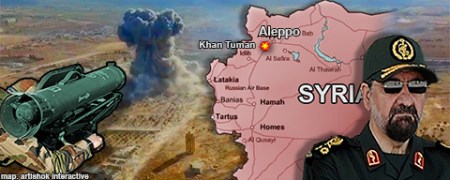
Khan_tuman_ambush_5.16

[N]either the Iranians nor Hizballah can win the war for Assad.

***************************

The battle on May 6 in the village of Khan Touman, located southwest of Aleppo near Route 5, the main highway leading to Damascus, will go down in the annals of the Syrian war as the biggest defeat suffered by the Iranian Revolutionary Guard Corps (IRGC) and Hizballah, as well as the battle that changed the face of the war.

DEBKAfile’s military and intelligence sources report that an Iranian force consisting of IRGC troops and Hizballah was ambushed by fighters from the Jaysh al Fath organization, part of the Nusra Front.

Until this battle took place, Iranian and Hizballah commanders in Syria did not know that the rebels had received a shipment of MILAN antitank missiles provided by Turkey and funded by Saudi Arabia.

The encounter with the advanced weapon system brought the IRGC and Hizballah to rout.

The Iranians admitted that 17 of their fighters fell in the battle, including 13 from the IRGC’s “Karbala” Division that is usually based in Iran, and 22 were wounded. Among the dead were two Iranian brigadier generals. At least ten IRGC troops were taken prisoner by the rebels. Five or seven Iranian troops were executed immediately, and an unknown number were taken from the area to an undisclosed location.

Hizballah claimed that none of its troops were killed or taken prisoner. However, that statement was actually an attempt to hide that at least 15 of its fighters were killed. According to intelligence sources that monitored the battle, Hizballah’s death toll was even higher.

The defeat was a major shock to the Iranian and Hizballah hierarchies In Tehran and Beirut, and officials vowed that revenge would be coming soon.

The immediate result of the shock was the appointment of Gen. Mohsen Rezaei, commander of the IRGC 26 years ago in the 1980s, who retired years ago and was a candidate in several presidential elections.

DEBKAfile’s sources report that Rezaei is one of the only IRGC commanders to have visited many times in the West, mainly to participate in international conferences, and has spoken freely with Western military and intelligence officers on the situation in Iran and the Middle East.

It is hard to believe that he will succeed in turning the clock back for Iran and Hizballah in Syria. Rezaei’s appointment indicates confusion   or panic in the Iranian hierarchy that does not know how to respond to the defeat.

KhanTuman480

In addition, it is still not clear whether Rezaei will replace Gen. Qassem Soleimanias commander of Iran’s forces in Syria, or be subordinate to him.

DEBKAfile’s military sources point out that bringing Rezaei to Syria does not resolve Iran and Hizballah’s main military problem, as the battle in Khan Touman showed. If the rebels continue to receive advanced weapons like antitank and antiaircraft missiles, they will become superior to the three military forces fighting for Syrian President Bashar Assad, namely Iran’s standing army and IRGC troops, the Syrian army and Hizballah.

In other words, neither the Iranians nor Hizballah can win the war for Assad.

Seven days after the battle, the commander of Hizballah’s forces in Syria, Mustafa Bader Al-din, was killed by a ground-to-ground missile strike near the Damascus international airport. Later claims by various sources that he was killed in battle at Khan Touman were actually attempts to conceal the two biggest military blows suffered by the Iranians and Hizballah in Syria