Archive for the ‘Great Trump – Russia conspiracy’ category

Was it a Hack or a Leak? (4)

September 1, 2017

Was it a Hack or a Leak? (4), Power LineScott Johnson, September 1, 2017

(Didn’t AG Sessions recuse himself? — DM)

“This entire business with Comey setting in motion the steps to get a special counsel named has not been sufficiently investigated. And this story makes it clear that the FBI was lackluster when it came to investigating the DNC. What is Attorney General Sessions doing?”

***************************

We have followed the argument presented by Patrick Lawrence in the Nation asserting that the alleged Russian hack of the DNC email was rather an inside job. Lawrence explored the findings of the analysis supporting the thesis Democratic National Committee was not hacked by the Russians in July 2016, but rather suffered an insider leak. Lawrence’s article is here; the most recent report with the analysis summarized by Lawrence is here. The analysis has been promoted by dissident former intelligence officials gathered under the umbrella of Veteran Intelligence Professionals for Sanity (VIPS).

Lawrence’s long article in the Nation called for a response of some kind by proponents of the Russia hacking conspiracy theory, but it has been greeted mostly by silence. I am not aware of any analysis directly disputing VIPS.

Since the publication of Lawrence’s long article in the NationThe VIPS analysis has been taken up by Leonid Bershidsky at Bloomberg View and by Danielle Ryan at Salon. The DNC itself responded to Lawrence’s article:

U.S. intelligence agencies have concluded the Russian government hacked the DNC in an attempt to interfere in the election. Any suggestion otherwise is false and is just another conspiracy theory like those pushed by Trump and his administration. It’s unfortunate that The Nation has decided to join the conspiracy theorists to push this narrative.

Ryan rightly commented that the statement “is so lackluster it is almost laughable[.]” Students of logical fallacy may recognize both the argument from authority and the ad hominem in the three-sentence DNC statement. That is pathetic.

Philadelphia attorney George Parry takes up the VIPS analysis in his Philly.com column “Will special counsel Mueller examine the DNC server, source of the great Russiagate caper?” Parry prefaces his account of the VIPS analysis with a useful reminder of the origin story:

Much to the embarrassment of Hillary Clinton, the released [DNC email] files showed that the DNC had secretly collaborated with her campaign to promote her candidacy for the Democratic presidential nomination over that of Bernie Sanders. Clearly, the Clinton campaign needed to lessen the political damage. Jennifer Palmieri, Clinton’s public relations chief, said in a Washington Post essay in March that she worked assiduously during the Democratic nominating convention to “get the press to focus on … the prospect that Russia had not only hacked and stolen emails from the DNC, but that it had done so to help Donald Trump and hurt Hillary.”

Thus was laid the cornerstone of the Trump-Russia-collusion conspiracy theory.

Since then, the mainstream media have created a climate of hysteria in which this unsubstantiated theory has been conjured into accepted truth. This has resulted in investigations by Congress and a special counsel into President Trump, his family, and his campaign staff for supposed collusion with the Russians.

But in their frenzied coverage, the media have downplayed the very odd behavior of the DNC, the putative target of the alleged hack. For, when the Department of Homeland Security and the FBI learned of the hacking claim, they asked to examine the server. The DNC refused. Without explanation, it continues to deny law enforcement access to its server.

Why would the purported victim of a crime refuse to cooperate with law enforcement in solving that crime? Is it hiding something? Is it afraid the server’s contents will discredit the Russia-hacking story?

Parry also provides a good summary of the VIPS analysis. A friend comments and concludes with one more good question: “This entire business with Comey setting in motion the steps to get a special counsel named has not been sufficiently investigated. And this story makes it clear that the FBI was lackluster when it came to investigating the DNC. What is Attorney General Sessions doing?”


The Rohrabacher-Assange meeting

August 21, 2017

The Rohrabacher-Assange meeting, Washington TimesDavid Keene, August 20, 2017

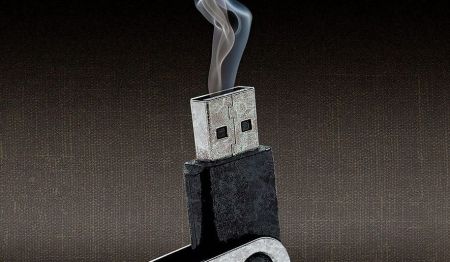
Smoking Gun Flash Drive Illustration by Greg Groesch/The Washington Times

The piece resulted in turmoil within the left-wing publication [the Nation] itself with many writers and contributors bitterly suggesting it should never have been printed because the publication has some sort of obligation to only publish material that strengthens rather than weakens the case against the president they despise.

*****************************************

ANALYSIS/OPINION:

California Rep. Dana Rohrabacher’s recent three-hour meeting with WikiLeaks head Julian Assange as reported earlier this week by The Hill may prove interesting in light of the allegations of several former high-ranking U.S. intelligence analysts that the Democratic National Committee was not hacked by the Russians or anyone else prior to last fall’s presidential election.

Mr. Rohrabacher said little after the meeting other than that Mr. Assange repeated his denial that the materials he obtained and made public did not come from the Russians, but claimed he had more information about what actually happened that he intended to share with President Trump.

The “common wisdom” in Washington circles is that the Russians were responsible for illegally hacking into the DNC computers during the campaign and leaked the emails thus obtained through WikiLeaks, but recent revelations suggest that there is at least a possibility that the “common wisdom” is dead flat wrong. If it is wrong and can be proven, the charges of “collusion” so dear to Mr. Trump’s opponents could collapse.

The Nation magazine earlier this month published a lengthy report on the conclusions of a number of intelligence analysts who have looked at the available evidence and concluded that it would have been physically impossible for the Russians to have done what Mr. Trump’s critics allege.

They maintain that the information that made its way into the public sphere wasn’t hacked at all, but leaked by someone within the DNC itself.

The Nation piece, by Patrick Lawrence titled “A New Report Raises Big Questions about Last Year’s DNC Hack,” claimed that for technical reasons, the data that was supposedly downloaded to a hacker could not have been downloaded in the manner alleged because the underlying data they analyzed showed it was downloaded far faster than would have been possible given the technology available to the supposed hacker at the time.

The only way they believe the data could have been downloaded in the time it was in fact downloaded was if the job was done internally to something like a thumb drive that was later turned over to WikiLeaks.

The piece resulted in turmoil within the left-wing publication itself with many writers and contributors bitterly suggesting it should never have been printed because the publication has some sort of obligation to only publish material that strengthens rather than weakens the case against the president they despise.

Many were particularly upset that the piece was picked up and praised by a number of conservative publications and commentators.

In response to the attacks, Katrina vanden Heuvel, the Nation’s editor and publisher has launched what she is calling a “post publication review” of the article.

It is certainly true that the allegations in the article are both controversial and contested, but it is at least possible that whether the Nation decides to trash its own writer and disavow the conclusions of his article, the analysts quoted in it are right.

The Obama administration, Hillary Clinton and Mr. Trump’s enemies take it as fact that the Russians were behind the “hacks” and that they constituted an attempt by Vladimir Putin’s regime to “affect” the outcome of the election and hint openly that it was all done in collusion with the Trump campaign. That, after all, is what Special Counsel Robert Mueller is trying to prove.

They almost as one dismiss evidence to the contrary, relying on the “consensus” view of “seventeen” US intelligence agencies that it was indeed the Russians who did it. The “consensus” view as former Obama Director of Intelligence James Clapper has since admitted was put together by “hand-picked” analysts from three agencies and never underwent the rigorous review one might have expected.

This is, of course, the same James Clapper who had earlier been caught lying to Congress.

When the Nation article first appeared, the Democratic National Committee responded in writing “U.S. intelligence agencies have concluded the Russian government hacked the DNC in an attempt to interfere in the election. Any suggestion otherwise is false and is just another conspiracy theory like those pushed by Trump and his administration.”

When The Hill article reporting on the Rohrabacher/Assange meeting appeared, the DNC was at it again, “We’ll take the word of the U.S. intelligence community over Julian Assange and Putin’s favorite Congressman,” said DNC Deputy Communications Director Adrienne Watson,

There are conspiracies and then there are conspiracies. Julian Assange may have the proof as to who is right and who is fantasizing and if he provided that proof to Mr. Rohrabacher things could get very interesting for all involved and especially for Mr. Clapper and those who have relied on his “consensus view.”

Trump Campaign Repeatedly Rejected Efforts to Set Up Russia Meetings

August 15, 2017

Trump Campaign Repeatedly Rejected Efforts to Set Up Russia Meetings, Power LinePaul Mirengoff, August 14, 2017

What about Paul Manafort, supposedly a key player in the alleged collusion? The Post says he expressed concern about meetings with Russian officials and, as campaign chairman, rejected a May 2016 proposal that such a meeting take place.

*************************************

The Washington Post reports that in 2016, a new member of the Trump foreign policy advisory committee sent emails to the Trump campaign urging that the candidate meet with top Russian leaders including Putin, but that the campaign repeatedly rejected this suggestion. The Post’s report is based on emails that it says were “read to The Post by a person with access to them.”

The foreign policy adviser in question is George Papadopoulos, described by the Post as “a campaign volunteer with scant foreign policy experience.” According to the Post, between March and September of 2016, he sent at least a half-dozen requests for Trump or members of his team to meet with Russian officials.

The campaign’s response is bad news for those who claim that Trump colluded with Russia. According to the Post:

Campaign co-chairman Sam Clovis wrote that he thought NATO allies should be consulted before any plans were made. Another Trump adviser, retired Navy Rear Adm. Charles Kubic, cited legal concerns, including a possible violation of U.S. sanctions against Russia and of the Logan Act, which prohibits U.S. citizens from unauthorized negotiation with foreign governments.

What about Paul Manafort, supposedly a key player in the alleged collusion? The Post says he expressed concern about meetings with Russian officials and, as campaign chairman, rejected a May 2016 proposal that such a meeting take place.

The Post argues that “the internal resistance to Papadopoulos’s requests is at odds with other overtures Trump allies were making toward Russia at the time, mostly at a more senior level of the campaign.” Not really. Reading the two sets of emails I believe the Post has in mind — the ones involving Papadopoulos and the ones involving Donald Trump Jr. and the Russian lawyer — the logical conclusion is that Team Trump was not interested in making overtures to, or negotiating with, the Kremlin, but was willing to check out information harmful to Hillary Clinton provided by Russian sources, including ones with possible ties to the Kremlin.

The first position is exactly what one would hope for and expect. The second should not shock anyone’s conscience.

It seems to me that if the Trump campaign wanted to collude with Russia, as opposed to simply reviewing “dirt” on Clinton provided by Russians, it would have been eager to meet with top Russian officials including Putin. The emails reportedly show a decided lack of interest in such meetings by top campaign officials.

It’s possible that the candidate himself was interested in overtures, negotiations, or some other form of collusion with the Russians. It’s even possible that he did these things through back channels. But there doesn’t seem to be any evidence to support this speculation. And the fact his campaign managers appear not to have believed Trump had any interest in such endeavors cuts against claims of collusion.

Thus, the Post’s story, which it bills with the headline “Trump campaign emails show aide’s repeated efforts to set up Russia meetings,” seems like a significant setback for the Russia collusion story.

Left-Wing Magazine The Nation Report Puts ‘Russian Hack’ DNC Narrative in Freefall

August 12, 2017

Left-Wing Magazine The Nation Report Puts ‘Russian Hack’ DNC Narrative in Freefall, BreitbartIan Mason, April 10, 2017

REUTERS/Stevo Vasiljevic

The files apparently were transferred to a data storage device at a speed not possible over the internet. Metadata also indicate that the emails were taken by someone in the Eastern Daylight Timezone and then deliberately copy-and-pasted into a Microsoft Word file that had its language settings changed to Russian in a ruse to throw off investigators.

************************************

A bombshell report published Wednesday by avowedly liberal news magazine The Nation may have put the last nail in the coffin of the “Russian hack” narrative that has dominated the mainstream media’s coverage for the last year.

Author Patrick Lawrence assembles the findings of months of investigation by forensic computer experts and former NSA officials to conclude, quite categorically, what Breitbart News and other independent media outlets have suggested for nearly a year: there was no hack of the Democratic National Committee (DNC) by the Russian government or anyone else last summer. An internal leaker is a much more likely source of the confidential internal DNC emails that upended the presidential campaign season when they became public last June.

Some supporters of Senator Bernie Sanders saw in the emails a DNC plot to support eventual nominee Hillary Clinton, dealing a blow to Democratic unity in the runup to the party’s convention.

The Nation, a leading publication of the American left for over a century, may seem an unlikely place for such a thorough refutation of one of the Democratic Party’s most salient talking points. Lawrence, however, is strikingly forthright. Calling the supposed hack and the continual allegations of collusion by President Donald Trump and his associates a “great edifice,” Lawrence points to the central role the “DNC Hack” plays in the “Russiagate” narrative. He writes:

All this was set in motion when the DNC’s mail server was first violated in the spring of 2016 and by subsequent assertions that Russians were behind that “hack” and another such operation, also described as a Russian hack, on July 5. These are the foundation stones of the edifice just outlined. The evolution of public discourse in the year since is worthy of scholarly study: Possibilities became allegations, and these became probabilities. Then the probabilities turned into certainties, and these evolved into what are now taken to be established truths.

Now, according to the research by the experts Lawrence cites — the group Veteran Intelligence Professionals for Sanity (VIPS) — a Russian government cyberattack on the DNC’s computers is likely not a “possibility.” The group has examined several aspects of the emails’ journey to the public eye and concluded it cannot be made to comport with a hacker in the former Soviet Union. The files apparently were transferred to a data storage device at a speed not possible over the internet. Metadata also indicate that the emails were taken by someone in the Eastern Daylight Timezone and then deliberately copy-and-pasted into a Microsoft Word file that had its language settings changed to Russian in a ruse to throw off investigators.

The conclusions of four of VIPS’s investigators was unanimous. Lawrance writes:

All those interviewed came in between 90 percent and 100 percent certain that the forensics prove out. I have already quoted Skip Folden’s answer: impossible based on the data. “The laws of physics don’t lie,” Ray McGovern volunteered at one point. “It’s QED, theorem demonstrated,” William Binney said in response to my question. “There’s no evidence out there to get me to change my mind.” When I asked Edward Loomis, a 90 percent man, about the 10 percent he held out, he replied, “I’ve looked at the work and it shows there was no Russian hack. But I didn’t do the work. That’s the 10 percent. I’m a scientist.”

Nothing in the report, however, dissuaded the DNC from its conviction the Russians are responsible for the publication of their internal communications. “U.S. intelligence agencies have concluded the Russian government hacked the DNC in an attempt to interfere in the election. Any suggestion otherwise is false and is just another conspiracy theory like those pushed by Trump and his administration,” Adrienne Watson, the DNC’s deputy communications director told Breitbart News Thursday.

The Nation’s story is by no means the first indication something might be awry with the “official version” of what happened at the DNC last summer. Shortly after the emails became public, Julian Assange, whose Wikileaks played a major role in the emails’ dissemination, claimed Russia played no role, but this did nothing to stem the flood of assurances about a Russian hack.

The central text of the Russiagate gospel became the “Intelligence Community Assessment (ICA)” issued in January of this year, days before President Barack Obama left office. Presumably this ICA, quoted for months in the mainstream media as being the work of “all 17” American intelligence agencies, is the basis of the DNC’s continued claims of a Russian hack.

The reality, as the New York Times finally admitted in June, was that only three intelligence agencies participated in the creation of the ICA. The “17 intelligence agencies” line, a fixture of pro-Russiagate media since Hillary Clinton used the figure in her second presidential debate performance, was and is fake news.

Lawrence’s piece further takes the ICA to task. “James Clapper, the former director of national intelligence, admitted in May that ‘hand-picked’ analysts from three agencies (not the 17 previously reported) drafted the ICA,” he writes, pointing out that not even the whole of the three agencies cited (the FBI, NSA, and CIA) were involved but only a few staffers “hand-picked” by Clapper.

The intelligence agencies, according to Lawrence, did not even examine the DNC’s computers, an omission he calls “beyond preposterous,” and instead relied on a third-party report from Crowdstrike, a non-profit co-founded by Dmitri Alperovitch, described as “vigorously anti-Russian.” The “high confidence” in Russian culpability we heard of again and again in mainstream media reporting is an “evasive term” and “how officials avoid putting their names on the assertions we are so strongly urged to accept.”

Some conservatives are already lauding Lawrance’s report and the work of VIPS as a final vindication of their skepticism. Americans for Limited Government President Rick Manning, for example, issued the following statement Thursday:

If the whole premise of the [Special Counsel Robert] Mueller investigation, that Russia hacked the DNC emails interfering with the elections, is in fact false and it was a DNC insider as the Nation reports former NSA officials contending, there is simply no rationale for the special counsel to continue investigating the Russia angle. It is incumbent upon the Justice Department to determine and settle once and for all the true source of the DNC emails. The only prosecutions that can flow from that investigation must be of Obama administration officials who covered up the real facts surrounding the DNC emails, setting the nation off on this new red scare. If Mueller is unwilling to go where the evidence leads, in this case to the DNC itself and the Obama administration cover-up, then he is not fit to serve. In Mueller’s case, this is either obstruction or willful blindness.

As Breitbart News’s Joel Pollak wrote last month, the “DNC Hack,” now better known as the “DNC Leak,” the term originally used in these pages, is not the only pillar of the Russia collusion narrative to face collapse as the media hysteria passes its first anniversary. It became clear through the testimony of Investor William Browder that Fusion GPS, the research firm that assembled for a still unknown client the infamous, perverse 2016 dossier describing now-President Trump asking Russian prostitutes to urinate for his pleasure, had, in fact, worked for the Russian government in the past.

With actual evidence of Russian collusion with the Trump campaign now looking increasingly unlikely to come to light, there are increasing indications  Mueller’s investigation has shifted to looking for financial crimes allegedly committed by President Trump and his family long before and far outside the presidential campaign. The impact of the revelations unearthed by the VIPS team and The Nation on that investigation have yet to be seen.

Bloomberg: Manafort Alerted Authorities About Russian Meeting

August 10, 2017

Bloomberg: Manafort Alerted Authorities About Russian Meeting, Jonathan Turley’s Blog, Jonathan Turley, August 10, 2017

Buried in a new article out of Bloomberg is an understated but potentially significant statement: “In fact, Manafort had alerted authorities to a controversial meeting on June 9, 2016, involving Trump’s son Donald Jr., other campaign representatives and a Russian lawyer promising damaging information on Hillary Clinton, according to people familiar with the matter.”  That would be a huge development in this controversy if true, particularly if the notice occurred before the Russian meeting occurred.

Much of the criticism directed at Donald Trump Jr. and Paul Manafort has been that only chumps would have gone to this meeting or, at a minimum, alerted authorities.  Now Bloomberg is saying that it has sources saying that Manafort did indeed alert authorities.  That would go a long way to defusing the conspiracy theories surrounding the meeting and shatter the narrative put forward by critics.

What is also concerning is that, if true, this fact is one of the only facts not leaked out of Congress.  It seems that closed sessions have been mere precludes to media leaks.  Yet, members have been saying as a mantra that the FBI or some other agency should have been notified.  Ironically, this is the most significant part of the Bloomberg story but is buried without further comment.  Why?

‘Collusion’ Collapses: Dem Congressional Espionage Ring Takes Center Ring

July 30, 2017

‘Collusion’ Collapses: Dem Congressional Espionage Ring Takes Center Ring, American ThinkerClarice Feldman, July 30, 2017

In truth, the Russians “colluded” through GPS Fusion to harm, not help, Trump and the evidence of that is coming out. It’s time to repeal the Special Counsel law which has now been used twice to hamstring two Republican Presidents, has dubious constitutional authority, and will never result in the indictment of a prominent Democratic politician.

Under the Constitution there are three ways to deal with official corruption: the ballot box, impeachment, or criminal prosecution. Instead, in recent years we have tried two different means: the Independent Counsel law, now lapsed, and the Special Counsel law.  Pepperdine Law Professor Douglas M. Kmiec explains the difference and argues that the features of the independent counsel, which the Supreme Court held constitutional, and the special counsel law that has not been challenged, are different, notably that the absence of outside supervision of the prosecutor and failure in both instances of the application of the Special Counsel act — the Plame case, and the Russian interference case now under Mueller — lack what the Court called a necessary predicate for such an investigation: a finding by the attorney general that there is reason to believe that a crime has occurred. That did not occur in the “collusion” investigation. In the Plame case, as I show, the major figures all knew there was no crime before they began the investigation.

In the case of the Independent Counsel investigation of Whitewater, you may recall the prosecutor said that they had reason to believe Hillary Clinton had committed perjury before the grand jury, but as prosecutors should not indict unless they believe a conviction is likely and the case would be brought before an Arkansas jury who would never convict Bill Clinton’s wife, no indictment would be sought.

Absent a dramatic shift in D.C. demography and political sentiment, you can be sure this would be the case should any special prosecutor find criminal wrongdoing by a prominent Democrat, especially Hillary Clinton. She has a ticket to ride (as she did when Comey absolved her of gross misuse of classified information).  In contrast, any prominent Republican tried here already has a strike against him.

My online friend “Ignatz Ratzykywatzky” now describes what we have:

So Comey intentionally leaked his memo to cause Mueller to be appointed to investigate a plan by Putin to generate a fake scandal to fool dopes like Comey.

Top. Men.

But for the addition of a new player, GPS-Fusion, this case is remarkably similar in evolution and cast of characters to the Plame case. The genesis of the Mueller investigation was the recusal of Attorney General Sessions on the ground that he was too close to the subject of the investigation. It was on the same ground that former Attorney General John Ashcroft recused himself in the Plame leak case. In both cases the media incited recusal.

On October 31, 2016 David Corn (who worked for the Nation during the Plame case and now for Mother Jones), wrote in Mother Jones “A veteran spy [David Steele of GPS Fusion] has given the FBI information alleging a Russian operation to cultivate Donald Trump.” GPS-Fusion is a smear-for-hire operation. Among the smears created by this outfit of which we are now aware were a number against Mitt Romney, including the tape of his remarks about Obama supporters secretly made at a donors’ meeting; the false claim that the videos of Planned Parenthood negotiating for the sale of fetus body parts was “fake,” and attacks on the credibility of Venezuelan dissidents who had charged Venezuelan officials with graft and money laundering. In addition, they were working to get Russian sanctions via the Magnitsky Act lifted, having been hired to do so by Natalia Veselnitskaya, the woman who tried to entrap Donald J. Trump. Prior to David Corn’s article, GPS met with a Mother Jones “journalist“ according to Steele himself. And that journalist was most certainly the Democrat’s water bearer, David Corn. Steele’s group had shopped the story around and on January 19, 2017 BuzzFeed published the GPS dossier.

After BuzzFeed published Steele’s dossier, individuals mentioned in the dossier sued Steele and Orbis Business Intelligence for defamation. In his defense, Steele blamed Fusion GPS for circulating his dossier among reporters without his permission. However, he admitted “off-the-record briefings to a small number of journalists about the pre-election memoranda in late summer/autumn 2016.” Steele’s defense contended that in October 2016, “Fusion GPS instructed him to brief a journalist from Mother Jones”, as Daily Caller reporter Chuck Ross summarized.

Despite Steele admitting that his dossier was never verified, and despite specific allegations in the dossier being disproven, Corn has continued to promote the dossier’s thesis, recently publishing an article claiming that “Donald Trump Jr.’s Emails Sound Like the Steele Dossier”. In his recent piece, Corn argued that Donald Trump Jr’s meeting with Natalia Veselnitskaya vindicates Steele’s dossier:

Trump and his supporters have denounced the Steele memos as unsubstantiated trash, with some Trump backers concocting various conspiracy theories about them. Indeed, key pieces of the information within the memos have been challenged. But the memos were meant to be working documents produced by Steele — full of investigative leads and tips to follow — not finished reports, vetted and confirmed.

[snip]

But that media firestorm, based on nothing but unverified information — probably fed to GPS by the Russians — from a smear for pay outfit caused Sessions to recuse himself.

In the previous special counsel case – Plame — both Mueller, then head of the FBI, and Comey, then acting attorney upon Ashcroft’s recusal, were informed even before Patrick Fitzgerald was appointed that no one had deliberately “outed” her to punish her husband; that the information Novak published came from Richard Armitage, a Colin Powell underling and that it was absolutely inadvertent. And yet they used that to hamstring GW Bush and his administration and to convict Lewis Libby. That conviction is proving to be, as I argued at the time, a prosecution without a crime.

Last year, Libby sought and received a reinstatement of his law license and an investigation was held, with counsel confirming his innocence:

In the District of Columbia Court of Appeals Disciplinary Counsel’s Report readmitting Libby, the Counsel noted that Libby had continued to assert his innocence. As a result, the Counsel had to “undertake a more complex evaluation of a Petition for reinstatement” than when a petitioner admits guilt. But the Counsel found that “Libby has presented credible evidence in support of his version of events and it appears that one key prosecution witnesses [sic], Judith Miller, has changed her recollection of the events in question.” The reference to Judith Miller, a former New York Times reporter, involved her memoir,The Story, A Reporter’s Journey. In the book, Miller said she read Plame’s memoir and discovered that Plame’s cover was at the State Department, a fact Miller said the prosecution had withheld from her. In rereading what she called her “elliptical” notes (meaning hard to decipher), she realized they were about Plame’s cover, not her job at the CIA. She concluded that her testimony that Libby had told her Plame worked at the CIA was wrong. “Had I helped convict an innocent man?” she asked. Miller went on to note that John Rizzo, a former CIA general counsel, had said in his memoir that there was no evidence that the outing of Plame had caused any damage to CIA operations or agents, including Plame. That statement rebuts the prosecution’s closing argument that as a result of the disclosure of Plame’s identity, a CIA operative could be “arrested, tortured, or killed.”

Who paid for the GPS-Fusion smear job which was used to persuade Sessions to recuse himself and which led to the appointment of Mueller as special counsel? Well, that’s a mystery the Democrats are doing everything to hide.

Kimberley Strassel reports:

What if, all this time, Washington and the media have had the Russia collusion story backward? What if it wasn’t the Trump campaign playing footsie with the Vladimir Putin regime, but Democrats? The more we learn about Fusion, the more this seems a possibility. [snip] We know that at the exact time Fusion was working with the Russians, the firm had also hired a former British spy, Christopher Steele, to dig up dirt on Mr. Trump. Mr. Steele compiled his material, according to his memos, based on allegations from unnamed Kremlin insiders and other Russians. Many of the claims sound eerily similar to the sort of “oppo” Mr. Akhmetshin peddled.

We know that Mr. [Glenn] Simpson is tight with Democrats. His current attorney, Joshua Levy, used to work in Congress as counsel to no less than Chuck Schumer. We know from a Grassley letter that Fusion has in the past sheltered its clients’ true identities by filtering money through law firms or shell companies (Bean LLC and Kernel LLC).

Word is Mr. Simpson has made clear he will appear for a voluntary committee interview only if he is not specifically asked who hired him to dig dirt on Mr. Trump. Democrats are going to the mat for him over that demand. Those on the Judiciary Committee pointedly did not sign letters in which Mr. Grassley demanded that Fusion reveal who hired it.

Here’s a thought: What if it was the Democratic National Committee or Hillary Clinton’s campaign? What if that money flowed from a political entity on the left, to a private law firm, to Fusion, to a British spook, and then to Russian sources? Moreover, what if those Kremlin-tied sources already knew about this dirt-digging, tipped off by Mr. Akhmetshin? What if they specifically made up claims to dupe Mr. Steele, to trick him into writing this dossier?

[snip]

If the Russian intention was to sow chaos in the American political system, few things could have been more effective than that dossier, which ramped up an FBI investigation and sparked congressional probes and a special counsel, deeply wounding the president. This is all to Mr. Putin’s benefit, and the question is whether Russia engineered it.

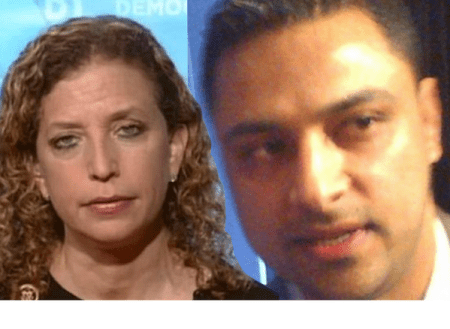
While the press has been promoting a ridiculous and ass backwards Russian collusion story, it has been sitting on a far bigger story: The likelihood that the Congressional Democrats financed and enabled the largest espionage ring in U.S. history. This story has been percolating on the internet for weeks with no mainstream media coverage. It got a tiny, misleading smattering of coverage this week when the FBI arrested Imran Awan, Debbie Wasserman-Schultz’s internet employee, for trying to flee the country after transferring almost $300,000 dollars to Pakistan.

Ignatz sums up the media U Turn:

“1. The wsj, nyt and wapo now all agree what wasn’t a crime didn’t occur.

2. Because they all know what was a series of crimes by the Dems, did occur, so now it’s time to move on to more important things… like not seeing Dems in handcuffs.”

The most detailed coverage of how the Awan brothers were hired, overpaid, and had access to all the Democrat’s communications and how Schultz protected Imran and kept him on her payroll even after the Capitol Police denied him and his three brothers further access to the Democrats’ computers was on the Daily Caller:

Should the press decide it’s past time to sit around promoting GPS Fusion smears and do some work?

1. Who coordinated the hiring of the Awan brothers by dozens of Democratic Congressman?

2. Why were they so grossly overcompensated (millions of dollars) for no work?

3. Were they kicking back money to the Democrats, doing “dirty” work for them, or blackmailing them?

4. Why did Wasserman-Schultz keep the Capitol Police from searching her laptop they had confiscated from Imran Awan?

5. Why did Wasserman-Schultz keep him on her payroll after the Capitol Police further barred him and his brothers from accessing Congressional computers?

6. Why did the Iraqi fugitive and Hezb’allah supporter Dr. Ali-al Attar “lend” them $100,000?

7. Who is paying Chris Gowan, a Clinton insider, to represent Imran Awan?

8. Why did the Awan brothers continue to have security clearances when they had declared several bankruptcies and were engaged in financial misdealing?

9. Why were the Awans broke when they were making so much money and living so modestly?

10. Why did eight members of the House Permanent Select committee on Intelligence issue a letter demanding the Awans be granted access to Top Secret information?

11.Were the Awans working for Pakistani intelligence and the Moslem Brotherhood?

12. To whom were the Awans sending data to on an offsite server?

Buckle your seatbelts. Draining the swamp is going to create a lot of waves.

Mueller and Trump Prepare for War with America the Loser

July 22, 2017

Mueller and Trump Prepare for War with America the Loser, PJ MediaRoger L Simon, July 21, 2017

Watergate ended with a whimper, not a bang. After months of sturm und drang, Richard Nixon finally mounted that helicopter, gave that famous farewell peace sign and flew away. Most Americans were relieved to see him go. Our long national nightmare was over.

If something similar happens to Donald Trump, it will be entirely different. A significant portion of the American public — myself admittedly among them — will be convinced he has been railroaded in a partisan hatchet job. The voters who elected the president are going to feel, at the very least, undermined, more likely betrayed,  by their own government and public officials. Many are going to feel this has nothing to do whatsoever with justice and will act accordingly.

The exact results of this mammoth national split are not easy to predict but they could range from massive civil disobedience to outright civil war.

The behavior of special prosecutor Robert Mueller has exacerbated the situation. Even CNN admits he has staffed his investigation almost exclusively with Democratic Party supporters and donors. It’s hard to say whether this is brazen or stupid or both, but it certainly doesn’t lend credibility to his eventual decisions. At the very least it’s extremely unsophisticated for a former director of the FBI — but perhaps that’s really the way it is. Nothing (and no one) can stand in the way of prosecution.

And then there are the leaks that emerge from his supposedly confidential investigation at seemingly a mile a minute pace. The (always) anonymous creeps who do this are sleazy individuals who — under the mega-narcissistic pretense that they are informing the public of something of importance — undercut everything everyone has ever known about the rule of law. They are, effectively, enemies of the state and even more, of the American people — and pompous ones into the bargain.  It would be poetic justice to send them all to Gitmo.

The most recent of these leaks — published as is so frequently the case by that junk scandal sheet formerly known as The Washington Post — tells us that AG Sessions was supposedly talking about the Trump campaign with Russian Ambassador Kislyak. What Sessions said exactly, which could have been something completely innocuous and no more than a sentence or two, if indeed he did say anything at all, was of course not mentioned. If it was something serious, most likely it would have been specified, but then who knows. We don’t know if this leak is first, second or fifth hand. We don’t know anything about the source. We don’t know anything about the content. We just have the smear. Not surprisingly too, this leak — a character assassination really — was again anonymous (what else?). When Joe McCarthy made his famous character assassinations, at least he had the guts to do it under his own name. (Yes, I know McCarthy turned out to be right in some instances.)

Mr. Mueller runs a tight ship, no? (Maybe he doesn’t even want to. Comey certainly didn’t care. He leaked himself.)

The situation is grim all around. Trump, lawyering up, is obviously preparing for war against Mueller who, in his turn, is apparently digging into information regarding the president’s ten-year-old Russian business dealings. Again, this is a fraught decision because everyone in the informed public is aware of the myriad Clinton-Russia connections (including Uranium One) detailed in Clinton Cash that were, as far as we know, never investigated by the FBI, not to mention the well-documented Russian business connections of John Podesta and his brother.

If Trump and his family are singled out for this when the Democrats have skated, this will be regarded by a vast proportion of the public as selective prosecution further exacerbating the ominous possible results I referred to above.

To take any of this seriously as a search for truth is absurd. It’s more like a blood sport, the modern equivalent of a gladiatorial. Trump baiting. And Trump, as the bear, lashes out.

He has reason to. As everyone knows, cooks cook, plumbers fix the plumbing, and prosecutors prosecute. It’s what they do, part of their personality structure. Especially if the prey is big, and they don’t bring in at least one or two significant players, they feel as if they haven’t done their job. So they work and work until they do — nab someone for something. Trump knows this. The media know this. We all know it.

And bad as it may be for Trump, it’s going to be even worse for We the People.

En garde!

The Washington Post Swings and Misses at Jeff Sessions

July 22, 2017

The Washington Post Swings and Misses at Jeff Sessions, Power LinePaul Mirengoff, July 21, 2017

The Post’s sources clearly are out to get Sessions. It’s anyone’s guess whether they are accurately characterizing what the ambassador told his government and the reliability of what he told it.

In any event, the Post and its sources have failed to identify any contradiction between Sessions’s statements about his interaction with the ambassador and what the ambassador supposedly told the Russians about the interaction.

*************************************

The Washington Post claims that Attorney General Sessions’ statements about what he discussed with the Russian ambassador are at odds with reports by the ambassador to his government about what he and Sessions discussed. The Post relies on, you guessed it, “current and former U.S. officials.”

But the Post fails to describe a contradiction between what Sessions has said and what the Russian ambassador supposedly reported. Here are the only statements by Sessions cited by the Post and its sources as problematic:

I never had meetings with Russian operatives or Russian intermediaries about the Trump campaign.

I don’t recall any discussion of the campaign in any significant way.

I never met with or had any conversation with any Russians or foreign officials concerning any type of interference with any campaign or election in the United States.

Here is the Post’s description of what the Russian ambassador told the government:

A former official said that the intelligence indicates that Sessions and Kislyak had “substantive” discussions on matters including Trump’s positions on Russia-related issues and prospects for U.S.-Russia relations in a Trump administration.

Maybe. But even someone with average skill in reading and logic would understand that this description is not inconsistent with Sessions’ denial that he did not discuss the campaign with the ambassador.

It stands to reason that Sessions might discuss Russia-related issues with the Russian ambassador. And Russia-related issues are also campaign-related issues in the sense that Russia was an issue in the campaign.

But what Sessions denied was that he discussed the campaign and any interference by Russia with it. The denial was important because, at the time Sessions made it, the issue Washington fixated on was whether Team Trump sought or knew about Russian help for the candidate, or coordinated with Russia regarding the campaign.

The Post’s piece, by Adam Entous, Ellen Nakashima, and Greg Miller, is dishonest. It finds a contradiction where none exists by glossing over the distinction between discussing a “campaign-related issue” — which is any substantive issue raised by any candidate during the campaign season — and discussing the campaign.

Discussing hacking or “opposition research” research with the Russian ambassador would constitute discussing the campaign. Telling the ambassador how the campaign is going or what its strategy is would constituted discussing the campaign. Telling the ambassador — as President Obama told the Russian president — that the candidate would be more flexible with Russia after the campaign would probably be a borderline case.

Simply discussing Russia policy — past, present, or future — is not discussing the campaign.

There is also the question of whether the Russian ambassador was telling his government the truth. The Post admits that “the Russian ambassador could have mischaracterized or exaggerated the nature of his interactions” with Sessions. It notes: “Russian and other foreign diplomats in Washington and elsewhere have been known, at times, to report false or misleading information to bolster their standing with their superiors or to confuse U.S. intelligence agencies.”

The Post adds, however, that the Russian ambassador “has a reputation for accurately relaying details about his interactions with officials in Washington.” Maybe. But I’m not inclined to take the word of the “deep state” on this. I suspect there are “current and former officials” who would grant the Russian ambassador sainthood if it meant embarrassing the Trump administration.

The Post’s sources clearly are out to get Sessions. It’s anyone’s guess whether they are accurately characterizing what the ambassador told his government and the reliability of what he told it.

In any event, the Post and its sources have failed to identify any contradiction between Sessions’s statements about his interaction with the ambassador and what the ambassador supposedly told the Russians about the interaction.

Mueller Expands His Probe Again

July 21, 2017

Mueller Expands His Probe Again, Front Page MagazineMatthew Vadum, July 21, 2017

(Don’t worry, something sexy may emerge from the FBI’s investigation into the connections between the  “Trump Dossier” and President Trump’s Vast Russian conspiracy. Please see, FBI relies on discredited dossier in Russia investigation. — DM)
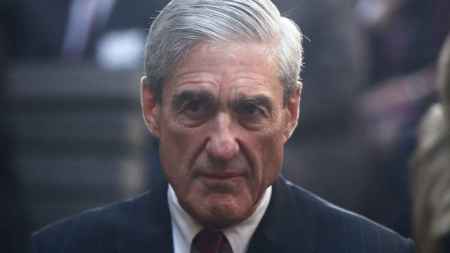
Special Counsel Robert S. Mueller III is yet again expanding the scope of his off-the-rails investigation into the Left’s wacky Russian electoral collusion conspiracy theory by examining financial transactions even vaguely related to Russia involving President Trump’s businesses and those of his associates, Bloomberg News reports.

Honest observers recognize that with the election of Donald Trump, the longtime Russophiles of the morally flexible Left flipped on their traditional friends in Moscow faster than you can say Molotov-Ribbentrop Pact or Operation Barbarossa. Ignoring its own history of rampant seditious collaboration with Russia, the Left has now managed to convince many that any past or present connection a Republican has or had to Russia, however trivial, is somehow now retroactively evidence of treason against the United States.

There is still no evidence that Trump covered up a crime, or even that there was an underlying crime to be concealed but that hasn’t stopped the Left’s witch-hunt from growing and the goalposts from being shifted.

Remember that it was just a month ago as the bizarre collusion allegations got stuck in the mud that Mueller expanded his investigation to include allegations that Trump tried to obstruct justice by firing FBI Director James B. Comey on May 9. The claim is that Trump did this to end Comey’s investigation into National Security Advisor Mike Flynn’s ties to Russia. Of course, as Harvard Law professor emeritus Alan Dershowitz has pointed out repeatedly, the president has authority under the Constitution to fire the FBI director for any reason or no reason at all. Comey himself has freely acknowledged he served at the pleasure of the president.

That said, “FBI investigators and others are looking at Russian purchases of apartments in Trump buildings, Trump’s involvement in a controversial SoHo development in New York with Russian associates, the 2013 Miss Universe pageant in Moscow and Trump’s sale of a Florida mansion to a Russian oligarch in 2008,” Bloomberg reported an anonymous source saying.

The report continues, elaborating that:

Mueller’s team is looking at the Trump SoHo hotel condominium development, which was a licensing deal with Bayrock Capital LLC. In 2010, the former finance director of Bayrock filed a lawsuit claiming the firm structured transactions in fraudulent ways to evade taxes. Bayrock was a key source of capital for Trump projects, including Trump SoHo.

The 2013 Miss Universe pageant is of interest because a prominent Moscow developer, Aras Agalarov, paid $20 million to bring the beauty spectacle there. About a third of that sum went to Trump in the form of a licensing fee, according to Forbes magazine. At the event, Trump met Herman Gref, chief executive of Russia’s biggest bank, Sberbank PJSC. Agalarov’s son, Emin, helped broker a meeting last year between Donald Trump Jr. and a Russian lawyer [i.e. Natalia Veselnitskaya] who was said to have damaging information about Hillary Clinton and her campaign.

Another significant financial transaction involved a Palm Beach, Florida, estate Trump purchased in 2004 for $41 million, after its previous owner lost it in bankruptcy. In March of 2008, after the real-estate bubble had begun losing air, Russian fertilizer magnate Dmitry Rybolovlev bought the property for $95 million.

As part of their investigation, Mueller’s team has issued subpoenas to banks and filed requests for bank records to foreign lenders under mutual legal-assistance treaties, according to two of the people familiar with the matter.

In addition, a federal money-laundering probe of Trump’s former campaign chairman Paul Manafort has reportedly been subsumed into the larger investigation headed by Mueller. Mueller’s office is also reportedly looking at Commerce Secretary Wilbur Ross’s tenure as vice chairman of the Bank of Cyprus and at presidential advisor and son-in-law Jared Kushner’s efforts to obtain financing for his family’s real estate investments.

Newt Gingrich said yesterday that Mueller “has so many conflicts of interest it’s almost an absurdity,” but all of this seems above-board to Bloomberg.

“The Justice Department’s May 17 order to Mueller,” the media outlet reports, “instructs him to investigate ‘any links and/or coordination between the Russian government and individuals associated with the campaign’ as well as ‘any matters that arose or may arise directly from the investigation,’ suggesting a relatively broad mandate.”

Trump lawyer John Dowd disagrees. He said examining the president’s business dealings should be out-of-bounds for Mueller.

“Those transactions are in my view well beyond the mandate of the Special counsel; are unrelated to the election of 2016 or any alleged collusion between the Trump campaign and Russia and most importantly, are well beyond any Statute of Limitation imposed by the United States Code,” he told Bloomberg in an email.

Meanwhile, the Left is digging in its heels.

In a defamatory, overheated column, the buffoonish purveyor of partisan drivel Jonathan Chait claims:

New reports in the Washington Post and New York Times are clear signals that Trump is contemplating steps – firing Mueller or issuing mass pardons – that would seem to go beyond the pale. Except Trump’s entire career is beyond the pale, and in his time on the political stage, the unthinkable has become thinkable with regularity.

Chait pontificates that:

Trump’s actions are best understood in the context of the overwhelming likelihood he, his family members, and at least some of his associates are guilty of serious crimes. The investigation might not produce proof of criminal collusion with Russia’s illegal hacking of Democratic emails. (Though reasonable grounds for suspicion already exists in abundance.)

Except there is no “overwhelming likelihood” that Trump, his family members, or associates are “guilty of serious crimes,” at least not based on publicly available evidence. Chait is engaging in pure speculation precisely because there is no proof of wrongdoing.

Chait shrieks that Trump’s New York Times interview this week and other news reports citing unidentified sources are proof that the president is a threat to the republic. “The ominous threats emanating from the White House are an administration mobilizing for war against the rule of law,” he wrote.

But what did Trump actually tell the Old Gray Lady?

“I have done nothing wrong,” he said. “A special counsel should never have been appointed in this case.”

One interviewer asked the president, “Last thing, if Mueller was looking at your finances and your family finances, unrelated to Russia, is that a red line?” Another then chimed in with, “Would that be a breach of what his actual charge is?”

Trump responded, probably correctly, with “I would say yeah. I would say yes.”

“Would you fire Mueller if he went outside of certain parameters of what his charge is?” an interviewer asked.

“I can’t answer that question because I don’t think it’s going to happen,” Trump replied.

It is horrifying to Chait that Trump is daring to defend himself in an interview.

Then there is that anonymously-sourced Washington Post article that claims Trump is considering firing Mueller and issuing mass-pardons – kind of like when Virginia Gov. Terry McAuliffe (D) unilaterally re-enfranchised felons by the hundreds of thousands to help Hillary Clinton during the last election cycle – in order to put himself and those close to him above the law.

It’s the kind of juicy, implausible story that the “Democracy Dies in Darkness” crowd has been known for since Trump was elected. The claim that the president’s legal team is examining the backgrounds of Team Mueller – as these attorneys are perfectly entitled to do – is much more plausible, though, according to Chait, such actions mark Trump as a budding dictator.

As left-wingers like Chait see it, the president isn’t allowed to defend himself from scurrilous, malicious allegations when he’s a Republican.

Confusing matters is the fact that the straight-shooting president delivered an extraordinarily unusual public flogging of Attorney General Jeff Sessions, upbraiding him behind enemy lines in the New York Times interview. Trump said it was a mistake for Sessions to recuse himself from the Russia probe and that he may not have nominated him for the post if he had known beforehand that the attorney general would make the recusal decision.

It is true that with the benefit of hindsight, Sessions’ recusal, hailed at the time by the media and the rest of the Left as a noble, unifying gesture after a very, very nasty, hard-fought election, now looks boneheaded. Sessions is a good man and an outstanding public servant but he may have been in too much of a hurry to be liked by the Washington swamp. Appointing a special counsel calmed the Left down only briefly. Appeasing the radicals of today’s Democratic Party doesn’t work.

Although the unusual rebuke of Sessions may suggest the former Alabama senator’s days at the Justice Department may be numbered, White House Deputy Press

Secretary Sarah Huckabee Sanders said yesterday the president “still has confidence” in Sessions despite the high-profile criticism.

“As he said yesterday, he was disappointed in Attorney General Sessions’ decision to recuse himself, but clearly he has confidence in him or he would not be the attorney general,” she said. Sessions said at a presser the same day that he planned to stay at his post for as long as “appropriate.”

The public relations debacle that was the Times interview was barely noticed by much of the mainstream media as news that the far-from-humbled-sociopath O.J. Simpson was paroled in Nevada sucked up much of the available media oxygen.

Some observers think Trump is setting the stage for firing Mueller, or at least finding a way to clip his wings a bit.

In a post at NRO titled, “Yeah, Trump Is Probably Going to Fire Robert Mueller,” Rich Lowry called Trump’s comments “a wholly gratuitous slap” at Sessions. “The 3-D-chess theory of the interview would be that Trump is trying to force Sessions out in favor of a non-recused attorney general who can rein in Mueller,” he wrote.

President Trump is right to be concerned. Mueller’s investigation increasingly resembles a massive anti-Trump fishing expedition.

The problem here is the special counsel system, Charles Krauthammer told Tucker Carlson on Fox News Channel last night. “Their mandates are essentially unlimited.”

He’s right. Independent prosecutors just keep digging until somebody stops them. Justice is rarely achieved, or even sought. Their purpose is to vex and harass for political purposes, so in that sense, Special Counsel Mueller is right on-track.

And Mueller is the Washington swamp’s best hope to oust the 45th president.
FBI relies on discredited dossier in Russia investigation

July 21, 2017

FBI relies on discredited dossier in Russia investigation, Washington TimesRowan Scarborough, July 20, 2017

Christopher Steele says in a court filing that his accusations against the president and his aides about a supposed Russian hacking conspiracy were never supposed to be made public, much less posted in full on a website for the world

The FBI is routinely asking witnesses in its Russia investigation about the accusations in a dossier against Donald Trump, further expanding the reach of a discredited opposition research paper sourced from the Kremlin and financed and distributed by Democrats.

A source close to the investigation described the dossier as a checklist agents tick off as they go over numerous unverified charges denounced as fabrications by President Trump and his aides.

The source called it strange that a gossip-filled series of memos is guiding the way the bureau is conducting the investigation.

The memos were used not only to try to surreptitiously influence the November election, but congressional Democrats also used them to attack the president.

The FBI is using the checklist approach even though former Director James B. Comey referred to the memos from ex-British spy Christopher Steele as “some salacious and unverified material” when he testified in June on his firing by Mr. Trump.

He was describing the time on Jan. 6 that he provided the dossier, a loosely sourced bundle of charges, at a closed briefing for the president-elect. Leaks from the meeting became news media’s rationale to detail a document that reporters could not confirm. That month, BuzzFeed posted all 35 pages online.

Mr. Comey has refused in public to answer questions about the bureau’s relationship with Mr. Steele or its bid to pay him to continue investigating Mr. Trump.

The president told The Washington Times that any payment bid would be a “disgrace.”

Some senior policymakers have publicly distanced themselves from Mr. Steele’s work.

When asked at a hearing of the House Permanent Select Committee on Intelligence whether he relied on the dossier to investigate Russian hacking, former CIA Director John O. Brennan replied, “No.”

“It wasn’t part of the corpus of intelligence information that we had,” he said. “It was not in any way used as a basis for the intelligence community assessment that was done.”

Mr. Brennan is the Obama administration official who helped persuade the FBI to investigate the Trump team during the presidential campaign by providing a list of Russians who he said had contacts with Trump insiders. He testified that he did not know what was said.

Next week, at least three Trump associates are scheduled to testify on Capitol Hill, likely assuring that the dossier gets further discussion.

Jared Kushner, a close Trump adviser and his son-in-law, is to testify in a closed session to the Senate Select Committee on Intelligence. He is sure to be asked about the dossier’s charge that campaign aides and Russian intelligence plotted and executed the hacking of Democratic Party computers.

The Trump team denies such a conspiracy.

The Senate Judiciary Committee is scheduled to hear Wednesday from Paul Manafort, Mr. Trump’s summertime campaign manager, and Donald Trump Jr.

The theme: “Oversight of the Foreign Agents Registration Act and Attempts to Influence U.S. Elections: Lessons Learned from Current and Prior Administrations.”

Senate Judiciary Committee Chairman Chuck E. Grassley, Iowa Republican, has been investigating the dossier, its creation and its use. He has been stonewalled in his attempt to get Fusion GPS and its founder, former Wall Street Journal reporter Glenn R. Simpson, to provide information on its hiring of Mr. Steele to search for dirt on Mr. Trumpand his team.

The Russian-sourced dossier levels serious charges against at least six people, as well as a technology firm and a bank. It also asserts that Mr. Trump has had a long-term information-sharing relationship with Russian intelligence. The targeted people have all called the charges fabrications.

A scorecard:

• Michael Cohen, Mr. Trump’s attorney, was accused by Mr. Steele’s Russian sources of plotting with Kremlin agents in Prague to cover up the hacking. Mr. Cohen proved that he had never been to Prague and said he had nothing to do with hacking.

• Paul Manafort, accused of organizing the hacking, denies it.

• Carter Page, an energy investor who lived and worked in Moscow, signed on as a campaign volunteer. Mr. Steele’s Russian sources leveled a number of charges, including that he orchestrated the hacking with Mr. Manafort, that he met with two Kremlin figures in Moscow in July 2016 to negotiate sanctions relief and that in return he would receive a commission on the equity sale of an energy company.

Mr. Page has told The Washington Times that he has never met Mr. Manafort, that did not know about the hacking until after it happened, that he never met with the two Kremlin men and that he never discussed any type of commission.

• Mr. Trump, whom Mr. Steele accused of salacious behavior with prostitutes in the Ritz in Moscow. Mr. Trump calls the story made up.

• Aleksej Gubarev, a technology entrepreneur known for Webzilla, was accused by Mr. Steele’s Russian sources of creating a botnet to flood Democratic computers with porn and spyware.

Mr. Gubarev’s attorneys sued BuzzFeed and Mr. Steele for slander. Mr. Steele filed a document in a London court acknowledging that he did not verify the charges he leveled against Mr. Gubarev. Mr. Steele said the dossier should not have been made public nor should Fusion’s Mr. Simpson have spread it around Washington.

• Mikhail Kalugin, economics section chief at the Russian Embassy in Washington, who was whisked out of the U.S. capital after the hacking became public, according to Mr. Steele’s sources. Mr. Steele said Mr. Kalugin was a spy and was involved in laundering Russian veterans’ pension funds to finance the hacking.

Diplomatic sources told The Washington Times that Mr. Kalugin told his American friends that he planned to leave Washington a year before he departed as part of normal rotation. He is back at the Foreign Ministry, where spokespeople said he is a diplomat, and not part of the Federal Security Service, Russia’s spy agency.

A former State Department official told The Times that there was never any discussion at Foggy Bottom about Mr. Kalugin being a spy and that he was well-versed in economics.

• Alfa-Bank, which Mr. Steele’s Russian sources said paid bribes to President Vladimir Putin. The Moscow bank is suing BuzzFeed.

As a backdrop, Mr. Steele’s Kremlin sources assert that Mr. Trump and Russian intelligence have a long relationship and that dirt on Mrs. Clinton has been passed.

Mr. Comey seemed to dispel this charge when he testified before the Senate intelligence committee in June. He said that a New York Times story claiming Mr. Trump’s team had repeated contacts with senior Russian intelligence officials was almost 100 percent wrong.

Meanwhile, Mr. Page, a former Navy officer who runs an energy investment firm in New York City, has repeatedly asked the House and Senate intelligence committees to let him testify.

This week, he sent the same offering to the Senate Judiciary Committee. He complimented Mr. Grassley for his willingness to investigate how the dossier has been used to sully people’s reputations.

“First, the realities of my case can help explain why the FBI’s and intelligence community’s reliance on the 2016 ‘Dodgy Dossier’ reveals both an alarming ignorance about Russia and the willful, unlawful harassment of innocent American citizens for political purposes,” Mr. Carter wrote. “The latter represents one of the most horrendous abuses of power and complete disregard for the civil rights of several U.S. citizens, including myself, during any election in the past 50 years.”