Archive for the ‘Generals’ category

Dr. Sebastian Gorka on Trump’s Cabinet: ‘After Eight Years of Pajama Boys, It’s Time for the Alpha Males’

December 9, 2016

Dr. Sebastian Gorka on Trump’s Cabinet: ‘After Eight Years of Pajama Boys, It’s Time for the Alpha Males’, BreitbartJohn Hayward. December 9, 2016

general-james-mad-dog-mattis-ap-640x480AP

Breitbart News National Security editor Dr. Sebastian Gorka, author of the best-selling book Defeating Jihad: The Winnable War, joined SiriusXM host Raheem Kassam on Friday’s Breitbart News Daily to talk about the final act of the secretary of state drama, beginning with Rep. Dana Rohrabacher’s idea of working with former U.N. Ambassador John Bolton as a “dynamic duo” at the State Department.

Dr. Gorka said he has heard the idea of Bolton serving as Rohrabacher’s deputy secretary of state “floated by people who were involved with the Reagan administration, the pre-neocon establishment that so many people miss today.”

“So it’s not an isolated incident, and it’s a very interesting offer,” Gorka said. “I have no idea if the people on the 26th floor in Trump Tower are responding to it, but it’s intriguing.”

He thought some of the drama over the prolonged secretary of state selection process was a matter of “pushback” against Mitt Romney, when it seemed likely he would get the nod, but also due to “a realization that outside of the vice president, this is the most visible embodiment or representation of a presidency, the position of most senior diplomat.”

“As a result, I think they’ve come to the realization in Trump Tower there’s really no hurry,” he said. “If you compare the choice of principals, of cabinet members, chronologically to prior transition teams, the Trump transition team has done very, very well. They’re putting a lot of people in place much faster than Reagan or even Nixon did. So they’ve realized this is a really important one; let’s get it right. Who do we want to be the face of the administration outward to the rest of the world? And as a result, they just slightly enlarged the decision tree with some additional candidates. I, for one, am very glad they’ve done so.”

Gorka agreed with Kassam that the hand-wringing over Trump having too many generals in his cabinet was “a bunch of baloney.”

“I’d like to recognize the fact that after eight years of Pajama Boys, it’s time for the alpha males to come back,” he added. “How appropriate that we’ve got three Marines from the same division, legendary figures in uniform, to represent three of the key posts in the new administration! The fact is, having met Donald Trump a long time ago, and talking about national security issues, one of the first things that was clear to me from this businessman, this very special businessman, is that he understands we are at war, Raheem. He gets it. And he wants to win that war. He knows he’s not going to do it with limp-wristed Pajama Boys. Who better than a bunch of legendary Devil Dogs to do it? So yeah, it’s baloney, and it’s very cool in my opinion.”

Kassam turned to a discussion posted at The Gorka Briefing, in which Dr. Gorka argued that “Europe is collapsing.”

“I think it’s patently obvious that the Trump Train was the result, in part, a reflection of, the general rejection of centralized federative bureaucracy, and as a result, we have Brexit foreshadow the future of what used to be called Project Europe,” Gorka elucidated. “And the fact is, people are waking up. They’re rejecting faceless bureaucracy. We see it all across the continent. Brexit isn’t a uniquely British phenomena. As a result, we will see more and more people say, ‘Enough is enough. We want national sovereignty. We want national security most important of all.’ And as a result, I think Project Europe is on the ropes.”

Kassam countered that Europe is not the same thing as the European Union, and asked, “If the European Union collapses, does that necessarily mean that Europe, constituted of its nation-states, goes down with it – or will it actually be the reverse? Will it be a European resurgence if this happens?”

“It really depends upon all those politicians you mentioned, and whether their successors listen to the people,” Gorka replied. “Let’s just address this word ‘populism.’ A lot of people, that leaves a bad taste in their mouths. How about we talk about the resurgence ofdemocracy? I’ve got a funny accent now, but I’m an American. Let me tell you, 1776 could be described as virulent populism, and you know what? I like it. So the idea that the popular vote, the populist sentiment, is recalibrating politics so that its focus is on the sovereign issues of that community – if you don’t like that, you’re a globalist, and if people aren’t voting for you, tough luck.”

Kassam brought up the growing criticism of Saudi Arabia for financing proxy wars across the Middle East and radical mosques in Europe. He saluted British Foreign Secretary Boris Johnson for speaking clearly on the issue, and asked, “Why do you think it’s so difficult for Number 10 Downing Street, and indeed your own State Department, to look Saudi Arabia in the eye and talk about these things?”

“I think it’s because we’ve forgotten, at least the last eight years here in America, how to do diplomacy,” Gorka replied. “We manufacture a narrative, and everything must protect the narrative. The narrative has been for far too long, if somebody says they are our allies, theyare our ally, and we’re going to stand by that – as opposed to analyzing relationships in the cold light of day, as Mr. Johnson seems to be doing.”

“We have a problem here. We have to address it,” he continued. “And even if it’s not the Saudi government, it is clearly elements of it that are problematic, in terms of the support of the international Salafist movement. The disparity between narrative and reality, I think both of our nations have suffered from that for far too long. It’s time for a healthy dose of common sense.”

Column One: Our estranged generals

April 21, 2016

Column One: Our estranged generals, Jerusalem Post, Caroline B. Glick, April 21, 2016

(But, but if Israel accepts that weakness is strength and strength is weakness, as Obama and Europe have agreed, they will support Israel and a lasting peace will break out. Not. — DM)

IDF generalsIDF chief of staff Gadi Eisenkot (R), Defense Minister Moshe Ya’alon, and Prime Minister Benjamin Netanyahu. (photo credit:GPO)

It’s been a long time coming, but it finally happened.

The IDF General Staff has lost the public trust.

This is terrible for the General Staff. But it is more terrible for the country, because the public is right not to trust our military leaders. They have earned our distrust fair and square.

The final straw came in less than optimal circumstances.

But such is life. Things are never cut and dry. On Purim, Sgt. Elor Azaria killed a terrorist in Hebron as he lay on the ground, shot, following his attempted murder of one of Azaria’s comrades.

Still today, we don’t know whether Azaria acted properly or improperly. He claims that he believed the terrorist had a bomb beneath the heavy jacket he was wearing in the middle of a heat wave.

Azaria claims that he shot him because he feared that the terrorist – who was moving – was trying to detonate the bomb. This view was shared by emergency personnel at the scene caring for the wounded soldier.

But even before he had a chance to tell his story, IDF Chief of Staff Lt.-Gen. Gadi Eisenkot and Defense Minister Moshe Ya’alon had already declared Azaria guilty of murder. Based on an initial field investigation and a snuff film produced by the European-funded anti-Israel group B’Tselem, Eisenkot and Ya’alon excoriated Azaria and pronounced the soldier, who was decorated for his service just last year, a rotten apple.

Prime Minister Benjamin Netanyahu initially joined them in their condemnations. But when he realized that the public wasn’t buying it and that the evidence was far from cut and dry, to his credit, Netanyahu walked back his remarks.

Ya’alon and Eisenkot, in contrast, have refused to let the uncertainty of the situation affect them.

Their continued assaults on the soldier have compounded the damage. Their stubborn refusal to give Azaria the benefit of the doubt and admit that he may well have comported himself properly indicates that they have no idea how their statements are being viewed by the public, or worse, they may not care. They may simply be playing for another audience.

And here lies the beginning of the real problem.

For the public – including the five thousand citizens who came to the support rally for Azaria at Rabin Square on Tuesday – the critical moment was when the film of Azaria being led away from the scene in handcuffs was broadcast on the evening news. That image, of a combat soldier who killed a terrorist being treated like a criminal, was the breaking point for the public. Whether he was guilty or innocent was beside the point. The point was that his commanders – beginning with the defense minister and the chief of General Staff – were treating him like a criminal instead of a combat soldier on the front lines defending our country from an enemy that seeks our destruction.

This image, combined with Ya’alon’s and Eisenkot’s increasingly shrill and caustic condemnations of Azaria, was a breach of the social contract between the IDF and the public. That social contract says that we serve in the IDF. We send our children to serve in the IDF. And the IDF values us and values our sons and daughters as its own.

The sense that our generals are not on the same page as the rest of us has been gnawing at us since at least April 2002, in the aftermath of the battle in Jenin, during the course of Operation Defensive Shield.

Back then, fearing CNN and the UN, IDF commanders sent a reserve battalion into Jenin refugee camp, the epicenter of the Palestinian murder machine, without air cover and without armored vehicles. Thirteen reservists were killed in one day. Twenty-three soldiers were killed in the three-day battle.

The sense of alienation continued through the war in Lebanon four years later when the IDF conducted one of the most inept campaigns in its history. Soldiers were sent willy-nilly into battles with no strategic purpose because the General Staff wanted to “stage a picture of victory.”

This sense has been maintained in successive inconclusive campaigns in Gaza.

Now, with the General Staff’s decision to turn Azaria into a scapegoat at a time when it is failing to defeat the Palestinian terrorist wave in Judea and Samaria, that gnawing sense that something is amiss has become a certainty.

Our generals are not on the same page as the rest of us. In fact, they aren’t even reading the same book.

Our generals are motivated by three impulses and strategic assumptions that are not shared by the majority of Israelis.

The first of those is their willingness to sacrifice soldiers in battles, and, in the case of Azaria, in show trials, in the hopes of winning the support of the Europeans and other Western elites. This impulse is not simply problematic. It is insane, because for more than a decade, it has been continuously proven futile.

At least since the battle in Jenin, it has been abundantly obvious that the Europeans will never support us. The Europeans, along with the UN and the Western media, ignored completely the lengths Israel went to prevent Palestinian civilian casualties in Jenin. They accused us of committing a Nazi-style massacre despite the fact that not only wasn’t there a shred of evidence to back their wild allegations. There were mountains of evidence proving the opposite. The Palestinians were massacring Israelis and would have continued to do so, had the IDF not retaken their population centers and so ended their ability to strike us at will.

And yet, despite the trail of UN blood libels from Jenin to the Goldstone Report and beyond, despite the faked media images of purported IDF bombings of civilians in Lebanon and Gaza, despite the hostility of EU diplomats and politicians and the open anti-Semitism of the European media and public, our generals still care what these people think about us.

Eisenkot and his generals still believe that by giving soldiers sometimes life-threateningly limited rules of engagement, by forcing every battalion commander to have a legal adviser approve his targeting decisions, the Europeans will be convinced that they should stop supporting our enemies.

The second impulse separating our generals from us is that almost to a man, members of the General Staff want a Palestinian state to be established in Judea, Samaria and Jerusalem and they want that state to be joined in some way with Gaza.

After 15 years of Palestinian terrorism and political warfare, our security brass still believe that the PLO is Israel’s partner. It doesn’t matter to them that the PLO is driving the current wave of terrorism just as it drove all the previous ones.

This is the reason that Eisenkot and his ideologically driven generals insist that we leave the Palestinian population centers after we spent so much blood and treasure fighting our way into them 14 years ago.

This is the reason that while Eisenkot and his generals insist that the PA security services are helping us fight terrorism even though no help would be necessary if the PA wasn’t inciting terrorism.

The generals’ stubborn faith in the notion that Palestinian terrorists who seek the destruction of our country will magically be transformed into allies the minute we turn the keys to our security over to them, sets them apart from the vast majority of Israelis.

Most Israelis support a theoretical Palestinian state that is at peace with us. Most Israelis would be willing to give up substantial amounts of territory if doing so would bring peace with the Palestinians.

But most Israelis also recognize that the Palestinians are not interested in peace with us and as a consequence, it makes no sense to give them any land. Most Israelis recognize that you can’t trust the good intentions of leaders who tell their school-age children to stab our school-age children.

The third impulse separating our generals from the public is their embrace and glorification of weakness. On every front, for more than 20 years, members of the General Staff have embraced the notion that there is no military solution to any of the security threats facing the country.

Until the Syrian civil war, the generals believed that if we left northern Israel vulnerable to attack and invasion by giving the Assad dynasty the Golan Heights, then the Assads would be magically convinced to ditch their Iranian sponsors and make common cause with an Israel that could no longer defend itself.

They have opposed attacking Iran’s nuclear facilities, insisting that we can trust the US, even though it has been obvious for years that the US would take no action to prevent Iran from acquiring nuclear weapons.

As for the US, the IDF embraces strategic dependency on the US. They insist that we can trust the Americans even though the Obama administration sided with Hamas in Operation Protective Edge. They continue to argue that we can depend on American even though the Obama administration is actively enabling Iran to acquire nuclear weapons. Utterly foreign to them is the notion that Israel would strengthen its alliance with the US by acting independently against Iran’s nuclear facilities, because doing so would prove that Israel is not a strategic basket case but a regional power that commands respect.

They oppose destroying Hamas’s military capabilities.

As a consequence, they have conducted four campaigns in Gaza since the 2005 withdrawal that all lacked a concept of victory. And by the way, the General Staff enthusiastically supported the strategically irrational withdrawal from Gaza.

When the public gets angry at our generals for not striving to defeat Hamas, for instance, they look at us like we fell off of Mars. Why would they want to defeat Hamas? Their job is to contain Hamas. And they are doing their job so well that Hamas managed to dig a tunnel right under their feet.

What explains our generals’ embrace of positions that most Israelis reject? Why are they willing to sacrifice soldiers and embrace Orwellian notions that weakness rather than strength is the key to peace? It is hard to say. Perhaps it’s groupthink. Perhaps it’s the selection process. Perhaps it’s overexposure to Europeans or Americans. Perhaps they are radicals in uniforms. Perhaps it is none of those things.

But whatever the cause of their behavior, the fact is that behavior has alienated them from Israeli society. In treating Palestinian terrorists with more respect than it accords its own soldiers, the IDF General Staff is earning the public’s fury. And in their contemptuous dismissal of the public’s loss of trust, our generals – including Ya’alon – are demonstrating that they have become strangers to their own society. This of course is a calamity.

The IDF lost the public’s trust at Purim. Let us hope that at Passover, our generals will leave their bubble and begin repairing the damage they caused. They are not in Europe. They are here.

And they need to be with us.

U.S. strategy against Islamic State hits major hurdles

October 31, 2014

U.S. strategy against Islamic State hits major hurdles, LA Times, 

(Happy Halloween from the Obama Administration. — DM)

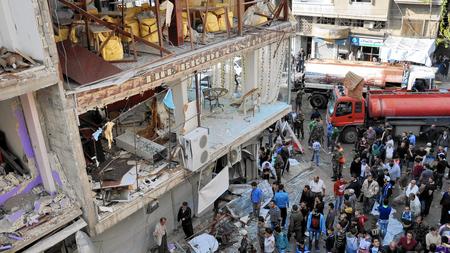
la-epa-epaselect-syria-homs-car-bomb-jpg-20141030Syrian police and residents inspect the site of a car bombing in Homs on Oct. 29. The U.S. plan to raise a rebel army in Syria to fight Islamic State has run into steep political and military obstacles. (European Pressphoto Agency)

The Obama administration’s plan to raise a 15,000-strong rebel army in Syria has run into steep political and military obstacles, raising doubts about a key element of the White House strategy for defeating Islamic State militants in the midst of a civil war.

Pentagon concerns have grown so sharp that Defense Secretary Chuck Hagel sent a two-page memo to the White House last week warning that the overall plan could collapse because U.S. intentions toward Syrian President Bashar Assad are unclear, according to a senior defense official who read the memo but was not authorized to speak publicly.

President Obama has called on Assad to step down, but he has not authorized using military force, including the proposed proxy army, to remove the Syrian leader.

At a news conference Thursday, Hagel declined to discuss his memo to national security advisor Susan Rice, but he acknowledged that Assad has inadvertently benefited from more than five weeks of U.S.-led airstrikes against the Islamic State, one of the most powerful antigovernment forces in Syria’s bitter conflict.

Secretary of State John F. Kerry sought to paper over the problem Thursday, telling a forum in Washington that the proposed proxy army “can have an impact on Assad’s decision-making so we can get back to a table where we could negotiate a political outcome, because we all know there is no military resolution of Syria.”

Rebel leaders in Syria say they would reject joining a U.S.-backed force that is not aimed at defeating Assad, their main enemy.

Senior U.S. military officers also privately warn that the so-called Syrian moderates that U.S. planners hope to recruit — opposition fighters without ties to the Islamic radicals — have been degraded by other factions and forces, including Assad’s army, during the war.

It will take years to train and field a new force capable of launching an offensive against the heavily armed and well-funded Islamic State fighters, who appear well-entrenched in northern Syria, the officers say.

“We’re not going to be able to build that kind of credible force in enough time to make a difference,” said a senior U.S. officer who is involved in military operations against the militants and who asked for anonymity because he was not authorized to speak publicly. “We’ve watched the moderate opposition dwindle and dwindle and now there’s very little left.”

The Pentagon plan calls for putting 5,000 rebel fighters into Syria in a year, and 15,000 over the next three years.

It is the least developed and most controversial part of the multi-pronged U.S. strategy, which also includes near-daily airstrikes in Iraq and Syria, deployment of U.S. military advisors and other support to assist Iraqi government and Kurdish forces, along with attempts to choke off the militants’ financing from oil sales and foreign donors.

When officers involved in high-level Pentagon deliberations in the summer raised concerns about building a rebel army from scratch, they were overruled by senior commanders, who warned that airstrikes alone would not defeat the militants, one of the officers said.

But Pentagon unease has intensified in recent weeks as Jordan and Turkey, two allies that the Obama administration is counting on to help train the proposed proxy force, made it clear that they are lukewarm to the plan, two U.S. officials said.

Washington and its allies are chiefly split over whether the proposed force should focus on reclaiming Syrian territory now held by the Islamic State militants, which is the U.S. priority, or should also battle troops loyal to Assad, the allies’ main concern.

Turkey said this month that it would train a portion of the Syrian force, joining Saudi Arabia in training on its territory. U.S. officials don’t expect to assemble the first group of “moderate” rebels, drawing them from inside Syria or from crowded refugee camps in nearby countries, until early next year at the earliest.

But Turkish officials have signaled that the rebels it trains would concentrate on battling Assad’s forces, not Islamic State, once they return to Syria.

Jordan has not joined the training effort, although it hosts a separate, smaller, CIA-run operation for Syrian insurgents.

U.S. officials say greater involvement by Turkey and Jordan would allow them to increase the number who can be trained, and provide easier conduits for support and resupply when they return to Syria.

The dispute reflects the complex calibrations now in play as the Islamic State militants shake long-established political and military fault lines in the Middle East.

Most dramatically, perhaps, U.S. forces are now in at least tacit alignment with traditional enemies such as Iran and Hezbollah, the Lebanon-based militant and political group, against a common threat.

Syrian rebel leaders and Arab allies complain that the U.S.-led airstrikes have helped Assad by weakening one of his most powerful foes and enabling his army to step up attacks on other rebel factions.

A spokesman for the Free Syrian Army, an umbrella organization claiming to represent largely autonomous rebels in Syria, said fighters were incensed by the U.S. insistence on focusing entirely on Islamic State.

“They have forgotten that tens of thousands of civilians are suffering because of the regime,” said the spokesman, who did not want his name published because it could endanger his family. “Our main cause is the regime, and that will remain our main cause.”

A rebel commander, a defector from the Syrian army who also asked for anonymity, agreed. The U.S. plan “doesn’t work for us,” he said.

“They are concerned with ISIS … but we are concerned with the regime more than ISIS,” he said, using one of several acronyms for Islamic State.

U.S. Central Command, which is overseeing the effort to build a Syrian force, says questions about its direction will be resolved once the fledgling program is underway.

“We are early on in this and there’s much to be figured out,” said Maj. Curtis J. Kellogg, a spokesman for Central Command.

Frederic C. Hof, a former special advisor to President Obama for Syria, said the U.S. plan “is going to be a tough sell” in Syria.

“You can always get people by providing weapons, ammo and pay, but your appeal to a large number of Syrians will increase dramatically if it is a force whose goal is eventually to govern all of Syria,” not just beat one faction, he added.

The caution reflects, in part, a U.S. desire to reassure Iran, one of Assad’s closest backers, that it is not seeking to oust him by force. If the U.S. backtracked on that promise, Iran might step up military support for Assad.

Tehran also could respond by using local Shiite militias to attack U.S. personnel or facilities in Iraq. The Iranian-backed Shiite militias in Iraq have coordinated their attacks on Islamic State with the U.S.-backed government in Baghdad.

“If we really focus on Assad, the Iranian piece of this coalition [against Islamic State] will fracture, and we will have Shia militants trying to target us,” said the senior U.S. military officer.

The U.S. experience with proxy military forces is laced with disappointment.

The Kennedy administration backed a failed invasion of the Bay of Pigs in Cuba in 1961 after training a counterrevolutionary brigade. In the 1980s, the Reagan administration bankrolled the Contras in Nicaragua, who were unsuccessful against the Sandinistas’ socialist revolution.

“We’ve helped arm insurgencies before,” Bruce Riedel, a former CIA analyst who now is a senior fellow at the Brookings Institution. “Nearly all of them have been complete failures or marginal to the final outcome. But there was one spectacular success.”

The CIA, working with Pakistan and Saudi Arabia, covertly poured $4 billion into arming a rebel force in Afghanistan from 1979 to 1989, helping them drive out Soviet forces. Riedel, who wrote a book about the undertaking, said the CIA operation hastened the fall of the Soviet Union and the end of the Cold War.

The Syrian rebel forces, with their fractured leadership and rival sponsors, bear similarities to the competing Afghan mujahedin factions during that war, Riedel said. If the U.S. can secure tight-knit partnerships with neighboring countries on training the rebels, it could also see success against Islamic State.

“There’s no reason we can’t do it again,” he said. “But it doesn’t happen overnight.”

Obama v. The Generals: Should Top Brass Contradict the Commander-in-chief in Public?

September 24, 2014

Obama v. The Generals: Should Top Brass Contradict the Commander-in-chief in Public? You Tube, September 23, 2014


