Archive for the ‘F-35 aircraft’ category

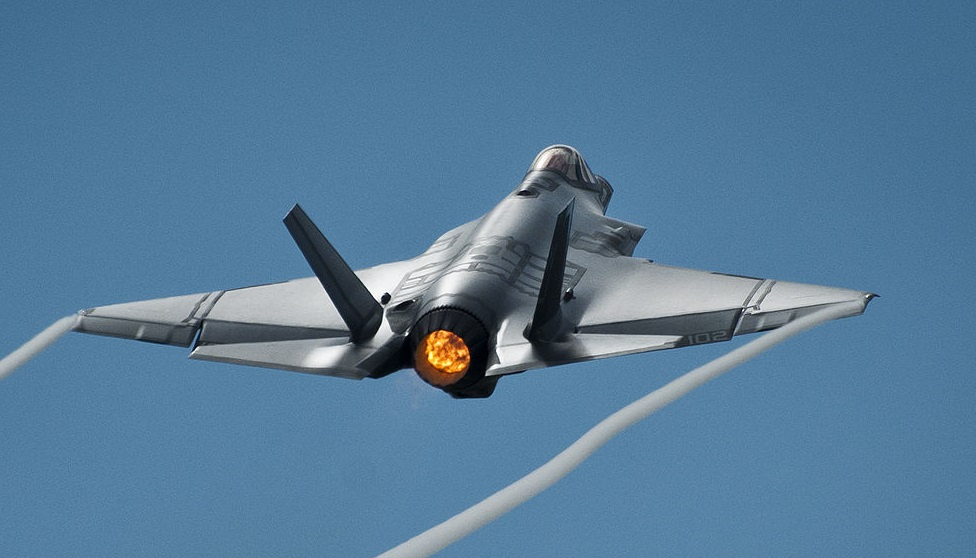
Russia’s S-300, S-400 and S-500 vs. America’s F-35 and F-22: Who Wins?

May 1, 2018

Dave Majumdarb April 9, 2017 The National Interest

Source Link: Russia’s S-300, S-400 and S-500 vs. America’s F-35 and F-22: Who Wins?

{We may never know the full range of capabilities of Russia’s ‘S’ air defense systems and America’s  F-35 and F-22 platforms. These are clearly matters of national security and are obviously top secret. – LS}

For the Russians, solving the problem of targeting a low observable aircraft is something that they continue to work on—but it is doubtful the Moscow has resolved the issue. Russia’s strong investment in layers of air defenses tells us that the Kremlin believes the primary threat to its ground forces comes from U.S. airpower. As such, defeating stealth technology is one of Moscow’s top priorities, Kofman notes, and the Kremlin has dedicated a lot of resources to that end.

Russia has tried a number of different techniques to defeat stealth technology. Among those is trying to develop a tight integrated air defense network with multiple radars trying to look at the same aircraft from different directions—but how effective those efforts have been is an open question. “It’s great being able to see an aircraft, or parts of it, but getting accuracy such that you can confidently get a missile near the target is the primary challenge,” Kofman said.

Russian air defenses may appear formidable as part of Moscow’s increasingly sophisticated anti-access/area denial (A2/AD) capability, but areas protected by these systems are far from impenetrable bubbles or ‘Iron Domes’ as some analysts have called them.

While it is true that a layered and integrated air defense may effectively render large swaths of airspace too costly—in terms of men and materiel—to attack using conventional fourth generation warplanes such as the Boeing F/A-18E/F Super Hornet or Lockheed Martin F-16 Fighting Falcon, these systems have an Achilles’ Heel. Russian air defenses will still struggle to effectively engage fifth-generation stealth aircraft such as the Lockheed Martin F-22 Raptor or F-35 Joint Strike Fighter.

“In terms of establishing viable air defenses against opponents with fifth generation aircraft, it’s quite clear how Russia is trying to tackle the problem of stealth,” said Mike Kofman, a research scientist specializing in Russian military affairs at CNA Corporation during an interview with The National Interest. “Russia’s advanced radar, variety of capable missiles and systems that try to integrate large amounts of data for a more potent air defense will increasingly segregate Western air forces into two benches. In a future where these systems have proliferated to China, Iran and other regional powers there will be those that can penetrate and survive against advanced air defenses in a high end fight, and those whose job it is to bomb ISIL or its successor.”

Kofman notes that advanced Russian-built air defenses like the S-300, S-400 and forthcoming S-500 family come with systems designed to detect and track the presence of low observable (LO) aircraft such as the F-22 and F-35. That’s just a function of physics, as I have noted before. The problem for Moscow is that while Russian early warning and acquisitions radars operating in the VHF, UHF, L and S bands can detect and even track a tactical fighter-sized stealth aircraft, those systems don’t deliver a weapons quality track. “Russia has invested in low-band early warning radars, with some great variants out there, but can it use these to put a good picture together, and process it to develop a track against low-observation aircraft?” Kofman asked rhetorically.

Physics dictate that a tactical fighter-sized stealth aircraft must be optimized to defeat higher-frequency bands such the C, X and Ku bands, which are used by fire control radars to produce a high-resolution track. Industry, Air Force and Navy officials all agree that there is a “step change” in an LO aircraft’s signature once the frequency wavelength exceeds a certain threshold and causes a resonant effect—which generally occurs at the top part of the S-band.

Typically, that resonance effect occurs when a feature on an aircraft—such as a tail-fin—is less than eight times the size of a particular frequency wavelength. Effectively, small stealth aircraft that do not have the size or weight allowances for two feet or more of radar absorbent material coatings on every surface are forced to make trades as to which frequency bands they are optimized for. That means that stealthy tactical fighters will show up on radars operating at a lower frequency bands—such as parts of the S or L band or even lower frequencies. Larger stealth aircraft such as the Northrop Grumman B-2 Spirit or forthcoming B-21 don’t have many of the airframe features that cause a resonance effect—and are, as such, much more effective against low-frequency radars.

For the Russians, solving the problem of targeting a low observable aircraft is something that they continue to work on—but it is doubtful the Moscow has resolved the issue. Russia’s strong investment in layers of air defenses tells us that the Kremlin believes the primary threat to its ground forces comes from U.S. airpower. As such, defeating stealth technology is one of Moscow’s top priorities, Kofman notes, and the Kremlin has dedicated a lot of resources to that end.

Russia has tried a number of different techniques to defeat stealth technology. Among those is trying to develop a tight integrated air defense network with multiple radars trying to look at the same aircraft from different directions—but how effective those efforts have been is an open question. “It’s great being able to see an aircraft, or parts of it, but getting accuracy such that you can confidently get a missile near the target is the primary challenge,” Kofman said.

While the Russians—and the Chinese—have not yet cracked the problem, it is clear that stealth is becoming much less of an advantage over time, though perhaps no less expensive an acquisition. Eventually, Moscow will find a solution to the stealth problem as the cyclical struggle between offense and defense continues ad infinitum—it’s just a matter of time.

Dave Majumdar is the defense editor for the National Interest. You can follow him on Twitter: @davemajumdar.

This first appeared in the Summer of 2016 and is being reposted due to reader interest. 
 

The Inside Scoop of How Deadly the ‘New’ F-35 Will Be

May 1, 2018

Kris Osborn April 30, 2018 The National Interest

Source Link: The Inside Scoop of How Deadly the ‘New’ F-35 Will Be

{Obama did not want the F-35 and tried every reason his little mind could imagine to block its development. Lucky for us, smarter people prevailed. – LS}

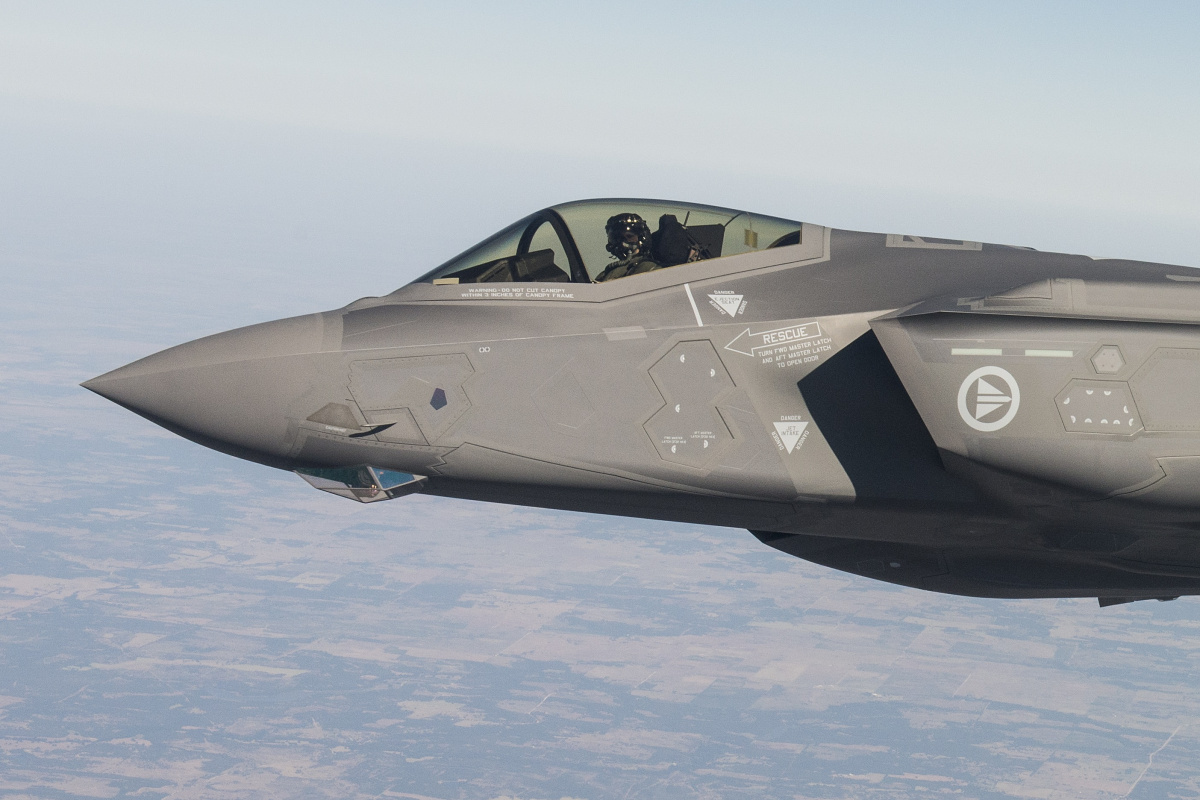
The Air Force has begun early testing, software development and weapons integration for its upcoming Block 4 variant of the F-35 Joint Strike Fighter, an emerging model intended to give the multi-role fighter a new dimension of attack mission possibilities, service leaders said.

The new version, to emerge in the early 2020s, will add new long-range precision-tracking weapons such as the Small Diameter Bomb II and also integrate a computer-generated automatic ground collision avoidance technology.

“The next step for F-35 weapons integration will be to address the weapon requirements within Block 4. Integration of the Small Diameter Bomb II has already begun, and flight test is scheduled to start as early as 2019,” Capt. Emily Grabowski, Air Force Spokeswoman, told Warrior Maven in a statement.

The current consensus among senior Pentagon weapons developers holds that, at the moment, the F-35 is the most capable 5th generation plane in the world. Maintaining this edge, however, is anticipated to quickly become more and more difficult now that both Russia and China are building 5th-gen stealth fighters.

“Block 4 is important with the national defense strategy to make sure we are modernizing the plane to keep it dominant on the battlefield. We are close to knowing the strategy for how to go after it,” Dr. Will Roper, Assistant Secretary of the Air Force for Acquisition, Technology and Logistics, the F-35, told a group of reporters.

While the applied impact of Block 4 will incorporate a range of mission-expanding technologies, much of the ongoing preparation work is in the realm of software development, Roper said.

“The physical pieces of the plane are moving in a good direction. Most of what we have left to do is software. The department (DoD) has not historically been good at software development. That will take a little longer. I cannot imagine building anything for the Air Force that is not software intensive,” Roper said.

The Block 4 initiative is part of a long range trajectory planned for the F-35 described by Pentagon developers as C2D2 – Continuous Capability Development and Delivery. The idea, officials say, is to position the multi-role fighter such that it can consistently accommodate new weapons, stealth materials, sensors and guidance technology as it becomes available.

“We own today’s fight,” said Lt. Col. Tucker Hamilton, F-35 Test Director, Edwards AFB, told reporters. However, Tucker went on to say that, in the absence of aggressive modernization, sustainment and various improvement efforts, this will no longer remain the case.

The SDB II, described as a key element of Block 4, is a new air-dropped weapon able to destroy moving targets in all kinds of weather conditions at ranges greater than 40-miles, Air Force and Raytheon officials said.

It is designed to destroy moving targets in all kinds of weather. GPS and laser-guided weapons such as Joint Direct Attack Munitions have been around for decades, however, they have primarily been designed for use against fixed or stationary targets.

While the Air Force currently uses a laser-guided bomb called the GBU-54 able to destroy moving targets, the new SDB II will be able to do this at longer ranges and in all kinds of weather conditions. In addition, the SDB II is built with a two-way, dual-band data link which enables it to change targets or adjust to different target locations while in flight, Raytheon developers told Warrior Maven.

The Small Diameter Bomb II (SDB II ), which has already completed a series of wind tunnel tests, can destroy moving targets in all weather conditions at ranges greater than 40 miles — a Raytheon statement said.

A key part of the SDB II is a technology called a “tri-mode” seeker — a guidance system which can direct the weapon using millimeter wave radar, uncooled imaging infrared guidance and semi-active laser technology.

Raytheon weapons developers say the tri-mode seeker provides a range of guidance and targeting options typically not used together in one system. Millimeter wave radar gives the weapon an ability to navigate through adverse weather, conditions in which other guidance systems might encounter problems reaching or pinpointing targets.

Imagining infrared guidance allows the weapon to track and hone in on heat signatures such as the temperature of an enemy vehicle. With semi-active laser technology, the weapon can be guided to an exact point using a laser designator or laser illuminator coming from the air or the ground, Raytheon officials told Warrior.

Also, the SBD II brings a new ability to track targets in flight through use of a two-way Link 16 and UHF data link, Raytheon officials said.

One Raytheon SDB II developer told Warrior in a previous interview that “the millimeter wave radar turns on first. Then the data link gives it a cue and tells the seeker where to open up and look. Then, the weapon can turn on its IR (infrared) which uses heat seeking technology.”

Time for Israel to Walk Away From US Aid

July 29, 2016

Time for Israel to Walk Away From US Aid, Front Page MagazineCaroline Glick, July 29, 2016

(Try again next year if Trump wins? — DM)

flags

Originally published by the Jerusalem Post

On Monday, acting head of the National Security Council Yaakov Nagel will sit down with his US counterpart, Susan Rice, and try to conclude negotiations about a new, multi-year defense assistance package.

We must all hope that he fails.

No clear Israeli interest will be advanced by concluding the aid deal presently on the table. 

Indeed, the deal now being discussed will cause Israel massive, long-term economic and strategic damage. This is true for a number of reasons.

First, there is the issue of the deal’s impact on Israel’s military industries, which are the backbone of Israel’s strategic independence.

Under the current defense package, which is set to expire next year, a quarter of the US aid Israel receives is converted to shekels and spent domestically.

Reportedly, the deal now under negotiation will bar Israel from using any of the funds domestically.

The implications for our military industries are dire. Not only will thousands of Israelis lose their jobs. Israel’s capacity to develop its own weapons systems will be dangerously diminished.

Then there is the problem of joint projects.

Today, Israel receives additional US funds to develop joint projects, including the Iron Dome and David’s Sling short range missile and rocket defense programs. These programs were undertaken in response to threats that weren’t foreseen when the current deal was negotiated a decade ago.

According to reports, the deal now being negotiated denies Israel and the US the ability to fund jointly new projects or to provide supplemental funding for existing projects. All funding for all projects will be covered by the lump sum that is currently being negotiated.

Not only does this preclude new projects, it prevents Congress from exercising oversight over administration funding of existing joint projects with Israel. President Barack Obama has consistently tried to slash funding of missile defense programs, only to be overridden by Congress. Under the deal now on the table, Congress will be denied the power to override a hostile administration.

Given the obvious problems with the aid program currently being proposed by the Obama administration, there’s little wonder that until now, Prime Minister Benjamin Netanyahu has publicly stated that if necessary, Israel is ready to wait for the next administration. Some argue that Netanyahu’s apparent newfound interest in concluding negotiations on Obama’s terms owes to his fear that this is the best offer Israel is likely to get. Both Hillary Clinton and Donald Trump for various reasons, it is argued, will be less likely to offer significant increases in US military assistance.

Assuming this is accurate, the question becomes whether Israel has an interest in the assistance at all.

And so we come to the F-35.

For Israel, to a significant degree, the aid package on offer is about the F-35, the US’s fifth generation fighter, otherwise known as the Joint Strike Fighter.

Last month Defense Minister Avigdor Liberman and IAF Chief of Staff Brig.-Gen Tal Kelman flew to Texas to ceremonially “take possession” of Israel’s first two F-35s. Both aircraft are set to be delivered to Israel in December.

To date, the IAF has purchased 33 F-35s – all with US aid money. The IAF wants to purchase a total of 75 F-35s, which are supposed to replace the F-16s and the F-15s that the IAF currently fields.

As Liberman made clear during his visit, whether Israel purchases them or not is entirely dependent on the aid deal.

We should not take them. We should walk away.

And we should walk away even if we receive nothing in exchange for the planes we reject.

The F-35 is a disaster of epic proportions, for the US first and foremost. If Israel agrees to base its next generation fighters on the F-35, it will be a disaster for us as well. Although it is late in the game, we need to cut our losses.

To date, the F-35 has cost the US $400 billion.

That is twice what it was supposed to cost. The project is already four years behind schedule and still in development. It won’t be operational until May 2018 – at the earliest.

The F-35 is a jet that was developed by a committee and tasked with doing everything. So it isn’t surprising that it doesn’t work. In February, J. Michael Gilmore, the director of the Pentagon’s Operational Test and Evaluation office, submitted a scathing report to Congress on the F-35 program.

It is worth going through just a few of his findings.

The F-35’s calling card is its stealth capacity.

According to the engineers at Lockheed Martin, the JSF is supposed to be all-but-invisible to radar systems. Its stealth system is supposed to be far superior to the stealth capabilities of its third generation predecessors.

But at present, its stealth systems do not work, and it is unclear whether they will ever work as planned.

First there is the problem with the JSF’s cooling systems. The JSF is too hot. To prevent its single engine from melting down in flight, pilots are forced to open its weapons bays at high speeds and altitudes every 10 minutes. When the weapons bays are open, the stealth systems do not work.

Then there is the software. The F-35 is considered one big flying computer. It uses over 20 million lines of computer code. These codes are supposed to make it the most maneuverable and stealthy aircraft in history. The problem is that the codes are defective. The software programs that enable the plane to fly, maneuver, and engage in combat are all defective. So are the software programs that control the plane’s stealth capabilities.

And fixing them is not a simple process.

The fixed software systems can’t simply be attached to existing hardware – or to existing planes. The planes themselves have to be rebuilt to adjust to the new software. So the models that have already been produced, including the two F-35s that are set for delivery in December, will all have to be rebuilt before they will be combat ready.

And as a panel of US defense and aviation experts that convened in late February following the publication of Gilmore’s report noted, that too will take time and cost hundreds of millions of dollars.

Another major problem is that the F-35’s nerve center is dysfunctional and there is no clear path to fixing it. The F-35 is controlled by the Autonomic Logistics Information System. The ALIS is a central computer system, located in the US.

All F-35s all over the world will be required to log into the ALIS system to upload computer files after each flight and to check flight readiness. The ALIS is supposed to identify broken parts and help speed up repairs and handle mission data uploads.

ALIS has the capacity to prevent F-35s from taking off. ALIS can lock out pilots and ground crews if it sees danger. If this happens, maintenance technicians have to convince the computer that they either dealt with the issues the computer identified or that it was a false alarm.

Dan Grazier, a member of that panel, whose deliberations were reported by This Week, warned that this power renders the entire F-35 fleet vulnerable to hackers. If someone were able to convince the computer that something was wrong across the fleet, they might be able to keep all the F-35s grounded. Although the damage wouldn’t be permanent, it could continue long enough to cause the US or an ally to lose a battle or fail a mission.

For Israel, this vulnerability is prohibitive even if ALIS is ever made to work. The significance of ALIS control over all F-35s worldwide is that the US – and anyone able to hack the US system – will control the IAF. It will operate at the pleasure of the US government, and those able to hack US computers. They will be able to ground IAF planes whenever they wish.

This critical problem was acknowledged obliquely by Lt.-Col. Yotam, the commander of Israel’s first F-35 or Adir squadron, in an interview with Israel Defense in April.

Lt.-Col. Yotam said, “The maintenance concept of the Adir is based on international management and logistics in terms of spare parts and maintenance echelons.”

Israeli experts note that although in theory Israel will be able to crack the ALIS code and override it, it will take years to develop such a capacity. In the meantime, the IAF will become a contract employee of the US government whose operation is subject to US approval on a flight by flight basis.

The US Air Force, Marines and Navy are all trying to figure out how to deal with the deficiencies of the F-35. There is a vague hope that the US will develop a different fifth generation fighter.

More F-18s and A-10s will likely be ordered. Deputy Defense Secretary Robert Work told Fighting Global that he foresees using the current batch of F-15s into the 2040s. In other words, the US Air Force will deploy 70-year-old planes alongside the defective F-35s.

This, of course, is a disaster for the US. And if Israel goes ahead with the F-35 project it will be an even bigger disaster for us.

Back when the Pentagon convinced the Shamir government to scrap the Lavi project and purchase the F-16, the argument that won the day was economic. The Lavi was simply too expensive.

Today, both economics and strategic arguments indicate that the opposite is the case, even if walking away involves ending US military aid.

If Israel cuts its losses and begins to develop a fifth generation jet fighter that meets its own specific needs, rather than one designed by a committee to meet other countries’ needs poorly, it will end up both far safer and far more prosperous than if it goes ahead with the F-35 project. It will produce a better plane, better suited for Israeli defense needs, and simultaneously stimulate the growth of Israeli military industries, providing jobs for thousands of Israelis.

If Israel walks away from the military assistance package currently under discussion, it will be in a position to sign joint development deals with the US and other governments on a project by project basis and so ensure that we develop the weapons systems we need, not the ones the US thinks we should have, as we need them. Just as India is investing billions of dollars in joint projects with Israel, so will the US in the future.

It is far from clear that the US can afford its $400b. white elephant. It is abundantly clear that Israel cannot afford it.

Whether or not a Trump or Clinton administration will be more forthcoming is really beside the point. The point is that the US aid deal is really a deal for Lockheed Martin, not for Israel. And we need to say no.