WH Admits Need To ‘Adapt Our Strategy’ Against IS, Contradicts Previous Admin Statements, Washington Free Beacon via You Tube, May 27, 2015
(“It’s more complicated than that.” Wash, rinse and repeat– DM)
WH Admits Need To ‘Adapt Our Strategy’ Against IS, Contradicts Previous Admin Statements, Washington Free Beacon via You Tube, May 27, 2015
(“It’s more complicated than that.” Wash, rinse and repeat– DM)
Obama’s Islamic State strategy sparks doubt, resentment among Pentagon officials, Washington Times, Rowan Scarborough, May 26, 2015
Beneath the glowing battle reports about Iraq from U.S. military spokesmen in recent months, there remains a strong undercurrent of dissatisfaction among the Pentagon rank and file with the Obama administration’s Islamic State strategy.
“What strategy?” asked a Pentagon official involved in counterterrorism analysis. “We are now floating along, reacting to ISIS,” using a common acronym for the Islamic State.
This source said the military has a plan for introducing ground troops and defeating the Islamist group, but the belief is that President Obama will never activate it.
Whether this unhappiness has reached the inner sanctum of the Joint Chiefs of Staff is unclear. In public, the military leadership says it is squarely behind the strategy of limited U.S.-led airstrikes coinciding with the rebuilding of the Iraq army for all the ground fighting.
But a Washington Times spot check of department officials and people who interact with the Pentagon reveals deep-seated doubts.
 Photo by: © STRINGER Iraq / Reuters Iraq’s Shiite paramilitaries claimed to have taken charge of driving the Islamic State out from the western province of Anbar. However, Pentagon officials decry what they see as an unfocused White House plan to rout the terror group. (Reuters)
The Islamic State’s rout of Ramadi on May 18 exposed more than the Iraqi army’s lack of will to fight, as Defense Secretary Ashton Carter bluntly put it over the weekend.
After months of U.S. and coalition airstrikes on hundreds of Islamic State targets, after U.S. surveillance and intelligence collection, and with senior American officers advising Iraqis at a joint command center, the battlefield outcome still was no better than the rout of Mosul 11 months ago.
A former official who is frequently in the Pentagon said, “The building is very guarded about what they say, but clearly the White House is running the campaign, which has them furious.”
This source said combat pilots can loiter over a target for hours before approval comes to strike it. Sometimes approval never comes.
“The targeting requires immaculate rules of engagement, which means they cannot drop if there is a possibility of collateral damage [civilian deaths],” the former official said.
U.S. Central Command’s list of airstrikes around Ramadi showed a smattering of tactical strikes, not concentrated air power.
On May 18, the day Ramadi fell, Central Command listed three targets as being struck around Ramadi — two tactical units and an Islamic State staging area. Destroyed there were an armored vehicle, an excavator and a resupply vehicle.
On the previous day, as Islamic State fighters were taking control of Ramadi, eight airstrikes hit targets near the city. They were three tactical units, eight buildings, two armored vehicles, two mortars, an ammunition storage area and a command center.
“This is worse than pathetic,” the former official said.
Another annoying development, the source said, is the lack of American arms making their way from the Shiite-led national government in Baghdad to Iraqi Kurdish forces in the north. They have proven to be one of the few Iraqi units willing to take on the Islamic State.
The former official said a commitment of U.S. special operations forces and some infantry “could defeat the Islamic State in weeks.”
“But then what?” the source asked, noting that the Shiite-dominated government has badly mismanaged the post-U.S. environment.
“I have never seen such disgruntlement before,” the source said of the mood in the Pentagon.
Another official said a constant theme inside the Pentagon is that the White House does not seem committed to winning. The frequent public relations spin is that this will be a long process to take down the Islamic State when, in fact, officers say, it does not have to be.
“They question whether the U.S. has any interests at stake in Iraq,” this official said. “If we do, they expect Obama to make the case.”
The Iraqi government announced Monday that it has launched a new counteroffensive aimed at retaking Ramadi, the capital of the Sunni-dominated Anbar province. U.S. Marines in the mid-2000s, in an alliance with Sunni tribal leaders, fought a protracted counterinsurgency to rid the western region of al Qaeda terrorists.
So far, the Sunni role in trying to expel the Islamic State, a Sunni extremist army, does not seem as robust. That is why Prime Minister Haider al-Abadi is now relying on Iran-directed Shiite militias to fight in Anbar, as he did in the assault on the Sunni-majority city of Tikrit.
The former defense official said that if one wants to get a sense of the unhappiness inside the Pentagon, they should listen to the few retired senior generals who are speaking out.
One is retired Army Lt. Gen. Michael T. Flynn, the former director of the Defense Intelligence Agency under Mr. Obama. Mr. Flynn is urging a much more aggressive approach to the Islamic State and jihadis worldwide.
“Unless the United States takes dramatically more action than we have done so far in Iraq, the fractious, largely Shiite-composed units that make up the Iraqi army are not likely to be able, by themselves, to overwhelm a Sunni stronghold like Mosul, even though they outnumber the enemy by ten to one,” he wrote in Politico. “The United States must be prepared to provide far more combat capabilities and enablers such as command and control, intelligence, logistics and fire support, to name just a few things.”
Globally, he said, “We must engage the violent Islamists wherever they are, drive them from their safe havens and kill them. There can be no quarter and no accommodation.”
Another is retired Marine Corps Gen. James Mattis, who was Mr. Obama’s Central Command chief until May 2013, a time when the Islamic State had not yet established itself in Iraqi territory.
“The bottom line is we do not have a global strategy,” Mr. Mattis said May 13 at the Heritage Foundation. “Right now we have an America that is starting to reduce its role in the world. That’s not good.”
He noted that Mr. Obama last August said “we don’t have a strategy yet” for defeating the Islamic State. Mr. Mattis said that statement still holds true today. “We don’t really have a good strategy right now,” he said.
He added, “This is what would be called a poor grade at the National War College, to say the least. They would have flunked you.”
Robert Gates, Mr. Obama’s first defense secretary, told MSNBC, referring to the U.S. in Middle East, “We’re basically sort of playing this day to day.”
Mr. Carter took a big step over the weekend in beginning to bluntly blame the Iraqis for failing to hold Ramadi.
“What apparently happened was that the Iraqi forces just showed no will to fight,” the defense secretary told CNN. “They were not outnumbered. In fact, they vastly outnumbered the opposing force, and yet they failed to fight.”
The White House immediately launched damage control so as not to offend Mr. Abadi’s government.
“The recent universal statement by the [secretary of defense] that the Iraqis don’t have the will to fight is unhelpful,” said retired Army Lt. Gen. James Dubik, who led the training of Iraqi troops during the war. “‘Will to fight’ is a complex phenomenon. Why do they fight like hell in some circumstances and not others? That is the real issue.”
Mr. Dubik has been playing close attention to starts and stops of the campaign against the Islamic State as an analyst at the Institute for the Study of War in Washington.
“The fall of Ramadi is a blow to the Iraqi counteroffensive, and it complicates resupply and reinforcements to Al Asad [air base],” he said. “It shows how resilient ISIS is, and how difficult the counteroffensive to re-establish the Iraq-Syria border and re-establish Iraq’s political sovereignty will be. There is no guarantee that Iraq will be successful. And if they’re not, U.S. security interests in the region, and beyond, will suffer.”
U.S. Central Command remains upbeat. On Tuesday, Marine Brig. Gen. Thomas Weidley, the war command’s chief of staff, issued a statement referring to recent setbacks as temporary.
“Positive steps and effects are occurring throughout the battle space, which, in combination, are encouraging signs of the operational-level progress to date within the campaign,” he said.
Muslim world reacts to Obama’s latest speech – IPhoneConservative, MEMRI TV via IPhoneConservative via You Tube, May 20, 2015
(Another update: Now the video is up at Front Page Magazine, with a caveat about Poe’s law.
Poe’s law is an internet adage which states that, without a clear indicator of the author’s intent, parodies of extremism are indistinguishable from sincere expressions of extremism.[1][2] Poe’s Law implies that parody will often be mistaken for sincere belief, and sincere beliefs for parody.[3]
– DM)
(UPDATE, May 27th: the subtitles were edited by IPhoneConservative. In a comment beneath the video, posted on May 26th, it was stated:
I must admit I find it fascinating that so many people commenting here are voicing their outrage at my editing of the subtitles in this clip from MEMRI. For those that don’t know who they are………..they are an invaluable site that documents and translates much of what goes on in Middle East media. This clip was from their site. Every day they post videos with leading Islamic figures and personalities making hideous statements about Jews and Christians. About killing gays and beating women. I wonder how many of those outraged by my use of the clip in this way are equally outraged by the real sentiments expressed on these program’s? Not enough I would guess.
– DM)
***********************
(Offensive? Yes. Well worth watching? Yes.– DM)
No army in Mid East is challenging ISIS. Iran regroups to defend S. Iraqi Shiites, Assad to save Damascus, DEBKAfile, May 25, 2015
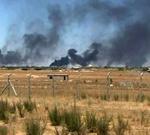 Iranian troops in fight to evict ISIS from Baiji refinery
Hassan Nasrallah Saturday, May 23, called his Lebanese Shiite Hizballah movement to the flag, because “we are faced with an existential crisis” from the rising belligerence of the Islamist State of Iraq and the Levant. His deputy, Sheik Naim Qssem, sounded even more desperate: “The Middle East is at the risk of partition” in a war with no end in sight, he said. “Solutions for Syria are suspended. We must now see what happens in Iraq.”
The price Iran’s Lebanese proxy has paid for fighting alongside Bashar Assad’s army for four years is cruel: some 1,000 dead and many times that number of wounded. Its leaders now understood that their sacrifice was in vain. ISIS has brought the Syrian civil war to a new dead end.
This week, a 15-year old boy was eulogized by Hizballah’s leaders for performing his “jihadist duty” in Syria.
Clearly, for their last throw in Syria, the group, having run out of adult combatants, is calling up young boys to reinforce the 7,000 fighting there.
The Syrian president Bashar Assad is in no better shape. He too has run dangerously short of fresh fighting manpower. Even his own Alawite community has let him down. Scarcely one-tenth of the 1.8 million Alawites have remained in Syria. Their birthrate is low, and those who stayed behind are hiding their young sons to keep them from being sent to the front lines.
Assad also failed to enlist the Syrian Druze minority to fight for his regime, just as Hizballah’s Nasrallah was rebuffed when he sought to mobilize the Lebanese army to their cause. This has left Hizballah and the Syrian ruler alone in the battlefield with dwindling strength against two rival foes: ISIS and the radical Syrian opposition coalition calling itself Jaish al-Fatah – the Army of Conquest – which is spearheaded by Al Qaeda’s Nusra Front and backed to topple Assad by Saudi Arabia, Qatar and Turkey.
Nasrallah tried to paint a brave picture of full mobilization to expand the war to all parts of Syria. However, Sunday, May 24, a key adviser to Assad admitted that his regime and its allies were being forced to regroup.
Their forces were withdrawing from the effort to shift the Islamists from the land they have conquered – about three-quarters of Syrian territory – and concentrating on defending the cities, Damascus, Homs and Latakia, home to the bulk of the population, as well as the strategic Damascus highway to the coast and Beirut. Hizballah needed to build up the Lebanese border againest hostile access.
But Syrian cities, the Lebanese border and the highway are still under threat – from Syrian rebel forces.
The Iraqi army, for its part, has been virtually wiped out, along with the many billions of dollars the US spent on training and weapons. There is no longer any military force in Iraq, whether Sunni or Shiite, able to take on ISIS and loosen its grip on the central and western regions.
The Kurdish peshmerga army, to whom President Barack refused to provide armaments for combating the Islamists, has run out of steam. An new offensive would expose the two main towns of the semi-autonomous Kurdish Republic – the capital Irbil and the oil city of Kirkuk – to the depredations of the Islamist belligerents.
A quick scan of Shiite resources reveals that in the space between the Jordan River and the Euphrates and Tigris, Iran commands the only force still intact in Iraq – namely, the Iraqi, Afghan and Pakistani Shiite militias, who are trained and armed by the Revolutionary Guards.
This last remaining fighting force faces its acid test in the battle ongoing to recover Baiji, Iraq’s main oil refinery town. For the first time, Iranian troops are fighting in Iraq, not just their surrogates, but in the Baiji campaign they have made little headway in three weeks of combat. All they have managed to do is break through to the 100 Iraqi troops stranded in the town, but ISIS fighting strength is still not dislodged from the refinery.
The Obama administration can no longer pretend that the pro-Iranian Shiite militias are the panacea for the ISIS peril. Like Assad, Tehran too is being forced to regroup. It is abandoning the effort to uproot the Islamists from central and western Iraq and mustering all its Shiite military assets, such as the Badr Brigade, to defend the Shiite south – the shrine towns of Najef and Karbala, Babil (ancient Babylon) and Qadisiya – as well as planting an obstacle in the path of the Islamists to Iraq’s biggest oil fields and only port of Basra.
The Shiite militias flown in by Tehran from Pakistan and Afghanistan have demonstrated in Syria and Iraq alike that they are neither capable nor willing to jump into any battlefields.
The upshot of this cursory scan is that not a single competent army capable of launching all-out war on ISIS is to be found in the Middle East heartland – in the space between the 1,000km long Jordan and the Euphrates and Tigris to the east, or between Ramadi and the Saudi capital of Riyadh to the south.
By Sunday, May 24, this perception had seeped through to the West. US Defense Secretary Ashton Carter, remarked: “What apparently happened was that the Iraqi forces just showed no will to fight.” The former British army chief Lord Dannatt was more down to earth. Since the coalition air force campaign had failed to stop ISIS’s advance, he said “it was time to think the previously unthinkable” and send 5,000 ground troops to fight the Islamists in Syria and Iraq.
The next day, Monday, Tehran pointed the finger of blame for the latest debacles in Iraq at Washington. Al Qods Brigades chief Gen. Qassem Soleimani was quoted by the English language Revolutionary Guards mouthpiece Javan as commenting: “The US didn’t do a damn thing to stop the extremists’ advance on Ramadi.”
(We can give them equipment and training. But how can we give them time — and training requires time as well as motivation on the part of the trainees — when the Islamic State gives them neither? — DM)
US and Hizballah coordinate spy drone flights over Qalamoun, share US combat intelligence, DEBKAfile, May 23, 2015
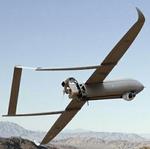 Reconnaissance drone operated by US special forces in Lebanon
How do Obama’s repeated commitments to Israel’s security square with close US military and intelligence cooperation with an organization whose vow to destroy Israel is backed by 100,000 missiles – all pointed south?
************************
Another strange pair of bedfellows has turned up in one of the most critical Middle East battlefields: the United States is helping Hizballah, Iran’s Lebanese surrogate, in the battle for control of the strategic Qalamoun Mountains. DEBKAfile’s intelligence sources disclose that a US special operations unit, stationed at the Hamat air base on the coast of northern Lebanon, is directing unarmed Aerosonde MK 4.7 reconnaissance drone intelligence-gathering flights over the Qalamoun Mt arena, 100 km to the west.
Washington set up the base originally in line with an assurance to Beirut of military assistance for the next three years to counter any threatened invasion by extremist elements.
However, it turns out that the data the US drones pass to Lebanese army general staff in Beirut goes straight to Hizballah headquarters – and on to the Iranian officers in Syria running Bashar Assad’s war effort.
The Aerosonde MK 4.7 can stay aloft for 10 to 12 hours at a stretch at an altitude of 4.5 km. It functions day or night, equipped with an advanced laser pointer capability. It is capable of carrying ordnance but US sources say they the aircraft in Lebanon are unarmed.
Since Hizballah is also operating Ababil-3 surveillance drones of its own over Qalamoun, coordination had become necessary between the American team and the Shiite group. The consequence is that for the first time, the US military is working directly with an internationally-designated terrorist organization – a development with earthshaking ramifications for Israel’s security. This partnership has in fact become a game-changer for the worse in terms of Israel’s security ties with the US and has caused an upheaval in its military and intelligence disposition in the region, in at least six respects:
1. To counter US-Hizballah intelligence collaboration, Israel is obliged to reshuffle the entire intelligence mechanism it maintains to protect its northern borders with Lebanon and Syria.
2. Israel finds itself forced to monitor the progress of the US special unit’s interface with Hizballah, its avowed enemy.
3. Israel can no longer trust American intelligence coming in from Lebanon because it is likely tainted by Hizballah sources.
4. Hizballah is gaining firsthand insights into the operating methods of US special operations forces, which Israel’s methods strongly resemble and must therefore revamp.
5. The Hizballah terrorist group is winning much needed prestige and enhanced status in the region from its collaboration with the US.
6. Hizballah’s Ababil drones are in fact operated by the hostile Iranian Revolutionary Guards, which leaves Israel with no option but to overhaul from top to bottom the intelligence-gathering systems employed by its surveillance drones to track Iranian movements in the region.
At the Washington Adas Israel synagogue Friday, May 22, President Barack Obama wearing a kipah “forcefully” objected to suggestions that policy differences between his administration and the Israeli government signaled his lack of support for the longtime US ally.
This raises a question: How do Obama’s repeated commitments to Israel’s security square with close US military and intelligence cooperation with an organization whose vow to destroy Israel is backed by 100,000 missiles – all pointed south?
Strategic Failures, the US and the Fall of Ramadi, Clarion Project, Ryan Mauro, May 21, 2015
 Islamic State fighters celebrate their take over of Ramadi with a victory ‘parade.’ (Photo: Islamic State social media)
The U.S. must correct its strategy by sidelining Iranian-backed militias and terrorists, leveraging influence with the Iraqi government and significantly increasing assistance to the Anbar tribes, Kurds, Iraqi government and to the persecuted Christian minority that is forming its own self-defense force.
Recent history has shown that the Iraqi government will choose the U.S. over Iran if compelled.
********************
The Islamic State (ISIS) has captured Ramadi, the capital of Iraq’s Anbar Province, reportedly “terrifying” Iraqi officials who now foresee a “tsunami of international terror.” It is an important achievement for the terrorist group aimed at pre-empting a potential Sunni tribal uprising.
The Sunni tribes in Anbar Province were critical to the success of the 2007 “surge” that ousted the Islamic State’s predecessor, Al-Qaeda in Iraq. The deterioration in the relationship between these tribes and the central Iraqi government was likewise critical to the terrorists’ comeback in Iraq.
The Islamic State remembered these lessons and acted quickly as the Iraqi government began training tribal fighters and the U.S. defense budget allotted $179 million to Kurdish and Sunni tribal forces. The U.S. forgot these lessons and has long rejected Sunni and Kurdish pleas for direct aid to fight the Islamic State.
The Obama Administration is now planning to change course and directly arm and train the Iraqi Sunni tribes after the fall of Ramadi. The White House previously chose to work only through the central Iraqi government that has given the Kurds and Sunnis inadequate support.
A delegation of 11 Sunni tribal leaders, including Sheikh Ahmed Abu Risha, the President of the Anbar Awakening Council, flew to the U.S. on January 18 to plead for direct assistance. Former President George W. Bush called Abu Risha and listened to his complaints for 20 minutes and offered to help. Administration officials were less willing. One tribal official said, “I wouldn’t call it the ‘cold shoulder,’ but it certainly was a cool one.”
The Obama Administration told them that it would only work through the elected central government. Its viewpoint was that working with forces outside the government’s authority undermines the Iraqi leadership and threatens the country’s unity.
That standpoint ignores what was learned after the fall of Saddam Hussein. Nothing threatens Iraq’s unity and the government’s authority more than instability. Direct U.S. aid to the Sunni tribes helped save Iraq from disintegration into sectarian enclaves ruled by terrorists and militias.
The Islamic State struck Ramadi during a sandstorm that delayed American air support. Former U.S. Central Command advisor Ali Khedery says that a Kurdish member of parliament informed him that 6,000 Iraqi Security Forces fled when faced with a mere 150 Islamic State fighters. About 500 Iraqi security personnel and civilians died in two days. The Iraqi officials spoke straight forwardly and admitted that the current strategy is failing.
The Pentagon says it has finished training about 7,000 Iraqi Security Forces and another 3-4,000 are in the process of training, but training won’t solve the problem of collapsing Iraqi forces. The U.S. trained the Iraqis from 2003 until the withdrawal in 2011. The strategy of waiting for the Iraqi security forces to become strong enough to stabilize the country is the same strategy that failed before the surge.
Iraqi personnel flee because they don’t want to die for a lost cause or to fight for a replacement worse than the Islamic State.
The Iraqi Security Forces face a fundamental disadvantage when battling the Islamic State: They want to live and their enemies want to die. This disadvantage is further compounded by a lack of confidence. If given the choice to die fighting in a losing battle or to flee and perhaps regroup later with better chances of victory, they will choose the latter.
An Anbar official placed the blame on the Iraqi government, telling CNN, “If 10% of the government’s promises had been implemented, Ramadi would still in our hands and the Islamic State wouldn’t dare to be anywhere near the city.”
Iraqi Sunnis are faced with a terrible choice. The Iranian-backed Shiite militias are often nicknamed “Shiite ISIS” because their crimes are comparable to ISIS but are less known by the West because they aren’t broadcasted. However, the Anbar Provincial Council is officially welcoming them now out of desperation and perhaps an awareness that their opposition will be ignored anyway.
The Shiite militias should be expected to mistreat the local Sunnis the second after the Islamic State is expelled or even during the fighting. Tribal support is far from unanimous. The son of the largest tribe’s leader is in the U.S. asking for support right now and bluntly warned that sending the Shiite militias into Anbar Province “will cause a civil war.”
The New York Times has noticed the change in American attitude towards the Shiite militias. Pentagon spokesperson Col. Steve Warren said, “As long as they’re controlled by the central Iraqi government, there’s a place for them.” Yet, only two months ago, Central Command Commander General Austin said, “I will not—and I hope we will never—coordinate or cooperate with Shiite militias.”
The U.S. must correct its strategy by sidelining Iranian-backed militias and terrorists, leveraging influence with the Iraqi government and significantly increasing assistance to the Anbar tribes, Kurds, Iraqi government and to the persecuted Christian minority that is forming its own self-defense force.
Recent history has shown that the Iraqi government will choose the U.S. over Iran if compelled.
In March, the U.S. withheld support to Iraqi forces fighting the Islamic State in Tikrit because of the involvement of Iranian-backed militias and the Revolutionary Guards Corps. The Iranian proxies stalled and could move no further, displaying the value of U.S. air support. The Iraqis chose America and the Iranians were removed from the battle. U.S. aid delivered the victory that the Iranians could not.
The Iraqis had been asking for U.S. for more help including possibly advisors on the ground since October 2013. By March 2014, the Iraqis were asking for airstrikes on the Islamic State. The Islamic State blitz into Iraq began in June.
The Iraqi ambassador complained that the U.S. had denied requests for help including Apache helicopter sales, thereby putting Iraq “in an uncomfortable position in seeking support from whoever is available on the ground.” He emphasized that the “U.S. is our strategic partner of choice.”
Iran opposed the return of U.S. soldiers on the ground in Iraq as advisors. The Iranian-backed cleric Moqtada al-Sadr threatened to attack the advisors and two other Iranian-backed militias alsoforcefully opposed U.S. involvement. The Iraqi government went ahead anyway.
Even now, Iraqi Prime Minister Haider al-Abadi is in Russia and talking to China and Iran about delivering arms that the U.S. refuses to provide.
The U.S. needs to give the Iraqi government a clear choice: Iran or us.
The Iraqi government should be put on notice. If it is willing to restrain the Shiite militias and work with us to disband them, then we will provide all necessary aid. We will help negotiate with the Sunni tribes so their local forces operate within a national framework.
If the Iraqi government chooses Iran, then we will cut our aid and redirect it towards our Sunni, Kurdish and Christian partners while maintaining contact with friendly Shiites. We will not act as the air force for Iranian proxies. If necessary, we will talk about a role for the forthcoming Arab force led by Egypt to replace yours.
It is positive news that the Obama Administration is reversing its stance and will directly help the Sunni tribes, but the anti- Islamic State strategy requires an anti-Iran strategy.
Next challenge for US after Ramadi defeat: Iranian ship nears Yemeni shore, DEBKAfile, May 19, 2015
 Iranian aid vessel with “medical relief” personnel
DEBKAfile’s analysts strongly doubt that the USS Theodore Roosevelt carrier and strike force, which have been monitoring the Iranian flotilla’s movements, will be ordered to intervene against the Iranian ships reaching the Yemeni port.
Tehran, for its part has threatened to treat any such inspections as an act of war.
********************
Tuesday, May 19, two days after Ramadi’s fall to the Islamic State landed a major blow to Baghdad and US strategy in the region, 10,000 troops – more than half American – ended a large US-led military exercise in Jordan that was designed to practice tactics for countering ISIS. Taking part surprisingly in the two-week exercise was a heavy US nuclear-capable B-52H bomber, which flew in from the United States, crossing through Israeli air space and returning to home base when it was over.
This was the first time in the 12 years since the US invasion of Iraq that a B-52H, which can deliver nuclear weapons and bunker buster bombers, has appeared in Middle East skies for any military mission.
East of Jordan, as some 25,000 refugees from Ramadi slept in the open, the Islamist conquerors began moving on their next target, the Habbaniyah air base some 70 km west of Baghdad. Its fall would cut Baghdad off from northern and eastern Iraq and place it under siege from three directions – north, east and west.
Most Arab members have dropped out of the US-led coalition committed to fighting the Islamist terrorists in Iraq and Syria. This has left the US Air Force to bear the brunt of the aerial campaign. Its average of 19 air strikes a day is far too few to have any real effect on ISIS’s battle momentum. It certainly did not stop the long columns of black-clad Islamist fighters swarming on Ramadi from all directions in hundreds of tanks, APCs and minivans armed with heavy machine guns, and taking control of the capital of Iraq’s largest province, Anbar.
Western intelligence from the Ramadi region offered disturbing accounts of thousands of fully-armed ISIS fighters springing up apparently from nowhere to descend on the city, with no one able to see where they came from and no air action to scatter them before they entered the city.
After the Ramadi defeat, the Obama administration’s next major test in the region comes from an Iranian cargo vessel heading, accompanied by two warships, for the Yemeni Red Sea port of Hodeida and scheduled to dock Thursday, May 21. According to Tehran, the ship will unload 2,500 tons of humanitarian aid for Yemen, and the hundreds of passengers who disembark are Red Crescent medical relief workers.
The Saudi, US and Egyptian fleets have imposed a sea and air blockade on Yemen to prevent Iran provding the Yemeni Houthi rebels with fresh arms. Saudi and other regional intelligence agencies are convinced that the “paramedics” are in fact Revolutionary Guards officers and instructors in disguise, sent to strengthen the Houthi revolt.
Washington, Riyadh and Cairo have all vowed to stop the Iranian flotilla from putting into port in Yemen and said that its vessels will be forced to submit to inspections to make sure no illicit weapons are aboard and to confirm the passengers’ identities.
Tehran, for its part has threatened to treat any such inspections as an act of war.
Deputy Revolutionary Guards Commander Gen. Masoud Jazayeri put it plainly when he said: “I am distinctly stating that the patience of Iran has limits. If the Iranian aid ship is prevented from reaching Yemen then they, Saudi Arabians and United States, should expect action from us.”
DEBKAfile’s analysts strongly doubt that the USS Theodore Roosevelt carrier and strike force, which have been monitoring the Iranian flotilla’s movements, will be ordered to intervene against the Iranian ships reaching the Yemeni port. It is not a good moment for President Barack Obama to upset Tehran when he is in dire need of the Iraqi Shiite militias controlled by Iran to stand up to ISIS before its columns reach Baghdad.
Without the US, it is hard to see Saudi and Egyptian warships directly engaging an Iranian naval force and risking a major military conflagration.
Therefore, just as the B-52H came and went without action to impede ISIS’s creep closer to Baghdad, the Roosevelt is not likely to halt Iranian warships before they reach Yemen.
Documents: Feds Knew Benghazi Attack Planned in Advance, Washington Free Beacon,
(Please see also, Arab military chiefs approve Egyptian-led intervention in Libya — DM)
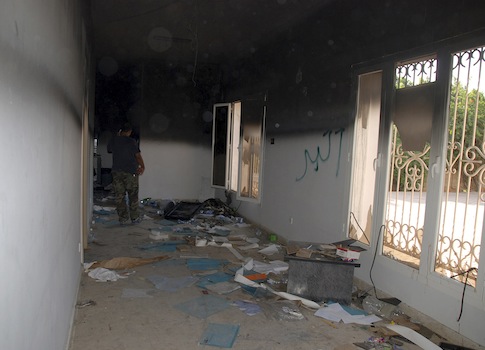
Documents obtained by Judicial Watch from their May 2014 Freedom of Information Act (FOIA) lawsuits filed against the State Department and the Department of Defense revealed that the Obama administration knew about the attacks on the U.S. Consulate in Benghazi at least 10 days before the attack.
The documents also revealed that the DOD immediately reported the attacks on the consulate.
The documents included an August 2012 analysis predicting the failure of President Obama’s policy of a regime change in Syria as well as a warning about the rise of the Islamic State. The documents also included a confirmation that United States was aware of an arms shipment from Benghazi to Syria.
One of the documents from the DOD’s Defense Intelligence Agency dated September 12, 2012, the day after the attacks in Benghazi, lays out the details of the attack on the consulate and assesses that it was carefully planned by the terrorist group “Brigades of the Captive Omar Abdul Rahman.”
The group is known to have connections to the Muslim Brotherhood as well as to al Qaeda. Rahman is serving a life sentence in prison for his role in the 1993 bombing of the World Trade Center.
The group’s goal was to “kill as many Americans as possible,” according to the documents, which were sent to Secretary of State Hillary Clinton, Defense Secretary Leon Panetta, the Joint Chiefs of Staff, and the National Security Council.
An October 2012 DOD document contained the first official document that the Obama administration knew of the shipment of weapons from the Benghazi to rebel forces in Syria.
Weapons from the former Libya military stockpiles were shipped from the port of Benghazi, Libya to the Port of Banias and the Port of Borj Islam, Syria. The weapons shipped during late-August 2012 were Sniper rifles, RPG’s, and 125 mm and 155 mm howitzers missiles.
During the immediate aftermath of, and following the uncertainty caused by, the downfall of the (Qaddafi) regime in October 2011 and up until early September of 2012, weapons from the former Libya military stockpiles located in Benghazi, Libya were shipped from the port of Benghazi, Libya to the ports of Banias and the Port of Borj Islam, Syria. The Syrian ports were chosen due to the small amount of cargo traffic transiting these two ports. The ships used to transport the weapons were medium-sized and able to hold 10 or less shipping containers of cargo.
The heavily redacted document did not reveal which weapons were sent to Syria
The DIA consistently warned of the deterioration of the situation in Iraq and warned that it creates an ideal situation for Al Qaeda to return to Mosul and Ramadi, according to an August 2012 report. During this time the U.S. was monitoring weapons flows from Libya to Syria. The agency warned of dire consequences but blocked out what most of what those consequences were.
The State Department produced a single document from a separate lawsuit that Judicial Watch had filed against the department. The document was created by Hillary Clinton’s office the morning after the attacks on the consulate in Benghazi and was sent throughout the State Department.
Neither the State Department nor Hillary Clinton have turned over any documents in regards to Benghazi or her personal email account that was used during her as well as other top aides during her time as Secretary of State.
Judicial Watch has filed multiple FOIA requests and has waited over two years for the documents that they have received.
“These documents show that the Benghazi cover-up has continued for years and is only unraveling through our independent lawsuits,” said Tom Fitton, president of Judicial Watch. “The Benghazi scandal just got a whole lot worse for Barack Obama and Hillary Clinton.”




 anneinpt
 artaxes
 danmillerinpanama
 davidking1530
 Peter Hofman
 Joseph Wouk
 Peter
Peter Louisiana Steve
 WarSclerotic
Recent Comments