Judicial Watch Releases New Hillary Clinton Email Answers Given under Oath, Judicial Watch, October 13, 2016
(Back when I was practicing law, I tried very hard to get live testimony from those involved in the case rather than written responses to depositions prepared by their attorneys. The evasive deposition responses by Clinton’s attorneys show why. — DM)
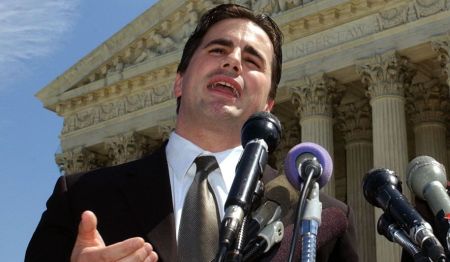
“We’re pleased that we now have a little bit more information about Hillary Clinton’s email practices,” said Judicial Watch President Tom Fitton. “Our lawyers will be reviewing the responses closely. Mrs. Clinton’s refusal to answer many of the questions in a clear and straightforward manner further reflects disdain for the rule of law.
************************
Washington, DC) – Judicial Watch today released received responses under oath from former Secretary of State Hillary Clinton concerning her email practices. Judicial Watch submitted twenty-five questions on August 30 to Clinton as ordered by U.S. District Court Judge Emmet G. Sullivan.
The new Clinton responses in the Judicial Watch Freedom of Information Act (FOIA) lawsuit before Judge Sullivan was first filed in September 2013 seeking records about the controversial employment status of Huma Abedin, former deputy chief of staff to Clinton. The lawsuit was reopened because of revelations about the clintonemail.com system (Judicial Watch v. U.S. Department of State (No. 1:13-cv-01363)).
Judicial Watch has already taken the deposition testimony of seven Clinton aides and State Department officials.
Below is text from the document filed with the court today:
NON-PARTY HILLARY RODHAM CLINTON’S RESPONSE
TO PLAINTIFF’S INTERROGATORIES
Pursuant to the Court’s August 19, 2016 order and Rule 33 of the Federal Rules of Civil Procedure, Non-Party Hillary Rodham Clinton hereby responds to Plaintiff’s Interrogatories dated August 30, 2016. The General Objections and the Objections to the Definitions set forth below are incorporated into each of the specific responses that follow. Any specific objections are in addition to the General Objections and Objections to the Definitions, and failure to reiterate a General Objection or Objection to the Definitions does not constitute a waiver of that or any other objection.
GENERAL OBJECTIONS
- Secretary Clinton objects to the Interrogatories on the ground that any discovery of Secretary Clinton is unwarranted in this case, for the reasons set forth in Secretary Clinton’s Opposition to Plaintiff’s Motion to Depose Hillary Rodham Clinton, Clarence Finney, and John Bentel (Dkt. #102) and Surreply in Further Opposition to Plaintiff’s Motion to Depose Hillary Rodham Clinton, Clarence Finney, and John Bentel (Dkt. #109), and as stated by Secretary Clinton’s counsel during the Court hearing on July 18, 2016. Secretary Clinton will answer the Interrogatories notwithstanding this objection, subject to the other objections stated herein.
- Secretary Clinton objects to the Interrogatories insofar as they request information outside the scope of permitted discovery in this case. The Court permitted discovery of Secretary Clinton on the topics of “the purpose for the creation and operation of the clintonemail.com system for State Department business,” as well as “the State Department’s approach and practice for processing FOIA requests that potentially implicated former Secretary Clinton’s and Ms. Abedin’s e-mails and State’s processing of the FOIA request that is the subject of this action.” Dkt. #124, at 14, 19 (internal quotation marks omitted). Secretary Clinton will answer the Interrogatories insofar as they seek non-privileged information related to those topics.
- Secretary Clinton objects to the Interrogatories insofar as they request information relating to events that occurred, or actions taken by Secretary Clinton, after her tenure as Secretary of State. Such post-tenure actions or events are not within the scope of the permitted topics of discovery set forth in General Objection No. 2.
- Secretary Clinton objects to the Interrogatories insofar as they request information about Secretary Clinton’s use of her clintonemail.com account to send and receive e-mails that were personal in nature, as such use is not within the scope of the permitted topics set forth in General Objection No. 2. Secretary Clinton will construe the Interrogatories to ask only about her use of her clintonemail.com account to send and receive e-mails related to State Department business.
- Secretary Clinton objects to the Interrogatories insofar as they request information about management, retention, and/or preservation of federal records. This action arises under FOIA, which does not govern management, retention, or preservation of federal records. See Kissinger v. Reporters Committee for Freedom of the Press, 445 U.S. 136, 152 (1980). Accordingly, management, retention, and/or preservation of federal records are not within the scope of the permitted topics of discovery set forth in General Objection No. 2.
- Secretary Clinton objects to Instruction No. 1 insofar as it purports to require Secretary Clinton to provide information that is not within her personal knowledge. The purpose of the limited discovery permitted by the Court is to obtain Secretary Clinton’s “personal knowledge of her purpose in using the [clintonemail.com] system.” Dkt. #124, at 16; see also id. at (directing Plaintiff “to propound questions that are relevant to Secretary Clinton’s unique first-hand knowledge”). Secretary Clinton is answering these Interrogatories based on her direct personal knowledge. She is not undertaking to provide information known only to other persons, including but not limited to her attorneys, representatives, persons acting under, by, or through her, or subject to her control or supervision, or other persons acting on her behalf.
- Secretary Clinton objects to these Interrogatories to the extent that they call for the production of information that is privileged or otherwise protected from discovery by the attorney-client privilege, the work product doctrine, or any other applicable privilege, protection, or immunity. Secretary Clinton will respond only to the extent privileged or otherwise protected information is not required and to the extent that the Interrogatory is not otherwise objectionable.
- Secretary Clinton objects to Instruction No. 5 insofar as it purports to require Secretary Clinton to identify the factual and legal basis for a claim of privilege. Secretary Clinton is not providing herewith a privilege log.
OBJECTIONS TO DEFINITIONS
- Secretary Clinton objects to the definition of “Clintonemail.com email system” insofar as it refers to e-mail system(s), server(s), provider(s), and infrastructure used to host her clintonemail.com e-mail account after her tenure as Secretary of State. Information concerning the e-mail system(s), server(s), provider(s), and infrastructure used to host her clintonemail.com account after her tenure as Secretary of State is not relevant to the purpose for the creation and operation of the clintonemail.com account during her tenure as Secretary of State, and therefore is outside the scope of the permitted discovery. In answering these Interrogatories, Secretary Clinton will construe the term “Clintonemail.com email system” to refer to the e-mail system(s), server(s), provider(s), and infrastructure used to host her clintonemail.com e-mail account during her tenure as Secretary of State.
- Secretary Clinton objects to the definition of “Clintonemail.com account” insofar as it refers to e-mail addresses used by other individuals ending in the domain name “clintonemail.com.” In answering these Interrogatories, Secretary Clinton will construe the term “Clintonemail.com account” to refer to hdr22@clintonemail.com, which was the clintonemail.com account used by Secretary Clinton during her tenure.
RESPONSES TO INTERROGATORIES
- Describe the creation of the clintonemail.com system, including who decided to create the system, the date it was decided to create the system, why it was created, who set it up, and when it became operational.
Response: Secretary Clinton objects to Interrogatory No. 1 as outside the scope of permitted discovery. The clintonemail.com system, as that term is defined in the Instructions and subject to Secretary Clinton’s objection to that definition, consisted of equipment set up to host e-mail for President Clinton’s staff. Information regarding the creation of that system, including the reasons for its creation, is irrelevant to this lawsuit and outside the scope of permitted discovery. The Court permitted discovery in this case on the question of “the purpose for the creation and operation of the clintonemail.com system for State Department business.” Dkt. #124, at 17 (emphasis added). That question is the subject of Interrogatory No. 2, which is answered below.
- Describe the creation of your clintonemail.com email account, including who decided to create it, when it was created, why it was created, and, if you did not set up the account yourself, who set it up for you.
Response: In the Senate, when Secretary Clinton began using e-mail, she used a personal e-mail account for both work-related and personal e-mail. Secretary Clinton decided to transition from the account she used in her tenure at the Senate to the clintonemail.com account. She recalls that it was created in early 2009. Secretary Clinton did not set up the account. Although Secretary Clinton does not have specific knowledge of the details of the account’s creation, her best understanding is that one of President Clinton’s aides, Justin Cooper, set up the account. She decided to use a clintonemail.com account for the purpose of convenience.
- When did you decide to use a clintonemail.com email account to conduct official State Department business and whom did you consult in making this decision?
Response: Secretary Clinton recalls deciding to use a clintonemail.com e-mail account to conduct official State Department business in early 2009. She does not recall any specific consultations regarding the decision to use the clintonemail.com account for official State Department business.
- Identify all communications in which you participated concerning or relating to your decision to use a clintonemail.com email account to conduct official State Department business and, for each communication, identify the time, date, place, manner (e.g., in person, in writing, by telephone, or by electronic or other means), persons present or participating, and content of the communication.
Response: Secretary Clinton objects to Interrogatory No. 4 insofar as it purports to request information about communications after her tenure as Secretary of State, which communications would be irrelevant to the purpose for the creation and operation of her clintonemail.com account while she was Secretary of State. Subject to the foregoing objection, Secretary Clinton states that she does not recall participating in any communications before or during her tenure as Secretary of State concerning or relating to her decision to use a clintonemail.com account to conduct official State Department business.
- In a 60 Minutes interview aired on July 24, 2016, you stated that it was “recommended” you use a personal email account to conduct official State Department business. What recommendations were you given about using or not using a personal email account to conduct official State Department business, who made any such recommendations, and when were any such recommendations made?
Response: Secretary Clinton objects to Interrogatory No. 5 insofar as it misstates her comments in the 60 Minutes interview that aired on July 24, 2016. In that interview, she stated that “it was recommended that [using personal e-mail] would be convenient.” Subject to that objection, Secretary Clinton states that former Secretary of State Colin Powell advised her in 2009 about his use of a personal e-mail account to conduct official State Department business.
- Were you ever advised, cautioned, or warned, was it ever suggested, or did you ever participate in any communication, conversation, or meeting in which it was discussed that your use of a clintonemail.com email account to conduct official State Department business conflicted with or violated federal recordkeeping laws. For each instance in which you were so advised, cautioned or warned, in which such a suggestion was made, or in which such a discussion took place, identify the time, date, place, manner (e.g., in person, in writing, by telephone, or by electronic or other means), persons present or participating, and content of the advice, caution, warning, suggestion, or discussion.
Response: Secretary Clinton objects to Interrogatory No. 6 on the ground that it requests information that is not within the scope of permitted discovery for the reason set forth in General Objection No. 5. Secretary Clinton further objects to Interrogatory No. 6 to the extent it requests information about communications made to other persons that were not conveyed to Secretary Clinton. Subject to and without waiving the foregoing objections, Secretary Clinton states that she does not recall being advised, cautioned, or warned, she does not recall that it was ever suggested to her, and she does not recall participating in any communication, conversation, or meeting in which it was discussed that her use of a clintonemail.com e-mail account to conduct official State Department business conflicted with or violated federal recordkeeping laws.
- Your campaign website states, “When Clinton got to the Department, she opted to use her personal email account as a matter of convenience.” What factors other than convenience did you consider in deciding to use a personal email account to conduct official State Department business? Include in your answer whether you considered federal records management and preservation requirements and how email you used to conduct official State Department business would be searched in response to FOIA requests.
Response: Secretary Clinton objects to Interrogatory No. 7 on the ground that it requests information that is not within the scope of permitted discovery for the reason set forth in General Objection No. 5. Subject to and without waiving that objection, Secretary Clinton states that she does not recall considering factors other than convenience in deciding to use a personal e-mail account to conduct official State Department business.
- After President Obama nominated you to be Secretary of State and during your tenure as secretary, did you expect the State Department to receive FOIA requests for or concerning your email?
Response: Secretary Clinton does not recall whether she had a specific expectation that the State Department would receive FOIA requests for or concerning her e-mail. She understood that, because her practice was to e-mail State Department staff on their state.gov accounts, her email was being captured in the State Department’s recordkeeping systems.
- During your tenure as Secretary of State, did you understand that email you sent or received in the course of conducting official State Department business was subject to FOIA?
Response: Secretary Clinton understood that e-mail she sent or received in the course of conducting official State Department business was subject to FOIA. She further understood that, because her practice was to e-mail State Department staff on their state.gov accounts, her e-mail was being captured in the State Department’s recordkeeping systems.
- During your tenure as Secretary of State, how did you manage and preserve emails in your clintonemail.com email account sent or received in the course of conducting official State Department business, and what, if anything, did you do to make those emails available to the Department for conducting searches in response to FOIA requests?
Response: Secretary Clinton objects to Interrogatory No. 10 on the ground that it requests information that is not within the scope of permitted discovery for the reason set forth in General Objection No. 5. Secretary Clinton further objects to Interrogatory No. 10 on the ground that the word “manage” is vague. Subject to and without waiving the foregoing objections, Secretary Clinton states that her practice was to e-mail State Department staff on their state.gov e-mail accounts, and Secretary Clinton understood that those e-mails were preserved in the Department’s recordkeeping systems and available to the Department in conducting searches in response to FOIA requests.
- During your tenure as Secretary of State, what, if any, effort did you make to inform the State Department’s records management personnel (e.g., Clarence Finney or the Executive Secretariat’s Office of Correspondence and Records) about your use of a clintonemail.com email account to conduct official State Department business?
Response: Secretary Clinton does not recall specifically informing the State Department’s records management personnel about her use of her clintonemail.com e-mail account to conduct official State Department business; she did openly communicate via her clintonemail.com account with many people in the State Department. Secretary Clinton does not recall interacting with Clarence Finney or employees of the Executive Secretariat’s Office of Correspondence and Records.
- During your tenure as Secretary of State, did State Department personnel ever request access to your clintonemail.com email account to search for email responsive to a FOIA request? If so, identify the date access to your account was requested, the person or persons requesting access, and whether access was granted or denied.
Response: Secretary Clinton objects to Interrogatory No. 12 insofar as it requests information about requests for access to her clintonemail.com account that may have been directed to other persons that were not conveyed to her. Subject to the foregoing objection, Secretary Clinton states that she does not recall State Department personnel asking her for access to her clintonemail.com e-mail account to search for e-mail responsive to a FOIA request during her tenure as Secretary of State.
- At the time you decided to use your clintonemail.com email account to conduct official State Department business, or at any time thereafter during your tenure as Secretary of State, did you consider how emails you sent to or received from persons who did not have State Department email accounts (i.e., “state.gov” accounts) would bemaintained and preserved by the Department or searched by the Department in response to FOIA requests? If so, what was your understanding about how such emails would bemaintained, preserved, or searched by the Department in response to FOIA requests?
Response: Secretary Clinton objects to Interrogatory No. 13 on the ground that it requests information that is not within the scope of permitted discovery for the reason set forth in General Objection No. 5. Subject to and without waiving the foregoing objection, Secretary Clinton states that it was her practice in conducting State Department business to e-mail State Department staff on their state.gov accounts, and she did not consider how e-mails she sent to or received from persons who did not have State Department e-mail accounts would be searched by the Department in response to FOIA requests.
- On March 6, 2009, Assistant Secretary of State for Diplomatic Security Eric J. Boswell wrote in an Information Memo to your Chief of Staff, Cheryl Mills, that he “cannot stress too strongly, however, that any unclassified BlackBerry is highly vulnerable in any setting to remotely and covertly monitoring conversations, retrieving email, and exploiting calendars.” A March 11, 2009 email states that, in a management meeting with the assistant secretaries, you approached Assistant Secretary Boswell and mentioned that you had read the “IM” and that you “get it.” Did you review the March 6, 2009 Information Memo, and, if so, why did you continue using an unclassified BlackBerry to access your clintonemail.com email account to conduct official State Department business? Copies of the March 6, 2009 Information Memo and March 11, 2009 email are attached as Exhibit A for your review.
Response: Secretary Clinton objects to Interrogatory No. 14 as seeking information outside the scope of the permitted discovery in this case. The Court’s May 4, 2016 Order provides that Plaintiff is not entitled to discovery on the subject of “cybersecurity issues.” Dkt. #73, at 13.
- In a November 13, 2010 email exchange with Huma Abedin about problems with your clintonemail.com email account, you wrote to Ms. Abedin, in response to her suggestion that you use a State Department email account or release your email address to the Department, “Let’s get a separate address or device.” Why did you continue using your clintonemail.com email account to conduct official State Department business after agreeing on November 13, 2010 to “get a separate address or device?” Include in your answer whether by “address” you meant an official State Department email account (i.e., a “state.gov” account) and by “device” you meant a State Department-issued BlackBerry. A copy of the November 13, 2010 email exchange with Ms. Abedin is attached as Exhibit B for your review.
Response: Secretary Clinton recalls that her November 13, 2010 e-mail exchange with Huma Abedin attached as Exhibit B to Plaintiff’s Interrogatories was triggered by a problem with the State Department’s telephone system. When Secretary Clinton wrote, “This is not a good system,” she was referring to the way in which the State Department would notify her of telephone calls. Secretary Clinton does not recall what precisely she meant by the words “address” or “device.” To the best of her recollection, she meant that she was willing to use a State Department e-mail account or device if it would resolve the problems with receiving telephone calls, so long as her personal e-mails with family and friends would not be accessible to the State Department. Following this e-mail exchange, the State Department changed the way in which it notified Secretary Clinton of telephone calls, resolving the problem that triggered this e-mail.
- Email exchanges among your top aides and assistants in August 30, 2011discuss providing you with a State Department-issued BlackBerry or State Department email address. In the course of these discussions, State Department Executive Secretary Stephen Mull wrote, “[W]e are working to provide the Secretary per her request a Department issued BlackBerry to replace her personal unit which is malfunctioning (possibly because of her personal email server is down). We will prepare two versions for her to use – one with an operating State Department email account (which would mask her identity, but which would also be subject to FOIA requests).” Similarly, John Bentel, the Director of Information and Records Management in the Executive Secretariat, wrote, “You should be aware that any email would go through the Department’s infrastructure and [be] subject to FOIA searches.” Did you request a State-Department issued Blackberry or a State Department email account in or around August 2011, and, if so, why did you continue using your personal device and clintonemail.com email account to conduct official State Department business instead of replacing your device and account with a State Department-issued BlackBerry or a State Department email account? Include in your answer whether the fact that a State Department-issued BlackBerry or a State Department email address would be subject to FOIA affected your decision. Copies of the email exchanges are attached as Exhibit C for your review.
Response: Secretary Clinton does not recall requesting a State Department-issued Blackberry or a State Department e-mail account in or around August 2011.
- In February 2011, Assistant Secretary Boswell sent you an Information Memo noting “a dramatic increase since January 2011 in attempts . . . to compromise the private home email accounts of senior Department officials.” Assistant Secretary Boswell “urge[d] Department users to minimize the use of personal web-email for business.” Did you review Assistant Secretary Boswell’s Information Memo in or after February 2011, and, if so, why did you continue using your clintonemail.com email account to conduct official State Department business? Include in your answer any steps you took to minimize use of your clintonemail.com email account after reviewing the memo. A copy of Assistant Secretary Boswell’s February 2011 Information Memo is attached as Exhibit D for your review.
Response: Secretary Clinton objects to Interrogatory No. 19 as outside the scope of permitted discovery, as the Court’s May 4, 2016 Order provides that Plaintiff is not entitled to discovery on the subject of “cybersecurity issues.” Dkt. #73, at 13. Subject to and without waiving the foregoing objection, Secretary Clinton states that she does not recall reviewing Assistant Secretary Bowell’s Information Memo attached as Exhibit D to Plaintiff’s Interrogatories during her tenure as Secretary of State.
- On June 28, 2011, you sent a message to all State Department personnel about securing personal email accounts. In the message, you noted “recent targeting of personal email accounts by online adversaries” and directed all personnel to “[a]void conducting official Department business from your personal email accounts.” Why did you continue using your clintonemail.com email account to conduct official State Department business after June 28, 2011, when you were advising all State Department Personnel to avoid doing so? A copy of the June 28, 2011 message is attached as Exhibit E for your review.
Response: Secretary Clinton objects to Interrogatory No. 18 as outside the scope of permitted discovery, as the Court’s May 4, 2016 Order provides that Plaintiff is not entitled to discovery on the subject of “cybersecurity issues.” Dkt. #73, at 13. Secretary Clinton further objects to Interrogatory No. 18 on the ground that it mischaracterizes Secretary Clinton as the sender and author of the June 28, 2011 cable attached to Plaintiff’s Interrogatories as Exhibit E. During Secretary Clinton’s tenure as Secretary of State, all cables originating from Main State ended with the name “CLINTON.” The presence of Secretary Clinton’s name at the end of the cable was a formality, and it did not mean that she sent, authored, or reviewed the cable. Subject to and without waiving the foregoing objections, Secretary Clinton states that she does not recall seeing the June 28, 2011 cable attached as Exhibit E to Plaintiff’s Interrogatories during her tenure as Secretary of State.
- Were you ever advised, cautioned, or warned about hacking or attempted hacking of your clintonemail.com email account or the server that hosted your clintonemail.com account and, if so, what did you do in response to the advice, caution, or warning?
Response: Secretary Clinton objects to Interrogatory No. 19 as outside the scope of permitted discovery, as the Court’s May 4, 2016 Order provides that Plaintiff is not entitled to discovery on the subject of “cybersecurity issues.” Dkt. #73, at 13. Secretary Clinton further objects to Interrogatory No. 19 insofar as it requests information about whether Secretary Clinton was advised, cautioned, or warned about hacking or attempted hacking of her clintonemail.com e-mail account after her tenure as Secretary of State, which is irrelevant to the purpose for her creation and operation of the clintonemail.com account while Secretary of State and therefore outside the scope of permitted discovery. Subject to and without waiving the foregoing objections, Secretary Clinton states that she does not recall being advised, cautioned, or warned during her tenure as Secretary of State about hacking or attempted hacking of her clintonemail.com e-mail account or the server that hosted her clintonemail.com account.
- When you were preparing to leave office, did you consider allowing the State Department access to your clintonemail.com email account to manage and preserve the official emails in your account and to search those emails in response to FOIA requests? If you considered allowing access to your email account, why did you decide against it? If you did not consider allowing access to your email account, why not?
Response: Secretary Clinton objects to Interrogatory No. 20 on the ground that it requests information that is outside the scope of permitted discovery for the reason set forth in General Objection No. 5. Secretary Clinton further objects to Interrogatory No. 20 on the ground that the word “manage” is vague. Subject to and without waiving the foregoing objections, Secretary Clinton states that she does not recall considering whether to allow the State Department access to her clintonemail.com e-mail account when she was preparing to leave office. She believed that her e-mails with persons with state.gov e-mail accounts were already captured in the State Department’s recordkeeping systems. Secretary Clinton does not recall anyone from the State Department asking her for access to her clintonemail.com e-mail account or asking her to print her work-related e-mails when she was preparing to leave office.
- After you left office, did you believe you could alter, destroy, disclose, or use email you sent or received concerning official State Department business as you saw fit? If not, why not?
Response: Secretary Clinton objects to Interrogatory No. 21 as outside the scope of permitted discovery in this case for the reason set forth in General Objection No. 3. Secretary Clinton further objects to Interrogatory No. 21 on the ground that it requests information that is outside the scope of permitted discovery for the reason set forth in General Objection No. 5. Subject to and without waiving the foregoing objections, Secretary Clinton states that she does not recall considering after she left office whether she could alter, destroy, disclose, or use emails concerning official State Department business. Secretary Clinton further refers Plaintiff to her Response to Interrogatory No. 22.
- In late 2014, the State Department asked that you make available to the Department copies of any federal records of which you were aware, “such as an email sent or received on a personal email account while serving as Secretary of State.” After you left office but before your attorneys reviewed the email in your clintonemail.com email account in response to the State Department’s request, did you alter, destroy, disclose, or use any of the email in the account or authorize or instruct that any email in the account be altered, destroyed, disclosed, or used? If so, describe any email that was altered, destroyed, disclosed, or used, when the alteration, destruction, disclosure, or use took place, and the circumstances under which the email was altered, destroyed, disclosed, or used? A copy of a November 12, 2014 letter from Under Secretary of State for Management Patrick F. Kennedy regarding the State Department’s request is attached as Exhibit F for your review.
Response: Secretary Clinton objects to Interrogatory No. 22 as outside the scope of permitted discovery in this case for the reason set forth in General Objection No. 3. Secretary Clinton further objects to Interrogatory No. 22 on the ground that it requests information that is outside the scope of permitted discovery for the reason set forth in General Objection No. 5. Secretary Clinton further objects to Interrogatory No. 22 insofar as it requests information about all e-mail in her clintonemail.com account, including personal e-mail. Subject to and without waiving the foregoing objections, Secretary Clinton states that she does not recall altering, destroying, disclosing, or using any e-mails related to official State Department business from her tenure as Secretary of State in her clintonemail.com account or instructing anyone else to do so after she left office and before her attorneys reviewed the e-mails in her clintonemail.com email account in response to the State Department’s request.
- After your lawyers completed their review of the emails in your clintonemail.com email account in late 2014, were the electronic versions of your emails preserved, deleted, or destroyed? If they were deleted or destroyed, what tool or software was used to delete or destroy them, who deleted or destroyed them, and was the deletion or destruction done at your direction?
Response: Secretary Clinton objects to Interrogatory No. 23 as outside the scope of permitted discovery for the reason set forth in General Objection No. 3. Secretary Clinton further objects to Interrogatory No. 23 on the ground that it requests information that is outside the scope of permitted discovery for the reason set forth in General Objection No. 5. Secretary Clinton further objects to Interrogatory No. 23 insofar as it requests information about all e-mail in her clintonemail.com account, including personal e-mail. Subject to and without waiving the foregoing objections, Secretary Clinton states that it was her expectation that all of her work-related and potentially work-related e-mail then in her custody would be provided to the State Department in response to its request. Secretary Clinton believes that her attorneys retained copies of the e-mails provided to the State Department in December 2014, but she does not have any personal knowledge about the details of that process. Secretary Clinton decided that, once her work-related and potentially work-related e-mails were provided to the State Department, she had no reason to keep her personal e-mails, which did not relate to official State Department business. She believes that her personal e-mails were not kept, and she does not have any personal knowledge about the details of that process.
- During your October 22, 2015 appearance before the U.S. House of Representatives Select Committee on Benghazi, you testified that 90 to 95 percent of your emails “were in the State’s system” and “if they wanted to see them, they would certainly have been able to do so.” Identify the basis for this statement, including all facts on which you relied in support of the statement, how and when you became aware of these facts, and, if you were made aware of these facts by or through another person, identify the person who made you aware of these facts.
Response: Secretary Clinton objects to Interrogatory No. 24 on the ground that it calls for information protected by the attorney-client privilege.
- Identify all communications between you and Brian Pagliano concerning or relating to the management, preservation, deletion, or destruction of any emails in your clintonemail.com email account, including any instruction or direction to Mr. Pagliano about the management, preservation, deletion, or destruction of emails in your account when transferring the clintonemail.com email system to any alternate or replacement server. For each communication, identify the time, date, place, manner (e.g., in person, in (e.g., in person, in writing, by telephone, or by electronic or other means), persons present or participating, and content of the communication.
Response: Secretary Clinton objects to Interrogatory No. 25 on the ground that it requests information that is outside the scope of permitted discovery for the reasons set forth in General Objection No. 5. Secretary Clinton further objects to Interrogatory No. 25 on the ground that the word “management” is vague. Secretary Clinton further objects to Interrogatory No. 25 insofar as it requests information related to alternate or replacement servers used after Secretary Clinton’s tenure as Secretary of State. Subject to and without waiving the foregoing objections, Secretary Clinton states that she does not recall having communications with Bryan Pagliano concerning or relating to the management, preservation, deletion, or destruction of any e-mails in her clintonemail.com email account.
Judicial Watch has taken the sworn testimony of Clinton’s top aides Cheryl Mills and Huma Abedin, as well as top State Department official Patrick Kennedy, and former State IT employee Bryan Pagliano regarding the creation and operation of Clinton’s non-government email system. Judicial Watch plans to depose John Bentel, the State Department’s former Director of Information Resource Management of the Executive Secretariat (“S/ES-IRM”), the office that handles information technology for the Office of the Secretary, on October 24, 2016.
“We’re pleased that we now have a little bit more information about Hillary Clinton’s email practices,” said Judicial Watch President Tom Fitton. “Our lawyers will be reviewing the responses closely. Mrs. Clinton’s refusal to answer many of the questions in a clear and straightforward manner further reflects disdain for the rule of law.
For further information on this case, click here.






 anneinpt
 artaxes
 danmillerinpanama
 davidking1530
 Peter Hofman
 Joseph Wouk
 Peter
Peter Louisiana Steve
 WarSclerotic
Recent Comments