Archive for the ‘Bangladesh’ category

Malaysia Kills a Talking Point

August 11, 2017

Malaysia Kills a Talking Point, Investigative Project on Terrorism, August 11, 2017

In trying to cast their faith as tolerant and accepting of others, many Muslims like to point to the Quran’s verse 2:256: “There shall be no compulsion in [acceptance of] the religion,” it begins.

It’s a comforting thought. While dawa, a form of proselytizing, is a key element of the faith, the argument makes it sound as if there are no repercussions for those who do not accept the faith or who reject it.

But, in scripture and in practice, this simply is not true.

Verse 25:11, for example, warns: “But they have disbelieved the Hour (the Day of Judgment) and for those who disbelieve the Hour, We have prepared a flaming fire.” Verse 4:151 similarly, promises “the disbelievers a humiliating torment.”

Right now in Malaysia – often held up as an example of a moderate Muslim-majority nation – police are under instruction to “hunt down” non-believers through state-mandated re-education programs and “fix their faith” if they once were Muslims.

All this because of a photograph posted online Aug. 2 which showed a group of more than three dozen smiling young people who are part of the Atheist Republic, a support and social media outlet with more than 1 million followers worldwide. Founder Armin Navabi created the group while still living in Iran, one of 13 Muslim-majority countries that punishes apostasy with death.

The meeting in Kuala Lumpur “was such a blast,” the Facebook post said. “Atheists from all walks of life came to meet one another, some for the very first time…each sharing their stories and forming new friendships that hopefully will last a lifetime! We rock!”

They did harm to no one. But cabinet minister Datuk Seri Shahidan Kassim learned of the gathering and saw a threat to Malaysia’s national well-being. He called for authorities to “hunt down” those present, noting that Malaysia’s constitution is silent about atheists. “This clearly shows that the group goes against the Constitution and basic rights,” he said.

While Malaysia is one of the countries that can carry out the death penalty for apostasy, no government official is using such terms. So far. Social media, however, is filled with death threats against the Malaysian atheists.

“Advise them and tell them that Islam is not to be played with,” Danizaynal Dani wrote. “If they refuse to repent we burn them alive. An apostate’s blood is halal for slaughter.”

“It is better to die from hanging for murder, than to die as an apostate,” wrote Irfan Samsuri.

Navabi also co-hosts a podcast with other ex-Muslims, called, “Secular Jihadists from the Middle East.” In an emotionally-charged special episode on the Malaysian threats Tuesday night, he said police had already visited at least one of the people in the photograph. He was surprised by the reaction. He was less surprised by the lack of attention Western news outlets and supposed liberal activists have given the situation.

“If this was happening to any other group, any other group, there would be an outcry right now,” he said. “If this was a group of Muslims being treated like this, if this was a group of Christians being treated like this, the whole world would be reacting to it right now.”

Navabi’s observation leads to the simple question: Why isn’t this attack on freedom gaining more attention? None of the national Islamist activist groups, which would organize protests and marches if the targets were Muslims, have said anything. The same groups have pushed the “no compulsion in religion” argument, though, so it might be difficult to acknowledge the rights of ex-Muslims in Malaysia without grappling with some uncomfortable realities.

Unfortunately, the same also can be said for a series of other cases in which Muslim-majority countries prosecute or see mob violence attack and kill people for thought crimes. One hears very little about these cases outside of the interest groups directly affected.
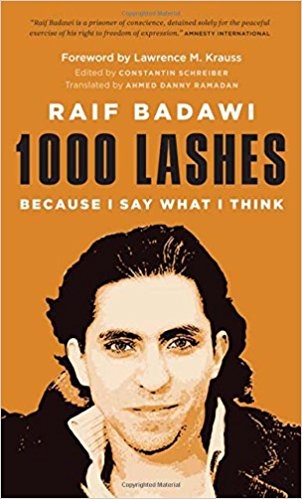
Saudi Arabia, for example, has jailed writer Raif Badawi for more than five years for the crime of writing about secularism. His sentence also includes 1,000 lashes, the first 50 of which nearly killed him. His wife described the scene that she later saw in an online video:

“But I saw clearly that he was striking Raif with all his might. Raif’s head was bowed. In very quick succession he took the blows all over the back of his body: he was lashed from shoulders to calves, while the men around him clapped and uttered pious phrases.”

In Bangladesh, a series of brutal machete attacks killed at least 11secular and atheist bloggers since 2013. One, Avijit Roy, was an American citizen. His wife was severely injured, but survived and continues to speak out about free expression.

Regardless of one’s views on religion, these Malaysian people’s plight – like Raif Badawi’s and like the slaughtered Bangladeshi writers – is about the right to free speech, free thought and peaceful assembly. These ideals are the foundation of a free society, or liberty.

It would be nice if more people—of any or no religion—called out these human rights abuses.

Ethnic Slaughter in Bangladesh

April 30, 2017

Ethnic Slaughter in Bangladesh, Gatestone InstituteArnab Goswami, April 30, 2017

(According to Wikipedia, ” Bangladeshis include people of different ethnic groups and religions. Bengalis, who speak the official Bengali language, make up 98% of the population.[2][3] The politically dominant Bengali Muslims make the nation the world’s third largest Muslim-majority country.” — DM)


Last year, the police themselves set fire to about 3,000 houses of minority people.

Most recently, the Bangladesh Army killed Romel Chakma, an indigenous student leader. He was only 18 and had one eye. The government forced the media to bury the news.

What is most perplexing is the silence of the international media and so-called humanitarian organisations.

The Bangladesh government at present is carrying out atrocities against religious and ethnic minorities. Some foreign organisations helped me to flee to safety in Germany after nine of my colleagues were hacked to death by extremists.

Unfortunately, all the minorities of the country are not as fortunate. Last year, the police themselves set fire to about 3,000 houses of minority people. Most recently, the Bangladesh Army killed Romel Chakma, an indigenous student leader. He was only 18 and had one eye. The army decided to pour Kerosene over his dead body and set it on fire.

Romel Chakma. (Image source: Arnab Goswami’s Blog)

The government forced the media to bury the news. It is different in Bangladesh; nobody cares about minority people anyway.

What is most perplexing is the silence of the international media and so-called humanitarian organisations. Please let the world know about the realities in Bangladesh.

This is an article on the murder. It contains the links to the murder news covered.

I know this will not be a popular news, but it is important news. People need to know it.

Arnab Goswami is a Bangladeshi blogger in exile in Germany.

Bangladesh: ISIS pays Italy back for role in Libya

July 3, 2016

Bangladesh: ISIS pays Italy back for role in Libya, DEBKAfile, July 3, 2016

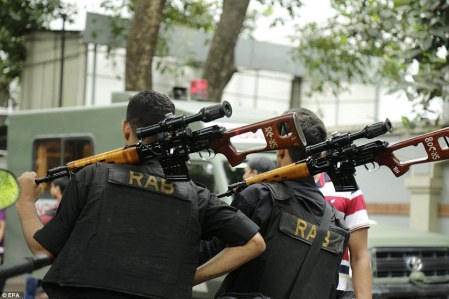
Dhaka_high_powered_Dragunov_sniper_1.7.16

The Islamic State struck the West again on June 1, when it activated a local Bangladeshi cell for a murderous, hostage-taking attack on the Artisan Bakery and O’Kitchen Restaurant, a favorite haunt of foreign visitors near the diplomatic zone of Dakha, the capital. A large contingent of Italian businessmen dining there that night was specifically targeted by ISIS in revenge for the Rome government’s military intervention in the campaign to eject the Islamists from Libya.

DEBKAfile intelligence and counter terror sources note that the long Islamist arm reached into the Indian subcontinent, 7,000km away, to settle its score with Italy, rather than sending its killers by the obvious route from the ISIS capital Sirte in Libya to Italy across 1,200km of Mediterranean Sea. This tactic saved them the risk of running the gauntlet of the Italian Navy boats which are fanned out across the Sidra Gulf to staunch the flow of migrants (an important source of income for ISIS) and intercept terrorists heading for attack in Europe.

Bangladesh is the world’s second largest manufacturing center after China for the major Western fashion houses, netting each year 26.5 Billion USD, 75 pc of its foreign currency earnings. Among the important Italian fashion houses manufacturing in Bangladesh are Prada, Milan, and Benetton.

Italian special operations contingents are the largest Western force operating on several fronts in Libya since early January. They are fighting to capture the key port town of Sirte together with British and US special forces and alongside local Libyan forces.

On April 29, DEBKAfile reported: “ISIS fighters smashed a force of Italian and British Special Ops troops on Wednesday, April 27 in the first battle of its kind in Libya. This battle will result in the delay of the planned Western invasion of Libya, as the encounter proved that European forces are not ready for this kind of guerilla warfare. The sources also said the planners of the invasion were surprised by the high combat skills of the ISIS fighters.”

The Bangladesh attack was therefore not the first contretemps suffered by Italy in its fight on Islamist terror.

Inside Libya, the fighting continues unresolved for lack of air support. The US, Italy, France and the UK cannot agree on which of them will supply air cover for the ground forces battling for Sirte and which will assume command.

In early June, overall command of the campaign was given to NATO. That decision did not break the allied impasse either, because its members remained at loggerheads over respective air force contributions, provision of the logistic intelligence required for aerial operations and, lastly, funding.

Due to insufficient air cover, western and Libyan special forces are stuck in the parts of Sirte they have captured, but cannot advance towards the city’s center or root out the ISIS fighters.

The fact that ISIS was able to operate a terror cell in far-away Bangladesh to strike a counterblow in the battle in Northern Africa, testified to the global scope of the terror organization’s command and communication reach.

Just like the November 2015 Paris attacks, the terrorists were in telephone contact with their masters in the Middle East, once in a while sending pictures of the victims they murdered inside the restaurant.

In the attack, the terrorists killed 9 Italian businessmen, 7 Japanese businessmen, one US citizen, 3 local citizens, and one Indian.

The hostages were executed by beheading with machetes.

The counter terrorism sources report that, just as in the terror attacks in Brussels, Paris and Istanbul, the attackers in Dakha were previously known to local security and intelligence agencies, at least five of the seven terrorists were known to the Bangladesh security agencies, who claimed they were unable to stop them.