Archive for the ‘2016 elections and Russia’ category

Winners and Losers from Comey Hearing

June 9, 2017

inners and Losers from Comey Hearing, BreitbartTony Lee, June 9, 2017

The mainstream media, left-wing Democrats, and “Never Trump” Republicans all breathlessly hoped for weeks that former FBI director James Comey’s testimony on Thursday before the Senate Intelligence Committee would be the beginning of the end of President Donald Trump’s presidency.

Mainstream media cable networks like CNN had countdown clocks. Broadcast networks covered the hearing as if it would go down as one of the most seminal events in the history of the country. “Never Trump” Republicans were getting ready to be used as the mainstream media’s useful idiots and get their predictable television hits and quotes in mainstream media publications. Left-wing Democrats were dreaming of drafting articles of impeachment. They lionized Comey as their hero who would help them destroy Trump once and for all.

Not so fast.

After nearly three hours of testimony, Comey established that Trump did not collude with Russia and, as Breitbart’s Joel Pollak pointed out, “all but destroyed any hope Democrats had for bringing a case of obstruction of justice.”

The press and anti-Trump forces on the left and right were still hoping for “new information” that would destroy Trump. But to their surprise—and chagrin—the only new bits of information Comey revealed actually made Comey, the mainstream press, and Democrats, especially Hillary Clinton and then-President Barack Obama’s Attorney General Loretta Lynch, look bad before a captivated national audience.

In the end, Comey, Democrats, Never Trumpers, and the mainstream press turned out be losers while Trump, especially because the mainstream media so overhyped the hearing, emerged as the victor.

LOSERS:

Mainstream Media

NBC’s Chuck Todd set the table on Sunday for the mainstream media’s breathless coverage, predicting that Comey’s testimony “may well join those rare historic moments when the whole country stops to watch. Think Army-McCarthy hearings in 1954. Watergate hearings in 1973. Oliver North’s testimony in the Iran Contra hearings in 1987, and of course Anita Hill at the Clarence Thomas hearings in 1991.”

But the media got the sense that Comey’s testimony would be a dud for them on Wednesday when Comey released his introductory statement in which he confirmed Trump’s account that Comey had told Trump on multiple occasions that the President was not under FBI investigation.

Before, during, and after Comey’s testimony, the mainstream press looked as deflated as Cleveland Cavaliers superstar LeBron James did after Golden State’s Kevin Durant drained a go-ahead pull-up three-pointer in the waning moments of game three of the NBA Finals on Wednesday evening.

Trump felt “vindicated” by Comey’s introductory remarks, which may be why Comey conveniently decided not to read them before a captivated national audience.

“I’ve submitted my statement for the record, and I’m not going to repeat it here this morning,” he said.

Comey, though, revealed some information that further discredited the mainstream press that had deliberately ginned up talk of impeachment. They did so by using stories based solely on anonymous sources and double hearsay—some of which have since been discredited.

The former FBI director told Senators that the New York Times’ February 14 article, based on four anonymous sources, that suggested Trump’s campaign possibly colluded with Russians a year before the 2016 presidential campaign was “not true.”

Sen. James Risch (R-ID) pointed out that after the story’s publication, Comey “sought out both Republican and Democrat senators to tell them that, hey, I don’t know where this is coming from, but this is not the case. This is not factual.”

“In the main, it was not true,” Comey said of the story. “And again, all of you know this. Maybe the American people don’t. The challenge, and I’m not picking on reporters about writing stories about classified information, is the people talking about it often don’t really know what’s going on, and going on are not talking about it. We don’t call the press to say, hey, you don’t that thing wrong about the sensitive topic. We have to leave it there.”

Comey said there were many more mainstream media articles about the FBI’s Russia investigation, based on anonymous sources, that were “dead wrong.”

Sen. James Lankford (R-OK) asked Comey: “Have there been news accounts about the Russian investigation or collusion about the whole event or as you read the story you were wrong about how wrong they got the facts?”

“Yes, there have been many, many stories based on — well, lots of stuff but about Russia that are dead wrong,” Comey responded.

On Wednesday, ABC and CNN falsely reported, based on their anonymous sources, that Comey would dispute Trump’s claim that Comey told him he was never under investigation. When he fired Comey, Trump wrote: “While I greatly appreciate you informing me, on three separate occasions, that I am not under investigation, I nevertheless concur with the judgment of the Department of Justice that you are not able to effectively lead the Bureau.”

Before Comey released his introductory remarks, CNN’s Gloria Borger claimed “Comey is expected to explain to senators that those were much more nuanced conversations from which Trump concluded that he was not under investigation.” CNN, citing an anonymous source, reported that Comey would “refute” Trump during his testimony and “say he never assured Donald Trump that he was not under investigation, that that would have been improper for him to do so.” CNN then had to issue this embarrassing correction:

CORRECTION AND UPDATE: This article was published before Comey released his prepared opening statement. The article and headline have been corrected to reflect that Comey does not directly dispute that Trump was told multiple times he was not under investigation in his prepared testimony released after this story was published.

In addition, Sen. Marco Rubio (R-FL) pointed out that the only bit of information that the Deep State did not leak to the mainstream press was the fact that Trump was not under investigation.

Comey also revealed that former Attorney General Loretta Lynch pressured him into misleading the public about the FBI’s “investigation” of Hillary Clinton’s emails. And yet, the mainstream media never dug enough to report that bit of inconvenient news.

James Comey

Comey’s surprising revelation that he orchestrated the leaking of his “contemporaneous” memo to the mainstream media raised more questions than answers.

When Sen. Susan Collins (R-ME) asked Comey if he showed his memos to anyone outside the Justice Department, Comey matter-of-factly revealed that he asked his friend to leak his memo to the mainstream media.

“I asked a friend of mine to share the content of the memo with a reporter. Didn’t do it myself for a variety of reasons,” he said. “I asked him to because I thought that might prompt the appointment of a special counsel. I asked a close friend to do it.”

Comey revealed that his “close friend” is a professor at Columbia law school. Reporters later determined that that person is Daniel Richman. Richmond’s Columbia University bio states that he “is currently an adviser to FBI Director James B. Comey.”

“I asked—the president tweeted on Friday after I got fired that I better hope there’s not tapes,” Comey stated. “I woke up in the middle of the night on Monday night because it didn’t dawn on me originally, that there might be corroboration for our conversation. There might a tape. My judgement was, I need to get that out into the public square.”

George Washington University Law Professor Jonathan Turley said he found “Comey’s admission to be deeply troubling from a professional and ethical standpoint.”

“Would Director Comey have approved such a rule for FBI agents?” he asked. “Thus, an agent can prepare a memo during office hours on an FBI computer about a meeting related to his service . . . but leak that memo to the media. The Justice Department has long defined what constitutes government documents broadly.”

He added that “it is not clear if Comey had the documents reviewed for classification at the confidential level or confirmed that they would be treated as entirely private property. What is clear is that he did not clear the release of the memos with anyone in the government.”

“Comey’s statement of a good motivation does not negate the concerns over his chosen means of a leak. Moreover, the timing of the leak most clearly benefited Comey not the cause of a Special Counsel,” Turley added. “It was clear at that time that a Special Counsel was likely. More importantly, Comey clearly understood that these memos would be sought. That leads inevitably to the question of both motivation as well as means.” There are also questions about whether Comey may have lied under oath about when he actually leaked his own memo.

Comey, after accusing Trump of lying about and defaming the FBI, also tried to paint Trump as a serial liar.

“I was honestly concerned he might lie about the nature of our meeting so I thought it important to document,” he said. “That combination of things I had never experienced before, but had led me to believe I got to write it down and write it down in a very detailed way.”

He added, “my common sense, again I could be wrong, but my common sense told me what’s going on here is, he’s looking to get something in exchange for granting my request to stay in the job.”

But the bottom line is on the most important point—whether Comey told Trump on multiple occasions that he was not under investigation—Trump was telling the truth all along, even though mainstream media outlets like the Associated Press did everything to make American doubt Trump.

Obama Administration/Loretta Lynch

Comey’s testimony revealed that there may be just as many—if not more—questions surrounding the Obama administration regarding possible malfeasance.

When asked if former President Bill Clinton’s infamous tarmac meeting with then-Attorney General Loretta Lynch led him to go public with the FBI’s investigation of Hillary Clinton’s private email server, Comey said, “yes,” adding that the incident was conclusively “the thing that capped it for me, that I had to do something separately to protect the credibility of the investigation, which meant both the FBI and the justice department.”

Comey later revealed that he felt “queasy” when Lynch “had directed me not to call it an investigation, but instead to call it a matter, which confused me and concerned me, but that was one of the bricks in the load that led me to conclude I have to step away from the department if we’re to close this case credibly.”

“I don’t know whether it was intentional or not but it gave the impression that the attorney general was looking to align the way we talked about our work with the way it was describing that,” he said. “It was inaccurate. We had an investigation open for the Federal Bureau of Investigation, we had an investigation open at the time. That gave me a queasy feeling.”

Even CNN’s Chris Cilizza had to begrudgingly admit that Loretta Lynch “is having a surprisingly bad day in the Comey testimony.”

Loretta Lynch is having a surprisingly bad day in the Comey testimony

 As Breitbart’s John Hayward noted, the “big takeaway from the Comey hearing” may have been the “urgent need to investigate Loretta Lynch, Barack Obama, and Hillary Clinton for obstruction.”

Big takeaway from the Comey hearing: urgent need to investigate Loretta Lynch, Barack Obama, and Hillary Clinton for obstruction

 Left-wing Democrats and Never Trumpers

Liberals and left-wing activists in places like San Francisco reportedly took the day off of work to attend various “viewing parties.

As soon as Trump fired Comey, the usual “Never Trump” suspects like Ana Navarro, Jennifer Rubin, and Max Boot immediately started floating the idea of “impeachment.” Boot predicted that “if Democrats take control of Congress in 2018, the firing of Comey will form one of the articles of impeachment.” Rubin added that “House R’s should consider: Either a special pros/select committee now or impeachment if D’s take House.”

But it was a bad day for Democrats and Never Trumpers looking to ramp up their impeachment demands.

Even MSNBC’s Chris Matthews had to concede that Comey’s testimony revealed that there is no case to be made that Trump colluded with the Russians.

And as Breitbart’s Pollak pointed out, Comey’s exchange with Risch destroyed their hopes of bringing an “obstruction of justice” against Trump. Harvard lawyer Alan Dershowitz also declared that there is “no plausible case” that Trump obstructed justice. In his memo, Comey recalled that Trump told him, “I hope you can see your way clear to letting this go, to letting Flynn go. He is a good guy. I hope you can let this go.”

As Risch pointed out, Comey may have “taken it as direction but that’s not” exactly what Trump said:

RISCH: You may have taken it as a direction but that’s not what he said.

COMEY: Correct.

RISCH: He said, I hope.

COMEY: Those are his exact words, correct.

RISCH: You don’t know of anyone ever being charged for hoping something, is that a fair statement?

COMEY: I don’t as I sit here.

Having no case for impeachment after Comey’s Thursday testimony, it is not surprising that there has was not a peep about impeachment from left-wing Democrats like Rep. Maxine “Get Ready for Impeachment” Waters (D-CA). Instead, Waters was railing against Wall Street. Mainstream media journalists were complaining about Trump’s character, mendacity, and temperament. Showing her Trump Derangement Syndrome, Rubin, though, continued to bring up potential impeachment.

Senators confused if they think only spec pros decides if Comey or Trump truthful. House in impeachment and Senate in trial must decide

“The saturation of Watergate analogies in the media however seems wildly detached from either the actual testimony or history. If Watergate was a cancer growing on the presidency, this is still little more than a canker sore — not great to look at but hardly life threatening,” Turley continued. “It could get worse but what Comey described in his testimony was boorish and even brutish but not necessarily an indictable or impeachable offense. Article I is not a book of etiquette for presidents. If Trump said these things to Comey, they are incredibly improper and ill-advised. Yet, the Nixon comparison works in favor of the position of Trump more than it does Comey.”

WINNER: PRESIDENT DONALD TRUMP

Is he getting tired of winning yet?

Liberal anchors like MSNBC’s Chris Matthews conceded that there is no case for collusion. Comey’s exchange with Risch will make it difficult to bring an “obstruction of justice” against Trump. It turned out that Comey initiated the first one-on-one meeting with Trump during the transition period.

During his testimony, Comey reiterated that Trump never asked him to stop the FBI’s Russia investigation and was never under investigation in the first place. He also revealed that it is normal for foreign governments to reach out to officials in the incoming administration. He vindicated Trump’s claims about the “fake news” mainstream media. He reminded Americans that “the law required no reason at all” for Trump to fire an FBI director.

Comey testified that he was “confident” that no votes in the 2016 presidential election were altered. “When I left as director I had seen no indication of that whatsoever,” he said.

The bottom line is the media hyped Comey’s hearing so much that Trump would have emerged as the winner so long as Comey didn’t have a “smoking gun” or dropped a “bombshell” that proved Trump colluded with the Russians.

Though Trump reportedly decided the night before Comey’s testimony that he would not live-tweet rebuttals, the fact that he did not feel compelled to tweet during Comey’s testimony said it all. It turns out that when it came to the most important points, Trump did not have much to rebut.

Trump ends remarks on Comey Day without mentioning the word “Comey” or directly referencing the testimony.

History, Precedent and Comey Statement Show that Trump Did Not Obstruct Justice

June 8, 2017

History, Precedent and Comey Statement Show that Trump Did Not Obstruct Justice, Gatestone InstituteAlan M. Dershowitz, June 8, 2017

Comey has also acknowledged that the president had the constitutional authority to fire him for any or no cause. President Donald Trump also had the constitutional authority to order Comey to end the investigation of Flynn. He could have pardoned Flynn, as Bush pardoned Weinberger, thus ending the Flynn investigation, as Bush ended the Iran-Contra investigation. What Trump could not do is what Nixon did: direct his aides to lie to the FBI, or commit other independent crimes. There is no evidence that Trump did that.

*************************

The statement may provide political ammunition to Trump opponents, but unless they are willing to stretch James Comey’s words and take Trump’s out of context, and unless they are prepared to abandon important constitutional principles and civil liberties that protect us all, they should not be searching for ways to expand already elastic criminal statutes and shrink enduring constitutional safeguards in a dangerous and futile effort to criminalize political disagreements.

The first casualty of partisan efforts to “get” a political opponent — whether Republicans going after Clinton or Democrats going after Trump — is often civil liberties. All Americans who care about the Constitution and civil liberties must join together to protest efforts to expand existing criminal law to get political opponents.

Today it is Trump. Yesterday it was Clinton. Tomorrow it could be you.

In 1992, then-President George H.W. Bush pardoned Caspar Weinberger and five other individuals who had been indicted or convicted in connection with the Iran-Contra arms deal. The special prosecutor, Lawrence Walsh, was furious, accusing Bush of stifling his ongoing investigation and suggesting that he may have done it to prevent Weinberger or the others from pointing the finger of blame at Bush himself. The New York Times also reported that the investigation might have pointed to Bush himself.

This is what Walsh said:

“The Iran-contra cover-up, which has continued for more than six years, has now been completed with the pardon of Caspar Weinberger. We will make a full report on our findings to Congress and the public describing the details and extent of this cover-up.”

Yet President Bush was neither charged with obstruction of justice nor impeached. Nor have other presidents who interfered with ongoing investigations or prosecutions been charged with obstruction.

It is true that among the impeachment charges levelled against President Nixon was one for obstructing justice, but Nixon committed the independent crime of instructing his aides to lie to the FBI, which is a violation of section 1001 of the federal criminal code.

It is against the background of this history and precedent that the statement of former FBI Director James must be considered. Comey himself acknowledged that,

“throughout history, some presidents have decided that because ‘problems’ come from Justice, they should try to hold the Department close. But blurring those boundaries ultimately makes the problems worse by undermining public trust in the institutions and their work.”

Comey has also acknowledged that the president had the constitutional authority to fire him for any or no cause. President Donald Trump also had the constitutional authority to order Comey to end the investigation of Flynn. He could have pardoned Flynn, as Bush pardoned Weinberger, thus ending the Flynn investigation, as Bush ended the Iran-Contra investigation. What Trump could not do is what Nixon did: direct his aides to lie to the FBI, or commit other independent crimes. There is no evidence that Trump did that.

With these factors in mind, let’s turn to the Comey statement.

Former FBI Director James Comey’s written statement, which was released in advance of his Thursday testimony before the Senate Intelligence Committee, does not provide evidence that President Trump committed obstruction of justice or any other crime. Indeed it strongly suggests that even under the broadest reasonable definition of obstruction, no such crime was committed.

The crucial conversation occurred in the Oval Office on February 14 between the President and the then director. According to Comey’s contemporaneous memo, the president expressed his opinion that General Flynn “is a good guy.” Comey replied: “He is a good guy.”

The President said the following: “I hope you can see your way clear to letting this thing go.”

Comey understood that to be a reference only to the Flynn investigation and not “the broader investigation into Russia or possible links to the campaign.”

Comey had already told the President that “we were not investigating him personally.”

Comey understood “the President to be requesting that we drop any investigation of Flynn in connection with false statements about his conversations with the Russian ambassador in December.”

Comey did not say he would “let this go,” and indeed he did not grant the president’s request to do so. Nor did Comey report this conversation to the attorney general or any other prosecutor. He was troubled by what he regarded as a breach of recent traditions of FBI independence from the White House, though he recognized that “throughout history, some presidents have decided that because ‘problems’ come from the Department of Justice, they should try to hold the Department close.”

That is an understatement.

Throughout American history — from Adams to Jefferson to Lincoln to Roosevelt to Kennedy to Obama — presidents have directed (not merely requested) the Justice Department to investigate, prosecute (or not prosecute) specific individuals or categories of individuals.

It is only recently that the tradition of an independent Justice Department and FBI has emerged. But traditions, even salutary ones, cannot form the basis of a criminal charge. It would be far better if our constitution provided for prosecutors who were not part of the executive branch, which is under the direction of the president.

In Great Britain, Israel and other democracies that respect the rule of law, the Director of Public Prosecution or the Attorney General are law enforcement officials who, by law, are independent of the Prime Minister.

But our constitution makes the Attorney General both the chief prosecutor and the chief political adviser to the president on matters of justice and law enforcement.

The president can, as a matter of constitutional law, direct the Attorney General, and his subordinate, the Director of the FBI, tell them what to do, whom to prosecute and whom not to prosecute. Indeed, the president has the constitutional authority to stop the investigation of any person by simply pardoning that person.

Assume, for argument’s sake, that the President had said the following to Comey: “You are no longer authorized to investigate Flynn because I have decided to pardon him.” Would that exercise of the president’s constitutional power to pardon constitute a criminal obstruction of justice? Of course not. Presidents do that all the time.

The first President Bush pardoned Caspar Weinberger, his Secretary of Defense, in the middle of an investigation that could have incriminated Bush. That was not an obstruction and neither would a pardon of Flynn have been a crime. A president cannot be charged with a crime for properly exercising his constitutional authority

For the same reason, President Trump cannot be charged with obstruction for firing Comey, as he had the constitutional authority to do.

The Comey statement suggests that one reason the President fired him was because of his refusal or failure to publicly announce that the FBI was not investigating Trump personally. Trump “repeatedly” told Comey to “get that fact out,” and he did not.

If that is true, it is certainly not an obstruction of justice.

Nor is it an obstruction of justice to ask for loyalty from the director of the FBI, who responded “you will get that (‘honest loyalty’) from me.”

Comey understood that he and the President may have understood that vague phrase — “honest loyalty” — differently. But no reasonable interpretation of those ambiguous words would give rise to a crime. 
 Many Trump opponents were hoping that the Comey statement would provide smoking guns.

It has not.

Instead it has weakened an already weak case for obstruction of justice.

The statement may provide political ammunition to Trump opponents, but unless they are willing to stretch Comey’s words and take Trump’s out of context, and unless they are prepared to abandon important constitutional principles and civil liberties that protect us all, they should not be searching for ways to expand already elastic criminal statutes and shrink enduring constitutional safeguards in a dangerous and futile effort to criminalize political disagreements.

The first casualty of partisan efforts to “get” a political opponent — whether Republicans going after Clinton or Democrats going after Trump — is often civil liberties. All Americans who care about the Constitution and civil liberties must join together to protest efforts to expand existing criminal law to get political opponents.

Today it is Trump. Yesterday it was Clinton. Tomorrow it could be you.

WASHINGTON, DC – MAY 3: Director of the Federal Bureau of Investigation, James Comey testifies in front of the Senate Judiciary Committee during an oversight hearing on the FBI on Capitol Hill May 3, 2017 in Washington, DC.  (Photo by Eric Thayer/Getty Images)


There’s Nothing About Comey

June 8, 2017

There’s Nothing About Comey, Front Page Magazine, Daniel Greenfield, June 8, 2017

The FBI, as Comey lays out in a tedious opening that he knows his Democrat admirers will skip over to get to the juicy Trump stuff, was conducting a “counterintelligence investigation” not a criminal investigation. So there was no crime. Nor was the FBI investigating Trump. Nor is Trump being accused of obstructing an FBI investigation. 

All those carefully documented memos, the painstaking labor, amount to absolutely nothing.

But that’s because there was no crime to begin with. The rest is innuendo. The drip drop of a scandal without one ever materializing. Comey’s testimony will be another drop from that leaky faucet. Its only substance is theatrical. Detailed documentation creates the appearance of wrongdoing. Constant hearings maintain the illusion that something is being uncovered. Even when nothing is.

***************************

Never has one man broken more leftist hearts than James Brien Comey Jr.

The 6’8 former FBI director is once again the object of the left’s adoration. “A Beltway dreamboat, handsome as a movie star,” Salon gushes. “Our handsome young FBI director,” Gizmodo flutters its eyelashes. “How tall is James Comey? Tall. Like, really tall,” the Boston Globe coos. 

Now the Beltway dreamboat will be appearing live and in person in the Senate. It’s the biggest show in a big government town. Teenage girls hunting for Justin Bieber tickets have nothing on the media frenzy.

“The Comey Testimony: When, Where and How to Follow,” the New York Times breathlessly posts. As if it’s the World Series instead of awkward exchanges between a resentful lifer government man, Senate Democrats trying to prove that President Trump didn’t win the election and the moon landing was faked, and Senate Republicans trying to get on with the business of running the country.

And the left shouldn’t get too caught up in its new romance with James Comey. Not when his on and off again relationship with the media is Washington’s biggest soap opera.  Comey saved Hillary. Then he got the blame for costing her the election. He was a hero for supposedly investigating Trump. Then his Hillary testimony led to media outrage.  Trump fired him and he became a hero again.

The Washington Post went from “James Comey just stepped in it, big time” to “James Comey, is this man bothering you?”, “20 questions senators should ask James Comey” and “James Comey’s written testimony inspired this playlist” in one month.  Tomorrow it might be, “James Comey, we baked this cake for you.” Or it might be, “James Comey, we hate you and never want to see you again.”

Because James Comey has nothing except resentment at losing a cushy job he wasn’t very good at.

Comey’s career was doomed when he became a player in Democrat conspiracy theories. First, the left blamed him for Hillary’s defeat. Then it enlisted him as its champion to prove the election was hacked.

And the Beltway dreamboat can’t deliver. The curtain rises. The spotlight comes down. And Comey coughs out his carefully worded memos that describe in detail the furniture of the Oval Office.

No really.

“When the door by the grandfather clock closed… Reince Priebus leaned in through the door by the grandfather clock… I then got up and left out the door by the grandfather clock.”

Slate gushes, “James Comey’s Senate Testimony Is a Pulpy, Literary Treat.” If you really like grandfather clocks. Why write about grandfather clocks? Because Comey doesn’t have anything else to write about.

There’s no “there”, there.

The FBI, as Comey lays out in a tedious opening that he knows his Democrat admirers will skip over to get to the juicy Trump stuff, was conducting a “counterintelligence investigation” not a criminal investigation. So there was no crime. Nor was the FBI investigating Trump. Nor is Trump being accused of obstructing an FBI investigation.

All those carefully documented memos, the painstaking labor, amount to absolutely nothing.

But that’s because there was no crime to begin with. The rest is innuendo. The drip drop of a scandal without one ever materializing. Comey’s testimony will be another drop from that leaky faucet. Its only substance is theatrical. Detailed documentation creates the appearance of wrongdoing. Constant hearings maintain the illusion that something is being uncovered. Even when nothing is.

The better question is why do the memos even exist?

The left would like to believe that Comey was gathering evidence on President Trump. But they don’t contain anything incriminating about him. Instead Comey was trying to preemptively protect himself. To understand that is to understand who Comey is and why he got into this mess.

Never has one man broken more leftist hearts than James Brien Comey Jr.

The 6’8 former FBI director is once again the object of the left’s adoration. “A Beltway dreamboat, handsome as a movie star,” Salon gushes. “Our handsome young FBI director,” Gizmodo flutters its eyelashes. “How tall is James Comey? Tall. Like, really tall,” the Boston Globe coos.

Now the Beltway dreamboat will be appearing live and in person in the Senate. It’s the biggest show in a big government town. Teenage girls hunting for Justin Bieber tickets have nothing on the media frenzy.

“The Comey Testimony: When, Where and How to Follow,” the New York Times breathlessly posts. As if it’s the World Series instead of awkward exchanges between a resentful lifer government man, Senate Democrats trying to prove that President Trump didn’t win the election and the moon landing was faked, and Senate Republicans trying to get on with the business of running the country.

And the left shouldn’t get too caught up in its new romance with James Comey. Not when his on and off again relationship with the media is Washington’s biggest soap opera.  Comey saved Hillary. Then he got the blame for costing her the election. He was a hero for supposedly investigating Trump. Then his Hillary testimony led to media outrage.  Trump fired him and he became a hero again.

The Washington Post went from “James Comey just stepped in it, big time” to “James Comey, is this man bothering you?”, “20 questions senators should ask James Comey” and “James Comey’s written testimony inspired this playlist” in one month.  Tomorrow it might be, “James Comey, we baked this cake for you.” Or it might be, “James Comey, we hate you and never want to see you again.”

Because James Comey has nothing except resentment at losing a cushy job he wasn’t very good at.

Comey’s career was doomed when he became a player in Democrat conspiracy theories. First, the left blamed him for Hillary’s defeat. Then it enlisted him as its champion to prove the election was hacked.

And the Beltway dreamboat can’t deliver. The curtain rises. The spotlight comes down. And Comey coughs out his carefully worded memos that describe in detail the furniture of the Oval Office.

No really.

“When the door by the grandfather clock closed… Reince Priebus leaned in through the door by the grandfather clock… I then got up and left out the door by the grandfather clock.”

Slate gushes, “James Comey’s Senate Testimony Is a Pulpy, Literary Treat.” If you really like grandfather clocks. Why write about grandfather clocks? Because Comey doesn’t have anything else to write about.

There’s no “there”, there.

The FBI, as Comey lays out in a tedious opening that he knows his Democrat admirers will skip over to get to the juicy Trump stuff, was conducting a “counterintelligence investigation” not a criminal investigation. So there was no crime. Nor was the FBI investigating Trump. Nor is Trump being accused of obstructing an FBI investigation.

All those carefully documented memos, the painstaking labor, amount to absolutely nothing.

But that’s because there was no crime to begin with. The rest is innuendo. The drip drop of a scandal without one ever materializing. Comey’s testimony will be another drop from that leaky faucet. Its only substance is theatrical. Detailed documentation creates the appearance of wrongdoing. Constant hearings maintain the illusion that something is being uncovered. Even when nothing is.

The better question is why do the memos even exist?

The left would like to believe that Comey was gathering evidence on President Trump. But they don’t contain anything incriminating about him. Instead Comey was trying to preemptively protect himself. To understand that is to understand who Comey is and why he got into this mess.

House Intelligence Committee sends subpoenas to intel agencies

May 31, 2017

House Intelligence Committee sends subpoenas to intel agencies, Fox NewsJames Rosen, May 31, 2017

Where NSA had previously complied with the House panel’s investigators, sources said that cooperation had ground to a complete halt, and that the other agencies – FBI and CIA – had never substantively cooperated with document requests at all. The investigators believe that even rudimentary document production as a result of the subpoenas will enable them to piece together a timeline linking the unmasking activity to news media reports, based on leaks, that conveyed the same information provided to the officials requesting unmasking.

**********************************

Three of the nation’s intelligence agencies received subpoenas Wednesday afternoon issued by the House Intelligence Committee, Fox News has confirmed, with each of the three demands for documents explicitly naming three top officials of the Obama administration: Susan Rice, who served as President Obama’s White House national security adviser; former CIA Director John Brennan; and former U.N. ambassador Samantha Power.

The three subpoenas, among a total of seven signed by panel chairman Rep. Devin Nunes (R-CA), were served on the Federal Bureau of Investigation, the Central Intelligence Agency, and the National Security Agency, and all three explicitly referenced “unmasking” – a signal that the House panel is intensifying its investigation into allegations that Obama-era aides improperly demanded the “unmasking” of names of associates of President Trump that had appeared, in coded form, in classified intelligence reports, then leaked the data to news media organizations.

The other four subpoenas were issued at the behest of the committee’s ranking Democrat, Rep. Adam Schiff (D-CA), and were said to be duplicative of subpoenas already issued by the Senate Intelligence Committee, which is conducting a parallel probe. These four are focused, sources said, on persistent – but as yet unsubstantiated – allegations of collusion between the Trump campaign and the Russian government, as well as the case of Michael Flynn. The former White House national security adviser was dismissed after three weeks on the job because the White House concluded he had misled Vice President Pence about private conversations Flynn had had with the Russian ambassador late last year.

The other target of these four subpoenas is said to be Michael Cohen, a longtime Trump attorney. Cohen has denied participating in any effort at collusion with the Kremlin. Flynn, through attorneys, has unsuccessfully sought immunity from prosecution in exchange for congressional testimony.

The issuance of the seven subpoenas was first reported by the Wall Street Journal.

The inclusion of Power’s name on the subpoenas marks the first appearance of the former U.N. ambassador in the controversy surrounding the Obama administration’s use of unmasking. Capitol Hill sources told Fox News they are devoting increasing scrutiny to Power – a former historian and winner of the Pulitzer Prize who worked as a foreign policy adviser in the Senate office of Barack Obama before joining his administration – because they have come to see her role in the unmasking as larger than previously known, and eclipsing those of the other former officials named.

Rice has previously denied any improper activity in her use of unmasking. “The allegation is somehow Obama administration officials utilized intelligence for political purposes, that’s absolutely false,” Rice told MSNBC on April 4. President Trump said at that time that he personally believed Rice had committed a crime. None of those named on the subpoenas has been formally accused of wrongdoing.

Inquiries placed with representatives of Power and Brennan were not immediately returned.

That Nunes signed the seven subpoenas, as is standard practice, underscored the chairman’s continuing influence over key aspects of over his committee’s probe, despite the fact that Nunes in early April “stepped aside” from his panel’s Russia probe. He insists his decision was not a formal recusal, and he is still awaiting a hearing by the House Ethics Committee, which agreed at the time to investigate whether Nunes had improperly shared classified data with the White House before presenting it to Schiff and the rest of the intelligence committee.

Nunes told Fox News in an exclusive interview on May 19 that he is an active chairman, including continuing to preside over the unmasking angle of the investigation

Investigative sources on the committee’s Republican majority staff told Fox News that the unmasking subpoenas do not reflect a “fishing expedition,” but were issued because documentary evidence already in hand warranted demands for additional documents relating to Rice, Brennan and Power.

Where NSA had previously complied with the House panel’s investigators, sources said that cooperation had ground to a complete halt, and that the other agencies – FBI and CIA – had never substantively cooperated with document requests at all. The investigators believe that even rudimentary document production as a result of the subpoenas will enable them to piece together a timeline linking the unmasking activity to news media reports, based on leaks, that conveyed the same information provided to the officials requesting unmasking.

President Trump and the White House have dismissed the long-running allegations of collusion between Russia and the Trump campaign, and possibly the transition team, as “fake news,” a scandal ginned up by supporters of President Obama and Hillary Clinton to explain the Democratic nominee’s stunning loss to Mr. Trump last November.

However, the Trump administration belatedly acquiesced in the appointment of former FBI Director Robert S. Mueller III as a special counsel to investigate the allegations “and related matters.” Critics of the administration have also pointed to sustained reporting alleging undisclosed contacts between key Trump aides and various Russians – Attorney General Jeff Sessions recused himself from the probe at an early stage because of such contacts – and to a memorandum prepared in February by former FBI director James Comey, leaked a few days after his termination by President Trump, in which Comey alleged that the president had personally importuned him to abandon the FBI’s probe of Flynn.

Seth Rich Murder: The Corruption Of Washington DC On Full Display

May 31, 2017

Seth Rich Murder: The Corruption Of Washington DC On Full Display, One America News via YouTube, May 30, 2017

(Please see also The Murder of Seth Rich – A Basic Primer for Corporate Media Hostages. There’s lots of additional information in the video strongly suggesting that Rich’s murder was not a mere robbery attempt. The loose strings need to be pulled together. Perhaps the resulting quilt will dispell the “mere conspiracy theory” about the murder, and put to bed the still unproven conspiracy theory about Trump and Russian “hacking” of the election. Or perhaps it won’t.  However, labeling something a “mere conspiracy theory” does not make it one. However it turns out, we deserve truthful answers. — DM)

https://www.youtube.com/watch?v=ZgBboaJxzGU


Newt Gingrich Full One-on-One Explosive Interview on Fox & Friends | Video | Fox News (5/31/2017)

May 31, 2017

Newt Gingrich Full One-on-One Explosive Interview on Fox & Friends | Video | Fox News (5/31/2017)Republican News Watch via YouTube, May 31, 2017

(Another “explosive” interview. Did someone ignite a  firecracker? — DM)

https://www.youtube.com/watch?v=xgFbx6-wIJc


The Murder of Seth Rich – A Basic Primer for Corporate Media Hostages

May 30, 2017

The Murder of Seth Rich – A Basic Primer for Corporate Media Hostages, Canada Free Press, May 30, 2017

(I pondered for a while before posting this, but since the “Seth Rich conspiracy theory” has more basis than the “Trump is Putin’s puppy conspiracy theory,” I decided to post it for whatever it may be worth.

Had a Trump campaign official, who had favored one of Trump’s opponents, been murdered in comparable circumstances and alleged to have had damaging information about Trump, might the media and law enforcement officials have been more interested in having a complete investigation? Judicial Watch is now looking into the Seth Rich murder. — DM) 

This weekend, my neighbor asked me what I knew about the murder of Seth Rich. Instead of answering him, I asked him what he knew about it, which admittedly was not much. He only heard about it from a drive-by media report and couldn’t understand why a shooting during an “attempted robbery” almost a year ago in Washington, DC was being discussed.

It was then I realized that not everyone, even those seemingly knowledgeable about current events, understands the potential significance of this incident. It was then I decided to write this most basic report intended for those who are just learning of the murder of Seth Rich, and explain why it is of such importance.

I also hope to convey why there is such opposition to the investigation and discussion of this tragic event, and why there is such vitriol levied against anyone who is searching for answers to what many want to dismiss as a “botched robbery.”

The following is a very basic introduction of the case compiled from limited releases by official sources, my personal interviews with investigative journalists on my radio show, the Hagmann Report and my own investigation.  First, here are the most basic facts.

Subject & Incident Profile

Victim: Seth Conrad Rich
Address: 2113 1st St.
Washington, DC 20001

Age: 27 DOB:  1/3/1989
Prior Address: 1222 Euclid, Washington DC 20009
Employer: Democratic National Committee (DNC)
Position: Data Analyst
Parents: Joel & Mary Rich, Farnam St, Omaha, NE (Douglas County)
Date of Crime: 10 July 2016 Time: 0419 hours
Location of crime: Southwest corner of W Street & Flagler Place NW, Washington, DC
Incident Type:  GSW (Gunshot Wound(s)) – The victim was reportedly shot twice in the back with a small caliber handgun.

Metropolitan Police Public Incident Report (CCN #16113797; Issued 10 July 2016 at 0710):

“CIC reports the sound of gunshots at 2134 Flagler Pl. NW. Upon arriving to the scene, the decedent was laying in the Southwest corner of the intersection of W St. and Flagler Pl. NW. The decedent was conscious and breathing with apparent gunshot wound(s) to the back. The decedent was transported to local area hospital and was pronounced dead by attending physician at 0557 hours.”

The public incident report listed the following [capitals/punctuation in source document]:

Responding officer: Jody O’Leary (#7859) – MPD. Assisting officer: ROBERT WINGATE ROBINSON (#7634) (Body Worn Camera), Derek Tarr (#9237) (Other Officers At Scene): Shea Ellis (#9499) (Other Officers At Scene), Benjamin Velez (#6631) (Body Worn Camera), Mark Lee (#6141) (Body Worn Camera).

Motive for the shooting

The motive for the shooting, according to subsequent statements by or on behalf of the Metropolitan Police Department or the Rich family, was that the shooting was a “botched robbery” attempt. This despite that nothing was reportedly taken from the victim. The victim also reportedly sustained pre-mortem wounds to his face, hands and knees in what was described as defensive wounds.

Also according to reports, the victim was conscious upon the arrival of police, although he allegedly provided a previous address to authorities. It is unclear whether the responding officers, as is customary in a shooting, asked the victim who shot him or a description of the shooters. No BOLO alerts were sent out as a result of the initial contact with police.

The preceding information concludes the public information either provided by or admitted to by public officials. Numerous important factors and relationships have been left out by police and public officials.

Mr. Rich reportedly sustained two gunshot wounds from a small caliber handgun. One wound was alleged to be a “through and through” wound, while the other bullet reportedly struck his liver. He was transported to an unidentified hospital where he allegedly died a few hours later.

His murder might have gone as just another statistic and testament to the violence that plagues our inner cities, except for nagging questions about the activities of Seth Rich prior to his murder, combined with other oddities that involve departure from standard operating procedure by the MPD.

On March 17, 2017, GOP lobbyist Jack Burkman announced the creation of the Profile Project and announced a $105,000 reward for information leading to the conviction of the Rich murder. As reported by investigative journalist Liz Crokin, Burkman is now claiming that the MPD is thwarting his efforts through non-cooperation.

While other people and groups have added to the reward that now totals well over a quarter of a million dollars, conspicuously absent is his own employer – the DNC.

In the face of accusations of departure from police department SOP and other oddities, the Rich family spokesman, Brad Bauman, has been vitriolic in his condemnation of anyone asking questions about the murder of Seth Rich.

Family spokesman Brad Bauman happens to be a Public Relations crisis manager with the Pastorum Group in Washington, D.C., a firm with progressive ties. In his role as a communications consultant, Bauman offers “strategic communications advice to Democratic candidates and labor unions,” according to his public profile page on LinkedIn.

The real problems with this case, however, have yet to be addressed.

Trouble at the DNC

In the matter of the murder of Seth Conrad Rich, the core issue exists in the growing body of evidence that strongly indicates that Mr. Rich, though his position as a data analyst at the DNC during a hotly contested primary election, might have discovered fraudulent and perhaps criminal activity that could affect the outcome of the party nomination (from Bernie Sanders to Hillary Rodham Clinton).

Subsequent reports verified that Seth Rich was an ardent supporter of then-DNC candidate Bernie Sanders. By virtue of his job description, Rich was positioned to have access to data that could prove poll tampering in favor of Clinton. Concurrently, his importance to anyone conspiring to maintain the specific narrative of foreign interference rose exponentially, if not unexpectedly, should his alleged discovery be exposed. Should such alleged tampering be made public, it would obviously have devastating consequences to those “fixing” the polls.

Accordingly, Mr. Rich might well have found himself in a very lonely and unenviable position of possessing information which, at the very least, is vital to the integrity of our election process. Specifically, this information would be most problematic for those conspiring to assure the party nomination of Hillary Rodham Clinton in the Democratic primaries.

This situation is further clouded and exacerbated by constant media allegations of “hacks” of our election process by foreign entities, specifically the Russians, which has become and continues to be the official account of the DNC and supporters of Hillary Clinton. While these alleged hacks reportedly both pre-date and postdate the murder of Seth Rich, he has nonetheless become a key subject of interest due to his position with the Democratic National Committee and the outcome of the 2016 Presidential election.

It is important to note that on June 14, 2016, about a month before Seth Rich was murdered, The Washington Post reported that “Russian hackers” obtained DNC communications, and reportedly had access to DNC computers for approximately one year before discovery and lockdown. It is also vital to note that this information did not come from the FBI or any law enforcement agency of the United States government, but from the private cyber security firm CrowdStrike, which was called in to handle the DNC breach despite the FBI offering its services which were curiously rejected.

These odd rejections were verified by former FBI Director James Comey himself during his testimony before the Senate Intelligence Committee on January 10, 2017. Comey testified that the FBI made multiple requests, but was denied direct access to the Democratic National Committee’s email servers and other “hacked devices” as part of its probe of Russian hacking.

It was within this environment of alleged poll fixing and reports of Russian intrusion into the DNC computers that Seth Rich found himself. Having direct access to the DNC computers and perhaps finding irregularities that could impact the outcome of the primaries, it is conceivable that Seth Rich might have been long on critical information but short on trusted friends.

Anyone who has spent any time in Washington knows that trust within the beltway is a rare commodity. Consider then, the predicament of a young man from Nebraska at the moment he realizes that he possesses evidence of fraudulent and criminal activity at the highest levels of the DNC.

Seth Rich & Wikileaks

For the last decade, Wikileaks has existed and received millions of leaked documents that exposed, among many things, the machinations of the powerful and those in power. The methods used to provide information to Wikileaks have consisted of electronic transfer as well as the transfer of information through handoffs of portable storage devices.

Is it possible that Seth Rich reached out to Wikileaks to expose the possible and alleged fraud within the DNC?

According to published reports by at least two sources, the answer is yes. One source is Rod Wheeler, the DC private investigator hired by a representative of the Rich family to investigate his murder. Another is the infamous hacker Kim-Dot-Com. One might also consider Julian Assange of Wikileaks himself, although not directly, but by his offering a $25,000 reward on August 9, 2016, less than one month after Seth Rich was murdered.

Considered in totality, there appears to be sufficient circumstantial evidence to suggest that Seth Rich did, in fact, communicate with Wikileaks at some point prior to his murder. Direct evidence in the form of forensic analysis of his computer devices and cell phones, however is presently non-existent. Why? There appears to be a problem locating his electronic devices, as both the DC police and the FBI deny custody.

The Russian Conspiracy Theory

The primary component that is used to cast doubt on the legitimacy of the election of Donald Trump is foreign interference of our election process, specifically by Russia. To this day, this unproven conspiracy theory is repeated ad nauseum by the corporate media without any authenticated proof from any government law enforcement agency.

The primary source of this narrative is the private cyber security firm CrowdStrike as referenced by the June 14, 2016 report in The Washington Post and picked up by other media outlets. CrowdStrike was hired and paid for by the DNC in June 2016, essentially making the Russian hacking account a paid product of the DNC.

All told, there were at least four-(4) separate hacks into the DNC computers: the Democratic Caucus “hack(s),” the Podesta email “hack(s),” the DNC “hack(s)” and the Clinton Foundation “hack(s).” Included in the above is the strange account of the Awan brothers, three highly-paid Pakistani nationals who were employed as IT specialists shared among House Democrats. Working under Debbie Wasserman-Schultz, the Awan brothers are at the center of controversy in a series of thefts discovered early this year.

Also overlapping this period was the FBI investigation into the handling of classified emails by Hillary Rodham Clinton and staff. On July 5, 2016, FBI Director James Comey held a press conference at the conclusion of his investigation, where he accused Clinton of serious mishandling of classified information contained in emails and computer documents, but stopped short of recommending any referrals to the Department of Justice.

As one can see, there exist numerous problems with computer security, both party data and government equipment and information. The Seth Rich case, however, surrounds the DNC polling data that might have given the party’s nomination to Hillary Clinton rather than Bernie Sanders.

The importance of exposing the information possessed by Seth Rich is two-fold and very significant. Obviously, it would expose the false Russian hacking narrative that has been used to delegitimize the Presidency of Donald Trump, and also expose the “rigging” of the DNC nomination process.

Just the Beginning

There is more – much more – about this. There is much more information that will break this week about this case. For now, however, I am going to print this explanation for my neighbor, who is a hostage of the corporate media.

Perhaps this will help your neighbor when the murder of Seth Rich arises in conversation in the coming days. And I suspect it will.


Tom Fitton gives updates on Obama Spying Scandal, Unmasking Scandal, Rep. Adam Schiff, & Seth Rich

May 26, 2017

Tom Fitton gives updates on Obama Spying Scandal, Unmasking Scandal, Rep. Adam Schiff, & Seth Rich, Judicial Watch via YouTube, May 26, 2017

(This video covers a lot of ground and is very much worth watching. — DM)


Judicial Watch Sues for Records on Obama White House Unmasking Trump Associates

May 26, 2017

Judicial Watch Sues for Records on Obama White House Unmasking Trump Associates, CNS NewsMichael W. Chapman, May 26, 2017

(Will the Department of Justice confess error and turn over the records? — DM)

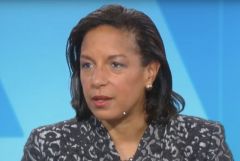
Former Obama National Security Adviser Susan Rice. (Screenshot: CBS News)

Columnist Andrew C. McCarthy, a former assistant U.S. attorney for the Southern District of New York, says,  “The national-security adviser is not an investigator. She is a White House staffer. The president’s staff is a consumer of intelligence, not a generator or collector of it. If Susan Rice was unmasking Americans, it was not to fulfill an intelligence need based on American interests; it was to fulfill a political desire based on Democratic-party interests.”

***************************

(CNSNews.com) — Judicial Watch has filed a lawsuit against the Justice Department (DOJ) and the National Security Agency (NSA) for information about Obama National Security Adviser Susan Rice’s communications concerning alleged Russian involvement in the 2016 election, the hacking of DNC computers, and the “unmasking” (identification by name) of any Trump campaign or transition team personnel as part of U.S. intelligence gathering activities.

Judicial Watch President Tom Fitton explained: “We want to know about the Obama White House involvement in the unprecedented spying on Donald Trump and other political opponents.”

“This intelligence operation may have led to the illegal ‘unmasking’ of Americans and the leaking of intelligence information to foment the story of Russian hacking of the DNC and sinister Russian influence on Trump and his associates,” he said.   “The Trump administration has an opportunity to expose what the Obama White House was up to.”

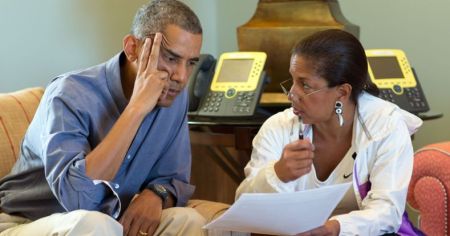
President Barack Obama and his National Security Adviser Susan Rice. (Inforwars.)

The lawsuit was filed this week in the U.S. District Court for the District of Columbia because the DOJ and NSA did not respond to Freedom of Information Act (FOIA) requests previously submitted by Judicial Watch.

Those FOIA requests, submitted on April 4, 2017, asked for the following:

— Any and all requests for information, analyses, summaries, assessments, transcripts, or similar records submitted to the Department of Justice (National Security Agency) or any official, employee, or representative thereof by former National Security Advisor Susan Rice regarding, concerning, or related to the following:

— Any actual or suspected effort by the Russian government or any individual acting on behalf of the Russian government to influence or otherwise interfere with the 2016 presidential election;

— The alleged hacking of computer systems utilized by the Democratic National Committee and/or the Clinton presidential campaign;

— Any or actual or suspected communication between any member of the Trump presidential campaign or transition team and any official or employee of the Russian government or any individual acting on behalf of the Russian government; or

— The identities of U.S. citizens associated with the Trump presidential campaign or transition team who were identified pursuant to intelligence collection activities.

The timeframe for any communications is from Jan. 1, 2016 to the present, more than a year.

Susan Rice, the former National Security Adviser to President Obama,  has refused to testify before a subcommittee of the Senate Intelligence Committee about her reported role in revealing the identities (unmasking) of people in the Trump campaign who were swept up in regular intelligence gathering by U.S. entitities.

Columnist Andrew C. McCarthy, a former assistant U.S. attorney for the Southern District of New York, says,  “The national-security adviser is not an investigator. She is a White House staffer. The president’s staff is a consumer of intelligence, not a generator or collector of it. If Susan Rice was unmasking Americans, it was not to fulfill an intelligence need based on American interests; it was to fulfill a political desire based on Democratic-party interests.”

Rice is also the former Obama official who went on national television after the Benghazi attack in 2012, when four Americans were killed, and falsely blamed the attack on an anti-Muslim video.

If the President Is Not the Subject of a Criminal Investigation, Then Say So

May 19, 2017

If the President Is Not the Subject of a Criminal Investigation, Then Say So, PJ Media, Andrew C. McCarthy, May 19, 2017

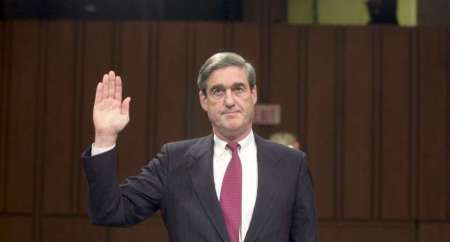
Succeeding Louis F. Freeh in Washington, DC. Robert Mueller named special prosecutor for Russia probe, Washington DC, USA – 17 May 2017 (Rex Features via AP Images)

Thus, to the extent it involves the president, the investigation announced to the public is a counterintelligence probe. That matters because it would mean the president is not a criminal suspect. A counterintelligence probe is not intended to build a criminal prosecution. It is intended to collect information. Its purpose is to uncover the actions and intentions of foreign powers to the extent they bear on American interests.

To this point, after months of congressional and intelligence-community investigations, there appears to be no evidence, much less strong proof, of a crime committed by Trump. But Democrats calculate that the assignment of a prosecutor implies that there must be an underlying crime — an implication that Sen. Graham’s comments reinforce. That is why they pushed so hard for a special counsel. It fills a big hole in their narrative. They can now say, “What do you mean no crime? They’ve appointed a prosecutor, so there must be a crime — collusion, obstruction, Russia … it’s a crime wave!”

******************************

Well is he, or isn’t he?

Almost everything in a counterintelligence investigation is classified. And much of what goes on in a criminal investigation is secret, kept confidential by investigators and prosecutors. But there is one thing that need be neither classified nor otherwise concealed from the American people: the status of the president.

Is the president of the United States the subject of a criminal investigation?

If he is not, then the Justice Department and special counsel Robert Mueller owe it to the country to say so. There is no reason to be coy about it. In fact, because a president under criminal suspicion would be crippled, his inability to govern detrimental to the nation, it is imperative to be forthright about his status.

Instead, political games are being played and the public is forming an impression — which I strongly suspect is a misimpression — based on semantics. There is no guaranteed outcome in an investigation, but the government should not be able to keep from us the precise nature of the investigation when it involves the president and when the fact that there is an investigation has already been disclosed publicly.

We’ve been told that the main investigation, the one that deputy attorney general Rod Rosenstein has appointed special counsel Mueller to conduct, is a counterintelligence investigation. That is what former FBI director James Comey revealed (with the approval of the Justice Department) in House testimony on March 20:

I have been authorized by the Department of Justice to confirm that the FBI, as part of our counterintelligence mission, is investigating the Russian government’s efforts to interfere in the 2016 presidential election and that includes investigating the nature of any links between individuals associated with the Trump campaign and the Russian government and whether there was any coordination between the campaign and Russia’s efforts. (Emphasis added.)

In appointing Mueller on May 17, Rosenstein issued an internal Justice Department order stating:

The Special Counsel is authorized to conduct the investigation confirmed by then-FBI Director James B. Comey in testimony before the House Permanent Select Committee on Intelligence on March 20, 2017, including (i) any links and/or coordination between the Russian government and individuals associated with the campaign of Donald Trump[.]

Thus, to the extent it involves the president, the investigation announced to the public is a counterintelligence probe. That matters because it would mean the president is not a criminal suspect. A counterintelligence probe is not intended to build a criminal prosecution. It is intended to collect information. Its purpose is to uncover the actions and intentions of foreign powers to the extent they bear on American interests.

Yet the New York Times reports that Rosenstein, in briefing the Senate Thursday:

 … affirmed that the Justice Department’s inquiry was focused on possible crimes.

This portrayal of the purported “focus” of the investigation was echoed by several senators, including Republicans Lindsey Graham and John Cornyn.

To be clear, I don’t believe Graham and Cornyn are trying to create a misimpression. To the contrary, I think they are hoping to scale back high-profile congressional hearings about the controversy. Hearings that are paralyzing the administration and frittering away the legislative time needed to push forward the Trump agenda of addressing Obamacare’s ongoing collapse, tax reform, border enforcement, the confirmation of executive officials and judges, and so on.

Yet, listen to Sen. Graham:

You’ve got a special counsel who has prosecutorial powers now, and I think we in Congress have to be very careful not to interfere.

What he means is that once a Justice Department investigation gears up, Congress should back off. But his choice of words would lead any reasonable person to infer: “Ah-hah! Now we have a serious criminal investigation. People are going to be prosecuted.”

On the Democrats’ part, this conflation of intelligence and criminal investigations is quite intentional.

If the probe of Trump’s campaign is about crimes (rather than intelligence about Russia), then they move much closer to the ultimate goal of impeachment, to say nothing of the immediate goals of derailing Trump’s agenda and reaping an electoral windfall in 2018.

This has been one of my main objections to the appointment of a special counsel. To this point, after months of congressional and intelligence-community investigations, there appears to be no evidence, much less strong proof, of a crime committed by Trump. But Democrats calculate that the assignment of a prosecutor implies that there must be an underlying crime — an implication that Sen. Graham’s comments reinforce. That is why they pushed so hard for a special counsel. It fills a big hole in their narrative. They can now say, “What do you mean no crime? They’ve appointed a prosecutor, so there must be a crime — collusion, obstruction, Russia … it’s a crime wave!”

In advancing this storyline, Democrats have gotten plenty of help from the FBI and the Justice Department.

In his March 20 testimony, Comey elaborated:

As with any counterintelligence investigation, this will also include an assessment of whether any crimes were committed.

With due respect, this is a heavy-handed way of putting it. As is well-known throughout the FBI and Justice Department, it is not permissible to use counterintelligence investigative authority to conduct what is in reality a criminal case. It is true enough that if, in the course of a counterintelligence probe, FBI agents incidentally discover that crimes have been committed, they are not required to ignore those crimes. But the agents do not go into a counterintelligence probe with an eye toward collecting criminal evidence. If the point is to build a criminal case, you do a criminal investigation.

Rosenstein’s clumsily worded order also contributes to the confusion. The Comey testimony cited by Rosenstein made it clear that there is a broad investigation of Russian interference in the 2016 election, and that examining the nature of links and coordination — if any — between the Trump campaign and the Russian regime is just a part of it. Rosenstein’s order, by contrast, describes the investigation as if its sole focus is ties between the Trump campaign and Russia. For the life of me, I don’t understand why he framed it that way; he could simply have referred to “the investigation confirmed by” Comey and left it at that. Why would the Trump Justice Department gratuitously highlight the notion of Trump-Russia ties when, so far, none have been proved?

Moreover, Rosenstein’s memo goes on to explain that Mueller’s investigative jurisdiction includes any “matters” that arise out of the investigation. This is unavoidable: it needs to be clarified that the special counsel has authority to prosecute any crimes he may stumble upon while conducting the counterintelligence investigation. But the expression of this happenstance reinforces the notion that crimes have been committed.

And of course, crimes may well have been committed … but not, so far as we know, by Trump.

We might think about the main investigation, the counterintelligence investigation, as the mother ship. Attached to it, but not part of its core, are barnacles. There is the investigation of Michael Flynn, which is known to be a criminal probe — there is a grand jury issuing subpoenas, which is not something that happens in a counterintelligence investigation. There have also been suggestions of a barnacle, potentially criminal in nature, related to former Trump campaign chairman Paul Manafort, related to shady dealings with Ukrainian pols tied to Putin, in the years prior to the campaign.

Evidence of this (potentially) criminal activity came to light because the FBI and Justice Department were conducting the main counterintelligence investigation. Consequently, the activity comes within the special counsel’s jurisdiction — he is authorized to investigate and prosecute it. But this does not convert the main investigation into a criminal investigation. It is still a counterintelligence investigation.

So notice the cynical game: the public statements of the FBI, the Justice Department, and Democrats exploit the fact of the counterintelligence investigation as a basis for saying that agents are investigating Trump. But they are not investigating him as a criminal suspect — the subject of the counterterrorism investigation is Russia; Trump is relevant only to the extent that people connected to his campaign may have ties to Russia.

In tandem, the public statements of the FBI, the Justice Department, and Democrats exploit the fact that the activities of Flynn and Manafort are part of the investigation in order to describe the investigation as “criminal.” But the criminal aspects of the investigation are tangential to the main event, Russia and any potential ties to Trump, which is not criminal.

See the trick? Trump is part of the investigation, the investigation is part criminal, ergo: Trump must be a criminal suspect.

Such word games should not happen.

No one appreciates more than I do the importance of discretion in official public announcements about investigations. But when officials choose to make highly unusual public acknowledgments that an investigation is taking place, they should never create a misimpression. If they have done so, however inadvertently, they must clarify the record.

It is very simple, if President Trump is the subject of a criminal investigation, the Justice Department owes it to the American people, and to Trump, to say so. If he is not the subject of a criminal investigation, they should say so — and they should cease and desist suggestions to the contrary.