Author Archive

Iraqi Christians Weigh Taking Up Arms Against the Islamic State

August 29, 2014

Iraqi Christians Weigh Taking Up Arms Against the Islamic State
By Rania Abouzeid National Geographic Posted 2014-08-27 19:15 GMT


(Finally some of my fellow Christians are running out of cheeks.-LS)

Dohuk, Iraq — Of all the many ancient peoples who once lived in the land between the Tigris and the Euphrates, Iraq’s Assyrian Christians pride themselves on having persisted in their traditional homeland for millennia, even as other civilizations thrived then disappeared, as languages and cultures died out, as ethnic groups melted into the ways and genetic pools of their conquerors.

But today Iraq’s Assyrians, and its Christians in general, fear that their place in this multiethnic, multisectarian mosaic society is shrinking, under severe threat from the ultraconservative Islamist group the Islamic State (IS).

It isn’t the first time that Iraq’s Christians have faced such a foe. The IS’s earlier incarnation, al Qaeda in Iraq–a group that formed after the U.S.-led invasion in 2003–also menaced Christians, and others, prompting tens of thousands to flee into exile.

Now, the particularly harsh nature of the IS’s assault on Christians, Yazidis, Shiite Muslims, and others who do not share allegiance to the IS’s brand of ultraconservative Sunni Islam has led some of Iraq’s Christians to take the unusual step of shedding their historical passivity and consider taking up arms to defend and eventually govern themselves.

The Assyrian Patriotic Party, one of several Assyrian political organizations, has armed and dispatched a symbolic, rather than an active, force of some 40 members to join the Kurdish Peshmerga fighting the IS in the northwest of Iraq, according to party official Henry Sarkis.

The Peshmerga are the official forces of the Kurdistan Regional Government. It is the first such action by Iraqi Christians since some Christians fought briefly alongside the Kurds against Saddam Hussein.

Sarkis, 44, is the newly appointed branch chief of the party’s office in Dohuk, a northern governorate in the semiautonomous Kurdish region that borders Syria and Turkey.

The 40 men constitute what Sarkis calls the “first wave,” and the unit has adopted the name Dukha, an Assyrian word that means “sacrifice.”

Carved into a mountainside, the seventh-century Rabban Hormizd monastery overlooks the Nineveh Plains. Christians have lived in the area continuously since the first century, but in the past decade more than two-thirds of Iraq’s estimated 1.5 million have fled (photo: J.B. Russell, Panos).

“We keep talking about Jesus and peace, and now we’ve reached the point where it’s not enough,” he said in an interview at his party’s headquarters in Dohuk. “The age of waiting for the Peshmerga to take back territory while we sit is over. We took the decision that, with our limited abilities, we will try to participate.”

The party bought weapons with money donated by members in the diaspora, Sarkis said, and is looking to raise more funds through donations to increase its stockpile.

Sarkis’s men are mainly behind the front line, around the town of Sharfiyah, not so much fighting alongside the Peshmerga as holding territory the Kurdish forces have gained or are pushing forward from.

A Perilous Shift

Still, it marks a significant shift in the attitude of Iraq’s Christians, a shift that’s fraught with peril.

Since 2003, Iraq’s Christian community has been viewed by other Iraqis as a passive victim of the country’s many conflicts, not an active aggressor.

Taking up arms will make the Christians direct participants, armed targets who pose military rather than just ideological opposition to ultraconservative Islamist groups.

Sarkis acknowledges this but said his party is prepared to accept the consequences. “We’re being killed in our homes, so why not defend ourselves? Then even if we die, we die with dignity,” he said. “We didn’t want to reach this point–we just want to live in our areas.”

Before 2003, Iraq held about 1.5 million Christians. The number today is fewer than 500,000, say community leaders, the majority having been driven out by war and all the trouble it inflicts and breeds, including corruption and insecurity.

Juan Jose Valdws, Daniela Santamarina, Ng Staff. Source: Institute For The Study Of Wars; Atlas Of Global Christianity 1910-2010, Center For The Study Of Christianity, 2009.

According to the CIA’s World Factbook, Shiites now make up 60 to 65 percent of Iraq’s population, Sunnis 32 to 37 percent, and Christians just 0.8 percent. Most remaining Christians live on the Nineveh Plains, an area that is also home to other ethnic and religious minorities in Iraq, including the Yazidis and the Turkomans.

Fall of Mosul

On June 10, Mosul, the capital of the Nineveh governorate, in northern Iraq, fell to IS-led militants in a blitzkrieg advance. The IS was ruthless with its enemies, uploading videos of mass executions of soldiers and security forces they’d captured. The Iraqi Army melted away, rather than try to repel the incursion.

Weeks later, the Kurdish Peshmerga also retreated from some areas in the face of an IS-led onslaught. Kurdish troops are now fighting, with the aid of limited U.S. air strikes, to regain territory.

The IS gave Mosul’s estimated 8,000 to 10,000 Christians three options: convert to Islam, pay a tax, or die. Instead they fled en masse to villages on the Nineveh Plains, as well as farther north into the Kurdish heartland.

As few as 40 Christians remain in Mosul, according to Duraid Tobiya, 53, an Assyrian from the city and an adviser on minority affairs to the governor of Nineveh.

He said that the few who stayed were too sick, too old, or too poor to leave–so much so that the IS exempted them from paying the jizya, a tax on non-Muslims.

“I’m from Mosul–this is the first time I’ve been displaced,” Tobiya said. “I lived through everything else that happened in Mosul, but it’s all very different from what’s happening now.”

This time, he said, he had no faith in either the Iraqi Army or the Kurdish Peshmerga to protect Christians and other minorities, such as the Yazidis and Turkomans, against a much more dangerous foe, because both forces initially abrogated their duties.

Iraq’s Christians, like all of the country’s sectarian communities, do not speak with one voice. There are numerous political parties with varying platforms.

The solution as Tobiya saw it, was one of two options: “either mass emigration or an internationally protected safe zone. We have no other options. We are against emigration, because we are not only the sons of this country but its original inhabitants.”

All dozen or so Christians interviewed by National Geographic adamantly shared the demand for a safe zone, akin to the two no-fly zones the West established in 1992 to protect Kurds in the north and Shiite Muslims in the south from the forces of former leader Saddam Hussein.

But 1992 was a long time ago in terms of Western resources and commitment to the region–especially at a time when President Barack Obama’s administration is trying to pivot away from the troubles of the Middle East. Still, Tobiya and others insisted it’s a viable option.

“We must protect ourselves–and also have international protection,” he said.

Refused entry to the humanitarian aid center in Al Hamdaniyah (Qaraqosh), a Christian refugee expresses his frustration to a Peshmerga soldier. (photo: Vianney Le Caer, Pacific Press/Lightrocket Via Getty).

Long-term Plans

In another part of Dohuk, behind the high concrete walls of the Assyrian Democratic Movement’s headquarters, the local branch leader, Farid Yacoub, 42, says his party too is moving to arm its men.

It is registering volunteers, having gathered more than 2,000 names from the Dohuk governorate alone. But unlike Assyrian Patriotic Party leaders, Yacoub is recruiting men to protect Christian areas after they’ve been won back from the IS and its allies.

The intention is not to participate in the battle to reclaim those areas. “We have lots who are volunteering, who want to fight, but we don’t have the means to arm them,” he said.

The party doesn’t want Christian villages such as Al Hamdaniyah (Qaraqosh) to be controlled or protected by the Peshmerga after they’ve been reclaimed. “Our people don’t trust them any more,” Yacoub said.

There’s a bigger issue here. Nineveh has long been caught in a conflict between the central government in Baghdad and the semiautonomous Kurdish region in the north.

Some Christians on the Nineveh Plains have pushed to govern themselves, but Kurdistan also has claims on their territory and wants to absorb it into its zone.

Earlier this year, long before the country descended into the current level of mayhem and fragmentation, Baghdad “agreed in principle” to turn the Nineveh Plains, as well as two other areas, Fallujah and Tuzkhurmatu, into provinces. This would enable the Christians to manage their own affairs and secure an independent share of the national budget.

The Assyrian Democratic Movement doesn’t want the Nineveh Plains to be part of Kurdistan, but Sarkis said his Assyrian Patriotic Party does.

Sarkis’s men are working with the Peshmerga, independent of the national government’s recent call for volunteers to fight the IS.

“Let’s be honest,” he said. “When the [Shiite-led] government asked for volunteers, it’s because the war is sectarian, between Shiites and Sunnis. They didn’t volunteer to protect Christians. They did so to fight Sunnis.”

Yacoub, on the other hand, is not working with the Peshmerga and said his men are waiting for the central government to train and arm them, though with the proviso that they return to their areas.

“Our men said they were worried because they didn’t want to defend areas other than theirs. We want to defend areas where our people are, specifically the Nineveh Plains,” Yacoub said. “We’re nationalists, but the circumstances that Iraq is living through now necessitate that we have a safe place, a place for us.”

Turning to Lebanon’s Christians

Of all the dwindling Christian communities in the Middle East in recent times, only the Lebanese have picked up arms during civil turmoil. Lebanese Christians battled not only Muslims but also each other during their country’s brutal 15-year civil war, which ended in 1990.

Duraid Tobiya, the adviser to the Nineveh governor, is also a member of Yacoub’s Assyrian Democratic Movement. He said that since the fall of Mosul, his party had received a delegation from the Lebanese Forces, a militia turned political party, and had also sent representatives to Lebanon twice to meet with the party.

He didn’t elaborate about the nature of the meetings, saying only that “we want to benefit from their experience. We explained our situation, and they explained their experience in Lebanon.” He added, “We might proceed with some things, apply them on the ground.”

Antoinette Geagea, a spokesperson for the Lebanese Forces in Beirut, confirmed the meetings. She said they were part of a series her party had undertaken with Christian spiritual and political leaders from Nineveh and Kurdistan, as well as Kurdish parties, in the wake of the fall of Mosul.

“There are many different views among Iraq’s Christians,” she said. “The Lebanese Forces told them that they must unite. We told them that if you all agree on a position, we will stand with you and help you.”

That help could be political, in the form of lobbying international and regional players, or humanitarian. Or “if they want to protect themselves, we will put our experience at their disposal,” Geagea said. “We told them they must decide on the best solution to help Christians stay in their country.”

“We’re Still Here”

Yaqoob Yaqo, one of the Assyrian Democratic Movement’s members of parliament in Kurdistan, said that more than a hundred thousand Christians fled in the wake of the IS advances into their areas. “The problem is that even if [the IS] withdraws, a hundred thousand won’t return.”

He rattled off a long list of massacres and episodes of persecution directed against his people, but despite that litany, he wasn’t downbeat.

“We’re still here,” he said, adding that his community has lived in these lands for 6,700 years, persisting after the fall of the Assyrian empire in 612 B.C. and practicing as Christians for the past 2,000 years.

“I feel strong when I think about our history, that all of these great powers couldn’t uproot us from here,” he said. “We’re still here, but we want our own security.”

Fort Hood shooter says he wants to become ‘citizen’ of Islamic State caliphate

August 29, 2014

Fort Hood shooter says he wants to become ‘citizen’ of Islamic State caliphate
By Catherine Herridge Published August 29, 2014 FoxNews.com


Nidal Hasan, pictured above, proudly wearing his new Soldier of Allah uniform. General Hasan for the Midwest division is best known for his bravery while shooting unarmed soldiers on an enemy military base near his battlefield.


(Here’s a man (questionable) who was willing to die, we were told, in the name of ‘workplace violence’.-LS)

The convicted shooter in the Fort Hood massacre has written a letter to the leader of the Islamic State saying he wants to become a “citizen” of the caliphate, in the latest example of the terror group’s reach inside the U.S.

The letter from Nidal Hasan, obtained by Fox News, comes after two Americans reportedly died fighting for ISIS in Syria. Sources late Wednesday identified the second as Abdirahmaan Muhumed, of Minneapolis. Fox affiliate KMSP-TV in Minneapolis reported that Muhumed was killed in the same battle as Douglas McArthur McCain, who grew up outside Minneapolis in the town of New Hope and most recently lived in San Diego.

The State Department said Thursday it could not confirm Muhumed’s death and efforts to reach his family were unsuccessful.

In the undated letter, Hasan — who fatally shot 13 people and injured more than 30 at Fort Hood in 2009 in what the Defense Department called “workplace violence”– tells ISIS leader Abu Bakr al-Baghdadi that he wants to join the caliphate.

“I formally and humbly request to be made a citizen of the Islamic State,”Hasan says in the handwritten document addressed to “Ameer, Mujahid Dr. Abu Bakr al-Baghdadi.”

“It would be an honor for any believer to be an obedient citizen soldier to a people and its leader who don’t compromise the religion of All-Mighty Allah to get along with the disbelievers.”

The two-page letter includes Hasan’s signature and the abbreviation SoA for Soldier of Allah.

Hasan’s attorney, John Galligan, said the letter “underscores how much of his life, actions and mental thought process are driven by religious zeal. And it also reinforces my belief that the military judge committed reversible error by prohibiting Major Hasan from both testifying and arguing…how his religious beliefs” motivated his actions during the shooting.

In the last year, the Department of Justice has brought at least five prosecutions against Americans — in Florida, California, Virginia and North Carolina – for trying to help terrorists in Iraq and Syria.

Omar Jamal, who is well known in Minneapolis’ Somali community, said at least 10 young men from there have been recruited to travel to Syria for ISIS.

“Douglas McCain wasn’t the first one and unfortunately he won’t be the last,”Jamal told KMSP-TV.

The former chairman of the House Homeland Security Committee that investigated radicalization in a series of congressional hearings said there is a pattern.

“It was clear and convincing evidence then, that there was a pipeline from Minneapolis to Islamic jihad overseas,” said Peter King, R-N.Y. “And that people in the community knew about it and that people in the community were covering it up.”

Benjamin Netanyahu’s cabinet in revolt over Gaza ceasefire

August 27, 2014

Benjamin Netanyahu’s cabinet in revolt over Gaza ceasefire
By Inna Lazareva, Tel Aviv 2:45PM BST 27 Aug 2014 Via The Telegraph


Mr Netanyahu produced a legal opinion which stated that a vote on the Gaza ceasefire was not necessary Photo: Getty Images


(“Distant water cannot extinguish nearby fire.”-LS)

Israel’s fragile coalition government is threatened by the Gaza ceasefire, which the prime minister agreed without putting it to a vote .

Israel’s acceptance of an Egyptian ceasefire proposal may have temporarily ended the war with Hamas – but the move has sparked a row within Israel’s security cabinet that now threatens the future of the country’s coalition government.

Over half of Israel’s cabinet members are said to have opposed the ceasefire deal which entered into effect on Tuesday evening, with many members furious that Mr Netanyahu opted not to bring it up to a vote.

Discussions over the ceasefire between Israel, Egypt and the Palestinians have been going over the weekend – but during this time, Mr Netanyahu is said to have kept his cabinet out of the loop, Israeli daily Haaretz reported.

Only once news of the ceasefire agreement had been reported by the Arab media were Israeli cabinet ministers briefed over the phone of the development, writes Haaretz’s Diplomatic Correspondent Barak Ravid.

Naftali Bennett, the economy minister, formerly an adviser of Mr Netanyahu and now one of the prime minister’s key critics, even sought to bring the ceasefire decision to a vote upon realising that many of the cabinet members were against the deal.

However, Mr Netanyahu produced a legal opinion which stated that a vote was not necessary.

Mr Netanyahu has faced growing opposition from his cabinet over his handling of the war with Hamas during the 50-day campaign.

Avigdor Lieberman, the foreign minister, who had recently pulled out his party from an alliance with Mr Netanyahu’s Likud, has ceaselessly called for a reoccupation of the Gaza strip and a crushing of Hamas, whilst criticising Mr Netanyahu for not acting with enough force.

Last month, Mr Netanyahu fired his deputy defence minister, Danny Danon, after he criticised a previous ceasefire acceptance by Mr Netanyahu. Mr Danon described it as a “humiliating” decision for Israel.

But since the latest ceasefire had gone into effect, even those close to the centre of the Israeli political spectrum have levelled criticism at Mr Netanyahu’s decision.

Members of Yesh Atid, a centre-Right party which is a key member of Mr Netanyahu’s coalition, issued a veiled threat to topple Mr Netanyahu’s coalition by pulling out its support.

“The Yesh Atid party will re-examine its future in the government, based on the political decisions the prime minister makes. Even those who support an agreement, like us, will reconsider their future in the government”, said MK Ofer Shelah.

Due to Israel’s political system, its coalition governments are notoriously unstable and rarely last their full terms.

Mr Netanyahu was also lambasted from the Left, by the head of Israel’s Meretz party.

“The ceasefire came too late and its conditions prove, finally, that Operation Protective Edge is a strategic failure for Netanyahu – who went to war without any goals. And ended it with a great achievement for Hamas at the expense of the residents of the south,” said Zehava Galon, leader of Meretz.

“It is now clear that the suffering of the residents of the south in the last few weeks, as with all the hardships that the residents of Israel have endured, was forced on us by an irresponsible government without any thinking, without any long term planning, and without any results,” she added.

Video: Iron Dome intercepts 15 Hamas rockets in less than one minute

August 27, 2014

Video: Iron Dome intercepts 15 Hamas rockets in less than one minute
posted at 4:01 pm on August 26, 2014 by Guy Benson Via Hot Air

(Absolutely amazing.-LS)

A new video posted today on a pro-Israel, anti-Hamas YouTube channel called ‘Sin’ purports to show the Iron Dome, Israel’s short-range missile defense system, simultaneously intercepting 15 separate Qassam rockets. The video depicts men and women entering bomb shelters in an unidentified Israeli city…all the while, sirens blare.

Iranian General Threatens Surprise Attack on Israel

August 27, 2014

Iranian General Threatens Surprise Attack on Israel
BY: Adam Kredo August 26, 2014 2:40 pm


This undated photo released Monday, Aug. 25, 2014 by the Iranian Revolutionary Guards, claims to show the wreckage of an Israeli drone which Iran claims it shot down near an Iranian nuclear site / AP


(Iran threatening to face Israel on the battlefield without a proxy? Sounds like General Salami is still full of baloney.-LS)

Iranian military leaders on Tuesday vowed that Tehran would take military action against Israel in response to an alleged Israeli drone that was shot down in Iran on Sunday.

Iran “will not give a diplomatic response,” but will air its grievances with Israel on the “battlefield,” senior Iranian generals were quoted as saying on Tuesday.

(I don’t think Israel expects a diplomatic response, unless you mean logging a complaint at the UN is your form of diplomacy.-LS)

“Our response to this aggression will not be diplomatic, we will retaliate in the battlefield, but will not necessarily announce it,” Brigadier General Hossein Salami, the Lieutenant Commander of Iran’s Islamic Revolution Guards Corps (IRGC) was quoted as saying during a ceremony on Tuesday meant to commemorate “martyred” Iranian military personnel.

(They could at least tell us the location of the battlefield.-LS)

“The enemy will see and understand it,” Salami was quoted as saying by the semi official Fars News Agency. “We never step back (in the confrontation) against the enemy. The Islamic Republic is powerful and is capable of confronting any power at any level and we never bring down the level of our goals.”

(You mean the proxy level?-LS)

The threat of a surprise attack against Israel for its apparent attempts to send a spy drone into Tehran came just a day after Iranian government officials threatened to sue Israel in the International Criminal Court.

(After all, lawsuits take too much time, can go the other way, cost a lot of rials, and don’t give anyone a chance to become a martyr.-LS)

Iranian military leaders announced over the weekend that they had used a surface-to-air missile to shoot down a drone that it claimed was an Israeli-made Hermes 450 unmanned plane. The drone was allegedly on its way to the Natanz nuclear enrichment site, which is believed to be part of Iran’s clandestine attempts to build a nuclear weapon.

(Just checking for any breakthroughs in Iran’s nuclear research, that’s all.-LS)

“This hostile action is a violation of Iran’s territorial integrity and sovereignty,” Iranian Foreign Ministry spokeswoman Marzieh Afkham was quoted as saying Monday by the Islamic Republic News Agency (IRNA).

Afkham also hinted that military action is being considered by Tehran.

“Iran has the right to take the necessary defensive action and pursue the case in international legal courts,” IRNA reported Afkham as saying.

Other IRGC officials also have adopted the rhetoric of war and slammed Israel in vitriolic terms following the incident.

“This mischievous attempt once again made the adventurous nature of the Zionist regime more evident and added another black page to the dark record of this fake and warmongering regime, which is full of crimes and wickedness,” the IRGC said in a statement reported by Al-Manar News.

The IRGC claimed that it “reserves the right of response and retaliation for itself,” according to the statement.

IRGC leader Salami claimed that Tehran has definitive proof the drone was made by Israel and claimed that it had not originated from the Jewish state, but another nearby country.

“What some people say that the drone had started its flight from Israel is not correct and we are almost certain about its origin, yet we would like to reserve judgment at present,” Salami was quoted as saying during a press conference on Tuesday.

Iranian military leaders apparently spotted the drone on its border but permitted it to “enter the country to see the intention (of the hostile forces operating it) and then we targeted and hit it at the right time,” Salami said, according to Fars.

(In other words, they didn’t see it until it had already completed its mission.-LS)

Salami further claimed that the technology in the drone is not unfamiliar to Iran, which has itself built several indigenous models of drones, some of which are believed to be based off of a downed U.S. drone reportedly captured in 2013.

The U.S. State Department has remained quiet thus far when confronted with questions about the incident.

When asked on Monday if she could confirm that an Israeli drone was downed by Iran, State Department Spokeswoman Jennifer Psaki demurred.

“I don’t have anything to update you on that front,” Psaki said. “My apologies.”

(What she means is they didn’t know it happened. Apparently, Obama hasn’t seen it on TV yet.-LS)

Real Americans are Pissed

August 26, 2014

Missing MH370 Flight May Be Used To Possibly Attack U.S. On 9/11/14, Ret. USAF General Claims

August 26, 2014

Missing MH370 Flight May Be Used To Possibly Attack U.S. On 9/11/14, Ret. USAF General Claims
By Rida Ahmed r.ahmed@hngn.com | Aug 25, 2014 04:27 PM EDT


(A plane full of explosives, chemical agents, nuclear waste?? So we have to wait for a book to come out to find out about this dire threat? You’ve got to be kidding me.-LS)

Ret. Lt. Gen. Thomas McInerney told Fox News Channel’s “America’s News HQ” host Uma Pemmaraju on Saturday that United States might be witness to another terror attack on September 11 this year, according to Breitbart.

In order to address the increasing threat of ISIS, an al-Qaeda breakaway group, the U.S. should “go to DEFCON 1, our highest state of readiness and be prepared as we lead up to 9/11,” because “we may even see a 9/11/14,” the network military analyst said.

In the interview, the missing Malaysia Airlines jet MH370 was also referenced by McInerney. On March 8, Flight 370 went missing en route from Kuala Lumpur to Beijing. Despite extensive land and sea searches, officials have failed to find any sign of the missing Boeing 777-200ER, which was carrying 227 passengers and 12 crew. It’s believed that the plane crashed into the southern Indian Ocean, west of Australia.

“On the seventh of September, a major news network and publishing network are going to put out a book. It is going to be earth shattering of what’s happening and what happened. The fact is we may even see a 9/11/14 MH-370 surface again. We should go to DEFCON 1, our highest state of readiness and be prepared as we lead up to 9/11,” he said.

When Pemmaraju asked, “When you say a major news organization is coming forward with a publication, what are you referring to specifically? Can you allude to that, give us more details?”

McInerney responded, “I can’t give you any more than what I’ve just said. But it is going to be extremely important and America should take notice. We are less safe today than we were six years ago.”

At this point, the general warned that America should raise the terror level ahead of the anniversary of 9/11, Breitbart reported.

Meanwhile, House Intelligence Committee Mike Rogers, R-Mich., said on August 17 that he believes the rise of the Islamic State of Iraq and Syria (ISIS) has put the U.S. in more danger than it was in the lead up to the Sept. 11 attacks more than a decade ago, CBS News reported. “Before 9/11, there were single-level threat streams coming to the United States. So, pretty serious. Obviously they got in and conducted the attacks on 9/11. Now you have multiple organizations, all al Qaeda-minded, trying to accomplish the same thing,” Rogers said in an interview on CBS’ “Face the Nation.”

“Now you have two competing terrorist organizations, both of them want to get their credentials to the point where they can say, ‘We are the premier terrorist organization.’ Both want to conduct attacks in the West for that reason. And guess what? That means we lose at the end. If either one of those organizations is successful, we lose.”

“The threat matrix is so wide and it’s so deep. We just didn’t have that before 9/11,” Rogers said.

Photos of ISIS flag at key sites send chill through Israel

August 26, 2014

Photos of ISIS flag at key sites send chill through Israel
By Paul Alster  Published August 26, 2014  FoxNews.com


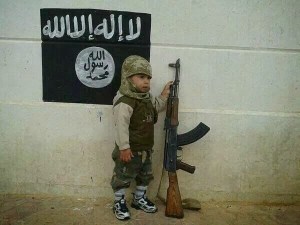
ISIS likes to recruit the young.


(As if Irael didn’t have enough crap to deal with.-LS)

The chilling black flag of the Islamic State is popping up on social media in Israel, including one image of the terror banner snapped against the backdrop of the nation’s holiest site — prompting fears the ultra-violent jihadist group could have sympathizers inside the Jewish state.

A photo that recently appeared on Twitter showed the flag held aloft on the Temple Mount, the most sensitive religious site in the Old City of Jerusalem, that includes the Golden ‘Dome of the Rock’ mausoleum and the ‘Al Aqsa’ Mosque, sacred to Muslims, adjacent to the Western Wall, the holiest place for Jews. Other online postings have shown the flag being flown in Nazareth, where the fast-growing Muslim community lives side-by-side with Christian Arabs in a sometimes tense environment, and also in Acre, the ancient port city close to Israel’s border with Lebanon in the north. The images have stirred fears the terror group previously known as ISIS has sympathizers in Israel

 “If you look at ISIS as a code, a brand name, or a symbol to identify with, then you can find people in the area [who identify with it] not just in Israel, the West Bank and Gaza, but around the region, because it symbolizes some kind of victorious pro-active Islam — a compensation sometimes for a sense of disappointment, failure, or marginalization,” Yoram Schweizer, head of the Program on Terrorism and Low Intensity Conflict at Israel’s Institute for National Security Studies, told FoxNews.com.

“If you look at ISIS as a code, a brand name, or a symbol to identify with, then you can find people in the area [who identify with it] not just in Israel, the West Bank, and Gaza, but around the region.”- Yoram Schweizer, Israeli terror expert

The  black flag predates Islamic State, but the terrorist army has co-opted it as a battle banner. The words inscribed on it, known in Islam as the Shahada, translate to “There is no god but Allah, Muhammad is the messenger of Allah.”

In another disturbing development that raised the specter of the Islamic State in Israel, a YouTube clip aired on an evening news program showing a young girl believed to be from the Israeli Arab village of Taibe. In the video, the girl is encouraged by an adult off-camera to decapitate a doll with a long knife to the cries of ‘Allah Hu’Akbar,’ The video ends with a photo of the moment immediately prior to the recent execution by ISIS of U.S. journalist James Foley, leaving the viewer in no doubt where the inspiration for the macabre indoctrination of the vulnerable child comes from.

In a written response to questions from FoxNews.com, Israel’s Justice Ministry confirmed that ISIS has been declared a terror organization, and that the ministry is “concluding the examination towards declaring ISIS an unlawful association”, a move that could render any support for the Islamic State illegal in the State of Israel.

Islamic State has vowed to expand its so-called caliphate into Israel and “liberate” Jerusalem.

“This is not the first border we will break, Inshallah [God willing]” an English-speaking Chilean recruit to ISIS, (who goes by the name of Abu Saffiya), states in a video allegedly filmed at an abandoned army post on the Iraq-Syria border earlier this summer and originally highlighted by the Jerusalem Post. “Abu Bakhr al-Baghdadi [leader of ISIS] says, ‘God will break all barriers… Iraq, Jordan, Lebanon…all of them until we reach Al Quds [Jerusalem].’”

Support for the bloodthirsty group is far more overt in the Palestinian-controlled territories of Gaza and the West Bank, where it may even be seen as an eventual threat to current Palestinian leadership. In June, Islamic State supporters held a rally in southern Gaza to celebrate the early successes of Islamic State in capturing key Iraqi cities such as Mosul and Tikrit,” according to the Tel Aviv-based Meir Amit Intelligence and Terrorism Information Center.

“During the support rally, held on June 12, 2014, ISIS and Al Qaeda flags were waved, and slogans were heard in favor of establishing an Islamic caliphate (the Islamic State), and against the Jews,” stated a report by the center. “The support rally was dispersed by the Hamas police.”

For now, experts who spoke to FoxNews.com do not believe Islamic State poses a clear and present threat to Israel, but they acknowledge the group’s appeal and rapid growth in the region is worrisome.

“Up to now we haven’t seen ISIS infrastructure in Israel, in Gaza, or in the West Bank” Schweizer said. “You may find it in future, but right now they’re too busy [in Iraq and Syria] to invest in Israel itself, or in the West Bank.”

Paul Alster is an Israel-based journalist. Follow him on Twitter @paul_alster and visit his website: www.paulalster.com

The US Is Reportedly Giving Information About ISIS To Syria’s Assad Regime

August 26, 2014

The US Is Reportedly Giving Information About ISIS To Syria’s Assad Regime

  • Aug. 26, 2014, 11:23 AM


USAF


(The enemy of my enemy is my friend.  So what happens when they’re both enemies?-LS)

The U.S. has begun reconnaissance flights over Syria and is sharing intelligence about jihadist deployments with Damascus through Iraqi and Russian channels, sources told AFP on Tuesday.

“The cooperation has already begun and the United States is giving Damascus information via Baghdad and Moscow,” one source close to the issue said on condition of anonymity.

The White House and State Department flatly denied the report.

White House Press Secretary Josh Earnest told reporters aboard Air Force One that the U.S. does not recognize the Assad regime and had “no plans” to coordinate with them in regards to any campaign against ISIS.

“As a matter of US policy, we have not recognized” Assad as the leader in Syria, Earnest said, according to a transcript. “There are no plans to change that policy and there are no plans to coordinate with the Assad regime.”

When asked if Earnest’s comments also represented a denial of the AFP report, White House National Security Council spokesperson Caitlin Hayden told Business Insider it did.

State Department spokesperson Marie Harf also denied the report.

The comments came a day after Foreign Minister Walid Muallem said Syria was willing to work with the international community against the jihadist Islamic State group, and U.S. officials said they were poised to carry out surveillance flights over Syria.

The Syrian Observatory for Human Rights said foreign drones had been seen over the eastern province of Deir Ezzor on Monday.

“Non-Syrian spy planes carried out surveillance of Islamic State positions in Deir Ezzor province on Monday,” the Britain-based monitoring group’s director, Rami Abdel Rahman, said.

On Tuesday, Syrian warplanes bombed Islamic State positions in several areas of Deir Ezzor, an oil-rich province in the east of Syria, most of which is held by the jihadists.

A regional source told AFP that “a Western country has given the Syrian government lists of Islamic State targets on Syrian territory since just before air raids on Raqa, which started in mid-August.”

The Islamic State, which emerged from Al-Qaeda’s Iraq branch but has since broken with the worldwide network, controls large parts of Deir Ezzor and seized full control of Raqa province, further up the Euphrates Valley, on Sunday, with the capture of the army’s last position, the Tabqa air base.

It has declared an Islamic “caliphate” in areas under its control in Syria and neighboring Iraq, where US war planes have been targeting its positions since August 8.

U.S. officials said Monday that Washington was ready to send spy planes into Syria to track the group’s fighters but that the moves would not be coordinated with the government in Damascus.

Muallem warned Monday that any unilateral military action on its soil would be considered “aggression.”


It’s 2003 Again

August 26, 2014

It’s 2003 Again
Aug 25 2014 @ 1:39pm by Jonah Shepp


Image by TexasEagle


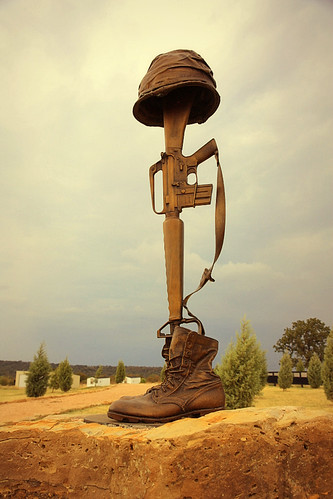
(More boots on the ground in Iraq will only result in more bodies in the ground in America. Once again, we’re being sold on the dire need to go to war.-LS)

What else can one possibly take away from this Noah Rothman exegesis of Peggy Noonan’s and Charles Krauthammer’s cases for expanding the new Iraq war to Syria? Here’s the crux of the argument:

The mission Krauthammer describes does not appear to require a significant American ground force, though it would be one which would only be effective in Iraq. The Islamic State’s stronghold in Syria will require an entirely different strategy, one far more robust and which may require putting American service personnel in harm’s way. But rolling back the Islamic State in Iraq is an acceptable short-term goal, and the American people should be informed that this is the mission in which their military is presently engaged. Those opposed to going to war to rid the world of ISIS worry that achieving that objective will require more commitment than most are willing to admit. And it is possible that the American national interests at stake in this region, while appreciable, are not threatened to the degree that would merit a return of tens of thousands of American troops to Iraq. At least, not yet.

These are worthwhile debates to have, and Americans need to have an honest discussion about this threat. It is a discussion that must be led by their president. It seems, however, that some conservatives are beginning to observe that those who object to a military solution to the Islamic State threat rest their argument on the claim that it heralds a new occupation of Iraq. This is a straw man argument. The vast majority of Americans of every political stripe do not want to reoccupy that country, and this is not on the table. Destroying ISIS, however, is.

Right, because we all remember what happened the last time right-wing hawks sold the American public on a war that they alleged would have no long-term consequences. After the past decade, I suppose I shouldn’t be all that surprised that the cheerleaders for this new war are demanding that their opponents make a probative case against intervention, while the neo-neocons’ contention that a light-touch war with no “significant” ground force is presented as obviously true. (By the by, how many soldiers constitute “significant”? 1,000? 10,000? 100,000? No one wants to say…) For more of the same, see Elliott Abrams here. Brian Fishman wishes advocates of an all-out, two-front war on ISIS would stop bullshitting the public already about what that would entail:

No one has offered a plausible strategy to defeat ISIL that does not include a major U.S. commitment on the ground and the renewal of functional governance on both sides of the Iraqi-Syrian border. And no one will, because none exists.

But that has not prevented a slew of hacks and wonks from suggesting grandiose policy goals without paying serious attention to the costs of implementation and the fragility of the U.S. political consensus for achieving those goals. Although ISIL has some characteristics of a state now, it still has the resilience of an ideologically motivated terrorist organization that will survive and perhaps even thrive in the face of setbacks. We must never again make the mistake that we made in 2008, which was to assume that we have destroyed a jihadist organization because we have pushed it out of former safe-havens and inhibited its ability to hold territory. Bombing ISIL will not destroy it. Giving the Kurds sniper rifles or artillery will not destroy it. A new prime minister in Iraq will not destroy it.Please do not step in here with the fly-paper argument: that the conflict will attract the world’s would-be jihadis to one geographic area where we can target them all and thereby solve the problem. Notice that no authorities on jihadism ever make this argument. That is because they understand that war makes the jihadist movement stronger, even in the face of major tactical and operational defeats.

There is a case to be made for this war. It is not the case that its backers are making. They still seem to inhabit the same alternate universe as Donald Rumsfeld, in which the only limit to what American power can accomplish is the imagination of the Commander-in-Chief. I may not support all of Obama’s foreign policy choices, but I find it reassuring that he is nowhere near as prone as his predecessor was to flights of imperial fancy. As Fishman rightly points out, one cannot make the argument that the withdrawal of US forces from Iraq precipitated the current crisis without also acknowledging that the 2003 invasion set the ball rolling. The honest case for more intervention now, it seems to me, is that Bush’s Iraq adventure obligated the US to accept responsibility for maintaining the new Iraqi order we created and protecting the people of the Middle East from the jihadist menace our war unleashed.

But the usual suspects can’t make that argument, because to do so, they’d have to admit that they were wrong in the first place.