Author Archive

Iran sends warning to Israel via US officials

January 27, 2015

Iran sends warning to Israel via US officials
January 27, 2015 at 5:00 am Via AP News


(I suggest we keep our eyes on the proverbial ball. Sure, Obama and his policies towards Israel are a mess. Yet, it is Iran who is the blame. They are up to something and, like a snake, they could strike at a moment’s notice. Now, we’ve crossed their ‘red line’. – LS)

TEHRAN, Iran (AP) — Iran’s official IRNA news agency is reporting the country has sent a warning to Israel through the United States over the recent killing of an Iranian general in an alleged Israeli airstrike.

The Tuesday report quotes Deputy Foreign Minister Hossein Amirabdollahian as saying, “We told the Americans that the leaders of the Zionist regime should await the consequences of their act.”

He added, “The Zionist regime has crossed our red lines.”

Iranian Gen. Mohammad Ali Allahdadi was killed along with six Lebanese Hezbollah fighters in a Jan. 18 airstrike in the Syrian-controlled part of the disputed Golan Heights.
Both Iran and Hezbollah blamed Israel for the strike; the Israeli government refused to comment.

Amirabdollahian says Iran delivered the message to U.S. officials via diplomatic channels. He did not elaborate.

How Iran Is Encircling the Gulf and Israel

January 27, 2015

How Iran Is Encircling the Gulf and Israel’
by Khaled Abu Toameh January 27, 2015 at 5:00 am Via The Gatestone Institute


(Not a pretty picture. I’m sure if and when the Iranian infiltration is complete, they will declare themselves a nuclear power and begin with their demands on Israeli territory. Of course, that’s just opinion. I could be entirely wrong. (hopefully) – LS)

With bases in Lebanon, Syria, Yemen and Iraq, Iran has surrounded all the oil fields of the Persian Gulf. This encirclement can be comfortably backed with Iran’s ongoing nuclear weapons program.

The Iranians already have Hezbollah sitting on Israel’s northern border. All they need now is another terror group sitting in Gaza to the south, in order to create a similar encirclement. And they are working hard to achieve that goal.

“We welcome any party that supports the Palestinian cause.” — Osama Hamden, Hamas leader.

Iran is not interested in the reconstruction of the Gaza Strip. The only thing Iran is interested in there is turning Hamas into another Iranian-backed army that would be used to attack Israel.

As U.S. President Barack Obama continues to seek a negotiated deal on Iran’s nuclear program, the Iranians have been working hard in recent weeks to infiltrate the Palestinian arena and re-establish ties with their erstwhile ally, Hamas.

Emboldened by Obama’s obsession with the nuclear negotiations, which are set to resume next month, Iran’s leaders apparently trust that the Obama Administration is prepared to turn a blind eye to whatever they do.

So the Iranians are apparently feeling free to meddle once again in the internal affairs of the Palestinians, to strengthen their hand still further in the Middle East.

With bases in Lebanon, Syria, Yemen and Iraq, Iran has surrounded Saudi Arabia and all the oil fields of the Persian Gulf. This encirclement can be comfortably backed with Iran’s ongoing nuclear weapons program.

Tehran’s main goal is to regain control over the Palestinian Islamist movement so that it can turn itself into a player in the Israeli-Arab conflict.

The Iranians already have Hezbollah sitting on Israel’s northern border. All they need now is another terror group in Gaza to the south, in order to create a similar encirclement. And they are working hard to achieve this goal.

Relations between Iran and Hamas had become strained after Hamas’s refusal to support the regime of Iran’s client, Syria’s Bashar Assad, in his fight against the Syrian opposition forces.

Iran and Hamas need each other badly. Iran wants Hamas because it does not have many Sunni allies left in the region. An alliance with Hamas would enable Iran to rid itself of charges that it is leading a Shiite camp fighting against the Sunnis.

Hamas, for its part, is desperate for any outside support, especially in wake of its increased isolation in the Palestinian and international arenas.

Hamas is also beginning to feel the heat at home in light of its failure to rebuild the Gaza Strip after last summer’s war with Israel. Hamas leaders are now hoping that Iran will resume its financial aid to the movement and avoid a situation where Palestinians might revolt against it.

Egypt’s tough security measures along its border with the Gaza Strip, including the demolition of hundreds of smuggling tunnels and the creation of a security zone, have also tightened the noose on Hamas.

Hamas leaders say they have taken a “strategic” decision to restore their ties with Iran. Ismail Haniyeh, the former prime minister of the Hamas government in the Gaza Strip, announced recently that his movement is working toward establishing “open relations” with Iran.

Another Hamas leader, Osama Hamdan, announced that the differences between his movement and Iran have been resolved. He said that Hamas establishes its relations with all parties on the basis of providing support for the Palestinian cause. “We welcome any party that supports the Palestinian cause,” Hamdan said. “Relations between Iran and Hamas have returned to normal.”

As part of Hamas’s efforts to appease the Iranians, the Islamist movement’s armed wing, Izaddin al-Qassam, issued a rare statement “thanking Iran for providing money and weapons” to Hamas and other Palestinian groups in the Gaza Strip over the past few years.

Hamas knows that improving its relations with Iran also means rapprochement with Tehran’s proxies in Hezbollah. That is why Hamas has taken a number of steps over the past week to restore its ties with Hezbollah.

The commander of Izaddin al-Qassam, Mohamed Deif, last week sent a letter of condolence to Hezbollah chief Hassan Nasrallah over the death of some senior Hezbollah operatives, who were killed in an Israeli air strike in Syria.

In his letter, Deif called on Hezbollah to join forces with Hamas against “the real enemy — the Zionist entity.”

The Hamas-Iran rapprochement is yet another sign of Tehran’s effort to use its allies in the Middle East to destroy Israel. Hamas leaders are now hoping that Iran will resume not only its financial aid to their movement, but the supply of weapons as well.

Iran is not interested in the reconstruction of the Gaza Strip or providing shelter to thousands of Palestinian families who lost their homes during the last war. The only thing Iran is interested in there is turning Hamas into another Iranian-backed army that would be used to attack Israel. This is all happening at a time when the Obama Administration is busy preparing for another round of talks with Iran over its nuclear program. It is obvious by now that Tehran is using these negotiations to divert attention from its efforts to deepen its involvement in the Middle East, with the hope of taking over the oil fields and eliminating Israel.

IDF identifies suspicious movement on Lebanese border

January 23, 2015

IDF identifies suspicious movement on Lebanese border
By YAAKOV LAPPIN 01/21/2015 Via The Jerusalem Post

ShowImage


(Having watched my 95 year old mother-in-law peacefully pass away in my home last night I’m reminded just how precious life is. It is this reverence for life that must prevail. Our Creator wanted this for us, otherwise He wouldn’t have bothered making this reality. The sooner the hate-filled power-driven people in this world realize this, the sooner we can all get on with our lives and live in peace. – LS)

Air force on high alert, artillery, infantry and armored units boosted along northern border as IDF evaluates situation; Chief of staff cancels trip to NATO summit in Europe.

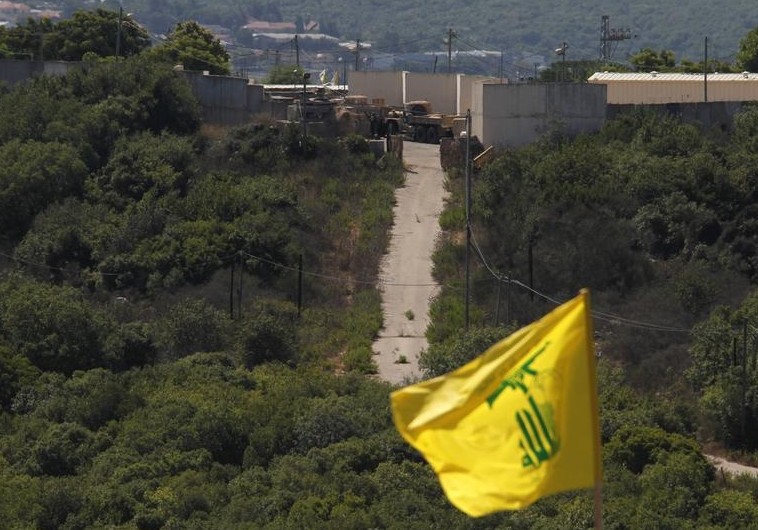
The IDF identified suspicious activity on the Lebanese side of the northern border fence on Wednesday evening, leading to road closures and local communities being put on alert.

The alert is the result of the defense establishment being ultra-sensitive since an air strike on Sunday that killed 12 Hezbollah and Iranian Revolutionary Guards Corps senior operatives near Quneitra, Syria, and Iranian vows to take revenge.

There has been no attempt by terrorists to cross the border, as far as the IDF was aware on Wednesday, and no engagement with hostile forces. The IDF operates a multitude of border sensors and field intelligence collection units across the Lebanese and Syrian borders, and these often produce security alerts that are investigated.

Meanwhile, as part of steps designed to boost readiness, the IDF has increased its presence in the North, in the form of artillery, infantry and armored units. The Israel Air Force has also gone on alert to decrease response times to incidents. Northern Command officers have held meetings with local government representatives, telling them to expect an increase in military traffic on the ground and air force traffic overhead.

IDF Chief of Staff Lt.-Gen. Benny Gantz canceled a planned trip to a NATO conference of chiefs of staffs in Europe. He also visited the IDF’s Northern Command on Tuesday and took part in the daily security evaluation meeting.

The military has in recent days deployed Iron Dome air defense batteries to the North.

Additional steps include decreasing IDF activities along the border if these are not necessary, and delaying activities that are not urgent. The IDF’s command level is analyzing the events of the recent days and coming up with plans for potential scenarios that may occur in the coming days

Israeli TV shows ‘Iranian missile’ that ‘can reach far beyond Europe’

January 22, 2015

Israeli TV shows ‘Iranian missile’ that ‘can reach far beyond Europe’
By Times of Israel staff January 21, 2015, 9:21 pm


(Not a pretty sight. – LS)

Iran has built a 27-meter-long missile, capable of delivering a warhead “far beyond Europe,” and placed it on a launch pad at a site close to Tehran, an Israeli television report said Wednesday, showing what it said were the first satellite images of the missile ever seen in the West.

It stressed that the missile could be used to launch spacecraft or satellites, but also to carry warheads.

The Channel 2 news report showed satellite imagery documenting what it said was Iran’s “very rapid progress” on long-range missile manufacture.

It showed one photograph of a site near Tehran, which it said the West had known about for two years, where Iran was working on engines for its long-range missiles.

It then showed a satellite photograph of a second site, nearby, which featured a launch pad, with the 27-meter missile on it — an Iranian missile “never seen before” by the West.

The missile is capable of taking a manned spacecraft or satellite into space, the TV report said.

It is also capable of carrying a conventional or non-conventional warhead “far beyond Europe,” the report added.

The TV report said the satellite images were taken by the Eros B commercial Earth observation satellite, which was designed and manufactured by Israel Aircraft Industries, launched in 2006, and is owned by the Israeli firm ImageSat International.

Israel has long charged that Iran is working toward a nuclear weapons capability, and has publicly opposed any negotiated accommodation with Iran that would leave it with a uranium enrichment capability for potential nuclear weapons use.

Iran and Hezbollah are planning ‘imminent’ joint invasion of Israel’s northern Galilee region according to ‘high level intelligence’

January 20, 2015

Iran and Hezbollah are planning ‘imminent’ joint invasion of Israel’s northern Galilee region according to ‘high level intelligence’
By Chris Pleasance for MailOnline January 20, 2015


(Looks like the Revolutionary Guard and Hezbollah are getting a little trigger happy lately. – LS)

Senior Iranian and Hezbollah figures killed in an airstrike in Syria this weekend were likely planning an ‘imminent’ attack on Israel, security sources have claimed.

Six Iranian army chiefs died alongside five Hezbollah militants after an Israeli helicopter fired rockets at a convoy in the Golan Heights region on Sunday. Among those killed was Iranian General Mohammed Allahdadi, as well as commander Abu Ali Tabatabai, who is known to have worked with both Hezbollah and Iran. Today Major General Eyal Ben Reuven, a former deputy head in the Israeli Defense Forces, accused the senior military figures of meeting to plot an attack on Israel. He added that the commanders’ decision to meet in Syria could mean that a ‘high-level’ and ‘sophisticated’ attack on Israel’s northern border is ‘imminent’.

Research group The Israel Project came to a similar conclusion, saying that the presence of Tabatabai ‘probably indicates operations aimed at overrunning Israeli border towns.’ The warnings come just a week after Hassan Nasrallah, leader of Lebanon’s Hezbollah, warned that the group ‘is ready and prepared for a confrontation in the Galilee and beyond the Galilee.’

Iran has also promised a ‘crushing response’ to the weekend strike, without laying out exactly what action will be taken. General Mohammad Ali Jafari, head of Iran’s Revolutionary Guards, said: ‘These martyrdoms proved the need to stick with jihad. The Zionists must await ruinous thunderbolts. ‘The Revolutionary Guards will fight to the end of the Zionist regime… We will not rest easy until this epitome of vice is totally deleted from the region’s geopolitics.’

Israeli troops have been marshalled along the country’s northern border, while an Iron Dome missile launcher has been deployed to destroy any incoming rockets. Senior Iranian politicians are said to be incensed at the death of Allahdadi, which they confirmed yesterday, saying he had been ‘martyred’ in the name of his country. Officials also denied that he had been planning any kind of attack, instead saying he had been in Syria to advise the government on how to tackle extremists such as Islamic State, who control much of the country’s north.

Hezbollah said that Jihad Mughniyeh, the son of a prominent commander, and Mohammed Issa, who was responsible for the group’s operations in Syria and Iraq, died alongside Tabatabai. Jihad Mughniyeh was the son of Imad Mughniyeh, a senior Hezbollah figure killed in Damascus in 2008. Hezbollah accused Israel of assassinating him, but Israel has not claimed responsibility.

The latest strike, which Israel has also not officially accepted responsibility for, has seen tensions in the already volatile region come to a head.

Prominent Rabbi Calls on Europe to Allow Jews to Carry Guns

January 16, 2015

Prominent Rabbi Calls on Europe to Allow Jews to Carry Guns
by Ari Soffer January 14, 2015 Via Israel National News


(Damned good advice. If you care about your own self defense, carry a weapon! Europe is nothing more than a huge ‘Gun Free Zone’. To the terrorists, it’s like shooting fish in the proverbial barrel. Don’t give them an edge. Defend yourselves and your loved ones now! – LS)

Following last week’s deadly attacks in Paris, Rabbi Menachem Margolin urges EU gov’ts to allow special gun permits for Jews.

A prominent European rabbi has called on governments to relax gun-licensing legislation to allow Jews to carry firearms for self-defense, following last week’s deadly Paris attacks and amid rising anti-Semitism on the continent.

Rabbi Menachem Margolin wrote to the governments of all EU-member states urging a change in the law to allow special gun permits for Jews at risk.

In the letter Rabbi Margolin, who is director general of the Rabbinical Centre of Europe (RCE) and the European Jewish Association (EJA), wrote:

“We hereby ask that gun licensing laws are reviewed with immediate effect to allow designated people in the Jewish communities and institutions to own weapons for the essential protection of their communities, as well as receiving the necessary training to protect their members from potential terror attacks.”

In a statement to Newsweek, which obtained a copy of the letter, Rabbi Margolin added that he believes that “as many people within the Jewish community as possible” should carry weapons.

His call, he says, is a result of the clear failure of European governments to protect their Jewish communities. The letter was sent less than a week after four shoppers were gunned down by ISIS terrorist Amedy Coulibaly at a kosher supermarket on Friday, in what was just the latest in a string of deadly attacks against European Jews by Muslim extremists.

French Jews have been particularly targeted by Islamist violence. In 2012 Al Qaeda-linked terrorist Mohammed Mera murdered three children and a rabbi at a Jewish school in Toulouse; that, along with several other anti-Semitic murders – including that of Ilan Halimi, who was kidnapped and tortured to death by a Muslim gang – has left France’s Jews feeling utterly abandoned by their government.

But other European Jewish communities have also been attacked in recent years, for example last year in Belgium, where an ISIS terrorist murdered four people at the Jewish museum in Brussels.

And the problem is wider still, with near-daily incidents of “lower-level” anti-Semitism – ranging from violent assaults to graffiti and arson, to threats online – are being reported throughout the continent. In particular, last summer saw an unprecedented spike in anti-Semitism in Europe, as extremists used the 50-day war between Israel and Gazan terrorists to whip-up Jew-hatred.

Warning of the threat posed by “home-grown” jihadis in Europe, Rabbi Margolin continued: “We need to recognize the warning signs of anti-Semitism, racism, and intolerance that once again threaten Europe and our European ideals.

“Right now Jews do not feel safe… We are threatened on a daily basis,” he added. “People are afraid to come to synagogue. People are afraid to go to Jewish schools.”

“[The police] are not doing enough, for sure. We just need more. The best solution is having at least two police officers at each Jewish institution, 24 hours a day. Until that happens we need to be able to feel secure in other ways.”

France has taken steps following the attacks to secure Jewish institutions, deploying some 5,000 security force personnel to protect Jewish schools from attack. But many French Jews fear it may not be enough to protect them in their day-to-day lives.

Rabbi Margolin cautioned that he was not calling for Jews to arm themselves illegally, but for governments to take steps to allow them to protect themselves within the law so that they can “feel protected.”

“It would be completely controlled in the most professional way.”

“Even just a gun. I’m not referring to tanks, it’s not about heavy weapons. It’s just that everyone would have something in their pocket.”

Turkey’s Staggering ‘Shoeboxgate’

January 15, 2015

Turkey’s Staggering ‘Shoeboxgate’
by Burak Bekdil January 15, 2015 at 4:30 am Via The Gatestone Institute


(Actually, I started to post an article about the Turkish Prime Minister comparing Netanyahu to the Paris attackers. Instead, I found this one about Erdogan and his crooked administration more newsworthy. – LS)

Imagine an audio recording of the president calling his son and telling him to get rid of all the cash he keeps at home; and his son, after trying for several hours, telling him there are still millions left.

For Erdogan, his election victories meant that all allegations of corruption were baseless. For the first time in the history of justice, voters had acted as the jury for a high-profile corruption case.

Erdogan’s ambitions are also about securing a two-thirds majority in the May election so that the constitution can be amended.

For the past year, Erdogan’s administration has suspended, reassigned, prosecuted and jailed thousands of (mostly) police officers on charges of attempting illegally to topple his government.

The main opposition party replied: “If you don’t trust the top court, how do ordinary citizens trust the ordinary courts?” Good question.

Imagine one chilly day the American people wakes up to news that, in early morning raids, squads of public prosecutors and police detain the sons of cabinet secretaries, a mayor, a state bank manager and prominent businessmen — all with publicly known close ties to the Obama administration. The mounds of evidence include telephone conversations, video material, and more — all unmasking the trafficking of huge amounts of illegal money and expensive gifts among the suspects, who include a shady Iranian businessman.

Dozens of audio recordings reveal a network of relations among Obama’s closest political and business allies, involving billions of dollars. And imagine an audio recording of Obama calling his son and ordering him to get rid of all the cash he keeps at home; and his son, after trying for several hours, tells him there are still millions left. And Obama claims this is a coup d’état against his elected administration, and purges all prosecutors and police officers investigating the charges.

This is what exactly happened in Turkey in December 2013.

In the investigation, Reza Zarrab, an Iranian businessman, was accused of running a network that laundered at least $87 billion to bypass international sanctions on Iran, and bribing ministers, their sons and senior public officials in Turkey. The prosecutors claimed Zarrab handed out around $60 million in bribes. Zarrab allegedly gave $5 million to (then) Interior Minister Muammer Guler in return for Turkish citizenship. Zarrab also allegedly paid $5 million to (then) Economy Minister Zafer Caglayan’s son, Salih Kaan, and gave a $300,000 Patek Philip Swiss watch to the minister.

Meanwhile, the police found around $9 million in cash stuffed into shoeboxes at the home of Suleyman Arslan, then general manager of Halkbank, a government-owned bank that was instrumental in trade between Turkey and Iran (shoeboxes would later become a symbol of corruption at anti-government protests across Turkey). EU Minister Egemen Bagis was the other recipient of cash from Zarrab, according to the prosecutors. And Housing Minister Erdogan Bayraktar was accused of arranging multibillion dollar contracts for government-friendly companies.

At the peak of the wave of arrests and investigation, Bayraktar would publicly say: “Whatever I have done, I have done it with [Erdogan’s] knowledge and orders.” And he would argue that “the prime minister [Erdogan] too should resign.”

Reza Zarrab, an Iranian businessman, was accused of running a network that laundered at least $87 billion to bypass international sanctions on Iran, and bribing ministers, their sons and senior public officials in Turkey.

On Dec. 25, 2013, a week after the investigation officially took off, three ministers resigned from cabinet, but that was not the end of the story. On the same day, a chief prosecutor in Istanbul ordered the detention of 30 more suspects on charges of bribes involving around $100 million. Among the top suspects were Erdogan’s son, Bilal, and Yasin al-Qadi, who had been put on a U.S. list of “specially designated global terrorists” for his alleged activity to sponsor terrorism.

Many years ago, Erdogan said of Qadi, his “family friend,”: “I know him very well and vouch for him.”

From the start of the investigation, Erdogan seemed to fear that the allegations now in the public domain could finish him off at the ballot box in municipal and presidential elections in March and August 2014, respectively. He claimed that behind the investigations were an influential Muslim preacher, Fethullah Gulen, and his network of prosecutors and police officers. He and his closest political associates, including Prime Minister Ahmet Davutoglu claim the same thing to this day. Gulen, who lives in self-exile in the United States, was Erdogan’s most powerful political ally until the two were engaged in a power struggle early in 2014.

For the past year, since December 2013, Erdogan’s administration has suspended, reassigned, prosecuted and jailed thousands of (mostly) police officers on charges of attempting illegally to topple his government. “If reassigning individuals who betray this country is called a witch hunt, then, yes, we will carry out a witch hunt,” Erdogan said.

There is speculation in Ankara that the next target of Erdogan’s “witch hunt” will likely be prosecutors and judges believed to be members of Gulen’s movement.

All the same, the big blow to the Gulenists did not come from Erdogan’s counter-offensive, but from the ballot box. Erdogan’s Justice and Development Party [AKP] won 43.3 percent of the vote in municipal elections last March, and Erdogan won 51.5 percent of the vote in presidential elections in August.

For Erdogan, his election victories meant that all allegations of corruption were baseless. The nation had found the suspects not guilty. For the first time in the history of justice, voters had acted as the jury for a high-profile corruption case.

That thinking, coupled with a move to reshuffle the top layers of the judiciary, changed the balance of power in favor of Erdogan.

In October, a prosecutor in Istanbul dropped all charges against the suspects in the corruption investigation. The cash confiscated from them was returned, with interest! But there was another investigation not yet closed.

Upon AKP’s proposal, a parliamentary commission was set up to investigate the charges independently. The commission consisted of nine AKP members of parliament and five opposition members. Despite findings reported by the government’s financial crimes investigation body, which said the personal wealth of the ministers in question had increased disproportionately to their incomes, the commission decided on Jan. 5 not to send the suspects to the Constitutional Court to stand trial. All nine government MPs had voted against trials for the suspects, and all five opposition MPs voted in favor.

Turkey’s top court, the Constitutional Court, has the authority to try ministers and prime ministers on criminal charges. A few days before the commission announced its decision, Health Minister Mehmet Muezzinoglu said that his party did not trust the Constitutional Court, which, he said, could be part of the coup d’état against the administration. To which the main opposition party replied: “If you don’t trust the top court, how should ordinary citizens trust the ordinary courts?” Good question. But the government shrugs it off.

Turkey is once again heading for elections. The parliamentary elections in June will be particularly critical for Erdogan, for a number of reasons. First, someone other than him (Davutoglu) will be leading the party’s campaign for the first time since 2002. Second, Erdogan’s ambitions are not about just winning the elections. He seems interested in securing a two-thirds majority, so that the constitution can be amended to legitimize his present effective executive presidency. Erdogan calculates that any publicity about his former ministers standing trial, and evidence against them hitting headlines, could prune his party’s votes in June. He is probably right. If he wants to change the constitution in favor of a lawfully executive presidential system, he cannot afford to lose even a handful of votes.

The opposition is furious. So is the anti-Erdogan block, which makes up roughly half of Turkey. There will be a final round of voting at the parliament’s general assembly at the end of January. The vote will be about whether to send the corruption suspects to the Constitutional Court or not. The AKP has enough of a majority to kill the move. But the opposition relies on “secret voting,” which can produce defectors from the AKP benches. The opposition will need about 55 defectors from the government to send the former ministers to the Constitutional Court. This looks unlikely, but not altogether impossible.

Once again, Turkey has proven to be a fascinating country, putting rules of law and ethics upside down. In Turkey, corruption suspects have a shield against prosecution, and law enforcement officers who prosecute corruption can go to jail.

Iran Building Missile Sites in Syria

January 14, 2015

Iran Building Missile Sites in Syria
By Adam Kredo January 13, 2015 Via The Washington Free Beacon


(Meanwhile….back on the ranch. – LS)

Iranian military leaders admitted this week to building and operating missile-manufacturing plants in Syria, where it was also revealed that Tehran is helping to build a secret nuclear facility.

An Iranian Revolutionary Guard Corps (IRGC) commander stated in a recent interview that the country’s Supreme Leader ordered forces to build and operate missile plants in Syria, where Iran continues to fight on behalf of embattled leader Bashar al-Assad, according to regional media reports.

IRGC Aerospace Commander Haji Zadeh touted Iran’s capabilities and bragged that Iran has gone from importing most of its military hardware to producing it domestically, as well as for regional partners such as Assad.

“A country such as Syria which used to sell us arms, was later on to buy our missiles,” Zadeh was quoted as saying earlier this week by the Young Journalists Club. “Right now the missile manufacturing firms in Syria are built by Iran.”

It has long been suspected that Iranian forces operating in Syria are providing weaponry to Assad’s forces. Zadeh’s remarks confirm that Tehran is committed to a long fight in Syria and hopes to turn the country into an Iranian proxy state.

Iran’s military actions in Syria could constitute a gross violation of sanctions on the regime enacted by the United Nations and Western powers.

Zadeh also bragged about Tehran’s ability to build missiles capable of travelling at least 2,000 kilometers, far enough to reach into Israel and other Middle Eastern countries, according to the report.

Iranian Supreme Leader Ayatollah Khamenei has made it a priority for Tehran to produce advanced missiles, Zadeh said.

“The Supreme Leader wanted us to make the missiles prices, something which he had noted earlier than that,” he was quoted as saying.

Meanwhile, Germany’s Der Spiegel reported over the weekend, based on leaked intelligence and other sources, that Iran has been helping to build a secret nuclear facility in Syria.

Western sources fear that Tehran is attempting to continue its controversial and clandestine nuclear work in Syria, where it does not have to battle against international nuclear inspectors and Western powers seeking to curb Iran’s nuclear ambitions.

Obama administration officials have sought to downplay the developments and said that they will not raise the issue with Iran during an upcoming round of talks over its program.

“Will you discuss this issue with the Iranians in the upcoming talks?” a reporter asked State Department spokeswoman Marie Harf on Monday.

“No,” Harf replied. “The upcoming talks are about the Iranian nuclear program.”

When pressed on the issue, Harf said that nuclear talks only focus on Iran’s domestic program and nothing else.

“We don’t discuss other issues with them at those talks, as you all know,” she said.

(What a line of crap…this absolutely amazing. – LS)

EXCLUSIVE: Peaceful Muslims Take to the Streets Protesting Terrorism

January 11, 2015

EXCLUSIVE: Peaceful Muslims Take to the Streets Protesting Terrorism
By Michael Becker January 10, 2015 Via The Minority Report Blog


(Million Muslim march against violence? Dream on brother. – LS)

Finally, we’ve got exclusive footage of Muslims – the moderate kind – taking to the streets of Paris protesting terrorism in the name of Allah.  It’s about time the Religion of Peace showed their true nature.

Your Curmudgeon has been very critical over the years of Muslims because it seems they barely pay lip service to separating themselves from Muslim radicals and terrorists.  This exclusive footage from today’s demonstrations in Paris against Islamic terrorism, led by Imams calling for fatwahs against terrorist acts and calling the radicals who are terrorists anti-Mohammed and anti-Muslim.

It’s about time.

Says it all, doesn’t it.  You’re seeing every Muslim in Paris, and probably the world, protesting against terrorist and standing for peace with those the “radicals” call infidels.

Makes you feel better, right?

Israel will ask Congress to stop US aid to Palestinians

January 6, 2015

Israel will ask Congress to stop US aid to Palestinians
By Times of Israel staff and Rebecca Shimoni Stoil January 5, 2015


(As a practicing accountant here in the US, I’ve seen a lot of folks over the years run into trouble with the tax collector. In a nutshell, the IRS demands a lot of accountability regarding income, deductions, and the application of an extremely complex tax code. Many have paid dearly in fortune and freedom for failing to meet these standards. On the other hand, you have the very same government handing out millions in taxpayer money without any accountability at all. Just doesn’t seem right. – LS)

Jerusalem to push for enforcement of law stipulating that if PA acts against Israel at ICC, US funding — some $400 million annually — would cease.

Israel is poised to ask Congress to stop funding the Palestinian Authority, a day after the Israeli government froze NIS 500 million ($127 million) in Palestinian tax revenues collected on Ramallah’s behalf, in response to the Palestinian Authority filing a request to join the International Criminal Court earlier this week.

An Israeli official said Sunday that Jerusalem will turn to pro-Israel Congress members to ensure that a law banning funds to the Palestinian Authority should it turn to the ICC be enforced, Haaretz reported. The Palestinians stand to lose some $400 million per year in US aid.

The stop-gap funding bill passed by Congress and signed by President Barack Obama last month contains language that stipulates that no State Department economic support funding may be given to the PA if “the Palestinians initiate an International Criminal Court judicially authorized investigation, or actively support such an investigation, that subjects Israeli nationals to an investigation for alleged crimes against Palestinians.”

Earlier Sunday, Prime Minister Benjamin Netanyahu threatened a strong response to the Palestinian application to join the ICC, saying the move represented the opening salvo of a further confrontation with Israel.

Speaking to his cabinet hours after Jerusalem announced financial sanctions in response to the Palestinian move, Netanyahu vowed Israel would take action and that the country would not sit back and allow IDF soldiers to be prosecuted abroad.

“The Palestinian Authority has chosen confrontation with Israel and we will not sit idly by,” Netanyahu said at his office in Jerusalem. “We will not allow IDF soldiers and commanders to be hauled before the International Criminal Court in the Hague.”

The Palestinians’ ICC maneuver may tip the scales in Washington, where there is already bipartisan frustration with Palestinian Authority President Mahmoud Abbas’s decision to put a Palestinian statehood resolution before the United Nations Security Council last week, and, after the resolution was defeated, to sign on to the ICC the next day.

Even if Abbas’s ICC investigation gambit does not play out — and Palestine’s route ahead at the ICC is strewn with legal obstacles — it is viewed by many leaders of the incoming Republican-controlled Congress as the latest justification to reexamine the PA’s American funding.

Members of Congress on both sides of the aisle have had staffers looking into whether there is any legal basis for penalizing the United Nations and its affiliated institutions, as well as the Palestinian Authority itself, for either the ICC move or the failed UN Security Council resolution. Those checks seemed to come up largely empty-handed, but the PA move to initiate war crimes investigations against Israel may catalyze further efforts.

Since the formation of the Fatah-and Hamas-backed Palestinian national unity government in the spring of 2014, calls in Congress to defund the Palestinian Authority have become increasingly common.

In recent months even before the November congressional elections, Republican and Democrat members of Congress called repeatedly for a reexamination – or even freeze – of funding to the Palestinian Authority.

Washington is a key funder for the Palestinian Authority and budgetary legislation traditionally places a series of conditions on the continuation of funding.

The “continuing resolution” passed in December by Congress in lieu of a budget repeats prior year language that no economic assistance may be provided to the Palestinian Authority if the Palestinians obtain the same standing as member states or full membership as a state in the United Nations or any specialized agency.

If the Palestinians obtain member state status at the UN or any specialized agency, the legislation stipulates that the PLO office in Washington will be closed for at least three months. The office can be re-opened any time after those three months, provided the Palestinians engage in direct and meaningful negotiations with Israel.

The ICC is not a UN specialized agency and the ICC-related language is contained in a separate clause. Unlike other defunding provisions included in the funding bill, the ICC clause does not include a waiver by which the defunding can be avoided due to American national security interests (the waiver system requires that the president certify that it is important to the national security interests of the United States to waive the provisions restricting PA funding).