Author Archive

Pro-Hezbollah Website Says Group Could Have 500,000 Rockets Pointed at Israel in a Year

February 16, 2018

by TheTower.org Staff | 02.15.18 4:45 pm

Source Link:
Pro-Hezbollah Website Says Group Could Have 500,000 Rockets Pointed at Israel in a Year

{Ouch! – LS}

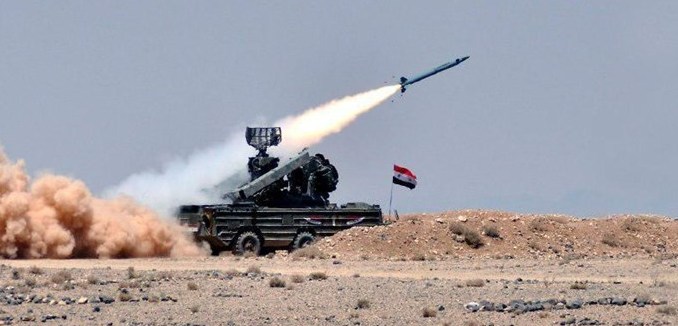
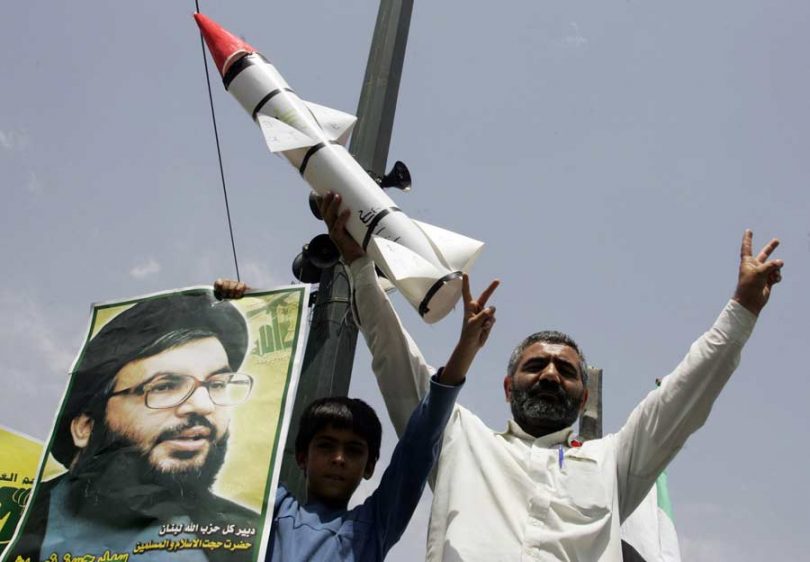
A pro-Hezbollah website boasted that in a year, the Iran-backed terror group could have 500,000 rockets, which, according to an expert, would give Hezbollah the ability to “saturate Israel with rockets,”making the next war “nasty,” Adam Kredo reportedWednesday for the Washington Free Beacon.

An article at the Dahiya website, a Lebanese pro-Hezbollah site, claimed that Syrian President Bashar al-Assad rejected a request by Russian President Vladimir Putin to remove the 70,000 missiles Iran has deployed across Syria. Assad, according to the article, has ordered his army to build and camouflage missile silos to allow Hezbollah to build its rocket arsenal in Syria alone to reach 500,000.

“The ability for Iran to move weaponry into Syria is only limited by Iran’s transportation fleet and what they have available in their arsenal,” Jonathan Schanzer, a former Treasury terror financing expert and currently senior vice president of the Foundation for Defense of Democracies told the Free Beacon. He added that this makes matters difficult for Israel as “Iran is exploiting the fog of war and it’s working.”

“The strategy may now be emerging: saturate Israel with rockets from two northern fronts and overwhelm their air defenses,” Schanzer assessed. “Israel has some big decisions ahead. The longer they wait to neutralize this threat, the more nasty that two-front rocket arsenal becomes.”


How Israel Could Take The Fight Directly To Iran

February 15, 2018

By Charles Bybelezer | The Media Line February 15, 2018

Source: How Israel Could Take The Fight Directly To Iran

{No more hiding behind proxies. – LS}

While conventional military options targeting Iran are unlikely, Israel nevertheless has options

The conflagration this past weekend between Israeli and Iranian forces is being billed as a new stage in the longstanding, albeit to date largely covert, war between the two adversaries. For the first time, Iranian troops perpetrated a direct attack on Israel; initially, by sending a drone across the border from Syria and then by firing the anti-aircraft missile that downed an IDF jet which had reentered Israeli airspace after conducting a retaliatory mission.

The events were significant both because of the success in downing the Israeli warplane, the first such occurrence in decades, but also because it evidences Iran’s growing foothold in the Syrian theater, a development that Jerusalem vehemently opposes and has vowed to prevent at all costs. Overall, Iran’s actions suggest that it feels sufficiently emboldened to use its own forces to harm the Jewish state.

According to Lt. Col. (ret.) Yiftah Shapir, a career officer in the Israeli Air Force and the former head of the Military Balance Project at Israel’s Institute for National Security Studies, the incident constitutes a strategic shift “as it marks the first occasion that the Iranians openly engaged Israel, whereas previously this was done via its proxies. It may be,” he qualified to The Media Line, “that the Iranians misjudged the [intensity of the] Israeli response and that the status quo will be restored for a period of time.”

By contrast, Saturday’s flare-up was not the first time that Israel directly struck Iranian assets. In December, the IDF reportedly destroyed a military facility being built by Tehran ​​in al-Kiswah, just south of Damascus. Notably, in 2015, Israeli strikes killed at least six Iranian troops in the Syrian Golan Heights, including a general in the Revolutionary Guard Corps. Also targeted was Jihad Mughniyeh, son of the notorious former Hizbullah operations chief Imad who was himself killed in an Israeli-attributed 2008 car bombing in Syria.

Furthermore, Israel’s Mossad has been implicated in the assassination of multiple nuclear scientists on Iranian soil, not to mention the deployment of the Stuxnet cyber-weapon, a computer worm developed in conjunction with Washington that wreaked havoc on Iranian nuclear installations even after being discovered in 2010.

So whereas the latest confrontation along the northern border was in some ways exceptional, it does not inevitably entail a long-term escalation or that the conflict be brought out into the open, albeit these are both distinct possibilities.

In fact, while the political and military echelons have made clear that Israel is not seeking an escalation, its so-called “red lines”—namely, the transfer of advanced weaponry to Hizbullah in Lebanon and Iran’s military entrenchment in Syria—continue to be violated; this, despite the IDF having conducted well over 100 cross-border strikes to protect its interests over the past eighteen months. Additionally, Iran has started construction on a subterranean facility in Lebanon to manufacture long-range precision missiles that could allow Hizbullah to target, with great accuracy, critical Israeli infrastructure in a future war.

Taken together, these developments raise the question of whether Israel’s deterrence vis-a-vis Tehran and its Lebanese proxy may be weakening, which would necessitate modifying its military strategy.

“Israel’s [decision-making process] now depends largely on what the Iranians and Hizbullah do moving forward,” Brig. Gen. (res.) Nitzan Nuriel, former director of Israel’s Counter-Terrorism Bureau, told The Media Line. “Throughout the years Israel has taken action all over [the region] to make sure that its interests are met. Israel needs to use all the tools available to it, including through its allies.”

While one incident is unlikely to cause a dramatic change in Jerusalem’s calculus, it is possible that the Israeli army could eventually adopt a page out of Tehran’s playbook by taking the fight directly to the Iranian heartland.

To this end, most experts agree that a full-scale military operation targeting Iran’s atomic facilities—the likes of which Prime Minister Binyamin Netanyahu reportedly advocated for in 2012 but which was shelved due to opposition from the defense establishment and the Obama administration—is currently off-the-table. While the debate previously centered on the ability to set-back Iran’s nuclear program by enough time to justify the risks, today the political climate has rendered the discussion moot.

The signing of the Iran nuclear deal in 2015 effectively ended the possibility for such a mission—the ramifications considered untenable. On the one hand, with the U.S. still committed to the agreement—in addition to Russia, China and European nations—the political fall-out from any major military foray into Iran would dwarf the backlash in the wake of the destruction of the Osirak nuclear reactor in Iraq in 1982 and the atomic facility in Deir ez-Zor, Syria in 2007. On the other hand, since the accord was forged Tehran has deepened its penetration into Lebanon, Syria and the Gaza Strip, all but ensuring that the targeting by Israel of its atomic infrastructure would ignite a war on all three fronts.

Moreover, as U.S. President Donald Trump mulls withdrawing altogether from the deal any Israeli action targeting Iran’s nuclear program—military or otherwise—could be self-defeating as it could hinder the American leader’s efforts to either re-impose “crippling” sanctions on the Islamic Republic or at the very least strengthen the atomic agreement by addressing, perhaps in a follow-on pact, Tehran’s ballistic missile program and regional adventurism.

Nevertheless, Israel has non-military options according to former Mossad chief Danny Yatom. “Israel should consider all possibilities, including targeting Iran directly, but as part of a grand strategy. I would not exclude the potential that Israel will also use proxies,” he contended to The Media Line. ”

This could include mobilizing the Peoples Mujahedin of Iran (MEK), for example, which may have carried out the killing of Iranian nuclear scientists on Israel’s behalf. Jerusalem has allegedly provided funding, training and possibly arms to the exiled anti-regime group.

The Paris-based MEK maintains a presence in Iraq and, covertly, in Iran, from where it has been accused of fomenting civil unrest including the recent week-long nationwide protests. Recently delisted by the U.S. as a terror group, it also purportedly has links to Saudi Arabia and therefore could act as an intermediary between the Jewish state and Riyadh to facilitate the coordination of their positions. The Iranian dissident organization also monitors Tehran’s nuclear program (in fact it was the first non-state actor to reveal it) and might therefore serve as an additional intelligence source for Israel moving forward.

It is a shadowy game no doubt, but the MEK, among other groups, could also be used as a conduit through which to convey Israel’s increasingly bold message to the Iranian masses; namely, that Jerusalem is not their enemy but, rather, the Mullahs themselves. In this respect, Netanyahu has numerous times over the past year directly addressed the Iranian people, reinforcing the fact that Israel marks a distinction between the regime and the population.

“Israel’s policy of speaking directly to the Iranian people is right, as today one can send messages not only via television, radio and written press but also through social media, which can reach millions,” Yatom stated. “Why not speak to the population over the heads of the Iranian regime?”

The Israeli premier, in conjunction with U.S. President Donald Trump, also publicly backed the recent demonstrations in Iran, suggesting that Jerusalem and Washington may be on the same page, readying to invest further energies into empowering the Iranian opposition with the aim of promoting regime change.

“It is very important to address the Iranian populace, as relations with Israelis were strong not only under the Shah but also historically there is no real animosity between Iran and Israel,” Eliezer Tzafrir, the former head of the Mossad station in Iran explained to The Media Line. “The Iranian youth wants a major departure from the radicalism. They want Internet, they want men and women to be able to publicly meet. One day they will succeed.”

Given the high stakes, Israel will in the near future like have to make some hard strategic decisions that could effectively chart its course for years to come. If it is serious about maintaining its qualitative military advantage—not in the region, mind you, but, rather, even along its borders—it may be forced to undertake significant operations in both Lebanon and Syria, which could very well lead to full-blown conflict.

“We cannot preclude the possibility that Israel will take action to destroy the factory [in Lebanon], especially because it says so clearly, which effectively makes it an obligation,” Yatom stressed. “There is a very big difference between tens of thousands of rockets in Hizbullah’s hands that are not as precise and those that can potentially hit specific buildings.

“In this case, the threat to Israel will be much more severe and it is better to deal with it before they produce the technology than after,” he continued. “We must take into consideration that if that happens it might ignite a medium- or large-scale military exchange. But it appears that the situation is going to deteriorate anyhow unless there will be a coherent international effort to push the Iranians out of Syria and put more restraints on Hizbullah.”

In the interim, Jerusalem might consider indirect action, allowing it to maintain plausible deniability while reducing the prospects of unintended consequences that could lead to a major intensification of the conflict. The impact of such a shot across the bow against the Iranian regime might resonate even more loudly given the proximity to home.


Palestinian Diplomat: ‘We’ll Keep Teaching Our Kids to Throw Rocks!’

February 15, 2018

By: The Tower and United with Israel Staff Feb 14, 2018

Source Link:
Palestinian Diplomat We’ll Keep Teaching Our Kids to Throw Rocks

{First rocks, then explosives.  Shouldn’t they be learning to throw footballs?  – LS}

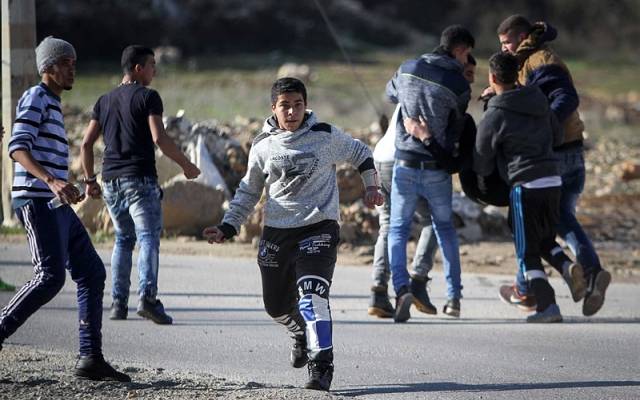
A member of the Palestinian delegation to the United Nations (UN) told a group of students that Palestinians are “very expert at throwing the stones” and that they would not stop teaching their children to do so, Ynet reported Tuesday.

In the recording obtained by Ynet,  Abdullah Abu Shawesh, who is both a senior adviser to the UN’s Development Group and a member of the Palestinian UN mission, told a group of visiting Canadian students from McGill University’s international relations program that the Palestinians “are very clever and very expert at throwing the stones. We are very proud to do that. We will not stop to learn our kids (to do that).”

“We are very proud that we are stone throwers. I’m one of them. Now I became a little bit older, but I stay resistant in the name of my kids,” he added.

Later, Abu Shawesh added details about  his own stone throwing during the first Intifada. “I was in high school. I never missed an opportunity to throw stones. This is our life. We develop our resistance every day. We’re proud of it.”

When informed of Abu Shawesh’s comments, Danny Danon, Israel’s Ambassador to the UN stated that “the Palestinians are no longer trying to hide the truth. The Palestinian leadership and its representatives are inciting against Israel and openly encouraging terrorism. The international community must not allow it.”

“It cannot be that inside the UN, which is supposed to make peace and protect human rights, a diplomat will incite to violence and terrorism, which wounds and even kills innocent Israelis,” Danon added.

Poisoning the Minds of Palestinian Children

The PA educational system routinely poisons the minds of Palestinian children by educating them to hate Israel and Israelis through terror-promoting messages. It even uses cultural mediums such as school plays, sports events and summer camps for this heinous objective.

Fatah, led by Palestinian Authority (PA) head Mahmoud Abbas, in December posted on its Twitter account a photo of a young boy using a slingshot to shoot stones, along with instructions on how best to throw rocks:

“In order to hit the target, there are three conditions,” the guide recommends. “1. Stand stably and balance your legs, arms, and body well. 2. Focus your gaze on the center of the target, and do not look at anything else. 3. Keep the desired balance between your body and your weapon. You are the one that controls the weapon, and not the other way around,” the guide stresses, according to a translation provided by Palestinian Media Watch (PMW), a watchdog that monitors Palestinian incitement to terrorism and anti-Semitism.

“If you did not understand this, read it again, and if you still have not understood, here is an example picture for you,” Fatah posted.


Iran Displays Nuclear-Capable Ballistic Missile at Parade Celebrating Revolution

February 14, 2018

by TheTower.org Staff | 02.13.18 11:32 am

Source Link: “Iran Displays Nuclear-Capable Ballistic Missile at Parade Celebrating Revolution

{Salami says it’s purely defensive, but if Europe tries to negotiate about the missile program, he will increase the range so it can hit Europe. Ha…what a bunch of baloney. – LS}

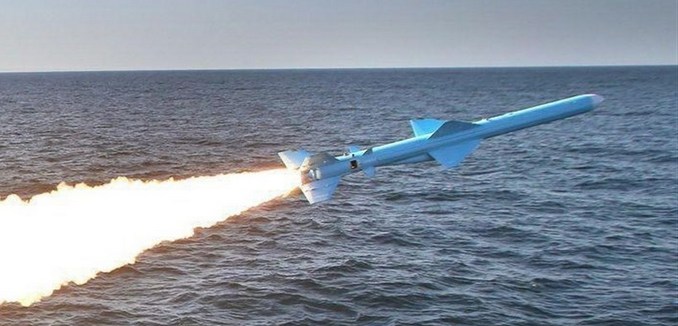
Iran displayed a nuclear-capable ballistic missile during parades celebrating the country’s 1979 revolution over the weekend, reinforcing concerns that it is in violation of the United Nations Security Council Resolution implementing the nuclear deal, the Washington Free Beacon reported Monday.

The Ghadr (or Qadr) missile, according to Iranian military officials “can be launched from mobile platforms or silos in different positions and can escape missile defense shields due to their radar-evading capability,” according to accounts appearing in Iran’s state-controlled media. Israel is within the range of the missile when launched from Iranian territory.

“Thirty-nine years in, the Islamic Revolution has little to show for its decades in power other than growing the country’s asymmetric military capabilities in order to continue their export of the revolution,” Behnam Ben Taleblu, an expert on Iran with the Foundation for Defense of Democracies, said. “The Islamic Republic has considerably grown the country’s missile and rocket arsenal, both through production and procurement.”

Taleblu also told the Washington Free Beacon, “The Ghadr can strike Israel when fired from Iranian territory, and in March 2016, was flight-tested while bearing genocidal slogans against the state of Israel.” He was referring to a test launch of a missile that had the phrase “Israel must be wiped off the Earth,” written on it in Hebrew.

UN Security Council Resolution 2231 formalized the 2015 nuclear deal with Iran, “calls upon Iran not to undertake any activity related to ballistic missiles designed to be capable of delivering nuclear weapons, including launches using such ballistic missile technology.”

In December of last year, both France and Germany reiterated their opposition to Iran’s continued ballistic missile development and called on the Islamic Republic to give up “its hegemonic temptations.”

France and Germany joined the United States and the United Kingdom in August 2017 in sending a letter to UN Secretary General António Guterres, charging that Iran’s launch of a satellite violated resolution 2231.

President Donald Trump, in October 2017, said that he would not certify Iran’s compliance with the nuclear deal and demanded that four aspects of the deal be fixed or he would no longer waive the sanctions that were lifted as part of the accord. Trump has demanded that: new negotiations eliminate the sunset provisions of the deal that allow Iran to develop an industrial scale uranium enrichment program by the deal’s end, prohibit Iran from developing ballistic missiles, ensure “anytime, anywhere” inspections so that Iran will have to allow inspectors into its military sites, and target Iran for sanctions for its human rights violations and support for terror.

Although Iran insists that its ballistic missile program is purely defensive, in November 2017 Hossein Salami, the lieutenant commander of Iran’s Islamic Revolutionary Guard Corps (IRGC), threatened that if Europeans insisted on negotiating over Iran’s missile program, Iran would increase the range of the missiles to reach Europe.

Iran has tested ballistic missiles capable of reaching Israel and reportedly used a Star of David as a target for one of its ballistic missile tests.

A UN report last week found that Iran had supplied ballistic missiles to Houthi rebels in Yemen. This would be a violation of Resolution 2231, which also prohibits Iran from transferring weapons—both conventional weapons and ballistic missiles—to other countries.


STEINITZ: ASSAD IN DANGER IF HE ALLOWS IRAN TO ATTACK ISRAEL FROM SYRIA

February 13, 2018

BY HERB KEINON FEBRUARY 13, 2018 01:33 Jerusalem Post

Source Link:
STEINITZ: ASSAD IN DANGER IF HE ALLOWS IRAN TO ATTACK ISRAEL FROM SYRIA

{I wonder just how much sway he has in all this. – LS}

“Assad and Hezbollah are the same, and if there will be an attack against us, we will not be obligated only to act against the the source of the attack.”

Israel views Syrian President Bashar Assad’s regime as the weak link in the Iranian-Shi’a axis, and Assad should keep that in mind when weighing whether or not to let Iran set up military bases in his country or transfer precision missiles to Hezbollah, National Infrastructure, Energy and Water Minister Yuval Steinitz said on Monday.

Steinitz – a member of the 12-member security cabinet that discussed on Sunday possible next steps following Saturday’s incursion by an Iranian drone and the ensuing downing of an Israeli F-16 – hinted broadly in an Army Radio interview that Israel would act against Assad if Iran crosses the red lines that Israel has established.

 The first red line, he said, was turning Syrian into a “forward” military base for the Iranian Revolutionary Guards Corps, including intelligence, naval and air-force bases.

The second red line, he said, was that Syria would enable Iran to upgrade Hezbollah’s missile capabilities by turning those missiles into precision weapons that would constitute a much greater threat to Israel than they currently are.

Today there is no difference between Syria and Lebanon, Steinitz said, and the Syrian army and Hezbollah are two arms doing Iran’s bidding.

“Assad and Hezbollah are the same, and if there will be an attack against us, we will not be obligated to act only against the source of the attack,” he said. “We will reserve the right to choose the right front.”

For example, Steinitz said, “the Assad regime is the weak link in the Iranian-Shi’a axis, and I think Assad should think very well whether he wants to turn Syria into a forward base for Iran or allow precision missiles through Syria to Lebanon, because he himself, his regime, his government and his army can be hurt in that situation.”

Meanwhile, Britain joined the US on Monday in standing behind Israel following Saturday’s developments in the North. British Foreign Secretary Boris Johnson issued a statement saying the United Kingdom is “concerned at developments over Israel’s border with Syria this weekend.”

“We support Israel’s right to defend itself against any incursions into its territory,” the statement said. “We are concerned at the Iranian actions, which detract from efforts to get a genuine peace process underway. We encourage Russia to use its influence to press the regime and its backers to avoid provocative actions and to support de-escalation in pursuit of a broader political settlement.”

No such similar statement has been issued by EU foreign-policy chief Federica Mogherini.

On Sunday, the White House issued a statement saying the US supports Israel’s “right to defend itself from the Iranian-backed Syrian and militia forces in southern Syria.”

This is a message that US Secretary of State Rex Tillerson is expected to deliver when he goes to Lebanon later this week as part of a five-county tour of the Mideast, including Egypt, Kuwait, Jordan, Lebanon and Turkey.

On the first stop of his tour in Cairo on Monday, however, the focus was on other issues, with Tillerson saying the US supports Egypt’s fight against Islamic State. But he reiterated that the US advocates free and fair elections there.

Speaking at a joint news conference with his Egyptian counterpart, Tillerson said Washington remains committed to achieving a lasting peace between Israel and the Palestinians, despite President Donald Trump’s decision to recognize Jerusalem as Israel’s capital.

Regarding US-Egypt relations, Tillerson said: “We agreed we would continue our close cooperation on counterterrorism measures.

The Egyptian people should be confident that the US commitment to continue to support Egypt in its fight against terrorism and bringing security to the Egyptian people is steadfast.”

The Egyptian military campaign comes ahead of a presidential election in March, in which President Abdel Fattah al-Sisi is seeking a second term in office.

Asked about the election, Tillerson said the United States supports a credible, transparent election in Egypt and Libya.

“We have always advocated for free and fair elections, transparent elections – not just in Egypt but in any country,” he said.

“The US is always going to advocate for an electoral process that respects the rights of citizens,” Tillerson told journalists, adding that the US was also keen to continue supporting Egypt in its economic recovery.

Electricity Suppliers Have Taken Steps to Address Electromagnetic Risks

February 12, 2018

February 12, 2018 by Homeland Security Today

Source Link: Electricity Suppliers Have Taken Steps to Address Electromagnetic Risks3

{Please hurry. – LS}

A GAO report has found that electricity suppliers have taken steps to address electromagnetic risks and more research is still ongoing.

In the case of a severe solar storm or a high-altitude nuclear blast, the electric grid could be severely damaged, causing extensive outages. Government and industry experts agreed that they needed to know more about nuclear risks. Thirteen electricity suppliers were contacted by GAO, and eleven of them had assessed their systems vulnerability to solar storms and expected the impact to be minimal.

Extensive research into the effects of severe geomagnetic disturbance has been carried out and the main risks of potential voltage instability and possible damage to key system components have been identified.

The Department of Energy told GAO that they did not have enough information about the potential effects of a high-altitude electromagnetic pulse that could arise if a nuclear device was detonated. DoE and industry have started to carry out research into the effects of a high-altitude elctromagnetic pulse now. Three suppliers have studied the potential effects on their network and two had had integrated HEMP-resistant features into new control centers. Ten suppliers had started making technological and operational improvements to enhance overall network reliability that also provided some protection against GMD and HEMP risks, such as replacing old transformers or unprotected control centers.

All 13 suppliers have complied with a GMD regulatory standard issued by the North American Electric Reliability Corporation (NERC) — the federally designated regulatory authority responsible for developing and enforcing reliability standards — to develop operating procedures to mitigate GMD effects.


Syrian frontline town divides NATO allies Turkey and U.S.

February 12, 2018

February 12, 2018 By Dominic Evans Reuters Via One America News Network

Source Link: Syrian frontline town divides NATO allies Turkey and U.S.

{The face off begins. – LS}

ISTANBUL (Reuters) – A dispute between Turkey and the United States over control of a north Syrian town has put the NATO allies on opposing sides of the conflict’s front line, deepening a diplomatic rift ahead of a visit to Turkey by U.S. Secretary of State Rex Tillerson.

This week’s talks, already challenging given disagreements over President Tayyip Erdogan’s crackdown after a failed 2016 coup, the detention of U.S. consulate staff and citizens, and the trial of a Turkish bank executive for evading U.S. sanctions on Iran, have been given added edge by the dispute over Syria.

Turkish and U.S. troops, deployed alongside local fighters, have carved out rival areas of influence on Syria’s northern border. To Ankara’s fury, Washington allied itself with a force led by the Kurdish YPG, a militia which Turkey says is commanded by the same leaders overseeing an insurgency in its southeast.

The dispute has come to a head over the Syrian town of Manbij, where Turkey has threatened to drive out a YPG-led force and warned the United States – which has troops there – not to get in the way.

“This is what we have to say to all our allies: don’t get in between us and terrorist organizations, or we will not be responsible for the unwanted consequences,” Erdogan said last month, days before launching a military offensive against the YPG in the northwestern Syrian region of Afrin.

{On the contrary, Mr. Erodogan, you WILL be held responsible if our troops are harmed in any way.  You can bet your Koran on it. – LS} 

Turkey would turn its attention to Manbij, about 100 km (60 miles) east of Afrin, “as soon as possible”, he said.

But Washington says it has no plans to withdraw its soldiers from Manbij, and two U.S. commanders visited the town last week to reinforce that message.

It has also warned that Turkey’s air and ground offensive in Afrin risks exacerbating a humanitarian crisis in Syria and disrupting one of the few corners of the country that had remained stable through seven years of civil war.

In a blunt but possibly understated assessment of Tillerson’s visit, a U.S. State Department official said Washington expected “a difficult conversation” in Ankara.

For Turkey, the dispute has pushed relations with the United States to breaking point.

“We will discuss these issues during Tillerson’s visit, and our ties are at a very critical stage,” Foreign Minister Mevlut Cavusoglu said on Monday. “Either we will improve our ties, or they will completely deteriorate.”

“GUNG-HO” MILITARY

As the grievances between Washington and Ankara have escalated, Turkey has built bridges with rival powers Russia and Iran – even though their support has put Syria’s President Bashar al-Assad in the ascendancy while Turkey still backs the weakened rebels seeking his downfall.

The three countries agreed a so far ineffectual plan to wind down the fighting between the Syrian army, which is supported by Russian air power and Iran-backed militias, and jihadist fighters and Turkish-backed rebels.

Turkey says it also won agreement to launch its Afrin operation from Russia, which controls most of the air space in western Syria.

In contrast, it says the United States has yet to honor several pledges: for Washington to stop arming the YPG, to take back those arms after Islamic State was defeated in Syria, and to pull back YPG forces from Manbij.

Last week’s visit to Manbij by U.S. military commanders was a short-sighted and thoughtless “military gung-ho gesture”, according to Erdogan’s senior foreign policy adviser, Gulnur Aybet.

“It is not helpful, at a time when the United States and Turkey are trying to find common ground … for U.S. generals in the field to undertake a flippant and provocative display in Manbij next to the YPG,” she told Reuters.

Relations with the United States were “fragile and frustrating because pledges have been unfulfilled and there is a lack of coherence between the White House and the military”, Aybet said.

U.S. VIEWED UNFAVORABLY

Erdogan has also said Turkey will “strangle” a force which the United States plans to develop in the large sweep of northern Syria which the YPG and its allies currently control, including more than 400 km (250 miles) of the border with Turkey.

His tough language, a year before presidential and parliamentary elections, resonates in a country where 83 percent of people view the United States unfavorably, according to a poll published on Monday.

The poll for the Center for American Progress also found that 46 percent of Turks think their country should do more to confront the United States, compared with 37 percent who believe it should maintain the alliance.

That sentiment has underpinned Erdogan’s unyielding response to other disputes with Washington.

He has dismissed criticism of Turkey’s crackdown since the failed July 2016 coup, in which 250 people were killed, saying the response is justified by the security challenges Turkey faces.

The president has also said the U.S. court conviction of an executive of Turkey’s state-owned Halkbank for evading Iran sanctions was a “political coup attempt” which showed the U.S.-Turkish partnership was eroding.

In October he accused the U.S. consulate in Istanbul of sheltering an employee with links to U.S.-based cleric Fethullah Gulen, blamed by Ankara for last year’s failed coup. Turkey has sought the extradition of Gulen, who has denied any link to the coup attempt.

Turkey’s detention of two locally employed U.S. consulate workers – without providing evidence, according to Washington – led to the two countries suspending visa services. Even when services were resumed, they disagreed publicly over what assurances had been made to resolve their differences.

“The U.S.-Turkey alliance can no longer be taken for granted,” Ozgur Unluhisarcikli of the German Marshall Fund of the United States, which promotes transatlantic cooperation, wrote in a report published ahead of Tillerson’s trip.

“That this relationship has endured several stress tests in the past is no guarantee that it will survive this one”.

CYPRUS SAYS TURKISH SHIPS OBSTRUCTING GAS DRILL SHIP IN EAST MED

February 11, 2018

BY REUTERS FEBRUARY 11, 2018 13:43 Via Jerusalem Post

Source:
CYPRUS SAYS TURKISH SHIPS OBSTRUCTING GAS DRILL SHIP IN EAST MED

{Turkey continues to gobble up more territory. – LS}

In addition to Cyprus and Turkey, Israel and Lebanon are also at odds over offshore gas exploration and marine boundaries.

COSIA – Cyprus said on Sunday the Turkish military was obstructing a drill rig contracted by Italy’s Eni from approaching an area to explore for natural gas, highlighting tensions over offshore resources in the east Mediterranean.

The Saipem 12000 drill ship had been heading from a location south-southwest of Cyprus towards an area southeast of the island when it was stopped by Turkish warships on Friday, Cyprus said.

There was no immediate comment from Turkey.

Cypriot president Nicos Anastasiades said Cyprus was taking the “necessary” steps over the matter, but seemed keen to play down any escalation.
“From our side, our actions reflect the necessity of avoiding anything which could escalate (the situation), without of course overlooking the violation of international law perpetrated by Turkey,” Anastasiades told journalists in Nicosia.

In Italy, a spokesperson for state-controlled Eni confirmed the drill ship was stopped on Friday by Turkish military ships.

Using the Saipem 1200, Eni had previously reported a promising gas discovery south-southwest of the island in another location on Feb. 8, inside Cyprus’s exclusive economic zone.

Blocking the ship is the latest twist in decades-old feuds and overlapping claims in the eastern Mediterrananean, brought into sharper focus by the discovery of some of the world’s largest gas finds in the past decade lurking in the watery deep.

Cyprus is ethnically divided, and Turkey, which supports a breakaway Turkish Cypriot state in north Cyprus, says Greek Cypriots have no jurisdiction to explore for natural gas. Greek Cypriots say it is their sovereign right.

Greek Cypriots run Cyprus’s internationally recognised government. It has no diplomatic relations with Turkey.

In addition to Cyprus and Turkey, Israel and Lebanon are also at odds over offshore gas exploration and marine boundaries.

The Saipem 12000 had previously been commissioned to drill the Calypso, which lies less than 100 km away from the mammoth Zohr field off Egypt. It had been heading to a maritime block, known as Block 3, where it was to start work on another prospect, dubbed Cuttlefish.

Block 3, which lies far below Cyprus’s Karpasia peninsula, the pointed ‘panhandle’ of the island, lies closer to Syria or Lebanon than Turkey.

In Italy, a spokesperson for Eni said the Saipem 12000 was stopped by Turkish military ships with the notice not to continue because of military activities in the destination area.

“The vessel has prudently executed the orders and will remain in position pending an evolution of the situation,” the spokesperson said.


US support for Kurds in Iraq and Syria unaffected by tensions with Turkey

February 11, 2018

Source: US support for Kurds in Iraq and Syria unaffected by tensions with Turkey

{While we’re making a huge investment in the Kurds, Turkey prolongs the battle against ISIS. – LS}

The Pentagon is continuing to support Kurdish forces in Iraq and Syria, a government audit revealed this week, even as the fight against the Islamic State (IS) winds down and the United States faces growing pressure from allies and foes alike to back down.

The latest quarterly Lead Inspector General (IG) report for the US-led mission in Iraq and Syria confirms that the Donald Trump administration continues to supply weapons and equipment to the Kurdish People’s Protection Units (YPG), part of the Syrian Democratic Forces (SDF). The Defense Department considers the YPG to be the most capable in-country US partner for the mission, but NATO ally Turkey views YPG fighters as terrorists.

For the fiscal year that started Oct. 1, the Pentagon asked for $500 million to supply Syrian forces, including YPG-led units, with vehicles, mortars, anti-tank missiles and machine guns, up from $430 million requested in fiscal 2017. Deliveries began in May 2017, prompting the ire of Turkish President Recep Tayyip Erdogan.

The IG report indicates that US support has kept up, despite pledges from US officials to draw down support amid increasing friction with both the Turks and Bashar al-Assad’s regime. A large battle outside SDF headquarters this week led to the deaths of more than 100 pro-Assad fighters who fired dozens of tank rounds at the Deir ez-Zor province compound, prompting the US-backed force to respond in self-defense, according to the Pentagon.

“SDF said that there had been no change in their relationship with the United States and that changes to weapons deliveries were a consequence of their victories against [the Islamic State],” said the report, prepared for Congress by inspectors general from the Pentagon, State Department and the US Agency for International Development. “Syrian Kurdish officials reiterated their interest in having American engagement in Syria continue, and warned that a reduction in US support could allow [IS] to regain strength.”

Yet as YPG and other fighters have strayed away from the US-backed mission against IS, the Pentagon has cautioned that it will cut off support for units that leave the front lines. More and more Kurdish fighters and their allies have been heading toward Afrin, a Kurdish-held area that has been under attack from the Turkish military since Jan. 20. Last weekend, the 2,000-member Syriac Military Council, a Christian group, opted to leave the SDF to join the fight in Afrin.

“Any forces that decide to move to Afrin will not receive continued coalition support,” a spokesman told Al-Monitor.

The mounting tensions come as the Defense Department says it has trained 12,500 vetted Syrian opposition fighters since the beginning of the anti-IS campaign in 2015, including 11,000 members of the SDF.

“Wherever possible, our advisers monitor the use of the weapons and supplies we give the Kurdish elements of the SDF, ensuring use only against [IS],” Pentagon spokesman Eric Pahon told Al-Monitor. “Any alleged misuse or diversion of US support is taken seriously and may lead to the possible curtailment of support, if verified.”

Meanwhile, the Pentagon trained nearly 2,000 more Iraqi Kurdish peshmerga forces over the past three months even as stipends to Kurdish Regional Guard Brigades ended after a yearlong agreement to fund the fighters expired in July. The Pentagon has requested $365 million this fiscal year to pay for the Kurdish force if a new deal can be ironed out.

In late October, Iraqi Prime Minister Haider al-Abadi said Baghdad would soon begin paying peshmerga salaries. But Abadi has still not delivered on that promise, the IG report says, as Iraqi security forces moved into disputed areas after the Kurds voted for independence in September.

Most peshmerga forces withdrew to protect their semi-autonomous territory in northeastern Iraq after Baghdad kicked them out with the help of Iranian-backed militias. Some units, however, stayed behind to fight IS, which now has fewer than 1,000 adherents fighting for small pockets of territory, including Tuz Khormato near the oil-rich city of Kirkuk.

Caroline Glick: Syria – The War Everyone Must Fight and No One Can Win

February 11, 2018

by CAROLINE GLICK10 Feb 2018 Via Breitbart

Source: Caroline Glick: Syria – The War Everyone Must Fight and No One Can Win

{Total quagmire. – LS}

Saturday morning’s violent clashes along the Israeli-Syria border between Israel on the one hand and Iran and Syrian regime forces on the other occurred against the backdrop of multiplying acts of war and violence among a seemingly endless roster of combatants.

To understand the significance and implications of the clashes – which saw Israel destroy an Iranian drone that penetrated its airspace and destroy the drone base in Syria from which the drone was deployed, and the downing of an Israeli F-16 by a massive barrage of Syrian anti-aircraft missiles – it is necessary to understand the basic logic of violence in Syria.

There are a dozen or so actors fighting in Syria. The US is fighting in coalition with the Kurdish dominated Syrian Democratic Forces. The Kurdish YPG militia is part of the SDF. Political representatives tied to the YPG have denied it, but the YPG is widely considered to be allied with the Turkish PKK group, which is listed as a terrorist group by the State Department and the Turkish government.

Russia is fighting with Iran, the Syrian-regime forces, Hezbollah and Iranian-organized Shiite militias that include fighters from Pakistan, Afghanistan, and Iraq.

Russia also sometimes acts indirectly with Israel against its coalition partners. On the basis of understandings that Israeli Prime Minister Benjamin Netanyahu has reached with Russian President Vladimir Putin, Russian forces in Syria do not interfere with Israeli air strikes against Iranian, Hezbollah and Syrian-regime targets which directly threaten Israel’s strategic interests.

The Turks are fighting largely independently. Sometimes they are supported by the U.S., sometimes they are supported by the Russians.

Turkey belatedly joined the anti-ISIS coalition led by the U.S. But the Turks’ main target in Syria is the Kurdish forces. Three weeks ago, the Turks launched yet another campaign against the Kurds in Syria. Their current operation is focused on the Afrin province controlled by YPG. But Turkey is also threatening Manbij, where US special forces are deployed in support of the SDF.

Non-ISIS rebel forces are being destroyed systematically by regime forces in Idlib province and in the Damascus suburban area known as Eastern Ghouta. According to a New York Times‘ summary of recent violence in Syria, regime forces have reportedly killed four hundred people, including a hundred children in Eastern Ghouta since December. Since the start of 2018, the Syrian regime reportedly carried out three chlorine gas attack against civilians in Ghouta.

As the New York Times noted, Ghouta was the site of the regime’s 2013 sarin gas attack which killed 1,400 people including 400 children. Then-president Barack Obama had said a year earlier that such an attack would be a red line that would provoke US action against the regime. Obama’s refusal to attack regime forces after the sarin gas attack empowered Russia, which deployed forces to Syria for the first time since the end of the Cold War in 2015.

Finally, there are ISIS forces. ISIS continues to control territory along the Syrian border with Iraq and pockets of territory in the vicinity of Deir Ezzor and Palmyra. Perhaps more importantly, ISIS forces from areas seized by coalition forces have melted away and are viewed as responsible for a spate of bombings in Damascus and elsewhere in recent months and weeks.

Over the past several weeks, numerous articles have appeared analyzing the recent rise in violence in Syria. The main question is: why is the violence continuing? The prevailing sense in the West had been that, following ISIS’s loss of most of the territory it had held, the war had wound down. The U.S. and its allies had made their peace with Syrian President Bashar Assad’s survival and with Russia’s newfound role as powerbroker on the one hand. And, on the other hand, the Russians and their Iranian, Syrian, and Hezbollah allies had made their peace with Kurdish control over large swathes of former Syrian territory and their alliance with the U.S.

Israel, the U.S., and Turkey were seen as actors with specific issues which could be remedied with intermittent tactical strikes that wouldn’t challenge the overall post-civil war order.

This assessment was false because there is nothing tactical or limited about any of the parties’ interests and concerns relating to Syria.

Consider the Turks and the U.S. The Turks oppose Syrian Kurdish control over territory along the border with Turkey because they view it as a strategic threat to Turkey. Turkey’s Afrin offensive – which Ankara envisions as the first stage of a broader offensive which will include Manbij – also has implications that far exceed the borders of Syria or the wider Middle East.

Russia is supporting the Turkish anti-Kurdish offensive for reasons that have nothing to do with Syria and everything to do with Russia’s strategic rivalry for great power status with the US.

By supporting Turkey’s anti-Kurdish offensive, Russia is placing NATO member Turkey in direct confrontation with the US. If the US stands with the Kurds and Turkey fails to back down, then the likelihood that American and Turkish forces will fight one another in battle grows to near certainty. If this happens, Turkish membership in NATO will effectively end.

On the other hand, if the US doesn’t stand with the Syrian Kurds, the U.S. will lose its residual credibility as an ally in the region. The stakes in Syria are critical in light of the U.S.’s failure to defend its Iraqi Kurdish allies last October, when the US-trained Iraqi military wrested control over the oil-rich Kirkuk province from the Kurdish regional government in Erbil.

For the US then, Syria is a moment of truth. It can stand with its allies on the ground and so assure its long-term ability to work with allies in the Middle East and beyond. Or it can betray its allies on the ground and preserve the idea of its strategic alliance with Turkey, even though, on the ground, that alliance no longer exists.

This then brings us to Israel, and Saturday morning’s violent clashes with Iran.

Although Bashar Assad still holds the title President of Syria, to all intents and purposes, he is an Iranian puppet. His forces take their orders from Iran and Hezbollah. He has no independent power to make decisions about anything in Syria.

Israel has eyed this development with great and growing concern over the years. Iran’s assertion of control over Syria has massive implications for Israel’s national security. And, over the years, Israel has set and enforced specific red lines in Syria designed to prevent Iran’s effective control over Assad’s regime from passing specific limits. Israel’s red lines include blocking Iran from transferring precision-guided missiles, other advanced weapons systems and non-conventional weapons to Hezbollah in Lebanon through Syria territory including the Damascus airport. Israel’s red lines also include blocking Iran from setting up permanent bases in Syria. To enforce these and other red lines, over the years Israel has conducted repeated air attacks against targets in Syria.

Immediately after Putin first deployed his forces to Syria in 2015, Netanyahu flew to Russia to coordinate Israel’s air operations with him and prevent direct confrontations between Israeli and Russian forces. Since their first meeting, Netanyahu has flown to Russia on ten subsequent occasions to develop a working relationship with Putin with the aim of weakening his strategic commitment to Iranian power in the region and cultivating his perception of shared strategic interests with Israel in Syria and beyond.

Netanyahu’s last meeting with Putin was on January 29. In media briefings before and after their meeting, Netanyahu said that he spoke to Putin about three issues. First, due to Israel’s success in blocking Iran from transferring precision-guided missiles to Hezbollah in Lebanon through Syria, Iran is now building missile factories for Hezbollah inside of Lebanon. Netanyahu pledged to destroy those factories.

In his words, “Lebanon is becoming a factory for precision-guided missiles that threaten Israel. These missiles pose a grave threat to Israel, and we cannot accept this threat.”

Second, Netanyahu warned Putin that Israel will not accept Iranian military entrenchment in Syria through the construction of permanent bases, among other things. Netanyahuexplained, “The question is: Does Iran entrench itself in Syria, or will this process be stopped. If it doesn’t stop by itself, we will stop it.”

Third, Netanyahu spoke to Putin about improving Obama’s nuclear deal with the Iranian regime.

Russia is both a resource and a threat to Israel. It is a resource because Russia is capable of constraining Iran and Hezbollah. Israel treated Russia as a resource Saturday, when in the wake of its violent confrontations with Iran, which included Israel’s Air Force’s first combat loss of an F-16 since the 1980s, Israel turned to the Russians with an urgent request for them to restrain the Iranians.

Russia is a threat to Israel because it is Iran’s coalition partner. Until Russia deployed its forces to Syria, it appeared that the regime and its Iranian overlords were losing the war, or at least unable to win it. After Russia began providing air support for their ground operations, the tide of the war reversed in their favor.

At any rate, Israel is in no position to persuade Russia to abandon Syria. Russia’s presence in the region limits Israel’s actions but also guarantees that Israel will continue to act, because its vital interests will continue to come under threat and intermittent attack.

In all, the situation in Syria is and will remain unstable and exceedingly violent for the foreseeable future. Syria is not only a local battlefield where various Syrian factions vie for control over separate areas of the country – although it remains such a local battlefield.