Author Archive

Iran ordered to pay billions to families of victims of 9/11 terror attacks

May 2, 2018

The ruling will probably turn out to be largely symbolic, as Iran is very unlikely to ever pay the damages.

By Juliane Helmhold May 2, 2018 12:13 Jerusalem Post

Source Link: Iran ordered to pay billions to families of victims of 9/11 terror attacks

{Obama the Bastard could have settled some of these claims with all the cash he sent to the Mullahs, but I guess doing the right thing was just not part of his forte. – LS}

By court order, Iran is to pay billions of dollars to the families of the September 11 terror attacks, The Hill reported on Tuesday evening.

US District Judge George Daniels ruled that the Islamic Republic and other institutions must pay $12.5 million per spouse, $8.5 million per parent, $8.5 million per child and $4.25 million per sibling killed in the incident, according to the report.

The lawsuit was first filed in 2004 and was joined by families of the over 1,000 victims of the attack. It accused Iran, the Islamic Revolutionary Guard Corps and the Central Bank of the Islamic Republic of Iran for aiding the 2001 hijackers although the 9/11 Commission never found direct evidence for Iran’s involvement.

The lawsuit was only able to proceed in 2016, when Congress passed the Justice Against Sponsors of Terrorism Act, permitting the families of the victims to sue state actors for the terror attacks. Then-President Barack Obama had vetoed the law, arguing it could set a dangerous precedent but Congress overrode that veto.

According to the report, the ruling will probably turn out to be largely symbolic, as Iran is very unlikely to ever pay the damages, which in total amount to 6 billion dollars. There would be no feasible way to force the Islamic Republic, which never even responded to the lawsuit, to make the payment.

However, the lawsuit sets a significant precedent which could be used to hold Saudi Arabia responsible for the 9/11 attacks. The Saudi government has previously denied providing aid to the hijackers, many of whom were Saudi nationals, and last month Riyadh filed a bid to toss the lawsuit. This bid, however, was rejected by Judge Daniels, leading to the successful ruling against Iran.

How Israel obtained Iran’s nuclear secrets

May 1, 2018

By David Rosenberg, INN Israpundit

Source Link: How Israel obtained Iran’s nuclear secrets

{Simply amazing. – LS}

According to a report Monday night by The New York Times which cited an anonymous Israeli senior official, the massive document haul was undertaken in a January 2017 operation he hailed as one of Israel’s “greatest achievements” in intelligence gathering.

Israel’s national intelligence agency, the Mossad, discovered the location of the Iranian nuclear weapons program’s secret file archive in Tehran in February 2016, the source told the Times, which Netanyahu revealed was located in the Shorabad district.

Last January, Mossad agents infiltrated the archive in an overnight operation, removing the half ton of material, and smuggled the files to Israel that very same night.

No details on the technical execution of the covert operation were provided.

Iranian officials were initially unaware the documents had been removed, learning of the infiltration only months later, Yediot Ahronot reported Tuesday morning.

Mossad chief Yossi Cohen later informed Donald Trump of the successful operation during a trip to Washington.

While Israel has been in possession of the documents since January 2017, Israeli officials refrained from disclosing the contents to the public until now, due in large part to the lengthy translation process for the 110,000 documents and extensive efforts to verify their authenticity.

Following Prime Minister Netanyahu’s address on Monday, Secretary of State Mike Pompeo confirmed the authenticity of the materials furnished by Israel as proof of Iran’s nuclear weapons program.

I can confirm with you, for you, that these documents are real, they are authentic,” said Pompeo.

Russia’s S-300, S-400 and S-500 vs. America’s F-35 and F-22: Who Wins?

May 1, 2018

Dave Majumdarb April 9, 2017 The National Interest

Source Link: Russia’s S-300, S-400 and S-500 vs. America’s F-35 and F-22: Who Wins?

{We may never know the full range of capabilities of Russia’s ‘S’ air defense systems and America’s  F-35 and F-22 platforms. These are clearly matters of national security and are obviously top secret. – LS}

For the Russians, solving the problem of targeting a low observable aircraft is something that they continue to work on—but it is doubtful the Moscow has resolved the issue. Russia’s strong investment in layers of air defenses tells us that the Kremlin believes the primary threat to its ground forces comes from U.S. airpower. As such, defeating stealth technology is one of Moscow’s top priorities, Kofman notes, and the Kremlin has dedicated a lot of resources to that end.

Russia has tried a number of different techniques to defeat stealth technology. Among those is trying to develop a tight integrated air defense network with multiple radars trying to look at the same aircraft from different directions—but how effective those efforts have been is an open question. “It’s great being able to see an aircraft, or parts of it, but getting accuracy such that you can confidently get a missile near the target is the primary challenge,” Kofman said.

Russian air defenses may appear formidable as part of Moscow’s increasingly sophisticated anti-access/area denial (A2/AD) capability, but areas protected by these systems are far from impenetrable bubbles or ‘Iron Domes’ as some analysts have called them.

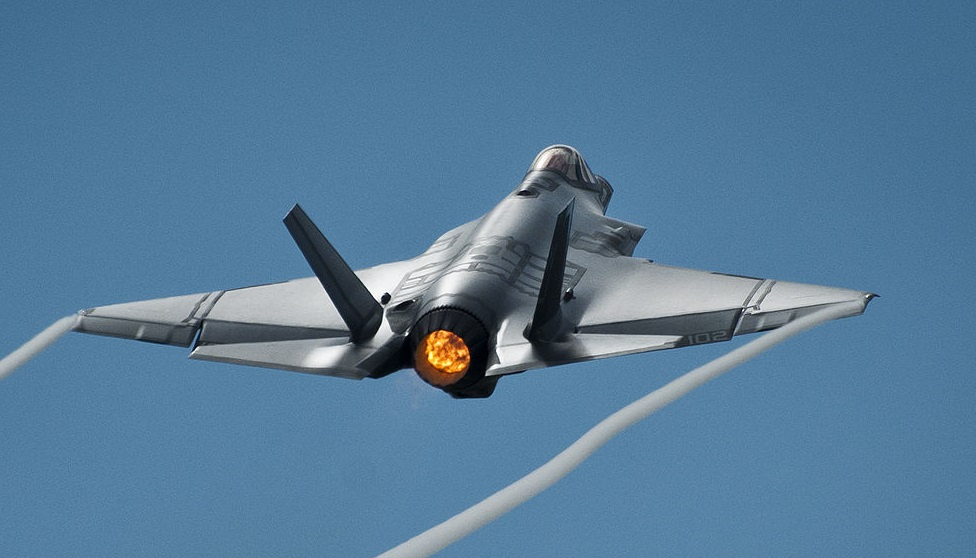
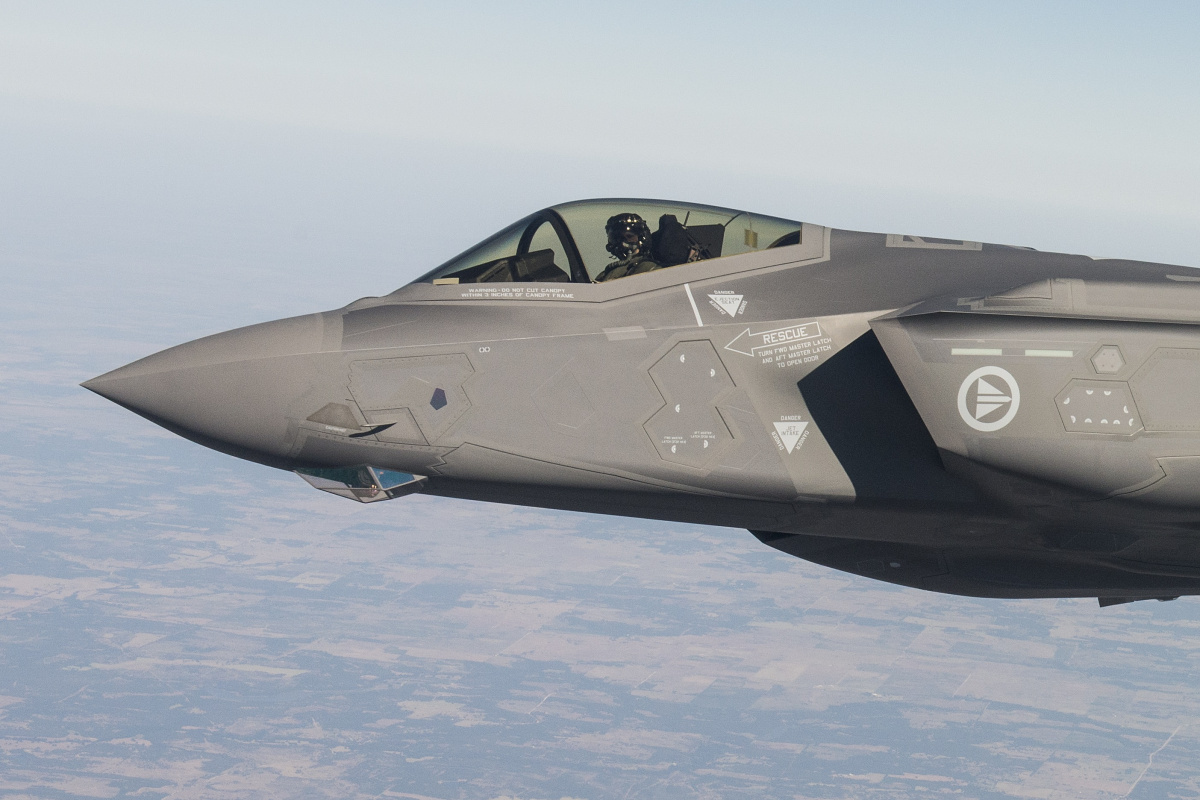
While it is true that a layered and integrated air defense may effectively render large swaths of airspace too costly—in terms of men and materiel—to attack using conventional fourth generation warplanes such as the Boeing F/A-18E/F Super Hornet or Lockheed Martin F-16 Fighting Falcon, these systems have an Achilles’ Heel. Russian air defenses will still struggle to effectively engage fifth-generation stealth aircraft such as the Lockheed Martin F-22 Raptor or F-35 Joint Strike Fighter.

“In terms of establishing viable air defenses against opponents with fifth generation aircraft, it’s quite clear how Russia is trying to tackle the problem of stealth,” said Mike Kofman, a research scientist specializing in Russian military affairs at CNA Corporation during an interview with The National Interest. “Russia’s advanced radar, variety of capable missiles and systems that try to integrate large amounts of data for a more potent air defense will increasingly segregate Western air forces into two benches. In a future where these systems have proliferated to China, Iran and other regional powers there will be those that can penetrate and survive against advanced air defenses in a high end fight, and those whose job it is to bomb ISIL or its successor.”

Kofman notes that advanced Russian-built air defenses like the S-300, S-400 and forthcoming S-500 family come with systems designed to detect and track the presence of low observable (LO) aircraft such as the F-22 and F-35. That’s just a function of physics, as I have noted before. The problem for Moscow is that while Russian early warning and acquisitions radars operating in the VHF, UHF, L and S bands can detect and even track a tactical fighter-sized stealth aircraft, those systems don’t deliver a weapons quality track. “Russia has invested in low-band early warning radars, with some great variants out there, but can it use these to put a good picture together, and process it to develop a track against low-observation aircraft?” Kofman asked rhetorically.

Physics dictate that a tactical fighter-sized stealth aircraft must be optimized to defeat higher-frequency bands such the C, X and Ku bands, which are used by fire control radars to produce a high-resolution track. Industry, Air Force and Navy officials all agree that there is a “step change” in an LO aircraft’s signature once the frequency wavelength exceeds a certain threshold and causes a resonant effect—which generally occurs at the top part of the S-band.

Typically, that resonance effect occurs when a feature on an aircraft—such as a tail-fin—is less than eight times the size of a particular frequency wavelength. Effectively, small stealth aircraft that do not have the size or weight allowances for two feet or more of radar absorbent material coatings on every surface are forced to make trades as to which frequency bands they are optimized for. That means that stealthy tactical fighters will show up on radars operating at a lower frequency bands—such as parts of the S or L band or even lower frequencies. Larger stealth aircraft such as the Northrop Grumman B-2 Spirit or forthcoming B-21 don’t have many of the airframe features that cause a resonance effect—and are, as such, much more effective against low-frequency radars.

For the Russians, solving the problem of targeting a low observable aircraft is something that they continue to work on—but it is doubtful the Moscow has resolved the issue. Russia’s strong investment in layers of air defenses tells us that the Kremlin believes the primary threat to its ground forces comes from U.S. airpower. As such, defeating stealth technology is one of Moscow’s top priorities, Kofman notes, and the Kremlin has dedicated a lot of resources to that end.

Russia has tried a number of different techniques to defeat stealth technology. Among those is trying to develop a tight integrated air defense network with multiple radars trying to look at the same aircraft from different directions—but how effective those efforts have been is an open question. “It’s great being able to see an aircraft, or parts of it, but getting accuracy such that you can confidently get a missile near the target is the primary challenge,” Kofman said.

While the Russians—and the Chinese—have not yet cracked the problem, it is clear that stealth is becoming much less of an advantage over time, though perhaps no less expensive an acquisition. Eventually, Moscow will find a solution to the stealth problem as the cyclical struggle between offense and defense continues ad infinitum—it’s just a matter of time.

Dave Majumdar is the defense editor for the National Interest. You can follow him on Twitter: @davemajumdar.

This first appeared in the Summer of 2016 and is being reposted due to reader interest. 


The Inside Scoop of How Deadly the ‘New’ F-35 Will Be

May 1, 2018

Kris Osborn April 30, 2018 The National Interest

Source Link: The Inside Scoop of How Deadly the ‘New’ F-35 Will Be

{Obama did not want the F-35 and tried every reason his little mind could imagine to block its development. Lucky for us, smarter people prevailed. – LS}

The Air Force has begun early testing, software development and weapons integration for its upcoming Block 4 variant of the F-35 Joint Strike Fighter, an emerging model intended to give the multi-role fighter a new dimension of attack mission possibilities, service leaders said.

The new version, to emerge in the early 2020s, will add new long-range precision-tracking weapons such as the Small Diameter Bomb II and also integrate a computer-generated automatic ground collision avoidance technology.

“The next step for F-35 weapons integration will be to address the weapon requirements within Block 4. Integration of the Small Diameter Bomb II has already begun, and flight test is scheduled to start as early as 2019,” Capt. Emily Grabowski, Air Force Spokeswoman, told Warrior Maven in a statement.

The current consensus among senior Pentagon weapons developers holds that, at the moment, the F-35 is the most capable 5th generation plane in the world. Maintaining this edge, however, is anticipated to quickly become more and more difficult now that both Russia and China are building 5th-gen stealth fighters.

“Block 4 is important with the national defense strategy to make sure we are modernizing the plane to keep it dominant on the battlefield. We are close to knowing the strategy for how to go after it,” Dr. Will Roper, Assistant Secretary of the Air Force for Acquisition, Technology and Logistics, the F-35, told a group of reporters.

While the applied impact of Block 4 will incorporate a range of mission-expanding technologies, much of the ongoing preparation work is in the realm of software development, Roper said.

“The physical pieces of the plane are moving in a good direction. Most of what we have left to do is software. The department (DoD) has not historically been good at software development. That will take a little longer. I cannot imagine building anything for the Air Force that is not software intensive,” Roper said.

The Block 4 initiative is part of a long range trajectory planned for the F-35 described by Pentagon developers as C2D2 – Continuous Capability Development and Delivery. The idea, officials say, is to position the multi-role fighter such that it can consistently accommodate new weapons, stealth materials, sensors and guidance technology as it becomes available.

“We own today’s fight,” said Lt. Col. Tucker Hamilton, F-35 Test Director, Edwards AFB, told reporters. However, Tucker went on to say that, in the absence of aggressive modernization, sustainment and various improvement efforts, this will no longer remain the case.

The SDB II, described as a key element of Block 4, is a new air-dropped weapon able to destroy moving targets in all kinds of weather conditions at ranges greater than 40-miles, Air Force and Raytheon officials said.

It is designed to destroy moving targets in all kinds of weather. GPS and laser-guided weapons such as Joint Direct Attack Munitions have been around for decades, however, they have primarily been designed for use against fixed or stationary targets.

While the Air Force currently uses a laser-guided bomb called the GBU-54 able to destroy moving targets, the new SDB II will be able to do this at longer ranges and in all kinds of weather conditions. In addition, the SDB II is built with a two-way, dual-band data link which enables it to change targets or adjust to different target locations while in flight, Raytheon developers told Warrior Maven.

The Small Diameter Bomb II (SDB II ), which has already completed a series of wind tunnel tests, can destroy moving targets in all weather conditions at ranges greater than 40 miles — a Raytheon statement said.

A key part of the SDB II is a technology called a “tri-mode” seeker — a guidance system which can direct the weapon using millimeter wave radar, uncooled imaging infrared guidance and semi-active laser technology.

Raytheon weapons developers say the tri-mode seeker provides a range of guidance and targeting options typically not used together in one system. Millimeter wave radar gives the weapon an ability to navigate through adverse weather, conditions in which other guidance systems might encounter problems reaching or pinpointing targets.

Imagining infrared guidance allows the weapon to track and hone in on heat signatures such as the temperature of an enemy vehicle. With semi-active laser technology, the weapon can be guided to an exact point using a laser designator or laser illuminator coming from the air or the ground, Raytheon officials told Warrior.

Also, the SBD II brings a new ability to track targets in flight through use of a two-way Link 16 and UHF data link, Raytheon officials said.

One Raytheon SDB II developer told Warrior in a previous interview that “the millimeter wave radar turns on first. Then the data link gives it a cue and tells the seeker where to open up and look. Then, the weapon can turn on its IR (infrared) which uses heat seeking technology.”

Netanyahu says Israel obtained ‘half a ton’ of documents on Iran’s nuclear weapons program

April 30, 2018

By Guy Taylor – The Washington Times – Updated: 2:17 p.m. on Monday, April 30, 2018

Source Link:

{Absolutely amazing. – LS}

Israel’s prime minister says his government has obtained “half a ton” of secret Iranian documents proving the Tehran government once had a nuclear weapons program.

Calling it a “great intelligence achievement,” Benjamin Netanyahu said Monday that the documents show that Iran lied about its nuclear ambitions before signing a 2015 deal with world powers.

Iran has denied ever seeking nuclear weapons.

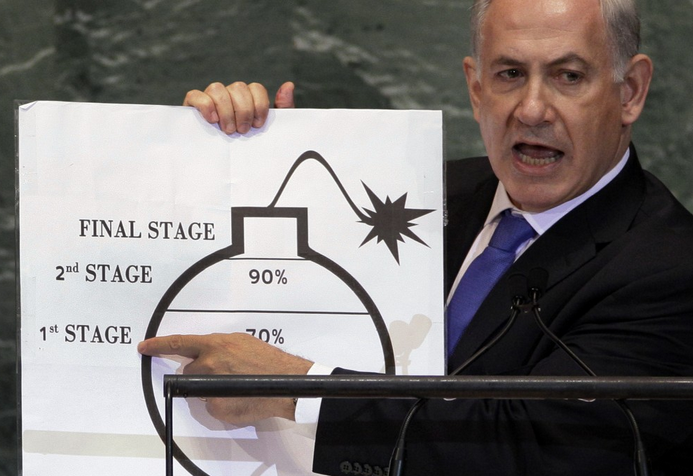
In a nationally televised address, Netanyahu said Israel recently uncovered 55,000 documents and 183 CDs of information from Iran’s “nuclear archives.”

Speaking in English, perhaps with an international audience in mind, he says the material is filled with incriminating evidence showing the Iranian program, called “Project Amad,” was to develop a weapon.

President Donald Trump is to decide by May 12 whether to pull out of the international deal with Iran. Netanyahu has led calls for Trump to withdraw.

Netanyahu: Iran had secret ‘Project Amad’ to design, produce and test warheads

April 30, 2018

By Tom DiChristopher CNBC April 30, 2018

Source Link: Netanyahu: Iran had secret ‘Project Amad’ to design, produce and test warheads

{Another big chunk of the Obama legacy just got flushed down the James Crapper. – LS}

Israeli Prime Minister Benjamin Netanyahu on Monday revealed a cache of files he claims were obtained from Iran and prove Tehran ran a secret program to build nuclear weapons.

Netanyahu’s office billed the televised statement as a “significant development” regarding the Iran nuclear deal, but it largely rehashed what the world long ago accepted: That Iran sought to develop nuclear weapons.

That acknowledgement marshaled international support for a U.S. campaign to impose a tough series of sanctions against Iran. The impact of those sanctions brought Iran to the negotiating table, ultimately producing the 2015 Iran nuclear deal.

Netanyahu’s remarks come less than two weeks before U.S. President Donald Trump must decide whether to continue suspending sanctions against Iran under that deal, or restore the penalties on one of the world’s biggest oil producers.

Iranian leaders have long said their nuclear program is only for peaceful purposes. But Netanyahu on Monday unveiled tens of thousands of pages of documents, which he said were copied from a “highly secret location” in Iran.

Those files detail Project Amad, which Netanyahu described as “a comprehensive program to design, build and test nuclear weapons.” He said the files provided “new and conclusive proof of the secret nuclear weapons program that Iran has been hiding for years from the international community in its secret atomic archive.”

The announcement also followed a meeting between Netanyahu and newly sworn-in Secretary of State Mike Pompeo this weekend.

“We’ve shared this material with the United States and the United States can vouch for its authenticity,” Netanyahu said.

The Obama administration negotiated the Iran nuclear deal in 2015 along with China, France, Germany, Russia and the U.K. The accord lifted a series of sanctions against Iran in exchange for Tehran accepting limits on its nuclear program and allowing international investigators access to its facilities.

The International Atomic Energy Agency and the signatories to the agreement have repeatedly confirmed that Iran is complying with the deal as it is written.

But the Trump administration, Israel and foreign policy hawks have long argued that the accord itself is flawed. Last year, the White House announced a major policy shift aimed at working with U.S. lawmakers and European partners to toughen the nuclear deal.  {You have to excuse them folks, afterall, this is CNBC. – LS}

In January, Trump waived sanctions against Iran, but said he would not suspend them when the next deadline arrived on May 12 unless the United States and Europe had agreed on a path forward.


Netanyahu to address country with ‘dramatic news about Iran’ Monday night

April 30, 2018

By Tamar Ben-Ozer, REUTERS April 30, 2018 16:57

Source Link: Netanyahu to address country with ‘dramatic news about Iran’ Monday night

{This should be interesting.  Meanwhile, things seem to be heating up for Iran. Maybe we’ll see just how much intestinal fortitude these guys really have. – LS}

Israeli Prime Minister Benjamin Netanyahu will make a televised announcement Monday evening in what his office said would disclosing “dramatic news” regarding the nuclear agreement with Iran.

In a corresponding move, Netanyahu cancelled a scheduled speech at the Knesset in honor of Theodore Herzl day. Channel 10 reports Meir Ben Shabbat, head of the National Security Council, will hold phone calls with collegaues in the UK and France to update them about developments with the Iranian nuclear program.

The announcement will be made from Israel’s military headquarters in Tel Aviv, according to a brief statement from Netanyahu’s office.

“Prime Minister Benjamin Netanyahu will make a statement on a significant development regarding the nuclear agreement with Iran,” the statement said, offering no further details. Israeli media reports indicate Netanyahu will address the Iran nuclear deal and not the overnight strike in Syria.

Netanyahu met on Sunday with new US Secretary of State Mike Pompeo and the two had spoken about Iran.

Speaking alongside the Israeli leader, Pompeo said: “We remain deeply concerned about Iran’s dangerous escalation of threats towards Israel and the region.”

Netanyahu had said: “I think the greatest threat to the world and to our two countries, and to all countries, is the marriage of militant Islam with nuclear weapons, and specifically the attempt of Iran to acquire nuclear weapons.”

US President Donald Trump has threatened to withdraw from the 2015 agreement reached between Iran and global powers, which granted Tehran relief from economic sanctions in return for curbs to its nuclear program.

Israel has long opposed the agreement. Washington’s major European allies have urged the Trump administration not to abandon it and argue that Iran is abiding by its terms.

Minister of Energy Yuval Steineitz said the announcement would be “interesting and impactful.”


Claim That Iran Is Complying With The Nuke Deal Is A Lie

April 30, 2018

by Jeff Dunetz | Apr 29, 2018 via The Lid

Source Link: Claim That Iran Is Complying With The Nuke Deal Is A Lie

{No inspections are being made under the current agreement? What a joke!! – LS}

Between now and May 12th President Trump will announce his decision as to whether or not he will pull out of the JCPOA, the Nuclear deal with Iran. This reporter’s prediction is that the President will announce the United States will be leaving the Iran deal. His May announcement isn’t really the big one, two months later in July the U.S. will decide July whether or not to reimpose the American imposed sanctions with the terrorist regime and if the decision is yes, that will break the deal apart.  But whether you agree with the President or not, any claim that we should stay in the deal because Iran is complying with the JCPOA is simply not true.

President Trump said his final decision about the JCPOA would be based on achieving three improvements to the deal;  First, eliminate the provisions under which key nuclear restrictions expire over time. Second, stop Tehran’s nuclear-capable long-range missile program. Finally, allow for the inspection of military sites where the regime conducted clandestine nuclear activities in the past and may be doing so now.

The nuclear-capable long-range missile plan and the expiration were concessions made by the spineless team of Obama and Kerry. But the third item, inspections of military sites is allowed under the JCPOA . Because of a secret side deal revealed by the Associated Press, Iran gets to self-inspect the Parchin militarybase with no IAEA inspectors present. However, all other military base inspections are allowed under the JCPOA.

The IAEA has the authority under UN Security Council resolution 2231 (the JCPOA) to request access to sites and equipment associated with Section T. The resolution “requests the Director General of the IAEA to undertake the necessary verification and monitoring of Iran’s nuclear-related commitments for the full duration of those commitments under the JCPOA.” In addition, the resolution states: “The International Atomic Energy Agency (IAEA) will be requested to monitor and verify the voluntary nuclear-related measures as detailed in this JCPOA.”

Despite the what the JCPOA states, the Iranian authorities claim military sites are off limits to the IAEA. And the IAEA refuses to push the point because they don’t want Iran to seem non-compliant.This lack of access lead to the IAEA’s announcement that has been unable to verify a key part of the JCPOA, “Section T”  which outlines “Activities which could contribute to the design and development of a nuclear explosive device” Per the deal the “Section T”  activities include:

  • Designing, developing, acquiring, or using computer models to simulate nuclear explosive devices.
  • Designing, developing, fabricating, acquiring, or using multi-point explosive detonation systems suitable for a nuclear explosive device, unless approved by the Joint Commission for non-nuclear purposes and subject to monitoring
  • Designing, developing, fabricating, acquiring, or using explosive diagnostic systems (streak cameras, framing cameras and flash x-ray cameras) suitable for the development of a nuclear explosive device, unless approved by the Joint Commission for non-nuclear purposes and subject to monitoring. 82.4.
  • Designing, developing, fabricating, acquiring, or using explosively driven neutron sources or specialized materials for explosively driven neutron sources.
  • Designing, developing, fabricating, acquiring, or using explosive diagnostic systems (streak cameras, framing cameras and flash x-ray cameras) suitable for the development of a nuclear explosive device, unless approved by the Joint Commission for non-nuclear purposes and subject to monitoring.
  • Designing, developing, fabricating, acquiring, or using explosively driven neutron sources or specialized materials for explosively driven neutron sources.
  • Designing, developing, fabricating, acquiring, or using explosively driven neutron sources or specialized materials for explosively driven neutron sources.

We don’t know if Iran is violating” Section T.”  But because they are not allowing inspections on military sites and because they the IAEA won’t push the issue, we do not know if they are complying either.

Another example of non-compliance is Iran was supposed to reveal its nuclear history. According to the JCPOA, Iran was supposed to reveal the all the details of their nuclear program and “fess up” to the U.N. inspectors about their previous nuclear activity. The reason for this historical inquiry is not to find out whether or not Iran had a nuclear weapon’s program so they could be reprimanded for being bad children. The knowledge is needed to understand what the Iranian nuclear program was before the agreement so IAEA will know how, when, and where to inspect their program in the future. Iran refused to let this happen and eventually, during the Obama administration, the U.S. stopped asking.

Iran broke the terms of the heavy water provisions of the deal twice in 2016 but Obama let them “off the hook.”  According to the Obama/Kerry capitulation, err— JCPOA, the rogue regime was to keep no more than 130 metric tonnes of heavy water (which is used to manufacture weapons-grade plutonium). But the Iranians kept producing the heavy water and were over the cap in February and November 2016

Iranian heavy water production overages put Obama’s Iranian deal (his only foreign policy legacy besides screwing Israel) between a rock and a hard place. Either the Obama administration could find someone to purchase the excess heavy water (which would allow Iran to make a profit off of violating the deal) or expressing that Iran was in noncompliance of the deal, which would put Obama’s legacy in danger.

The first time Iran went over (February) the Obama administration purchased the overage for $8.6 million. Sensing a good way to make some extra spending money for the Ayatollah,  Iran violated the P5+1 deal again in November by over-producing the heavy water. When asked State Department spokesperson Mark Toner refused to call the overproduction a violation — “I’m not going to use the V word necessarily in this case” — and the Iranians eventually found someone else to purchase the excess (It is not true that Sec. Kerry criticized Mr.Toner to the carpet for not calling the overproduction an “Iranian revenue enhancement.”)

That’s nice the way Obama paid to let Iran off the hook.

Iran was circumventing the deal’s measures against acquiring nuclear-related materials outside the approved channels. They were repeatedly caught trying to acquire sensitive materials outside the mandatory procurement channels. Since the times they were caught, no country reported to the UN Security Council on items going to Iran without passing through the approved channels

However, the low number of proposals has raised the question of whether Iranian companies are simply ignoring the JCPOA requirements. When asked about the low number of proposals, Iran told officials that Iranian industries are depending on domestic production and that its industries do not trust the Europeans out of fear of not obtaining spare parts in the future. (Spare parts are specific to equipment, so an inability to obtain them in the future may render certain equipment inoperable). This, however, is at odds with Iran’s plans to increase industrialization across many industries, which would require NSG Part 2 parts that Iran does not make. This would be an incentive for Iranian industries to go elsewhere for the needed goods. Is Iran telling the truth when it says its industries are living without these essential dual-use goods, or is it buying these goods outside of the procurement channel?

Iran was in violation of the provision limiting the number of advanced centrifuges. ” It had also run 13-15 IR-6 centrifuges in a cascade that was supposed to be limited to ten centrifuges.” But lucky for them, some of their other centrifuges broke down putting them in compliance again.

Here’s the bottom line according to the Institute for Science and International Security (known by its unfortunate initials ISIS)

Iran has repeatedly tested the boundaries of the Joint Comprehensive Plan of Action (JCPOA) and in many cases crossed the line into a violation. Many of these violations and efforts to push the boundaries have not been reported by the International Atomic Energy Agency (IAEA) in its quarterly reports to member states, reflecting a failing on its part. But the information is not classified, and we have reported on these violations and controversies in previous reports.

The IAEA reports that Iran is in compliance with the JCPOA because they refuse to report its violations, and its refusal to push the issue of inspections of military sites per the terms of the deal gives the rogue regime cover to violate the deal where or whenever it wants.

These aren’t the only reasons President Trump should pull out of the deal just a review of compliance, Reasons Trump should pull out of the deal are outlined here Why Trump MUST Pull Out Of The Iran Nuclear Deal.

Israel can meet the S-300 challenge

April 27, 2018

By Oded Granot April 26, 2018 Israel Hayom

Source Link: Israel can meet the S-300 challenge

{My bet is these systems have already been compromised. – LS}

Russian President Vladimir Putin’s response to the recent U.S.-led strike on Syrian President Bashar Assad’s chemical arsenal was delivered Wednesday in the form of a laconic statement by Moscow’s Defense Ministry, saying that Russia will “soon” provide Syria with its advanced S-300 missile defense system.

The Russian statement was expected and was very much a part of the cold war now waged between Washington and Moscow, aggravated by the April 14 strike. While it is doubtful that the barrage of Tomahawk missiles fired on Syria would deter Assad from using chemical weapons in the future, the strike was an affront to Putin. It illustrated him as unable to defend his ally, Assad, from the West and dented his international prestige.

This may appear as yet another time in which the U.S. and Russia lock horns. But the delivery of advanced missile defense systems to Syria is also likely to pose an issue for the Israeli Air Force with respect to maintaining Israel’s stated red lines in Syria, namely preventing Iran from entrenching itself militarily there and preventing the transfer of sophisticated weapons to Hezbollah in Lebanon.

The concerns are justified, but three points must be made regarding this defense system:

  1. Russia may have said it would supply Assad with S-300 missiles, but it has yet to do so and Moscow officials on Wednesday strongly denied Syria’s assertion that it was already in possession of these missiles.
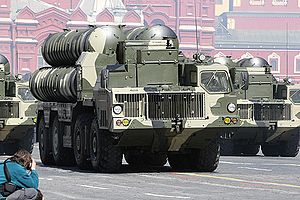
  2. The S-300 is an effective anti-aircraft defense system but it is, to a large extent, outdated and Russia has ceased its production about two years ago. The last system of this type was supplied to the Iranians, and Assad stands to receive either the batteries the Russians already have in Syria or ones decommissioned by the Russian military.
  3. According to foreign reports, and despite the potential restrictions on the IAF’s operational freedom in Syria, the IAF already has an operational response to S-300 missiles – if and when Israel may need to mount one.

The crux of the matter here has less to do with the anti-aircraft missile system and more to do with the system of understandings between Israel and Russia. While Russia has warned Israel against targeting S-300 batteries, Israel asserted that it would not hesitate to do so if it was used against its forces. Public rhetoric aside, the two countries have maintained effective communications that have already proved they can eliminate danger.

However, the pace of regional events over the past few weeks has accelerated so rapidly that the winds may change at any minute. U.S. President Donald Trump decision on the fate of the 2015 nuclear deal with Iran is looming and come May 12, if the U.S. exits the accord, an attempt by Iran to retaliate on the April 9 strike on the T4 air base in Homs or another Israeli mission to stop weapons shipments to Hezbollah could prompt a security escalation that no one wants.


Iran’s Khamenei Urges Muslim Nations to Unite Against U.S.: State TV

April 26, 2018


By REUTERS APRIL 26, 2018, 4:58 A.M. E.D.T.

Source Link: Iran’s Khamenei Urges Muslim Nations to Unite Against U.S.: State TV

{Proxies wanted. Must be willing to engage in warfare with the US military and die for Iran. Apply within. – LS}

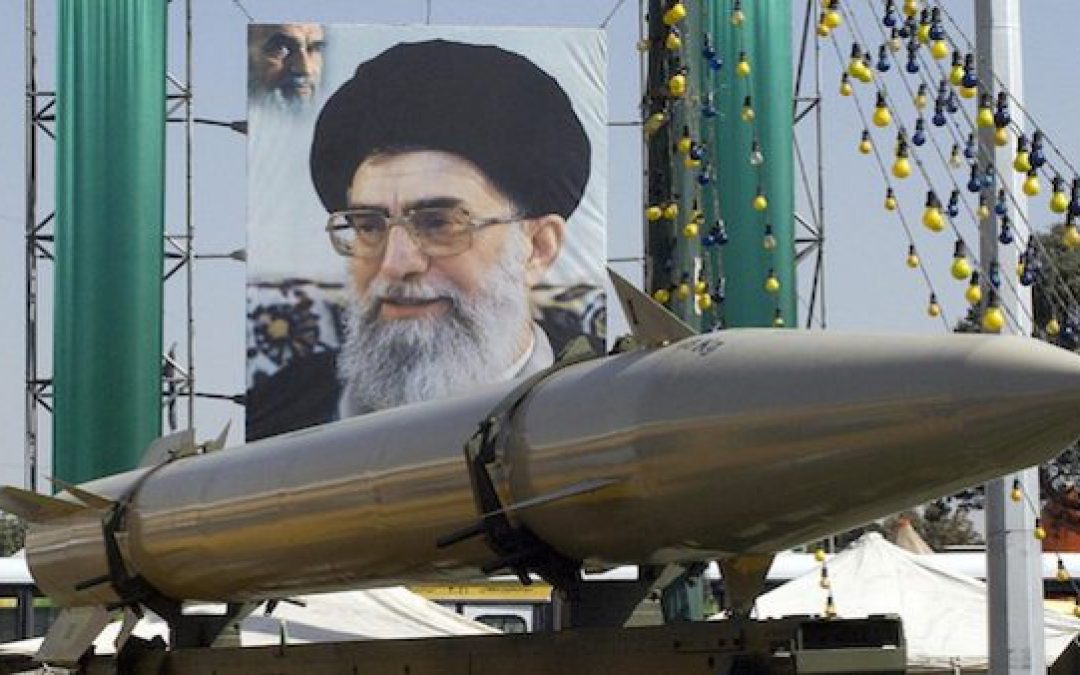
ANKARA — Iran’s supreme leader called on Muslim nations to unite against the United States, saying Tehran would never yield to “bullying,” state television reported on Thursday.

“The Iranian nation has successfully resisted bullying attempts by America and other arrogant powers and we will continue to resist… All Muslim nations should stand united against America and other enemies,” Ayatollah Ali Khamenei said.

Iran’s top authority criticized Trump for saying on Tuesday some countries in the Middle East “wouldn’t last a week” without U.S. protection.

“Such remarks are humiliation for Muslims … Unfortunately there is war in our region between Muslim countries. The backward governments of some Muslim countries are fighting with other countries,” Khamenei said.

Iran and Saudi Arabia have long been locked in a proxy war, competing for regional supremacy from Iraq to Syria and Lebanon to Yemen.

(Writing by Parisa Hafezi; Editing by Janet Lawrence)