Author Archive
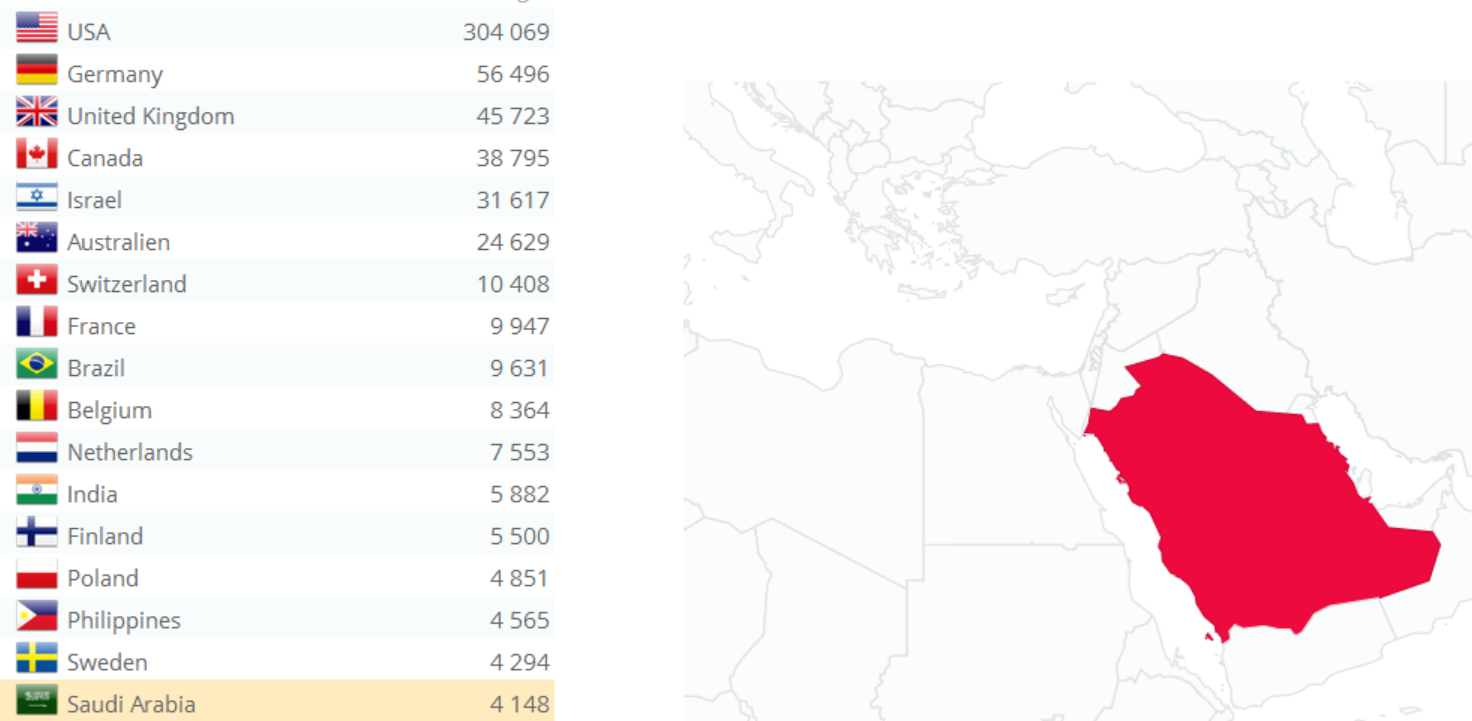
Many Saudis follow this blog – SA among the top 17 last 12 months
September 2, 2014The Danish Gangster Fighting For Islamists In Syria
September 2, 2014U.S. and Qatar Sign $11 Billion Defense Agreement – a Hub for Terrorist Fundraising
September 2, 2014.
No Western European leader was there when Turkey got its new dictator: Erdogan
August 28, 2014
http://www.bbc.com/news/world-europe-28961495
“However, the US only sent a representative of its embassy and no Western European leader was there.
The BBC’s Mark Lowen in Ankara says it is perhaps a sign that Turkey’s relations with the West have deteriorated in the past few years of Mr Erdogan’s premiership.”
Senator McCain to Turkish Prime Minister Erdogan acts like dictator
British Islamic State Fighter In Syria Vows To Unleash Terrorist Bloodshed In The UK | VIDEO!!!
August 28, 2014Publicerades den 27 aug 2014
British jihadist fighting in Syria last night vowed to unleash terrorist bloodshed in the UK unless the West stops its attacks on Islamic State targets. Amu Bakr’s chilling warning came as Met police chief Sir Bernard Hogan Howe revealed at least 250 Brits who went to fight in the region have already returned and could be plotting attacks on our streets.
The masked rebel appeared on a grainy video to declare his murderous intentions on our streets. He said: “If there’s no other chance than to come back then I’ll have to do that I’m ready to take that step to come back if your armies, if your countries don’t stop attacking us.” In the same footage another British jihadist calling himself Abu Anwar al-Britani boasted that he was prepared to take part in cowardly executions of innocent people like that of US journalist James Foley who was beheaded by IS last week or soldiers loyal to Syrian president Bashar al-Assad.
With his face also disguised, he said of the murder: “My initial reaction personally was that this was a direct justified response to the crimes of the US against the Islamic State. “I would be more than honoured to partake in an execution like this. “I hope God gives me the chance to do such a thing as the brother did with James Foley.
“Whether it be on someone like James Foley, a soldier of Bashar or a soldier of America, my hands are ready to do this blessed act.” Mr Hogan-Howe warned those Brits returning from war-torn Iraq and Syria pose a serious risk to home security. The Met commissioner insisted his force was “keeping an eye on them”. But he added: “The thing we’re worried about is so many people from Britain have gone to Syria and potentially Iraq to get involved in terrorism .
“We think at least 500 to 600 went. Some have come back. They risk being militarised and they are in a network of terrorists. It’s a worry because we think two thirds to three quarters of them come from the London area, so that’s quite a large number.” Mr Hogan Howe also called for the return of the abolished control orders for suspects who cannot be charged or deported.
They were replaced by less restrictive Terrorism Prevention and Investigation Measures by the Coalition Government. The officer said: “They were stopped because the threat was reduced and quite properly they were seen as too intrusive. “But I think these things have got to be considered when the drum beat changes, and it’s clear it has.” Mr Hogan-Howe backed growing calls to strip citizenship from Brits who go to war zones to fight alongside Islamic extremists. And he called on David Cameron to plough more cash into the battle to prevent terrorism on our streets.
ISIS draws U.S. into Iraq and Syria – ISIS executes 250 Syrian soldiers
August 28, 2014.
43 U.N. Peacekeepers Detained In Golan Heights By Al Nusra
August 28, 2014.
Analysis: A new wakeup call for Israel
August 28, 2014Analysis: A new wakeup call for Israel
The rebel takeover of the Syrian Golan shows how changing events affect Israel’s security doctrine
Twelve hours after Israelis sighed in relief as the ceasefire in the Gaza war appeared to take hold, they awoke Wednesday morning to realize that a new source of concern had emerged on their northern border. Syrian opposition forces, after fierce battles with the Syrian army, had taken over Syria’s Quneitra border crossing with Israel on the Golan Heights.
The crossing is the only official gate between Syria and Israel, manned by the United Nations Disengagement Observation Force since the end of the 1973 Arab-Israeli war. Reports that the Nusra Front – Islamists identified with al-Qaida and supported by Saudi Arabia and Qatar – were the ones who had seized control of the area only increased Israeli concern. That concern was somewhat eased hours later, when new reports suggested that the secular unit of the Free Syrian Army was in control of the crossing, rather than the fundamentalist Muslim group.
Nevertheless, the incidents in Quneitra are a wake-up call for Israel, demonstrating how the changing events in the Middle East, from the advances of the Islamic State in Iraq and Syria, to turmoil in Libya and the Gaza war, are affecting old Israeli security doctrines and stability.
For three and a-half years, Israel tried to stay away from the Syrian civil war, having one ultimate interest in mind: maintaining security and stability on the border and preserving the daily routine of Israel’s rural communities in the Golan Heights, captured from Syria in the Six Day War of June 1967. On occasion, Israel interfered in the war when its intelligence uncovered attempts by President Bashar Assad’s regime to supply weapons – mainly long-range Iranian or Syrian-made missiles – to Hezbollah as payment for the Shiite Lebanese movement’s support in fighting the rebels.
The Israeli Air Force attacked such supply convoys and weapons depots six times, but never claimed responsibility for the actions. This provided a deniability that also enabled the Syrian government to turn a blind eye to the blatant Israeli violations of its sovereignty and thus to avoid any need to retaliate.
In other instances, Israel responded with mild artillery fire whenever errant fire or mortars landed on the Israeli side of the border as a result of the clashes between opposition forces and the Syrian army. Israel believed it was thus preserving its deterrence vis-à-vis the Syrian government, without humiliating the Assad regime. But in the last year, the opposition forces – the Nusra Front and the Free Syrian Army – have taken over most of the Syrian army positions on the Golan areas bordering Israel. As of Wednesday, they control virtually all of the 100-kilometer area along the border.
In light of these evolving events, Israel has been reaching out to opposition forces to prevent them from turning hostile. It opened a field hospital on the border and has in the last year treated more than 1,000 wounded Syrian combatants and civilians. On the face of it, this is a humanitarian gesture, but it also helps Israel maintain good neighborly relations with the opposition forces in Syria, hoping to ensure that the border stays relatively calm.
Nevertheless, other hostile elements such as the Islamic State are also gaining strength in the region. These forces are small and insignificant in the parts of Syria near Israel, but hold a potential threat to the stability of what has been Israel’s quietest border for decades.
At the same time, these and other regional events in Iraq and Kurdistan also provide an opportunity for new alliances. It was revealed this week that Iran is supplying Iraqi Kurdish authorities with ammunition and weapons to repel the IS. Israel, a traditional ally of the Kurds, is also still assisting them in the security and military field. For the first time since 1979, when Iran overthrew the Shah and became an Islamic republic which termed Israel the “small Satan,” the two countries find themselves supporting the same side on one of the Middle East’s major fronts.
Israel may now be having second thoughts, too, about events in Syria and might prefer – maybe even passively support – that the Assad regime remain in power despite the fact that its long-sworn enemies, Iran and Hezbollah, are allied with Damascus.
Yossi Melman is an Israeli security and intelligence commentator and co-author of “Spies Against Armageddon: Inside Israel’s Secret Wars”.
The pendulum of the Arab Spring has swung in Israel’s favour
August 27, 2014Saudi and UAE leaders in particular have expressed concern that Washington can no longer be counted on, citing US diplomatic overtures to Iran and a cautious approach to the Syrian conflict.
August 26, 2014US, EU condemn ‘outside interference’ in Libya
US says UAE aircraft bombed Islamists in Libya over the past week using bases in Egypt

The United Arab Emirates has secretly sent warplanes on bombing raids against Islamist militias in Libya over the past week, using bases in Egypt, US officials said Monday.
The two attacks carried out over seven days mark a dramatic expansion of the conflict as the United States and its European allies denounced “outside interference” in Libya.
“Those responsible for violence, which undermines Libya’s democratic transition and national security, must be held accountable,” officials from France, Germany, Italy, the UK and the US said in a joint statement.
“We welcome discussions on the political and security situation in Libya to be held by the United Nations Security Council in the coming days, including consequences for those who undermine Libya’s peace and stability,” the statement read.
The strikes signaled a step toward direct action by regional Arab states that previously have fought proxy wars in Libya, Syria and Iraq in a struggle for power and influence.
The bombing raids were first reported by The New York Times and Islamist forces in Libya also had alleged strikes had taken place.
“The UAE carried out those strikes,” one of the officials told AFP on condition of anonymity.
Asked about the account, the senior US official said “the report is accurate.”
The United States did not take part or provide any assistance in the bombing raids, the two officials said.
The first airstrikes took place a week ago, focusing on targets in Tripoli held by the militias, including a small weapons depot, according to the Times. Six people were killed in the bombing.

A second round was conducted south of the city early Saturday targeting rocket launchers, military vehicles and a warehouse, according to the newspaper.
Those strikes may have represented a bid to prevent the capture of the Tripoli airport, but the militia forces eventually prevailed and seized control of it despite the air attacks.
The UAE — which has spent billions on US-manufactured warplanes and other advanced weaponry — provided the military aircraft, aerial refueling planes and aviation crews to bomb Libya, while Cairo offered access to its air bases, the paper said.
But it remained unclear whether and to what degree Egypt and the UAE had informed the Americans in advance of the airstrikes.
When pressed on the issue, US officials could not confirm that Egypt and the Emirates had left Washington totally in the dark about the air attacks.
Neither the UAE nor Egypt publicly acknowledged any role in the air strikes.
Common danger
Egypt, Saudi Arabia and the Emirates view Islamist militants in the region as a serious threat and have forged cooperation against what they see as a common danger.
The Islamist groups that emerged after the Arab Spring uprisings in turn have enjoyed support from Qatar and Turkey.
The bombing raids came amid a Western diplomatic push for a negotiated settlement to quell the violence in Libya, where the government’s authority has unraveled in the face of the Islamist-linked militias.
Britain, France, Germany, Italy and the United States issued a joint statement condemning an “escalation of fighting and violence” in Libya and urged a democratic, peaceful transition.
The Western powers expressed particular concern over violence “against residential areas, public facilities, and critical infrastructure, by both land attacks and air strikes.”
Without mentioning any air strikes by the UAE and Egypt, the statement said “outside interference in Libya exacerbates current divisions and undermines Libya’s democratic transition.”
The governments welcomed upcoming discussions at the UN Security Council on Libya and said “we encourage the international community to support Libya’s elected institutions.”
The air strikes also underscored how Washington’s old allies are more willing to act on their own, without backing from the Americans.

Saudi and UAE leaders in particular have expressed concern that Washington can no longer be counted on, citing US diplomatic overtures to Iran and a cautious approach to the Syrian conflict.
The strikes in and around Tripoli demonstrated the UAE’s readiness to employ its air power, as the Emirates have built up one of the region’s most proficient air forces with American gear and training. UAE pilots flew combat missions in the NATO-led air war in Libya in 2011.
Over the past decade, the Emirates have purchased dozens of US F-16 fighter jets, as well as transport aircraft, precision-guided bombs and advanced missiles for their warplanes.
About 5,000 American troops are based in the Emirates, most of them airmen stationed at Al-Dhafra Air Base.
(with AFP)




 anneinpt
 artaxes
 danmillerinpanama
 davidking1530
 Peter Hofman
 Joseph Wouk
 Peter
Peter Louisiana Steve
 WarSclerotic
Recent Comments