Author Archive

Edelstein in Prague: Europe will understand Israel’s problems when IS reaches it

September 10, 2014

Edelstein in Prague: Europe will understand Israel’s problems when IS reaches it

Islamic terrorism is a threat to all of humankind, Knesset Speaker Yuli Edelstein told Czech Prime Minister Bohuslav Sobotka in Prague Wednesday.

“When the Islamic State reaches Europe, everyone will understand what Hamas meant for Israel,” Edelstein warned. “We must eradicate Islamic terrorism for the good of humankind.”

Edelstein expressed hope that the Czech Republic will continue to stand up for Israel’s right to defend itself in European fora and in the UN.

The Knesset Speaker also discouraged Sobotka from having his country upgrade relations with Iran, as the Czech Republic is considering sending an ambassador there and increasing trade with Teheran.

Edelstein explained that disregarding sanctions would be a victory for the Iranian regime.

Sobotka said his country will continue its unqualified support of Israel, adding that the friendship between the countries spans foreign affairs and defense matters, as well as economics, innovation, culture and tourism.

Edelstein met with Sobotka in one of several high-level meetings he held on his visit to the Czech Republic.

On Thursday, the Knesset Speaker will continue to Oslo for a convention of parliamentary speakers from around the world.

Edelstein is expected to meet with parliamentary speakers from Germany, Norway, Ireland, Montenegro and Azerbaijan at the conference, and plans to emphasize that Israel will defend itself as longs as its citizens’ lives are in danger.

“This is an opportunity to explain the importance of [Operation Protective Edge] and, no less important than that, is the need to fight dangers that await Israel like boycotts and manifestations of anti-Semitism,” Edelstein said Sunday.

Defense minister makes unannounced visit to Azerbaijan

September 10, 2014

Defense minister makes unannounced visit to Azerbaijan
Moshe Ya’alon to meet with top officials, inaugurate Israeli pavilion at international defense industry exhibition
BY GAVRIEL FISKE September 10, 2014, 1:28 pm

Defense Minister Moshe Ya’alon meeting with Azerbaijani President Ilham Aliyev in Baku, Azerbaijan, on September 10, 2014. (photo credit: Ariel Harmoni/Defense Ministry)Defense Minister Moshe Ya’alon meeting with Azerbaijani President Ilham Aliyev in Baku, Azerbaijan, on September 10, 2014. (photo credit: Ariel Harmoni/Defense Ministry)NEWSROOM
Email the NewsroomFacebookTwitter

RELATED TOPICS
MOSHE YA’ALONISRAEL-AZERBAIJAN RELATIONSILHAM ALIYEV
Defense Minister Moshe Ya’alon made an unannounced visit to Baku, Azerbaijan, on Wednesday, the first-ever visit by an Israeli defense minister to the central Asian nation.

Get The Times of Israel’s Daily Edition by email
and never miss our top stories FREE SIGN UP!

Ya’alon, in the country for two days, is to meet with top Azeri officials, including Azerbaijani President Ilham Aliyev, Foreign Minister Elmar Mammadyarov and Defense Minister Zakir Hasanov, for discussions on strengthening Israel-Azeri bilateral relations and strategies for regional issues, the Israeli Defense Ministry said in a Wednesday statement.
The trip was only announced after Ya’alon had arrived.

Israel and Azerbaijan have long maintained cordial ties, which are sometimes a source of tension between Azerbaijan and its neighbor Iran.

The country is seen by some analysts as a linchpin in any possible Israeli military action against Iran’s nuclear program, though Baku has denied it allows Israel to use its bases.

While in Baku, Ya’alon is to attend and inaugurate the Israeli pavilion at the “Adex” international defense industry exhibition. The Defense Ministry is to be represented at the pavilion, along with 15 Israeli defense companies.

“I am happy to be hosted here in the historical first visit of an Israeli defense minister to Azerbaijan,” Ya’alon said upon arrival. “Bilateral relations between us are fruitful, and there is a strategic relationship between the countries and joint endeavors in various fields.”

The arms exhibition represented “another opportunity to show the world the strength and capabilities of Israel’s defense industry and its contribution to security and economy,” he added.

The defense minister is also slated to meet with representatives of Azerbaijan’s small but ancient Jewish community, which Ya’alon said has a “glorious history who has enjoyed wonderful treatment, allowing it to exist in honor.”


Obama’s ISIS Strategy Wednesday Speech here:

September 9, 2014
Obama West Point
President Obama has said the U.S. is “reviewing options” in Iraq. REUTERS/Kevin Lamarque

For the past two weeks, President Obama and other senior U.S. administration officials have been putting together an international coalition to fight the Islamic State in Iraq and Syria, but have revealed few details about how that coalition will function. Obama said in an interview with MSNBC’s Meet the Press on Sunday that he would finally reveal his strategy in a speech Wednesday.

“I just want the American people to understand the nature of the threat and how we’re going to deal with it and to have confidence that we’ll be able to deal with it,” he said in the interview broadcast Sunday.

Given what we have heard so far, what can we expect in Obama’s speech Wednesday about the international coalition’s strategy to “degrade and destroy” ISIS?

1.   More funds and weapons for local fighters

In the case of Iraq, U.S. and other international coalition partners, including other western countries such as Britain, may ramp up funding and distribute more weapons to the Iraqi and Kurdish (peshmerga) military forces to fight ISIS in Iraqi Kurdistan and Anbar Province. Last week Obama approved the deployment of an additional 350 U.S. troops to the country, bringing the total to 1,100. The troops stationed in Iraq will serve no combat role, he said, but would work with the Iraqi and Kurdish military as advisors. The U.S. will continue to work with these forces in Iraq and work toward pushing back ISIS from key areas including those near Kirkuk, a major oil-producing city, and dams.

2.    U.S. airstrikes on ISIS convoys and military strongholds

Those are already happening in Iraq — but not in Syria. The U.S. has already launched more than 100 airstrikes in Iraq on ISIS convoys and other targets. Obama has said those airstrikes will continue as long as ISIS still poses a threat to Americans in the country. Obama will most likely provide an update on the exact number of strikes launched in Iraq and how much more we can expect.

3.    Addressing the humanitarian crisis in Sinjar

Yazidis have been besieged there by ISIS, and the persecution of other ethnic minorities in Iraq. One of the reasons Obama authorized targeted strikes against ISIS was to prevent a “potential genocide” against the Yazidi people living in the Sinjar Mountains.

4.    Naming all, or some, of the partners who have signed on to the international coalition to fight ISIS 

Obama, as well as spokespeople at the State Department and Pentagon, have alluded to the fact that several countries in the Middle East, and some in the west, had already agreed to sign on to the coalition. But it is not yet known in what capacity they will help in the fight against ISIS.

“We are going to systematically degrade their capabilities. We’re going to shrink the territory that they control. And ultimately we’re going to defeat them,” Obama said in his interview with Meet The Press.

The Arab League on Sunday agreed to take all necessary measures to confront the Sunni militant group. The group did not explicitly back U.S. military action against the group, but did endorse a U.N. resolution issued last month that imposes sanctions on a number of the group’s fighters and “act to suppress the flow of foreign fighters, financing and other support to Islamist extremist groups in Iraq and Syria.”

U.S. rhetoric between the president’s speech at West Point in May and now could give us an indication of how the U.S. and the international coalition will play out.

“We should not go it alone,” Obama said in his speech at West Point in May. “We need to mobilize allies and partners to take collective actions. We need to broaden our tools to include diplomacy and development, sanctions and isolation, appeals to international law and, if just and effective, multilateral military action.”

State Department Spokeswoman Jen Psaki said in a press briefing Monday that more than 40 countries have already contributed to the effort in Iraq over the past several months. She said the U.S. would build on this already established effort. Psaki gave some indication in her briefing of countries that are already helping fight ISIS in Iraq, but said that the U.S. did not consider Iran as one of them. She said some Arab League members are already involved in the fight against ISIS in Iraq.

U.S. officials have said that Britain and Australia were potential candidates to include in the new coalition, as well as Turkey, France, Saudi Arabia, Qatar, the United Arab Emirates, Jordan and Germany.

5. Setting a timeline for the international coalition’s fight against ISIS 

President Obama said in his speech at West Point in May that “for the foreseeable future the most direct threat to America at home and abroad remains terrorism.” Obama will most likely lay out a loose timeframe for when the international coalition will begin the offensive against ISIS, and how long it will last.

6. Details on how the international coalition will operate and in what capacity

The international coalition could align with the strategy Bush adopted in 2001 to fight al Qaeda. His policy included a coalition that would fight terrorists diplomatically and militarily, and would work to stop finances from flowing to the terrorists. The coalition would most likely include countries that could help quell the ISIS threat not only militarily, but also by cutting off aid or ramping up efforts to secure border crossings.

7. Reliance on Sunni counterparts in the Middle East for possible military intervention in Syria 

Last week Obama noted that the international coalition would rely heavily on Sunni partners in the region “that reject the extremists, that say that it is not what Islam is about.” In the past, the U.S. has relied on Jordan and Saudi Arabia to support its mission of propping up the moderate opposition in Syria. Both countries could be key partners in the fight against ISIS, along with other Gulf states like Qatar and the United Arab Emirates, experts say.

8. Helping the moderate opposition in Syria 

The U.S. administration has been training and giving weapons to the moderate opposition in Syria for more than a year. During that time, leaders of the Free Syrian Army have asked that the CIA-led U.S. program provide more sophisticated weaponry such as MANPADS, portable anti-aircraft missile launchers. But so far, the U.S. has not fulfilled that request for fear that powerful weapons could fall into the wrong hands. In his speech Wednesday, Obama is most likely to address the need to send more money to the moderate opposition in Syria, but he will most likely not approve the deployment of MANPADS.

9. Counterterrorism funds

At his speech at West Point in May, Obama called on Congress to approve a $5 billion counter terrorism partnerships fund. According to the White House, the fund would “build on existing tools and authorities” to establish a “more sustainable and effective” counterterrorism approach, focusing on building the counterterrorism capacity of partners worldwide through “train-and-equip” and other activities. The White House said Monday that Obama wants Congress to inject money into that fund.

President Obama meets with President Edrogan of Turkey, Sep 5

September 9, 2014

VOA: Turkey Unlikely to Sign Gas Pipeline Deal With Israel

September 9, 2014

VOA: Turkey Unlikely to Sign Gas Pipeline Deal With Israel

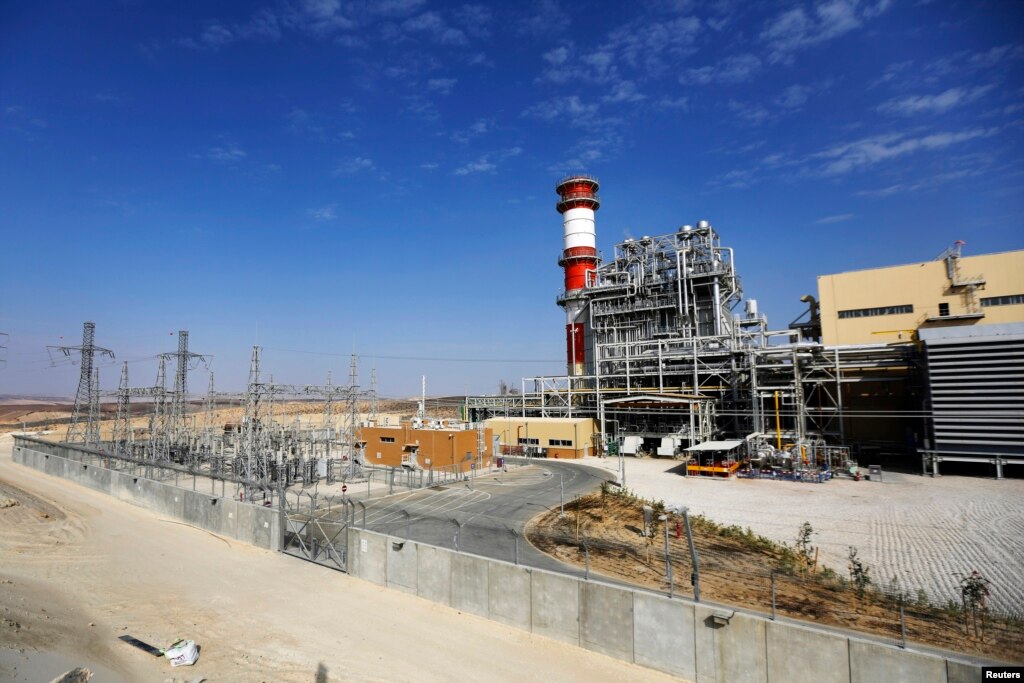
FILE - OPC Rotem, Israel's biggest private power plant that runs on gas from the Tamar field, is located in Mishor Rotem industrial area, southern Negev desert, Israel.

FILE – OPC Rotem, Israel’s biggest private power plant that runs on gas from the Tamar field, is located in Mishor Rotem industrial area, southern Negev desert, Israel.

Reuters
Turkey is unlikely to sign any energy deals with Israel for the construction of a gas pipeline to Turkey because of a deepening political rift over Israel’s Gaza offensive, Turkish Energy Minister Taner Yildiz said on Tuesday.

Ties were severely damaged following a deadly raid by Israeli commandoes on a Turkish yacht carrying pro-Palestinian activists defying a Gaza blockade in 2010. But Israeli firms had more recently held fruitful talks with Turkish private companies and energy officials as part of a tentative rapproachment.

However, Israel’s Gaza offensive in July that killed more than 2,000 people undermined those efforts and infuriated President Tayyip Erdogan, who likened Israel’s actions to those of Hitler.

Israeli gas fields

Israel has turned into a potential gas exporter overnight with the discovery of Tamar and Leviathan, two of the largest gas finds in the past decade. Tamar began production in March 2013, and its partners have already signed a number of lucrative deals in Israel.

Talks between the Leviathan consortium and Turkish counterparts have seen slow progress over the last year. A political solution has always been the condition for an ultimate deal.

“For energy projects to proceed, the human tragedy in Gaza will have to be stopped and Israel will have to instate a permanent peace there with all elements,” Minister Yildiz said in Ankara.

“It is out of question to proceed on any energy project unless a permanent peace is established, with contribution from all sides and with necessary conditions. A human tragedy unfolded [in Gaza], it is all too easily forgotten.”

Turkey was once Israel’s closest strategic ally in the region. But Erdogan has been a strident critic of Israel’s policy on the Palestinians and has been highly critical of the Jewish state since the Gaza hostilities erupted.

Pro-Palestinian

Pro-Palestinian sentiment runs high in mostly Sunni Muslim Turkey and protestors have repeatedly taken to the streets in July to demonstrate against Israel’s offensive, prompting Israel to reduce diplomatic presence in Turkey.

The talks between Israel and Turkey have focused on building a 10 billion cubic meter (bcm) sub-sea pipeline at an expected cost of $2.2 billion, giving Israel access to a major emerging market and one of Europe’s biggest power markets by 2023.

Despite the opposition in political and business circles in Turkey, Israeli businessmen are still holding out hope that a deal may be struck in time.

Yitzhak Tshuva, the billionaire owner of Delek Group, the main partner in Leviathan, told Reuters this week that he remained optimistic about a deal being struck with Turkey once the current political chill passes.

“I believe, yes, and I want [an agreement],” he said.

UN Human Rights Council Is Abusing Human Rights for Political Ends

September 9, 2014

UN Human Rights Council Is Abusing Human Rights for Political Ends – David Pannick (The Times-UK)

  • On July 23, the UN Human Rights Council adopted (by 29 votes to 1, with 17 abstentions, including the UK and the other EU states) a resolution condemning “widespread, systematic and gross violations of international human rights and fundamental freedoms arising from the Israeli military operations” carried out in Gaza. The resolution decided to “dispatch an independent, international commission of inquiry” to investigate violations of international humanitarian law in Gaza. The commission is to report by next March.
  • The resolution was remarkable in two respects. First, that the Human Rights Council should condemn before receiving the report of the inquiry that it had commissioned to investigate. And second, that the condemnation does not mention Hamas, which has been responsible for appalling human rights violations including public executions of opponents of the regime.
  • The EU refused to support the resolution, concluding that it was “unbalanced, inaccurate, and prejudges the outcome of the investigation.” The EU added that the resolution “fails to condemn explicitly the indiscriminate firing of rockets into Israeli civilian areas as well as to recognize Israel’s legitimate right to defend itself.”
  • Gaza poses difficult questions of international human rights law. In particular, what are the limits on proportionate action by a state under attack by a neighboring government dedicated to its destruction by all possible means, and which launches attacks from civilian centers without concern for its own people? Unfortunately, clear-sighted answers to the legal questions will not come from the UN Human Rights Council or its inquiry.
  • The determination of the council, and many of its members, to abuse human rights for political purposes is undermining the role of international law.

    Lord David Pannick, QC, former Deputy High Court Judge, is a leading human rights lawyer in the UK.


Hamas: Give Us West Bank So We Can Destroy Israel

September 9, 2014

Henry Kissinger: Iran is a bigger problem than ISIS

September 9, 2014
September 06, 2014 7:50 AM ET
Former Secretary of State Henry Kissinger celebrates his 90th birthday, last year in Berlin. In a recent interview with Scott Simon, he gave his thoughts on ISIS, Ukraine and Iran.

Former Secretary of State Henry Kissinger celebrates his 90th birthday, last year in Berlin. In a recent interview with Scott Simon, he gave his thoughts on ISIS, Ukraine and Iran.

Gero Breloer/AP

Henry Kissinger was a Harvard scholar before he became a mover and shaker in the world of foreign policy. And in his new book, World Order, the former secretary of state under Presidents Nixon and Ford gives a historian’s perspective on the idea of order in world affairs.

Nations are always trying to establish systems to make the world a more orderly place, but they rarely last for long. His book stretches from China under the emperors, Rome surrounded by barbarians and Islam encircled by infidels, to the treaties of Europe and the pivotal positions of Russia and Iran.

On current affairs, Kissinger tells NPR’s Scott Simon why a conflict with the Islamic State, also known as ISIS, is more manageable than a confrontation with Iran, what he would do about the Islamic State, and what he thinks the best solution is for the crisis in Ukraine.


Interview Highlights

On why he views Iran as a “bigger problem than ISIS”

There has come into being a kind of a Shia belt from Tehran through Baghdad to Beirut. And this gives Iran the opportunity to reconstruct the ancient Persian Empire — this time under the Shia label.

From a geo-strategic point of view, I consider Iran a bigger problem than ISIS. ISIS is a group of adventurers with a very aggressive ideology. But they have to conquer more and more territory before they can became a geo-strategic, permanent reality. I think a conflict with ISIS — important as it is — is more manageable than a confrontation with Iran.

On what he would do about ISIS

They have cut the throat of an American on television. This is an insult to the United States, which requires that we demonstrate that this is not an act that is free. I would strongly favor a strong attack on ISIS for a period that is related to the murder of the American.

Then, we have to go into the long-range problem. I think when we are dealing with a unit like ISIS, we should not get into a position where they can lead us by establishing ground forces. But we should set strategic objectives where we thwart any goal they set themselves, which we should be able to do by superior air power. And then, if we can enlist other countries, or other more local groups to do the ground fighting, we might actually destroy them.

On the “Russian enigma” and what he thinks Putin’s Russia wants

The attitude of the West and of Russia towards a crisis like Ukraine is diametrically different. The West is trying to establish the legality of any established border. For Russia, Ukraine is part of the Russian patrimony.

A Russian state was created around Kiev about 1,200 years ago. Ukraine itself has been part of Russia for 500 years, and I would say most Russians consider it part of Russian patrimony. The ideal solution would be to have a Ukraine like Finland or Austria that can be a bridge between these two rather than an outpost.

Kissinger’s reaction to naysayers because of his role during the war in Vietnam, especially the bombing of Cambodia and Laos

They should study what is going on. I think we would find, if you study the conduct of guerrilla-type wars, that the Obama administration has hit more targets on a broader scale than the Nixon administration ever did. …

B-52s have a different bombing pattern. On the other hand, drones are far more deadly because they are much more accurate. And I think the principle is essentially the same. You attack locations where you believe people operate who are killing you. You do it in the most limited way possible. And I bet if one did an honest account, there were fewer civilian casualties in Cambodia than there have been from American drone attacks.

The Vietnam War was a great tragedy for our country. And it is now far enough away so that one can study [it] without using the slogans to see what really happened. And I believe you would find — my position was that of the chief of staff of the president — that the decisions that were taken would almost certainly have been taken by those of you who are listening, faced with the same set of problems. And you would have done them with anguish, as we did them with anguish.

On whether he thinks Hillary Clinton would be a good president

I know Hillary as a person. And as a personal friend, I would say yes, she’d be a good president. But she’d put me under a great conflict of interest if she were a candidate, because I intend to support the Republicans. …

Yes, I’d be comfortable with her as the president.

Egypt: Establish Palestinian State in Sinai

September 9, 2014

Egypt’s President General Abdel Fattah al-Sisi has come up with a new and surprising solution to resolving the Israeli-Palestinian conflict: Establish a Palestinian state in the Sinai.

Egyptian President Gen. Abdel Fattah al-Sisi has reportedly proposed to Palestinian Authority (PA) head Mahmoud Abbas to extend the Gaza Strip into the Sinai area and establish a Palestinian state there.

According to the plan, Egypt would provide a 1,600-square-kilometer area in the Sinai Peninsula near the Gaza Strip, making the Strip five times its size, where a Palestinian state would be established under full control of the PA. The Palestinian refugees would go to that state, which would be demilitarized.

In addition to the new state south of Gaza there would be full Palestinian autonomy in PA-administered cities Judea and Samaria. In return, Abbas would relinquish the Palestinian demand for a return to the ’67 borders.

Palestinian Authority Head Mahmoud Abbas at a conference in June

According to IDF Radio, al-Sisi told Abbas that if he does not take this offer, those who succeed him will take it, but Abbas was not convinced and rejected the proposal. IDF Radio further reports that the Americans are also in the picture and have given a green light to the plan.

Prime Minister Benjamin Netanyahu was reportedly advised of the program, but according to a preliminary investigtion by the radio station, he has not updated his staff on the proposed solution.

The radio journalist pointed out that a similar program had been suggested by Israeli academics in the past as well as by former National Security Council head Giora Eiland. Eiland claimed at the time that the area of Gaza is too small to support more than a million residents and therefore must be increased at the expense of the Sinai. However, when this idea was presented a few years ago, Egypt rejected it outright.

Serious Responses to the Egyptian Proposal

Responding to the offer on IDF Radio, Member of Knesset Yaakov Perry said that al-Sisi’s generosity was surprising but that there were many issues outstanding. “Questions must be asked, and we do not yet have enough details, regarding the status of Judea and Samaria and Jerusalem. We should address the offer seriously, even if Abu Mazen (Abbas) has turned it down,” Perry, who is a former head of the Shabak (Israel’s Security Agency), said.

Minister of Transportation Yisrael Katz welcomed al-Sisi’s proposal, which he praised as “the Egyption President’s amazing offer.”

“This is the End of Days. The Americans are in support [of the proposal]. All that is left is to convince Abu Mazen, who is in pursuit of the Palestinian right of return to Israel, and the Israeli Left, who are eager to relinquish land.”

Egypt and the PA Deny the Report

Egypt’s Foreign Ministry denies that al-Sisi ever made such an offer to the Palestinian Authority, i24 News reports.

Abbas’ office likewise denies the report. PA Secretary-General Al-Tayyib Abd Al-Rahim told the Palestinian Ma’an news agency that the report was “fabricated.” He added that Abbas would not accept any alternative to a Palestinian state on the 1949 Armistice lines with eastern Jerusalem as its capital. Abbas’s representative further claimed that Egypt shares the PA’s position on this issue.

Author: Aryeh Savir
Staff Writer, United with Israel

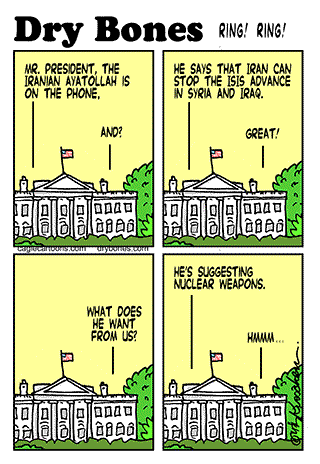
Off topic: Ring! Ring!

September 9, 2014