Author Archive

Gaza Imam Exposes the True Face of Hamas

September 17, 2014

Pravda: Russia to build up troops in Crimea due to growing foreign military presence

September 17, 2014

Russia to build up troops in Crimea due to growing foreign military presence

17.09.2014
Russia to build up troops in Crimea due to growing foreign military presence. 53582.jpeg

Russian Defense Minister Sergei Shoigu said that due to increased foreign presence in Ukraine, “the deployment of complete and self-sufficient group of forces in the Crimean direction” has become one of Russia’s priorities.

“The military and political situation in the south-western strategic direction has changed a lot since the beginning of the year. This is largely due to the expansion of the territory of the Southern Military District after the Crimea became a part of Russia,” said the minister.

In addition, Shoigu said, the situation in Ukraine “has sharply escalated.” According to the head of the Defense Ministry, foreign military presence in the immediate vicinity of the Russian border has increased.

NATO responded to Shoigu’s statements by saying that increasing the positions of the Russian army in the Crimea would be a step to increase tension in Europe. “The increasing presence of Russian armed forces in the Crimea is a step to increase tension in Europe,” the press service of the military alliance told Itar-Tass.

The statement was made ten days after the NATO summit in the UK, where the participants of the bloc agreed to help Ukraine in the fight against militia forces in the Donbass region.

Advisor to the President of Ukraine Yury Lutsenko said later that weapons would be supplied from the United States, France, Poland, Norway, and Italy, although the authorities of those countries did not confirm the information. Nevertheless, Ukrainian Defense Minister Valery Geletey has recently announced the start of  arms shipments from abroad.

As for the “military presence,” which Sergei Shoigu mentioned, Ukrainian, Western and NATO officials have set forth similar accusations against Russia before. According to NATO officials, about 20,000 Russian soldiers were stationed near the Ukrainian border as of September 11. Representatives of the alliance noted that approximately one thousand Russian soldiers were already located on the territory of Ukraine.

The Russian authorities, in turn, refute such accusations. NATO has not been able to provide one single proof in support of its accusations against Russia.

Meanwhile, Russian Foreign Minister Sergey Lavrov believes that the West is waging a media war against Russia with its statements of Russia’s military intervention in Ukraine. In an interview to Russia Beyond the Headlines, Mr. Lavrov stated that Russia regarded such statements as a manifestation of the information war. “Accusations of Russia’s military intervention in the conflict have been voiced before. From the very beginning of the crisis, they accuse us of practically everything, without presenting any facts ever,” said the minister.

Lavrov said that “the absence of evidence, concealment and distortion of truth is a characteristic feature of the position of the United States and several European countries.” “This goes for the statements about the movements of our troops, the investigation of the Malaysian Boeing disaster, as well as for the tragedies on Maidan, in Odessa, and many other situations,” he explained.

Noteworthy, when visiting Estonia on September 3, US President Obama announced that Russian troops entered Ukraine. According to Obama, there was evidence to prove it. The same day, President’s press secretary Dmitry Peskov rebutted Obama’s statements and said that with that such statements the West was trying to assign a destructive role on Russia. According to Peskov, such statements from Western leaders only speak of “unwillingness to operate with facts.” The undeniable evidence of Russia’s military invasion of Ukraine has never been provided, which suggests that there is no evidence at all, and the West simply prefers to publicly demonize Russia.

Sergey Lavrov, in the above-mentioned interview, also expressed his point of view regarding the sanctions imposed by the United States and the European Union against Russia because of the Ukrainian crisis. According to him, the West needs to break the vicious circle of “an eye for an eye” action.

“We believe that the attempts to influence crises by unilateral measures that go beyond UN Security Council decisions and contradict to the norms and principles of international law, threaten international peace and stability,” said the minister.

The head of the Russian diplomatic mission stressed out that such measures are double-edged and often more dangerous to those who initiate them. “It is clear that the continuation of the sanctions pressure on Russia will not help resolve the internal Ukrainian crisis, but will only deepen the confrontation and complicate dialogue,” says Sergey Lavrov.

“The United States, the European Union and other countries need to finally listen to the voice of reason and interrupt the vicious cycle of pointless action based on the principle of “an eye for an eye,” which they started themseves,” said Lavrov.

In the interview, Sergei Lavrov also said that although the relations between Russia and the European Union undergo a serious test in connection with the “the destructive policy of European partners due to the Ukrainian internal crisis, the point of no return has not yet been reached.” “To return to the path of cooperation, it is necessary to overcome the vicious logic of sanctions and threats and switch to constructive and pragmatic search for solutions of accumulated problems,” the minister said.

“There is no reasonable alternative to the continuation of mutually beneficial cooperation between Russia and the EU. There are too many things that connect us in terms of geography, economy, history, in human terms,” Russian Foreign Minister Sergei Lavrov said.

Pravda.Ru

Report: $36 billion in mystery funds enter Turkey

September 14, 2014

Report: $36 billion in mystery funds enter Turkey

Al-Monitor quotes insiders who speculate that the source of funds could be Iran, Syria or Qatar

In the last 12 years, since the AKP party has taken over Turkey, over $36 billion in cash from undisclosed sources has flowed into Turkey, according to the Washington-based al-Monitor publication.

According to the report, the year 2011 was a record-breaker, with $9.4 billion arriving in mystery funds.

Former Treasury undersecretary Faik Oztrak, now deputy chairman of the main opposition Republican Peoples Party (CHP) told Al-Monitor that the current account deficit is being financed by money coming from unknown, mystery sources.

“In the first six months of this year, $8.8 billion came to Turkey from unknown sources, while $2.6 billion exited Turkey from unknown sources. This means that in the first half of the year there was a net entry of $6.4 billion from unknown sources, which actually means that in the first half of 2014, a $26 portion of each $100 of the current deficit was financed by money from mystery sources. This is extraordinary and needs explanation.”

Oztrak has submitted queries to the minister responsible for economic coordination asking where the money came from but has not received a response, according to Al-Monitor.

Oztrak speculated as to the origin of the funds: “At one point Iran was cited as the source. Now the addresses are Syria and Gulf countries. The state must investigate this seriously and should not allow speculation.”

Political scientist Mustafa Sahin, known to be close to the AKP, told Al-Monitor, “The secret of how Turkey avoided the 2008 global economic crisis is in these mystery funds. …Qatar and other Muslim countries have money in Turkey. These unrecorded funds came to Turkey because of their confidence in Erdogan and the Muslim features of the AKP and the signs of Turkey restoring its historic missions.”

Egypt’s Brotherhood leaders to quit Qatar

September 14, 2014
Egypt’s Brotherhood leaders to quit Qatar

Qatar has come under tremendous pressure to stop supporting the group and other Islamists

Leaders of Egypt’s Muslim Brotherhood exiled in Qatar will leave the Gulf country after it came under enormous pressure to cut support for the Islamist group, a Brotherhood official said.

Amr Darrag, a leader of the Brotherhood’s political arm, the Freedom and Justice Party, said several members were relocating to “spare Qatar embarrassment”, in a statement posted on his Facebook page late Friday.

Two Brotherhood officials in Qatar reached by AFP confirmed Darrag’s statement.

Egypt designated the Brotherhood a “terrorist organization” after the military ousted Islamist president Mohammed Morsi in July 2013.

Since then, the group’s exiled leaders set up headquarters in several countries including Turkey, where the leadership in Doha may now relocate to.

“Some figureheads of the Freedom and Justice Party and the Muslim Brotherhood who have been requested to relocate their headquarters outside of Qatar have agreed (to do so),” Darrag said.

The Brotherhood’s secretary general Mahmoud Hussein, who is based in Doha, is thought to be the effective exiled head of the group after Egyptian police detained much of its leadership.

The Brotherhood is blacklisted in Saudi Arabia and the United Arab Emirates, and both countries withdrew their ambassadors from Doha partly over Qatar’s support for the group.

The conservative states of the Gulf view the Brotherhood’s political Islam as a threat to their stability, while Qatar was seen to be backing the movement and other Islamists in a bid to extend its influence in the region.

With the leadership in Qatar likely to relocate to Turkey, where other Brotherhood figures are already based, Istanbul is poised to host the regional headquarters for the 86-year-old movement.

Other leaders are based in Britain, which has conducted an inquiry into the Brotherhood’s alleged links to militants.

Qatar has come under tremendous pressure, mostly from Saudi Arabia and the United Arab Emirates, to stop supporting the Brotherhood and other Islamists such as the militias that have overrun the Libyan capital Tripoli.

But the decision to relocate the Brotherhood’s leaders will leave an estimated dozens of Islamist activists in Doha, and does not suggest a major change in Qatar’s policies, said Andrew Hammond, an analyst with European Council on Foreign Relations.

“I don’t think it signals a major shift in policy, it looks like incremental concessions to placate (Qatar’s) neighbors and prevent the dispute from getting out of hand,” he said.

Cairo and its Gulf allies have also campaigned against the Doha-based Al-Jazeerabroadcaster, whose journalists have been imprisoned in Egypt. The network’s Arabic channels have strongly opposed Morsi’s overthrow.

“The other issue is what happens with Jazeera‘s line. Does that shift? Nothing has changed so far,” Hammond said.

(AFP)

OFF TOPIC: Jon Stewart Rips Into Obama’s ‘America, F*ck Yeah!’ ISIS Speech

September 14, 2014

David Haines’s ‘evil murder’ condemned by PM

September 14, 2014

David Haines’s ‘evil murder’ condemned by PM

Caroline Hawley reports on the life and work of David Haines

The murder of David Haines was an “act of pure evil”, David Cameron has said after the release of a video appearing to show the UK hostage’s beheading.

The 44-year-old aid worker was seized in Syria in 2013. He was being held by Islamic State militants who have already killed two US captives.

The latest video also includes a threat to kill a second British hostage.

The PM vowed to do everything possible to find the killers. Mr Haines’s family said he would be “missed terribly”.

Born in Holderness, East Yorkshire, Mr Haines went to school in Perth and had been living in Croatia. His parents live in Ayr.

‘Despicable and appalling’

In a statement released by the Foreign Office, Mike Haines said his brother, a father of two, “was and is loved by all his family”.

“David was most alive and enthusiastic in his humanitarian roles. His joy and anticipation for the work he went to do in Syria is for myself and family the most important element of this whole sad affair,” he said.

David Cameron returning to Downing StreetDowning Street said the prime minister had returned to No 10 following the release of the video

Mr Cameron, who is due to chair an emergency Cobra committee meeting later, said the murder of an innocent aid worker was “despicable and appalling”.

“It is an act of pure evil. My heart goes out to the family of David Haines who have shown extraordinary courage and fortitude throughout this ordeal.

“We will do everything in our power to hunt down these murderers and ensure they face justice, however long it takes,” the prime minister added.

‘Grief and resolve’

The Foreign Office is working to verify the video, which was released on Saturday night. It begins with a clip of Mr Cameron and then features a man who appears to be Mr Haines dressed in orange overalls, kneeling in front of a masked man holding a knife.

The victim says: “My name is David Cawthorne Haines. I would like to declare that I hold you, David Cameron, entirely responsible for my execution.”

He says Mr Cameron had entered into a coalition with the US against the Islamic State “just as your predecessor Tony Blair did”.

“Unfortunately it is we the British public that in the end will pay the price for our parliament’s selfish decisions,” he said.

The militant, who appears to have a British accent, is then recorded as saying: “This British man has to the pay the price for your promise, Cameron, to arm the Peshmerga against the Islamic State.”

David HainesIn the video a masked militant is seen standing beside a man who appears to be David Haines

Islamic State is now in control of large parts of Iraq and Syria and the CIA estimates that the group could have as many as 30,000 fighters in the region.

The UK has donated heavy machine guns and ammunition to authorities in Iraq to help fight IS militants, the Ministry of Defence previously said.

Kurdish forces, known as the Peshmerga, have been involved in heavy fighting with IS.

US President Barack Obama said “our hearts go out to the family of Mr Haines and to the people of the United Kingdom”.

In a statement he said the US would work with the UK and a “broad coalition of nations” to “bring the perpetrators of this outrageous act to justice”.

“The United States stands shoulder to shoulder tonight with our close friend and ally in grief and resolve,” he added.

Scottish First Minister Alex Salmond said the release of the video “demonstrated a degree of brutality which defies description”.

“It should be remembered that Mr Haines was in the region as an aid worker helping local people,” Mr Salmond added.

“His murder will be totally condemned by all people with any sense of humanity.”

Labour leader Ed Miliband said he was “sickened at the disgusting, barbaric killing” of Mr Haines.

‘Criminals and villains’

Senior UK imams and British Muslim community leaders have also condemned the killing.

“An attack on a British citizen is an attack on Britain and we raise our voices as a community united to deplore the actions of the terrorists Isis,” Dr Qari Asim, imam of the Makkah Mosque in Leeds said.

Sayed Ali Abbas Razawi, from Majlis-e-Ulama, which represents the majority of Shia Muslims in the UK and Europe, said militants were hiding behind a “false interpretation” of Islam, describing the group as “criminals and villains”.

The president of the Islamic Society of Britain, Sughra Ahmed, said: “If someone who commits such evil and such heinous crimes calls themselves the Islamic Sate, then we need to understand actually that there’s nothing Islamic and there’s nothing state-like or legal about the work that they’re doing, about the acts that they are committing.”

James FoleyUS journalist James Foley was killed by militants last month – his parents called him a “martyr for freedom”.
Steven SotloffThe family of US journalist Steven Sotloff said he had given his life to reporting from war zones

Mr Haines was taken hostage in the village of Atmeh, in the Idlib province of Syria, in March 2013.

He had been helping French agency Acted deliver humanitarian aid, having previously helped local people in Libya and South Sudan.

The release of the video came hours after his family had made a direct appeal to IS to contact them.

IS – also known as Isis or Isil – has seized large swathes of territory in Iraq and Syria and declared a new caliphate – or Islamic state.

Militants from the extremist group have killed two US hostages in recent weeks, posting video evidence on the internet.

They threatened to kill Mr Haines during a video posted online showing the killing of US journalist Steven Sotloff earlier this month.

The extremist group also killed fellow US journalist, James Foley, last month.

West has ‘sacrificed its values’ in talks with Iranian regime

September 13, 2014

.

UN Chief blasts Iran for human rights violations

Ban Ki-moon report highlights high number of executions, corpral punishment and lack of media freedom

UN Secretary-General Ban Ki-moon on Tuesday expressed deep concern over the human rights situation in Iran, and called on its president Hasan Rouhani to take action to reduce the number of violations, noting particularly the regime’s common practice of executing or maiming criminals.

In a report to the United Nation’s Human Rights Council, Ban expressed alarm at “the sharp rise in executions in the Islamic Republic of Iran,” noting that despite his reputation as a moderate, the Rouhani government elected into office in June “has not changed its approach regarding the application of the death penalty and seems to have followed the practice of previous administrations, which relied heavily on the death penalty to combat crime.”

“An escalation in executions, including of political prisoners and individuals belonging to ethnic minority groups such as Baloch, Ahwazi Arabs and Kurds, was notable in the second half of 2013. At least 500 persons are known to have been executed in 2013, including 57 in public,” noted ban. He added that according to some human rights group, the number of those executed was as high as 625. “Those executed reportedly included 27 women and two children . The majority of the executions were carried out in relation to drug-related offences,” said Ban.

The secretary general also blasted the “recurrence of cruel, inhuman or degrading punishment, such as amputation of limbs and flogging,” saying it remains a cause for concern.

“The judiciary has frequently applied punishments which are prohibited by the International Covenant on Civil and Political Rights, to which Iran is a State party,” Ban said.

Despite recent statements by Rouhani against the stifling of the media in Iran — last week he defended what he called “freedom of the press with responsibility” and criticised the practice of shutting down offending newspapers — Ban said not enough was being done to protect free speech.

“The new administration has not made any significant improvement in the promotion and protection of freedom of expression and opinion, despite pledges made by the president during his campaign and after his swearing-in,” said Ban. “Both offline and online outlets continue to face restrictions including closure. Individuals seeking to exercise or promote freedom of expression and opinion for dissenting views or beliefs continue to face arrest, prosecution and sanctions by the state.”

The UN Chief also lamented the “large number of political prisoners, including high-profile lawyers, human rights activists, women rights activists and journalists,” who continue to serve sentences for charges he claimed are linked to the exercise of their freedoms of expression.

“The Special Rapporteur on the rights to freedom of peaceful assembly and of association, in his latest report to the Human Rights Council noted that the Government, similar to several other countries, repressed peaceful assemblies because the messages conveyed did not please them, and where organizers and participants were often charged with sedition and rioting,” he said.

Ban also blasted Iran for failing to improve the situation of religious and ethnic minorities, notably Christians and Bahai.

“Religious minorities such as Baha’is and Christians face violations entrenched in law and in practice. Harassment, home raids and incitement to hatred are reportedly commonly applied by the authorities to suppress the Baha’i community,” he stressed.

Ban concluded by calling on Iran to address the concerns of his and previous reports, establish an independent national human rights institution and admit the visit of a UN Special Rapporteur on human rights.

Turkey carefully weighing role in IS coalition

September 13, 2014

Kerry rules out Iran joining war against the Islamic State

September 13, 2014

Kerry rules out Iran joining war against the Islamic State

US Secretary of State says in is ”not appropriate” for Iran to participate in talks

John Kerry, the U.S. Secretary of State, has said it was ”not appropriate” for Iran to join talks on confronting Islamic State militants, as he appeared to play down how fast countries can commit to force or other steps in an emerging coalition.

Mr Kerry met Turkish leaders to try to secure backing for U.S.-led action against Islamic State militants, but Ankara’s reluctance to play a frontline role highlighted the difficulty of building a willing coalition for a complex military campaign in the heart of the Middle East.

As he tours the region to gather support for President Barack Obama’s plan to strike both sides of the Syrian-Iraqi frontier to defeat Islamic State Sunni fighters, Kerry said Shi’ite Iran should have no role in talks on how to go about it.

Accusing Iran of being ”a state sponsor of terror” and backing Syria’s brutal regime, Mr Kerry said it would be inappropriate for Iranian officials to join an Iraq conference in Paris on Monday to discuss how to curb a jihadist movement that has seized a third of both Iraq and Syria. Tehran has described the coalition as ”shrouded in serious ambiguities”.

”Under the circumstances, at this moment in time, it would not be right for any number of reasons. It would not be appropriate given the many other issues that are on the table in Syria and elsewhere,” he told a news conference in the Turkish capital Ankara.

Faced with disparate interests and goals among the region’s often squabbling nations, Mr Kerry said it was too early to say publicly what individual countries were prepared to do in a broad front to cut off funds to the militants, encourage local opposition and provide humanitarian aid.

The Secretary of State won backing on Thursday for a ”coordinated military campaign” against Islamic State from 10 Arab countries – Egypt, Iraq, Jordan, Lebanon and six Gulf states including rich rivals Saudi Arabia and Qatar.

But it remains far from clear what role individual nations will play. While he confirmed France’s commitment to use military force in Iraq, he declined to say whether France would join strikes in Syria.

That follows conflicting reports in key ally Britain over its potential role, with David Cameron on Thursday saying he has not ruled out military action in Syria after his foreign secretary said Britain would not take part in any airstrikes there.

”It is entirely premature and frankly inappropriate at this point in time to start laying out one country by one country what individual nations are going to do,” said Mr Kerry, who travels to Cairo on Saturday, adding that building a coalition would take time.

”I’m comfortable that this will be a broad-based coalition with Arab nations, European nations, the United States, others,” e said. ”At the appropriate time, every role will be laid out in detail.”

Turkey, which has the second-largest armed forces in the NATO military alliance after the United States and hosts a major U.S. Air Force base at Incirlik in its south, has so far conspicuously avoided committing to any military campaign.

Mr Ahmet Davutoglu, the Turkish Prime Minister, who did not join the news conference with Mr Kerry, told Turkish television hours after their meeting that U.S. action in Iraq would not be enough on its own to bring political stability.

U.S. officials played down hopes of persuading Ankara to take a significant role in any military involvement, saying Friday’s talks were focused on issues including Turkey’s efforts to stem the flow of foreign fighters crossing its territory and its role in providing humanitarian assistance.

”The Turks have played an extraordinary role on humanitarian aspects of the situation … and they are going to play and have been playing a pivotal role in our efforts to crack down on foreign fighter facilitation and counter terrorist finance,” a senior U.S. State Department official said before the talks.

President Obama’s plan to fight Islamic State simultaneously in Iraq and Syria thrusts the United States directly into the midst of two different wars, in which nearly every country in the region has a stake, alliances have shifted and strategy is dominated by Islam’s 1,300-year-old rift between Sunnis and Shi’ites.

Islamic State is made up of Sunni militants, who are fighting against a Shi’ite-led government in Iraq and a government in Syria led by members of a Shi’ite offshoot sect. It also battles against rival Sunni Islamists and more moderate Sunni groups in Syria, and Kurds on both sides of the border.

From the early days of the Syrian conflict, Turkey has backed mainly Sunni rebels fighting against President Bashar al-Assad. Although it is alarmed by Islamic State’s rise, Turkey is wary about any military action that might weaken Assad’s foes.

It is also concerned about strengthening Kurds in Iraq and Syria. Turkey’s own Kurdish militants waged a three-decade insurgency against the Turkish state and are engaged in a delicate peace process.
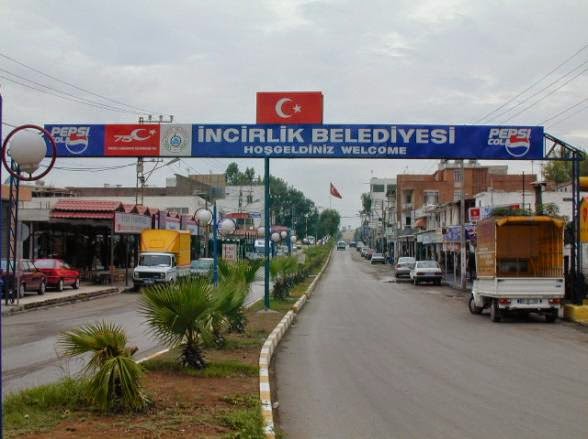

Turkey – Not a US ally anymore?

September 13, 2014

Not a US ally anymore?

Shavua tov, a good week to everyone.

Turkey – led by President Hussein Obama’s best friend forever – is refusing to collaborate with the United States against the Islamic State terror organization (Hat Tip: Joshua I). But Obama is loyal to Recep Tayyip Erdogan – unlike his attitude toward the United States’ real allies. Instead of punishing Turkey for its obstinence, within 24 hours of Turkey’s refusal to join, US Secretary of State John Kerry was in Ankara meeting with Erdogan.

After a two-and-a-half hour meeting, the pair emerged to announce that they had decided to cooperate “against all terrorist movements in the region,” rather than just against IS.

The announcement, which was brief and contained almost no details, was a signal that Turkey and America will not permit an open rift over Turkey’s reluctance to join the US-led coalition. Instead, Turkey and the US will continue to help the Syrian opposition and to share intelligence. Neither of these developments should come as a surprise.

The compromise is considerably less than the US had hoped for at the beginning of the week.

Thursday’s conference of Arab nations and the United States in Jeddah marked the point when it became clear that Turkey – even though it is the only NATO member in the region – would not be a full member of the coalition. For some observers the realization brought home claims made earlier this week by Congresswoman Ileana Ros-Lehtinen that Turkey and Qatar were neither definite friends nor enemies, but ‘frenemies’.

The Turkish delegation seems to have had the package of US military measures unveiled to them in Jeddah. But when Turkey’s foreign minister, Mevlut Cavusoglu, phoned home for further instructions, he was told not to sign.

Sabah, a newspaper close to the Erdogan government outlined what it says is the “partial support” that Turkey will give the US-led coalition; humanitarian assistance, intelligence, and border security.

On the face of it, this package adds little or nothing particularly new. Work is already well underway in all three areas. Turkey is a refuge for around one million Syrian refugees and it now recognises that it needs to prepare its borders against possible incursions from IS-occupied areas. Turkish forces are also doing what they can to make the highly porous frontier between Syria and Turkey and between Turkey and Iraq more secure, although with a border stretching more than 820 km with Syria and 350-km border with Iraq this is an extremely difficult task.

Quite apart from a sense of comradery with Sunni activists in Syria and Iraq, Turkey’s hands are also tied by another issue that hung over the talks.

As long as 49 Turkish hostages, diplomats, family and staff from the consulate-general, are being held in Mosul by IS, Turkey cannot take strong moves against the militants without endangering the lives of the captives.

While this consideration was not been openly stated, it was brought up immediately by Turkish officials, who began discussing the problem immediately after their country failed to sign the Jeddah communiqué on Thursday.

It is possible that Turkey is clandestinely providing more support to the anti-IS alliance than it openly admits. Indeed, there are claims that US drones from Incirlik air-base are taking part in strikes on Iraq, but there has so far been no confirmation of this and if Kerry has extracted assistance of this sort, there was no hint of it today. Instead, for the time being, the US and Turkey seem mainly to have agreed to paper over the cracks in a difficult relationship.

In a Saturday editorial, the Wall Street Journal said that Turkey is not a US ally and that the US ought to move its airbase out of Incirlik. Incirlik is less than 100 miles from Turkey’s border with Syria.

US daily The Wall Street Journal has claimed in its editorial on Saturday that it is the “unavoidable conclusion” that the US needs to find a better regional ally to fight the self-proclaimed Islamic State (ISIL) than Turkey, suggesting that the air base Turkey is currently hosting should be moved somewhere else.

Recalling Turkey’s reluctance in joining the anti-ISIL coalition, the editorial said not only will Ankara take no military action, it will also forbid the US from using the US air base in İncirlik—located fewer than 100 miles from the Syrian border—to conduct air strikes against the terrorists.

“That will complicate the Pentagon’s logistical and reconnaissance challenges, especially for a campaign that’s supposed to take years,” it added.

The newspaper said the US military will no doubt find work-arounds for its air campaign, just as it did in 2003 when Turkey also refused requests to let the US launch attacks on Iraq from its soil in order to depose Saddam Hussein. It said Turkey shares a 910-km border with Syria and Iraq, meaning it could have made a more-than-symbolic contribution to a campaign against ISIL.

The daily described it as a “reality” that the Turkish government, a member of NATO, long ago stopped acting like an ally of the US or a friend of the West. The editorial quoted former US Ambassador to Turkey, Francis Ricciardone, who said this week that the Turkish government “frankly worked” with the al-Nusrah Front—the al Qaeda affiliate in Syria—along with other terrorist groups. It claimed that Ankara also looked the other way as foreign radical groups used Turkey as a transit point on their way to Syria and Iraq.

The WSJ noted that İncirlik air base has been a home for US forces for nearly 60 years, but perhaps it’s time to consider replacing it with a new US air base in Kurdish territory in northern Iraq.

Don’t expect Obama to listen to that advice. What could go wrong?

