Author Archive

Iran: Germany will face consequences for caving to Israel, US with Hezbollah ban 

May 1, 2020

Source: Iran: Germany will face consequences for caving to Israel, US with Hezbollah ban | The Times of Israel

Islamic republic says Berlin made move due to pressure from the ‘propaganda machine of the Zionists and America’s confused regime’
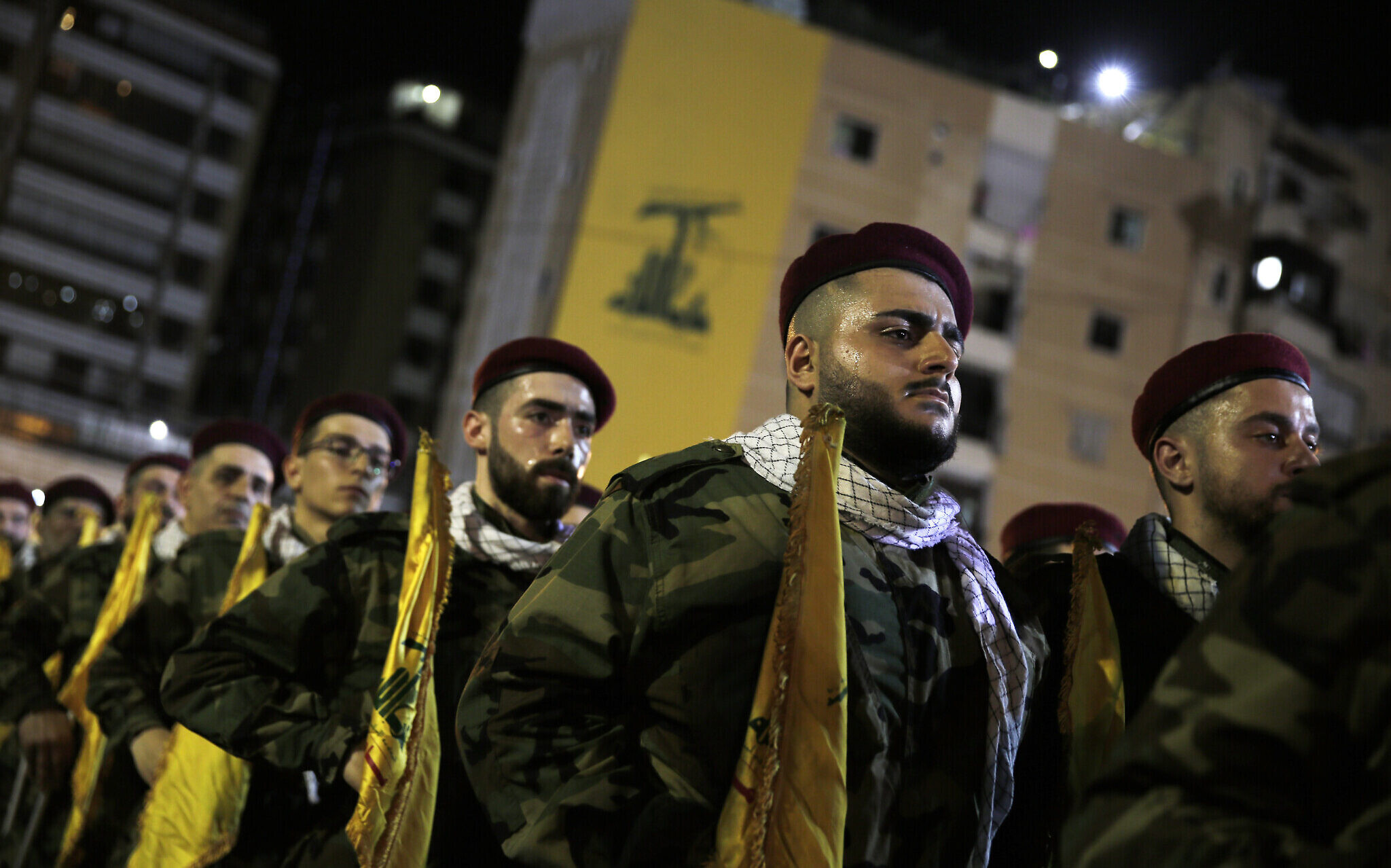
Hezbollah fighters stand in formation at a rally to mark Jerusalem Day or Al-Quds Day, in a southern suburb of Beirut, Lebanon, on May 31, 2019. (AP Photo/Hassan Ammar)

Hezbollah fighters stand in formation at a rally to mark Jerusalem Day or Al-Quds Day, in a southern suburb of Beirut, Lebanon, on May 31, 2019. (AP Photo/Hassan Ammar)

Iran on Friday slammed Germany’s ban on the activities of Lebanese terrorist organization Hezbollah on its soil, saying it would face consequences for its decision to give in to the “propaganda machine” of Israel and US.

Germany branded the Iranian-backed group a “Shiite terrorist organization” on Thursday, with dozens of police and special forces storming mosques and associations across the country linked to the Lebanese terror group.

In a statement issued overnight, Iran’s foreign ministry said the ban ignores “realities in West Asia.”

The Islamic republic said the move was based solely on the goals of the “propaganda machine of the Zionists and America’s confused regime.”
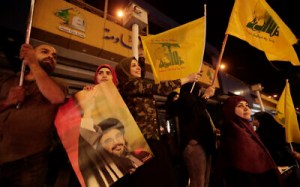
In this Oct. 25, 2019 file photo, supporters of Hezbollah leader Hassan Nasrallah hold his pictures and waves Hezbollah flags in the southern suburb of Beirut, Lebanon. (AP Photo/Hassan Ammar)

It “strongly” condemned the decision it said showed “complete disrespect to the government and nation of Lebanon, as Hezbollah is a formal and legitimate part of the country’s government and parliament.”

Iran said Hezbollah had a “key role in fighting Daesh’s terrorism in the region,” using the Arabic acronym for the Islamic State group.

“The German government must face the negative consequences of its decision in the fight against real terrorist groups in the region,” it added.

Germany on Thursday officially announced that it has outlawed activities by Hezbollah. In a dramatic departure from Berlin’s previous policy, which was based on the European Union’s stance, the new ban does not differentiate between the group’s military and political wings.

Hezbollah activities “violate criminal law and the organization opposes the concept of international understanding,” said German Interior Minister Horst Seehofer.

The group, headed by Hassan Nasrallah, denies Israel’s right to exist and “supports the armed terrorist fight” against the Jewish state, his ministry said in a statement issued Thursday. “It is to be expected that Hezbollah will continue to plot terrorist acts against Israel and Israeli interests also outside the Middle East.”
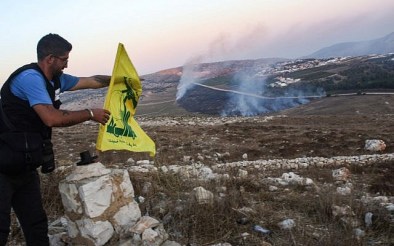
A man fixes a Hezbollah flag at the ‘Garden of Iran’ Park in the Lebanese village of Maroun al-Ras on September 1, 2019, as fires blaze on the Lebanese side along the border following an exchange of fire with Israel. (Mahmoud Zayyat/AFP)

Early on Thursday morning, German police raided four groups associated with Hezbollah in various locations across the country to ensure that “evidence of potential sub-organizations in Germany could not be destroyed when this ban was announced,” the Interior Ministry said.

Since there is no formal German branch of Hezbollah, Berlin cannot outlaw the organization as such, according to an Interior Ministry statement. Hence the government undertook to ban Hezbollah’s activities, which has the same legal consequences, the statement explained: “It is prohibited to use or display symbols and to organize and participate in assemblies; assets are confiscated and forfeited. Violations of bans on organizations and activities are equally punishable.”

The new policy prohibits the showing of Hezbollah signs and symbols in public, including “in an assembly or in print, audio or visual media, pictures or portrayals.” Even the symbol of the Imam al-Mahdi Scouts, Hezbollah’s youth movement, is banned. The group’s assets will be confiscated.
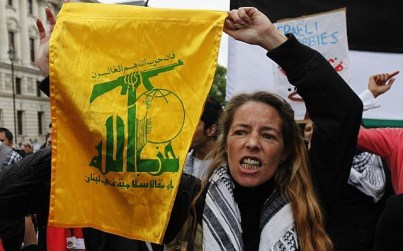
A pro-Palestinian supporter holds up a flag belonging to the Hezbollah group, during a march to protest against Israel in central London, May 31, 2010. (AP Photo/Lefteris Pitarakis)

Israel welcomed Berlin’s new policy. “It is a very important decision and a valuable and significant step in the global fight against terrorism,” Foreign Minister Israel Katz said in a statement released shortly after the German decision was announced. “I would like to express my deepest appreciation to the German government for this step and I am sure that many governments in the Middle East as well as the thousands of victims of Hezbollah’s terror join in thanking them for this decision.”

Katz called on other European countries to follow the German move. “All the parts of Hezbollah, including the social, political and military wings, are terror organizations and they should be treated as such,” he said.

Prime Minister Benjamin Netanyahu praised Germany for the move and also called on other countries to follow suit. “Any country advocating peace needs to expel terror groups and not give them any direct or indirect support,” he said in a statement released by his office.

The designation was also hailed by US Secretary of State Mike Pompeo, who praised the “strong action.”

“The US commends our German ally for banning this Iran-sponsored terrorist group and ensuring its supporters are denied operating space,” Pompeo said in a tweet, urging other European countries to follow suit.

German authorities estimate that 1,050 people living in the country are affiliated with Hezbollah.

Raphael Ahren contributed to this report.


Israel said to destroy arms cache in central Syria in rare daytime attack

May 1, 2020

Source: Israel said to destroy arms cache in central Syria in rare daytime attack | The Times of Israel

Damascus denies blast caused by Israel, says it was ‘human error’; Syrian war monitor says strike targeted Hezbollah weapons warehouse, in 2nd alleged IDF attack in under 12 hours

Israel bombed a munitions warehouse in central Syria on Friday morning in a rare daylight strike which sparked a massive explosion, according to reports from Syria.

The attack appeared to be the fifth strike attributed to Israel against Iran-linked forces in Syria in the past two weeks, coming less than 12 hours after Israeli attack helicopters reportedly bombed Iran-backed forces in the Syrian Golan Heights late Thursday night.

The Syrian Observatory for Human Rights war monitor said the arms cache that was bombed on Friday morning by Israel was located outside Homs and contained missiles and ammunition belonging to the Iran-backed Hezbollah terror group.

Damascus officially denied that Israel was responsible for the explosion, saying it was the result of “human error” while transporting munitions, Syrian state media outlet SANA reported. This was widely seen by defense analysts as an attempt to cover-up yet another Israeli strike on Syrian soil.

According to Syrian media, the attack triggered huge secondary explosions, apparently as the munitions inside the warehouse detonated. SANA reported that at least 10 people were wounded in the blasts.

Damage caused to a street from secondary explosions after an alleged Israeli attack on a Hezbollah arms cache near Homs in central Syria on May 1, 2020. (Syrian state media SANA)

Photographs and videos from the scene showed massive damage to the surrounding area as shells and other munitions inside the warehouse were set off by the explosion.

The Friday morning attack, which would be a highly irregular though not unprecedented daytime strike, came less than a day after a reported attack by Israel against pro-Iranian forces in southern Syria.

Shortly after midnight on Friday, Syria accused Israeli helicopters of firing at least five missiles at targets on the Syrian Golan Heights, just across the border from Israel.

“From the occupied Golan airspace, enemy Israeli helicopters attacked positions in the southern region with several missiles,” Syrian state news agency SANA said.

SANA said the missile strike in the area of Quneitra caused “only material damage.” It did not report any casualties or specify what was targeted.

The Syrian Observatory for Human Rights also reported on the strikes, saying they targeted military positions of Iranian forces and pro-Iran militias.

The attack follows a series of strikes on Iran-linked forces in Syria in recent weeks.

Defense Minister Naftali Bennett on Tuesday appeared to confirm that Israel was responsible for attacks against pro-Iranian forces in Syria, saying that the military was working to drive Tehran out of the country.

Defense Minister Naftali Bennett of Yamina in the plenum hall of the Knesset on February 10, 2020. (Yonatan Sindel/Flash90)

“We have moved from blocking Iran’s entrenchment in Syria to forcing it out of there, and we will not stop,” Bennett said in a statement.

“We will not allow more strategic threats to grow just across our borders without taking action,” he said. “We will continue to take the fight to the enemy’s territory.”

The airstrike early Monday on a military airfield outside Damascus killed four pro-Iranian fighters, according to the Observatory for Human Rights. Three Syrian civilians were also reportedly killed by shrapnel, though it was not clear if the fragments came from the incoming missiles or Syria’s air defenses.

The Observatory said a number of Iranian-linked command centers were destroyed in the attack.

Bennett did not explicitly confirm Israel’s involvement in that airstrike, though his comments were seen as a clear hint to that effect.

Israeli military officials have warned that acknowledging such strikes adds pressure on Iran and its proxies to retaliate in order to save face.

Jerusalem says Iran’s presence in Syria, where it is fighting in support of President Bashar Assad, is a threat, as Tehran seeks to establish a permanent foothold along Israel’s northern borders. Israel has also threatened to take military action to prevent Iran from providing the Lebanon-based Hezbollah terror group with advanced weaponry, specifically precision-guided missiles.

Though Israeli officials generally refrain from taking responsibility for specific strikes in Syria, they have acknowledged conducting hundreds to thousands of raids in the country since the start of the Syrian civil war in 2011.

These have overwhelmingly been directed against Iran and its proxies, notably Hezbollah, but the Israel Defense Forces has also carried out strikes on Syrian air defenses when those batteries have fired at Israeli jets.

Last week Syria accused Israel of hitting targets also near Homs. The Syrian Observatory for Human Rights said the targets were “military posts for Iranian militias in the Palmyra desert.”

On April 15, a car driven by several Hezbollah operatives was targeted in a strike attributed to Israel as it made its way from Syria toward Lebanon. The passengers in the vehicle escaped after an apparent warning shot was fired next to the car.

A private Israeli intelligence firm on Thursday released images showing the aftermath of the Monday airstrike against Iran-backed forces in Syria that was attributed to Israel. The attack targeted a warehouse outside of Palmyra and the entrance to an underground facility near Damascus, according to the satellite images.

TOI staff and AFP contributed to this report.


IDF Chief of the General Staff’s Memorial Day Speech 

April 29, 2020


Secret of Israel’s Military Revealed

April 29, 2020


LIVE | Sirens wail across Israel ahead of Remembrance Day ceremonies 

April 28, 2020


The Heroic Story of IDF Staff Sgt. Yanai Tuvia Weissman 

April 28, 2020


Syria reports Israeli strikes near Damascus 

April 28, 2020

Source: Syria reports Israeli strikes near Damascus | The Times of Israel

State media claims to intercept several missiles fired from Lebanese airspace; incident comes a day after Israel’s defense minister hinted at forthcoming anti-Iranian effort

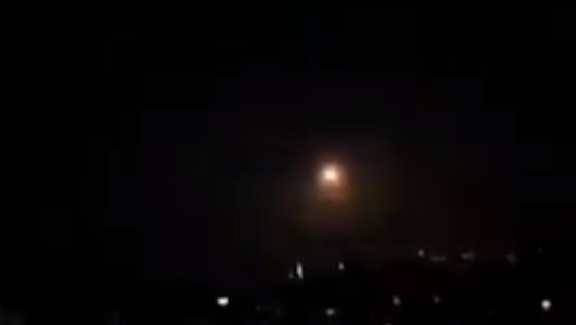
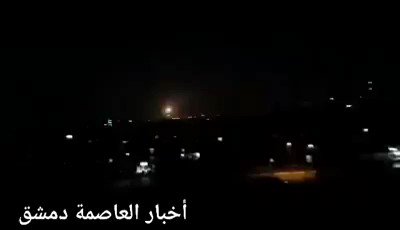
A Syrian anti-aircraft missile fired over Damascus on April 27, 2020 (screencapture/Twitter)

A Syrian anti-aircraft missile fired over Damascus on April 27, 2020 (screencapture/Twitter)

Syria accused Israel of carrying out airstrikes on a military airfield near Damascus just before dawn on Monday, saying that its air defense units had “confronted the Israeli aggression.”

Though the Israel Defense Forces did not comment on the allegation, the attack came a day after Defense Minister Naftali Bennett hinted that the military was poised to take action in Syria.

“Keep your ears open. We’ve gone from a policy of blocking [Iran] to pushing it out,” Bennett told the 103FM radio station on Sunday.

It was the third attack on Iranian targets in Syria attributed to Israel in the past 10 days.

Syrian state news agency SANA said limited damage was caused by the strikes on the Mezzeh military airport outside Damascus, but no casualties. The airbase, reportedly used by Iranian forces in Syria, has been attacked several times in airstrikes attributed to Israel.

According to SANA, Israeli jets fired several of the missiles in the attack from Lebanese airspace, and they were intercepted.

Syria state media regularly claims that the Syrian military intercepts incoming Israeli missiles, though those assertions are viewed as highly questionable.

Video posted to social media showed several anti-aircraft missiles being fired into the air, followed by loud explosions.

Belaaz@TheBelaaz

🇮🇱🇱🇧 — DEVELOPING: Local reports of heavy Israeli warplane activity at low levels over southern Lebanon. Standby for a possible Israeli attack in Syria. Details to follow.

Embedded video

Belaaz@TheBelaaz

🇸🇾 — NOW: Syrian air defense active over , Syria. Possible Israeli attack.
Embedded video

Though Israeli officials generally refrain from taking responsibility for specific strikes in Syria, they have acknowledged conducting hundreds to thousands of raids in the country since the start of the Syrian civil war in 2011.

These have overwhelmingly been directed against Iran and its proxies, notably the Lebanese-based Hezbollah terror group, but the IDF has also carried out strikes on Syrian air defenses when those batteries have fired at Israeli jets.

Last week Syria accused Israel of hitting targets near Homs.

The Syrian Observatory for Human Rights, a Britain-based war monitor, said the targets were “military posts for Iranian militias in the Palmyra desert.”

Jerusalem says Iran’s presence in Syria, where it is fighting in support of President Bashar Assad, is a threat, as Tehran seeks to establish a permanent foothold along Israel’s northern borders.


Terror attack near Jerusalem; Iran’s IRGC launches satellite into orbit – TV7 Israel News 22.04.20 

April 23, 2020


Trump instructs US Navy to shoot down and destroy all Iranian gunboats if they ‘harass our ships at sea’ 

April 22, 2020

Source: Trump instructs US Navy to shoot down and destroy all Iranian gunboats if they ‘harass our ships at sea’ — RT World News

Trump instructs US Navy to shoot down and destroy all Iranian gunboats if they 'harass our ships at sea'
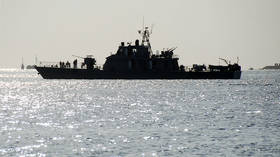
President Donald Trump has ordered the US Navy to “shoot down and destroy” Iranian gunboats, should they harass American vessels at sea. His declaration comes after a confrontation in the Persian Gulf.

“I have instructed the United States Navy to shoot down and destroy any and all Iranian gunboats if they harass our ships at sea,” the president tweeted on Wednesday morning.

Donald J. Trump

@realDonaldTrump

A week earlier, the US Navy accused the Iranian Revolutionary Guards Corps (IRGC) of “dangerous and provocative” actions, claiming that nearly a dozen Iranian vessels buzzed a group of American ships in the Persian Gulf. The US Fifth Fleet later published video footage of the encounter, which showed the gunboats circling a larger US ship.

Tehran brushed off the accusations, disputing the “Hollywood” scenario portrayed by the US. The Iranian government considers US naval activity in the gulf highly provocative, and condemned the patrol as “adventurism.” 

ALSO ON RT.COM‘Only interested in Hollywood scenarios’: Iranian military brands Washington’s ‘harassment’ accusations in Persian Gulf as ‘fake’The US and Iran almost came to war at the beginning of the year, when the US assassinated General Qassem Soleimani with a drone strike at an airport in Baghdad, apparently in retribution for a series of Iranian-sponsored attacks on US bases in Iraq. However, tension in the Persian Gulf has been high since last summer, when the US and its Western allies blamed Iran for a series of sabotage attacks on oil infrastructure in the region.

US-led naval patrols were stepped up, and American troops and air defense systems were sent to Saudi Arabia and the UAE.

Based in nearby Bahrain, the US Fifth Fleet has been active in the gulf both before and since the flareup last year. The US insists patrols are essential to protect shipping routes against Iran’s “malign behavior.”


Iran’s Revolutionary Guards claim to put satellite in orbit 

April 22, 2020

Source: Iran’s Revolutionary Guards claim to put satellite in orbit | The Times of Israel

After numerous failed launches, Iranian paramilitary force says it successfully sent ‘Noor’ into space; US has accused Tehran of using satellite launches to advance missile program

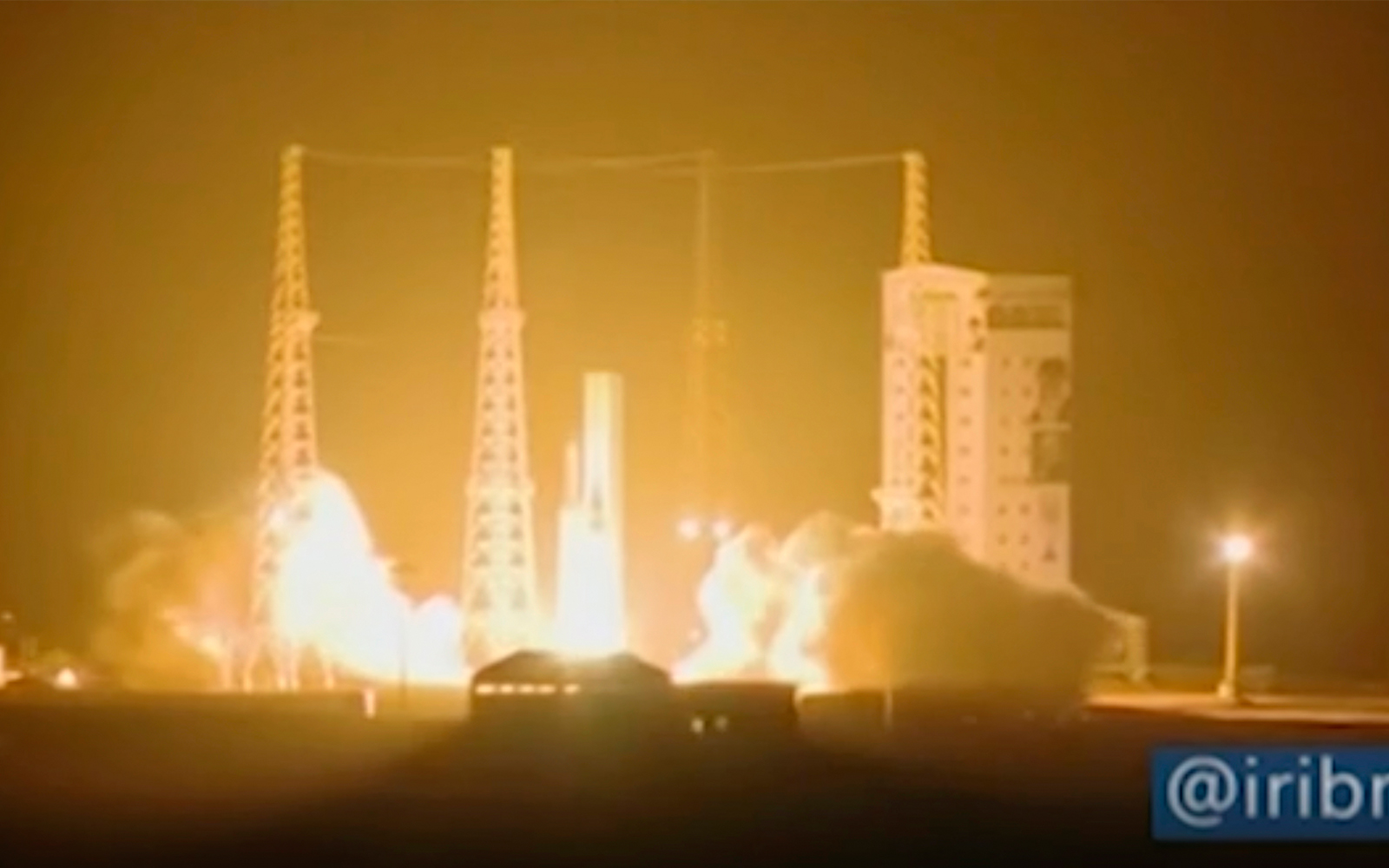
Illustrative: An Iranian rocket carrying a satellite is launched from Imam Khomeini Spaceport in Iran’s Semnan province, February 9, 2020. (Screenshot, IRIB via AP)

Illustrative: An Iranian rocket carrying a satellite is launched from Imam Khomeini Spaceport in Iran’s Semnan province, February 9, 2020. (Screenshot, IRIB via AP)

TEHRAN, Iran (AP) — Iran’s paramilitary Islamic Revolutionary Guard Corps said on Wednesday that it launched a military satellite into orbit amid wider tensions with the United States, describing it as a successful launch after months of failures.

There was no immediate independent confirmation of the launch of the satellite, which the Guard called “Noor,” or light. The US State Department and the Pentagon, which contend that such launches advance Iran’s ballistic missile program, did not immediately respond to a request for comment.

On its official website, the Guard said the satellite successfully reached an orbit of 425 kilometers (264 miles) above the Earth’s surface. The Guard called it the first military satellite ever launched by Tehran.

Israel’s Foreign Ministry denounced the claimed launch.

“Israel strongly condemns the military satellite launch attempt by the Revolutionary Guards, a terror organization that is recognized as such by the United States,” it said in a statement.

“Israel calls on the international community to condemn the launch and impose additional sanctions on the Iranian regime to deter it from its defiant and dangerous activities,” the statement added.

The two-stage satellite launch took off from Iran’s Central Desert, the Guard said, without elaborating or saying when exactly the launch took place. The paramilitary force said it used a Ghased, or “Messenger,” satellite carrier to put the device into space, a previously unheard-of system.

The launch comes amid tensions between Tehran and Washington over its collapsing nuclear deal and after a US drone strike in Iraq killed Guard Gen. Qassem Soleimani in January.

Iran has suffered several failed satellite launches in recent months. The latest came in February, when Iran failed to put its Zafar 1 communications satellite into orbit.

That failure came after two failed launches of the Payam and Doosti satellites last year, as well as a launchpad rocket explosion in August. A separate fire at the Imam Khomeini Space Center in February 2019 also killed three researchers, authorities said at the time.

This image taken from the Twitter account of US President Donald Trump, shows what appears to be a US intelligence photo of the aftermath of an explosion at Iran’s Imam Khomeini Space Center in the country’s Semnan province, August 29, 2019, with the smoldering remains of a rocket on a launch pad at the center, which was to conduct a US-criticized satellite launch. (Twitter via AP)

The rocket explosion in August drew even the attention of US President Donald Trump, who later tweeted what appeared to be a classified surveillance image of the launch failure. The successive failures raised suspicion of outside interference in Iran’s program, something Trump himself hinted at by tweeting at the time that the US “was not involved in the catastrophic accident.”

The US alleges such satellite launches defy a UN Security Council resolution calling on Iran to undertake no activity related to ballistic missiles capable of delivering nuclear weapons. American officials, as well as European nations, worry that these launches could help Iran develop intercontinental ballistic missiles capable of carrying nuclear weapons.

Iran, which long has said it does not seek nuclear weapons, previously maintained its satellite launches and rocket tests do not have a military component. The Guard launching its own satellite now calls that into question.

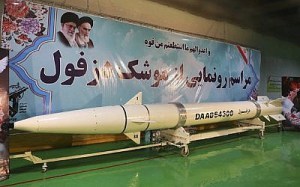
In this photo from February 7, 2019, by Sepahnews, the website of the Iranian Revolutionary Guard, a Dezful surface-to-surface ballistic missile is displayed in an undisclosed location in Iran. (Sepahnews via AP)

Tehran also says it hasn’t violated a UN resolution on its ballistic missile program as it only “called upon” Iran not to conduct such tests. Western missile experts have also questioned the US contention that Iran’s program could have a dual use for nuclear weapons.

Over the past decade, Iran has sent several short-lived satellites into orbit and in 2013 launched a monkey into space.

The launch comes amid heightened tensions between Iran and the US since Trump unilaterally withdrew America from Tehran’s 2015 nuclear deal with world powers in May 2018. Iran since has broken all the deal’s limitations while still allowing UN inspectors to its sites.

On Sunday, the Guard acknowledged it had a tense encounter with US warships in the Persian Gulf last week, but alleged without offering evidence that American forces sparked the incident.