New law bars cooperation with Zionists, including ‘hardware and software,’ as crime against God. So, no computers, internet, cellphones; healthcare ravaged; and no BMW for Khamenei

Ahead of its annual al-Quds Day orgy of Israel-bashing on Friday, Iran’s parliament has unanimously passed legislation banning “any cooperation” with Israel — specifically including the use of Israeli computer hardware and software — as a crime against God.
In normal years, al-Quds day is marked across the Islamic Republic by orchestrated anti-Israel marches and speeches, the trampling and burning of Israeli flags, and other displays of hatred rather at odds with the regime’s frequent assurances to the international community that its friendly and peace-loving leaders have no interest whatsoever in acquiring nuclear weapons.
But this year, bedeviled by the fiendish COVID-19 (which “supreme leader” Ali Khamenei has claimed was partly “built for Iran” by the similarly loathed United States), the regime is having to scale back its mass public displays of animosity to Israel.

And so Khamenei has this week resorted to calling online for a “final solution” to the Israel problem, and for arming the West Bank, “just as Gaza,” in order to expedite it. Underlining the utter hypocrisy of his regime’s ostensible humanitarian concern for the Palestinian people, he has been castigating the United Arab Emirates for committing nothing less than “the biggest treachery… [in] the history of the Arab world” — by delivering 16 tons of coronavirus aid for the Palestinians via Ben Gurion Airport.
And his parliament has resorted to criminalizing Israeli tech.
Under the legislation passed Monday, any cooperation with “the Zionist regime” is henceforth to be considered “equal to enmity towards God and corruption on earth,” according to the semi-state news site Fars. “All Iranian bodies are required to use the country’s regional and international capacities to confront the Zionist regime’s measures,” it reported, and, specifically, “activities of the Israeli software platforms in Iran and using its hardware and software products is forbidden.”
Rather than protesting this latest legislative iteration of the ayatollahs’ relentless and doomed efforts to precipitate Israel’s demise, the free world might consider applauding the ban, if not actively demanding its enforcement, in those areas where it does not directly spell the deaths of innocents.
Because, given the centrality of Israeli innovation and technology to so many aspects of modern life, the new anti-Israel legislation, if implemented as required by the Iranian parliament, will set Iran back decades, raise Iranian public disaffection with the repressive ayatollahs to new heights, and likely spell the demise of the brutal, rapacious and cynical regime.
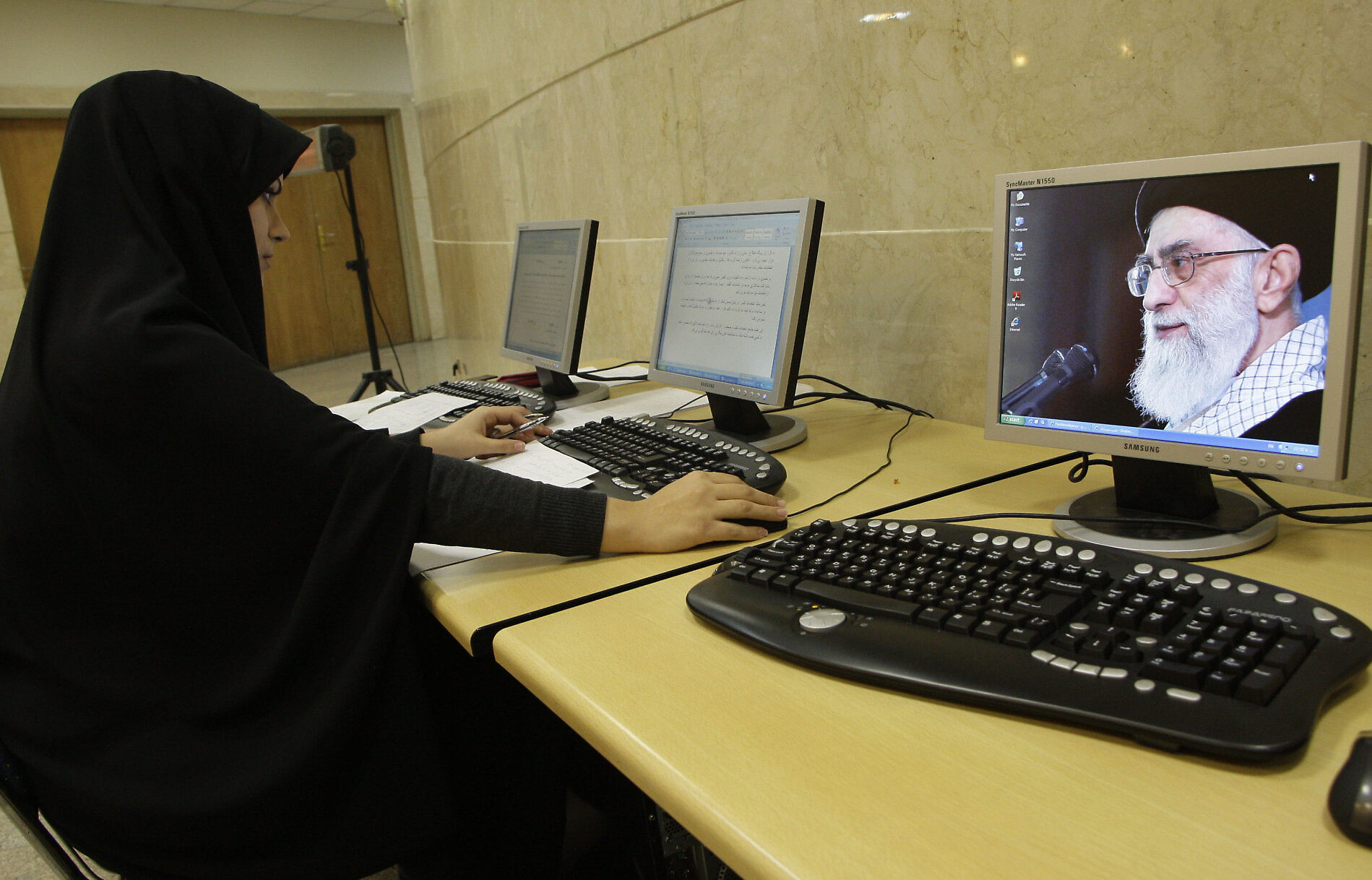
For a start, if the solemnly enacted legislation of the Majlis is to be regarded as anything other than hot air, Iran must now shut down all of its computers. They all feature Intel chips and/or technologies designed and/or developed in Israel.
As the then-president of Intel Israel, Mooly Eden, explained to The Times of Israel back in 2014, Israeli-developed chips and technologies are simply the mainstay of computer design. Intel set up shop in Israel in the 1970s, and Intel Haifa then developed the 8088 processor — which was used in the IBM PC, the first popular Microsoft-based computer for home use. Intel Israel has developed increasingly advanced processors through the decades ever since, for PCs, for tablets and for laptops. “The whole laptop revolution was kicked off by the Pentium M (Banias) processor, developed in Israel in 2003,” Eden noted.
Apple, which has been using Intel chips since 2009, also maintains a major R&D center in Israel.

Of course, Iran will henceforth have rather less need for computers anyway, since its new legislation means it will also have to stop using the internet. That’s because routers produced by Cisco Systems are a core component of the internet’s backbone — transferring information between computer networks at dizzying speeds — and Cisco Israel is central to the US multinational’s ongoing router development. “At the heart” of Cisco’s latest router, the firm announced last December, for instance, “is the Cisco Silicon One chip which is based on technology developed by Leaba” — a Caesarea firm acquired by Cisco four years ago.

But then Iran would be immensely constrained in using the internet anyhow, since, under the new legislation, it’s hard to see which search engines law-abiding Iranians would be allowed to use. Google does enormous amounts of R&D work in Israel, across a wide array of products. One small example: “Google Suggest,” which starts searching for you even as you type in your request — developed in Israel.
As for the Bing search engine, well, that’s a Microsoft product. And as Microsoft’s then-CEO Steve Ballmer famously declared on a visit to Israel in 2008 (17 years after the firm set up its first R&D division outside the US here), “Microsoft is as much an Israeli company as an American company.” (Hailing Israel’s “remarkable” tech on a subsequent trip four years later, Ballmer noted that Microsoft employs more workers per capita in Israel than anywhere else on earth.)

Cloud storage of data is going to be a problem from now on too, since the technology behind it is an Israeli specialty. Indeed generally, says Saul Singer, co-author of the bestselling “Start-Up Nation” who helped me with a lot of the material for this article, Israel is “big on routers and chips and all the core infrastructure that drives technology.”
The Iranians will also now obviously have to hang up their smartphones. Going back to Motorola, which was doing R&D in Israel even before Intel, cellphones are riddled with Israeli tech.
In fact all of Iran’s international connections — communications, banking, freight shipping, even its vital oil exports — are going to require careful examination by the Majlis, for fear of cooperation with us Zionists.
Depending on how stringently it interprets its law, Iran may have to unilaterally constrain its already sanctioned international banking interactions, because numerous major international banks — Citibank, RBS, Deutche Bank et al — do R&D in Israel, have bought Israeli companies, and/or use Israeli cyber systems.
Shipping is going to be a problem, since Freightos — the Expedia of global freight shipping — is, well, Israeli.
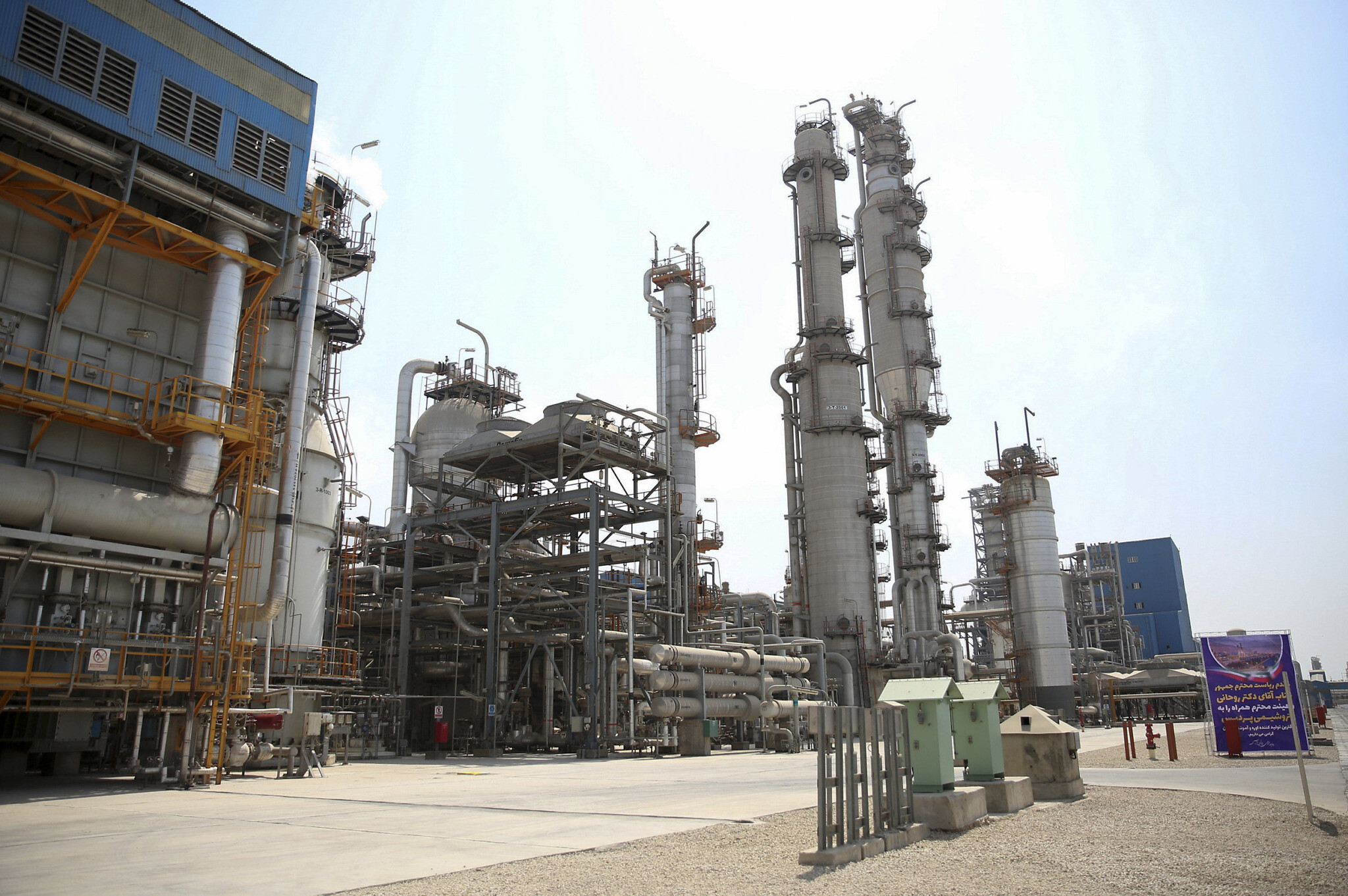
Iran’s vital oil exports are going to take a massive hit: The international oil refineries that handle its black gold rely on Israeli-developed monitoring systems, Israeli cyber defense systems and other protective technology developed in Israel.
Back home, many of its cars are going to have to come off the roads. It imports tens of thousands of vehicles each year, and it’s a safe bet that many of them include features developed in Israel. Manufacturers such as General Motors have technology centers in Israel, their innovations feeding into the production process. Israel’s Mobileye, meanwhile, has its driver-assistance technology installed in over 40 million cars — over 300 models.

Iran’s health services are going to be terribly affected. Medtronic, the largest medical device company in the world, whose equipment is a mainstay of hospitals the world over, has acquired a great deal of Israeli tech and maintains an Israeli R&D center.
Indeed, medical innovation is a major Israeli focus, and multinationals have long been engaged here, buying Israeli startups and setting up their own centers here. General Electric and Change Healthcare also maintain major healthcare divisions here.

Lots of drugs are now off-limits, too. Teva, the world’s largest generic drug manufacturer is henceforth forbidden, which means no more use of its patented Copaxone treatment for multiple sclerosis. Many other of the most important drugs in the world, manufactured by global pharmaceutical behemoths, include Israeli development.
Cardiology is going to be constrained, too; the flexible stent, which has saved millions of lives, was pioneered a quarter century ago by Israel’s Medinol.
On and on it goes.

The list of major companies that invest in, own and/or deeply engage with Israeli firms and innovators, that also have done business with Iran — and are thus now presumably off-limits for all Iranians — and that I haven’t mentioned above, also includes, to give just 10 examples (with their Israel activities): Boeing (3D parts printing, cockpit systems); Daimler (tech hub; car tech R&D); Deutsche Telekom (cyber-security innovation lab); Hyundai (innovation hub, investments); LG (smart TVs, smartphones, cybersecurity); Renault (innovation lab, smart car incubator, auto-tech fund); Samsung (software tech; startup investments); Siemens (innovation lab); Volkswagen (tech hub in Tel Aviv); Volvo (tech investments, innovation center)… You get the idea.

Jerusalem-based Singer (whose “Start-Up Nation” is itself now of course off-limits in Iran) suggests Iranians might still be okay with pocket calculators and landlines, though he’s not even sure about that.
“It’s endless,” he said, when considering the impact the Majlis ban on all things Israeli will have. “If you count all the Fortune 500 companies that have critical development centers in Israel — including Siemens, an Iranian favorite, IBM, GE… — there’s not much left. I guess they would have to go back to pen and paper, horses, and home visits by doctors with stethoscopes and World War II-era hospitals.”
An Iran without “Israel inside,” Singer said, “would make North Korea look advanced and cosmopolitan. Essentially, Iran would go back to the world of 50 years ago, maybe more. It would look like a huge Amish colony in Muslim garb
An Iran without “Israel inside,” Singer said, “would make North Korea look advanced and cosmopolitan. Essentially, Iran would go back to the world of 50 years ago, maybe more. It would look like a huge Amish colony in Muslim garb. Meanwhile, it would be party time in the US, Israel, and most of the Arab world.”
On the other hand, of course, Iran could acknowledge the centrality of Israeli innovation to the improved functioning and health of society, stop subverting its diminishing resources to the vile cause of wiping us out, and rejoin the family of nations. Legislators of the Majlis, seriously now, do you truly believe that would be a crime against God?
Just two months ago, a senior Iranian cleric was quoted saying that, if “Zionists” were the first to develop a vaccine for the coronavirus (of this writing, COVID-19 has killed over 7,000 Iranians), it would be permitted for use by Iranians. Would that too, now, constitute a criminal act?
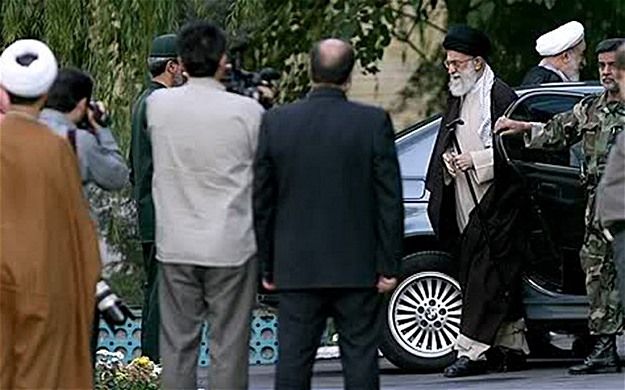
Meantime, Supreme Leader Khamenei himself will evidently need not only to shut down his laptop and dump his cellphone, but also to hurriedly rethink his transportation arrangements.
German manufacturer BMW, which noted in 2019 that it “has been collaborating with Israeli firms from various technology fields for a number of years,” announced plans for a new Tel Aviv “office for trend and technology scouting in Israel.”
Back in 2013, Khamenei was pictured emerging from his BMW. As of this week’s legislation, for any Iranian to do so, much less the supreme leader, would most emphatically be a crime against God.
With reporting by Shoshanna Solomon
Strategic affairs minister sends letter to social media giant accusing Ali Khamenei of breaking its rules, promoting anti-Semitism
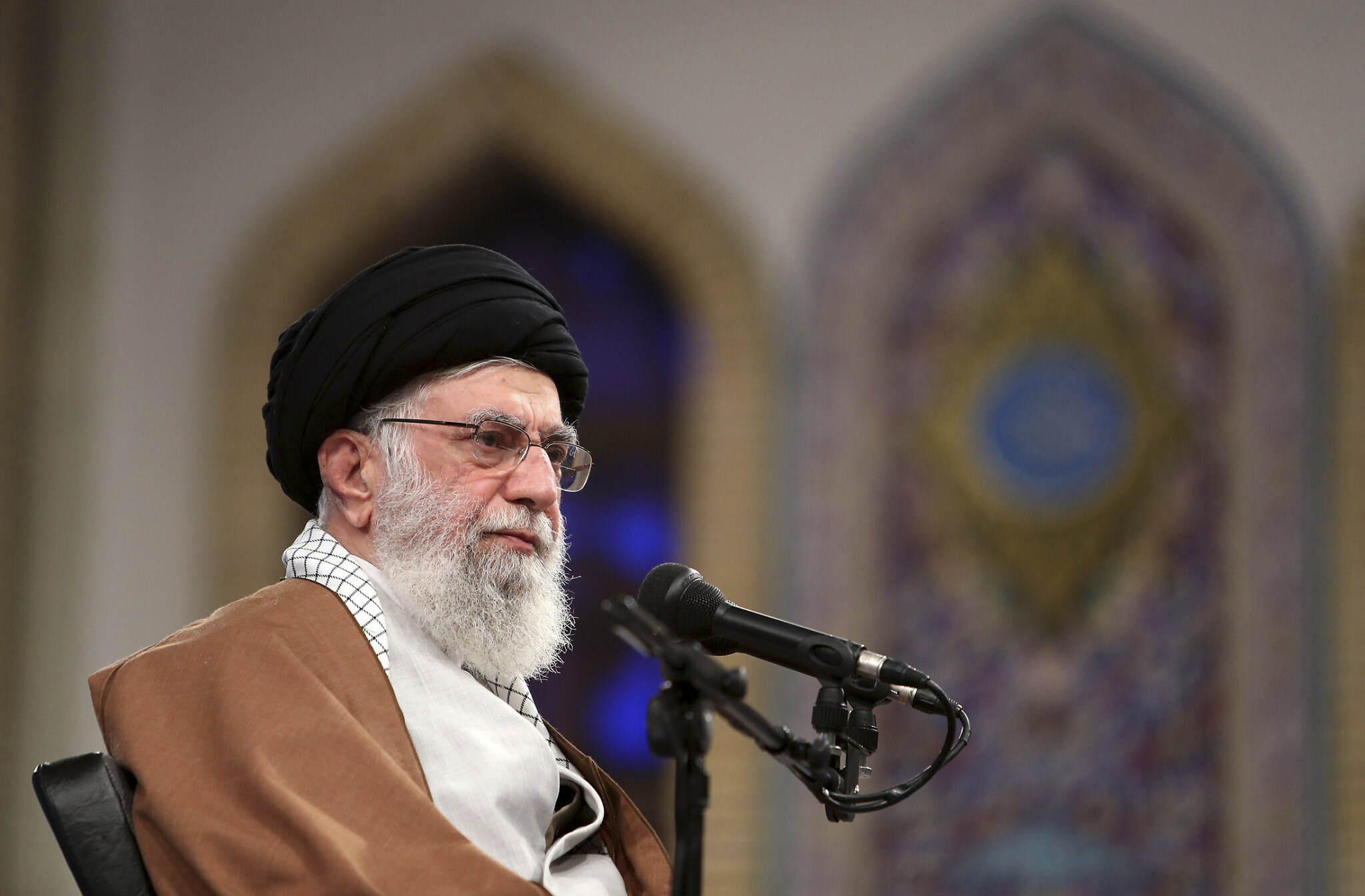
Israel on Monday asked Twitter to immediately suspend the account of Iran’s supreme leader from the social media platform for what it described as “anti-Semitic and genocidal” messages posted by Ayatolah Ali Khamenei.
Strategic Affairs Minister Orit Farkash-Hacohen sent a letter to Twitter CEO Jack Dorsey calling for the “immediate suspension” of Khamenei’s account “over his consistent posting of anti-Semitic and genocidal posts,” her ministry said in a statement.
“Examples of such include Khamenei calling for the ‘elimination’ of the ‘Zionist entity’ while asserting the ‘Zionist regime is a deadly, cancerous growth,’ which must ‘be uprooted and destroyed.’ He also compared Israel to the deadly coronavirus, ‘the Zionist regime is a reality that the region must come to terms with. Today the #Covid_19 is a reality; should it be accepted or fought?!… Zionism will be uprooted,’” the letter read.
Khamenei was panned last week for sharing a poster showing people celebrating at the Temple Mount compound in Jerusalem after apparently capturing it from Israel as a Palestinian flag is raised over the Al-Aqsa Mosque. “Palestine Will Be Free. The final solution: Resistance until referendum,” the text on the poster says.
After Israeli and American leaders accused him of encouraging genocide — Secretary of State Mike Pompeo said he was “echoing Hitler’s call for genocide” — Khamenei tweeted that he seeks Israel’s destruction but not the annihilation of all Jews.
On Sunday, he again used the platform to call for “eliminating Israel.”
 Khamenei TV@Khamenei_tvThe enemies misinterpret the Islamic Republic’s idea of “eliminating Israel”. Eliminating Israel does not mean eliminating Jewish people. We are not #Antisemitic; Jews live in peace in Iran. Eliminating Israel represents elimination of the imposed Zionist regime.
The regime has defended the tweets, saying the messages are not anti-Semitic, since the calls have been for destroying only Israel and not all Jews.
Farkash-Hacohen, a member of the security cabinet, said that Twitter’s own company policies ban the propagation of anti-Semitism, support of terror groups and calls for genocide.
“The company’s Hateful Conduct Policy stipulates that a user ‘may not promote violence against, or directly attack, or threaten other people on the basis of race, ethnicity, national origin or religious affiliation… or calls for mass murder,’” her office said.

There was no immediate response from Twitter. As of this writing, Khamenei’s account remains active.
In the past, Israel has managed to have Twitter ban only Israelis from seeing tweets from terror groups, including Gaza rulers Hamas.

On Friday, Netanyahu warned Iran not to threaten Israel with destruction, saying the Iranians “will put themselves in a similar danger.”
“We repeat. Anyone who threatens to destroy Israel will put themselves in a similar danger,” Netanyahu said in response to comments by Khamenei, who described Israel as “a virus that must be eliminated.”
During a speech marking Iran’s anti-Israel Quds Day, Khamenei said Israel’s establishment was an unequaled “crime against humanity,” repeated his characterization of the Jewish state as “a cancerous tumor” and said it was the creation of “Westerners and Jewish corporation owners.”
“Westerners & Jewish corporation owners’ main goal by fabricating the Zionist regime & this cancerous tumor was to build a stronghold to influence & dominate West Asia. So, they equipped the bogus, occupying regime with all kinds of military & non-military tools, even nukes,” Khamenei said in excerpts from the speech that were also posted to Twitter.
Iran is openly sworn to Israel’s destruction and financially supports terrorist groups, like Hezbollah and Hamas, committed to this aim.
Amos Yadlin says shutdown of Iranian port seems to be response to attempted hacking of Israeli water companies, which appears to have been retaliation for Syria airstrikes
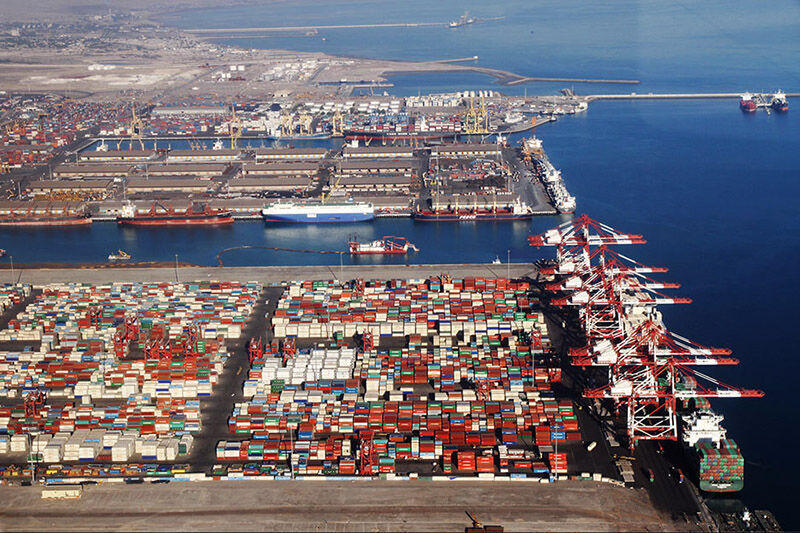
The former head of Military Intelligence on Tuesday said a sophisticated cyberattack on an Iranian port last week appeared to be an Israeli retaliation to Tehran’s failed attempted hacking of Israel’s water companies last month, sending a message that Jerusalem could significantly harm Iran’s economy if attacks on Israeli civilian infrastructure continued.
This appears to indicate that Israel has adopted a “tit-for-tat” strategy in responding to Iranian cyber aggression — a tactic already used by the Israeli military with physical, or kinetic, attacks — as the digital realm becomes increasingly important in modern warfare.
Maj. Gen. (res.) Amos Yadlin, an influential former IDF intelligence chief and current head of the leading Institute for National Security Studies think tank, said the alleged Israeli cyberattack could be seen as a message to Iran that Jerusalem would not accept attempts to damage its civilian infrastructure.
“If Israel was the one that responded to the Iranian attack against civilian infrastructure (water and sewage), Israel is making it clear that civilian systems ought to be left out of fighting,” Yadlin wrote Tuesday, hedging his assessment with the reservations that are common in Israeli officials looking to preserve a degree of ambiguity about Israel’s military activities abroad.
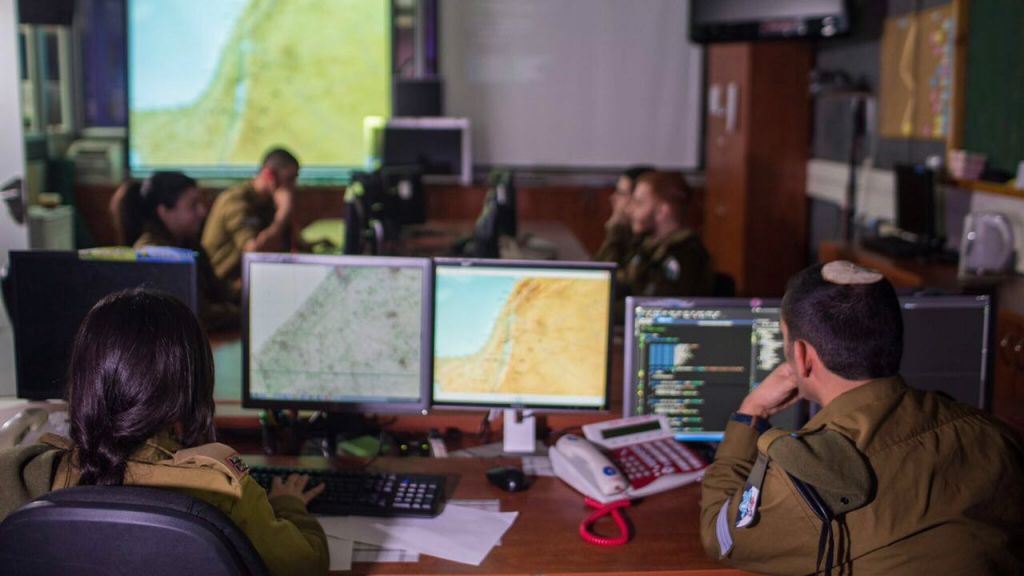
“This is a significant message about the vulnerability of Iran’s economic systems to Israeli cyber capabilities,” he wrote in a series of tweets.

Iran has faced a major financial crisis in recent years when the United States put in place a series of crushing economic sanctions after withdrawing from the 2015 nuclear deal, which offered relief from these measures in exchange for Tehran abandoning aspects of its atomic program.
Yadlin noted the growing importance of the digital realm in modern warfare, as an ever-greater portion of our daily lives is controlled by internet-connected computer systems. Once considered distinct from the physical battles waged between countries, the retired general said, cyber warfare appeared to be becoming just another area in which militaries can square off against one another.
The former intel chief indicated that the Iranian cyber attack on Israeli water infrastructure in April was a response to Israel’s ongoing efforts against Iran’s military presence and proxies in Syria. Israel has for years been bombing bases and convoys of Iranian forces and Iran-backed militias in Syria in order to prevent them from establishing a permanent military presence in the country from which to carry out attacks against the Jewish state and to halt the spread of advanced weapons to Hezbollah and other terror groups in the region. These strikes have reportedly stepped up in recent months.

“Cyber joins the earth, naval and air dimensions as a significant warfare dimension. It is important to note — both Iran (which is being attacked kinetically in Syria) and the United States (after the downing of its advanced unmanned aerial vehicle last summer) have used cyber responses when they didn’t want to escalate matters kinetically,” he wrote.
Yadlin was referring to reports that the US carried out a series of cyberattacks on Iranian weapons systems after the Iranian military shot down an American drone that Tehran said entered its airspace last June.
The former Military Intelligence chief echoed comments made by an unnamed Western official on Tuesday, who also told Israeli TV that the cyberattack on the Iranian port on May 9, which shut it down completely and caused widespread chaos at the site, was a response to an apparent Iranian attempt to sabotage Israel’s water and sewage infrastructure.

“The cyberattack on the [Shahid Rajaee port] in Iran was an Israeli response to the cyberattack that [the Iranians] carried out against Israel two weeks ago against Mekorot [national water company] components — an attack that failed,” the official from a Western country told Channel 12 news, on condition of anonymity.
“Israel hopes that [the Iranians] stop there. They attacked water infrastructure components. They didn’t really cause damage — but they crossed a line and [Israel] needed to retaliate,” the official said.
The official appeared to misspeak regarding the date of the alleged Iranian cyberattack, which was not reported to have occurred two weeks ago, but over three weeks ago, in late April.
According to the Ynet news site, the alleged Iranian attack targeted at least six water installations throughout Israel on April 24-25, causing minor disruptions.

One station saw a pump go online by itself, another had its entire operation system taken over, and a third noted “inconsistencies during an unplanned change to its figures,” the news outlet reported, without attributing the information.
Other stations similarly identified attempts to hack into their systems, but each of these were caught earlier and resolved quickly, according to Ynet.
However, despite these issues at individual stations, the Water Authority said “there was no harm to the water supply and it operated, and continues to operate, without interruption.”
A May 7 meeting of the high-level security cabinet, the first to be held in months, reportedly dealt in part with this Iranian attempt.
On May 9, Israel allegedly responded to these attempted hacks, carrying out a cyberattack on the Shahid Rajaee port — one of Iran’s most important terminals — shutting it down completely and causing widespread chaos, the Washington Post reported Monday.
“Computers that regulate the flow of vessels, trucks and goods all crashed at once, creating massive backups on waterways and roads leading to the facility,” the Post reported.
The port is a newly constructed shipping terminal in the Iranian coastal city of Bandar Abbas, on the Strait of Hormuz.
“There was total disarray,” a security official, who spoke on the condition that his identity and national affiliation not be revealed, told the Post.
Iran later acknowledged that an unknown foreign hacker had knocked the port’s computers offline, but denied the severity of the attack.
Satellite images of the port on May 11 and May 12 taken by Planet Labs and seen by The Times of Israel indeed show scads of ships idling off the port and a buildup of containers on dry land, days after the alleged Israeli cyberattack.
There was no comment from the Israeli embassy in Washington or the Israel Defense Forces, the report said.
Iran — whose regime avowedly seeks Israel’s destruction — and Israel have engaged in covert cyber-warfare for over a decade, including reported efforts by the Jewish state and US to remotely sabotage the Islamic Republic’s nuclear program in 2010 using an advanced cyber weapon known as Stuxnet.
Times of Israel staff and agencies contributed to this report.
After being accused of endorsing genocide, Iranian supreme leader says annihilating the Jewish state ‘means abolishing the imposed regime’ and ousting ‘thugs’ like Netanyahu
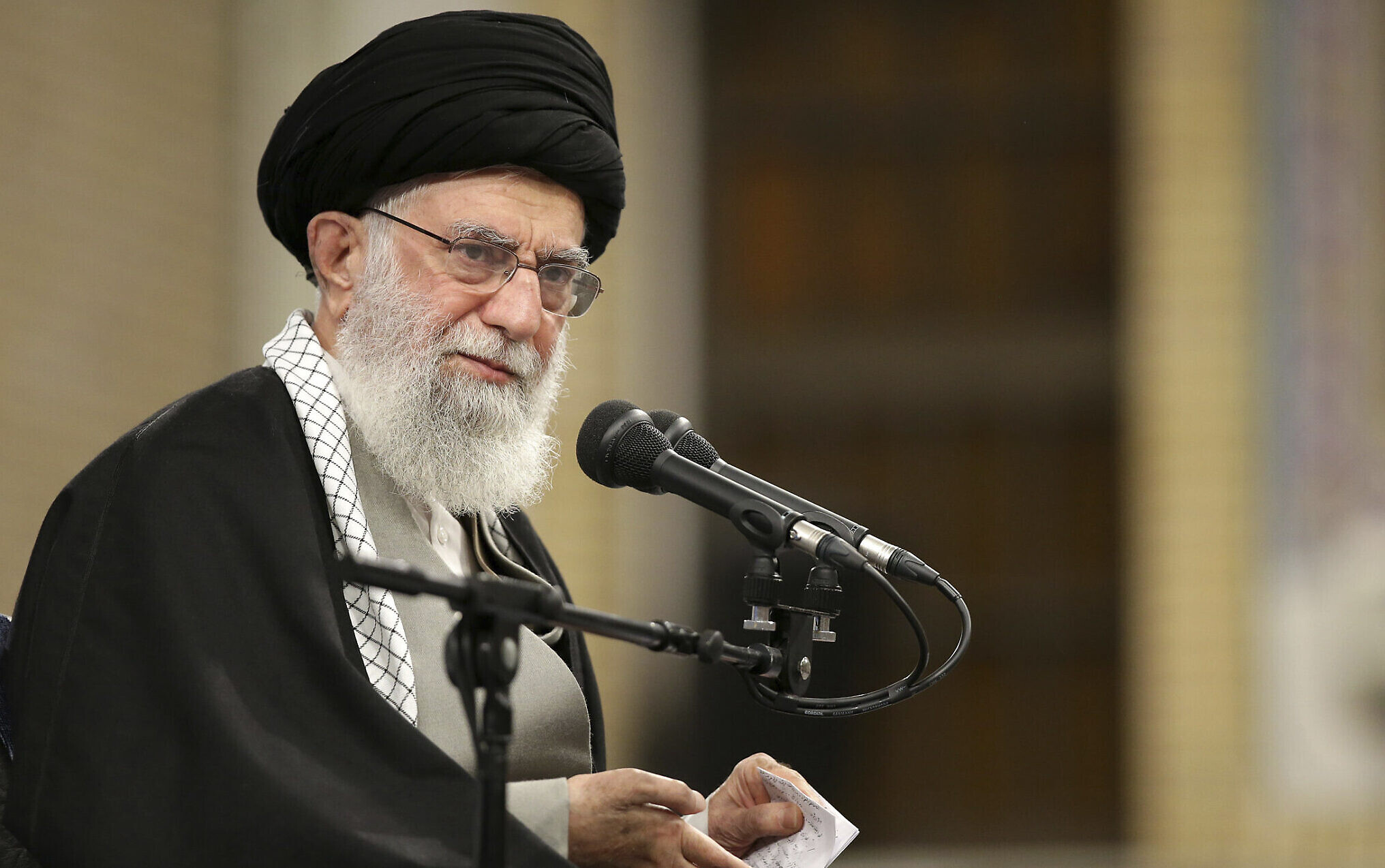
Iranian Supreme Leader Ayatollah Ali Khamenei on Wednesday said he seeks Israel’s destruction but not the annihilation of all Jews, after Israeli and American leaders accused him of encouraging genocide. He said Iran would support any nation or group that fights against Israel.
Khamenei was commenting on a poster published on his website that used the words “final solution” in calling for Israel’s destruction, a term usually associated with Nazi Germany’s efforts to eliminate all Jews during the Holocaust.
“Eliminating the Zionist regime doesn’t mean eliminating Jews. We aren’t against Jews. It means abolishing the imposed regime & Muslim, Christian & Jewish Palestinians choose their own govt & expel thugs like [Prime Minister Benjamin] Netanyahu,” Khamenei wrote on his Twitter account.
“This is ‘Eliminating Israel’” he explained, insisting “it will happen.”

He also claimed Israel only understood force and didn’t adhere by any treaty agreements.
“The nature of the Zionist regime is incompatible with peace because the Zionists seek to expand their territories & will certainly not be limited to what they have already occupied,” he said.
“Comprehensive struggles by the Palestinian nation — political, military & cultural — should continue till the usurpers submit to the referendum for the Palestinian nation,” Khamenei added.
Additionally, he said Iran would back anyone opposed to Israel.
“We will support and assist any nation or any group anywhere who opposes and fights the Zionist regime, and we do not hesitate to say this,” the Iranian leader said.
Iran funds terrorist groups sworn to Israel’s destruction, including the Lebanon-based Hezbollah and Gaza-based Hamas.

The statement from Khamenei came after Netanyahu and US Secretary of State Mike Pompeo accused him of backing the Nazi’s final solution.
“He should know that any regime that threatens the destruction of the State of Israel faces a similar danger,” a statement from Netanyahu’s office said.
The poster, shared on Khamenei’s website, showed people celebrating at the Temple Mount compound in Jerusalem after apparently capturing it from Israel as a Palestinian flag is raised over the Al-Aqsa Mosque.
“Palestine Will Be Free. The final solution: Resistance until Freedom,” the text on the poster says.
The poster later appeared to have been deleted from the website.
Khamenei has called for Israel’s destruction on numerous occasions and frequently refers to Israel as a “cancerous tumor.”
Source: Iran’s leader accuses UAE of ‘treachery’ after first direct flight to Israel | The Times of Israel
Etihad Airways flies 16 tons of aid for Palestinians via Tel Aviv, but Khamenei says Gulf states ‘betray Palestine by supporting Israel,’ calls for armed uprising in West Bank
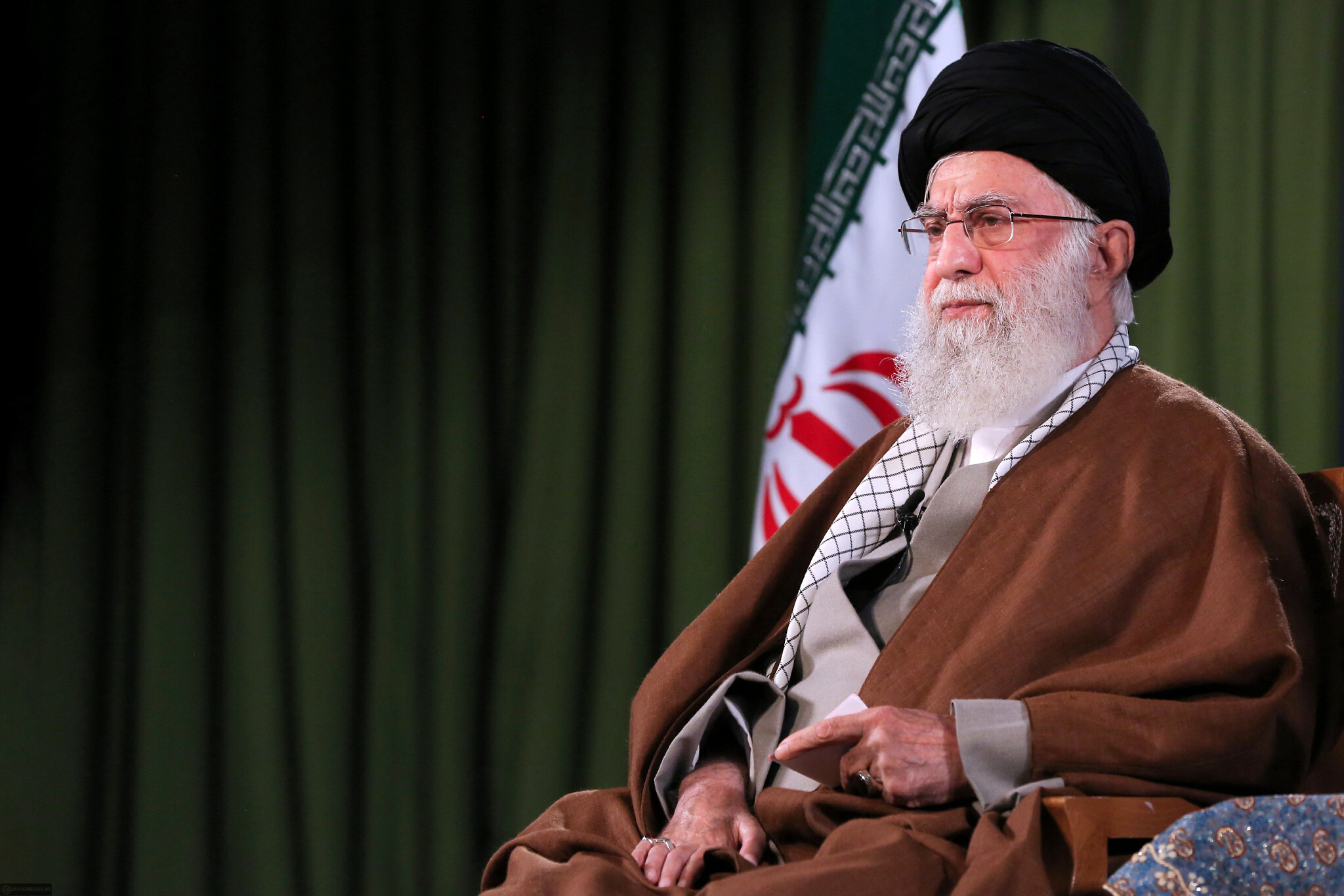
Iranian Supreme Leader Ayatollah Ali Khamenei on Tuesday accused the United Arab Emirates of committing “treachery” and “betrayal” after its Etihad Airways made history, flying the first known direct commercial flight between Israel and the UAE.
The UAE-based airline sent the plane loaded with 16 tons of coronavirus aid for Palestinians on a direct flight from Abu Dhabi to Tel Aviv on Tuesday.
But Iran’s top leader called the act a betrayal of the Palestinians.
“Today, some Persian Gulf states have committed the biggest treachery against their own history and the history of the Arab world,” Khamenei tweeted. “They have betrayed #Palestine by supporting Israel. Will the nations of these states tolerate their leaders’ betrayal?”
 Khamenei.ir@khamenei_ir
Today, some Persian Gulf states have committed the biggest treachery against their own history and the history of the Arab world. They have betrayed #Palestine by supporting Israel. Will the nations of these states tolerate their leaders’ betrayal?
The Etihad cargo jet, painted in all white and missing any marking, landed at Ben-Gurion Airport just after 9 p.m. after seemingly flying a roundabout route through Iraq and either Jordan or Turkey.
The flight struck a rare moment of public cooperation between the UAE, home to Abu Dhabi and Dubai on the Arabian Peninsula, and Israel. The countries have no formal diplomatic ties to Israel, but have begun to increasingly cooperate openly after years of rumored back-channel discussions between them over the mutual enmity of Iran.
An Israeli official said the flight was delivering humanitarian aid provided by the UAE to the Palestinians through the World Food Program, and that the cargo flight was coordinated with the Israeli government. The official spoke on condition of anonymity due to the sensitivity of the subject.
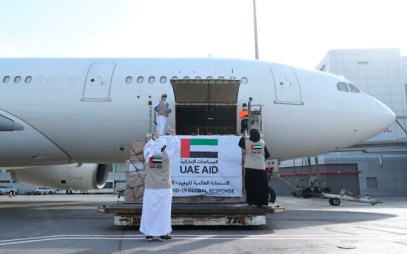
Etihad, a state-owned, long-haul carrier, earlier confirmed the flight to Tel Aviv’s Ben Gurion Airport.
“Etihad Airways operated a dedicated humanitarian cargo flight from Abu Dhabi to Tel Aviv on 19 May to provide medical supplies to the Palestinians,” the airline told The Associated Press. “The flight had no passengers on board.”
Emirati government officials did not respond to multiple requests for comment.
The UAE’s state-run WAM news agency issued a statement saying it delivered 16 tons of protective gear, medical items and ventilators “to curb the spread of COVID-19 pandemic and its impact in the occupied Palestinian territory.” It did not acknowledge the flight or its significance.
Much of the coordination between Israel and the Gulf states is based on a shared concern over Iran, which has repeatedly threatened to destroy the Jewish state and seeks to exert its hegemony over the region.
The flight came during a period of heightened tension between Iran and Israel, with reports emerging Tuesday that Israel had carried out a cyberattack on an Iranian port in retaliation for an earlier Iranian attempt to hack Israel’s water infrastructure.
On Monday, Khamenei called for arming Palestinians in the West Bank.
“The West Bank must be armed, just as Gaza. The only thing that can reduce the Palestinians’ hardships is the hand of power. Otherwise, compromise won’t reduce a bit of the cruelty of this usurping, evil, wolf-like entity,” Khameinei tweeted.
Khamenei.ir@khamenei_irThe West Bank must be armed, just as Gaza. The only thing that can reduce the Palestinians’ hardships is the hand of power. Otherwise, compromise won’t reduce a bit of the cruelty of this usurping, evil, wolf-like entity.#FlyTheFlag
Iran is the primary supplier of arms and rockets to terror groups in Lebanon and Gaza.
Meanwhile, a top Iranian legal official said Israel’s “annihilation” was closer than ever.
“On Quds Day, we come closer to annihilation of Israel,” Iran’s Judiciary Spokesman Gholam Hossein Esmayeeli told reporters in Tehran on Tuesday, according to the FARS news agency.
Al-Quds is the Arabic word for Jerusalem. Quds Day, marked by demonstrations against Israel and expressing support for Palestinians, is held on the last Friday of Ramadan, which this year is May 22.
Quds Day was declared in 1979 by Ayatollah Khomeini, the leader of the Iranian Revolution. It is marked throughout the Middle East and in countries around the world, including the United States. The Iranian regime organizes nationwide anti-Israel rallies, at which Israeli flags are trampled and burned.
Workers at sensitive facilities told to be on alert for malicious activity after hacking of Bandar Abbas port, which Israel has said is used to supply weapons to Hamas, Hezbollah
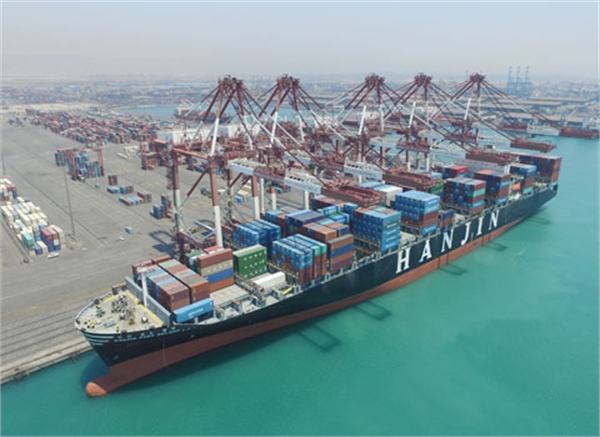
Israel’s security firms and agencies are reportedly preparing for a potential Iranian or Iran-linked cyberattack in response to an attack blamed on the Jewish state that was said to have crippled computer systems at a strategic port in the south of the Islamic Republic.
The Washington Post reported Monday that Israel brought down the Shahid Rajaee port’s computer systems, causing a total shutdown of the facility, on May 9.
Israel has refused to officially comment on the report, which cited US and other foreign officials saying Israel was likely behind the computer attack.
The attack was apparently in response to an alleged Iranian attempt to hack into Israel’s water infrastructure system. Israel’s high-level security cabinet held a secret meeting to discuss a response to the hack attack on May 7, according to Channel 13 news, and regarded the attempt to damage its water system, a non-military target, as crossing a red line.
Security officials on Tuesday instructed agencies and sensitive facilities to raise their awareness and preparedness for the option of a retaliatory cyberattack as part of an apparent new tit-for-tat war, Hebrew-language media reported.
Cyber-defense officials in the Israel Defense Forces and the National Cyber Directorate have raised their alertness, expecting an attack on websites, servers or services, the unsourced reports said.
Employees have been ordered not to open or download files from unknown sources or people whose credibility is questionable. Officials have stressed that malicious messages could be ostensibly about the coronavirus crisis.
Workers have also been told not to hand personal information or account details to unknown entities, and to only download mobile applications from known app stores.

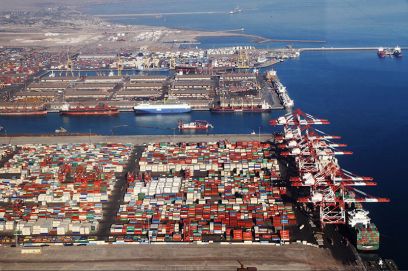
Shahid Rajaee Port, in the southern Hormozgan Province, is located some 25 kilometers (15 miles) from the city of Bandar Abbas, and is by far Iran’s largest and most strategically important port. It is also known as the port of Bandar Abbas.
It accounts for some 60 percent of all the country’s port activity, Mohammad Saeednejad, the managing director of Ports and Maritime Organization of Iran, said in 2017.
“The significance of the port lies in the fact that it is located at the mouth of the Strait of Hormuz where nearly 50,000 vessels of different countries sail annually,” he told Iran’s ILNA news agency at the time.
Saeednejad added that between March 2016 and March 2017, exports from the port totaled some 44 million tons of goods worth more than $11.14 billion, and imports totaled nearly 10 million tons worth $18.65 billion.
Israel has long accused Iran of using the port for military purposes to aid terrorists elsewhere in the Middle East, including the Jewish state’s foes Hamas and Hezbollah, with the IDF intercepting some of the shipments.
Satellite images of the port on May 11 and May 12 taken by Planet Labs and seen by The Times of Israel showed a large number of ships idling off the port and a buildup of containers on dry land, days after the alleged Israeli cyberattack.
Army chief Aviv Kohavi on Tuesday hinted at Israel’s role in the cyberattack, saying the IDF would continue to use “various military tools” against the country’s enemies.
While it is not unusual for politicians to insinuate Israeli involvement in attacks on Iran and terror groups, it is less common for senior IDF officers — who tend to maintain a policy of ambiguity regarding the military’s activities abroad — to do so.
On Tuesday, the former head of IDF Military Intelligence, Amos Yadlin, said the Iranian cyberattack on water facilities, which failed to cause significant damage, appeared to be in response to recent Israeli airstrikes against Iran’s forces and proxies in Syria.
A security official, who spoke on the condition that his identity and nationality not be revealed, told The Washington Post that the attack caused “total disarray” at the port.
“Computers that regulate the flow of vessels, trucks and goods all crashed at once, creating massive backups on waterways and roads leading to the facility,” the Post reported, adding that it had seen satellite photos showing miles-long traffic jams leading to the port and ships still waiting to offload several days later.
Iran later acknowledged that an unknown foreign hacker had briefly knocked the port’s computers offline.
“A recent cyber attack failed to penetrate the PMO’s systems and was only able to infiltrate and damage a number of private operating systems at the ports,” Mohammad Rastad, managing director of the Ports and Maritime Organization, said in a statement carried by ILNA.
The response appeared to indicate that Israel has adopted a “tit-for-tat” strategy in responding to Iranian cyber warfare, like that already used by the Israeli military with physical, or kinetic, attacks, an Israeli official said.

“The cyberattack on the [Shahid Rajaee port] in Iran was an Israeli response to the cyber attack that [the Iranians] carried out against Israel two weeks before against Mekorot [national water company] components — an attack that failed,” the official told Channel 12 news, on condition of anonymity.
“Israel hopes that [the Iranians] stop there. They attacked water infrastructure components. They didn’t really cause damage — but they crossed a line and [Israel] needed to retaliate,” the official said.
Iran — whose regime avowedly seeks the Jewish state’s destruction — and Israel have engaged in covert cyber-warfare for over a decade, including reported efforts by the Jewish state and US to remotely sabotage the Islamic Republic’s nuclear program in 2010 using an advanced cyber weapon known as Stuxnet.
Times of Israel staff and agencies contributed to this report.




 anneinpt
 artaxes
 danmillerinpanama
 davidking1530
 Peter Hofman
 Joseph Wouk
 Peter
Peter Louisiana Steve
 WarSclerotic
Recent Comments